Cracking a skill-specific interview, like one for Childhood Immunizations, requires understanding the nuances of the role. In this blog, we present the questions you’re most likely to encounter, along with insights into how to answer them effectively. Let’s ensure you’re ready to make a strong impression.
Questions Asked in Childhood Immunizations Interview
Q 1. What are the contraindications for administering the MMR vaccine?
Contraindications for the MMR vaccine are situations where administering the vaccine could pose a significant risk to the child. These are relatively rare. A severe allergic reaction (anaphylaxis) to a previous dose of MMR vaccine or to any component of the vaccine (such as gelatin, neomycin, or eggs) is a major contraindication. A history of thrombocytopenia (low platelet count) or a family history of thrombocytopenic purpura following MMR vaccination should be carefully evaluated, and the vaccine may be deferred or avoided depending on the severity and the individual circumstances. Severe immunosuppression, such as from conditions like HIV or chemotherapy, might also represent a contraindication, as the weakened immune system might not be able to effectively mount an immune response and the risk of adverse events might be increased. Finally, pregnancy should also be considered a contraindication, as the MMR vaccine is a live attenuated virus vaccine. It is crucial to consult with the child’s physician to assess the individual risks and benefits in cases where there might be a potential contraindication.
It is vital to note that temporary illnesses like a mild cold are typically not considered contraindications and vaccination can often proceed safely.
Q 2. Explain the recommended immunization schedule for children in the US.
The recommended immunization schedule for children in the US is developed by the Centers for Disease Control and Prevention (CDC) and the American Academy of Pediatrics (AAP). It’s a complex schedule that varies slightly depending on the specific vaccine and the child’s age. The schedule aims to provide protection against a range of diseases at the optimal time for the developing immune system. It usually begins shortly after birth with the Hepatitis B vaccine, followed by a series of vaccines against diseases like diphtheria, tetanus, pertussis (whooping cough), Haemophilus influenzae type b (Hib), polio, rotavirus, pneumococcal disease, measles, mumps, rubella (MMR), varicella (chicken pox), and influenza (flu). The schedule is carefully designed to allow for the best immune response while minimizing the number of injections at each visit. It is essential to consult the CDC or AAP’s website for the most up-to-date and detailed recommendations, as it changes occasionally. Remember, this is just a general overview, and individual circumstances may require adjustments.
Q 3. Describe the importance of maintaining accurate immunization records.
Maintaining accurate immunization records is crucial for several reasons. First and foremost, it ensures that children receive all the necessary vaccines at the recommended times, maximizing their protection against preventable diseases. Incomplete records can lead to missed doses or unnecessary repeat vaccinations. Second, accurate records are essential for tracking vaccine coverage within communities and identifying areas that need improvement in vaccination rates. This information is vital for public health officials to implement targeted interventions and prevent outbreaks. Thirdly, accurate records are necessary for school enrollment and international travel, as many institutions and countries require proof of vaccination. Finally, in cases of adverse events following vaccination, accurate records are crucial for tracing vaccination history and determining potential contributing factors.
The preferred method is electronic record-keeping, offering efficient access and easier data management. However, meticulous maintenance of paper records, if used, is equally critical.
Q 4. How do you address parental concerns about vaccine safety?
Addressing parental concerns about vaccine safety requires empathy, patience, and evidence-based information. Begin by actively listening to their concerns without judgment. Many parents worry about potential adverse effects, and it’s essential to acknowledge their feelings and validate their anxieties. Then, provide accurate information from reputable sources like the CDC and AAP, emphasizing the overwhelming scientific evidence supporting vaccine safety and efficacy. Explain the risks of not vaccinating compared to the very low risk of adverse events from vaccination. Address common misconceptions and myths by presenting factual data. Providing clear and simple explanations, avoiding overly technical jargon, is crucial. Finally, offering personalized resources and follow-up discussions can be beneficial. In some cases, referring parents to trusted community health workers or physicians might help build rapport and trust.
Q 5. What are the signs and symptoms of a serious adverse reaction to a vaccine?
Serious adverse reactions to vaccines are rare but can occur. Signs and symptoms can vary depending on the vaccine and the individual. High fever (above 105°F), severe allergic reactions (anaphylaxis) such as difficulty breathing, swelling of the face or throat, hives, and dizziness, are serious indicators and require immediate medical attention. Convulsions or seizures, encephalitis (brain inflammation), or Guillain-Barré syndrome (a rare neurological disorder), though extremely rare, are severe reactions needing urgent medical evaluation. Any prolonged or unusual reactions that concern the parent, such as unusual lethargy or persistent high fever, warrant prompt medical consultation. It’s vital to note that many common side effects like mild fever, soreness at the injection site, and fussiness are typically not indicative of a serious adverse reaction.
Q 6. Explain the difference between active and passive immunity.
Active immunity and passive immunity are two distinct ways in which the body develops protection against disease. Active immunity is long-lasting and develops after exposure to a disease-causing organism (naturally acquired) or through vaccination (artificially acquired). Vaccines stimulate the body to produce its own antibodies, providing long-term protection. Think of it like training your immune system to fight a specific enemy. Passive immunity, on the other hand, is short-lived and provides immediate but temporary protection. It involves receiving pre-formed antibodies from an external source, such as through maternal antibodies transferred across the placenta or through antibody injections (like immunoglobulin). It is like receiving immediate help from a pre-trained soldier, offering short-term protection. While passive immunity offers immediate protection, active immunity is the more durable and long-lasting method.
Q 7. How do you handle a child who has a severe allergy to a vaccine component?
Handling a child with a severe allergy to a vaccine component requires a cautious and thoughtful approach. First, it is essential to thoroughly review the vaccine components and the child’s allergy history. If the child has a severe allergy (like anaphylaxis) to a component of a particular vaccine (e.g., egg allergy and influenza vaccine), that specific vaccine should not be administered. The physician should carefully assess the child’s allergy and determine if there are alternative vaccines or modified formulations that are safe to administer. For example, there are egg-free influenza vaccines available. Alternatively, the physician might recommend deferring the vaccine until the child’s allergy is better managed. It’s crucial to have appropriate emergency medical resources available when vaccinating a child with known allergies, including epinephrine and the knowledge of how to administer it. The decision should always be made collaboratively with the parent and the allergist.
Q 8. What is your understanding of vaccine hesitancy and how would you approach it?
Vaccine hesitancy is the delay in acceptance or refusal of vaccines despite the availability of vaccination services. It’s a complex issue stemming from various factors, including misinformation, mistrust in healthcare systems, concerns about vaccine safety, and influence from social circles.
My approach to vaccine hesitancy is multifaceted and patient-centered. It begins with active listening and empathetically understanding the parent’s concerns. I avoid judgmental language and focus on building trust. I provide evidence-based information from reliable sources, addressing specific concerns with clear, concise language and avoiding overwhelming them with technical details. I often use analogies and real-world examples to illustrate concepts. For instance, to address safety concerns, I might explain that the benefits of vaccination far outweigh the rare risks, much like the benefits of wearing a seatbelt in a car outweigh the slight inconvenience.
I also leverage the power of shared decision-making, empowering parents to make informed choices based on their values and beliefs, while ensuring they are well-informed. If necessary, I connect them with other trusted sources, such as community leaders or other parents who have successfully navigated similar concerns. Following up is crucial; this shows I value their concerns and am committed to supporting their decisions.
Q 9. Describe your experience administering vaccines to children of various ages.
I have extensive experience administering vaccines to children of all ages, from infants to adolescents. My approach is always age-appropriate and tailored to the child’s developmental stage. For infants, the process is gentle and calming, involving soothing techniques like skin-to-skin contact with a parent and distraction. For toddlers, I use play and positive reinforcement. For older children, I involve them in the process by explaining each step and answering any questions they might have.
For all ages, I prioritize safety and comfort. I use appropriate needle sizes, ensuring the injection site is cleaned properly, and I utilize distraction techniques like singing or talking to reduce discomfort. Post-vaccination care instructions are provided clearly and consistently, including information about potential side effects and when to contact the medical provider.
I’ve found that building rapport and trust with both the child and their parent is essential for a successful vaccination experience. A positive experience reduces future anxiety surrounding vaccinations.
Q 10. How do you ensure proper vaccine storage and handling?
Proper vaccine storage and handling are crucial to maintain vaccine potency and efficacy. We meticulously follow the manufacturer’s guidelines and adhere to strict protocols established by the CDC and WHO. This involves using specialized refrigerators with temperature monitoring systems that consistently maintain the required temperature range (typically 2-8°C). Vaccines are never stored in the freezer unless specifically indicated by the manufacturer.
Regular temperature checks are performed using calibrated thermometers, and records are meticulously maintained. Any deviation from the required temperature range triggers an immediate investigation to determine the cause and assess the vaccine’s integrity. If vaccines are compromised, they are immediately discarded according to established protocols. Proper inventory management prevents expiration and ensures that vaccines are rotated according to their expiration dates (First In, First Out). We also follow rigorous procedures for vaccine reconstitution and administration, which includes strict aseptic techniques to prevent contamination.
Q 11. What is your understanding of the National Childhood Vaccine Injury Act?
The National Childhood Vaccine Injury Act (NCVIA) of 1986 is a U.S. federal law established to create a no-fault system for compensating individuals who experience serious adverse events following childhood vaccination. This program aims to protect vaccine manufacturers from overwhelming liability and maintain public confidence in vaccines.
The NCVIA created a national Vaccine Injury Compensation Program (VICP), administered by the U.S. Court of Federal Claims. This program allows individuals to file a petition for compensation without having to prove fault on the part of the vaccine manufacturer. The process involves a thorough review of medical records and evidence to determine if there’s a causal relationship between the vaccination and the alleged injury. The VICP provides compensation for medical expenses, lost wages, and pain and suffering, if the petition is granted.
Understanding the NCVIA is essential for healthcare providers to address parental concerns about vaccine safety and to accurately inform parents about the compensation available if a serious adverse event occurs.
Q 12. What are some common myths surrounding childhood immunizations?
Several common myths surround childhood immunizations, often fueled by misinformation and a lack of understanding of scientific principles. One common myth is that vaccines cause autism, which has been widely debunked by extensive scientific research. Another myth is that vaccines weaken the immune system; in reality, they strengthen it by stimulating the body’s natural defenses against specific diseases.
Other myths include the belief that natural immunity is superior to vaccine-induced immunity (while natural immunity offers some protection, it often carries significant health risks), that vaccines contain harmful toxins (they contain highly purified antigens, not harmful levels of toxins), and that contracting a disease is a necessary rite of passage (this exposes children to preventable diseases with potentially severe or fatal consequences).
Addressing these myths requires providing evidence-based information from credible sources, promoting media literacy and critical thinking skills among parents.
Q 13. How do you educate parents about the benefits of vaccines?
Educating parents about the benefits of vaccines is a cornerstone of my practice. I employ a patient-centered, shared decision-making approach. This starts by actively listening to their concerns, validating their feelings, and ensuring they feel heard and respected.
I use clear, straightforward language, avoiding medical jargon, and tailor my explanations to their level of understanding. I explain the risks of contracting vaccine-preventable diseases compared to the extremely low risks associated with vaccines. I often use visual aids, such as charts or graphs, showing the dramatic decline in disease incidence since the introduction of widespread vaccination programs.
I emphasize the concept of herd immunity and the protection it provides to vulnerable individuals, such as infants too young to be vaccinated or individuals with compromised immune systems. I offer evidence-based information from reliable sources like the CDC and WHO, and I’m prepared to answer any questions thoroughly and honestly. Providing credible sources strengthens the reliability of the information provided, empowering parents to make the best choices for their children.
Q 14. Explain the importance of herd immunity in protecting the community.
Herd immunity, also known as community immunity, is a crucial aspect of public health. It refers to the indirect protection of individuals within a population who are not immune to an infectious disease due to a sufficiently high proportion of the population being immune (either through vaccination or prior infection).
Think of it like a shield protecting those who cannot be vaccinated. When a large portion of the community is vaccinated, the spread of disease is significantly reduced. This protects not only those who are vaccinated, but also individuals who cannot receive vaccines due to medical reasons (e.g., immunocompromised individuals) or those too young to be vaccinated (e.g., infants). This indirect protection is essential for preventing outbreaks and protecting vulnerable populations.
The level of immunity needed to achieve herd immunity varies depending on the infectious disease’s characteristics. For diseases with high contagiousness, a higher percentage of the population needs to be immune to prevent outbreaks. Achieving and maintaining herd immunity through vaccination is critical to safeguarding public health and preventing the resurgence of vaccine-preventable diseases.
Q 15. How do you identify and address vaccine-preventable diseases in a community?
Identifying and addressing vaccine-preventable diseases (VPDs) in a community requires a multi-pronged approach. It starts with surveillance – actively monitoring disease incidence through reporting systems and laboratory testing. This helps us pinpoint outbreaks and track trends. For example, a sudden increase in measles cases in a specific area would trigger an immediate investigation.
Next, we assess community immunization coverage rates. Low coverage rates, particularly for key childhood vaccines, signal potential vulnerabilities. We analyze vaccination data by age group, socioeconomic status, and geographic location to identify disparities and target intervention strategies.
Addressing VPDs involves targeted outreach programs, including educational campaigns to increase vaccine acceptance and address misconceptions. We might work with community leaders, schools, and healthcare providers to promote vaccination. Furthermore, we conduct vaccination campaigns, ensuring equitable access to vaccines for all community members, particularly those in underserved populations. Finally, robust outbreak response plans, including rapid case identification, contact tracing, and targeted vaccination efforts, are crucial to contain and eliminate VPDs.
Career Expert Tips:
- Ace those interviews! Prepare effectively by reviewing the Top 50 Most Common Interview Questions on ResumeGemini.
- Navigate your job search with confidence! Explore a wide range of Career Tips on ResumeGemini. Learn about common challenges and recommendations to overcome them.
- Craft the perfect resume! Master the Art of Resume Writing with ResumeGemini’s guide. Showcase your unique qualifications and achievements effectively.
- Don’t miss out on holiday savings! Build your dream resume with ResumeGemini’s ATS optimized templates.
Q 16. What are the key components of an effective immunization program?
An effective immunization program hinges on several key components. First, a strong policy framework is essential, defining vaccine schedules, targets, and monitoring systems. This provides a roadmap for implementation. Secondly, a well-trained and adequately resourced workforce is vital – nurses, doctors, and community health workers need the skills and supplies to administer vaccines safely and effectively.
Equitable access to vaccines is paramount. This means ensuring vaccines are available to all, regardless of socioeconomic status or geographic location. We must also prioritize vaccine safety through rigorous monitoring systems to detect and address adverse events promptly. Finally, sustained community engagement and communication are critical. This includes building trust, addressing concerns, and providing accurate information about vaccines’ benefits and risks. Think of it as a pyramid: a strong foundation of policy, supported by skilled personnel, accessible vaccines, robust safety monitoring, and a well-informed community.
Q 17. How would you manage an anaphylactic reaction to a vaccine?
Managing an anaphylactic reaction, a severe allergic reaction, to a vaccine is a life-threatening emergency requiring immediate action. The first step is recognizing the signs: difficulty breathing, swelling of the face or throat, hives, and a rapid drop in blood pressure.
The immediate treatment is administering epinephrine via intramuscular injection, using an auto-injector like an EpiPen. This is followed by calling emergency medical services (EMS) immediately. While waiting for EMS, we monitor vital signs, maintain the airway, and provide supplemental oxygen if necessary. The patient needs close observation in the hospital for at least 24 hours to ensure the reaction has fully subsided and to rule out late-onset reactions. It’s crucial to document the event meticulously in the patient’s medical record, including the time of onset, symptoms, treatment administered, and the patient’s response. Future vaccination strategies will need to consider the allergy.
Q 18. Describe your experience with different vaccine delivery methods.
My experience encompasses various vaccine delivery methods. The most common is intramuscular (IM) injection, typically in the deltoid muscle for older children and adults, and the vastus lateralis muscle for infants and toddlers. This ensures efficient vaccine absorption. I’m also proficient in subcutaneous (SC) injections, often used for certain vaccines, administered into the fatty tissue beneath the skin.
Furthermore, I have experience with oral vaccines, such as rotavirus and polio vaccines, which are administered orally and have the advantage of ease of administration. Finally, I’m familiar with intranasal vaccines, such as the influenza nasal spray vaccine, which are sprayed into the nostrils. The choice of delivery method depends on the specific vaccine, the age of the recipient, and factors such as potential for allergic reactions.
Q 19. What resources do you utilize to stay updated on the latest immunization guidelines?
Staying current on immunization guidelines requires accessing reliable and up-to-date resources. The Centers for Disease Control and Prevention (CDC) and the World Health Organization (WHO) websites are my primary sources for vaccine recommendations, schedules, and safety information.
I also subscribe to professional journals like the Pediatrics and the Journal of the American Medical Association (JAMA) to keep abreast of the latest research and clinical trials on vaccines and VPDs. Participating in continuing medical education (CME) courses and workshops specifically focused on immunization updates is essential. Professional organizations like the American Academy of Pediatrics (AAP) provide valuable resources and guidance through their publications and conferences.
Q 20. How do you document vaccine administration according to established guidelines?
Accurate and detailed documentation of vaccine administration is crucial for individual patient care and public health surveillance. I follow established guidelines, using standardized forms that include the vaccine name, manufacturer, lot number, expiration date, administration route and site, date of administration, and the administering provider’s signature.
Importantly, I record any adverse events following immunization (AEFI), even minor ones. This information is entered into both the patient’s electronic health record (EHR) and the relevant reporting systems (e.g., the Vaccine Adverse Event Reporting System or VAERS). Maintaining accurate records ensures that patients receive the correct vaccines according to the recommended schedule, facilitates monitoring of vaccine effectiveness and safety, and aids in outbreak investigations.
Q 21. Describe a time you had to educate a patient or parent about vaccine benefits and risks.
I recall a conversation with a hesitant parent concerned about the potential side effects of the MMR vaccine for their child. They had read misinformation online about a link between the MMR vaccine and autism.
My approach was to listen empathetically to their concerns, acknowledging their anxieties before presenting scientifically accurate information from the CDC and other reputable sources. I explained the overwhelming scientific consensus on the safety and effectiveness of the MMR vaccine and the serious risks associated with measles, mumps, and rubella. I addressed their specific concerns point-by-point, using simple language and avoiding medical jargon. We discussed the benefits of vaccination for both their child and the community. This conversation was not a quick fix; it involved providing multiple resources to research with the assurance that I was available for any further questions.
Ultimately, the parent felt more comfortable and consented to their child receiving the MMR vaccine. This experience underscored the importance of compassionate communication, active listening, and evidence-based education in overcoming vaccine hesitancy.
Q 22. What are the ethical considerations related to childhood immunizations?
Ethical considerations in childhood immunization are multifaceted and involve balancing individual autonomy with the collective good. The primary ethical principle is beneficence – ensuring the child receives the maximum benefit from vaccination, namely protection from preventable diseases. This is weighed against the potential, albeit small, risks associated with any medical intervention.
Another crucial element is non-maleficence – avoiding harm. This necessitates thorough informed consent, where parents or guardians are fully informed about the benefits, risks, and alternatives to vaccination. It’s crucial to ensure this process is free from coercion or pressure.
Justice plays a role in ensuring equitable access to vaccines for all children, regardless of socioeconomic status, race, or geographic location. This requires addressing systemic barriers that might prevent certain populations from accessing vaccination services. Respect for autonomy is paramount; parents have the right to make decisions about their children’s healthcare, but this right must be balanced against the community’s right to protection from vaccine-preventable diseases.
Finally, there’s the societal aspect. While individual decisions impact the child directly, they have broader implications for herd immunity. Immunization rates must be high enough to protect vulnerable individuals who cannot be vaccinated, such as those with compromised immune systems. The ethical challenge lies in finding ways to support individual autonomy while promoting public health.
Q 23. How do you address vaccine refusal in a respectful and effective manner?
Addressing vaccine refusal requires empathy, patience, and a respectful approach. It’s vital to listen to parents’ concerns without judgment. Many hesitations stem from misinformation, fear of side effects, or mistrust of the medical system.
First, create a safe space for open dialogue. Ask open-ended questions to understand the root of their concerns, such as: “What are your biggest questions about vaccines?” or “What worries you most about vaccinating your child?”
Second, provide evidence-based information from reliable sources like the CDC and WHO, avoiding overly technical language. Address specific concerns directly using clear, concise explanations and visual aids. For instance, if they’re worried about autism, explain that extensive research has found no link between vaccines and autism.
Third, offer personalized recommendations, tailoring information to the individual family’s circumstances and needs. Consider addressing cultural beliefs or community norms which may influence vaccine hesitancy. If misinformation is prevalent, connect them with trusted community leaders or healthcare providers who can provide support and build trust.
Finally, respect their decision, even if it differs from medical advice. Document the discussion and any concerns raised, ensuring continued outreach and the opportunity to revisit the topic at a later time.
Q 24. What strategies do you use to improve vaccine uptake in underserved communities?
Improving vaccine uptake in underserved communities requires a multi-pronged approach focused on addressing systemic barriers to access and building trust.
- Increase Access: This involves offering vaccination services in convenient locations such as community centers, schools, or mobile clinics. Extended hours and weekend appointments can also accommodate busy schedules.
- Address Transportation Barriers: Provide transportation assistance or subsidies to ensure families can reach vaccination sites.
- Cultural Competency: Train healthcare providers to communicate effectively with diverse populations, considering language barriers and cultural beliefs.
- Community Engagement: Partner with trusted community leaders, religious organizations, and community health workers to promote vaccination and address misconceptions.
- Targeted Outreach: Develop culturally appropriate educational materials and campaigns that resonate with the specific community’s values and concerns.
- Address Social Determinants of Health: Recognize that poverty, lack of health insurance, and food insecurity can hinder access to healthcare. Integrate vaccination services with other essential social services.
These strategies require collaborations between public health agencies, healthcare providers, community organizations, and local leaders.
Q 25. How do you ensure equity and access to childhood immunizations?
Ensuring equity and access necessitates removing financial, geographical, and social barriers to vaccination.
Financial Barriers: Expanding access to public health insurance programs and offering financial assistance for vaccines can make them affordable for low-income families. Negotiating lower vaccine costs with manufacturers also helps.
Geographical Barriers: Implementing mobile vaccination clinics, establishing vaccination sites in underserved areas, and using telehealth platforms to provide remote consultations and support can reach those living in rural or remote locations.
Social Barriers: Addressing vaccine hesitancy through culturally sensitive outreach, working with trusted community leaders, and educating the public about the safety and efficacy of vaccines are essential. Language barriers should be overcome using translators or materials in multiple languages.
Data Tracking & Monitoring: Collecting and analyzing immunization data by demographic groups helps identify disparities and inform targeted interventions. This ensures that equity is not just a goal but a measurable outcome.
Q 26. Explain the role of the CDC and WHO in childhood immunization.
The CDC (Centers for Disease Control and Prevention) and WHO (World Health Organization) play pivotal roles in global childhood immunization.
CDC: The CDC provides recommendations for vaccine schedules, monitors vaccine safety, conducts epidemiological studies, and supports vaccination programs within the United States. They provide resources for healthcare providers, educate the public about vaccines, and actively work to increase vaccination coverage.
WHO: The WHO leads global immunization efforts, setting international standards for vaccines, providing technical assistance to countries, coordinating global vaccine supplies, and supporting vaccine development and research. They work to eradicate vaccine-preventable diseases worldwide, promoting equitable access to vaccines for all children.
Both organizations work collaboratively to ensure a global approach to vaccination, aiming to protect children everywhere from vaccine-preventable diseases.
Q 27. What are the potential long-term consequences of not getting vaccinated?
The long-term consequences of not getting vaccinated can be severe and life-altering. These consequences vary depending on the specific disease but can include:
- Disability: Measles, for example, can lead to encephalitis (brain inflammation), causing permanent brain damage and intellectual disability. Polio can result in paralysis.
- Chronic Health Problems: Some diseases, like whooping cough, can cause long-lasting respiratory problems. Mumps can lead to infertility in men.
- Death: Many vaccine-preventable diseases, particularly in infants and young children, can be fatal.
- Increased Healthcare Costs: Treating vaccine-preventable diseases can be extremely expensive, putting a financial strain on families and the healthcare system.
- Outbreaks: Low vaccination rates can lead to outbreaks of diseases that were once nearly eradicated, endangering vulnerable populations.
Beyond the individual consequences, widespread lack of vaccination threatens herd immunity, leaving entire communities vulnerable to outbreaks.
Q 28. Describe your familiarity with different types of vaccines (live attenuated, inactivated, etc.)
Vaccines utilize different technologies to stimulate an immune response.
- Live Attenuated Vaccines: These vaccines use a weakened form of the virus or bacteria. They mimic a natural infection, inducing a strong, long-lasting immune response. Examples include the measles, mumps, and rubella (MMR) vaccine and the varicella (chickenpox) vaccine. Because they contain live, albeit weakened, organisms, they are generally not given to immunocompromised individuals.
- Inactivated Vaccines: These vaccines use killed viruses or bacteria. They are generally safer for immunocompromised individuals than live attenuated vaccines but may require multiple doses to achieve full immunity. Examples include the polio vaccine (inactivated poliovirus vaccine or IPV) and the influenza vaccine.
- Subunit, Recombinant, Polysaccharide, and Conjugate Vaccines: These vaccines use only specific parts of the germ, such as proteins, sugars, or capsules. They are very safe and effective, but may require boosters. Examples include the hepatitis B vaccine and the haemophilus influenzae type B (Hib) vaccine.
- Toxoid Vaccines: These vaccines use toxins (poisons) produced by bacteria. They create immunity to the toxins, not the bacteria itself. An example is the tetanus and diphtheria vaccine (Tdap).
- mRNA Vaccines: These vaccines use messenger RNA (mRNA) to instruct the body to produce a harmless piece of the virus or bacteria, triggering an immune response. The COVID-19 vaccines are examples of mRNA vaccines.
Understanding these different vaccine types allows for informed decision-making regarding the appropriate vaccine for each age group and individual circumstances.
Key Topics to Learn for Childhood Immunizations Interview
- Vaccine Schedules: Understanding the recommended immunization schedules for different age groups, including variations based on individual needs and health conditions. This includes knowing the rationale behind the schedule.
- Vaccine Components and Mechanisms: Familiarize yourself with the different types of vaccines (live attenuated, inactivated, etc.), their components, and how they elicit an immune response. Be prepared to discuss the science behind vaccine effectiveness.
- Vaccine Safety and Adverse Events: Learn about common side effects, rare but serious adverse events, and how to address parental concerns about vaccine safety. Understanding the importance of vaccine safety monitoring is crucial.
- Vaccine Storage and Handling: Master the proper storage and handling protocols for vaccines to maintain their potency and efficacy. This is critical for practical application in a healthcare setting.
- Communicating with Parents and Patients: Develop effective communication strategies to educate parents about the importance of immunizations and address their concerns and questions confidently and compassionately. Role-playing potential scenarios will be beneficial.
- Addressing Vaccine Hesitancy: Explore strategies for effectively addressing vaccine hesitancy and misinformation. Understanding the psychological and social factors contributing to hesitancy is key.
- Legal and Ethical Considerations: Familiarize yourself with relevant laws and ethical guidelines related to childhood immunizations, including informed consent and patient confidentiality.
- Data Analysis and Reporting: Understand how immunization data is collected, analyzed, and used to monitor vaccine coverage and effectiveness. This may involve interpreting epidemiological data.
Next Steps
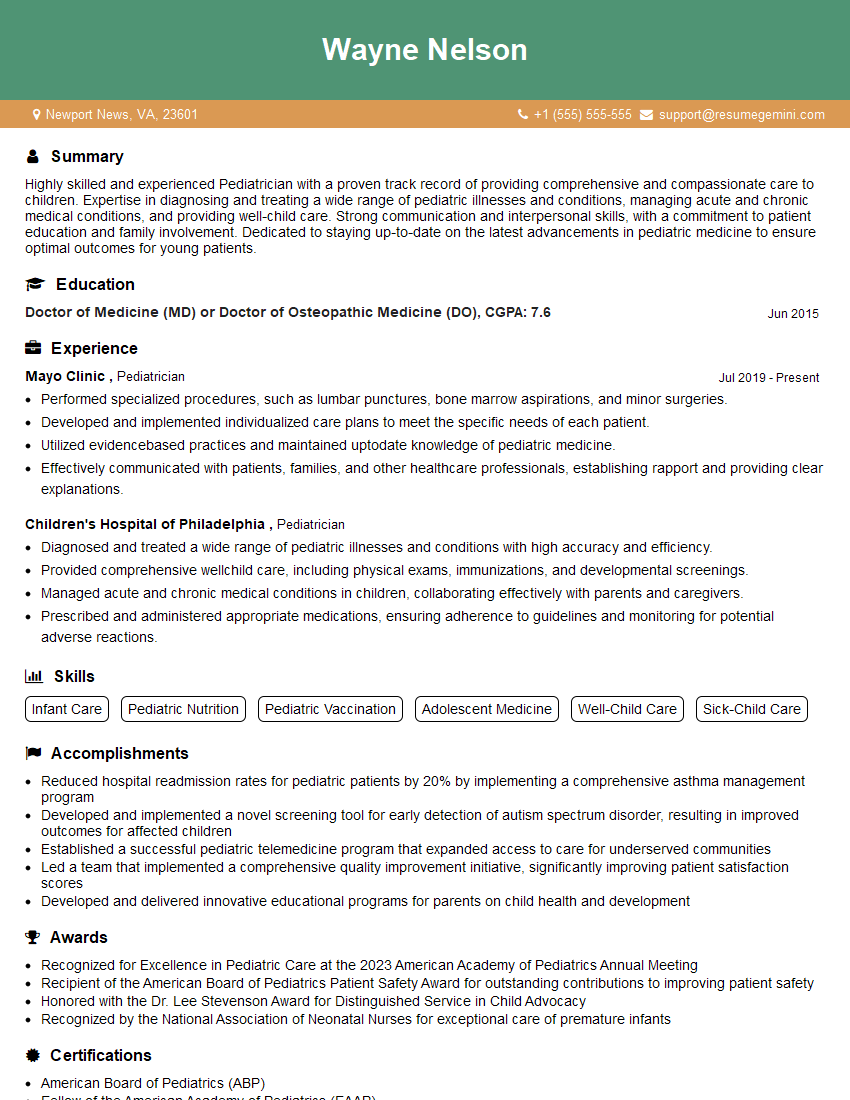
Mastering the complexities of childhood immunizations significantly enhances your career prospects in public health, pediatrics, and other related fields. A strong understanding of these topics demonstrates your commitment to children’s health and your ability to contribute effectively to a healthcare team. To maximize your job search success, it’s crucial to have an ATS-friendly resume that highlights your relevant skills and experience. ResumeGemini is a trusted resource that can help you build a professional and impactful resume designed to get noticed by recruiters. We provide examples of resumes tailored to Childhood Immunizations to help you get started. Invest in your future – create a resume that reflects your expertise and helps you land your dream job.
Explore more articles
Users Rating of Our Blogs
Share Your Experience
We value your feedback! Please rate our content and share your thoughts (optional).
What Readers Say About Our Blog
To the interviewgemini.com Webmaster.
Very helpful and content specific questions to help prepare me for my interview!
Thank you
To the interviewgemini.com Webmaster.
This was kind of a unique content I found around the specialized skills. Very helpful questions and good detailed answers.
Very Helpful blog, thank you Interviewgemini team.