The right preparation can turn an interview into an opportunity to showcase your expertise. This guide to Landfill Monitoring and Inspection interview questions is your ultimate resource, providing key insights and tips to help you ace your responses and stand out as a top candidate.
Questions Asked in Landfill Monitoring and Inspection Interview
Q 1. Describe the different types of landfill monitoring systems.
Landfill monitoring systems are crucial for environmental protection and public safety. They are designed to detect and manage potential hazards associated with waste decomposition, such as leachate (liquid waste) and landfill gas (LFG). Different types of systems are used depending on the specific needs of the landfill and regulatory requirements. These can be broadly categorized as:
- Leachate Monitoring: This involves monitoring the quantity and quality of leachate collected from the landfill. Methods include flow monitoring using flow meters, and regular sampling for analysis of various parameters like pH, conductivity, heavy metals, and organic compounds. Regular inspection of the leachate collection system itself is also vital to ensure its proper functioning.
- Landfill Gas Monitoring: This focuses on detecting and measuring the composition and concentration of landfill gas, primarily methane (CH4) and carbon dioxide (CO2). Methods include installing a network of wells at various locations within and around the landfill to sample the gas. This data is then analyzed to assess the risk of explosion or environmental pollution. The monitoring system might include pressure sensors and gas analyzers.
- Groundwater Monitoring: This system involves regularly sampling groundwater from monitoring wells located around the perimeter of the landfill to check for contamination from leachate. The analysis focuses on parameters such as levels of organic compounds, inorganic contaminants, and microbial indicators. This helps to ensure that the landfill liner is functioning properly and groundwater is not being compromised.
- Surface Water Monitoring: This involves monitoring surface water bodies near the landfill, such as streams and rivers, for potential contamination from leachate or runoff. Water quality parameters like dissolved oxygen, turbidity, and various pollutants are regularly measured.
- Settlement Monitoring: This tracks the changes in landfill surface elevation over time. Changes in the surface might suggest internal instability or problems with waste settlement. This is often achieved using surveying techniques and GPS technology.
The specific combination and complexity of these systems depend on factors such as landfill size, waste type, geology, and regulatory requirements.
Q 2. Explain the process of leachate collection and management.
Leachate management is a critical aspect of landfill operations. It involves the collection, treatment, and disposal of the liquid waste produced by decomposing waste. The process typically follows these steps:
- Collection: Leachate is collected through a network of pipes and sumps within the landfill. These systems are designed to efficiently channel leachate to a central collection point. Regular inspection and maintenance of the collection system are vital to prevent leaks and blockages.
- Treatment: Collected leachate is usually treated to remove pollutants before discharge or disposal. Treatment methods can range from simple processes like equalization and neutralization to more complex systems such as activated sludge treatment, anaerobic digestion, and reverse osmosis. The choice of treatment depends on the leachate characteristics and regulatory requirements.
- Disposal: After treatment, leachate can be disposed of in various ways. Treated leachate that meets regulatory standards may be discharged to surface water bodies or sanitary sewers. Alternatively, it can be land applied, though this is subject to stringent regulations. In some cases, treated leachate might need further processing or disposal in specialized facilities.
Effective leachate management is crucial for protecting groundwater and surface water resources. Failure to properly manage leachate can lead to significant environmental damage and regulatory penalties.
Q 3. What are the key components of a landfill gas monitoring plan?
A comprehensive landfill gas monitoring plan is essential for safety and environmental protection. It should include the following key components:
- Well Installation: A strategically designed network of gas monitoring wells is essential. The number and placement of these wells depend on the landfill’s size, design, and gas generation potential. Wells are typically installed throughout the landfill and its perimeter.
- Gas Monitoring Equipment: This includes gas detection devices at the wellheads to continuously monitor gas concentration and pressure. These can include fixed gas detection systems and portable analyzers used for periodic spot checks. Data loggers record gas measurements automatically at set intervals.
- Sampling Frequency and Analysis: The monitoring plan must define the frequency of gas sampling (e.g., daily, weekly) and the specific parameters to be analyzed (e.g., methane, carbon dioxide, oxygen). Detailed procedures must ensure accurate and reliable sample collection and analysis.
- Data Management and Reporting: A system for collecting, managing, and analyzing data is necessary. This involves the use of software or spreadsheets to record data, generate reports, and visualize trends. Regular reports must be submitted to regulatory agencies.
- Emergency Response Plan: In case of gas buildup beyond safety thresholds, a detailed plan outlines the emergency actions to be taken, including evacuation procedures, emergency contact information, and repair protocols.
- Maintenance and Calibration: Regular maintenance and calibration of monitoring equipment are essential for ensuring accurate and reliable readings. A schedule for these activities should be included in the plan.
A well-designed monitoring plan minimizes risks and ensures compliance with regulatory requirements. Regular review and updates of the plan are necessary to adapt to changing conditions within the landfill.
Q 4. How do you interpret landfill gas monitoring data?
Interpreting landfill gas monitoring data involves a systematic approach focusing on trends, anomalies, and exceeding threshold values. Here’s a breakdown:
- Trend Analysis: Analyzing the data over time helps identify patterns in gas generation. Increasing methane concentrations may indicate increased decomposition rates or potential issues with the landfill liner. Decreasing concentrations can be indicative of a change in waste composition or decreasing biological activity.
- Anomaly Detection: Sudden spikes or dips in gas concentrations, or changes in pressure readings, should be investigated thoroughly. These might point to equipment malfunction, liner failure, or unexpected waste decomposition.
- Threshold Exceedances: If gas concentrations exceed pre-defined safety or regulatory thresholds, it triggers immediate action, such as initiating emergency procedures or conducting further investigations.
- Correlation with Other Data: Integrating landfill gas monitoring data with other relevant data such as leachate analysis, groundwater monitoring, and meteorological information can provide a more holistic understanding of landfill performance. For example, rainfall may affect the amount of gas generated and the concentration of certain contaminants.
- Data Visualization: Using graphs and charts helps to visualize trends and anomalies in data more effectively, aiding in identifying potential issues early on.
Expert interpretation of the data is crucial for making informed decisions about landfill management, preventing environmental contamination, and ensuring the safety of workers and surrounding communities. Understanding the baseline levels and the normal fluctuations within the landfill is essential.
Q 5. What are the common regulatory requirements for landfill monitoring?
Regulatory requirements for landfill monitoring vary depending on location and specific legislation. However, common elements include:
- Permitting and Licensing: Landfills require permits or licenses, with specific conditions related to the monitoring and reporting requirements.
- Monitoring Frequency and Parameters: Regulations will specify the frequency of monitoring for various parameters (e.g., leachate, landfill gas, groundwater). These frequencies may vary depending on the landfill’s age, size, and waste type.
- Data Reporting and Record Keeping: Detailed records of monitoring data, including methods, results, and interpretations, must be maintained and submitted to regulatory agencies on a regular schedule.
- Threshold Limits and Corrective Actions: Regulations often define acceptable thresholds for various parameters, and the required corrective actions if thresholds are exceeded.
- Inspection and Audits: Regulatory agencies conduct periodic inspections and audits of landfills to ensure compliance with regulations. This involves reviewing monitoring records and conducting site visits.
- Closure and Post-Closure Monitoring: Regulations govern monitoring even after landfill closure. Post-closure monitoring continues for a specific period, ensuring the long-term protection of the environment.
Staying up-to-date with current regulations and any amendments is vital to maintain compliance. Non-compliance can result in significant penalties and legal consequences.
Q 6. Describe your experience with groundwater monitoring near landfills.
My experience with groundwater monitoring near landfills spans several projects involving various landfill types and geological settings. I’ve been involved in designing and implementing monitoring well networks, collecting and analyzing groundwater samples, and interpreting data to assess the potential for leachate migration.
For example, on a project involving a municipal solid waste landfill, we established a network of monitoring wells upgradient, downgradient, and at the sides of the landfill. We sampled the wells quarterly, analyzing for a range of parameters including various organic compounds (like VOCs and semi-VOCs), major ions, and metals. By analyzing the spatial and temporal trends in the groundwater data, we were able to confirm the integrity of the landfill liner and identify the potential for slight leachate migration in one area. This led to the implementation of remediation measures focused on preventing further contamination and improving the long-term protection of groundwater resources. In another project, we dealt with an industrial waste landfill with unique waste compositions. This demanded a more extensive monitoring plan with a longer list of target analytes to account for potential contamination from specific industrial chemicals.
The process typically begins with a thorough site assessment, including reviewing existing geological and hydrogeological data. This guides the optimal placement of the monitoring wells. Regular quality assurance and quality control measures are essential throughout the entire process, ensuring data accuracy and reliability.
Q 7. Explain the process of conducting a landfill inspection.
Conducting a landfill inspection involves a systematic and thorough evaluation of the landfill’s operational aspects and environmental performance. The process usually involves the following steps:
- Pre-Inspection Planning: This involves reviewing relevant documents such as permits, monitoring data, and site plans. The scope and objectives of the inspection should be clearly defined.
- Site Walk-through and Visual Inspection: A visual inspection of the landfill surface and surrounding areas identifies visible signs of problems, such as erosion, settlement, gas emissions, or leachate leaks. This also includes a check of landfill infrastructure such as the liner system, leachate collection system, and gas extraction system.
- Data Review and Verification: This stage includes verifying the accuracy and completeness of monitoring data related to leachate, landfill gas, groundwater, and surface water. Data quality and the interpretation of trends are critically evaluated.
- Equipment and Infrastructure Inspection: Inspecting equipment and infrastructure involves evaluating the functionality, maintenance, and overall condition of gas extraction systems, leachate collection and treatment systems, and other critical components. It also ensures that all safety and operating procedures are followed.
- Documentation and Reporting: The inspection findings, including observations, data analysis, and recommendations, are documented in a detailed report. This report should clearly specify any non-compliances, safety concerns, and recommended corrective actions.
- Follow-up and Corrective Actions: After submitting the inspection report, a follow-up is crucial to ensure that any identified non-compliances or safety concerns are addressed promptly and effectively. This may involve conducting subsequent inspections to verify the implementation of corrective actions.
Landfill inspections are important for ensuring compliance with regulations, identifying potential environmental risks, and promoting safe and efficient landfill operations. A skilled inspector should be familiar with relevant legislation, best practices, and potential hazards associated with landfills.
Q 8. What are the signs of landfill instability?
Landfill instability manifests in several ways, often subtly at first. Think of it like a slowly deflating balloon – initially you might not notice, but eventually, the signs become more pronounced. Early signs can include:
- Ground settlement or subsidence: This is a gradual lowering of the land surface above the landfill, often visible as cracks in roads or pavements. I once worked on a site where uneven settlement led to significant damage to a nearby building’s foundation.
- Slope instability: Steep landfill slopes are prone to landslides, especially during periods of heavy rainfall. Properly compacted waste is essential to prevent this; insufficient compaction increases the risk significantly.
- Surface cracking and fissuring: These cracks can indicate internal stress within the landfill mass, potentially leading to more serious issues. Regular visual inspections help catch these early.
- Leakage from the landfill liner system: This is a critical sign of instability, potentially leading to groundwater contamination. We employ sophisticated monitoring systems – including groundwater wells and leachate collection systems – to detect this immediately.
- Changes in leachate quality and quantity: A sudden increase in leachate volume or alteration in its chemical composition can indicate instability or a breach in the liner system. We monitor this continuously for immediate responses.
Addressing instability often involves remediation efforts like improved compaction, slope stabilization, liner repairs, and potentially even landfill capping or closure ahead of schedule.
Q 9. How do you identify and address potential environmental hazards in a landfill?
Identifying and addressing environmental hazards in a landfill is a multi-faceted process requiring proactive monitoring and swift response. It’s like being a detective, constantly looking for clues indicating potential problems. Key hazards include:
- Groundwater contamination: Leachate (liquid from decomposing waste) can escape the landfill if the liner is compromised. We regularly test groundwater for contaminants and implement corrective actions such as liner repairs or enhanced leachate collection. I’ve seen instances where a faulty liner section was successfully replaced minimizing environmental impact.
- Air emissions: Landfills release methane, a potent greenhouse gas, and other volatile organic compounds (VOCs). We use gas monitoring wells and collection systems to capture and either flare or utilize the methane for energy generation – turning a problem into a resource.
- Surface water contamination: Runoff from rainfall can pick up contaminants from the landfill surface, if not properly managed. Implementing effective surface water management systems, like properly designed drainage networks and vegetated buffers is crucial.
- Soil erosion: Erosion can expose waste and lead to the release of pollutants. We utilize erosion control measures, such as proper landscaping and vegetation.
Addressing these hazards involves a combination of preventative measures (e.g., robust liner systems, proper waste management) and reactive measures (e.g., remediation, cleanup). Regular monitoring and reporting are essential to maintain compliance with regulations and protect the environment.
Q 10. What are the different methods for landfill cover assessment?
Landfill cover assessment is crucial for ensuring environmental protection and long-term stability. It’s like checking the roof of a house – you want to make sure it’s intact and doing its job. Methods include:
- Visual inspections: Regular visual inspections identify surface erosion, settling, vegetation growth, and other signs of damage. High-resolution imagery captured by drones can help in assessing larger areas quickly and efficiently.
- Geotechnical investigations: These involve soil sampling and testing to determine the cover’s thickness, density, and stability. This data can reveal potential issues like compaction issues before they become visible problems.
- Hydrological assessments: These studies assess the cover’s ability to prevent water infiltration and manage runoff. They may use advanced modelling techniques to predict future performance.
- Gas monitoring: Monitoring methane emissions through the cover helps assess its integrity and effectiveness in preventing gas migration. Sensors are often embedded in the cover to provide continuous data.
- Remote sensing techniques: Satellite imagery and LiDAR can be used to monitor large areas for changes in elevation, vegetation, and other indicators of cover integrity.
The choice of methods depends on the landfill’s size, age, and specific environmental concerns. Often a combination is employed for a comprehensive assessment.
Q 11. Explain the principles of landfill liner integrity assessment.
Landfill liner integrity assessment is critical for preventing leachate from escaping into the environment. Imagine a liner as a giant waterproof barrier – any cracks or damage compromise its effectiveness. Assessment methods include:
- Visual inspections: Inspections during construction and periodic checks after completion are crucial for detecting visible defects. These are important as many potential problems are noticed during visual assessment.
- Geophysical techniques: Ground-penetrating radar (GPR) and electromagnetic induction (EMI) can detect subsurface defects, like cracks or delamination, without the need for extensive excavation.
- Hydrogeological testing: This involves monitoring groundwater levels and quality to detect any signs of leachate leakage. These tests can identify even the smallest of leaks.
- Hydraulic testing: This involves filling the liner system with water and measuring the rate of leakage. It directly measures the permeability and integrity of the liner system.
- Chemical testing: Sampling the leachate collected from the system provides an indication of any potential liner breach, allowing for early detection of problems.
A combination of these methods is often used to provide a comprehensive assessment of liner integrity, ensuring the safety of the surrounding environment. The frequency of these assessments depends on factors like the age of the landfill and the risk level.
Q 12. How do you ensure the accuracy and reliability of landfill monitoring data?
Ensuring accuracy and reliability of landfill monitoring data is paramount. It’s like using a precise scale – you need to make sure it’s calibrated and providing accurate measurements. We employ several strategies:
- Calibration and maintenance of equipment: Regular calibration and maintenance of monitoring equipment (e.g., sensors, gas analyzers, water quality meters) are essential. Calibration checks, for example, are part of our standard operational procedures and are done daily to guarantee accuracy.
- Quality control procedures: Implementing strict quality control procedures during sampling, analysis, and data entry minimizes errors. A sample chain-of-custody system is followed rigorously.
- Data validation and verification: Data is thoroughly checked for inconsistencies and outliers before being used for analysis. Using data validation software helps flag unexpected values.
- Data management system: A robust data management system helps store, retrieve, and analyze data efficiently. We use a sophisticated database system allowing us to perform trend analysis and generate reports.
- Independent audits: Regular independent audits of the monitoring program help ensure the accuracy and reliability of the data. An external consultant reviews all our procedures and data for compliance and regulatory requirements.
These procedures help identify and address potential issues early, allowing for timely corrective actions.
Q 13. Describe your experience with landfill closure and post-closure care.
I have extensive experience in landfill closure and post-closure care. It’s like carefully preparing a house for a long winter – ensuring everything is properly sealed and protected. Closure involves several phases:
- Final cover installation: This involves placing a final layer of soil and vegetation to prevent erosion, manage water infiltration, and promote revegetation. We carefully compact the soil to ensure its long-term stability. I’ve been involved in projects where we integrated native plants which helped speed up the restoration process.
- Gas management system installation: A final gas management system is installed to collect and control methane emissions. This is crucial to minimize environmental impact and, in some cases, can be used to generate energy.
- Leachate management system decommissioning: The leachate collection system is decommissioned or modified for post-closure monitoring. If there’s no longer any leachate it’s removed, if there is a small amount, this is often monitored through a reduced system.
- Monitoring well installation: Monitoring wells are installed to monitor groundwater quality and landfill gas migration after closure. These are crucial for post-closure monitoring programs.
Post-closure care involves long-term monitoring and maintenance of the final cover and gas management systems. This is vital to ensure that the landfill doesn’t pose an environmental hazard for decades to come. I oversaw a project where long-term monitoring showed consistent stability and we were able to reduce monitoring frequency after many years.
Q 14. What are the environmental impacts of landfill operations?
Landfill operations have several environmental impacts, some positive, but many negative if not managed properly. It’s like a double-edged sword – carefully managed, the impact is reduced, but mismanagement leads to significant problems. Key impacts include:
- Greenhouse gas emissions: Decomposing waste produces methane, a potent greenhouse gas. This is mitigated by capturing the gas and using it as fuel, or flaring it to convert it into carbon dioxide. I’ve seen projects where methane capture has resulted in significant carbon reduction.
- Groundwater and surface water contamination: Leachate from decomposing waste can contaminate water resources if not properly managed. This is mitigated by installing liner systems and leachate collection systems.
- Air pollution: Landfills can release odors and other air pollutants. Proper waste management practices, such as covering waste daily, can significantly reduce this impact.
- Habitat loss and fragmentation: Landfills can destroy natural habitats and fragment landscapes. Effective site selection and remediation efforts post-closure minimize the impact.
- Visual impacts: Landfills can be unsightly. Careful site planning and landscaping efforts are vital to integrate them into the surrounding environment.
Minimizing these impacts requires careful planning, design, construction, operation, and post-closure care. Sustainable landfill management practices are becoming increasingly important to reduce environmental footprints and promote long-term sustainability.
Q 15. How do you manage and mitigate risks associated with landfill operations?
Managing and mitigating risks in landfill operations is a multifaceted process requiring a proactive and preventative approach. It involves a layered strategy encompassing careful site selection, robust design, rigorous monitoring, and effective emergency response planning.
- Site Selection: Choosing a location with minimal environmental sensitivity (e.g., avoiding floodplains, karst formations, and areas with high groundwater tables) significantly reduces long-term risks.
- Design and Engineering: Implementing multiple barriers, such as engineered liners (clay, geomembrane), leachate collection systems, and gas extraction networks, is crucial in preventing contamination. Properly designed landfills are less prone to failure and environmental incidents.
- Monitoring: Regular monitoring of key parameters (gas, leachate, groundwater) allows for early detection of potential problems. This data informs decision-making and allows for prompt corrective actions, minimizing the extent of any environmental damage.
- Emergency Response: A well-defined emergency response plan is essential to quickly address unexpected events such as liner breaches, fires, or significant gas releases. This involves trained personnel, equipment, and established communication protocols.
- Closure and Post-Closure Care: Planning for landfill closure and long-term post-closure monitoring is critical. This ensures the long-term protection of the environment and minimizes the risk of future problems. This often involves implementing cover systems and ongoing groundwater monitoring.
For example, in a project I managed, we implemented a real-time gas monitoring system that alerted us to a sudden increase in methane concentration. This allowed us to immediately investigate and identify a localized liner issue, preventing a much larger and more costly problem.
Career Expert Tips:
- Ace those interviews! Prepare effectively by reviewing the Top 50 Most Common Interview Questions on ResumeGemini.
- Navigate your job search with confidence! Explore a wide range of Career Tips on ResumeGemini. Learn about common challenges and recommendations to overcome them.
- Craft the perfect resume! Master the Art of Resume Writing with ResumeGemini’s guide. Showcase your unique qualifications and achievements effectively.
- Don’t miss out on holiday savings! Build your dream resume with ResumeGemini’s ATS optimized templates.
Q 16. Explain your experience with environmental regulations related to landfills.
My experience with environmental regulations related to landfills spans over 15 years, encompassing various jurisdictions and regulatory frameworks. I am intimately familiar with regulations such as the Resource Conservation and Recovery Act (RCRA) in the US, as well as state and local ordinances.
- Permitting and Compliance: I’ve been involved in all stages of the permitting process, from initial applications to compliance monitoring and reporting. This includes ensuring adherence to standards related to liner design, leachate management, gas control, and groundwater protection.
- Environmental Impact Assessment (EIA): I’ve participated in the preparation and review of EIAs for new landfill projects and expansions, ensuring compliance with all relevant environmental regulations.
- Enforcement and Audits: I have extensive experience with navigating regulatory audits and inspections, proactively addressing any non-compliance issues to maintain compliance.
- Regulatory Changes: I stay up-to-date on evolving environmental regulations and best practices. This allows me to adapt our operations and monitoring protocols to meet the constantly changing requirements.
For instance, I successfully guided a client through a rigorous regulatory audit that resulted in a clean bill of health, demonstrating our rigorous adherence to the regulations.
Q 17. Describe your experience with using GIS software for landfill monitoring.
GIS software is indispensable for efficient landfill monitoring. It provides a powerful platform for visualizing, analyzing, and managing the vast amount of spatial data associated with landfills.
- Data Integration: GIS integrates data from various sources, including monitoring wells, gas probes, survey data, and boundary information. This creates a comprehensive spatial overview of the landfill site.
- Spatial Analysis: GIS tools allow for spatial analysis of data, such as identifying areas with elevated gas concentrations, potential leachate migration pathways, or groundwater contamination. This supports proactive management decisions.
- Visualization and Reporting: Creating maps and reports for stakeholders is streamlined using GIS. This ensures easy communication of site conditions and monitoring results.
- Predictive Modeling: In some cases, advanced GIS capabilities can be used for predictive modeling, forecasting potential future issues and helping with preventative measures.
In one project, I used ArcGIS to create a 3D model of the landfill, incorporating topography, liner layers, and monitoring well data. This helped us visualize potential leachate pathways and guide decisions related to the installation of new wells.
Q 18. How do you analyze and interpret data from various landfill monitoring parameters (e.g., gas, leachate, groundwater)?
Analyzing data from landfill monitoring parameters requires a thorough understanding of hydrogeology, geochemistry, and environmental engineering. It involves more than just looking at numbers; it requires interpretation in the context of site conditions and regulatory requirements.
- Gas Monitoring: Analysis of landfill gas data (methane, carbon dioxide) focuses on identifying trends, detecting leaks, and ensuring effective gas extraction system performance. Increases in methane could indicate a liner issue or changes in waste degradation rates.
- Leachate Monitoring: Analyzing leachate chemistry (pH, conductivity, contaminants) helps to track the effectiveness of the leachate collection and treatment systems. Unexpected changes could signal a problem with waste decomposition or liner integrity.
- Groundwater Monitoring: Analyzing groundwater data for contaminants allows us to assess the effectiveness of the landfill’s barrier systems in preventing groundwater contamination. Increases in specific contaminants can trigger more detailed investigations.
Trend analysis is vital. A single data point might be an anomaly, but a consistent trend indicates a potential problem that needs attention. I typically use statistical software and data visualization techniques to identify trends and anomalies.
Q 19. What are the best practices for sampling and analyzing landfill gas?
Best practices for sampling and analyzing landfill gas involve ensuring representative samples and using appropriate analytical methods.
- Sampling Location: Sampling points should be strategically located across the landfill to provide a representative picture of gas concentrations. This typically involves a grid system or placement according to specific risk areas.
- Sampling Frequency: The frequency of sampling depends on the site conditions, regulatory requirements, and the level of risk. More frequent sampling may be required in areas with higher gas concentrations or known issues.
- Sampling Methods: Appropriate sampling techniques must be used to avoid contamination and ensure accurate results. This often involves using dedicated gas sampling probes and equipment.
- Laboratory Analysis: Samples are sent to accredited laboratories for analysis using techniques like gas chromatography. Chain of custody procedures must be meticulously followed to ensure data integrity.
- Data Quality Control: Data quality control measures, including calibration checks, blank samples, and duplicates, ensure accurate and reliable results. This is a critical step in data interpretation.
For instance, in one project, we encountered inconsistencies in gas readings from a particular probe. By tracing the probe line, we discovered a small crack that led to inaccurate readings. This highlights the importance of careful attention to detail in sampling.
Q 20. Describe your experience with different types of landfill liners and covers.
My experience encompasses various types of landfill liners and covers, each with its own strengths and weaknesses. The selection depends on factors such as site conditions, waste characteristics, and regulatory requirements.
- Clay Liners: These are relatively inexpensive and utilize the natural low permeability of compacted clay to impede leachate migration. However, their performance can be affected by cracking and desiccation.
- Geomembrane Liners: High-density polyethylene (HDPE) geomembranes provide superior impermeability compared to clay. They are resistant to cracking, but require careful installation and protection from punctures.
- Composite Liners: These combine geomembranes with clay liners to create a highly effective barrier system that benefits from both materials’ strengths.
- Covers: Final covers are essential for preventing infiltration and controlling gas emissions. Different types exist, including soil covers, vegetation covers, and engineered covers incorporating geosynthetics.
The choice of liner and cover has significant implications for long-term performance and environmental protection. I’ve been involved in projects utilizing various liner systems and have a solid understanding of their performance characteristics and limitations.
Q 21. How do you handle discrepancies or inconsistencies in landfill monitoring data?
Handling discrepancies or inconsistencies in landfill monitoring data requires a systematic approach combining investigation, verification, and corrective actions.
- Data Verification: The first step is to verify the data’s accuracy. This may involve reviewing field data sheets, laboratory reports, and checking for calibration errors or equipment malfunctions.
- Investigate the Source: If discrepancies persist, a thorough investigation is required to identify the source of the inconsistency. This might involve re-sampling, inspecting equipment, or reviewing site conditions.
- Root Cause Analysis: Determining the root cause of the inconsistency is essential. This may involve factors such as equipment failure, human error, or unexpected changes in site conditions.
- Corrective Actions: Once the source is identified, appropriate corrective actions are implemented. This may involve repairing equipment, implementing new procedures, or modifying monitoring protocols.
- Reporting and Documentation: All discrepancies, investigations, and corrective actions are documented and reported to the relevant regulatory agencies.
For example, in a past situation, we identified an inconsistency in groundwater data from one specific well. Investigation revealed that construction work nearby had disrupted the well casing, causing inaccurate readings. We repaired the well and implemented a more robust monitoring schedule.
Q 22. Explain your experience with reporting and documentation in landfill monitoring.
Reporting and documentation are the backbone of effective landfill monitoring. My experience encompasses meticulously documenting every aspect of a landfill’s operation, from initial site assessments to ongoing monitoring and closure activities. This includes creating comprehensive reports detailing:
- Site inspections: These reports detail observations of landfill conditions, such as gas levels, leachate collection, and settlement. For example, I’d document the exact location of any observed cracks in the liner, including photos and GPS coordinates.
- Monitoring data: This involves compiling data from various monitoring systems, including groundwater wells, methane monitoring wells, and surface water quality monitoring points. I then analyze this data to identify trends and anomalies. We might, for instance, use a time-series graph to track methane gas levels over several months, allowing us to detect potential leaks or increased gas generation.
- Compliance reports: These reports demonstrate compliance with environmental regulations and permits. I’m very familiar with generating reports needed for regulatory agencies, including detailed data tables, compliance summaries, and supporting documentation.
- Corrective actions: Any identified issues, including corrective actions taken, are carefully documented with timelines and responsible parties. If, for instance, a leachate leak was detected, I’d detail the remediation steps taken, including the type of sealant used and the frequency of monitoring following repairs.
All my documentation is stored in a secure, organized system easily accessible to stakeholders, ensuring transparency and accountability.
Q 23. Describe your experience with conducting environmental impact assessments for landfills.
Conducting environmental impact assessments (EIAs) for landfills requires a multi-faceted approach, focusing on potential impacts across various environmental media. My experience involves leading EIAs, which typically include:
- Baseline studies: Thorough assessments of existing environmental conditions, such as soil and water quality, air quality, and flora and fauna, are fundamental. This creates a benchmark against which future impacts can be measured. For example, we might collect groundwater samples from numerous boreholes to establish baseline levels of various contaminants.
- Impact prediction: This stage uses various modeling techniques (e.g., hydrological, air dispersion models) to predict potential impacts from landfill operations. For instance, we might use a leachate transport model to predict the potential spread of contaminants in groundwater.
- Mitigation measures: We’d propose strategies to reduce or eliminate negative environmental impacts. These might include liner systems, leachate collection and treatment, gas collection and flaring, and erosion control measures.
- Risk assessment: This involves identifying and evaluating potential risks and uncertainties associated with landfill operations. We’d develop a risk matrix to prioritize potential hazards and inform mitigation strategy.
- Regulatory compliance: The EIA must comply with all relevant environmental regulations and permits. I’m very familiar with navigating the regulatory landscape and ensuring compliance.
Ultimately, a well-executed EIA provides a robust framework for managing environmental risks and ensuring the sustainable operation of a landfill.
Q 24. How do you utilize data analysis techniques to identify trends and patterns in landfill monitoring data?
Data analysis is crucial for extracting meaningful insights from landfill monitoring data. I employ various techniques including:
- Statistical analysis: This includes descriptive statistics (mean, median, standard deviation) to summarize data and inferential statistics (t-tests, ANOVA) to compare data sets. For example, we might compare methane concentrations between different monitoring wells to identify areas with higher gas generation.
- Trend analysis: Time-series plots are frequently used to visualize trends in data over time, allowing for the early detection of issues. For instance, a sudden increase in leachate levels over time could indicate a liner failure.
- Spatial analysis: Mapping techniques are used to visualize spatial patterns in data, such as the distribution of contaminants in groundwater. This helps to pinpoint specific problem areas.
- Regression analysis: This technique can be used to model relationships between different variables, such as the relationship between rainfall and leachate production. This can be crucial for forecasting future behavior.
- Data mining and machine learning: For very large and complex datasets, more sophisticated techniques like data mining or machine learning algorithms can be applied to identify patterns and anomalies that may not be readily apparent using simpler methods. For example, clustering algorithms could be used to group monitoring wells with similar behavior.
The choice of technique depends on the specific data and the objectives of the analysis. Combining these methods helps build a comprehensive understanding of landfill performance and environmental impacts.
Q 25. What is your experience with using different types of monitoring equipment?
My experience with monitoring equipment spans a wide range of technologies. This includes:
- Groundwater monitoring wells and sampling equipment: I’m proficient in installing, maintaining, and sampling from groundwater monitoring wells. This includes using specialized pumps and sampling techniques to collect representative samples for laboratory analysis.
- Gas monitoring systems: Experience with various gas detection systems, including portable gas detectors and automated continuous monitoring systems for methane, carbon dioxide, and other landfill gases. I know how to calibrate, maintain, and troubleshoot these systems.
- Leachate monitoring systems: I’m familiar with systems for measuring leachate flow rates, levels, and quality. This includes using flow meters, level sensors, and automated samplers.
- Settlement monitoring equipment: Experience with various techniques for measuring landfill settlement, including GPS surveys, inclinometers, and total stations. This is crucial for ensuring the stability and integrity of the landfill.
- Surface water monitoring equipment: I’m proficient in collecting surface water samples and using instruments to measure parameters such as pH, turbidity, and dissolved oxygen.
I also have extensive experience in interpreting the data collected by these instruments, ensuring accurate and reliable readings.
Q 26. How would you respond to an emergency situation involving a landfill?
Responding to a landfill emergency requires a rapid, coordinated response. My approach would follow these steps:
- Immediate Assessment: First, I’d assess the nature and extent of the emergency (e.g., fire, leachate leak, gas release). This involves using available monitoring data and conducting on-site inspections.
- Emergency Response Plan Activation: I’d activate the relevant emergency response plan, notifying the appropriate authorities (e.g., fire department, environmental agency, emergency services). This plan should be detailed and regularly practiced.
- Containment and Mitigation: Immediate actions to contain and mitigate the emergency would be taken based on the nature of the problem. This may involve deploying fire suppression equipment, plugging a leachate leak, or implementing gas mitigation strategies.
- Evacuation and Safety: If necessary, an evacuation of nearby areas would be initiated to protect public safety. This would involve coordinating with local authorities and emergency services.
- Investigation and Reporting: After the immediate emergency is contained, a thorough investigation into the cause of the incident would be conducted. A detailed report summarizing the event, response actions, and lessons learned would be prepared and submitted to regulatory authorities.
- Corrective Actions: Based on the investigation, appropriate corrective actions would be implemented to prevent future incidents. This might include upgrading existing infrastructure or implementing improved operational procedures.
Effective communication throughout the entire process is critical to ensure a swift and coordinated response.
Q 27. Describe your proficiency in interpreting environmental regulations and permits.
Interpreting environmental regulations and permits is a core competency in landfill management. My proficiency includes:
- Understanding relevant legislation: I’m deeply familiar with federal, state, and local regulations pertaining to landfill design, construction, operation, monitoring, and closure. This includes understanding specific requirements for waste acceptance criteria, liner system design, groundwater monitoring, and gas management.
- Permit review and compliance: I can meticulously review environmental permits, ensuring that all requirements are understood and adhered to. This includes analyzing permit conditions related to monitoring frequencies, reporting requirements, and acceptable environmental limits. For example, if a permit specifies quarterly groundwater monitoring, I’d ensure that we stay on schedule and follow the stipulated methodology.
- Permit application preparation: I’m experienced in assisting with the preparation of permit applications, including gathering and analyzing data, preparing supporting documentation, and submitting applications to regulatory agencies. This ensures that the applications accurately reflect site conditions and meet all regulatory requirements.
- Staying current with changes: The regulatory landscape is constantly evolving. I regularly update my knowledge to ensure compliance with the latest regulations and best practices.
Staying abreast of these regulations is vital for ensuring the legal and environmental integrity of landfill operations.
Q 28. What are your strategies for optimizing landfill monitoring efficiency and cost-effectiveness?
Optimizing landfill monitoring efficiency and cost-effectiveness requires a strategic approach. My strategies include:
- Risk-based monitoring: Rather than employing a blanket approach, I’d focus monitoring efforts on areas with higher risk of environmental impact. This involves using risk assessments to prioritize monitoring activities and allocate resources effectively. For example, areas with thin liner systems or known geological vulnerabilities might receive more frequent monitoring.
- Advanced technologies: Integrating advanced monitoring technologies such as remote sensing, automated monitoring systems, and data analytics can significantly improve efficiency and reduce labor costs. For example, using sensors to continuously monitor methane gas levels eliminates the need for frequent manual sampling.
- Data analysis and modeling: Sophisticated data analysis techniques, like those mentioned previously, can help identify patterns and predict future landfill behavior. This reduces the need for overly frequent monitoring and allows for more targeted inspections.
- Collaboration and communication: Effective communication and collaboration among landfill operators, consultants, and regulatory agencies streamline the process and avoid redundancies. Sharing data and coordinating monitoring activities can reduce costs and enhance efficiency.
- Regular review and optimization: The monitoring program should be reviewed regularly to assess its effectiveness and identify areas for improvement. This ensures that the program remains relevant, cost-effective, and adaptable to changing conditions.
By strategically applying these strategies, we can ensure environmental protection while maximizing resource utilization and minimizing operational costs.
Key Topics to Learn for Landfill Monitoring and Inspection Interview
- Gas Monitoring and Management: Understanding landfill gas generation, composition, and migration; methods for detection, monitoring, and control (e.g., flares, extraction systems); interpreting monitoring data and identifying potential hazards.
- Leachate Management: Knowledge of leachate generation, collection, and treatment processes; understanding regulatory requirements for leachate quality and discharge; experience with leachate sampling and analysis.
- Settlement and Stability: Understanding the principles of landfill settlement and its impact on infrastructure; methods for monitoring settlement (e.g., surveying, inclinometers); interpreting settlement data and identifying potential stability issues.
- Environmental Compliance and Regulations: Familiarity with relevant environmental regulations and permitting requirements for landfills; understanding reporting procedures and compliance monitoring techniques.
- Site Safety and Risk Management: Knowledge of relevant safety protocols and procedures for working in a landfill environment; understanding potential hazards (e.g., gas, leachate, unstable ground) and risk mitigation strategies.
- Data Analysis and Reporting: Proficiency in interpreting monitoring data, identifying trends, and preparing comprehensive reports; experience with data management software and reporting tools.
- Closure and Post-Closure Care: Understanding the process of landfill closure and post-closure monitoring; knowledge of long-term care requirements and responsibilities.
- Practical Application: Discuss real-world examples demonstrating your ability to troubleshoot issues, interpret data, and make informed decisions based on monitoring results. Be prepared to explain your problem-solving approach in detail.
Next Steps
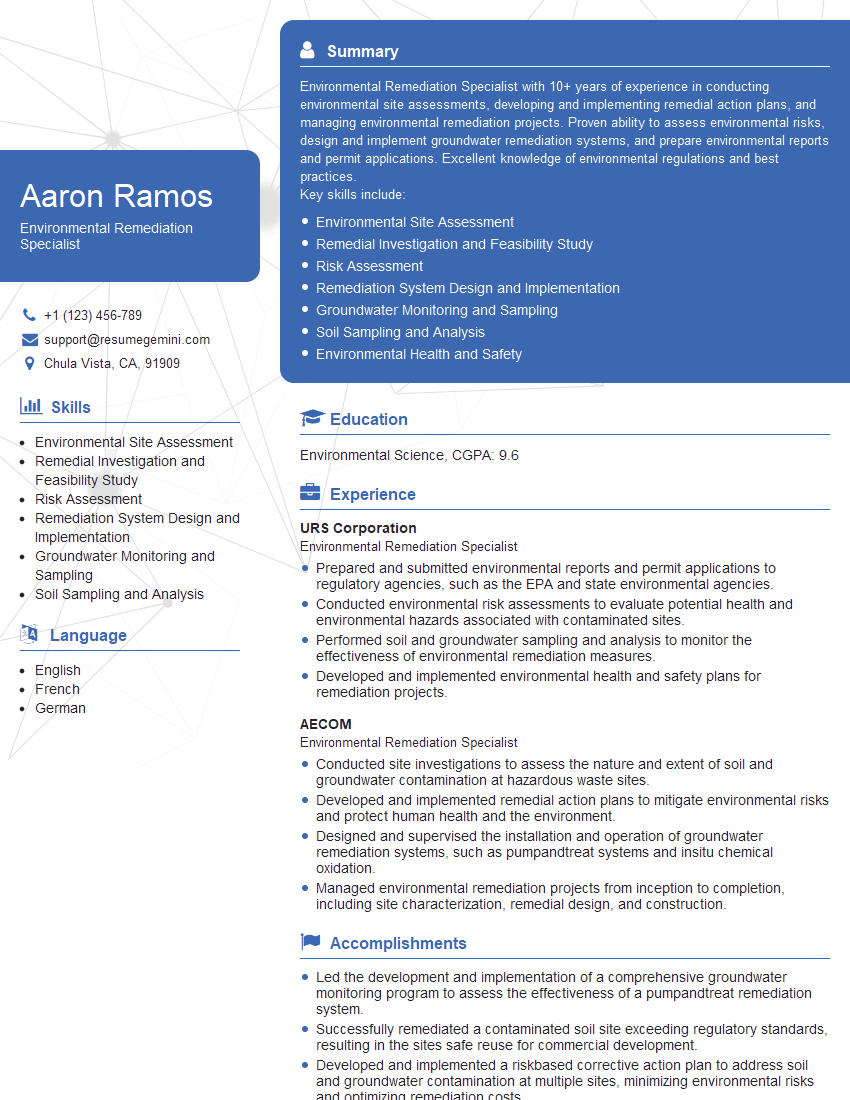
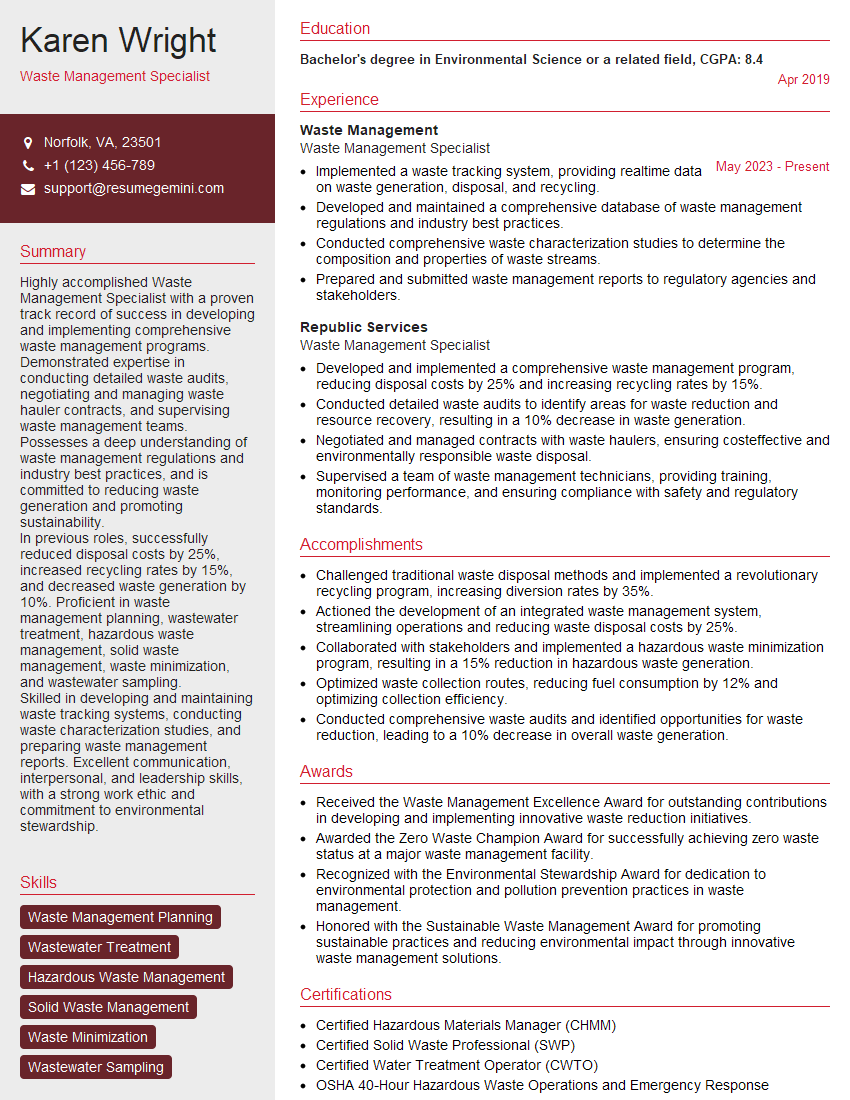
Mastering Landfill Monitoring and Inspection opens doors to a rewarding career with excellent growth potential in the environmental sector. Landfill professionals are crucial for environmental protection and public safety. To significantly boost your job prospects, create a compelling and ATS-friendly resume that highlights your skills and experience effectively. ResumeGemini is a trusted resource to help you build a professional and impactful resume tailored to the specific requirements of Landfill Monitoring and Inspection roles. Examples of resumes tailored to this field are available to guide you. Invest time in crafting a standout resume – it’s your first impression on potential employers.
Explore more articles
Users Rating of Our Blogs
Share Your Experience
We value your feedback! Please rate our content and share your thoughts (optional).
What Readers Say About Our Blog
To the interviewgemini.com Webmaster.
Very helpful and content specific questions to help prepare me for my interview!
Thank you
To the interviewgemini.com Webmaster.
This was kind of a unique content I found around the specialized skills. Very helpful questions and good detailed answers.
Very Helpful blog, thank you Interviewgemini team.