Interviews are more than just a Q&A session—they’re a chance to prove your worth. This blog dives into essential Nutrients Management Planning interview questions and expert tips to help you align your answers with what hiring managers are looking for. Start preparing to shine!
Questions Asked in Nutrients Management Planning Interview
Q 1. Explain the principles of nutrient cycling in agricultural systems.
Nutrient cycling is the continuous movement of nutrients through the environment, involving their uptake by plants, decomposition of organic matter, and release back into the soil. Think of it like a natural recycling program. In agricultural systems, understanding this cycle is crucial for sustainable production.
- Mineralization: Organic matter, like dead plants and animal waste, is broken down by microorganisms into inorganic forms of nutrients (e.g., ammonium, nitrate, phosphate) that plants can absorb. This is like composting on a larger scale.
- Immobilization: Microorganisms themselves use nutrients during decomposition, temporarily locking them up in their biomass. It’s like putting nutrients into savings for a bit.
- Nutrient Uptake: Plants absorb these inorganic nutrients through their roots, using them for growth and development. This is the main reason we farm!
- Leaching and Runoff: Nutrients can be lost from the system through leaching (movement of dissolved nutrients downwards in the soil profile) and runoff (loss of nutrients from the soil surface via water). This is akin to spilling some of the ingredients we carefully gathered.
- Atmospheric Deposition: Some nutrients enter the system from the atmosphere, such as nitrogen from rainfall and dust. This is like getting unexpected bonus nutrients.
Managing nutrient cycling efficiently involves practices that promote mineralization (e.g., using cover crops, adding compost), minimize losses through leaching and runoff (e.g., using conservation tillage), and optimize nutrient uptake (e.g., using appropriate fertilizer types and application methods). For instance, a farmer might use cover crops like clover to add nitrogen to the soil naturally, thus reducing the need for synthetic fertilizers and minimizing environmental impact.
Q 2. Describe different methods for soil nutrient testing.
Soil nutrient testing is essential for determining nutrient deficiencies and excesses, guiding fertilizer application decisions. Several methods exist, each with its strengths and weaknesses.
- Chemical Analysis (Laboratory testing): Soil samples are sent to a laboratory for analysis of various nutrients (e.g., N, P, K, micronutrients). This is the gold standard, offering precise quantitative data. However, it’s time-consuming and costly.
- Plant Tissue Analysis: Analysis of plant samples provides information on nutrient uptake and availability. It complements soil testing, indicating nutritional status of the growing crop. This is like taking a health checkup of the plants.
- Rapid Soil Tests (Field Tests): These are simpler, less precise tests done in the field, giving immediate, though less accurate, feedback on nutrient levels. They help guide management decisions, but should be complemented with laboratory testing for precise data. Think of this as a quick health check instead of a full medical exam.
- Spectroscopic Methods: Techniques like near-infrared (NIR) spectroscopy are increasingly used for rapid and simultaneous determination of multiple soil properties including nutrient levels. This is a more advanced, technology-driven approach.
Choosing the appropriate method depends on budget, time constraints, and the precision required. For instance, a large farm might use rapid tests for initial assessments and lab testing for more critical areas or crops. A home gardener might opt for a simple home soil test kit.
Q 3. How do you determine appropriate fertilizer application rates for different crops?
Determining appropriate fertilizer application rates is critical for maximizing crop yields while minimizing environmental impacts. This requires a multi-step process.
- Soil Test Results: Soil testing provides baseline data on nutrient levels. Knowing what’s already in the soil allows you to calculate the amount to add.
- Crop Requirements: Different crops have varying nutrient needs, depending on their growth stage, yield goals, and nutrient uptake efficiency. A corn crop will need far more nitrogen than a lettuce crop.
- Yield Goals: Higher yield targets necessitate higher nutrient inputs. We have to feed the plant enough to reach our harvest goals.
- Nutrient Use Efficiency: Nutrient use efficiency (NUE) is the percentage of applied fertilizer taken up by the plant. Factors like soil type, weather, and management practices affect NUE. Efficiency is key for maximizing the return on your investment and for protecting the environment.
- Fertilizer Source: Different fertilizers have varying nutrient contents and release rates. Choosing the right type and appropriate quantity is important.
- Manure/Compost Contribution: If using animal manure or compost, nutrient content must be accounted for in fertilizer calculations to avoid over-fertilization. Manure already contains nutrients that will feed the plant.
Combining soil test data, crop needs, yield goals, and fertilizer efficiency, we can calculate the required fertilizer amount. For example, let’s say soil tests show a low phosphorus level, and the selected crop requires 50 lbs of phosphorus per acre for optimal yield. Then, accounting for the phosphorus already in the soil and the phosphorus content of the fertilizer, we can work out the amount of fertilizer needed. Software and online tools are also available to assist in these calculations.
Q 4. What are the key factors to consider when developing a nutrient management plan?
A comprehensive nutrient management plan (NMP) considers multiple factors to achieve efficient nutrient use and minimize environmental impact.
- Soil Testing: Regular soil testing to assess nutrient availability.
- Crop Selection: Choosing crops suitable for the soil type and climate, with appropriate nutrient needs.
- Nutrient Requirements: Determining nutrient needs based on crop type, yield goals, and soil test data.
- Fertilizer Selection: Selecting appropriate fertilizers, considering nutrient content, release rate, and environmental impact.
- Manure and Compost Management: Proper handling and application of manure and compost to optimize nutrient use and reduce environmental risks.
- Irrigation Management: Efficient irrigation helps improve nutrient uptake and reduces nutrient losses through leaching.
- Conservation Tillage: Minimizes soil erosion and nutrient losses through runoff.
- Cover Cropping: Using cover crops to improve soil health, increase nutrient cycling, and reduce erosion.
- Monitoring and Evaluation: Tracking nutrient inputs and outputs to assess the effectiveness of the NMP and make necessary adjustments.
- Compliance with Regulations: Adherence to local regulations regarding fertilizer application and nutrient management.
For example, a dairy farm might integrate manure management into its NMP, utilizing the manure as fertilizer while carefully tracking nutrient levels and implementing practices to minimize runoff and associated environmental damage. This ensures efficiency in resource use and environmental protection.
Q 5. Explain the concept of nutrient balance and its importance.
Nutrient balance refers to the relationship between nutrient inputs (from fertilizers, manure, etc.) and outputs (from crop harvest, leaching, runoff, etc.). Maintaining a positive nutrient balance is key for sustainable agriculture.
Importance:
- Optimum Crop Production: Ensuring adequate nutrient availability for plant growth and maximum yield. It’s like providing the right amount of ingredients for a delicious recipe.
- Reduced Environmental Impacts: Minimizing nutrient losses to protect water quality and air quality. Excess nutrients lead to pollution, while balanced nutrient application does not.
- Improved Soil Health: Maintaining optimal nutrient levels promotes healthy soil structure, microbial activity, and organic matter content. A balanced diet for the soil keeps it happy and productive.
- Cost-Effectiveness: Efficient nutrient management reduces fertilizer costs while maximizing yields. Spending wisely leads to more efficient farming.
A negative nutrient balance indicates nutrient depletion from the soil, impacting long-term soil health and productivity. A positive balance, on the other hand, could potentially lead to nutrient accumulation, causing environmental problems. The goal is to aim for a balanced system where nutrient inputs roughly equal outputs, with a slight surplus to maintain soil fertility.
Q 6. How do you assess the environmental impact of nutrient management practices?
Assessing the environmental impact of nutrient management practices involves evaluating potential negative consequences on water, air, and ecosystems.
- Water Quality: Monitoring nutrient concentrations (nitrate, phosphate) in surface and groundwater to assess the risk of eutrophication (excessive algae growth), which can deplete oxygen and harm aquatic life. This might involve collecting water samples and comparing nutrient levels against established thresholds.
- Air Quality: Assessing emissions of ammonia (NH3) from fertilizer application, especially from nitrogen fertilizers, as ammonia contributes to air pollution and acid rain. Measuring ammonia volatilization would be important here.
- Greenhouse Gas Emissions: Evaluating emissions of nitrous oxide (N2O), a potent greenhouse gas, from nitrogen fertilizer use and manure management. These measurements would require specialized equipment.
- Soil Degradation: Assessing the impact of fertilizer use on soil structure, organic matter content, and overall soil health. Regular soil sampling to measure these aspects is necessary.
- Biodiversity Impacts: Evaluating potential effects of nutrient enrichment on plant and animal communities in surrounding ecosystems. This could involve surveys of plant and animal populations.
Life Cycle Assessment (LCA) methodologies are increasingly used to comprehensively evaluate the environmental impact of different nutrient management approaches, considering their entire life cycle from fertilizer production to end-use and waste management. This provides a holistic picture of the environmental footprint.
Q 7. What are the best management practices for minimizing nutrient runoff?
Minimizing nutrient runoff requires implementing a suite of Best Management Practices (BMPs).
- Conservation Tillage: Reduced tillage or no-till farming leaves crop residues on the soil surface, reducing soil erosion and nutrient runoff. This protects the topsoil and the nutrients it contains.
- Cover Cropping: Planting cover crops during fallow periods helps improve soil structure, increase water infiltration, and reduce nutrient losses. It’s like adding a protective layer to the soil.
- Buffer Strips: Establishing vegetated buffer strips along waterways intercepts nutrient runoff, filtering out pollutants before they reach the water bodies. They act as a natural filter.
- Nutrient-Efficient Fertilizers: Utilizing slow-release fertilizers or fertilizers with improved nutrient use efficiency reduces the amount of nutrients available for runoff. This ensures the nutrients are available gradually.
- Precision Nutrient Management: Applying fertilizer based on site-specific nutrient needs, using technologies like GPS-guided application, reduces fertilizer waste and runoff. Targeted application makes the process more efficient.
- Manure Management: Proper storage and application of manure minimizes nutrient runoff by avoiding direct application to areas prone to runoff or during periods of high rainfall. Proper storage prevents the nutrients from being washed away.
- Riparian Buffers: Establishing vegetated buffers along waterways intercepts and filters runoff before it reaches surface water. They provide a protective layer along the waterways.
Implementing these BMPs can significantly reduce nutrient runoff, improving water quality and protecting the environment. The specific combination of BMPs will vary depending on site-specific conditions and farming practices.
Q 8. Describe different techniques for managing manure as a fertilizer source.
Manure management is crucial for maximizing its fertilizer value while minimizing environmental risks. Effective techniques focus on storage, application, and nutrient recovery.
Storage: Proper storage prevents nutrient loss and runoff. Options include anaerobic lagoons (reducing odor and greenhouse gas emissions), concrete or earthen storage structures (offering varying degrees of containment and cost), and solid manure composting (transforming waste into a valuable soil amendment).
Application: Methods vary based on manure type and field conditions. Injection minimizes ammonia volatilization (the loss of nitrogen to the atmosphere), while surface application requires careful timing to avoid runoff. Split applications, distributing manure over multiple events, improve nutrient uptake and reduce environmental impact. For example, a dairy farm might inject liquid manure directly into the soil during planting, while a poultry farm may spread composted manure before a cover crop is planted.
Nutrient Recovery: Technologies like anaerobic digestion can convert manure into biogas (renewable energy) and digestate (a nutrient-rich fertilizer). This process not only reduces waste volume but also recovers valuable nutrients, promoting a circular economy.
Choosing the right technique depends on factors like farm size, manure type, soil conditions, and regulatory requirements. A comprehensive nutrient management plan will consider all these aspects.
Q 9. How do you address nutrient deficiencies in crops?
Addressing crop nutrient deficiencies requires a multi-pronged approach, starting with accurate diagnosis.
Diagnosis: Visual symptoms (chlorosis, necrosis), soil testing (measuring nutrient levels), and plant tissue analysis (assessing nutrient uptake) are crucial for pinpointing deficiencies. For example, yellowing leaves might indicate a nitrogen deficiency, while purplish leaves could suggest phosphorus deficiency.
Soil Amendments: Based on the diagnosis, soil amendments are applied to correct imbalances. This might involve adding organic matter to improve soil health and nutrient availability, applying fertilizers containing the deficient nutrients (e.g., nitrogen, phosphorus, potassium), or using biofertilizers containing beneficial microorganisms that enhance nutrient uptake.
Nutrient Management Practices: Crop rotation, cover cropping, and integrated pest management can contribute to long-term nutrient balance. For instance, legumes (like clover or alfalfa) fix atmospheric nitrogen, enriching the soil for subsequent crops.
Precision Agriculture: Variable rate fertilizer application (VRFA), guided by soil maps and sensors, optimizes nutrient use by applying higher rates in areas with greater needs and lower rates in areas that have sufficient nutrients. This helps reduce fertilizer costs while maximizing crop yield.
A holistic approach that combines diagnostics, appropriate amendments, and sound management practices is essential for sustainable nutrient management and optimized crop production.
Q 10. Explain the role of cover crops in nutrient management.
Cover crops play a vital role in improving soil health and nutrient cycling, thereby enhancing nutrient management.
Nutrient Scavenging: Cover crops take up residual nutrients in the soil after the main crop is harvested, preventing nutrient loss through leaching or runoff. This captured nitrogen and other nutrients improve soil fertility and reduces the need for synthetic fertilizer in the next season.
Nitrogen Fixation: Leguminous cover crops (those possessing symbiotic relationships with nitrogen-fixing bacteria) fix atmospheric nitrogen, enriching the soil with a readily available form of nitrogen. This ‘free’ nitrogen significantly reduces the need for expensive nitrogen fertilizers.
Soil Improvement: Cover crops improve soil structure, water infiltration, and microbial activity, which enhances nutrient availability and uptake by subsequent crops. Their root systems also reduce erosion, preventing soil degradation and nutrient loss. For example, planting rye after harvesting corn can help prevent nutrient runoff and improve soil health for the next crop.
Weed Suppression: Cover crops can suppress weed growth, reducing competition for nutrients and minimizing the need for herbicides.
Integrating cover crops into crop rotations is a sustainable and environmentally friendly way to improve nutrient management and enhance soil health.
Q 11. How do you integrate precision agriculture technologies into nutrient management?
Precision agriculture technologies are transforming nutrient management, enabling targeted and efficient nutrient application.
GPS and GIS: These technologies create precise maps of fields, identifying areas with varying soil properties and nutrient needs. This information is used to plan variable rate fertilizer application.
Soil Sensors: Soil sensors measure nutrient levels in real-time, providing valuable data for informed fertilizer decisions. This avoids unnecessary fertilizer application, saving costs and reducing environmental impact.
Remote Sensing: Satellite or drone imagery can assess crop health and nutrient status, revealing areas with deficiencies that require attention. This allows for timely interventions, optimizing nutrient use.
Variable Rate Technology (VRT): VRT applicators use the data from GPS, soil sensors, and remote sensing to precisely apply fertilizers based on the specific needs of each area within the field. This targeted approach significantly improves efficiency and reduces fertilizer waste.
By combining these technologies, farmers can move beyond blanket fertilizer applications to site-specific nutrient management, maximizing crop yields while minimizing environmental impacts.
Q 12. What are the regulatory requirements for nutrient management in your region?
(Note: Regulatory requirements for nutrient management vary significantly by region and are subject to change. This answer provides a general framework; consult your local regulatory authorities for specific details.)
Regulatory requirements typically focus on preventing water pollution from nutrient runoff and minimizing greenhouse gas emissions from manure management. Common regulations include:
Nutrient Management Plans (NMPs): Many regions require farms to develop and implement NMPs that detail how nutrients will be managed to minimize environmental risks. These plans often include soil testing data, fertilizer application rates, and manure management strategies.
Manure Storage and Handling Regulations: Regulations may dictate acceptable storage methods, preventing nutrient leakage and runoff. For example, there might be restrictions on the location and design of manure storage facilities.
Water Quality Monitoring: Farmers may be required to monitor water quality on their farms to assess the impact of their nutrient management practices. This helps ensure that regulations are being met and that the environment is protected.
Reporting and Record-Keeping: Documentation of nutrient application rates, fertilizer use, and manure management practices is typically required for compliance.
Non-compliance can result in penalties, including fines or restrictions on farming activities. Working closely with regulatory agencies ensures that nutrient management practices meet all legal requirements.
Q 13. Describe the economic considerations associated with nutrient management.
Economic considerations are central to effective nutrient management. The goal is to optimize nutrient use for maximum profitability while minimizing costs and environmental damage.
Fertilizer Costs: Fertilizer prices fluctuate, impacting the overall cost of nutrient application. Efficient nutrient management strategies reduce reliance on expensive synthetic fertilizers by improving nutrient use efficiency.
Yield Increases: Proper nutrient management leads to higher crop yields, directly impacting farm profitability. The increased revenue generated needs to outweigh the costs of implementing improved practices.
Environmental Costs: Uncontrolled nutrient runoff can lead to water pollution, resulting in significant environmental costs, including potential fines and remediation expenses. Sustainable nutrient management practices minimize these risks.
Labor Costs: The labor involved in manure management, soil sampling, and fertilizer application contributes to overall cost. Efficient techniques minimize these costs.
Investment in Technology: Precision agriculture technologies such as GPS, soil sensors, and VRT applicators can be expensive. However, the long-term benefits, in terms of improved efficiency and reduced costs, often justify the initial investment.
A cost-benefit analysis is essential before implementing any nutrient management strategy. The economic viability of the chosen approach needs to be assessed thoroughly.
Q 14. How do you monitor and evaluate the effectiveness of a nutrient management plan?
Monitoring and evaluating the effectiveness of a nutrient management plan is critical for ensuring its success and making necessary adjustments. This involves several steps:
Soil Testing: Regular soil testing measures nutrient levels before and after implementing the plan. This indicates the effectiveness of nutrient applications and identifies areas needing improvement.
Plant Tissue Analysis: Analyzing plant tissue samples assesses nutrient uptake by crops. This helps determine if the nutrients are being utilized efficiently and whether adjustments are needed in application rates or timing.
Yield Monitoring: Tracking crop yields over time demonstrates the plan’s impact on production. Increased yields indicate successful nutrient management, while decreased yields may signal deficiencies or imbalances.
Water Quality Monitoring: Monitoring water quality in nearby streams and rivers helps assess the plan’s impact on water pollution. High nutrient levels in water bodies would suggest problems with nutrient runoff.
Data Analysis and Reporting: Regularly analyzing data from soil tests, plant tissue analysis, yield monitoring, and water quality assessments provides a comprehensive understanding of the plan’s performance. This data is used to refine the plan to improve efficiency and environmental protection.
Continuous monitoring and evaluation are essential for adapting and improving nutrient management strategies over time, ensuring both environmental sustainability and economic viability. This iterative process ensures the plan’s long-term success.
Q 15. What are the challenges in implementing nutrient management plans on diverse farms?
Implementing nutrient management plans across diverse farms presents a unique set of challenges. The biggest hurdle is the sheer variability in farm conditions. Soil types, climate, cropping systems, and available resources differ significantly, requiring tailored approaches. For instance, a plan for a small organic vegetable farm will differ drastically from that of a large-scale corn operation. Other challenges include:
- Economic constraints: The initial investment in soil testing, plan development, and potentially new equipment or technology can be significant for some farmers.
- Data availability and accessibility: Access to accurate and timely soil test results, weather data, and yield records is crucial but not always readily available, especially for smaller or more isolated farms.
- Farmer knowledge and adoption: Successful implementation requires farmer buy-in and understanding. Some farmers may be resistant to change or lack the knowledge to effectively implement a new plan.
- Regulatory hurdles and compliance: Navigating environmental regulations and ensuring compliance can be complex and time-consuming.
- Technological limitations: Applying precise nutrient application techniques like variable-rate technology requires specialized equipment and expertise.
Overcoming these challenges often involves a collaborative approach, with advisors, researchers, and extension agents working closely with farmers to develop and implement customized plans that are both effective and feasible.
Career Expert Tips:
- Ace those interviews! Prepare effectively by reviewing the Top 50 Most Common Interview Questions on ResumeGemini.
- Navigate your job search with confidence! Explore a wide range of Career Tips on ResumeGemini. Learn about common challenges and recommendations to overcome them.
- Craft the perfect resume! Master the Art of Resume Writing with ResumeGemini’s guide. Showcase your unique qualifications and achievements effectively.
- Don’t miss out on holiday savings! Build your dream resume with ResumeGemini’s ATS optimized templates.
Q 16. How do you incorporate soil health principles into nutrient management?
Soil health is paramount in effective nutrient management. It’s not just about adding nutrients, but creating an environment where nutrients are readily available to plants and losses are minimized. We integrate soil health principles by focusing on:
- Improving soil structure: Practices like cover cropping, no-till farming, and crop rotation enhance soil structure, increasing water infiltration and aeration, leading to better nutrient availability.
- Building soil organic matter: Organic matter acts like a sponge, retaining nutrients and water. Adding organic amendments like compost or manure boosts organic matter and improves nutrient cycling.
- Diversifying cropping systems: Rotating crops with different nutrient requirements reduces the risk of nutrient depletion and pest/disease build-up, contributing to healthier soil.
- Minimizing soil disturbance: Reducing tillage protects soil structure and the beneficial organisms that contribute to nutrient cycling.
- Managing cover crops: Cover crops can be terminated and incorporated into the soil, adding organic matter and improving nutrient availability for the main crop. Their roots can also unlock nutrients otherwise unavailable to the crop.
For example, a farmer might incorporate a legume cover crop into their rotation to fix atmospheric nitrogen, reducing the need for synthetic nitrogen fertilizers. This approach saves money while also improving soil health.
Q 17. Describe the importance of data analysis in nutrient management decision-making.
Data analysis is the cornerstone of modern nutrient management. It allows us to move away from guesswork towards precise and efficient nutrient application. We use data from various sources:
- Soil testing: Provides baseline information on nutrient levels and soil properties.
- Yield maps: Identify areas within a field that have higher or lower yields, indicating potential nutrient deficiencies or excesses.
- Tissue analysis: Analyzes plant samples to assess nutrient uptake and identify deficiencies.
- Weather data: Helps predict nutrient losses due to rainfall or runoff.
- Past fertilizer records: Provides historical data on fertilizer use and yield response.
This data is then analyzed using statistical software or GIS to create nutrient management maps, allowing for variable-rate fertilization – applying the precise amount of fertilizer needed in each area of the field. This not only optimizes crop yields but also minimizes environmental impacts by reducing nutrient runoff and leaching.
For example, using yield maps and soil tests, we might identify a specific area of a field consistently yielding less than others. This suggests a nutrient deficiency, which can then be addressed through targeted fertilization in that area, rather than over-fertilizing the entire field.
Q 18. Explain the impact of climate change on nutrient management strategies.
Climate change significantly impacts nutrient management strategies. Increased temperatures, altered precipitation patterns, and more frequent extreme weather events all affect nutrient cycling and availability. We must adapt by:
- Considering altered nutrient mineralization rates: Higher temperatures can accelerate nutrient mineralization, while droughts can slow it down, affecting the timing and amount of fertilizer needed.
- Managing increased nutrient losses: Intense rainfall events lead to greater nutrient runoff and leaching, requiring strategies to minimize these losses, such as cover cropping and conservation tillage.
- Adapting to changes in crop water use efficiency: Droughts can stress crops, reducing their ability to take up nutrients. Selecting drought-tolerant varieties and efficient irrigation strategies become crucial.
- Addressing potential shifts in pest and disease pressure: Changes in climate can affect pest and disease populations, requiring adjustments to crop management strategies, which in turn affects nutrient needs.
- Improving carbon sequestration in soil: Healthy soils are more resilient to climate change impacts. Practices promoting soil carbon sequestration should be prioritized.
For example, a region experiencing more frequent and intense droughts might need to adjust its fertilization schedule to minimize nutrient losses through leaching during periods of high rainfall, potentially favoring slow-release fertilizers.
Q 19. How do you communicate nutrient management plans to farmers?
Communicating nutrient management plans effectively is crucial for successful implementation. We use a multi-faceted approach:
- On-farm meetings: We discuss the plan in detail with farmers, tailoring the explanation to their specific knowledge and experience.
- Visual aids: Maps, charts, and graphs help visualize data and make the plan more accessible.
- Written reports: A detailed report summarizes the plan’s key elements and recommendations.
- Field demonstrations: Showcasing best practices on the field helps farmers understand the practical applications of the plan.
- Workshops and training: Group training sessions can address common questions and misconceptions.
- Use of technology: Mobile apps and online platforms can provide farmers with easy access to their plans, soil test results, and weather data.
It’s essential to use clear, simple language, avoiding technical jargon. Emphasizing the economic and environmental benefits of the plan can also enhance farmer engagement.
Q 20. What are some common nutrient management mistakes to avoid?
Several common mistakes can hinder the effectiveness of nutrient management plans. Key ones to avoid include:
- Ignoring soil testing: Applying fertilizer without knowing the soil’s nutrient status is like shooting in the dark – it’s inefficient and potentially harmful to the environment.
- Over-reliance on synthetic fertilizers: Over-application of synthetic fertilizers leads to nutrient runoff and potential water contamination, while reducing the soil’s long-term health and productivity.
- Neglecting organic matter: Failing to incorporate organic amendments compromises soil health, nutrient retention, and overall productivity.
- Ignoring manure management: Improper handling and application of manure can lead to nutrient losses and environmental pollution.
- Not considering nutrient interactions: Nutrient uptake is influenced by the presence of other nutrients. Imbalances can negatively affect plant growth and nutrient use efficiency.
- Failing to account for crop needs: Different crops have varying nutrient requirements. Ignoring these needs leads to under- or over-fertilization.
- Lack of record keeping: Not tracking fertilizer application rates, yields, and soil test results makes it difficult to evaluate plan effectiveness and make adjustments.
By avoiding these mistakes, farmers can optimize nutrient use, improve soil health, reduce environmental impacts, and enhance farm profitability.
Q 21. How do you address nutrient imbalances in soil?
Addressing nutrient imbalances requires a systematic approach that considers the specific nutrient deficiency or excess. It’s not a one-size-fits-all solution. We begin with accurate diagnosis through soil and tissue testing to pinpoint the problem. Common strategies include:
- Targeted fertilization: Applying the specific nutrient(s) deficient in the soil. For example, if soil tests reveal a low potassium level, potassium-based fertilizer would be applied.
- Organic amendments: Incorporating compost or manure can improve overall soil fertility and address multiple nutrient deficiencies simultaneously.
- Cover cropping: Legumes fix atmospheric nitrogen, reducing the need for synthetic nitrogen fertilizers. Other cover crops can improve soil structure and nutrient cycling.
- Crop rotation: Rotating crops with different nutrient requirements helps balance nutrient uptake and prevent depletion of specific nutrients.
- Nutrient management strategies to reduce losses: Implementing practices like conservation tillage, cover cropping, and buffer strips reduces nutrient runoff and leaching, minimizing nutrient losses from the soil.
- Soil amendments to enhance nutrient availability: Liming acidic soils improves nutrient availability, while gypsum can enhance phosphorus availability.
For instance, if a soil test shows high levels of phosphorus but low levels of potassium, we would apply potassium fertilizer, while avoiding excessive phosphorus application to prevent further imbalances and environmental issues.
Q 22. What is the role of organic matter in nutrient management?
Organic matter plays a crucial role in nutrient management, acting as a dynamic reservoir of essential nutrients. It’s like a slow-release fertilizer, gradually supplying plants with nitrogen, phosphorus, and potassium. The decomposition of organic matter improves soil structure, enhancing water infiltration and aeration, which in turn promotes better nutrient uptake by plant roots. Furthermore, organic matter increases the soil’s cation exchange capacity (CEC), which is the soil’s ability to hold onto positively charged nutrients, preventing them from leaching away. For example, adding compost to a sandy soil dramatically improves its ability to retain nutrients, particularly nitrogen which is highly mobile. A healthy soil rich in organic matter also supports a thriving microbial community that helps unlock nutrients from other sources making them available to plants. Think of it as a bustling ecosystem where microorganisms break down complex organic matter into simpler forms usable by plants.
Q 23. How does irrigation management affect nutrient use efficiency?
Irrigation management significantly impacts nutrient use efficiency. Over-irrigation can lead to leaching, where water carries soluble nutrients like nitrates deep into the soil profile beyond the reach of plant roots, resulting in nutrient loss and water waste. Conversely, under-irrigation stresses plants, reducing their ability to absorb nutrients efficiently. Optimal irrigation schedules, tailored to the crop’s needs and soil conditions, ensure nutrients are available to plants when they need them most. For instance, using drip irrigation delivers water and nutrients directly to the root zone, minimizing losses and maximizing uptake. Efficient irrigation techniques, such as soil moisture monitoring using sensors, allow for precise water application, minimizing nutrient losses and optimizing yield. This approach saves water and fertilizer, leading to improved sustainability and profitability.
Q 24. Describe different types of fertilizers and their suitability for different crops.
Fertilizers come in various forms, each suited to different crops and soil conditions.
- Inorganic fertilizers (e.g., urea, ammonium phosphate) provide readily available nutrients in a concentrated form. They are typically used for quick growth spurts and are suitable for crops with high nutrient demands. However, they can leach easily and contribute to environmental pollution if not managed carefully.
- Organic fertilizers (e.g., compost, manure) offer a slow-release of nutrients, improving soil health in the long term. They enhance soil structure and microbial activity. They’re well-suited for crops that require a sustained nutrient supply and are less likely to cause nutrient runoff compared to inorganic fertilizers.
- Biofertilizers (e.g., nitrogen-fixing bacteria, mycorrhizae) enhance nutrient availability by biological processes. Nitrogen-fixing bacteria convert atmospheric nitrogen into forms usable by plants, reducing the need for synthetic nitrogen fertilizers. Mycorrhizae improve nutrient and water uptake. These are particularly useful in sustainable agriculture systems.
The choice of fertilizer depends on factors like crop type, soil characteristics, nutrient levels, environmental concerns, and economic considerations. For instance, leguminous crops like soybeans often require less nitrogen fertilizer because they form symbiotic relationships with nitrogen-fixing bacteria. Meanwhile, high-yielding crops like corn may need higher amounts of readily available nutrients supplied by inorganic fertilizers.
Q 25. How do you prevent nutrient losses through volatilization?
Volatilization, the loss of nutrients to the atmosphere as gases, is a significant concern, especially for nitrogen. Ammonia (NH3), a gaseous form of nitrogen, is readily lost from urea and other nitrogen fertilizers applied to the soil surface. Several strategies minimize volatilization:
- Incorporate fertilizers into the soil: This reduces contact between the fertilizer and the atmosphere, minimizing ammonia volatilization. This is especially important for urea.
- Use nitrification inhibitors: These chemicals slow down the conversion of ammonium to nitrate, reducing the potential for ammonia loss.
- Apply fertilizers in the right form: Ammonium-based fertilizers volatilize less readily than urea.
- Proper irrigation management: Avoid overwatering, as this can promote ammonia volatilization.
- Apply fertilizers at the right time: Avoid application during high temperatures or windy conditions, when volatilization is more likely.
Implementing these measures reduces nutrient loss, saving money and protecting the environment.
Q 26. Explain the concept of 4R Nutrient Stewardship (Right Source, Right Rate, Right Time, Right Place).
The 4R Nutrient Stewardship – Right Source, Right Rate, Right Time, Right Place – is a comprehensive approach to fertilizer management that aims to maximize nutrient use efficiency while minimizing environmental impacts.
- Right Source: Selecting the fertilizer type (organic, inorganic, biofertilizer) best suited for the crop and soil conditions. Consider nutrient content, availability, and potential environmental effects.
- Right Rate: Applying the optimal amount of fertilizer based on soil tests, crop needs, and yield goals. Avoid over-fertilization, which is wasteful and can pollute waterways.
- Right Time: Applying fertilizer when the crop is most likely to absorb it. This reduces losses due to leaching or volatilization. For example, applying nitrogen in several smaller applications rather than a single large application can improve nutrient uptake.
- Right Place: Applying fertilizer in the most effective location, often close to plant roots, to ensure maximum uptake and minimize losses. This can be achieved through methods such as banding or side-dressing.
By adhering to the 4R principles, farmers can improve nutrient use efficiency, reduce environmental impacts, and increase profitability.
Q 27. Discuss the importance of stakeholder engagement in nutrient management planning.
Stakeholder engagement is paramount in successful nutrient management planning. It fosters collaboration and ensures that plans address the needs and concerns of all affected parties. This includes farmers, government agencies, environmental organizations, and local communities.
- Farmers provide insights into their practices, challenges, and objectives.
- Government agencies can provide regulations, financial assistance, and research findings.
- Environmental organizations contribute crucial expertise in environmental protection and pollution prevention.
- Local communities are impacted by nutrient management practices and must be involved in decisions that affect their health and well-being.
Effective communication and participatory approaches, such as workshops and farmer field schools, ensure that all stakeholders have a voice in the planning process, leading to more sustainable and socially acceptable outcomes. For instance, involving local communities in the planning process can address concerns about potential water contamination and build trust, ensuring project success.
Q 28. Describe your experience with using nutrient management software or tools.
I have extensive experience using various nutrient management software and tools, including CropSim and Agronomic Decision Support System (ADSS). These tools integrate soil testing data, weather information, crop requirements, and fertilizer properties to generate optimized nutrient management plans. CropSim, for example, helps to simulate nutrient uptake and yield under various fertilizer application scenarios, allowing for detailed analysis of potential outcomes. ADSS provides recommendations for fertilizer application rates, timing, and placement based on detailed modeling. These tools enhance the precision and efficiency of nutrient management, helping to minimize nutrient losses and maximize yields. Furthermore, I’m proficient in GIS software, allowing for spatial analysis of nutrient applications and soil properties to create site-specific management plans. Through using these tools, I have been able to optimize nutrient application across diverse farming operations leading to significant cost savings and environmental benefits.
Key Topics to Learn for Nutrients Management Planning Interview
- Nutrient Cycles and Balances: Understanding the nitrogen, phosphorus, and potassium cycles within agricultural systems. This includes theoretical knowledge of nutrient transformations and practical application in field scenarios.
- Soil Testing and Interpretation: Mastering the methods of soil sampling, lab analysis interpretation, and using this data to inform fertilizer recommendations. Practical application includes calculating fertilizer needs based on soil test results and crop requirements.
- Fertilizer Management Strategies: Explore different fertilizer types, application methods, and their impact on nutrient use efficiency. This includes considering environmental factors and optimizing for cost-effectiveness and sustainability.
- Manure Management and Nutrient Recovery: Understanding the nutrient content of various manures, their application methods, and environmental considerations. Practical application involves designing and implementing manure management plans that maximize nutrient value and minimize environmental risks.
- Precision Agriculture Techniques: Exploring the use of GPS, GIS, and sensor technologies for site-specific nutrient management. This includes understanding data analysis and decision-making processes related to variable rate fertilization.
- Environmental Regulations and Best Management Practices (BMPs): Understanding relevant environmental regulations related to nutrient management and implementing BMPs to minimize nutrient runoff and pollution. Practical application involves understanding compliance requirements and best practices for minimizing environmental impact.
- Economic Considerations in Nutrient Management: Analyzing the economic viability of different nutrient management strategies, considering fertilizer costs, crop yields, and potential environmental penalties.
Next Steps
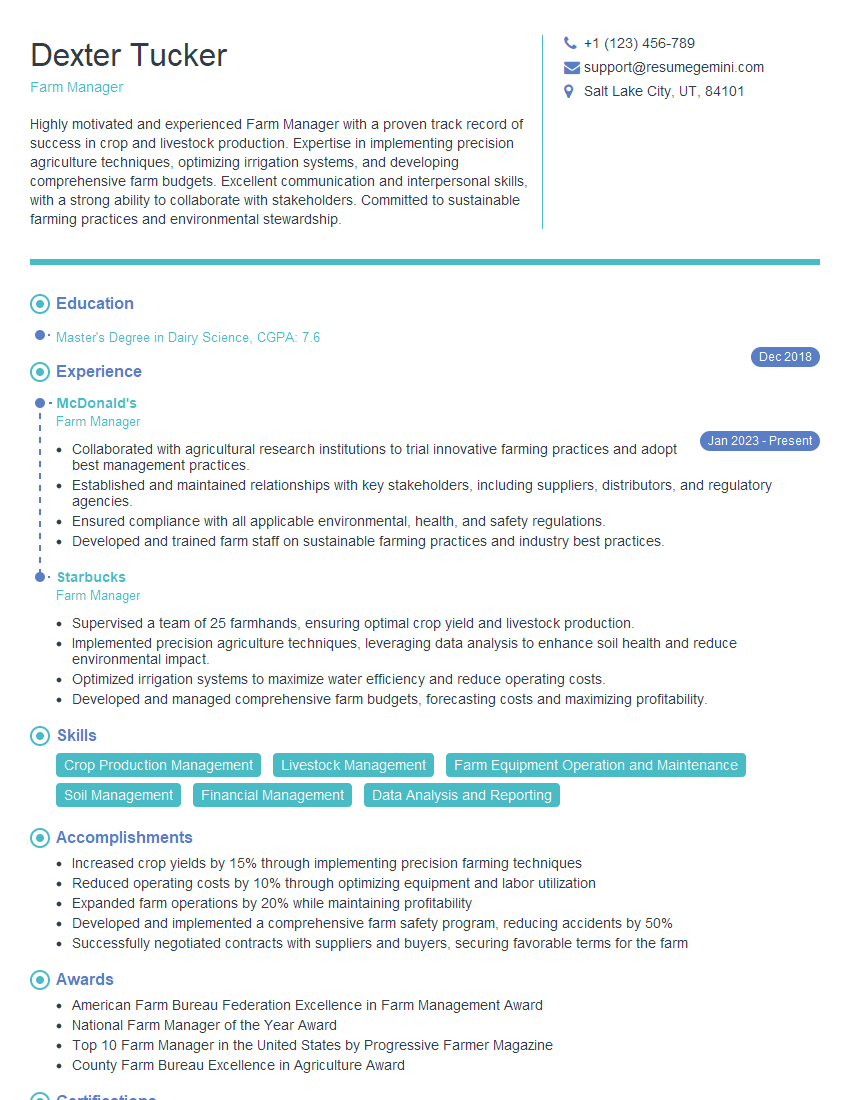
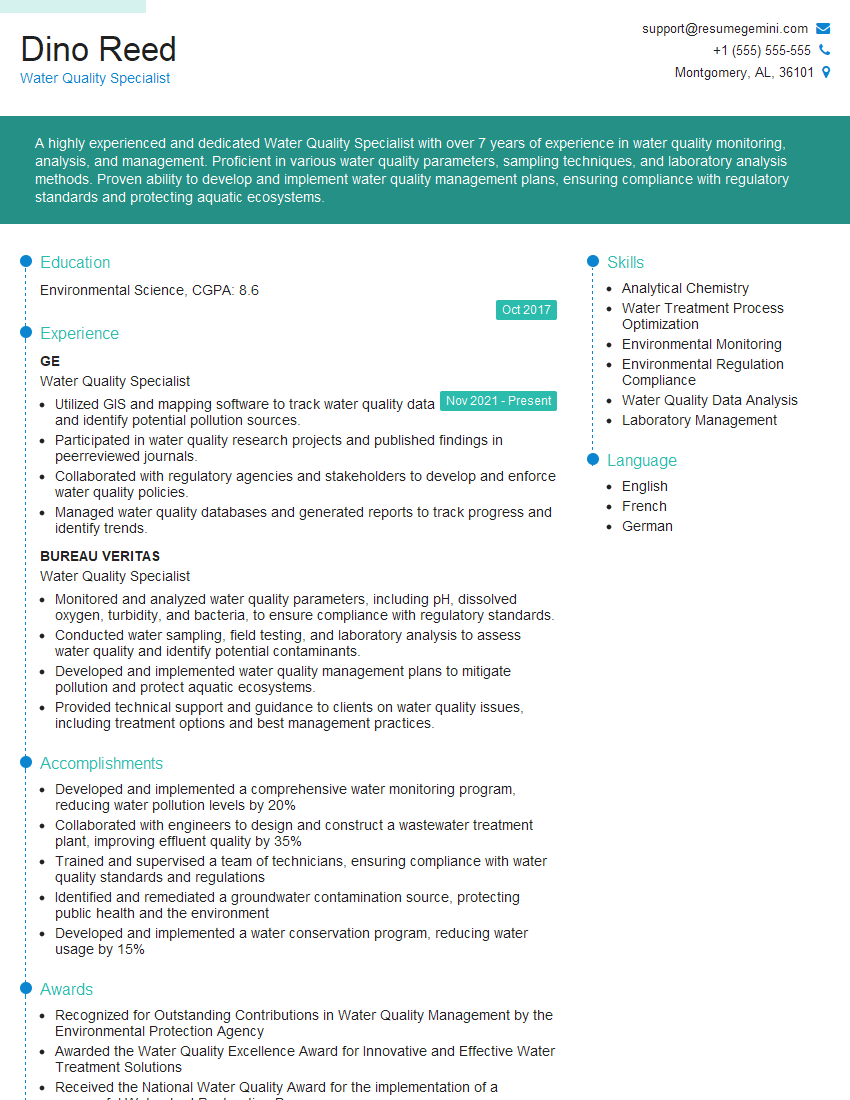
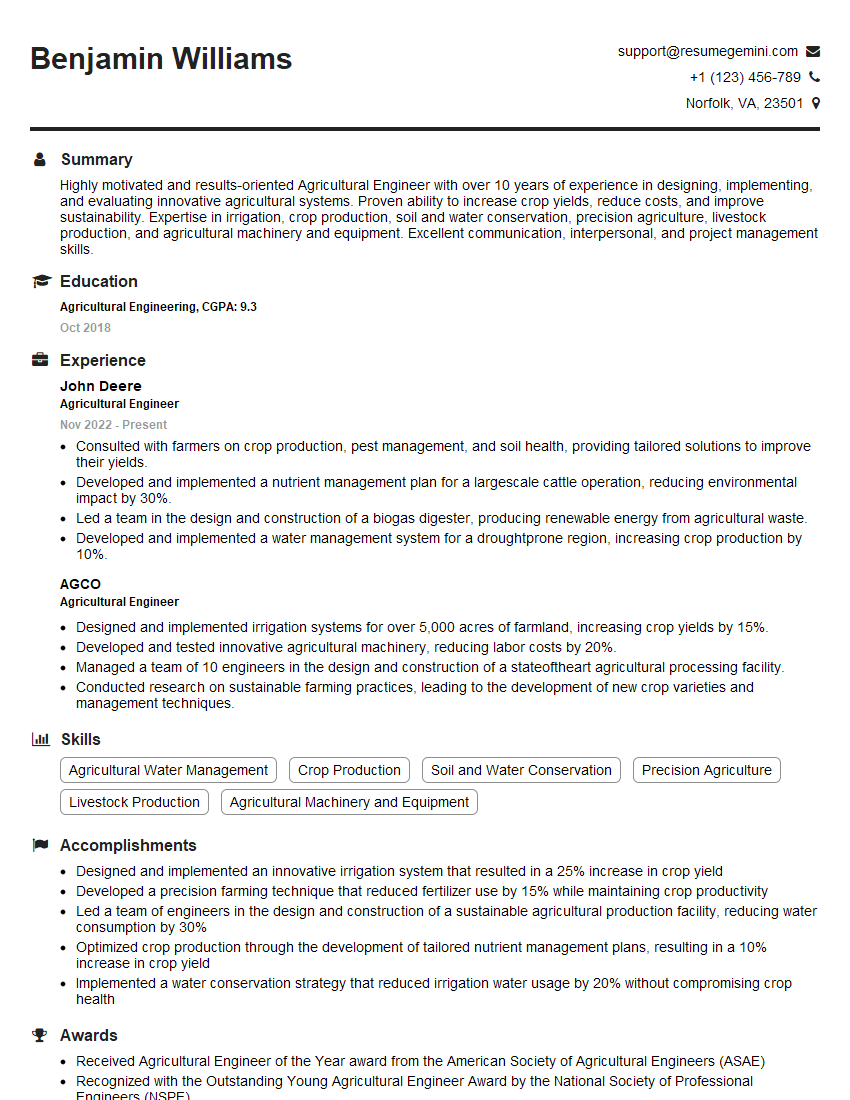
Mastering Nutrients Management Planning is crucial for career advancement in agriculture, environmental science, and related fields. A strong understanding of these principles showcases your commitment to sustainable and efficient agricultural practices, making you a highly sought-after candidate. To significantly boost your job prospects, create an ATS-friendly resume that effectively highlights your skills and experience. We highly recommend using ResumeGemini, a trusted resource, to build a professional and impactful resume. Examples of resumes tailored to Nutrients Management Planning are available to help guide you. Invest in your future – build the best possible representation of your capabilities!

Explore more articles
Users Rating of Our Blogs
Share Your Experience
We value your feedback! Please rate our content and share your thoughts (optional).
What Readers Say About Our Blog
To the interviewgemini.com Webmaster.
Very helpful and content specific questions to help prepare me for my interview!
Thank you
To the interviewgemini.com Webmaster.
This was kind of a unique content I found around the specialized skills. Very helpful questions and good detailed answers.
Very Helpful blog, thank you Interviewgemini team.