Feeling uncertain about what to expect in your upcoming interview? We’ve got you covered! This blog highlights the most important Aerial Camera Operation interview questions and provides actionable advice to help you stand out as the ideal candidate. Let’s pave the way for your success.
Questions Asked in Aerial Camera Operation Interview
Q 1. Describe your experience with different drone platforms.
My experience encompasses a wide range of drone platforms, from small, lightweight consumer models like the DJI Mavic series, ideal for quick shoots and agile maneuvering in confined spaces, to larger, heavier professional drones such as the DJI Inspire 2, which offer superior camera stabilization, longer flight times, and the capacity to carry heavier payloads. I’ve also worked with fixed-wing drones for broader area coverage and specialized platforms designed for specific tasks like thermal imaging or LiDAR mapping.
For instance, during a recent real estate project, the Mavic’s portability allowed for quick shots of the property and surrounding areas, while the Inspire 2 was crucial for capturing high-resolution footage of the house’s exterior, ensuring stunning visuals for the marketing materials. Each platform presents unique operational characteristics and necessitates a distinct understanding of its capabilities and limitations.
Q 2. What are the key safety regulations you adhere to when operating a drone?
Safety is paramount in drone operation. My adherence to regulations includes, but isn’t limited to, maintaining visual line-of-sight with the aircraft at all times, unless operating under specific exemptions. I always obtain necessary permissions before flying near airports or other restricted airspace. I meticulously check weather conditions, ensuring wind speeds are within the drone’s operational limits. I register my drones according to national and local regulations and strictly follow all airspace and operational guidelines, always prioritizing the safety of people and property.
Furthermore, pre-flight checks are a non-negotiable part of my routine; this includes verifying battery levels, gimbal functionality, and overall system health. I also maintain detailed flight logs for every operation, including location, time, and relevant notes about the flight conditions.
Q 3. Explain your understanding of airspace restrictions and how to navigate them.
Understanding airspace restrictions is crucial for legal and safe operation. I utilize various resources to determine airspace restrictions before each flight, including online platforms like FAA DroneZone (in the US) or similar national authorities’ websites in other countries. These platforms provide information on controlled airspace, temporary flight restrictions (TFRs), and other potential hazards. I always check for NOTAMs (Notices to Airmen), which announce temporary restrictions or hazards impacting airspace.
If operating near airports or other restricted areas, I obtain necessary permissions from the relevant authorities and carefully plan my flight path to avoid any potential conflicts. Failure to comply with airspace restrictions can lead to serious consequences, including fines, legal action, and even accidents.
Q 4. How do you ensure the stability of your aerial shots in windy conditions?
Windy conditions pose significant challenges to aerial filming. To mitigate this, I primarily rely on the drone’s advanced stabilization systems, which are crucial for maintaining stable shots even in moderate breezes. I also carefully select my flight times, opting for periods with the least amount of wind whenever possible. If strong winds are unavoidable, I may adjust my shooting techniques, using lower altitudes and slower movements to reduce the impact of wind gusts. I might also choose shots that minimize the effects of wind, such as static shots from a relatively stable position.
In extreme cases, I may postpone the shoot until conditions improve, prioritizing the safety of the drone and the quality of the footage. It’s better to reschedule than risk losing equipment or capturing unusable footage.
Q 5. What are your preferred post-processing techniques for aerial footage?
My post-processing workflow typically involves color grading, stabilization, and minor adjustments to the footage using software like Adobe Premiere Pro or DaVinci Resolve. Color grading is essential to achieve a consistent look and feel throughout the project, ensuring the footage matches the desired aesthetic. I might use stabilizing tools to smooth out any residual camera shake or wind effects that weren’t fully mitigated during flight. I also make minor adjustments for exposure and contrast to enhance the overall quality of the footage.
For example, if I’m creating a real estate video, I’ll aim for a warm and inviting color palette, while a documentary might require a more neutral and realistic tone. The specific post-processing techniques depend heavily on the intended use of the footage and the overall project aesthetic.
Q 6. Describe your experience with various camera gimbal systems.
I’ve worked extensively with various camera gimbal systems, from the 3-axis gimbals commonly found on consumer drones, which offer excellent stabilization for everyday use, to more advanced and robust systems designed for professional cinema cameras. My experience includes working with gimbals from manufacturers like DJI, Freefly, and Ronin, each offering unique features and capabilities. The selection of a gimbal system largely depends on the size and weight of the camera being used, and the level of stabilization required for the intended application.
For example, a larger, heavier camera used for high-end productions would necessitate a robust gimbal capable of handling its weight and providing extremely smooth movement. Choosing the right gimbal ensures smooth, professional-looking shots, even in less-than-ideal conditions.
Q 7. How do you manage battery life during extended drone operations?
Managing battery life during extended drone operations involves careful planning and the use of multiple batteries. Before a shoot, I always calculate the estimated flight time needed and bring sufficient extra batteries to allow for buffer and unforeseen circumstances. I also monitor the battery levels closely during the flight and switch batteries as needed. I avoid pushing batteries to their absolute limits to prevent damage or unexpected power loss. I also employ battery warmers in cold conditions to maximize their performance.
Efficient power management also includes minimizing unnecessary drone maneuvers and maximizing the use of features like power-saving modes when appropriate. The extra batteries not only provide operational time, but are important backups in case of unforeseen issues.
Q 8. What are the different types of aerial shots and their applications?
Aerial shots encompass a wide variety of perspectives and techniques, each serving a distinct purpose. Think of them as the vocabulary of aerial cinematography. We can categorize them broadly:
- High Angle Shots: These shots look down on the subject, providing a sense of scale and overview. Think of a majestic mountain range captured from a great height. Applications include real estate photography (showing the surrounding area), surveying land, and documenting large-scale construction projects.
- Low Angle Shots: These shots look up at the subject, making it appear powerful and dominant. Imagine a speeding car captured from just above ground level. Useful in filmmaking for dramatic effect and in architecture to show the imposing nature of a building.
- Tracking Shots: These shots follow a subject as it moves. For instance, following a vehicle along a scenic road. This is extremely useful for documenting movement or progress over time – very common in construction monitoring and wildlife filmmaking.
- Aerial Panoramas: These wide, sweeping shots capture expansive landscapes. A classic example would be capturing the entirety of a city skyline. Ideal for tourism advertising, environmental assessments and urban planning.
- Static Shots: These are shots from a fixed position, focusing on a specific area. A perfect example would be capturing a detailed shot of a construction site showing progress. They are valuable for precise documentation and analysis.
The choice of shot depends entirely on the project’s objective. For example, a real estate agent will favor high-angle shots to showcase property and surroundings, while a documentary filmmaker might employ tracking shots to follow migrating animals.
Q 9. How do you plan a drone flight to achieve specific shots?
Planning a drone flight for specific shots is a meticulous process involving several steps. Safety and legality are paramount.
- Pre-flight Checklist & Planning: This involves checking weather conditions (wind speed, visibility), battery levels, and ensuring all necessary permits are obtained. I meticulously review the flight area for potential hazards. I always have a backup plan in case of unexpected events.
- Flight Path Mapping: I utilize flight planning software (discussed in the next question) to map out the precise flight path and camera angles needed to achieve the desired shots. This involves setting waypoints, altitudes, and camera orientations. I always include a buffer zone for safety.
- Camera Settings: I carefully configure the camera settings (ISO, aperture, shutter speed, etc.) to optimize image quality given the lighting conditions. This is a crucial step to avoid under or overexposed footage.
- Test Shots & Adjustments: Before undertaking the main shoot, I take some test shots to evaluate the composition, lighting, and camera settings. This allows me to make adjustments on the fly, saving time and resources.
- Flight Execution & Monitoring: I meticulously follow the planned flight path, constantly monitoring the drone’s status, battery level, and surroundings. I always maintain visual line of sight whenever possible.
- Post-Flight Review: After the flight, I review the captured footage to assess quality and identify any potential issues. This is crucial for quality control.
Each step is essential for a successful and safe flight resulting in high-quality aerial imagery.
Q 10. What software do you use for flight planning and post-processing?
For flight planning, I predominantly use Litchi and DJI Fly apps. These applications allow me to map out complex flight paths, set waypoints, control camera angles, and simulate flights before execution. This is invaluable for ensuring safety and achieving precise shots. Post-processing is typically done using Adobe Photoshop and Lightroom for photo editing and color correction. For video editing, I rely heavily on Adobe Premiere Pro and DaVinci Resolve.
The choice of software depends on the specific project’s needs. For example, more complex projects might require specialized software for photogrammetry or 3D modeling.
Q 11. How do you troubleshoot common drone malfunctions in the field?
Troubleshooting drone malfunctions requires a systematic approach. My first step is always safety – prioritizing the safety of myself and others around the drone.
- Identify the Problem: The initial step is determining the nature of the malfunction. Is it a communication issue, a power problem, or a mechanical fault? Symptoms help me narrow down the possibilities.
- Check Obvious Issues: I verify battery levels, signal strength, and any visible signs of damage. Loose connections or depleted batteries are surprisingly common culprits.
- Consult Manuals & Support Resources: If the problem persists, I consult the drone’s manual and the manufacturer’s support documentation. Online forums and communities can also be helpful.
- Systematic Diagnostics: For more complex issues, I follow a systematic diagnostic procedure. This might involve checking individual components, performing firmware updates or contacting technical support.
- Emergency Procedures: In the event of a critical malfunction, I am trained in implementing emergency procedures, including initiating a safe return-to-home (RTH) sequence. Safety is always the utmost priority.
Experience is crucial in quickly diagnosing and resolving issues in the field. I’ve encountered everything from GPS glitches to sudden battery failures, and each situation requires a unique solution.
Q 12. Explain your understanding of different camera settings (ISO, aperture, shutter speed).
Understanding camera settings is crucial for obtaining high-quality aerial imagery. These settings are interconnected and work together to influence exposure and depth of field.
- ISO: This setting determines the sensor’s sensitivity to light. A higher ISO (e.g., 800) is used in low-light conditions, but it can increase image noise (graininess). A lower ISO (e.g., 100) results in cleaner images but requires more light.
- Aperture: Measured in f-stops (e.g., f/2.8, f/8), the aperture controls the size of the lens opening, affecting the amount of light entering the camera and depth of field. A wider aperture (smaller f-number) allows more light and creates a shallow depth of field (blurred background), while a narrower aperture (larger f-number) allows less light and results in a deeper depth of field (more in focus).
- Shutter Speed: This setting controls how long the camera’s sensor is exposed to light. A faster shutter speed (e.g., 1/1000s) freezes motion, while a slower shutter speed (e.g., 1/30s) can blur motion (useful for creating motion effects). It’s also crucial to avoid motion blur from the drone itself by using sufficiently fast shutter speeds.
Mastering these settings allows me to adapt to varying lighting conditions and achieve the desired visual effects. For example, a fast shutter speed is crucial for capturing sharp images of moving objects, while a wider aperture is beneficial in low light situations.
Q 13. How do you ensure the quality and resolution of your aerial imagery?
Ensuring high-quality and high-resolution aerial imagery involves a multifaceted approach starting even before the flight.
- Drone Selection: I choose a drone with a high-resolution camera, suitable for the specific application. The sensor size is a critical factor influencing image quality and detail.
- Optimal Camera Settings: I carefully adjust camera settings (as discussed earlier) to maximize image quality for the given lighting conditions. RAW image format is my preferred choice.
- Flight Planning: Meticulous flight planning ensures optimal lighting and avoids unwanted shadows or obstructions. I often shoot during the ‘golden hour’ for best lighting.
- Post-Processing Techniques: Post-processing using dedicated software (Photoshop, Lightroom) is vital. This process includes color correction, noise reduction, sharpening, and other enhancements.
- Data Management: I use robust data management practices to avoid data loss and maintain image organization. My workflow includes immediately backing up all data.
Every step, from the initial planning to the final post-processing, is crucial for consistently delivering high-quality results.
Q 14. Describe your experience with aerial photography for various purposes (e.g., real estate, construction).
I have extensive experience in aerial photography across various sectors. My work in real estate includes capturing stunning high-resolution images and videos showcasing properties and their surrounding environments, improving property marketing materials. For construction projects, I’ve provided progress documentation through time-lapse photography, generating valuable data for project management and client updates. This helps monitor progress, identify potential issues, and improve project efficiency. I’ve also worked on agricultural projects, creating detailed imagery of crops, aiding farmers in irrigation and resource management.
Each project presents unique challenges, requiring adaptation of techniques and software. My experience allows me to choose the right equipment and approach for optimal results. This flexibility and adaptability are my greatest strengths.
Q 15. How do you handle unexpected weather changes during a drone operation?
Unexpected weather changes are a significant concern in aerial camera operation. My primary method involves constant monitoring of weather forecasts before, during, and after any flight. This includes using multiple sources to get a comprehensive picture. I look for sudden shifts in wind speed and direction, precipitation, and visibility. For example, a sudden increase in wind speed beyond the drone’s operational limits would necessitate immediate landing.
My pre-flight checklist includes a ‘go/no-go’ decision based on these weather parameters. If conditions deteriorate during a flight, I’m trained to initiate a safe return-to-home (RTH) procedure immediately, prioritizing the drone’s and my own safety. I’ve had to abort missions due to unexpected thunderstorms, opting to reschedule rather than risk damage or a more serious incident.
Furthermore, I always have backup plans in place, including alternative flight dates or locations depending on the nature of the project. Safety is paramount – no shot is worth risking damage or injury.
Career Expert Tips:
- Ace those interviews! Prepare effectively by reviewing the Top 50 Most Common Interview Questions on ResumeGemini.
- Navigate your job search with confidence! Explore a wide range of Career Tips on ResumeGemini. Learn about common challenges and recommendations to overcome them.
- Craft the perfect resume! Master the Art of Resume Writing with ResumeGemini’s guide. Showcase your unique qualifications and achievements effectively.
- Don’t miss out on holiday savings! Build your dream resume with ResumeGemini’s ATS optimized templates.
Q 16. What are your methods for data backup and security?
Data backup and security are critical in this field. I employ a multi-layered approach. First, all raw footage and imagery are saved to multiple high-capacity SD cards within the drone itself during the flight.
Second, upon returning to base, the data is immediately transferred to a ruggedized external hard drive that is encrypted using AES-256 encryption. I make a second copy to a separate, geographically distant cloud storage solution (like Backblaze or a similar service) with automatic backups scheduled. This minimizes the risk of data loss from theft, physical damage, or cloud service failures.
Third, I meticulously maintain a detailed metadata record of each flight, including date, time, location, weather conditions, and any other relevant information. This is crucial for organizing and managing the data effectively. Finally, I regularly check the integrity of my backups, using checksum verification tools to ensure that the copies are exact.
Q 17. Describe your experience with different data transmission methods for live streaming.
I have experience with several data transmission methods for live streaming, each with its own advantages and disadvantages.
- Point-to-point (Wi-Fi): This is suitable for short-range operations. It’s simple to set up, but range is limited and susceptible to interference. I use it for local inspections or small-scale projects.
- Cellular data (4G/5G): Offers broader coverage compared to Wi-Fi, enabling live streaming from more distant locations. However, it’s more expensive and can be impacted by network congestion and signal strength.
- Long-range wireless video systems (e.g., using dedicated radio links): These provide robust, long-range, high-bandwidth transmission, minimizing latency and ensuring a stable connection, even in challenging environments. This is my preferred method for larger-scale projects or situations needing reliable live feeds over significant distances.
My choice depends on the specific project requirements. For instance, while cellular data is convenient, I’d opt for a dedicated long-range system for a large construction site where reliable, uninterrupted live streaming is critical.
Q 18. How do you maintain and clean your drone equipment?
Maintaining and cleaning drone equipment is essential to ensure optimal performance and longevity. My routine includes:
- After each flight: I carefully inspect the drone for any damage, paying close attention to propellers, camera, and landing gear. I gently clean the camera lens with a microfiber cloth to remove any dust or debris. Propellers are examined for nicks or damage, and replaced if necessary.
- Regular cleaning: At least once a month, I give the drone a more thorough cleaning. I use compressed air to remove dust from hard-to-reach areas and a damp (not wet) microfiber cloth for the body. I avoid using harsh chemicals that could damage the drone’s materials.
- Storage: When not in use, the drone is stored in a protective case in a cool, dry place, away from direct sunlight. Batteries are stored separately according to manufacturer recommendations to avoid damage or fire risk.
Following a strict maintenance schedule ensures my equipment is in top condition and minimizes downtime.
Q 19. Explain your understanding of image stabilization techniques.
Image stabilization is crucial for obtaining sharp, clear aerial footage. Drones employ several techniques to achieve this:
- Mechanical gimbal stabilization: This is a commonly used method that involves a three-axis gimbal system that mechanically isolates the camera from the drone’s movements. The gimbal uses motors to counteract vibrations and maintain a stable image.
- Electronic image stabilization (EIS): This software-based approach processes the image data to correct for minor camera shake and vibrations. It’s often used in conjunction with mechanical stabilization for enhanced stability.
- Sensor-shift image stabilization: Some higher-end cameras move the sensor itself to compensate for small movements, further enhancing stabilization.
The choice of stabilization techniques depends on the camera and drone system. Understanding the capabilities and limitations of each method is vital for selecting the right equipment for a project. For example, a high-resolution camera may rely heavily on both mechanical and electronic stabilization for optimal results, especially in windy conditions.
Q 20. What are the limitations of drone technology and how do you account for them?
Drone technology, while rapidly advancing, has limitations that must be accounted for.
- Flight time: Battery life restricts flight duration, limiting the scope of operations. I plan flights meticulously, accounting for travel time, shooting time, and a margin of safety for unexpected events.
- Range: The distance a drone can fly from its controller is limited by signal strength and regulations. I ensure proper communication links, and always stay within regulatory guidelines, using appropriate safety margins.
- Weather dependence: Adverse weather conditions significantly impact drone operations, often necessitating mission delays or cancellations. My robust weather monitoring procedures address this.
- Regulations: Strict regulations govern drone operation, including airspace restrictions, licensing requirements, and safety procedures. I maintain up-to-date knowledge of all applicable rules and regulations and obtain any necessary permits or approvals before every operation.
Understanding and mitigating these limitations through careful planning, appropriate equipment selection, and adherence to safety regulations is essential for successful and responsible drone operation.
Q 21. Describe your experience with different types of drone sensors (e.g., thermal, multispectral).
My experience encompasses several types of drone sensors:
- RGB cameras (Visible light): These are standard cameras capturing images in the visible spectrum. They’re versatile and useful for many applications, from photography to videography.
- Thermal cameras (Infrared): These detect heat signatures, enabling the identification of heat loss in buildings, monitoring wildlife at night, or identifying potential fire hazards. I’ve used this extensively in infrastructure inspections.
- Multispectral cameras: These capture images across multiple wavelengths of the electromagnetic spectrum beyond the visible light range (e.g., near-infrared, red-edge). This data is extremely valuable for precision agriculture, vegetation monitoring, and environmental studies; I have used these for land surveying and environmental impact assessments.
- LiDAR: Light Detection and Ranging provides highly accurate 3D point cloud data. This is invaluable for creating detailed terrain models, mapping, and surveying large areas. I’ve used this for construction site progress monitoring and volume calculations.
The sensor selection depends entirely on the project’s needs. For example, a thermal camera would be crucial for a building inspection to find thermal leaks, while a multispectral sensor would be optimal for precise agricultural assessments.
Q 22. How do you ensure the legal compliance of your drone operations?
Ensuring legal compliance in drone operations is paramount. It involves meticulous adherence to both federal and local regulations. In the US, this primarily means understanding and abiding by the rules and regulations set forth by the Federal Aviation Administration (FAA). This includes registering my drone, obtaining the necessary certifications (like a Part 107 Remote Pilot Certificate), understanding airspace restrictions (like those around airports or national parks), and always operating within visual line of sight (VLOS) unless specific waivers are obtained. Furthermore, I meticulously check for any temporary flight restrictions (TFRs) issued by the FAA for events like sporting events or emergency situations using resources like B4UFLY and other digital airspace mapping tools. I also ensure that all flights are conducted responsibly, respecting privacy and avoiding any potentially hazardous situations.
Beyond the FAA, I familiarize myself with any local ordinances that may further restrict drone operation in specific areas. For instance, some municipalities have rules about flying over private property or in designated no-fly zones. Maintaining detailed flight logs is also crucial for demonstrating compliance and for post-flight analysis. Essentially, legal compliance is a proactive, ongoing process, not just a checklist.
Q 23. Explain your understanding of flight logs and data analysis.
Flight logs are essentially digital records of a drone’s flight. They contain crucial data points like timestamps, GPS coordinates, altitude, speed, battery levels, and sometimes even imagery. These logs are often automatically generated by the drone’s flight controller and stored on an onboard SD card or transmitted wirelessly. Data analysis of these logs allows me to review the flight parameters, identify any potential anomalies, assess the quality of data captured, and ensure safety protocols were followed. This is crucial for post-flight analysis and safety checks.
For example, if a particular image seems blurry or out of focus, I can refer to the flight log to check the wind speed or drone stability during that specific period, helping me identify potential causes and improve future operations. Advanced data analysis can even involve using software to automatically identify potential safety violations, such as exceeding operational altitude or coming too close to obstacles. This ensures consistent high-quality data acquisition and demonstrates responsible operation.
Q 24. Describe a time you had to solve a technical problem during a drone operation.
During a recent thermal imaging survey of a large solar farm, a sudden power outage caused my drone to lose connection mid-flight. The drone, thankfully equipped with a return-to-home (RTH) function, started its autonomous return. However, a strong gust of wind unexpectedly pushed it off course towards a cluster of trees.
My immediate action was to attempt re-establishing communication. While I was unsuccessful in regaining control, I was constantly monitoring the drone’s location via the GPS coordinates in my flight control app. As the drone descended into the trees, I quickly activated the emergency stop protocol. Although a small branch struck a propeller, causing minor damage, the drone landed safely preventing a significant accident. The experience highlighted the importance of redundant systems and the critical role of understanding emergency procedures. A thorough inspection and minor repair were needed, emphasizing proactive maintenance and ensuring all safety protocols are carefully reviewed and followed before each operation.
Q 25. What is your experience with photogrammetry and 3D modeling using drone data?
I have extensive experience in photogrammetry and 3D modeling using drone-captured data. Photogrammetry is the process of creating 3D models from overlapping photographs. I utilize specialized software such as Pix4D, Agisoft Metashape, or RealityCapture to process the drone imagery. This involves aligning the images, generating point clouds, and creating textured 3D models. This technology is incredibly useful for creating accurate digital twins of sites for various purposes.
For example, I recently used this workflow to create a detailed 3D model of a construction site. This model provided valuable insights for progress tracking, volume calculations, and safety assessments. The resulting high-resolution models help clients visualize the project more effectively and facilitate better decision-making.
My expertise extends to various applications like orthomosaic creation for mapping, terrain modeling for surveying, and volume calculations for construction or mining. I also have experience processing different types of imagery including RGB, multispectral, and thermal data to extract various insights depending on the client’s needs.
Q 26. How do you prioritize safety and efficiency during a drone mission?
Prioritizing safety and efficiency in drone missions is a balancing act. Safety always comes first. This starts with pre-flight checks, including thorough drone inspections, battery checks, and reviewing weather conditions. I always adhere to all relevant regulations and operate within the operational limitations of the drone. I constantly monitor airspace and surroundings for potential hazards, and make sure to plan a safe flight path and contingency plans in case of unexpected events.
Efficiency is enhanced through proper planning. This includes meticulously planning flight paths to optimize data collection, ensuring sufficient battery life for the intended mission, and utilizing advanced flight planning software to automate some tasks. Efficient data processing techniques also contribute to overall project turnaround time, allowing for quick delivery of final deliverables without compromising accuracy or safety.
Q 27. What are your salary expectations?
My salary expectations are commensurate with my experience and the demands of this role. Considering my expertise in aerial camera operation, photogrammetry, data analysis, and my proven track record of safe and efficient drone operations, I am seeking a compensation package in the range of [Insert Salary Range]. I am open to discussing this further based on the specifics of the role and benefits offered.
Q 28. Why are you interested in this specific role?
I am highly interested in this specific role because it aligns perfectly with my professional goals and passions. Your company’s reputation for innovation in [Mention Company’s Industry] is highly appealing. The opportunity to contribute to projects involving [Mention Specific Projects or Aspects of the Role] excites me greatly. Furthermore, the chance to leverage my expertise in a collaborative environment and contribute to cutting-edge projects aligns perfectly with my career aspirations.
My skills in aerial data acquisition, processing, and analysis would be invaluable in achieving your company’s objectives. I am confident that my ability to deliver accurate, high-quality results while maintaining the highest safety standards will make me a valuable asset to your team.
Key Topics to Learn for Aerial Camera Operation Interview
- Aircraft Systems Understanding: A thorough grasp of the aircraft’s flight controls, stability, and limitations is crucial. This includes understanding the impact of wind, altitude, and other environmental factors.
- Camera Systems Expertise: Demonstrate your knowledge of various camera types (e.g., gimbal-stabilized, fixed-wing, drone-mounted), their functionalities, and limitations. Be prepared to discuss image resolution, sensor types, and lens selection.
- Flight Planning and Safety Procedures: Interviewers will assess your understanding of pre-flight checks, flight planning software, airspace regulations, and emergency procedures. Highlight your commitment to safe and responsible operation.
- Image Acquisition Techniques: Discuss your experience with different shot types (e.g., establishing shots, close-ups, tracking shots), composition principles, and lighting considerations for aerial photography and videography.
- Post-Production Workflow: Showcase your knowledge of transferring, processing, and editing aerial footage. Familiarity with relevant software (mention specific software if comfortable) will be a significant advantage.
- Troubleshooting and Problem-Solving: Be ready to discuss instances where you encountered technical difficulties during a shoot and how you effectively resolved them. This demonstrates your resourcefulness and problem-solving skills.
- Legal and Ethical Considerations: Understanding privacy laws, obtaining necessary permits, and respecting property rights are essential aspects of responsible aerial camera operation. Prepare to discuss your awareness of these critical issues.
Next Steps
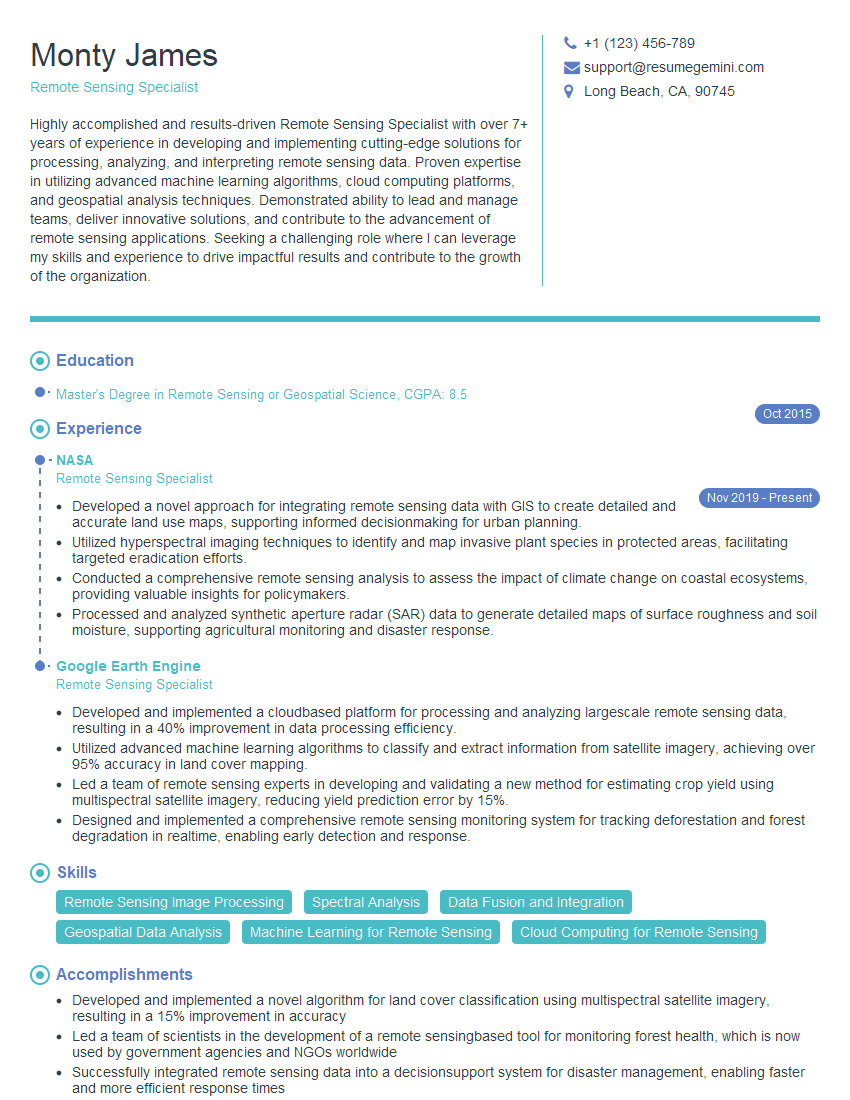
Mastering aerial camera operation opens doors to exciting and rewarding career opportunities in film, construction, surveying, and many other fields. To significantly enhance your job prospects, creating a strong, ATS-friendly resume is paramount. ResumeGemini is a trusted resource to help you build a professional and impactful resume that highlights your skills and experience effectively. Examples of resumes tailored to Aerial Camera Operation are available within ResumeGemini to guide you in crafting your own compelling application materials. Take the next step towards your dream career—build a resume that showcases your expertise!
Explore more articles
Users Rating of Our Blogs
Share Your Experience
We value your feedback! Please rate our content and share your thoughts (optional).
What Readers Say About Our Blog
To the interviewgemini.com Webmaster.
Very helpful and content specific questions to help prepare me for my interview!
Thank you
To the interviewgemini.com Webmaster.
This was kind of a unique content I found around the specialized skills. Very helpful questions and good detailed answers.
Very Helpful blog, thank you Interviewgemini team.