The right preparation can turn an interview into an opportunity to showcase your expertise. This guide to Gluing and Assembly interview questions is your ultimate resource, providing key insights and tips to help you ace your responses and stand out as a top candidate.
Questions Asked in Gluing and Assembly Interview
Q 1. What types of adhesives are you familiar with and what are their applications?
I’m familiar with a wide range of adhesives, each with its own unique properties and applications. The choice of adhesive depends heavily on the materials being bonded, the required strength, the environmental conditions, and the desired open time (the time before the adhesive sets). Here are a few examples:
- Epoxy Adhesives: Known for their high strength and durability, epoxies are excellent for bonding a variety of materials, including metals, wood, plastics, and ceramics. I’ve used them extensively in structural applications where high strength and resistance to chemicals and temperature fluctuations are crucial. Think repairing a cracked engine block or creating strong, lasting joints in furniture construction.
- Cyanoacrylate (Super Glue): These adhesives are incredibly fast-setting and provide a strong bond for many materials. However, they are less tolerant of gaps and are better suited for smaller-scale applications and precise bonding of smaller parts. I’ve used super glue for quick repairs in electronics or attaching small components during prototyping.
- Polyurethane Adhesives: These offer good flexibility and gap-filling capabilities, making them ideal for bonding porous materials like wood or foam. They are also often water-resistant, making them suitable for outdoor applications. Think bonding wood panels or assembling outdoor furniture. Their flexibility makes them excellent for applications where some movement is anticipated.
- Hot Melt Adhesives: These are thermoplastic polymers applied in molten form. They are fast-setting, relatively inexpensive, and easy to use but may not be as strong as other types. I’ve used them in assembly lines for lightweight components where speed is paramount.
- Anaerobic Adhesives: These cure in the absence of air, creating strong bonds between close-fitting metal parts. They are frequently used in threaded fasteners to prevent loosening. I’ve used these for locking bolts and screws in high-vibration applications.
The selection process always involves carefully considering the specific requirements of the project to ensure optimal bonding and longevity.
Q 2. Explain the process of preparing a surface for gluing.
Surface preparation is paramount for achieving a successful glue bond. Think of it like preparing a canvas for painting – a smooth, clean surface ensures the paint (glue) adheres properly. The process generally involves these steps:
- Cleaning: The surfaces must be meticulously cleaned of dust, grease, oil, or any other contaminants that could hinder adhesion. This might involve degreasing solvents, abrasive cleaning, or even high-pressure air to remove particulate matter.
- Roughening (Optional): For some materials, particularly smooth plastics or metals, slightly roughening the surface can significantly improve the adhesive’s mechanical grip. This can be achieved using abrasives like sandpaper or a specialized surface treatment.
- Priming (Optional): In certain cases, applying a primer enhances adhesion by creating a better surface interaction between the adhesive and the substrate. Primers are often chosen to improve wettability of otherwise difficult-to-bond surfaces.
The level of surface preparation required varies depending on the adhesive and the materials being bonded. For critical applications, like aerospace or medical devices, meticulous cleaning and potentially additional treatments are essential.
Q 3. How do you ensure proper clamping pressure during assembly?
Ensuring proper clamping pressure is crucial to create a strong, even bond and minimize the risk of voids or gaps. The required pressure varies depending on the adhesive used, the materials being bonded, and the size and geometry of the assembly. Here’s how I approach it:
- Choosing the Right Clamps: I select clamps appropriate for the size and shape of the assembly. This might include bar clamps, C-clamps, spring clamps, or specialized jigs and fixtures.
- Applying Consistent Pressure: I distribute the clamping pressure evenly to prevent uneven stress on the bond line. This is especially important for large or irregularly shaped components.
- Monitoring the Clamp Pressure: For longer cure times, I check the clamp pressure periodically to ensure it remains consistent, as the adhesive might shrink slightly during curing and could loosen the clamp.
- Calculating Clamping Force: In critical applications, I might need to calculate the necessary clamping force to optimize the bond quality. This often involves considering factors like the surface area of the bond, the adhesive’s shear strength, and the desired ultimate strength.
- Using Vacuum Bagging: In some cases, vacuum bagging is used to apply even pressure across a large surface area, particularly useful for complex shapes or large assemblies.
I always document the clamping pressure and duration in my work records, as this can be invaluable if troubleshooting is ever needed.
Q 4. What are the common causes of adhesive failure?
Adhesive failures can stem from a variety of causes, all highlighting the importance of careful planning and execution. Some of the most common culprits include:
- Improper Surface Preparation: Contaminants, insufficient cleaning, or lack of surface roughening significantly reduce adhesion.
- Incorrect Adhesive Selection: Choosing an adhesive unsuitable for the materials or the application’s environmental conditions is a common mistake.
- Insufficient Clamping Pressure: Inadequate clamping pressure leads to voids and weakens the bond.
- Inconsistent Adhesive Application: Uneven application results in weak areas within the bond line.
- Environmental Factors: Extreme temperatures, humidity, or exposure to chemicals can degrade the adhesive’s performance.
- Adhesive Degradation: Adhesives can degrade over time, especially if exposed to unsuitable environmental conditions.
- Material Incompatibility: Some materials are simply incompatible with certain adhesives, leading to weak or no adhesion.
By carefully addressing these potential issues throughout the gluing and assembly process, I significantly reduce the likelihood of adhesive failure.
Q 5. Describe your experience with different types of assembly jigs and fixtures.
My experience with assembly jigs and fixtures is extensive. These tools are critical for ensuring accurate and repeatable assembly, especially in high-volume manufacturing or when dealing with complex geometries. Here are a few examples:
- Simple Clamping Jigs: These are used for basic alignments and clamping during glue-up. I’ve used many variations, from simple wood blocks to custom-designed metal jigs for specific components.
- Fixture Plates: These precisely locate and hold components during assembly, ensuring accuracy and repeatability. I’ve used these extensively in more high-precision work.
- Vacuum Fixtures: These employ vacuum pressure to hold components securely during assembly, particularly helpful for intricate shapes or delicate parts. They are crucial for high-quality bonding in precision engineering.
- Automated Assembly Systems: In higher-volume settings, automated systems can incorporate jigs and fixtures for consistent, efficient assembly. My experience covers integrating simple jigs within existing automation lines.
The choice of jig or fixture depends on factors like the complexity of the assembly, the production volume, and the required accuracy. I’m proficient in designing and implementing custom jigs and fixtures to address specific application needs.
Q 6. How do you troubleshoot a bonding issue during assembly?
Troubleshooting a bonding issue requires a systematic approach. I typically start by carefully examining the failed bond to identify any clues.
- Visual Inspection: I begin with a visual inspection to look for obvious signs of improper surface preparation (contaminants, inadequate cleaning), uneven glue application, or voids in the bond line.
- Testing Material Compatibility: If the cause isn’t immediately apparent, I’ll test the compatibility of the materials and the adhesive used. This could involve simple adhesion tests or referring to material data sheets.
- Reviewing Process Parameters: I then scrutinize the assembly process, including clamping pressure, clamping time, and curing conditions. Were the parameters followed correctly? Did the adhesive have sufficient time to cure?
- Environmental Factors: I consider environmental factors, such as temperature, humidity, and exposure to chemicals, that might have affected the bond strength.
- Adhesive Degradation: If the adhesive was stored incorrectly, its properties could have deteriorated, leading to a weak bond.
This systematic approach, combined with experience, allows me to pinpoint the root cause of the bonding problem and implement corrective measures.
Q 7. Explain your understanding of different types of glues (e.g., epoxy, cyanoacrylate, polyurethane).
My understanding of different glue types is comprehensive. Let’s delve deeper into the three you mentioned:
- Epoxy: Two-part adhesives, typically a resin and a hardener, that cure through a chemical reaction. They offer exceptional strength, durability, and resistance to various environmental factors. Epoxies are versatile and are used in a wide range of applications, from structural repairs to creating high-strength bonds between dissimilar materials. Their curing time is variable, depending on the specific formulation and environmental conditions.
- Cyanoacrylate (Super Glue): One-part adhesives that cure rapidly in the presence of moisture. They are convenient for quick repairs and small-scale bonding but are less tolerant of gaps and may not be as strong or durable as epoxies, especially in demanding environments. Their rapid curing time can be advantageous but also presents challenges in application.
- Polyurethane: These adhesives can be one or two-part systems. They cure through a reaction with moisture in the air or a catalyst. Polyurethane adhesives are often flexible, gap-filling, and water-resistant, making them suitable for bonding porous materials and applications exposed to moisture. They are frequently used in construction and woodworking.
Each adhesive type has its own strengths and weaknesses, and the optimal choice depends on the specific application requirements.
Q 8. What safety precautions do you take when working with adhesives?
Safety is paramount when working with adhesives. My approach is multifaceted, starting with proper Personal Protective Equipment (PPE). This always includes safety glasses to protect my eyes from splashes and fumes, gloves appropriate for the specific adhesive (e.g., nitrile for most, neoprene for more aggressive chemicals), and sometimes a respirator, especially when dealing with solvents or adhesives with strong vapors. I meticulously follow the manufacturer’s Safety Data Sheets (SDS) for each adhesive, paying close attention to recommended ventilation, handling procedures, and emergency response protocols. Proper ventilation is critical to minimize exposure to harmful fumes. In addition to personal precautions, I ensure the workspace is clean and organized to prevent accidental spills or slips, and I always have readily available emergency eyewash stations and spill kits.
For instance, when working with cyanoacrylate (super glue), I always ensure adequate ventilation and wear appropriate gloves to avoid accidental skin bonding. With epoxy resins, I carefully measure and mix components according to instructions to prevent premature curing or weak bonds. This systematic approach ensures my safety and the safety of those around me.
Q 9. How do you ensure the accuracy and precision of your assembly work?
Accuracy and precision in assembly are achieved through a combination of meticulous planning and execution. Before starting any assembly, I thoroughly review the blueprints or schematics, ensuring I understand the tolerances, alignment requirements, and the sequence of operations. I utilize precision measuring tools such as calipers, micrometers, and dial indicators to verify dimensions and alignment throughout the process. Jigs, fixtures, and templates are invaluable for ensuring repeatable accuracy, especially in high-volume assembly. For instance, when assembling a delicate electronic component, I might use a custom-designed fixture to hold it securely in place while soldering or applying adhesive, minimizing the risk of misalignment or damage.
Furthermore, I regularly check my tools for wear and tear and calibrate them as needed. A well-maintained toolset is fundamental to precision work. Think of it like a chef using sharp, well-maintained knives – precision is key to the final product’s quality.
Q 10. Describe your experience with automated assembly equipment.
I have extensive experience operating various automated assembly equipment, including robotic arms, automated dispensing systems, and conveyor systems. My expertise encompasses programming, troubleshooting, and maintaining these systems. I’m proficient in using robotic programming software such as FANUC or ABB RobotStudio to create assembly programs. I understand the importance of optimizing robot movements for speed and precision, minimizing cycle times without compromising accuracy. For example, in one project, I programmed a robotic arm to precisely dispense adhesive onto a complex three-dimensional surface, ensuring consistent bond lines and minimizing adhesive waste. Furthermore, I’m familiar with various sensor technologies used in automated assembly, including vision systems for part recognition and alignment, and force/torque sensors for monitoring the assembly process.
Troubleshooting automated systems requires a systematic approach. I utilize diagnostic tools and software to identify the source of malfunctions, making repairs or adjustments as needed. My experience includes working with both collaborative robots (cobots) and industrial robots, understanding the safety protocols and operational differences between them.
Q 11. How do you maintain quality control during the assembly process?
Quality control is integrated throughout the entire assembly process, not just at the end. It begins with incoming material inspection, verifying the quality of components before assembly even starts. During the assembly process, I employ statistical process control (SPC) techniques to monitor key parameters such as bond strength, alignment, and dimensions. This involves regular sampling and data analysis to identify potential issues early on. For instance, I might regularly measure the bond strength of a specific adhesive joint using a tensile testing machine, ensuring it meets the specified requirements.
Visual inspection plays a vital role in identifying defects, such as misaligned components or gaps in adhesive application. I utilize magnification tools like microscopes when necessary. Furthermore, I maintain detailed records of all assembly steps, including any deviations or corrective actions, allowing for traceability and continuous improvement. This rigorous approach ensures a high level of quality and minimizes defects.
Q 12. What are the key factors to consider when selecting an adhesive for a specific application?
Selecting the right adhesive is crucial for the success of any assembly project. Several key factors influence this decision. The first is the materials to be bonded – different adhesives work better with different substrates. For example, cyanoacrylate is excellent for bonding plastics but may not be suitable for porous materials. The required bond strength is another critical factor, whether it’s a simple structural bond or one that needs to withstand high stress. Environmental conditions, including temperature, humidity, and exposure to chemicals or UV radiation, must also be considered. The adhesive’s cure time and method (e.g., room temperature cure, UV cure) also influence the selection process.
Finally, cost is a significant consideration. While some specialized adhesives offer superior performance, they might come with a higher price tag. The balance between performance and cost is essential. A thorough understanding of these factors allows me to select the most appropriate adhesive for each application, optimizing both performance and cost-effectiveness.
Q 13. How do you handle discrepancies or defects found during the assembly process?
When discrepancies or defects arise during the assembly process, my approach is systematic and focused on root cause analysis. First, I thoroughly document the defect, including its location, nature, and any contributing factors. Then, I investigate the root cause, examining the materials, the assembly process, and the equipment used. This might involve reviewing quality control data, inspecting tools and fixtures, or checking the accuracy of the assembly instructions.
Once the root cause is identified, I implement corrective actions to prevent similar defects from occurring in the future. This might include adjusting the assembly process, replacing faulty equipment, or retraining personnel. For example, if a consistent misalignment is found, I might design a new jig to ensure precise component placement. I also maintain records of these discrepancies and corrective actions to continuously improve the assembly process and prevent future occurrences.
Q 14. What are your experience with different types of assembly processes (e.g., hand assembly, robotic assembly)?
My experience encompasses a wide range of assembly processes, from manual hand assembly to fully automated robotic assembly. Hand assembly allows for flexibility and fine-motor control, ideal for intricate tasks or low-volume production. I’m skilled in various hand assembly techniques, including soldering, crimping, and using specialized hand tools. Robotic assembly offers significant advantages in terms of speed, precision, and repeatability, making it suitable for high-volume production. My expertise includes programming and operating various types of industrial robots, including SCARA, six-axis, and collaborative robots. I’m adept at integrating robots with other automated systems, such as vision systems and automated dispensing units.
In addition, I have experience with semi-automated assembly lines, which combine the strengths of both manual and automated processes. This often involves using automated equipment for repetitive tasks while reserving manual intervention for more complex or delicate operations. Choosing the appropriate assembly method depends on many factors, including production volume, part complexity, and required precision. My ability to adapt to diverse assembly methods makes me a versatile asset in a variety of manufacturing environments.
Q 15. Describe your experience with reading and interpreting technical drawings and assembly instructions.
Reading and interpreting technical drawings and assembly instructions is fundamental to my work. I’m proficient in understanding various types of drawings, including orthographic projections, isometric views, and assembly diagrams. I can easily decipher symbols, dimensions, tolerances, and material specifications. For instance, I recently worked on a project involving a complex electromechanical assembly. The drawings included detailed cross-sections showing the internal components and their relative positions. Understanding these drawings allowed me to pre-plan the assembly sequence and identify potential fit issues beforehand, saving significant time and avoiding rework.
Beyond drawings, I’m adept at following written assembly instructions, including those with detailed step-by-step procedures. My approach includes carefully reviewing the entire document first to understand the overall process, then proceeding step-by-step, ensuring each step is completed accurately before moving to the next. If any ambiguities arise, I always consult with the appropriate stakeholders to confirm interpretation.
Career Expert Tips:
- Ace those interviews! Prepare effectively by reviewing the Top 50 Most Common Interview Questions on ResumeGemini.
- Navigate your job search with confidence! Explore a wide range of Career Tips on ResumeGemini. Learn about common challenges and recommendations to overcome them.
- Craft the perfect resume! Master the Art of Resume Writing with ResumeGemini’s guide. Showcase your unique qualifications and achievements effectively.
- Don’t miss out on holiday savings! Build your dream resume with ResumeGemini’s ATS optimized templates.
Q 16. How do you manage your time and prioritize tasks during the assembly process?
Time management and prioritization are critical in assembly. I employ a combination of techniques to manage my workflow effectively. First, I always begin with a thorough review of the assembly instructions and bill of materials to identify critical path activities—tasks that must be completed before others can begin. Then, I create a detailed timeline, breaking down the assembly into smaller, manageable tasks. I utilize tools like Gantt charts to visualize the workflow and identify potential bottlenecks.
Prioritization involves focusing on the most time-sensitive or crucial tasks first. For example, if a specific component needs a longer curing time, I’ll schedule its bonding early in the process. This prevents delays down the line. I’m also proactive about identifying and addressing potential issues as they arise, preventing them from becoming major disruptions. Throughout the process, I consistently monitor progress against the timeline and adapt as needed.
Q 17. Describe a time you had to solve a complex assembly problem.
During the assembly of a precision optical instrument, I encountered a significant challenge. Two components, a lens housing and a sensor assembly, wouldn’t align correctly despite careful adherence to the instructions. Initial inspection revealed no apparent defects in the parts themselves. The problem stemmed from a minor dimensional inconsistency between the two parts, leading to interference.
To solve this, I systematically investigated the potential causes. This involved meticulous measurement of both components, comparing them to the specifications, and examining the assembly tolerances. I discovered a small manufacturing variance in the lens housing that wasn’t immediately apparent. To resolve it, I used precision machining tools to carefully modify the lens housing, ensuring proper alignment and fit. This required a delicate touch and precise measurements to avoid damaging the delicate components. The successful resolution of this issue highlighted my ability to think critically, troubleshoot effectively, and find creative solutions under pressure.
Q 18. How do you ensure the cleanliness and organization of your workspace?
Maintaining a clean and organized workspace is paramount for efficiency, safety, and quality. I follow a rigorous system. Before I start any task, I clear the work area of unnecessary items. I organize tools and materials logically, placing frequently used items within easy reach. Components are kept in labeled containers to avoid mixing parts or misplacing them. Throughout the assembly process, I immediately clean up spills or debris to prevent accidents and maintain a safe environment.
After completing an assembly, I perform a thorough cleanup. This includes wiping down surfaces, disposing of waste materials properly, and returning tools to their designated places. I believe a clean workspace fosters focus and precision, reducing the likelihood of errors. This structured approach helps ensure efficient work and a consistently high quality of assembly.
Q 19. What are the key differences between various types of adhesives?
Adhesives differ significantly in their chemical composition, bonding mechanisms, and application properties. The choice of adhesive depends heavily on the materials being bonded, the required bond strength, the environmental conditions, and the curing process.
- Cyanoacrylates (Super Glue): These are fast-curing adhesives ideal for small gaps and rapid bonding. They have high initial strength but are sensitive to moisture.
- Epoxy Resins: These are two-part adhesives that offer excellent strength, durability, and resistance to various environments. They are suitable for strong structural bonds.
- Polyurethane Adhesives: These are versatile adhesives known for their flexibility and good adhesion to various substrates. They are often used in applications requiring shock and vibration absorption.
- Anaerobic Adhesives: These cure in the absence of oxygen, making them ideal for sealing threaded parts and creating tight fits.
- Hot Melt Adhesives: These are thermoplastic adhesives that melt when heated and solidify upon cooling. They are suitable for quick bonding applications but may have lower strength than other adhesives.
Understanding these differences is crucial for selecting the appropriate adhesive for a specific application, ensuring the desired bond strength and longevity.
Q 20. Explain the importance of surface preparation in adhesive bonding.
Surface preparation is absolutely critical for achieving a strong and durable adhesive bond. A clean and properly prepared surface ensures maximum contact between the adhesive and the substrate, maximizing the adhesive’s bonding capabilities.
The process typically involves several steps:
- Cleaning: Removing dirt, grease, oil, and other contaminants from the surfaces using appropriate solvents or cleaning agents.
- Roughening: Increasing the surface area for better mechanical interlocking with the adhesive. This might involve abrading the surface, using a primer, or creating micro-pores.
- Priming (if necessary): Applying a primer to improve adhesion, especially on surfaces that are difficult to bond to, such as plastics or metals.
Improper surface preparation can lead to weak bonds, resulting in failure of the assembly under stress. For example, neglecting to properly clean a surface might leave residual oils that prevent the adhesive from achieving optimal adhesion. In high-performance applications, even minor imperfections can have significant consequences. Therefore, adhering to rigorous surface preparation protocols is non-negotiable in ensuring the reliability of any glued assembly.
Q 21. What is your experience with different types of dispensing equipment for adhesives?
My experience encompasses various types of adhesive dispensing equipment, each with its own advantages and disadvantages.
- Manual Dispensing: Using syringes or applicators for small-scale applications where precision is crucial, this offers control but can be less efficient for large-scale projects.
- Pneumatic Dispensing: Air-powered systems provide controlled dispensing for medium-sized projects, offering better consistency than manual dispensing.
- Automated Dispensing Systems: These are used in high-volume manufacturing. They offer high precision, repeatability, and efficiency but require significant upfront investment.
I have experience with different nozzle sizes and types, enabling me to tailor the dispensing process to the specific viscosity and required bead size of the adhesive. For instance, when working with high-viscosity epoxy, a larger nozzle is necessary, while a small nozzle might be better for dispensing cyanoacrylate. My familiarity extends to troubleshooting common issues associated with these systems, such as clogging, inconsistent flow, and pressure regulation. I can adapt to different dispensing methods depending on the project requirements and the type of adhesive used.
Q 22. How do you ensure the proper curing time for adhesives?
Ensuring proper curing time for adhesives is crucial for achieving a strong, reliable bond. It’s not just about waiting a certain amount of time; it’s about understanding the specific adhesive’s requirements and the environmental factors influencing the curing process. These factors include temperature, humidity, and the type of substrate being bonded.
My approach involves a multi-step process:
- Consult the Adhesive’s Datasheet: This is the most vital step. The manufacturer’s datasheet provides precise instructions on the ideal curing time under various conditions (temperature and humidity ranges). It might specify minimum, optimal, and maximum cure times. For example, a datasheet might state a minimum cure time of 24 hours at room temperature but recommend 48 hours for optimal strength.
- Environmental Control: Maintaining a consistent temperature and humidity level is critical. Variations can significantly impact the curing process. In a controlled manufacturing environment, we use climate-controlled rooms or ovens. In less controlled settings, I’d meticulously monitor temperature and humidity using calibrated instruments.
- Visual Inspection and Testing: While datasheets offer guidelines, it’s wise to perform visual inspections and, if needed, destructive or non-destructive testing to verify the bond’s strength after the recommended curing time. This might involve checking for signs of incomplete curing, such as tackiness or flexibility in the bonded area. Tests could include tensile strength testing or peel tests.
- Documentation: Meticulous record-keeping is essential. I always document the adhesive used, batch number, curing time, temperature, humidity, and any testing performed. This documentation is vital for quality control and troubleshooting.
Ignoring proper curing times can lead to weak bonds, part failure, and costly rework. I’ve encountered instances where rushed curing resulted in assembly defects, necessitating complete disassembly and re-assembly, leading to project delays and increased costs. Thorough attention to curing time is fundamental to avoiding such issues.
Q 23. Explain your understanding of open time, tack time, and cure time for adhesives.
Open time, tack time, and cure time are critical parameters defining an adhesive’s performance. Understanding their differences is key to effective bonding.
- Open Time: This refers to the time window after adhesive application during which the adhesive remains workable. It’s the time you have to position the parts before the adhesive becomes too tacky to adjust. Think of it like the window of opportunity to arrange your furniture before the glue sets permanently.
- Tack Time: This is the point at which the adhesive becomes tacky or sticky enough to hold the parts together. It’s the moment the parts begin to adhere but before the full cure is complete. The parts might still be slightly repositionable at this stage but with increased difficulty.
- Cure Time: This is the total time required for the adhesive to reach its maximum strength, completing its chemical or physical bonding process. It represents the fully-set, hardened state. This is similar to letting cement fully dry; it initially gets solid but takes time to reach peak structural integrity.
These times vary significantly based on the type of adhesive, temperature, and humidity. For example, a fast-setting cyanoacrylate (superglue) might have an open time of only a few seconds, a tack time of a few minutes, and a full cure time of an hour or less. Conversely, epoxy resins often have longer open times (tens of minutes), longer tack times, and cure times that can extend to several hours or even days.
Q 24. What experience do you have with different types of assembly tools?
My experience with assembly tools is extensive, ranging from simple hand tools to automated systems. I am proficient in using:
- Hand Tools: This includes various applicators for different adhesives (e.g., precision needles for cyanoacrylates, caulking guns for sealants, dispensing guns for epoxies). I’m also experienced with clamps, jigs, fixtures, and hand-held rivet guns for secure assembly.
- Power Tools: I have used pneumatic and electric tools such as drills, impact wrenches, and automated screw-driving systems. These are essential for high-volume assembly operations.
- Automated Systems: In previous roles, I’ve worked with automated dispensing systems for applying adhesives precisely and consistently, as well as robotic assembly systems capable of intricate and repetitive assembly tasks. This includes experience programming and troubleshooting such systems.
- Specialized Tools: Depending on the project, I’ve also utilized specialized tools, such as ultrasonic welders for plastic assembly, or heat staking tools for securing components.
Selecting the appropriate tool is critical for efficiency and quality. For instance, using a poorly suited applicator for an adhesive can lead to uneven application, causing weak bonds or excessive adhesive use. My approach emphasizes choosing the right tool for the task at hand, ensuring both speed and quality.
Q 25. Describe your experience with quality control procedures in an assembly environment.
Quality control in assembly is paramount. My experience includes implementing and adhering to rigorous QC procedures throughout the assembly process. These typically involve:
- In-Process Inspections: Regular checks are done at various stages of the assembly process, to ensure components meet specifications and adhesive application is correct. This might involve visual inspections, dimensional checks, or simple functional tests.
- Statistical Process Control (SPC): I’m familiar with using SPC charts and methods to monitor key process parameters and detect any deviations from target values. This helps identify potential problems proactively, preventing defects.
- Sampling and Testing: Random sampling of finished assemblies is routinely performed, followed by rigorous testing to ensure strength, durability, and functionality. Tests can include tensile strength, fatigue testing, environmental tests (temperature cycling, humidity exposure), and functional testing.
- Defect Tracking and Root Cause Analysis: Any defects detected are meticulously documented, categorized, and investigated to identify their root causes. Corrective actions are then implemented to prevent similar issues from recurring. I use techniques like 5 Whys and Fishbone diagrams for root cause analysis.
- Documentation and Reporting: A detailed record of all quality control activities is maintained, including inspection results, test data, and corrective actions. This documentation provides valuable insights for continuous improvement.
For example, in one project involving the assembly of electronic components, a thorough quality control process prevented a significant batch of faulty units from reaching the customer, saving the company considerable costs and reputation damage.
Q 26. How do you maintain a clean and efficient work area?
Maintaining a clean and efficient work area is fundamental for both safety and productivity. My approach involves a systematic and proactive strategy:
- 5S Methodology: I apply the 5S principles (Sort, Set in Order, Shine, Standardize, Sustain) to organize and maintain my workspace. This includes removing unnecessary items, organizing tools logically, keeping surfaces clean, and establishing clear procedures for maintaining order.
- Regular Cleaning: I regularly clean my work area, removing dust, debris, and spills. Proper disposal of hazardous materials, such as solvents and adhesives, is always a priority. I adhere to all relevant safety regulations and utilize Personal Protective Equipment (PPE) as needed.
- Proper Tool Storage: Tools and materials are stored in designated locations, ensuring easy access and preventing damage or loss. This also minimizes the risk of accidents.
- Waste Reduction: I’m always mindful of waste reduction, ensuring efficient use of materials and minimizing unnecessary packaging. Proper disposal of waste is implemented to adhere to environmental standards.
- Ergonomic Design: I prioritize maintaining a workspace that is ergonomically sound, minimizing strain and maximizing comfort to improve efficiency and prevent workplace injuries.
A clean and organized workspace reduces the risk of errors, improves efficiency, and contributes to a safer working environment. I’ve found that a well-maintained workspace significantly improves my focus and productivity, leading to higher quality work.
Q 27. How do you deal with conflicting priorities in a fast-paced assembly environment?
Dealing with conflicting priorities in a fast-paced assembly environment requires a systematic and proactive approach. My strategy centers on prioritization, communication, and time management:
- Prioritization Matrix: I use a prioritization matrix, such as an Eisenhower Matrix (Urgent/Important), to assess the relative urgency and importance of different tasks. This allows me to focus on high-priority tasks first while effectively managing less urgent ones.
- Effective Communication: Open and transparent communication with supervisors and colleagues is crucial. I readily communicate potential conflicts or delays, seeking clarification and support to adjust priorities as needed. Proactive communication helps prevent unnecessary delays and frustration.
- Time Management Techniques: Effective time management techniques, such as time blocking and task-breaking (dividing large tasks into smaller, more manageable units), are essential. This helps to allocate time effectively and meet deadlines.
- Flexibility and Adaptability: In a dynamic environment, maintaining flexibility and adaptability is key. I’m prepared to adjust my priorities based on changing demands and unforeseen circumstances. This might involve re-evaluating the prioritization matrix or seeking assistance from colleagues when necessary.
- Documentation and Tracking: I carefully track progress on all assigned tasks, documenting any obstacles or challenges. This transparency allows me to monitor my workload effectively, identify potential bottlenecks, and proactively address any issues.
For example, I once faced a situation where an urgent order required immediate attention, while simultaneously working on a long-term project. Using a prioritization matrix, I managed to dedicate sufficient time to the urgent order without compromising the overall progress of the long-term project. Clear communication with my supervisor also helped secure necessary resources and support.
Key Topics to Learn for Gluing and Assembly Interview
- Adhesive Selection: Understanding different adhesive types (epoxies, cyanoacrylates, hot melts, etc.), their properties (strength, viscosity, curing time), and suitability for various materials and applications. Practical application: Choosing the right adhesive for bonding plastics to metal in a high-vibration environment.
- Joint Design and Preparation: Principles of strong joint design, surface preparation techniques (cleaning, priming), and the impact of surface area on bond strength. Practical application: Designing a robust joint for assembling two wooden components for maximum durability.
- Application Techniques: Mastering various gluing techniques (e.g., beading, dabbing, brush application) and understanding the influence of environmental factors (temperature, humidity) on the curing process. Practical application: Achieving even adhesive distribution for optimal bond strength in a large-scale assembly.
- Quality Control and Inspection: Implementing quality control measures to ensure consistent bond strength and identify potential defects. Practical application: Using visual inspection and testing methods to verify the quality of assembled components.
- Safety Procedures: Understanding and adhering to safety regulations and protocols related to handling adhesives and working with assembly tools. Practical application: Implementing safe work practices to minimize risks associated with using hazardous materials.
- Troubleshooting Common Issues: Identifying and resolving common problems encountered during gluing and assembly, such as weak bonds, adhesive failures, and misalignments. Practical application: Diagnosing and resolving a weak bond in a previously assembled component.
- Automation and Robotics (if applicable): Familiarity with automated gluing and assembly processes, robotic systems, and programming aspects (if relevant to the specific role). Practical application: Understanding the operation and maintenance of an automated dispensing system.
Next Steps
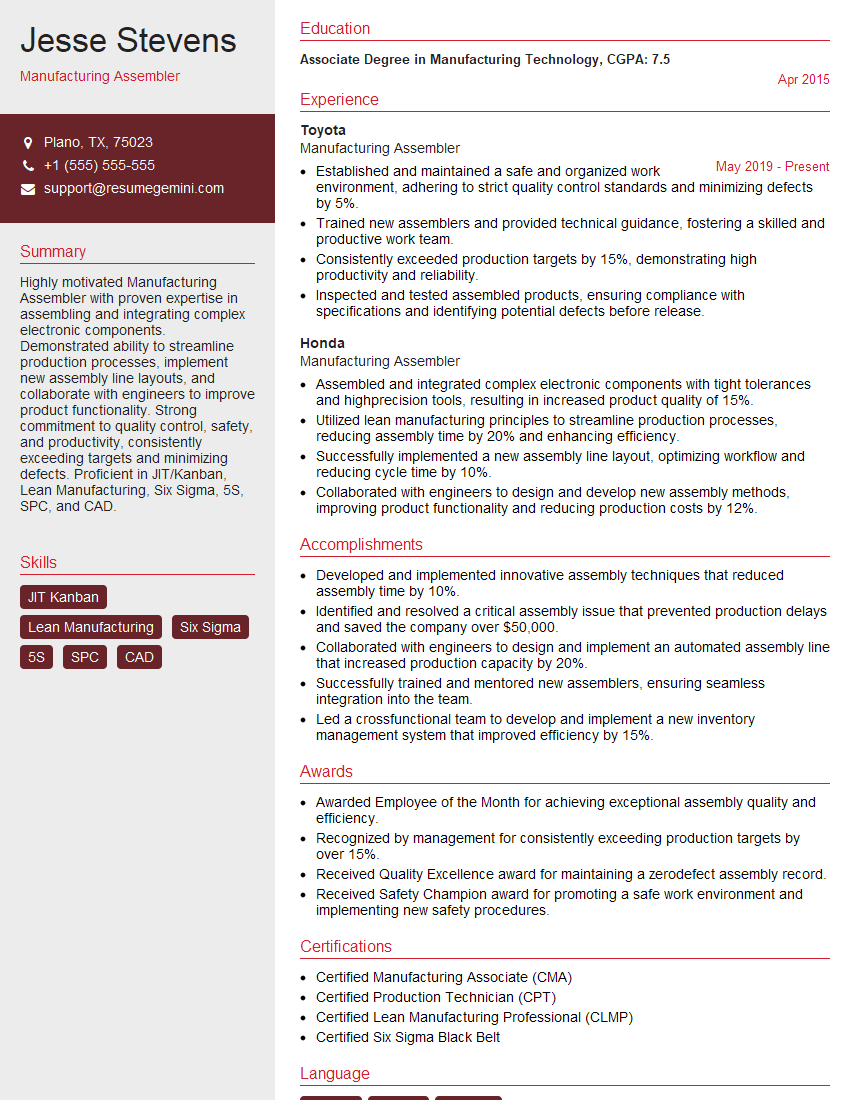
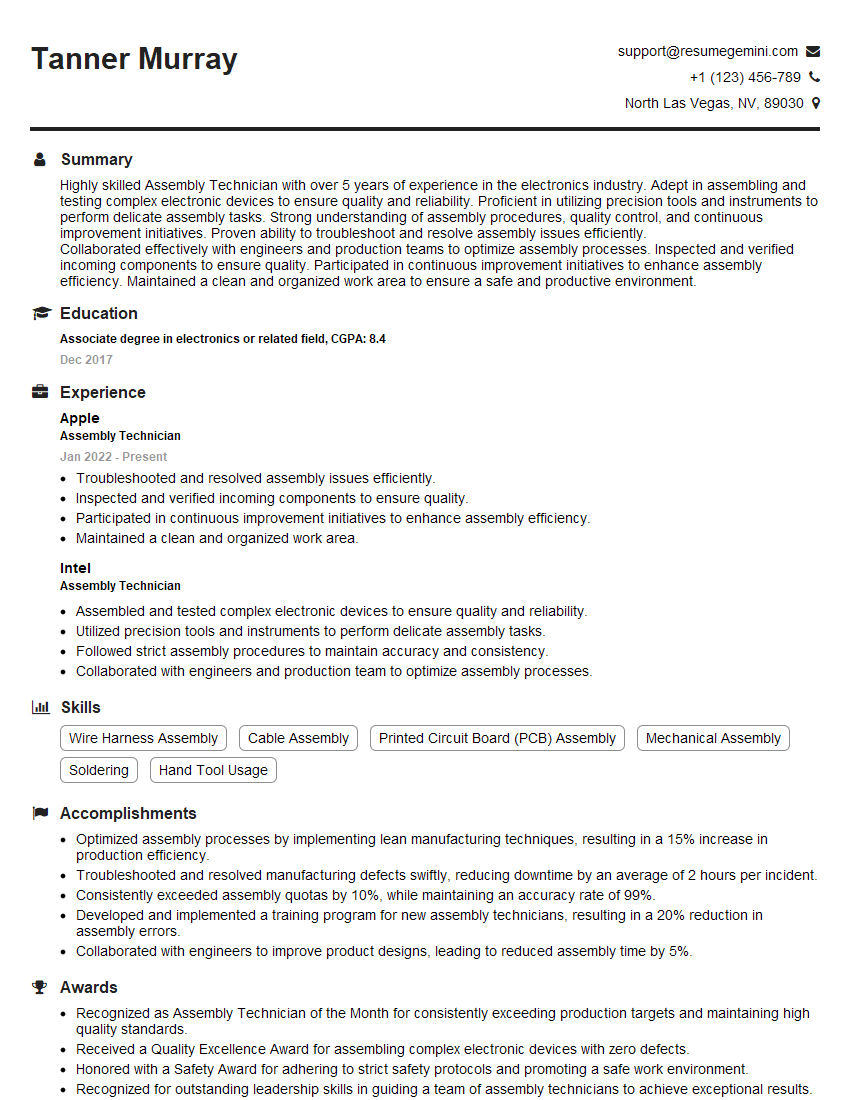
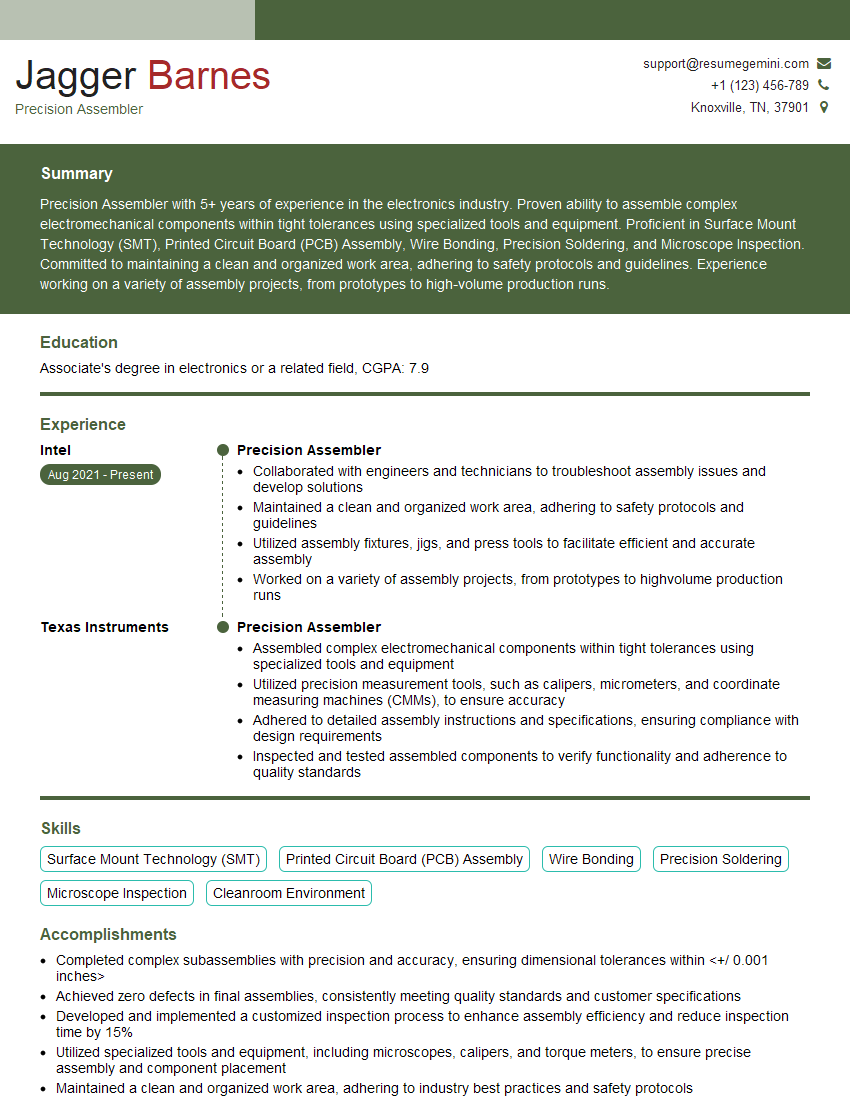
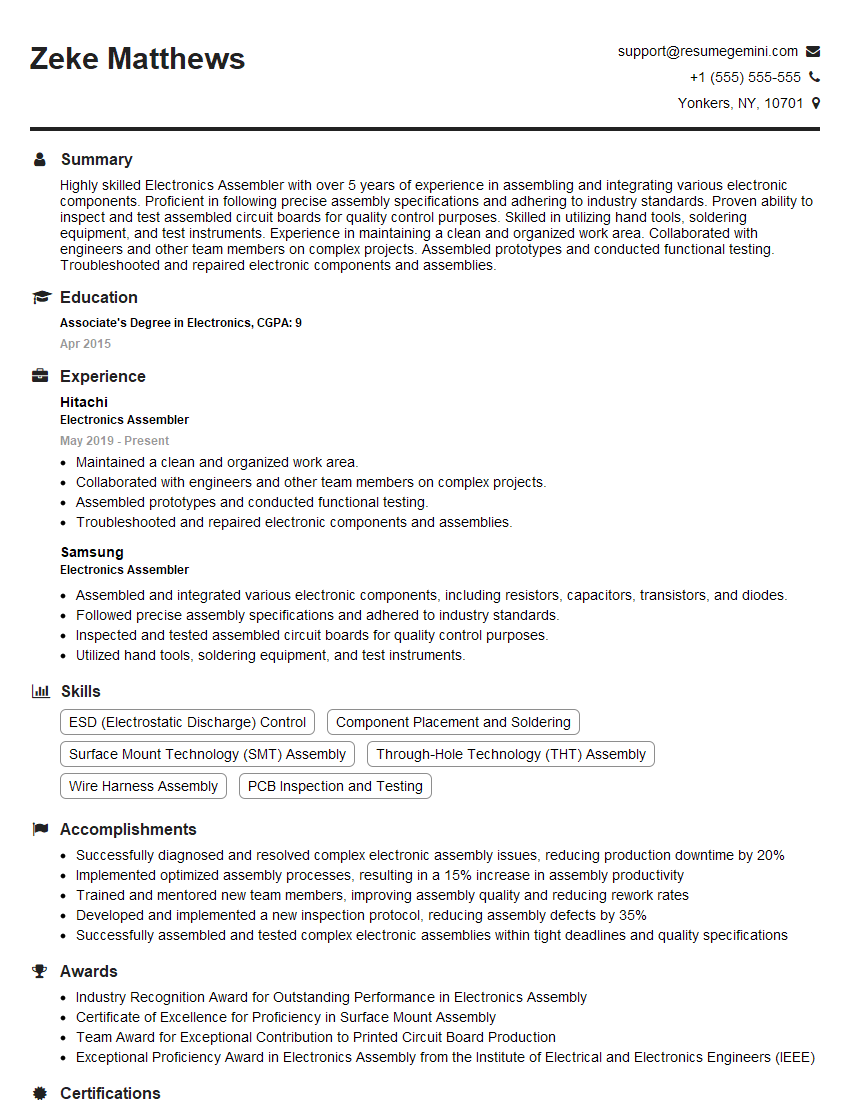
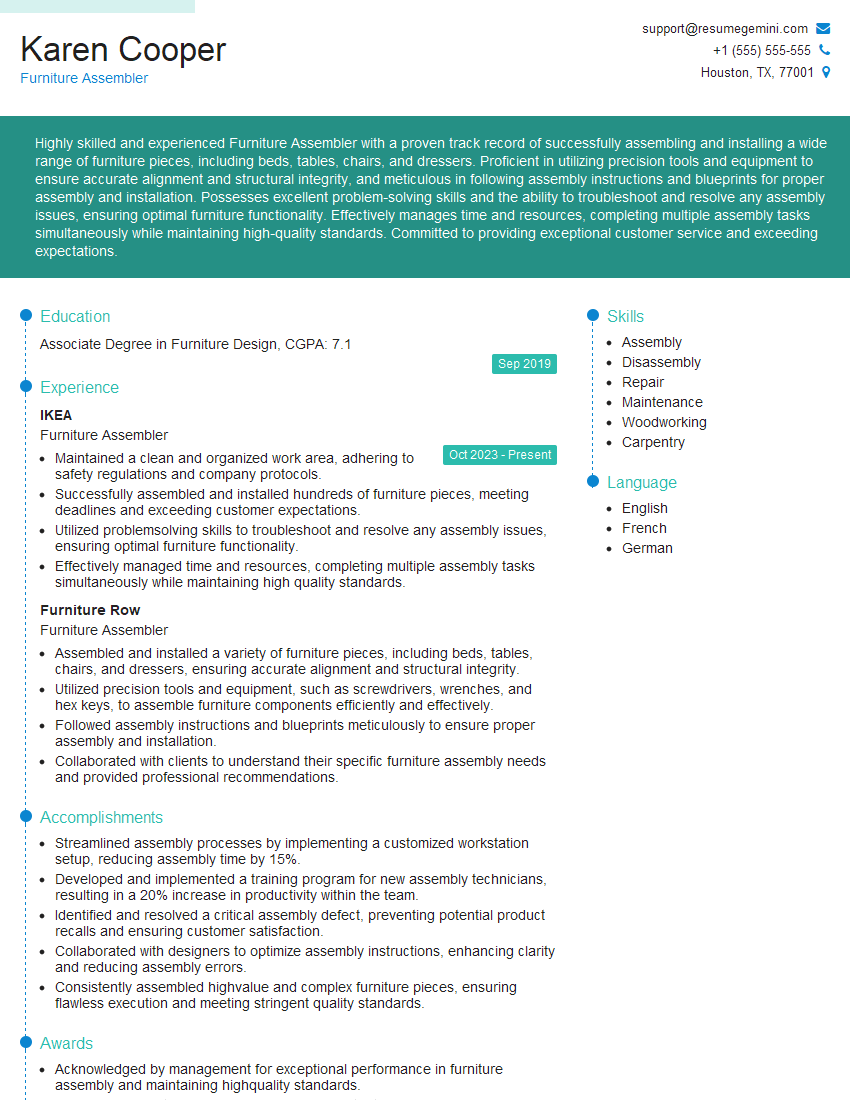
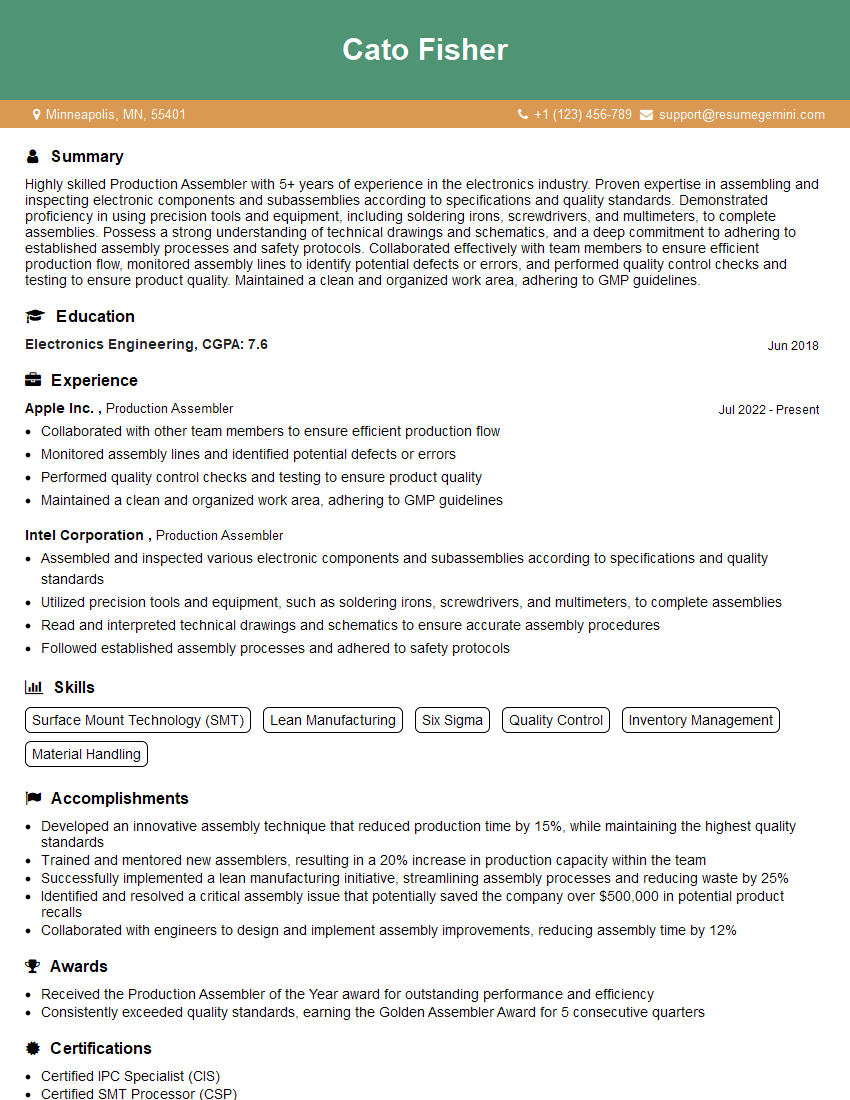
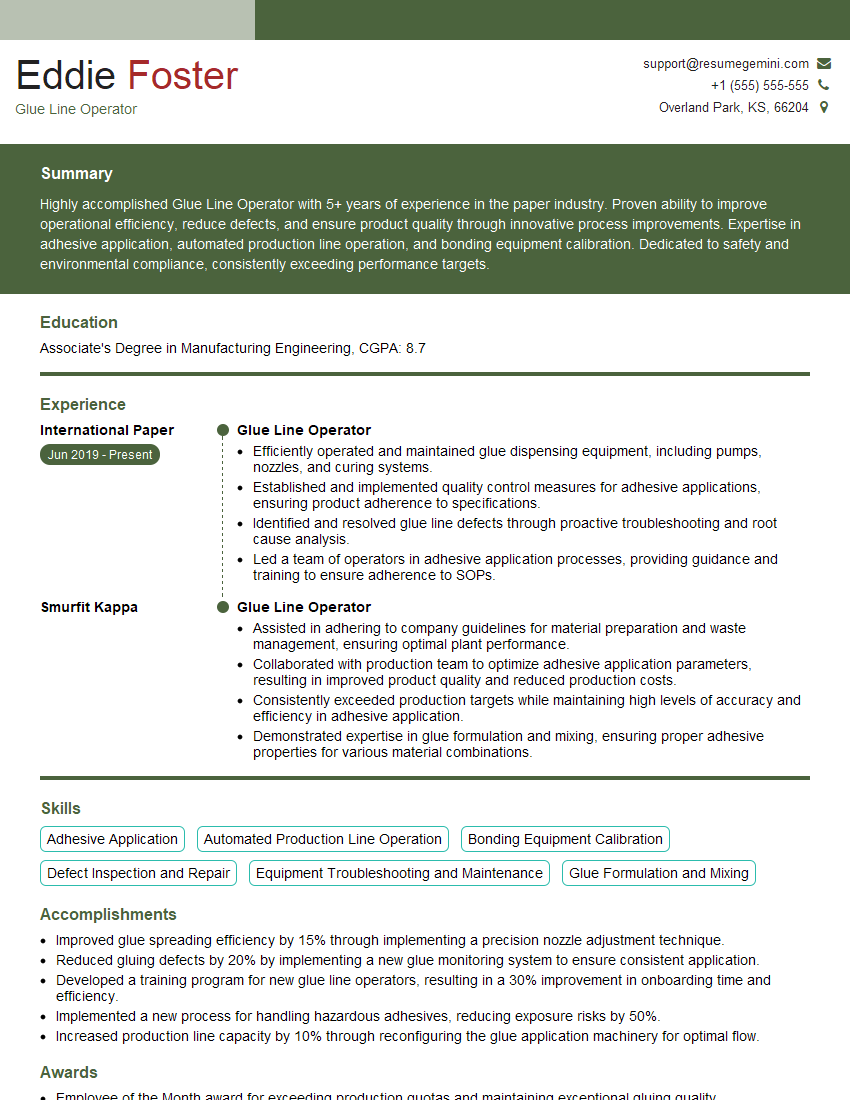
Mastering gluing and assembly techniques opens doors to diverse and rewarding career opportunities in manufacturing, construction, and various other industries. Demonstrating a strong understanding of these skills is crucial for career advancement. To significantly boost your job prospects, focus on creating an ATS-friendly resume that highlights your relevant skills and experience. ResumeGemini is a trusted resource that can help you build a professional and impactful resume. They provide examples of resumes tailored to the Gluing and Assembly field, helping you present your qualifications effectively to potential employers.

Explore more articles
Users Rating of Our Blogs
Share Your Experience
We value your feedback! Please rate our content and share your thoughts (optional).
What Readers Say About Our Blog
To the interviewgemini.com Webmaster.
Very helpful and content specific questions to help prepare me for my interview!
Thank you
To the interviewgemini.com Webmaster.
This was kind of a unique content I found around the specialized skills. Very helpful questions and good detailed answers.
Very Helpful blog, thank you Interviewgemini team.