Unlock your full potential by mastering the most common Timber Culling interview questions. This blog offers a deep dive into the critical topics, ensuring you’re not only prepared to answer but to excel. With these insights, you’ll approach your interview with clarity and confidence.
Questions Asked in Timber Culling Interview
Q 1. Explain the principles of selective timber culling.
Selective timber culling is the practice of removing specific trees from a forest while leaving others to continue growing. It’s not a blanket clear-cut; instead, it’s a precise process aimed at optimizing forest health and yield. The core principle is to enhance the long-term productivity and biodiversity of the stand. This is achieved by removing trees that are diseased, damaged, competing for resources, or otherwise hindering the growth of healthier trees.
Think of it like gardening: you wouldn’t remove all your plants just because some aren’t thriving; you’d carefully remove the problematic ones to allow the healthy ones to flourish. Similarly, selective culling focuses on improving the overall quality and health of the forest ecosystem.
Q 2. Describe different methods for assessing tree health and suitability for culling.
Assessing tree health and suitability for culling involves a multifaceted approach. We utilize several methods:
- Visual inspection: This is the first and often most important step. We look for signs of disease (e.g., fungal growth, insect infestation), damage (e.g., broken branches, storm damage), and decay. We also assess crown condition, stem straightness, and overall vigor.
- Increment borings: A small core sample is extracted from the tree to analyze growth rings. This helps determine the tree’s age, growth rate, and past stress events. A suppressed tree, showing narrow rings over a period of time, might be culled to benefit its neighbours.
- Resistance drilling: A specialized drill measures the resistance encountered while drilling into the wood. Higher resistance often indicates denser, healthier wood, while lower resistance may suggest decay or internal defects.
- Sounding: Using a hammer or mallet to tap the tree trunk helps assess the wood’s soundness. A dull sound can indicate internal decay.
Combining these methods allows for a comprehensive assessment of each tree’s condition and its contribution to the overall forest ecosystem.
Q 3. How do you identify and mark trees for culling using appropriate tools and techniques?
Identifying and marking trees for culling requires precision and care. We use a combination of tools and techniques:
- Paint markings: Brightly colored paint is applied to the base of the tree trunk, clearly indicating its selection for culling. Different colors can be used to categorize trees based on reasons for culling (e.g., disease, damage).
- GPS mapping: The precise location of each marked tree is recorded using a GPS device. This information is crucial for planning efficient harvesting and transportation. We can then easily upload this data to our GIS system for detailed mapping.
- Data loggers: More advanced operations utilise data loggers, which record not only the location but also attributes of each tree like species, diameter, height and the reason for culling.
The markings must be clear, unambiguous, and easily visible to the harvesting crew to prevent accidental damage to unintended trees. We always ensure safety and minimal disruption to surrounding vegetation.
Q 4. What are the common challenges encountered during timber culling operations?
Timber culling operations face several challenges:
- Difficult terrain: Accessing remote areas can be challenging, impacting the efficiency and cost of operations.
- Weather conditions: Adverse weather can delay or halt operations, increasing costs and potentially damaging trees or equipment.
- Disease and pest outbreaks: Unexpected outbreaks can necessitate rapid and extensive culling efforts, requiring flexible planning and rapid response capabilities.
- Environmental concerns: Minimizing soil erosion and protecting sensitive habitats are crucial aspects that demand careful planning and execution.
- Logistics and transportation: Moving felled timber efficiently and sustainably from remote areas presents significant logistical hurdles.
Effective risk management and proactive planning are essential to mitigate these challenges and ensure the success of the operation.
Q 5. Explain the importance of sustainable forestry practices in timber culling.
Sustainable forestry practices are paramount in timber culling. They ensure the long-term health and productivity of the forest while minimizing environmental impact. Sustainable culling focuses on:
- Maintaining biodiversity: Selective culling helps maintain a diverse forest structure, providing habitat for various species of plants and animals.
- Promoting regeneration: Removing competing trees allows sunlight and resources to reach younger trees, promoting natural regeneration.
- Improving forest health: Removing diseased or damaged trees prevents the spread of disease and pests, improving the overall health of the stand.
- Carbon sequestration: By promoting the growth of healthy trees, culling helps maintain or even enhance the forest’s ability to absorb atmospheric carbon dioxide.
Sustainable culling ensures that future generations can benefit from the forest resources while preserving its ecological integrity.
Q 6. How do you ensure compliance with environmental regulations during culling?
Compliance with environmental regulations is a cornerstone of responsible timber culling. We ensure compliance by:
- Obtaining necessary permits and licenses: This varies by region, but generally includes permits for harvesting, transportation, and potentially environmental impact assessments.
- Adhering to harvesting guidelines: These guidelines often specify which trees can be removed, the methods allowed, and measures to minimize environmental impact (e.g., minimizing soil disturbance).
- Protecting sensitive habitats: We identify and avoid harvesting in areas that are critical for endangered species or unique ecosystems.
- Monitoring and reporting: We carefully monitor our operations, ensuring that we are meeting regulatory requirements and reporting any unexpected environmental impacts.
Our team maintains up-to-date knowledge of all relevant regulations and adheres to best practices for environmental protection.
Q 7. Describe your experience with using GIS software for timber culling planning.
GIS software is indispensable in modern timber culling planning. I have extensive experience using ArcGIS and QGIS. We utilize these systems to:
- Map forest stands: Create detailed maps showing tree species, age, size, and health. We often incorporate data from remote sensing, such as aerial photography or LiDAR, to create highly accurate maps.
- Plan harvesting routes: Optimize harvesting routes to minimize soil disturbance and environmental impact, considering factors such as terrain, water bodies, and sensitive areas.
- Track harvesting progress: Monitor the progress of harvesting operations in real-time, ensuring that culling plans are followed and identifying any potential issues.
- Analyze harvesting data: Post-harvest analysis allows us to refine future culling strategies and assess the effectiveness of our operations.
For instance, in a recent project, using GIS allowed us to identify pockets of diseased trees within a large forest stand, targeting our culling efforts for maximum impact while minimizing the disturbance to healthy trees and protecting a nearby river. This approach ensured efficient resource allocation and minimized the environmental footprint of the operation.
Q 8. How do you determine the volume of timber to be culled?
Determining the volume of timber to be culled involves a multi-step process that combines field assessment with data analysis. Firstly, we conduct a thorough inventory of the stand, identifying trees suitable for culling based on factors like species, size, health, and market demand. This often involves using tools such as diameter tapes to measure DBH (diameter at breast height) and hypsometers to estimate tree height. These measurements allow us to calculate individual tree volume using established formulas or software, such as those based on Smalian’s formula or more sophisticated models that account for tree form.
Secondly, we aggregate individual tree volumes to estimate the total volume available for culling. This requires careful consideration of the culling objectives; are we aiming for a specific volume, or are we aiming to achieve a certain level of stand improvement by removing specific tree classes? Finally, the total volume might be adjusted based on practical considerations such as accessibility, logging constraints, and market capacity. For example, we might decide not to harvest all the cull trees if the market can’t absorb the volume or if the cost of extraction is disproportionately high.
Imagine a situation where we’re culling a stand of Douglas fir. We might use a combination of visual assessment and precise measurements to identify overmature, diseased, or low-value trees. The resulting volume estimate would factor in all identified cull trees, but the final culling volume might be adjusted based on the log truck capacity and the proximity of the logging road.
Q 9. Explain your understanding of different timber harvesting methods and their suitability for various forest types.
Timber harvesting methods vary significantly depending on factors like forest type, terrain, tree species, and environmental considerations. Common methods include:
- Clearcutting: Removing all trees from a designated area. Suitable for fast-growing, even-aged stands, but can have significant environmental impacts if not managed carefully. An example is clearcutting a pine plantation for pulpwood.
- Shelterwood cutting: Removing trees in stages, leaving some trees for seed production and shelter. Promotes natural regeneration and is suitable for uneven-aged stands. This is often used in hardwood forests.
- Selection cutting: Removing individual trees or small groups of trees, leaving the majority of the stand intact. Mimics natural disturbances and is suitable for maintaining biodiversity and uneven-aged stands, such as in old-growth forests.
- Seed-tree cutting: Removing almost all trees, leaving a few seed trees to regenerate the stand. Primarily used for species with prolific seed production.
The choice of method is crucial. For instance, clearcutting is generally avoided in steep slopes due to the increased risk of erosion. In ecologically sensitive areas, selection cutting or shelterwood cutting would be more appropriate to minimize disturbance and maintain habitat complexity.
Q 10. How do you manage risks associated with timber culling operations, such as safety hazards and environmental impacts?
Risk management in timber culling is paramount. We mitigate risks through meticulous planning and execution. This includes:
- Safety: Comprehensive safety protocols are essential, encompassing pre-harvest planning, regular safety meetings, the use of personal protective equipment (PPE), and adherence to strict operational procedures. We carefully assess terrain, identify potential hazards like snags (dead trees), and implement measures to control risks during felling, extraction, and transportation.
- Environmental Protection: We conduct environmental assessments to identify potential impacts on water quality, wildlife habitats, and soil erosion. Mitigation strategies include careful planning of logging roads, minimizing soil disturbance, stream buffer zone protection, and adherence to environmental regulations. We often employ best management practices (BMPs) to minimize our footprint.
- Legal Compliance: We ensure all operations comply with relevant laws and regulations, including permits, licenses, and environmental protection measures. This often involves working closely with regulatory agencies.
For example, before starting a culling operation near a river, we might implement sediment control measures such as installing silt fences and using erosion control mats. This ensures that our operations don’t harm the surrounding environment.
Q 11. Describe your experience with timber valuation and pricing.
Timber valuation and pricing are complex processes influenced by various factors, including species, quality (e.g., knottiness, decay), dimensions, market demand, and location. We use different methods depending on the specific circumstances.
- Volume-based pricing: This is the most common approach, where the price is determined per unit volume (e.g., cubic meters or board feet). Price varies according to species and quality.
- Grade-based pricing: Higher quality logs are graded and priced accordingly, resulting in a higher price per unit volume.
- Market analysis: We constantly monitor market prices for different species and grades to ensure fair valuation. Factors like seasonal fluctuations and international markets influence pricing.
For instance, a high-quality log of old-growth redwood will command a significantly higher price per cubic meter compared to a lower-quality log of fast-grown pine. This requires a deep understanding of the timber market and different species values.
Q 12. How do you communicate effectively with landowners, contractors, and other stakeholders involved in timber culling projects?
Effective communication is critical in timber culling projects. We foster open and transparent communication with all stakeholders using various methods:
- Regular meetings: Holding regular meetings with landowners, contractors, and other stakeholders helps to keep everyone informed and address concerns promptly.
- Clear documentation: Providing clear and concise documentation, including harvest plans, contracts, and progress reports, maintains transparency and accountability.
- Open dialogue: Creating a space for open dialogue and feedback ensures that all perspectives are considered. We actively listen to concerns and address them appropriately.
- Use of technology: Utilizing tools like GIS (Geographic Information Systems) and project management software can help to streamline communication and facilitate data sharing.
For example, if a landowner has concerns about the proximity of logging operations to a sensitive area, we would address this by explaining our mitigation plans and offering adjustments if necessary, fostering a collaborative spirit.
Q 13. What are the key factors to consider when planning a timber culling operation?
Planning a timber culling operation requires meticulous attention to detail. Key factors include:
- Defining objectives: Clearly stating the objectives, whether it’s improving stand health, increasing timber volume, or harvesting specific species.
- Forest inventory: Conducting a thorough inventory of the forest to determine the quantity and quality of timber available.
- Harvesting method selection: Choosing an appropriate harvesting method based on forest type, terrain, and environmental concerns.
- Logistical planning: Planning aspects such as road access, equipment requirements, and transportation.
- Environmental considerations: Considering potential environmental impacts and implementing mitigation measures.
- Risk assessment: Conducting a thorough risk assessment to identify and mitigate potential hazards.
- Budgeting and financial planning: Developing a realistic budget that includes all costs associated with the operation.
- Legal and regulatory compliance: Ensuring compliance with all relevant laws and regulations.
A well-planned operation minimizes risks and maximizes efficiency. Ignoring these factors can lead to costly delays, safety issues, or environmental damage.
Q 14. Explain your understanding of different tree species and their growth characteristics.
Understanding tree species and their growth characteristics is fundamental to effective timber culling. Different species have varying growth rates, wood properties, and ecological roles. For instance:
- Fast-growing species: Such as Loblolly Pine, grow rapidly but may have lower wood density compared to slower-growing species.
- Slow-growing species: Such as Redwood or some oaks, tend to have higher density wood, but take longer to mature.
- Shade-tolerant species: Can survive and grow in low-light conditions, whereas others require full sunlight.
- Moisture requirements: Vary widely among species, some thriving in wet conditions while others prefer dry sites.
Knowing these characteristics allows us to tailor culling practices to individual species. For instance, we might remove overmature trees in a fast-growing plantation to allow younger trees more space to develop. In a mixed hardwood forest, we could selectively cull certain species to favor the growth of others.
Q 15. How do you ensure the accuracy and reliability of timber inventory data?
Accurate and reliable timber inventory data is the cornerstone of successful timber culling. We achieve this through a multi-faceted approach that combines field data collection with advanced analytical techniques.
- Detailed Field Surveys: We employ systematic sampling methods, using both ground-based and aerial surveys (e.g., LiDAR) to capture comprehensive data on tree species, diameter at breast height (DBH), tree height, and volume. The sampling intensity is adjusted based on the variability within the stand. For example, a more heterogeneous forest will require a higher sampling intensity than a uniform plantation.
- Precise Measurement Techniques: We utilize high-precision instruments like diameter tapes, hypsometers (to measure tree height), and clinometers (to measure slope). Regular calibration of these instruments ensures accuracy. We also utilize GPS technology for precise location mapping of trees and sample plots.
- Data Validation and Quality Control: A rigorous quality control process is implemented at every stage. This involves double-checking measurements, verifying data entry, and conducting statistical analysis to identify and correct outliers or errors. Independent verification of a subset of the data further ensures accuracy.
- Statistical Modeling: We use statistical modeling techniques, incorporating factors like tree species, site characteristics, and stand density, to estimate the total volume and other relevant parameters. This allows us to extrapolate from our sample data to the entire forest stand.
This integrated approach minimizes errors and ensures the reliability of our timber inventory data, providing a solid foundation for informed decision-making in timber culling.
Career Expert Tips:
- Ace those interviews! Prepare effectively by reviewing the Top 50 Most Common Interview Questions on ResumeGemini.
- Navigate your job search with confidence! Explore a wide range of Career Tips on ResumeGemini. Learn about common challenges and recommendations to overcome them.
- Craft the perfect resume! Master the Art of Resume Writing with ResumeGemini’s guide. Showcase your unique qualifications and achievements effectively.
- Don’t miss out on holiday savings! Build your dream resume with ResumeGemini’s ATS optimized templates.
Q 16. Describe your experience with using various measuring tools for timber assessment.
My experience with timber assessment tools spans a wide range of instruments, each suited to specific tasks.
- Diameter Tapes: These are fundamental for measuring DBH, a crucial parameter for volume estimation. I’m proficient in using various types, including those with different units (inches, centimeters) and features like automatic recording capabilities.
- Hypsometers: I use both optical and laser hypsometers to accurately measure tree height. Optical hypsometers require careful technique, while laser hypsometers offer quicker and more precise measurements, especially in challenging terrains.
- Clinometers: These are essential for measuring slope, which is crucial for correcting volume estimations in uneven terrain. Accurate slope measurements are crucial for avoiding errors in volume calculations.
- Total Stations and GPS Systems: For large-scale inventories, we utilize total stations and GPS systems to precisely map the location of trees and sample plots. This ensures accurate spatial data for the whole forest.
- Software Applications: Beyond physical instruments, I’m experienced with software applications for data processing and analysis, such as specialized forestry software which helps in creating maps, generating reports and even simulating various culling scenarios.
Proficiency in using these various tools, combined with a strong understanding of their limitations, is essential for obtaining accurate and reliable data in timber assessment.
Q 17. How do you handle unexpected issues or challenges that arise during timber culling operations?
Unexpected issues are inevitable in timber culling operations. My approach involves proactive planning, careful risk assessment, and a systematic problem-solving methodology.
- Contingency Planning: Before starting any operation, we develop detailed contingency plans to address potential problems, such as equipment malfunctions, adverse weather conditions, or unexpected tree conditions (e.g., rotten wood). This might involve having backup equipment readily available or alternate strategies for different scenarios.
- On-Site Assessment: When an unexpected issue arises, the first step is a thorough on-site assessment to fully understand the problem. This involves considering all the implications of the problem, not just the most immediate concerns.
- Risk Management: We utilize a risk assessment framework to identify potential hazards and implement appropriate safety measures to mitigate risks. This might include re-routing operations, adjusting felling techniques, or halting operations until conditions improve.
- Communication: Effective communication among the team is crucial for resolving issues quickly and safely. This includes clear instructions to team members, regular updates, and timely escalation of major problems to management.
- Adaptability: Flexibility is paramount. We adapt our approach and strategies to overcome challenges, often necessitating improvisations based on the specific circumstances. This may involve alternative logging techniques or even temporarily suspending operations until the issue is resolved.
By combining proactive planning with a structured approach to problem-solving, we can effectively address unexpected issues and ensure the safe and efficient completion of timber culling operations.
Q 18. Explain your knowledge of relevant forestry regulations and guidelines.
Knowledge of forestry regulations and guidelines is paramount for responsible and legal timber culling. My understanding encompasses various aspects, including:
- Sustainable Forestry Practices: I’m well-versed in sustainable harvesting principles, such as selective logging, maintaining biodiversity, and minimizing environmental impact. This includes adherence to rules surrounding leaving appropriate buffer zones around waterways and avoiding harmful practices.
- Environmental Regulations: I am familiar with local, regional, and national environmental regulations regarding forest management, including protected species considerations, habitat preservation, and waste management. This includes understanding regulations related to the protection of endangered species or sensitive ecosystems.
- Safety Regulations: I’m knowledgeable about occupational safety and health standards applicable to timber culling, including the use of personal protective equipment (PPE), safe felling techniques, and emergency procedures. We adhere to strict safety regulations to protect our workers.
- Permitting and Licensing: I understand the process of obtaining necessary permits and licenses for timber harvesting and am experienced with handling regulatory compliance throughout the process. We ensure full regulatory compliance throughout the project.
- Land Ownership and Access: I’m familiar with procedures related to land ownership, access rights, and boundary demarcation, ensuring operations are always conducted within legal boundaries. We always operate with legally obtained access to the timberlands.
Staying updated on evolving regulations is an ongoing process, requiring continuous professional development and engagement with relevant authorities.
Q 19. How do you ensure the safety of workers and equipment during timber culling operations?
Ensuring the safety of workers and equipment is paramount. Our safety protocols are integrated into every stage of the timber culling process:
- Risk Assessments: Before commencing any operation, a comprehensive risk assessment is conducted, identifying potential hazards and implementing appropriate control measures. This includes assessing terrain conditions, weather forecasts, and potential risks associated with specific felling techniques.
- Safety Training: All workers receive thorough training on safe operating procedures, including the proper use of equipment, personal protective equipment (PPE), emergency procedures, and hazard communication. We regularly conduct refresher courses and emphasize the importance of reporting hazards.
- Personal Protective Equipment (PPE): Workers are provided with, and required to use, appropriate PPE, including safety helmets, high-visibility clothing, safety boots, and hearing protection. The condition of PPE is regularly inspected and maintained.
- Equipment Maintenance: Regular maintenance and inspection of all equipment are critical to preventing malfunctions and accidents. We have a strict maintenance schedule for all machinery and equipment used in our operations.
- Emergency Response Plan: A well-defined emergency response plan is in place, including communication protocols, evacuation procedures, and first aid response. Emergency drills and training are periodically conducted to ensure preparedness.
- Safe Felling Techniques: Proper felling techniques are strictly enforced, including assessing the direction of fall, creating escape routes, and using appropriate felling tools and equipment.
A strong safety culture, coupled with rigorous procedures and ongoing training, are essential for maintaining a safe work environment and minimizing risks.
Q 20. Describe your experience with forest road construction and maintenance.
Forest road construction and maintenance are integral to efficient timber culling operations. My experience involves both aspects:
- Design and Construction: I’ve been involved in the design and construction of forest roads, considering factors such as terrain, soil conditions, drainage, and environmental impact. This involves selecting appropriate road designs to minimize environmental impact and ensure easy access for logging equipment.
- Road Location and Planning: Careful road planning is vital to minimize damage to the forest. We employ techniques that optimize road placement to minimize impact on sensitive areas while ensuring effective access to logging areas.
- Materials and Techniques: My knowledge encompasses the use of various materials and construction techniques suitable for forest environments, considering factors like durability, cost, and environmental impact. The choice of materials and construction techniques depends heavily on the terrain and environmental considerations.
- Maintenance and Repair: Regular maintenance and repair of forest roads are crucial to ensure safe and efficient transportation of timber. We implement schedules for routine maintenance including drainage repair and surface stabilization to prolong the lifespan of forest roads. This helps keep the roads in good condition and reduces the risk of accidents.
- Erosion Control: Effective erosion control measures are incorporated during road construction and maintenance to protect water quality and prevent environmental damage. Techniques such as proper drainage design and the use of erosion control blankets are incorporated into the processes.
Efficient forest road infrastructure is vital for cost-effective and environmentally responsible timber culling operations.
Q 21. What software or applications are you proficient in using for timber culling and management?
Proficiency in relevant software is crucial for efficient timber culling and management. My expertise includes:
- Geographic Information Systems (GIS): I’m proficient in using GIS software (e.g., ArcGIS, QGIS) for spatial data analysis, mapping, and visualization. This allows for creating maps, analyzing spatial patterns, and planning optimal harvesting strategies.
- Forestry-Specific Software: I have experience with specialized forestry software packages for timber inventory, growth modeling, and yield prediction. These programs help in simulating different harvesting scenarios and predicting future timber yields.
- Data Analysis Software: I’m skilled in using statistical software (e.g., R, SPSS) for data analysis and modeling, allowing for accurate estimations and projections related to timber volume, growth, and value. Statistical analysis is crucial for decision-making in timber management.
- Spreadsheet Software: Proficiency in spreadsheet software (e.g., Microsoft Excel, Google Sheets) is essential for data management, calculations, and report generation. Spreadsheets are commonly used to organize and analyze data related to timber harvesting and inventory.
Combining software skills with field experience allows for a more comprehensive and data-driven approach to timber culling and management, leading to more efficient and sustainable operations.
Q 22. Describe your experience with preparing and submitting timber harvesting plans.
Preparing and submitting timber harvesting plans is a meticulous process requiring a deep understanding of forestry regulations, ecological considerations, and operational logistics. It begins with a thorough site assessment, including detailed mapping of the area, species identification, and volume estimation. This data informs the development of the harvesting plan itself, which outlines the specific trees to be felled, the felling methods, road construction (if needed), and measures to mitigate environmental impact. The plan also includes details on safety protocols, waste management, and reforestation strategies. Before submission, the plan undergoes rigorous internal review, often involving multiple stakeholders, to ensure compliance and feasibility. I have extensive experience preparing plans for diverse projects, ranging from small-scale selective harvests to large-scale clear-cuts, and am adept at navigating the regulatory processes required for approval in various jurisdictions. For example, in one project involving a sensitive riparian zone, I developed a plan that incorporated buffer zones and specialized harvesting techniques to minimize water quality impacts, resulting in plan approval without delay.
Q 23. How do you monitor and evaluate the effectiveness of timber culling operations?
Monitoring and evaluating timber culling operations is crucial for ensuring both operational efficiency and environmental responsibility. This involves regular on-site inspections to track progress against the harvesting plan, assessing adherence to safety protocols, and verifying the effectiveness of mitigation measures. Quantitative data, such as the number of trees harvested, volume of timber extracted, and waste generated, are collected and analyzed. Qualitative assessments also play a vital role, focusing on the condition of remaining stands, evidence of soil disturbance, and impacts on water resources. Post-harvest surveys may involve vegetation assessments to evaluate regeneration success and biodiversity indicators. Comparing collected data against the initial plan allows for the identification of areas needing adjustment or improvement. For instance, I once noticed higher-than-expected soil compaction in a specific area during a post-harvest survey, leading to a revised approach to road construction in subsequent projects, significantly improving environmental outcomes.
Q 24. Explain your understanding of the ecological impacts of timber culling.
Timber culling, while providing valuable timber resources, has significant ecological impacts. These impacts vary considerably depending on the intensity and method of harvesting, the forest type, and the existing ecological conditions. Potential negative impacts include habitat loss and fragmentation, leading to reduced biodiversity and disruption of ecological processes. Soil erosion and compaction are major concerns, particularly on steep slopes. Water quality can be affected by increased sediment runoff and the introduction of pollutants. However, well-planned timber culling, incorporating selective harvesting and careful site preparation, can mitigate these negative impacts. For example, leaving behind snags (standing dead trees) and creating wildlife corridors can help to maintain habitat complexity. The use of reduced-impact logging techniques can minimize soil disturbance. Reforestation efforts are essential for restoring forest cover and ecological functions.
Q 25. How do you manage conflicts between timber harvesting and biodiversity conservation?
Managing conflicts between timber harvesting and biodiversity conservation requires a balanced approach emphasizing sustainable practices and careful planning. This often involves identifying areas of high ecological value, such as old-growth forests or habitats for endangered species, and excluding them from harvesting activities. Implementing selective logging techniques, which focus on removing specific trees while preserving overall forest structure, can minimize habitat disruption. Creating buffer zones around sensitive areas further helps to protect biodiversity. Regular monitoring and adaptive management are essential to ensure that the chosen strategies are effective. For instance, in a recent project, I collaborated with conservation biologists to identify key nesting sites for an endangered bird species, which allowed us to adjust the harvesting plan to protect these areas, ensuring a successful harvest while maintaining ecological integrity.
Q 26. Describe your experience with working in diverse terrain and environmental conditions.
My experience working in diverse terrain and environmental conditions spans many years and various geographical locations. I’ve worked in rugged mountainous regions, dense lowland forests, and coastal areas, each presenting unique challenges in terms of accessibility, soil conditions, and weather patterns. I’m proficient in using a range of specialized equipment suited to various terrain types, such as skidders for difficult terrain and high-lead systems for steep slopes. I’ve also developed expertise in adapting safety protocols to specific environmental hazards, such as managing risks associated with unstable slopes, extreme weather, and potential wildlife encounters. For example, working in a remote mountainous region required meticulous planning to ensure safe transportation of equipment and personnel and to implement contingency plans in case of unexpected weather events.
Q 27. How do you adapt your timber culling techniques to different forest types and site conditions?
Adapting timber culling techniques to different forest types and site conditions is critical for achieving both economic and ecological objectives. The choice of harvesting method, for example, will depend on factors such as tree species, density, terrain, and soil type. Selective logging is suitable for mature forests with high biodiversity value, while clear-cutting might be more appropriate for even-aged stands intended for reforestation with a specific species. Site-specific considerations, such as the risk of erosion or the presence of sensitive habitats, will also inform the selection of techniques. My experience has shown that careful site preparation, such as constructing well-designed roads and using appropriate skidding trails, can significantly reduce the negative impacts of harvesting. In one instance, dealing with a forest prone to erosion, I implemented a directional felling technique that minimized soil displacement during the harvest and then employed erosion control measures post-harvest, leading to minimal environmental disruption.
Q 28. Explain your experience in developing and implementing sustainable timber management plans.
Developing and implementing sustainable timber management plans involves a long-term perspective that balances economic returns with ecological integrity. These plans typically incorporate principles of sustainable forestry, including the maintenance of biodiversity, the protection of water resources, and the prevention of soil erosion. They involve detailed assessments of the forest resources, the establishment of clear harvesting goals, and the development of strategies for monitoring and evaluating progress. Crucially, sustainable plans require stakeholder engagement, including consultations with local communities, environmental groups, and other relevant parties. For example, I have been involved in crafting sustainable plans that incorporate certification schemes like the Forest Stewardship Council (FSC), which provides a framework for ensuring responsible forest management practices. A successful project integrated community participation in forest monitoring and reforestation initiatives, leading to stronger community buy-in and improved outcomes.
Key Topics to Learn for Timber Culling Interview
- Safety Regulations and Procedures: Understanding and applying relevant safety protocols, including personal protective equipment (PPE) use and hazard identification.
- Tree Identification and Assessment: Knowing how to identify different tree species, assess their health, and determine suitability for culling based on factors like disease, damage, or risk.
- Culling Techniques and Methods: Familiarity with various felling techniques, including directional felling, and understanding the impact of different methods on surrounding trees and the environment.
- Equipment Operation and Maintenance: Demonstrating knowledge of chainsaws, feller bunchers, and other relevant equipment, including safe operation and preventative maintenance procedures.
- Environmental Impact and Sustainability: Understanding the ecological consequences of timber culling and best practices for minimizing environmental damage and promoting sustainable forestry.
- Legal and Regulatory Compliance: Awareness of relevant permits, licenses, and regulations governing timber harvesting in your area.
- Log Handling and Transportation: Understanding safe and efficient methods for handling and transporting felled timber to minimize damage and risk.
- Problem-Solving and Decision-Making: Ability to assess complex situations, identify potential hazards, and make sound decisions in challenging field conditions.
- Teamwork and Communication: Highlighting experience in collaborating effectively with colleagues and communicating clearly in both verbal and written formats.
Next Steps
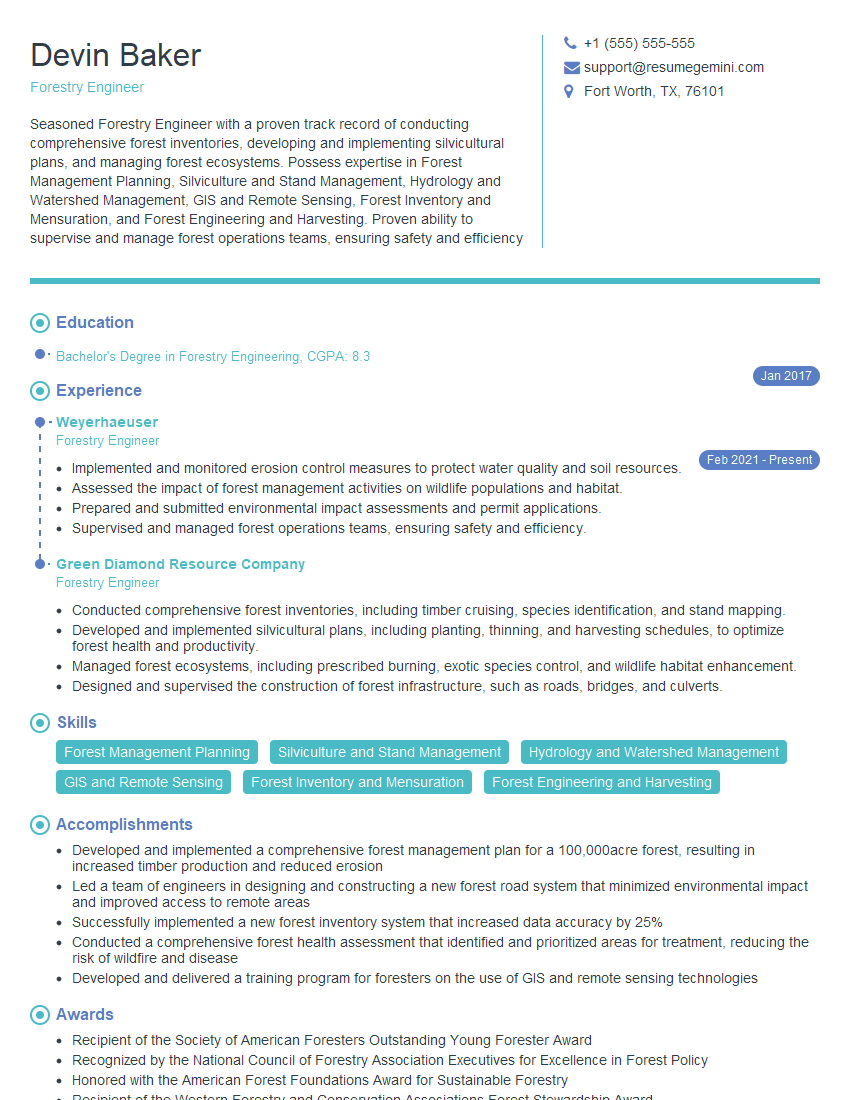
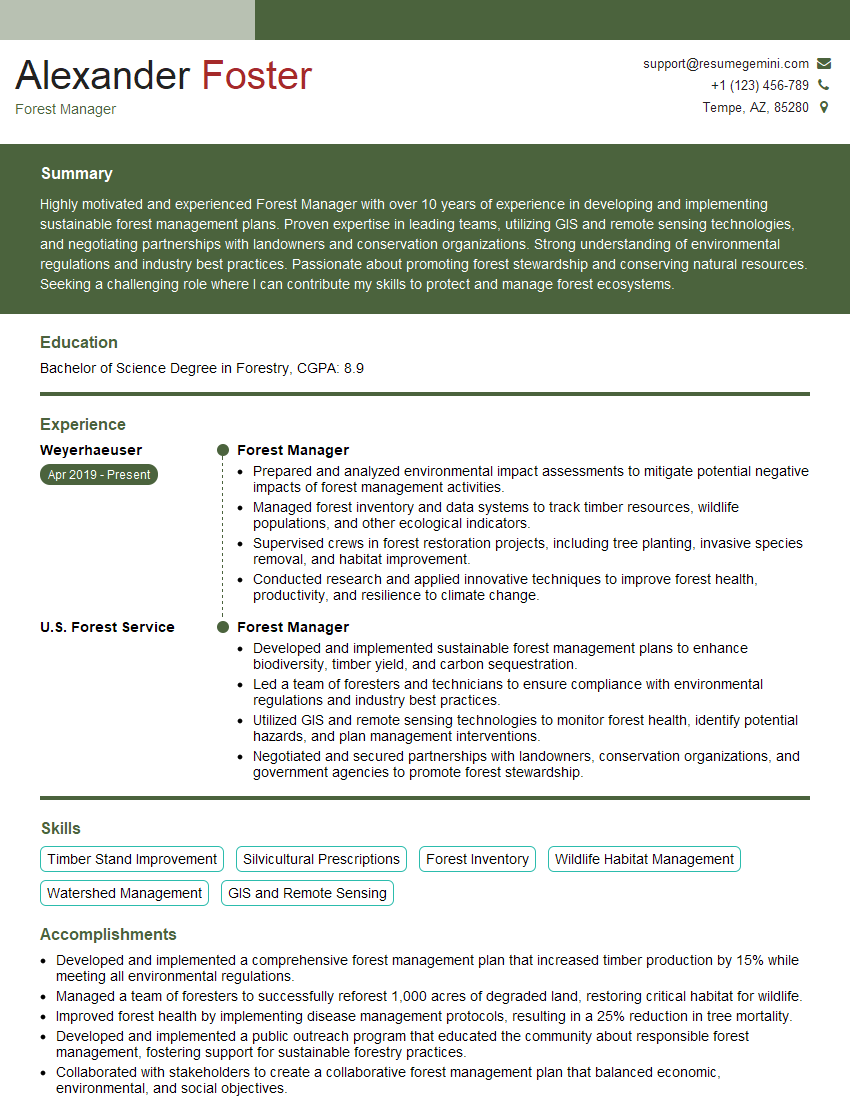
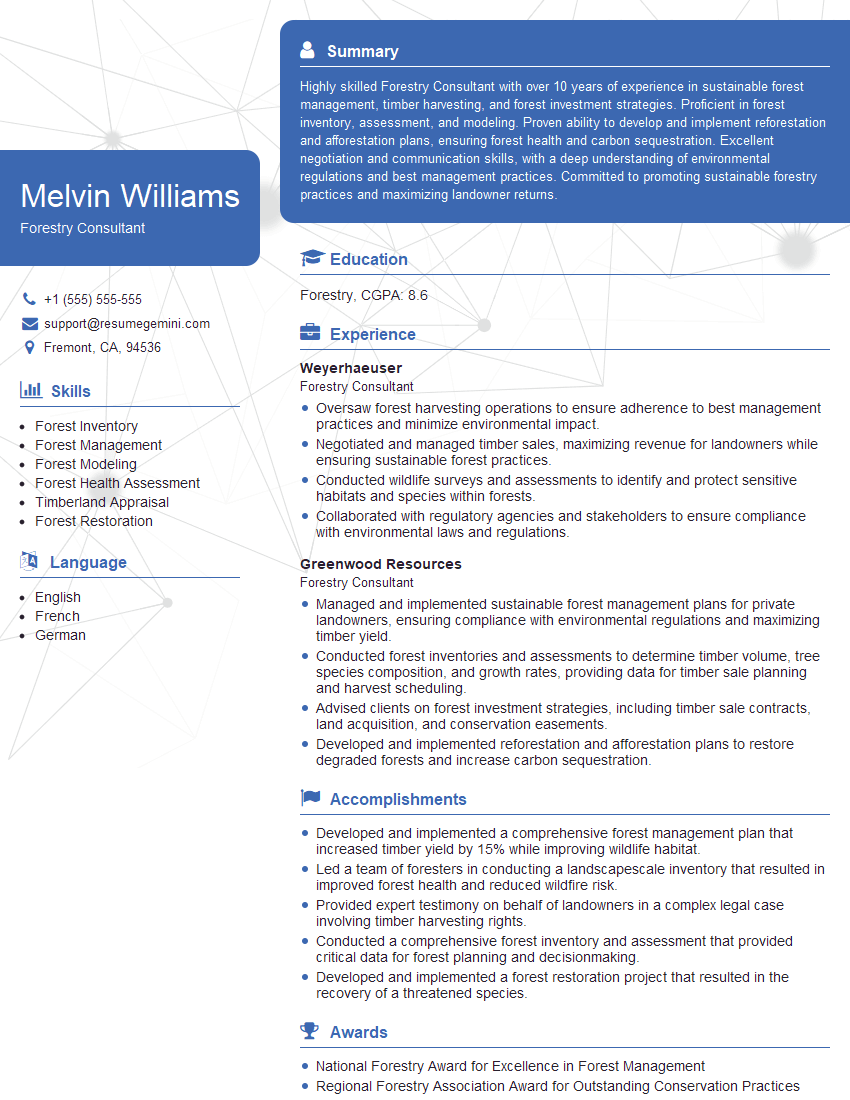
Mastering timber culling opens doors to rewarding careers in forestry, conservation, and related fields. A strong understanding of these key concepts will significantly enhance your interview performance and future career prospects. To maximize your chances of securing your dream job, creating an ATS-friendly resume is crucial. ResumeGemini is a trusted resource that can help you build a professional and impactful resume, designed to get noticed by recruiters. Examples of resumes tailored to the Timber Culling field are available within ResumeGemini to guide you.






Explore more articles
Users Rating of Our Blogs
Share Your Experience
We value your feedback! Please rate our content and share your thoughts (optional).
What Readers Say About Our Blog
To the interviewgemini.com Webmaster.
Very helpful and content specific questions to help prepare me for my interview!
Thank you
To the interviewgemini.com Webmaster.
This was kind of a unique content I found around the specialized skills. Very helpful questions and good detailed answers.
Very Helpful blog, thank you Interviewgemini team.