Cracking a skill-specific interview, like one for Pediatric Orthopedics, requires understanding the nuances of the role. In this blog, we present the questions you’re most likely to encounter, along with insights into how to answer them effectively. Let’s ensure you’re ready to make a strong impression.
Questions Asked in Pediatric Orthopedics Interview
Q 1. Describe the common causes of slipped capital femoral epiphysis (SCFE).
Slipped capital femoral epiphysis (SCFE) is a condition where the ball at the top of the thigh bone (femoral head) slips away from the neck of the thigh bone. This happens because the growth plate, which is a weak point in the bone, weakens and slips. It’s more common in adolescents, particularly during growth spurts.
- Obesity: Increased weight puts extra stress on the growth plate.
- Hormonal changes: Puberty’s hormonal shifts can weaken the growth plate.
- Genetics: A family history of SCFE can increase risk.
- Underlying conditions: Certain endocrine disorders can contribute.
- Trauma: Although less frequent, a minor injury can sometimes trigger the slip.
Imagine a lollipop; the stick is the femoral neck, the hard candy is the femoral head, and the weaker part between them, where the growth plate is, is the glue holding them together. In SCFE, that ‘glue’ weakens, and the candy slips down the stick.
Q 2. Explain the difference between Legg-Calvé-Perthes disease and avascular necrosis of the hip.
Both Legg-Calvé-Perthes disease (LCPD) and avascular necrosis (AVN) of the hip involve disruption of blood supply to the femoral head, leading to bone death. However, they differ in their etiology and typical age of onset.
- Legg-Calvé-Perthes disease is an idiopathic (cause unknown) condition affecting children, usually between 4 and 8 years old. It involves a self-limited interruption of blood supply, meaning the blood supply eventually returns, and the bone typically heals with time, though potential deformity is a concern.
- Avascular necrosis can occur at any age and has various causes, including trauma, steroid use, sickle cell disease, and others. It represents a more severe interruption of blood supply, potentially leading to collapse of the femoral head and requiring more aggressive intervention.
Think of it like this: LCPD is like a temporary blockage in a water pipe, causing temporary damage, which then recovers. AVN is like a complete severing of the water pipe, leading to significant and potentially permanent damage.
Q 3. What are the key diagnostic features of scoliosis in children?
Scoliosis is a sideways curvature of the spine. Key diagnostic features in children include:
- Asymmetry of the shoulders and hips: One shoulder blade might be more prominent, or one hip higher than the other.
- Uneven waistline: One side of the waist appears higher than the other.
- Prominent rib hump: When the child bends forward, a rib hump becomes visible on one side of the back (Adam’s forward bend test).
- Scoliosis screening: School screenings often involve observing posture and the Adam’s forward bend test.
- Radiographic imaging (X-rays): These are crucial for measuring the curve’s severity (Cobb angle), determining the location of the curve, and assessing spinal maturity.
Observing a child’s posture from behind while they bend forward is a simple yet crucial step in detecting scoliosis. A noticeable rib hump indicates a lateral curvature that warrants further investigation.
Q 4. How do you differentiate between a torus fracture and a greenstick fracture?
Both torus and greenstick fractures are incomplete fractures common in children’s bones, due to the more flexible nature of their bones.
- Torus fracture (buckle fracture): This is a compression injury where the cortex of the bone buckles or bulges outwards but doesn’t completely break. It often occurs in the metaphyseal region of long bones (the area where the bone widens before the joint). Think of it like bending a soda can – the can bulges but doesn’t fracture completely.
- Greenstick fracture: In a greenstick fracture, one side of the bone bends or cracks while the other side remains intact. It’s similar to breaking a green twig – it bends and cracks instead of snapping in two.
X-rays are essential for distinguishing between them. A torus fracture shows a bulging or thickening of the bone cortex, while a greenstick fracture displays a fracture line on one side of the bone.
Q 5. Outline the management of a child with a supracondylar humerus fracture.
Supracondylar humerus fractures are fractures just above the elbow joint. Management depends on the fracture pattern and displacement.
- Closed reduction: This involves manipulating the bones back into place under anesthesia. It’s often successful for minimally displaced fractures.
- Casting: After reduction, a cast is applied to immobilize the elbow and allow for healing.
- Open reduction and internal fixation (ORIF): For significantly displaced or unstable fractures, surgery is needed. This involves surgically repositioning the bone fragments and using pins, plates, or screws to hold them in place.
- Regular follow-up: Close monitoring is crucial to ensure proper healing and detect any complications, such as compartment syndrome (pressure buildup in the muscles around the fracture).
The primary goal is to restore anatomical alignment, ensuring proper elbow function. Early intervention is key to preventing long-term complications like limited range of motion or nerve damage.
Q 6. Describe the surgical treatment options for clubfoot.
Clubfoot is a congenital deformity where the foot is turned inward and downward. Surgical options are considered if conservative management (casting and bracing) fails to correct the deformity adequately.
- Posterior release: This involves releasing the tight tendons and ligaments on the back of the foot and ankle.
- Anterior release: This addresses tight structures on the front of the foot and ankle.
- Soft tissue procedures: These address specific muscle imbalances and tendon shortening.
- Osteotomies: In severe cases, bone surgery might be necessary to correct bony deformities.
- Arthrodesis (fusion): In cases of severe deformity and failed prior surgeries, joint fusion may be considered, though this significantly limits ankle movement.
The surgical approach is tailored to the specific deformities of each patient’s foot. The goal is to improve foot function, mobility, and avoid long-term complications.
Q 7. Explain the indications for surgical intervention in developmental dysplasia of the hip (DDH).
Developmental dysplasia of the hip (DDH) refers to a range of hip abnormalities, from mild instability to complete dislocation. Surgical intervention is usually considered when conservative methods (pavlik harness, splints) are ineffective or if the condition is severe.
- Open reduction: This involves surgically relocating the dislocated hip joint back into its socket.
- Closed reduction: Similar to open reduction, but performed without making an incision. This is often attempted first.
- Hip spica cast: A body cast is used to maintain the hip joint in the correct position after reduction.
- Osteotomies: These procedures reshape the bones to improve hip stability and joint congruity.
- Salter osteotomy: Alters the acetabulum to create a deeper socket.
The decision to perform surgery is based on the child’s age, the severity of the dysplasia, and the response to previous conservative management. The aim is to prevent long-term problems such as osteoarthritis and gait abnormalities.
Q 8. What are the potential complications of osteotomy in children?
Osteotomy, a surgical procedure involving cutting and reshaping bone, carries several potential complications in children. These complications can range from minor to severe and depend on factors like the child’s age, the location and type of osteotomy, and the surgeon’s skill.
- Infection: Any surgical procedure carries a risk of infection. In children, this can be particularly problematic due to their developing immune systems. Post-operative infections can delay healing and require further treatment, potentially including antibiotics and additional surgery.
- Nonunion (failure of the bone to heal): This is a serious complication where the bone fragments fail to fuse together. This can be caused by inadequate blood supply to the bone, infection, or movement at the surgical site. It often requires secondary surgical intervention.
- Malunion (healing in an incorrect position): The bone may heal in a position that isn’t ideal, potentially leading to deformity or functional limitations. This might require further corrective surgery.
- Overcorrection or undercorrection: The osteotomy might not achieve the desired correction, leading to the need for further procedures.
- Growth plate damage: If the osteotomy is near a growth plate (the area of actively growing cartilage in children’s bones), it can be damaged, leading to leg length discrepancies or angular deformities later in life. Careful surgical planning is crucial to minimize this risk.
- Nerve or blood vessel injury: These structures can be inadvertently injured during surgery, potentially leading to numbness, weakness, or circulatory problems in the affected limb.
- Compartment syndrome: Swelling within a muscle compartment can restrict blood flow, leading to tissue damage. This is a surgical emergency requiring immediate decompression.
For example, an osteotomy performed near the knee in a young child carries a higher risk of growth plate damage compared to one done in an older child. Careful pre-operative planning, meticulous surgical technique, and diligent post-operative care are critical to minimize these risks.
Q 9. How do you assess the neurovascular status of an extremity after a pediatric fracture?
Assessing the neurovascular status after a pediatric fracture is crucial to prevent serious complications like nerve palsy or compartment syndrome. This assessment should be performed immediately after the injury and then regularly throughout treatment. The mnemonic ‘6 Ps’ is helpful:
- Pain: Assess the level of pain, noting any disproportionate pain compared to the injury.
- Pallor (pale skin): Indicates reduced blood flow.
- Pulselessness: Absence of a palpable pulse distal to the fracture site.
- Paresthesia (numbness or tingling): Suggests nerve damage.
- Paralysis (loss of movement): Indicates nerve damage or muscle ischemia.
- Poikilothermia (coldness): Suggests reduced blood flow.
In addition to the 6 Ps, we meticulously check capillary refill time (the time it takes for color to return to the nail bed after pressure is applied), assess the skin temperature, and compare the injured limb to the unaffected limb. For example, if a child has a fractured tibia, we carefully check the dorsalis pedis and posterior tibial pulses, assess sensation in the toes, and evaluate movement in the foot and ankle. Any abnormality warrants immediate attention and may require further investigations like Doppler ultrasound or even surgical exploration to address issues like compartment syndrome.
Q 10. What are the common complications of spica casting?
Spica casting, a type of cast that encases the trunk and one or both legs, is used to stabilize fractures of the hip, femur, or pelvis in children. While effective, it carries several potential complications:
- Skin breakdown: Pressure sores and irritation are common due to the cast’s immobility and close contact with the skin. Regular skin checks are crucial.
- Cast syndrome: This is a rare but serious complication characterized by abdominal pain, distention, and vomiting, often due to pressure on the superior mesenteric artery by the spica cast. Early recognition and intervention are crucial.
- Compartment syndrome: Swelling within the compartments of the legs can lead to compromised blood flow and tissue damage. This is a surgical emergency requiring immediate cast removal.
- Loss of range of motion: Prolonged immobilization can lead to stiffness in the hips, knees, and ankles.
- DVT (deep vein thrombosis): Immobility increases the risk of blood clots in the legs. Prophylactic measures such as compression stockings or anticoagulants might be considered in high-risk patients.
- Pin site infection: If pins are used to secure the cast, there’s a risk of infection at the pin sites, requiring meticulous pin site care.
- Neurovascular compromise: Pressure from the cast can cause nerve or blood vessel compression, leading to numbness, weakness, or decreased circulation.
For example, a child with a spica cast needs regular follow-up appointments to monitor for these complications. Parents are educated on cast care, including skin checks, monitoring for signs of infection, and promptly reporting any concerns.
Q 11. Describe the principles of fracture healing in children.
Fracture healing in children differs significantly from adults due to their active growth plates and increased bone remodeling capacity. Key principles include:
- Faster healing time: Children’s bones heal much faster than adults’, often within weeks compared to months. This is due to their enhanced blood supply and higher metabolic activity.
- Remodeling potential: Children’s bones have a remarkable ability to remodel and correct minor deformities during healing. This is why perfect anatomical reduction isn’t always strictly necessary.
- Growth plate involvement: Fractures involving the growth plates can cause growth disturbances, requiring careful management to minimize long-term complications. Physeal injuries are categorized using the Salter-Harris classification.
- Periosteal callus formation: The periosteum (the outer layer of the bone) plays a crucial role in fracture healing in children, contributing to a large amount of callus formation.
- Influence of fracture type and location: Greenstick fractures, common in children, heal differently from complete fractures. Location relative to growth plates is also highly significant.
For example, a child with a simple, minimally displaced fracture of the radius might be managed with a cast for a few weeks, relying on the bone’s inherent healing capacity. A more complex fracture involving the growth plate, however, requires precise reduction and sometimes surgical intervention to ensure proper growth and alignment.
Q 12. Discuss the role of bracing in the treatment of scoliosis.
Bracing plays a significant role in the non-surgical management of scoliosis, particularly in adolescents with moderate curves. The goal is to prevent curve progression and improve spinal alignment.
- Types of braces: Several brace designs exist, including Boston braces, Milwaukee braces, and thoracolumbosacral orthoses (TLSOs). The choice depends on the curve’s location, severity, and the child’s age and skeletal maturity.
- Brace wear schedule: Adherence to the prescribed wear schedule is crucial for effectiveness. This often involves wearing the brace for 20-23 hours a day.
- Curve monitoring: Regular X-rays are necessary to monitor curve progression and assess brace effectiveness.
- Patient compliance: Success hinges on the child’s willingness to wear the brace consistently. Parental support and communication are vital.
- Limitations: Bracing may not be effective in all cases, particularly with severe curves or those that progress despite bracing.
For instance, a 13-year-old with a 25-degree thoracic curve might be prescribed a TLSO brace to prevent further curve progression. The success of bracing depends heavily on patient compliance; if the child only wears the brace part-time, the effectiveness is significantly reduced. Regular monitoring allows us to adjust the treatment plan if necessary.
Q 13. What are the non-operative and operative management options for congenital hip dislocation?
Congenital hip dislocation (CHD), a condition where the hip joint isn’t properly formed at birth, requires careful management tailored to the child’s age and the severity of the dislocation.
- Non-operative management: This approach involves using a Pavlik harness, a type of splint that keeps the hip in the correct position, allowing it to develop normally. This is often successful in infants younger than 6 months. Manipulation under anesthesia may be needed in some cases to reduce the dislocation followed by harness use.
- Operative management: Surgery might be necessary if non-operative management fails, if the child is older, or if there are significant associated deformities. Surgical procedures may involve open reduction, where the hip is surgically put back into the socket; and various surgical procedures to improve the hip joint stability.
For example, a newborn with CHD might initially be treated with a Pavlik harness. If the hip doesn’t reduce or if the dislocation recurs, surgery may be considered. The surgical approach aims to achieve stable hip reduction and allow for normal hip development. Close monitoring and follow-up care are essential in both non-operative and operative approaches.
Q 14. How would you manage a child with septic arthritis of the hip?
Septic arthritis of the hip is a serious infection of the hip joint requiring urgent treatment to prevent permanent damage. The management is focused on prompt diagnosis and aggressive treatment.
- Immediate hospitalization: The child needs immediate hospitalization for intravenous antibiotics, fluid management and pain relief.
- Arthrocentesis: This procedure involves aspirating fluid from the hip joint to obtain cultures and reduce pressure.
- Intravenous antibiotics: Broad-spectrum antibiotics are started immediately based on culture results and modified after the pathogen is identified.
- Surgical drainage: If there’s insufficient response to antibiotics, or if the joint is under significant pressure, surgical drainage is needed to remove pus and infected material.
- Pain management: Pain control is vital. This often involves analgesics, and sometimes regional anesthesia or nerve blocks.
- Long-term follow-up: Regular follow-up is crucial to monitor for any complications and assess the child’s recovery.
For example, a child presenting with fever, severe hip pain, and limited range of motion of the hip needs immediate investigation and treatment. Arthrocentesis confirms the diagnosis, and intravenous antibiotics are initiated. If the infection persists or worsens, surgical drainage might become necessary. Early and aggressive treatment is essential to minimize the risk of long-term complications such as avascular necrosis (bone death) or permanent hip joint damage.
Q 15. Explain the importance of early diagnosis and treatment of cerebral palsy.
Early diagnosis and treatment of cerebral palsy (CP) are crucial for maximizing a child’s developmental potential. CP is a group of disorders affecting body movement and muscle coordination caused by damage to the developing brain. Early intervention significantly improves outcomes because the brain’s plasticity is highest in early childhood, allowing for better adaptation and functional improvement.
Importance of Early Diagnosis: Early diagnosis, ideally within the first year of life, allows for prompt initiation of therapies such as physical, occupational, and speech therapies. Early detection enables parents and caregivers to receive support and education, leading to improved family coping and better integration of the child into society. Delayed diagnosis can lead to missed opportunities for intervention, hindering the child’s progress.
Importance of Early Treatment: Treatment focuses on maximizing the child’s independence and quality of life. This may involve various therapies, orthotic devices (like braces or splints) to correct deformities and improve posture, surgical interventions to correct musculoskeletal issues, and medication to manage spasticity. Early intervention helps prevent secondary complications such as contractures (permanent muscle shortening), scoliosis (curvature of the spine), and hip dislocations.
Example: Imagine a child diagnosed with CP at 6 months old compared to a child diagnosed at 3 years old. The younger child will likely benefit more from intensive early intervention, leading to improved motor skills and functional abilities in the long run.
Career Expert Tips:
- Ace those interviews! Prepare effectively by reviewing the Top 50 Most Common Interview Questions on ResumeGemini.
- Navigate your job search with confidence! Explore a wide range of Career Tips on ResumeGemini. Learn about common challenges and recommendations to overcome them.
- Craft the perfect resume! Master the Art of Resume Writing with ResumeGemini’s guide. Showcase your unique qualifications and achievements effectively.
- Don’t miss out on holiday savings! Build your dream resume with ResumeGemini’s ATS optimized templates.
Q 16. Discuss the impact of growth plates on pediatric fractures.
Growth plates, also known as physis, are areas of cartilage near the ends of long bones responsible for longitudinal growth. Their presence significantly impacts the management of pediatric fractures. Because these plates are weaker than the surrounding bone, they are susceptible to injury during trauma.
Impact on Fractures: Fractures involving the growth plate can lead to growth disturbances, potentially causing limb length discrepancies or deformities. The Salter-Harris classification system categorizes growth plate fractures based on the extent of injury to the physis and surrounding bone, helping to predict the likelihood of growth complications. For example, a Type I fracture involves only the physis, while a Type V fracture includes crushing of the growth plate. Type V fractures carry the highest risk of growth arrest.
Management Implications: The management of pediatric fractures differs from adult fractures due to the involvement of growth plates. Precise reduction (realignment of bone fragments) and immobilization are crucial to minimize the risk of growth disturbances. Regular follow-up radiographs are necessary to monitor bone healing and growth plate integrity. Surgery may be necessary in some cases to ensure proper alignment and minimize complications.
Example: A child with a Type II Salter-Harris fracture of the distal radius might require closed reduction and casting to ensure proper healing. Close monitoring is needed to detect any signs of growth plate damage or angular deformity during healing.
Q 17. What are the common presentations of juvenile idiopathic arthritis?
Juvenile idiopathic arthritis (JIA) is a chronic inflammatory disease affecting children’s joints. The presentation can vary significantly among children.
Common Presentations:
- Oligoarticular JIA: Affects four or fewer joints, often large joints like knees and ankles. Iritis (inflammation of the iris) is a common extra-articular manifestation.
- Polyarticular JIA: Involves five or more joints, typically small joints of the hands and feet. It can be rheumatoid factor positive or negative.
- Systemic JIA: Characterized by fever, rash, and involvement of multiple organs, including joints. It can be very debilitating.
- Psoriatic JIA: Associated with skin psoriasis or nail changes. Joints can be involved in a pattern similar to oligoarticular or polyarticular JIA.
- Enthesitis-related JIA: Affects sites where tendons and ligaments attach to bones (enthesitis), often causing pain in heels, ankles, and knees.
Symptoms: Common symptoms across all types include joint pain, swelling, stiffness, limited range of motion, and fatigue. Early diagnosis is crucial because early treatment can help prevent joint damage and disability.
Q 18. Describe the management of a child with osteomyelitis.
Osteomyelitis is a serious bone infection, often caused by bacteria. Prompt diagnosis and treatment are essential to prevent severe complications.
Management:
- Diagnosis: This typically involves blood tests (to identify infection), imaging studies (X-rays, MRI, bone scans to locate the infection), and sometimes aspiration or biopsy of the infected bone to identify the causative organism and perform culture and sensitivity testing.
- Antibiotics: Intravenous antibiotics are usually necessary for several weeks, sometimes longer, depending on the severity of the infection. The specific antibiotic choice depends on the identified bacteria and its sensitivity pattern.
- Surgical Debridement: In severe cases, surgical debridement (removal of infected bone and tissue) may be required to control the infection. This is particularly important if there is an abscess or significant bone destruction.
- Pain Management: Pain control is vital. Medications such as analgesics and NSAIDs may be used.
- Follow-up: Regular follow-up appointments are crucial to monitor the response to treatment and assess bone healing. Further imaging studies may be performed to assess healing.
Example: A child with osteomyelitis of the femur might require several weeks of intravenous antibiotics and close monitoring. Surgical intervention might be necessary if the infection is not responding to antibiotic treatment alone.
Q 19. What are the potential long-term consequences of untreated DDH?
Developmental dysplasia of the hip (DDH) is a condition where the hip joint doesn’t develop normally. Untreated DDH can lead to significant long-term consequences.
Potential Long-Term Consequences:
- Hip Subluxation or Dislocation: The femoral head (ball) may partially or completely slip out of the acetabulum (socket), leading to instability and pain.
- Osteoarthritis: Early onset osteoarthritis is a common complication due to abnormal joint mechanics and wear and tear.
- Limb Length Discrepancy: One leg might be shorter than the other due to uneven growth and development.
- Gait Disturbances: Abnormal walking patterns and limping due to hip pain and instability.
- Pain and Disability: Chronic hip pain can significantly impact daily activities and quality of life.
Example: A young adult with untreated DDH may experience significant hip pain, limping, and difficulty with weight-bearing activities, limiting mobility and quality of life.
Q 20. How do you assess the maturity of a child’s skeletal system?
Assessing skeletal maturity in children is important for various reasons, including determining the appropriate treatment for fractures, evaluating growth disturbances, and timing surgical interventions.
Methods of Assessment:
- Bone Age Assessment via X-rays: Hand and wrist radiographs are commonly used to determine bone age. This involves comparing the child’s bone development to standardized atlases to determine the skeletal age, which might differ from chronological age.
- Growth Plate Assessment: Evaluating the width and appearance of growth plates on radiographs provides information on the remaining growth potential. Narrowing or closure of growth plates suggests approaching skeletal maturity.
- Sexual Maturity Rating (Tanner Stages): Assessing the stages of pubertal development using Tanner stages provides additional information about skeletal maturity. Advanced Tanner stages generally correlate with more advanced skeletal maturity.
- Risser Sign: Assessing the degree of ossification (bone formation) of the iliac apophysis on pelvic radiographs provides an indication of the remaining growth potential, particularly useful in evaluating scoliosis.
Example: A child’s hand X-ray shows a bone age of 10 years, but their chronological age is 12 years. This may indicate delayed growth, requiring further investigation.
Q 21. What imaging modalities are used for evaluating pediatric musculoskeletal injuries?
Various imaging modalities are used to evaluate pediatric musculoskeletal injuries, each with its advantages and limitations.
Imaging Modalities:
- X-rays: A fundamental imaging technique for detecting fractures, dislocations, and assessing bone alignment. It is relatively inexpensive and readily available. However, it might miss subtle soft tissue injuries.
- Ultrasound: Useful for evaluating soft tissues, joints, and assessing hip stability, particularly in newborns and infants. It avoids ionizing radiation.
- CT Scan: Provides detailed cross-sectional images of bones and soft tissues, helping to assess complex fractures and evaluate bony anatomy precisely. However, it exposes patients to ionizing radiation.
- MRI: Offers superior soft tissue detail and is excellent for evaluating ligamentous injuries, cartilage damage, bone marrow, and infections such as osteomyelitis. It does not use ionizing radiation but can be more expensive and time-consuming.
- Bone Scan: Uses radioactive tracers to detect increased metabolic activity in bone, helpful in identifying stress fractures, infections, and tumors.
Example: A suspected supracondylar humerus fracture in a child might initially be assessed with X-rays. If the fracture is complex or there is a concern for neurovascular injury, a CT scan might be utilized.
Q 22. Describe the role of physical therapy in the rehabilitation of pediatric orthopedic patients.
Physical therapy plays a crucial role in the rehabilitation of pediatric orthopedic patients, focusing on restoring function, strength, and range of motion. It’s tailored to the child’s age, developmental stage, and specific condition.
For example, a child recovering from a leg fracture might undergo exercises to improve muscle strength and regain normal gait. A child with cerebral palsy might require therapy focused on improving motor skills and reducing spasticity. The process often involves:
- Range of motion exercises: Gently moving joints to prevent stiffness and improve flexibility.
- Strengthening exercises: Building muscle strength through activities like weight-bearing and resistance training (adapted to the child’s capabilities).
- Functional exercises: Activities that mimic daily tasks, such as walking, climbing stairs, or playing, to help the child regain independence.
- Adaptive equipment: Using devices like splints, braces, or walkers to support mobility and reduce pain.
- Patient and family education: Teaching the child and family how to perform exercises at home and manage the condition effectively.
A key aspect is creating a fun and engaging therapeutic environment to ensure patient compliance and maximize progress. We use play-based therapy, incorporating games and toys to make exercises enjoyable and effective, especially for younger children. Collaboration between the orthopedic surgeon, physical therapist, and parents is critical for optimal outcomes.
Q 23. Explain the principles of pediatric fracture reduction.
Pediatric fracture reduction aims to restore the bone’s normal alignment and length, minimizing long-term complications. The principles differ slightly from adult fracture management due to the bones’ unique characteristics – they are more pliable and have a greater capacity for remodeling.
The key principles include:
- Gentle manipulation: We use minimal force to realign the fractured bones, avoiding excessive traction or manipulation that could damage surrounding tissues. The younger the child, the more pliable the bones, requiring gentler techniques.
- Closed reduction: This is the preferred method whenever possible, involving manipulation without surgical incision. It’s less invasive and carries a lower risk of infection.
- Open reduction: This involves surgical intervention when closed reduction fails or when significant displacement or comminution (fragmentation) of the bone exists. This is less frequently needed in children due to their bone’s plasticity.
- Immobilization: After reduction, the fracture is immobilized using a cast, splint, or external fixator to ensure proper healing and prevent redisplacement. The choice depends on the fracture type and location.
- Growth plate consideration: Special attention is paid to protecting the growth plates, as damage can lead to limb length discrepancies. We carefully assess and manage fractures involving the growth plates to minimize long-term consequences.
For example, a toddler’s supracondylar humerus fracture (a fracture just above the elbow) might be managed with closed reduction and a cast, leveraging the bone’s natural plasticity. A more complex fracture in an older child may necessitate open reduction and internal fixation.
Q 24. What are the indications for external fixation in pediatric trauma?
External fixation in pediatric trauma is indicated in situations where other methods of fracture stabilization are insufficient or inappropriate. It involves using pins or screws inserted into the bone and connected to an external frame to stabilize the fracture.
Indications include:
- Open fractures: When the bone is exposed to the environment, increasing infection risk. External fixation allows for wound management while providing stable fracture fixation.
- Severe comminuted fractures: Highly fragmented fractures may require the stability provided by external fixation to allow for proper healing.
- Polytrauma patients: In situations involving multiple injuries, external fixation might be preferred for its versatility and ability to manage multiple fractures simultaneously.
- Infection: In cases of established or suspected infection, external fixation offers access for wound care and irrigation.
- Growth plate injuries: In some situations, external fixation can provide a more stable environment for healing growth plate fractures, minimizing the risk of premature fusion.
- Inability to achieve closed reduction: If closed reduction attempts fail, external fixation can provide temporary stabilization before definitive surgical treatment.
It’s important to consider the risks associated with external fixation, such as pin-tract infections and potential for hardware irritation, but the benefits in specific cases outweigh these risks.
Q 25. Discuss the ethical considerations of performing surgery on pediatric patients.
Ethical considerations in pediatric orthopedic surgery are paramount. The child’s best interests always come first, and we must prioritize minimizing risks and maximizing benefits. This requires careful consideration of several factors:
- Informed consent: While parents provide consent, we ensure they fully understand the procedure’s benefits, risks, and alternatives. We adapt our explanations to their level of understanding, involving age-appropriate communication with the child whenever possible.
- Balancing risks and benefits: We carefully weigh the potential benefits of surgery against the inherent risks, including pain, infection, anesthesia complications, and potential for complications specific to the procedure.
- Minimally invasive techniques: We strive to employ minimally invasive techniques whenever feasible to reduce trauma, pain, and recovery time.
- Quality of life: Surgical decisions are made considering the long-term impact on the child’s quality of life, including physical function, psychological well-being, and social interaction.
- Parental autonomy vs. child’s best interests: We navigate situations where parental wishes conflict with the child’s best interests carefully, potentially involving child protection services if necessary.
For example, a seemingly minor surgery might be delayed if the child’s overall health is compromised. We prioritize open communication with the family, ensuring they’re actively involved in decision-making.
Q 26. Describe the common causes of pediatric limb length discrepancies.
Pediatric limb length discrepancies can arise from various causes, often leading to significant functional and cosmetic concerns. These causes include:
- Congenital conditions: Conditions present at birth, such as fibular hemimelia (underdevelopment of the fibula), proximal femoral focal deficiency (underdevelopment of the upper femur), and achondroplasia (a type of dwarfism).
- Trauma: Fractures involving the growth plate can disrupt normal bone growth, leading to leg length discrepancies. This is a major concern in pediatric fractures.
- Infections: Severe bone infections (osteomyelitis) can damage growth plates and impede growth.
- Tumors: Bone tumors can affect growth and lead to limb length discrepancies.
- Poliomyelitis: Although less common now, polio can cause muscle weakness and unequal growth of limbs.
- Bone dysplasias: A group of disorders affecting bone growth and development.
The degree of discrepancy can range from subtle to severe, affecting gait, posture, and overall function. Early diagnosis and management are crucial to minimize the impact on the child’s development.
Q 27. How do you counsel parents about the prognosis of a child’s orthopedic condition?
Counseling parents about a child’s orthopedic condition requires sensitivity, empathy, and clear communication. It’s crucial to tailor the information to their level of understanding and emotional capacity. We approach this by:
- Providing a clear explanation of the diagnosis: Using simple language and avoiding medical jargon whenever possible, explaining the condition’s nature and potential complications.
- Describing the treatment plan: Explaining the treatment options, their potential benefits and risks, and the expected timeframe for recovery.
- Discussing the prognosis: This should be realistic and honest, outlining potential outcomes, including best-case, worst-case, and most likely scenarios. We emphasize that prognoses are not always certain and individual responses vary.
- Addressing parental concerns: Allowing parents ample time to ask questions and expressing genuine empathy for their anxieties and concerns.
- Offering emotional support: Acknowledging the emotional toll of the diagnosis on the family and providing resources for support groups or counseling if needed.
- Involving the child appropriately: Depending on the child’s age and developmental stage, we may incorporate them into the discussion to foster a sense of understanding and control.
For example, when discussing a child’s scoliosis, we would explain the curvature, its potential progression, and the various treatment options, including bracing or surgery. We would emphasize that the goal is to improve spinal alignment, prevent further progression, and minimize long-term effects on posture and lung function. We would also ensure they understand that the outcome varies greatly depending on factors like severity of the curve and the child’s response to treatment.
Key Topics to Learn for Pediatric Orthopedics Interview
- Developmental Anatomy and Physiology: Understanding the unique growth patterns and physiological differences in children’s musculoskeletal system compared to adults. This includes knowledge of bone growth plates, ossification centers, and the impact of growth on injury and treatment.
- Common Pediatric Orthopedic Conditions: Familiarity with the diagnosis, treatment, and management of conditions like fractures (including Salter-Harris fractures), congenital hip dysplasia, scoliosis, cerebral palsy-related musculoskeletal issues, and neuromuscular disorders affecting the musculoskeletal system. Practical application involves understanding appropriate imaging interpretation and non-operative vs. operative management strategies.
- Trauma Management in Children: Specific considerations for pediatric trauma, including differences in injury patterns, growth plate injuries, and the impact of growth on long-term outcomes. This includes understanding the principles of fracture fixation tailored to the child’s age and developmental stage.
- Non-operative Management Techniques: Proficiency in casting, splinting, bracing, and other non-surgical treatments. Practical application involves understanding the indications and contraindications for each technique, and the ability to assess proper application and patient compliance.
- Surgical Techniques in Pediatric Orthopedics: A foundational understanding of common surgical procedures used in pediatric orthopedics, including open reduction and internal fixation (ORIF) techniques tailored to pediatric anatomy. Focus on principles rather than specific techniques.
- Ethical and Legal Considerations: Knowledge of informed consent processes for minors, ethical considerations related to growth plate injuries, and the legal aspects of medical decision-making for pediatric patients.
- Growth Plate Injuries (Salter-Harris Fractures): Detailed understanding of the classification system, treatment implications, and potential long-term complications associated with each type of fracture.
- Imaging Interpretation: Proficiency in interpreting X-rays, CT scans, and MRIs relevant to pediatric orthopedic conditions. Emphasis should be on recognizing key features and differentiating various pathologies.
Next Steps
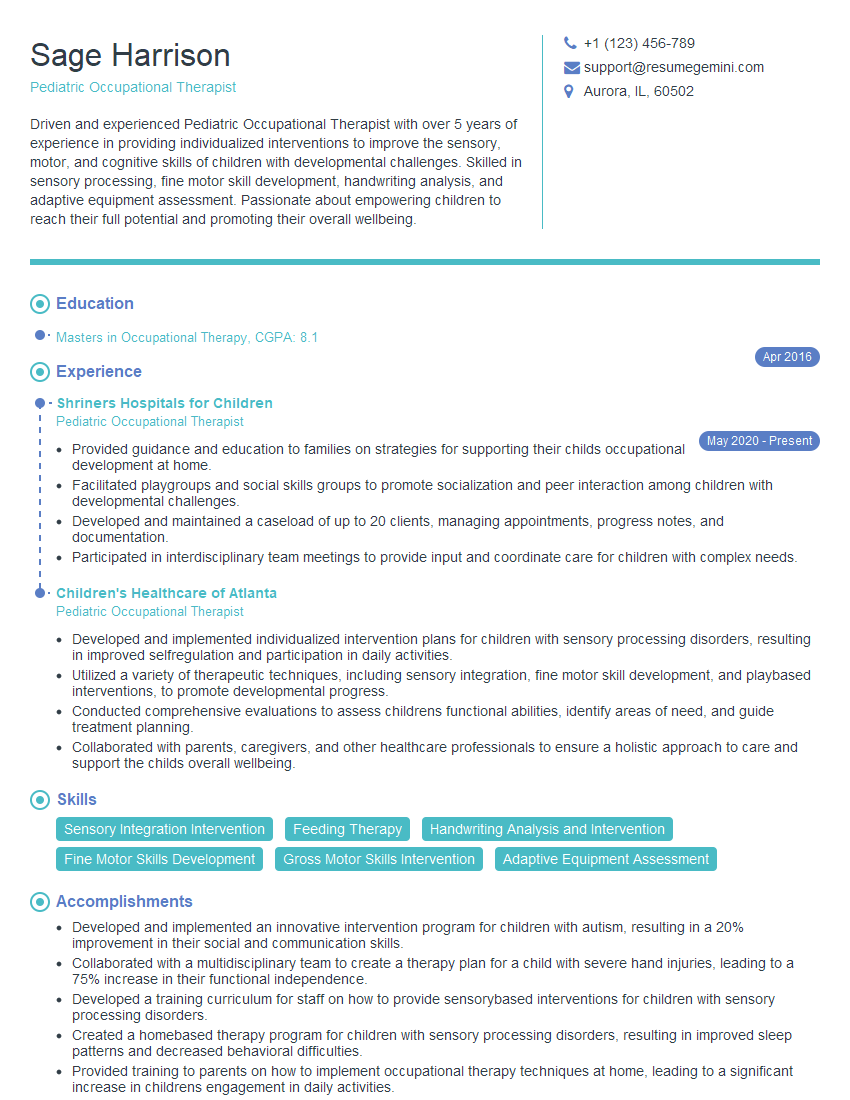
Mastering pediatric orthopedics significantly enhances your career prospects, opening doors to specialized fellowships and leadership roles. A strong resume is crucial for showcasing your skills and experience to potential employers. Creating an ATS-friendly resume increases your chances of getting noticed by Applicant Tracking Systems. ResumeGemini is a trusted resource to help you build a professional and impactful resume that highlights your qualifications effectively. Examples of resumes tailored to Pediatric Orthopedics are available to guide your resume development.
Explore more articles
Users Rating of Our Blogs
Share Your Experience
We value your feedback! Please rate our content and share your thoughts (optional).
What Readers Say About Our Blog
To the interviewgemini.com Webmaster.
Very helpful and content specific questions to help prepare me for my interview!
Thank you
To the interviewgemini.com Webmaster.
This was kind of a unique content I found around the specialized skills. Very helpful questions and good detailed answers.
Very Helpful blog, thank you Interviewgemini team.