Cracking a skill-specific interview, like one for Remediation Technology, requires understanding the nuances of the role. In this blog, we present the questions you’re most likely to encounter, along with insights into how to answer them effectively. Let’s ensure you’re ready to make a strong impression.
Questions Asked in Remediation Technology Interview
Q 1. Explain the differences between in-situ and ex-situ remediation techniques.
The core difference between in-situ and ex-situ remediation lies in the location of the treatment process. In-situ remediation treats contaminated soil or groundwater at the site itself, minimizing excavation and transportation. Think of it like treating a patient at home—less disruptive. Ex-situ remediation, on the other hand, involves removing the contaminated material to a different location for treatment before returning (or disposing of) the cleaned material. This is analogous to taking a patient to a hospital for surgery—more intensive but potentially more effective for severe contamination.
- In-situ examples: Bioremediation (using microorganisms), pump and treat (extracting groundwater for treatment), soil vapor extraction (removing volatile compounds from soil).
- Ex-situ examples: Soil washing (physically separating contaminants), thermal desorption (heating to volatilize contaminants), biopiles (creating controlled environments for microbial degradation).
The choice between these depends on several factors, including the type and extent of contamination, site geology, regulatory requirements, and cost-effectiveness. For example, a large plume of groundwater contamination might necessitate pump and treat (in-situ), while localized, highly contaminated soil might be better suited for ex-situ treatment like soil washing.
Q 2. Describe your experience with various remediation technologies (e.g., pump and treat, bioremediation, phytoremediation).
My experience spans a wide range of remediation technologies. I’ve extensively worked with pump and treat systems, designing and overseeing the installation and operation of well networks for groundwater remediation. This includes optimizing well placement and pumping rates to achieve desired contaminant concentration reductions. I’ve also been deeply involved in bioremediation projects, both in-situ and ex-situ, focusing on designing and implementing strategies to enhance microbial activity and accelerate the degradation of organic contaminants. This involves selecting appropriate microbial cultures, optimizing environmental conditions (e.g., oxygen supply, nutrient addition), and monitoring microbial activity and contaminant degradation rates. Furthermore, I’ve participated in several phytoremediation projects, employing plants to remove contaminants from soil and water. This includes selecting appropriate plant species based on contaminant type and site conditions, designing planting schemes, and monitoring plant growth and contaminant uptake. Each technology has its strengths and weaknesses, and selecting the right approach requires careful consideration of site-specific conditions and regulatory constraints.
For instance, in one project, we successfully used bioaugmentation (adding specific microbes) to accelerate the bioremediation of a petroleum-contaminated site, reducing remediation time significantly compared to natural attenuation alone. In another case, we employed a combination of phytoremediation and bioremediation to tackle a site contaminated with both heavy metals and organic pollutants.
Q 3. How do you assess the effectiveness of a remediation strategy?
Assessing remediation effectiveness involves a multi-faceted approach, encompassing both quantitative and qualitative data. We begin by establishing clear remediation goals, often defined by regulatory standards or risk-based cleanup levels. Then, we use several methods to track progress:
- Monitoring well data: Regularly sampling groundwater to track contaminant concentrations over time.
- Soil sampling and analysis: Assessing contaminant levels in soil to verify reduction in contamination.
- Statistical analysis: Using statistical methods to determine if contaminant reductions are statistically significant and if the remediation goals are being met.
- Mass balance calculations: Estimating the mass of contaminants removed or transformed.
- Visual inspection: Observing site conditions for visible changes, such as plant growth in phytoremediation projects.
We interpret this data using appropriate statistical models to evaluate the rate and extent of contaminant reduction, compare results to baseline data, and determine if the selected remediation strategy is achieving the predetermined goals. If the remediation is not proceeding as expected, adjustments might be necessary, which may include modifying the remediation strategy, optimizing operational parameters, or selecting a different technology altogether.
Q 4. What are the key regulatory requirements for remediation projects in your region?
(Note: This answer will need to be tailored to your specific region. Replace the bracketed information with the actual regulations for your area.)
Remediation projects in [Region Name] are governed by a complex set of regulations, primarily enforced by the [Regulatory Agency]. These regulations dictate various aspects of the remediation process, including:
- Site investigation requirements: Detailed protocols for site characterization, data collection, and reporting. This includes specific methods for sampling, analysis, and quality assurance/quality control (QA/QC).
- Remediation standards: Specific cleanup levels for various contaminants, often based on risk assessment and human health and environmental protection goals. These standards may vary depending on the designated use of the land after remediation. For example, residential use will typically have stricter standards than industrial use.
- Permitting requirements: Obtaining necessary permits before commencing remediation activities. Permits will outline the allowed methods and activities, schedule of work, and monitoring requirements.
- Reporting requirements: Regular submission of progress reports, including data analysis, assessment of effectiveness, and corrective actions if needed.
- Closure requirements: Procedures for site closure and long-term monitoring, to ensure that the remediation is permanent and poses no further threat.
Non-compliance can result in significant penalties, including fines, legal action, and project suspension.
Q 5. Explain your understanding of risk assessment in the context of environmental remediation.
Risk assessment in environmental remediation is a critical process that involves identifying, characterizing, and evaluating the potential adverse effects of contaminated media on human health and the environment. It guides the selection of appropriate remediation strategies and helps justify the costs and efforts involved. The process generally involves these steps:
- Hazard identification: Identifying the presence and nature of contaminants.
- Exposure assessment: Evaluating pathways and levels of exposure (e.g., ingestion, inhalation, dermal contact) to humans and ecological receptors.
- Toxicity assessment: Determining the health and environmental effects of the identified contaminants.
- Risk characterization: Integrating the information from the previous steps to estimate the probability and severity of adverse effects.
The results of the risk assessment inform the development of remediation goals, which might be expressed as specific contaminant concentration limits or risk reduction targets. A high-risk scenario might necessitate stringent remediation measures and frequent monitoring, while a low-risk scenario may allow for less intensive approaches. Risk assessment is an iterative process; findings may necessitate adjustments to the remediation approach during the project’s lifespan.
Q 6. How do you develop a remediation plan?
Developing a robust remediation plan requires a systematic approach. It begins with a thorough understanding of the site conditions, contaminant characteristics, and regulatory requirements. The steps generally include:
- Site characterization: Thorough investigation to define the nature and extent of contamination.
- Risk assessment: Evaluating the potential risks to human health and the environment.
- Remediation objective setting: Defining clear goals based on risk assessment and regulatory standards.
- Technology selection: Choosing appropriate remediation technologies based on site conditions, contaminant characteristics, and cost-effectiveness.
- Remediation design: Detailing the implementation of the chosen technology, including design specifications, operational parameters, and quality assurance/quality control measures.
- Implementation plan: Outlining the steps involved in implementing the remediation, including timelines, resources, and personnel requirements.
- Monitoring plan: Developing a plan for monitoring the effectiveness of the remediation.
- Cost estimation: Providing a detailed cost breakdown for the entire project.
The final remediation plan is a comprehensive document that serves as a blueprint for the entire project. It is regularly reviewed and updated throughout the project lifecycle to accommodate unexpected findings or challenges.
Q 7. Describe your experience with site characterization and data analysis.
Site characterization is the cornerstone of any successful remediation project. My experience involves a range of techniques, from initial site reconnaissance and historical review to detailed subsurface investigation. This involves using various methods to collect data on the site’s geology, hydrogeology, and the distribution of contaminants.
- Data collection techniques: Soil boring and sampling, groundwater monitoring well installation, geophysical surveys (e.g., ground-penetrating radar), and surface water sampling.
- Data analysis: Using GIS (Geographic Information Systems) software to visualize data, statistical analysis to determine the extent and distribution of contaminants, and hydrogeological modeling to predict contaminant transport.
For example, in one project, we used a combination of soil borings and geophysical surveys to map the extent of a subsurface contaminant plume. This information was critical in designing an effective pump-and-treat system. My expertise extends to interpreting complex datasets, identifying data gaps, and using this information to guide the selection of appropriate remediation technologies and project design. Data quality and its proper interpretation are crucial for determining the success of a remediation project and ensuring compliance with regulatory requirements.
Q 8. What are the limitations of different remediation technologies?
Remediation technologies, while effective, possess inherent limitations. The optimal choice depends heavily on the specific contaminant, site conditions (soil type, groundwater flow, etc.), and regulatory requirements. Let’s examine some examples:
- Pump and Treat: While effective for removing dissolved contaminants from groundwater, it can be slow, costly, and may not be suitable for low-permeability soils. It also might not remove all contaminants, leaving behind residual concentrations. For example, treating a site heavily contaminated with dense non-aqueous phase liquids (DNAPLs) like PCBs might prove incredibly challenging and expensive due to the DNAPLs’ low solubility and tendency to cling to soil particles.
- Bioremediation: This environmentally friendly approach relies on microorganisms to break down contaminants. However, its success depends on factors such as the presence of appropriate microorganisms, adequate nutrients, and favorable environmental conditions (temperature, pH, oxygen availability). A site with a lack of oxygen or the presence of toxic substances that inhibit microbial activity might make bioremediation ineffective.
- Soil Vapor Extraction (SVE): Effective for volatile organic compounds (VOCs), SVE can be limited by soil permeability and the presence of non-volatile contaminants. In clay soils, for instance, the extraction process is significantly hampered by the low air permeability.
- Thermal Desorption: This technology is energy-intensive and can be expensive. It’s also not suitable for all contaminants or soil types, and the process generates waste that needs proper management.
In short, a thorough site characterization is crucial to selecting the most appropriate and effective remediation technology, recognizing its limitations, and developing a comprehensive remediation plan.
Q 9. How do you manage remediation projects within budget and timeline constraints?
Managing remediation projects within budget and timeline requires meticulous planning and proactive management. My approach involves several key steps:
- Detailed Site Assessment and Feasibility Study: This upfront investment is crucial for accurately estimating costs and timelines. It helps to identify potential challenges and refine the remediation strategy.
- Realistic Budgeting and Contingency Planning: I always include a contingency fund to address unforeseen issues, such as unexpected soil conditions or equipment malfunctions. Detailed cost breakdowns for each task are essential.
- Phased Approach: Breaking down the project into manageable phases allows for better monitoring of progress, cost control, and easier adjustment to unforeseen circumstances. Regular progress reports are critical to this phased implementation.
- Regular Monitoring and Reporting: Continuous monitoring of the remediation process, including contaminant levels and equipment performance, allows for early detection of problems and prompt corrective actions. Detailed reports provide transparent tracking of progress and expenditures.
- Effective Communication: Clear communication between all stakeholders (clients, regulators, contractors) is vital to ensure everyone is informed and aligned on the project’s progress and any necessary adjustments.
For example, in one project involving groundwater remediation, we implemented a phased approach starting with pilot testing to optimize the pump and treat system before scaling it up to the full site. This approach allowed us to refine the remediation strategy and avoid costly overruns.
Q 10. Explain your experience with remediation of specific contaminants (e.g., petroleum hydrocarbons, heavy metals).
I have extensive experience remediating sites contaminated with petroleum hydrocarbons and heavy metals. For petroleum hydrocarbons, methods like bioremediation, SVE, and pump and treat have been successfully employed depending on the specific site conditions. For example, a gasoline spill might benefit from SVE to remove volatile components, followed by bioremediation to address remaining hydrocarbons. Heavy metal remediation often involves more complex strategies, such as soil excavation and disposal, phytoremediation (using plants to extract metals), or chemical stabilization/solidification to reduce their mobility and bioavailability. In one project involving a former industrial site contaminated with lead and arsenic, we successfully implemented a combination of soil excavation and chemical stabilization, followed by long-term monitoring to ensure the effectiveness of the remediation.
The choice of technology always involves careful consideration of factors like the extent and nature of the contamination, soil type, groundwater flow, and regulatory guidelines.
Q 11. How do you ensure the safety of workers and the public during remediation projects?
Worker and public safety are paramount in every remediation project. My approach integrates multiple layers of safety protocols:
- Comprehensive Site Safety Plan: This plan outlines all safety procedures, including personal protective equipment (PPE) requirements, emergency response plans, and worker training protocols. This is a living document, regularly updated to reflect project changes.
- Regular Safety Training and Monitoring: Workers receive thorough training on handling hazardous materials, using specialized equipment, and following established safety procedures. Regular safety inspections and toolbox talks reinforce best practices.
- Air Monitoring and Control: Air quality is continuously monitored to detect and mitigate any hazardous airborne contaminants. Ventilation systems and other control measures are used to ensure worker safety.
- Access Control and Site Security: The remediation site is secured to prevent unauthorized access, protecting both workers and the public from potential hazards.
- Emergency Response Plan: A detailed plan is in place to address any potential emergency, including spills, equipment failures, or medical emergencies. Regular drills ensure that the team is prepared to respond effectively.
For example, during a project involving asbestos abatement, we implemented rigorous air monitoring, used specialized PPE, and followed strict decontamination procedures to protect both workers and the public.
Q 12. Describe your experience with soil vapor extraction (SVE).
Soil Vapor Extraction (SVE) is a common in-situ remediation technology used to remove volatile organic compounds (VOCs) from the subsurface. It involves creating a vacuum in the soil to draw contaminated vapor into extraction wells. These vapors are then treated above ground, often using activated carbon adsorption or thermal oxidation. My experience with SVE includes project management, design, and implementation, including the selection of appropriate well locations and vacuum levels based on site-specific hydrogeology.
In one project involving a former dry cleaning facility contaminated with tetrachloroethylene (PCE), we utilized SVE in combination with bioventing (introducing air and nutrients to stimulate microbial degradation). This integrated approach significantly reduced the concentration of PCE in both soil vapor and groundwater.
The effectiveness of SVE depends on soil permeability, the volatility of contaminants, and the depth of contamination. It’s crucial to conduct thorough site investigations to assess its suitability before implementation.
Q 13. What is your experience with air sparging?
Air sparging is an in-situ remediation technique used to remove volatile and semi-volatile organic compounds from the saturated zone (groundwater). Compressed air is injected into the subsurface, creating a zone of aeration that promotes volatilization and stripping of the contaminants. The volatilized contaminants are then removed through natural soil venting or by using SVE wells. My experience includes overseeing the design, installation, and operation of air sparging systems, as well as the monitoring of groundwater quality to assess the effectiveness of the treatment.
It’s important to consider factors such as soil permeability, groundwater flow direction, and the potential for air migration to neighboring areas when designing and implementing air sparging systems. Furthermore, careful consideration must be given to potential clogging of the injection well with fine-grained soil or the presence of significant amounts of DNAPL. In one project, we successfully used air sparging in conjunction with pump and treat to remediate a site contaminated with chlorinated solvents.
Q 14. Explain your understanding of bioremediation and its applications.
Bioremediation harnesses the natural ability of microorganisms (bacteria, fungi) to degrade or transform contaminants into less harmful substances. It’s an environmentally friendly and cost-effective approach for certain types of contamination. The process can be either in-situ (on-site) or ex-situ (off-site), depending on the specific site conditions and contaminant characteristics.
Applications include the remediation of petroleum hydrocarbons, chlorinated solvents, pesticides, and other organic compounds. The success of bioremediation depends on several factors, including the availability of suitable microorganisms, adequate nutrients, optimal environmental conditions (temperature, pH, oxygen availability), and the absence of inhibitory substances. For example, enhancing the biodegradability of contaminants through the addition of nutrients and oxygen, known as biostimulation, can significantly accelerate the remediation process.
In one project, we used bioaugmentation (introducing specific microorganisms) in combination with biostimulation to accelerate the biodegradation of petroleum hydrocarbons at a former gas station. This approach proved more efficient and cost-effective compared to traditional methods like excavation and disposal.
Q 15. How do you select appropriate remediation technologies for a specific site?
Selecting the right remediation technology is crucial for effective and efficient site cleanup. It’s not a one-size-fits-all approach; the ideal technology depends heavily on the specific contaminants present, their concentration, the geological setting, the hydrogeology of the site, and regulatory requirements. Think of it like choosing the right tool for a job – you wouldn’t use a hammer to screw in a screw!
My approach involves a systematic process:
- Site Characterization: This is the foundation. We need comprehensive data on the type and extent of contamination. This involves soil and groundwater sampling, analysis of the contaminant’s properties (e.g., solubility, volatility, toxicity), and detailed site mapping. For example, if we find high concentrations of volatile organic compounds (VOCs), we’d focus on technologies like soil vapor extraction (SVE).
- Technology Screening: Based on the site characterization, we evaluate various remediation technologies, considering factors like cost-effectiveness, treatment efficiency, time constraints, and potential environmental impacts. We might explore options like bioremediation (using microorganisms to break down contaminants), pump-and-treat (extracting contaminated groundwater), or in-situ chemical oxidation (ISCO).
- Feasibility Study: A detailed study is conducted for the shortlisted technologies. This involves modeling the contaminant fate and transport, evaluating the potential for achieving cleanup goals, and assessing risks and uncertainties. Modeling helps predict how effectively a particular technology will remove contaminants over time.
- Technology Selection: The final selection balances technical feasibility, cost-effectiveness, regulatory compliance, and potential environmental impacts. A detailed remediation plan is then developed outlining the chosen technology’s implementation, monitoring, and quality assurance/quality control procedures.
For instance, I once worked on a site contaminated with petroleum hydrocarbons. After thorough site characterization, we selected a combination of bioremediation and enhanced bioremediation with the addition of nutrients and oxygen to stimulate microbial activity. This approach proved highly effective and cost-efficient compared to excavation and disposal.
Career Expert Tips:
- Ace those interviews! Prepare effectively by reviewing the Top 50 Most Common Interview Questions on ResumeGemini.
- Navigate your job search with confidence! Explore a wide range of Career Tips on ResumeGemini. Learn about common challenges and recommendations to overcome them.
- Craft the perfect resume! Master the Art of Resume Writing with ResumeGemini’s guide. Showcase your unique qualifications and achievements effectively.
- Don’t miss out on holiday savings! Build your dream resume with ResumeGemini’s ATS optimized templates.
Q 16. What are the key factors to consider when selecting a remediation contractor?
Selecting the right remediation contractor is as important as choosing the right technology. A poorly chosen contractor can lead to project delays, cost overruns, and even suboptimal remediation. I look for several key factors:
- Experience and Expertise: Proven track record in similar projects, particularly with the specific type of contamination present at the site. I also check their qualifications and certifications, and look for evidence of successful project completion.
- Technical Capabilities: Do they possess the necessary equipment, personnel, and technical expertise to implement the chosen technology effectively? I’ll review their equipment specifications and check references.
- Safety Record: A strong commitment to worker safety and environmental protection is crucial. I would review their safety protocols and incident reports.
- Financial Stability: I ensure the contractor has the financial resources to complete the project, handle potential setbacks, and maintain insurance coverage. Their financial statements and bonding capacity are carefully reviewed.
- Regulatory Compliance: The contractor must demonstrate a thorough understanding of all applicable regulations and permits. I check their compliance history and review their proposed approach to permit compliance.
- Communication and Collaboration: Effective communication is key to a smooth project. I look for a contractor who is responsive, transparent, and willing to work collaboratively.
In one project, we meticulously vetted several contractors, focusing on their experience with ISCO technology. Selecting a contractor with proven expertise in this area was essential to ensure the project’s success. We used a weighted scoring system to objectively assess and compare each bidder based on the criteria listed above.
Q 17. How do you monitor the progress of a remediation project?
Monitoring the progress of a remediation project is crucial for ensuring its effectiveness and compliance with regulatory requirements. It’s a continuous process, not just a one-time check.
My monitoring strategy includes:
- Regular Sampling and Analysis: This is the cornerstone of monitoring. We collect samples (soil, groundwater, air) according to a pre-defined schedule and analyze them for target contaminants. The frequency of sampling depends on the nature of the contamination, the chosen remediation technology, and regulatory requirements.
- Data Analysis and Interpretation: The collected data is analyzed to track the progress of remediation and assess the technology’s efficiency. Statistical methods are employed to identify trends and evaluate the effectiveness of the remediation efforts. We look for statistically significant reductions in contaminant concentrations over time.
- Performance Evaluation: We compare the measured results against the pre-established remediation goals. If the results are below the target, we would assess the cause and consider adjustments to the remediation strategy.
- Reporting and Documentation: We maintain detailed records of all sampling activities, analytical results, data interpretations, and corrective actions. These records are essential for regulatory compliance and for assessing the overall project performance.
- Technology Performance Assessment: This will involve assessing the operational parameters of the remediation system, such as pump flow rates, air flow rates, and injection pressures.
For example, in a pump-and-treat system, we might monitor groundwater levels, flow rates, and contaminant concentrations at regular intervals to ensure the system is operating as designed and effectively removing contaminants.
Q 18. Describe your experience with data reporting and regulatory compliance.
Data reporting and regulatory compliance are paramount in remediation projects. Inaccurate or incomplete reporting can lead to significant consequences, including fines and project delays. My experience encompasses all aspects of this crucial process:
- Data Management: I utilize sophisticated database systems to manage the vast amounts of data generated during a remediation project. This ensures data integrity, traceability, and accessibility.
- Report Writing: I’m proficient in preparing comprehensive reports for various stakeholders, including regulatory agencies, clients, and project teams. Reports are clear, concise, and adhere to the specific requirements of each audience and relevant regulatory guidelines. For example, I’ve prepared many reports using the widely accepted format of the American Society for Testing and Materials (ASTM).
- Regulatory Compliance: I have extensive knowledge of various environmental regulations (e.g., CERCLA, RCRA), including specific requirements for data submission and reporting. I ensure that all data are reported in a timely and accurate manner.
- Data Visualization: I use various visualization tools (graphs, charts, maps) to present data effectively and highlight trends and patterns. This makes it easy for stakeholders to understand the project’s progress and the effectiveness of the remediation.
In one instance, we had to demonstrate compliance with strict groundwater discharge limits. By carefully monitoring groundwater quality and diligently documenting our findings, we successfully met the regulatory requirements and avoided penalties.
Q 19. Explain your understanding of life cycle assessment (LCA) in remediation projects.
Life Cycle Assessment (LCA) is a crucial consideration in remediation projects. It involves evaluating the environmental impacts associated with all stages of a project, from material extraction and equipment manufacturing to remediation implementation and waste disposal. Think of it as a cradle-to-grave assessment of the project’s environmental footprint.
In remediation, LCA helps to:
- Compare Remediation Options: By comparing the LCAs of different remediation technologies, we can identify the option with the least overall environmental impact. For example, we can compare the energy consumption, greenhouse gas emissions, and waste generation of in-situ chemical oxidation (ISCO) versus excavation and disposal.
- Optimize Remediation Design: LCA can help to identify ways to minimize the environmental impact of the selected technology. This could involve selecting more environmentally friendly materials, optimizing energy consumption, or reducing waste generation.
- Inform Decision-Making: The LCA results provide valuable information to guide decision-making throughout the project lifecycle. It helps to ensure that the selected technology and the implementation strategy are both environmentally sound and effective.
- Meet Sustainability Goals: Incorporating LCA helps meet sustainability goals by promoting environmentally sound practices.
For example, in a recent project, the LCA helped demonstrate that bioremediation was a more sustainable option compared to thermal desorption, despite a slightly longer remediation time, due to its lower energy consumption and reduced waste generation.
Q 20. How do you handle unexpected challenges or setbacks during a remediation project?
Unexpected challenges and setbacks are inevitable in remediation projects. My approach to handling them involves a combination of proactive planning, rapid response, and adaptive management.
My strategy includes:
- Contingency Planning: Before the project begins, we identify potential challenges (e.g., unforeseen subsurface conditions, equipment malfunctions, regulatory changes) and develop contingency plans to address them effectively. This might involve securing backup equipment or having alternative remediation strategies in place.
- Problem Identification and Diagnosis: When a setback occurs, the first step is to identify the root cause of the problem. This involves careful investigation, data analysis, and consultation with experts, if necessary.
- Adaptive Management: Based on the problem diagnosis, we adapt the remediation strategy as needed. This might involve modifying the technology’s operational parameters, implementing additional measures, or adjusting the project schedule.
- Communication and Collaboration: Open and transparent communication with all stakeholders (clients, regulatory agencies, project team) is crucial to address setbacks effectively. This includes providing timely updates on the situation and any necessary adjustments to the project plan.
- Documentation: All incidents, corrective actions, and resulting changes to the remediation plan are meticulously documented for regulatory compliance and future reference.
In one project, we encountered unexpectedly high concentrations of contaminants in a specific area. We responded by implementing additional ISCO injections in that zone, which successfully addressed the problem. The detailed documentation of this incident, including the corrective actions taken, formed an important part of the final project report.
Q 21. What is your experience with the use of modeling software in remediation projects?
Modeling software plays a vital role in remediation projects. It allows us to simulate contaminant transport, predict the effectiveness of various remediation technologies, and optimize the remediation strategy. This helps in minimizing costs and maximizing the efficiency of the cleanup process.
My experience includes using various modeling packages, such as:
- Visual MODFLOW: Used for groundwater flow and transport modeling. It helps visualize the groundwater flow pathways, predict contaminant plume migration, and assess the effectiveness of pump-and-treat systems.
- BIOCHLOR: Used for simulating bioremediation processes. This software helps predict the rate of contaminant biodegradation and optimize the design of bioremediation systems.
- MT3DMS: Used to simulate the transport of multiple chemical constituents, useful for cases with multiple contaminant species.
- FEFLOW: Versatile software for simulating groundwater flow and contaminant transport in both saturated and unsaturated zones, and handles complex geological environments.
The use of modeling helps us to:
- Optimize Remediation Design: For example, modeling can help determine the optimal well placement and pumping rates for a pump-and-treat system.
- Predict Remediation Performance: We can use models to predict the time required to achieve cleanup goals and evaluate the effectiveness of different remediation strategies.
- Assess Risks and Uncertainties: Models can help quantify the uncertainties associated with the remediation process, allowing for informed decision-making.
In one project, we used Visual MODFLOW to model groundwater flow and contaminant transport to optimize the location and pumping rates for a pump-and-treat system. The modeling results allowed us to achieve cleanup goals more efficiently and cost-effectively.
Q 22. Explain your understanding of the different types of soil and how they impact remediation.
Understanding soil types is crucial in remediation because different soil properties significantly influence contaminant transport and the effectiveness of remediation techniques. For example, sandy soils, with their high permeability, allow contaminants to leach quickly, necessitating faster remediation strategies compared to clayey soils, which tend to retain contaminants due to their low permeability.
- Sandy Soils: High permeability, rapid contaminant transport, requiring strategies like pump and treat or in-situ bioremediation.
- Silty Soils: Intermediate permeability, moderately rapid contaminant transport; remediation often involves a combination of techniques.
- Clayey Soils: Low permeability, slow contaminant transport, potentially requiring slower, more targeted techniques like phytoremediation or enhanced bioremediation, due to the longer retention time.
- Organic Soils: High organic matter content, complex interactions with contaminants, may require specialized techniques to address the unique challenges of contaminant binding to organic matter.
Consider a scenario where a gasoline spill contaminates a sandy soil near a river. The high permeability would lead to rapid groundwater contamination, demanding immediate action like installing a pump-and-treat system to extract and treat the contaminated groundwater before it reaches the river.
Q 23. Describe your familiarity with different types of groundwater flow and how they impact remediation strategies.
Groundwater flow patterns are critical in designing effective remediation strategies. Understanding the direction, velocity, and extent of groundwater flow allows for the targeted placement of remediation systems, maximizing efficiency and minimizing costs. Different flow patterns influence contaminant plume migration and the choice of remediation technology.
- Uniform Flow: Relatively consistent flow velocity and direction, making remediation relatively straightforward. Pump-and-treat systems are often effective.
- Radial Flow: Contaminants spread outwards from a central point. Remediation might involve a series of extraction wells surrounding the contamination source.
- Fractured Rock Aquifers: Flow is channeled through fractures, making contaminant transport unpredictable. Remediation might require advanced techniques like in-situ chemical oxidation or bioaugmentation.
- Layered Aquifers: Distinct layers with differing permeability, leading to complex flow patterns. A multi-pronged approach may be needed, combining different remediation techniques for each layer.
For instance, in a site with radial flow, understanding the flow patterns allows us to strategically place extraction wells to intercept the plume and prevent its further spread. In contrast, remediation in a fractured rock aquifer needs a detailed hydrogeological assessment to identify the dominant flow paths and optimize the location of treatment technologies.
Q 24. How do you communicate technical information to non-technical audiences?
Communicating complex technical information to non-technical audiences requires simplification and visualization. I avoid jargon and use analogies to explain concepts. For instance, explaining groundwater flow using a simple diagram showing water moving like a river underground, and illustrating contaminant spread as pollution in that river. I also use visual aids like charts, graphs, and maps to convey data clearly. Finally, I tailor my language and level of detail to the audience’s understanding.
For example, when presenting to community members about a remediation project, I might use simple language and focus on the overall health and safety impacts, rather than diving into detailed technical specifics. With project managers, the discussion would focus on timelines and budgets, while with regulatory agencies, it would involve more technical details and compliance requirements.
Q 25. What are some common challenges in managing stakeholder expectations during remediation projects?
Managing stakeholder expectations during remediation projects is challenging. Different stakeholders (community members, regulatory agencies, project managers) have different priorities and expectations. Common challenges include:
- Unrealistic Expectations: Stakeholders may have unrealistic timelines or cost expectations, especially when dealing with complex contamination.
- Communication Gaps: Lack of transparent communication can lead to mistrust and conflict. Regular updates and open dialogue are crucial.
- Conflicting Interests: Different stakeholders might have conflicting interests (e.g., a developer prioritizing project completion versus community members focused on environmental protection).
- Changing Regulatory Requirements: Changes in regulations during a project can affect timelines and costs, impacting stakeholder expectations.
To mitigate these, proactive communication, realistic project planning, and a collaborative approach are essential. Establishing clear communication channels, actively listening to concerns, and involving stakeholders in decision-making help manage expectations effectively.
Q 26. Describe a time you had to troubleshoot a problem during a remediation project. What was your approach?
During a remediation project involving in-situ bioremediation of a chlorinated solvent plume, we experienced unexpectedly slow degradation rates. My approach to troubleshooting involved a systematic investigation:
- Data Review: We reviewed groundwater monitoring data, focusing on contaminant concentrations, dissolved oxygen levels, and nutrient levels.
- Site Characterization: We conducted further site investigation to assess soil properties, including electron acceptor availability and microbial community composition.
- Laboratory Analysis: We performed laboratory tests on soil and groundwater samples to identify potential limiting factors for microbial activity, like nutrient deficiency or the presence of inhibitory substances.
- Remediation Strategy Adjustment: Based on the findings, we adjusted the remediation strategy. We determined a nutrient deficiency was limiting biodegradation. We injected a nutrient solution to enhance microbial activity, leading to significantly improved degradation rates.
This systematic approach, moving from data analysis to targeted investigation and informed strategy adjustment, is crucial for solving problems in remediation projects.
Q 27. Explain your experience with cost-benefit analysis of remediation options.
Cost-benefit analysis is essential in selecting the most appropriate remediation strategy. It involves comparing the costs of different options against their environmental and societal benefits. The analysis typically considers:
- Remediation Costs: Including site investigation, design, construction, operation, and monitoring.
- Environmental Benefits: Reduction in contaminant concentrations, improvement in groundwater quality, and protection of ecological receptors.
- Societal Benefits: Increased property values, reduced health risks, and improved public perception.
- Risk Assessment: Evaluating the risks associated with different remediation options, considering potential impacts on human health and the environment.
We often use discounted cash flow methods and risk-based decision-making frameworks to conduct cost-benefit analyses. A simple example would be comparing the cost of pump-and-treat versus bioremediation for a specific contaminant plume. While pump-and-treat might have higher initial costs, bioremediation might have higher long-term monitoring costs. The analysis helps determine which option provides the most effective remediation at the lowest overall cost.
Q 28. How do you stay current with the latest advancements in remediation technology?
Staying current with advancements in remediation technology is crucial for effectiveness and efficiency. I utilize several methods:
- Professional Organizations: Active membership in organizations like the Association of Environmental Professionals (AEP) and the National Ground Water Association (NGWA) provides access to publications, conferences, and networking opportunities.
- Scientific Literature: Regularly reviewing peer-reviewed journals and industry publications keeps me abreast of research findings and technological innovations.
- Conferences and Workshops: Attending conferences and workshops provides exposure to new techniques and allows for interaction with industry leaders.
- Online Resources: Utilizing online resources, including reputable websites and databases, provides access to a wealth of information.
- Continuing Education: Participating in continuing education courses and workshops ensures my skills are up-to-date and relevant.
Continuous learning ensures that I can apply the most effective and efficient remediation technologies to each unique project.
Key Topics to Learn for Remediation Technology Interview
- Site Characterization: Understanding the scope and nature of contamination, including soil and groundwater sampling techniques and data analysis. Practical application: interpreting data to define the extent of a plume.
- Remediation Technologies: In-depth knowledge of various remediation methods such as pump and treat, bioremediation, soil vapor extraction, and thermal desorption. Practical application: selecting the most appropriate technology for a given site based on cost-effectiveness and environmental impact.
- Regulatory Compliance: Familiarity with relevant environmental regulations and permitting processes. Practical application: developing a remediation plan that adheres to all applicable regulations.
- Risk Assessment and Management: Understanding the principles of risk assessment and how to develop risk-based corrective actions. Practical application: evaluating potential human health and ecological risks associated with contamination.
- Project Management: Experience in managing remediation projects, including budgeting, scheduling, and communication. Practical application: effectively leading a team to complete a project on time and within budget.
- Data Analysis and Interpretation: Proficiency in interpreting complex datasets and drawing meaningful conclusions. Practical application: using statistical software to analyze site data and support decision-making.
- Emerging Technologies: Staying abreast of advancements in remediation technology, such as phytoremediation and advanced oxidation processes. Practical application: evaluating the potential of new technologies for future projects.
Next Steps
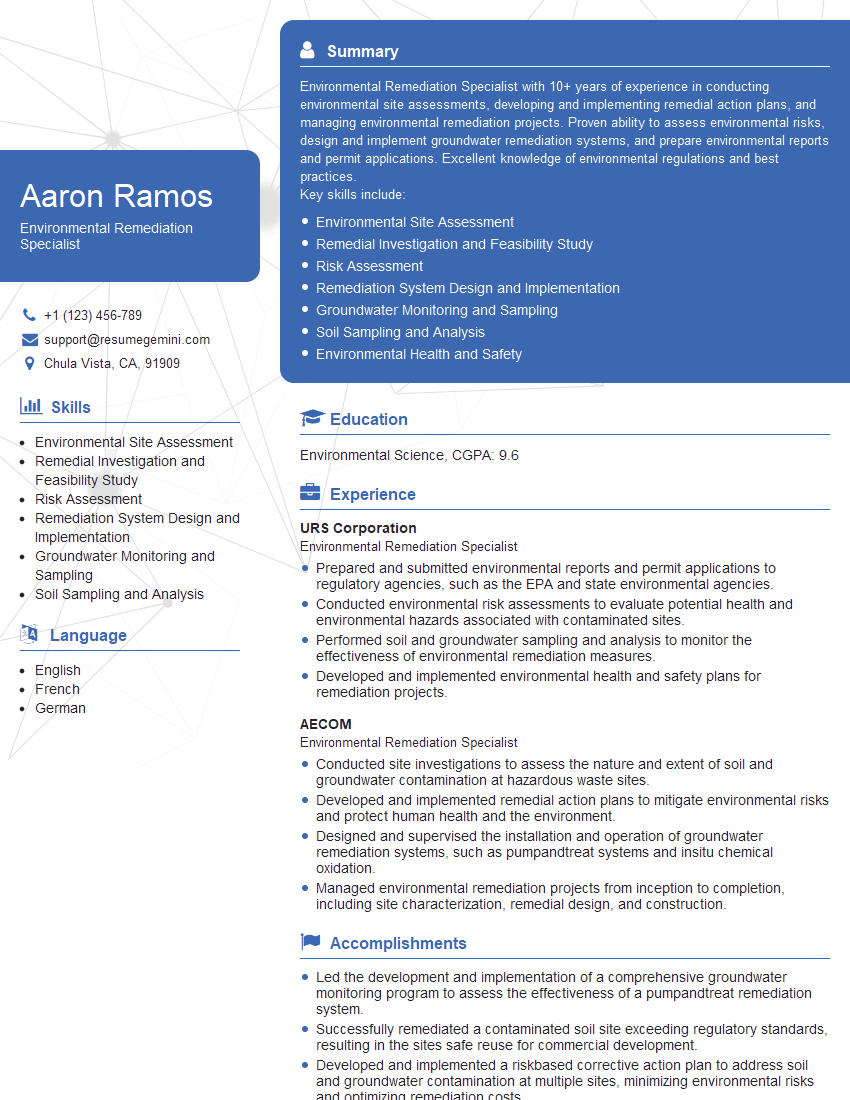
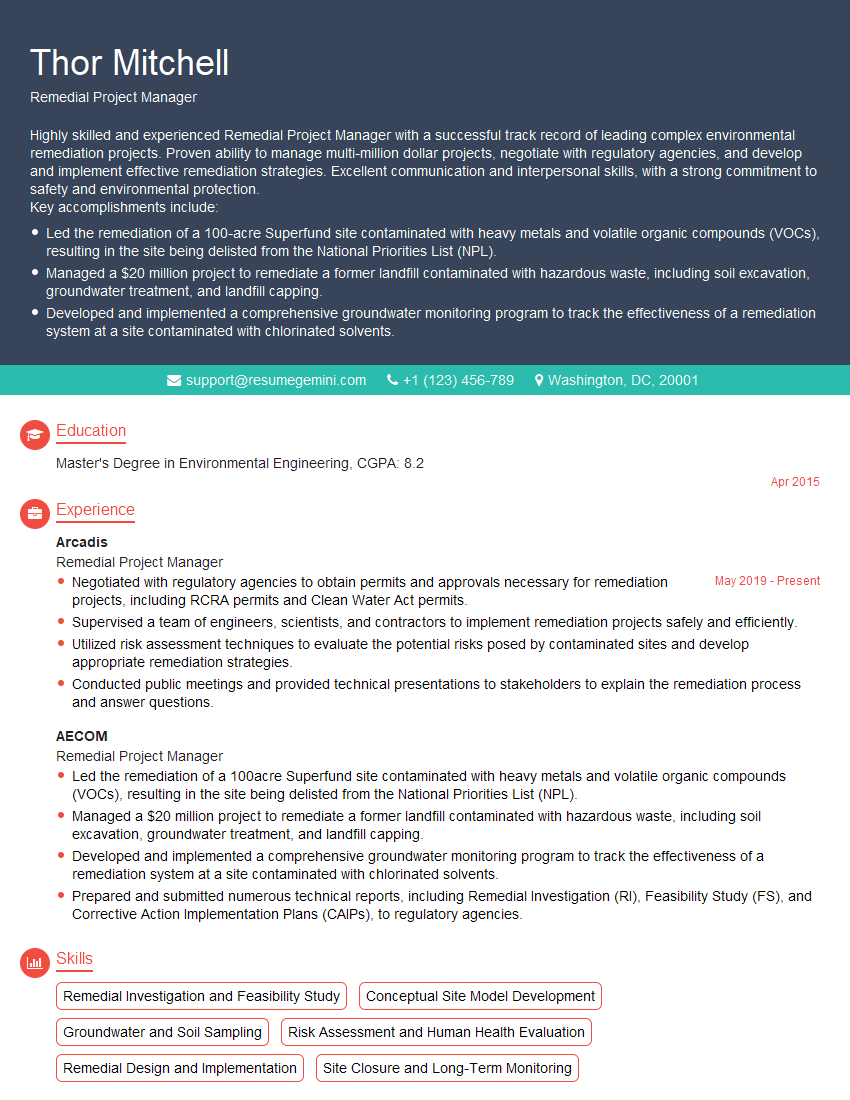
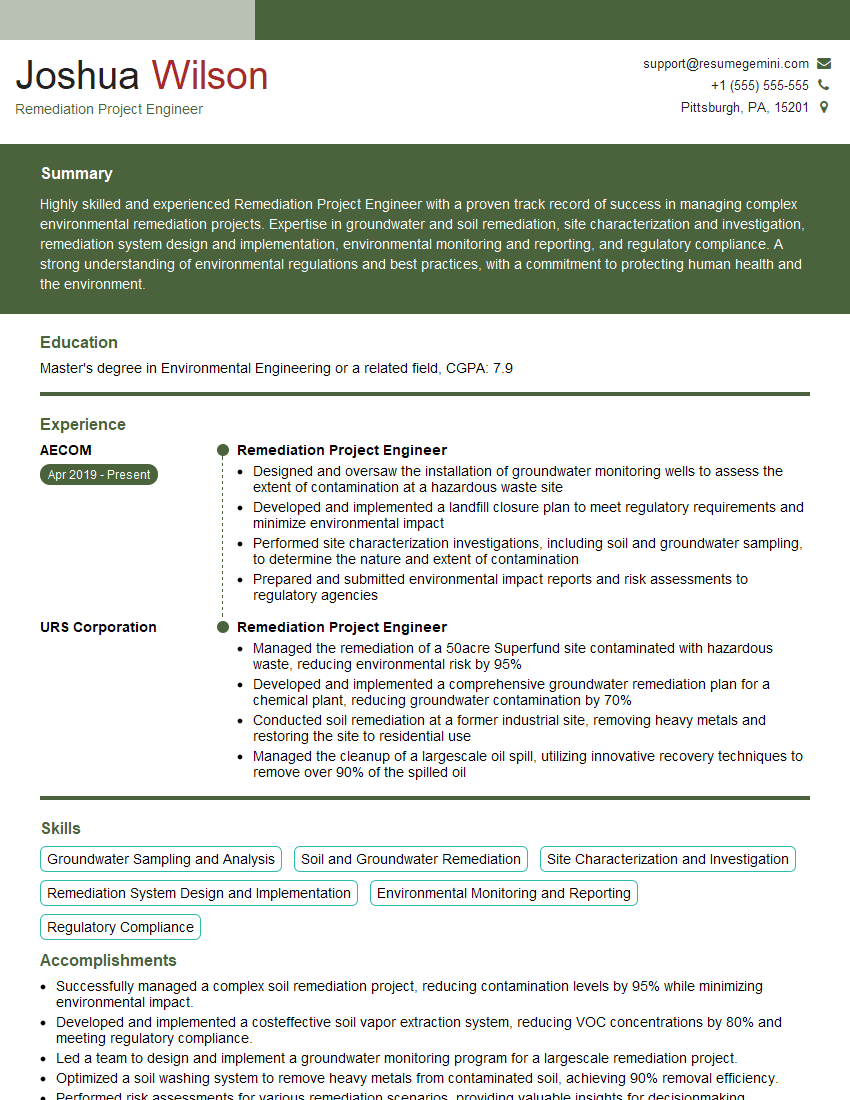
Mastering Remediation Technology opens doors to a rewarding career with significant growth potential in a field vital to environmental protection. A strong resume is crucial for showcasing your skills and experience to potential employers. Creating an ATS-friendly resume significantly increases your chances of getting your application noticed. ResumeGemini is a trusted resource to help you build a professional and effective resume. We provide examples of resumes tailored to Remediation Technology to help you get started. Invest time in crafting a compelling resume – it’s your first impression!
Explore more articles
Users Rating of Our Blogs
Share Your Experience
We value your feedback! Please rate our content and share your thoughts (optional).
What Readers Say About Our Blog
To the interviewgemini.com Webmaster.
Very helpful and content specific questions to help prepare me for my interview!
Thank you
To the interviewgemini.com Webmaster.
This was kind of a unique content I found around the specialized skills. Very helpful questions and good detailed answers.
Very Helpful blog, thank you Interviewgemini team.