Unlock your full potential by mastering the most common Log Trucking interview questions. This blog offers a deep dive into the critical topics, ensuring you’re not only prepared to answer but to excel. With these insights, you’ll approach your interview with clarity and confidence.
Questions Asked in Log Trucking Interview
Q 1. Describe your experience operating different types of log trucks.
Throughout my career, I’ve operated a variety of log trucks, each suited to different terrains and log sizes. This includes conventional log trucks with single or tandem axles, heavy-duty log trucks with multiple axles for larger loads, and specialized trucks equipped with grapple loaders or other log-handling attachments. For instance, I’ve extensively used Kenworth T800s for mountainous terrain due to their power and maneuverability, while lighter-duty trucks were more suitable for shorter hauls on well-maintained roads. My experience also encompasses operating both manual and automatic transmission trucks, adapting my driving style to optimize fuel efficiency and safety in diverse conditions. I’m proficient in understanding the weight limits and operational capabilities of each truck type, ensuring efficient and safe transportation of logs.
Q 2. Explain your understanding of load securement regulations and best practices.
Load securement is paramount in log trucking. Regulations vary by region, but generally mandate that logs must be properly secured to prevent shifting or falling during transport. This involves using appropriate binding techniques, such as chains, binders, and straps, positioned correctly to distribute weight evenly and withstand various road conditions. Best practices go beyond minimum requirements; they focus on redundancy. For example, I always utilize multiple binding points and regularly inspect the securement system throughout the journey. I’m familiar with regulations regarding the use of dunnage (material used to fill gaps and prevent shifting) and ensure it’s adequately placed. Think of it like building a sturdy puzzle: each piece (log, chain, binder) needs to be properly positioned to make a strong, safe whole. Failure to adhere to these regulations can lead to serious accidents, fines, and damage to cargo and property.
Q 3. How do you ensure the safety of yourself and others while operating a log truck?
Safety is my top priority. This begins with comprehensive pre-trip inspections, checking everything from tire pressure and brakes to lights and securement systems. I always wear appropriate safety gear, including high-visibility clothing, steel-toed boots, and a hard hat. Defensive driving is essential; I anticipate potential hazards, maintain a safe following distance, and adjust my speed for road and weather conditions. Regular communication with dispatch or fellow drivers helps avoid conflicts and ensures situational awareness. Furthermore, I’m trained in emergency procedures and equipped with a first-aid kit and communication devices. One time, I noticed a potential issue with a tire while conducting a pre-trip inspection, preventing a blowout that could have resulted in a serious accident. Consistent vigilance and proactive risk management are crucial elements of my safety approach.
Q 4. What are your strategies for navigating challenging terrain and weather conditions?
Navigating challenging terrain and weather requires experience, skill, and adaptability. For steep inclines, I reduce speed, use lower gears, and carefully plan my route. In snowy or icy conditions, I use tire chains and drive slower, choosing routes with better traction if possible. I’m also highly adept at handling mud and rough terrain, adjusting my speed and approach accordingly. I constantly monitor weather reports and adjust my plans as needed, even delaying transport if conditions become too dangerous. Understanding the limits of the truck and the cargo is crucial. For instance, I’ll avoid unnecessary maneuvers that could cause instability, particularly on unstable surfaces. It’s not just about getting there; it’s about getting there safely and efficiently.
Q 5. Describe your experience with pre-trip and post-trip vehicle inspections.
Pre-trip and post-trip inspections are essential safety protocols. Before each trip, I meticulously check all aspects of the truck: tires, brakes, lights, steering, fluids, and the log securement. I document any issues found in a logbook. Post-trip inspections involve a similar check, along with a review of the day’s activities and any potential maintenance needs. I look for leaks, wear and tear, and anything unusual. These inspections not only prevent breakdowns and accidents but also ensure compliance with regulations. A thorough inspection once revealed a brake pad issue, preventing a potential catastrophic failure later. Thoroughness and documentation are key here; a detail overlooked can easily become a huge problem.
Q 6. How do you manage your time effectively to meet delivery deadlines?
Effective time management in log trucking involves careful route planning, accounting for potential delays, and maintaining consistent communication with dispatch. I utilize GPS navigation and traffic updates to optimize my routes and avoid unnecessary stops. Understanding my truck’s capabilities and the load’s weight helps in realistically assessing delivery times. Efficient loading and unloading procedures are also crucial. Occasionally, unexpected delays—weather, road closures—occur, requiring flexibility and proactive communication to keep dispatch informed. I prioritize safety and responsible driving over strict adherence to unrealistic deadlines, but efficient route planning reduces the probability of such issues. For instance, I might adjust my starting time based on expected traffic patterns to arrive on time without compromising safety.
Q 7. Explain your understanding of log scaling and measurement procedures.
Log scaling and measurement are essential for accurate payment and inventory management. I’m familiar with various scaling methods, including diameter-and-length measurements, and volume calculations using formulas or scaling sticks. The accuracy of these measurements impacts payment received for each load. I understand the importance of using standardized procedures to ensure consistency and prevent discrepancies. Some logs might require more complex measurement techniques if their shape is irregular. This requires understanding different units of measurement (e.g., cubic meters, board feet) and accurately converting between them. Accuracy in scaling and measurement reflects professional competence and fair business practices, ultimately saving time and preventing disputes later on.
Q 8. How familiar are you with different types of logging equipment and their functionalities?
My experience encompasses a wide range of logging equipment. Understanding their functionalities is crucial for safety and efficiency. For example, I’m proficient with different types of logging trucks – from smaller single-axle trucks ideal for maneuvering tight forest roads to larger, heavy-duty semi-trucks used for long-haul transport of massive log loads. I’m familiar with various grapple loaders, differing in their reach and lifting capacity, which are used to load logs onto the trucks. I’m also experienced with specialized trailers like lowboys for oversized logs and specialized bunks for securing loads securely and effectively.
- Grapple Loaders: These are essential for loading logs efficiently and minimizing manual labor. Different models offer varying reach and lifting capacity, adapting to diverse terrain and log sizes.
- Logging Trucks: The choice of truck depends on load size, terrain, and distance. Single-axle trucks are maneuverable, while semi-trucks are needed for larger volumes and longer distances.
- Trailers: Specialized trailers, like lowboys, are needed for logs exceeding standard height limits, and bunks ensure secure log placement during transit.
Knowing the limitations and capabilities of each piece of equipment is vital for safe and efficient operation. For instance, understanding the weight capacity of a particular grapple loader is key to preventing overloading and damage, while knowing the turning radius of your truck is essential for safe navigation on forest roads.
Q 9. What are the common causes of log truck accidents and how can they be prevented?
Log truck accidents, sadly, are common. The most prevalent causes include driver fatigue, hazardous road conditions (particularly in remote areas), improper load securing, and mechanical failures.
- Driver Fatigue: Long hours and challenging terrain contribute significantly to accidents. Regular breaks and adherence to hours-of-service regulations are paramount.
- Hazardous Road Conditions: Forest roads often have uneven surfaces, sharp turns, and limited visibility. Defensive driving and awareness of road conditions are essential.
- Improper Load Securing: Loose or improperly secured logs can shift during transit, causing rollovers or other accidents. Proper binding and securing techniques are absolutely critical.
- Mechanical Failures: Regular vehicle maintenance is non-negotiable. This includes brake inspections, tire checks, and overall vehicle condition assessments to avoid breakdowns that may lead to accidents.
Preventing accidents requires a multi-pronged approach. This includes stringent adherence to safety regulations, proactive vehicle maintenance, driver training programs focusing on defensive driving techniques and hazard recognition, and implementing systems for monitoring driver fatigue.
Q 10. Describe your experience with maintaining accurate logs and documentation.
Maintaining accurate logs and documentation is a non-negotiable part of this job. It ensures accountability, compliance with regulations (like hours-of-service), and enables efficient tracking of deliveries and expenses.
My experience involves using electronic logging devices (ELDs) to meticulously record driving time, location, and hours of operation. I meticulously document every load, including the species of wood, the quantity, the origin, and the destination. Any incidents, delays, or maintenance issues are carefully noted with supporting documentation like photographs or repair orders. This meticulous record-keeping enables both my employer and myself to easily track fuel usage, maintenance schedules, and overall operational efficiency, aiding in identifying areas for improvement. Accuracy in this domain is not just about compliance, it’s about operational efficiency and responsible business practice.
Q 11. How do you handle unexpected delays or mechanical issues while on a haul?
Unexpected delays and mechanical issues are unfortunately common occurrences in log trucking. My approach is systematic and focuses on safety and communication.
- Safety First: If there’s a mechanical issue, I prioritize safety. I’ll secure the vehicle in a safe location, away from traffic if possible, and activate hazard lights.
- Assessment and Communication: I’ll thoroughly assess the situation. Is it a minor issue that I can address myself? Or does it require a mechanic? I immediately contact my dispatcher to report the issue, providing a clear explanation of the situation and an estimated time for resolution.
- Problem Resolution: Depending on the nature of the problem, I’ll either attempt a minor repair (if I have the skills and tools), call for roadside assistance, or wait for a mechanic. I keep my dispatcher updated on the progress.
- Revised Delivery Schedule: Once the issue is resolved, I work with the dispatcher to update the delivery schedule accordingly, informing the recipient of any delays.
Clear and proactive communication is key. It ensures everyone is informed, preventing confusion and mitigating potential losses.
Q 12. What are your strategies for maximizing fuel efficiency while operating a log truck?
Maximizing fuel efficiency is crucial in log trucking, where fuel costs represent a significant expense. My strategies involve a combination of driving techniques and vehicle maintenance.
- Smooth Driving: Avoiding aggressive acceleration and braking significantly reduces fuel consumption. Maintaining a steady speed is crucial.
- Proper Tire Inflation: Under-inflated tires increase rolling resistance, leading to higher fuel usage. Regular tire pressure checks are essential.
- Regular Maintenance: Properly maintained engines and drivetrains operate more efficiently and consume less fuel. Regular servicing is paramount.
- Load Optimization: Properly distributing the load weight reduces strain on the engine, improving fuel economy. Avoid overloading.
- Route Planning: Planning the most efficient route, avoiding unnecessary detours, can reduce mileage and fuel consumption.
Fuel efficiency is not just about saving money; it’s about contributing to environmental sustainability and reducing our carbon footprint.
Q 13. Explain your understanding of weight limits and load distribution.
Understanding weight limits and load distribution is critical for safety and legal compliance. Exceeding weight limits can lead to accidents, fines, and damage to roads and bridges.
Each log truck has a Gross Vehicle Weight Rating (GVWR), which represents the maximum allowable weight, including the truck, the load, and any extra equipment. Careful consideration must be given to the weight of the logs, their distribution across the trailer, and the weight of the truck itself. Uneven weight distribution can make the truck unstable and increase the risk of rollovers. I utilize load-bearing charts and scales to ensure that each load adheres to the GVWR and is evenly distributed for safe transport. The process also involves careful placement of logs to minimize shifting and ensure stability during transport, often using binding techniques and specialized equipment.
Q 14. Describe your experience working with dispatchers and coordinating deliveries.
Effective communication and coordination with dispatchers are crucial for a smooth and efficient operation. I maintain open lines of communication, providing regular updates on my location, estimated time of arrival (ETA), and any unexpected issues. Dispatchers are vital for scheduling pickups, deliveries, and ensuring seamless operation. This often involves relaying information about road conditions, potential delays, and unforeseen circumstances. I rely on my dispatcher to provide updates regarding changes in delivery schedules or any new instructions. Strong communication ensures that deliveries are made on time and efficiently, leading to a streamlined workflow for the company.
Q 15. How do you prioritize safety while working in a fast-paced environment?
Safety is paramount in log trucking, especially given the demanding and often unpredictable nature of the job. My approach is multifaceted and starts before I even begin a route. It involves a rigorous pre-trip inspection of the truck and trailer, checking everything from tire pressure and fluid levels to lights and brakes. This is not just a checklist; it’s a thorough examination, akin to a doctor performing a physical. Any potential issue, no matter how minor, is addressed immediately.
While on the road, I maintain a defensive driving style, anticipating potential hazards and reacting proactively. This includes leaving ample following distance, staying alert for wildlife, and adjusting speed for weather conditions. I also prioritize fatigue management – understanding my limits and taking necessary breaks to avoid driving while tired. Think of it like a marathon runner pacing themselves; consistent performance relies on responsible rest. Finally, I strictly adhere to all traffic laws and company safety protocols. Safety isn’t a suggestion; it’s an unwavering commitment.
Career Expert Tips:
- Ace those interviews! Prepare effectively by reviewing the Top 50 Most Common Interview Questions on ResumeGemini.
- Navigate your job search with confidence! Explore a wide range of Career Tips on ResumeGemini. Learn about common challenges and recommendations to overcome them.
- Craft the perfect resume! Master the Art of Resume Writing with ResumeGemini’s guide. Showcase your unique qualifications and achievements effectively.
- Don’t miss out on holiday savings! Build your dream resume with ResumeGemini’s ATS optimized templates.
Q 16. How familiar are you with relevant environmental regulations and permits?
I’m very familiar with environmental regulations governing log trucking, including those concerning water quality, erosion control, and endangered species protection. These vary depending on the region, so my approach involves staying current on state and federal regulations, plus any local ordinances. This includes understanding and complying with the requirements for permits, such as those for operating on waterways or in environmentally sensitive areas. For example, I’m experienced in working with the Clean Water Act requirements for preventing sediment runoff and adhering to best management practices when operating near streams. I know the importance of proper waste disposal, fuel spill prevention, and adhering to noise pollution guidelines. My experience includes working with several different permits – from simple logging road permits to more complex ones needed for crossing protected wetlands. Understanding these regulations is not just about compliance; it’s about environmental stewardship.
Q 17. Explain your experience with different types of logging roads and their challenges.
My experience encompasses a wide range of logging roads, from well-maintained gravel roads to challenging, steep, and muddy trails. Each presents unique challenges. Well-maintained roads are generally easier to navigate, but even these can present issues like washboard surfaces that can damage equipment. Steep and winding roads require precise driving skills and careful consideration of braking and acceleration. Muddy trails, particularly after rain, pose significant traction challenges, demanding specialized equipment like chains or all-wheel drive. I’ve encountered situations where landslides or fallen trees have blocked roads, requiring creative problem-solving and sometimes heavy equipment to clear the path. For example, one time, I was forced to utilize a winch and logging cables to pull my truck up a particularly steep grade, utilizing principles of leverage and proper safety practices. Overcoming these challenges requires adaptability, resourcefulness, and a deep understanding of vehicle limitations. The proper selection of tires and the careful management of vehicle weight are also crucial factors.
Q 18. How do you handle communication with clients and other stakeholders?
Effective communication is vital in log trucking. With clients, this means clearly outlining timelines, costs, and any potential challenges. It’s about setting expectations upfront and maintaining transparent communication throughout the project. I frequently use email and phone calls to provide updates and address any concerns. With other stakeholders, such as landowners or government officials, I focus on professional courtesy and collaboration. I’m adept at providing clear and concise information, ensuring everyone involved is on the same page. For instance, I once had to communicate a delay in a delivery to a client due to unforeseen road closures. I proactively informed them, offered alternative solutions, and kept them updated until the issue was resolved. Open and timely communication helps foster positive relationships and avoid misunderstandings.
Q 19. What are your skills in troubleshooting mechanical problems on the road?
Troubleshooting mechanical issues on the road is a critical skill in log trucking. My experience ranges from simple repairs, like changing a flat tire or jump-starting a battery, to more complex issues involving engine diagnostics or hydraulic system problems. I’m proficient in using diagnostic tools and interpreting error codes to pinpoint the cause of the problem. I also have experience in performing basic repairs and maintenance, which allows me to minimize downtime and get back on the road quickly and safely. For instance, I once had a fuel pump failure on a remote logging road. While not a complete repair, my familiarity with the truck’s system allowed me to employ an emergency fuel filter bypass, giving me time to call for assistance without complete immobilization. It’s not about being a mechanic, but about possessing the practical skills to diagnose issues, find temporary solutions, and communicate effectively with repair specialists.
Q 20. Describe your experience with GPS navigation and route planning.
GPS navigation and route planning are essential parts of my daily work. I’m proficient in using various GPS systems, both in-cab navigation and handheld devices, to plan efficient and safe routes. This involves considering factors such as road conditions, weight restrictions, and the location of logging sites. I also utilize mapping software to analyze terrain and identify potential hazards. Before embarking on any haul, I’ll carefully review the route, checking for any construction, closures, or other obstacles. For instance, in planning a route for a particularly heavy load, I might opt for a slightly longer route that avoids bridges with weight restrictions rather than taking a faster but potentially risky alternative. My experience using GPS extends to integrating with electronic logging devices and fleet management systems, ensuring compliance and optimizing efficiency.
Q 21. How do you maintain a safe and efficient working relationship with your team?
Maintaining a safe and efficient working relationship with my team relies on clear communication, mutual respect, and shared commitment to safety. Open communication is essential to resolving conflicts, sharing information, and ensuring everyone is aware of potential hazards. Mutual respect means valuing everyone’s contributions, recognizing individual strengths, and fostering a collaborative environment. A shared commitment to safety means ensuring that everyone understands and adheres to safety protocols and takes responsibility for their own actions. For instance, if there is an issue with a piece of equipment, I will make sure to bring it to my team’s attention before the issue compromises safety or efficiency. We will resolve it together, keeping the lines of communication open until the issue is successfully dealt with. Building a team culture of safety and collaboration is crucial in this high-risk environment.
Q 22. What is your approach to solving complex logistical challenges?
Solving complex logistical challenges in log trucking requires a systematic approach. I begin by clearly defining the problem, breaking it down into smaller, manageable components. This involves identifying all constraints – terrain, weather conditions, road accessibility, deadlines, and available resources (trucks, drivers, equipment). Then I leverage various tools like route optimization software, considering factors such as fuel efficiency, travel time, and load capacity.
For instance, if we’re facing a tight deadline for delivering a large volume of logs across challenging terrain, I’d use route planning software to identify the most efficient paths, minimizing risk of delays caused by road conditions. This might involve using different truck types suited for specific terrain or even coordinating multiple trucking teams to work concurrently.
Finally, constant monitoring and communication are crucial. I’d establish a clear communication channel with all stakeholders (drivers, dispatchers, clients) to address any unexpected issues promptly and adapt the plan as needed.
Q 23. Describe a time you had to adapt to unexpected changes in a log hauling operation.
During a particularly heavy rainfall, a significant landslide blocked the main access road to a logging site. This severely impacted our pre-planned routes and threatened to delay a crucial delivery of high-value cedar logs. My immediate response was to initiate a thorough risk assessment to ensure driver safety. We then activated our contingency plan: utilizing a secondary, albeit longer, route that involved navigating several challenging off-road sections. This required careful assessment of the terrain and adjusting load weights to avoid damaging the trucks or getting stuck.
Communicating the revised plan to the drivers was paramount, ensuring they understood the new route and potential challenges. We provided them with detailed maps, GPS coordinates, and even arranged for a spotter vehicle to accompany the trucks through the more treacherous sections. This allowed us to complete the delivery, albeit slightly delayed, while maintaining the safety and integrity of our operation.
Q 24. How do you ensure compliance with all applicable safety and transportation regulations?
Ensuring compliance is paramount. We maintain meticulous records of all aspects of our operations, from driver logs and maintenance schedules to cargo manifests and hazardous materials declarations. This ensures compliance with FMCSA regulations (Federal Motor Carrier Safety Administration) regarding driver hours of service, vehicle maintenance, and cargo securement. We regularly update our drivers on changes in regulations and conduct thorough safety training sessions. These include refresher courses on safe loading/unloading procedures, defensive driving techniques, and emergency response protocols.
Beyond FMCSA, we also adhere to state and local regulations concerning weight limits, permits, and environmental protection. We conduct regular vehicle inspections and maintenance to ensure they meet safety standards. We also invest in technology such as electronic logging devices (ELDs) to automate record-keeping and minimize the risk of non-compliance.
Q 25. Explain your understanding of different log species and their handling requirements.
Understanding log species and their handling requirements is crucial for efficient and damage-free transportation. Different species possess varying densities, moisture content, and susceptibility to damage. For example, redwood, known for its high density and strength, requires robust handling to prevent splitting or cracking. In contrast, lighter species like pine might require more careful stacking to avoid crushing under weight.
We categorize logs based on their species and size. This allows us to tailor our loading and securing techniques to prevent damage. Cedar, for instance, which is valuable for its aromatic properties, needs extra care to avoid surface damage. We use specialized padding and securement techniques to minimize the risk of abrasion or impact damage during transport. Understanding wood characteristics helps us choose appropriate equipment and loading methods for various species, maximizing safety and preserving log quality.
Q 26. What are your strategies for minimizing environmental impact during logging operations?
Minimizing environmental impact is a core value. We utilize GPS-guided routes to reduce unnecessary travel and fuel consumption, thereby lowering greenhouse gas emissions. We strictly adhere to designated logging roads and avoid unnecessary off-road travel to protect soil and vegetation. Our equipment is regularly maintained to optimize fuel efficiency and reduce emissions.
Furthermore, we implement careful logging practices that minimize forest damage, including selective logging techniques and the use of specialized equipment that reduces soil compaction. We follow rigorous procedures for waste management, responsibly disposing of waste materials and preventing spills or leaks of fuels and lubricants. We actively participate in reforestation initiatives and work closely with forestry agencies to ensure sustainable logging practices.
Q 27. How do you prioritize tasks and manage your workload efficiently?
Prioritizing tasks and managing workload effectively involves a combination of planning and execution. I use a combination of methods, including daily planning sessions to establish priorities based on urgency and importance, taking into account deadlines, weather forecasts, and available resources.
I utilize project management tools and software to track progress, identify potential bottlenecks, and re-allocate resources as necessary. Communication is key; regular updates with my team and clients ensure everyone remains informed and aligned. This proactive approach helps to anticipate potential problems and address them efficiently. In addition, I prioritize tasks using methods like Eisenhower Matrix (Urgent/Important) to manage my time efficiently.
Q 28. Describe your experience using log loading and unloading equipment.
I have extensive experience operating and supervising the use of various log loading and unloading equipment, including grapple loaders, loaders with log forks, and specialized trailers designed for log transportation. I’m proficient in the safe and efficient operation of these machines, understanding their capabilities and limitations. This includes pre-operational checks, ensuring the correct attachment of equipment to the trucks, and adhering to safety protocols during loading and unloading.
My experience encompasses both manual and automated systems. I’m familiar with the best practices for minimizing risk of injury and damage to both equipment and logs during these processes. This also includes the knowledge of load securing techniques using chains, binders, and other methods appropriate for different log sizes and types. I’ve successfully managed teams using this equipment, leading to improved efficiency and a strong safety record.
Key Topics to Learn for Log Trucking Interview
- Log Transportation Regulations and Compliance: Understanding federal and state regulations regarding load weight, dimensions, permits, and driver hours-of-service is crucial. This includes knowledge of relevant safety standards and reporting procedures.
- Logistics and Route Planning: Practical application involves efficiently planning routes, considering factors like terrain, weather conditions, and delivery deadlines. This may include utilizing GPS technology and route optimization software.
- Log Handling and Loading Techniques: Safe and efficient loading and unloading of logs, minimizing risk of damage and accidents. This includes understanding different types of logging equipment and their capabilities.
- Equipment Maintenance and Troubleshooting: Basic understanding of log trucks, trailers, and associated equipment, including preventative maintenance and recognizing potential mechanical issues. Practical application includes performing basic checks and reporting problems effectively.
- Safety Procedures and Risk Management: Detailed knowledge of safety protocols, including hazard identification, risk assessment, and accident prevention strategies. This also includes understanding emergency response procedures.
- Communication and Teamwork: Effective communication with dispatchers, clients, and fellow drivers is essential. Practical application includes clear and concise reporting and collaboration on complex logistics.
- Industry-Specific Software and Technology: Familiarity with commonly used software and technology in the log trucking industry, such as GPS tracking systems, load management software, and communication platforms.
Next Steps
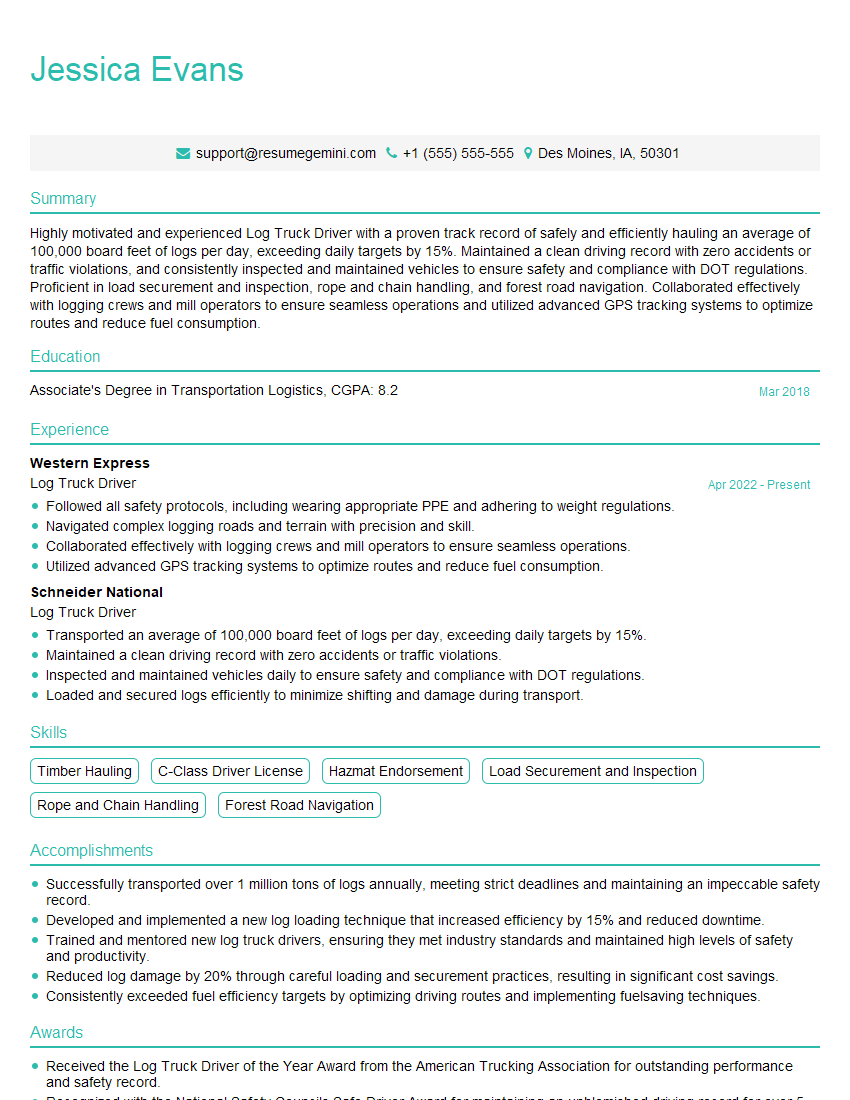
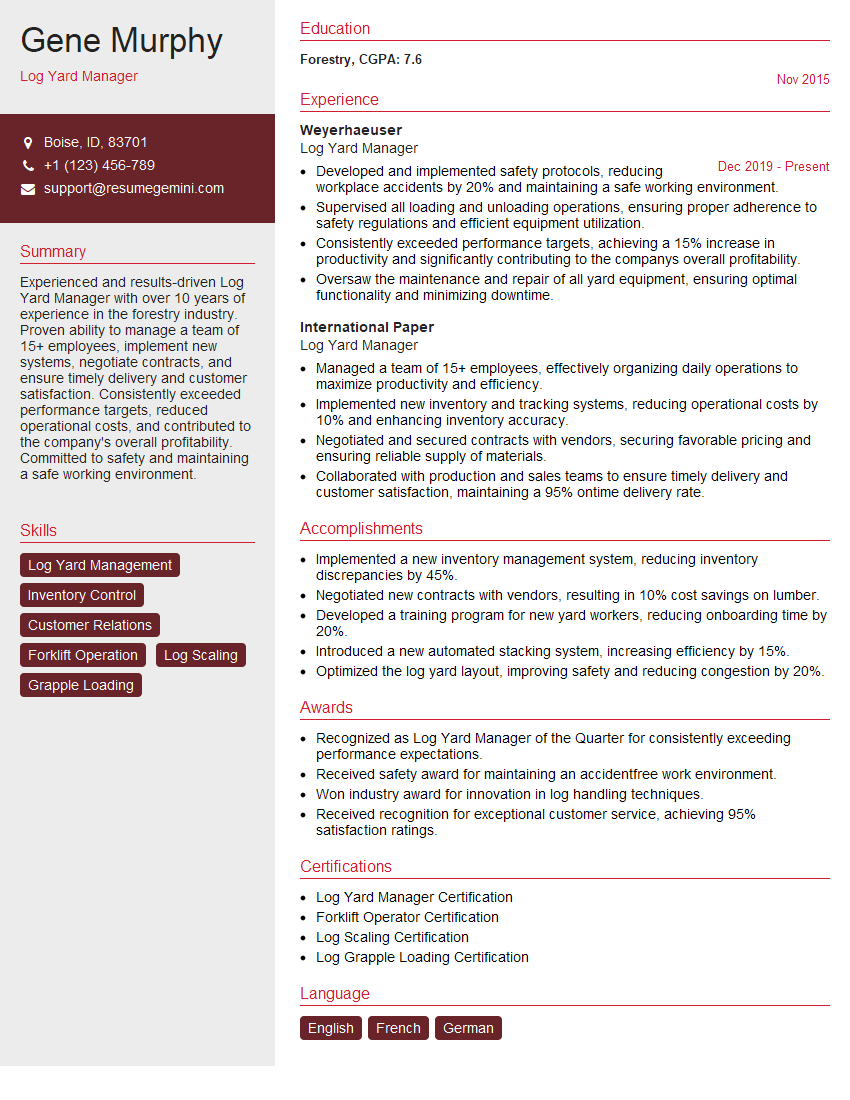
Mastering the intricacies of log trucking opens doors to a rewarding career with excellent earning potential and opportunities for advancement. The industry demands skilled professionals who prioritize safety and efficiency. To maximize your job prospects, creating an ATS-friendly resume is paramount. This ensures your application gets noticed by recruiters and hiring managers. We strongly encourage you to utilize ResumeGemini, a trusted resource, to build a professional and impactful resume that highlights your skills and experience. Examples of resumes tailored to the log trucking industry are available to help guide you.

Explore more articles
Users Rating of Our Blogs
Share Your Experience
We value your feedback! Please rate our content and share your thoughts (optional).
What Readers Say About Our Blog
To the interviewgemini.com Webmaster.
Very helpful and content specific questions to help prepare me for my interview!
Thank you
To the interviewgemini.com Webmaster.
This was kind of a unique content I found around the specialized skills. Very helpful questions and good detailed answers.
Very Helpful blog, thank you Interviewgemini team.