Are you ready to stand out in your next interview? Understanding and preparing for Ecosystem Management and Conservation interview questions is a game-changer. In this blog, we’ve compiled key questions and expert advice to help you showcase your skills with confidence and precision. Let’s get started on your journey to acing the interview.
Questions Asked in Ecosystem Management and Conservation Interview
Q 1. Describe the process of conducting a biodiversity assessment.
A biodiversity assessment systematically evaluates the variety of life within a specific area. It’s like taking a detailed inventory of all the plants, animals, fungi, and microorganisms present, along with their interactions. This process isn’t just about counting species; it delves into their abundance, distribution, and the overall health of the ecosystem.
The process typically involves several steps:
- Planning and Scoping: Defining the area of interest, setting clear objectives, and selecting appropriate assessment methods based on the resources available and the specific questions being addressed.
- Data Collection: Employing various techniques such as field surveys (visual observations, trapping, sampling), remote sensing (satellite imagery, aerial photography), and existing datasets (museum records, literature reviews).
- Data Analysis: Using statistical methods to analyze the collected data, identifying species richness and evenness, calculating biodiversity indices (like Shannon’s diversity index), and assessing community composition.
- Interpretation and Reporting: Summarizing the findings, interpreting the results in the context of the ecosystem’s overall health, identifying key threats, and making recommendations for conservation and management.
For example, a biodiversity assessment of a forest might involve identifying all tree species present, quantifying their abundance, and assessing the health of the understory vegetation. This information then informs decisions about forest management practices to maintain biodiversity.
Q 2. Explain the concept of ecosystem services and provide examples.
Ecosystem services are the myriad of benefits that humans derive from the natural environment. Think of it as nature’s free services that underpin human well-being. These services are not always obvious, but they are crucial for our survival and prosperity.
They are broadly categorized into:
- Provisioning Services: These are tangible goods, such as food (crops, livestock, fish), fresh water, timber, and fuelwood.
- Regulating Services: These involve the regulation of environmental processes, like climate regulation (carbon sequestration), water purification, disease control, and pollination.
- Supporting Services: These are the fundamental processes that underpin all other ecosystem services, including nutrient cycling, soil formation, and primary production (photosynthesis).
- Cultural Services: These are non-material benefits people obtain from ecosystems, such as recreation, tourism, aesthetic enjoyment, spiritual enrichment, and educational opportunities.
For instance, a healthy forest provides clean air and water (regulating services), timber for construction (provisioning service), and opportunities for hiking and recreation (cultural service). The loss of these services can have significant economic and social consequences.
Q 3. What are the key indicators of a healthy ecosystem?
A healthy ecosystem demonstrates resilience, stability, and productivity. Key indicators include:
- High Biodiversity: A diverse range of species indicates a robust ecosystem capable of withstanding disturbances. Think of a diverse garden – it’s much more resilient to pests and diseases than one with just a single plant species.
- Abundant Resources: Adequate water, nutrients, and energy are essential for supporting life. A healthy river ecosystem has sufficient water flow and nutrient levels to sustain diverse aquatic life.
- Balanced Food Webs: Well-functioning food webs indicate that energy is flowing smoothly through the ecosystem, with predators and prey in appropriate balance. An imbalance, like an overabundance of herbivores, could severely damage vegetation.
- Resilience to Disturbances: The ability of an ecosystem to recover from natural disturbances (fires, floods, storms) and human impacts demonstrates its health. A resilient forest can recover from a wildfire more quickly than one that is degraded.
- Nutrient Cycling: Efficient cycling of essential nutrients (nitrogen, phosphorus) indicates a well-functioning ecosystem. Healthy soil is essential for nutrient cycling and plant growth.
Monitoring these indicators over time provides valuable insight into an ecosystem’s health and helps identify potential threats early on.
Q 4. How do you assess the impact of human activities on an ecosystem?
Assessing the impact of human activities on an ecosystem requires a multi-faceted approach that considers various factors. It’s like performing a detective investigation to find the cause and effect.
The assessment involves:
- Identifying Human Activities: Pinpoint specific activities impacting the ecosystem, such as deforestation, agriculture, pollution, urbanization, or resource extraction.
- Baseline Data: Gather historical data on ecosystem condition before the impacts, or use a control site (unimpacted area) for comparison.
- Monitoring and Measurement: Track key ecosystem indicators (species diversity, water quality, soil health) to measure the extent of changes caused by human activities. This can involve using various methods, from water sampling to remote sensing data analysis.
- Modeling and Simulation: Employ computer models to project future impacts based on different scenarios and evaluate potential mitigation strategies.
- Statistical Analysis: Employing statistical methods to determine if the observed changes are significant and directly linked to the human activities.
For example, to assess the impact of agriculture on a wetland, one might compare water quality, bird populations, and plant diversity in a farmed area with those in a nearby undisturbed wetland. A decline in these indicators would suggest a negative impact.
Q 5. Describe different approaches to habitat restoration.
Habitat restoration aims to recover degraded or destroyed ecosystems to their former state or a more desirable ecological condition. It’s like giving nature a helping hand to heal itself.
Approaches vary greatly, depending on the type of habitat and the extent of degradation:
- Passive Restoration: Allowing natural processes to restore the ecosystem with minimal human intervention. This might involve removing invasive species and letting natural succession take its course.
- Active Restoration: Involves direct human intervention, such as replanting native species, reintroducing keystone species, or rehabilitating damaged habitats. This is often necessary when natural recovery is too slow or unlikely.
- Remediation: Addressing specific pollutants or contaminants that have degraded the ecosystem. This might involve cleaning up contaminated soil or removing pollutants from water bodies.
- Assisted Migration: Transplanting species to areas where climate change or habitat loss threatens their survival. This is a controversial approach, as it can have unintended consequences.
For instance, restoring a degraded grassland might involve removing invasive weeds, replanting native grasses and wildflowers, and controlling grazing pressures to promote natural regeneration.
Q 6. Explain the principles of sustainable land management.
Sustainable land management focuses on using land resources responsibly to meet present needs without compromising the ability of future generations to meet their own needs. It’s about finding a balance between human needs and environmental protection.
Key principles include:
- Maintaining Soil Health: Implementing practices that prevent soil erosion, improve soil fertility, and protect soil biodiversity, such as no-till farming and cover cropping.
- Conserving Water: Using water efficiently in agriculture and other land uses, implementing water harvesting techniques, and protecting water resources from pollution.
- Protecting Biodiversity: Maintaining a variety of plant and animal life on the land, creating wildlife corridors, and protecting habitat.
- Reducing Pollution: Minimizing the use of pesticides, fertilizers, and other chemicals that can pollute the environment.
- Climate Change Mitigation and Adaptation: Implementing practices to reduce greenhouse gas emissions from land use and adapting land management practices to deal with the impacts of climate change.
- Community Engagement: Involving local communities in decision-making processes related to land management.
For example, sustainable forestry practices include selective logging, reforestation, and protecting old-growth forests to maintain biodiversity and ensure the long-term productivity of forest ecosystems.
Q 7. What are the challenges of managing invasive species?
Managing invasive species—plants, animals, or microorganisms introduced outside their native range—presents significant challenges due to their rapid spread and devastating impacts on native ecosystems. It’s like trying to contain a wildfire.
Challenges include:
- Rapid Spread and Adaptability: Invasive species often reproduce quickly and adapt to new environments readily, making eradication difficult.
- Economic Impacts: Invasive species can damage crops, livestock, infrastructure, and tourism, resulting in substantial economic losses.
- Ecological Impacts: They can outcompete native species, alter habitats, disrupt food webs, and even introduce diseases.
- Difficulty in Eradication: Once established, it is often incredibly difficult and expensive to completely eradicate an invasive species.
- Lack of Awareness and Coordination: Effective management requires awareness among stakeholders and coordinated efforts across different jurisdictions and agencies.
Successful management requires a combination of strategies, including prevention (strict border controls), early detection and rapid response (monitoring and quick eradication efforts), control (mechanical removal, biological control, chemical control), and restoration (rehabilitating habitats affected by invasive species).
Q 8. How do you monitor and evaluate the effectiveness of conservation efforts?
Monitoring and evaluating conservation efforts is crucial to ensure their effectiveness. It’s like checking the progress of a garden – you wouldn’t just plant seeds and hope for the best! We use a multi-pronged approach, combining quantitative and qualitative data.
Quantitative Methods: This involves collecting measurable data. For example, we might track population sizes of target species using camera traps or mark-recapture techniques. We’d also monitor habitat area using GIS (Geographic Information Systems) and assess water quality parameters. Statistical analysis helps us determine if our interventions are leading to significant positive changes.
Qualitative Methods: This involves gathering descriptive data. We might conduct interviews with local communities to understand their perspectives on conservation initiatives and the impact on their livelihoods. We might also analyze policy documents and assess the effectiveness of legislation related to protected areas.
Adaptive Management: Crucially, we use a process called adaptive management. This means regularly reviewing our data, adjusting our strategies as needed, and learning from both successes and failures. It’s an iterative process, constantly refining our approach based on evidence.
For instance, in a project to restore a degraded wetland, we might measure water quality parameters like pH and nutrient levels before, during, and after the restoration. We might also track the number of bird species using the wetland over time. If the bird populations aren’t increasing as expected, we might analyze why and adapt our restoration strategy.
Q 9. What are the main threats to biodiversity?
Biodiversity faces numerous threats, largely stemming from human activities. Think of it like a complex web – damage to one part affects the whole.
Habitat Loss and Degradation: This is the biggest threat, encompassing deforestation, urbanization, and agricultural expansion. Imagine squeezing a sponge – the biodiversity within shrinks and eventually disappears.
Climate Change: Shifting temperatures and precipitation patterns disrupt ecosystems, forcing species to adapt or migrate. It’s like changing the rules of the game, making it harder for some players to survive.
Pollution: Air, water, and soil pollution poison ecosystems, harming or killing organisms. This is like spreading poison through the garden, killing plants and insects.
Overexploitation: Overfishing, hunting, and poaching deplete populations faster than they can recover. It’s like harvesting crops before they can regenerate.
Invasive Species: Non-native species can outcompete native species for resources, leading to population decline and even extinction. This is like introducing unwanted weeds that choke out the native plants.
These threats often interact, creating a synergistic effect that magnifies the damage. For example, habitat loss makes species more vulnerable to climate change and invasive species.
Q 10. Explain the role of GIS in ecosystem management.
GIS, or Geographic Information Systems, is an indispensable tool in ecosystem management. It’s like having a powerful map that allows us to visualize and analyze spatial data related to ecosystems.
Mapping Habitats: GIS allows us to create detailed maps of different habitats, showing their distribution, size, and connectivity. This helps us identify areas of high biodiversity and prioritize conservation efforts.
Monitoring Change: We can use GIS to track changes in habitat over time, for example, deforestation rates or the expansion of urban areas. This allows us to assess the impact of conservation interventions and identify areas needing attention.
Species Distribution Modeling: We can predict species distributions based on environmental factors, allowing us to identify suitable locations for reintroduction programs or to assess species vulnerability to climate change.
Spatial Planning: GIS facilitates effective spatial planning by allowing us to analyze land use conflicts and design conservation strategies that minimize negative impacts on biodiversity.
For example, in a project to conserve a particular bird species, we might use GIS to map its habitat, identify potential threats, and plan for habitat restoration or connectivity improvements.
Q 11. Discuss the importance of stakeholder engagement in conservation projects.
Stakeholder engagement is paramount in conservation. It’s not just about scientists and conservationists; successful projects require the active participation of local communities, government agencies, and the private sector. Think of it as a collaborative effort, where everyone plays a vital role.
Local Knowledge: Local communities often possess invaluable traditional ecological knowledge about the ecosystem, which can inform conservation strategies.
Ownership and Support: Engaging stakeholders ensures local ownership of conservation initiatives, leading to greater commitment and long-term sustainability.
Conflict Resolution: Effective engagement helps resolve potential conflicts between conservation goals and other land use needs.
Resource Mobilization: Engaging stakeholders can help secure funding and other resources for conservation projects.
For instance, in a project to protect a forest, engaging local communities might involve providing alternative livelihood opportunities to reduce their reliance on forest resources. This might include promoting sustainable tourism or providing training in sustainable agriculture.
Q 12. Describe your experience with environmental impact assessments.
Environmental Impact Assessments (EIAs) are systematic processes used to predict the environmental consequences of proposed projects. I have extensive experience conducting EIAs for various projects, ranging from infrastructure development to mining operations. The process typically involves:
Scoping: Identifying the potential environmental impacts of the project.
Baseline Studies: Collecting data on the existing environment to establish a baseline against which to measure future changes.
Impact Prediction: Using various models and techniques to predict the likely impacts of the project.
Mitigation Measures: Identifying ways to reduce or avoid negative impacts.
Reporting and Review: Preparing a comprehensive report that outlines the findings and recommendations, and undergoing a public review process.
In one project, I conducted an EIA for a proposed hydroelectric dam. We identified potential impacts on downstream water flow, fish populations, and riparian habitats. Our mitigation plan included designing fish passages and implementing strategies to minimize habitat disruption.
Q 13. How do you develop and implement a conservation plan?
Developing and implementing a conservation plan is a systematic process that requires careful planning and stakeholder involvement. Think of it as building a house – you need a strong foundation and a well-defined plan.
Needs Assessment: Identifying the conservation challenges and setting clear goals and objectives.
Data Collection: Gathering relevant data on biodiversity, habitat, threats, and stakeholders.
Strategy Development: Designing strategies to address the identified challenges, including habitat restoration, species protection, and community engagement.
Implementation: Putting the plan into action, monitoring progress, and adapting the plan as needed.
Evaluation: Regularly assessing the effectiveness of the plan and making adjustments.
For example, a conservation plan for a threatened primate species might involve habitat protection, anti-poaching patrols, community education, and reintroduction programs. The success of the plan would be evaluated by monitoring the primate population size and distribution.
Q 14. What are the key elements of a successful environmental education program?
Successful environmental education programs are crucial for fostering environmental stewardship. They must be engaging, relevant, and empowering. It’s about igniting a passion for conservation.
Experiential Learning: Hands-on activities and field trips are more effective than lectures alone. Think field trips to nature reserves or citizen science projects.
Relevance and Context: The content should be relevant to the learners’ lives and their local environment. This could involve addressing local environmental issues.
Empowerment: The program should empower learners to take action to protect the environment, by providing opportunities for participation in local conservation initiatives.
Community Involvement: Involving local communities and experts in the design and implementation of the program increases its impact and relevance.
Evaluation: Regularly assessing the effectiveness of the program through surveys, interviews, and other methods ensures continued improvement.
For example, a successful program might involve a school-based initiative where students conduct a biodiversity survey in their local park, learn about local environmental issues, and develop a plan to address a specific problem. This makes learning active and impactful.
Q 15. Explain the principles of climate change adaptation in ecosystem management.
Climate change adaptation in ecosystem management focuses on adjusting to the current and future effects of climate change. It’s about making ecosystems more resilient and less vulnerable to the impacts of a changing climate, rather than solely focusing on mitigation (reducing greenhouse gas emissions).
This involves a multifaceted approach:
- Understanding vulnerabilities: Identifying which species, habitats, and ecosystem services are most at risk from specific climate change impacts (e.g., sea-level rise, altered precipitation patterns, increased frequency of extreme weather events).
- Prioritizing actions: Focusing on interventions that offer the greatest benefit for ecosystem resilience, considering factors like cost-effectiveness and feasibility.
- Implementing strategies: These might include restoring degraded habitats to enhance their capacity to adapt, assisting species migration by creating corridors, managing water resources more sustainably, and promoting genetic diversity within populations.
- Monitoring and evaluation: Tracking the effectiveness of adaptation strategies and adjusting them as needed. This iterative process is crucial for ensuring ongoing success.
Example: In coastal areas, adaptation might involve restoring mangrove forests, which act as natural buffers against storm surges and erosion, protecting both the ecosystem and human communities. In arid regions, managing water resources efficiently could be a key adaptation strategy, ensuring enough water for both ecological needs and human consumption.
Career Expert Tips:
- Ace those interviews! Prepare effectively by reviewing the Top 50 Most Common Interview Questions on ResumeGemini.
- Navigate your job search with confidence! Explore a wide range of Career Tips on ResumeGemini. Learn about common challenges and recommendations to overcome them.
- Craft the perfect resume! Master the Art of Resume Writing with ResumeGemini’s guide. Showcase your unique qualifications and achievements effectively.
- Don’t miss out on holiday savings! Build your dream resume with ResumeGemini’s ATS optimized templates.
Q 16. How do you utilize remote sensing data for ecosystem monitoring?
Remote sensing provides a powerful tool for large-scale ecosystem monitoring. It uses sensors on satellites, aircraft, or drones to collect data about the Earth’s surface without direct physical contact. This data provides insights into various aspects of ecosystems that are difficult or impossible to gather through ground-based methods alone.
Data sources: I utilize different types of remote sensing data, including:
- Multispectral imagery: Captures images in multiple wavelengths, allowing for the identification of different vegetation types, water bodies, and other land cover features.
- Hyperspectral imagery: Provides even more detailed spectral information, allowing for the identification of specific plant species and the assessment of their health.
- LiDAR (Light Detection and Ranging): Measures distance to the Earth’s surface, creating detailed 3D models that are useful for assessing topography, canopy height, and forest structure.
Applications: I use this data to monitor:
- Deforestation and forest degradation: Tracking changes in forest cover over time.
- Species distribution and abundance: Estimating population sizes and identifying suitable habitats.
- Water quality: Assessing turbidity, chlorophyll concentrations, and other indicators of water quality.
- Habitat fragmentation: Analyzing the extent and impact of habitat fragmentation on biodiversity.
Data analysis: The raw data needs processing and analysis using Geographic Information Systems (GIS) and other specialized software. This often involves image classification, change detection, and spatial statistical analysis to derive meaningful insights.
Q 17. Discuss your experience with data analysis in an environmental context.
My experience with data analysis in an environmental context is extensive. I’ve worked with diverse datasets, from remote sensing imagery and ground-based monitoring data to socio-economic data related to human impact on ecosystems. My work often involves:
- Data cleaning and preprocessing: Dealing with missing values, outliers, and inconsistencies in the data.
- Statistical analysis: Using various statistical methods to analyze patterns and trends in the data, such as regression analysis, time series analysis, and spatial autocorrelation analysis.
- Spatial analysis: Using GIS software to map and analyze spatial patterns and relationships in environmental data.
- Data visualization: Creating maps, graphs, and other visualizations to communicate the findings effectively.
- Modeling: Developing and applying various ecological models to simulate the behavior of ecosystems and predict future changes.
Example: In a recent project, I used time-series analysis of stream flow data to assess the impact of deforestation on water yield in a mountain catchment. This involved statistical modeling to correlate changes in forest cover with changes in stream flow, allowing us to quantify the impact and inform forest management strategies.
Q 18. Explain the concept of adaptive management.
Adaptive management is a structured, iterative approach to ecosystem management that explicitly incorporates uncertainty and learning. It recognizes that our understanding of ecosystems is incomplete and that management actions may have unintended consequences. Instead of rigidly adhering to a predetermined management plan, adaptive management involves:
- Developing a hypothesis: Formulating testable predictions about the effects of management actions.
- Implementing actions: Implementing management actions based on the best available knowledge.
- Monitoring and evaluating: Monitoring the response of the ecosystem to the management actions and evaluating the results.
- Adjusting the management strategy: Adjusting the management strategy based on the monitoring and evaluation results. This may involve changing management actions or even revising the underlying hypothesis.
Think of it like a scientific experiment: You start with an idea (hypothesis), you test it (implement actions), you collect data (monitor and evaluate), and then you revise your approach based on the results (adjust strategy). This iterative cycle continues throughout the management process, leading to improved management effectiveness over time.
Example: In fisheries management, adaptive management might involve implementing a fishing quota based on a model of fish population dynamics. Monitoring the fish population and catch data would then be used to adjust the quota in subsequent years, ensuring sustainability.
Q 19. Describe different methods for assessing water quality.
Assessing water quality involves a combination of methods, each targeting different aspects of water health. These methods range from simple field tests to sophisticated laboratory analyses.
Physical parameters:
- Temperature: Measured using a thermometer; crucial for determining oxygen solubility and biological activity.
- Turbidity: Measures water clarity, indicating the presence of suspended solids; can be assessed using a Secchi disk or turbidimeter.
- pH: Measures acidity or alkalinity, using a pH meter or test strips; important for aquatic life survival.
Chemical parameters:
- Dissolved oxygen (DO): Measured using a DO meter; crucial for aquatic life respiration.
- Nutrients (nitrates, phosphates): Measured using spectrophotometry or other laboratory techniques; excess nutrients lead to eutrophication.
- Heavy metals (lead, mercury, etc.): Measured using atomic absorption spectroscopy or other laboratory techniques; can be toxic to aquatic life and humans.
- Organic pollutants (pesticides, herbicides): Measured using gas chromatography-mass spectrometry (GC-MS) or other laboratory techniques.
Biological parameters:
- Macroinvertebrates: Assessing the presence and abundance of insects, crustaceans, etc., indicates water quality; a good indicator of ecosystem health because different species have different tolerances to pollution.
- Phytoplankton and algae: Microscopic organisms indicating nutrient levels and water quality; excessive growth can lead to algal blooms.
The choice of methods depends on the specific objectives of the assessment and the available resources.
Q 20. How do you manage conflicts between conservation goals and economic development?
Managing conflicts between conservation goals and economic development requires a nuanced approach that balances ecological integrity with human needs. It often involves stakeholder engagement, negotiation, and finding creative solutions that minimize trade-offs.
Strategies for conflict resolution:
- Stakeholder engagement: Involving all relevant stakeholders (local communities, businesses, government agencies, conservation organizations) in the decision-making process ensures diverse perspectives are considered.
- Integrated planning: Developing land-use plans that incorporate both conservation and development objectives, identifying areas suitable for both activities.
- Economic incentives: Implementing programs such as payments for ecosystem services (PES), where landowners or communities receive compensation for providing environmental benefits.
- Environmental impact assessment (EIA): Conducting thorough EIAs to evaluate the potential impacts of development projects on ecosystems and develop mitigation measures.
- Negotiation and compromise: Finding mutually acceptable solutions through negotiation and compromise, balancing competing interests.
- Education and awareness: Raising awareness among stakeholders about the importance of conservation and the potential benefits of sustainable development.
Example: In a scenario where a new road is planned through a protected area, finding an alternative route that minimizes habitat fragmentation or implementing mitigation measures (e.g., wildlife crossings) can balance development needs with biodiversity protection.
Q 21. What are the ethical considerations in ecosystem management?
Ethical considerations in ecosystem management are paramount, guiding decision-making toward fairness, sustainability, and respect for ecological integrity. Key ethical considerations include:
- Intergenerational equity: Ensuring that future generations have access to the same ecosystem services and resources that we enjoy today. This necessitates sustainable management practices that avoid depleting resources.
- Intra-generational equity: Ensuring fair and equitable distribution of ecosystem services and resources among different groups of people, avoiding situations where some groups disproportionately bear the costs of conservation while others reap the benefits.
- Precautionary principle: Taking action to prevent harm to ecosystems even in the face of scientific uncertainty. This is particularly important when dealing with potentially irreversible environmental damage.
- Respect for biodiversity: Recognizing the intrinsic value of all species and ecosystems, and avoiding actions that lead to extinction or significant biodiversity loss. This includes ethical consideration for invasive species management.
- Transparency and accountability: Ensuring that decision-making processes are transparent and accountable to all stakeholders. Open communication and clear decision-making pathways are vital.
Ignoring these ethical considerations can lead to unsustainable practices, social injustices, and ecological damage. A strong ethical framework is therefore essential for effective and responsible ecosystem management.
Q 22. How do you communicate complex environmental information to different audiences?
Communicating complex environmental information effectively hinges on tailoring the message to the audience’s level of understanding and their specific interests. I use a multi-pronged approach.
For the general public: I employ simple language, compelling visuals (charts, graphs, photos), and relatable analogies. For example, explaining carbon sequestration might involve comparing a forest’s absorption capacity to a giant sponge soaking up water.
For policymakers: I focus on concise summaries of key findings, highlighting policy implications and potential economic benefits or costs. I emphasize the scientific consensus and present data in a way that’s easily integrated into policy decisions. For example, I’d present cost-benefit analyses for different conservation strategies.
For scientists: I use precise scientific terminology and cite relevant literature. I often present detailed data, methodologies, and statistical analyses in peer-reviewed publications or technical reports.
For community members: I prioritize participatory approaches, engaging them through workshops, storytelling, and local language. I focus on the direct relevance of the information to their livelihoods and well-being. For example, I might discuss how forest conservation improves water quality for local agriculture.
In all cases, active listening and feedback mechanisms are crucial to ensuring the message is understood and resonates with the audience.
Q 23. Describe your experience with grant writing or fundraising for conservation projects.
I have extensive experience in securing funding for conservation projects, both through grant writing and fundraising. My approach is systematic and focuses on demonstrating a clear need, a well-defined solution, and measurable outcomes.
Grant writing: I meticulously research funding opportunities aligned with the project’s goals. My proposals articulate a compelling narrative, clearly outlining the problem, the proposed solution, the methodology, the budget, and the anticipated impact. I highlight previous successes and include strong letters of support. For instance, in a recent grant proposal for a reforestation project, I detailed the project’s carbon sequestration potential and its contribution to local biodiversity, using quantifiable metrics to support the projected impact.
Fundraising: I actively engage with potential donors, crafting personalized communication that resonates with their values and philanthropic interests. I establish strong relationships and provide transparent reporting on how funds are used, showcasing the impact of their contributions. I’ve successfully organized fundraising events, leveraging social media and networking to raise awareness and engage supporters.
Success in grant writing and fundraising hinges on compelling storytelling, strong project design, and transparent communication.
Q 24. Explain your understanding of protected area management.
Protected area management involves the sustainable governance and stewardship of natural resources within designated boundaries. It’s a complex process encompassing various aspects.
Planning and Zoning: This involves setting clear objectives for the protected area, defining zones with varying levels of access and use, and developing management plans outlining strategies for conservation and sustainable use.
Monitoring and Evaluation: Regular monitoring of biodiversity, habitat conditions, and human impacts is essential to track progress towards conservation goals and adapt management strategies as needed. This often involves using ecological indicators and data analysis.
Enforcement and Compliance: Effective enforcement of regulations is critical to prevent poaching, illegal logging, and other threats to the protected area. Collaboration with law enforcement agencies is vital.
Community Engagement: Integrating local communities in protected area management is crucial for long-term success. This involves participatory planning, benefit-sharing, and conflict resolution.
Adaptive Management: Protected area management is an iterative process. Regular review and adaptation of management plans based on monitoring results and new information is essential.
For example, I’ve worked on a project where we integrated local communities’ traditional ecological knowledge into the management plan of a national park, leading to improved biodiversity conservation and community well-being.
Q 25. How do you use ecological modeling in your work?
Ecological modeling plays a crucial role in my work, providing a framework for understanding complex ecosystem dynamics and predicting the consequences of different management actions. I utilize various modeling techniques.
Species Distribution Modeling: Predicting the potential range of a species under changing climate conditions or habitat alteration, using software like Maxent.
Population Viability Analysis (PVA): Assessing the risk of extinction for a species based on its demographic parameters and environmental factors.
Habitat Suitability Modeling: Identifying areas with high suitability for a particular species or ecosystem type.
Agent-Based Modeling: Simulating the interactions of multiple agents (e.g., individuals, species, or human communities) within an ecosystem.
Example: A simple population model might use the equation: dN/dt = rN(1-N/K), where N is population size, r is the intrinsic growth rate, and K is the carrying capacity.
I use these models to inform decision-making, test different management scenarios, and communicate the implications of potential actions to stakeholders. The results are crucial for prioritizing conservation efforts and developing effective management strategies.
Q 26. What are the challenges of managing fragmented habitats?
Managing fragmented habitats presents significant challenges to biodiversity conservation. Fragmentation reduces habitat size and increases edge effects, leading to various ecological consequences.
Reduced Population Sizes: Smaller habitat patches can only support smaller populations, making them more vulnerable to extinction due to inbreeding depression, genetic drift, and stochastic events.
Increased Edge Effects: Edges between habitats are often exposed to more sunlight, wind, and invasive species, which can negatively affect the species adapted to the interior of the original habitat.
Habitat Isolation: Fragmentation limits dispersal and gene flow between populations, reducing their genetic diversity and adaptability.
Increased Human Impact: Fragmented habitats are often more accessible to humans, leading to increased habitat degradation and disturbance.
Strategies to address these challenges include habitat restoration, creating wildlife corridors to connect fragmented patches, and mitigating edge effects through buffer zones. For example, I worked on a project using GIS modeling to identify optimal locations for wildlife corridors in a highly fragmented landscape. This involved considering both ecological factors and socio-economic considerations.
Q 27. Describe your experience with community-based conservation initiatives.
Community-based conservation initiatives are crucial for long-term conservation success, as they empower local communities to actively participate in protecting their natural resources.
My experience includes working with communities to develop co-managed protected areas, implement sustainable resource management practices, and benefit from conservation efforts. This involves:
Participatory Planning: Engaging community members in the planning and implementation of conservation projects to ensure their needs and priorities are addressed.
Capacity Building: Training community members in various aspects of resource management, monitoring, and conflict resolution.
Benefit-Sharing: Designing mechanisms to ensure that local communities benefit from conservation efforts, such as ecotourism initiatives or sustainable harvesting programs. This could involve setting aside a percentage of tourism revenue or establishing community-based enterprises that promote sustainable use of natural resources.
Conflict Resolution: Addressing conflicts that may arise between different community groups or between communities and conservation agencies. This often requires mediation and negotiation.
For example, I helped establish a community-based ecotourism project near a national park, where the local community manages tourist activities and receives a share of the revenue, improving their livelihoods while contributing to conservation.
Q 28. Explain the importance of collaboration in ecosystem management.
Collaboration is paramount in ecosystem management due to the complex and interconnected nature of ecosystems and the diverse stakeholders involved. Effective ecosystem management requires a multi-disciplinary approach and the integration of various perspectives and expertise.
Stakeholder Engagement: Successful ecosystem management requires the involvement of all relevant stakeholders, including government agencies, local communities, NGOs, researchers, and the private sector. This ensures that conservation initiatives are aligned with local needs and priorities.
Knowledge Sharing: Collaborative efforts foster the exchange of knowledge and experience among different stakeholders, leading to improved management practices and more effective conservation outcomes.
Resource Mobilization: Collaboration allows for the pooling of resources, both financial and human, enhancing the capacity to address complex environmental challenges.
Conflict Resolution: Collaborative platforms provide a forum for addressing conflicts and finding mutually acceptable solutions among diverse stakeholders with potentially conflicting interests.
For instance, in a watershed management project, I collaborated with government agencies, local farmers, and scientists to develop a comprehensive plan that addressed both water quality and agricultural productivity, resulting in a win-win situation for all stakeholders involved.
Key Topics to Learn for Ecosystem Management and Conservation Interview
- Ecosystem Services Valuation: Understanding the economic and social benefits of healthy ecosystems, including methods for assessing and quantifying these values. Practical application: Developing a cost-benefit analysis for a conservation project.
- Conservation Planning & Prioritization: Applying spatial analysis and decision-support tools to identify key areas for conservation action and manage limited resources effectively. Practical application: Designing a protected area network considering biodiversity hotspots and human land use.
- Biodiversity Monitoring & Assessment: Techniques for measuring and tracking biodiversity change, including species abundance, distribution, and genetic diversity. Practical application: Implementing a long-term monitoring program for a threatened species.
- Habitat Restoration & Management: Strategies for restoring degraded ecosystems and managing existing habitats to support biodiversity and ecosystem functions. Practical application: Designing and implementing a wetland restoration project.
- Climate Change Adaptation & Mitigation: Understanding the impacts of climate change on ecosystems and developing strategies to adapt to and mitigate these impacts. Practical application: Developing a climate change vulnerability assessment for a specific ecosystem.
- Community Engagement & Stakeholder Collaboration: Effective communication and collaboration with diverse stakeholders (e.g., local communities, government agencies, NGOs) to achieve conservation goals. Practical application: Facilitating a participatory planning process for a conservation initiative.
- Protected Area Management: Strategies for effectively managing protected areas to achieve conservation objectives, including law enforcement, visitor management, and sustainable financing. Practical application: Developing a management plan for a national park.
- Data Analysis & Interpretation: Analyzing ecological data using statistical methods and interpreting results to inform conservation decisions. Practical application: Using GIS and statistical software to analyze species distribution data.
Next Steps
Mastering Ecosystem Management and Conservation opens doors to a fulfilling career dedicated to protecting our planet’s invaluable resources. To maximize your job prospects, a well-crafted, ATS-friendly resume is crucial. This is where ResumeGemini can help! ResumeGemini offers a powerful toolset for building professional and impactful resumes. We provide examples of resumes tailored specifically to the Ecosystem Management and Conservation field to guide you in creating a document that showcases your unique skills and experience effectively. Take the next step towards your dream career – build your best resume with ResumeGemini.
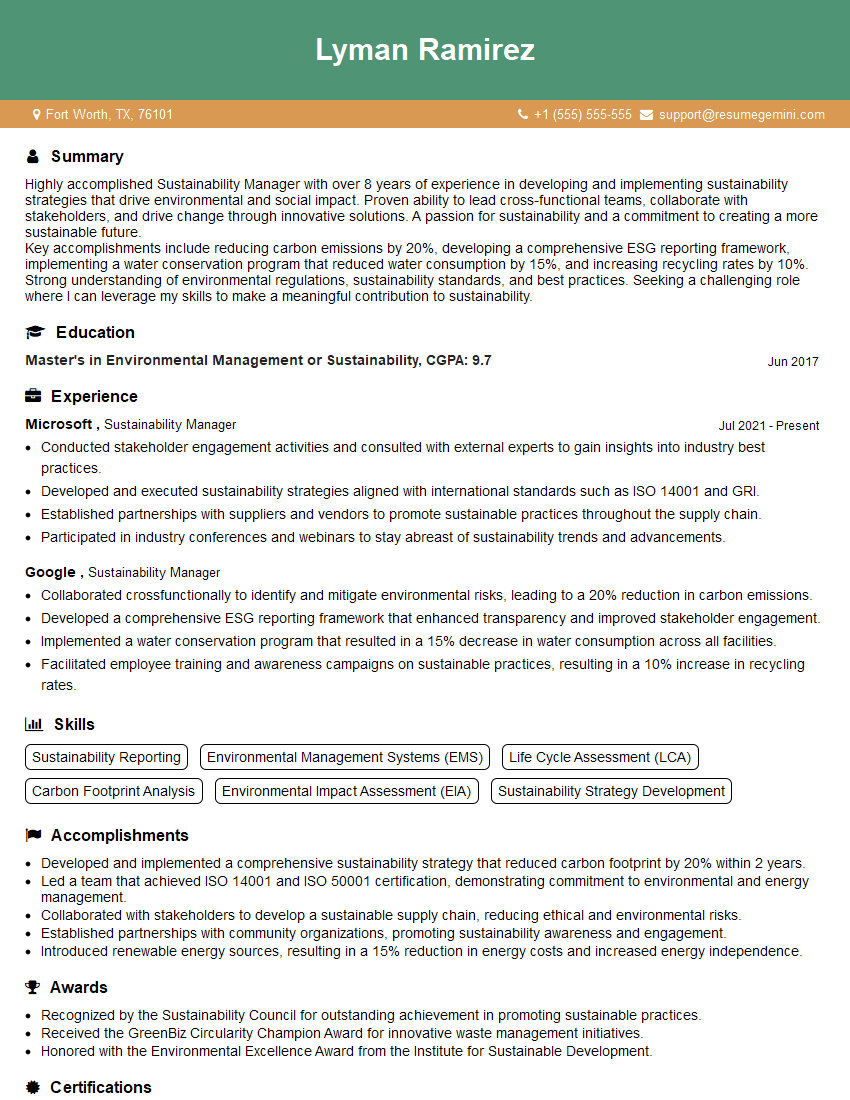
Sustainability Manager Resume Sample
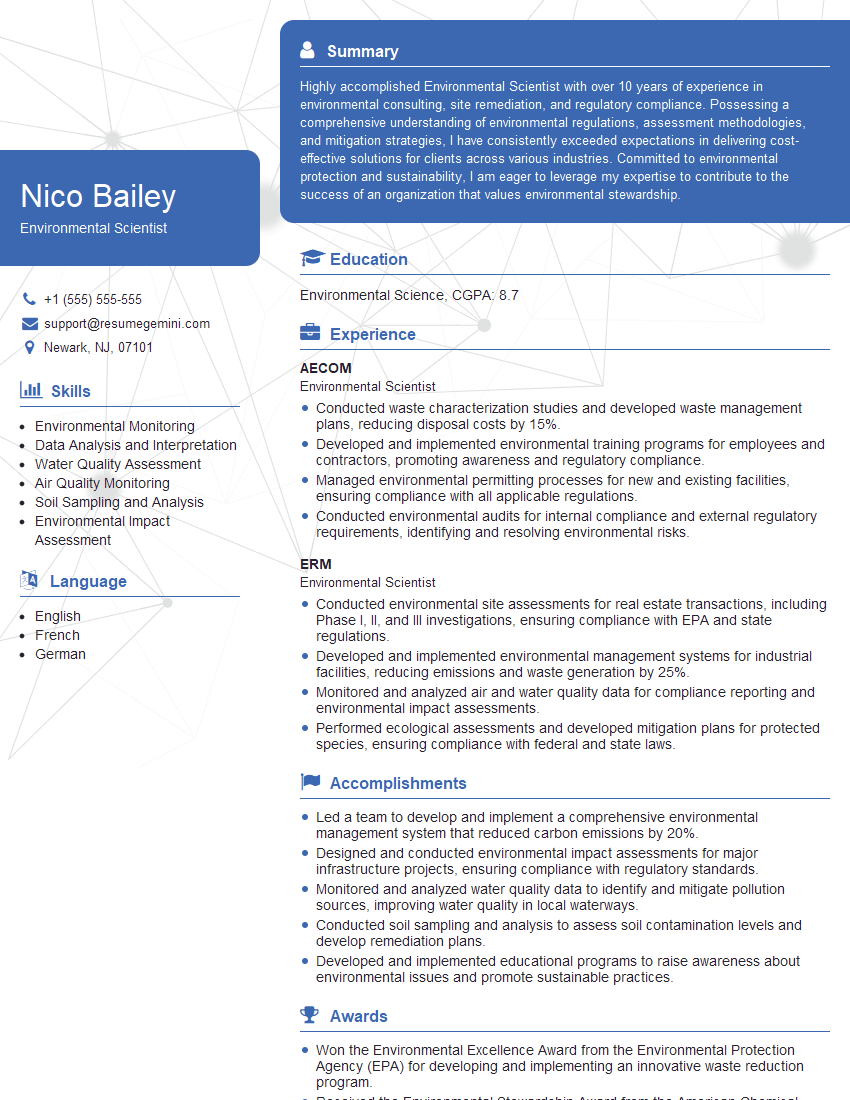
Environmental Scientist Resume Sample

Sustainability Consultant Resume Sample
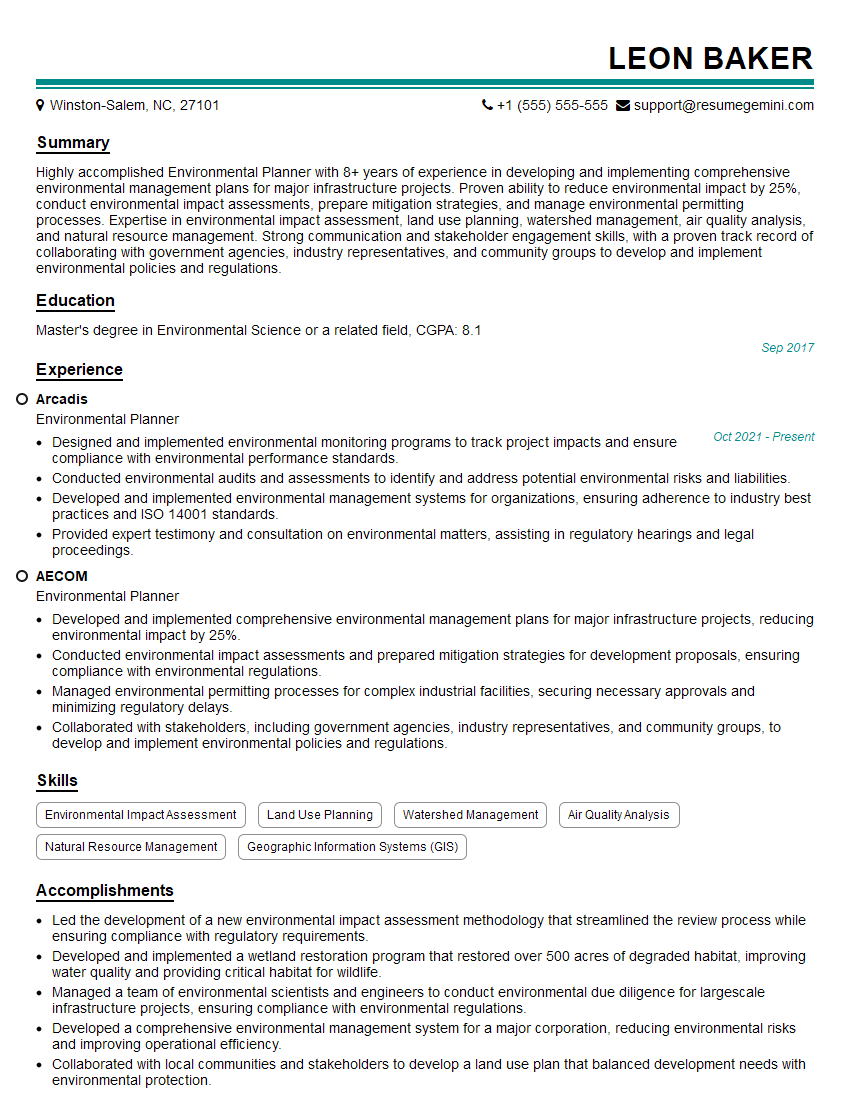
Environmental Planner Resume Sample
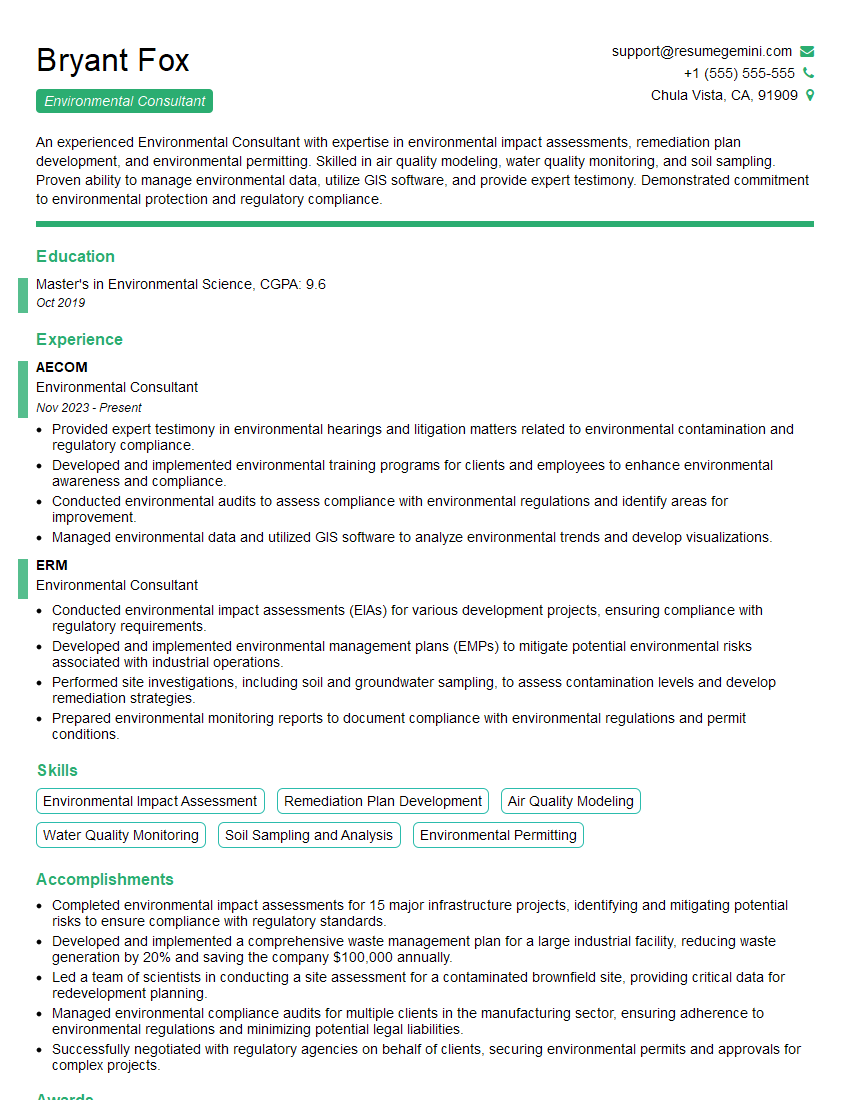
Environmental Consultant Resume Sample
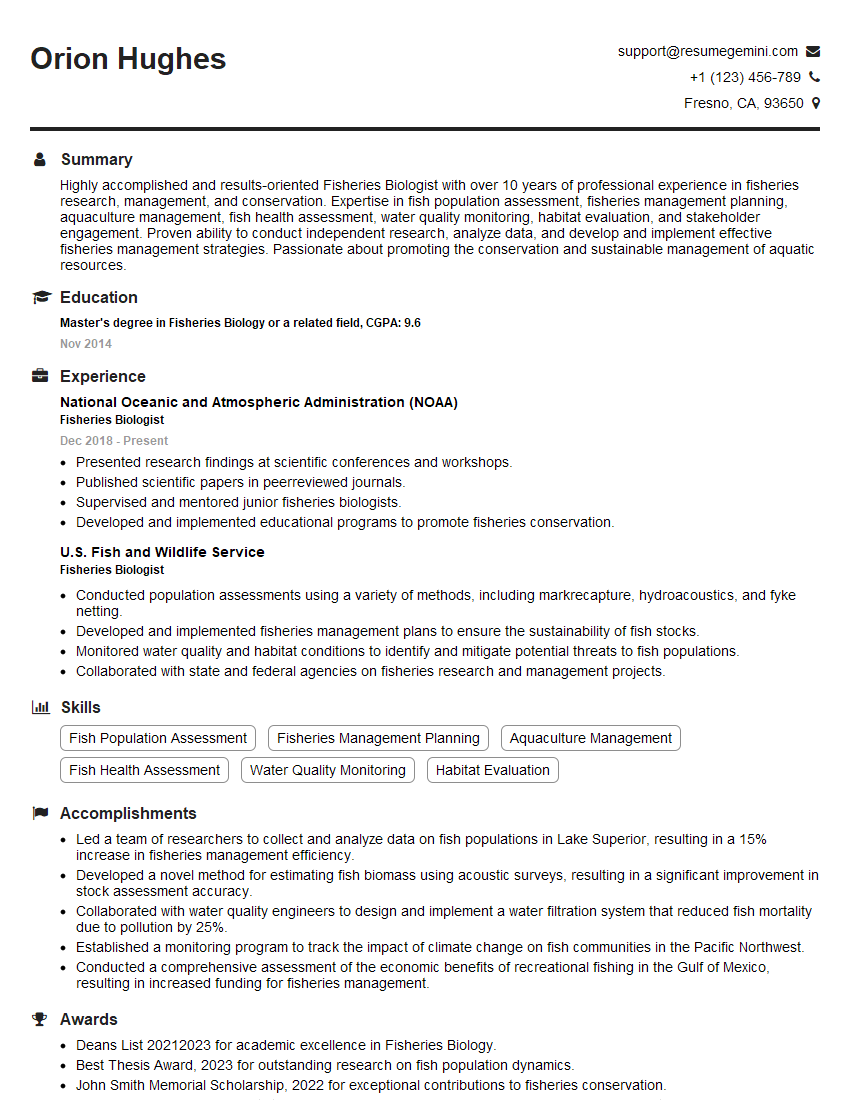
Fisheries Biologist Resume Sample

Wildlife Biologist Resume Sample
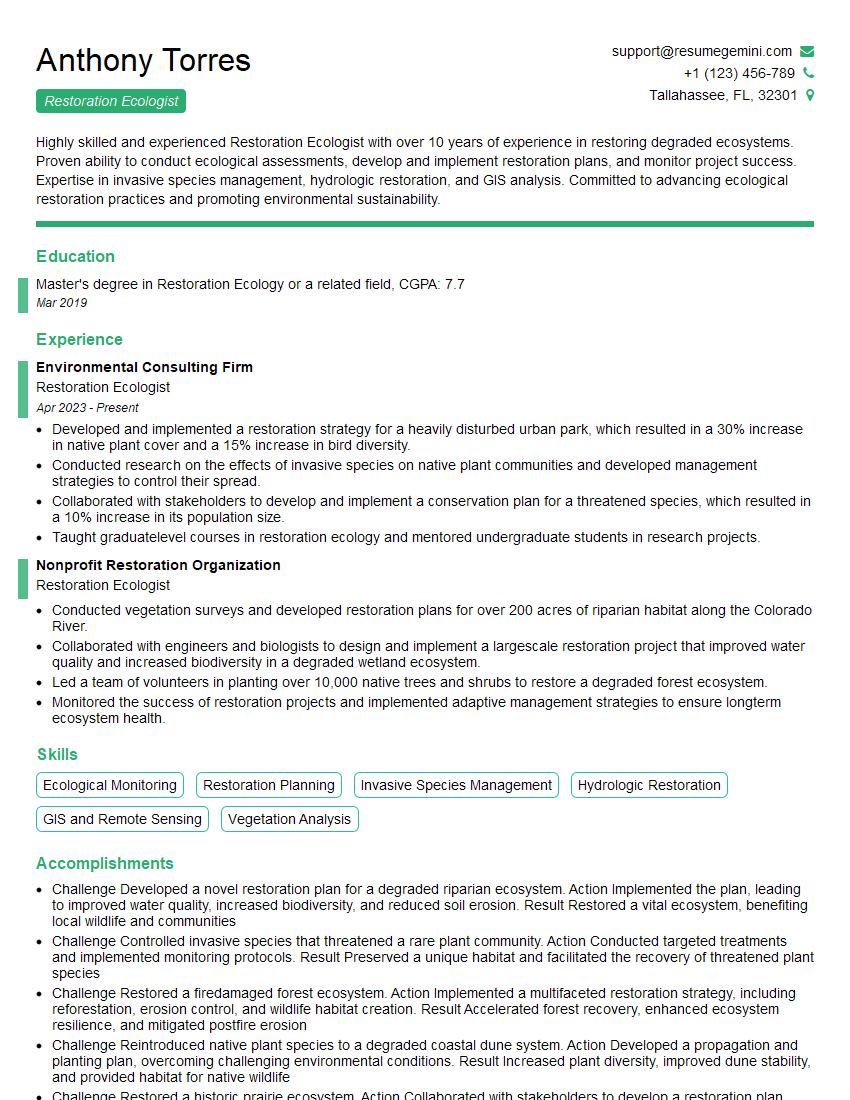
Restoration Ecologist Resume Sample
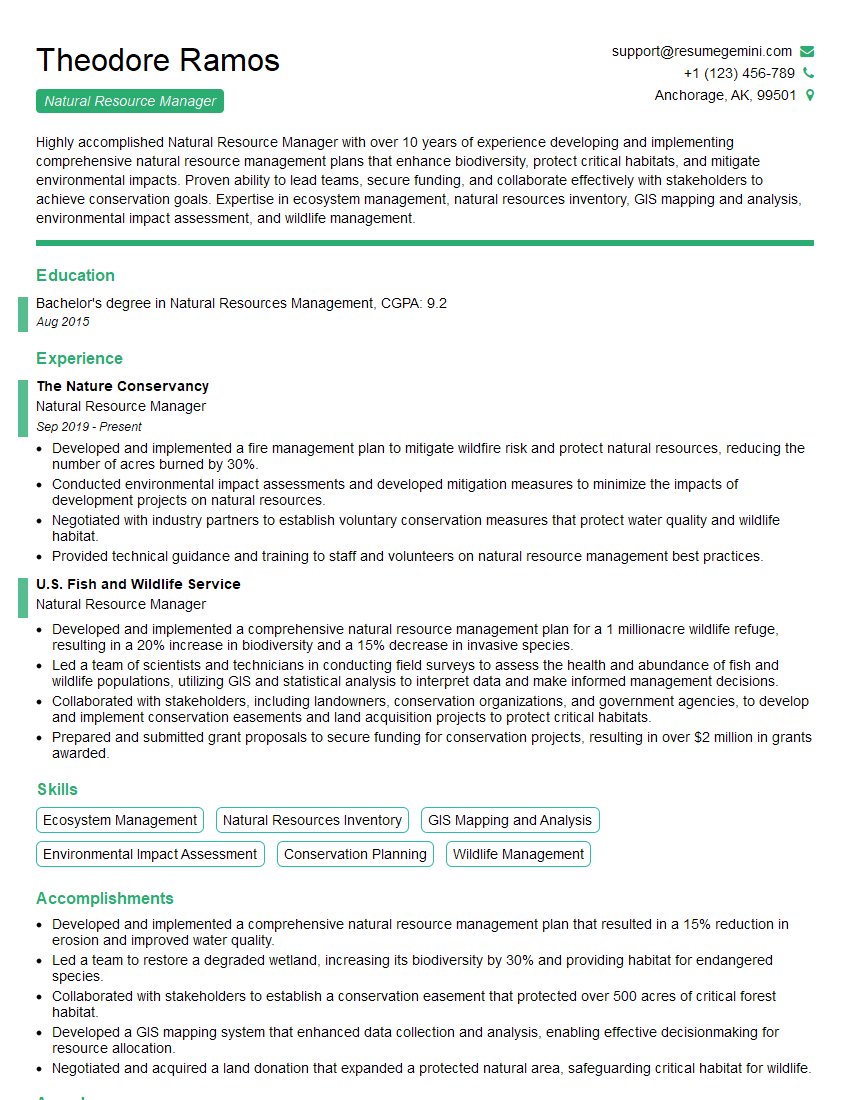
Natural Resource Manager Resume Sample

Environmental Educator Resume Sample
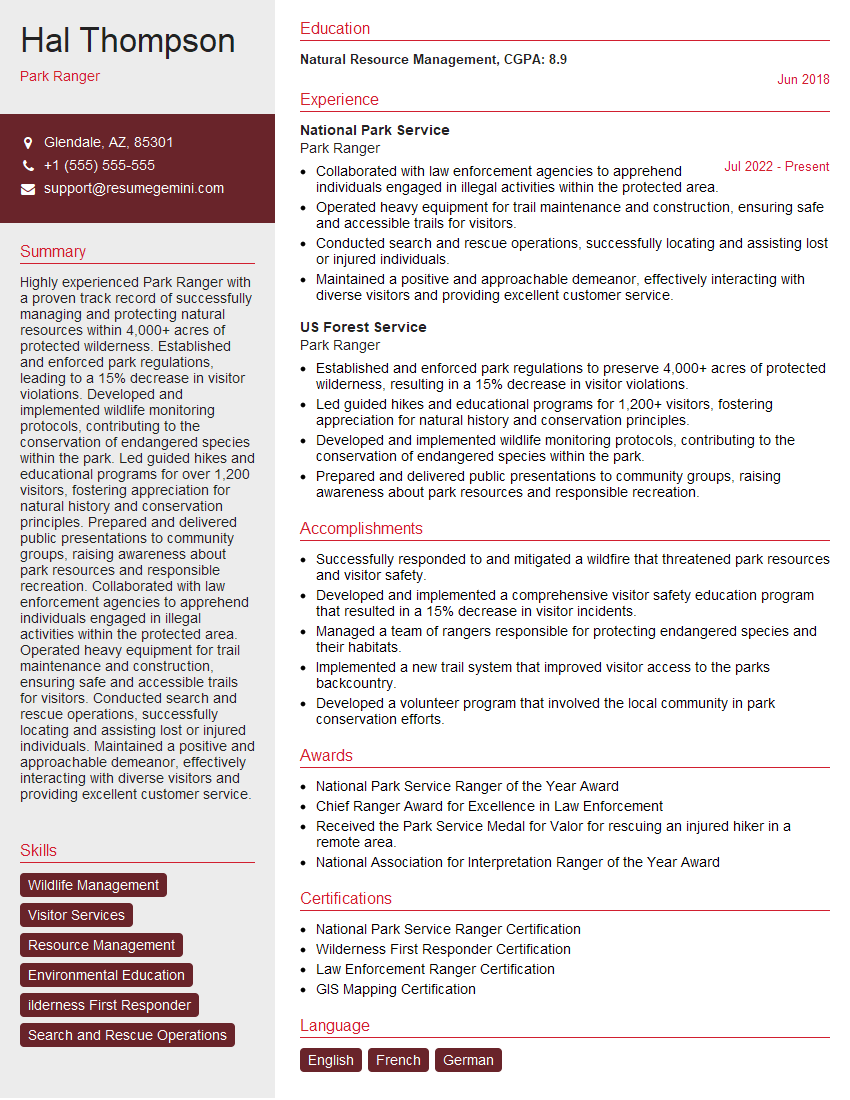
Park Ranger Resume Sample
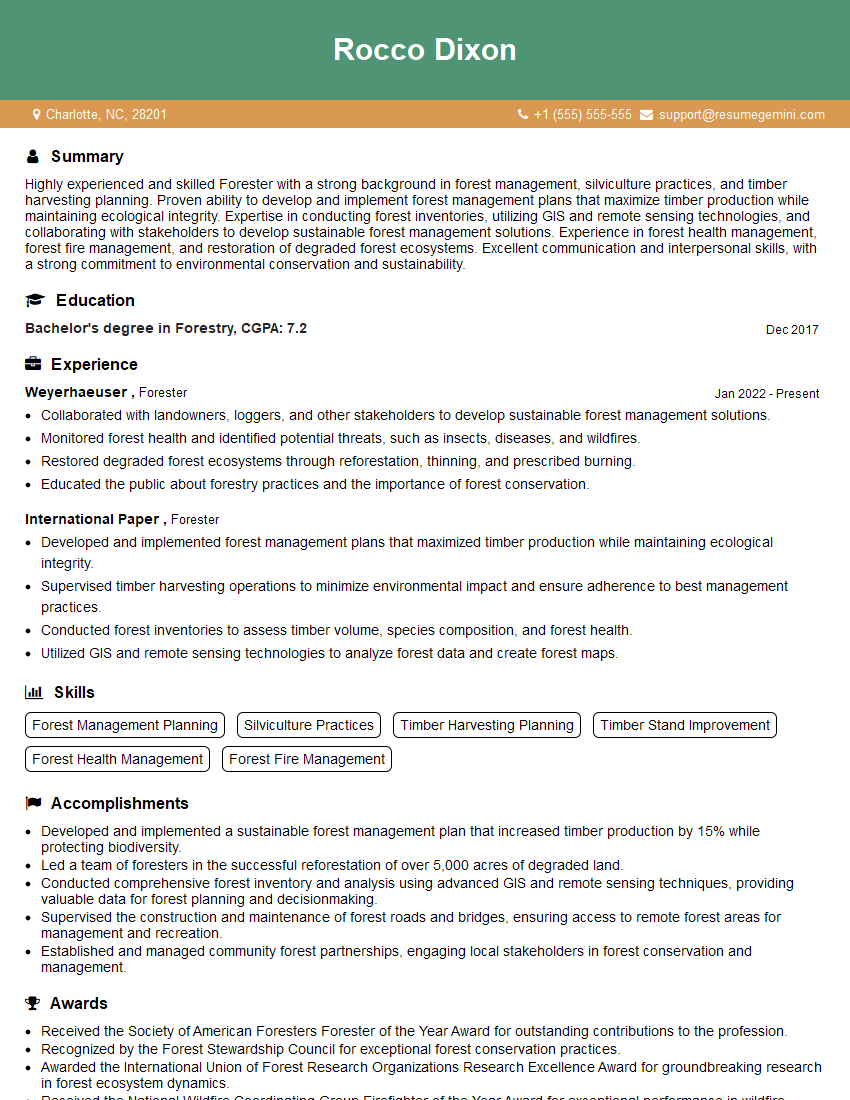
Forester Resume Sample
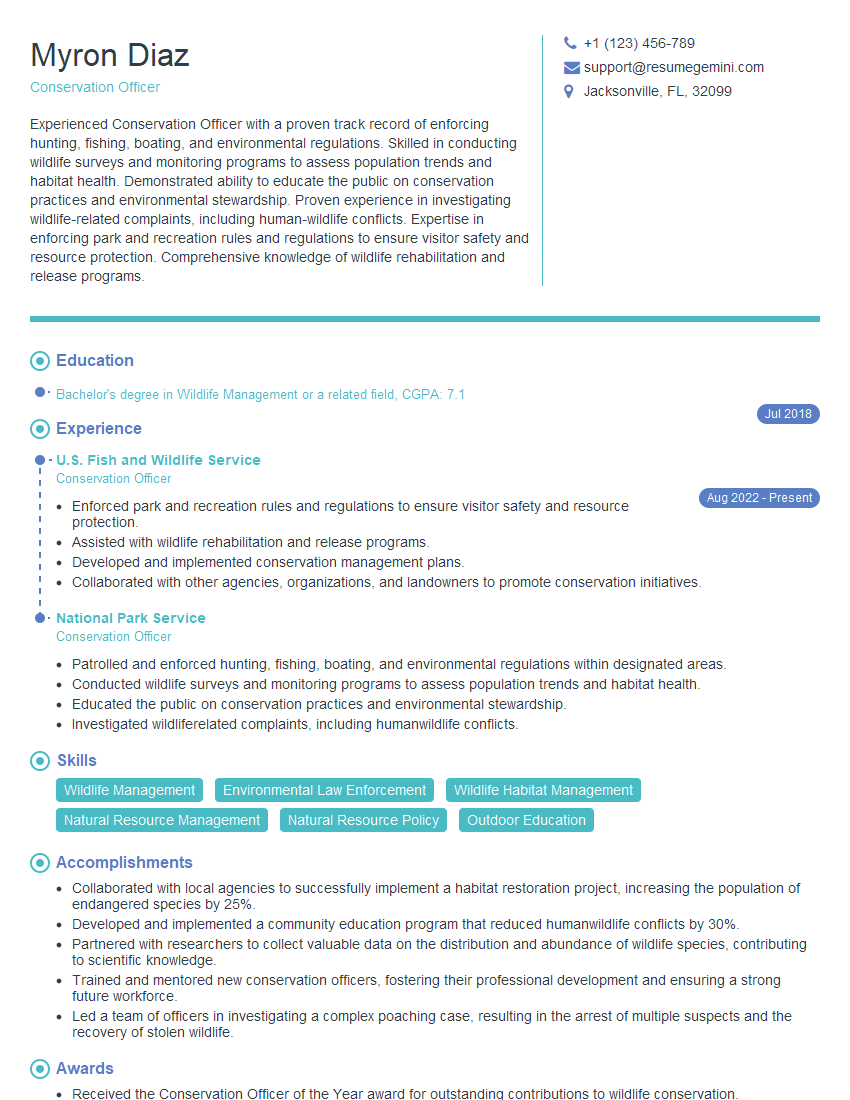
Conservation Officer Resume Sample
Explore more articles
Users Rating of Our Blogs
Share Your Experience
We value your feedback! Please rate our content and share your thoughts (optional).
What Readers Say About Our Blog
To the interviewgemini.com Webmaster.
Very helpful and content specific questions to help prepare me for my interview!
Thank you
To the interviewgemini.com Webmaster.
This was kind of a unique content I found around the specialized skills. Very helpful questions and good detailed answers.
Very Helpful blog, thank you Interviewgemini team.