Feeling uncertain about what to expect in your upcoming interview? We’ve got you covered! This blog highlights the most important Remote Sensing and Earth Observation interview questions and provides actionable advice to help you stand out as the ideal candidate. Let’s pave the way for your success.
Questions Asked in Remote Sensing and Earth Observation Interview
Q 1. Explain the difference between active and passive remote sensing.
The core difference between active and passive remote sensing lies in how they acquire data about the Earth’s surface. Think of it like taking a photograph versus using a flashlight to illuminate a scene and then observing the reflection.
Passive remote sensing systems, like cameras, detect naturally emitted or reflected electromagnetic radiation (EMR). The sun is the primary source of EMR in this case. Examples include Landsat and Sentinel satellites, which capture the sun’s light reflected from the Earth’s surface. The sensor simply ‘receives’ the energy.
Active remote sensing systems, on the other hand, emit their own EMR and then measure the energy reflected back. Imagine shining a laser pointer on an object and observing the scattered light. LiDAR (Light Detection and Ranging) and radar are prime examples. They actively send out signals and measure the return, allowing for data acquisition regardless of sunlight conditions.
In essence, passive sensors rely on the sun’s illumination, while active sensors provide their own illumination source. This difference drastically influences data acquisition capabilities and the types of applications each approach is best suited for.
Q 2. Describe various spectral resolutions and their applications.
Spectral resolution refers to the ability of a sensor to discriminate between small wavelength intervals of electromagnetic radiation. A higher spectral resolution means a sensor can distinguish finer details within the electromagnetic spectrum. This is analogous to having a higher resolution camera that captures more detailed colors.
Various spectral resolutions include:
- Low Spectral Resolution: Sensors like GOES (Geostationary Operational Environmental Satellites) have a broad range of wavelengths grouped together, typically used for large-scale weather monitoring and atmospheric studies. It’s like seeing a general picture of the sky without many color distinctions.
- Medium Spectral Resolution: Landsat and Sentinel-2 sensors fall into this category. They capture data in several distinct spectral bands, offering more detailed information about land cover. This is like seeing a detailed photo of a landscape with clear differentiation of colors.
- High Spectral Resolution: Hyperspectral sensors, like AVIRIS (Airborne Visible/Infrared Imaging Spectrometer), provide hundreds of very narrow spectral bands, allowing for highly precise identification of materials. It’s like examining a small sample under a microscope, revealing very detailed spectral signatures.
Applications vary significantly depending on spectral resolution:
- Low Resolution: Weather forecasting, climate monitoring.
- Medium Resolution: Land cover classification, vegetation monitoring, urban planning.
- High Resolution: Mineral exploration, precision agriculture, environmental monitoring (e.g., detecting pollutants).
Q 3. What are the advantages and disadvantages of different satellite sensors (e.g., Landsat, Sentinel, MODIS)?
Each satellite sensor has unique advantages and disadvantages, making them suited for different applications. Let’s compare Landsat, Sentinel, and MODIS:
Landsat:
- Advantages: Long-term historical data archive, high spatial resolution (useful for detailed analysis), widely used and well-understood.
- Disadvantages: Relatively low revisit frequency (meaning you have to wait longer for another image), data acquisition can be expensive.
Sentinel:
- Advantages: Free and open-access data, high revisit frequency (frequent image acquisitions are a major advantage), multiple sensors covering different spectral ranges.
- Disadvantages: Data volume can be overwhelming, requires significant processing power, not as long of an historical record as Landsat.
MODIS:
- Advantages: High temporal resolution (frequent data acquisition), global coverage, ideal for monitoring large-scale processes like deforestation or climate change.
- Disadvantages: Relatively low spatial resolution (less detail), data is more aggregated.
The choice of sensor depends entirely on the project’s objectives and requirements. If high detail is needed, Landsat might be preferred. If frequent updates are critical, Sentinel is better. If large-scale monitoring is the goal, MODIS is the superior choice. Each satellite system fills a unique niche in the remote sensing toolbox.
Q 4. Explain the concept of atmospheric correction in remote sensing.
Atmospheric correction is a crucial preprocessing step in remote sensing, aiming to remove or minimize the effects of the atmosphere on satellite imagery. The atmosphere absorbs and scatters radiation, distorting the signal reflected from the Earth’s surface. Imagine looking at an object underwater; the water distorts your view. Atmospheric correction is like removing the water to see the object clearly.
Several methods exist, ranging from simple to complex:
- Dark Object Subtraction: A simple method, assuming the darkest pixels in the image represent zero reflectance.
- Empirical Line Methods: Using atmospheric models and ground measurements to estimate atmospheric effects.
- Radiative Transfer Models: Sophisticated methods that simulate the radiation transport through the atmosphere, providing a more accurate correction, but requiring detailed atmospheric profiles.
Without atmospheric correction, the spectral signatures of objects on the Earth’s surface will be inaccurate, potentially leading to errors in classification and analysis. It’s an essential step to ensure reliable results from remote sensing data.
Q 5. How do you handle cloud cover in satellite imagery?
Cloud cover is a major challenge in satellite imagery because clouds obscure the ground surface, preventing data acquisition. Several strategies are employed to handle this:
- Cloud Masking: Identifying and removing cloud-covered areas from the image. Various algorithms use spectral thresholds and texture analysis to distinguish clouds from the Earth’s surface.
- Image Mosaicking: Combining multiple images acquired at different times to create a composite image with minimal cloud cover. This is like patching together different parts of a puzzle to obtain a complete picture.
- Cloud Filling/Interpolation: Using neighboring cloud-free pixels or statistical models to estimate the reflectance of cloud-covered areas. This is a more advanced technique and is generally not as reliable as cloud masking.
The best approach depends on factors like the desired accuracy, the amount of cloud cover, and the availability of cloud-free images. Sometimes, selecting suitable images with minimal cloud cover can be the simplest solution. Cloud removal is an active area of research, with ongoing improvements in algorithms and techniques.
Q 6. Describe different image enhancement techniques.
Image enhancement techniques aim to improve the visual quality and information content of satellite imagery. These techniques can enhance contrast, sharpness, and reduce noise. They can be broadly classified as:
- Spatial Enhancement: Techniques focusing on spatial characteristics of the image. Examples include:
- Filtering: Removing noise (e.g., median filter) or sharpening edges (e.g., high-pass filter).
- Sharpening: Techniques that improve image sharpness (e.g., Unsharp Masking).
- Spectral Enhancement: Techniques working in the spectral domain (bands of the imagery).
- Contrast Stretching: Enhancing the dynamic range of pixel values to improve contrast.
- Principal Component Analysis (PCA): Reducing data dimensionality and highlighting variations.
The selection of techniques depends on the image characteristics and the specific application. For instance, filtering might be used to reduce noise in noisy imagery, while contrast stretching enhances the visibility of subtle features.
Q 7. Explain the process of image classification and different classification methods.
Image classification is the process of assigning predefined classes or categories to pixels in a satellite image, based on their spectral characteristics. Imagine sorting a pile of colored candies by color—each candy represents a pixel, and each color represents a land cover class.
Several classification methods exist:
- Supervised Classification: Requires training data (samples of known classes) to ‘train’ the classifier. Common algorithms include:
- Maximum Likelihood Classification: Assigns pixels to the class with the highest probability based on statistical models.
- Support Vector Machines (SVM): A powerful algorithm effective in high-dimensional spaces.
- Unsupervised Classification: Does not require training data. The algorithm automatically groups pixels based on their spectral similarity. K-means clustering is a popular example.
The process typically involves:
- Preprocessing: Atmospheric correction, geometric correction, etc.
- Feature selection/extraction: Choosing or calculating relevant spectral features.
- Classification: Applying the chosen algorithm.
- Accuracy assessment: Evaluating the quality of the classification using ground truth data.
The choice of method depends on data availability, computational resources, and the desired level of accuracy. Supervised classification often provides higher accuracy but requires significant ground truth data, while unsupervised classification is faster but may require more interpretation.
Q 8. What are the common GIS software packages used in remote sensing?
Several Geographic Information System (GIS) software packages are commonly used in remote sensing, each offering unique strengths and capabilities. The choice often depends on the specific project needs, budget, and user familiarity.
- ArcGIS: A comprehensive suite from Esri, widely regarded as the industry standard. It excels in spatial analysis, data management, and visualization, offering powerful tools for handling various remote sensing data formats. For instance, ArcGIS Pro allows for advanced image processing, classification, and change detection analysis.
- QGIS: A free and open-source alternative to ArcGIS, offering comparable functionality with a steeper initial learning curve. Its strengths lie in its flexibility and community support, making it a cost-effective solution for many users. It supports a vast range of data formats and plugins for specialized tasks.
- ERDAS IMAGINE: A specialized remote sensing software package known for its strong image processing capabilities. It’s particularly useful for advanced tasks like orthorectification and atmospheric correction. Its intuitive interface makes it popular for professionals focused on image processing.
- ENVI: Another powerful commercial software package specializing in remote sensing image analysis. ENVI boasts advanced algorithms for image classification, spectral analysis, and hyperspectral data processing. It’s often the choice for research and applications requiring high-level image analysis.
Many projects integrate multiple software packages, leveraging the strengths of each for optimal results. For example, you might use ERDAS IMAGINE for initial image processing, then move to ArcGIS for spatial analysis and cartography.
Q 9. How do you perform geometric correction of satellite images?
Geometric correction is crucial in remote sensing, as satellite images are often distorted due to factors like sensor geometry, Earth’s curvature, and atmospheric effects. The process aligns the image to a known coordinate system, ensuring accurate spatial location.
It typically involves these steps:
- Control Point Selection: Identifying points with known geographic coordinates (latitude and longitude) in both the satellite image and a reference map (e.g., a topographic map or higher-resolution imagery).
- Transformation Model Selection: Choosing a mathematical model (e.g., polynomial transformation, affine transformation) to map the image coordinates to the geographic coordinates. The complexity of the model depends on the degree of distortion. A simple affine transformation is suitable for minor distortions, while higher-order polynomial transformations are used for significantly distorted images.
- Transformation Parameter Estimation: Calculating the parameters of the selected transformation model using the control points. This involves solving a system of equations to find the coefficients that minimize the differences between the image and reference coordinates.
- Resampling: Applying the transformation model to each pixel in the image, assigning new geographic coordinates. This often involves interpolation techniques (nearest neighbor, bilinear, cubic convolution) to estimate pixel values at the new locations. The choice of interpolation method affects the accuracy and smoothness of the corrected image.
For example, imagine a satellite image of a city with roads. You’d identify intersections or landmarks on both the image and a map, use these as control points, and apply a transformation to straighten the roads and accurately represent their geographic positions. Software like ArcGIS or ENVI automates these steps, offering various tools and algorithms for efficient geometric correction.
Q 10. Explain the concept of spatial resolution and its importance.
Spatial resolution refers to the size of the smallest discernible detail in a remotely sensed image. It’s essentially the ground area represented by a single pixel. A higher spatial resolution means each pixel covers a smaller area, providing finer details, while a lower resolution means each pixel covers a larger area, resulting in a coarser image.
Importance:
- Detail Level: Higher resolution allows for identification of smaller features and more accurate mapping. Imagine differentiating individual trees in a forest versus seeing just a large green blob. This is the difference between high and low spatial resolution.
- Accuracy: High spatial resolution improves the accuracy of measurements and classification. For example, measuring the width of a river or accurately classifying land cover types is easier with higher resolution.
- Application Suitability: The choice of spatial resolution depends entirely on the application. Mapping large-scale features like forest cover may require lower resolution, while urban planning or precision agriculture needs much higher resolution.
For instance, a satellite with a 1-meter spatial resolution can differentiate individual buildings in a city, whereas one with a 30-meter resolution might only show large blocks of urban areas. The appropriate resolution is critical in selecting the right satellite imagery for a specific task.
Q 11. Describe different types of map projections and their applications.
Map projections are methods of representing the three-dimensional Earth’s surface onto a two-dimensional map. Since it’s impossible to perfectly flatten a sphere without distortion, various projections are used, each with its own strengths and weaknesses regarding preserving shape, area, distance, or direction.
Types of Map Projections:
- Cylindrical Projections (e.g., Mercator): Imagine wrapping a cylinder around the globe. These projections preserve direction but distort area significantly at higher latitudes. The Mercator projection is famous for its use in navigation due to its preservation of direction.
- Conic Projections (e.g., Albers Equal-Area): Projecting the globe onto a cone. These are often used for mid-latitude regions, striking a balance between area and shape preservation. The Albers Equal-Area conic projection is suitable for mapping large areas with relatively minimal distortion.
- Azimuthal Projections (e.g., Stereographic): Projecting the globe onto a plane tangent to a point on the globe. These are best for representing smaller areas centered around a specific point. A stereographic projection is often used for mapping polar regions.
Applications:
- Navigation: Mercator projection’s accurate direction preservation makes it suitable for navigation charts.
- Thematic Mapping: Albers Equal-Area projection is often used for thematic maps where accurate area representation is critical (e.g., population density maps).
- Regional Mapping: Conic projections are well-suited for mapping mid-latitude regions such as continents or large countries.
- Polar Regions: Azimuthal projections are ideal for maps of polar regions.
Choosing the right projection is vital to avoid misinterpretations in maps. The type of distortion acceptable depends heavily on the application. For instance, area distortion is less of a concern when mapping road networks, but is critical for representing land use changes.
Q 12. What are the ethical considerations in using remote sensing data?
Ethical considerations in using remote sensing data are crucial to ensure responsible and equitable applications. Key issues include:
- Privacy: High-resolution imagery can potentially reveal sensitive information about individuals or private properties. Careful consideration of privacy implications and adherence to relevant regulations are essential. Techniques like anonymization or data aggregation can mitigate these concerns.
- Security: Remote sensing data can be misused for malicious purposes, such as targeting infrastructure or planning military operations. Data security measures are needed to prevent unauthorized access and misuse.
- Data Bias and Representation: Algorithms used in analyzing remote sensing data can inherit biases from the data itself or from the choices made during data processing. This can lead to skewed results or unfair outcomes, particularly when applied to social and environmental issues. Careful attention to algorithm design and validation is vital.
- Informed Consent: Obtaining informed consent, especially when dealing with imagery involving identifiable individuals or communities, is crucial. Openness about data use and sharing practices is equally important.
- Environmental Impact: Satellite operations themselves can have an environmental impact, although generally minimal compared to other data-gathering techniques. Considering the carbon footprint and potential impact on wildlife from sensor operation should be considered in large-scale projects.
Responsible use of remote sensing data necessitates transparency, accountability, and a commitment to ethical data handling practices. Clear guidelines and regulations are vital for navigating these complex ethical dilemmas.
Q 13. How do you assess the accuracy of remote sensing data?
Assessing the accuracy of remote sensing data is critical for ensuring its reliability in applications. This involves comparing the data to ground truth information or independent data sources.
Methods include:
- Ground Truthing: Directly collecting data on the ground at specific locations to compare with the remotely sensed data. This can involve field surveys, GPS measurements, or sample collection. For instance, validating land cover classification by physically visiting sites and verifying the land cover type.
- Accuracy Assessment Metrics: Quantitative measures such as overall accuracy, producer’s accuracy (correctly classifying a feature), user’s accuracy (correctly identifying a feature), kappa coefficient (measures agreement beyond chance), and root mean square error (RMSE) for continuous variables are commonly used. These are computed using a confusion matrix, comparing the classified image to the ground truth data.
- Comparison with Independent Data Sources: Comparing the remote sensing data with other data sources like maps, census data, or other remotely sensed data of higher accuracy. This provides an independent assessment of the data’s validity.
- Error Propagation Analysis: Considering the potential sources and propagation of errors during the data acquisition, processing, and analysis stages. This helps to understand how errors in different stages might affect the final results.
The appropriate accuracy assessment method depends on the type of remote sensing data and the application. A comprehensive accuracy assessment report should include a description of the methods used, results, and any limitations.
Q 14. Explain the concept of change detection using remote sensing.
Change detection using remote sensing involves identifying and analyzing differences in the Earth’s surface features over time. This is achieved by comparing remotely sensed data acquired at different times.
Methods include:
- Image Differencing: Subtracting the pixel values of two images from different time periods. Areas with significant differences will have larger absolute values, highlighting changes. Simple but can be sensitive to atmospheric effects and radiometric variations.
- Image Ratioing: Dividing the pixel values of two images. This method is less sensitive to illumination variations compared to differencing.
- Post-Classification Comparison: Classifying each image separately and then comparing the classification maps to identify changes in land cover or other features. This offers more detailed information about the types of changes.
- Principal Component Analysis (PCA): A statistical technique used to reduce the dimensionality of the data and highlight the changes between images. It is particularly useful when dealing with multispectral or hyperspectral data.
Applications:
- Urban Sprawl Monitoring: Tracking the expansion of cities over time.
- Deforestation Detection: Identifying areas of forest loss and gain.
- Glacier Monitoring: Observing changes in glacier extent and mass.
- Agriculture: Monitoring crop growth and yield changes.
The choice of method depends on the type of changes expected, the data quality, and the desired level of detail. For example, monitoring subtle changes in vegetation might require more advanced techniques like PCA, whereas tracking large-scale deforestation can use image differencing.
Q 15. Describe your experience with LiDAR data processing and analysis.
My experience with LiDAR data processing and analysis is extensive. LiDAR (Light Detection and Ranging) provides incredibly detailed three-dimensional information about the Earth’s surface. My workflow typically begins with data pre-processing, which includes noise removal, filtering, and georeferencing. I utilize software like ArcGIS Pro, QGIS, and specialized LiDAR processing tools like LAStools to perform these tasks. For example, I’ve used LAStools to classify ground points from non-ground points, a crucial step for creating accurate Digital Terrain Models (DTMs). Following pre-processing, I move to analysis. This could involve generating a variety of products, including DTMs, Digital Surface Models (DSMs), canopy height models (CHMs), and intensity images. I’ve used CHMs to assess forest biomass in conservation projects and DTMs to analyze floodplains and erosion patterns. Analyzing intensity data allows me to differentiate between various surface materials, greatly improving classification accuracy. Finally, visualization and presentation are key. I use various software packages to create maps and 3D models to effectively communicate findings to clients and stakeholders. A recent project involved creating a 3D model of a historical site using LiDAR data to assist in restoration efforts. The detailed point cloud allowed us to accurately model the site’s original structure and identify areas needing attention.
Career Expert Tips:
- Ace those interviews! Prepare effectively by reviewing the Top 50 Most Common Interview Questions on ResumeGemini.
- Navigate your job search with confidence! Explore a wide range of Career Tips on ResumeGemini. Learn about common challenges and recommendations to overcome them.
- Craft the perfect resume! Master the Art of Resume Writing with ResumeGemini’s guide. Showcase your unique qualifications and achievements effectively.
- Don’t miss out on holiday savings! Build your dream resume with ResumeGemini’s ATS optimized templates.
Q 16. How do you interpret spectral signatures?
Interpreting spectral signatures is fundamental to remote sensing. Each material on the Earth’s surface reflects and absorbs electromagnetic radiation differently, resulting in a unique spectral signature. Think of it like a fingerprint for each material. For instance, healthy vegetation reflects strongly in the near-infrared (NIR) region due to chlorophyll’s properties, while absorbing strongly in the visible red and blue regions. Conversely, water absorbs most of the visible and near-infrared wavelengths, resulting in low reflectance values. To interpret these signatures, I use spectral libraries and indices. Spectral libraries contain the known spectral reflectance of various materials which I compare to the measured data. Indices like the Normalized Difference Vegetation Index (NDVI) – calculated from red and NIR bands – provide a quantitative measure of vegetation health. High NDVI values indicate healthy vegetation, while low values suggest stress or sparse vegetation. I often utilize software such as ENVI or ArcGIS to perform these analyses. For example, in a recent project involving precision agriculture, NDVI was used to identify areas requiring irrigation, fertilizer, or pest control, resulting in efficient resource allocation and optimized crop yield.
Q 17. What are the applications of remote sensing in agriculture?
Remote sensing plays a crucial role in modern agriculture. Its applications are vast, ranging from crop monitoring and yield prediction to precision farming and irrigation management. For example, multispectral imagery from satellites or drones can be used to monitor crop health throughout the growing season. By analyzing spectral indices like NDVI, we can assess the vigor and stress levels of crops, enabling timely interventions. Furthermore, remote sensing data can be integrated with Geographic Information Systems (GIS) to create spatially explicit maps of crop yields, helping farmers make informed decisions about planting and harvesting. This has been particularly helpful in variable-rate application of fertilizer or pesticides, reducing input costs and environmental impact. Also, techniques like thermal imaging can help optimize irrigation schedules, reducing water waste, while high-resolution imagery can assist in weed detection and monitoring crop diseases, helping to prevent large-scale crop failures.
Q 18. What are the applications of remote sensing in urban planning?
Remote sensing is indispensable for effective urban planning. High-resolution imagery, often from satellites or aerial platforms, provides detailed information about land use and land cover, population density, infrastructure, and environmental conditions. This allows urban planners to identify areas for development, monitor urban sprawl, assess the impact of urban growth on the environment, and manage resources efficiently. For example, analyzing remotely sensed data can help identify suitable locations for new infrastructure projects like roads, schools, and hospitals, based on factors such as population density, accessibility, and environmental constraints. Similarly, analyzing land cover changes over time, from satellite time series, allows planners to track urban growth patterns and assess its implications for urban sustainability, such as mitigating heat island effects or managing traffic congestion. In addition, remote sensing can aid in disaster response and recovery by assessing damage caused by natural disasters and providing crucial data to support relief efforts.
Q 19. How do you use remote sensing data for environmental monitoring?
Remote sensing is an invaluable tool for environmental monitoring. It provides a synoptic view of large areas, enabling efficient and cost-effective monitoring of various environmental parameters. For instance, satellite imagery is crucial for monitoring deforestation, tracking changes in land cover, and assessing biodiversity. I often use time-series analysis of satellite data to observe long-term changes in vegetation patterns, detect deforestation rates, and analyze urban sprawl’s impact on natural habitats. Similarly, remote sensing can be used to monitor air and water quality. For example, hyperspectral imagery can identify pollutant sources and track their dispersion, while thermal sensors can measure water surface temperature, vital for detecting thermal pollution. Another important application is monitoring natural disasters like floods, wildfires, and earthquakes, providing essential information for disaster response and assessing the extent of damage. In my experience, analyzing remotely sensed data has been critical in supporting environmental impact assessments, conservation planning, and climate change monitoring projects.
Q 20. Describe your experience with programming languages (e.g., Python) in remote sensing.
Python is my primary programming language for remote sensing tasks. Its versatility, coupled with a vast array of libraries specifically designed for geospatial data processing, makes it an indispensable tool. I leverage libraries like GDAL and Rasterio for reading, writing, and manipulating raster data, while libraries like GeoPandas provide efficient tools for vector data handling. For example, I frequently use GDAL to reproject and clip raster data to match specific project boundaries. Similarly, I use numpy and scipy for complex array operations required in image processing. Furthermore, libraries like scikit-learn are used for machine learning-based classification and regression tasks, vital for creating thematic maps and extracting meaningful information from remotely sensed data. matplotlib and seaborn are regularly used for creating informative visualizations of the results. For instance, I’ve developed custom Python scripts to automate large-scale processing of satellite imagery, significantly improving efficiency and reducing manual workload. A recent example involved developing a script to automatically detect and classify urban areas using machine learning, resulting in rapid and accurate city mapping.
import rasterio
with rasterio.open('image.tif') as src:
    # Process the raster data
Q 21. Explain your understanding of object-based image analysis (OBIA).
Object-based image analysis (OBIA) is a powerful approach to analyzing remotely sensed data that moves beyond pixel-based classification. Instead of treating each pixel independently, OBIA segments the image into meaningful objects based on spectral, spatial, and contextual information. Think of it as grouping pixels that belong together based on their characteristics and relationships. This leads to improved classification accuracy and reduces noise, especially in heterogeneous landscapes. The process typically involves image segmentation, followed by object classification. Segmentation algorithms group pixels based on similarity, creating objects like buildings, trees, or roads. Then, these objects are classified based on their spectral properties, shape, texture, and contextual information. For example, I’ve used OBIA to classify urban areas with greater accuracy than pixel-based methods, distinguishing buildings from roads or vegetation more effectively. Software packages like eCognition and ArcGIS Pro provide tools for OBIA. The advantages of OBIA include its ability to incorporate contextual information, resulting in a more accurate and meaningful representation of the landscape. The use of object-level features allows for more robust classification, reducing the impact of spectral variability and noise.
Q 22. What are the limitations of remote sensing data?
Remote sensing data, while powerful, isn’t without its limitations. Think of it like taking a picture from a great distance – you’ll get a broad overview, but some details will be lost. These limitations can be broadly categorized into atmospheric, geometric, and sensor-related issues.
Atmospheric Effects: Clouds, haze, and aerosols scatter and absorb electromagnetic radiation, leading to reduced image clarity and inaccurate reflectance measurements. Imagine trying to photograph a landscape through a thick fog – the results would be obscured.
Geometric Distortions: The Earth’s curvature and sensor platform movement create geometric distortions in the images. This is like taking a panoramic photo – the edges might appear slightly warped. Corrections are often needed using ground control points or Digital Elevation Models (DEMs).
Sensor Limitations: Each sensor has a specific spectral range and spatial resolution. This means that some details might be missed, or the data might not be suitable for specific applications. For example, a sensor with low spatial resolution might not be able to distinguish between individual trees in a forest.
Temporal Resolution: The frequency of data acquisition can be a limiting factor, especially for monitoring rapidly changing phenomena. Satellite imagery might only be available every few days or weeks, making it difficult to capture short-term events.
Understanding these limitations is crucial for designing appropriate data acquisition strategies and applying appropriate correction techniques during data processing.
Q 23. How do you deal with data noise in remote sensing images?
Data noise in remote sensing images is like static on a radio – it obscures the true signal. It can stem from various sources, including atmospheric effects, sensor noise, and quantization errors. Dealing with it is crucial for accurate analysis. My approach usually involves a combination of techniques:
Filtering: Spatial filters, like median or Gaussian filters, smooth the image and reduce high-frequency noise. Think of it as blurring a slightly out-of-focus photograph to enhance clarity.
# Example using Python and OpenCV: blurred_image = cv2.GaussianBlur(noisy_image, (5,5), 0)Atmospheric Correction: Removing the effects of atmospheric scattering and absorption significantly reduces noise and improves the accuracy of reflectance measurements. This involves complex models and algorithms that correct for the atmospheric conditions at the time of image acquisition.
Data Transformation: Techniques like Principal Component Analysis (PCA) can reduce data dimensionality and highlight variations while minimizing noise. It’s like isolating the important features in a complex dataset to improve signal-to-noise ratio.
The specific method depends on the type and level of noise, the sensor characteristics, and the application. Often, a combination of techniques is employed for optimal results.
Q 24. Explain your experience with different data formats (e.g., GeoTIFF, NetCDF).
I have extensive experience working with various remote sensing data formats. Each format has its strengths and weaknesses, influencing the choice depending on the specific application and software available.
GeoTIFF: A widely used format that combines geospatial data with a TIFF image. It stores georeferencing information, making it straightforward to integrate with GIS software. It’s my go-to format for storing and sharing raster data, such as aerial photographs or satellite imagery.
NetCDF (Network Common Data Form): Ideal for storing multi-dimensional data, particularly time-series data from various sources. It’s exceptionally efficient for handling large datasets, like those from climate models or satellite missions. I’ve used it extensively in projects involving long-term environmental monitoring.
My workflow often involves converting between different formats depending on the processing steps and software requirements. For instance, I might convert a NetCDF file into a GeoTIFF to integrate it with a GIS application for visualization and spatial analysis.
Q 25. Describe your experience with different remote sensing platforms (e.g., UAVs, satellites).
My experience spans a range of remote sensing platforms, each offering unique capabilities and challenges. This diverse experience allows me to choose the optimal platform based on the project requirements.
UAVs (Unmanned Aerial Vehicles or Drones): I’ve extensively utilized UAVs for high-resolution data acquisition over smaller areas. Their flexibility allows for targeted data collection and quick turnaround times. This is especially useful for applications like precision agriculture, infrastructure inspection, and urban planning, where high spatial detail is needed.
Satellites: I have considerable experience with satellite data from various sources, including Landsat, Sentinel, and MODIS. These platforms offer broad spatial coverage and long-term temporal data, crucial for studying large-scale phenomena like deforestation, climate change, and urban sprawl. Each satellite has its own unique spectral bands and resolutions, necessitating careful sensor selection for the intended application.
The choice between UAVs and satellites depends on the scale of the study area, required spatial and temporal resolution, budget, and accessibility. Sometimes, a combination of both is employed for a synergistic approach, combining the high resolution of UAVs with the broad coverage of satellites.
Q 26. How do you ensure the quality and reliability of your remote sensing analysis?
Ensuring quality and reliability in remote sensing analysis is paramount. It’s not just about processing the data; it’s about understanding the limitations and uncertainties associated with it. My approach involves a rigorous quality control process that spans the entire workflow:
Data Pre-processing: This involves atmospheric correction, geometric rectification, and radiometric calibration to remove systematic errors and enhance data accuracy.
Accuracy Assessment: Comparing the remote sensing results with ground truth data (e.g., field measurements) is essential to validate the accuracy of the analysis. This often involves statistical methods to quantify the uncertainty.
Validation and Verification: Employing independent datasets or methods to cross-validate the results helps to strengthen the reliability of the findings. This might include comparing satellite data with data from other sensors or employing different analytical techniques.
Documentation: Meticulous record-keeping of all processing steps, parameters, and assumptions ensures transparency and reproducibility of the analysis. This includes maintaining comprehensive metadata and documenting all processing chains used.
By following these steps, I build confidence in the findings and ensure they are robust and reliable for decision-making.
Q 27. Explain your experience with time-series analysis of remote sensing data.
Time-series analysis is crucial for understanding dynamic processes using remote sensing data. Imagine tracking deforestation over several years – a single image wouldn’t suffice. I’ve used time-series analysis in numerous projects, employing several techniques:
Trend Analysis: Identifying long-term changes in vegetation cover, land use, or water resources. This typically involves calculating temporal statistics (e.g., mean, standard deviation) or fitting trend lines to time-series data.
Change Detection: Detecting abrupt changes, like wildfire events or urban expansion, by comparing images from different time points. Techniques such as image differencing or vegetation indices tracking are employed.
Phenology Monitoring: Studying seasonal changes in vegetation, such as leaf-on/leaf-off cycles or crop growth stages. This involves analyzing spectral signatures over time.
Software and Tools: I have experience utilizing specialized software and tools designed for time-series analysis, including Google Earth Engine (GEE) which allows processing of large satellite datasets efficiently.
Time-series analysis requires careful consideration of factors such as data consistency, cloud cover, and sensor variations over time. Robust pre-processing and quality control are critical to ensure accurate and reliable results.
Q 28. Describe your experience with 3D point cloud data processing
3D point cloud data processing is an exciting area within remote sensing, allowing the creation of highly detailed 3D models of the Earth’s surface. Think of it like creating a 3D digital twin of a landscape. My experience in this area involves several key aspects:
Data Acquisition: I’ve worked with data from various sources, including LiDAR (Light Detection and Ranging) and Structure from Motion (SfM) photogrammetry. LiDAR provides highly accurate point clouds, while SfM creates models from overlapping photographs.
Data Processing: This involves cleaning and filtering the point cloud to remove noise and outliers, classifying points into different land cover types (e.g., trees, buildings, ground), and creating digital surface models (DSMs) and digital terrain models (DTMs).
Software and Tools: I’m proficient in using software packages such as ArcGIS Pro, CloudCompare, and specialized LiDAR processing software for tasks like point cloud classification, registration, and filtering.
Applications: I’ve applied 3D point cloud data in various projects, including terrain modeling, urban planning, and volume estimation (e.g., calculating the volume of a stockpile of materials).
3D point cloud data analysis is computationally intensive, and the choice of algorithms and processing techniques depends on the data density, accuracy requirements, and the specific application.
Key Topics to Learn for Remote Sensing and Earth Observation Interview
- Electromagnetic Spectrum and Sensor Principles: Understanding the interaction of electromagnetic radiation with the Earth’s surface and atmosphere, including different sensor types (passive and active) and their spectral resolutions.
- Image Processing and Analysis: Mastering techniques like geometric correction, atmospheric correction, image classification (supervised and unsupervised), and change detection. Practical application: Analyzing satellite imagery to monitor deforestation.
- Remote Sensing Platforms and Data Acquisition: Familiarity with various satellite platforms (e.g., Landsat, Sentinel, MODIS) and their capabilities, data formats, and acquisition strategies.
- Geographic Information Systems (GIS): Proficiency in GIS software (e.g., ArcGIS, QGIS) for data integration, spatial analysis, and visualization of remote sensing data. Practical application: Creating maps showing areas affected by natural disasters.
- Specific Applications in your Field: Deepen your knowledge of the applications most relevant to your target roles (e.g., precision agriculture, urban planning, environmental monitoring). Consider case studies demonstrating your problem-solving abilities.
- Data Interpretation and Presentation: Developing strong skills in interpreting remotely sensed data and communicating your findings effectively through reports, presentations, and visualizations.
- Cloud Computing and Big Data: Understanding the use of cloud platforms (e.g., AWS, Google Cloud) for processing and managing large remote sensing datasets.
- Current Trends and Future Directions: Stay updated on advancements in remote sensing technology, such as AI/ML applications in Earth observation and new sensor technologies.
Next Steps
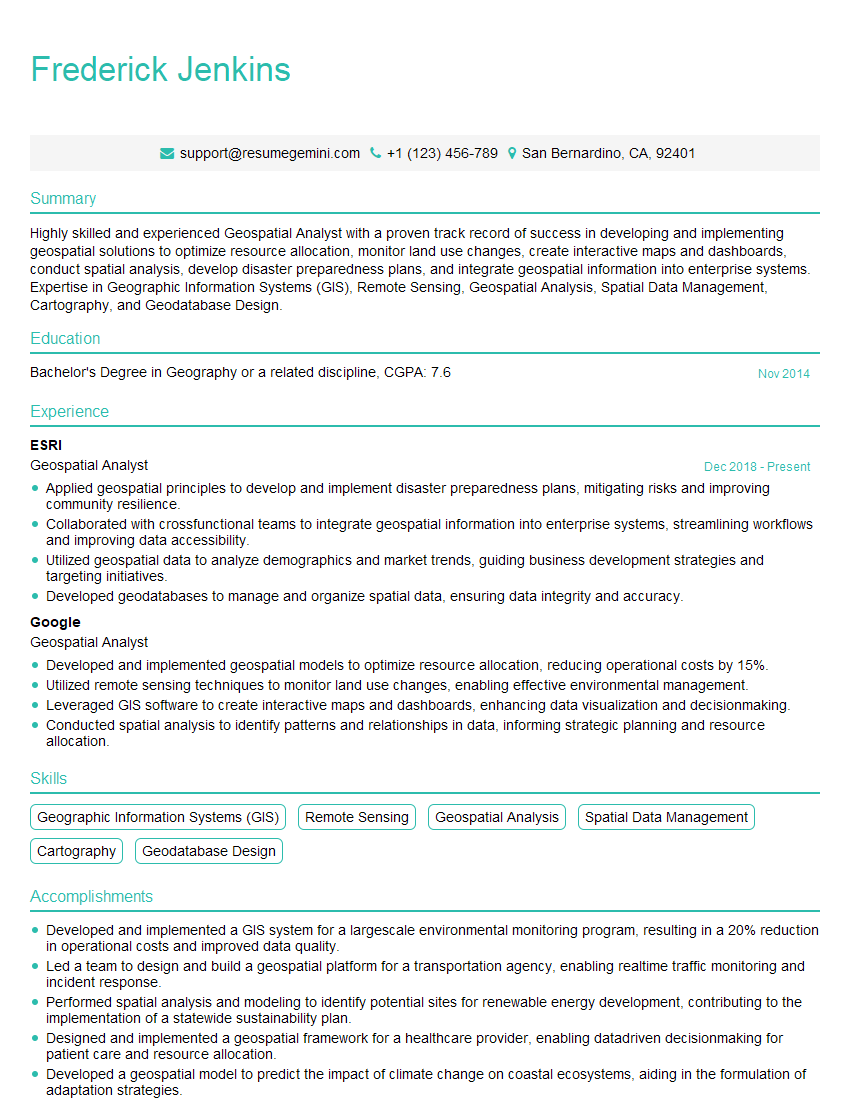
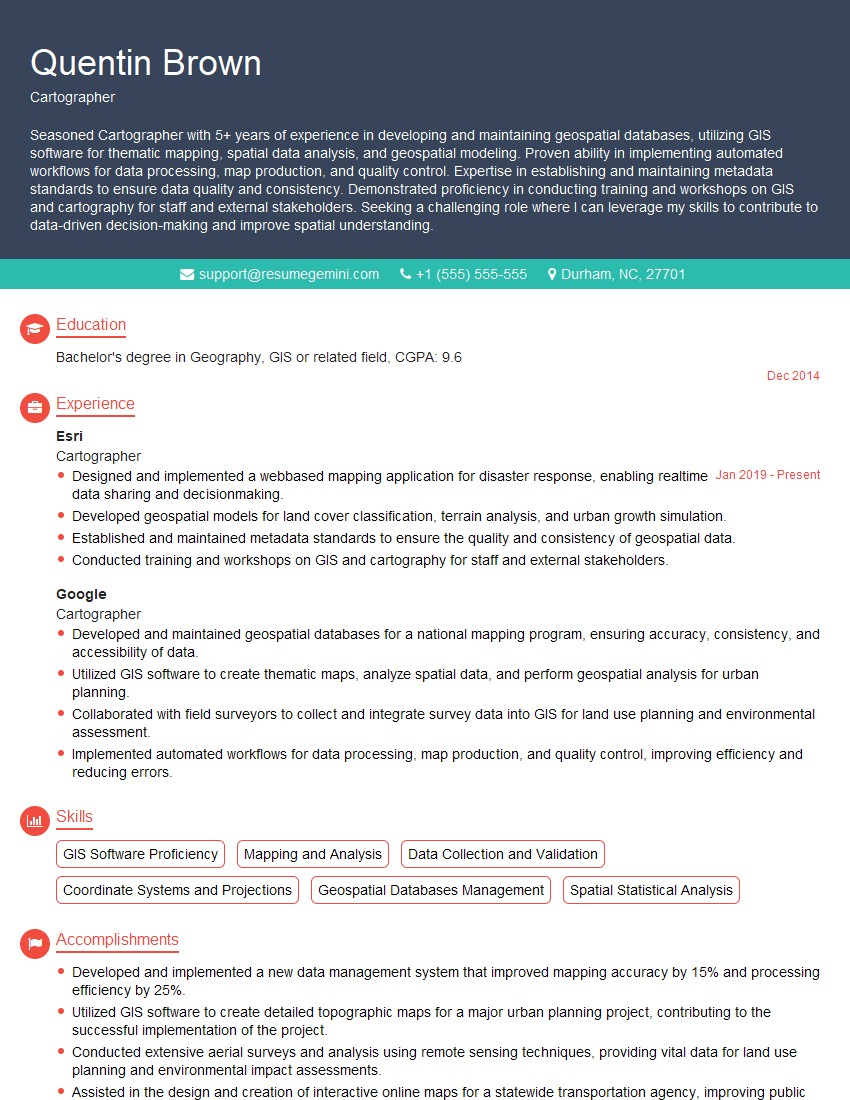
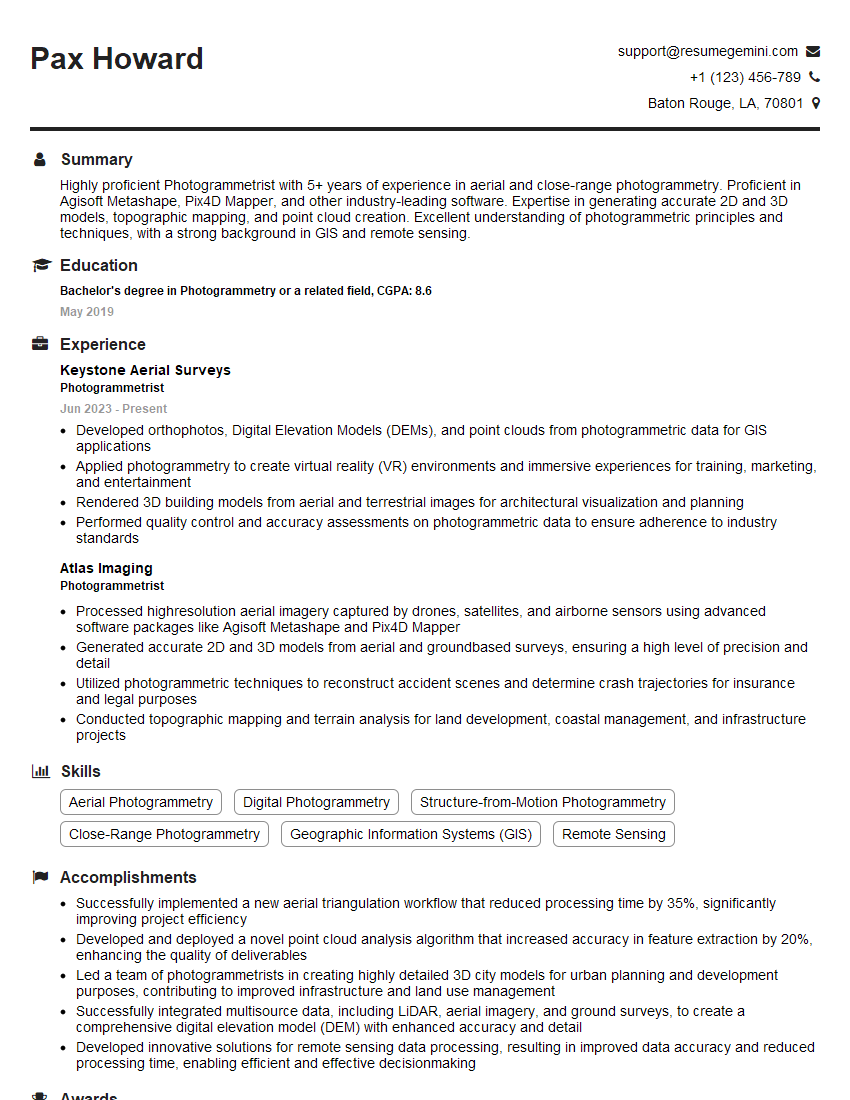
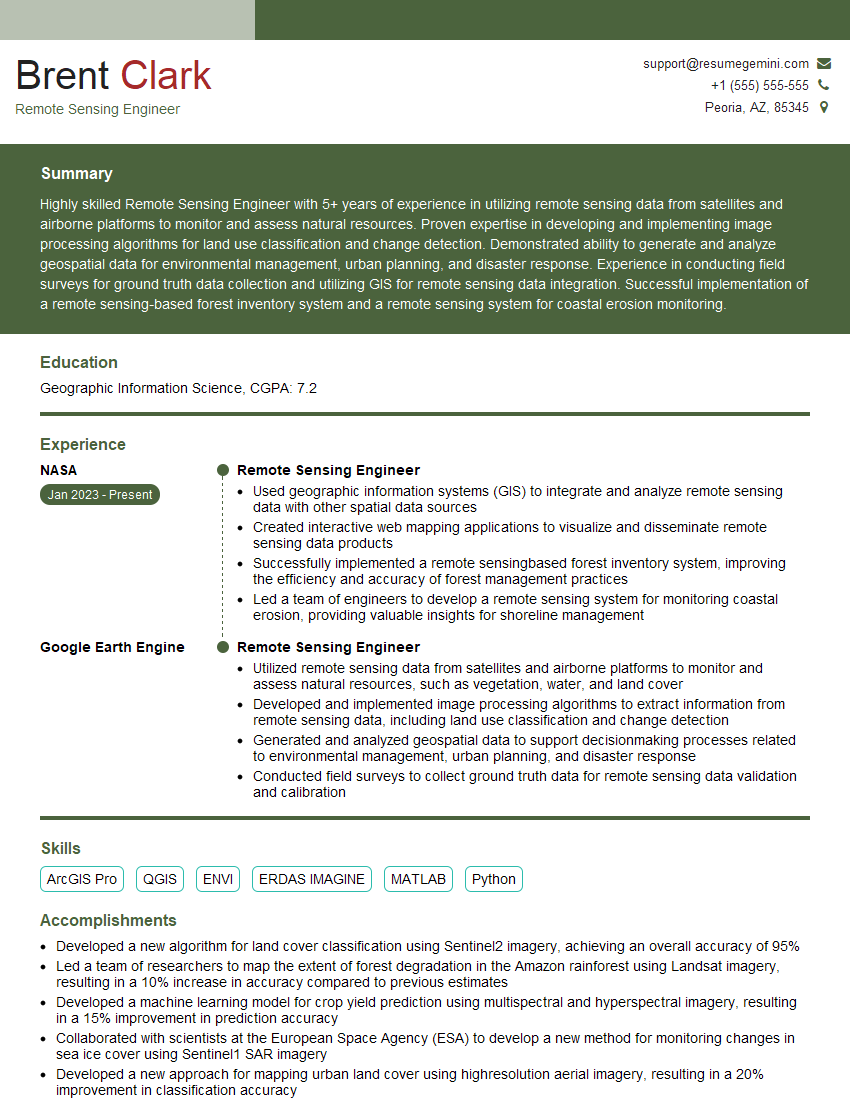
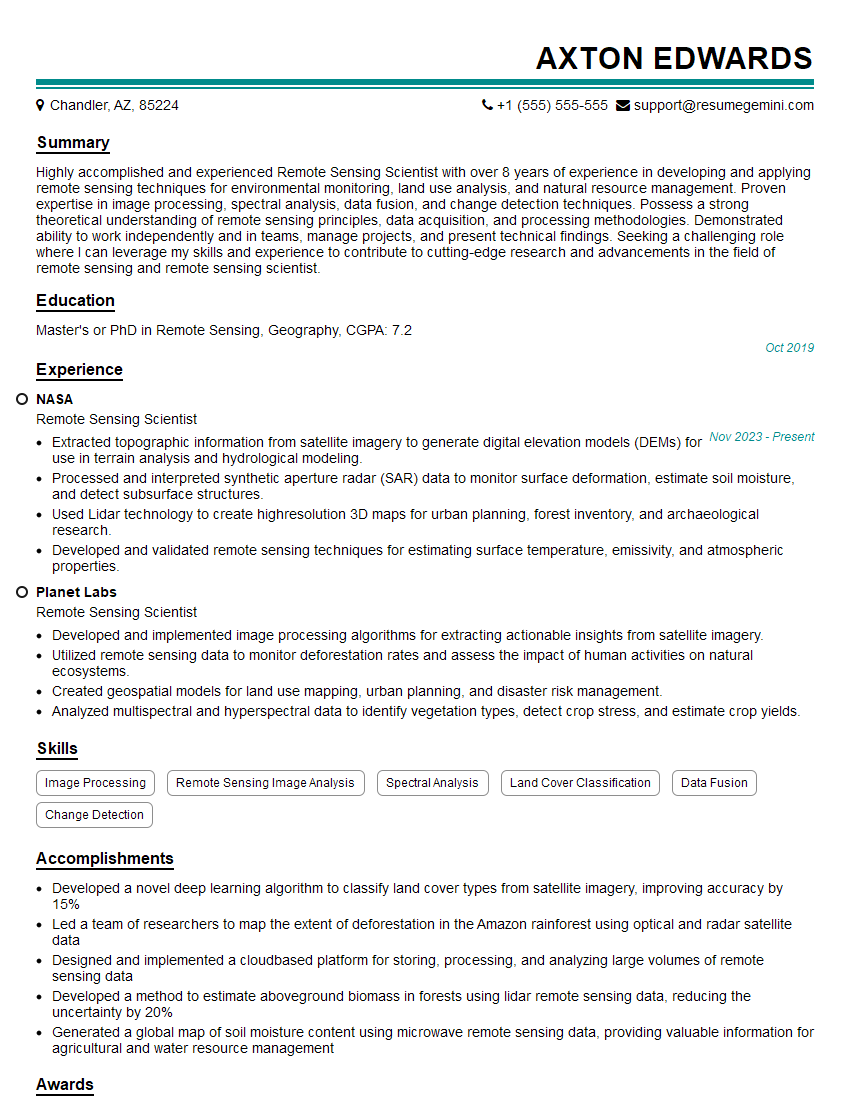
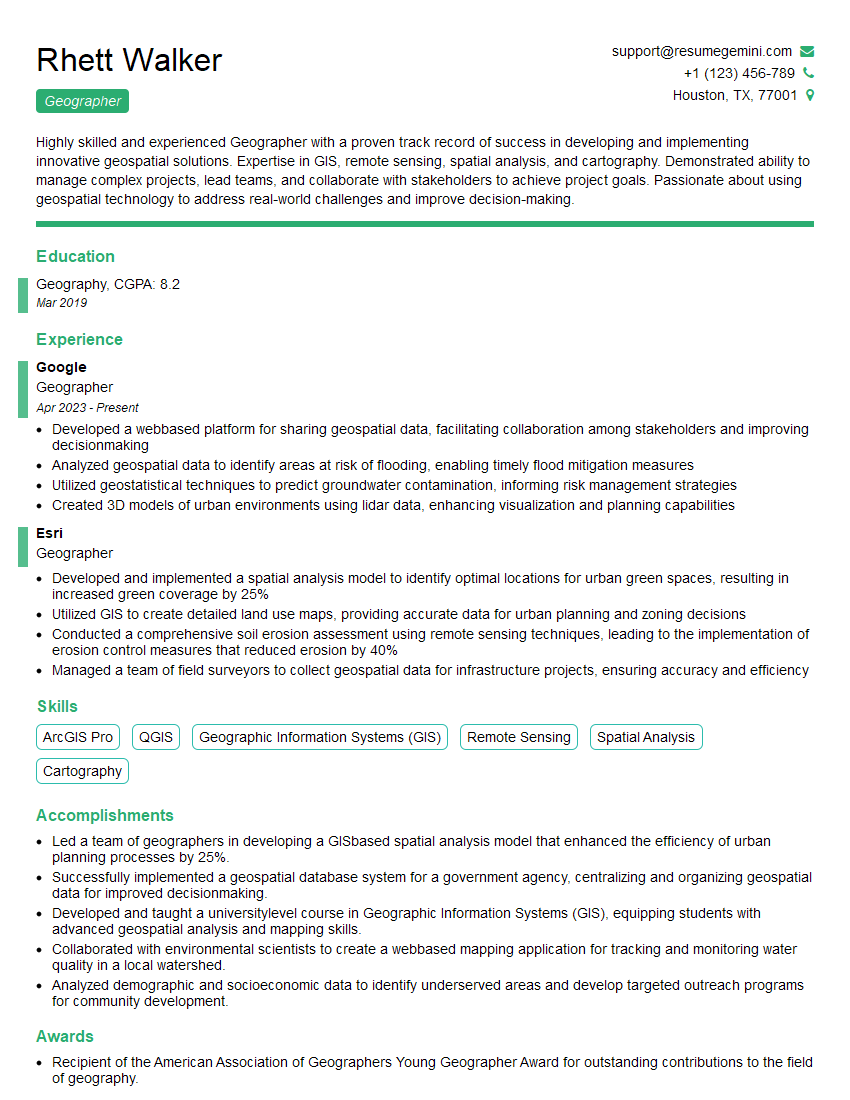
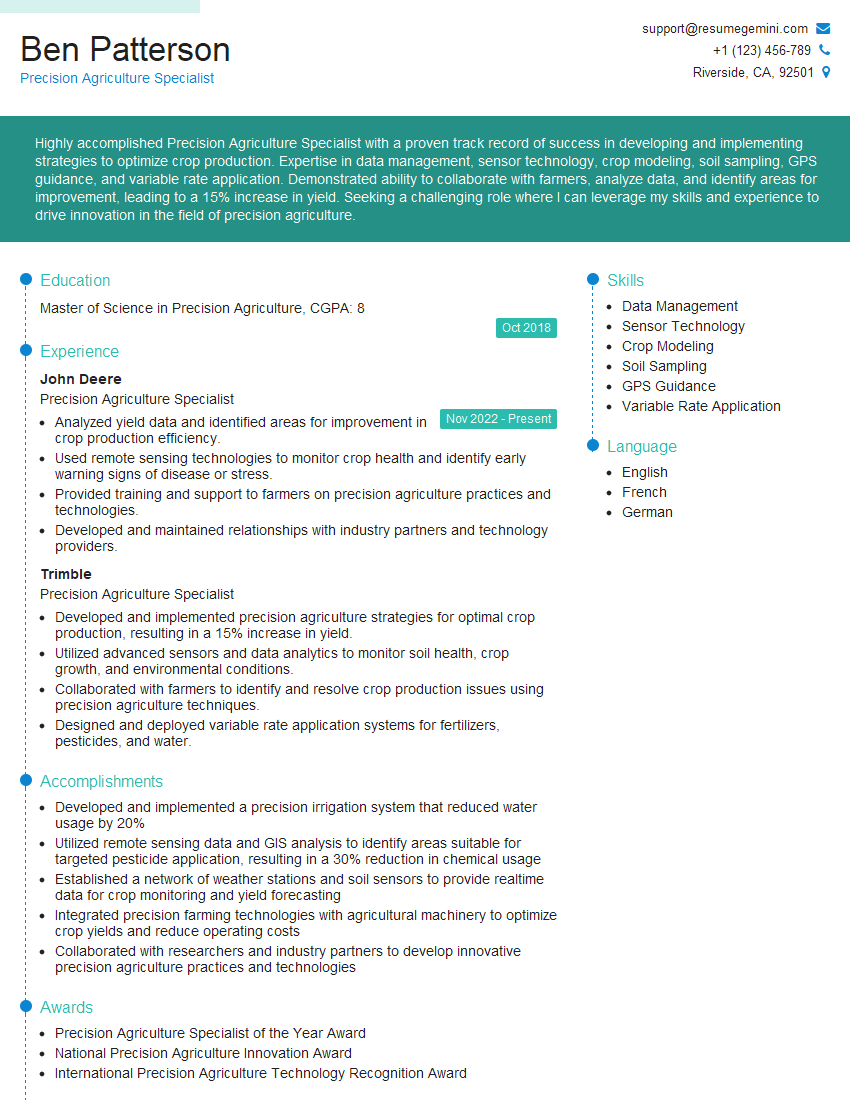
Mastering Remote Sensing and Earth Observation opens doors to exciting and impactful careers in various sectors. To maximize your job prospects, a well-crafted resume is crucial. An ATS-friendly resume ensures your application gets noticed by recruiters and hiring managers. ResumeGemini is a trusted resource that can help you build a professional and effective resume tailored to highlight your unique skills and experience in this field. Examples of resumes tailored to Remote Sensing and Earth Observation are available to guide you in creating your own compelling application.
Explore more articles
Users Rating of Our Blogs
Share Your Experience
We value your feedback! Please rate our content and share your thoughts (optional).
What Readers Say About Our Blog
To the interviewgemini.com Webmaster.
Very helpful and content specific questions to help prepare me for my interview!
Thank you
To the interviewgemini.com Webmaster.
This was kind of a unique content I found around the specialized skills. Very helpful questions and good detailed answers.
Very Helpful blog, thank you Interviewgemini team.