Feeling uncertain about what to expect in your upcoming interview? We’ve got you covered! This blog highlights the most important Sustainability Standards and Frameworks (e.g., GRI, ISO 14001) interview questions and provides actionable advice to help you stand out as the ideal candidate. Let’s pave the way for your success.
Questions Asked in Sustainability Standards and Frameworks (e.g., GRI, ISO 14001) Interview
Q 1. Explain the differences between GRI, SASB, and GRI Standards.
The Global Reporting Initiative (GRI), Sustainability Accounting Standards Board (SASB), and GRI Standards (the current iteration of GRI) are all frameworks for sustainability reporting, but they differ in their scope and focus.
GRI Standards (formerly GRI G4) represent the latest evolution, providing a comprehensive, universally applicable framework for organizations to report on their environmental, social, and governance (ESG) performance. It offers a modular approach, allowing companies to select the standards most relevant to their material issues.
SASB Standards, on the other hand, are industry-specific. They focus on financially material ESG issues for investors, aiming to provide information relevant to a company’s financial performance. Each standard covers a particular industry sector and identifies the key ESG factors that materially impact its value.
GRI, in its earlier iterations, was broader and less prescriptive than the current GRI Standards and SASB. It was a significant step forward in standardizing sustainability reporting but lacked the specificity and focus of the current GRI Standards and the investor-centric approach of SASB.
Think of it this way: GRI Standards is like a comprehensive encyclopaedia covering all aspects of sustainability; SASB is like a specialized textbook focused on the financial implications of ESG for specific industries; while the older GRI was more like a broad overview of sustainability topics.
Q 2. Describe your experience with ISO 14001 implementation and auditing.
I have extensive experience with ISO 14001, including implementation and auditing across diverse industries. I’ve led teams through the entire certification process, from initial gap analysis and policy development to internal audits and management review.
For example, I worked with a manufacturing company to implement an environmental management system (EMS) compliant with ISO 14001. This involved conducting a thorough environmental impact assessment, identifying key environmental aspects and impacts, setting environmental objectives and targets, and developing procedures for waste management, energy efficiency, and pollution prevention. We also trained their employees on the EMS and conducted regular internal audits to ensure compliance. Following this, we prepared them for successful certification audits.
My auditing experience includes conducting both first-party (internal) and third-party (certification body) audits. I’m proficient in identifying non-conformances, assessing the effectiveness of the EMS, and ensuring the organization’s ongoing compliance with the standard. A key focus of my approach is helping organizations not just meet the requirements of the standard, but also to continuously improve their environmental performance.
Q 3. How do you ensure data accuracy and completeness in sustainability reporting?
Ensuring data accuracy and completeness in sustainability reporting is crucial for building trust and credibility. My approach involves a multi-step process:
- Robust data collection systems: This includes establishing clear data collection protocols, using standardized data templates, and implementing appropriate data management software.
- Data verification and validation: This involves cross-checking data from multiple sources, using statistical analysis to identify outliers, and conducting on-site verifications when necessary.
- Third-party assurance: Engaging an independent third-party verifier to validate the reported data adds another layer of credibility and transparency. This is especially important for larger organizations or when the data is particularly complex.
- Transparency and traceability: Maintaining clear documentation of data sources, methods, and assumptions ensures transparency and enables easy tracing of information back to its origin.
- Regular data quality checks: Implementing regular checks and updates prevent data becoming outdated or inaccurate. This is an ongoing process that needs continuous monitoring and improvement.
For instance, in a project with a large agricultural business, we implemented a traceability system using blockchain technology to track the sustainability metrics throughout their supply chain. This greatly enhanced data accuracy and traceability.
Q 4. What are the key performance indicators (KPIs) used to track sustainability progress?
The key performance indicators (KPIs) used to track sustainability progress vary significantly depending on the organization’s industry, size, and strategic goals. However, some commonly used KPIs include:
- Environmental KPIs: Greenhouse gas emissions (Scope 1, 2, and 3), energy consumption, water usage, waste generation, biodiversity impact.
- Social KPIs: Employee satisfaction, diversity and inclusion metrics, human rights performance, community engagement, supply chain ethics.
- Governance KPIs: Board diversity, executive compensation, anti-corruption measures, stakeholder engagement.
For example, a renewable energy company might focus on KPIs such as energy generation capacity, renewable energy sources, and grid connection rates. A retail company, on the other hand, may prioritize KPIs related to waste reduction, sustainable packaging, and ethical sourcing of products.
It’s important to select KPIs that are relevant, measurable, achievable, relevant, and time-bound (SMART).
Q 5. Explain the materiality principle in the context of sustainability reporting.
The materiality principle in sustainability reporting focuses on identifying and reporting on the ESG issues that are most significant to an organization’s stakeholders and its business. These are the issues that could materially affect the organization’s ability to create value over the long term. It’s not about reporting on everything, but on reporting on what really matters.
A materiality assessment is typically undertaken to determine these issues. This involves engaging with various stakeholders (investors, customers, employees, communities, etc.) to understand their priorities and concerns related to the organization’s operations. The assessment considers both the likelihood and potential impact of various ESG issues on the organization.
For example, a clothing manufacturer might find that issues related to fair labor practices and environmental pollution in their supply chain are considered material by their customers and investors and therefore require detailed reporting, while other issues may be less significant.
Q 6. How do you identify and address sustainability risks within an organization?
Identifying and addressing sustainability risks requires a systematic approach. This typically involves:
- Risk assessment: This involves identifying potential environmental, social, and governance risks, assessing their likelihood and potential impact, and prioritizing them based on their severity.
- Stakeholder engagement: Engaging with various stakeholders to gain a better understanding of the risks they perceive and their priorities is crucial.
- Scenario planning: Developing scenarios to understand how different potential future events could impact the organization and its sustainability performance.
- Risk mitigation strategies: Developing and implementing strategies to mitigate the identified risks, which could include implementing new technologies, changing operational practices, or investing in insurance.
- Monitoring and reporting: Regularly monitoring the effectiveness of the risk mitigation strategies and reporting on the organization’s progress.
For instance, a financial institution might identify climate change as a significant risk due to potential stranded assets. They might mitigate this risk by increasing investments in renewable energy and developing stricter lending policies for carbon-intensive industries.
Q 7. Describe your experience in developing a sustainability strategy.
Developing a robust sustainability strategy involves a phased approach. I typically begin by:
- Materiality assessment: Defining the organization’s most significant sustainability issues.
- Setting ambitious goals: Defining specific, measurable, achievable, relevant, and time-bound (SMART) targets aligned with global sustainability goals (e.g., SDGs).
- Identifying key performance indicators (KPIs): Tracking progress and measuring success.
- Integrating sustainability into business operations: Embedding sustainability into core business functions, such as procurement, supply chain, and product development.
- Stakeholder engagement: Collaborating with key stakeholders to ensure alignment and support.
- Resource allocation: Assigning necessary resources (budget, personnel, and time) to implement the strategy.
- Communication and reporting: Regularly communicating progress on the sustainability strategy and reporting achievements transparently.
For a client in the food and beverage industry, I helped develop a sustainability strategy that focused on reducing water usage, improving packaging sustainability, and promoting ethical sourcing practices. This involved working across multiple departments, including procurement, operations, and marketing, to ensure alignment and implementation.
Q 8. What are the challenges in integrating sustainability into business operations?
Integrating sustainability into business operations presents numerous challenges. It’s not just about ticking boxes; it requires a fundamental shift in mindset and a comprehensive approach. Key obstacles include:
- Resistance to change: Employees and management may be hesitant to adopt new practices or invest in sustainable technologies if they don’t perceive immediate benefits or see it as adding extra workload.
- Lack of resources: Implementing sustainable practices requires investment in new technologies, training, and potentially new supply chains. Smaller businesses, in particular, may struggle with the upfront costs.
- Data scarcity and measurement difficulties: Accurately measuring and tracking sustainability performance across the entire value chain can be complex and require specialized expertise. This lack of data can hinder progress and make demonstrating ROI challenging.
- Supply chain complexities: Ensuring sustainability throughout your supply chain is crucial, but it’s often difficult to monitor and influence the practices of numerous suppliers. This requires strong collaborative relationships and robust due diligence processes.
- Greenwashing concerns: Companies must genuinely commit to sustainability and avoid making misleading claims. Authenticity is vital for building trust with stakeholders.
- Lack of standardized reporting: Although standards like GRI exist, consistency in reporting methods and metrics can be lacking across industries, making it hard to compare performance and track progress effectively.
Overcoming these challenges requires strong leadership, clear communication, employee engagement, and a strategic approach that integrates sustainability into the core business strategy, not just as a separate initiative.
Q 9. How do you ensure stakeholder engagement in sustainability initiatives?
Stakeholder engagement is paramount for successful sustainability initiatives. It’s not a one-size-fits-all approach; it requires tailored strategies based on different stakeholder groups (e.g., employees, customers, investors, communities, suppliers).
- Establish clear communication channels: Regularly communicate your sustainability goals, progress, and challenges through various channels like newsletters, websites, stakeholder forums, and social media.
- Conduct regular surveys and feedback sessions: Actively solicit input from stakeholders on their priorities and concerns regarding your sustainability efforts. This allows you to tailor initiatives to their needs and demonstrate responsiveness.
- Collaborate with key stakeholders: Engage in joint projects and initiatives with suppliers, NGOs, or community groups to address shared sustainability goals. This demonstrates commitment and builds trust.
- Transparency and reporting: Publicly report on your sustainability performance using established frameworks like GRI, ensuring clarity and accountability. Transparency builds confidence and attracts responsible investors.
- Materiality assessment: Identify the sustainability issues that matter most to your stakeholders. This prioritizes your efforts and helps you focus on the areas that have the greatest impact. A materiality matrix is a valuable tool for this exercise.
- Active listening and responsiveness: Don’t just inform stakeholders, truly listen to their feedback and demonstrate willingness to adapt your approach based on their input. Addressing concerns directly builds trust and shows your commitment.
For example, engaging with local communities through consultations on a new renewable energy project can significantly reduce potential conflict and foster positive relationships.
Q 10. Explain the concept of lifecycle assessment (LCA).
Lifecycle Assessment (LCA) is a comprehensive method for evaluating the environmental impacts associated with a product, process, or service throughout its entire life cycle, from raw material acquisition to end-of-life disposal. It’s like creating a cradle-to-grave environmental profile.
An LCA typically involves four stages:
- Goal and scope definition: Defining the specific product, process, or service being assessed, the functional unit (the measure of the product’s function), geographical boundaries, and the impact categories to be evaluated.
- Inventory analysis: Quantifying all inputs and outputs associated with the life cycle, including energy consumption, water usage, emissions, and waste generation. This often involves data collection from various sources, including suppliers and technical literature.
- Impact assessment: Evaluating the environmental impacts of the identified inputs and outputs, using various impact assessment methodologies to categorize the impacts (e.g., climate change, eutrophication, acidification).
- Interpretation: Analyzing the results of the impact assessment to identify the key environmental ‘hotspots’ in the life cycle and potential opportunities for improvement. This helps inform decision-making regarding design, manufacturing, and end-of-life management.
Example: An LCA of a plastic bottle might reveal that the manufacturing process has the highest carbon footprint, while transportation and disposal contribute significantly to waste generation. This data can then be used to explore solutions like using recycled materials, reducing packaging weight, or improving recycling infrastructure.
Q 11. What are the benefits of achieving ISO 14001 certification?
Achieving ISO 14001 certification demonstrates a commitment to environmental management and provides several benefits:
- Enhanced environmental performance: The implementation of an ISO 14001 Environmental Management System (EMS) leads to improved resource efficiency, reduced waste, and lower emissions.
- Improved risk management: Proactive identification and mitigation of environmental risks helps prevent incidents and associated costs. Think of avoiding costly fines for non-compliance.
- Increased customer confidence and loyalty: Certification signals to customers and stakeholders a commitment to environmental responsibility, potentially leading to increased sales and market share.
- Competitive advantage: In an increasingly environmentally conscious marketplace, certification can differentiate a business from its competitors and attract environmentally aware investors.
- Improved operational efficiency: Implementing an EMS often leads to streamlining processes, reducing waste, and improving resource utilization, leading to cost savings.
- Compliance with regulations: ISO 14001 helps organizations comply with environmental regulations and avoid penalties.
- Enhanced stakeholder engagement: Certification provides a framework for engaging with stakeholders on environmental issues, strengthening relationships and building trust.
Essentially, ISO 14001 provides a structured approach to managing environmental aspects, leading to measurable improvements and demonstrable benefits for the organization and the environment.
Q 12. Describe your experience with carbon footprint calculations and reporting.
I have extensive experience in carbon footprint calculations and reporting, using tools like SimaPro and Carbon Footprint Ltd calculators. My experience spans various sectors, including manufacturing, retail, and transportation. The process typically involves:
- Data collection: Gathering data on energy consumption, fuel usage, waste generation, purchased goods and services, and emissions from transportation and business travel. This requires collaboration with different departments and potentially external suppliers.
- Emissions factors: Using appropriate emissions factors to convert activity data into greenhouse gas emissions. These factors vary based on energy sources, transportation modes, and other parameters, so selecting the correct ones is crucial for accuracy.
- Scope 1, 2, and 3 emissions calculation: Calculating emissions across all three scopes (detailed below) is crucial for a comprehensive assessment.
- Reporting: Presenting the carbon footprint results in a clear and concise manner, often using internationally recognized standards like the GHG Protocol. This includes documenting methodology, uncertainties, and potential mitigation strategies.
- Verification: Ensuring the accuracy and reliability of the carbon footprint calculation through an independent verification process, if needed.
I have been involved in projects where we identified significant carbon hotspots, helping clients to develop and implement reduction strategies, resulting in measurable reductions in their overall carbon footprint.
Q 13. How do you measure and report on Scope 1, Scope 2, and Scope 3 emissions?
Scope 1, 2, and 3 emissions represent different categories of greenhouse gas emissions associated with an organization’s activities:
- Scope 1 emissions: Direct emissions from owned or controlled sources, such as emissions from company-owned vehicles, boilers, and industrial processes. These are the easiest to measure and control.
- Scope 2 emissions: Indirect emissions from the generation of purchased energy consumed by the organization. This includes electricity, heat, and steam purchased from external suppliers. Measuring Scope 2 emissions requires obtaining energy consumption data from utility bills.
- Scope 3 emissions: Indirect emissions that occur in the value chain, but are not directly owned or controlled by the organization. These are often the most challenging to quantify and manage, and include emissions from:
- Upstream: Emissions from purchased goods and services, transportation and distribution, waste generated in operations, and business travel.
- Downstream: Emissions associated with the use, end-of-life treatment, and disposal of sold products.
Measuring and reporting on Scope 1, 2, and 3 emissions require a comprehensive approach involving detailed data collection, the use of appropriate emissions factors, and robust data management. For Scope 3 emissions, engagement with suppliers and customers is critical to collect the necessary data and identify emission reduction opportunities throughout the value chain.
Q 14. What are the key components of a robust sustainability management system?
A robust sustainability management system (SMS) needs several key components to be truly effective. It’s not a one-off project; it’s an ongoing process requiring continuous improvement and adaptation:
- Leadership commitment: Strong leadership from the top is vital to driving the sustainability agenda and securing the necessary resources. Top-down commitment ensures buy-in and effective implementation.
- Clear goals and targets: Setting ambitious but achievable sustainability goals and targets is essential for providing direction and measuring progress. These should be aligned with business strategy and stakeholder expectations.
- Materiality assessment: Identifying the most important sustainability issues for the organization and its stakeholders enables targeted actions and resource allocation.
- Risk management: Identifying and mitigating environmental and social risks is crucial for minimizing negative impacts and ensuring business continuity.
- Performance measurement and reporting: Regularly monitoring and reporting on progress against sustainability targets is vital for accountability and identifying areas for improvement. Transparency is essential.
- Stakeholder engagement: Regularly engaging with stakeholders—including employees, customers, suppliers, and communities—is crucial for ensuring that sustainability initiatives are aligned with their needs and expectations.
- Continuous improvement: Sustainability management is an ongoing process, requiring continuous monitoring, evaluation, and improvement of practices and processes. This involves regular reviews and updates to the SMS.
- Integration with business strategy: Sustainability should not be treated as a separate initiative; it needs to be fully integrated into the core business strategy and decision-making processes.
A well-designed SMS provides a framework for managing sustainability risks and opportunities, enhancing organizational performance, and building a more sustainable future.
Q 15. Describe your experience with environmental due diligence.
Environmental due diligence is the process of identifying and assessing potential environmental risks and liabilities associated with a business, property, or transaction. It’s like a thorough environmental health check-up before making a significant decision. My experience encompasses conducting site assessments to identify potential contamination (e.g., soil, water, air), reviewing historical records and environmental permits, and evaluating compliance with relevant environmental regulations. For example, I once worked on a due diligence project for a company considering acquiring a manufacturing plant. Our assessment uncovered potential asbestos contamination in older building sections, leading to a renegotiation of the purchase price and a comprehensive remediation plan. This saved the company significant financial and reputational risk.
This process typically involves:
- Site visits and inspections: Visual inspection of the property to identify potential issues.
- Review of environmental records: Analyzing historical data, permits, and compliance reports.
- Regulatory research: Determining applicable environmental laws and regulations.
- Sampling and testing: Collecting samples of soil, water, or air for laboratory analysis.
- Risk assessment and reporting: Identifying potential liabilities and developing mitigation strategies.
Career Expert Tips:
- Ace those interviews! Prepare effectively by reviewing the Top 50 Most Common Interview Questions on ResumeGemini.
- Navigate your job search with confidence! Explore a wide range of Career Tips on ResumeGemini. Learn about common challenges and recommendations to overcome them.
- Craft the perfect resume! Master the Art of Resume Writing with ResumeGemini’s guide. Showcase your unique qualifications and achievements effectively.
- Don’t miss out on holiday savings! Build your dream resume with ResumeGemini’s ATS optimized templates.
Q 16. Explain the role of assurance in sustainability reporting.
Assurance in sustainability reporting plays a crucial role in building trust and credibility. Think of it as a ‘seal of approval’ for a company’s sustainability claims. Independent assurance provides stakeholders with confidence that the reported data is accurate, complete, and reliable. Assurance providers, often accounting firms or specialized sustainability consultancies, verify the information presented in a sustainability report against established standards like the Global Reporting Initiative (GRI) Standards. They assess the completeness of data, the methodology used, and the overall presentation, issuing an assurance report that outlines their findings and level of assurance (limited, moderate, or reasonable).
The benefits of assurance include:
- Enhanced credibility and transparency: Demonstrates commitment to accuracy and accountability.
- Increased investor confidence: Attracts investors who prioritize ESG (Environmental, Social, and Governance) factors.
- Improved stakeholder engagement: Builds trust with customers, employees, and communities.
- Reduced risk of reputational damage: Mitigates the consequences of inaccurate or misleading information.
Q 17. How do you address conflicts between business objectives and sustainability goals?
Conflicts between business objectives and sustainability goals are common, but not insurmountable. The key is to view sustainability not as a constraint, but as an opportunity for innovation and long-term value creation. Instead of a zero-sum game, it’s about finding synergistic solutions.
Here’s a structured approach:
- Identify the conflict: Clearly define the opposing objectives and the specific points of conflict.
- Assess the trade-offs: Evaluate the potential short-term and long-term costs and benefits of each option.
- Explore innovative solutions: Seek creative approaches that achieve both business and sustainability objectives. For example, investing in energy-efficient technologies could reduce operating costs while improving environmental performance.
- Prioritize and set targets: Decide which objectives are most important and set measurable targets to track progress.
- Monitor and adapt: Continuously monitor performance and adjust strategies as needed.
For example, a company might face a conflict between reducing production costs and minimizing waste. By investing in improved waste management systems, they might initially increase costs, but this can lead to significant long-term savings on disposal fees, and enhanced brand reputation.
Q 18. How do you communicate sustainability performance to internal and external stakeholders?
Effective communication of sustainability performance is crucial for engaging stakeholders. I use a multi-faceted approach tailoring my message to the specific audience.
Internal stakeholders (employees, management): I utilize internal newsletters, presentations, intranet updates, and town hall meetings to communicate progress, challenges, and opportunities. Using interactive dashboards and data visualization helps make complex information more accessible and engaging. I also foster a culture of sustainability internally by including sustainability metrics in performance reviews.
External stakeholders (investors, customers, suppliers, communities): The primary vehicle is the annual sustainability report, designed to be clear, concise, and transparent, adhering to established standards (like GRI). We use a variety of channels – our website, social media, and press releases – to share key highlights and progress updates. We also engage in direct dialogue with investors and key stakeholders to respond to their specific questions and concerns.
For instance, for a client in the apparel industry, we created an interactive online platform allowing customers to track the sustainability performance of each product throughout the supply chain. This created greater transparency, building consumer trust and enhancing brand loyalty.
Q 19. What software or tools do you use for sustainability data management?
Sustainability data management requires robust software and tools. The specific tools depend on the organization’s size and complexity, but popular options include:
- Sustainability reporting software: Software specifically designed for collecting, analyzing, and reporting sustainability data (e.g., Sustainalytics, Greenstone).
- Enterprise resource planning (ERP) systems: Integrating sustainability data into existing ERP systems allows for a more holistic view of operations.
- Spreadsheet software (Excel, Google Sheets): For smaller organizations, spreadsheets can be adequate for basic data management, but they may lack advanced analytical capabilities.
- Data visualization tools (Tableau, Power BI): For creating compelling visualizations of sustainability data to communicate performance effectively.
I often use a combination of tools depending on the specific project’s requirements. For example, for a large multinational company, we might use a dedicated sustainability reporting platform for data collection and analysis, while utilizing a data visualization tool to communicate key findings to stakeholders.
Q 20. Describe your experience with sustainability reporting frameworks besides GRI and SASB.
Beyond GRI and SASB, I have experience with several other sustainability reporting frameworks, each with its unique focus and audience. These include:
- Global Reporting Initiative (GRI): A widely used comprehensive framework covering economic, environmental, and social performance.
- Sustainability Accounting Standards Board (SASB): Focuses on financially material ESG issues specific to different industries.
- Carbon Disclosure Project (CDP): Focuses on climate change-related disclosures, including greenhouse gas emissions.
- Task Force on Climate-related Financial Disclosures (TCFD): Provides recommendations for disclosing climate-related risks and opportunities.
- UN Sustainable Development Goals (SDGs): A broader framework for measuring progress towards global sustainability targets.
The choice of framework depends on the organization’s specific needs and priorities. For example, a company heavily reliant on fossil fuels might prioritize CDP and TCFD disclosures, while a company in the consumer goods sector might focus on GRI and SASB, depending on their investor expectations.
Q 21. How do you stay up-to-date on the latest sustainability trends and regulations?
Staying up-to-date on sustainability trends and regulations is paramount in this rapidly evolving field. My strategies include:
- Subscription to industry publications and newsletters: Regularly reading publications such as Sustainability, Journal of Cleaner Production, and GreenBiz provides insights into emerging trends.
- Attendance at industry conferences and webinars: Networking with peers and experts at conferences such as the GreenBiz Forum and the Sustainability Leaders Summit helps broaden my knowledge.
- Monitoring regulatory developments: Tracking changes in environmental regulations at both the national and international levels is crucial. I actively follow governmental websites and regulatory bodies.
- Professional development courses and certifications: Maintaining professional certifications (e.g., ISO 14001 lead auditor) ensures my expertise is current and relevant.
- Networking with peers and experts: Participating in professional networks and online communities allows for knowledge sharing and staying informed of best practices.
Q 22. Explain your understanding of the Sustainable Development Goals (SDGs).
The Sustainable Development Goals (SDGs) are a collection of 17 interlinked global goals designed to be a “blueprint to achieve a better and more sustainable future for all”. Adopted by all United Nations Member States in 2015, they are intended to be achieved by the year 2030. Think of them as a comprehensive to-do list for the planet, addressing social, economic, and environmental challenges.
- Examples of SDGs include No Poverty (SDG 1), Zero Hunger (SDG 2), Good Health and Well-being (SDG 3), Quality Education (SDG 4), Climate Action (SDG 13), and Life Below Water (SDG 14). Each goal has specific targets and indicators to measure progress.
- Practical Application: Businesses integrate SDGs into their strategies by identifying which goals align with their operations and value chain. For example, a clothing company might focus on SDG 12 (Responsible Consumption and Production) by using sustainable materials and reducing waste.
- Interconnectedness: It’s crucial to remember that the SDGs are interconnected. Progress in one area often influences progress in others. For instance, investing in renewable energy (SDG 7) can contribute to climate action (SDG 13) and economic growth (SDG 8).
Q 23. How would you approach the implementation of a new sustainability initiative?
Implementing a new sustainability initiative requires a structured approach. I typically follow a phased methodology:
- Materiality Assessment: Identify the environmental and social issues most relevant to the organization and its stakeholders. This involves engaging with stakeholders through surveys, interviews, and workshops to understand their priorities.
- Baseline Assessment: Measure the current environmental and social performance. This involves collecting data on relevant metrics, such as energy consumption, waste generation, greenhouse gas emissions, and employee satisfaction.
- Goal Setting and Target Setting: Set specific, measurable, achievable, relevant, and time-bound (SMART) goals for the initiative. This should align with the materiality assessment and the organization’s overall sustainability strategy.
- Implementation Plan: Develop a detailed plan that outlines the actions needed to achieve the goals, including timelines, responsibilities, and resource allocation. This might involve process changes, technology upgrades, or employee training.
- Monitoring and Evaluation: Regularly monitor progress towards the goals and evaluate the effectiveness of the initiative. This involves tracking key performance indicators (KPIs) and making adjustments as needed.
- Reporting and Communication: Communicate the results of the initiative to stakeholders through sustainability reports or other channels. Transparency is crucial for building trust and accountability.
Example: Implementing a waste reduction program would involve a materiality assessment to understand the types of waste generated, baseline measurements of waste generation rates, setting targets for waste reduction, implementing recycling programs and employee training, and then monitoring progress against the targets.
Q 24. Describe a situation where you had to overcome a challenge related to sustainability.
In a previous role, we faced significant resistance to implementing a new energy efficiency program. Many employees felt the proposed changes to their work processes were inconvenient and time-consuming. To overcome this, we:
- Engaged Employees Early: We held workshops and meetings to explain the benefits of the program, address concerns, and solicit feedback.
- Demonstrated Value: We presented data showing the potential cost savings and environmental benefits of the program.
- Provided Training and Support: We provided comprehensive training on the new processes and ongoing support to employees.
- Celebrated Successes: We publicly recognized teams and individuals who made significant contributions to the program’s success.
By proactively addressing employee concerns and celebrating achievements, we successfully implemented the program and achieved significant energy savings.
Q 25. How do you prioritize sustainability initiatives in a resource-constrained environment?
Prioritizing sustainability initiatives in a resource-constrained environment requires a strategic approach. I would use a framework that combines materiality assessment with cost-benefit analysis:
- Materiality Assessment: Identify the most significant sustainability risks and opportunities for the organization.
- Cost-Benefit Analysis: Evaluate the potential costs and benefits of each initiative. This might involve considering the financial costs, environmental benefits, and social impacts.
- Prioritization Matrix: Create a matrix to rank the initiatives based on their materiality and cost-benefit ratio. High materiality and high cost-benefit ratio initiatives should be prioritized.
- Phased Implementation: Implement the highest-priority initiatives first, then gradually add others as resources become available.
- Innovation and Partnerships: Explore innovative financing mechanisms and partnerships to secure additional resources.
Example: A small business might prioritize reducing energy consumption (high materiality, relatively low cost) before investing in a complex carbon offsetting program (lower materiality, high cost).
Q 26. What are the limitations of current sustainability reporting standards?
While frameworks like GRI and ISO 14001 have significantly advanced sustainability reporting, limitations remain:
- Lack of Standardization: Different standards and frameworks exist, leading to inconsistencies in reporting practices and making comparisons challenging.
- Focus on Disclosure, Not Outcomes: Many standards emphasize disclosure of sustainability data but don’t always adequately assess the actual impact of the reported activities. This can lead to “greenwashing” where companies present a positive image without meaningful changes.
- Limited Scope: Some standards may not cover all relevant environmental and social issues, particularly those related to human rights and social justice.
- Verification Challenges: Verifying the accuracy and reliability of reported data can be difficult and costly, particularly for complex issues.
- Data Availability and Quality: Accurate and reliable data collection can be a significant hurdle, especially for smaller organizations or those operating in complex supply chains.
The ongoing development of standards and the increased use of technology to improve data collection and analysis are working to address these limitations.
Q 27. How do you measure the effectiveness of your sustainability programs?
Measuring the effectiveness of sustainability programs requires a comprehensive approach using both quantitative and qualitative methods. Key Performance Indicators (KPIs) are essential:
- Quantitative Measures: Track measurable outcomes like energy consumption reduction (kWh), waste diversion rates (%), greenhouse gas emissions (tons of CO2e), water usage (gallons), etc. These are typically defined during the goal-setting phase.
- Qualitative Measures: Assess the impacts on employee satisfaction, stakeholder engagement, and reputational improvement through surveys, focus groups, and social media analysis. This is vital for understanding the broader context of program success beyond just numbers.
- Benchmarking: Compare performance against industry peers or best practices to identify areas for improvement. This helps to put results in perspective and see how the organization is performing relative to others.
- Life-Cycle Analysis (LCA): Evaluate the environmental impacts of products or services throughout their entire lifecycle, from raw material extraction to disposal. This provides a comprehensive picture of environmental performance.
By regularly reviewing these metrics and adjusting strategies as needed, organizations can ensure that their sustainability programs are achieving their intended results.
Q 28. Describe your experience with conducting materiality assessments.
A materiality assessment is a crucial first step in any sustainability initiative. It identifies the environmental and social issues that are most important to the organization and its stakeholders. My approach involves:
- Stakeholder Identification and Engagement: Identify all relevant stakeholders, including employees, investors, customers, suppliers, communities, and government agencies. I then engage with them through surveys, interviews, focus groups, and workshops to understand their priorities and concerns.
- Issue Identification: Create a list of potential environmental and social issues relevant to the organization’s operations and value chain. This might include climate change, water scarcity, biodiversity loss, human rights, labor practices, and ethical sourcing.
- Materiality Matrix: Create a matrix to assess the materiality of each issue based on its likelihood and potential impact. This involves considering both the probability of the issue occurring and its potential consequences for the organization.
- Prioritization: Prioritize the most material issues for further investigation and action. These are the issues that pose the greatest risks and opportunities for the organization.
- Reporting: Document the findings of the materiality assessment and communicate them to stakeholders. This provides transparency and ensures alignment on priorities.
Example: In a recent assessment for a food manufacturing company, we identified water usage and supply chain sustainability as highly material issues based on stakeholder concerns about water scarcity and ethical sourcing of ingredients. These issues were then prioritized for further action.
Key Topics to Learn for Sustainability Standards and Frameworks (e.g., GRI, ISO 14001) Interview
- GRI Standards: Understanding the core principles, materiality assessment, and reporting requirements of the Global Reporting Initiative (GRI) standards. Focus on the differences between GRI 102 and the specific standards for various aspects like environmental, social, and governance (ESG) performance.
- ISO 14001: Mastering the Environmental Management System (EMS) requirements, including the Plan-Do-Check-Act (PDCA) cycle, environmental aspects and impacts identification, and legal compliance. Be prepared to discuss practical implementation and continual improvement.
- Materiality and Stakeholder Engagement: Demonstrate a strong understanding of identifying material ESG issues and engaging with key stakeholders to incorporate their perspectives into sustainability reporting and management systems.
- Sustainability Metrics and KPIs: Know how to select, measure, and report on relevant key performance indicators (KPIs) aligned with chosen standards and business objectives. Be able to explain the limitations and potential biases of different metrics.
- Data Collection and Verification: Understand the importance of robust data collection methods, data quality assurance, and the role of third-party verification in enhancing credibility and trustworthiness of sustainability reports.
- Integrating Sustainability into Business Strategy: Discuss how sustainability standards can be integrated into core business functions, supply chain management, and long-term strategic planning. Be prepared to discuss examples of successful integration.
- Reporting and Disclosure: Know the different types of sustainability reports and understand the processes for preparing and disclosing information according to chosen frameworks. Consider the differences between integrated reporting and standalone sustainability reports.
- Compliance and Auditing: Familiarize yourself with the auditing processes related to sustainability standards and the implications of non-compliance. Be prepared to discuss potential challenges and best practices for ensuring ongoing compliance.
Next Steps
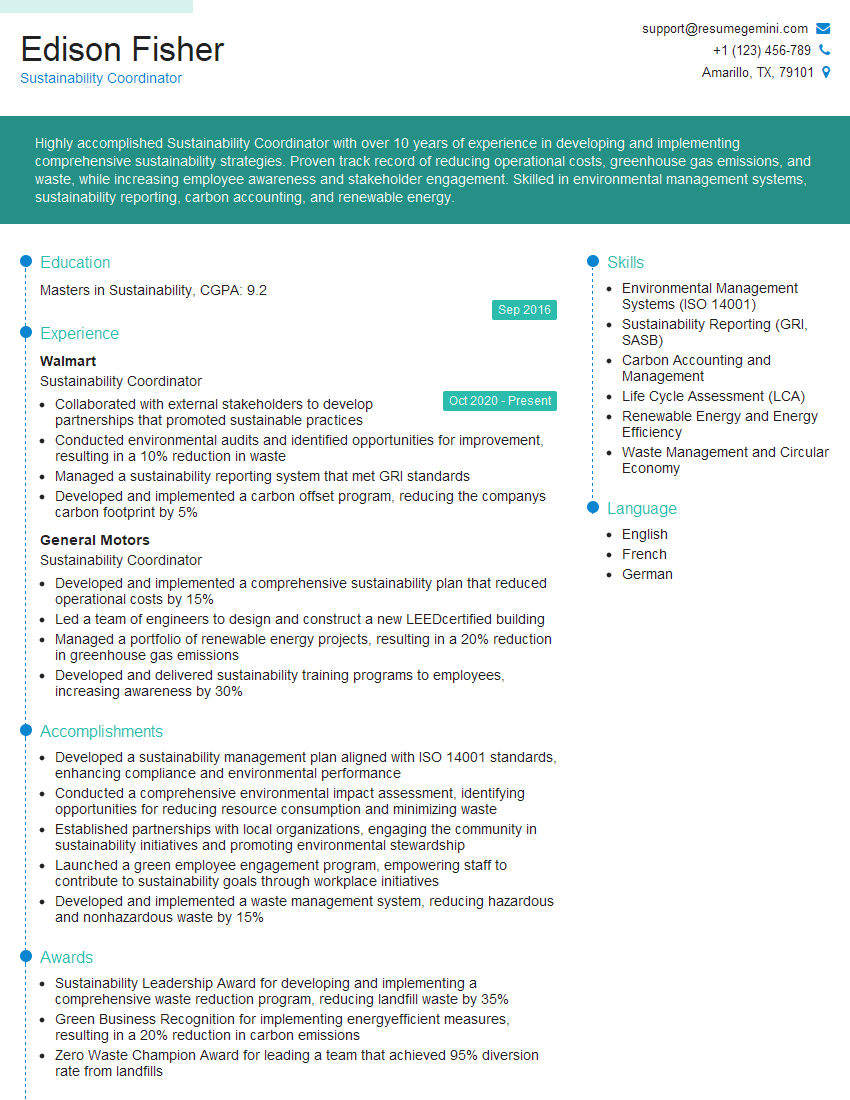
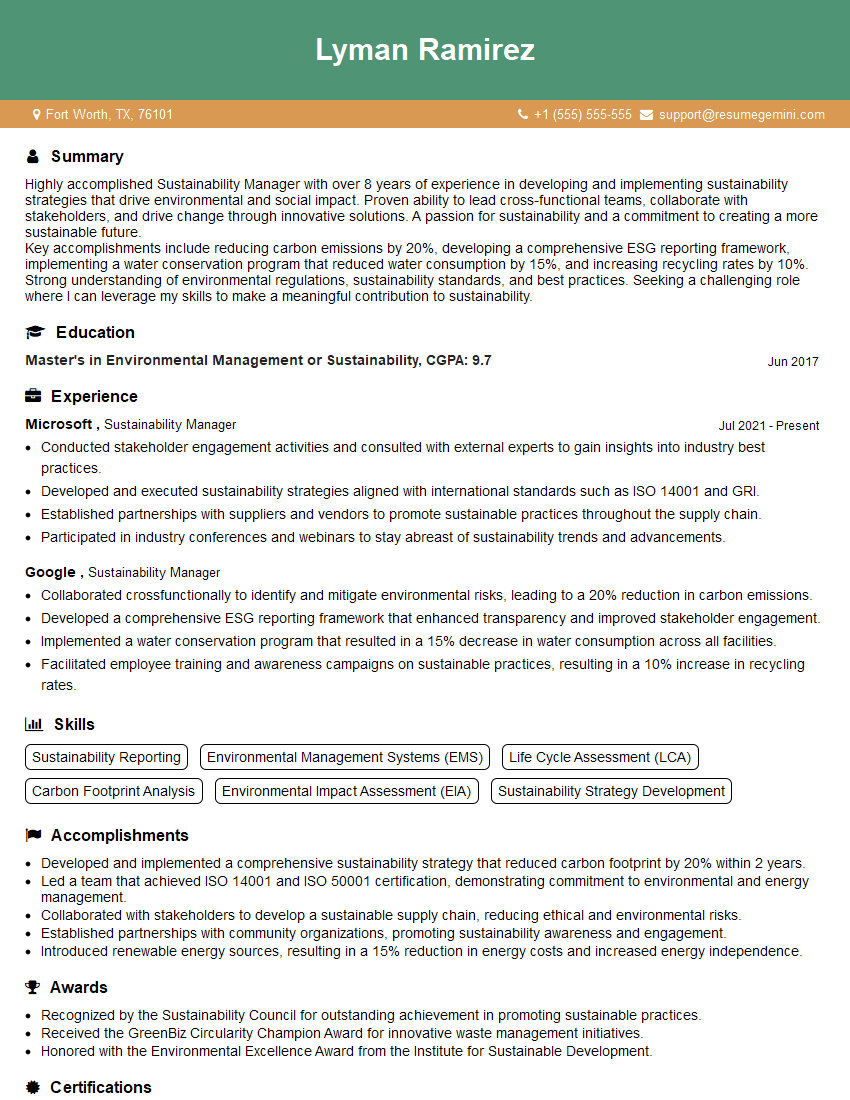
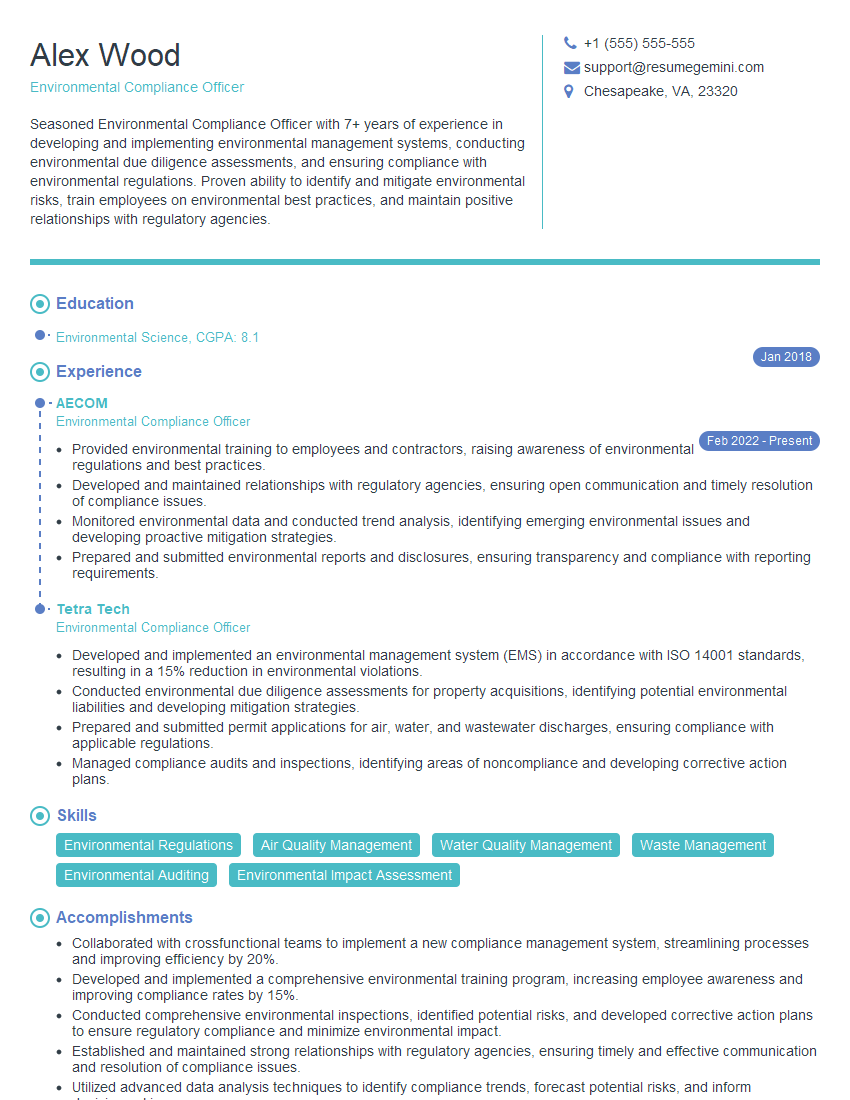
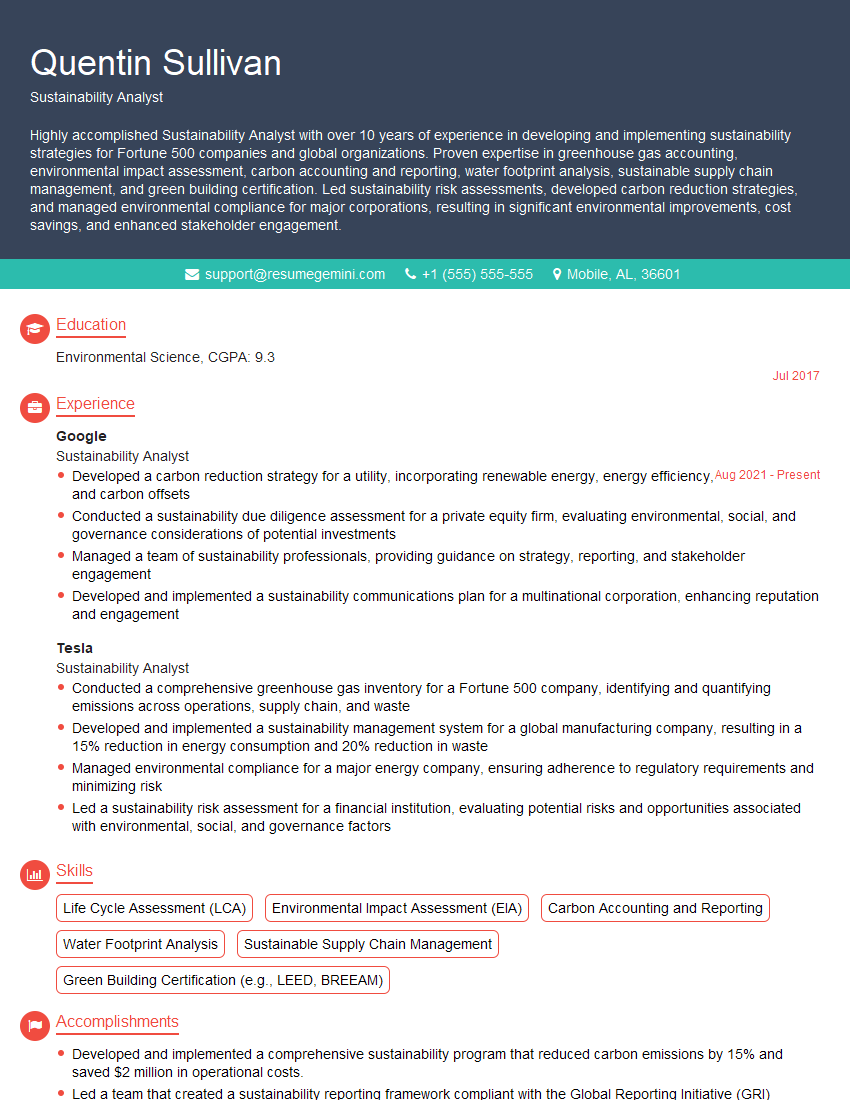
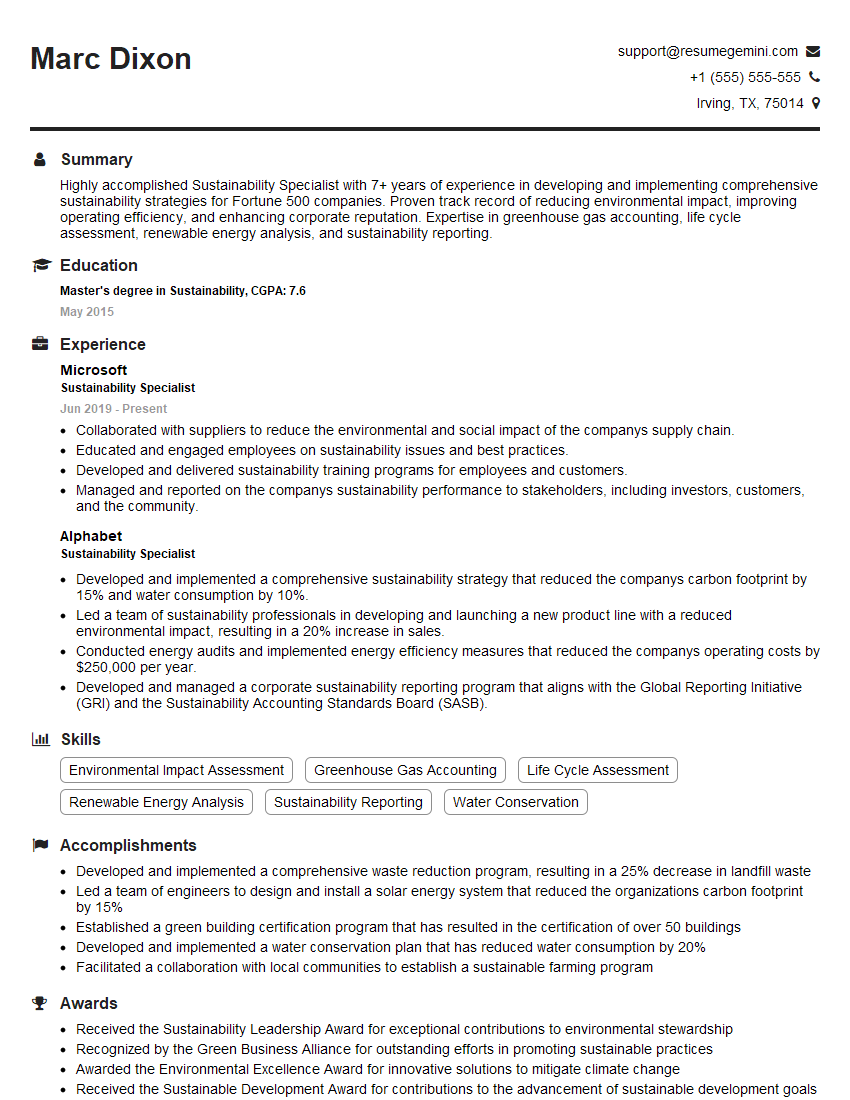
Mastering Sustainability Standards and Frameworks like GRI and ISO 14001 is crucial for career advancement in today’s increasingly ESG-focused business environment. Demonstrating this expertise will significantly improve your job prospects and open doors to exciting opportunities. To maximize your chances, create an ATS-friendly resume that highlights your skills and experience effectively. ResumeGemini is a trusted resource that can help you build a professional and impactful resume tailored to the specific requirements of sustainability roles. We provide examples of resumes tailored to showcasing expertise in GRI, ISO 14001, and other relevant frameworks to help you get started.

Explore more articles
Users Rating of Our Blogs
Share Your Experience
We value your feedback! Please rate our content and share your thoughts (optional).
What Readers Say About Our Blog
To the interviewgemini.com Webmaster.
Very helpful and content specific questions to help prepare me for my interview!
Thank you
To the interviewgemini.com Webmaster.
This was kind of a unique content I found around the specialized skills. Very helpful questions and good detailed answers.
Very Helpful blog, thank you Interviewgemini team.