The right preparation can turn an interview into an opportunity to showcase your expertise. This guide to Vectary interview questions is your ultimate resource, providing key insights and tips to help you ace your responses and stand out as a top candidate.
Questions Asked in Vectary Interview
Q 1. Explain the difference between NURBS and polygon modeling in Vectary.
In Vectary, NURBS (Non-Uniform Rational B-Splines) and polygon modeling represent two distinct approaches to 3D shape creation. Think of it like sculpting with clay versus building with LEGOs.
NURBS modeling uses mathematical curves and surfaces to define shapes. This results in smooth, precise models ideal for organic forms like cars or characters. Changes are mathematically precise, making it easy to create highly accurate and smooth curves. However, NURBS models can be more computationally intensive.
Polygon modeling, on the other hand, constructs shapes using polygons (triangles, squares, etc.). This method is more versatile for hard-surface modeling, such as buildings or mechanical parts. It’s generally easier to learn initially, and the models are often lighter computationally, making them faster to render. However, achieving perfectly smooth curves requires a very high polygon count.
Vectary offers a hybrid approach, leveraging the strengths of both methods. You can easily switch between them depending on your needs. For example, you might start with a basic polygon shape and then refine it with NURBS curves for a smoother finish.
Q 2. Describe your experience with Vectary’s sculpting tools.
Vectary’s sculpting tools provide a surprisingly intuitive experience, especially considering its browser-based nature. I’ve found them particularly useful for creating organic forms and adding fine details. The interface is streamlined, focusing on essential brushes and modifiers. I frequently use the Grab and Smooth brushes for initial shaping and refinement, followed by the Pinch and Inflate tools for fine-tuning. The Clay brush is great for building up volume.
For example, when creating a character model, I often start with a basic sphere, then use the Grab brush to roughly sculpt the head and body. The Smooth brush helps blend the transitions, while the Pinch brush adds details like cheekbones and muscle definition. The real power comes from combining these tools strategically. It’s a lot like working with digital clay.
Q 3. How do you optimize 3D models in Vectary for web performance?
Optimizing 3D models for web performance in Vectary involves reducing the polygon count and simplifying textures. High-polygon models are computationally expensive, leading to slow loading times and poor performance. The key is to find the right balance between visual fidelity and performance.
Here’s my approach:
- Decimation: Vectary provides built-in decimation tools to reduce the polygon count without significantly impacting visual quality. I typically experiment with different decimation levels until I find the optimal balance.
- Texture Optimization: High-resolution textures increase file size and loading times. I use smaller textures (e.g., 1024×1024 pixels instead of 4096×4096 pixels) wherever possible without sacrificing too much detail. Compression techniques like using JPEG for colors and PNG for alpha channels also help.
- Model Simplification: Before exporting, I analyze the model for unnecessary details. Removing or simplifying less visible elements can significantly reduce file size and load times. For instance, extremely fine details on an object that will appear small in the final scene can be simplified or removed.
Remember to test your optimized model on various devices and browsers to ensure it performs well across different platforms.
Q 4. What are the limitations of Vectary compared to other 3D modeling software?
While Vectary is a powerful tool, it has limitations compared to dedicated desktop 3D modeling software like Blender or Maya. Its browser-based nature means it relies on your computer’s resources and internet connection, which can impact performance on complex models. It also lacks some advanced features found in professional packages, such as highly detailed rigging and animation tools, advanced particle systems, and robust scripting capabilities.
For example, Vectary’s animation tools are basic compared to the sophisticated animation workflows available in Blender or Maya. Similarly, complex simulations or rendering features are less extensive.
However, Vectary’s ease of use and collaborative features outweigh these limitations in many scenarios, especially for quick prototyping or collaborative projects where advanced features aren’t needed.
Q 5. Explain your workflow for creating a 3D model in Vectary, from concept to export.
My typical workflow in Vectary begins with a clear concept sketch or a reference image. I then start by creating basic shapes using the primitives (cubes, spheres, cylinders, etc.) or importing reference geometry. I use the sculpting tools to refine the model, adding details and adjusting the forms until I achieve the desired look.
Next, I work on UV mapping (unwrapping the 3D model’s surface into a 2D plane for texturing). Vectary’s automated UV mapping is usually sufficient for simple models; however, for complex ones, manual adjustment might be necessary. After that, I import or create textures and apply them to the model.
Finally, I export the model in the required format (usually GLB for web applications or FBX for more versatile use). Throughout this process, I frequently save my progress to avoid losing work and make use of Vectary’s version history to revert to previous states if necessary. This iterative process, from concept to export, is key to creating high-quality 3D models within Vectary.
Q 6. How do you handle UV mapping and texturing in Vectary?
UV mapping and texturing in Vectary are relatively straightforward. The platform offers automated UV unwrapping, which is often sufficient for simpler models. For more complex geometries, manual adjustment might be needed to avoid distortions in the texture. This involves selecting specific parts of the model and manually adjusting their placement in the UV editor.
Texturing is done by importing images (typically PNG or JPG files) or using the built-in material library. I typically prefer using Substance Painter or similar programs to create high-quality textures and then import them into Vectary. This workflow ensures I have greater control over the texture detail and appearance. The material editor in Vectary is then used to apply these textures to the UV-mapped model, allowing for various material properties to be set like roughness, metallicness, and normal maps.
The key is ensuring the texture seamlessly maps onto the 3D model’s surface, avoiding stretching or distortion. Checking the UV map frequently is crucial during this process.
Q 7. Describe your experience with Vectary’s collaboration features.
Vectary’s collaboration features are one of its strengths. The ability to share projects and work simultaneously with others in real-time significantly streamlines team workflows. I’ve used this feature extensively on collaborative projects, enabling seamless feedback and iterative design. The built-in chat function allows for quick communication and efficient problem-solving within the 3D modeling environment itself.
For instance, in a recent project designing a product prototype, my team and I were able to simultaneously work on different aspects of the model, providing instant feedback and making adjustments as needed. This collaborative approach drastically reduced turnaround time compared to traditional methods.
Vectary’s version history also aids collaboration by providing a record of changes, allowing team members to track progress and revert to previous versions if needed. It fosters transparency and helps to avoid conflicting changes.
Q 8. How do you troubleshoot common issues encountered while using Vectary?
Troubleshooting in Vectary often involves understanding the nature of the problem. Is it a rendering issue, a modeling error, or something related to the software itself? Let’s break down common issues and their solutions:
- Rendering Problems: Slow rendering or glitches often stem from complex models or insufficient system resources. The solution? Simplify the model by reducing polygon count, optimizing textures, or upgrading your computer’s RAM and graphics card. Consider using lower-resolution previews while working to improve performance.
- Modeling Errors: Issues like overlapping faces, non-manifold geometry (edges shared by more than two faces), or inconsistent normals often cause rendering errors or prevent exports. Vectary has built-in tools for detecting and fixing these issues. The ‘Inspect’ tool is extremely helpful for identifying problematic areas. If all else fails, rebuilding the problematic section might be necessary.
- Software Glitches: Occasionally, software bugs can occur. The first step is to save your work immediately. Then, try restarting Vectary or your computer. Checking for updates is crucial as these often contain bug fixes. If the problem persists, contacting Vectary support with detailed information about the issue (including screenshots or a screen recording) is recommended.
Remember, systematically checking your model’s geometry, textures, and system resources is key to effectively troubleshooting Vectary issues. Think of it like diagnosing a car problem – you need to identify the source before fixing it.
Q 9. What are your preferred Vectary keyboard shortcuts and why?
My preferred Vectary keyboard shortcuts significantly boost my workflow efficiency. Here are a few essentials and why they’re so valuable:
Ctrl+Z(orCmd+Zon Mac): Undo. This is invaluable for correcting mistakes quickly without having to manually retrace steps. It’s my most frequently used shortcut, saving countless hours.Ctrl+S(orCmd+Son Mac): Save. This simple shortcut prevents the heartbreak of lost work. I use this religiously, frequently saving incremental changes.Tab: Toggle wireframe mode. Switching between wireframe and shaded mode allows for quick checks of geometry and helps pinpoint problematic areas.Spacebar: Rotate the model. This provides intuitive and quick model manipulation during the design process.Shift +: Precise selection and manipulation. This allows for more controlled movement and selection of elements compared to regular dragging.
Using these shortcuts feels almost instinctive now, allowing me to focus more on the creative aspects of modeling rather than navigating menus.
Q 10. How do you utilize Vectary’s asset library?
Vectary’s asset library is a treasure trove of pre-made models, textures, and materials. My approach to using it involves a strategic combination of searching, filtering, and modifying assets to fit my project’s needs.
I typically start by searching for specific keywords related to the project – for instance, if I’m modeling a chair, I might search for ‘chair’, ‘wooden chair’, or ‘modern chair’. I then use the filtering options (e.g., type, style, license) to narrow down the results to the most suitable assets. Rarely do I use assets exactly as they are; I usually modify them significantly – resizing, recoloring, or adding details to ensure they integrate seamlessly into my design. This often involves importing the asset, modifying it, and then exporting it back into my project.
The asset library saves me a significant amount of time by providing a starting point, avoiding the need to create every element from scratch. It’s a crucial resource for enhancing efficiency and expanding creative possibilities.
Q 11. How familiar are you with exporting models from Vectary in various formats (e.g., FBX, OBJ)?
I am very familiar with exporting models from Vectary in various formats. FBX and OBJ are industry standards, and knowing how to use them correctly is essential for collaboration and use in other software.
FBX (Filmbox): This is a versatile format that preserves animation data well. I use it when sharing models with others who use 3D software like Blender, Maya, or Unity. It’s my go-to format for projects that require animation or complex rigging.
OBJ (Wavefront OBJ): OBJ is a simpler, more widely compatible format. It primarily focuses on geometry – the mesh data. I typically choose OBJ when I need a lightweight file, especially for sharing models with programs that don’t support FBX features or require a simpler mesh structure.
Before exporting, I always ensure my model is properly cleaned up – this includes deleting any unnecessary geometry, merging similar materials, and optimizing textures for size. Knowing the strengths and weaknesses of each format allows me to choose the most appropriate one for the task at hand.
Q 12. Explain the importance of using proper naming conventions in Vectary projects.
Proper naming conventions are absolutely crucial for managing complex Vectary projects, especially those involving many assets and components. Inconsistent naming makes finding and managing elements a nightmare.
My approach is systematic: I use a hierarchical naming system. For example, if I’m designing a car, I might use a naming scheme like ‘Car_Body_Door_Left’, ‘Car_Wheel_Front_Left’, etc. This system allows me to quickly locate specific parts within a large project. I also use descriptive names – avoiding abbreviations or generic names like ‘object1’ or ‘mesh2’. Clear naming makes collaboration with others much simpler and reduces the likelihood of errors.
Imagine trying to find a specific bolt in a car without clear labels; it’s chaotic! The same applies to 3D modeling; good naming is essential for organizational clarity and streamlined workflow.
Q 13. Describe your experience with Boolean operations in Vectary.
Boolean operations (union, subtraction, intersection) are fundamental for creating complex shapes from simpler ones in Vectary. My experience encompasses a wide range of applications, from creating intricate details to simplifying complex geometry.
Union: Combines two or more shapes into a single, unified shape. This is ideal for creating intricate designs by merging separate components, like adding a handle to a mug.
Subtraction: Removes one shape from another, creating a hole or cutout. This is extremely useful for creating realistic features, such as windows in a building or vents in a machine.
Intersection: Creates a new shape containing only the overlapping portions of two or more shapes. This is less frequently used but can be helpful for creating specific geometric interactions.
It’s crucial to carefully plan Boolean operations. Unintentional results can occur, often requiring the undo function. Precise selection of elements is key to achieving the desired outcome. I often work iteratively, testing operations on duplicates before applying them to the main model to avoid irreversible errors.
Q 14. How do you approach creating realistic materials in Vectary?
Creating realistic materials in Vectary involves understanding the interplay of various material properties. Vectary provides a range of tools for this, and my approach involves a blend of experimentation and knowledge of materials.
I start by selecting a base material – this might be a metal, plastic, wood, or fabric. Then, I carefully adjust the parameters such as roughness, metallic, and specular values to achieve the desired look. Roughness controls the surface texture (a smooth surface will have low roughness, a rough surface will have high roughness), metallic determines how much the surface reflects light like a metal, and specular controls the sharpness and intensity of highlights. I often use images (texture maps) for diffuse (color), normal (surface detail), and bump (height) maps to add realism and detail. For example, a wooden surface would benefit from a wooden texture map for the diffuse channel and a bump map to simulate the wood grain.
Experimentation is crucial. I’ll test various settings and compare the results to real-world examples of the material I’m trying to replicate, ensuring the final material accurately reflects its properties.
Q 15. Explain your understanding of Vectary’s rendering capabilities.
Vectary’s rendering capabilities are surprisingly robust for a browser-based 3D modeling platform. It utilizes a real-time rendering engine, meaning you see the changes to your model instantly as you work, which dramatically speeds up the design process. The engine supports various rendering modes, allowing you to switch between a shaded preview for quick feedback, and a more detailed rendering for a higher-quality image or video export. This ‘realtime’ aspect means you’re not waiting for lengthy render times like you would with traditional desktop software. It offers a range of material settings, from basic colors and textures to more advanced options like reflectivity and roughness, enabling the creation of visually appealing models. While it may not reach the photorealism of dedicated rendering software like V-Ray or Arnold, Vectary’s rendering is more than adequate for producing high-quality visualizations for web presentations, portfolios, or even basic animation previews.
For instance, I once needed to quickly create a product visualization for a client’s website. Using Vectary’s real-time rendering, I iterated on the model’s lighting and materials until achieving a visually satisfying result within minutes. This speed and immediate feedback were crucial in meeting the tight deadline.
Career Expert Tips:
- Ace those interviews! Prepare effectively by reviewing the Top 50 Most Common Interview Questions on ResumeGemini.
- Navigate your job search with confidence! Explore a wide range of Career Tips on ResumeGemini. Learn about common challenges and recommendations to overcome them.
- Craft the perfect resume! Master the Art of Resume Writing with ResumeGemini’s guide. Showcase your unique qualifications and achievements effectively.
- Don’t miss out on holiday savings! Build your dream resume with ResumeGemini’s ATS optimized templates.
Q 16. How do you use layers and groups effectively in Vectary?
Layers and groups are essential for managing complex models in Vectary. Think of layers like stacked sheets of transparent paper – each layer contains different parts of your model, allowing you to edit individual components without affecting others. Groups, on the other hand, are like folders – they help organize your layers and elements into manageable units. This is especially important when working on detailed scenes with numerous objects.
Effective use involves strategically organizing elements. For example, in modeling a car, I might have a layer for the body, one for the wheels, one for the lights, and so on. Each of these layers could then be grouped into larger groups like ‘Chassis’ or ‘Exterior.’ This hierarchical structure makes selecting, editing, and hiding parts of your model incredibly easy. It’s akin to having a well-organized file system on your computer – easier to find what you need and reduces frustration.
Imagine trying to edit a single headlight on a complex car model without layers; it would be a nightmare! But with layers and groups, you can isolate that headlight layer, modify it, and everything else remains untouched.
Q 17. Describe your experience with Vectary’s animation tools.
Vectary’s animation tools, while not as comprehensive as dedicated animation software, offer enough functionality for creating basic animations and presentations. The key features include keyframe animation, allowing you to set different poses for objects at specific points in time. You can animate transformations (position, rotation, scale), and material properties like color. It is well suited for quick animations, product demos, or simple character movements. This makes it ideal for quickly visualizing how a product will move or function.
In a project involving a rotating chair, I utilized Vectary’s animation tools to create a short animation showcasing its design from all angles. By setting keyframes for rotation on the Y-axis, I generated a smooth 360-degree rotation, creating an engaging short animation.
It’s important to note that while Vectary’s animation is capable, extremely complex animations with many characters or intricate movements might be better suited to dedicated animation software.
Q 18. How do you ensure the accuracy and precision of your 3D models in Vectary?
Accuracy and precision in Vectary rely on understanding the tools and using them correctly. Paying close attention to the snap-to-grid feature, using precise measurements, and employing Boolean operations carefully are crucial. Utilizing the various measurement tools provided, and frequently checking dimensions, helps to maintain accuracy. Boolean operations (union, subtraction, intersection) need careful handling to avoid unexpected results; it is vital to double-check the outcome to ensure the desired geometry.
A common strategy is to start with simple, precisely defined shapes and build up complexity through careful refinement. Regular use of the ‘Snap to Grid’ function is crucial for aligning objects precisely. When creating intricate shapes, a step-by-step approach, testing frequently to maintain accuracy, is vital. This methodical approach avoids accumulating minor errors which will become more obvious as the model becomes more complex.
Q 19. Explain your process for creating low-poly models optimized for real-time rendering.
Creating low-poly models optimized for real-time rendering in Vectary requires a focus on polygon reduction while maintaining visual fidelity. The goal is to reduce the number of polygons used while preserving the shape and form of the model. This minimizes the processing power needed to render the model, particularly vital for web-based applications or games. This process starts with a basic understanding of how many polygons are needed to represent a form adequately.
My approach involves sketching a basic concept, then modeling a simple shape with a high polygon count and subsequently reducing the poly count. I achieve this through techniques like edge collapsing, which reduces the number of polygons by merging edges. I will then examine the model from different viewpoints and refine the mesh further to maintain the overall appearance. Constant testing, checking the polygon count, and refining the visual quality to ensure the model is suitable for its intended use is key. The final result is a visually appealing model that performs well in real-time rendering environments. For example, creating a game asset that renders seamlessly in a browser-based game requires this approach.
Q 20. How familiar are you with Vectary’s integration with other platforms?
Vectary’s integration with other platforms is primarily focused on exporting your finished models. You can export your models in various formats, including FBX, OBJ, and GLTF, making them compatible with a wide range of 3D software and game engines. This enables you to use Vectary for the initial design and modeling stage and then import your model into other software for more advanced rendering, animation, or texturing. While direct integration with other applications during the modeling process isn’t built into Vectary, the export functionality acts as a robust bridge to external software. Think of it as a powerful starting point.
For example, I’ve frequently used Vectary to create initial models, then imported them into Unity for game development or Blender for more detailed texturing and rendering.
Q 21. What are some of the best practices for working with complex scenes in Vectary?
Working with complex scenes in Vectary requires a structured approach. Effective use of layers and groups, as discussed earlier, is fundamental. Additionally, optimizing your scene for performance is crucial. This involves using appropriate polygon counts for your models, simplifying textures where possible, and avoiding unnecessary objects. Careful planning before you begin modeling will save a lot of time and frustration. Creating well-defined modular pieces allows for greater flexibility and easier modifications. Frequent saving and version control should be part of the process, as should consistent testing for performance issues.
Imagine creating a detailed cityscape in Vectary. Starting with a base layer for the ground, followed by separate layers for buildings, trees, and vehicles, then creating groups for different areas or neighborhoods, would be vastly more efficient than having everything in a single, chaotic layer. Regular performance checks will help identify and deal with potential slowdowns caused by overly complex scenes.
Q 22. How do you manage project files and version control in Vectary?
Vectary doesn’t have a built-in version control system like Git. However, you can manage project files effectively using a combination of techniques. The most straightforward method is to regularly download your project as a .vtry file, saving multiple versions with incremental names (e.g., myproject_v1.vtry, myproject_v2.vtry). This allows for easy rollback to previous iterations. For more robust version control, I recommend integrating Vectary with an external version control system like Git. You would do this by managing the .vtry files outside of Vectary, committing changes, and branching as needed. This approach provides a complete history of your project and allows for collaborative work. Consider using a cloud storage service like Google Drive or Dropbox to easily access your project files and backups from different devices.
Q 23. Explain how you would use Vectary to create a specific 3D asset (e.g., a chair, a car, a character).
Creating a 3D asset in Vectary, regardless of its complexity (chair, car, or character), follows a similar workflow. Let’s take a chair as an example. I would begin by sketching the chair’s basic shape using Vectary’s intuitive drawing tools. This initial phase focuses on establishing the overall form and proportions. Next, I’d refine the model by adding details like legs, seat, and back rest, using a combination of primitives (cubes, cylinders, etc.) and Vectary’s sculpting tools to achieve organic shapes. If needed, I’d utilize Boolean operations (union, subtract, intersect) for complex forms, combining different shapes to build up the chair’s components. Material assignment would be done in the later stages, selecting appropriate textures and colors to give the chair a realistic or stylized look. Finally, I’d optimize the model (discussed in question 3) before exporting it in the desired format (FBX, glTF, etc.). The process for a car or character would involve more detailed modeling, potentially using more advanced techniques like subdivision surface modeling to create smoother curves and more complex forms.
Q 24. How would you optimize a high-poly model for use in a mobile application?
Optimizing a high-poly model for mobile applications requires reducing the polygon count and texture resolution without significantly impacting visual fidelity. In Vectary, I would start by simplifying the geometry. This can involve using decimation tools (if available within Vectary or through external software after exporting) to reduce the number of polygons. This process reduces the computational load on the mobile device. I would also optimize the textures. High-resolution textures are memory intensive; I’d use image editing software to reduce the resolution while maintaining visual quality. This can be achieved through techniques like downscaling and compression. Additionally, I’d pay attention to the model’s topology. A well-organized topology—meaning a clean mesh with efficient polygon distribution—can significantly improve rendering performance. Finally, level of detail (LOD) techniques can be implemented (if your exporting format and target engine support it). LOD involves creating multiple versions of the model with varying levels of detail, switching to lower-detail versions at greater distances, allowing for efficient rendering. This ensures that the model maintains acceptable visual quality even under heavy load.
Q 25. What are the key differences between Vectary’s free and pro plans?
The key differences between Vectary’s free and pro plans primarily revolve around feature access, export options, and collaboration capabilities. The free plan typically limits the number of projects you can have simultaneously, restricts the resolution of exported models, and might have fewer texture options. The pro plan offers higher resolution exports, often unlimited project slots, more advanced features, and generally improved collaboration features such as improved team management tools. It’s important to consult Vectary’s official pricing page for the most up-to-date features and limitations of each plan, as these can change.
Q 26. How do you stay up-to-date with the latest updates and features in Vectary?
To stay updated on Vectary’s latest features and updates, I regularly check Vectary’s official website, social media channels (e.g., Twitter, Facebook), and their blog. They often announce new features and releases through these channels. Furthermore, I would subscribe to any newsletters or email updates they offer. Engaging with the Vectary community forums can also be beneficial, as users often discuss new updates and share tips and tricks.
Q 27. Describe a time you had to overcome a technical challenge using Vectary.
I once faced a challenge creating a highly detailed architectural model in Vectary. The model became very complex, resulting in significant slowdown and instability. To resolve this, I broke down the model into smaller, more manageable components. I modeled each section individually, optimizing each piece before merging them together. This modular approach significantly reduced the overall complexity, enabling me to continue my work smoothly. This experience taught me the importance of iterative modeling and modular design when dealing with complex projects in Vectary or any 3D modeling software.
Q 28. How would you approach collaborating with a team using Vectary on a large project?
Collaborating on a large project in Vectary with a team requires careful planning and organization. Clear task assignments are crucial. Each team member should be assigned specific parts of the model or tasks related to material creation, texturing, etc. Regular communication is essential, using communication tools like Slack or project management platforms like Trello to track progress and address issues promptly. I would suggest utilizing the collaboration features within Vectary (if available, consult the features of your plan) and agree on a version control system for managing project files (as previously discussed in question 1). We would establish a common file naming convention and a clear workflow to avoid conflicts and ensure everyone is working with the most up-to-date version of the model. Consistent check-ins and review sessions are essential to ensure the project stays on track and to identify potential issues early on.
Key Topics to Learn for Your Vectary Interview
- Vectary’s Interface and Workflow: Understand the user interface, navigation, and the overall design process within Vectary. Practice creating and manipulating 3D models efficiently.
- 3D Modeling Fundamentals in Vectary: Master the core principles of 3D modeling, including mesh manipulation, UV mapping, and texturing, specifically within Vectary’s environment. Consider projects showcasing your skills in these areas.
- Material Properties and Lighting: Learn how to effectively use materials and lighting to create realistic and visually appealing 3D models. Experiment with different material types and lighting setups to understand their impact.
- Exporting and File Formats: Familiarize yourself with the various export options available in Vectary and the different file formats used in 3D design. Understand the implications of choosing specific formats for different applications.
- Collaboration and Version Control: Explore Vectary’s collaborative features, if any, and understand how version control works within the platform. This demonstrates your ability to work effectively in a team.
- Problem-Solving and Troubleshooting: Prepare to discuss your approach to troubleshooting common issues encountered during the 3D modeling process within Vectary. Showcase your ability to find solutions and adapt to challenges.
- Vectary’s Specific Features and Strengths: Research any unique features or advantages that Vectary offers compared to other 3D modeling software. This demonstrates a deeper understanding of the platform.
Next Steps
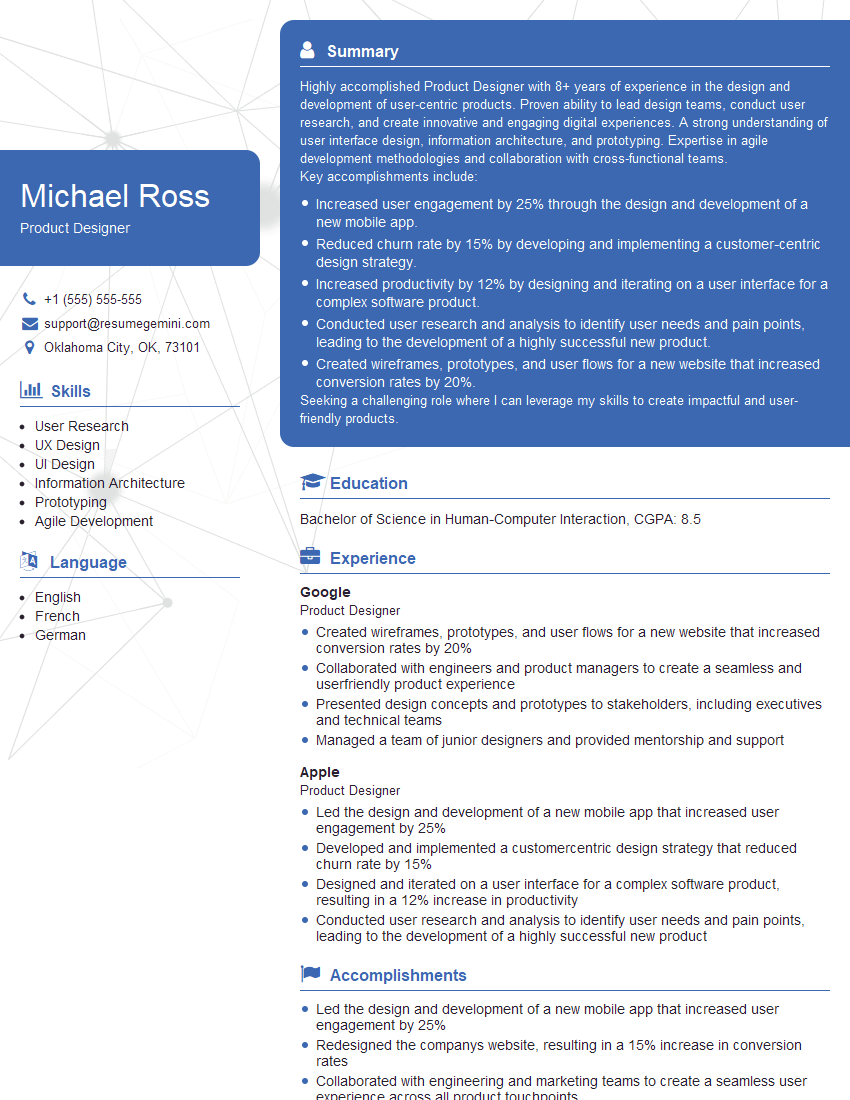
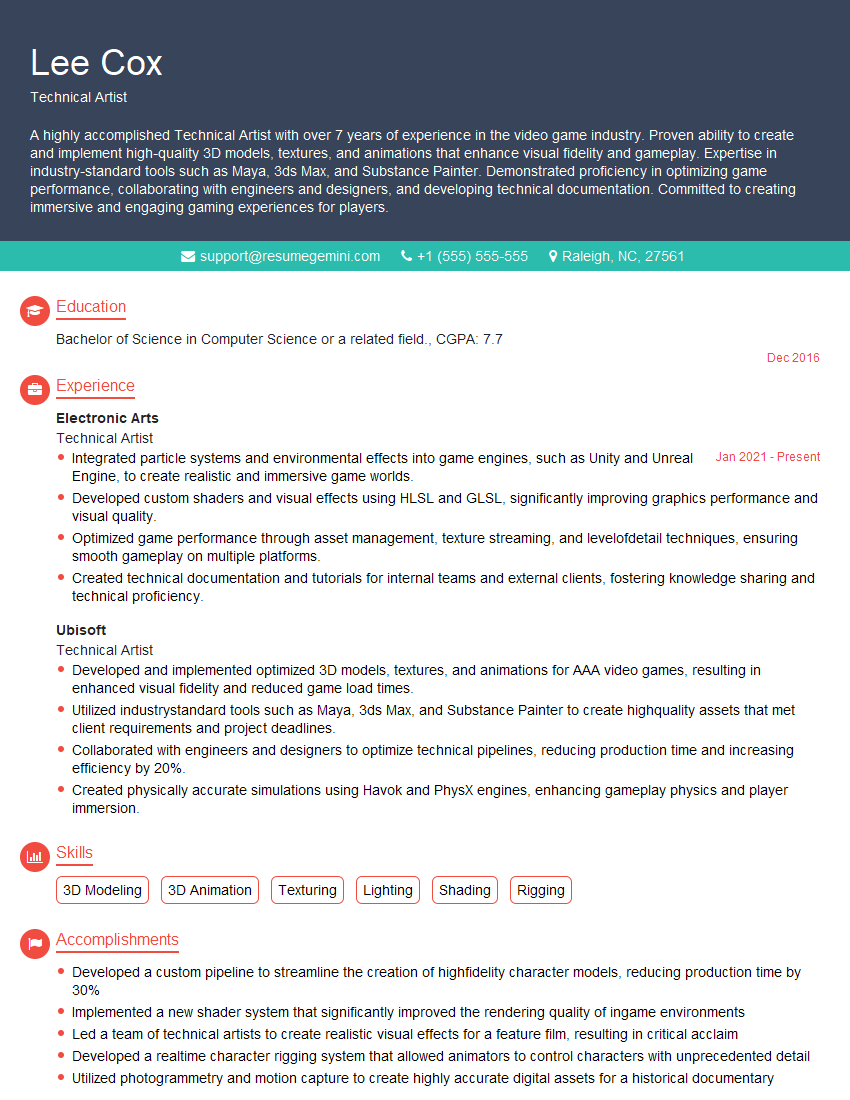
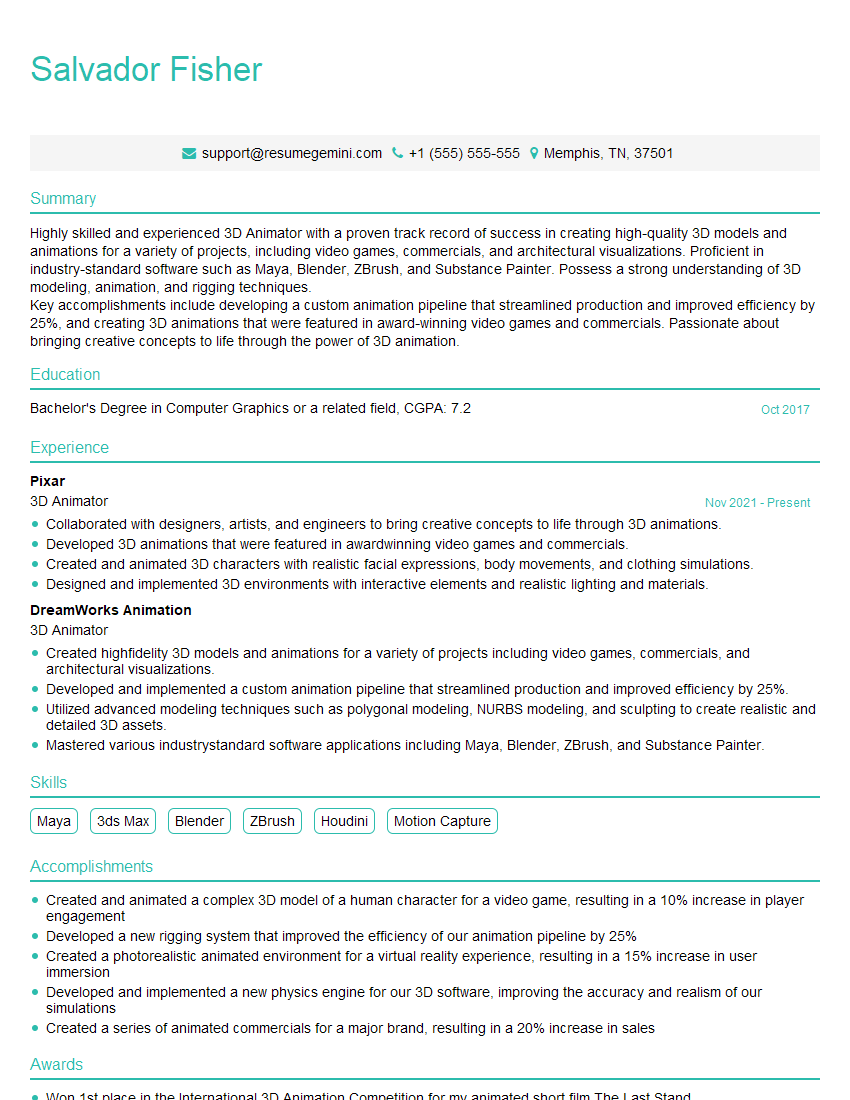
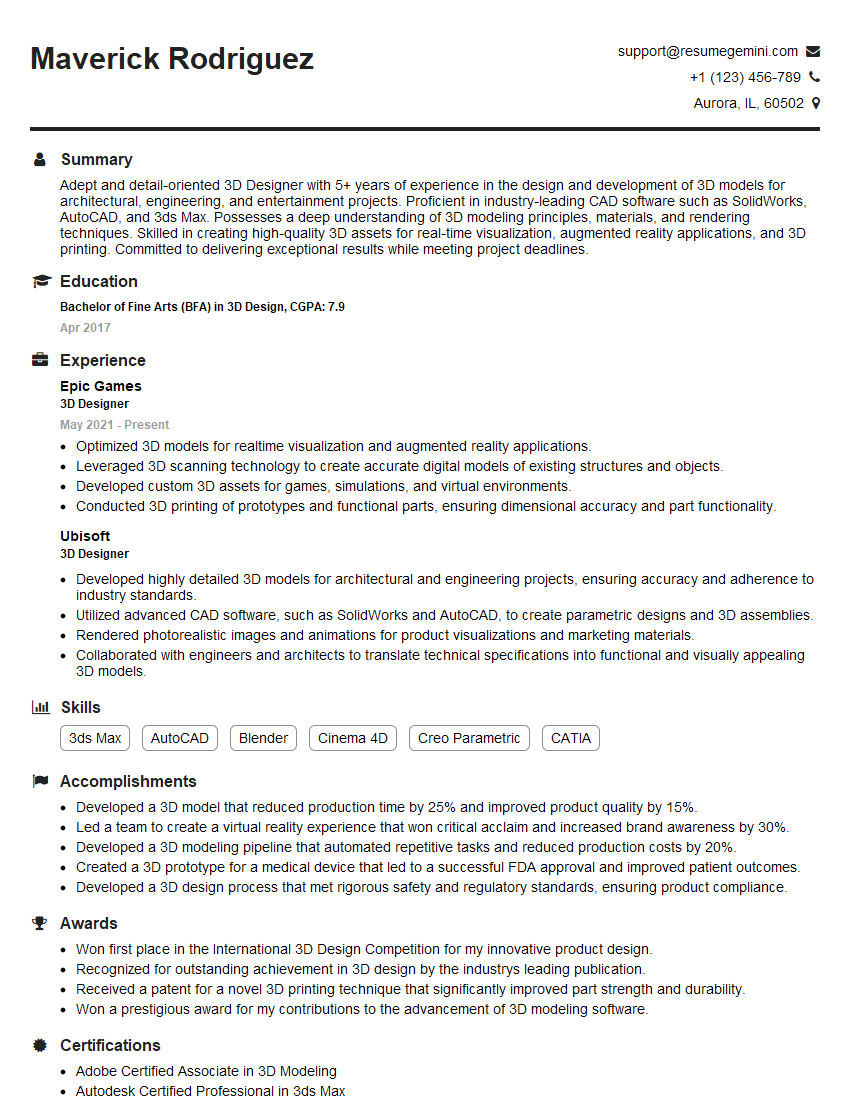
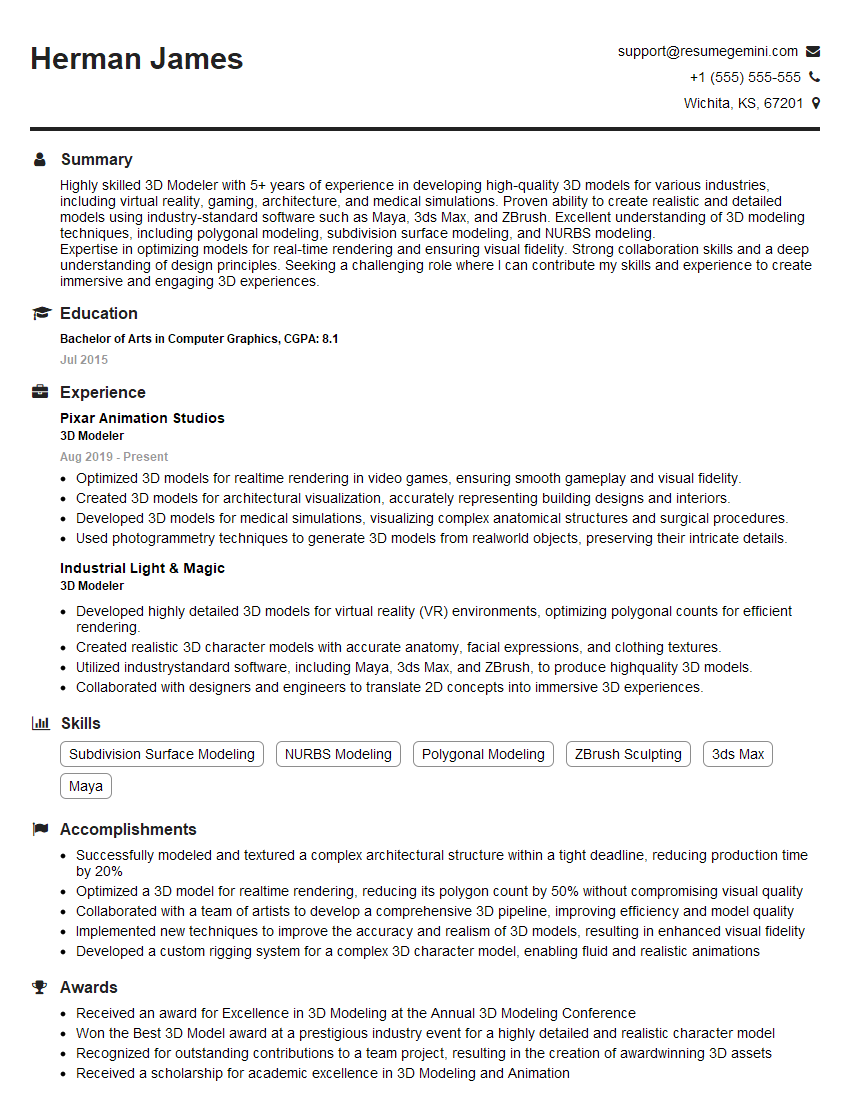
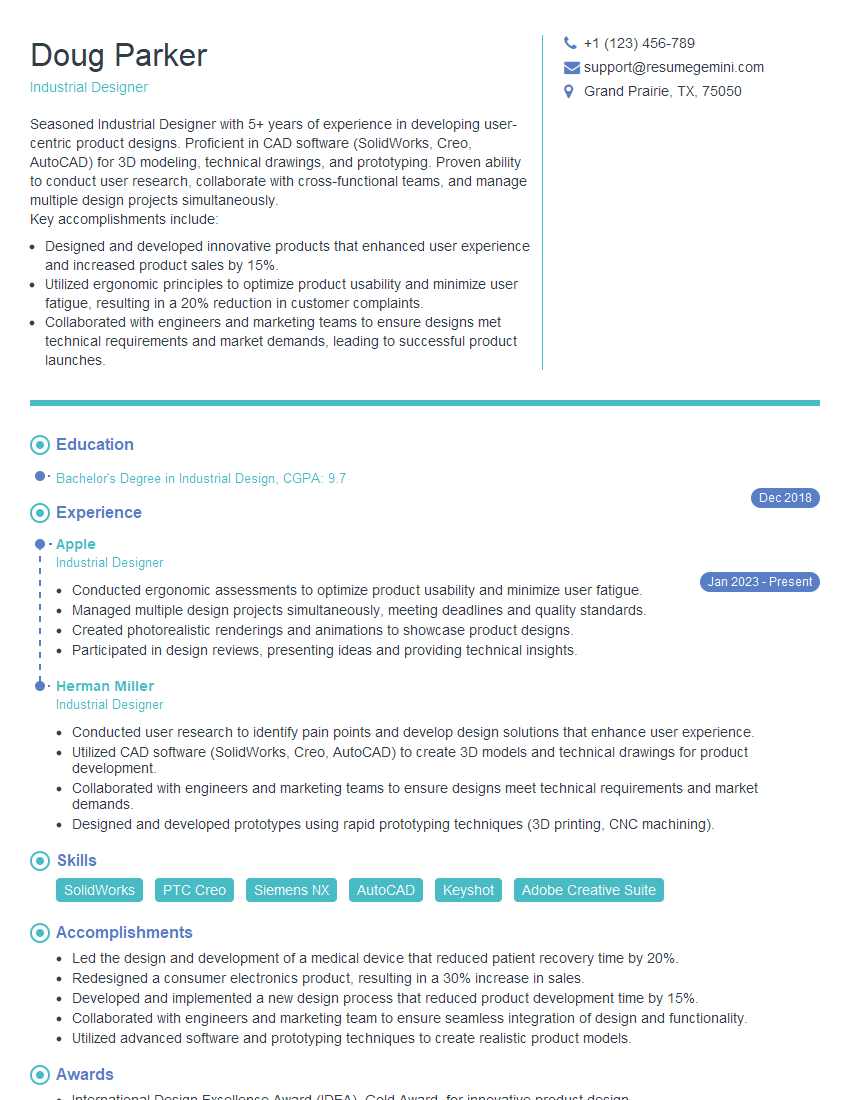
Mastering Vectary opens doors to exciting opportunities in 3D design and related fields. To maximize your job prospects, it’s crucial to have an ATS-friendly resume that highlights your skills and experience effectively. We strongly recommend using ResumeGemini to create a professional and impactful resume tailored to the specific requirements of Vectary-related roles. ResumeGemini provides tools and resources to help you craft a compelling narrative and showcase your abilities. Examples of resumes tailored to Vectary positions are available below to inspire you.
Explore more articles
Users Rating of Our Blogs
Share Your Experience
We value your feedback! Please rate our content and share your thoughts (optional).
What Readers Say About Our Blog
To the interviewgemini.com Webmaster.
Very helpful and content specific questions to help prepare me for my interview!
Thank you
To the interviewgemini.com Webmaster.
This was kind of a unique content I found around the specialized skills. Very helpful questions and good detailed answers.
Very Helpful blog, thank you Interviewgemini team.