Every successful interview starts with knowing what to expect. In this blog, we’ll take you through the top Resource Efficiency and Management interview questions, breaking them down with expert tips to help you deliver impactful answers. Step into your next interview fully prepared and ready to succeed.
Questions Asked in Resource Efficiency and Management Interview
Q 1. Define resource efficiency and its key principles.
Resource efficiency is about maximizing the value obtained from resources while minimizing their environmental impact and waste. It’s about doing more with less, essentially. The key principles revolve around:
- Reduce: Minimizing resource consumption in the first place through design, process optimization, and efficient use.
- Reuse: Extending the lifespan of products and materials through repurposing, repair, and refurbishment.
- Recycle: Processing waste materials to recover valuable resources and prevent them from going to landfills.
- Recover: Extracting energy or other valuable materials from waste that cannot be reused or recycled.
- Replace: Substituting resource-intensive materials or processes with more sustainable alternatives.
For example, a company might implement resource efficiency by designing products with fewer components, using recycled materials, and optimizing its manufacturing processes to minimize waste and energy consumption. This leads to cost savings and reduced environmental burden.
Q 2. Explain the concept of the circular economy and its relevance to resource efficiency.
The circular economy is a regenerative system that aims to keep resources in use for as long as possible, extracting maximum value from them while minimizing waste and pollution. Unlike the traditional linear ‘take-make-dispose’ model, the circular economy emphasizes:
- Designing out waste and pollution: Products are designed for durability, repairability, and recyclability from the outset.
- Keeping products and materials in use: Through reuse, repair, refurbishment, and remanufacturing.
- Regenerating natural systems: Using renewable energy sources and minimizing environmental impact.
The circular economy is deeply intertwined with resource efficiency. By designing for durability and recyclability, we inherently improve resource efficiency. For instance, a company producing clothing might switch to using recycled fabrics, extending the life of existing resources and reducing the demand for new materials. This lowers the company’s environmental footprint and resource consumption, directly embodying resource efficiency within a circular economy framework.
Q 3. Describe different methods for measuring resource consumption and efficiency.
Measuring resource consumption and efficiency involves various methods, depending on the resource and context. Common approaches include:
- Material Flow Analysis (MFA): Tracks the flow of materials through a system (e.g., a city, a company, or a product lifecycle), quantifying inputs, outputs, and stocks.
- Resource Accounting: Assigning monetary values to resources consumed to provide an economic perspective on resource efficiency.
- Environmental Footprint Analysis: Assessing the environmental impact of a product or process, including resource use, emissions, and waste generation (e.g., carbon footprint, water footprint).
- Energy Audits: Measuring energy consumption in buildings or processes to identify areas for improvement and reduce energy waste.
- Waste Audits: Quantifying waste generation to identify its sources, composition, and potential for reduction, reuse, or recycling.
For example, a manufacturing company could conduct an energy audit to identify energy-intensive processes, implement energy-efficient technologies, and track energy consumption over time to measure improvements. Similarly, a city might use MFA to track water consumption and identify areas where water conservation strategies are needed.
Q 4. How can lifecycle assessment (LCA) contribute to improved resource efficiency?
Lifecycle Assessment (LCA) is a comprehensive tool for evaluating the environmental impacts of a product or service across its entire life cycle—from raw material extraction to end-of-life disposal. By considering all stages, LCA helps identify hotspots of resource consumption and environmental damage.
For example, an LCA of a plastic bottle might reveal that significant environmental impacts occur during the production of the plastic resin (high energy consumption, emissions) and its disposal (landfill waste). This information allows for targeted improvements, such as substituting the plastic with a more sustainable material, optimizing the manufacturing process, or designing for easier recycling and reuse. This results in improved resource efficiency by minimizing waste, reducing energy usage, and lessening the environmental burden.
Q 5. What are the key performance indicators (KPIs) for measuring resource efficiency in your area of expertise?
Key Performance Indicators (KPIs) for resource efficiency vary depending on the specific context, but common examples include:
- Material intensity: The amount of material used per unit of output (e.g., kg of material/unit of product).
- Energy intensity: The amount of energy used per unit of output (e.g., kWh/unit of product).
- Water intensity: The amount of water used per unit of output (e.g., liters of water/unit of product).
- Waste generation rate: The amount of waste generated per unit of output (e.g., kg of waste/unit of product).
- Recycling rate: The percentage of waste materials recycled.
- Resource recovery rate: The percentage of materials recovered from waste.
In my area of expertise (sustainable supply chain management), I might also focus on KPIs like supplier sustainability scores, the proportion of recycled content in purchased materials, and the reduction in transportation emissions.
Q 6. Explain how material flow analysis can identify resource efficiency improvements.
Material Flow Analysis (MFA) is a powerful tool for understanding the flow of materials through a system. By quantifying inputs, outputs, and stocks of materials, MFA can pinpoint areas where resource efficiency can be improved.
For instance, an MFA of a manufacturing plant might reveal that a significant portion of raw materials is lost as waste during the production process. This information can guide process optimization to reduce waste, improve yields, and ultimately enhance resource efficiency. By tracing the flow of materials, MFA can also highlight opportunities for material substitution, recycling, or reuse. It offers a holistic view, allowing for a data-driven approach to improve resource efficiency within an organization.
Q 7. Describe various waste reduction strategies and their effectiveness.
Waste reduction strategies aim to minimize waste generation throughout the product lifecycle. Effective strategies include:
- Design for Disassembly and Recycling (DfDR): Designing products to be easily disassembled and recycled at the end of their life, maximizing material recovery.
- Lean Manufacturing: Optimizing production processes to minimize waste (materials, energy, time) and maximize efficiency.
- Waste Segregation and Sorting: Separating different waste streams to facilitate recycling and reuse.
- Waste-to-Energy: Converting non-recyclable waste into energy.
- Composting: Biodegrading organic waste to produce compost for soil improvement.
- Product Stewardship Programs: Extended Producer Responsibility (EPR) schemes hold producers accountable for the end-of-life management of their products.
The effectiveness of each strategy depends on the type of waste, the available technology, and the regulatory environment. For example, a company might implement lean manufacturing to reduce material waste, while simultaneously partnering with a recycling facility to improve the recycling rate of its products. A combination of these strategies usually yields the best results.
Q 8. How can you integrate resource efficiency into supply chain management?
Integrating resource efficiency into supply chain management requires a holistic approach, focusing on optimizing resource use at every stage, from raw material sourcing to product delivery and end-of-life management. It’s not just about reducing waste; it’s about maximizing value from each resource.
Sourcing: Partnering with suppliers who prioritize sustainable practices, using recycled materials, and minimizing transportation distances.
Manufacturing: Implementing lean manufacturing principles to minimize waste, optimizing energy consumption, and using water-efficient technologies.
Logistics: Optimizing transportation routes to reduce fuel consumption, utilizing reusable packaging, and exploring alternative transportation modes like rail or sea freight.
Product Design: Designing products for durability, repairability, and recyclability, extending their lifespan and reducing the need for replacement.
End-of-Life Management: Implementing robust recycling and waste management programs, recovering valuable materials, and minimizing landfill waste.
For example, a clothing company might switch to organic cotton, reduce water usage in its dyeing process, and implement a clothing recycling program, significantly improving its resource efficiency across its entire supply chain.
Q 9. What are the benefits of implementing a resource efficiency program?
Implementing a resource efficiency program yields numerous benefits, impacting both the bottom line and environmental sustainability. These benefits can be categorized into:
Cost Savings: Reduced material consumption, energy efficiency, and waste disposal costs directly translate to lower operational expenses.
Improved Efficiency: Optimized processes and reduced waste lead to increased productivity and operational efficiency.
Enhanced Brand Reputation: Demonstrating a commitment to sustainability attracts environmentally conscious customers and investors, strengthening brand image.
Reduced Environmental Impact: Lower greenhouse gas emissions, reduced water consumption, and less waste sent to landfills contribute to environmental protection.
Regulatory Compliance: Meeting or exceeding environmental regulations reduces the risk of penalties and legal issues.
Innovation and Competitiveness: Investing in resource efficiency often drives innovation, leading to the development of new technologies and processes that offer a competitive edge.
Imagine a manufacturing plant that invests in energy-efficient equipment. The initial investment pays off quickly through reduced energy bills, leading to improved profitability and a smaller carbon footprint.
Q 10. How do you prioritize resource efficiency initiatives?
Prioritizing resource efficiency initiatives requires a structured approach. I typically use a multi-criteria decision analysis (MCDA) framework, considering factors such as:
Environmental Impact: Assessing the potential reduction in greenhouse gas emissions, water consumption, and waste generation.
Cost-Benefit Analysis: Evaluating the initial investment costs versus the long-term cost savings and revenue generation potential.
Feasibility: Considering the technical feasibility, availability of resources, and required expertise.
Urgency: Prioritizing initiatives addressing immediate risks or opportunities, such as impending regulatory changes or significant resource waste.
Alignment with Strategic Goals: Ensuring that initiatives support the overall business strategy and sustainability objectives.
A simple scoring system can be used to rank potential projects. For example, each criterion can be scored on a scale of 1 to 5, and the total score determines the priority. This helps ensure a data-driven approach to resource allocation.
Q 11. Explain the role of technology in improving resource efficiency.
Technology plays a crucial role in improving resource efficiency, offering tools and solutions for monitoring, optimizing, and controlling resource consumption. Here are some key examples:
Smart Sensors and IoT: Monitoring energy, water, and material usage in real-time, providing data for optimization and anomaly detection.
Data Analytics and AI: Analyzing large datasets to identify patterns, predict resource needs, and optimize resource allocation.
Automation and Robotics: Automating processes to reduce waste, improve efficiency, and minimize manual intervention.
Simulation and Modeling: Simulating different scenarios to test the effectiveness of resource efficiency measures before implementation.
Building Management Systems (BMS): Optimizing energy consumption in buildings through automated control of HVAC systems, lighting, and other equipment.
For instance, a manufacturing company can use smart sensors to monitor energy usage in individual machines and identify areas for improvement, leading to significant energy savings. AI-powered predictive maintenance can further minimize downtime and resource waste.
Q 12. Describe your experience with ISO 14001 or other environmental management systems.
I have extensive experience working with ISO 14001, the internationally recognized standard for environmental management systems. In my previous role at [Previous Company Name], I led the implementation and maintenance of our ISO 14001 certification. This involved:
Developing and implementing an environmental management system: Defining environmental aspects and impacts, setting environmental objectives and targets, and establishing procedures for monitoring and controlling environmental performance.
Conducting environmental audits: Regularly auditing our operations to identify areas for improvement and ensure compliance with environmental regulations and our own internal policies.
Managing environmental incidents and emergencies: Developing response plans and procedures to handle environmental incidents and minimize their impact.
Training employees on environmental management: Ensuring that all employees understand their roles and responsibilities in the environmental management system.
Reporting on environmental performance: Regularly reporting on our environmental performance to management and stakeholders.
The ISO 14001 framework provided a structured approach to managing environmental aspects, leading to measurable improvements in our environmental performance and enhanced operational efficiency.
Q 13. How do you identify and mitigate environmental risks associated with resource use?
Identifying and mitigating environmental risks associated with resource use involves a systematic risk assessment process. This typically includes:
Identifying environmental aspects and impacts: This involves identifying all the activities and processes that have the potential to impact the environment, such as energy consumption, water usage, waste generation, and emissions.
Assessing environmental risks: Evaluating the likelihood and severity of potential environmental impacts. This might involve using risk matrices or other quantitative techniques.
Developing mitigation strategies: Implementing measures to reduce or eliminate the identified environmental risks. These might include implementing new technologies, modifying processes, or changing procurement practices.
Monitoring and review: Regularly monitoring environmental performance and reviewing the effectiveness of mitigation strategies. This allows for continuous improvement and adaptation to changing circumstances.
For example, a construction company might identify the risk of soil erosion during a project. Mitigation strategies could include implementing erosion control measures such as silt fences and revegetation.
Q 14. Explain your experience with different types of renewable energy sources.
My experience with renewable energy sources spans various technologies. I’ve worked on projects involving:
Solar Power: I have experience with both photovoltaic (PV) systems and concentrated solar power (CSP) technologies, including feasibility studies, system design, and project implementation. I understand the factors influencing solar energy generation, including solar irradiance and climate conditions.
Wind Power: I have knowledge of different wind turbine technologies, site assessment techniques for wind resource evaluation, and the integration of wind power into electricity grids. I’m familiar with the environmental impacts of wind farms and mitigation strategies.
Hydropower: My experience includes understanding different hydropower technologies, such as run-of-river, impoundment, and pumped storage. I am aware of the environmental concerns associated with hydropower projects, such as impacts on aquatic ecosystems and sedimentation.
Biomass Energy: I have knowledge of different biomass energy sources, such as wood pellets, agricultural residues, and dedicated energy crops. I understand the sustainability aspects of biomass energy, including carbon sequestration and land use change.
In a previous project, I helped a company assess the feasibility of installing a solar PV system on their factory roof, resulting in significant reductions in their electricity costs and carbon emissions.
Q 15. What are your strategies for motivating employees to adopt resource-efficient practices?
Motivating employees to embrace resource efficiency requires a multi-pronged approach that goes beyond simple mandates. It’s about fostering a culture of sustainability where resource conservation is seen as a shared value, not just a task.
- Lead by Example: Visible commitment from leadership is crucial. If executives are seen prioritizing resource efficiency, it sets the tone for the entire organization. For instance, I’ve seen significant improvements in paper usage when senior management adopted digital document workflows.
- Education and Training: Providing comprehensive training programs explaining the ‘why’ behind resource efficiency, along with practical tips and techniques, is vital. Interactive workshops, online modules, and even gamification can boost engagement.
- Incentives and Recognition: Reward systems recognizing and appreciating employees’ contributions to resource efficiency can significantly boost participation. These can range from small gifts and public acknowledgements to bonus schemes tied to performance indicators like reduced energy consumption.
- Empowerment and Ownership: Don’t just tell employees what to do; involve them in the process. Forming green teams or assigning sustainability champions within departments allows employees to take ownership and feel a sense of responsibility. I once worked with a team that designed an innovative recycling program, and their enthusiasm was contagious.
- Transparent Communication: Regular updates on the progress made towards resource efficiency goals keep employees informed and invested. Sharing success stories, celebrating milestones, and acknowledging challenges openly promotes a culture of continuous improvement.
Career Expert Tips:
- Ace those interviews! Prepare effectively by reviewing the Top 50 Most Common Interview Questions on ResumeGemini.
- Navigate your job search with confidence! Explore a wide range of Career Tips on ResumeGemini. Learn about common challenges and recommendations to overcome them.
- Craft the perfect resume! Master the Art of Resume Writing with ResumeGemini’s guide. Showcase your unique qualifications and achievements effectively.
- Don’t miss out on holiday savings! Build your dream resume with ResumeGemini’s ATS optimized templates.
Q 16. How do you measure the success of a resource efficiency initiative?
Measuring the success of a resource efficiency initiative involves establishing clear, measurable, achievable, relevant, and time-bound (SMART) goals upfront. Then, consistent monitoring and evaluation are necessary using both quantitative and qualitative methods.
- Key Performance Indicators (KPIs): These are critical. Examples include percentage reduction in energy consumption, water usage, waste generation, or carbon emissions. KPIs should be specific to the initiative’s goals. For example, instead of broadly measuring ‘reduced energy use’, a more specific KPI would be ‘15% reduction in electricity consumption in the manufacturing plant by the end of Q4’.
- Data Collection and Analysis: Implement systems to track and analyze relevant data. This might involve installing smart meters, using software for waste management tracking, or conducting regular audits.
Example: using a building management system (BMS) to monitor energy usage in real-time. - Cost Savings Analysis: Quantifying the financial benefits achieved through resource efficiency measures demonstrates the return on investment (ROI) and strengthens the case for continued initiatives. This includes reduced utility bills, lower waste disposal costs, and potential cost savings from using recycled materials.
- Employee Surveys and Feedback: Gathering employee feedback through surveys or focus groups helps assess the program’s effectiveness from a human perspective. Understanding employee perceptions and challenges can lead to improvements in the program’s design and implementation.
- Benchmarking: Comparing your performance to industry benchmarks or best practices provides context and identifies areas for improvement. This helps you understand how your organization is performing relative to similar organizations.
Q 17. Explain the concept of carbon footprint and strategies for its reduction.
A carbon footprint represents the total amount of greenhouse gases (GHGs) generated by our actions, whether directly or indirectly. Reducing it is crucial for mitigating climate change.
- Energy Efficiency: Improving energy efficiency through measures like upgrading to energy-efficient equipment, using renewable energy sources (solar, wind), and optimizing building insulation significantly reduces carbon emissions. Imagine switching to LED lighting – a simple change with substantial long-term impact.
- Sustainable Transportation: Promoting the use of public transport, cycling, walking, or electric vehicles reduces reliance on fossil fuel-based transportation. Implementing carpooling schemes or incentivizing employees to use sustainable commuting options can make a significant difference.
- Waste Management: Reducing, reusing, and recycling waste minimizes landfill emissions. Implementing robust recycling programs, composting organic waste, and promoting waste reduction strategies minimizes environmental impact.
Example: implementing a zero-waste-to-landfill policy - Sustainable Sourcing: Choosing materials and products from sustainable sources minimizes the carbon footprint associated with their production and transportation. Opting for recycled materials or those with lower carbon footprints can make a positive impact.
- Carbon Offsetting: Investing in verified carbon offset projects (like reforestation or renewable energy projects) can compensate for emissions that are difficult to eliminate. However, offsetting should not be seen as a replacement for emission reduction, but rather as a complementary measure.
Q 18. Describe your experience with water management and conservation strategies.
Water management and conservation are critical aspects of resource efficiency. My experience includes developing and implementing comprehensive water management strategies within organizations.
- Leak Detection and Repair: Implementing regular leak detection and repair programs is fundamental. This involves using advanced technologies for early detection and prompt repair, preventing significant water loss. I’ve used acoustic leak detection systems to pinpoint leaks in extensive piping networks, saving considerable water and money.
- Water-Efficient Fixtures and Appliances: Upgrading to low-flow toilets, faucets, and showerheads significantly reduces water consumption. Using water-efficient irrigation systems in landscaping reduces outdoor water use, making a meaningful difference, particularly in arid regions.
- Water Recycling and Reuse: Implementing greywater recycling systems for non-potable uses (such as irrigation) can significantly reduce potable water consumption. I’ve designed systems that collect and treat greywater from showers and sinks, diverting it for irrigation in office landscapes.
- Water Audits and Monitoring: Regularly auditing water usage patterns helps identify areas for improvement and track progress towards conservation goals. Using water meters and monitoring systems allows for real-time tracking and efficient management.
- Employee Awareness Campaigns: Educating employees about water conservation practices through training programs, posters, and newsletters encourages responsible water usage within the workplace. I’ve implemented successful campaigns using gamification and friendly competition to increase participation.
Q 19. How do you handle resource conflicts within an organization?
Resource conflicts arise when different departments or teams compete for limited resources. Addressing these conflicts requires a collaborative and fair approach.
- Resource Allocation Framework: Establish a clear and transparent framework for allocating resources based on organizational priorities and needs. This framework should be agreed upon by all stakeholders and regularly reviewed.
- Collaborative Problem-Solving: Facilitate discussions among affected parties to identify the root cause of the conflict and explore mutually beneficial solutions. Mediation or facilitated workshops can be effective tools.
- Data-Driven Decision Making: Use data to support decisions about resource allocation. This demonstrates transparency and objectivity and helps avoid biased choices.
- Prioritization and Trade-offs: When conflicts are unavoidable, a prioritization process is necessary. This may involve making tough trade-offs, weighing the benefits and costs of allocating resources to different projects or departments.
- Conflict Resolution Training: Equipping employees with conflict resolution skills enhances their ability to address resource conflicts constructively and find mutually agreeable solutions. Training can focus on negotiation, mediation, and communication strategies.
Q 20. What are the challenges in implementing a resource efficiency program, and how would you overcome them?
Implementing a resource efficiency program presents several challenges. Addressing these proactively is key to success.
- Resistance to Change: Employees may resist adopting new practices due to habit, lack of understanding, or perceived inconvenience. Addressing this requires strong communication, education, and demonstrating the benefits of change.
- Lack of Funding: Implementing resource efficiency measures often requires upfront investment. Securing funding requires demonstrating the long-term financial and environmental benefits and building a compelling business case.
- Data Availability and Measurement: Lack of data or difficulty in measuring the impact of initiatives can hinder progress. Implementing appropriate monitoring and measurement systems is crucial from the outset.
- Technological Limitations: The availability and cost of suitable technologies for resource monitoring and management can be a barrier. Exploring options and identifying cost-effective solutions is essential.
- Lack of Expertise: A lack of in-house expertise in resource management can limit the program’s effectiveness. Hiring experts or outsourcing some tasks can bridge the gap.
Overcoming these challenges involves proactive planning, stakeholder engagement, securing necessary resources, and building a strong team committed to the program’s success.
Q 21. Describe your experience with cost-benefit analysis related to resource efficiency projects.
Cost-benefit analysis (CBA) is fundamental to justifying resource efficiency projects. It involves systematically comparing the costs of implementing a project with the associated benefits.
- Identifying Costs: This includes the initial investment costs (equipment, software, training), ongoing operational costs (maintenance, energy), and any indirect costs (lost productivity).
- Quantifying Benefits: This involves identifying both tangible (reduced energy bills, lower waste disposal costs) and intangible benefits (improved brand image, enhanced employee morale). Quantifying intangible benefits requires creative approaches, such as assigning monetary values based on market research or expert opinions.
- Discounting Future Cash Flows: Since benefits often accrue over time, future cash flows need to be discounted to their present value using an appropriate discount rate.
- Sensitivity Analysis: Conducting sensitivity analysis helps assess how changes in key variables (e.g., energy prices, discount rate) might affect the overall outcome. This adds robustness to the CBA.
- Net Present Value (NPV) and Internal Rate of Return (IRR): These are common metrics used to assess the financial viability of a project. A positive NPV indicates that the project’s benefits exceed its costs, while the IRR represents the project’s rate of return.
For example, in a recent project, we used a CBA to justify the installation of a new energy-efficient HVAC system. The analysis demonstrated a significant positive NPV and IRR, securing funding and demonstrating the project’s financial viability.
Q 22. How do you communicate resource efficiency initiatives to different stakeholders?
Communicating resource efficiency initiatives effectively requires tailoring the message to resonate with each stakeholder group. For executive leadership, the focus should be on the financial benefits – reduced operational costs, improved profitability, and enhanced investor appeal. I’d present a clear ROI analysis, highlighting potential cost savings and increased efficiency. For operational teams, the emphasis shifts to practical applications and process improvements – simpler workflows, reduced waste, and improved workplace safety. Visual aids like workflow diagrams and data visualizations are key here. Finally, for employees, I’d focus on the positive environmental and social impact of their contributions, fostering a sense of ownership and pride in the company’s sustainability efforts. This could involve internal communications campaigns, gamification, and recognition programs to incentivize participation.
For example, when implementing a waste reduction program, I would present a financial model to the executives showing projected savings from reduced waste disposal fees and material costs. For the operations team, I’d provide training on improved sorting and recycling procedures, along with new equipment if necessary. And for employees, I’d showcase their collective impact through regular updates on waste reduction achievements and highlight individual contributions.
Q 23. Explain your understanding of sustainable procurement practices.
Sustainable procurement practices encompass the entire process of acquiring goods and services, prioritizing environmental and social considerations alongside cost and quality. It’s about making conscious choices that minimize the environmental footprint and promote ethical sourcing. This includes selecting suppliers who demonstrate commitment to sustainability, favoring products with recycled content or minimal packaging, and promoting energy-efficient technologies. It’s more than just ticking boxes; it’s about building long-term relationships with responsible suppliers and integrating sustainability into the entire procurement lifecycle.
Key aspects include life-cycle assessments (LCAs) to evaluate the environmental impact of products from cradle to grave, preference for products with certifications like LEED or Fair Trade, and the implementation of robust supplier evaluation systems that assess their environmental and social performance. For instance, instead of solely focusing on the lowest price for office paper, we might prioritize recycled paper from a supplier certified by the Forest Stewardship Council (FSC), even if slightly more expensive. This represents a longer-term investment in environmental responsibility.
Q 24. Describe your experience with data analysis and reporting related to resource consumption.
My experience with data analysis and reporting on resource consumption involves utilizing various tools and techniques to track, analyze, and present key performance indicators (KPIs) related to energy, water, and material usage. I’m proficient in using data visualization software to create compelling dashboards and reports that highlight trends and areas for improvement. I’ve utilized tools like Excel, Tableau, and Power BI to analyze data from different sources such as energy meters, water flow sensors, and material inventory systems. This data analysis informs strategic decision-making, identifying opportunities for optimization and measuring the impact of resource efficiency initiatives.
For example, in a previous role, I analyzed energy consumption data across different departments to identify significant variations. This revealed an energy-intensive process in one department, leading to targeted improvements, such as implementing more efficient equipment and modifying operational procedures. The subsequent reporting demonstrated a 15% reduction in energy consumption within that department, supporting the success of the improvement project.
Q 25. How do you stay updated on the latest trends and best practices in resource efficiency?
Staying updated on the latest trends and best practices in resource efficiency requires a multi-faceted approach. I actively participate in professional organizations such as the Association of Professional Engineers and Scientists (APESMA) and actively attend industry conferences and webinars. I regularly review industry publications, journals, and online resources to stay informed about new technologies, regulations, and methodologies. I also leverage online platforms like LinkedIn and research databases to connect with experts in the field and access cutting-edge research. Networking with colleagues and attending workshops and training sessions are equally vital in expanding knowledge and best practices.
For example, I regularly read publications from organizations like the Environmental Protection Agency (EPA) and the United Nations Environment Programme (UNEP) to keep abreast of global sustainability goals and best practices. I also actively participate in online forums and discussion groups to engage with other professionals and learn from their experiences.
Q 26. How would you approach a situation where resource efficiency improvements conflict with production targets?
When resource efficiency improvements conflict with production targets, a balanced approach is crucial. It’s not about choosing one over the other, but finding innovative solutions that optimize both. This often requires a collaborative effort involving operations, engineering, and sustainability teams. The first step is to thoroughly assess the conflict, quantifying the trade-offs between resource efficiency and production targets. This might involve analyzing the impact of different improvement scenarios on both metrics. Then, explore innovative solutions such as process optimization, investing in new technologies, or adopting alternative materials. Clearly communicating the long-term benefits of resource efficiency to leadership is essential to secure the necessary resources and support.
For instance, implementing a new energy-efficient manufacturing process might initially reduce production speed. However, by demonstrating the long-term cost savings and environmental benefits, coupled with potential operational improvements over time, we can secure management buy-in and find strategies to mitigate the short-term production dip, perhaps through shift optimization or workforce training.
Q 27. Explain your experience with implementing circular economy principles within a company.
My experience with implementing circular economy principles involves integrating waste reduction, reuse, and recycling into company operations. This includes designing out waste, keeping materials in use for as long as possible, and recovering value from waste materials. This requires a holistic approach, from product design and procurement to manufacturing processes and end-of-life management. In a previous role, I spearheaded a project to implement a closed-loop system for packaging materials, reducing waste sent to landfills by 60%. This involved collaborating with suppliers to source recycled content packaging and implementing an internal system for collecting and recycling used packaging materials. The result was cost savings through reduced waste disposal fees and enhanced brand reputation by demonstrating a commitment to sustainability.
Another example is the implementation of a product take-back program, offering customers incentives to return used products for repair or refurbishment. This extends product lifespan and reduces the need for new materials, aligning directly with circular economy principles of reducing, reusing, and recycling.
Q 28. Describe a time you successfully improved resource efficiency in a previous role.
In a previous role, I identified a significant opportunity to improve resource efficiency in our office’s paper consumption. By analyzing printing habits, we discovered a large amount of unnecessary printing, drafts, and duplicated documents. I implemented a company-wide campaign promoting digital document management, encouraging the use of electronic signatures and implementing a double-sided printing policy. To make the transition smoother, we provided training on digital workflow tools and offered incentives for reduced paper consumption. The result was a 40% reduction in paper consumption within six months, significantly reducing waste and associated printing costs. The success of this initiative was partly due to effective communication, providing clear incentives, and making the necessary tools and training readily available to everyone.
Key Topics to Learn for Resource Efficiency and Management Interview
- Lifecycle Assessment (LCA): Understanding the environmental impacts of products and services throughout their entire life cycle, from raw material extraction to disposal. This includes analyzing energy consumption, emissions, and waste generation.
- Sustainable Supply Chain Management: Implementing strategies to minimize environmental and social risks throughout the supply chain, focusing on sourcing sustainable materials, reducing transportation impacts, and promoting ethical labor practices. Practical application: Analyzing a company’s supply chain to identify areas for improvement in resource efficiency.
- Waste Management and Reduction: Developing and implementing strategies to minimize waste generation, improve recycling and composting rates, and explore innovative waste-to-energy solutions. This includes understanding different waste management hierarchies and applying them in practical scenarios.
- Circular Economy Principles: Understanding the concepts of designing out waste and pollution, keeping products and materials in use, and regenerating natural systems. Practical application: Designing a product with end-of-life management in mind to promote reuse or recycling.
- Energy Efficiency and Management: Implementing strategies to reduce energy consumption in buildings, processes, and transportation. This includes understanding different energy auditing techniques and applying them to reduce operational costs and environmental impact.
- Water Management and Conservation: Developing strategies to reduce water consumption and improve water quality. This includes understanding different water management technologies and their applications in various industries.
- Data Analytics and Reporting: Utilizing data analytics tools to track and monitor resource consumption, identify areas for improvement, and report on sustainability performance. This requires familiarity with relevant metrics and KPIs.
- Legislation and Regulations: Understanding relevant environmental regulations and compliance requirements related to resource efficiency and waste management. This is crucial for ensuring legal compliance and minimizing environmental risks.
- Cost-Benefit Analysis and ROI: Evaluating the financial viability of implementing resource efficiency initiatives, considering both initial investment costs and long-term savings.
Next Steps
Mastering Resource Efficiency and Management opens doors to exciting and impactful careers, offering opportunities to contribute meaningfully to a more sustainable future. To maximize your job prospects, creating a strong, ATS-friendly resume is crucial. ResumeGemini is a trusted resource to help you build a professional resume that showcases your skills and experience effectively. ResumeGemini offers examples of resumes tailored to Resource Efficiency and Management roles, providing you with valuable templates and guidance to craft a compelling application. Invest time in refining your resume; it’s your first impression on potential employers.
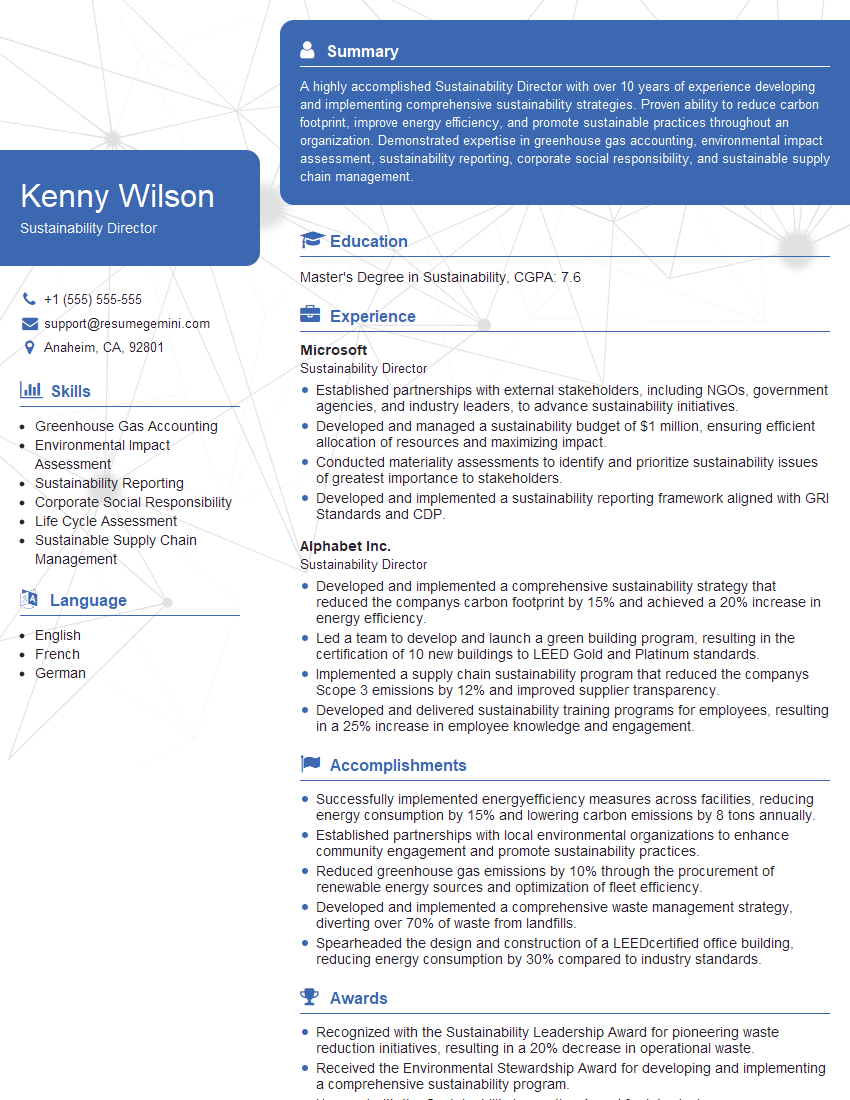
Sustainability Director Resume Sample
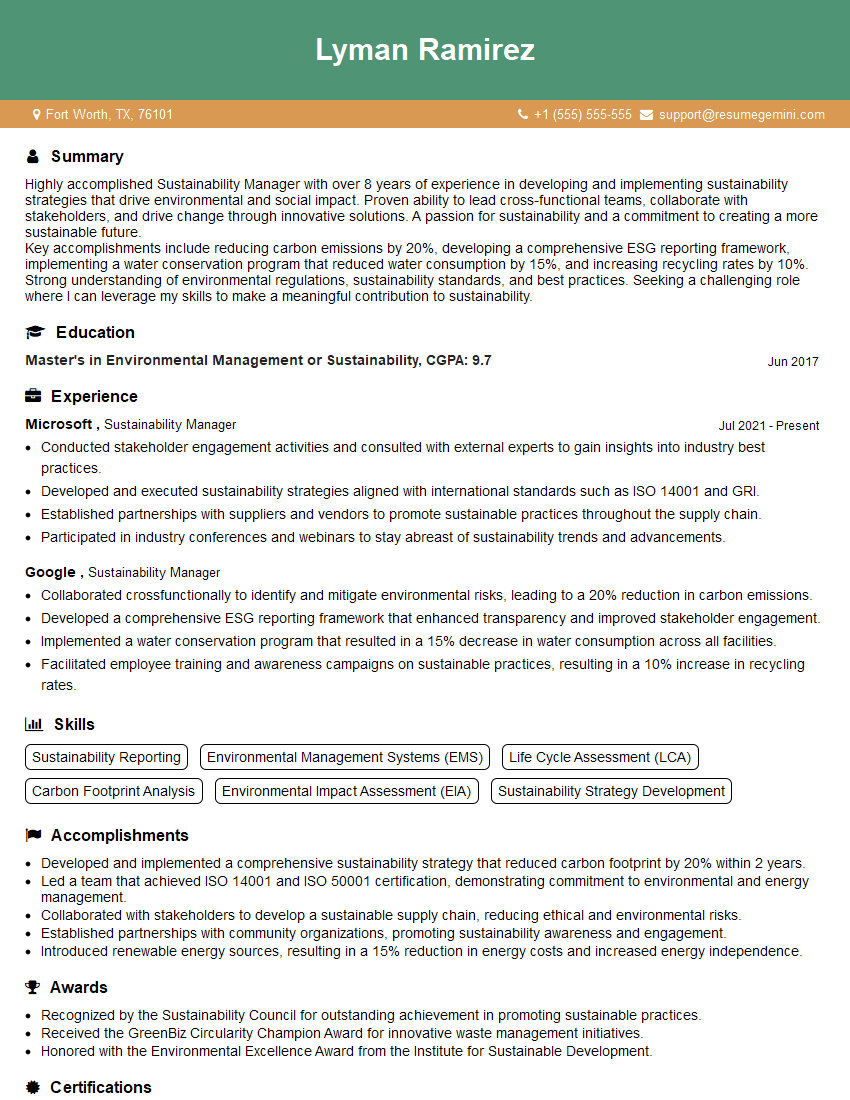
Sustainability Manager Resume Sample
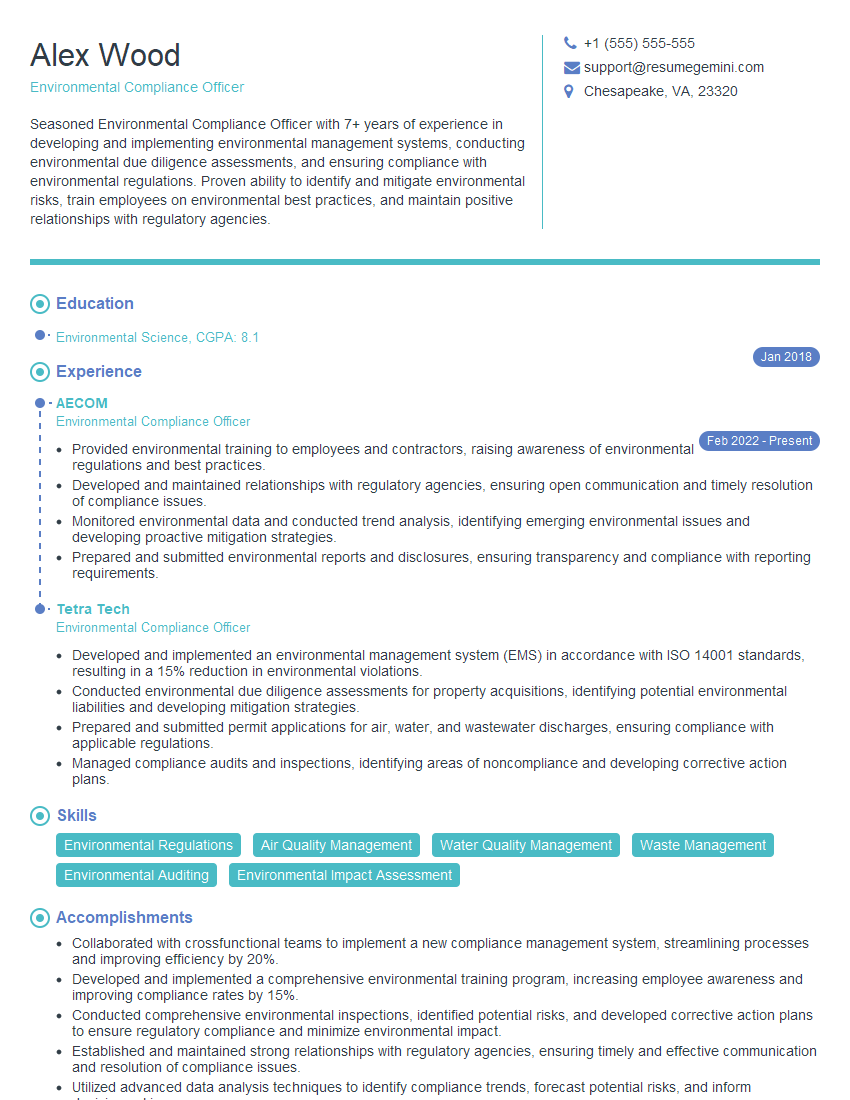
Environmental Compliance Officer Resume Sample
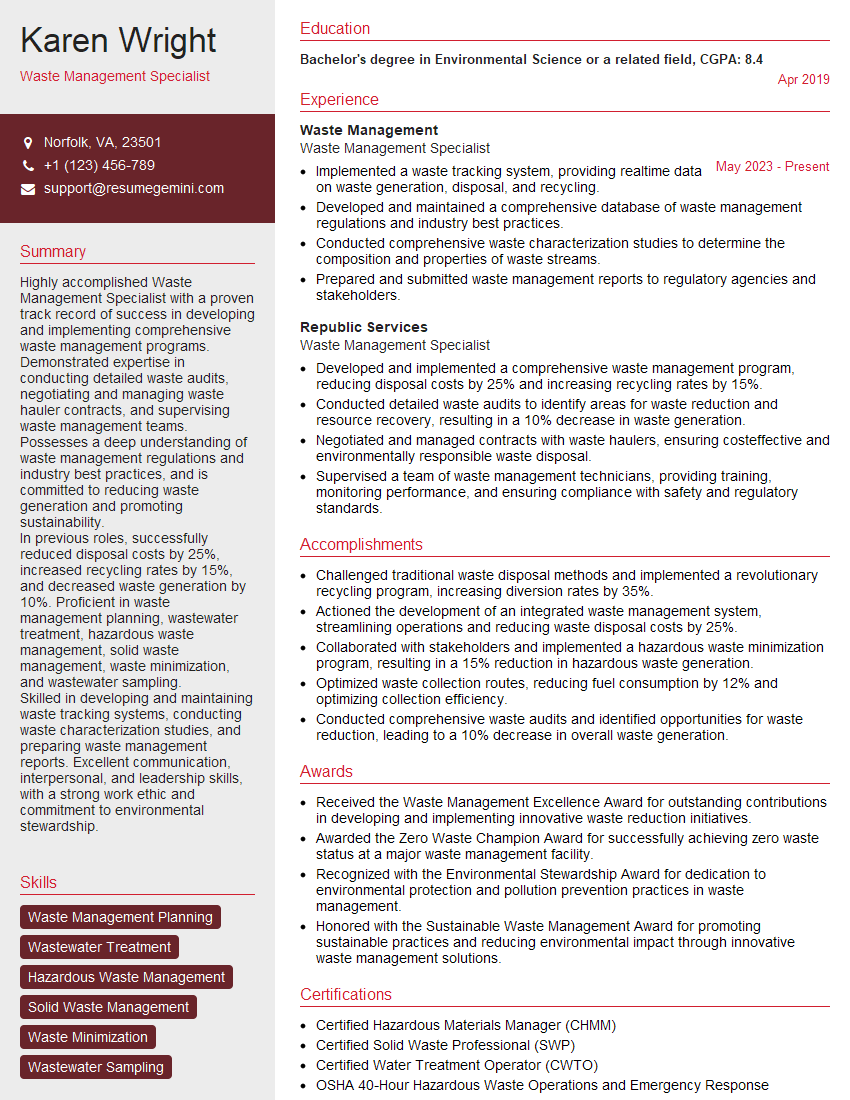
Waste Management Specialist Resume Sample
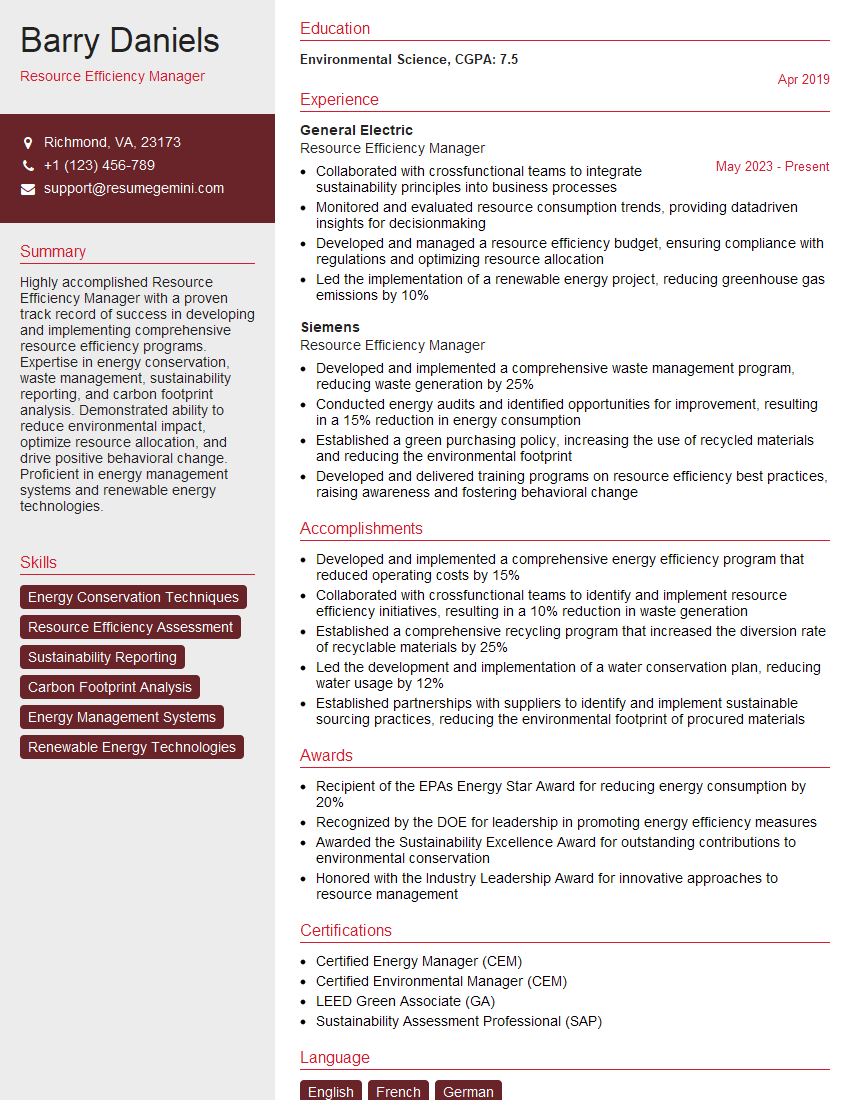
Resource Efficiency Manager Resume Sample
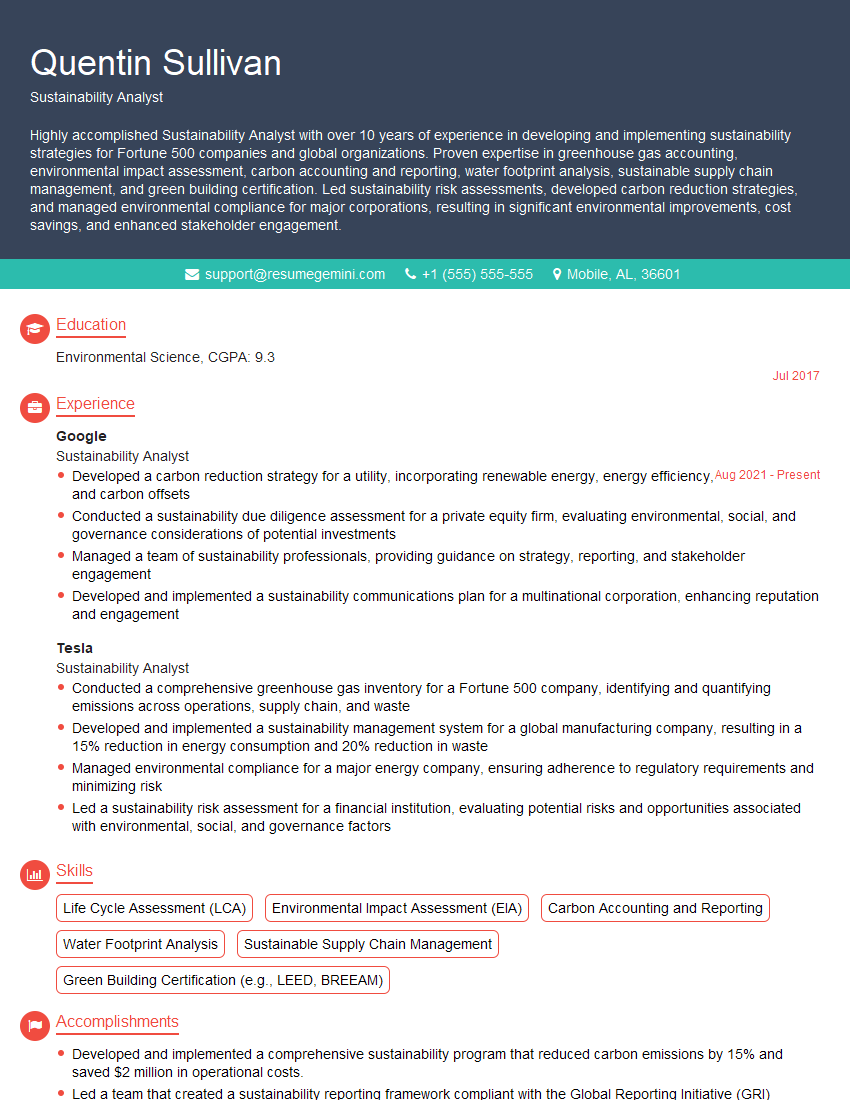
Sustainability Analyst Resume Sample

Sustainability Consultant Resume Sample
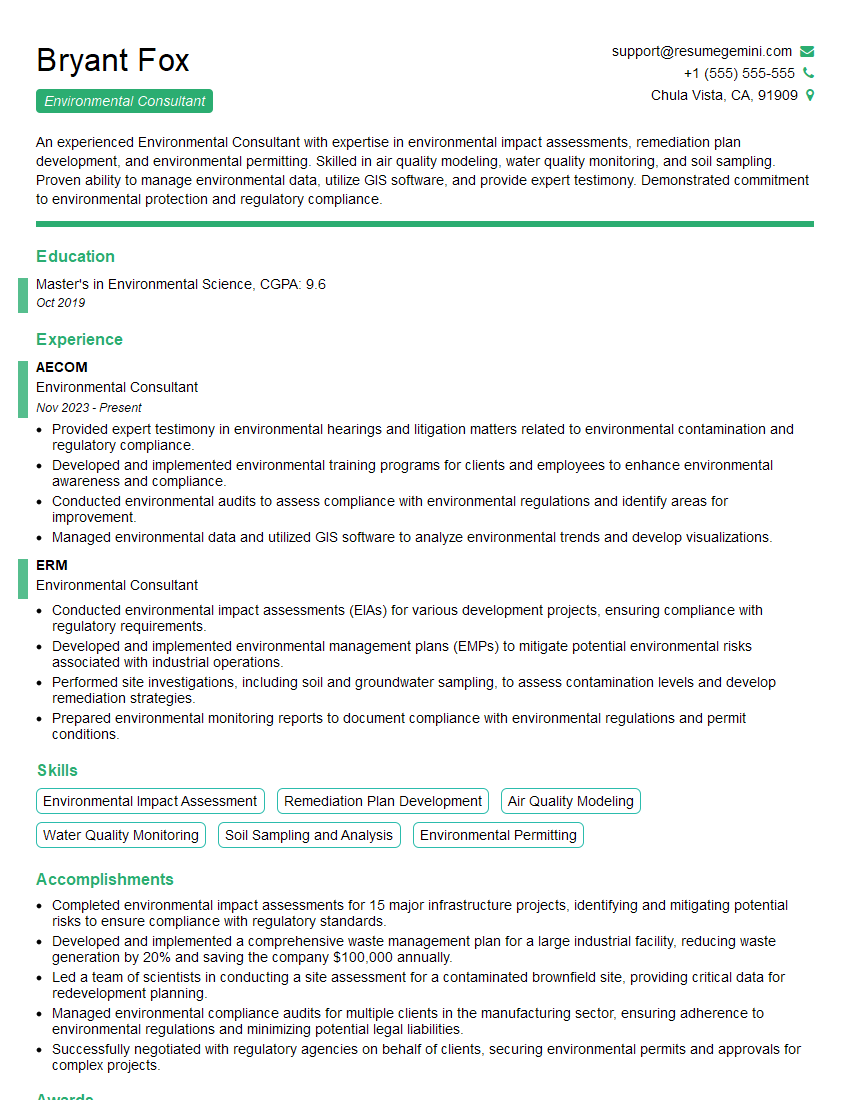
Environmental Consultant Resume Sample
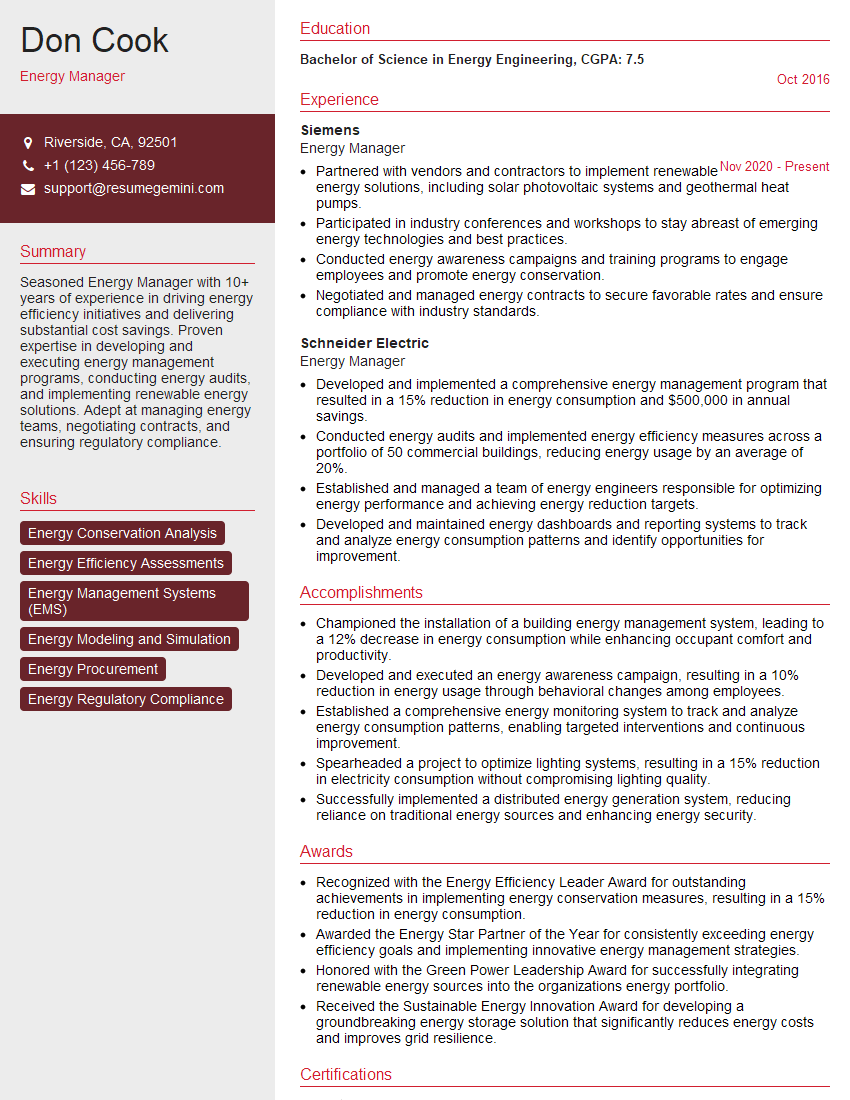
Energy Manager Resume Sample
Explore more articles
Users Rating of Our Blogs
Share Your Experience
We value your feedback! Please rate our content and share your thoughts (optional).
What Readers Say About Our Blog
To the interviewgemini.com Webmaster.
Very helpful and content specific questions to help prepare me for my interview!
Thank you
To the interviewgemini.com Webmaster.
This was kind of a unique content I found around the specialized skills. Very helpful questions and good detailed answers.
Very Helpful blog, thank you Interviewgemini team.