Preparation is the key to success in any interview. In this post, we’ll explore crucial Tree Growth and Yield Modeling interview questions and equip you with strategies to craft impactful answers. Whether you’re a beginner or a pro, these tips will elevate your preparation.
Questions Asked in Tree Growth and Yield Modeling Interview
Q 1. Explain the difference between a diameter distribution model and a height-diameter model.
Diameter distribution models describe the number or proportion of trees within a stand that fall into specific diameter classes. Think of it like a histogram for tree diameters. A height-diameter model, on the other hand, focuses on the relationship between a tree’s diameter and its height. It provides a way to predict a tree’s height based on its diameter (or vice versa).
For example, a diameter distribution model might tell you that in a particular forest plot, 20% of trees have diameters between 10 and 20 cm, 30% between 20 and 30 cm, and so on. A height-diameter model, however, would describe the relationship between these diameters and the corresponding average heights. A tree with a 25 cm diameter might be predicted to have a height of 15 meters, according to the model.
In essence, the diameter distribution model describes the overall size structure of the stand, while the height-diameter model describes the relationship between tree height and diameter, which is crucial for biomass estimation and growth prediction.
Q 2. Describe the assumptions underlying the Weibull distribution in modeling tree diameter.
The Weibull distribution is frequently used to model tree diameter distributions because of its flexibility in representing various shapes. However, several assumptions underpin its application:
- Independence: The diameters of individual trees are assumed to be independent of each other. This means the diameter of one tree doesn’t influence the diameter of another tree. In reality, competition can violate this, particularly at high densities.
- Homogeneity: The stand is assumed to be homogeneous regarding growth conditions. This means that all trees have similar opportunities to grow, disregarding microsite variations, which is rarely perfectly true in natural stands.
- Continuous Variable: Diameter is treated as a continuous variable, whereas in reality, it’s measured in discrete classes. This approximation is usually acceptable given sufficiently many data points.
- Shape, Scale, and Location Parameters: The Weibull distribution is characterized by three parameters: shape (k), scale (λ), and location (γ). These parameters are estimated from the observed data and define the specific form of the distribution. The shape parameter is particularly important because it determines the overall shape of the distribution. A low k value indicates a skewed distribution with many small trees, while a higher k value shows a more symmetrical distribution.
It’s crucial to understand that these assumptions are rarely perfectly met in real-world forest stands. Therefore, modelers need to consider the potential implications of violated assumptions and may need to adopt alternative models or employ more sophisticated techniques to address data complexities.
Q 3. What are the advantages and disadvantages of using distance-independent vs. distance-dependent individual tree models?
Distance-independent models predict tree growth based solely on individual tree characteristics like diameter and height, ignoring the effects of neighboring trees. Distance-dependent models, however, explicitly incorporate the influence of competing neighbors by considering their size and spatial location.
- Distance-Independent Advantages: Simpler to parameterize and use, computationally less intensive.
- Distance-Independent Disadvantages: Fail to capture important interactions between trees, leading to less accurate predictions, especially in dense stands.
- Distance-Dependent Advantages: More realistic representation of tree growth dynamics, improved accuracy, especially at high stand densities.
- Distance-Dependent Disadvantages: More complex to parameterize, computationally more demanding, requires detailed spatial data (e.g., tree coordinates).
Imagine two scenarios: a single tree in a large clearing and a tree surrounded by many similar-sized trees. A distance-independent model would predict the same growth for both, while a distance-dependent model would account for the competition experienced by the tree in the denser setting, predicting lower growth for the latter.
Q 4. How do you account for stand density in tree growth and yield prediction?
Stand density is a critical factor affecting tree growth and yield. It’s usually quantified by metrics such as trees per hectare (tph), basal area per hectare (m²/ha), or crown competition factor (CCF). These metrics are incorporated into growth and yield models in various ways:
- Direct inclusion as variables: Many models directly use stand density measures as predictor variables. For example, growth equations might include the basal area as an independent variable to account for competition effects.
- Density-dependent mortality models: Models explicitly consider mortality related to stand density, allowing for predictions of tree thinning through self-thinning processes.
- Competition indices: More sophisticated models use competition indices, which incorporate both the size and proximity of neighboring trees, providing a more nuanced measure of competition than simple stand density metrics. Examples include the Hegyi index or the Reineke stand density index.
In practice, the specific approach to incorporating stand density depends on the chosen model. For instance, a simple distance-independent model might use basal area as a predictor of growth reduction, while a distance-dependent model could use a competition index that accounts for the size and location of neighbors to refine growth estimates.
Q 5. Explain the concept of self-thinning and its impact on yield.
Self-thinning refers to the process where, in dense stands, trees die due to competition for limited resources (light, water, nutrients). It’s a density-dependent mortality process. As a stand grows, mortality increases to maintain a balance between available resources and the number of trees. This ultimately shapes the stand’s structure and yield.
The impact on yield is complex. Initially, self-thinning may decrease the number of trees, but the surviving trees often grow larger, leading to higher overall biomass or volume yield. However, if self-thinning is excessive, it can significantly reduce final yield. Therefore, managing stand density is crucial to optimizing yield by balancing the number of trees with their individual growth potential. Models often incorporate self-thinning rules, such as the -3/2 power law, to account for mortality due to competition and predict stand development over time.
Q 6. How are site index curves used in growth and yield modeling?
Site index curves relate site productivity (the potential growth of a stand at a specific site) to the height of dominant and co-dominant trees at a reference age. These curves are essential for calibrating growth and yield models.
Imagine two sites with identical management practices, yet one site produces significantly larger trees than the other. This difference is attributed to inherent site characteristics (soil quality, water availability, etc.). Site index curves help quantify this difference. They provide a measure of site quality – a high site index indicates high productivity, and vice versa. The site index is often incorporated as a parameter in growth and yield models, scaling growth predictions to reflect the productivity of the specific site under consideration. For example, a growth model might predict faster diameter growth for trees on a high site index location.
Q 7. What are some common sources of error in growth and yield predictions?
Growth and yield predictions are subject to several sources of error:
- Model error: The model itself might be a simplification of the complex growth processes, leading to inaccuracies. For example, the model may not fully capture the influence of climate variability or unforeseen disturbances.
- Measurement error: Inaccurate measurements of tree dimensions (diameter, height) or stand characteristics (density, species composition) can propagate through the model, resulting in biased predictions. This can arise from using less accurate tools or inconsistent measurement techniques.
- Data limitations: The model’s accuracy is constrained by the quality and quantity of the data used for parameter estimation. Insufficient data or data with high variability can result in uncertain parameter estimates and inaccurate predictions. Also, models trained on historical data might not perform well when faced with climate change or other emerging factors that were not present in the past data.
- Environmental factors: Unpredictable events like droughts, pest outbreaks, wildfires, or extreme weather conditions can significantly affect growth, leading to deviations from model predictions.
- Genetic variation: Individual tree growth rates can vary due to genetic factors which are rarely accounted for explicitly, which can affect the accuracy of predictions based on averages.
It’s crucial to consider these potential sources of error when interpreting growth and yield predictions. Evaluating the uncertainty associated with predictions using methods like bootstrapping or Bayesian approaches enhances the reliability and credibility of model outcomes.
Q 8. Describe different methods for calibrating and validating growth and yield models.
Calibrating and validating growth and yield models are crucial steps to ensure their accuracy and reliability. Calibration involves adjusting model parameters to best fit observed data from a specific forest stand or region. Validation, on the other hand, assesses the model’s performance on independent datasets – data not used in the calibration process. This helps determine how well the model generalizes to unseen data.
Several methods are employed for both:
- Calibration: Common techniques include least squares regression, maximum likelihood estimation, and various optimization algorithms. For example, we might use nonlinear least squares to find the parameter values that minimize the difference between predicted and observed tree diameters.
- Validation: Key metrics used for validation include root mean square error (RMSE), mean absolute error (MAE), R-squared (R²), and bias. A low RMSE and MAE indicate better model fit, a high R² suggests a strong relationship between predicted and observed values, and a bias close to zero shows that the model’s predictions are not systematically over- or under-estimating. We might use k-fold cross-validation to further improve robustness and reduce overfitting.
Imagine building a model to predict tree height. We calibrate it using data from a specific plantation, adjusting parameters until the model’s predictions closely match measurements from that plantation. Then we validate the model using data from a different, similar plantation. If the model performs well in both, we can have greater confidence in its accuracy and ability to generalize to other similar stands.
Q 9. How do you incorporate climate change projections into growth and yield forecasts?
Incorporating climate change projections into growth and yield models is essential for predicting future forest productivity and adaptation strategies. We can’t simply ignore the changing environmental conditions. Several methods achieve this:
- Direct incorporation of climate variables: Modify existing models to include climate variables like temperature, precipitation, and CO2 concentration as predictors. This might involve adding terms to the growth equations that reflect the influence of these climate factors.
- Scenario-based modeling: Run simulations using different climate change scenarios projected by global climate models (GCMs). This allows us to assess the range of possible impacts on forest growth under different future climate conditions.
- Dynamic vegetation models (DVMs): These sophisticated models simulate forest dynamics, considering species interactions, competition, and physiological responses to changing environmental conditions. They can provide more comprehensive projections than simpler growth and yield models.
For instance, we might use projected changes in temperature and precipitation from a GCM to modify a growth equation, accounting for increased drought stress on tree growth in a warmer, drier future. We then use the altered model to predict future stand volume or biomass under different climate change scenarios.
Q 10. Explain the role of competition in individual tree growth models.
Competition plays a vital role in individual tree growth models. Trees within a stand compete for limited resources such as light, water, and nutrients. This competition can significantly affect the growth rate and final size of individual trees. Several models explicitly incorporate competition:
- Distance-dependent models: These models consider the spatial arrangement of trees, calculating competition based on the distances to neighboring trees. The closer the neighbors, the stronger the competition.
- Competition indices: These summarize the competitive effect of neighboring trees on a focal tree. Examples include the Hegyi index or the Hart-Becking index, which calculate a single value representing the overall competitive pressure.
- Density-dependent models: These relate tree growth to stand density, assuming that higher densities lead to increased competition and reduced individual tree growth.
Imagine a dense forest. A small tree surrounded by large, mature trees will experience greater competition for sunlight and nutrients than a similar tree in a less dense stand. Individual tree models incorporate this by reducing the growth rate of the small tree based on the size and proximity of its competitors.
Q 11. What are the key factors affecting the accuracy of tree growth and yield models?
The accuracy of tree growth and yield models is influenced by a multitude of factors. Some key aspects include:
- Data quality: Accurate and reliable data on tree measurements, site characteristics, and environmental conditions are fundamental. Inaccurate measurements or missing data can lead to biased or unreliable model predictions.
- Model structure: The chosen model structure should appropriately represent the growth processes and ecological relationships within the forest stand. A simple model might be insufficient for complex ecosystems.
- Parameter estimation: Appropriate statistical methods should be used to estimate model parameters. Poor parameter estimation can result in inaccurate predictions.
- Model validation: A rigorous validation process using independent data is critical to ensure the model’s generalizability and reliability. Inadequate validation can lead to over-optimistic assessments of model accuracy.
- Spatial and temporal variability: Forest ecosystems are highly variable in space and time. Models need to account for this variability to provide accurate predictions across different sites and years. Ignoring this variability can lead to poor predictions in specific locations or time periods.
For example, using diameter measurements taken only once every 10 years can lead to significant uncertainty in growth estimations, affecting overall model accuracy. Similarly, failing to account for the impact of a major pest outbreak could make the model’s predictions completely unreliable for the years following the outbreak.
Q 12. How do you choose an appropriate growth and yield model for a specific forest stand?
Choosing the right growth and yield model depends on several factors related to the specific forest stand and the objectives of the modeling effort. There’s no single “best” model.
- Species composition: Models specific to particular species or species groups are often more accurate than general models. A model developed for Douglas fir won’t necessarily be suitable for predicting the growth of ponderosa pine.
- Stand characteristics: Factors such as stand age, density, site quality, and management history influence model selection. A model suited for a young, even-aged stand may not be appropriate for an uneven-aged, mature forest.
- Available data: The type and amount of data available will also influence the choice of model. Some models require more detailed data than others. For example, a model requiring individual tree measurements may not be feasible if only stand-level data is available.
- Modeling objectives: The goals of the modeling exercise (e.g., predicting future timber yield, assessing the effects of climate change, or evaluating silvicultural practices) dictate the appropriate level of model complexity and detail.
For example, if you need to predict the growth of a specific species in a young, intensively managed plantation with detailed individual tree data, a sophisticated individual tree model would be more appropriate. If you’re assessing the overall growth potential of a large region with only limited stand-level data, a simpler stand-level model might suffice.
Q 13. Describe the process of data collection for growth and yield modeling.
Data collection for growth and yield modeling is a meticulous process, requiring careful planning and execution. The specific data needed varies depending on the chosen model, but generally includes:
- Tree measurements: Diameter at breast height (DBH), height, and sometimes crown dimensions are measured for a sample of trees within the stand. Repeated measurements over time are crucial for assessing growth rates.
- Stand characteristics: Factors such as species composition, stand age, density, and site index (a measure of site productivity) are recorded.
- Environmental data: Climate data (temperature, precipitation, solar radiation), soil properties, and topographic features are collected. This might involve using weather stations, soil surveys, and remotely sensed data (e.g., LiDAR).
- Management history: Past silvicultural treatments (thinning, pruning, fertilization) significantly influence growth and should be documented.
Data collection often involves field surveys where crews systematically measure trees in sample plots, using tools like diameter tapes and hypsometers. Remote sensing techniques can supplement ground-based measurements, allowing for efficient data acquisition over larger areas. For example, using LiDAR to measure tree heights across an entire forest can greatly reduce fieldwork, although ground-truthing is still necessary to calibrate and validate the remote sensing data.
Q 14. How do you handle missing data in growth and yield datasets?
Missing data is a common challenge in growth and yield datasets. Several techniques can be employed to handle it:
- Deletion: Complete case deletion removes any observation with missing values. This is simple but can lead to substantial data loss, especially if many observations have missing data in different variables.
- Imputation: Missing values are replaced with estimated values. Common methods include mean imputation (replacing with the mean of the variable), regression imputation (predicting missing values using a regression model), and multiple imputation (generating multiple plausible values for each missing observation).
- Model-based methods: Incorporate the missing data mechanism into the model estimation process. This might involve using maximum likelihood estimation with appropriate assumptions about the missing data.
The best approach depends on the extent and pattern of missing data, and the characteristics of the dataset. For example, if a small number of trees have missing height measurements, imputation using the average height of similar trees might be appropriate. However, if a significant proportion of the data is missing, more sophisticated methods may be required to avoid introducing bias. Careful consideration of the missing data mechanism (e.g., missing completely at random, missing at random, or missing not at random) is crucial for selecting an appropriate method.
Q 15. Explain the difference between deterministic and stochastic growth and yield models.
The core difference between deterministic and stochastic growth and yield models lies in how they handle uncertainty. Deterministic models predict a single, precise outcome based on fixed inputs and a set of pre-defined equations. Think of it like a simple calculator – you input the numbers, and it gives you one definitive answer. These models are useful for understanding general trends but don’t account for the inherent variability in tree growth.
Stochastic models, on the other hand, incorporate randomness. They acknowledge that various factors influencing tree growth (climate, disease, competition) are unpredictable. Instead of a single prediction, they provide a range of possible outcomes, often expressed as probabilities. Imagine instead of a simple calculator, you have a sophisticated weather forecasting model that gives you probabilities of rain, sunshine, and wind for the next week – acknowledging the inherent uncertainty.
For example, a deterministic model might predict that a stand of pine trees will reach a volume of 1000 cubic meters after 20 years. A stochastic model, however, might predict a 60% probability of the volume being between 900 and 1100 cubic meters, reflecting the range of possible outcomes due to factors like varying rainfall.
Career Expert Tips:
- Ace those interviews! Prepare effectively by reviewing the Top 50 Most Common Interview Questions on ResumeGemini.
- Navigate your job search with confidence! Explore a wide range of Career Tips on ResumeGemini. Learn about common challenges and recommendations to overcome them.
- Craft the perfect resume! Master the Art of Resume Writing with ResumeGemini’s guide. Showcase your unique qualifications and achievements effectively.
- Don’t miss out on holiday savings! Build your dream resume with ResumeGemini’s ATS optimized templates.
Q 16. What are some common software packages used for growth and yield modeling?
Several software packages are commonly used for growth and yield modeling, each with its strengths and weaknesses. Popular choices include:
- FVS (Forest Vegetation Simulator): Developed by the USDA Forest Service, FVS is a widely used, highly versatile program capable of simulating growth and yield for a broad range of forest types. It’s known for its extensive databases and flexibility.
- Simfor: A powerful and flexible model particularly well-suited for simulating the effects of forest management practices. It’s often used for long-term planning and scenario analysis.
- Prognosis: Another strong contender, Prognosis offers a detailed approach, allowing for sophisticated modeling of competition and environmental factors.
- Heureka: This software is particularly useful for individual-tree-based modeling, where the fate of each individual tree in a stand is simulated.
- Growth and Yield Models implemented in R: The statistical programming language R, combined with various packages like
treeandlme4, provides immense flexibility for creating customized growth and yield models tailored to specific needs and datasets.
The best choice depends heavily on the specific application, data availability, and the user’s technical skills.
Q 17. Describe your experience using specific growth and yield modeling software.
Throughout my career, I’ve extensively utilized FVS and R for various projects. For instance, I employed FVS to model the long-term growth and yield of a large Douglas-fir plantation in the Pacific Northwest. This involved calibrating the model with existing inventory data, simulating various management scenarios (e.g., thinning regimes), and evaluating their impact on timber volume, stand density, and carbon sequestration. The results were crucial for developing sustainable management plans that balanced timber production with ecological considerations.
My experience with R involved developing a customized individual-tree growth model using data from a mixed hardwood stand. This required statistical analysis, model fitting using techniques like nonlinear mixed-effects models, and validation against independent datasets. This project demonstrated the power of R’s flexibility in addressing unique modeling challenges where existing software might fall short. #Example R code snippet: model <- lmer(DBH ~ age + site_index + (1|tree_id), data = mydata) (This is a simplified example of a model in R)
Q 18. How do you interpret the results of a growth and yield model?
Interpreting the results of a growth and yield model requires careful consideration of several factors. It's not just about the numbers; it's about understanding their implications. Here's a structured approach:
- Model Validation: Begin by evaluating how well the model's predictions align with observed data. Metrics like RMSE (Root Mean Squared Error) and R-squared are crucial here. A high accuracy indicates a reliable model.
- Sensitivity Analysis: Assess how changes in input variables (e.g., climate, soil conditions) affect the model's predictions. This helps understand the uncertainty associated with the projections.
- Scenario Analysis: Explore different management strategies (thinning, fertilization, etc.) by altering model inputs and analyzing the resultant yield and other relevant metrics (e.g., carbon storage, biodiversity).
- Uncertainty Quantification: For stochastic models, carefully examine the probability distributions of the outputs, focusing on the range of possible outcomes and their associated probabilities.
- Contextualization: Finally, interpret the results in the context of the specific forest stand, region, and management objectives. The results shouldn't be viewed in isolation but in relation to the larger ecological and economic landscape.
Q 19. How do you communicate complex growth and yield information to non-technical audiences?
Communicating complex growth and yield information to non-technical audiences requires clear, concise, and visual communication. Avoid jargon and use relatable analogies. For instance, instead of saying "the basal area increment was 2.5 square meters per hectare," you could say "the trees grew thicker, covering more ground area."
Effective strategies include:
- Visual aids: Use graphs, charts, and maps to illustrate key findings. Simple bar charts or line graphs showing projected timber volume over time are far more accessible than tables of complex data.
- Analogies and metaphors: Relate the projections to everyday concepts that the audience can understand. For instance, you could relate the projected growth to the growth of a child or the yield to the harvest from a farm.
- Storytelling: Frame the results within a narrative that connects the data to the audience's interests and concerns. For example, instead of simply stating that a particular management practice will increase yield, explain how it will contribute to improved economic benefits or ecological sustainability.
- Interactive tools: Tools such as interactive dashboards or maps allow non-technical users to explore the data independently, gaining a more intuitive understanding of the models' implications.
Q 20. What are some of the limitations of using growth and yield models?
Growth and yield models, while powerful tools, have limitations:
- Data limitations: The accuracy of any model is limited by the quality and quantity of the input data. Insufficient or biased data can lead to unreliable predictions. For instance, a lack of historical climate data can lead to inaccurate predictions.
- Model assumptions: All models make simplifying assumptions about the complexities of forest ecosystems. These assumptions, while necessary for model tractability, can introduce errors. For example, ignoring the effects of specific pests or diseases can undermine the accuracy.
- Extrapolation beyond the data range: Applying models beyond the range of data used to develop them (extrapolation) can lead to unreliable results. For instance, projecting forest growth to unprecedentedly high CO2 levels without supporting data can be highly speculative.
- Uncertainty and variability: Unpredictable events like major storms, fires, or disease outbreaks are difficult to incorporate into models, leading to uncertainties in predictions. Accounting for these uncertainties and variability through stochastic modeling is important.
It is crucial to acknowledge these limitations when interpreting and communicating the results of a growth and yield model.
Q 21. How can you improve the accuracy of tree growth and yield projections?
Improving the accuracy of tree growth and yield projections is an ongoing area of research. Several strategies can be employed:
- Improved data collection: Gathering more detailed and comprehensive data on tree growth, site conditions, and environmental factors is crucial. This includes data on tree genetics, microclimate conditions, soil properties, and detailed stand history.
- Advanced modeling techniques: Incorporating more sophisticated statistical methods and machine learning algorithms can lead to more accurate and robust models. This may involve exploring the use of techniques such as Random Forests, Gradient Boosting, or Neural Networks.
- Process-based models: Developing models that explicitly simulate the physiological processes underlying tree growth can lead to a more mechanistic understanding and potentially greater predictive power.
- Incorporating spatial variability: Using spatially explicit models that account for variations in site conditions across a landscape can significantly improve accuracy.
- Model calibration and validation: Rigorous calibration and validation against independent datasets are crucial to ensure the model’s reliability. Regular model updating as new data becomes available is essential.
- Uncertainty analysis: Incorporating uncertainty analysis throughout the modeling process allows for a clearer understanding of the limitations and variability associated with the projections.
Ultimately, a combination of these approaches, tailored to the specific context and research objectives, will result in the most accurate growth and yield projections.
Q 22. Describe your experience with different types of forest inventory data.
My experience with forest inventory data encompasses a wide range of data types, collection methods, and analytical approaches. I'm proficient in working with data from both traditional field inventories and remote sensing techniques.
- Traditional Field Inventories: This involves working with data collected through plot-based surveys, where measurements such as tree diameter at breast height (DBH), tree height, species, and crown characteristics are recorded for each tree within a sample plot. I'm experienced with analyzing data from various plot designs, including fixed-area plots, variable-radius plots (e.g., angle gauge sampling), and line transects. Data cleaning and error handling are crucial steps I routinely undertake.
- Remote Sensing Data: I have extensive experience integrating data from aerial photography, LiDAR (Light Detection and Ranging), and satellite imagery. This includes processing and analyzing data to derive forest attributes like canopy height, crown cover, and biomass, often using techniques like image classification and regression modeling. I'm also familiar with incorporating ancillary data, such as topographic maps, to enhance the accuracy of these derived attributes.
- Data Management and Analysis: I'm proficient in using various software packages, including R, Python, and specialized forestry software, to manage, analyze, and visualize forest inventory data. My skills extend to statistical modeling, spatial analysis, and data visualization techniques.
For example, in a recent project, I combined data from field inventories with LiDAR data to improve the accuracy of forest volume estimations, particularly in areas with complex terrain. This integrated approach yielded significantly more precise results than relying solely on field data.
Q 23. How do you incorporate spatial data into growth and yield models?
Incorporating spatial data into growth and yield models is crucial for accounting for the heterogeneity of forest stands and their environments. This involves explicitly considering the spatial location and relationships between trees and environmental factors.
- Geostatistics: Techniques like kriging are employed to interpolate spatially continuous variables such as soil properties, elevation, and climate data. This interpolated data can then be used as covariates in the growth and yield model.
- Spatial Point Pattern Analysis: This helps analyze the spatial distribution of trees within a stand, considering factors such as competition and spatial autocorrelation. This information can be included in individual-tree models to simulate the effects of neighborhood interactions.
- Geographic Information Systems (GIS): GIS software is essential for managing and visualizing spatial data. It facilitates the integration of different spatial datasets, and allows us to overlay growth and yield model predictions on maps to better understand their spatial implications.
For instance, I've used GIS to map predicted future timber volume across a forest landscape, considering factors like elevation and proximity to roads. This helped managers prioritize areas for harvesting based on accessibility and predicted yield.
Q 24. Explain the concept of stand-level growth models.
Stand-level growth and yield models treat the forest stand as a single entity, aggregating the characteristics of individual trees into stand-level variables. These models are simpler than individual-tree models but are efficient for large-scale applications.
They typically use stand-level variables such as:
- Total basal area: The sum of the cross-sectional areas of all trees in the stand.
- Mean tree diameter: The average diameter of trees in the stand.
- Stand density: The number of trees per unit area.
- Site index: A measure of the productivity of the site.
These models predict future stand attributes based on current stand characteristics and site factors. A common approach is using differential equations to model the change in stand attributes over time. Common models include the Stand-level distance-independent models, which simplify interactions between trees.
Example: A stand-level model might predict that a stand with a current basal area of 20 m²/ha and a site index of 20 will have a basal area of 25 m²/ha after 10 years, assuming a specific management regime.
Q 25. Explain the concept of individual-tree growth models.
Individual-tree growth models simulate the growth of each tree in a stand individually. They are more complex than stand-level models but provide greater detail and accuracy, particularly when considering factors such as competition and tree mortality.
These models account for:
- Individual tree characteristics: DBH, height, species, crown characteristics
- Competition: Effects of neighboring trees on individual tree growth
- Site factors: Soil type, climate, aspect
Many individual-tree models use a system of equations to project individual tree growth. They account for competition by calculating various competition indices, quantifying the impact of neighboring trees on the growth of a focal tree.
Example: An individual-tree model might predict that a specific tree with a DBH of 20 cm will grow to 25 cm in diameter over 10 years, considering its competition from surrounding trees and site conditions. Unlike stand-level models, individual-tree models also simulate mortality, enabling a more precise prediction of tree survival.
Q 26. How can you use growth and yield models to support forest management decisions?
Growth and yield models are essential tools for supporting a wide array of forest management decisions. They provide quantitative predictions of future forest conditions under different management scenarios, allowing managers to make informed choices that optimize desired outcomes.
- Silvicultural Planning: Models help determine the optimal thinning regimes, pruning schedules, and planting densities to maximize timber production, biodiversity, or other objectives.
- Harvest Scheduling: Models can be integrated into optimization algorithms to determine the most profitable or environmentally sound harvest schedules, considering factors such as timber prices, road access, and ecological considerations.
- Carbon Management: Models can predict carbon sequestration under different management regimes, helping forest managers make informed decisions about carbon offsets and climate change mitigation.
- Risk Assessment: Models can incorporate factors like wildfire risk, insect outbreaks, and disease susceptibility to predict the potential impacts of these risks on future forest conditions and inform risk management strategies.
For example, a manager might use a growth and yield model to compare the financial returns of different thinning strategies, considering the trade-offs between increased early growth and potential losses from reduced overall yield later in the rotation.
Q 27. How do you evaluate the economic implications of different forest management strategies using growth and yield data?
Evaluating the economic implications of forest management strategies requires integrating growth and yield data with economic parameters. This involves a combination of forestry and economic principles.
The process typically includes:
- Predicting future yields: Growth and yield models project the amount and quality of timber that will be produced under each management strategy.
- Estimating costs: This involves quantifying the costs associated with each strategy, including planting, thinning, harvesting, and transportation.
- Forecasting timber prices: Future timber prices are inherently uncertain; however, scenarios can be created based on market trends and projections. Price volatility must also be considered.
- Calculating net present value (NPV): The NPV of each strategy is then calculated by discounting future revenues (timber sales) and subtracting the costs. This is a standard approach in forestry economics.
- Sensitivity analysis: It is crucial to assess the sensitivity of the results to changes in key parameters like timber prices and growth rates to better understand the uncertainties inherent in the projections.
By comparing the NPVs of different strategies, forest managers can make informed decisions about which strategy will maximize profitability or meet other economic objectives.
Q 28. Describe your experience applying growth and yield modeling to solve real-world forestry problems.
Throughout my career, I have applied growth and yield modeling to solve various real-world forestry problems. I'll highlight a few examples:
- Optimizing thinning regimes in uneven-aged forests: I developed a spatially explicit individual-tree model to optimize thinning schedules in a mixed-species uneven-aged forest. This model incorporated tree-to-tree competition and accounted for the spatial arrangement of trees to mimic natural forest dynamics, maximizing timber yield while maintaining structural diversity.
- Assessing the impact of climate change on forest productivity: I collaborated on a project that used growth and yield models to assess the potential impacts of climate change on forest growth in a region. The model integrated climate change projections into growth equations and projected significant changes in forest productivity under various climate change scenarios.
- Developing sustainable forest management plans: I have helped develop sustainable forest management plans for various forest owners, integrating growth and yield projections with economic modeling and ecological considerations. The goal was to determine the most sustainable management strategies for achieving both economic and ecological goals.
In each of these projects, careful data collection, model calibration, and validation were crucial steps to ensure the accuracy and reliability of the model predictions. The results of these modeling efforts have been used to inform forest management decisions, leading to more efficient and sustainable forest management practices.
Key Topics to Learn for Tree Growth and Yield Modeling Interview
- Fundamental Growth Equations: Understand the theoretical underpinnings of various growth models (e.g., exponential, logistic, Weibull) and their assumptions. Be prepared to discuss their strengths and weaknesses.
- Data Analysis and Statistical Methods: Demonstrate proficiency in analyzing tree growth data, including regression analysis, model fitting, and error assessment. Be ready to discuss different statistical approaches to model selection and validation.
- Site Factors and Environmental Influences: Explain how environmental variables (climate, soil, competition) influence tree growth and how these factors are incorporated into yield models. Be able to discuss the limitations of models in diverse environmental conditions.
- Silvicultural Practices and Their Impact: Understand the effects of various silvicultural treatments (thinning, pruning, fertilization) on tree growth and yield. Be able to explain how these are incorporated into predictive models.
- Model Calibration and Validation: Discuss the process of calibrating and validating tree growth and yield models using real-world data. Understand the importance of model accuracy and reliability.
- Software and Tools: Familiarize yourself with commonly used software packages for tree growth and yield modeling (mention specific software if appropriate for your target audience, without naming specific tools). Be prepared to discuss your experience with data manipulation and model implementation.
- Forecasting and Projection: Explain how tree growth and yield models are used to predict future forest conditions and manage forest resources sustainably. Be ready to discuss the uncertainties inherent in long-term projections.
Next Steps
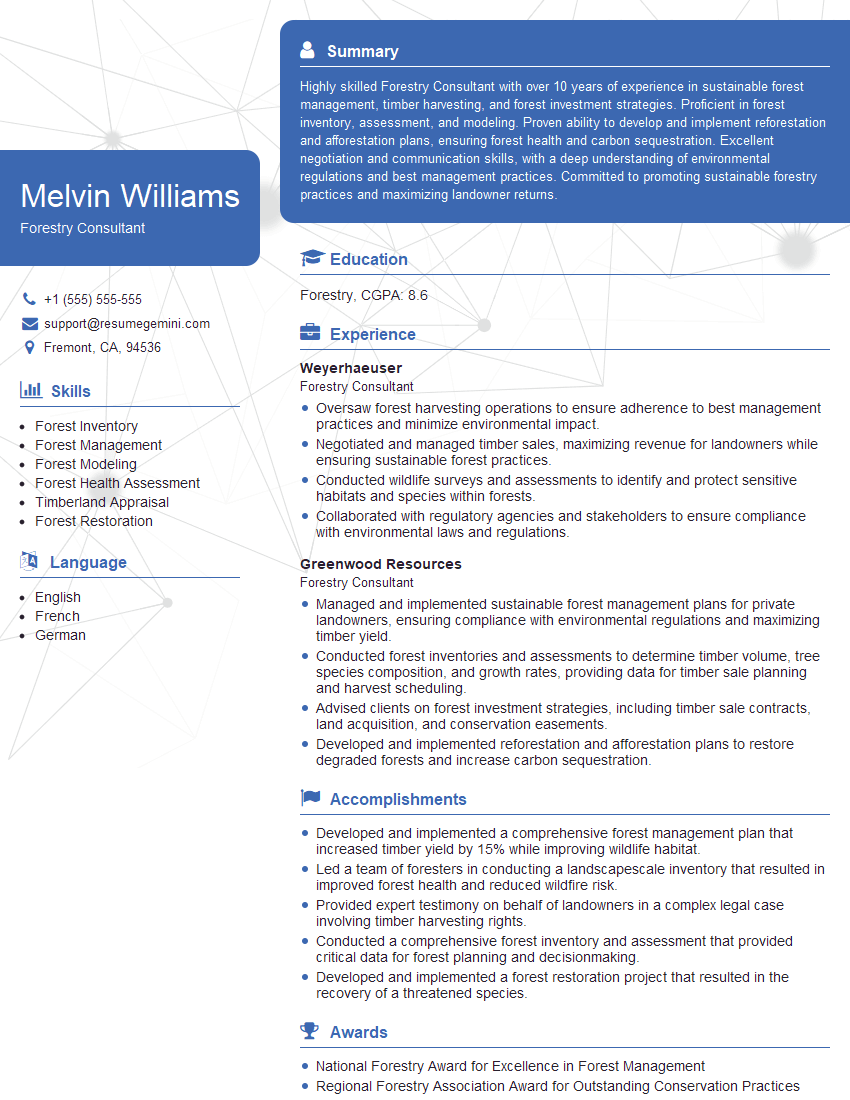
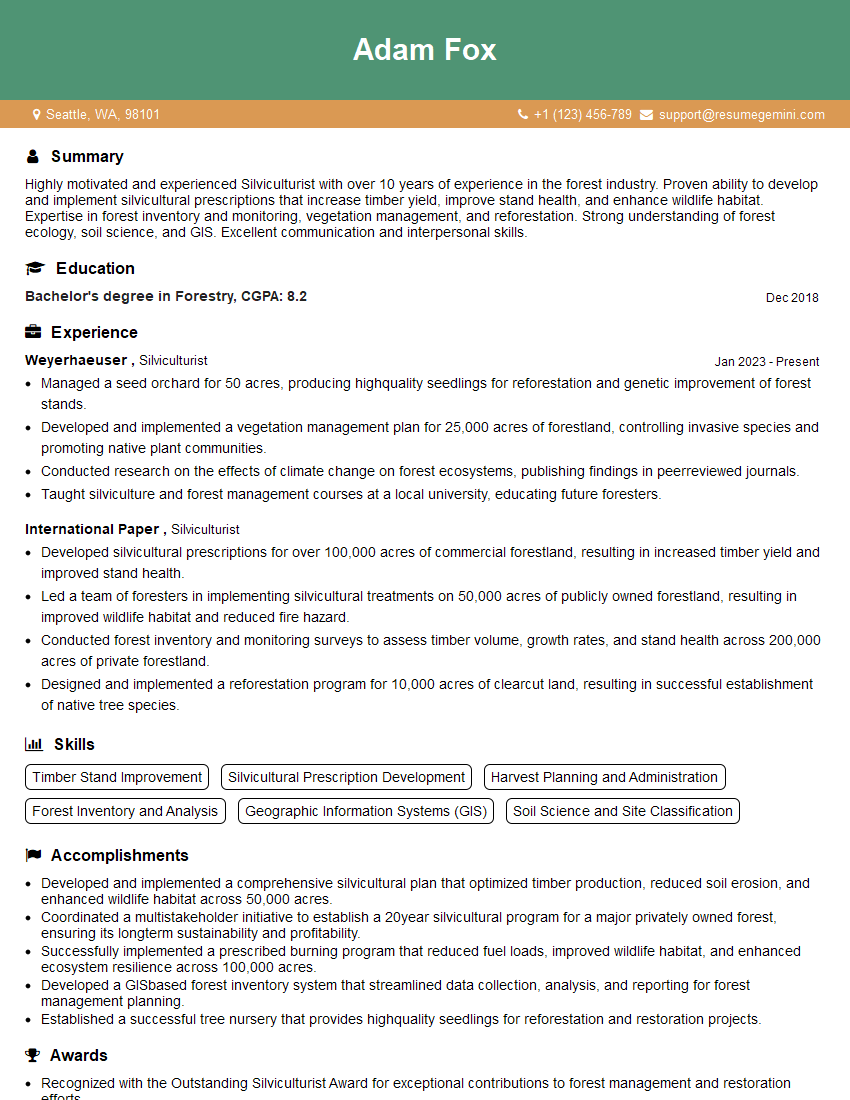
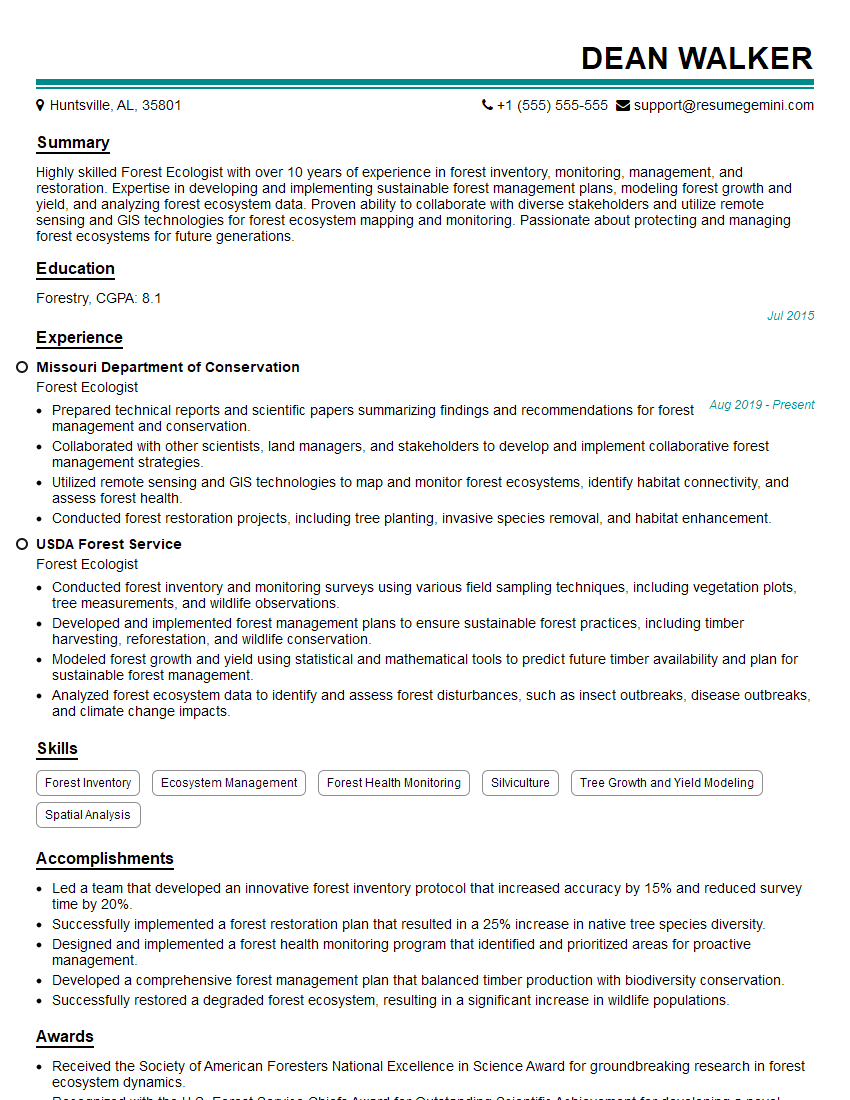
Mastering Tree Growth and Yield Modeling is crucial for career advancement in forestry and related fields. A strong understanding of these principles opens doors to exciting opportunities in research, management, and consulting. To significantly enhance your job prospects, invest time in crafting an ATS-friendly resume that highlights your skills and experience effectively. ResumeGemini is a valuable resource to help you build a professional and impactful resume tailored to your specific career goals. We provide examples of resumes specifically designed for candidates in Tree Growth and Yield Modeling to help you get started.

Explore more articles
Users Rating of Our Blogs
Share Your Experience
We value your feedback! Please rate our content and share your thoughts (optional).
What Readers Say About Our Blog
To the interviewgemini.com Webmaster.
Very helpful and content specific questions to help prepare me for my interview!
Thank you
To the interviewgemini.com Webmaster.
This was kind of a unique content I found around the specialized skills. Very helpful questions and good detailed answers.
Very Helpful blog, thank you Interviewgemini team.