Feeling uncertain about what to expect in your upcoming interview? We’ve got you covered! This blog highlights the most important Forest Road Design interview questions and provides actionable advice to help you stand out as the ideal candidate. Let’s pave the way for your success.
Questions Asked in Forest Road Design Interview
Q 1. Explain the importance of proper drainage design in forest road construction.
Proper drainage design is paramount in forest road construction because it directly impacts road longevity, safety, and environmental impact. Water is the biggest enemy of roads; it weakens the road structure, causing potholes, washouts, and ultimately, road failure. Effective drainage prevents water from accumulating on or near the road surface.
Think of it like this: a poorly drained road is like a sponge constantly saturated with water. This leads to erosion, undermining of the road base, and significant maintenance costs. A well-drained road, however, efficiently diverts water away, ensuring a stable and durable surface.
- Surface Drainage: This involves shaping the road surface to shed water quickly, using crowns (a higher center point) and side ditches. Proper grading is essential here.
- Cross Drains: These are small culverts or ditches installed perpendicular to the road to intercept and divert water flowing from side slopes.
- Longitudinal Drains: These run parallel to the road, collecting water from the side ditches and channeling it to larger drainage structures.
- Outlets: Properly designed outlets are crucial to safely discharge water away from the road and prevent erosion at the discharge point.
For instance, in a mountainous area with high rainfall, a robust drainage system with numerous cross drains and well-designed outlets is vital to prevent landslides and road damage. Conversely, in a drier region, a simpler system might suffice, but proper consideration must still be given to the anticipated water flow.
Q 2. Describe different types of forest road surfaces and their suitability for various conditions.
Forest road surfaces vary greatly depending on factors like budget, traffic volume, and environmental sensitivity. The choice of surface directly impacts maintenance, cost, and environmental impact.
- Gravel Roads: These are the most common, relatively inexpensive, and easily maintained. Suitable for low to moderate traffic volumes. However, they can be prone to rutting and dust formation, especially in dry climates.
- Stabilized Gravel Roads: Gravel mixed with a binding agent (like cement or lime) improves durability and reduces maintenance. Better suited to heavier traffic than regular gravel roads.
- Paved Roads: Offer the greatest durability and longevity, suitable for high traffic volumes. However, they are the most expensive option and can cause more significant environmental disruption during construction.
- Unpaved Roads: In areas requiring minimal impact, compacted earth roads are often sufficient for low traffic and lighter vehicles. These are usually temporary solutions.
For example, a logging road with high truck traffic would benefit from a stabilized gravel or paved surface. Conversely, a trail used for hikers and light recreational vehicles might only require a well-maintained gravel road or even a compacted earth road.
Q 3. How do you determine the appropriate road alignment considering environmental constraints?
Determining road alignment involves balancing engineering needs with environmental protection. It’s a crucial step that greatly impacts the project’s cost, environmental footprint, and long-term sustainability.
The process typically involves:
- Mapping and Site Analysis: Identifying sensitive areas like wetlands, streams, steep slopes, and areas with endangered species.
- Environmental Impact Assessment (EIA): Evaluating potential effects on the environment, identifying mitigation measures, and ensuring compliance with environmental regulations.
- Alignment Alternatives: Exploring different alignment options, considering factors like terrain, soil stability, drainage patterns, and proximity to sensitive areas. This may involve using Geographic Information Systems (GIS) software to analyze data and visualize potential impacts.
- Optimization: Choosing the alignment that minimizes environmental impact and maximizes engineering efficiency. This often requires balancing trade-offs between competing objectives.
For example, during the alignment process for a forest road, we may discover a wetland needing protection. We’d then adjust the alignment to avoid the wetland entirely or use alternative construction methods such as bridges to minimize disturbance.
Q 4. What are the key factors influencing the selection of culvert size and type for a forest road?
Selecting the appropriate culvert size and type is critical for ensuring efficient drainage and preventing erosion, washout, and road failure. It depends on several factors:
- Drainage Area: The size of the watershed contributing to the waterway. Larger drainage areas require larger culverts.
- Rainfall Intensity: The amount of rainfall expected in a given time period. Higher rainfall intensity demands larger culverts.
- Water Velocity: The speed of water flow in the drainage channel. Culverts must withstand the forces of high-velocity flows.
- Soil Type: The type of soil surrounding the culvert influences its stability and the potential for erosion.
- Traffic Load: The weight of vehicles using the road affects the culvert’s structural design. Heavier traffic requires stronger, more robust culverts.
- Type of Culvert: Several types exist, such as corrugated metal pipes (CMPs), reinforced concrete pipes, and box culverts, each with strengths and limitations. The choice depends on factors like cost, availability, and suitability for the site conditions.
Hydrologic models and engineering software are often employed to predict water flow and culvert sizing. For instance, a design might utilize a larger CMP culvert in an area with high rainfall intensity and a steep slope, whereas a smaller concrete pipe could suffice in a more gently sloping area with less intense rainfall.
Q 5. Explain the design process for a stable forest road embankment.
Designing a stable forest road embankment involves careful consideration of soil properties, drainage, and construction techniques to prevent settlement, slides, and erosion.
The process usually involves:
- Site Investigation: Thorough geotechnical investigation to assess soil properties, including bearing capacity, shear strength, and permeability. This helps determine the required embankment height and design parameters.
- Embankment Design: Determining the embankment’s geometry, including height, width, and slopes, considering stability and drainage. This often involves slope stability analysis using engineering software.
- Material Selection: Selecting appropriate fill materials with sufficient strength and drainage characteristics. Poorly graded materials should be avoided to prevent settlement and water accumulation.
- Construction: Employing proper construction techniques, such as compaction and layering, to ensure the embankment’s stability and prevent settling.
- Drainage Design: Incorporating a robust drainage system to prevent water accumulation within the embankment, which could lead to instability and erosion.
For example, in an area with weak, expansive clay soils, we’d require a wider, flatter embankment slope to minimize the stresses on the soil and increase stability. We might also incorporate geotextiles to improve drainage and prevent soil mixing.
Q 6. How do you account for soil erosion and sedimentation in forest road design?
Soil erosion and sedimentation are major environmental concerns in forest road construction. Poorly designed roads can lead to significant sediment pollution of streams and rivers, harming aquatic life and water quality.
Mitigation strategies include:
- Waterway Crossings: Designing proper waterway crossings using bridges or culverts to prevent stream erosion and sedimentation. This also minimizes disruption to aquatic habitats.
- Erosion Control Measures: Implementing erosion control practices during construction and operation, such as using sediment basins, check dams, and vegetated buffer strips. These help trap sediment before it reaches waterways.
- Road Design: Designing roads with minimal disturbance to the natural drainage patterns and incorporating features like water bars and ditch checks to reduce erosion on slopes. This helps manage runoff and prevent gullies.
- Proper Maintenance: Regular road maintenance is essential to prevent erosion and address any issues promptly. This includes repairing damaged areas and clearing ditches.
For instance, strategically placed water bars on steep slopes intercept runoff, reducing its velocity and minimizing erosion. Sediment basins near stream crossings trap sediment runoff before it enters the water body.
Q 7. What are the common methods used for slope stabilization in forest road construction?
Slope stabilization is essential to prevent landslides and erosion, ensuring the road’s long-term stability and safety. Several methods are employed, depending on the slope’s characteristics and severity:
- Revegetation: Planting vegetation on slopes helps bind the soil and improve stability. Selecting appropriate species that thrive in the local climate is important.
- Terracing: Creating level platforms along the slope reduces the overall slope angle, improving stability.
- Retaining Walls: Constructing retaining structures made of concrete, stone, or other materials to support the slope and prevent failure.
- Rock Bolting/Anchoring: Installing bolts or anchors into the slope to reinforce weak rock masses and prevent sliding.
- Geotextiles: Using geotextiles to improve drainage and soil reinforcement, preventing erosion and promoting stability. They act as a filter and separator.
- Shotcrete: Applying a sprayed concrete layer to stabilize loose soil or rock, providing a protective coating and improving the slope’s strength.
The choice of method depends on factors such as slope angle, soil type, and budget. For instance, a steep, rocky slope might require rock bolting and shotcrete, while a gentler slope with loose soil might benefit from terracing and revegetation.
Q 8. Discuss the significance of environmental impact assessments in forest road planning.
Environmental Impact Assessments (EIAs) are crucial in forest road planning because they identify and mitigate potential negative effects on the surrounding ecosystem. Think of it as a pre-construction health check for the environment. Before a single tree is felled for a road, an EIA meticulously examines the potential impacts on things like water quality, soil erosion, wildlife habitat, and air quality.
The process typically involves a detailed site survey, identifying sensitive areas like wetlands or endangered species habitats. We then analyze various road alignment options, comparing their impacts. For example, a road built through a steep slope may cause increased erosion compared to one following a gentler contour. The EIA helps us select the option minimizing environmental damage. It’s not just about compliance; a well-executed EIA can enhance the project’s long-term sustainability and public acceptance.
Mitigation measures, based on EIA findings, are integrated into the design. This could include using erosion control techniques, building culverts to maintain water flow, or designing wildlife crossings to minimize habitat fragmentation. The EIA results directly inform the design process, ensuring a balanced approach between road functionality and environmental protection.
Q 9. Describe your experience with different types of surveying equipment used in forest road design.
My experience encompasses a wide range of surveying equipment, essential for accurate forest road design. This includes:
- Total Stations: These highly accurate electronic instruments measure distances and angles, providing precise data for mapping terrain and establishing road alignments. I’ve used them extensively for creating detailed topographic maps – the essential foundation for any good road design.
- GPS (Global Positioning System) Receivers: GPS allows for rapid data collection over large areas, particularly useful in remote forest environments. We use differential GPS (DGPS) to achieve centimeter-level accuracy, far exceeding the accuracy needed for most forest road projects.
- Leveling Instruments: Essential for establishing accurate elevations along the proposed road alignment. This is critical for determining the grades (slopes) of the road, which directly impact vehicle safety and construction cost.
- Drones with LiDAR: In recent years, we’ve increasingly utilized drones equipped with LiDAR (Light Detection and Ranging) sensors. LiDAR efficiently generates highly accurate 3D point clouds of the terrain, drastically reducing fieldwork time and improving the precision of our digital terrain models (DTMs).
Each tool plays a specific role, and selecting the right combination depends on the project scale, budget, and accuracy requirements. For smaller projects, traditional methods might suffice; for larger, more complex projects, a combined approach leveraging different technologies is often more efficient and accurate.
Q 10. How do you ensure the safety of workers and the environment during forest road construction?
Worker and environmental safety are paramount in forest road construction. It’s not just a matter of policy; it’s a core value driving all our decisions. We achieve this through several strategies:
- Rigorous Safety Training: All personnel undergo comprehensive safety training before commencing work. This covers topics like operating heavy machinery, working at heights, hazard identification, and emergency response procedures.
- Site-Specific Safety Plans: These plans are developed for each project, detailing potential hazards and outlining mitigation measures. This includes procedures for working near steep slopes, handling potentially unstable terrain, and dealing with unpredictable weather conditions.
- Environmental Monitoring: Throughout the construction phase, we continuously monitor the environment for any signs of degradation. This includes regularly checking water quality, observing erosion patterns, and assessing impacts on wildlife. Any unforeseen issues are addressed immediately.
- Erosion and Sediment Control Measures: We employ various techniques to minimize erosion during construction, such as sediment basins, silt fences, and temporary vegetation. This protects water quality and prevents damage to surrounding ecosystems.
- Regular Safety Inspections: Frequent inspections ensure that safety protocols are followed and that any potential hazards are quickly identified and addressed. This is a proactive approach that minimizes risks significantly.
Ultimately, a safe and environmentally responsible project starts with a thorough planning stage and is maintained through strict adherence to safety protocols and ongoing environmental monitoring.
Q 11. Explain the principles of geometric design for forest roads (curves, grades, sight distances).
Geometric design is the backbone of safe and efficient forest roads. It encompasses:
- Curves: Proper curve design is crucial for safety and vehicle maneuverability. We consider factors like radius, superelevation (banking), and sight distance. Sharp curves are avoided whenever possible, and appropriate signage and pavement markings are used to guide drivers. The design needs to accommodate the types of vehicles expected to use the road.
- Grades (Slopes): Steep grades can be challenging for vehicles, especially loaded ones. We aim for grades that balance construction cost with operational efficiency. Steeper grades may require more expensive cut-and-fill operations, while excessively gentle grades increase the overall length of the road. The maximum grade depends on factors such as soil type and vehicle capabilities.
- Sight Distances: Adequate sight distance is essential for safety. This involves ensuring drivers can see far enough ahead to react to obstacles or other vehicles. Curve designs and clearing of vegetation along the road are carefully planned to ensure appropriate sight distances, preventing accidents.
These elements are interconnected. A steep grade might necessitate gentler curves to maintain adequate sight distances. The design process involves optimizing these parameters to achieve a safe and cost-effective road layout, tailored to the specific terrain and intended use.
Q 12. What are your experiences in using CAD software for forest road design?
CAD (Computer-Aided Design) software is indispensable in modern forest road design. I’m proficient in AutoCAD Civil 3D and other related software. These tools allow us to:
- Create accurate digital terrain models (DTMs): We import survey data into the CAD software to generate accurate representations of the terrain, providing a solid base for road design.
- Design road alignments and profiles: CAD allows us to experiment with different alignment options, optimizing for factors like grade, curves, and environmental considerations. We can easily generate cross-sections to examine earthwork volumes.
- Develop detailed construction drawings: CAD produces precise plans, sections, and details necessary for construction crews. This ensures clarity and minimizes errors during construction.
- Perform volume calculations: The software accurately calculates cut and fill volumes, essential for estimating construction costs and material requirements.
- Generate 3D visualizations: These visual representations aid communication with stakeholders and help visualize the impact of the road on the surrounding environment.
CAD significantly streamlines the design process, enhancing accuracy, reducing errors, and improving communication among the design team and contractors.
Q 13. How do you incorporate sustainable practices into forest road design?
Sustainable practices are integral to our forest road designs. Our approach involves:
- Minimizing environmental impact: We select road alignments that minimize disturbance to sensitive ecosystems, avoiding wetlands, steep slopes, and areas with high biodiversity.
- Erosion control: Implementing robust erosion and sediment control measures protects water quality and reduces the risk of landslides. This includes the use of bioengineering techniques like vegetated swales and check dams.
- Waterway crossing design: Properly designed culverts and bridges maintain natural water flow and minimize disruption to aquatic habitats.
- Using locally sourced materials: Whenever possible, we prioritize locally sourced materials for construction to reduce transportation costs and environmental impact.
- Revegetation: After construction, we focus on revegetating disturbed areas to restore the natural landscape as much as possible.
Sustainable design isn’t just an add-on; it’s woven into every aspect of the project, from initial planning to final construction and post-construction monitoring. It ensures the long-term health of the forest and minimizes the road’s overall ecological footprint.
Q 14. Describe your experience with hydraulic calculations related to culvert design.
Hydraulic calculations are crucial for culvert design, ensuring they can handle anticipated water flows during peak events like storms. My experience includes using various software packages and manual calculation methods. The process involves:
- Determining design discharge: This involves analyzing historical rainfall data and using hydrological models to estimate the maximum flow the culvert needs to accommodate.
- Selecting appropriate culvert size and type: Based on the design discharge, we choose a culvert size and type (e.g., corrugated metal pipe, reinforced concrete pipe) that ensures adequate capacity and structural stability.
- Calculating energy losses: We account for energy losses due to friction and changes in culvert geometry. This ensures accurate estimation of water surface profiles and ensures the culvert doesn’t become undersized under peak flows.
- Analyzing scour potential: Scour is the erosion of soil around the culvert inlet and outlet. We conduct scour analyses to ensure the culvert is adequately protected from erosion, preventing failure.
Accurate hydraulic calculations are essential for the long-term performance and safety of culverts, preventing costly failures and protecting both infrastructure and the environment. It’s about ensuring the culvert not only conveys water effectively but also does so safely and without causing downstream erosion problems.
Q 15. How do you address potential conflicts between road construction and wildlife habitats?
Minimizing the impact of forest road construction on wildlife habitats is crucial. My approach involves a multi-stage process starting with comprehensive pre-construction surveys to identify sensitive areas like breeding grounds, migration routes, and important foraging habitats. This involves using GIS mapping to overlay habitat data with proposed road alignments.
Next, I design roads to avoid these sensitive areas whenever possible. If avoidance isn’t feasible, I incorporate mitigation strategies such as:
- Stream crossings carefully planned and designed to minimize disruption to aquatic ecosystems. This includes using techniques like culverts, bridges, or stream bed crossings designed for low impact.
- Wildlife crossings, such as culverts sized for the target species or bridges designed to facilitate safe passage across the road.
- Road design features like reduced road width in sensitive areas, vegetated buffers along the road edges to provide habitat connectivity and reduce noise and light pollution.
- Construction timing coordinated with breeding seasons or migratory periods to minimize disturbance.
Finally, post-construction monitoring is essential to assess the effectiveness of the mitigation strategies and make adjustments as needed. For example, we might track wildlife movements using camera traps to evaluate if a wildlife crossing is being utilized effectively.
Career Expert Tips:
- Ace those interviews! Prepare effectively by reviewing the Top 50 Most Common Interview Questions on ResumeGemini.
- Navigate your job search with confidence! Explore a wide range of Career Tips on ResumeGemini. Learn about common challenges and recommendations to overcome them.
- Craft the perfect resume! Master the Art of Resume Writing with ResumeGemini’s guide. Showcase your unique qualifications and achievements effectively.
- Don’t miss out on holiday savings! Build your dream resume with ResumeGemini’s ATS optimized templates.
Q 16. What software or tools are you proficient in for forest road design and analysis?
Proficiency in specialized software is key to efficient and effective forest road design. I’m highly experienced using AutoDesk Civil 3D for detailed design, including road alignment, cross-sections, and earthworks calculations. I also utilize ArcGIS for spatial analysis, integrating terrain data, habitat maps, and other relevant datasets to optimize road placement and minimize environmental impact.
Furthermore, I leverage specialized software like MX Road for analyzing road stability and drainage design, considering soil properties and hydrological conditions. For hydrological modeling, I frequently use HEC-HMS or similar software to accurately predict runoff and erosion during and after construction. These tools allow for robust analysis and contribute to creating safe, environmentally sound road designs.
Q 17. Explain your experience in developing detailed construction plans and specifications.
Developing detailed construction plans and specifications is a critical aspect of my work, ensuring the project is built to the highest standards of quality and safety. This begins with creating comprehensive design drawings that include detailed cross-sections, longitudinal profiles, and plan views. These drawings show everything from the road alignment and drainage structures to the location of culverts and other features.
My specifications document details all aspects of construction, including materials, construction methods, quality control measures, and environmental protection procedures. For example, I would specify the type and grade of materials for sub-base and pavement layers, the exact dimensions of culverts, and the required erosion control measures. I also incorporate quality control checkpoints within the specifications to ensure the work complies with the design.
On a recent project in mountainous terrain, the specifications included detailed instructions for handling the steep slopes, including specific excavation techniques, retaining wall design, and slope stabilization methods to mitigate the risk of landslides.
Q 18. How do you manage project timelines and budgets for forest road projects?
Effective project management is crucial for forest road projects. I use a combination of techniques including critical path method (CPM) scheduling to identify the sequence of tasks and their dependencies, and Earned Value Management (EVM) to track progress against the planned schedule and budget.
For example, in a recent project, CPM scheduling helped identify potential bottlenecks in the construction process, allowing us to proactively adjust the timeline and resource allocation to avoid delays. EVM helped us monitor cost and schedule variances in real-time, enabling timely corrective actions. Regular progress meetings, detailed reporting, and proactive communication with stakeholders are essential for maintaining project control and transparency.
Contingency planning is vital, accounting for unpredictable events like extreme weather or unexpected site conditions. This involves creating a reserve budget and developing alternative plans to mitigate potential delays and cost overruns.
Q 19. How do you ensure compliance with relevant regulations and standards in forest road design?
Compliance with regulations and standards is paramount in forest road design. My approach involves a thorough understanding of all relevant legislation, including local, regional, and national regulations concerning environmental protection, water quality, and forest management. This includes staying updated on changes in regulations and best practices.
I incorporate these standards into the design process from the outset, ensuring all aspects of the project meet or exceed required standards. This includes obtaining necessary permits and approvals before commencing construction. For example, when working near waterways, I ensure compliance with water quality regulations by implementing erosion and sediment control measures, and obtaining permits for any work in riparian zones.
Throughout the project, I maintain meticulous records of all compliance-related activities, including environmental impact assessments, permit applications, and inspections, ensuring complete transparency and traceability.
Q 20. Describe your experience in conducting site investigations for forest road projects.
Site investigations are fundamental to successful forest road design. This multi-faceted process begins with a thorough desk study reviewing existing maps, aerial photographs, and geological reports to understand the site’s characteristics. This provides a preliminary understanding of terrain, soil conditions, hydrology, and potential environmental constraints.
Following this, I conduct field investigations, including detailed topographic surveys, soil sampling and testing, and hydrological assessments. This involves using equipment like GPS, total stations, and specialized probes to gather accurate data. For example, detailed soil testing helps in determining the road’s appropriate design parameters, including subgrade treatment, pavement thickness, and drainage solutions.
I also conduct visual inspections to identify potential environmental sensitivities, such as endangered species habitats or significant archeological sites. The data gathered during the site investigation informs all subsequent design decisions, ensuring the road is safe, durable, and environmentally responsible.
Q 21. Explain your approach to solving design challenges related to difficult terrain.
Difficult terrain presents unique challenges in forest road design. My approach involves creative problem-solving, combining engineering expertise with an understanding of the natural environment. This often involves utilizing specialized techniques and technologies to overcome obstacles.
For example, in steep or unstable terrain, I might incorporate retaining walls, reinforced embankments, or specialized drainage systems to ensure road stability. When crossing water bodies, alternative designs like bridges or specialized fords might be more suitable than simple culverts. I will consider the use of geosynthetics to stabilize unstable soils and prevent erosion.
In areas with sensitive ecosystems, I might use gentler construction techniques, minimizing earthworks and employing environmentally friendly materials. Each solution is tailored to the specific challenges of the terrain, prioritizing safety, durability, and minimizing the environmental impact. I often use 3D modeling software to visualize the design in complex terrain and identify potential problems before construction begins.
Q 22. What are the critical considerations for designing forest roads in areas prone to landslides?
Designing forest roads in landslide-prone areas requires a multifaceted approach prioritizing safety and environmental protection. The key is to minimize disturbance and enhance stability.
- Geotechnical Investigations: Thorough site analysis is paramount. This includes detailed geological surveys to identify unstable slopes, soil types, and potential failure mechanisms. We use techniques like slope stability analysis (using software like Slope/W) to determine the risk and inform design choices. For example, we might identify areas with high groundwater levels that require special drainage solutions.
- Route Selection: Careful selection of the road alignment is crucial. We avoid steep slopes and unstable formations whenever possible, opting for gentler grades and stable bedrock where feasible. This may involve surveying alternative routes and comparing their risks and costs.
- Drainage Design: Effective drainage is vital. We design systems to intercept and divert surface water, reducing the risk of erosion and saturation. This includes ditches, culverts, and retaining walls. Proper drainage prevents water from accumulating and weakening the soil.
- Erosion and Sediment Control: Measures to control erosion, such as vegetated swales, check dams, and riprap, are implemented. These techniques stabilize slopes and prevent sediment from entering waterways. We also consider the use of bioengineering techniques like planting native vegetation to strengthen the soil.
- Construction Practices: Construction methods should minimize soil disturbance. This may include phased construction, careful excavation techniques, and the use of geosynthetics to reinforce unstable areas.
For instance, in a recent project, we discovered a high-risk landslide zone. By incorporating a longer, gentler route and implementing robust drainage and erosion control measures, we successfully mitigated the risk and ensured the road’s long-term stability. This involved extensive collaboration with geotechnical engineers and environmental consultants.
Q 23. How do you incorporate public input into the forest road design process?
Public input is vital for successful forest road projects. It fosters collaboration, addresses concerns, and ensures the project aligns with community values and needs.
- Public Meetings and Workshops: We hold open meetings and workshops to present project details, solicit feedback, and address questions. We make presentations easily accessible, potentially using visual aids such as maps and 3D models.
- Online Surveys and Feedback Forms: Online platforms provide convenient ways for the public to share their input and participate remotely. We use tools that allow for anonymous responses and ensure data security.
- Stakeholder Engagement: We actively communicate with key stakeholders like local residents, environmental groups, and indigenous communities. This process may involve individual consultations or smaller group meetings tailored to the specific concerns of each group.
- Addressing Concerns and Incorporating Feedback: We carefully review all feedback and incorporate feasible suggestions into the design. When changes are made, we communicate those modifications transparently to the public.
In a recent project near a national park, we held several public meetings to discuss the environmental impact of the road. This resulted in modifications to the route that minimized disturbances to sensitive habitats and allowed for the preservation of key wildlife corridors. The transparent communication process built public trust and ensured project success.
Q 24. Describe your experience in working with stakeholders and obtaining necessary permits.
My experience working with stakeholders and obtaining permits involves building relationships, meticulous documentation, and a thorough understanding of regulations.
- Stakeholder Collaboration: I foster collaborative relationships with all stakeholders from project inception. This includes landowners, government agencies, environmental groups, and local communities. Effective communication is key to building consensus and navigating potential conflicts.
- Permitting Process: I navigate complex permitting processes, understanding the requirements of various regulatory bodies. This involves preparing comprehensive applications, including detailed plans, environmental assessments, and impact statements. This often requires adapting to the specific regulations of different jurisdictions.
- Negotiation and Conflict Resolution: I possess strong negotiation skills, effectively addressing conflicting interests and finding mutually acceptable solutions. This sometimes involves creative compromises to meet everyone’s needs while adhering to regulations.
- Maintaining Compliance: I ensure strict adherence to all permits and regulations throughout the project lifecycle, regularly monitoring compliance and addressing any issues proactively.
For example, on a recent project involving a road through protected forest land, I spent considerable time working with multiple agencies and ecological groups to gain necessary permits. My collaborative approach, attention to detail in permitting, and willingness to make necessary adjustments ensured that the project proceeded smoothly and met all environmental guidelines.
Q 25. How do you handle unexpected site conditions during construction?
Unexpected site conditions are inevitable in forest road construction. A flexible and proactive approach is necessary to manage these challenges effectively.
- Contingency Planning: We develop comprehensive contingency plans that address potential problems, including unexpected geological formations, unforeseen environmental constraints, and weather events. This may involve allocating a buffer in the project budget to address unforeseen circumstances.
- Site Investigation and Monitoring: Regular site investigation and monitoring during construction is vital. This allows us to identify and assess unforeseen conditions promptly. This includes conducting regular geological assessments and documenting all changes in site conditions.
- Adaptability and Problem-Solving: We have the ability to adapt the design and construction methods as needed. This requires quick decision-making, creative problem-solving, and a willingness to modify the project plan when necessary. For instance, if we uncover unexpected bedrock, we might adjust the road alignment or excavation techniques.
- Communication and Coordination: Effective communication and coordination are key to managing unexpected issues. This involves prompt communication to stakeholders about changes and potential impacts.
In one instance, we encountered unexpected unstable soil conditions during excavation. By promptly adapting our construction methods, utilizing geotechnical stabilization techniques, and communicating the changes to the stakeholders, we successfully completed the project without significant delays or cost overruns.
Q 26. How do you maintain accurate records and documentation throughout the project lifecycle?
Maintaining accurate records and documentation is crucial for efficient project management, regulatory compliance, and future maintenance.
- Digital Record-Keeping: We utilize digital platforms for all aspects of documentation. This includes cloud-based project management software, GIS mapping systems, and digital photography and videography. Using GIS allows for precise tracking of project progress and potential problem areas.
- Detailed Documentation: We create detailed records of all aspects of the project, including design drawings, specifications, construction logs, permit applications, and correspondence with stakeholders. This documentation serves as a comprehensive project history.
- Data Management System: We have a robust data management system to organize and access information easily. This ensures that project data remains secure, accessible, and readily available for analysis or future reference.
- Regular Audits: Regular audits ensure that records are accurate and up-to-date. This also ensures compliance with regulations and industry standards.
Our system ensures that we have a complete audit trail for any aspect of the project, from the initial site survey to final construction. This not only helps with immediate project management but proves invaluable during later phases such as road maintenance or future upgrades.
Q 27. Explain your understanding of forest road maintenance and its importance.
Forest road maintenance is crucial for ensuring the long-term functionality, safety, and environmental sustainability of these vital transportation arteries. Neglecting maintenance can lead to costly repairs, safety hazards, and environmental damage.
- Regular Inspections: Regular inspections are essential to identify and address minor issues before they become major problems. This may involve visual inspections, but also more specialized techniques such as ground penetrating radar to assess sub-surface conditions.
- Drainage Maintenance: Maintaining drainage systems is critical to prevent erosion and water damage. This includes clearing ditches, repairing culverts, and ensuring proper water flow.
- Surface Repair: Repairing damaged road surfaces prevents further deterioration and ensures safe passage. This involves patching potholes, resurfacing sections, and addressing any areas of subsidence.
- Erosion Control: Regular monitoring and remediation of erosion and sedimentation helps to protect water quality and the surrounding environment. This may involve reseeding or replanting vegetation, and implementing soil stabilization techniques.
- Bridge and Culvert Inspections: Bridges and culverts require specialized inspection and maintenance to ensure their structural integrity and safety.
Consider a situation where a small culvert becomes blocked. If left unattended, this could lead to significant erosion, destabilizing the road and causing a far more expensive repair than simple culvert cleaning. Proactive maintenance prevents such escalating issues, saving both money and resources.
Q 28. What are the challenges and opportunities in designing forest roads in a changing climate?
Designing forest roads in a changing climate presents both challenges and opportunities. We must adapt to more frequent and intense extreme weather events and consider long-term sustainability.
- Increased Rainfall and Flooding: We need to design for increased rainfall intensity and frequency, implementing more robust drainage systems and erosion control measures. This might involve using larger culverts, improved ditch design, and enhanced slope stabilization techniques.
- Higher Temperatures and Drought: Higher temperatures can exacerbate wildfires and drought conditions, increasing the risk of road damage and requiring fire-resistant materials and designs in high-risk areas.
- Permafrost Degradation: In cold regions, thawing permafrost can destabilize the ground, requiring specialized techniques like thermal stabilization or alternative road alignments to avoid areas with vulnerable permafrost.
- Increased Pest and Disease Activity: Changes in climate may influence pest and disease dynamics, impacting vegetation and potentially compromising soil stability, requiring integrated pest management strategies.
- Opportunities for Sustainability: The changing climate also presents opportunities to incorporate sustainable practices. This involves using recycled materials, minimizing environmental impact, and designing roads that are resilient to future climate changes.
For instance, we are exploring the use of bioengineering techniques to strengthen slopes, enhancing natural erosion control and reducing reliance on expensive and potentially environmentally harmful hard engineering solutions. A climate-resilient approach is now an integral part of every forest road design project.
Key Topics to Learn for Forest Road Design Interview
- Geometric Design Principles: Understanding horizontal and vertical alignments, sight distances, and design standards for safe and efficient forest road networks.
- Drainage Design: Mastering techniques for effective water management, including culvert design, ditching, and erosion control to prevent road damage and environmental impact.
- Construction Methods and Materials: Familiarity with various construction techniques specific to forest roads, including earthmoving, paving, and the selection of appropriate materials for different terrain conditions.
- Environmental Considerations: Knowledge of environmental regulations and best practices for minimizing the environmental footprint of forest road construction and maintenance, including habitat protection and water quality management.
- Road Maintenance and Management: Understanding preventative maintenance strategies, repair techniques, and the overall lifecycle management of forest roads to ensure long-term functionality and cost-effectiveness.
- Sustainable Forest Road Design: Exploring innovative approaches to designing and constructing environmentally friendly forest roads that minimize impacts on ecosystems and promote sustainable forestry practices.
- Data Analysis and Modeling: Ability to utilize data for road design, analyzing terrain data, traffic volume estimations, and applying relevant software for efficient design and management.
- Problem-solving and Decision-Making: Demonstrating the ability to identify and solve complex design challenges considering various constraints such as budget, environmental regulations, and terrain difficulties.
Next Steps
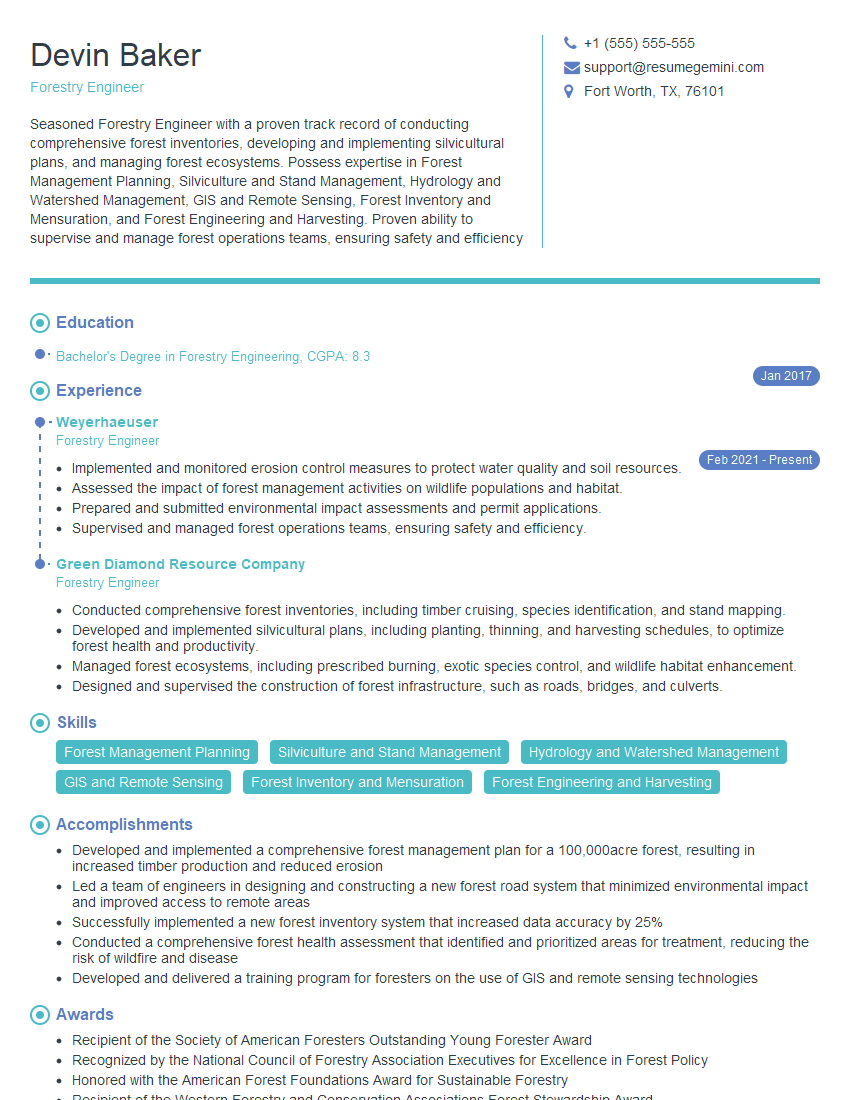
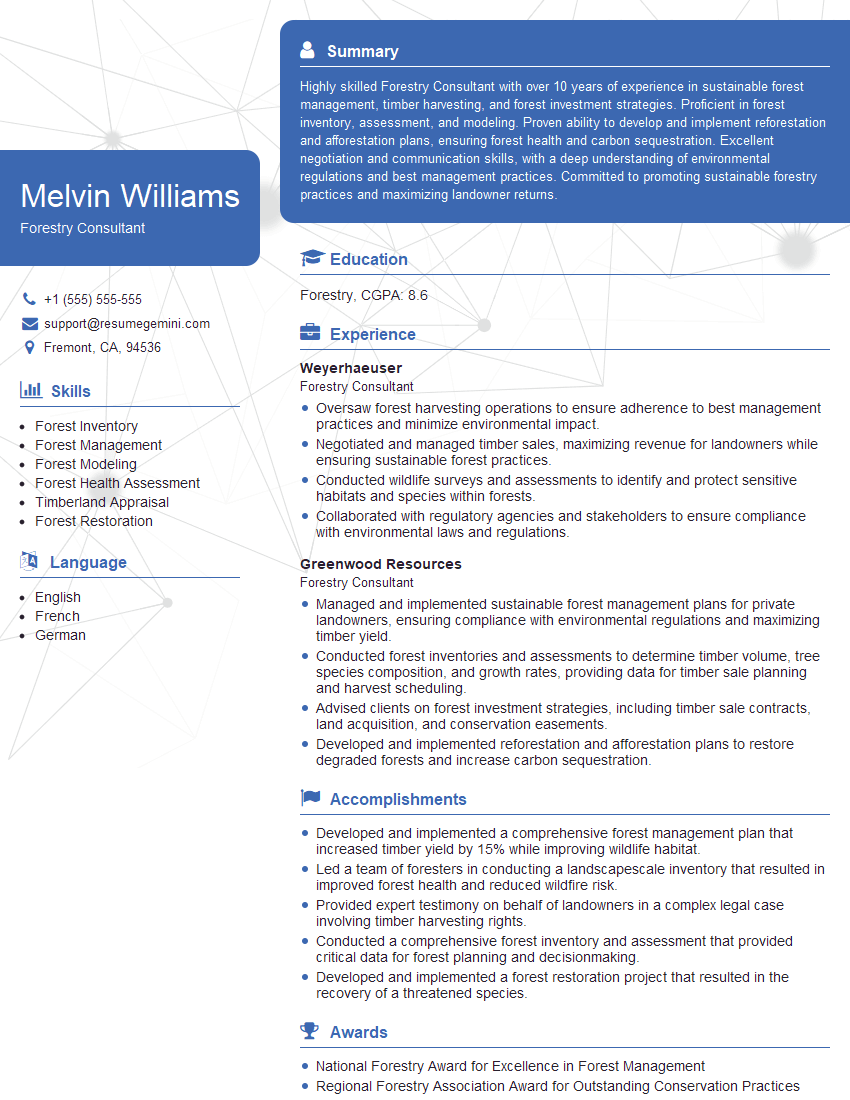
Mastering Forest Road Design opens doors to exciting and impactful careers in forestry, environmental engineering, and civil infrastructure. A strong understanding of these principles is highly valued by employers, making you a competitive candidate. To significantly enhance your job prospects, crafting an ATS-friendly resume is crucial. This will ensure your application gets noticed by recruiters. We highly recommend using ResumeGemini to build a professional and impactful resume tailored to highlight your skills and experience effectively. Examples of resumes tailored to Forest Road Design positions are provided to help you get started.
Explore more articles
Users Rating of Our Blogs
Share Your Experience
We value your feedback! Please rate our content and share your thoughts (optional).
What Readers Say About Our Blog
To the interviewgemini.com Webmaster.
Very helpful and content specific questions to help prepare me for my interview!
Thank you
To the interviewgemini.com Webmaster.
This was kind of a unique content I found around the specialized skills. Very helpful questions and good detailed answers.
Very Helpful blog, thank you Interviewgemini team.