Unlock your full potential by mastering the most common Life Cycle Assessment (LCA) Software interview questions. This blog offers a deep dive into the critical topics, ensuring you’re not only prepared to answer but to excel. With these insights, you’ll approach your interview with clarity and confidence.
Questions Asked in Life Cycle Assessment (LCA) Software Interview
Q 1. Explain the difference between a cradle-to-gate and cradle-to-grave LCA.
The difference between cradle-to-gate and cradle-to-grave LCAs lies in the system boundaries they encompass. Think of it like tracking a product’s journey.
Cradle-to-gate LCA focuses solely on the environmental impacts associated with the production of a product, up to the factory gate. It covers raw material extraction, processing, manufacturing, and packaging. It doesn’t consider transportation to the retailer, use by the consumer, or disposal. Imagine tracking a shirt from cotton harvesting to its arrival at the clothing factory. That’s cradle-to-gate.
Cradle-to-grave LCA, on the other hand, considers the entire life cycle of a product – from raw material extraction to final disposal or recycling. This includes manufacturing, distribution, use, end-of-life management (e.g., landfill, incineration, recycling), and even transportation at each stage. This is like following that same shirt’s journey all the way to its eventual disposal – a far more comprehensive picture.
Choosing between the two depends on the assessment’s goals. A cradle-to-gate assessment might be sufficient for comparing different manufacturing processes, while a cradle-to-grave assessment is needed for comprehensive product comparisons, considering all environmental burdens.
Q 2. Describe the different LCA impact categories and their significance.
LCA impact categories categorize the various environmental effects of a product’s life cycle. They help us organize and understand the complex web of impacts. Think of them as different lenses through which we examine the environmental footprint.
- Climate Change (Global Warming Potential): Measures the contribution to greenhouse gas emissions, usually expressed as CO2 equivalents. This is crucial for understanding a product’s contribution to global warming.
- Acidification (Acidification Potential): Assesses the contribution to acid rain through emissions of sulfur oxides and nitrogen oxides. It affects ecosystems and human health.
- Eutrophication (Eutrophication Potential): Measures the contribution to excess nutrients (nitrogen and phosphorus) in water bodies, leading to algal blooms and oxygen depletion. This impacts aquatic life.
- Ozone Depletion (Ozone Depletion Potential): Evaluates the contribution to the depletion of the ozone layer through the release of ozone-depleting substances (ODS). This is vital for protecting the stratospheric ozone layer.
- Human Toxicity (Human Toxicity Potential): Assesses the potential impacts on human health from exposure to toxic substances during the product’s life cycle.
- Ecotoxicity (Ecotoxicity Potential): Measures the potential damage to ecosystems caused by the release of toxic substances.
- Resource Depletion (e.g., Water Depletion, Fossil Fuel Depletion): Assesses the consumption of scarce resources, reflecting the impact on future availability.
The significance of these categories is that they provide a structured way to assess a product’s environmental performance across multiple dimensions, allowing for more informed decision-making and comparisons. Different impact categories can have differing weights depending on the study’s goals and regional context.
Q 3. What are the key steps involved in conducting a Life Cycle Assessment?
Conducting an LCA involves a structured process, typically adhering to ISO 14040/44 standards. The key steps are:
- Goal and Scope Definition: Clearly defining the study’s objective, the product system’s boundaries, functional unit, and data collection methods is crucial. Think of this as mapping out your journey before starting.
- Inventory Analysis: This involves quantifying the inputs and outputs (energy, materials, emissions) across the product’s life cycle. This is data-intensive, often involving databases and specialized software.
- Impact Assessment: This step uses Characterization factors to translate the inventory data into various impact categories (explained earlier). This helps aggregate and compare different types of emissions and resource use.
- Interpretation: This is the crucial final step where the results are analyzed to understand the relative significance of different life cycle stages and impact categories. It includes identifying hotspots (stages with the highest environmental impact) and uncertainties. This is where you draw meaningful conclusions.
Each step is interconnected, and errors in one stage can propagate through the rest. Rigorous quality control and transparency are vital throughout the process.
Q 4. How do you handle data uncertainty and variability in LCA studies?
Data uncertainty and variability are inherent in LCA studies due to the complexity of the systems analyzed. Dealing with this uncertainty requires a multi-faceted approach:
- Sensitivity Analysis: This investigates how the results change when input data are varied within their uncertainty ranges. It helps identify parameters that significantly influence the overall outcome.
- Uncertainty Propagation: Statistical methods are used to propagate uncertainties through the LCA calculations. This provides a range of potential results instead of a single point estimate.
- Data Quality Assessment: Thoroughly assessing the quality and reliability of the data used is crucial. This involves critically evaluating data sources, considering their relevance, and documenting uncertainties.
- Scenario Analysis: Exploring different scenarios (e.g., changes in technology, waste management practices) to understand their influence on the results provides robustness and helps identify potential future impacts.
Properly addressing uncertainty makes the LCA results more robust and realistic. Simply ignoring uncertainty can lead to misleading conclusions.
Q 5. What LCA software packages are you familiar with (e.g., SimaPro, GaBi, OpenLCA)?
I am proficient in several leading LCA software packages, including:
- SimaPro: A widely used commercial software offering a broad range of impact assessment methods and databases.
- GaBi: Another popular commercial software known for its powerful data management capabilities and extensive databases.
- OpenLCA: A free and open-source LCA software providing a flexible and transparent platform for conducting LCAs. It’s particularly useful for customized assessments and transparent data management.
My experience with these tools encompasses data input, inventory creation, impact assessment, interpretation of results, and report generation. I’m comfortable working with various datasets and adapting the software to the specific needs of a project.
Q 6. Compare and contrast different LCA methodologies (e.g., ISO 14040/44).
The ISO 14040/44 series of standards provides the internationally recognized framework for conducting LCAs. While different methodologies might exist, they generally adhere to these core principles:
ISO 14040: This standard defines the framework and general principles for LCAs, covering goal and scope definition, inventory analysis, impact assessment, and interpretation. It’s the foundation upon which all LCAs should be built.
ISO 14044: This standard provides more detailed guidance on each phase of the LCA process, including specific requirements for data quality, methodological choices, and reporting.
Differences and similarities between methodologies can stem from choices in the impact assessment phase. For instance, different impact assessment methods (e.g., midpoint versus endpoint methods) may lead to different results. Midpoint methods assess individual environmental stresses (e.g., acidification), while endpoint methods aggregate these stresses into broader impacts (e.g., human health, ecosystem quality). The choice depends on the study’s objectives and data availability.
Regardless of the specific methodology, all rigorous LCAs aim for transparency, consistency, and adherence to the ISO standards to ensure comparability and credibility.
Q 7. How do you interpret and communicate LCA results to stakeholders?
Communicating LCA results effectively is as crucial as the assessment itself. The audience greatly influences the communication strategy. I typically use a multifaceted approach:
- Clear and Concise Summaries: Presenting key findings in a simplified, non-technical manner is crucial for stakeholders who aren’t LCA experts. Use visuals like charts and graphs to convey complex data effectively.
- Detailed Reports: For technical audiences, comprehensive reports are necessary, providing detailed methodological descriptions, data sources, and uncertainties. These reports should be transparent and verifiable.
- Visualizations: Charts, graphs, and maps are vital for conveying complex information clearly and concisely. These visualizations should highlight key findings and comparisons.
- Interactive Dashboards: For sophisticated analysis and exploration of results, interactive dashboards can provide a powerful tool to engage stakeholders and allow for in-depth analysis.
- Stakeholder Engagement: Engaging stakeholders throughout the process, from defining the goals to interpreting the results, ensures the assessment is relevant and useful.
Adapting the communication style and format to the audience’s needs ensures the results are understood and used to inform decision-making.
Q 8. Explain the concept of functional unit in LCA.
The functional unit in a Life Cycle Assessment (LCA) is the quantifiable unit of a product’s function or service that is being assessed. It’s essentially the ‘what’ you’re evaluating and the ‘how much’ of it you’re considering. Think of it as the standardized reference point for all your environmental impact calculations. Without a clearly defined functional unit, comparing different products or processes becomes impossible, like comparing apples and oranges.
For example, if you’re assessing the environmental impact of different types of milk packaging, your functional unit might be ‘1 liter of milk packaged and delivered to the consumer’. This allows you to compare the environmental burden of a carton compared to a plastic bottle, both delivering the same functional outcome. Another example could be ‘transporting one tonne of goods 100 kilometers by road’, enabling comparisons between different transport modes.
Defining a functional unit requires careful consideration. It needs to be specific, measurable, achievable, relevant, and time-bound (SMART). Inaccurate or poorly defined functional units can lead to misleading or incomparable results, undermining the credibility of the entire LCA.
Q 9. Describe your experience with data collection and validation in LCA.
Data collection and validation are critical steps in LCA. My experience involves working with diverse datasets, ranging from primary data gathered through surveys and experiments to secondary data from publicly available databases like ecoinvent and Brightway2. I’m proficient in selecting the most appropriate data sources based on the specific product system and desired level of detail, and in critically evaluating data quality. This includes checking for consistency, completeness, and relevance.
Validation is an iterative process. I typically begin by assessing the data’s provenance (origin and reliability). This often involves scrutinizing methodologies used to collect the data, ensuring consistency with the chosen LCA methodology, and checking for potential biases. I use data quality indicators to highlight areas of uncertainty and document the rationale behind data selection and potential limitations.
For instance, in a recent project analyzing the environmental impact of a new type of solar panel, I had to validate energy consumption figures from the manufacturing process. This involved contacting the manufacturer to obtain detailed process information, comparing reported figures with industry averages, and checking for any inconsistencies. This rigorous approach ensures the accuracy and reliability of the LCA results.
Q 10. How do you ensure the quality and reliability of your LCA studies?
Ensuring the quality and reliability of LCA studies necessitates a robust, structured approach. I adhere to ISO 14040/44 standards throughout the process, implementing a critical review of all steps. This starts with a clear definition of the goal and scope, including the functional unit and system boundaries. Transparent documentation of all data sources, assumptions, and calculations is paramount. It allows others to scrutinize the study’s methodology and findings.
Peer review is another essential aspect. Before finalizing any report, I engage colleagues with LCA expertise to independently check the data, methods, and interpretations. This ensures that potential errors or biases are identified and addressed. Sensitivity analysis helps assess the uncertainty associated with the findings by identifying the key factors that significantly impact the results. This strengthens the robustness and trustworthiness of the assessment.
Furthermore, utilizing quality-assured databases like ecoinvent, which undergoes rigorous validation, minimizes the risk of using unreliable data. Using established LCA software, like SimaPro or Brightway2, further enhances the rigor and transparency of the process by ensuring consistent application of calculation rules.
Q 11. What are the limitations of LCA studies?
While LCA is a powerful tool, it has inherent limitations. One key limitation is data availability and quality. Incomplete or inaccurate data can significantly influence the results. Another is the inherent complexity of modeling real-world systems. Simplifications and assumptions are often necessary, potentially leading to inaccuracies. The allocation of impacts from multi-output processes can be subjective and lead to discrepancies.
Furthermore, LCA struggles with quantifying certain impacts like social and economic factors. While some methods try to incorporate these, it remains a challenge to completely integrate all aspects of sustainability within a single framework. Finally, the temporal and geographic variability of data can limit the generalizability of the results. What is true for one region or time period may not apply to another.
It’s crucial to acknowledge and address these limitations in the study’s conclusions. Transparency regarding assumptions and uncertainties is key to responsible LCA reporting.
Q 12. How do you address potential biases in LCA data?
Addressing potential biases in LCA data requires a multifaceted approach. First and foremost, I use diverse data sources to avoid over-reliance on a single source which could reflect specific biases. This includes utilizing both primary and secondary data, ensuring a balanced perspective. Critical evaluation of data sources and methodologies is crucial, identifying potential sources of bias and assessing their potential impact on the results.
Sensitivity analysis helps pinpoint data points that exert the strongest influence on the final impact assessment. This highlights areas where bias could potentially have a larger effect, prompting additional investigation and refinement of data selection. Furthermore, transparency is paramount: the report should explicitly state all assumptions made and limitations encountered. This allows for a fair evaluation of the potential influence of bias on the findings.
For example, if using data from a company’s self-reported environmental performance, I would cross-reference this data with independent sources to validate its accuracy and to avoid any potential upward or downward biases.
Q 13. Explain the concept of system boundaries in LCA.
System boundaries in LCA define the scope of the assessment, specifying which processes and materials are included and excluded from the analysis. Defining the boundaries is a crucial step, as they directly influence the results. A poorly defined boundary can lead to inaccurate conclusions.
Consider the example of a plastic bottle. A ‘cradle-to-gate’ boundary would encompass the processes from raw material extraction to the finished bottle at the factory gate. A ‘cradle-to-grave’ boundary would extend the analysis to include the use phase (consumer use) and end-of-life management (recycling or waste disposal). ‘Cradle-to-gate’ would typically show a smaller environmental footprint compared to ‘cradle-to-grave’, because it omits the impact of usage and disposal.
The choice of system boundaries depends on the study’s objective and the level of detail required. It’s essential to clearly document the rationale for the chosen boundaries, justifying the inclusion and exclusion of specific processes. This ensures transparency and facilitates the reproducibility of the study.
Q 14. Describe your experience using databases for LCA (e.g., ecoinvent, Brightway2).
I have extensive experience using LCA databases like ecoinvent and Brightway2. ecoinvent is a comprehensive database containing life cycle inventories (LCIs) for a wide range of materials and processes. I’m proficient in navigating its structure, selecting relevant datasets, and understanding its data quality indicators. I’m familiar with various ecoinvent versions and their differences.
Brightway2 is another powerful platform that I utilize for its flexibility and open-source nature. It allows for more customization and the integration of new data sets. I’m skilled in using Brightway2’s features for data management, analysis, and visualization. I can create customized databases and incorporate specific regional or technological data when needed.
My experience includes utilizing these databases for various LCA studies across different sectors, ranging from food production to renewable energy technologies. I’m confident in interpreting the data, identifying any limitations, and ensuring its proper integration into the LCA framework.
Q 15. How do you handle allocation issues in multi-output processes?
Allocation in multi-output processes is a crucial aspect of LCA, dealing with the challenge of assigning environmental burdens to different products resulting from a single process. Imagine a refinery producing gasoline, diesel, and jet fuel simultaneously. The emissions from the refinery are shared among these products; we need a fair way to divide them. Several methods exist, each with strengths and weaknesses:
- Mass allocation: This simple method divides the burdens proportionally to the mass of each product. It’s easy to understand and implement, but it can be inaccurate if products have different environmental impacts per unit mass.
- Energy allocation: This allocates burdens based on the energy content of each product. It’s suitable for energy-intensive processes, but may not capture other environmental aspects.
- Economic allocation: This method uses the economic value of each product to divide burdens. It reflects market forces, but might be problematic if market prices don’t reflect true environmental costs.
- Substantive allocation (Process-based allocation): This sophisticated approach involves identifying the specific process steps responsible for each product and assigning burdens accordingly. It requires detailed process understanding and data, making it more complex but often more accurate.
The choice of allocation method greatly influences the results. Selecting the most appropriate method requires a deep understanding of the process and careful consideration of its limitations. Sensitivity analysis is recommended to assess the impact of different allocation choices on the final LCA results.
Career Expert Tips:
- Ace those interviews! Prepare effectively by reviewing the Top 50 Most Common Interview Questions on ResumeGemini.
- Navigate your job search with confidence! Explore a wide range of Career Tips on ResumeGemini. Learn about common challenges and recommendations to overcome them.
- Craft the perfect resume! Master the Art of Resume Writing with ResumeGemini’s guide. Showcase your unique qualifications and achievements effectively.
- Don’t miss out on holiday savings! Build your dream resume with ResumeGemini’s ATS optimized templates.
Q 16. How familiar are you with different characterization methods in LCA?
Characterization methods in LCA are crucial for translating various environmental impacts into a single, comparable metric. Think of it like comparing apples and oranges – we need a common scale to evaluate them. Several methods exist, each focusing on different aspects:
- Midpoint characterization: This method assesses impacts at a more detailed level, representing the direct effects of emissions on environmental media (e.g., eutrophication, global warming potential). It provides insights into the specific environmental problems caused by the product.
- Endpoint characterization: This method focuses on higher-level impacts, such as human health or ecosystem quality. It integrates multiple midpoint indicators, offering a more holistic view of environmental consequences. For example, it might quantify the number of disability-adjusted life years (DALYs) lost due to air pollution.
- Impact pathways: More complex characterization methods consider the complex pathways through which emissions affect the environment and human health. For example, assessing the impact of greenhouse gas emissions on climate change may involve modelling the effects on sea-level rise, extreme weather events, and ecosystem damage.
The choice of characterization method depends heavily on the study’s goals and scope. Midpoint methods are useful for detailed impact assessment, while endpoint methods provide a more concise and policy-relevant summary.
Q 17. How do you incorporate uncertainty analysis into your LCA studies?
Incorporating uncertainty analysis is critical for producing robust and reliable LCA results. After all, input data often involves estimations and assumptions, introducing variability. Monte Carlo simulation is a common technique where input parameters are varied randomly based on their probability distributions. This generates a range of potential LCA results, giving us a measure of uncertainty around the final score. Imagine a scenario where we are assessing the impact of plastic production and are unsure of the exact percentage of recycled material used. Monte Carlo simulation allows us to model the impact of various percentages, leading to a probability distribution of results instead of just one single result. This helps in understanding the confidence we have in the conclusions drawn from the LCA. Other methods like sensitivity analysis can further help to isolate the most influential parameters driving uncertainty in the final result.
Q 18. Explain your understanding of sensitivity analysis in LCA.
Sensitivity analysis helps us understand which input parameters most significantly influence the LCA results. It’s like identifying the critical levers in a complex system. Imagine you’re building a house. Sensitivity analysis would tell you whether changes in the price of bricks would significantly impact the overall cost more than changes in the cost of paint. In LCA, we systematically vary input parameters (e.g., emission factors, energy consumption) and observe the effect on the final impact scores. This allows us to pinpoint the data points that warrant higher accuracy, focus research efforts or inform decision-making.
Several methods exist for sensitivity analysis, including one-at-a-time and multi-factor analysis. The choice depends on the complexity of the LCA and the desired level of detail.
Q 19. Describe your experience with life cycle costing (LCC).
Life Cycle Costing (LCC) integrates environmental considerations with economic analysis. It extends the scope of LCA by incorporating cost data throughout the product’s life cycle, from raw material extraction to disposal. It helps to make informed decisions that are both environmentally and economically sustainable. For instance, an LCC analysis might compare the total cost (including manufacturing, operation, maintenance, and end-of-life disposal) of an electric vehicle versus a gasoline-powered vehicle, factoring in both environmental impact and monetary costs. This holistic approach enables organizations to optimize their designs and processes for both environmental and financial performance.
Q 20. What are the ethical considerations in conducting LCA studies?
Ethical considerations in LCA are paramount. Objectivity and transparency are crucial. Biases can creep into studies through data selection, model choices, and interpretation. It’s crucial to avoid misleading or manipulative reporting. Transparency involves clearly stating data sources, methodological choices, and limitations. It is also vital to address issues of power dynamics in conducting LCAs. For example, who commissions the LCA, and how can the findings be used to influence policies and decision-making? The process should be inclusive, consulting stakeholders and engaging in participatory approaches to ensure equity and fairness.
Q 21. How do you select the appropriate impact assessment methods for a given LCA study?
Selecting appropriate impact assessment methods hinges on the study’s objectives and scope. There’s no one-size-fits-all solution. Consider the following:
- Study goals: What questions are you trying to answer? Are you focusing on climate change, human toxicity, resource depletion, or a broader range of impacts?
- Geographical context: Location matters. Local environmental conditions and regulations can influence impact assessments.
- Data availability: The availability of relevant characterization factors and impact assessment models will constrain your choices.
- Stakeholder perspectives: The concerns and priorities of stakeholders (e.g., consumers, policymakers, industry) should be considered.
Often, a combination of midpoint and endpoint indicators is employed to provide a comprehensive and meaningful assessment. For example, a study focusing on packaging might use midpoint indicators for emissions to air and water, and endpoint indicators for human health and ecosystem quality.
Q 22. Describe your experience with scenario analysis in LCA.
Scenario analysis in LCA is crucial for understanding the uncertainty and variability inherent in the data and assumptions used. It allows us to explore the potential impact of different choices or changes on the overall environmental footprint of a product or process. Instead of presenting a single ‘best estimate’ LCA, we create various scenarios to test the sensitivity of the results.
For example, in assessing the LCA of a solar panel, we might create scenarios exploring different manufacturing processes (e.g., using recycled materials versus virgin materials), transportation distances, or end-of-life management strategies (e.g., recycling vs. landfilling). Each scenario would change specific parameters within the LCA software, and we then compare the resulting impact scores to identify the most influential factors and the range of potential environmental outcomes.
In my experience, I’ve used scenario analysis extensively to help clients make informed decisions. For instance, a client producing food packaging wanted to explore options for reducing their carbon footprint. We modeled scenarios involving different packaging materials (plastic, paper, bioplastics), varying recycling rates, and different transportation modes. The analysis revealed that material choice had the largest impact, guiding the client toward more sustainable material selection.
Q 23. How do you address data gaps in LCA studies?
Data gaps are common in LCA, as comprehensive data isn’t always available for all processes and materials. Addressing these gaps requires a systematic approach. The first step is to identify the gap: what data is missing and which impact categories are affected?
Several strategies can be employed. We can use analogous data from similar processes or materials, employing professional judgment to assess the level of similarity and uncertainty introduced. We may also consult databases such as ecoinvent or GaBi databases, which continuously update their data. Another option is to conduct supplementary studies or literature reviews to find relevant data. If no suitable alternatives exist, we can perform a sensitivity analysis to assess the influence of uncertain parameters on the results.
For example, if data on a specific chemical’s manufacturing process is missing, we might use data for a similar chemical, acknowledging the uncertainty associated with this approximation. We would clearly document the data gap and the chosen approach in our report, ensuring complete transparency.
Q 24. What are the key challenges associated with conducting LCA studies?
Conducting LCA studies presents several challenges. Data availability and quality are primary concerns; inconsistent or incomplete data can significantly affect the results. Defining the system boundaries—what’s included and excluded from the assessment—is crucial and can be complex, influencing the scope and reliability of the results.
Another key challenge is the selection of appropriate impact assessment methods. Different methods prioritize different environmental impacts, leading to varying results. Furthermore, communicating the results effectively to non-LCA specialists requires careful consideration; using clear, concise language and visualizations is essential to ensure the findings are understood and used effectively for decision-making.
Finally, the allocation of burdens to different products or processes can be complex and challenging, particularly when dealing with co-products. For example, deciding how to allocate environmental burdens between plastics and other products produced in the same factory needs careful consideration of methodologies and ethical implications.
Q 25. Describe your experience with LCA software specific features (e.g., impact assessment methods, sensitivity analysis tools).
My experience encompasses several LCA software packages, including SimaPro, Gabi, and OpenLCA. I’m proficient in using their impact assessment methods, such as ReCiPe, TRACI, and IMPACT 2002+, each having different strengths and weaknesses depending on the geographical region and specific environmental concerns.
I’ve used built-in sensitivity analysis tools to test the robustness of the results by varying input parameters, such as electricity mix assumptions, or transportation distances, and then assessing their impact on the final results. This helps identify parameters requiring more accurate data or further investigation.
For example, in SimaPro, I frequently use the built-in sensitivity analysis tools to identify ‘hotspots’ – the stages of a product lifecycle that have the biggest environmental impacts. This targeted approach helps focus improvement efforts on the areas of highest leverage.
Q 26. How do you ensure data consistency and traceability in LCA projects?
Data consistency and traceability are paramount to the credibility of an LCA. I employ several strategies to ensure this. First, I meticulously document all data sources and assumptions in a clear and organized manner, using standardized formats. Second, I utilize the database management features within the LCA software to maintain a structured, organized dataset.
Version control is also vital; each iteration of the model and data is saved and clearly labeled to maintain traceability, facilitating auditing and verification. I regularly perform data quality checks to identify potential errors or inconsistencies. For example, I check for unrealistic values or inconsistencies across different data sets.
Imagine building a house. You wouldn’t just start building without blueprints and a clear materials list. The LCA process is similar; clear documentation, version control, and regular checks ensure a reliable and trustworthy outcome.
Q 27. Explain your experience with reporting and visualization of LCA results.
Effective reporting and visualization are crucial for conveying the complex results of an LCA study. I create reports that are tailored to the audience, incorporating clear and concise language, avoiding unnecessary technical jargon. Visualizations, such as bar charts, pie charts, and Sankey diagrams, are used to represent complex data simply and effectively.
The reports include a clear summary of the study’s scope, methodology, data sources, and key findings. Uncertainty analyses are presented transparently, acknowledging limitations and potential variations in results. Specific examples of the environmental impacts are highlighted, focusing on the most significant contributions.
For example, a visual representation of the carbon footprint across various stages of the product lifecycle, presented as a Sankey diagram, helps communicate the relative contribution of each stage effectively. This would be accompanied by a textual summary emphasizing the key contributors.
Key Topics to Learn for Life Cycle Assessment (LCA) Software Interview
- Data Input and Management: Understanding different data types used in LCA (e.g., inventory data, impact assessment factors), data quality assurance, and proficiency in using the software’s data import/export functions.
- Impact Assessment Methods: Familiarity with various Life Cycle Impact Assessment (LCIA) methodologies (e.g., ReCiPe, IMPACT World+, TRACI) and their applications, including interpreting and critically evaluating results.
- Life Cycle Inventory (LCI) Databases: Knowledge of common LCI databases (e.g., ecoinvent, GaBi) and their limitations; understanding how to select appropriate datasets and handle data uncertainties.
- Scenario Modeling and Sensitivity Analysis: Ability to create different scenarios within the LCA software, perform sensitivity analysis to assess the impact of data variability, and interpret the results.
- Interpretation and Reporting: Mastering the art of clearly communicating complex LCA findings through concise reports and visualizations, tailoring your communication to the intended audience.
- Software-Specific Features: Thorough understanding of the specific software’s functionalities, including its unique features, limitations, and potential biases. Practice using all relevant tools and functionalities.
- Case Studies and Practical Applications: Review examples of LCA studies in various sectors (e.g., manufacturing, energy, food) and understand how LCA software is applied to solve real-world environmental problems.
- Problem-Solving and Critical Thinking: Develop your ability to identify and troubleshoot data inconsistencies, interpret unexpected results, and propose solutions to improve the accuracy and reliability of LCA studies.
Next Steps
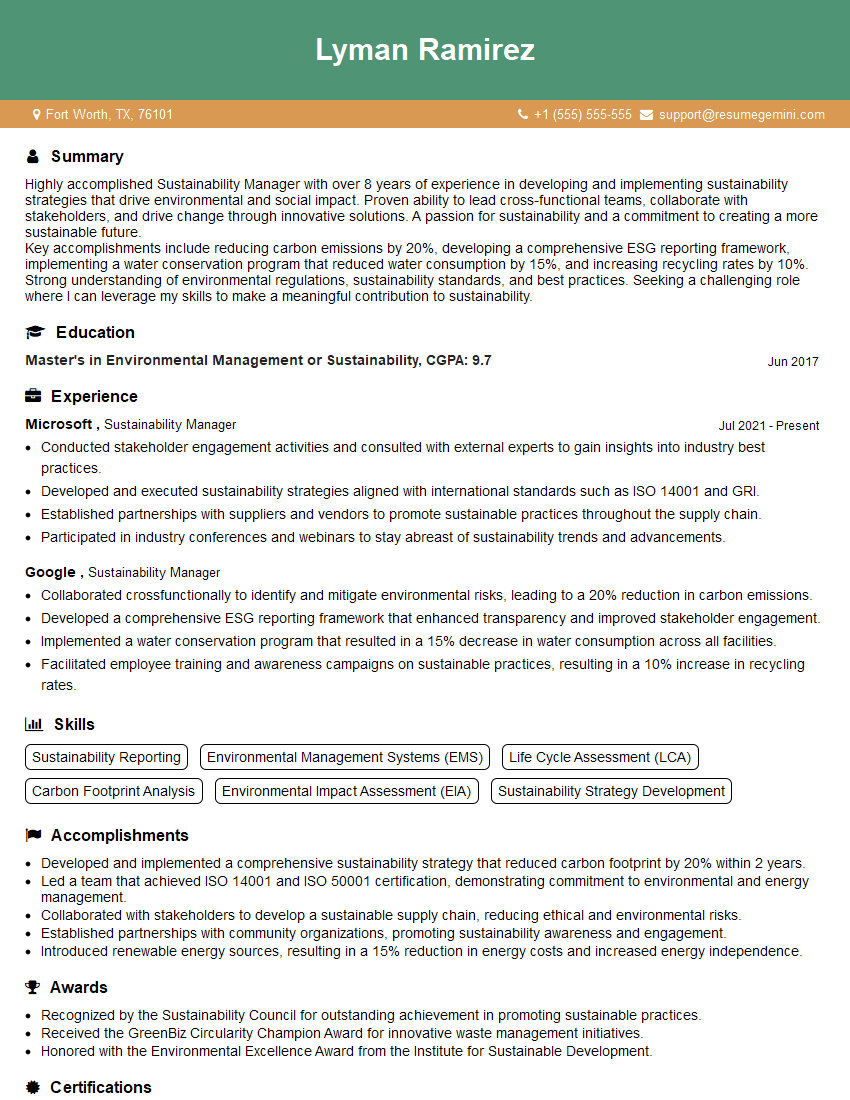
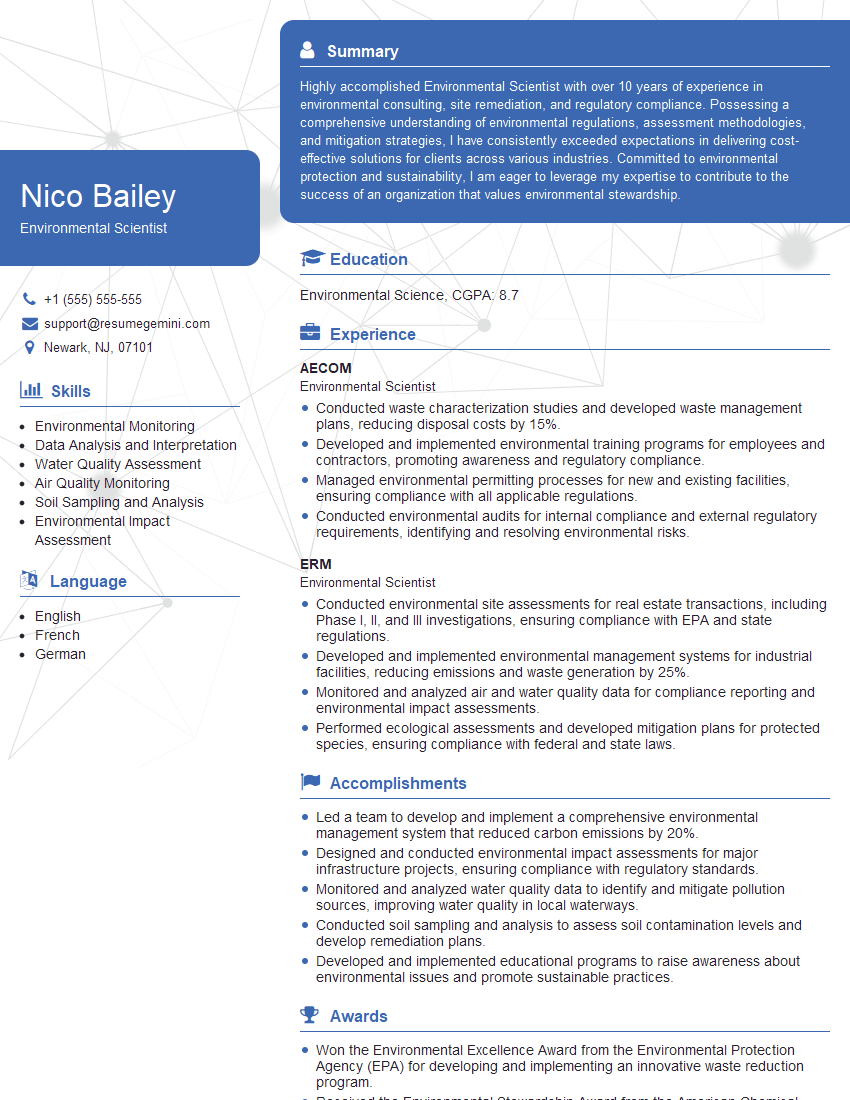
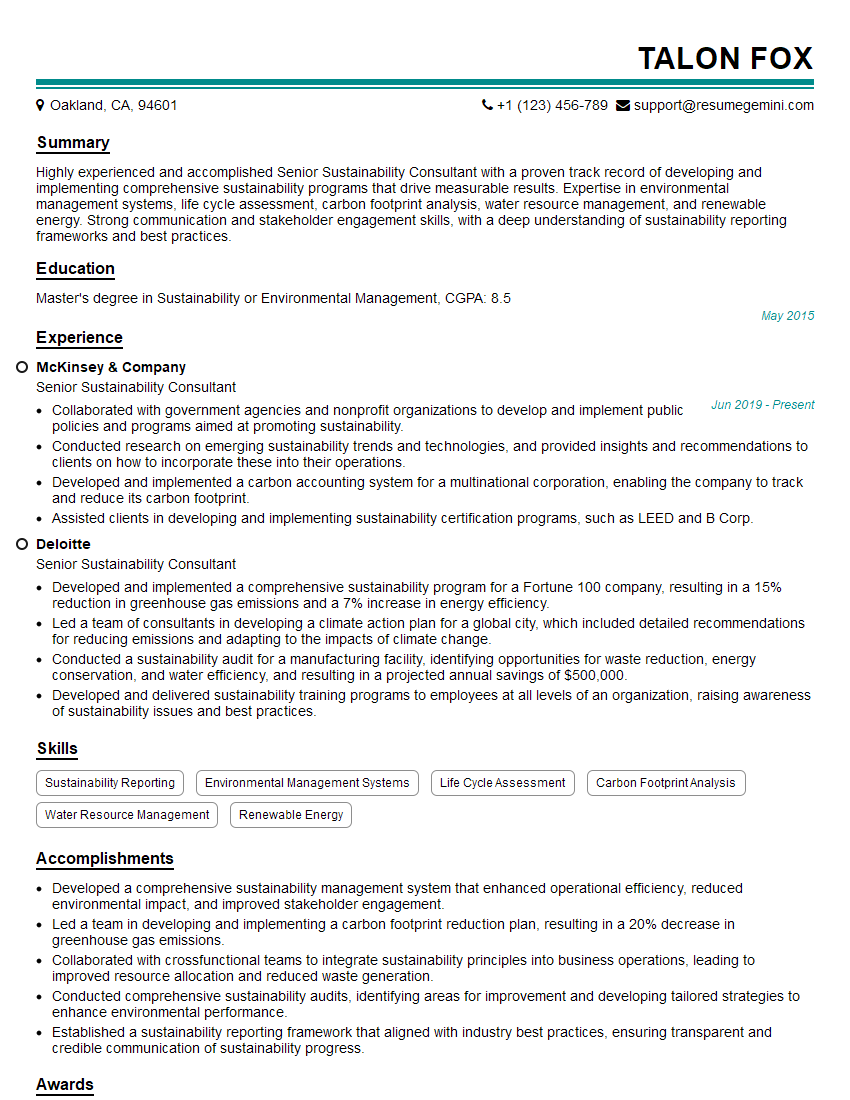
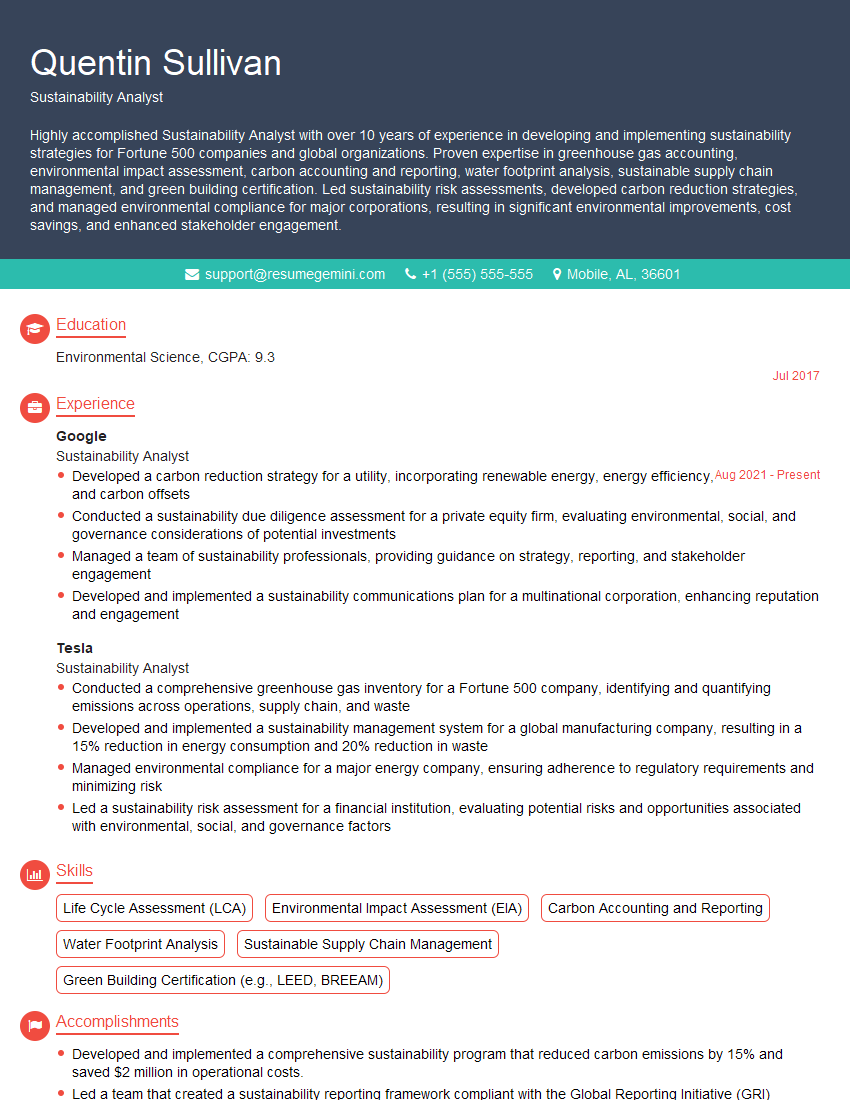
Mastering Life Cycle Assessment (LCA) software is crucial for a successful career in sustainability, environmental consulting, or related fields. It demonstrates a valuable skillset highly sought after by employers. To maximize your job prospects, create an ATS-friendly resume that effectively highlights your skills and experience. ResumeGemini is a trusted resource that can help you build a professional and impactful resume tailored to the specific requirements of LCA software positions. Examples of resumes specifically designed for Life Cycle Assessment (LCA) Software roles are available to guide you.

Explore more articles
Users Rating of Our Blogs
Share Your Experience
We value your feedback! Please rate our content and share your thoughts (optional).
What Readers Say About Our Blog
To the interviewgemini.com Webmaster.
Very helpful and content specific questions to help prepare me for my interview!
Thank you
To the interviewgemini.com Webmaster.
This was kind of a unique content I found around the specialized skills. Very helpful questions and good detailed answers.
Very Helpful blog, thank you Interviewgemini team.