Every successful interview starts with knowing what to expect. In this blog, we’ll take you through the top Attributional and Consequential LCA interview questions, breaking them down with expert tips to help you deliver impactful answers. Step into your next interview fully prepared and ready to succeed.
Questions Asked in Attributional and Consequential LCA Interview
Q 1. Explain the difference between attributional and consequential LCA.
Attributional and consequential Life Cycle Assessment (LCA) are two distinct approaches to evaluating the environmental impacts of a product or service. Think of it like this: attributional LCA is like looking at a snapshot of a product’s impacts based on its current production process, while consequential LCA is like looking at a movie, examining how changes in production or consumption affect the entire system over time.
Attributional LCA focuses on assigning environmental burdens to a specific product based on its current production and use. It answers the question: “What are the environmental impacts associated with this specific product as it is currently produced?” It uses average data and doesn’t consider potential changes in the system due to its analysis.
Consequential LCA, on the other hand, explores the potential changes in the system caused by changes in production or consumption of a product. It answers the question: “What are the environmental impacts of a change in the production or consumption of this product?” This means it considers market responses, technological advancements, and substitution effects – effectively simulating what happens if a product’s production or use is altered.
In short: Attributional LCA is descriptive; Consequential LCA is predictive.
Q 2. Describe the system boundary definition process in LCA.
Defining the system boundary in LCA is crucial; it determines which processes are included in the analysis and, consequently, the accuracy and scope of the results. Imagine drawing a circle around the product’s lifecycle – everything inside the circle is included, everything outside is excluded.
The process involves several steps:
- Goal and Scope Definition: Clearly define the purpose of the study, the product under investigation, and the intended audience. This will help determine the relevant impact categories and geographical scope.
- Functional Unit Definition: Define the functional unit – the quantifiable measure of the product’s function. For example, the functional unit could be “1 kg of steel produced,” “1 passenger-kilometer traveled by car,” or “1 liter of milk produced.”
- System Boundary Determination: Based on the goal and functional unit, decide which processes to include. This typically involves identifying the stages of the product’s life cycle, from raw material extraction to end-of-life management. You’ll need to carefully consider what’s relevant to the study’s objectives. For example, if you’re studying the climate impact of a building, you might include embodied carbon in materials but exclude the impact of the building’s occupants.
- Data Collection and Allocation: Gather data on the environmental inputs and outputs for each process within the system boundary. Allocation methods are needed when a process produces multiple outputs; this is explained in more detail later.
A well-defined system boundary ensures that the LCA is relevant, reliable, and comparable with other studies.
Q 3. What are the key stages involved in conducting an attributional LCA?
Conducting an attributional LCA involves a series of well-defined stages:
- Goal and Scope Definition: Define the study’s purpose, the product, functional unit, and system boundary (as discussed previously).
- Inventory Analysis: Quantify the inputs and outputs of all processes within the system boundary. This involves collecting data on energy consumption, material usage, emissions, and waste generation. Databases such as ecoinvent are often used.
- Impact Assessment: Characterize the environmental impacts of the inventory data using impact assessment methods. This involves using models to translate the inventory data into specific impacts (e.g., global warming potential, acidification potential, eutrophication).
- Interpretation: Analyze and interpret the results to identify the significant environmental ‘hotspots’ in the product’s lifecycle and draw conclusions based on the findings. This section considers the limitations and uncertainties of the study.
Each step is crucial for a robust and reliable attributional LCA. For example, if the inventory analysis misses a significant emission source, the impact assessment will be inaccurate.
Q 4. What are the limitations of attributional LCA?
Attributional LCA has several limitations:
- No consideration of market responses: It only considers the current situation, ignoring how changes in production or consumption might affect the entire system.
- Average data reliance: It often relies on average data, which may not reflect the actual environmental performance of a specific product.
- Limited predictive power: It can’t predict the environmental consequences of changes in production or consumption, such as the introduction of a new technology or a shift in consumer demand.
- Allocation challenges: When processes have multiple outputs, allocating the environmental burdens fairly among those outputs can be complex and may lead to inaccuracies.
These limitations mean that the results of an attributional LCA may not be entirely representative of the true environmental performance or the potential environmental consequences of the product.
Q 5. How does consequential LCA address the limitations of attributional LCA?
Consequential LCA directly addresses the limitations of attributional LCA by considering the system-wide impacts of changes in production or consumption. Instead of just describing the current state, it predicts the environmental consequences of specific changes.
For instance, if an attributional LCA concludes that a product has a high carbon footprint, a consequential LCA would investigate the potential impacts of increased production (increased demand for raw materials, energy, etc.) or the substitution of another product with a lower environmental impact. It will model market responses – for example, might a shift in demand cause companies to invest in more sustainable processes or use renewable energy?
By incorporating dynamic system modeling, consequential LCA provides a more comprehensive and forward-looking assessment of environmental impacts, offering valuable insights for decision-making related to product development, policy, and environmental management.
Q 6. Explain the concept of allocation in LCA and its challenges.
Allocation in LCA is the process of assigning environmental burdens to multiple outputs from a single process. Consider a refinery that produces gasoline, diesel, and jet fuel. All these products share the same upstream processes (crude oil extraction, refining, etc.). Allocation determines how much of the environmental impacts associated with those shared processes should be assigned to each product.
The challenges arise because there is no universally agreed-upon ‘correct’ way to allocate. Different methods can yield significantly different results. For example, using physical mass allocation may not be appropriate if one product requires more energy to produce, even with the same mass.
The main problem is the inherent arbitrariness of allocation; it can significantly influence the results and potentially lead to misleading conclusions about the relative environmental performance of different products.
Q 7. Describe different allocation methods used in LCA.
Several allocation methods are used in LCA, each with its own advantages and disadvantages:
- Mass Allocation: The environmental burdens are allocated proportionally to the mass of each output. Simple but potentially inaccurate.
- Energy Allocation: The environmental burdens are allocated proportionally to the energy content of each output. More relevant if energy is the primary driver of environmental impact.
- Economic Allocation: The burdens are allocated proportionally to the economic value of each output. Appropriate when economic value reflects environmental significance but susceptible to market distortions.
- System Expansion: Instead of allocating, the system boundary is expanded to include separate production processes for each output. This avoids allocation but can greatly increase complexity and data requirements.
- Substantive Allocation: This approach uses more detailed knowledge about the processes and outputs. Instead of a fixed ratio, it could incorporate data such as process flows.
The choice of allocation method should be justified and transparently reported to avoid bias and facilitate comparison.
Q 8. What are the key data sources for LCA studies?
Life Cycle Assessment (LCA) studies rely on a diverse range of data sources, the quality and completeness of which significantly impact the reliability of the results. These sources can be broadly categorized into:
- Inventory Databases: These are compiled collections of data on the inputs and outputs of various processes. Examples include ecoinvent, GaBi, and SimaPro databases, containing information on energy consumption, material use, emissions, and waste generation for numerous products and processes. These databases are invaluable for streamlining data collection, but it’s crucial to understand the specific methodologies and assumptions used in their creation.
- Company-Specific Data: For a truly accurate LCA, especially at the detailed process level, companies must provide specific information on their production processes. This might include energy bills, material bills of materials (BOMs), waste disposal records, and transportation data. The accuracy of this data is paramount.
- Governmental and Academic Publications: Governmental agencies and research institutions frequently publish reports on emissions factors, resource consumption, and other relevant parameters. These publications can serve as supplemental data sources, particularly when company-specific information is unavailable or incomplete.
- Literature Reviews: A thorough literature review can unearth relevant studies on specific processes or materials, offering supplementary data points or alternative methodologies for data collection.
The selection of appropriate data sources depends heavily on the scope of the LCA study and the desired level of accuracy. For instance, a comparative LCA might rely heavily on readily available inventory databases, whereas a detailed cradle-to-grave analysis requires significantly more company-specific data.
Q 9. How do you assess the uncertainty in LCA results?
Assessing uncertainty in LCA results is crucial for responsible interpretation and decision-making. Uncertainty arises from various sources, including data variability, model limitations, and the inherent complexity of supply chains. We use several methods to address this:
- Sensitivity Analysis (discussed in the next question): This identifies the parameters that most significantly influence the results, allowing us to focus efforts on improving data quality for those critical areas.
- Monte Carlo Simulation: This powerful statistical technique involves running the LCA model numerous times, each time using randomly sampled values for uncertain parameters based on their probability distributions. The resulting distribution of impact scores provides a measure of the overall uncertainty.
- Uncertainty Propagation Methods: These mathematical techniques quantify the uncertainty in the final results based on the uncertainties associated with individual input parameters. This might involve using standard deviations or other measures of variability.
- Qualitative Uncertainty Assessment: Besides quantitative methods, we also consider qualitative aspects of uncertainty. This includes an evaluation of the completeness of the data, the reliability of the sources, and the potential for unforeseen factors to influence the results. For instance, we might explicitly document assumptions and their potential impacts.
Ultimately, the goal is not necessarily to eliminate uncertainty, but to understand and transparently report it. A well-conducted LCA should clearly state the sources and magnitudes of uncertainty, allowing stakeholders to make informed decisions in the face of this inherent complexity.
Q 10. Explain the concept of sensitivity analysis in LCA.
Sensitivity analysis is a crucial step in LCA to understand how variations in input parameters affect the overall results. Imagine building a sandcastle: some parts are more critical than others. A slight shift in the base significantly alters the structure, while a small change to an upper turret has less impact. Similarly, some data in an LCA have a greater influence than others.
We systematically vary input parameters, one at a time or in combination, and observe their effect on the key impact categories. This can be done using various techniques, including:
- One-at-a-time (OAT) analysis: We change one parameter while keeping all others constant. This provides a simple way to identify the most sensitive parameters.
- Factorial design: We systematically vary multiple parameters simultaneously to assess their interactions. This is more complex but provides a fuller picture of the uncertainty.
- Screening methods: These methods help identify the most sensitive parameters before performing a more detailed analysis. These are especially helpful when many parameters are involved.
The results of a sensitivity analysis are typically presented graphically, showing the relationship between parameter changes and impact scores. This helps prioritize data collection efforts, focusing resources on the parameters that significantly affect the results. For instance, if energy consumption is highly sensitive, investing in more accurate energy data will have the biggest impact on the accuracy of the overall assessment.
Q 11. What are the different impact categories considered in LCA?
LCAs consider a range of impact categories to comprehensively assess the environmental burdens of a product or process. These categories reflect different environmental concerns, and the specific categories chosen depend on the study’s goals and context. Some common impact categories include:
- Climate Change (Global Warming Potential – GWP): Measures the contribution of greenhouse gas emissions to global warming.
- Ozone Depletion Potential (ODP): Assesses the impact of substances on the stratospheric ozone layer.
- Acidification Potential (AP): Quantifies the contribution to acid rain.
- Eutrophication Potential (EP): Measures the contribution to excessive nutrient enrichment in water bodies.
- Human Toxicity Potential (HTP): Assesses the potential for substances to harm human health.
- Ecotoxicity Potential (ETP): Evaluates the potential for substances to harm ecosystems.
- Resource Depletion (e.g., fossil fuel depletion, metal depletion): Measures the consumption of non-renewable resources.
- Water Depletion: Assesses the impact on freshwater resources.
- Land Use: Quantifies the amount of land occupied by a given process.
The selection of impact categories is guided by international standards like ISO 14040/44 and regional regulations. The choice often reflects priorities, such as focusing on climate change in some studies or on resource scarcity in others. The use of characterization factors, which convert emissions and resource use into common impact scores, is essential for comparing different impact categories.
Q 12. Describe the use of impact assessment methods in LCA.
Impact assessment methods are crucial in LCA for translating the inventory data (material and energy flows) into meaningful environmental impacts. These methods use impact indicators and characterization factors to quantify the environmental consequences of each process.
The process involves:
- Selection of Impact Categories: As previously discussed, this is guided by the study goals and relevance to environmental issues.
- Choice of Impact Assessment Methods: Various methods exist (e.g., CML, ReCiPe, IMPACT 2002+), each using different models and data to translate emissions and resource use into impact scores.
- Application of Characterization Factors: These are numerical factors that convert the inventory data into standardized units for each impact category. For instance, a characterization factor might quantify the global warming potential of one kilogram of CO2.
- Aggregation of Results: The impact scores for each category are aggregated to provide a comprehensive overview of the environmental impacts.
Different impact assessment methods have different strengths and weaknesses, reflecting different scientific approaches and data availability. The choice of method should be justified and clearly documented in the LCA report. The choice frequently depends on data availability for specific regions or impact categories.
Q 13. How do you interpret the results of an LCA study?
Interpreting LCA results requires careful consideration of several factors. It’s not simply about identifying the highest impact category; context is crucial.
- Comparative Analysis: LCAs are often used to compare the environmental performance of different products or processes. The relative differences in impact scores are key here. For instance, while one product might score higher overall, it may be significantly better in a key impact category like climate change.
- Sensitivity Analysis Results: As previously mentioned, understanding the sensitivity of the results to different input parameters is crucial. Areas of high uncertainty require cautious interpretation.
- Uncertainty Assessment: The range of possible results due to uncertainty must be considered. A result might be statistically significant, but the uncertainty might still be large enough that the decision is not clear-cut.
- Data Quality and Completeness: The quality and completeness of the data used in the analysis fundamentally limit the conclusions that can be drawn. Any limitations should be explicitly stated and considered when interpreting the results.
- Life Cycle Stages: The relative contributions of different life cycle stages (raw material acquisition, manufacturing, use, end-of-life) should be analyzed to identify potential areas for improvement.
Ultimately, interpreting LCA results is an iterative process involving careful consideration of the data, the methodology, and the context. It’s not about finding simple answers, but about providing robust and informed insights to support decision-making.
Q 14. Explain the importance of data quality in LCA.
Data quality is paramount in LCA. Garbage in, garbage out, as the saying goes. Inaccurate or incomplete data can lead to misleading conclusions that could have significant consequences for decision-making.
Several aspects contribute to data quality:
- Data Accuracy: Data should be as accurate as possible, reflecting the real-world values associated with the processes and materials being studied. This often requires careful measurement and validation of company-specific data.
- Data Completeness: All relevant aspects of the life cycle must be covered. Missing data will bias the results, potentially underestimating or overestimating the environmental impacts. For instance, omitting transportation emissions would provide an incomplete picture.
- Data Consistency: Data used throughout the LCA should be consistent in terms of units, methodologies, and reporting periods. Inconsistent data can lead to errors in the analysis.
- Data Relevance: The data selected should be appropriate for the specific goals of the LCA study. Using data that are not relevant to the impacts of interest can lead to inaccurate conclusions.
- Data Transparency: The data sources, collection methods, and any assumptions made should be clearly documented and made available for review. This is vital for ensuring the reproducibility and reliability of the LCA.
Ensuring high data quality is an ongoing challenge. It involves careful planning, rigorous data collection techniques, and transparent reporting. Investing in data quality is a crucial element of building trust and credibility in the LCA results.
Q 15. What software tools are commonly used for LCA studies?
Several software tools are commonly used for Life Cycle Assessment (LCA) studies, ranging from specialized LCA software packages to general-purpose modeling tools. The choice depends on the complexity of the study, the data available, and the user’s expertise.
- Dedicated LCA Software: These packages offer comprehensive functionalities for all LCA stages, including data management, impact assessment, and reporting. Examples include SimaPro, Gabi, and Brightway2. They often include extensive databases of environmental data for materials and processes.
- Spreadsheet Software (Excel, Google Sheets): For simpler LCAs, spreadsheets can be used for data organization and basic calculations. However, they lack the advanced features and built-in databases found in dedicated LCA software. This approach is generally suitable only for very simple assessments.
- Open-Source Tools: OpenLCA is a freely available and widely used open-source LCA software. It provides a flexible platform for LCA modeling and allows users to customize their assessments.
- Integrated Modeling Tools: Software platforms such as MATLAB or Python with specific libraries (e.g., Brightway2’s Python interface) allow for more complex modeling and integration with other datasets or simulations. This approach requires more technical skills but enables customization and sophisticated analyses.
The selection process often involves considering factors like cost, user-friendliness, database coverage, and the ability to handle the specific requirements of the project. For instance, a large-scale industrial LCA might necessitate the capabilities of SimaPro, while a simpler study comparing two packaging options might be adequately handled in a spreadsheet or OpenLCA.
Career Expert Tips:
- Ace those interviews! Prepare effectively by reviewing the Top 50 Most Common Interview Questions on ResumeGemini.
- Navigate your job search with confidence! Explore a wide range of Career Tips on ResumeGemini. Learn about common challenges and recommendations to overcome them.
- Craft the perfect resume! Master the Art of Resume Writing with ResumeGemini’s guide. Showcase your unique qualifications and achievements effectively.
- Don’t miss out on holiday savings! Build your dream resume with ResumeGemini’s ATS optimized templates.
Q 16. How do you ensure the credibility and transparency of your LCA work?
Credibility and transparency are paramount in LCA studies. Ensuring both involves meticulous documentation and adherence to established standards.
- Following ISO Standards: Adhering to the ISO 14040 and ISO 14044 series of standards for LCA provides a robust framework for conducting credible studies. These standards define the four stages of LCA (goal and scope definition, inventory analysis, impact assessment, and interpretation) and guide best practices for each.
- Data Transparency and Documentation: All data sources should be clearly identified and documented, allowing others to scrutinize the data and methodology. This includes specifying the functional unit, system boundaries, assumptions, and any limitations of the data used.
- Peer Review: Submitting the LCA study to peer review, especially before publication, is a critical step to ensure quality and identify any potential weaknesses in the methodology or interpretations.
- Sensitivity Analysis: Conducting a sensitivity analysis helps to identify the parameters with the greatest influence on the results. This helps assess the robustness of the conclusions and understand the uncertainties inherent in the data and methodology.
- Uncertainty Analysis: A formal uncertainty analysis quantifies the uncertainties associated with the LCA results and provides a more realistic representation of the environmental impacts.
- Critical Evaluation of Results: The limitations and assumptions of the study should be clearly acknowledged, and the conclusions should be presented cautiously and accurately reflecting the scope of the study.
Imagine an LCA assessing the environmental impact of a new electric car. Transparency would demand explicit details on the electricity source used to charge the car, the sourcing of battery materials, and the disposal method at end-of-life. A sensitivity analysis would show how results change based on variations in these factors.
Q 17. Describe a scenario where consequential LCA is more appropriate than attributional LCA.
Consequential LCA differs from attributional LCA by focusing on the potential changes in a system due to a specific action, rather than just describing the current impacts of a product. A scenario where consequential LCA is more appropriate is when analyzing the environmental impacts of a large-scale technology shift or policy change.
Consider the introduction of electric vehicles (EVs). An attributional LCA would assess the environmental impacts of a single EV based on its current manufacturing process and use phase. However, a consequential LCA would consider the broader consequences of widespread EV adoption. This includes factors like increased electricity demand, changes in the electricity generation mix (potentially leading to more renewable energy), and the impacts of increased mining of battery materials. A consequential LCA might show that despite higher upfront emissions from EV production, the overall effect could be environmentally beneficial if it leads to a significant shift towards renewable energy sources.
In essence, consequential LCA helps predict future environmental performance under different scenarios, providing a more comprehensive and dynamic view than the static snapshot provided by attributional LCA.
Q 18. What are the ethical considerations in conducting LCA studies?
Ethical considerations in conducting LCA studies are crucial for ensuring the validity and responsible use of the results. Key ethical concerns include:
- Data Integrity and Transparency: Using accurate and reliable data is paramount. Omitting or manipulating data to bias the results is unethical. All data sources and assumptions should be clearly disclosed.
- Avoiding Bias: The study’s goal and scope definition should be carefully crafted to avoid bias towards a particular outcome. The selection of impact assessment methods and data should be transparent and justified.
- Avoiding Misinterpretation and Misuse: LCA results should be interpreted and communicated accurately, avoiding oversimplification or misleading conclusions. The limitations of the study should be clearly stated to prevent misuse of the findings for greenwashing or unsubstantiated marketing claims.
- Environmental Justice: The distribution of environmental burdens should be considered, ensuring that the impacts of a product are not disproportionately borne by vulnerable communities. For instance, the mining of rare earth elements for batteries could have significant environmental and social consequences in the countries where the mining takes place.
- Competence and Expertise: LCAs should be conducted by qualified professionals with sufficient expertise in LCA methodology and the relevant scientific fields. Inadequate understanding of the methodology can lead to erroneous conclusions.
For instance, a company might be tempted to downplay the environmental impacts of its product in an LCA, leading to inaccurate or misleading information to the public. An ethical LCA would strive for objectivity and full transparency.
Q 19. How can LCA contribute to sustainable product design?
LCA plays a crucial role in sustainable product design by providing a quantitative assessment of a product’s environmental impacts throughout its entire life cycle. This information enables designers to identify hotspots of environmental concern and implement design changes to minimize these impacts.
- Material Selection: LCA can inform the selection of more environmentally friendly materials with lower carbon footprints, lower toxicity, and better recyclability.
- Process Optimization: By identifying energy-intensive processes, LCA can guide the development of more efficient manufacturing methods, reducing energy consumption and emissions.
- Design for Durability and Reusability: LCA can assess the environmental benefits of designing products for longer lifespans, reuse, repair, and recyclability, thus reducing waste generation.
- End-of-Life Management: LCA helps evaluate the environmental consequences of different end-of-life scenarios (e.g., recycling, incineration, landfilling) and facilitates the design of products that are easier to recycle or recover valuable materials.
For example, a company designing a new smartphone might use an LCA to compare the environmental impacts of different battery technologies, casing materials, and manufacturing processes. This information can guide the selection of materials and processes that minimize the overall environmental footprint of the phone, contributing to a more sustainable design.
Q 20. Explain the role of LCA in environmental management systems.
LCA plays a significant role in environmental management systems (EMS), such as ISO 14001, by providing a systematic approach to assess and manage the environmental performance of organizations and their products.
- Environmental Performance Evaluation: LCA helps organizations identify and prioritize environmental aspects and impacts associated with their operations and products. This facilitates the setting of meaningful environmental targets and objectives.
- Identifying Improvement Opportunities: By revealing environmental hotspots in the product life cycle, LCA provides clear targets for improvement. For example, an LCA might reveal that a significant proportion of a product’s carbon footprint arises from transportation; this knowledge can lead to improvements in logistics and supply chain management.
- Decision Support for Sustainable Practices: LCA offers quantitative data to guide decision-making regarding material selection, process optimization, and waste management, contributing to more sustainable practices within the organization.
- Communication and Reporting: LCA results can be used to demonstrate environmental performance to stakeholders, including customers, investors, and regulators. This promotes transparency and builds trust.
- Compliance and Regulatory Reporting: In some industries, LCA data might be required for compliance with environmental regulations or for obtaining eco-labels and certifications.
A company implementing an EMS might use LCA to assess the environmental impacts of its manufacturing processes, leading to more efficient resource use, reduced waste generation, and improved compliance with environmental regulations. The data gathered contributes to a continual improvement process.
Q 21. Discuss the challenges in conducting consequential LCA.
Consequential LCA presents several challenges compared to attributional LCA due to its focus on modeling future scenarios and system-wide changes.
- Data Availability and Uncertainty: Predicting future market conditions, technological advancements, and changes in policy is inherently uncertain. Obtaining reliable data for these parameters can be difficult. This increased uncertainty needs to be acknowledged and addressed through sensitivity and uncertainty analysis.
- Model Complexity: Consequential LCA models often involve a large number of interconnected variables and feedback loops, making them complex to develop and validate. The accuracy of the model heavily depends on the understanding of the interactions between different components of the system.
- Computational Demands: Simulating the impacts of complex scenarios often requires substantial computational resources, especially when using dynamic models or agent-based simulations.
- Defining System Boundaries: Deciding on appropriate system boundaries for a consequential LCA is crucial. Incorrectly defined boundaries can lead to inaccurate or misleading results. This is particularly challenging in dynamic scenarios where impacts ripple through multiple sectors.
- Subjectivity and Assumptions: Predictive modeling inherently involves making assumptions about future conditions. These assumptions can introduce biases and need to be carefully justified and transparently stated.
For example, modeling the consequential impacts of a new renewable energy technology would require anticipating its market penetration rate, the evolution of competing technologies, changes in energy demand, and the associated infrastructural developments, all factors that are inherently uncertain. Addressing this uncertainty comprehensively is a key challenge in consequential LCA.
Q 22. How do you deal with data gaps in an LCA study?
Data gaps are unfortunately common in LCA studies, as comprehensive data for all processes isn’t always available. The key is a transparent and well-documented approach to handling them. We use a combination of strategies:
- Literature Review: We meticulously search for relevant data from peer-reviewed studies, industry reports, and governmental databases. For instance, if data on a specific chemical’s emissions is missing, we might find similar data for chemically related compounds and apply appropriate scaling factors.
- Analogies and Allocations: If data for a specific process is missing, we might use data from a similar process, adjusting for differences (e.g., using data from a small-scale manufacturing process to estimate emissions from a larger-scale one). Allocation methods are used when a process produces multiple outputs, apportioning emissions based on mass or economic value. However, the limitations of these assumptions must be clearly stated.
- Expert Elicitation: We might consult with experts in the field to provide best estimates for missing data, acknowledging the uncertainty inherent in such estimations. This is best coupled with sensitivity analysis.
- Sensitivity Analysis: Crucially, we perform sensitivity analyses to assess the impact of data gaps on the overall LCA results. This involves varying the uncertain parameters within plausible ranges to observe the influence on the conclusions. For example, we might test different allocation ratios to see how much the result shifts.
- Uncertainty Quantification: We fully quantify the uncertainty associated with the data gaps, explicitly stating the range of possible results. This is essential for ensuring transparency and the accurate interpretation of our conclusions.
The ultimate goal is not to eliminate uncertainty entirely (which is often impossible), but to manage it effectively and transparently.
Q 23. What are some common mistakes to avoid in LCA studies?
Many pitfalls can derail an LCA’s credibility. Some critical mistakes to avoid include:
- Ignoring Functional Unit Definition: Failing to clearly define the functional unit (the standardized unit of output being compared) is a fundamental error. Imagine comparing the environmental impacts of a plastic bottle made of PET to a glass bottle without defining if you are comparing per liter of liquid contained, or per unit weight – you’ll end up with completely incomparable results.
- Inconsistent System Boundaries: Inconsistently defining the system boundary (what processes are included in the assessment) can lead to biased results. If one product’s LCA includes transportation while another doesn’t, the comparison is flawed.
- Poor Data Quality and Selection: Using outdated, unreliable, or irrelevant data can invalidate the entire study. Data should be critically evaluated and sourced from reputable databases.
- Oversimplification: Oversimplifying complex processes can mask significant environmental impacts. For example, ignoring the impacts of end-of-life management for a product could significantly underrepresent its true environmental footprint.
- Ignoring Uncertainty: Failing to account for and report uncertainty in data and model parameters leads to overly precise and potentially misleading results.
- Lack of Transparency and Documentation: A poorly documented LCA is useless. The methodology, data sources, assumptions, and limitations should be clearly and thoroughly documented.
- Misinterpretation of Results: Drawing inappropriate conclusions from the results is a common mistake. An LCA provides a comparative assessment; it doesn’t necessarily prescribe specific actions.
Q 24. Explain the concept of foreground and background systems in LCA.
In an LCA, we separate the system into ‘foreground’ and ‘background’ systems to manage complexity and data demands. Imagine making a sandwich:
- Foreground System: This is the ‘main event’ – the specific product or process under evaluation. In our sandwich example, this would be the specific steps involved in making *that particular* sandwich: acquiring the bread, assembling the ingredients, and wrapping it.
- Background System: This encompasses all the upstream and downstream processes supporting the foreground system. It’s the vast network of activities required to create the inputs for your sandwich: farming the wheat for the bread, transporting ingredients, manufacturing packaging, and even the waste management after consumption. It’s much more encompassing than the foreground.
The foreground system is usually more detailed and specific to the product. The background system leverages existing databases (like ecoinvent) to avoid recreating detailed LCI data for all the many components of the background. The boundary between the two needs careful consideration, as defining the scope too narrowly or broadly impacts the accuracy and comprehensiveness of the results.
Q 25. How do you validate the results of an LCA study?
Validating LCA results is crucial for ensuring their reliability and credibility. Several techniques are employed:
- Data Validation: Verifying the accuracy and consistency of the LCI data used in the study. This might involve checking against other databases or verifying the data with primary sources.
- Sensitivity Analysis: Evaluating how the results change in response to variations in input parameters. This helps assess the robustness of the conclusions and identify key uncertainties.
- Peer Review: Submitting the LCA study to independent experts for review and critique. This process helps identify potential flaws and biases in the methodology and data.
- Comparison with Other Studies: Comparing the results with those from other LCA studies of similar products or processes. Significant discrepancies can indicate potential issues.
- Consistency Checks: Conducting internal consistency checks to ensure that the data and calculations are accurate and logically consistent throughout the analysis.
- Traceability and Transparency: Ensuring the study is fully documented, allowing for complete traceability of data and methods. This makes it easier to identify and correct any errors or inconsistencies.
Validation isn’t about achieving perfect accuracy but about establishing reasonable confidence in the study’s conclusions and identifying limitations that need to be highlighted. The aim is to build a robust and defendable case.
Q 26. Describe the role of life cycle inventory (LCI) data in LCA.
Life Cycle Inventory (LCI) data forms the foundational data layer of any LCA. It’s essentially a quantitative description of all the material and energy inputs and outputs associated with a product or process throughout its life cycle. Think of it as the detailed ingredient list and energy consumption record for a product’s journey.
LCI data includes:
- Material Flows: Quantities of raw materials, energy sources, and other inputs used.
- Emissions to Air, Water, and Soil: Amounts of various pollutants released to the environment.
- Waste Generation: Quantities and types of waste produced.
- Resource Depletion: Amounts of various resources consumed (e.g., water, minerals).
The accuracy and comprehensiveness of LCI data directly impact the quality and reliability of the LCA results. Reliable databases like ecoinvent are often used to obtain LCI data, but in many cases, specific data must be generated or supplemented through literature reviews and surveys.
Q 27. How does LCA contribute to corporate social responsibility?
LCA contributes significantly to corporate social responsibility (CSR) by providing a scientific basis for evaluating and improving a company’s environmental performance. It helps companies:
- Identify Environmental Hotspots: LCA pinpoints the stages of a product’s life cycle that have the greatest environmental impacts, enabling targeted improvements.
- Develop Eco-designed Products: Companies can use LCA results to design products with reduced environmental impacts – for example, using recycled materials, optimizing packaging, or improving energy efficiency.
- Set Environmental Goals and Targets: LCA can support the development of meaningful environmental targets and track progress toward achieving them.
- Communicate Environmental Performance: Companies can use LCA results to communicate their environmental commitment to stakeholders (investors, customers, and regulators).
- Improve Supply Chain Sustainability: By engaging suppliers in LCA assessments, companies can identify opportunities to reduce the environmental impacts of their supply chains.
- Meet Regulatory Requirements: In some industries, LCA is required by law or is becoming increasingly essential to demonstrate environmental compliance.
Essentially, LCA provides a structured and rigorous framework for integrating environmental considerations into all aspects of business operations, aligning with the growing expectations for corporate sustainability.
Q 28. What are future trends and developments in LCA methodologies?
The field of LCA is constantly evolving. Some notable trends include:
- Integration with other methods: LCA is increasingly integrated with other environmental and social impact assessment methods (e.g., Social Life Cycle Assessment – SCLA), providing a more holistic perspective.
- Data availability and quality: Improved access to LCI data through advanced databases and standardized methodologies is enhancing the accuracy and efficiency of LCA studies.
- Use of Big Data and Artificial Intelligence: AI and machine learning are being employed to automate data collection and analysis, improving the efficiency and scalability of LCA.
- Focus on Circular Economy: LCAs are increasingly focused on assessing the environmental impacts of circular economy strategies, such as reuse, repair, and recycling.
- Emphasis on Uncertainty and Sensitivity Analysis: A stronger emphasis is being placed on transparently communicating uncertainty associated with LCA results.
- Development of Standardized Methodologies: Ongoing work on standardization enhances the comparability and credibility of LCA studies across different industries and regions.
- Increased application in policy making: LCA is playing an increasingly important role in informing environmental regulations and policies.
Ultimately, these advances contribute to more sophisticated and reliable LCA studies, making them a more powerful tool for driving sustainability.
Key Topics to Learn for Attributional and Consequential LCA Interview
- Fundamentals of LCA: Understand the core principles of Life Cycle Assessment, including goal and scope definition, inventory analysis, impact assessment, and interpretation.
- Attributional LCA (ALCA): Grasp the methodology of ALCA, focusing on assigning impacts based on a product’s direct inputs and outputs. Be prepared to discuss its limitations and applicability.
- Consequential LCA (CLCA): Master the complexities of CLCA, including understanding system dynamics, market responses, and allocation methods. Practice explaining the differences between ALCA and CLCA.
- Data Collection and Analysis: Demonstrate proficiency in gathering and analyzing LCA data, including understanding data quality and uncertainty.
- Impact Assessment Methods: Familiarize yourself with various impact assessment methodologies (e.g., midpoint and endpoint indicators) and their application in both ALCA and CLCA.
- Software and Tools: Showcase your experience with LCA software packages (mention specific ones if applicable) and your ability to interpret and present results effectively.
- Case Studies and Applications: Prepare examples of how ALCA and CLCA have been used to address real-world environmental challenges across different sectors (e.g., manufacturing, energy, agriculture).
- Limitations and Critical Evaluation: Understand the limitations and uncertainties associated with both ALCA and CLCA, and be able to critically evaluate the results of an LCA study.
- Communication and Presentation: Practice communicating complex technical information clearly and concisely, both verbally and in writing. Prepare to discuss your approach to presenting LCA results to various audiences.
Next Steps
Mastering Attributional and Consequential LCA is crucial for career advancement in sustainability and environmental consulting. A strong understanding of these methodologies opens doors to exciting opportunities and positions you as a valuable asset in a growing field. To maximize your job prospects, ensure your resume is ATS-friendly and effectively showcases your skills and experience. We highly recommend using ResumeGemini to build a professional and impactful resume that highlights your expertise in Attributional and Consequential LCA. ResumeGemini provides examples of resumes tailored to this field, offering a valuable resource in your job search. Invest time in crafting a compelling resume – it’s your first impression and a key to unlocking your career potential.
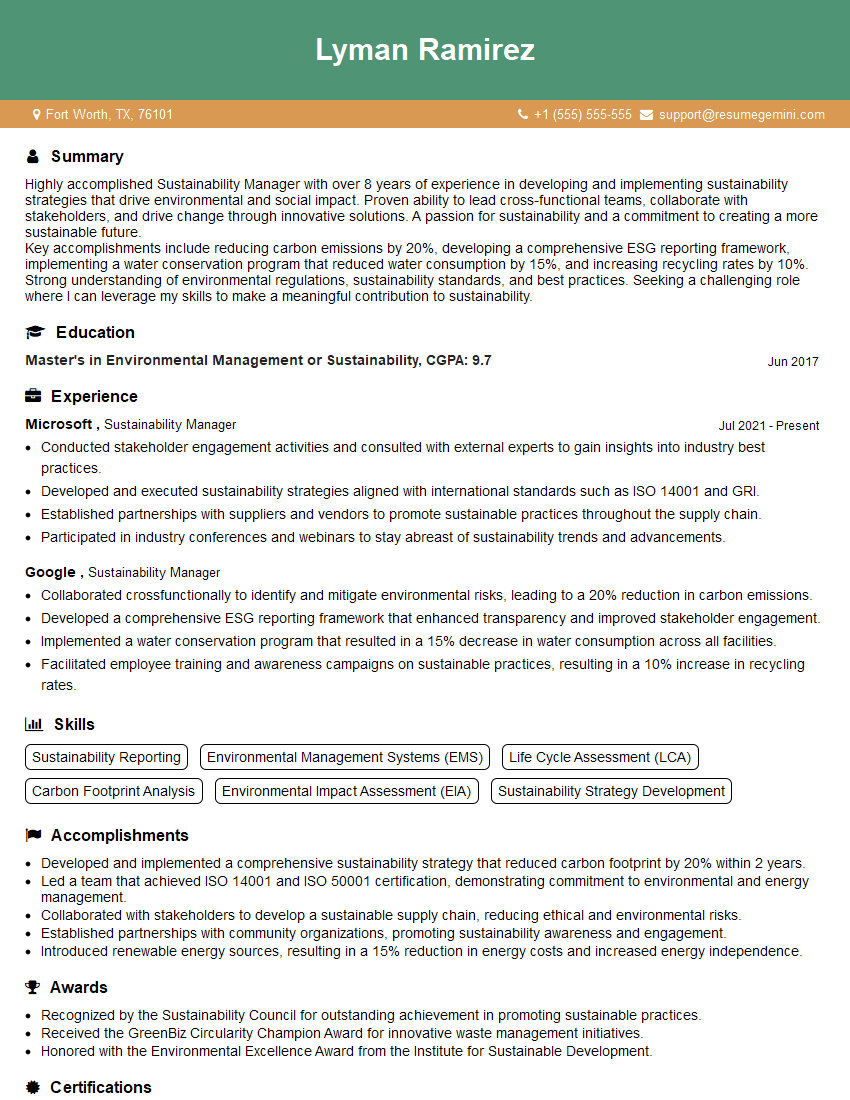
Sustainability Manager Resume Sample
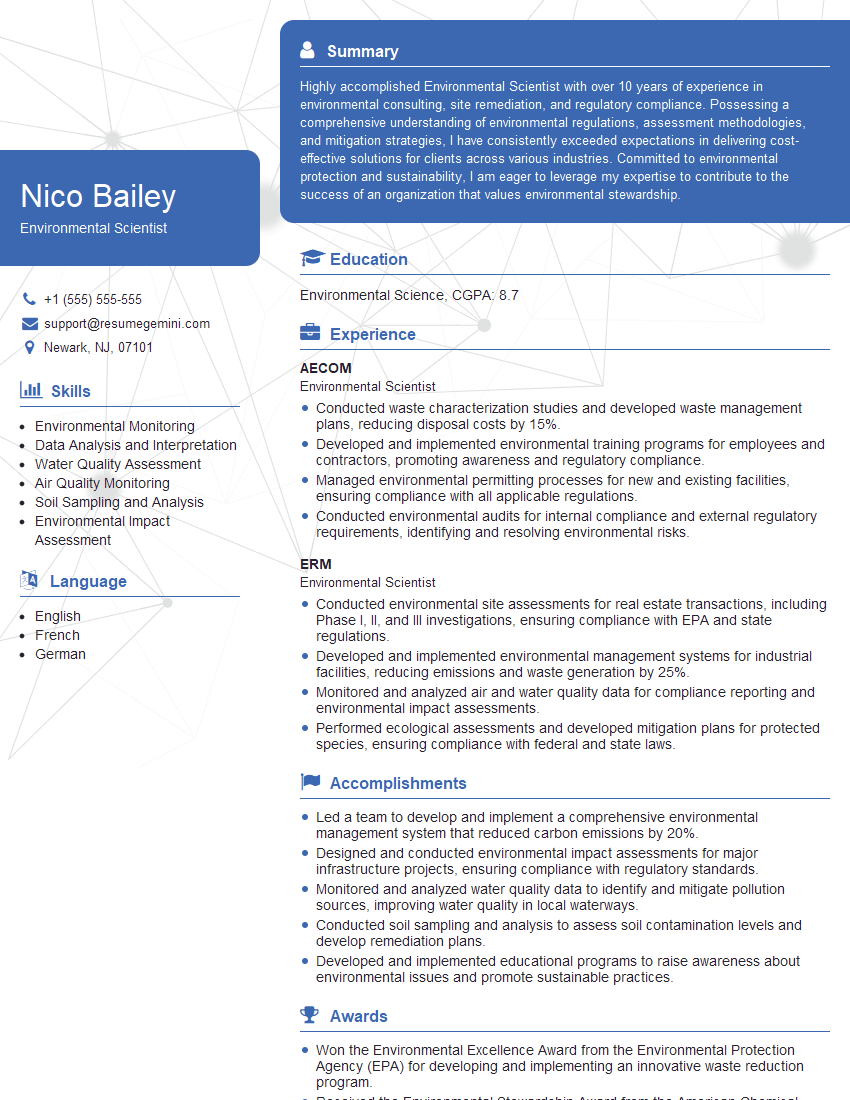
Environmental Scientist Resume Sample
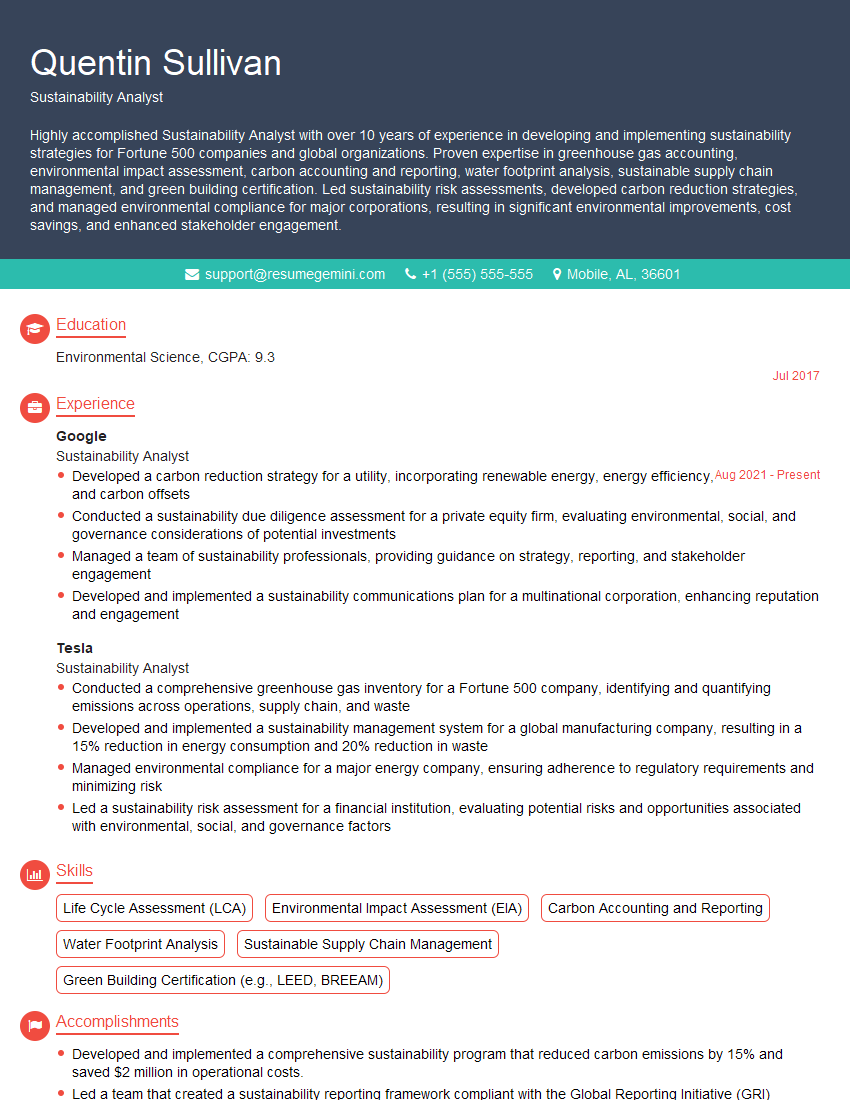
Sustainability Analyst Resume Sample

Sustainability Consultant Resume Sample
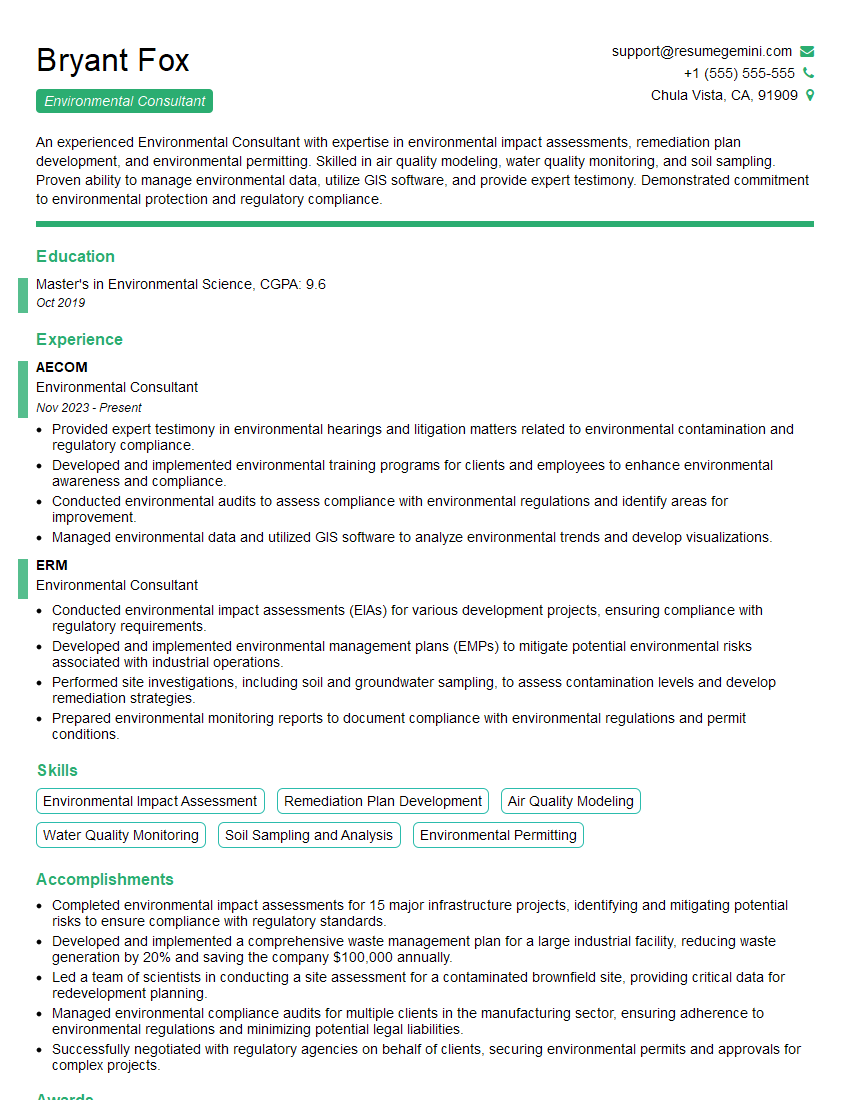
Environmental Consultant Resume Sample
Environmental Engineer Resume Sample

Industrial Ecologist Resume Sample
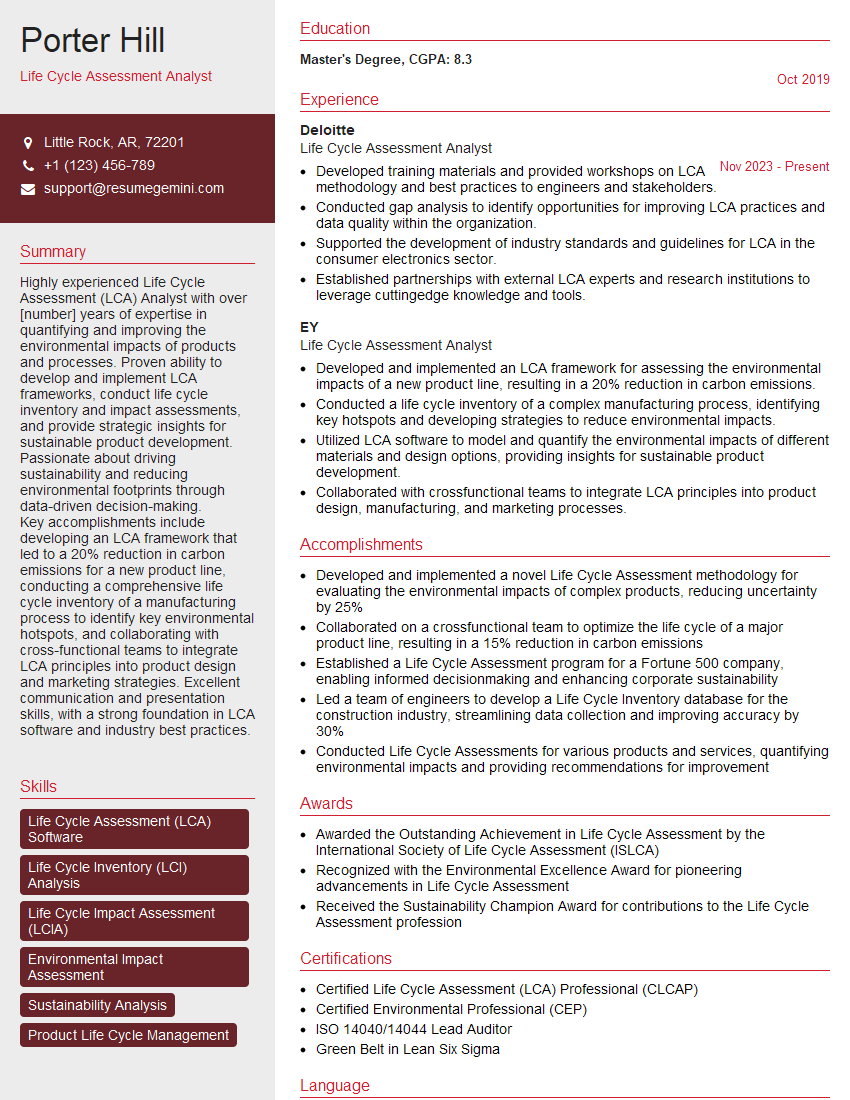
Life Cycle Assessment Analyst Resume Sample
Explore more articles
Users Rating of Our Blogs
Share Your Experience
We value your feedback! Please rate our content and share your thoughts (optional).
What Readers Say About Our Blog
To the interviewgemini.com Webmaster.
Very helpful and content specific questions to help prepare me for my interview!
Thank you
To the interviewgemini.com Webmaster.
This was kind of a unique content I found around the specialized skills. Very helpful questions and good detailed answers.
Very Helpful blog, thank you Interviewgemini team.