Feeling uncertain about what to expect in your upcoming interview? We’ve got you covered! This blog highlights the most important Pediatric Physician Assistant interview questions and provides actionable advice to help you stand out as the ideal candidate. Let’s pave the way for your success.
Questions Asked in Pediatric Physician Assistant Interview
Q 1. Describe your experience managing pediatric asthma exacerbations.
Managing pediatric asthma exacerbations requires a systematic approach focusing on assessment, treatment, and monitoring. I begin by assessing the severity of the exacerbation using tools like the Asthma Severity Score, considering the child’s respiratory rate, wheezing, use of accessory muscles, and oxygen saturation. Mild exacerbations may be managed with increased short-acting beta-agonist (SABA) inhalers, while moderate to severe exacerbations necessitate immediate medical attention, often requiring systemic corticosteroids and potentially nebulized bronchodilators.
For instance, a child presenting with mild wheezing, a slightly elevated respiratory rate, and good oxygen saturation might benefit from increased albuterol use every 20 minutes for an hour and close monitoring. In contrast, a child with severe respiratory distress, cyanosis, and markedly reduced oxygen saturation would require immediate hospitalization, intravenous corticosteroids, and potentially oxygen therapy and non-invasive ventilation.
Throughout the process, I emphasize patient education, ensuring parents understand the proper use of inhalers, medication schedules, and the importance of trigger avoidance. Regular follow-up appointments are essential to monitor response to treatment, adjust medications as needed, and create a long-term asthma management plan.
Q 2. How do you approach communicating complex medical information to parents?
Communicating complex medical information to parents requires empathy, clear language, and tailoring the explanation to their level of understanding. I start by establishing a rapport, acknowledging their concerns, and using simple, non-medical terminology whenever possible. I avoid jargon and use analogies to explain complex concepts. For instance, explaining how asthma medication works, I might compare the airways to a garden hose that becomes narrowed and constricted, and the medication helps to open the hose again.
I always provide written materials summarizing the discussion, including medication instructions and follow-up appointment details. I encourage parents to ask questions and repeat back what they have learned to ensure comprehension. If the information is particularly complex or the parents seem overwhelmed, I involve a medical interpreter or offer additional follow-up consultations.
For example, discussing a diagnosis of cystic fibrosis, I’d not only explain the genetic basis, but also focus on its day-to-day impact and how we can work together to manage the condition effectively. Visual aids like diagrams and pictures are often helpful, especially when discussing complex physiological processes.
Q 3. Explain your understanding of childhood immunizations and vaccination schedules.
My understanding of childhood immunizations encompasses knowledge of the recommended vaccination schedules, contraindications, and potential side effects. I am proficient in administering vaccines and educating parents about their importance in preventing vaccine-preventable diseases. The Centers for Disease Control and Prevention (CDC) provides detailed guidelines for recommended vaccination schedules, which I meticulously follow, adapting them when necessary based on the child’s individual medical history and any contraindications.
I understand the importance of documenting all vaccinations accurately in the child’s medical record. This ensures proper tracking of immunization status and enables efficient identification of any potential gaps in vaccination coverage. I regularly review the latest updates and recommendations from the CDC and the American Academy of Pediatrics (AAP) to ensure I’m practicing evidence-based medicine and providing the best possible care.
When providing vaccines, I emphasize the importance of proper storage, handling, and administration techniques to ensure the safety and efficacy of the vaccines.
Q 4. What is your experience with diagnosing and managing common childhood infections?
Diagnosing and managing common childhood infections involves a comprehensive approach combining history taking, physical examination, and laboratory investigations when necessary. I start by obtaining a thorough history, focusing on symptoms, duration, and any potential exposures. This is followed by a careful physical examination, paying close attention to vital signs, respiratory sounds, and any signs of dehydration or other complications. Common childhood infections like otitis media, upper respiratory infections, and influenza can usually be managed with supportive care, such as rest, hydration, and over-the-counter medications as appropriate.
However, some cases require further investigation, such as a throat swab for streptococcal pharyngitis or a urine culture for urinary tract infection. I appropriately prescribe antibiotics when indicated and carefully monitor for any adverse effects. For instance, a child presenting with fever, cough, and runny nose might be diagnosed with a viral upper respiratory infection, requiring only supportive care. On the other hand, a child with a sore throat, difficulty swallowing, and a positive streptococcal test would require antibiotics.
In every case, my goal is to provide timely and appropriate interventions to minimize the severity and duration of the illness while emphasizing preventive measures, like hand hygiene, to prevent future infections.
Q 5. Describe your approach to assessing a child’s developmental milestones.
Assessing a child’s developmental milestones involves a systematic review of their progress across various domains, including gross motor skills, fine motor skills, language development, cognitive abilities, and social-emotional development. I use standardized developmental screening tools such as the Denver Developmental Screening Test II or Ages & Stages Questionnaires to obtain a comprehensive assessment. I also incorporate observational methods during the physical examination, observing the child’s interactions, play behavior, and responses to questions.
For example, I would observe a toddler’s ability to walk, climb stairs, and build a simple tower to assess gross and fine motor skills. I would also assess their language development by evaluating their vocabulary, sentence structure, and ability to follow simple instructions. Any significant delays or deviations from the expected milestones necessitate further evaluation and intervention, potentially involving referral to specialists such as developmental pediatricians or therapists.
The approach to assessing milestones is tailored to the child’s age and developmental stage. Parents’ input is crucial in this process, as they provide valuable insights into the child’s daily routines and behavior.
Q 6. How do you handle a distressed or uncooperative child during an examination?
Handling a distressed or uncooperative child during an examination requires patience, empathy, and a flexible approach. I begin by creating a safe and comfortable environment, minimizing distractions and engaging the child in a playful manner. I involve the parents or caregivers in the process, allowing them to comfort and support their child. Distraction techniques, like using toys or books, are often effective, especially with younger children. For older children, I try to build rapport by engaging in age-appropriate conversation.
If necessary, I break down the examination into smaller, less intimidating steps. I explain what I will be doing in simple terms, providing positive reinforcement and praise throughout the examination. In some cases, it might be necessary to postpone parts of the examination until the child is more cooperative. For extremely uncooperative children, I might consider using non-pharmacological calming strategies or, in very rare circumstances, appropriate medication to facilitate the examination.
The key is to remain calm and patient, avoiding any forceful actions that might further distress the child. My ultimate goal is to ensure the child’s safety and comfort while obtaining the necessary information.
Q 7. Explain your understanding of child abuse recognition and reporting protocols.
Recognizing and reporting child abuse is a critical aspect of pediatric care. My understanding encompasses the various forms of child abuse (physical, sexual, emotional, and neglect) and the associated warning signs. I am familiar with mandated reporting laws and procedures in my state and am obligated to report any suspected cases to the appropriate authorities. This includes documenting any findings meticulously, including detailed descriptions of injuries, inconsistencies in the explanation of injuries, and any other concerning observations.
I am trained to conduct a thorough assessment of the child, including a detailed history and physical examination. If I suspect abuse, I will involve the appropriate agencies immediately. This could include Child Protective Services (CPS), law enforcement, or other specialists depending on the nature and severity of the suspected abuse. Maintaining confidentiality while complying with legal reporting mandates is essential. I also provide support and resources to the family, keeping in mind the well-being and safety of the child is the priority.
Continuing education on child abuse recognition and reporting protocols is crucial to maintaining my competence and ensure I’m able to effectively protect children from harm.
Q 8. How do you manage a child’s pain effectively and safely?
Managing pain in children requires a multifaceted approach prioritizing safety and minimizing distress. We start by assessing the pain using age-appropriate tools like the FLACC scale (for non-verbal children) or a numeric rating scale (for older children). The assessment informs the choice of analgesic. For mild pain, acetaminophen or ibuprofen are first-line options, always following recommended dosages based on the child’s weight. For moderate to severe pain, opioids may be considered, but cautiously and only under strict medical supervision. Non-pharmacological methods like distraction, relaxation techniques, and positioning are crucial adjuncts, especially for younger children. Regular reassessment is key. We strive for a multimodal approach, combining pharmacological and non-pharmacological techniques to achieve optimal pain control.
Example: A 5-year-old presents with post-operative pain. We use the FLACC scale to assess their pain level, and if it is high, we may prescribe a dose of acetaminophen with codeine (carefully calculating the dose based on weight), complemented with distraction techniques like watching a favorite movie or playing a game.
Q 9. Describe your experience with administering pediatric medications, including calculations.
Administering pediatric medications demands meticulous precision and adherence to safety protocols. Accurate dosage calculation is paramount. We always verify the prescription against the child’s weight and age, using standardized formulas. For example, many medications are dosed in mg/kg. I am proficient in calculating dosages based on weight and surface area. We always double-check our calculations before administering any medication. We utilize appropriate administration routes – oral, intravenous, intramuscular – based on the medication and the child’s condition, following all aseptic techniques. Patient and parental education about medication administration and potential side effects is an integral part of the process.
Example: A prescription calls for 10mg/kg of Amoxicillin for a 20kg child. The calculation: 10mg/kg * 20kg = 200mg. I would then confirm the correct dosage from the medication chart before administration. We would also discuss possible side effects such as diarrhea or rash with the parents.
Q 10. How do you differentiate between various types of pediatric rashes?
Differentiating between pediatric rashes requires a thorough history and physical examination. We consider factors like the rash’s appearance (macular, papular, vesicular, etc.), distribution (localized or generalized), associated symptoms (fever, itching, pain), and the child’s exposure history. Common rashes like measles, rubella, chickenpox, and scarlet fever have distinct characteristics. Allergic reactions can present diversely. Knowing the temporal relationship between exposure (e.g., new food, medication, contact allergen) and onset of rash is crucial. In cases of uncertainty, further investigations such as laboratory tests might be needed.
Example: A child with fever, Koplik spots (small white spots in the mouth), and a maculopapular rash that starts on the face and spreads downwards strongly suggests measles. A child with a sudden onset of intensely itchy, wheal-like lesions after eating strawberries might be experiencing an allergic reaction.
Q 11. What are your strategies for managing pediatric fevers?
Managing pediatric fevers involves assessing the fever’s severity, duration, and associated symptoms. First, we establish the cause through a detailed history and physical examination. Fever itself is a symptom, not a disease. We focus on comfort measures like hydration, rest, and appropriate clothing. Acetaminophen or ibuprofen are usually effective for reducing fever, based on age and weight guidelines. We monitor for dehydration, lethargy, and other concerning signs. Antibiotics are not always necessary, as many fevers are viral in origin. We emphasize parental education on recognizing signs of serious illness requiring immediate attention, such as difficulty breathing, altered mental status, or persistent vomiting.
Example: A child with a mild fever (101°F), otherwise well-appearing, would likely be managed with acetaminophen, fluids, and rest. Close observation for improvement is essential. A child with a high fever (104°F) and signs of lethargy would require more aggressive management, possibly hospitalization to investigate the underlying cause.
Q 12. Explain your approach to counseling parents about childhood obesity.
Counseling parents about childhood obesity is a sensitive and multifaceted process that requires empathy and collaboration. We start by establishing a trusting relationship, understanding the family dynamics, and acknowledging the challenges involved. We avoid blame and instead focus on empowering the family to make positive lifestyle changes. We assess the child’s BMI, discuss nutritional guidelines tailored to the child’s age and developmental stage, and encourage increased physical activity. We often collaborate with nutritionists, and behavioral specialists. We emphasize gradual, sustainable changes rather than drastic measures. Regular follow-up and ongoing support are crucial.
Example: We might suggest gradually reducing sugary drinks, incorporating more fruits and vegetables into meals, and increasing physical activity through family walks or participation in sports, tailored to fit the family’s lifestyle and resources.
Q 13. Describe your experience with treating common pediatric behavioral issues.
Treating common pediatric behavioral issues requires a comprehensive approach. We start by obtaining a detailed developmental history, including information on the child’s temperament, environment, and any potential stressors. We often use behavioral modification techniques, such as positive reinforcement, consistent discipline, and setting clear expectations. For more complex cases, collaboration with psychologists or other specialists might be necessary. Parenting support groups and family therapy can be valuable. We consider the child’s age, developmental stage, and the specific nature of the problem when selecting the most appropriate interventions.
Example: A child with oppositional defiant disorder might benefit from structured routines, consistent discipline using positive reinforcement, and parent training in behavior management techniques.
Q 14. How do you handle ethical dilemmas in pediatric care?
Ethical dilemmas in pediatric care are not uncommon. They often involve balancing the best interests of the child with parental wishes, especially concerning life-sustaining treatment or end-of-life care. Addressing these challenges requires careful consideration of several factors. These include the child’s age and maturity level, their ability to express preferences, and the potential impact of decisions on the child’s well-being. We always prioritize the child’s best interests and would involve a multidisciplinary team, including ethicists and legal counsel when necessary, to ensure decisions are informed and ethically sound. Open communication with parents is vital. Transparent discussion around potential outcomes and exploring different options helps ensure the family is involved in decision-making.
Example: A scenario involving a seriously ill child with parents who refuse life-sustaining treatment requires careful navigation. A thorough understanding of the parents’ perspectives, coupled with a discussion about the implications of the refusal, might reveal underlying concerns that can be addressed or it may lead to engaging hospital ethics consultations.
Q 15. Explain your understanding of growth charts and growth patterns in children.
Growth charts are essential tools in pediatric care, providing a visual representation of a child’s growth trajectory compared to their peers. They track key parameters like weight, length/height, and head circumference, plotting them against age-specific percentiles. Understanding growth patterns involves recognizing that children grow at different rates, following individual growth curves. While most children fall within the 5th to 95th percentile, deviations can signal underlying health issues.
For example, consistently falling below the 5th percentile for weight might indicate malnutrition or a medical condition. Conversely, consistently exceeding the 95th percentile could suggest conditions like obesity or endocrine disorders. It’s crucial to interpret growth charts in the context of the child’s overall health, family history, and social factors. A sudden change in growth trajectory is often more concerning than consistently being at a particular percentile.
We use different growth charts depending on the child’s age and sex; the CDC provides standardized charts we frequently refer to. We interpret these charts by examining both the absolute values and the growth velocity – the rate of change over time. A consistent pattern of poor growth warrants further investigation.
Career Expert Tips:
- Ace those interviews! Prepare effectively by reviewing the Top 50 Most Common Interview Questions on ResumeGemini.
- Navigate your job search with confidence! Explore a wide range of Career Tips on ResumeGemini. Learn about common challenges and recommendations to overcome them.
- Craft the perfect resume! Master the Art of Resume Writing with ResumeGemini’s guide. Showcase your unique qualifications and achievements effectively.
- Don’t miss out on holiday savings! Build your dream resume with ResumeGemini’s ATS optimized templates.
Q 16. What is your approach to managing a child with a chronic illness?
Managing a child with a chronic illness requires a holistic and individualized approach, focusing on both the medical and psychosocial aspects. This involves a strong partnership with the child, their family, and a multidisciplinary team. My approach typically includes:
- Comprehensive assessment: Thoroughly understanding the child’s medical history, current symptoms, and functional limitations.
- Disease-specific management: Following evidence-based guidelines and protocols to manage the child’s illness effectively. This may include medication management, dietary modifications, or physical therapy.
- Family education and support: Empowering families with the knowledge and skills to manage their child’s condition at home, providing emotional support, and addressing family concerns.
- Regular monitoring and follow-up: Scheduling regular check-ups to track the child’s progress, adjust treatments as needed, and address emerging concerns.
- Advocacy and coordination of care: Connecting the family with relevant support services, such as specialists, therapists, social workers, and financial assistance programs.
For example, in managing a child with asthma, I’d work with the family to develop an asthma action plan, teach them how to use an inhaler correctly, monitor lung function, and educate them on environmental triggers. Regular follow-up ensures timely adjustments to medication and management strategies based on the child’s response.
Q 17. Describe your experience with performing pediatric physical examinations.
Performing pediatric physical examinations requires a gentle and age-appropriate approach, building rapport with the child and family to create a comfortable and safe environment. My experience encompasses a wide range of examinations, from routine well-child visits to evaluations for specific concerns. The examination always starts by building trust and addressing the child’s concerns. Techniques vary based on the child’s age and developmental stage. For infants, assessing reflexes and observing their behavior are key. With older children, engaging in age-appropriate communication and providing explanations throughout the exam is important.
I systematically examine every system, adapting my approach based on the child’s age and presentation. I pay close attention to details, such as skin turgor (for dehydration), heart and lung sounds, abdominal palpation, and neurological assessments. I’m also adept at performing procedures like venipunctures and administering injections in children, maintaining a comforting demeanor throughout. Documentation of the physical examination is meticulous and accurate, highlighting any significant findings.
Q 18. How do you interpret and act upon pediatric laboratory results?
Interpreting pediatric laboratory results requires a thorough understanding of normal ranges for different age groups and the ability to correlate lab findings with clinical presentations. I always consider the child’s age, overall health, and the context of the test order. Abnormal results are evaluated within the larger clinical picture, not in isolation.
For example, an elevated white blood cell count might suggest an infection, but I would consider other symptoms, such as fever, cough, or rash, to determine the type of infection and appropriate treatment. Similarly, a slightly elevated liver enzyme level might be a sign of viral illness, but significant elevations warrant further investigation, possibly for underlying liver disease. I use my clinical judgment in collaboration with the physician to decide how to proceed based on the results, considering whether further tests are needed, and communicating the results clearly and sensitively to the family.
Q 19. What is your experience with utilizing electronic health records in pediatric care?
I have extensive experience using electronic health records (EHRs) in pediatric care, including Epic and Cerner. I am proficient in documenting patient encounters, ordering tests, reviewing results, and managing medications within the EHR system. My use of EHRs also includes reviewing immunization records, generating patient reports, and communicating with other healthcare providers electronically. I understand the importance of maintaining patient privacy and complying with HIPAA regulations when using electronic systems.
Beyond data entry, I use EHRs to facilitate patient care by easily accessing prior medical records, improving care coordination, ensuring timely preventive care, and reducing medical errors through integrated clinical decision support tools. I am adept at utilizing the EHR to streamline workflows and enhance efficiency in the clinical setting.
Q 20. Explain your understanding of the principles of pediatric pharmacology.
Pediatric pharmacology focuses on the unique aspects of drug absorption, distribution, metabolism, and excretion (ADME) in children. Compared to adults, children have immature organ systems that significantly impact drug pharmacokinetics and pharmacodynamics. Dosage calculations are not simply scaled-down adult doses; they often require specific adjustments based on body weight, surface area, or age.
For example, neonates have a less developed hepatic (liver) system, resulting in slower drug metabolism. This means that certain medications might require lower doses or longer intervals between doses. Also, renal (kidney) function is another critical factor; children with impaired renal function may need dose adjustments to avoid drug accumulation. Safety and efficacy in pediatric populations must always be prioritized. Therefore, we use age-appropriate formulations and routes of administration, like oral suspensions instead of tablets for younger children, and understanding potential adverse effects specific to children is key.
Q 21. How do you stay current with the latest advancements in pediatric medicine?
Staying current in pediatric medicine involves continuous professional development and engagement with the latest research and guidelines. I actively participate in continuing medical education (CME) activities, attending conferences, workshops, and online courses focusing on relevant topics like infectious diseases, immunizations, and developmental pediatrics. I regularly read peer-reviewed journals such as Pediatrics and the Journal of the American Academy of Pediatrics, staying updated on the most recent clinical trials and research findings.
Furthermore, I actively participate in professional organizations like the American Academy of Physician Assistants (AAPA) and attend local and national conferences to network with colleagues and share best practices. I also regularly review clinical practice guidelines from reputable organizations like the CDC and AAP to ensure my practice aligns with the most up-to-date recommendations. Maintaining a strong commitment to lifelong learning is crucial in providing the best possible care for my patients.
Q 22. Describe your experience working collaboratively within a healthcare team.
Collaboration is the cornerstone of effective pediatric care. My experience consistently involves working closely with a multidisciplinary team, including pediatricians, nurses, social workers, and other allied health professionals. For instance, in managing a child with asthma, I collaborate with the pulmonologist to adjust medication regimens, the nurse to ensure proper inhaler technique education, and the social worker to address potential environmental triggers within the family home. This teamwork ensures a holistic approach, addressing both the medical and socio-environmental factors impacting the child’s health.
I actively participate in team meetings, contribute to care planning, and ensure clear and timely communication among all team members. Effective communication, active listening, and respect for each member’s expertise are key to this collaborative process. I value diverse perspectives and believe that shared decision-making leads to the best outcomes for our patients.
Q 23. What are your strengths and weaknesses as a Pediatric Physician Assistant?
My strengths include excellent communication skills, both with children and their families, and a thorough approach to diagnosis and treatment. I’m adept at building rapport, which is crucial for obtaining accurate medical histories, especially from young patients. I also pride myself on my critical thinking skills and ability to quickly assess and manage acute situations. My ability to remain calm and focused under pressure is essential in pediatric emergency situations.
One area I’m actively working on is time management, particularly in a busy clinic setting. While I’m proficient at prioritizing urgent cases, I’m focusing on strategies like improved scheduling and delegation to optimize my workflow and ensure I dedicate sufficient time to each patient without compromising the quality of care.
Q 24. Describe a challenging pediatric case you managed and the outcome.
One challenging case involved a six-year-old presenting with severe abdominal pain, vomiting, and lethargy. Initial assessment pointed towards appendicitis, but the child also exhibited signs of dehydration and metabolic acidosis. After thorough examination and laboratory investigations, including blood tests and imaging, we diagnosed a complicated case of intussusception, a condition where one part of the intestine slides into another. This required urgent surgical intervention.
The complexity arose from the need for rapid diagnosis amidst several differential diagnoses and the necessity for prompt surgical management to prevent bowel necrosis. I worked closely with the surgical team, ensuring seamless communication and preparation for the procedure. The surgery was successful, and the child made a full recovery. This experience reinforced the importance of a systematic approach to diagnosis, collaboration with specialists, and the need for prompt intervention in life-threatening pediatric conditions.
Q 25. How do you prioritize patient care in a busy clinic setting?
Prioritizing patient care in a busy clinic requires a structured approach. I utilize a combination of triage systems, clinical judgment, and efficient workflow strategies. I start by assessing each patient’s acuity, prioritizing those with urgent or emergent needs. This might involve patients with respiratory distress, severe dehydration, or significant trauma. For instance, a child with croup requiring immediate intervention would take precedence over a routine well-child visit.
Once urgent cases are addressed, I systematically work through the remaining patients, focusing on efficient documentation and utilizing teamwork to delegate tasks when possible. This involves delegating tasks appropriately to nurses or medical assistants. Continuous self-assessment and reflection allow me to refine my workflow and improve efficiency while maintaining a high standard of patient care.
Q 26. Describe your experience with emergency procedures in pediatrics.
My experience with pediatric emergency procedures includes assisting with intubation, managing airway compromise, performing basic life support (BLS) and advanced cardiac life support (ACLS) procedures, and assisting with suturing and wound care. I have received training and regularly participate in simulations to maintain my skills in these areas. This includes participation in trauma drills and mock code scenarios to prepare for real-world emergencies.
While I don’t independently perform major surgical procedures, my role in assisting the surgical team and managing the child’s stabilization prior to and post-procedure is vital. My understanding of pediatric anatomy and physiology and my ability to work effectively under pressure are crucial aspects of this role.
Q 27. Explain your understanding of different pediatric developmental stages.
Understanding pediatric developmental stages is crucial for providing age-appropriate care. My knowledge spans across different developmental domains, including physical, cognitive, social-emotional, and language development. I utilize validated developmental screening tools, such as the Denver II, to assess a child’s progress and identify potential developmental delays or concerns. This is vital for early interventions. For example, recognizing a delay in speech development in a two-year-old might prompt referral to a speech therapist.
I am familiar with milestones associated with each stage, from infancy to adolescence. This understanding influences how I approach communication, physical examination, and medical explanations, adapting my communication style to match the child’s developmental capabilities and the family’s understanding.
Q 28. How do you approach patient education and family engagement?
Patient education and family engagement are paramount to successful pediatric care. My approach involves utilizing plain language, avoiding medical jargon, and employing visual aids where appropriate. I adapt my communication to suit the child’s age and cognitive abilities. For younger children, I might use storytelling or play to explain medical procedures. For adolescents, I encourage open dialogue and involve them in the decision-making process.
I emphasize active listening and encourage families to ask questions. I ensure families understand the diagnosis, treatment plan, and potential risks and benefits. I strive to empower families by providing them with the knowledge and resources they need to participate fully in their child’s care. This often includes providing written materials and contact information for additional support services.
Key Topics to Learn for Pediatric Physician Assistant Interview
- Child Development & Growth: Understanding normal developmental milestones across different age groups, recognizing developmental delays, and applying this knowledge to patient assessment and care planning.
- Common Pediatric Illnesses: Proficiently diagnosing and managing common childhood illnesses such as respiratory infections, gastrointestinal issues, and skin conditions. This includes understanding appropriate treatment protocols and recognizing when referral to a specialist is necessary.
- Pediatric Pharmacology: Knowing the safe and effective use of medications in children, including dosage calculations, potential side effects, and drug interactions specific to pediatric populations. This also includes understanding the principles of pharmacokinetics and pharmacodynamics in children.
- Pediatric Procedures: Demonstrating familiarity with common pediatric procedures such as venipuncture, immunizations, and wound care, including understanding aseptic techniques and managing potential complications.
- Communication & Family-Centered Care: Highlighting skills in effectively communicating with children and their families, providing empathetic and culturally sensitive care, and collaborating with parents to develop comprehensive treatment plans.
- Ethical Considerations in Pediatrics: Demonstrating awareness of ethical dilemmas specific to pediatric care, such as informed consent, end-of-life decisions, and confidentiality.
- Health Promotion & Disease Prevention: Showcasing expertise in preventive care strategies, such as vaccinations, health screenings, and anticipatory guidance for parents.
- Problem-Solving & Critical Thinking: Articulating your approach to diagnosing and managing complex pediatric cases, including demonstrating your ability to analyze data, weigh risks and benefits, and make sound clinical judgments under pressure.
Next Steps
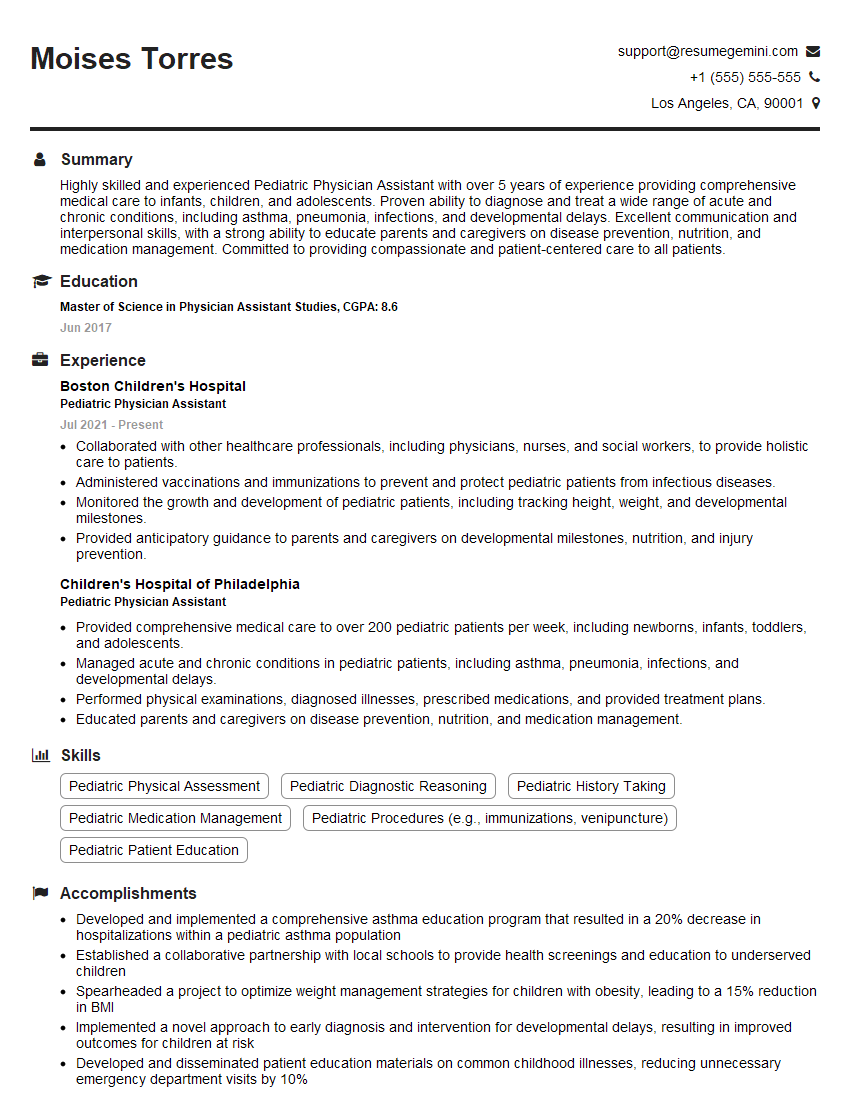
Mastering the intricacies of Pediatric Physician Assistant practice is crucial for a rewarding and impactful career. It opens doors to specialized roles, leadership opportunities, and the immense satisfaction of contributing to the well-being of young patients. To significantly enhance your job prospects, crafting an ATS-friendly resume is paramount. This ensures your qualifications are effectively highlighted to potential employers. We strongly recommend using ResumeGemini, a trusted resource, to build a professional and impactful resume that truly showcases your skills and experience. Examples of resumes tailored to the Pediatric Physician Assistant field are available to help guide you. Take the next step towards your dream career – build your best resume today!
Explore more articles
Users Rating of Our Blogs
Share Your Experience
We value your feedback! Please rate our content and share your thoughts (optional).
What Readers Say About Our Blog
To the interviewgemini.com Webmaster.
Very helpful and content specific questions to help prepare me for my interview!
Thank you
To the interviewgemini.com Webmaster.
This was kind of a unique content I found around the specialized skills. Very helpful questions and good detailed answers.
Very Helpful blog, thank you Interviewgemini team.