The thought of an interview can be nerve-wracking, but the right preparation can make all the difference. Explore this comprehensive guide to General Contracting interview questions and gain the confidence you need to showcase your abilities and secure the role.
Questions Asked in General Contracting Interview
Q 1. Describe your experience with different contract types (e.g., lump sum, cost-plus).
My experience spans various contract types, each with its own risk and reward profile. Lump sum contracts are fixed-price agreements where I bid a total price for the completed project. This offers the client price certainty, but places more risk on me to manage costs effectively. For example, I recently completed a lump sum contract for a residential renovation, carefully estimating material and labor costs upfront to ensure profitability. Cost-plus contracts, on the other hand, reimburse me for actual costs incurred plus a predetermined fee or percentage. This shifts more risk to the client regarding the final cost, but provides flexibility if unforeseen circumstances arise during construction. I used this approach on a recent commercial project where the scope of work evolved significantly after the initial design phase. Finally, unit-price contracts define a price per unit of work (e.g., $X per square foot of concrete). This approach works well for projects with variable quantities, but requires meticulous quantity surveying.
Q 2. How do you manage project budgets and track expenses?
Budget management is crucial. I utilize a combination of strategies. First, I create a detailed budget breakdown, itemizing all anticipated costs – materials, labor, equipment, permits, contingency etc. I use project management software (more on that later) to track expenses against the budget. This involves regular cost coding, comparing actual expenditures against the planned budget, and generating reports to highlight variances. We also conduct regular progress meetings to review cost and schedule performance. For example, if material costs unexpectedly rise, I proactively communicate with the client and explore alternative solutions (e.g., substituting materials) to minimize cost overruns. Regular invoicing and prompt payment collection are also vital for cash flow management.
Q 3. Explain your process for selecting subcontractors.
Subcontractor selection is a critical process affecting project quality and timely completion. My approach involves a multi-step process:
- Pre-qualification: I assess potential subcontractors based on their experience, licensing, insurance, safety record, and financial stability. I review their past performance on similar projects and request references.
- Bid Evaluation: Once pre-qualified, I invite bids, carefully comparing price, quality of work, and proposed schedule. The lowest bid is not always the best. I prioritize a balance of cost and competence.
- Contract Negotiation: Contracts with clear scope of work, payment terms, insurance requirements, and deadlines are crucial. I utilize standard AIA (American Institute of Architects) contracts, customized as necessary.
- Ongoing Monitoring: I closely monitor subcontractor performance throughout the project, ensuring adherence to the contract and project schedule. This includes regular site visits and progress meetings.
Q 4. What is your experience with project scheduling software (e.g., Primavera P6, MS Project)?
I have extensive experience with various project scheduling software packages. Microsoft Project is great for smaller projects and offers user-friendly interface. I’ve utilized it for residential remodeling projects effectively. For larger, more complex projects, Primavera P6 offers superior scheduling capabilities, including critical path analysis, resource leveling, and advanced reporting. This software is crucial for managing interdependencies between different trades on large-scale construction projects. I routinely use these tools to create baseline schedules, track progress, identify potential delays, and communicate timelines to clients and subcontractors. I leverage features such as Gantt charts to visualize schedules and readily identify any critical path activities that require special attention to maintain the project schedule.
Q 5. Describe your approach to risk management on a construction project.
Risk management is integral to successful project delivery. My approach is proactive and involves identifying potential risks early, assessing their likelihood and impact, and developing mitigation strategies. This process typically involves:
- Risk Identification: This includes brainstorming potential issues like weather delays, material shortages, subcontractor performance problems, design changes, and regulatory hurdles.
- Risk Assessment: I assess each risk’s likelihood and potential impact on the project schedule and budget. A simple risk matrix can be helpful for this.
- Risk Mitigation: Based on the assessment, I develop strategies to reduce or eliminate the risks. For example, securing materials early, building in buffer time for potential delays, or having contingency plans for unforeseen circumstances.
- Risk Monitoring and Control: I continuously monitor risks throughout the project and adjust mitigation strategies as needed.
Q 6. How do you handle change orders and variations from the original plan?
Change orders are inevitable in construction projects. My process starts with a formal request documenting the changes, including detailed descriptions, quantities, costs, and impact on the schedule. I prepare a comprehensive change order that includes:
- Detailed description: Clearly outlining the nature of the change.
- Revised drawings/specifications: Updating the project plans accordingly.
- Cost impact: Itemized breakdown of the additional costs involved.
- Schedule impact: Analyzing the effect on the project timeline.
- Client approval: Obtaining written approval from the client before proceeding.
Q 7. Explain your understanding of building codes and regulations.
A strong understanding of building codes and regulations is paramount. I regularly consult local, state, and federal codes to ensure all aspects of my projects comply. This includes familiarizing myself with:
- Building codes: These regulate structural design, fire safety, accessibility, and other essential aspects.
- Zoning regulations: These determine permitted land uses and building heights.
- Permitting requirements: I navigate the process of obtaining necessary permits, inspections, and approvals.
- Environmental regulations: I understand and adhere to environmental protection laws, including waste disposal and stormwater management.
Q 8. How do you ensure the safety of workers on your construction sites?
Worker safety is paramount on my construction sites. It’s not just a legal requirement; it’s a moral imperative. My approach is multifaceted, starting with a robust safety program that’s communicated clearly and consistently to everyone involved.
- Pre-Construction Planning: Before any work begins, a thorough site-specific safety plan is developed, identifying potential hazards and outlining preventative measures. This includes things like fall protection plans, confined space entry procedures, and emergency response protocols.
- Training and Education: All workers, from laborers to subcontractors, receive comprehensive safety training tailored to their specific tasks. This goes beyond basic OSHA compliance; we focus on practical application and continuous improvement. For example, we might use virtual reality simulations to train for emergency scenarios.
- Regular Inspections: Daily safety inspections are conducted to identify and rectify potential hazards promptly. We use checklists and document findings meticulously. We emphasize proactive measures, addressing issues before they escalate.
- Personal Protective Equipment (PPE): We provide high-quality PPE and rigorously enforce its proper use. We regularly check equipment for damage or wear. This is reinforced through regular tool-box talks and visual reminders across the site.
- Incident Reporting and Investigation: We have a clear process for reporting and investigating any accidents or near misses. The goal is not to assign blame but to understand what went wrong and prevent similar incidents in the future. Thorough root cause analysis is key here.
For instance, on a recent high-rise project, our proactive fall protection measures, including the use of safety nets and regular inspections of harness equipment, prevented any serious falls, even with working at significant heights.
Q 9. Describe your experience with quality control and assurance procedures.
Quality control and assurance is integral to delivering successful projects. My approach involves rigorous checks at each stage of construction, starting with the initial design review and continuing through to final completion and beyond (warranty period).
- Design Review: We meticulously review construction drawings and specifications, identifying potential conflicts or ambiguities early on. We collaborate with architects and engineers to resolve any issues before construction begins.
- Material Selection and Verification: We specify materials that meet or exceed industry standards, and we verify that the materials delivered to the site conform to these specifications. We meticulously document each material’s source and its associated certification.
- In-process Inspections: Regular inspections are conducted at critical stages of construction, ensuring that the work is being performed according to the plans and specifications. We employ a combination of visual inspections, and where appropriate, non-destructive testing methods.
- Quality Control Documentation: We maintain comprehensive documentation throughout the project, including inspection reports, material test results, and photographs. This documentation provides a clear audit trail and serves as a valuable resource for future projects.
- Punch List and Closeout: A detailed punch list is developed near the end of the project, identifying any remaining deficiencies. These are addressed before final project acceptance, ensuring a high level of quality.
On a recent school renovation, our stringent quality control measures, including regular testing of concrete strength and meticulous inspection of finishes, resulted in a project that exceeded expectations and received high praise from the school district.
Q 10. How do you communicate effectively with clients, subcontractors, and your team?
Effective communication is the cornerstone of successful project delivery. I prioritize clear, concise, and timely communication with all stakeholders – clients, subcontractors, and my team.
- Regular Meetings: I schedule regular meetings with clients, subcontractors, and the project team to discuss progress, address concerns, and make decisions collaboratively. These meetings may be formal or informal depending on the situation.
- Project Management Software: We utilize project management software to track progress, manage documents, and facilitate communication. This provides a central hub for all project-related information, ensuring everyone is on the same page.
- Written Communication: I believe in the importance of written communication to document agreements, decisions, and other key information. This minimizes misunderstandings and provides a clear record of project events.
- Active Listening: I make a conscious effort to actively listen to concerns and suggestions from all parties involved. I foster an environment where everyone feels comfortable voicing their opinions.
- Conflict Resolution: I have a proactive approach to conflict resolution, addressing issues promptly and fairly before they escalate.
For example, on a recent commercial project, our consistent use of project management software and regular client updates prevented misunderstandings and kept the project on track, despite some unforeseen challenges.
Q 11. What is your experience with construction drawings and specifications?
I have extensive experience interpreting and working with construction drawings and specifications. This involves a deep understanding of architectural, structural, mechanical, electrical, and plumbing (MEP) drawings, as well as the associated specifications that detail material requirements, installation methods, and quality standards.
- Blueprint Reading: I am proficient in reading and interpreting various types of construction drawings, including plans, sections, elevations, and details. This is a foundational skill for any general contractor.
- Specifications Review: I thoroughly review project specifications to understand the required materials, workmanship, and testing procedures. This ensures that the project is built to the required standards.
- Coordination: I coordinate the various drawings and specifications to identify any conflicts or inconsistencies before construction begins. This prevents costly mistakes and delays down the line.
- Software Proficiency: I’m proficient in using various construction software packages, such as AutoCAD, Revit, and Bluebeam, to review and manage drawings efficiently. This helps in creating accurate and coordinated models for a better understanding of the project.
- Problem Solving: When inconsistencies or errors are discovered, I work collaboratively with the design team to resolve them effectively. Experience helps in identifying potential problems and finding practical solutions.
For example, on a recent hospital addition, my ability to identify a conflict between the structural and MEP drawings prevented a major delay and saved significant costs by addressing the issue before construction commenced.
Q 12. How do you resolve conflicts among subcontractors or team members?
Conflict resolution is a crucial skill for a general contractor. My approach is based on open communication, fairness, and a collaborative problem-solving approach.
- Early Intervention: I address conflicts as soon as they arise, preventing them from escalating. This often involves informal discussions between the involved parties.
- Mediation: If informal discussions are unsuccessful, I act as a mediator, facilitating communication and helping the parties reach a mutually acceptable solution. This requires active listening and a neutral approach.
- Formal Dispute Resolution: In rare cases, if mediation fails, I may resort to formal dispute resolution methods, such as arbitration or litigation, but this is always a last resort.
- Documentation: I maintain meticulous records of all communication and decisions related to conflict resolution. This helps to prevent misunderstandings and provides a clear audit trail.
- Fairness and Impartiality: I strive to be fair and impartial in my approach to conflict resolution, ensuring that all parties are treated equitably.
For example, on a recent renovation project, a dispute arose between the plumbing and electrical subcontractors regarding access to a particular area. Through mediation, I helped them find a solution that minimized disruption to the overall project schedule.
Q 13. Describe your experience with value engineering.
Value engineering is a systematic approach to improving project value by identifying opportunities to reduce costs while maintaining or enhancing functionality. My experience with value engineering involves a collaborative process.
- Team Collaboration: We work collaboratively with the design team, subcontractors, and clients to identify potential cost savings without compromising quality or performance. Brainstorming sessions are particularly useful.
- Alternative Material Selection: We explore alternative materials or construction methods that offer comparable performance at a lower cost. This requires a good understanding of material properties and building codes.
- Design Optimization: We analyze the design to identify areas where simplification or modification can reduce costs without impacting the overall design intent. This can involve changes to the layout or structural system.
- Cost-Benefit Analysis: We perform a thorough cost-benefit analysis to determine the financial impact of each value-engineering suggestion. This involves comparing the cost savings with any potential negative impacts on project performance.
- Documentation: We maintain a record of all value-engineering suggestions, including the cost savings and any potential risks.
On a recent office building project, we successfully implemented several value-engineering changes, reducing construction costs by 10% without sacrificing quality. This included using an alternative framing system and a more cost-effective HVAC system.
Q 14. Explain your process for preparing a construction bid.
Preparing a competitive and accurate construction bid is a meticulous process. My approach involves a detailed review of the project documents, accurate cost estimation, and a thorough understanding of the bidding process.
- Document Review: We thoroughly review the project plans, specifications, and contract documents to fully understand the scope of work and any potential challenges. This stage is crucial for accurate cost estimation.
- Quantity Takeoff: We perform a detailed quantity takeoff, accurately measuring the quantities of materials and labor required for each task. This is often done using specialized software to increase accuracy and speed.
- Cost Estimation: We develop a detailed cost estimate, including direct costs (materials, labor, equipment) and indirect costs (overhead, profit). We use historical data and current market pricing to ensure accuracy.
- Risk Assessment: We identify potential risks and uncertainties that could impact the project cost and schedule. We incorporate contingency factors into the estimate to account for these risks.
- Bid Preparation: We prepare a professional and comprehensive bid document, including the detailed cost estimate, project schedule, and our qualifications. This document is a crucial tool in securing the project.
- Review and Submission: Before submitting the bid, we thoroughly review it for accuracy and completeness. This helps to avoid costly mistakes.
For instance, on a recent highway project, our thorough bid preparation, including a comprehensive risk assessment, allowed us to submit a competitive bid that accurately reflected the project’s complexities and ultimately secured the contract.
Q 15. How do you manage project timelines and meet deadlines?
Managing project timelines effectively is crucial for success in general contracting. It involves a proactive approach starting from the initial planning stages and continuing throughout the project lifecycle. I utilize a combination of techniques, including:
- Critical Path Method (CPM): I identify the critical path – the sequence of tasks that determines the shortest possible project duration. This allows for focused resource allocation and risk mitigation. For instance, on a recent school renovation, we used CPM to pinpoint the roofing and structural work as critical and prioritized those activities, ensuring timely completion.
- Gantt Charts: These visual tools provide a clear representation of task dependencies, durations, and milestones. They’re invaluable for monitoring progress, identifying potential conflicts, and communicating updates to the client and the project team. We regularly update Gantt charts during our weekly project meetings.
- Regular Progress Meetings: These meetings facilitate open communication, problem-solving, and proactive adjustments to the schedule. We address any delays or challenges promptly and collectively brainstorm solutions.
- Contingency Planning: Unexpected delays are inevitable. We build buffer time into the schedule to absorb minor setbacks. We also develop contingency plans for major disruptions like material shortages or equipment failures. For example, during a recent large-scale commercial project, we experienced a supplier delay. Our contingency plan, which included sourcing materials from an alternative supplier, allowed us to only experience a minimal impact on the overall schedule.
By employing these methods, I ensure projects are completed on time and within budget, maintaining client satisfaction and delivering a high-quality product.
Career Expert Tips:
- Ace those interviews! Prepare effectively by reviewing the Top 50 Most Common Interview Questions on ResumeGemini.
- Navigate your job search with confidence! Explore a wide range of Career Tips on ResumeGemini. Learn about common challenges and recommendations to overcome them.
- Craft the perfect resume! Master the Art of Resume Writing with ResumeGemini’s guide. Showcase your unique qualifications and achievements effectively.
- Don’t miss out on holiday savings! Build your dream resume with ResumeGemini’s ATS optimized templates.
Q 16. What is your experience with different construction methods (e.g., traditional, lean)?
I have extensive experience with various construction methods, including traditional and lean construction.
- Traditional Construction: This method involves a linear sequence of design, procurement, and construction. I’m highly proficient in managing this approach, utilizing established processes and well-defined contracts. It’s reliable for straightforward projects with predictable scopes.
- Lean Construction: This methodology emphasizes waste reduction and continuous improvement. I’ve implemented lean principles on several projects, focusing on eliminating non-value-added activities, improving workflow, and fostering collaboration among the team. A recent project utilizing lean principles resulted in a 15% reduction in project duration and a 10% cost savings by streamlining material handling and reducing rework.
My understanding of both methods allows me to select the most suitable approach based on project requirements, budget constraints, and client preferences. I often find a hybrid approach, incorporating elements of both traditional and lean methodologies, yields optimal results.
Q 17. How do you handle unexpected delays or challenges on a project?
Unexpected delays and challenges are inherent in construction. My approach involves:
- Immediate Assessment: The first step is to quickly assess the nature and extent of the delay or challenge. Is it a material shortage, equipment malfunction, or a design issue?
- Root Cause Analysis: We delve deeper to understand the underlying cause of the problem. This is crucial for preventing similar issues in the future. We often use ‘5 Whys’ analysis to get to the core problem.
- Problem Solving: We brainstorm solutions with the team, involving all relevant stakeholders. Options might include bringing in extra resources, adjusting the schedule, or finding alternative solutions. We document all decisions and communicate them transparently to the client.
- Communication: Open communication with the client is essential. Transparency builds trust and manages expectations. We provide regular updates on the progress and any potential impact on the project timeline and budget.
- Documentation: All changes, delays, and solutions are meticulously documented to support change orders and future project planning.
For example, on a recent project, a sudden, unexpected heavy rainfall caused significant delays. We immediately assessed the damage, implemented a revised schedule, sourced alternative materials, and communicated the delay and plan of action to the client. Through proactive problem-solving and transparent communication, we were able to mitigate the impact on the project completion date.
Q 18. Describe your experience with project closeout procedures.
Project closeout is a critical phase requiring meticulous attention to detail. My experience encompasses:
- Final Inspection: We conduct a thorough inspection to verify that the project meets all specifications and complies with building codes. This includes documenting any deficiencies and agreeing on a remediation plan.
- As-Built Drawings: Accurate as-built drawings are essential for future maintenance and renovations. We ensure they reflect the final construction accurately.
- Punch List Completion: The punch list details all outstanding items requiring attention. We systematically address each item, ensuring client satisfaction.
- Final Payment: We prepare and submit all necessary documentation for final payment, ensuring all invoices are accurate and complete.
- Warranty Documentation: We provide comprehensive warranty information to the client, clearly outlining the coverage and procedures for filing claims.
- Project Documentation Archiving: We organize and archive all project-related documents for future reference.
A successful closeout process not only ensures client satisfaction but also protects the contractor from potential liability. We use project management software to streamline this entire process and ensure nothing is missed.
Q 19. What is your experience with sustainability in construction?
Sustainability is paramount in modern construction. My experience includes:
- LEED Certification: I’ve worked on projects targeting LEED certification, incorporating sustainable materials, energy-efficient design, and waste reduction strategies.
- Material Selection: We prioritize the use of recycled and locally sourced materials to reduce the environmental impact of the project.
- Energy Efficiency: We design and implement energy-efficient systems, such as high-performance windows, insulation, and HVAC systems.
- Waste Management: We implement comprehensive waste management plans, minimizing waste generation and maximizing recycling and reuse.
- Water Conservation: We utilize water-efficient fixtures and landscaping techniques to conserve water resources.
For example, on a recent residential project, we utilized recycled lumber, installed solar panels, and implemented a rainwater harvesting system, resulting in significant reductions in energy and water consumption. Incorporating sustainable practices not only benefits the environment but also can enhance project marketability and reduce long-term operating costs for clients.
Q 20. How do you monitor project progress and identify potential issues?
Monitoring project progress and identifying potential issues requires a proactive and multi-faceted approach. I utilize:
- Regular Site Visits: Frequent site visits allow me to visually assess progress, identify potential problems, and maintain close communication with the on-site team.
- Progress Reports: We generate regular progress reports documenting completed work, outstanding tasks, and any challenges encountered. These reports are shared with the client and project team.
- Project Management Software: We use software to track tasks, monitor progress against the schedule, and manage resources. This provides real-time insights into project performance.
- Regular Meetings: Weekly meetings with the project team, subcontractors, and the client are crucial for identifying and addressing potential issues early on.
- Early Warning Systems: We establish proactive systems to identify potential delays or cost overruns. For instance, we monitor material deliveries and promptly address any delays to avoid impacting the schedule.
By implementing these methods, I ensure that potential problems are identified and addressed proactively, preventing significant delays and cost overruns. Early intervention is key to project success.
Q 21. What is your experience with estimating software?
I’m proficient in several estimating software packages, including PlanGrid, Procore, and others. My experience includes:
- Quantity Takeoff: I can accurately perform quantity takeoffs using the software, ensuring that material and labor costs are precisely estimated.
- Cost Estimating: I utilize the software to develop comprehensive cost estimates, including direct and indirect costs, contingency allowances, and profit margins.
- Reporting and Analysis: The software facilitates the generation of reports, allowing for detailed analysis of project costs and performance.
- Collaboration: The software enhances collaboration among the estimating team, allowing for seamless information sharing and efficient review processes.
Proficiency in estimating software is crucial for accurate bidding and cost control. It enables informed decision-making and helps to minimize potential risks associated with cost overruns. For instance, using Procore’s cost control features on a recent bid allowed us to detect a potential $50,000 cost overrun in the plumbing phase, enabling us to adjust the bid before submission and win the contract.
Q 22. Explain your understanding of lien laws and payment processes.
Lien laws are crucial in construction; they protect contractors, subcontractors, and suppliers from non-payment. Essentially, a lien is a legal right to place a claim against someone’s property (usually the owner’s) as security for an unpaid debt. Payment processes typically involve a series of invoices, progress payments based on milestones achieved, and a final payment upon project completion.
Understanding lien laws involves knowing the specific requirements of your jurisdiction, including the filing deadlines and procedures. For example, in many states, a contractor must file a Notice of Intent to Lien before formally filing a lien. This is to alert the property owner and other parties involved. Failing to follow the precise steps can invalidate the lien.
A typical payment process involves submitting detailed invoices with supporting documentation like material receipts and labor records. Regular communication with the client is key to ensuring timely payments. This also includes clearly defining payment terms, including payment schedules, deadlines, and methods in the contract. Retainage (a percentage held back until project completion) is a common practice to incentivize timely and quality work. Efficient record-keeping, including accurate time sheets and material tracking, is essential to supporting claims and avoiding disputes.
I always advise clients and subcontractors on best practices to avoid the need for liens. Clear communication, well-defined contracts, and prompt invoicing minimizes risk. When disputes arise, I pursue mediation and negotiation before escalating to legal action.
Q 23. How do you ensure compliance with environmental regulations?
Environmental compliance is paramount. It’s not just about avoiding penalties; it’s about being a responsible member of the community and protecting our planet. My approach involves a proactive, multi-step process starting at the pre-construction phase.
- Site Assessment: We conduct thorough site assessments to identify potential environmental concerns, such as the presence of endangered species, wetlands, or hazardous materials. This often involves engaging environmental consultants.
- Permitting: We obtain all necessary permits and approvals from relevant regulatory agencies. This includes permits for demolition, excavation, and handling of hazardous materials.
- Waste Management: We implement rigorous waste management plans to minimize waste generation and ensure proper disposal or recycling of construction debris. This includes adhering to all local ordinances.
- Stormwater Management: We employ strategies to manage stormwater runoff to prevent pollution of waterways. This can involve using erosion control measures and best management practices.
- Compliance Monitoring: We monitor our compliance throughout the project lifecycle, regularly documenting our actions and maintaining records for audits.
For instance, on a recent project near a river, we engaged a specialist to conduct a wetland delineation study. This ensured we avoided impacting sensitive areas and obtained the necessary permits to proceed safely and legally.
Q 24. Describe your experience with using project management methodologies (e.g., Agile, Scrum).
While not traditionally associated with large-scale construction, Agile methodologies, particularly aspects of Scrum, can be very effective in managing specific elements of a project or even a complete project, particularly with complex or rapidly changing requirements. I’ve successfully incorporated Agile principles to improve responsiveness and collaboration in several projects.
For example, on a recent renovation project, we utilized a Scrum-like approach for the interior fit-out. We broke down the interior work into smaller, manageable sprints focusing on specific areas like bathrooms, kitchens, and bedrooms. This allowed for frequent feedback from the client and greater flexibility to incorporate changes. Daily stand-up meetings helped identify and resolve issues quickly and improve communication among the team. The result was enhanced client satisfaction and improved project efficiency.
In larger projects, a hybrid approach may be beneficial, integrating elements of Agile to manage specific phases alongside traditional project management methods. This blend allows for responsiveness in targeted areas while maintaining the necessary structure and control for the overall project.
Q 25. How do you use technology to improve project efficiency?
Technology is transformative in construction. We leverage several technologies to boost efficiency and accuracy.
- Building Information Modeling (BIM): BIM software allows for 3D modeling, improving design coordination, reducing errors, and facilitating better communication among stakeholders.
- Project Management Software: Tools like MS Project or Asana help manage schedules, track progress, and assign tasks effectively.
- Drone Technology: Drones provide aerial site surveys for progress tracking, safety inspections, and documenting progress efficiently.
- Cloud-Based Collaboration Platforms: Platforms like Dropbox or Google Drive enable seamless sharing of documents and information among team members.
- Mobile Apps: Field management apps streamline daily reporting, material tracking, and safety inspections.
For example, using BIM in a recent high-rise construction project allowed us to identify potential clashes between different building systems early in the design phase, avoiding costly rework later. This reduced both time and expenses.
Q 26. What is your experience with different types of construction materials?
My experience spans a wide range of construction materials, from traditional to cutting-edge. I am familiar with the properties, applications, and limitations of various materials. This includes:
- Structural Materials: Steel, concrete, timber, masonry.
- Exterior Finishes: Brick, stucco, siding, stone, metal panels.
- Interior Finishes: Drywall, plaster, flooring (tile, hardwood, carpet), paint.
- Insulation Materials: Fiberglass, cellulose, spray foam.
- Roofing Materials: Asphalt shingles, tile, metal.
I understand the importance of material selection based on factors like durability, cost-effectiveness, aesthetics, and environmental impact. For instance, when working on a sustainable building project, I prioritized the use of recycled materials and locally sourced timber, minimizing the carbon footprint.
Q 27. Describe your experience with negotiating contracts with subcontractors.
Negotiating contracts with subcontractors requires a balanced approach – building strong relationships while protecting the interests of the general contractor and the client. I focus on:
- Clear Scope of Work: Ensuring the contract accurately defines the scope of work, including deliverables, timelines, and payment milestones.
- Competitive Bidding: Obtaining bids from multiple subcontractors to ensure competitive pricing while considering their experience and reputation.
- Payment Terms: Establishing clear and fair payment terms, including payment schedules and retainage, to avoid disputes.
- Risk Allocation: Clearly defining responsibilities and liabilities to mitigate potential risks.
- Insurance Requirements: Ensuring subcontractors have adequate liability and workers’ compensation insurance.
I always strive for mutually beneficial agreements that foster collaboration and ensure timely completion of the project. On one project, I negotiated a bonus structure with a subcontractor based on early completion, which not only resulted in cost savings but also created a strong incentive for them to perform efficiently.
Q 28. How do you deal with difficult clients or subcontractors?
Handling difficult clients or subcontractors involves effective communication, problem-solving, and a proactive approach.
- Open Communication: I prioritize open and honest communication to address concerns promptly. I actively listen to their perspectives and strive to find common ground. This involves documenting every communication.
- Conflict Resolution: I employ conflict-resolution strategies, focusing on finding mutually acceptable solutions. This might involve mediation, negotiation, or arbitration, depending on the severity of the issue.
- Contract Enforcement: If necessary, I enforce the terms of the contract, ensuring compliance from both sides. This might include issuing formal notices or pursuing legal action as a last resort.
- Relationship Building: I strive to build strong, professional relationships with both clients and subcontractors, based on trust and mutual respect. This prevents issues from arising in the first place.
For instance, on a project with a demanding client, I established regular progress meetings to keep them informed and address concerns early. By proactively managing their expectations, I successfully navigated a potentially difficult situation, and the project was completed successfully.
Key Topics to Learn for General Contracting Interview
- Project Management Fundamentals: Understanding project lifecycles (initiation, planning, execution, monitoring & controlling, closure), critical path method, and risk management techniques.
- Estimating and Budgeting: Developing accurate cost estimates, managing budgets effectively, understanding different pricing models (lump sum, unit price, cost-plus), and contingency planning.
- Contract Administration: Thorough knowledge of contract types (e.g., lump sum, cost-plus), change order management, dispute resolution, and adherence to legal requirements.
- Scheduling and Sequencing: Creating and managing project schedules using tools like Gantt charts, understanding critical path analysis, and managing potential delays.
- Safety Regulations and Compliance: Deep understanding of OSHA regulations and other relevant safety standards, implementing safety protocols on job sites, and maintaining a safe working environment.
- Subcontractor Management: Effective communication and coordination with subcontractors, managing contracts and performance, and ensuring timely completion of work.
- Quality Control and Assurance: Implementing quality control procedures, performing inspections, ensuring adherence to project specifications, and addressing quality issues promptly.
- Building Codes and Regulations: Familiarity with local, state, and national building codes, understanding permitting processes, and ensuring compliance throughout the project.
- Problem-Solving and Decision-Making: Demonstrating the ability to identify and solve problems effectively, make sound decisions under pressure, and adapt to changing circumstances on construction projects.
- Technology and Software Proficiency: Familiarity with relevant software for estimating, scheduling, project management (e.g., Procore, Primavera P6), and BIM (Building Information Modeling) software.
Next Steps
Mastering General Contracting principles opens doors to exciting career opportunities with significant earning potential and leadership roles. To enhance your job prospects, creating an ATS-friendly resume is crucial. ResumeGemini is a trusted resource that can help you build a professional resume tailored to highlight your skills and experience. We provide examples of resumes specifically designed for General Contracting professionals to help you get started. Invest time in crafting a compelling resume to showcase your expertise and land your dream job.

Quality Control Manager Resume Sample
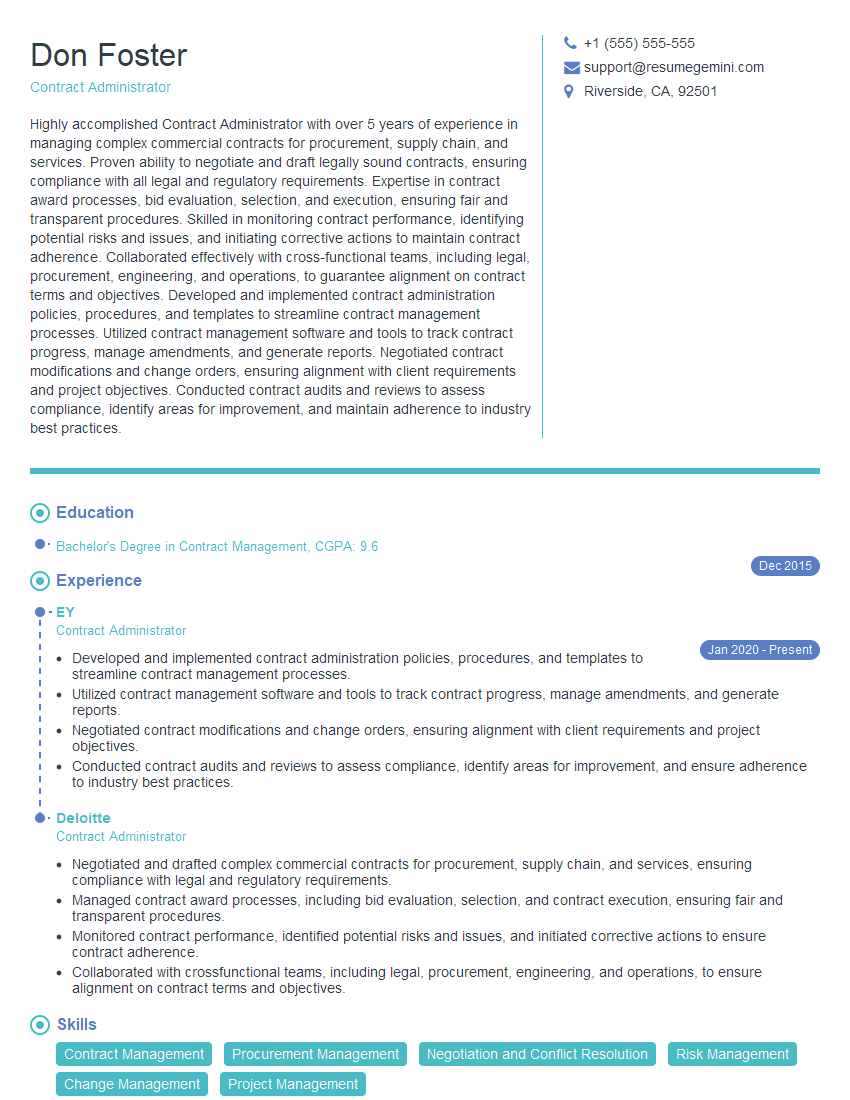
Contract Administrator Resume Sample
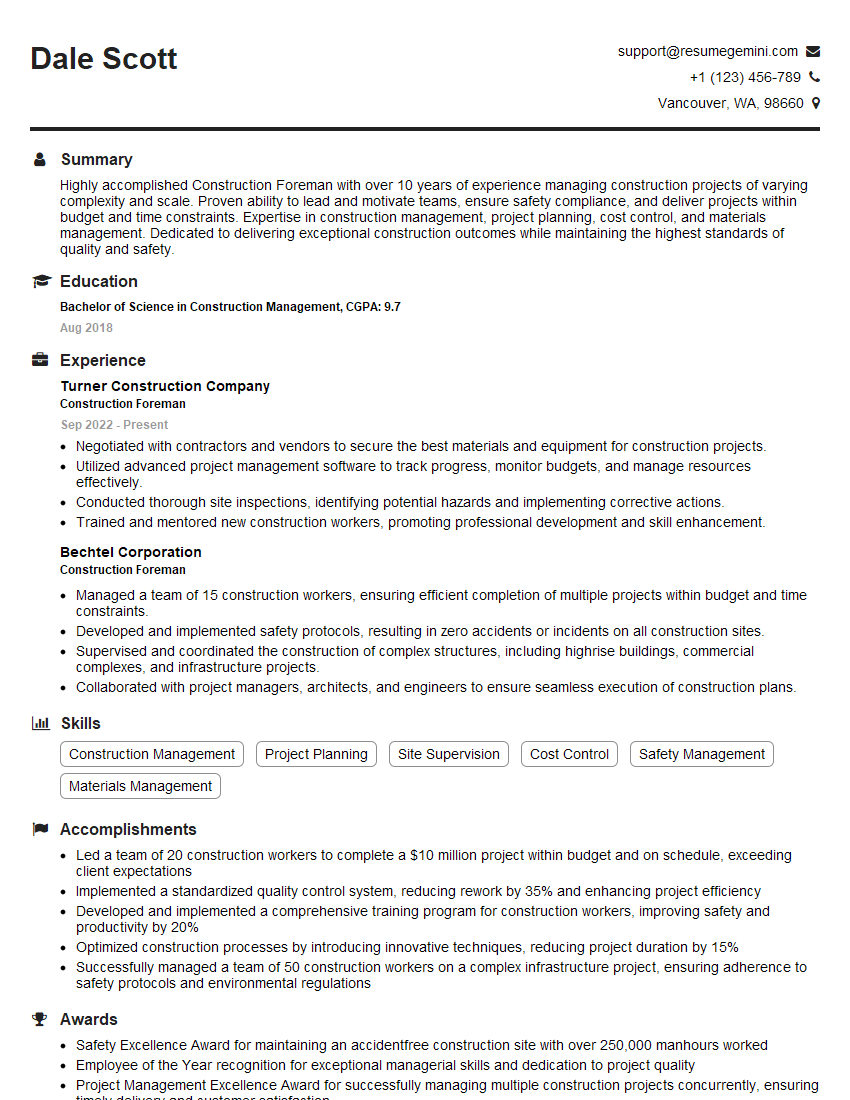
Construction Foreman Resume Sample

Construction Superintendent Resume Sample
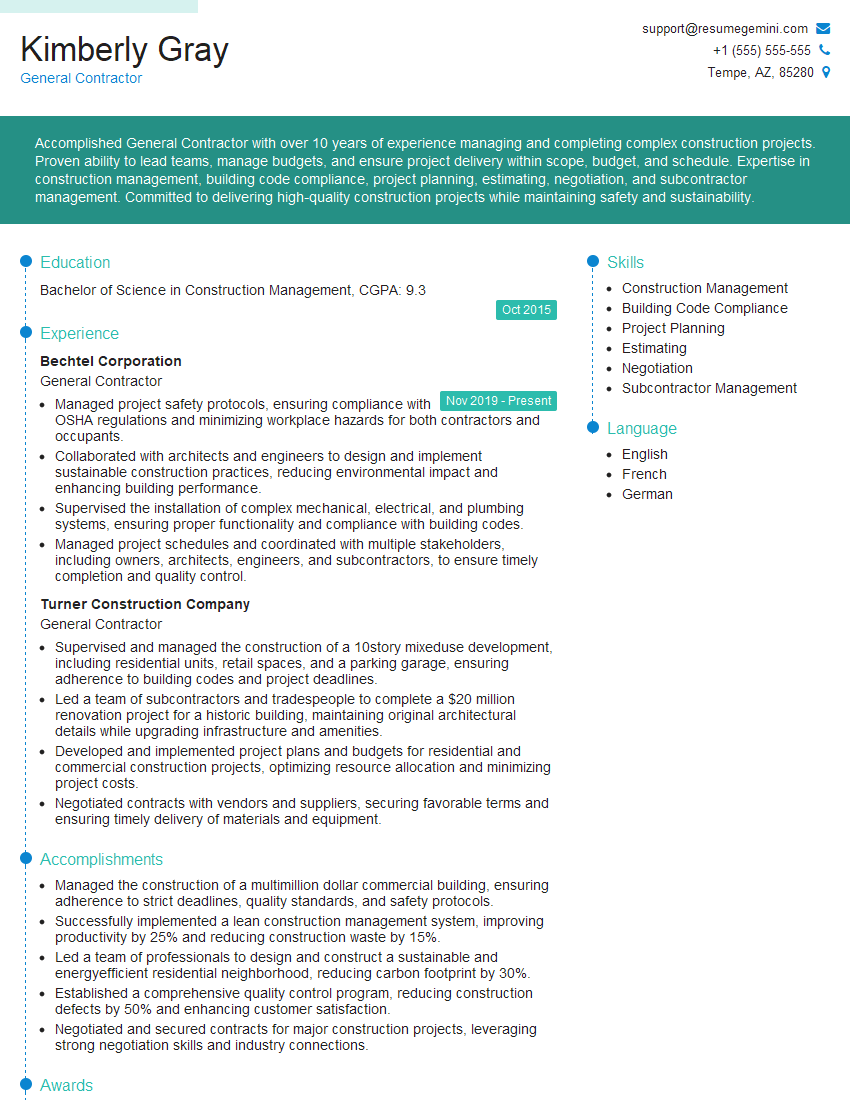
General Contractor Resume Sample

Project Engineer Resume Sample
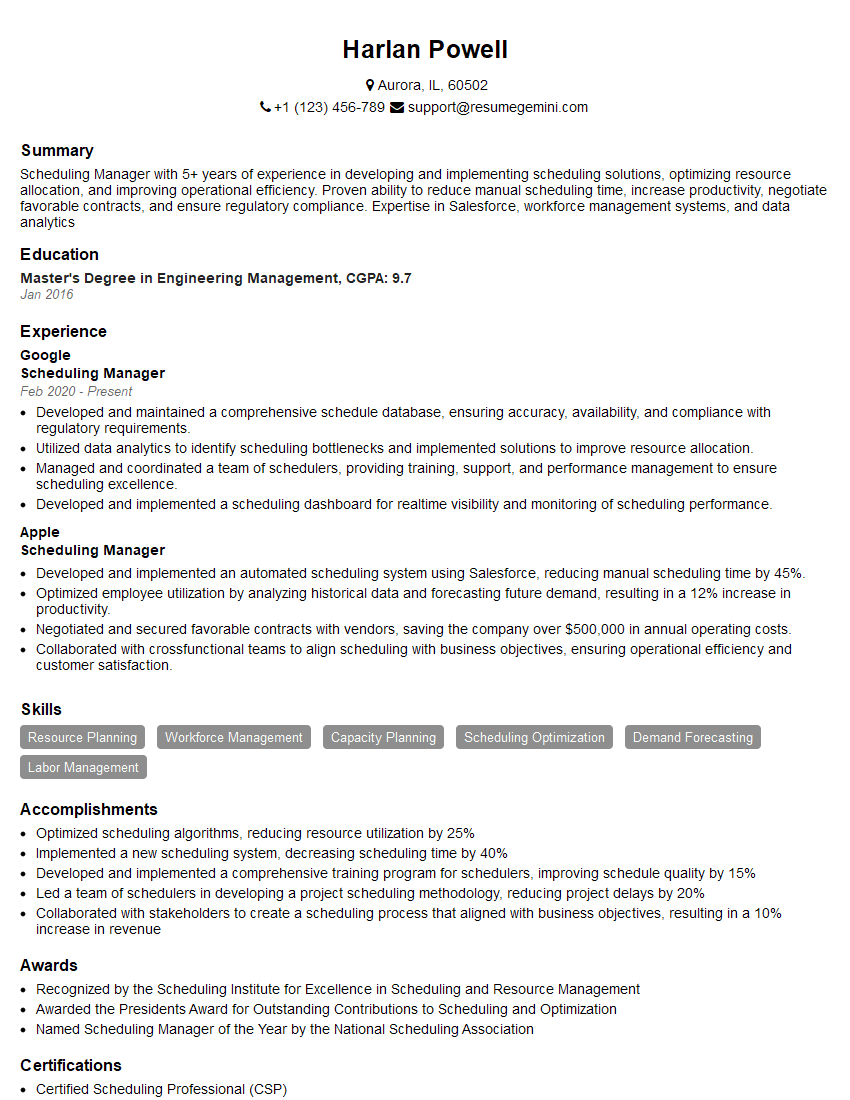
Scheduling Manager Resume Sample
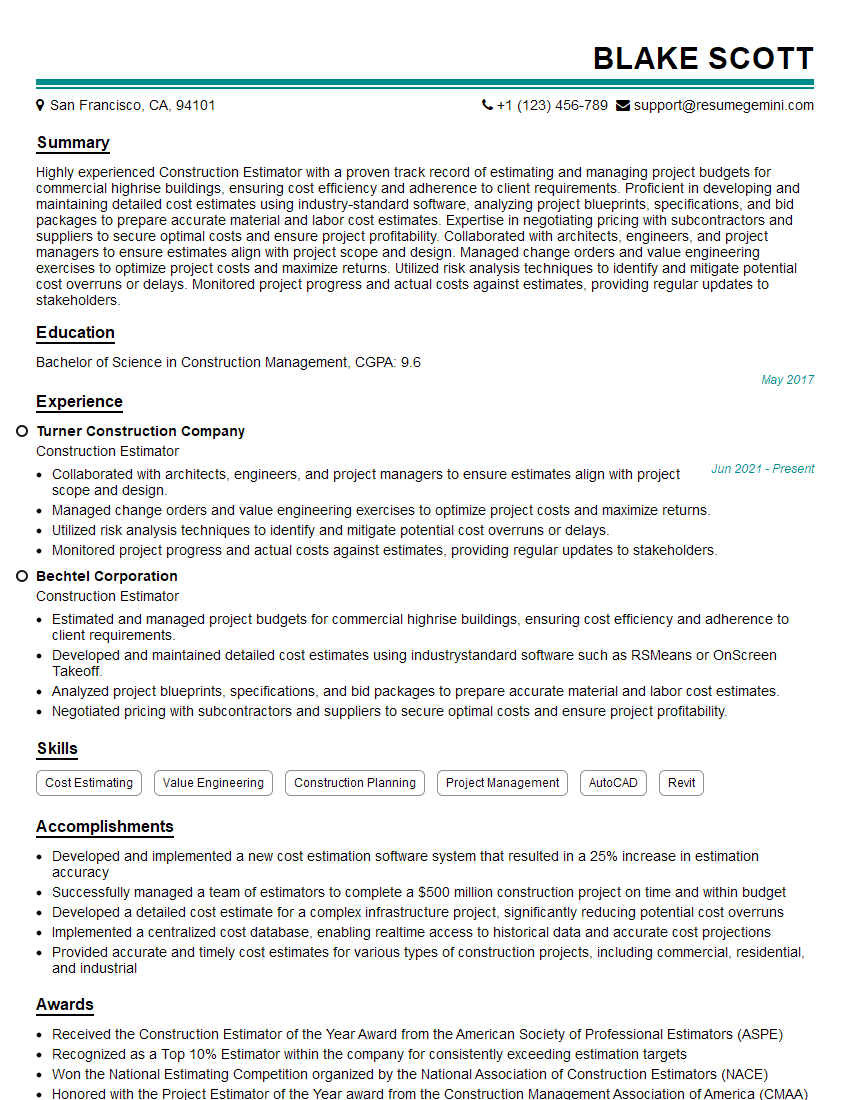
Construction Estimator Resume Sample
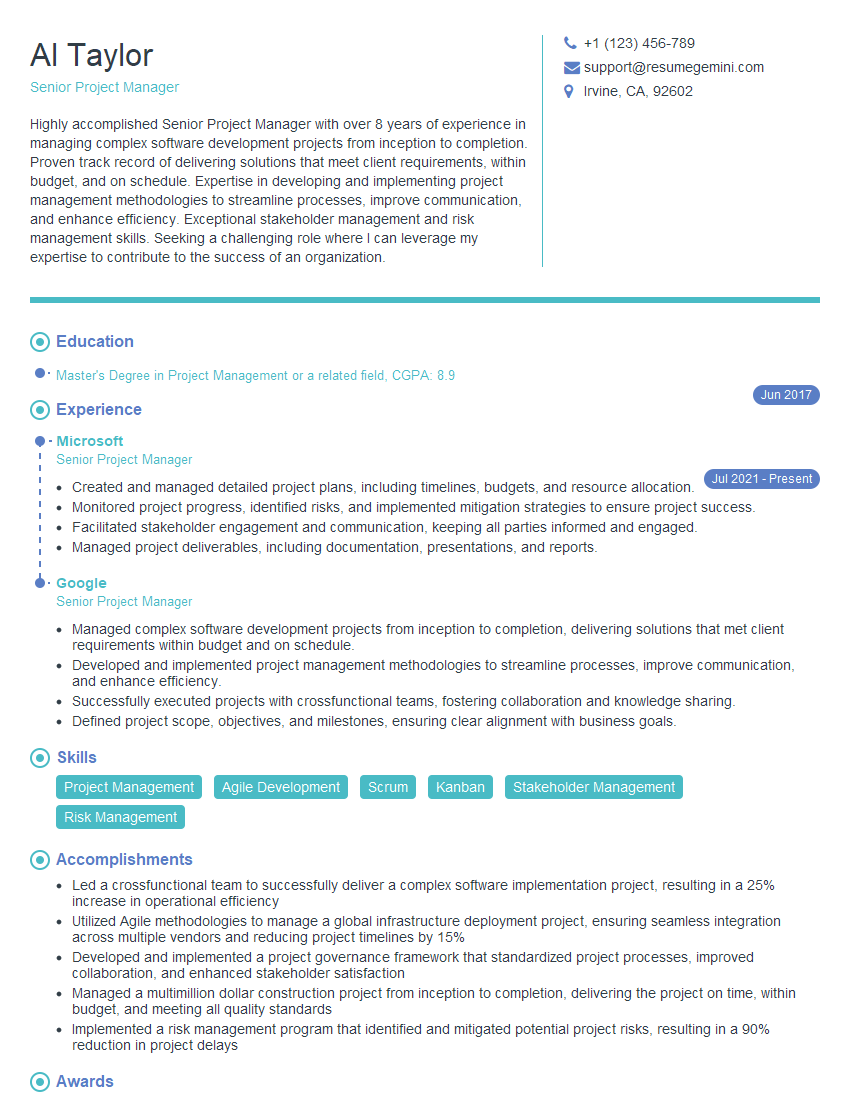
Senior Project Manager Resume Sample
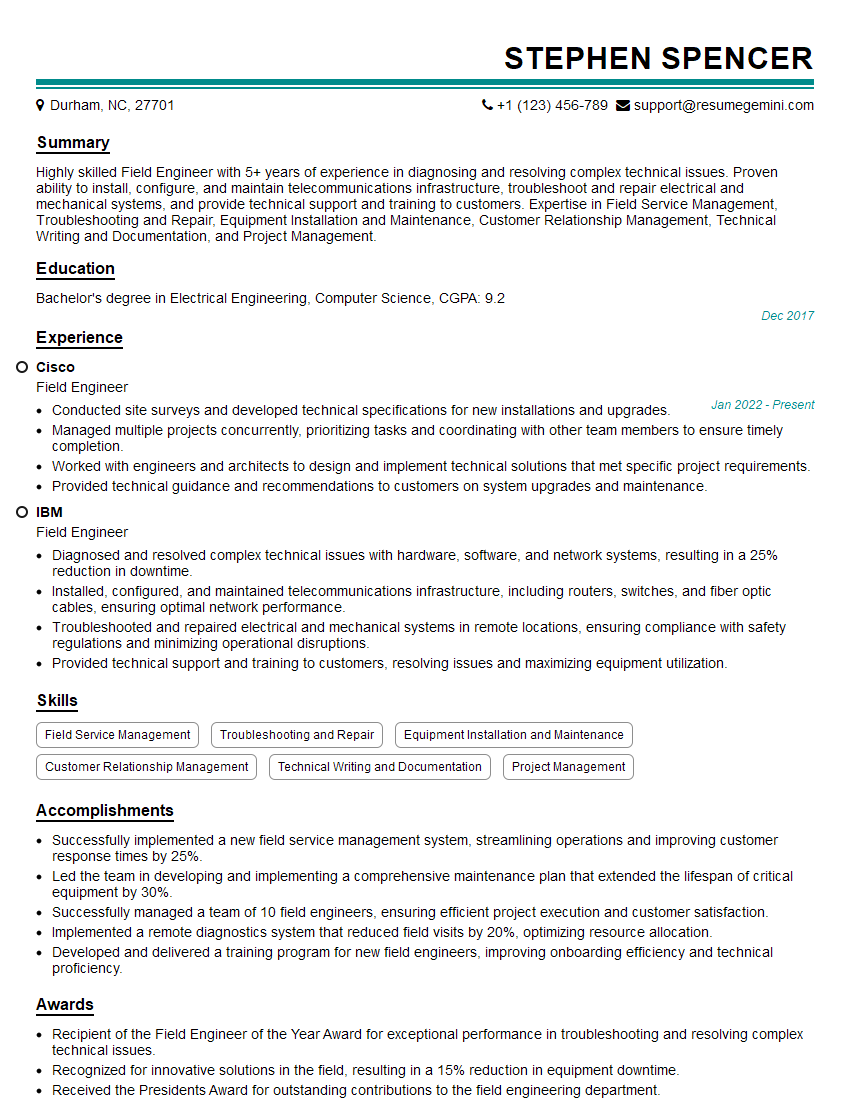
Field Engineer Resume Sample
Explore more articles
Users Rating of Our Blogs
Share Your Experience
We value your feedback! Please rate our content and share your thoughts (optional).
What Readers Say About Our Blog
To the interviewgemini.com Webmaster.
Very helpful and content specific questions to help prepare me for my interview!
Thank you
To the interviewgemini.com Webmaster.
This was kind of a unique content I found around the specialized skills. Very helpful questions and good detailed answers.
Very Helpful blog, thank you Interviewgemini team.