The thought of an interview can be nerve-wracking, but the right preparation can make all the difference. Explore this comprehensive guide to Life Cycle Sustainability Assessment (LCSA) interview questions and gain the confidence you need to showcase your abilities and secure the role.
Questions Asked in Life Cycle Sustainability Assessment (LCSA) Interview
Q 1. Explain the four phases of a Life Cycle Assessment (LCA).
A Life Cycle Assessment (LCA) is a standardized methodology for evaluating the environmental impacts associated with a product, process, or service throughout its entire life cycle. It’s broken down into four distinct phases:
- Goal and Scope Definition: This crucial first step defines the objective of the LCA, identifies the product system’s boundaries (what’s included and excluded), establishes the functional unit (the standardized unit of the product’s function), and chooses impact assessment methods. For example, if assessing the environmental impact of a car, the goal might be to compare different car models. The functional unit could be ‘transporting one passenger 100 km’. The scope defines whether to include raw material extraction, manufacturing, use, and end-of-life disposal.
- Inventory Analysis: This phase quantifies all inputs and outputs to the product system. This involves detailed data collection on energy consumption, raw material usage, emissions to air, water, and land, and waste generation throughout the entire life cycle. It’s essentially creating a detailed ‘material and energy flow diagram’ of the product.
- Impact Assessment: This stage evaluates the environmental significance of the inventory data. Different impact categories (e.g., global warming, acidification, eutrophication) are considered, and characterization factors translate the inventory data into standardized impact scores. This allows for comparison of different impacts on a single scale.
- Interpretation: The final phase involves analyzing the results from the impact assessment, identifying the key environmental ‘hotspots’ (stages with the largest environmental burdens), and drawing conclusions and recommendations for improvement. This involves considering the limitations of the data and the uncertainties involved, providing context for decision-making. For example, it might highlight that most of a car’s environmental impact comes from manufacturing or its use phase.
Q 2. Describe the difference between attributional and consequential LCA.
Attributional and consequential LCA are two distinct approaches to assessing the environmental impacts of a product or system. The key difference lies in their focus and how they account for system changes:
- Attributional LCA: This approach focuses on the environmental impacts directly attributed to a specific product or system. It isolates the impacts associated with a particular product’s life cycle, using a ‘snapshot’ of existing conditions and technologies. Think of it as ‘what is the current environmental burden of this product?’ It doesn’t consider changes in the market or supply chain that might result from the product’s introduction or changes in consumption patterns.
- Consequential LCA: This approach goes beyond the direct impacts by considering the consequences of introducing a new product or technology. It incorporates potential changes in the market, production processes, and material flows caused by this introduction. It’s more about ‘what would be the environmental impact if we used this product?’ This approach often requires more complex modeling to account for market substitution effects and changes in resource allocation.
For example, an attributional LCA of an electric car might assess the emissions from its battery production and use, while a consequential LCA would additionally consider the changes in electricity generation mix that may result from increased electric car adoption (e.g., if more renewable energy is used to meet this increase in demand, then overall emissions could be lower).
Q 3. What are the key impact categories assessed in a typical LCA?
A typical LCA assesses a wide range of impact categories, categorized into different environmental impact areas. These categories vary depending on the specific goals and scope of the study, but some key ones include:
- Climate Change (Global Warming Potential): Measured by greenhouse gas emissions (CO2, methane, etc.).
- Acidification Potential: Assesses the contribution to acid rain through emissions of sulfur oxides and nitrogen oxides.
- Eutrophication Potential: Measures the contribution to excessive nutrient enrichment of water bodies, leading to algal blooms and oxygen depletion.
- Ozone Depletion Potential: Evaluates the impact on the stratospheric ozone layer, which protects us from harmful UV radiation.
- Human Toxicity Potential: Assesses the potential for human health impacts from the release of toxic substances.
- Ecotoxicity Potential: Evaluates the potential impacts on ecosystems and other organisms from the release of toxic substances.
- Resource Depletion: Measures the consumption of non-renewable resources and potential impacts on resource availability.
- Land Use: Considers the impact of land occupation and change.
- Water Depletion: Quantifies the consumption and pollution of water resources.
The choice of impact categories depends on the specific application and the environmental issues most relevant to the product or system under investigation.
Q 4. What are the limitations of LCA?
While LCA is a powerful tool, it has several limitations:
- Data Availability and Uncertainty: Obtaining accurate and comprehensive data for all stages of a product’s life cycle can be challenging. Data gaps and uncertainties can significantly affect the results.
- System Boundaries: Defining the system boundaries can be subjective, and excluding certain aspects can lead to an incomplete or biased assessment.
- Model Simplifications: LCAs often rely on simplified models and assumptions, which can compromise the accuracy of the results.
- Allocation Issues: When a process or material produces multiple outputs, allocating the environmental burdens to each product can be complex and arbitrary.
- Temporal and Geographical Variations: Environmental impacts can vary over time and location, making it difficult to obtain globally representative data.
- Technological Developments: The rapid pace of technological advancements can render LCA results obsolete relatively quickly.
- Focus on Environmental Aspects: LCA primarily focuses on environmental aspects, neglecting other important factors such as social and economic impacts.
It’s crucial to acknowledge these limitations when interpreting and using LCA results. It’s not about getting the absolute ‘perfect’ number but understanding the relative magnitudes of different impacts and making informed decisions.
Q 5. How do you handle data uncertainty and gaps in an LCA?
Handling data uncertainty and gaps is a critical aspect of LCA. Several approaches are used:
- Sensitivity Analysis: This involves systematically varying uncertain input parameters to assess their impact on the overall results. This helps determine which data uncertainties are most critical and inform data collection priorities.
- Uncertainty Propagation: Statistical methods are used to quantify the uncertainty associated with the LCA results, reflecting the variability in input data.
- Scenario Analysis: Exploring different scenarios with varying assumptions (e.g., different technological options or market shares) helps understand the range of possible impacts.
- Data Substitution and Estimation: When data is unavailable, educated guesses based on similar processes or products can be used. These estimations should be clearly documented and their potential impact on the results acknowledged.
- Data Quality Assessment: Rigorous evaluation of data sources and their reliability is essential. Prioritizing high-quality, peer-reviewed data is crucial.
Transparency in documenting data sources, assumptions, and uncertainties is crucial to ensure the credibility of the LCA study. It’s about understanding that perfect data is often elusive and acknowledging the degree of confidence in the results.
Q 6. Explain the concept of functional unit in LCA.
The functional unit is the quantifiable ‘unit of performance’ for a product, process, or service being assessed. It’s the standard against which environmental impacts are compared. A well-defined functional unit is essential for making meaningful comparisons between different options.
Think of it like comparing apples to apples—you wouldn’t compare the environmental impact of a small car to a large truck without defining a common basis for comparison. The functional unit sets that common basis. For example:
- Transportation: ‘Passenger-kilometer traveled’ (i.e., transporting one passenger for one kilometer)
- Packaging: ‘Packaging one kilogram of food’
- Construction: ‘Construction of one square meter of floor space’
- Clothing: ‘Producing one kilogram of cotton fabric’
Choosing an appropriate functional unit depends on the study’s goals and is a critical decision in the goal and scope definition phase.
Q 7. What are some common LCA software packages?
Several software packages are available for conducting LCAs, each with its own strengths and weaknesses. Popular choices include:
- SimaPro: A widely used commercial software package offering a comprehensive suite of tools for LCA.
- GaBi: Another popular commercial software with robust features and extensive databases.
- Brightway2: An open-source LCA software package providing a flexible and customizable platform.
- OpenLCA: Another open-source option that is particularly user-friendly for beginners.
The choice of software depends on factors such as budget, technical expertise, the complexity of the study, and data availability. Many software packages have databases of existing LCA data which can help speed up the analysis process.
Q 8. What is the significance of system boundaries in LCA?
System boundaries in Life Cycle Assessment (LCA) define the scope of the analysis, essentially drawing a line around what is included and excluded from the study. Think of it like drawing a fence around a field – everything inside the fence is considered, while everything outside is not. These boundaries are crucial because they directly influence the results. A poorly defined boundary can lead to inaccurate or misleading conclusions.
For example, if we’re assessing the environmental impact of a cotton t-shirt, we need to decide what to include: cotton farming (including fertilizer use, pesticide application, water consumption), textile manufacturing (energy use, water pollution), transportation to the store, and even the end-of-life management (landfill or recycling). Excluding any of these stages will provide an incomplete picture. Conversely, including things like the consumer’s use of the t-shirt or their subsequent washing (often a significant water and energy consumer) might be relevant depending on the study goals but can make the assessment complex.
Defining system boundaries involves considering the product’s entire life cycle (from raw material extraction to disposal) and setting clear criteria for inclusion or exclusion. A well-defined boundary ensures the LCA is comprehensive yet manageable, providing reliable and relevant data for decision-making.
Q 9. Describe the different allocation methods used in LCA.
Allocation in LCA addresses situations where a single process generates multiple products or materials. Imagine a factory producing both plastic bottles and plastic packaging – both use the same raw materials and energy. How do we attribute the environmental impacts fairly to each product? This is where allocation methods come into play.
- Mass Allocation: The simplest approach. Impacts are proportionally assigned based on the mass of each product. For our example, if bottles weigh twice as much as the packaging, the bottles bear twice the environmental burden. It’s easy but can be inaccurate if products have different processing stages.
- Energy Allocation: Impacts are divided based on the energy consumed to produce each product. Useful if energy intensity significantly differs between the products.
- Economic Allocation: The environmental burden is apportioned based on the economic value of each product. This is appealing from a market perspective, but can skew results if products have vastly different profit margins.
- Substantive Allocation: This sophisticated approach identifies the functional unit for each product and allocates based on how that specific function utilizes the inputs of the joint process. This is often the most accurate method but is also most complex.
Choosing the right allocation method depends heavily on the specific system and the research questions. Incorrect allocation can lead to skewed results, potentially influencing decisions about product development or policy.
Q 10. How do you incorporate environmental impacts beyond direct emissions in LCA?
LCA doesn’t just focus on direct emissions; it considers a broader range of environmental impacts, encompassing many factors often overlooked in simpler analyses. To incorporate these indirect impacts, LCA employs various techniques and databases:
- Life Cycle Impact Assessment (LCIA): This phase uses characterization factors to translate the LCI data into environmental impacts like global warming potential, acidification, eutrophication, and ozone depletion. These factors represent the contribution of a specific emission (e.g., 1 kg of CO2) to a particular environmental impact.
- Impact Categories: LCIA uses various standardized impact categories, ensuring consistency and comparability across studies. For example, human toxicity, ecotoxicity, resource depletion, and land use change are all important considerations.
- Data Selection and Quality Control: Reliable databases (e.g., ecoinvent, GaBi) provide standardized environmental data for various processes and materials, ensuring consistency and reducing uncertainty.
For instance, while manufacturing a solar panel might directly release minimal pollutants, the energy used in its production (often from fossil fuels) contributes significantly to global warming. Similarly, even if a product is fully recyclable, the energy needed for recycling and the potential for pollution during that process must be factored into the total environmental footprint. LCA helps to accurately capture this holistic picture.
Q 11. What is the role of Life Cycle Inventory (LCI) in LCA?
The Life Cycle Inventory (LCI) is the quantitative foundation of an LCA. It’s essentially a detailed accounting of all inputs and outputs associated with each stage of a product’s life cycle. Think of it as the meticulous record-keeping behind the scenes. It involves gathering data on:
- Material inputs: Raw materials, energy, water.
- Processes: Manufacturing techniques, transportation methods, packaging details.
- Outputs: Emissions to air, water, and land; waste generation; energy consumption.
LCI data can be obtained from various sources, including: company data, scientific literature, industry databases, and government statistics. The accuracy and completeness of the LCI heavily influence the reliability of the subsequent LCA results. Data quality assurance, therefore, is a crucial step, involving checking data consistency and handling data uncertainties.
An example could involve quantifying the energy needed for each step in producing a car: steel production, engine manufacturing, painting, assembly, transportation, etc. This data, combined with information on associated emissions, forms the LCI for the car.
Q 12. How do you interpret and communicate LCA results effectively?
Communicating LCA results effectively requires clarity, visual aids, and a tailored approach to the audience. Simply presenting a list of numbers is rarely effective. Here’s how to do it right:
- Visualizations: Charts, graphs, and diagrams help convey complex data simply and memorably. Bar charts are great for comparing impacts across different products, while Sankey diagrams visually show material and energy flows throughout the life cycle.
- Clear and Concise Language: Avoid jargon and technical terms where possible. Use plain language to explain the findings and their implications.
- Focus on Key Findings: Highlight the most significant environmental hotspots in the product life cycle. What are the major contributors to the overall impact?
- Uncertainty Analysis: Acknowledge and communicate the inherent uncertainties associated with LCA data. Transparency is key.
- Comparative Analysis: Compare the product’s life cycle impacts to alternatives or industry benchmarks.
- Tailored Communication: Adjust the level of detail and the communication style based on the audience (e.g., technical reports for experts, simplified summaries for consumers).
For instance, rather than saying ‘Global Warming Potential of 15 kg CO2-eq’, try ‘This product’s carbon footprint is equivalent to driving a car for 80 miles’. This makes the impact relatable and easily understood.
Q 13. How can LCA contribute to sustainable product design?
LCA is a powerful tool for sustainable product design. By identifying environmental hotspots early in the design phase, it enables designers to make informed choices to minimize the overall environmental burden. This proactive approach is far more effective than trying to fix problems later in the product’s lifecycle.
Here’s how LCA contributes:
- Material Selection: LCA helps choose eco-friendly materials with lower environmental impacts throughout their life cycle. This might involve selecting recycled content, bio-based materials, or materials with low energy intensity in production.
- Process Optimization: LCA can identify opportunities for improving manufacturing processes, reducing energy consumption, waste generation, or emissions.
- Design for Disassembly and Recycling: Designing products for easy disassembly and recycling at the end of life minimizes waste and resource depletion. LCA helps to quantify the benefits of these design choices.
- Eco-design Strategies: LCA supports the implementation of various eco-design strategies, such as minimizing material use, extending product lifespan, and designing for reuse or refurbishment.
For example, a company designing a new phone might use LCA to compare different battery options, considering their impact across mining, manufacturing, and disposal. This allows them to choose the most sustainable option and incorporate other design changes that minimize waste and energy consumption.
Q 14. What are the challenges in performing LCA for complex products?
Performing LCA for complex products presents several challenges:
- Data Availability and Quality: Obtaining reliable data for all stages of a complex product’s life cycle can be difficult and time-consuming. This is especially true for products with many components sourced from diverse global supply chains.
- Allocation Challenges: Complex products often involve multiple co-products or by-products, making allocation of environmental burdens challenging and potentially leading to uncertainties in the results.
- System Boundary Definition: Defining appropriate system boundaries can be complex, requiring careful consideration of the relevant processes and environmental impacts to be included.
- Data Uncertainty: Data used in LCA are frequently associated with significant uncertainties. Quantifying and handling these uncertainties is crucial for producing reliable results.
- Computational Complexity: LCAs for complex systems can be computationally intensive, requiring specialized software and expertise.
- Time and Cost: Performing a detailed and rigorous LCA can be expensive and time-consuming, particularly for complex products. This can be a significant barrier for small or medium-sized businesses.
For instance, an LCA for a car involves thousands of components and processes, making data acquisition and analysis extremely challenging. Addressing these challenges requires careful planning, expert knowledge, and the use of advanced LCA software and databases.
Q 15. Explain the concept of circular economy and its relevance to LCA.
The circular economy is an economic model aimed at eliminating waste and the continual use of resources. Instead of a linear model (take-make-dispose), it emphasizes designing out waste and pollution, keeping products and materials in use, and regenerating natural systems. Its relevance to LCA is paramount because LCA inherently assesses the environmental impacts throughout a product’s entire life cycle, from cradle to grave. A circular economy framework directly informs the LCA by highlighting opportunities for minimizing resource consumption, reducing emissions, and promoting reuse and recycling. For example, an LCA of a plastic bottle might reveal high environmental impacts from virgin plastic production. A circular economy approach would encourage the use of recycled plastic, reducing the environmental footprint and improving the overall LCA score.
Consider a clothing company. A traditional linear model sees clothes manufactured, used, and then discarded. A circular approach would involve designing clothes for durability and repairability, incorporating recycled materials, and establishing robust take-back and recycling programs. The LCA would then reflect the improved environmental performance due to reduced resource extraction, waste generation, and pollution.
Career Expert Tips:
- Ace those interviews! Prepare effectively by reviewing the Top 50 Most Common Interview Questions on ResumeGemini.
- Navigate your job search with confidence! Explore a wide range of Career Tips on ResumeGemini. Learn about common challenges and recommendations to overcome them.
- Craft the perfect resume! Master the Art of Resume Writing with ResumeGemini’s guide. Showcase your unique qualifications and achievements effectively.
- Don’t miss out on holiday savings! Build your dream resume with ResumeGemini’s ATS optimized templates.
Q 16. How can LCA inform sustainable supply chain management?
LCA plays a crucial role in informing sustainable supply chain management by providing a comprehensive assessment of environmental impacts associated with each stage of a product’s journey, from raw material extraction to end-of-life management. By identifying environmental hotspots (stages with the most significant impacts), companies can prioritize areas for improvement. For instance, an LCA might reveal high carbon emissions from transportation or significant water pollution from a specific manufacturing process. This information enables businesses to implement targeted interventions, such as switching to more sustainable transportation modes, optimizing manufacturing processes, or sourcing materials from closer proximity.
Imagine a coffee company sourcing beans. An LCA can assess the impact of different farming practices, transportation methods, and processing techniques. This allows the company to choose suppliers who minimize environmental impact and align with sustainability goals. Furthermore, LCA can help businesses identify opportunities for collaborative improvements across the supply chain, leading to more holistic sustainability strategies.
Q 17. Discuss the role of life cycle costing (LCC) in relation to LCA.
Life Cycle Costing (LCC) and LCA are complementary approaches to evaluating the overall performance of a product or system. While LCA focuses on environmental impacts, LCC considers the total cost throughout a product’s life cycle. This includes costs associated with design, manufacturing, operation, maintenance, and disposal. Integrating LCC and LCA offers a holistic perspective, enabling informed decision-making that considers both environmental and economic factors. For example, a more environmentally friendly material might have higher upfront costs but lower disposal costs and reduced environmental damage in the long run. Analyzing both LCC and LCA allows for a comprehensive evaluation of its overall value.
Consider comparing two building designs. One might use more sustainable but expensive materials, while the other might use cheaper materials with higher long-term maintenance and replacement costs. By combining LCC and LCA, decision-makers can assess whether the environmental benefits of the sustainable design outweigh the higher initial cost, considering factors like energy efficiency, waste generation, and durability.
Q 18. What is sensitivity analysis in LCA and why is it important?
Sensitivity analysis in LCA examines the influence of uncertainties and variations in input data on the overall results. LCA models rely on numerous data inputs, many of which have inherent uncertainties. Sensitivity analysis systematically varies these input parameters to determine their influence on the final impact scores. This helps to identify the most critical parameters affecting the outcome, allowing for improved data collection efforts and more confident interpretations of the results. For instance, if the impact of a particular material is highly sensitive to variations in its recycling rate, researchers will focus on refining data on recycling rates.
Imagine an LCA of a car. The fuel consumption data may have some uncertainty. A sensitivity analysis would demonstrate how different fuel consumption estimates affect the overall greenhouse gas emissions of the car’s life cycle. This will help in understanding the uncertainty related to the findings and will direct attention to the parameters requiring more precise data in future studies.
Q 19. How do you address ethical considerations in LCA studies?
Addressing ethical considerations is crucial in LCA. Ethical issues can arise from various aspects, including data transparency, social impacts, and the potential for greenwashing. Transparency is paramount; data sources and methodologies must be clearly documented and accessible. Social impacts, such as labor practices and human rights within the supply chain, should be considered. LCA practitioners should strive to avoid presenting biased or incomplete information, preventing the misleading use of LCA results for marketing purposes (greenwashing).
A company might claim its product is ‘eco-friendly’ based on a biased LCA that overlooks negative social aspects. A responsible LCA would incorporate social considerations such as fair wages and safe working conditions in the supply chain, ensuring a complete and unbiased assessment of the overall impact.
Q 20. Explain the difference between LCA and Life Cycle Thinking (LCT).
Life Cycle Thinking (LCT) is a broader philosophy and approach that encompasses LCA. LCT is a holistic, proactive approach to design and decision-making that considers the environmental, social, and economic implications of a product or system across its entire life cycle. LCA, on the other hand, is a specific methodology used within LCT to quantitatively assess environmental impacts. In essence, LCT provides the overall framework for sustainable decision-making, while LCA is a tool used within that framework for quantifying environmental impacts.
Think of it as building a house. LCT is the overall planning process that considers environmental impact, social responsibility, and budget (cost). LCA is the detailed assessment of the environmental impacts of the materials used, such as embodied carbon in the concrete or the energy used for manufacturing.
Q 21. How do you evaluate the credibility of LCA studies?
Evaluating the credibility of LCA studies requires careful consideration of several factors. First, assess the methodological rigor: was a recognized LCA standard followed (e.g., ISO 14040/44)? Transparency of data sources and assumptions is essential; the study should clearly document its data sources, allocation methods, and modeling choices. The study’s scope should be clearly defined, including the functional unit and system boundaries. Peer review is a strong indicator of quality; studies published in reputable journals or reviewed by independent experts tend to be more reliable.
When reviewing an LCA report, check if it clearly defines the system boundaries, functional unit, and impact categories. Look for evidence of sensitivity analysis to understand data uncertainties and verify that the data sources are well documented and credible. A robust LCA study will be transparent and well-supported by data and methodology.
Q 22. What are some key considerations for reporting LCA results to stakeholders?
Reporting LCA results effectively requires careful consideration of your audience. Stakeholders, ranging from executives to environmental regulators, have different levels of understanding and specific interests. Clarity and transparency are paramount.
- Tailor the message: Executive summaries should highlight key findings and implications in plain language, avoiding technical jargon. Detailed reports can provide more in-depth information for technical experts. Visual aids, such as charts and graphs, are crucial for effective communication.
- Focus on key impacts: Don’t overwhelm stakeholders with every single data point. Prioritize the most significant environmental impacts identified in the LCA, such as greenhouse gas emissions, water consumption, or resource depletion.
- Address uncertainties: LCA inherently involves uncertainties due to data limitations. Clearly communicate these uncertainties and their potential influence on the results. Sensitivity analysis, which examines the impact of variations in input data on the overall results, is essential.
- Provide context: Frame the results within the broader context of the product’s life cycle and its overall environmental performance compared to alternatives. Consider using comparative LCA studies to benchmark performance.
- Ensure accessibility: Use accessible formats and language to make the information understandable to all stakeholders. Consider offering the report in multiple languages if necessary.
For instance, when reporting to investors, the focus might be on the financial implications of sustainability improvements suggested by the LCA, while a report for a regulatory body would prioritize compliance with environmental standards.
Q 23. How can LCA help in achieving Sustainable Development Goals (SDGs)?
LCA plays a significant role in achieving the Sustainable Development Goals (SDGs) by providing a quantitative assessment of the environmental impacts associated with various products, services, and processes. This data-driven approach allows for informed decision-making towards a more sustainable future.
- SDG 7 (Affordable and Clean Energy): LCA can identify opportunities for reducing energy consumption and promoting the use of renewable energy sources throughout a product’s lifecycle.
- SDG 9 (Industry, Innovation, and Infrastructure): LCA helps in designing more sustainable industrial processes and infrastructure by highlighting environmental hotspots and suggesting improvements.
- SDG 12 (Responsible Consumption and Production): LCA promotes sustainable consumption and production patterns by providing information on the environmental impact of products, enabling consumers and businesses to make informed choices.
- SDG 13 (Climate Action): LCA is crucial in quantifying greenhouse gas emissions, supporting efforts to mitigate climate change.
- SDG 14 (Life Below Water) and SDG 15 (Life On Land): LCA can assess impacts on aquatic and terrestrial ecosystems, informing conservation strategies.
For example, an LCA of a solar panel might reveal its lower carbon footprint compared to fossil fuel-based energy generation, directly contributing to SDG 7 and SDG 13. Similarly, assessing the environmental impact of sustainable packaging can support SDG 12.
Q 24. Describe a situation where an LCA study identified a surprising result. How did you handle it?
In a study assessing the environmental impact of a new biodegradable plastic bag, the LCA surprisingly revealed a higher carbon footprint than a conventional plastic bag, despite the biodegradability. This contradicted initial expectations.
We thoroughly investigated the unexpected result by systematically reviewing each stage of the life cycle. We discovered that the production of the biodegradable polymer required significantly more energy and resources than the conventional plastic. Furthermore, the composting infrastructure required for proper degradation wasn’t readily available, leading to landfilling, which further increased the environmental impact.
We handled this by:
- Transparency: We documented the findings clearly, including the unexpected result and its underlying causes. We didn’t try to hide or downplay the discrepancy.
- Further Investigation: We conducted additional experiments and data collection to verify our findings and reduce uncertainties. This involved refining the data sets and considering alternative scenarios.
- Sensitivity analysis: We performed a sensitivity analysis to identify the key parameters that most influenced the results and highlight the uncertainties associated with them.
- Revised conclusions and recommendations: Our conclusions shifted from promoting the biodegradable bag to recommending further research and development to improve the sustainability of its production and disposal.
This experience highlighted the importance of rigorous data validation and a critical approach to interpreting LCA results, even when they differ from initial assumptions.
Q 25. What are the current trends and future directions in LCA?
Current trends in LCA include increased focus on:
- Data quality and availability: Efforts are underway to improve the quality and accessibility of LCA databases and tools.
- Integration with other assessment methods: LCA is increasingly integrated with other sustainability assessment methods, such as social life cycle assessment (SLCA) and economic life cycle assessment (eLCA), to provide a more holistic view of sustainability.
- Life Cycle Thinking (LCT): A shift towards proactive LCT, integrating sustainability considerations at the design phase rather than as an afterthought.
- Big data and AI: The use of big data and artificial intelligence to automate data collection, analysis, and interpretation in LCA is expanding.
- Dynamic LCA: Moving beyond static LCA to dynamic models that consider temporal changes in technology, infrastructure, and resource availability.
- Focus on circular economy: LCA is increasingly used to evaluate the potential for reuse, recycling, and recovery of materials.
Future directions are likely to involve the development of more sophisticated LCA models, improved data availability, and wider integration into decision-making processes at all levels—from individual consumers to global corporations and governments.
Q 26. How do you stay updated with the latest developments in LCA methodologies and software?
Staying updated in LCA requires a multi-pronged approach:
- Professional networks: Active participation in professional organizations like the Society of Environmental Toxicology and Chemistry (SETAC) and the International Society for Industrial Ecology (ISIE) provides access to conferences, workshops, and publications.
- Conferences and workshops: Attending conferences and workshops focused on LCA offers opportunities to learn about the latest methodologies, tools, and applications.
- Scientific publications: Regularly reviewing peer-reviewed journals such as the Journal of Cleaner Production and Environmental Science & Technology provides access to cutting-edge research.
- Online resources and training: Utilizing online resources such as the UNEP/SETAC Life Cycle Initiative website and participating in online courses and webinars keeps me abreast of the field’s advancements.
- Software updates: Staying current with updates and new features in commonly used LCA software, such as SimaPro and GaBi, is crucial.
A proactive approach of combining different avenues of information ensures a comprehensive understanding of the advancements in the field.
Q 27. How do you ensure the quality and accuracy of data used in an LCA?
Ensuring data quality and accuracy in LCA is critical. It involves a multi-step process:
- Data selection: Using high-quality, reliable data sources, preferably peer-reviewed publications or validated databases. Prioritizing data with clear traceability and documentation.
- Data validation: Checking the consistency and plausibility of data. Identifying and handling missing or uncertain data through sensitivity analysis or other appropriate techniques.
- Data allocation: Carefully allocating data to the various life cycle stages, considering the allocation methods’ implications.
- Uncertainty analysis: Quantifying and communicating the uncertainties associated with the data and their impact on the results. Using tools and methods to express the level of confidence in the results.
- Transparency and documentation: Meticulously documenting all data sources, methods, and assumptions used in the LCA to enhance transparency and reproducibility.
For instance, relying on industry-specific databases, comparing data from multiple sources, and conducting site-specific measurements when possible helps improve data accuracy. Transparency and traceability are crucial for building confidence in the results.
Q 28. Explain the role of LCA in achieving corporate sustainability goals.
LCA plays a vital role in achieving corporate sustainability goals by providing a scientific basis for identifying and quantifying environmental impacts. This empowers companies to make informed decisions, improve their environmental performance, and enhance their sustainability profile.
- Identifying environmental hotspots: LCA helps pinpoint the most significant environmental impacts within a company’s operations or product lifecycle, allowing for targeted improvement efforts.
- Setting environmental targets: The results provide a baseline for establishing measurable and achievable environmental targets, tracking progress, and demonstrating accountability.
- Product design optimization: LCA supports the design of more environmentally friendly products and processes by comparing different options and identifying opportunities for eco-design.
- Supply chain management: LCA facilitates the evaluation and improvement of supply chain sustainability, helping identify and mitigate environmental risks throughout the supply network.
- Communication and reporting: LCA provides evidence-based information for communicating sustainability achievements to stakeholders, including investors, customers, and regulators.
A company might use LCA to assess the environmental impact of its packaging, leading to the selection of more sustainable materials and reduction of waste. Similarly, LCA can help a manufacturer identify areas for energy efficiency improvements in its production process, leading to cost savings and reduced greenhouse gas emissions. This data-driven approach allows companies to integrate sustainability into their core business strategies and enhance their long-term competitiveness.
Key Topics to Learn for Life Cycle Sustainability Assessment (LCSA) Interview
- Defining LCSA: Understand the scope and purpose of Life Cycle Sustainability Assessment, differentiating it from Life Cycle Assessment (LCA).
- LCSA Methodologies: Familiarize yourself with various LCSA frameworks and their application in different contexts (e.g., ISO 14040 series, UNEP/SETAC guidelines).
- Life Cycle Stages: Master the detailed breakdown of the product/process life cycle, including raw material extraction, manufacturing, use, and end-of-life management.
- Impact Assessment: Gain proficiency in identifying and quantifying environmental, social, and economic impacts across the life cycle. Understand the different impact categories and their assessment methods.
- Data Collection and Analysis: Develop skills in data gathering, processing, and interpretation, including the use of LCIA databases and software tools.
- Interpretation and Reporting: Learn to effectively communicate LCSA results and their implications to diverse stakeholders. Understand the importance of clear and concise reporting.
- Scenario Analysis and Optimization: Practice exploring different scenarios and optimization strategies to improve the sustainability performance of products or processes.
- Critical Appraisal of LCSA Studies: Develop the ability to critically evaluate the strengths and limitations of existing LCSA studies.
- Sustainability Metrics and Indicators: Become familiar with key sustainability metrics and indicators used in LCSA, and understand their relevance to different contexts.
- Case Studies and Practical Applications: Explore real-world examples of LCSA applications in various industries (e.g., manufacturing, construction, agriculture).
Next Steps
Mastering Life Cycle Sustainability Assessment is crucial for a successful career in a rapidly evolving sustainability landscape. Proficiency in LCSA opens doors to rewarding roles and positions you as a valuable asset to any environmentally conscious organization. To maximize your job prospects, crafting an ATS-friendly resume is essential. ResumeGemini is a trusted resource that can help you build a professional and impactful resume that highlights your LCSA expertise. Examples of resumes tailored to Life Cycle Sustainability Assessment (LCSA) are available to help guide you. Take the next step towards your dream career today!
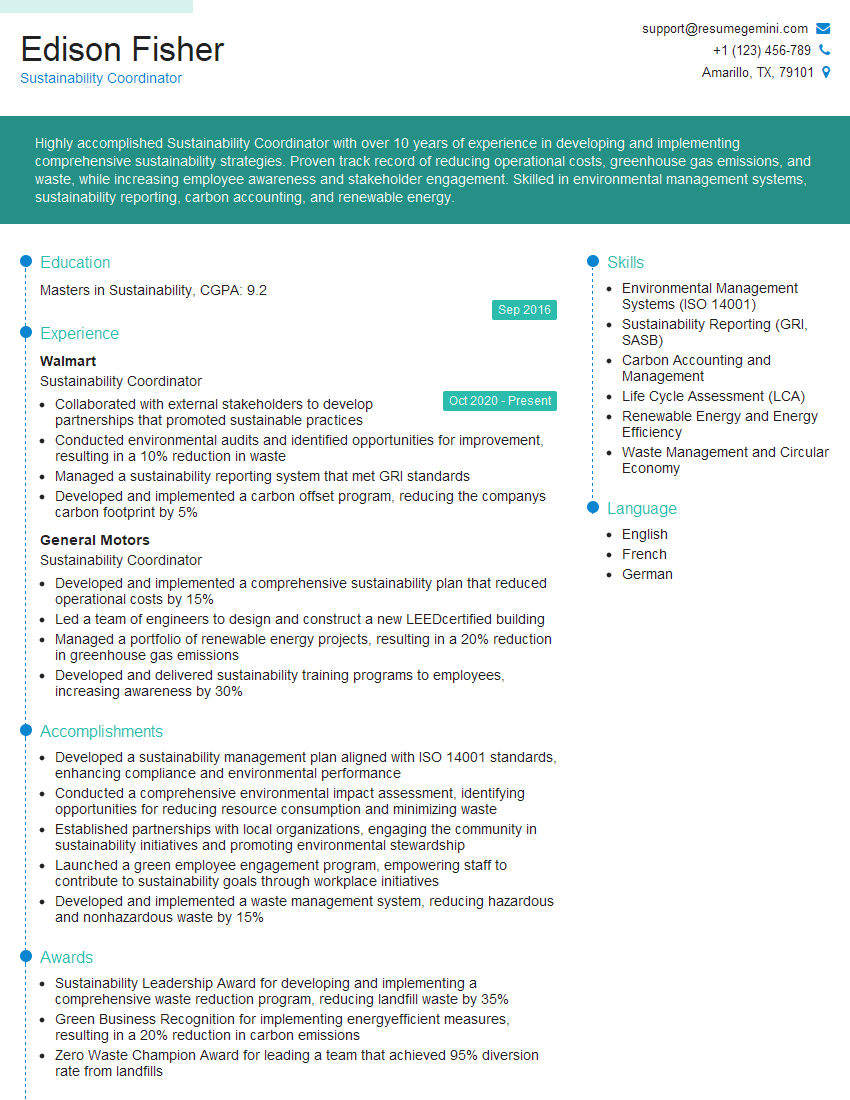
Sustainability Coordinator Resume Sample
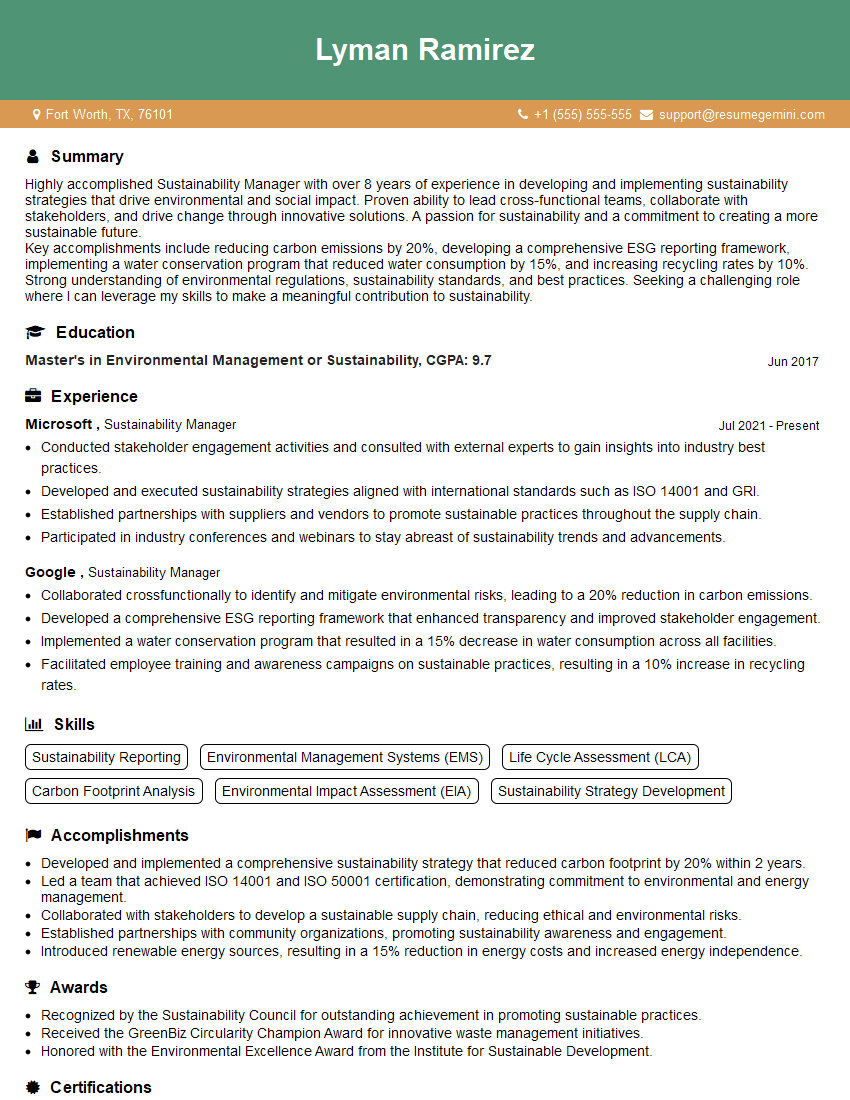
Sustainability Manager Resume Sample
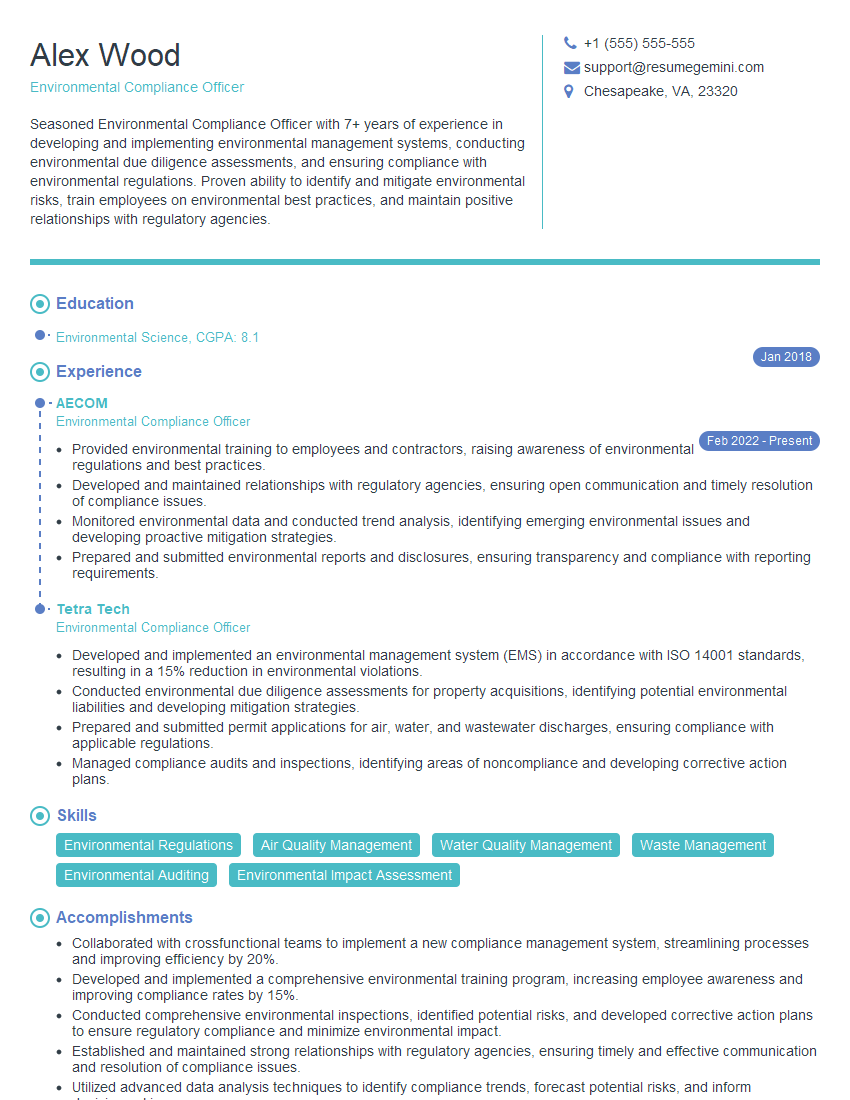
Environmental Compliance Officer Resume Sample
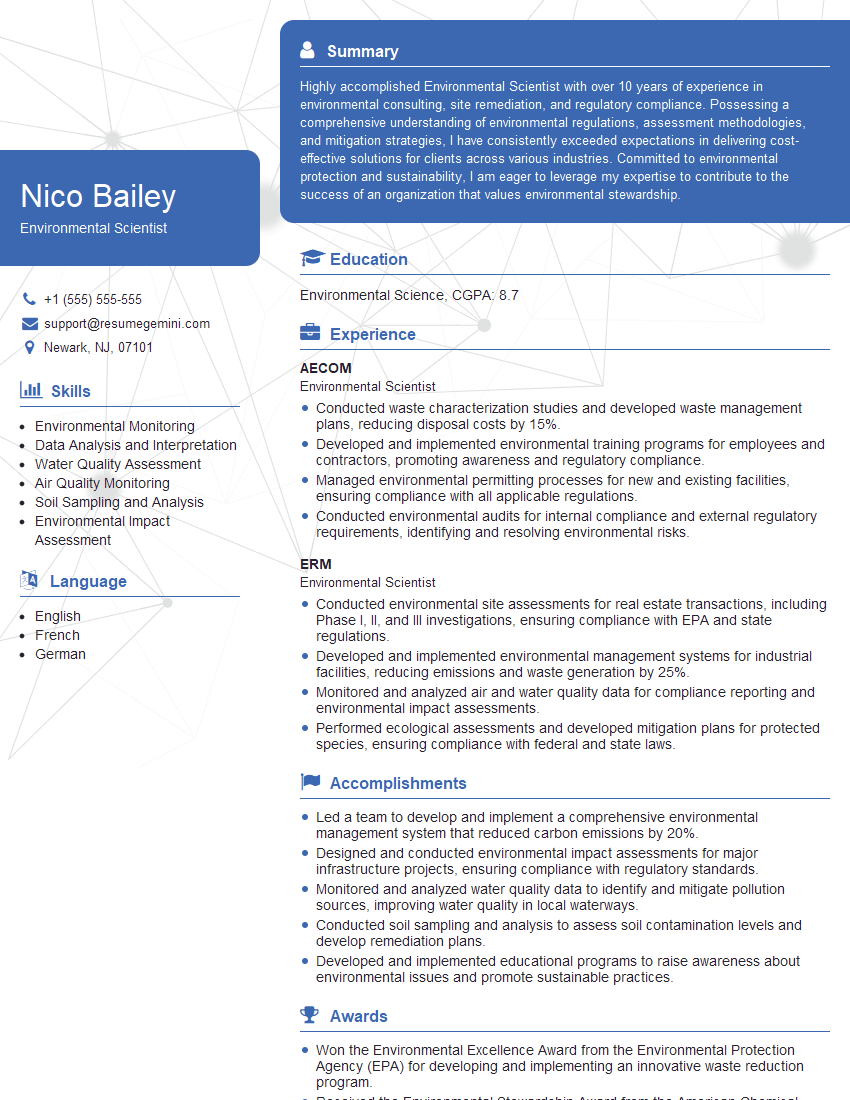
Environmental Scientist Resume Sample
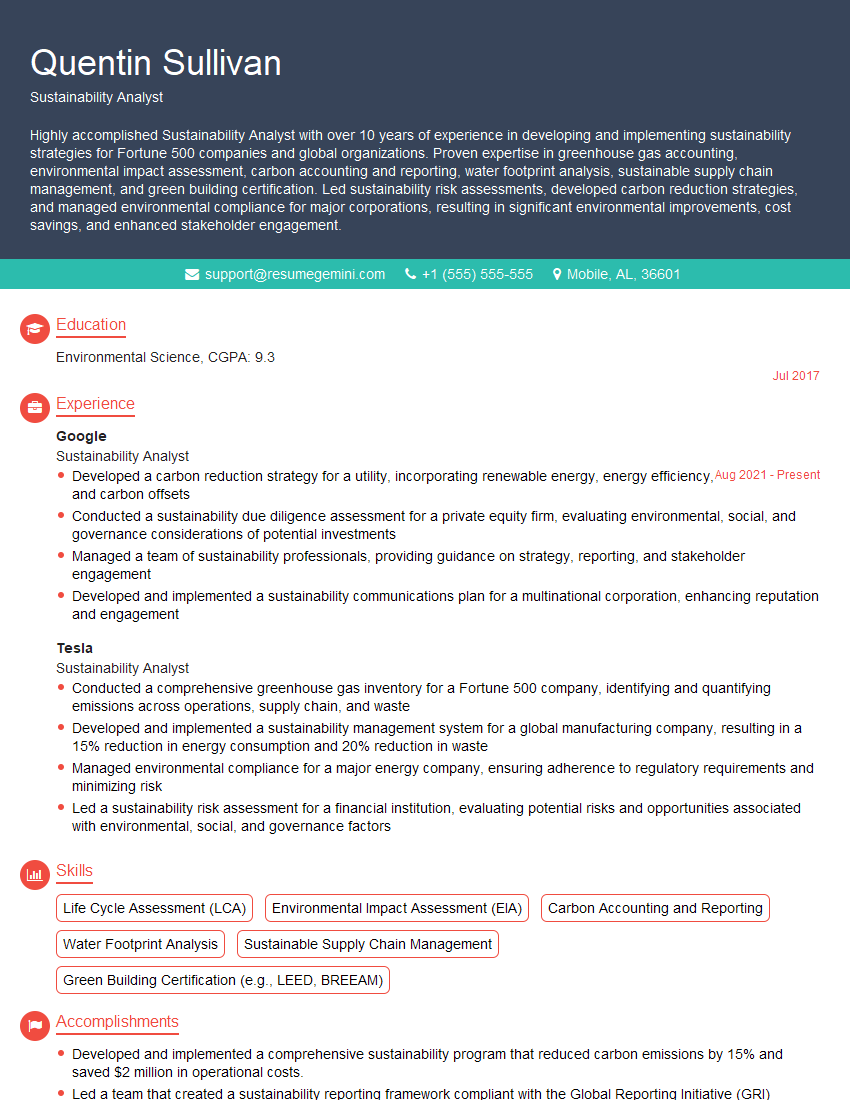
Sustainability Analyst Resume Sample

Sustainability Consultant Resume Sample
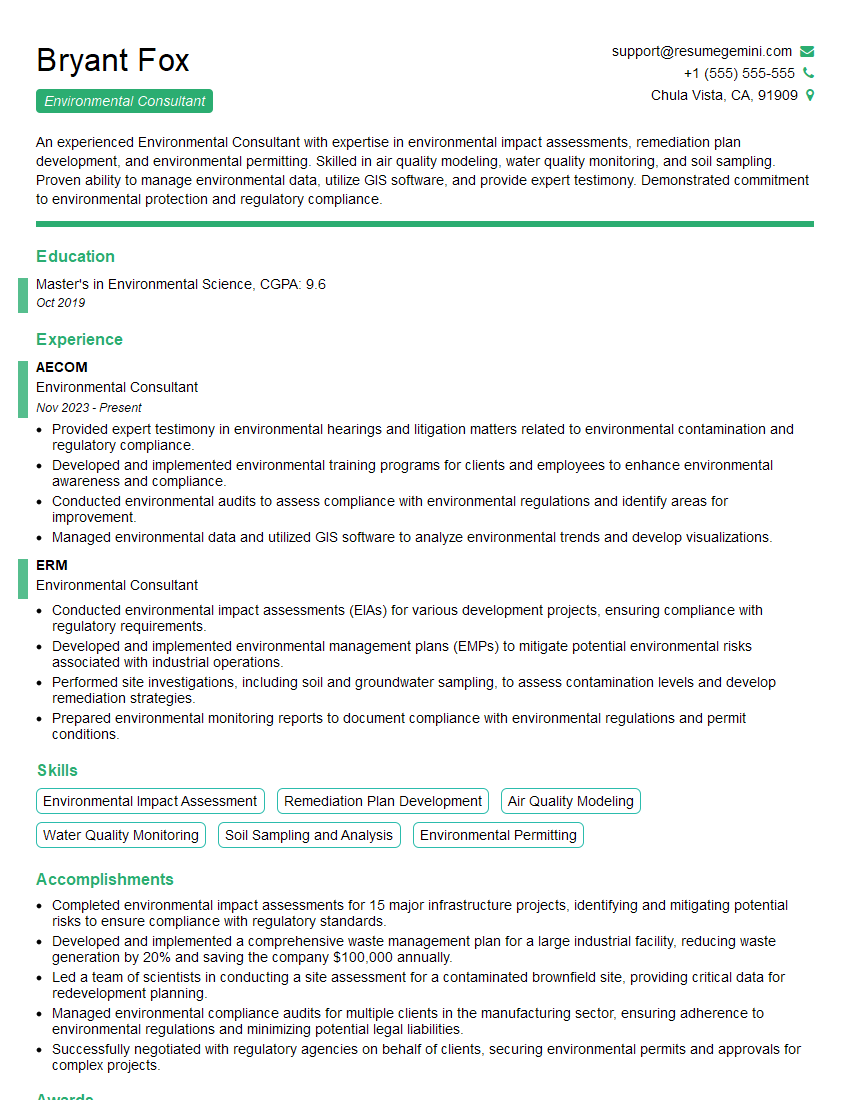
Environmental Consultant Resume Sample
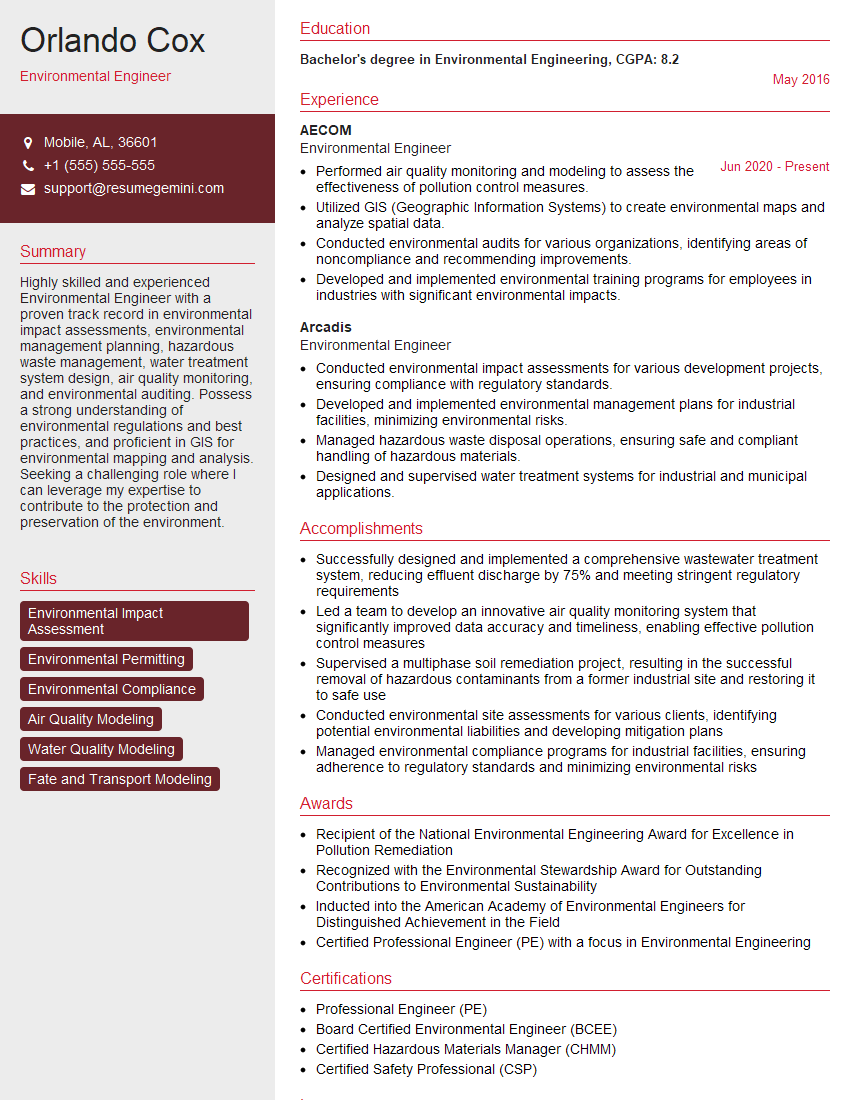
Environmental Engineer Resume Sample
Explore more articles
Users Rating of Our Blogs
Share Your Experience
We value your feedback! Please rate our content and share your thoughts (optional).
What Readers Say About Our Blog
To the interviewgemini.com Webmaster.
Very helpful and content specific questions to help prepare me for my interview!
Thank you
To the interviewgemini.com Webmaster.
This was kind of a unique content I found around the specialized skills. Very helpful questions and good detailed answers.
Very Helpful blog, thank you Interviewgemini team.