Every successful interview starts with knowing what to expect. In this blog, we’ll take you through the top Veneer Glue Application interview questions, breaking them down with expert tips to help you deliver impactful answers. Step into your next interview fully prepared and ready to succeed.
Questions Asked in Veneer Glue Application Interview
Q 1. What types of veneer glue are you familiar with?
The veneer glue market offers a variety of options, each with its own strengths and weaknesses. I’m familiar with several types, including:
- Animal glues (hide glue): A traditional, water-based adhesive known for its reversibility and compatibility with wood. It requires careful temperature control during application.
- Polyvinyl Acetate (PVAc) emulsions: These are widely used, water-based glues known for their easy application, fast setting times, and good strength. They are a cost-effective choice for many veneer projects.
- Polyurethane glues: Offering superior water resistance and strength compared to PVAc, polyurethane glues are ideal for exterior applications or projects requiring exceptional durability. However, they usually require more careful cleanup.
- Two-part epoxy glues: These are exceptionally strong and offer excellent gap-filling properties, but require precise mixing and a shorter working time. They’re often used for high-value or critical veneer applications.
- Reactive hot melt glues (EVA): These are applied in a molten state and set quickly upon cooling. They’re useful for high-speed production, but require specialized equipment.
The choice of glue depends heavily on the specific project requirements, including the type of wood, the application environment, and the desired performance characteristics.
Q 2. Explain the process of preparing a substrate for veneer application.
Substrate preparation is crucial for successful veneer application. A properly prepared surface ensures optimal adhesion and prevents problems like delamination. The process generally involves these steps:
- Cleaning: Thoroughly clean the substrate to remove any dust, dirt, grease, or old finish. I often use a tack cloth for this.
- Surface Planing (if necessary): If the substrate has imperfections, planar it to achieve a smooth, even surface. This ensures consistent glue contact.
- Moisture Content Check: It’s crucial to check the moisture content of both the substrate and the veneer to avoid issues with expansion and contraction that can cause failure later. The moisture content should be appropriate for the specific glue being used.
- Priming (if needed): Some substrates benefit from a primer to enhance adhesion, especially porous materials. The choice of primer depends on the substrate material.
- Sanding: Once primed (if applicable), lightly sand the substrate to improve surface texture and ensure good adhesion. Avoid excessive sanding that could damage the substrate.
Imagine trying to glue two pieces of sandpaper together – it wouldn’t stick well unless the surfaces are prepared. Similarly, a clean, smooth substrate ensures a strong bond with the veneer.
Q 3. Describe the correct way to mix two-part epoxy veneer glue.
Mixing two-part epoxy glue is a precise operation that demands attention to detail. Inaccurate mixing will significantly impact the glue’s performance. Here’s the proper method:
- Read the Manufacturer’s Instructions: Always carefully review the instructions provided by the manufacturer. Mixing ratios vary among different epoxy types.
- Measure Accurately: Use a precision scale or graduated measuring cups and follow the recommended ratio precisely. Even small variations can affect the final cure strength.
- Mixing Thoroughly: Use a clean mixing stick or spatula and mix the two components vigorously for the specified time. Ensure that there are no streaks or unmixed areas. I often mix for at least 2-3 minutes, even beyond the manufacturers minimum time, to ensure a thorough blend.
- Avoid Contamination: Use clean containers and tools to avoid introducing contaminants into the mixture. Any impurity could weaken the glue.
- Work Quickly: Once mixed, epoxy glues have a limited working time (pot life). Work quickly and efficiently to use the mixed glue before it starts to cure.
An analogy is baking a cake: using the wrong ingredients or mixing improperly can result in a disappointing result. Similarly, improper mixing of epoxy glue will compromise its strength and durability.
Q 4. What is the open time of your preferred veneer glue?
My preferred veneer glue is a high-quality PVAc emulsion. Its open time, which is the period of time during which the glue remains workable after application, is typically around 10-15 minutes at room temperature (70°F or 21°C). However, this can vary depending on the specific glue formulation, temperature, and humidity. It’s always advisable to refer to the manufacturer’s data sheet.
This open time allows ample opportunity for accurate veneer placement and alignment without rushing the process. Once the open time is exceeded, the glue begins to set and lose its tackiness. This is critical knowledge, as setting a tight deadline based on the open time ensures you’re not left working with a glue that is too set for adjustments.
Q 5. How do you ensure even glue spread during application?
Even glue spread is vital for strong, consistent adhesion. I achieve this using several techniques:
- Appropriate Application Tools: I use a notched trowel or a glue spreader appropriate for the veneer thickness to ensure a uniform glue layer. The notch size should match the veneer thickness.
- Consistent Pressure: Apply consistent pressure to the trowel or spreader to maintain even glue distribution. Avoid excessive pressure that could squeeze out too much glue.
- Multiple Thin Coats (If Necessary): For porous substrates or thicker veneers, applying multiple thin coats may be necessary rather than one thick coat to avoid issues. Allow each coat to slightly dry before applying the next.
- Check for Gaps: Carefully inspect the glue spread after application to check for any areas that need additional glue.
Think of it like painting a wall; you want an even coat of paint for a uniform appearance and strong adhesion. Similarly, uniform glue spread ensures strong bonding.
Q 6. What are the signs of improper glue application?
Improper glue application can manifest in several ways:
- Uneven Glue Distribution: Visible glue clumps or thin spots indicate inconsistent application. This often leads to weak spots and potential delamination.
- Glue Squeeze-Out: Excessive glue escaping between the veneer and substrate leads to unsightly blemishes and can weaken the bond.
- Dry Spots: Areas without adequate glue are weak points and prone to failure. This is often caused by insufficient glue application or not allowing the adhesive to thoroughly penetrate the substrate.
- Delamination (after curing): The veneer starts to separate from the substrate, indicating adhesion problems stemming from poor preparation, wrong glue selection or incorrect application.
- Visible Glue Lines: This is an aesthetic issue caused by inadequate glue distribution, but may also indicate weak bonding areas.
These problems highlight the need for meticulous preparation and application, underscoring the importance of precision in each step of the process.
Q 7. How do you correct glue squeeze-out?
Glue squeeze-out is a common problem, but thankfully correctable. The best approach depends on the glue type and how much squeeze-out there is:
- For Water-Based Glues (PVAc): Once the glue is dry, carefully remove the squeeze-out using a sharp blade, taking care not to scratch the veneer. Light sanding may be necessary to smooth the area afterwards.
- For Epoxy Glues: Epoxy glues often cure to a hard state. Once cured, carefully remove the excess glue using a sharp blade. Care must be taken because the epoxy is hardened and any chipping can result in damage.
- Prevention: The best method is prevention. Use the correct amount of glue and the appropriate application techniques to minimize squeeze-out in the first place.
The key is to address the squeeze-out promptly while avoiding damage to the finished surface. Patience and attention to detail are crucial.
Q 8. What are the safety precautions when handling veneer glue?
Veneer glue, whether PVA (polyvinyl acetate) or contact cement, requires careful handling. Safety precautions begin with proper personal protective equipment (PPE). This includes wearing safety glasses to protect your eyes from splashes, gloves to prevent skin irritation and contact dermatitis, and a respirator to avoid inhaling fumes, especially with contact cement which has stronger solvents. Always work in a well-ventilated area. Dispose of used glue and rags according to local regulations; some glues are flammable.
Before starting any work, thoroughly read the manufacturer’s safety data sheet (SDS) for the specific glue being used. The SDS provides detailed information about hazards, safe handling procedures, and emergency response information. Think of it like reading the instruction manual for a powerful tool – essential for safe and efficient operation.
Q 9. How do you handle different wood types and their glue compatibility?
Different wood types have varying porosities and moisture content, impacting glue compatibility. Hardwoods generally require less glue than softwoods because of their denser structure. Open-grained woods like oak might need a slightly thicker glue application to fill the pores and ensure a strong bond. Softwoods, like pine, might require a slightly thinner application to prevent glue squeeze-out. Always pre-test glue compatibility on a scrap piece of the specific wood you are using to ensure a successful bond.
Furthermore, the moisture content of the wood is critical. Wood that is too wet or too dry can lead to glue adhesion failure. Ideally, the moisture content should be between 6% and 8% for most veneer work. A moisture meter is an invaluable tool for determining wood moisture before gluing. Ignoring moisture content can lead to significant problems like warping or delamination later on.
Q 10. Explain the process of clamping veneer after application.
Clamping is crucial for achieving a strong, even bond in veneer work. The process begins with ensuring the veneer is properly aligned and positioned on the substrate. Then, you apply even pressure across the entire surface using clamps. The type and number of clamps depend on the size and shape of the veneer piece and the substrate. For large panels, you might use a combination of cauls (flat boards) and bar clamps to distribute pressure evenly and prevent warping. For smaller pieces, spring clamps or hand clamps might suffice.
The clamping pressure should be firm but not excessive; too much pressure can crush the veneer or cause the substrate to deform. The clamping time depends on the glue type and the ambient conditions (temperature and humidity). Always refer to the glue manufacturer’s recommendations for the optimal clamping time. Improper clamping can result in uneven bonding, voids, or glue squeeze-out.
Q 11. What are the ideal temperature and humidity conditions for veneer gluing?
Ideal temperature and humidity are essential for successful veneer gluing. The temperature should be relatively stable, between 65°F and 75°F (18°C and 24°C). Extreme temperatures can affect glue setting time and bonding strength. High temperatures can cause the glue to cure too quickly, leading to a weak bond, while low temperatures can slow down the curing process, increasing the clamping time and the risk of contamination.
Humidity plays a significant role as well. A humidity level between 40% and 60% is generally recommended. Too much humidity can slow drying and increase the chance of mold growth, while excessively low humidity can cause the wood to shrink and lead to glue adhesion problems. A well-controlled environment is key to consistent results in veneer gluing. Using a hygrometer to monitor temperature and humidity is always a good idea.
Q 12. How do you troubleshoot issues like glue adhesion failure?
Glue adhesion failure can stem from various causes. The most common issues include improper surface preparation (dust, dirt, or old finish), incorrect glue application, inappropriate clamping, or unsuitable environmental conditions. Troubleshooting starts with carefully examining the failed bond. Look for signs of poor glue penetration, voids, or delamination.
If the failure is due to poor surface preparation, the solution involves cleaning the surfaces thoroughly with a suitable solvent or abrasive. If the glue application was uneven, you’ll need to repeat the process, ensuring a uniform spread. If clamping was insufficient, you’ll need to re-clamp the piece with more pressure and for a longer duration. Environmental factors require adjustments to temperature and humidity to optimize the gluing process. Sometimes, a complete regluing might be necessary.
Q 13. What is the difference between contact cement and PVA glue for veneer?
Contact cement and PVA (polyvinyl acetate) glue are both commonly used for veneer, but they differ significantly in their application and properties. Contact cement is a solvent-based adhesive that requires applying glue to both surfaces, allowing it to become tacky, and then pressing the surfaces together. It creates a strong, immediate bond with little to no clamping required. It’s excellent for large sheets and complex shapes but requires precise alignment and can be messy due to its strong solvent content.
PVA glue, on the other hand, is water-based, non-toxic, and easier to clean up. It requires clamping to develop a strong bond. While not as fast-bonding as contact cement, PVA glues provide a very durable bond that’s suitable for most veneer applications. The choice between the two depends on the project’s size, complexity, and the desired speed of the process. Consider the pros and cons of each based on your project’s specific requirements.
Q 14. Describe your experience with various application tools (e.g., rollers, brushes).
My experience spans various application tools, each with its strengths and weaknesses. Rollers are ideal for applying a thin, even coat of glue to large surfaces. They are efficient and minimize glue wastage. However, they can be less effective on intricate designs or small areas. Brushes, especially those with fine bristles, provide more control over glue placement, allowing for precise application in detailed areas. They are invaluable for achieving even coverage in tight corners or complex shapes, though they can be less efficient for large areas and require more care to avoid excessive glue build-up.
In addition to rollers and brushes, I’ve also used glue spreaders for applying contact cement. The spreader allows for consistent glue application and minimizes solvent evaporation. Choosing the right tool is critical and depends heavily on the type of glue and the size and shape of the veneer and substrate.
Q 15. How do you ensure the veneer is properly aligned before clamping?
Proper veneer alignment before clamping is crucial for a flawless finish. Think of it like laying bricks – if your bricks aren’t aligned, the wall will be uneven. We use several methods to ensure perfect alignment. First, I carefully position the veneer on the substrate, using a straight edge and a measuring tape to ensure accurate placement and to check for any gaps or overlaps. Secondly, I often use alignment pins or strategically placed weights to hold the veneer in place while the glue sets, preventing any shifting during clamping. For intricate patterns or large sheets, I’ll use a caulking system with strategically placed cauls to evenly distribute clamping pressure and maintain perfect alignment. Any misalignment at this stage will result in visible imperfections in the finished product.
For instance, on a recent project involving a figured walnut veneer, I used alignment pins at each corner and along the center line of the panel to ensure absolute precision. The result was a stunningly seamless finish with perfectly matched grain patterns.
Career Expert Tips:
- Ace those interviews! Prepare effectively by reviewing the Top 50 Most Common Interview Questions on ResumeGemini.
- Navigate your job search with confidence! Explore a wide range of Career Tips on ResumeGemini. Learn about common challenges and recommendations to overcome them.
- Craft the perfect resume! Master the Art of Resume Writing with ResumeGemini’s guide. Showcase your unique qualifications and achievements effectively.
- Don’t miss out on holiday savings! Build your dream resume with ResumeGemini’s ATS optimized templates.
Q 16. What are the common causes of veneer delamination?
Veneer delamination, or the separation of the veneer from the substrate, is a frustrating problem with several common causes. Think of it as a poorly bonded structure – the layers aren’t properly connected. One major culprit is insufficient glue coverage. If you don’t apply enough glue, or if it’s not evenly spread, the bond will be weak. Another is using the wrong type of glue – some glues aren’t compatible with certain veneers or substrates. Improper clamping pressure is another frequent cause; too little pressure results in a weak bond, while excessive pressure can cause the veneer to compress unevenly and later delaminate. Finally, environmental factors like high humidity can also contribute. Moisture can weaken the glue bond over time, leading to delamination.
- Insufficient glue coverage
- Incompatible glue type
- Improper clamping pressure
- Environmental factors (humidity)
Q 17. How do you clean up excess glue?
Cleaning up excess glue is vital for a professional finish. Leaving excess glue will not only look messy but can also cause problems down the line. While the glue is still wet, I use a damp sponge or a clean cloth to gently wipe away any excess. For tougher situations, I might use a glue scraper, always working carefully to avoid damaging the delicate veneer surface. Once the glue has begun to dry, it’s more difficult to remove; I avoid using harsh solvents as they can damage the finish. It’s important to act quickly and prevent the glue from completely setting.
For example, I recently used a combination of a damp sponge and a plastic scraper to remove excess glue from a large mahogany veneer panel. The scraper helped get into the tighter areas, while the damp sponge cleaned the surrounding surface without leaving any marks.
Q 18. How do you dispose of used veneer glue and containers responsibly?
Responsible disposal of used veneer glue and containers is crucial for environmental safety and compliance. The specific disposal method depends on the type of glue. Always refer to the manufacturer’s safety data sheet (SDS) for detailed instructions. Most water-based glues can be disposed of by carefully wiping out the containers and then disposing of the excess glue and container in accordance with local regulations. For solvent-based glues, it’s often necessary to collect them in designated containers and arrange for special waste disposal through a licensed hazardous waste handler. Never pour glue down the drain or into the trash without consulting the SDS.
In my experience, proper labeling is key. I always clearly label containers to indicate the type of glue and ensure they are handled appropriately throughout the process.
Q 19. Explain your experience with different types of veneer (e.g., hardwood, softwood).
My experience encompasses a wide range of veneer types, from hardwoods like walnut, cherry, and mahogany to softwoods such as pine and maple. Each type presents unique challenges and requires a slightly different approach. Hardwoods, with their intricate grain patterns and often higher cost, demand precision and care during application. The tighter grain of hardwoods can sometimes make glue penetration more challenging. Softwoods, on the other hand, are generally more forgiving but can be more susceptible to damage during handling. I adapt my techniques, glue selection, and clamping pressures according to the specific properties of the veneer, considering factors like density, porosity and grain orientation.
For instance, when working with delicate figured veneers such as birdseye maple, I use a slightly thinner glue spread and more careful clamping to avoid compression marks.
Q 20. What is your experience with repairing veneer damage?
Veneer repair is a specialized skill requiring patience and precision. Minor scratches or chips can often be repaired using a colour matched filler and careful sanding and finishing. More significant damage, like delamination, requires a more involved process. This often involves carefully lifting the damaged area, cleaning the surfaces, reapplying glue, and then clamping it back into place, ensuring even pressure distribution to prevent further damage. For larger repairs, sometimes a veneer patch needs to be applied to restore the damaged area. The key is to match the grain and color of the patch as closely as possible to the existing veneer. Success in veneer repair requires skill and attention to detail to achieve an invisible repair.
I remember one instance where I repaired a significant delamination on an antique cherry desk. The repair was nearly invisible once completed and restored the piece to its original glory.
Q 21. Describe your experience with edge banding techniques using veneer.
Edge banding with veneer involves applying thin strips of veneer to the edges of panels, enhancing their appearance and durability. The process is similar to applying veneer to a larger surface but requires greater precision due to the smaller surface area. I typically use specialized edge banding irons to heat-activate the glue, ensuring a strong and even bond. Careful trimming and sanding are essential to achieve a seamless transition between the veneer and the edge. The techniques vary depending on the type of veneer and the edge profile. For example, complex edge profiles might require specialized tools or hand-finishing to achieve a professional result.
On a recent kitchen project, I used a precise edge banding iron and various sanding tools to create a perfect match between the walnut edge banding and the main cabinet panels, resulting in a high-end, smooth finish.
Q 22. How do you handle large or complex veneer projects?
Handling large or complex veneer projects requires meticulous planning and a systematic approach. It’s not just about scaling up the process; it’s about maintaining consistent quality and efficiency across a larger surface area. We start by creating a detailed plan, breaking down the project into manageable sections. This includes careful substrate preparation – ensuring it’s clean, flat, and properly sized – and precise veneer layout to minimize waste and achieve the desired pattern. We then use a combination of techniques depending on the project’s specifics. For very large panels, we might employ a roller system for glue application to ensure even coverage. For intricate designs or curved surfaces, hand application with specialized tools ensures precision. Effective communication and teamwork are key; multiple applicators working in sync, guided by a lead, maintain consistency.
For example, on a recent project involving the veneering of several large-format reception desks, we divided the work into sections, completing each before moving on. This allowed for effective glue-up time management and prevented the glue from drying before clamping. Careful attention to temperature and humidity also proved crucial in preventing warping.
Q 23. What is your experience with using specialized clamping equipment?
My experience with specialized clamping equipment is extensive. I’m proficient in using various types, from simple hand clamps to sophisticated vacuum presses and edge banding equipment. Understanding the nuances of each is critical for achieving optimal results. Vacuum presses, for instance, are invaluable for achieving perfectly flat surfaces, especially with large panels or delicate veneers. They distribute clamping pressure evenly, minimizing the risk of uneven bonding or substrate damage. Pneumatic clamps offer rapid clamping and release, increasing efficiency, while edge banding equipment ensures clean, professional edges.
I’ve used both air-powered clamps, known for their speed, and vacuum-bagging systems for complex curves. I can tailor the clamping method to the specifics of the project; for example, a vacuum press would be ideal for a large, flat panel, while spring clamps might be more suitable for smaller, intricate pieces. The selection depends on the size, shape, and material of both the veneer and substrate.
Q 24. Describe your troubleshooting skills in addressing veneer glue application problems.
Troubleshooting veneer glue application problems requires a systematic approach and a keen eye for detail. I begin by carefully assessing the issue. Is it a glue-line failure, a wrinkle in the veneer, or a problem with the substrate? Common problems include insufficient glue coverage (leading to delamination), incorrect glue consistency (too thick or too thin), air bubbles, or substrate imperfections. I always refer back to the original preparation steps, checking for errors in substrate conditioning, glue preparation, or application technique. Once the root cause is identified, the solution can be implemented.
For instance, if I notice a localized delamination, I’d check the glue coverage in that area. If it’s insufficient, I might need to carefully add more glue (using a suitable method to avoid damaging surrounding areas) before re-clamping. If the problem is persistent, I might adjust the glue’s viscosity or even consider switching glue types. Wrinkles might point towards uneven application, inadequate clamping pressure, or improper veneer preparation. Documentation is crucial, allowing me to trace problems and improve future processes.
Q 25. What techniques do you use to prevent air bubbles under the veneer?
Preventing air bubbles under the veneer is crucial for a high-quality finish. The key is to ensure proper glue application and careful veneer placement. I always use a technique that minimizes air trapping. A common method involves applying a thin, even layer of glue, avoiding pooling. A notched trowel or a glue roller can ensure uniform coverage. The veneer should then be carefully laid down, starting from one edge and gradually working towards the opposite. A soft squeegee or roller can help to gently work out any trapped air bubbles from the center to the edges. Vacuum pressing further aids this by expelling air during clamping.
Consider using a pre-spread glue method to remove possible trapped air. Also, the quality of the veneer itself matters; if the veneer is particularly stiff or irregular, it might be more challenging to eliminate all air bubbles. In such cases, pre-soaking or steaming the veneer can sometimes help make it more pliable.
Q 26. How do you minimize warping or distortion of the substrate during application?
Minimizing warping or distortion during veneer application requires careful attention to several factors. Substrate preparation is paramount – the substrate must be flat, stable, and of uniform moisture content. This is particularly important with materials like MDF or plywood, which are susceptible to moisture changes. The substrate should be acclimated to the environment where the finished piece will reside to minimize post-application movement. Proper glue application is also critical; using the correct amount of glue and ensuring even coverage prevents uneven stress on the substrate.
Clamp pressure must be even across the entire surface to prevent localized stress. The clamping time and pressure need to be carefully matched to the substrate and veneer. Over-clamping can cause the substrate to deform. Finally, careful control of the environment, maintaining consistent temperature and humidity, is crucial throughout the entire process, from substrate preparation to final clamping. Rapid changes in these factors can induce warping.
Q 27. What is your experience with different types of substrates (e.g., MDF, plywood)?
I have extensive experience working with various substrates, including MDF, plywood, particleboard, and hardwood. Each material requires a slightly different approach. MDF (Medium-Density Fiberboard), for example, is a stable substrate but can be susceptible to moisture damage. It requires careful preparation to ensure a clean, dust-free surface. Plywood, being a layered material, presents unique challenges; improper preparation can lead to uneven glue penetration. Hardwoods require different clamping pressures and strategies due to their greater density.
For example, when working with MDF, I always use a sealant to prevent moisture absorption. With plywood, I focus on ensuring the surface is smooth and even. Hardwoods might require different types of glue to ensure strong adhesion, depending on the species. Understanding these nuances is critical to achieving a successful veneer application on any substrate.
Q 28. Describe your experience with quality control procedures related to veneer application.
Quality control procedures are integral to every veneer application project. My approach starts with meticulous substrate inspection, verifying its flatness, cleanliness, and moisture content. Throughout the glue application, I constantly monitor glue consistency and coverage. We use visual inspections and sometimes specialized tools to check for inconsistencies. After clamping, I carefully inspect the finished product for any defects – such as air bubbles, glue squeeze-out, or uneven veneer placement. This meticulous approach ensures high-quality results. Thorough documentation at each stage helps with troubleshooting and future process improvement.
We maintain detailed records of materials used, glue types, application techniques, clamping pressures, and environmental conditions. This information is critical for ensuring consistency and identifying areas for improvement. We also have regular quality checks and in-process inspections to catch and correct any problems early on. Our aim is to detect and address any issues immediately, minimizing costly rework.
Key Topics to Learn for Veneer Glue Application Interview
- Types of Veneer and Glue: Understanding the properties of different veneer types (e.g., hardwood, softwood, engineered) and their compatibility with various glues (e.g., PVA, urea-formaldehyde, contact adhesive).
- Glue Preparation and Mixing: Mastering the correct techniques for mixing glue according to manufacturer instructions, ensuring consistent viscosity and working time.
- Application Methods: Proficiency in different application methods, including brush, roller, and spray application, understanding the advantages and disadvantages of each technique for different veneer types and substrates.
- Open Time and Clamp Pressure: Knowing the importance of open time (the time before clamping) and the optimal clamp pressure required for different veneer thicknesses and glue types to achieve strong bonds.
- Troubleshooting Common Issues: Identifying and resolving common problems such as glue squeeze-out, veneer slippage, and void formation. This includes understanding root causes and preventative measures.
- Health and Safety: Familiarity with relevant safety regulations and precautions concerning the handling and application of wood glues, including personal protective equipment (PPE) and ventilation.
- Quality Control and Inspection: Understanding the importance of quality control checks throughout the application process and the methods for inspecting the finished product for defects.
- Industry Standards and Best Practices: Awareness of industry standards and best practices for veneer glue application, demonstrating a commitment to professional excellence.
- Sustainability Considerations: Understanding the environmental impact of different glue types and the importance of using eco-friendly options where possible.
Next Steps
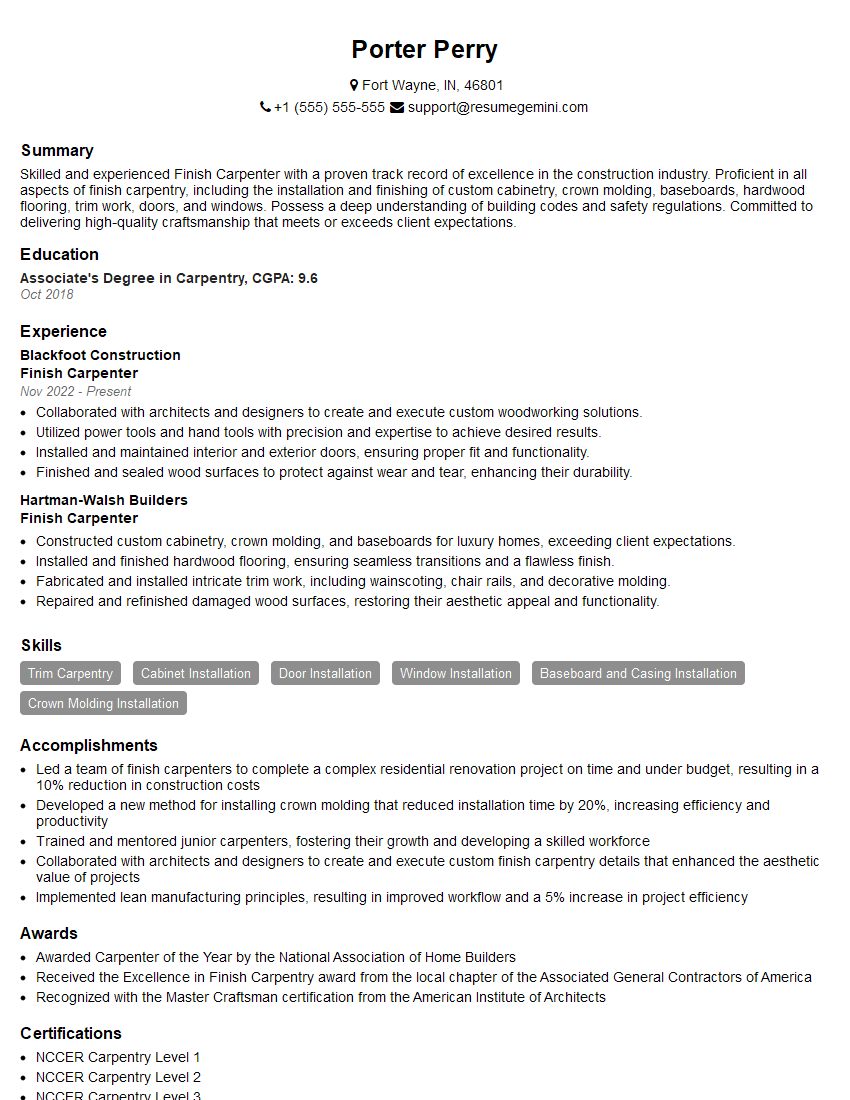
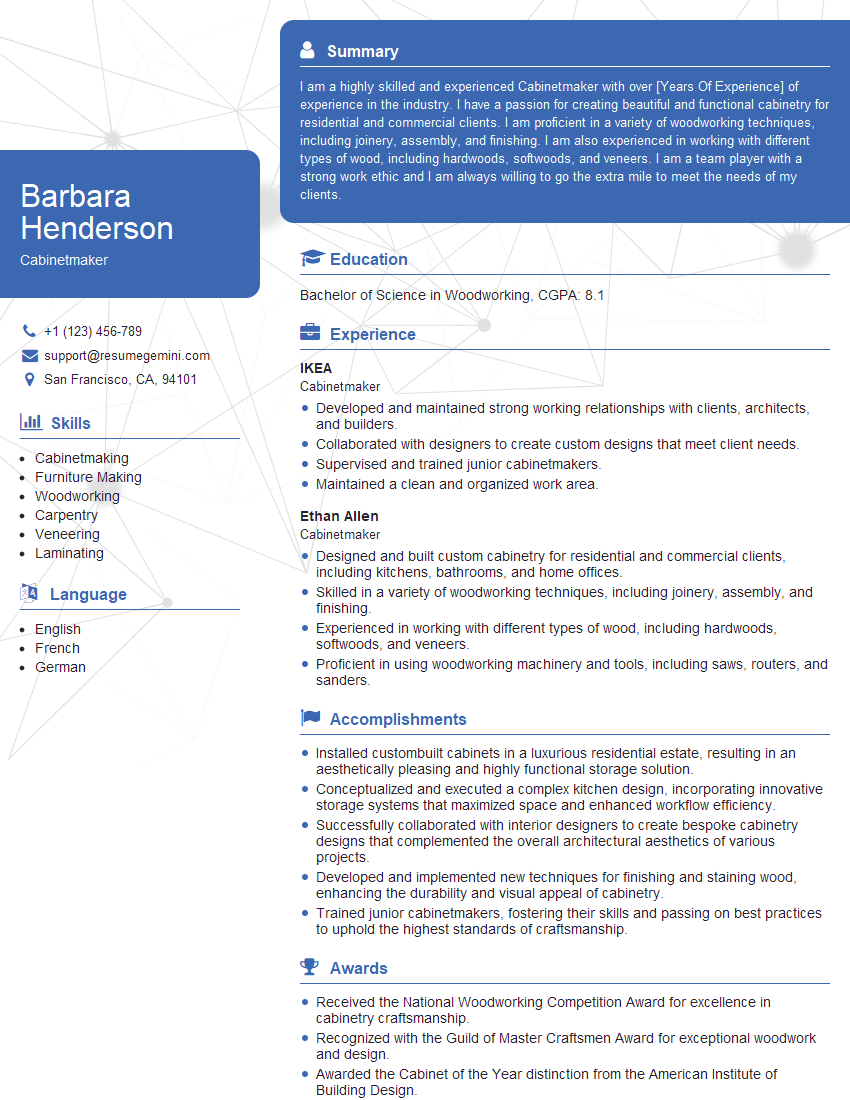
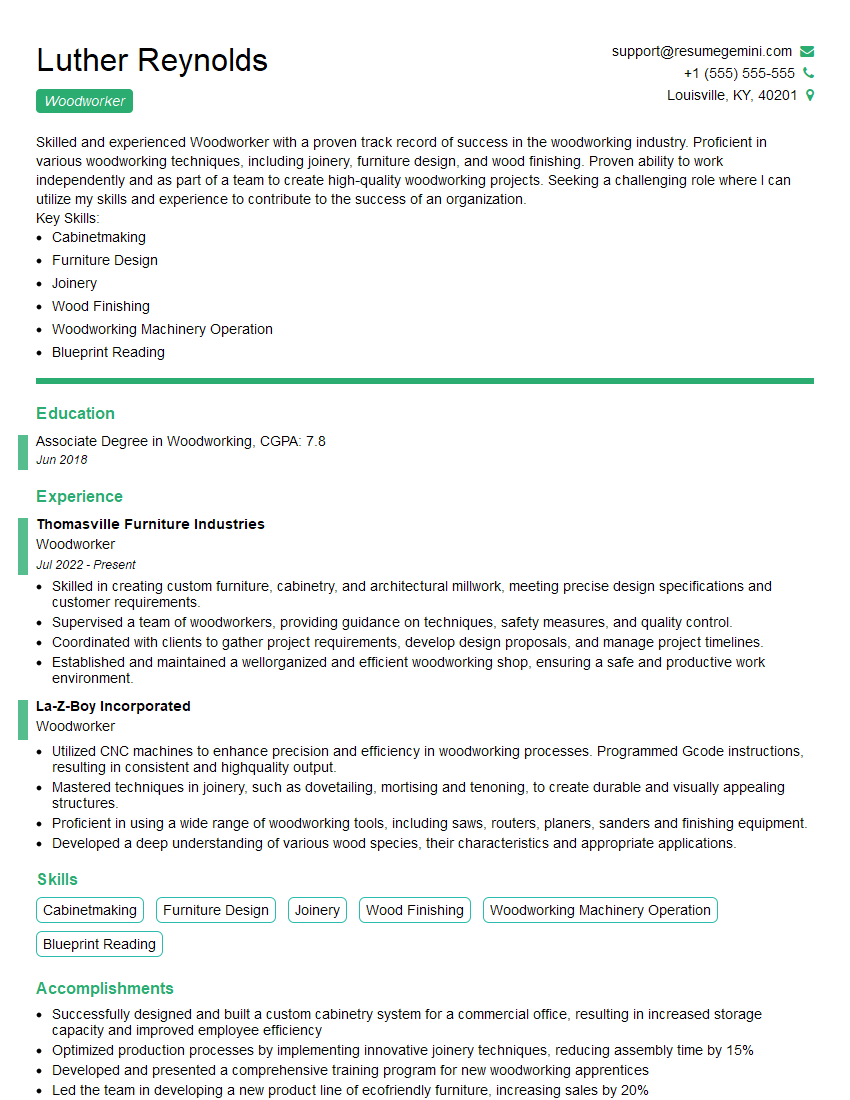
Mastering veneer glue application is a highly valuable skill that opens doors to numerous opportunities in woodworking, furniture manufacturing, and related industries. A strong understanding of this process demonstrates precision, attention to detail, and a commitment to quality – traits highly sought after by employers. To maximize your job prospects, it’s crucial to create a resume that effectively showcases your skills and experience. An ATS-friendly resume is key to getting your application noticed. We recommend using ResumeGemini, a trusted resource for building professional resumes. ResumeGemini offers examples of resumes tailored to Veneer Glue Application to help you create a compelling application that stands out.
Explore more articles
Users Rating of Our Blogs
Share Your Experience
We value your feedback! Please rate our content and share your thoughts (optional).
What Readers Say About Our Blog
To the interviewgemini.com Webmaster.
Very helpful and content specific questions to help prepare me for my interview!
Thank you
To the interviewgemini.com Webmaster.
This was kind of a unique content I found around the specialized skills. Very helpful questions and good detailed answers.
Very Helpful blog, thank you Interviewgemini team.