Are you ready to stand out in your next interview? Understanding and preparing for Priming and Painting Drywall interview questions is a game-changer. In this blog, we’ve compiled key questions and expert advice to help you showcase your skills with confidence and precision. Let’s get started on your journey to acing the interview.
Questions Asked in Priming and Painting Drywall Interview
Q 1. What types of primers are best suited for drywall?
Choosing the right primer for drywall depends heavily on the condition of the wall and the type of paint you’ll be using. There are several excellent options:
- Interior Acrylic Primer: This is a versatile and popular choice for most drywall applications. It offers good adhesion, seals the drywall effectively, and provides a smooth surface for the finish coat. It’s also relatively low-odor and easy to clean up with soap and water.
- Stain-Blocking Primer: If your drywall has water stains, smoke damage, or other blemishes that could bleed through the paint, a stain-blocking primer is essential. These primers contain special ingredients that prevent stains from showing through.
- Oil-Based Primer: While less common now due to stronger VOC regulations and longer drying times, oil-based primers offer exceptional adhesion and can be helpful in particularly challenging situations like very porous drywall or surfaces with heavy previous coatings. However, they require mineral spirits for cleanup and have a stronger odor.
- Sheen Primers: Primers come in different sheens, like flat, satin, or eggshell. The sheen you choose can impact the final look. Flat primers are good for hiding imperfections, while satin or eggshell offer better washability.
For example, on a newly installed drywall with minor imperfections, I’d typically opt for an interior acrylic primer. However, if I’m dealing with a wall with noticeable water stains, I’d definitely select a stain-blocking primer first. The key is to always assess the condition of the wall before choosing the primer.
Q 2. Explain the importance of proper surface preparation before priming.
Proper surface preparation is arguably the most crucial step in achieving a professional-looking paint job. Neglecting this step will almost certainly lead to problems down the line, such as poor adhesion, uneven paint application, and a less durable finish.
- Cleaning: Dust, dirt, cobwebs, and other debris must be removed using a broom, vacuum, and possibly a damp cloth. This ensures the primer adheres properly to the surface.
- Repairing: All holes, cracks, and imperfections should be repaired using drywall compound. After the compound is completely dry, sand it smooth for a flawless finish. I always use a fine grit sandpaper to avoid scratching the surface.
- Priming: Priming is essential to seal the drywall and provide a uniform base for the finish coat. It also improves the paint’s adhesion and prevents it from being absorbed unevenly by the drywall.
- Caulking: Caulk any gaps around windows, doors, and corners. This creates a smooth, continuous surface and prevents cracks from appearing later.
Think of it like preparing a canvas for a painting. You wouldn’t start painting without preparing the canvas first; the same logic applies to drywall. A thoroughly prepared surface ensures a professional and long-lasting result.
Q 3. Describe your experience with different paint application methods (roller, brush, sprayer).
I’m proficient with all three common paint application methods: roller, brush, and sprayer. Each has its strengths and weaknesses:
- Roller: Rollers are ideal for large, flat surfaces and offer a relatively quick and efficient application. They provide a smooth, even finish, especially when using an extension pole for hard-to-reach areas. I prefer high-quality rollers with a nap suited to the paint’s thickness.
- Brush: Brushes are best for detailed work, edges, corners, and trim. A good quality brush with fine bristles makes a huge difference in the final finish. I usually use angled brushes for trim work for better control.
- Sprayer: Sprayers offer the fastest coverage, particularly for large projects. However, they require more setup, cleanup, and proper ventilation. Overspray can be an issue, and it’s crucial to mask off areas you don’t want painted. Sprayers are best for experienced painters who can control the spray pattern for an even coat.
In a typical project, I might use a roller for most of the wall, a brush for corners and trim, and potentially a sprayer if the job is exceptionally large and time is a critical factor. The best method often depends on the specific project’s demands and the desired finish.
Q 4. How do you handle patching and repairing drywall before painting?
Patching and repairing drywall before painting is vital for a smooth, professional finish. I typically follow these steps:
- Assess the Damage: Identify the size and type of damage. Small holes might require just a small amount of drywall compound, while larger holes might require cutting out the damaged section and installing a patch.
- Prepare the Area: Clean the area to be patched, removing loose debris and ensuring a clean, dry surface for adhesion.
- Apply Drywall Compound: Apply a thin layer of compound over the damaged area, feathering the edges to blend seamlessly with the surrounding wall. Multiple thin coats are better than one thick coat to avoid cracking.
- Allow to Dry: Let the compound dry completely according to the manufacturer’s instructions.
- Sand Smooth: Once dry, sand the patched area with progressively finer grits of sandpaper until it’s flush with the surrounding wall. I usually start with a coarser grit and finish with a very fine grit for a smooth surface.
- Prime: Prime the patched area to ensure good adhesion and a uniform finish for the final paint coat.
Careful patching is crucial. A poorly patched area will show up under the paint, even if you try to camouflage it. Taking the time to properly patch and sand is key to achieving a professional finish.
Q 5. What are the common problems encountered during priming and painting drywall, and how do you address them?
Several common problems can arise during priming and painting drywall:
- Uneven Coverage: This is often due to improper surface preparation, poor roller technique, or using too little paint. Addressing this involves ensuring proper surface prep, using a high-quality roller, and applying even coats.
- Lap Marks: These occur when wet paint is applied over previously applied, almost dry paint. Avoiding this requires working in manageable sections and maintaining a wet edge, overlapping each stroke slightly.
- Roller Marks/Brush Strokes: These can result from using an unsuitable roller or brush, applying too much pressure, or not letting the paint dry between coats. Using the correct tools and techniques, and ensuring proper drying times between coats helps mitigate this.
- Staining: Water stains or other blemishes can bleed through the paint. The solution is to use a stain-blocking primer before applying any paint.
- Sagging/Runs: These are usually caused by applying paint too thickly. Applying thin, even coats is essential to avoid this issue.
Addressing these problems often requires a combination of diligent preparation, proper technique, and the right materials. Sometimes, it may mean repainting affected areas.
Q 6. What safety precautions do you take when working with primers and paints?
Safety is paramount when working with primers and paints. I always prioritize the following:
- Ventilation: Work in a well-ventilated area or use respirators to avoid inhaling fumes. Open windows and doors, and use fans if necessary.
- Eye Protection: Always wear safety glasses or goggles to protect your eyes from splashes.
- Gloves: Wear gloves to protect your hands from the chemicals in the paint and primer.
- Clothing: Wear appropriate clothing to protect your skin and avoid getting paint on your clothes. Old clothes are preferable.
- Disposal: Properly dispose of empty cans and paint rags according to local regulations. Never throw paint cans in the trash without proper disposal.
- Fire Safety: Many primers and paints are flammable. Avoid working near open flames and ensure proper ventilation to prevent the buildup of flammable vapors.
I always read and follow the manufacturer’s safety instructions on all products before I begin working. Safety is not something to take lightly when working with these materials.
Q 7. How do you determine the correct amount of primer and paint needed for a project?
Determining the correct amount of primer and paint is crucial for efficient project management and avoiding waste. Here’s how I approach it:
- Measure the Area: Calculate the total square footage of the surface area to be primed and painted. This involves measuring the height and width of each wall, subtracting areas for windows and doors, and adding up the total.
- Check the Coverage: Check the manufacturer’s specifications on the primer and paint cans for their coverage rates (typically in square feet per gallon).
- Calculate the Required Amount: Divide the total square footage by the coverage rate to determine the number of gallons needed. Always round up to the nearest gallon to ensure sufficient paint. It’s better to have some leftover than run out mid-project.
- Consider Coats: Remember to account for the number of coats you’ll be applying. Most projects require at least two coats of paint. Adjust the calculated amount accordingly.
For example, if a wall has 100 square feet and the paint’s coverage is 300 square feet per gallon, and I need two coats, I’d need approximately 2/3 of a gallon or 1 gallon for two coats to ensure adequate coverage. Always double-check calculations to minimize material waste.
Q 8. What is your experience with different types of drywall (e.g., standard, fire-resistant)?
My experience encompasses a wide range of drywall types. Standard drywall, the most common, is generally used for interior walls and ceilings. I’m proficient in working with this, understanding its properties and how to prepare it for priming and painting. Beyond that, I have significant experience with fire-resistant drywall (often denoted as Type X), which is crucial for fire safety in certain areas like stairwells and garages. This type requires careful handling, as its denser composition can sometimes present challenges during sanding. I’ve also worked with moisture-resistant drywall (green board) in bathrooms and other humid environments, understanding the need for specialized primers to prevent mold and mildew growth. Each type demands a slightly different approach to ensure optimal adhesion and finish.
For instance, I remember a project where we used Type X drywall in a high-rise apartment building. The added density required a more robust sanding process to achieve a completely smooth surface for painting. Working with green board in a bathroom renovation required a primer specifically designed for moisture resistance to prevent any issues down the line. Understanding these nuances is essential for delivering a quality result that lasts.
Q 9. Describe your process for ensuring a smooth, even finish on the drywall.
Achieving a perfectly smooth, even finish on drywall is a meticulous process that starts long before the paint touches the surface. It begins with careful taping and mudding, ensuring all seams and screw holes are flawlessly filled and sanded. I use a multi-stage sanding process, starting with coarser grit sandpaper to remove the bulk of any imperfections and gradually moving to finer grits for a super-smooth finish. After this, I thoroughly clean the walls to remove all dust, using a tack cloth or a shop vac. This meticulous cleaning prevents any dust particles from affecting the final painted surface.
Priming is critical here. A high-quality primer not only provides a uniform base for the paint, it also helps to seal any remaining pores or imperfections. Two coats of primer are generally better than one, allowing for even better surface coverage. Then, I use a high-quality paint, applying two even coats with proper drying time between each. A high-quality brush and roller are essential; I use different brushes for different jobs – a higher-quality brush will give me a more even application.
Think of it like baking a cake: you wouldn’t skip any steps. The prep work—taping, mudding, and sanding—is the foundation. Priming is the moistening, and the paint is the frosting. Each step is crucial for a smooth, professional final product.
Q 10. How do you manage different sheen levels of paint?
Sheen levels refer to the level of glossiness in the paint. Different sheens offer varying levels of durability and hide imperfections to varying degrees. A flat or matte sheen is the least glossy and best for hiding imperfections but is less durable. Eggshell and satin sheens offer a balance of durability and hiding power. Semi-gloss and gloss sheens are the most durable and washable but will highlight surface imperfections. I carefully consider the desired aesthetic and the location of the room when selecting the appropriate sheen. Bathrooms and kitchens often benefit from semi-gloss or gloss sheens for easy cleaning, while living rooms or bedrooms might use a flat or eggshell for a softer look.
For instance, I recently used a satin sheen for a child’s bedroom. It provided a nice balance of easy cleaning and subtle gloss. However, for the kitchen, we opted for a semi-gloss because of its higher level of durability and stain resistance.
Q 11. How do you deal with challenging textures or imperfections in the drywall?
Dealing with challenging textures or imperfections requires a strategic approach. For minor imperfections, additional coats of primer and careful sanding can often resolve the issue. For deeper imperfections or textured surfaces, applying a skim coat of joint compound followed by careful sanding can level the surface. In some cases, a drywall patching compound may be a better choice, particularly for deeper imperfections. Severe damage may require patching or replacement of the drywall section.
I always thoroughly assess the problem before choosing a solution. For example, if I’m dealing with small nail pops, a bit of joint compound and careful sanding will suffice. However, if there’s significant damage, I’ll need to cut out the damaged area, replace it with fresh drywall, and then tape and mud the repair to blend it seamlessly with the surrounding wall. The key is to create a seamless, uniform surface before painting.
Q 12. Explain your knowledge of various paint types (e.g., latex, oil-based, acrylic).
I’m well-versed in various paint types. Latex paints are water-based, easy to clean up, and generally offer excellent adhesion and durability. They are a popular choice for most interior painting projects due to their versatility and low odor. Oil-based paints, while offering superior durability and water resistance, require mineral spirits for cleanup and have a strong odor, so they’re less frequently used for interior projects. Acrylic paints offer a good balance between the two; they are water-based, durable, and relatively easy to clean up but may not be as water-resistant as oil-based paints.
The choice of paint depends heavily on the job. For a bathroom, I might select an acrylic or a specialized moisture-resistant paint. For a high-traffic area, a durable acrylic or oil-based paint might be more appropriate. In choosing, I always take into account factors such as the location of the project, level of moisture resistance required, and the desired durability.
Q 13. What is your experience with color matching and mixing?
Color matching and mixing are essential skills. I’m proficient in using color charts and spectrophotometers to accurately match existing colors or create custom blends. This involves understanding color theory, mixing ratios, and testing the results before committing to the entire project. I always create a small test patch to ensure the color matches expectations and looks consistent on the walls.
One time, a client brought in a fabric swatch for a specific color they wanted for their living room. Using a spectrophotometer, I was able to accurately match the color, creating a custom blend of paint to perfectly match the fabric, leading to a very satisfied client.
Q 14. Describe your experience with working from blueprints or specifications.
I have extensive experience interpreting blueprints and specifications. This involves understanding the scope of work, material requirements, color choices, and any special considerations outlined in the documents. I meticulously review these documents to ensure I have a clear understanding of the project requirements before I start work. Clear communication with the architect or contractor is critical to ensure that all specifications are met.
For example, I once worked on a project where the blueprints specified a specific type of drywall and primer to be used in certain areas to meet fire codes and the project timeline. Following these specifications was crucial for the project to meet all safety and regulatory standards and for the project to be finished on time.
Q 15. How do you ensure proper ventilation and cleanup after painting?
Proper ventilation and cleanup are crucial for a healthy and professional painting job. Inadequate ventilation can lead to headaches, respiratory issues, and even long-term health problems from inhaling paint fumes. Cleanup ensures a professional finish and prevents accidental damage.
My process ensures both:
- Before painting: I open all windows and doors to create cross-ventilation. If this isn’t sufficient, I use fans to circulate air, pulling the fumes outwards. I always wear a respirator rated for the specific paint being used.
- During painting: I take regular breaks to get fresh air and avoid prolonged exposure to fumes.
- After painting: I thoroughly clean all brushes, rollers, and other tools using the appropriate thinner, following the manufacturer’s instructions. All paint cans are sealed tightly. I use drop cloths to contain spills and then carefully dispose of all waste materials following local regulations. I give the area a final sweep or vacuum to remove any stray paint chips or dust.
- For large jobs: I consider using a HEPA filter to remove airborne paint particles from the air, ensuring superior air quality.
Think of it like baking a cake – you need proper ventilation to avoid filling the kitchen with smoke, and you need to clean your tools and workspace afterward for a tidy and delicious outcome!
Career Expert Tips:
- Ace those interviews! Prepare effectively by reviewing the Top 50 Most Common Interview Questions on ResumeGemini.
- Navigate your job search with confidence! Explore a wide range of Career Tips on ResumeGemini. Learn about common challenges and recommendations to overcome them.
- Craft the perfect resume! Master the Art of Resume Writing with ResumeGemini’s guide. Showcase your unique qualifications and achievements effectively.
- Don’t miss out on holiday savings! Build your dream resume with ResumeGemini’s ATS optimized templates.
Q 16. How do you handle multiple coats of paint efficiently?
Applying multiple coats efficiently requires planning and a systematic approach. Rushing the process often leads to uneven coverage and a less-than-professional finish.
My strategy involves:
- First coat: I ensure the first coat is applied evenly, allowing it to dry completely according to the manufacturer’s instructions. This typically takes anywhere from 2-4 hours, but it depends on factors such as humidity and temperature.
- Subsequent coats: I lightly sand the previous coat with fine-grit sandpaper (180-220 grit) to create a smoother surface for better adhesion and prevent texture build-up. After sanding, I wipe down the surface with a tack cloth to remove all dust particles.
- Timing: I work in manageable sections, ensuring one coat is fully dry before applying the next. This prevents runs, drips, and uneven coverage. The process is repeated until the desired finish is achieved.
- Consistency: I maintain consistent paint application techniques across all coats to ensure a uniform look. I use consistent pressure on the roller or brush to prevent thick or thin patches
Remember, patience is key! Allowing sufficient drying time between coats is vital for a high-quality, durable finish. Cutting corners here will show in the final result.
Q 17. What is your process for managing paint spills and clean up?
Spills are inevitable, but their impact can be minimized with quick action and proper cleanup. My process is designed to prevent the spread of paint and ensure minimal disruption.
My spill management protocol:
- Immediate action: I immediately absorb as much spilled paint as possible using absorbent materials like rags or paper towels. I avoid spreading the paint further by blotting instead of wiping.
- Clean-up: I use a paint scraper to remove any remaining paint from hard surfaces. For porous surfaces like carpet, I’ll use a specialized carpet cleaner appropriate for the type of paint.
- Disposal: All soiled materials are disposed of properly, following local environmental regulations.
- Prevention: To minimize the chance of spills, I use drop cloths liberally and take extra care while pouring or transferring paint.
Think of it as a first aid response – quick, decisive actions limit the damage. A well-planned approach minimizes cleanup time and reduces waste.
Q 18. What are your methods for preventing paint from splattering or dripping?
Preventing paint splattering and dripping is essential for a clean and professional finish. This involves mastering application techniques and using appropriate tools.
My techniques include:
- Proper thinning: I use the correct amount of thinner (if needed) to achieve a smooth, consistent paint consistency that flows evenly without dripping excessively.
- Load the brush or roller correctly: I avoid overloading the brush or roller, as this often causes drips and splatters. The ideal amount is enough to cover the surface smoothly, not necessarily soak it.
- Use a slow and steady pace: Rushing increases the risk of uneven application and splattering. A calm, controlled pace helps maintain accuracy.
- Use quality tools: I use high-quality brushes and rollers with good nap lengths appropriate for the type of paint and surface. Worn-out tools often contribute to splattering.
- Edge control: Using painter’s tape for crisp lines prevents drips or unwanted bleed-through.
The key is controlled application. Just like writing – a steady hand produces better results.
Q 19. How do you ensure edges are cleanly painted without bleed-through?
Cleanly painted edges without bleed-through require precision and the right tools. The goal is to create a crisp line that transitions seamlessly between colours or surfaces.
My process involves:
- Proper masking: I use painter’s tape to mask off areas that should not be painted. The tape needs to be carefully applied to prevent any paint seeping underneath.
- Using an angled brush: An angled brush allows for precise control along edges, reaching into corners and tight spaces easily.
- Cutting in: Before rolling, I use a brush to “cut in” along the edges, creating a neat line. I apply paint in thin coats and allow each to dry before applying additional coats.
- Clean-up: After painting, I immediately remove the masking tape while the paint is still slightly wet to prevent tearing or peeling off paint.
It’s all about attention to detail – this is where a professional touch really separates itself from an amateur one.
Q 20. How do you handle difficult surfaces like textured ceilings?
Textured ceilings present unique challenges but are manageable with the right approach. The key is to ensure complete coverage while maintaining the texture’s integrity.
My approach to textured ceilings:
- Appropriate tools: I often use a long-handled roller with a thicker nap to reach all the crevices of the textured surface. A low-nap roller works best for smooth ceilings, where a thicker nap can leave uneven coverage.
- Multiple thin coats: I apply multiple thin coats instead of one thick coat to avoid clumping or obscuring the texture. Each coat needs to fully dry before applying the next one.
- Consistent application: I apply the paint with even pressure and consistent strokes to achieve a uniform finish without overloading the brush or roller.
- Tack cloth: Prior to painting, I always use a tack cloth to remove loose particles of dust or debris which helps prevent imperfections.
Think of it like sculpting with paint – controlled application is crucial to create a uniform finish without losing the texture’s character.
Q 21. What types of tools and equipment are you proficient with?
As a professional, proficiency with a variety of tools and equipment is essential for efficiency and a high-quality finish. My tool kit includes:
- Brushes: Various sizes and types, including angled brushes, round brushes, and flat brushes, for different applications and surface areas.
- Rollers: Different nap lengths for various surfaces, from smooth walls to textured ceilings.
- Painter’s tape: For precise masking and clean lines.
- Drop cloths: For protecting floors and furniture.
- Paint trays and liners: For easy and clean paint application.
- Sandpaper: Various grits for surface preparation.
- Tack cloths: For removing dust and debris.
- Putty knives and scrapers: For surface repairs and paint removal.
- Spray guns (for larger jobs): For efficient and even coating, particularly on large, smooth surfaces.
The right tool for the right job significantly impacts the quality and efficiency of the work, and I always select them carefully for each task.
Q 22. How do you maintain your equipment and tools?
Maintaining my equipment is crucial for efficiency and longevity. I follow a rigorous cleaning and storage routine after every job. This includes thoroughly cleaning rollers and brushes with appropriate solvents (like water for water-based paints and mineral spirits for oil-based), ensuring they’re completely dry before storage to prevent mildew and damage. My spray equipment gets a complete disassembly and cleaning, paying close attention to the nozzle and filter to prevent clogging. Tools are organized and stored in a designated area, protected from moisture and extreme temperatures. Regular sharpening of putty knives and other hand tools is also essential. Think of it like caring for your car – regular maintenance prevents major breakdowns later.
- Rollers: Clean thoroughly with water or solvent, then reshape and store in protective sleeves.
- Brushes: Clean thoroughly, reshape, and store bristle-side down.
- Spray Equipment: Disassemble, clean all parts, and lubricate moving components.
- Tools: Sharpen and store in a protective case.
Q 23. Describe your experience with working in different environments (e.g., residential, commercial).
I’ve worked extensively in both residential and commercial settings, and each presents unique challenges. Residential projects often involve intricate details, custom colors, and close collaboration with homeowners. For example, I recently completed a project where the client wanted a specific finish on their custom-built cabinets. This required meticulous masking and careful application techniques to achieve the desired look. Commercial projects, on the other hand, tend to be larger scale and require a focus on efficiency and meeting tight deadlines. I oversaw the interior painting of a new office building, where coordinating with other contractors and adhering to the project timeline were paramount. The experience in both has honed my adaptability and problem-solving skills. I’m equally comfortable working on a small, intricate detail as I am managing a large team on a large-scale project.
Q 24. Explain your understanding of VOCs and their impact on the environment.
VOCs, or Volatile Organic Compounds, are chemicals that evaporate readily at room temperature. Many paints contain VOCs, and they contribute to air pollution and smog. Exposure to high levels of VOCs can also be harmful to human health. I am acutely aware of this. I always choose low-VOC or zero-VOC paints whenever possible, opting for water-based paints whenever suitable. Using proper ventilation during application – opening windows and using fans – is also crucial to minimizing VOC exposure both for myself and the occupants of the space. Furthermore, proper disposal of paint waste, following local regulations, is essential to prevent environmental damage. It’s a critical responsibility for environmental stewardship and personal safety.
Q 25. What is your experience with working within a budget and schedule?
Working within a budget and schedule is a core aspect of my work. Before starting any project, I meticulously review plans, material costs, labor estimates, and the project timeline. I’ve learned to accurately estimate materials needed to avoid unnecessary expenses and delays. For example, accurately calculating the square footage of walls and ceilings to buy the exact amount of paint needed is a must. During the project, I actively monitor progress and proactively address any potential delays, communicating with clients regularly to keep them informed. I strive for transparency and open communication. Having a clear, detailed plan and a system for tracking materials and labor helps ensure projects remain on time and within budget.
Q 26. Describe your experience with different paint brands and their characteristics.
My experience spans several paint brands, each with unique characteristics. For instance, Benjamin Moore is known for its high-quality pigments and durability, making it ideal for high-end residential projects. Sherwin-Williams offers a wide range of choices, from budget-friendly options to premium lines with specific performance qualities. I also have experience with Behr and PPG paints, each catering to different needs and price points. The choice of brand depends heavily on the project requirements, the client’s budget, and the desired finish (matte, satin, gloss, etc.). Understanding these nuances allows me to recommend and utilize the most appropriate paint for each job, ensuring optimal results.
Q 27. How do you identify and address potential issues before they become major problems?
Proactive problem identification is crucial. Before starting a project, I carefully inspect the drywall for any imperfections such as holes, cracks, or uneven surfaces. This often involves a thorough walkthrough with the client. Addressing these issues early – patching holes, sanding imperfections – prevents problems from escalating later and impacting the final paint job. During the priming stage, I look for any signs of uneven absorption or bleed-through, indicating potential issues with the drywall itself that may require additional attention. This proactive approach saves time, money, and ultimately leads to a superior finish. I see it as investing in the long-term success of the project.
Q 28. What are your strategies for managing time effectively on a painting project?
Effective time management is key to successful project completion. My strategy involves detailed planning, breaking down the project into smaller, manageable tasks with clearly defined timelines. I utilize checklists and scheduling tools to track progress and identify potential bottlenecks. Prioritization is crucial; I focus on high-impact tasks first, often tackling the priming stage before moving on to painting. Effective communication with clients and other contractors is essential for avoiding delays. Regularly reviewing the schedule and adapting as needed helps keep the project on track and ensures timely completion. Consistent monitoring is paramount to maintaining the schedule.
Key Topics to Learn for Priming and Painting Drywall Interview
- Surface Preparation: Understanding the importance of clean, dry, and properly repaired drywall surfaces before priming and painting. This includes identifying and addressing common surface imperfections like cracks, holes, and texture inconsistencies.
- Primer Selection and Application: Knowing the different types of primers (e.g., oil-based, water-based, stain-blocking) and their appropriate applications based on the drywall type and existing surface conditions. This includes understanding techniques for even primer application to ensure optimal paint adhesion.
- Paint Selection and Application: Familiarity with various paint types (e.g., flat, eggshell, satin, semi-gloss), their properties, and suitability for different environments. This includes mastering different painting techniques (e.g., rolling, brushing, spraying) for achieving professional-looking finishes.
- Color Matching and Mixing: Understanding how to accurately match paint colors and mix them to achieve desired shades. This includes knowledge of color theory and the practical skills needed for consistent color application across large surfaces.
- Health and Safety: Familiarity with relevant safety regulations and procedures related to working with paints and primers, including proper ventilation, personal protective equipment (PPE) use, and waste disposal.
- Troubleshooting Common Issues: Ability to identify and solve common problems encountered during priming and painting, such as uneven application, roller marks, drips, and paint defects. This includes understanding the root causes of such issues and implementing corrective measures.
- Tools and Equipment: Knowledge of various tools and equipment used in priming and painting drywall, including their proper use and maintenance. This includes understanding the advantages and disadvantages of different tools for specific tasks.
- Estimating and Project Planning: Ability to estimate the required materials and time for a priming and painting project, demonstrating effective project planning skills.
Next Steps
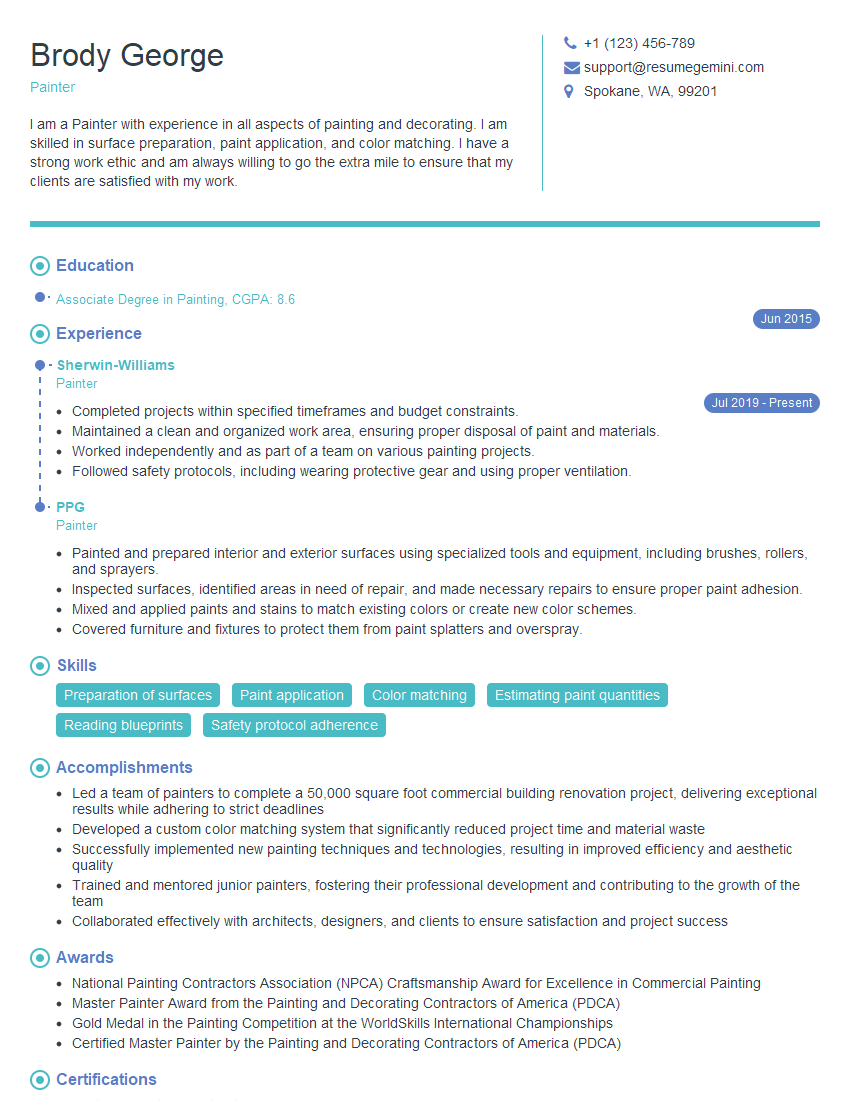
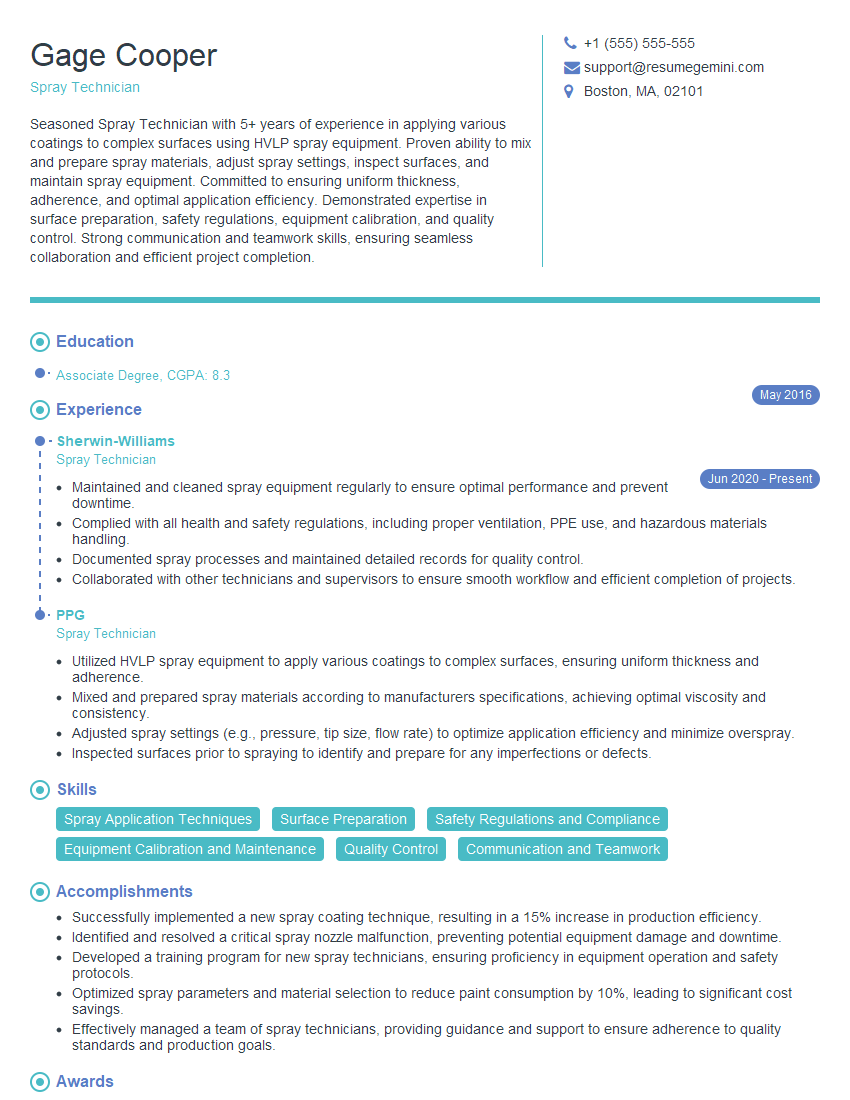
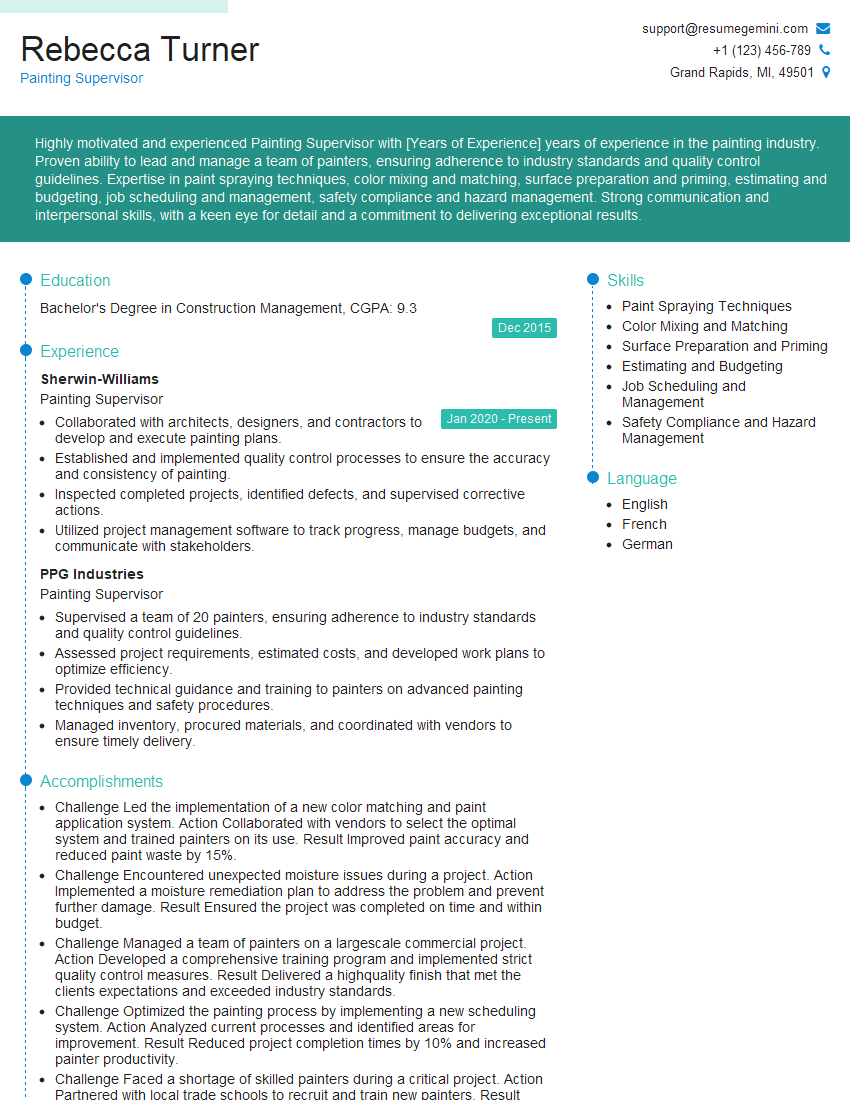
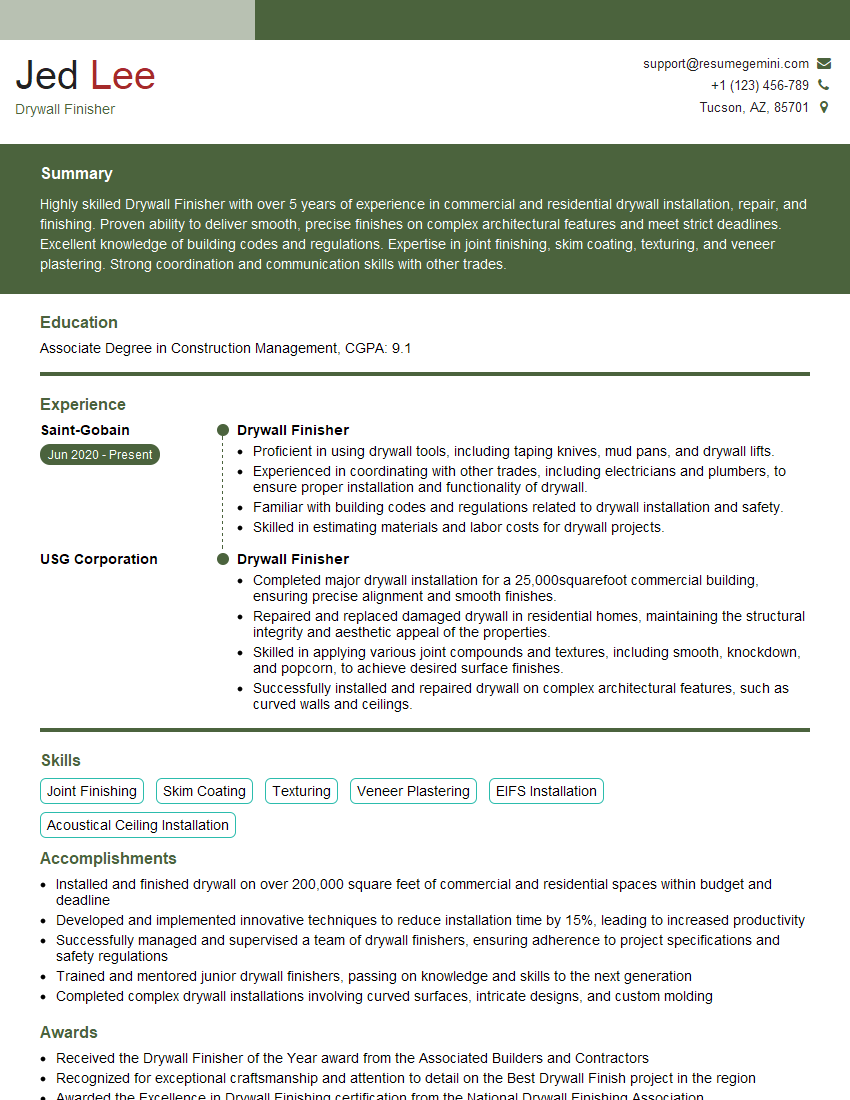
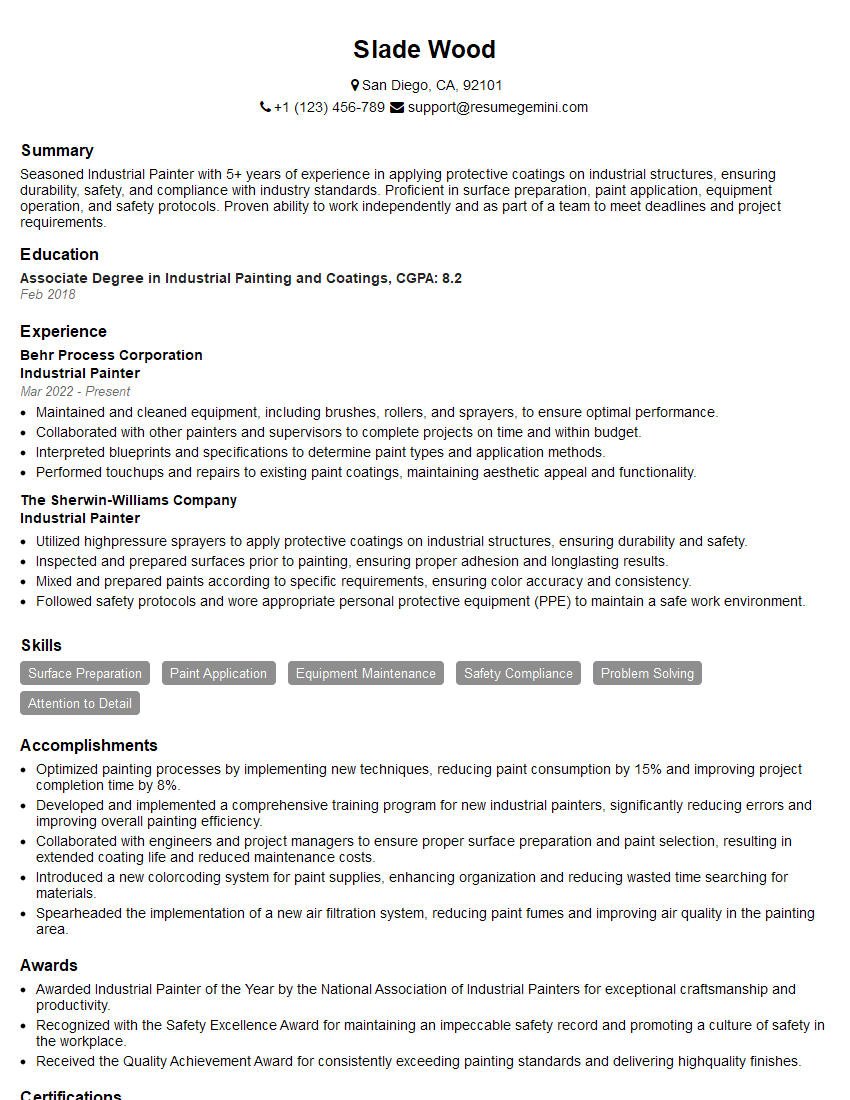
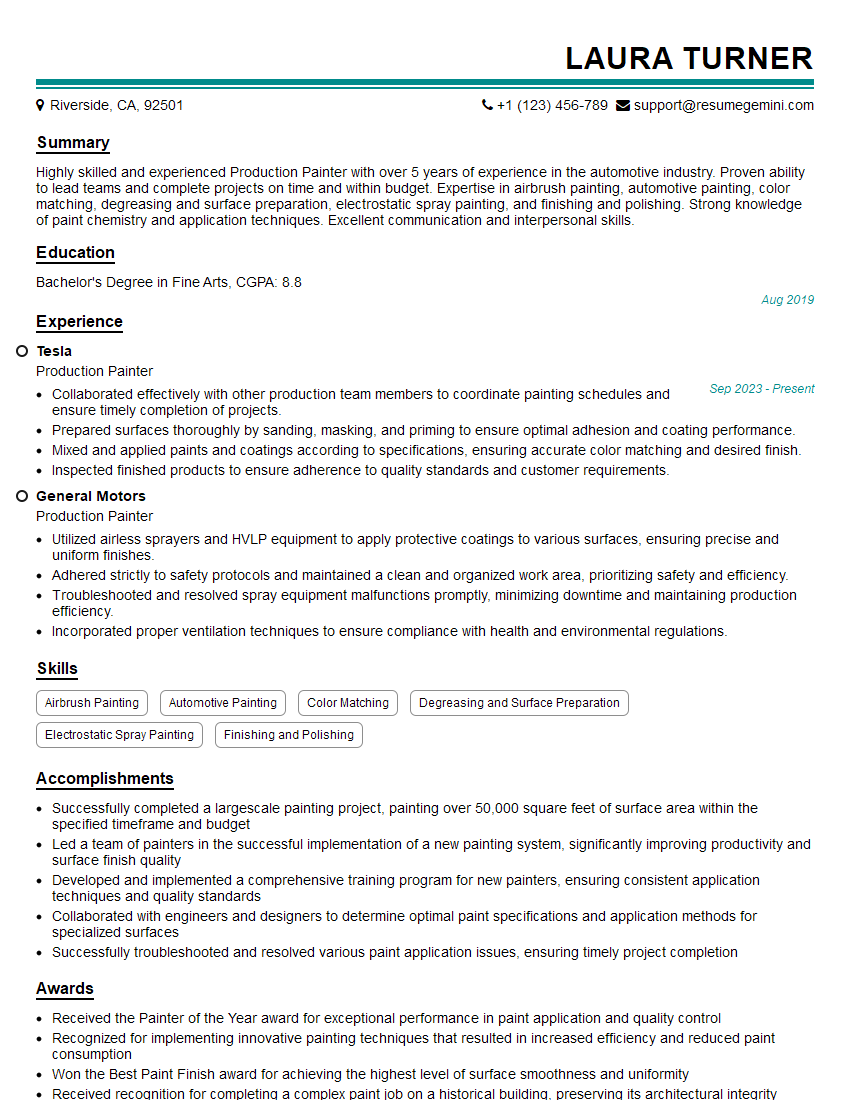
Mastering priming and painting drywall is crucial for career advancement in the construction and finishing trades, opening doors to higher-paying positions and increased job security. A well-crafted resume is your key to unlocking these opportunities. Creating an ATS-friendly resume, optimized for Applicant Tracking Systems, is vital for ensuring your application gets noticed. ResumeGemini is a trusted resource to help you build a professional and impactful resume that showcases your skills and experience effectively. Examples of resumes tailored specifically to Priming and Painting Drywall are available to help guide you.
Explore more articles
Users Rating of Our Blogs
Share Your Experience
We value your feedback! Please rate our content and share your thoughts (optional).
What Readers Say About Our Blog
To the interviewgemini.com Webmaster.
Very helpful and content specific questions to help prepare me for my interview!
Thank you
To the interviewgemini.com Webmaster.
This was kind of a unique content I found around the specialized skills. Very helpful questions and good detailed answers.
Very Helpful blog, thank you Interviewgemini team.