Interviews are opportunities to demonstrate your expertise, and this guide is here to help you shine. Explore the essential Family and Group Therapy interview questions that employers frequently ask, paired with strategies for crafting responses that set you apart from the competition.
Questions Asked in Family and Group Therapy Interview
Q 1. Explain the difference between structural and strategic family therapy.
Structural and strategic family therapy are both systemic approaches, meaning they focus on the family as a whole system rather than individual members. However, they differ significantly in their focus and techniques. Structural family therapy emphasizes the family’s organization and structure, focusing on hierarchies, boundaries, and subsystems (e.g., spousal, parental, sibling). The therapist actively intervenes to restructure the family system, aiming to create clearer boundaries and more functional hierarchies. Think of it like reorganizing a messy filing cabinet: we need to define categories and establish proper order. Strategic family therapy, on the other hand, focuses on identified problems and specific behavioral patterns within the family. It emphasizes problem-solving and employs specific techniques to change these patterns, often through directives and paradoxical interventions. This approach is more like a targeted repair, focusing on fixing a specific broken part of the system rather than overhauling the entire structure.
For example, in a family with blurred boundaries where a child is constantly mediating between fighting parents, structural therapy would focus on strengthening parental boundaries and establishing clearer roles, perhaps through role-playing or family sculpting. Strategic therapy might use paradoxical interventions, such as instructing the parents to argue more intensely for a set period, to highlight the absurdity of their conflict and encourage them to find alternative ways of interacting.
Q 2. Describe your approach to working with families experiencing conflict.
My approach to working with families experiencing conflict involves a combination of structural and strategic elements, tailored to the specific needs of each family. I begin by establishing a collaborative and empathetic relationship with each family member. I carefully listen to each individual’s perspective and validate their feelings, acknowledging the legitimacy of their experiences. Understanding the family’s history and the context of the conflict is crucial. Once a good understanding is established, I utilize techniques like circular questioning to uncover patterns of interaction and identify the underlying issues fueling the conflict. Then, depending on the family’s dynamics and the nature of the conflict, I’ll employ techniques such as reframing (redefining the problem to offer a new perspective), enacting (creating scenarios to expose interaction patterns), or prescribing tasks (giving the family homework to practice new communication strategies). This approach focuses on empowering the family to develop their own solutions and facilitating their own healing and self-discovery, not about imposing my own solutions. For example, if I observe a sibling rivalry fueled by parental favoritism, I might work to establish clearer boundaries between the siblings and address the parental dynamics contributing to the imbalance. The process would include having them articulate their feelings towards each other and the parents, in addition to working on the parents’ fair treatment of their children.
Q 3. How do you assess family dynamics in the initial session?
My initial session focuses on creating a safe and collaborative space. I start by getting to know each family member individually, allowing them to share their perspectives and concerns in their own words. I pay close attention to both verbal and nonverbal communication: body language, tone of voice, and the way family members interact with each other. I utilize genograms (visual representations of the family’s history) to help understand family patterns, relationships, and the broader context of their struggles. I also employ observational techniques to notice the family’s hierarchy, communication styles, and emotional climate. For instance, who speaks the most? Who defers to whom? Are they comfortable making eye contact? Are they openly affectionate with one another, or distant and cold? Based on these observations, I begin to develop a preliminary understanding of the family’s structure, dynamics, and the presenting problem.
Q 4. What techniques do you utilize to improve communication within families?
Improving communication is central to family therapy. I use a variety of techniques, including: Active listening: Encouraging each family member to listen attentively and reflect on what others are saying. ‘I’ statements: Teaching family members to express their feelings and needs without blaming others. This helps to reduce defensiveness and promote empathy. Mirroring: Repeating or summarizing what a family member has said to ensure understanding and show empathy. Reframing: Helping family members view their situation from a different perspective, which allows them to explore new possibilities. For example, instead of labeling a teenager’s rebellious behavior as ‘bad,’ we might reframe it as a sign of the teenager’s need for independence and autonomy. Communication skills training: Providing direct instruction and practice in active listening, assertive communication, and conflict resolution skills.
Q 5. How do you address resistance in family therapy?
Resistance in family therapy is common and often reflects anxieties related to change or the therapist’s interventions. It’s rarely personal. I address resistance by first acknowledging and validating the family’s feelings. I explore the reasons behind the resistance, understanding that this may not be an indication of lack of engagement, but rather fear of the unknown or a reluctance to confront difficult issues. I work collaboratively with the family to address their concerns and adjust the therapeutic approach as needed. Sometimes, this might involve slowing down the pace of therapy, focusing on building a stronger therapeutic alliance, and focusing on smaller, more achievable goals. If the resistance is specific to a particular intervention, I might adjust the intervention or explore alternative approaches. The key is to foster a sense of collaboration and empowerment, ensuring the family feels heard and respected throughout the process. Open dialogue and empathy are critical in overcoming resistance.
Q 6. Explain your understanding of Bowenian Family Therapy.
Bowenian family therapy emphasizes differentiation of self, a concept referring to the capacity to balance emotional connection with autonomy. It posits that emotional fusion (being overly reactive to the emotions of others) within the family system leads to dysfunction. Bowenian therapists focus on helping family members increase their level of differentiation by understanding their own patterns of relating and emotional reactivity. This involves exploring family history, emotional triangles (three-person relationships), and the family’s emotional process. Techniques like genograms and process questions are used to unravel family patterns and enhance self-awareness. The goal isn’t necessarily to resolve immediate conflicts but to foster long-term change in the family system by improving individual functioning and family relationships. A central idea is that by improving individuals’ ability to manage their emotions and maintain autonomy, the family system as a whole will become healthier and more adaptable to future challenges. For instance, if a family constantly engages in conflict, a Bowenian therapist would aim to help each member understand their own roles and contributions to the patterns of emotional reactivity in their relationships, empowering them to establish healthier boundaries and respond to the others’ emotions less reactively.
Q 7. Describe your experience with various family therapy models (e.g., Structural, Strategic, Narrative).
My experience encompasses various family therapy models. I’ve extensively utilized structural therapy in working with families struggling with boundaries, hierarchies, and roles, often resulting in improved communication and reduced conflict. I use strategic therapy for families presenting with specific behavioral problems, employing paradoxical interventions and directives to help families shift their interactions. Narrative therapy has been valuable in helping families re-author their stories, empowering them to move beyond limiting narratives and redefine their identities. I’ve found that integrating elements from different models, depending on the specific needs of the family, is often the most effective approach. For instance, I might use narrative techniques to help a family reframe their struggles, then use structural techniques to reorganize their interactions based on the new narratives.
My experience also involves working with diverse families facing different challenges, from parental conflict and substance abuse to adolescent rebellion and intergenerational trauma. Adapting my approach based on cultural contexts and family values is critical for building trust and achieving successful outcomes. It is an ongoing journey of learning and adapting my therapeutic techniques.
Q 8. How do you handle ethical dilemmas in family therapy?
Ethical dilemmas in family therapy are common, given the complex dynamics involved. My approach involves a multi-step process prioritizing the well-being of all involved. First, I meticulously identify the conflict, carefully considering the perspectives of each family member. This might involve a family member wanting to reveal sensitive information about another member, or a conflict of interest arising from a family member’s business relationship with me.
Next, I consult relevant ethical guidelines, such as those provided by the American Association for Marriage and Family Therapy (AAMFT). I weigh competing values, such as confidentiality versus the safety of a family member. Thorough documentation is crucial throughout this process.
Then, I explore alternative solutions, discussing them openly and honestly with the family. Sometimes, this involves involving a supervisor or colleague for consultation. Transparency is key, as I aim to empower the family to make informed decisions. Finally, I reflect on the outcome, documenting my actions and learning from the experience for future scenarios.
For instance, if a minor discloses abuse, confidentiality is broken to ensure their safety, mandated reporting laws are followed, and the family is guided through the legal processes and support services.
Q 9. What are the key differences between working with families and individuals?
The core difference lies in the system of focus. Individual therapy concentrates on the individual’s internal world – their thoughts, feelings, and behaviors – in isolation. Family therapy, on the other hand, views the individual’s difficulties within the context of their family system. The family is considered a unit, and problems are seen as arising from the interactions and patterns within the family, rather than solely within the individual.
For example, a child’s anxiety might be addressed in individual therapy by focusing on coping mechanisms. In family therapy, the focus might shift to exploring family communication patterns, parental conflict, or sibling rivalry, all potentially contributing to the child’s anxiety. Individual therapy is more linear, while family therapy is more systemic, viewing the family as a whole.
Q 10. Describe your experience conducting group therapy sessions.
My experience with group therapy spans several years and diverse populations. I’ve facilitated both open and closed groups, focusing on various issues, including anxiety, depression, grief, and relationship problems. I utilize a structured approach, employing various techniques based on the group’s needs and goals.
In a recent group focused on anxiety management, for example, I utilized cognitive-behavioral techniques, mindfulness exercises, and role-playing to help members develop coping skills. I emphasized creating a safe and supportive environment, fostering trust among members through activities designed to promote connection and self-disclosure. The sessions were a mix of psychoeducation, skill-building, and sharing personal experiences.
Careful group composition is crucial; ensuring a balance of personalities and needs contributes significantly to the overall success of the group process. Regular evaluation of group dynamics also helps to maintain a healthy and productive environment.
Q 11. How do you manage disruptive behavior in a group therapy setting?
Managing disruptive behavior in group therapy requires a proactive and responsive approach. It starts with establishing clear group norms and expectations from the outset, emphasizing respect, active listening, and appropriate communication. This usually involves a discussion of what constitutes disruptive behavior and the agreed-upon consequences.
If disruptive behavior occurs, I address it directly but empathetically. I might gently redirect the individual, addressing their underlying needs or concerns. Sometimes, a private conversation outside the group setting might be needed to better understand the cause of the disruption. In more severe cases, the individual might be asked to leave the session, but this is a last resort.
For example, if a member consistently monopolizes the conversation, I might gently remind them of the importance of giving others space to share. If a member’s anger becomes excessive and threatens the safety of others, a brief pause might be necessary to allow for de-escalation. The focus is always on restoring group harmony and addressing the root cause of the disruptive behavior.
Q 12. What group therapy models are you familiar with (e.g., psychodynamic, cognitive-behavioral)?
I am well-versed in several group therapy models, adapting my approach to the specific needs of the group. My experience includes applying:
- Psychodynamic group therapy: This model focuses on exploring unconscious processes, past experiences, and relational patterns. We might examine recurring themes in interactions and how early relationships impact present relationships.
- Cognitive-behavioral group therapy (CBT): This approach focuses on identifying and modifying maladaptive thoughts and behaviors. Members learn coping mechanisms and skills to manage their symptoms. It’s a highly structured and goal-oriented model.
- Experiential group therapy: This model prioritizes emotional expression and the exploration of feelings in the here and now. It encourages spontaneity and authenticity.
- Systems therapy: I draw on systemic concepts, viewing the group as a system with interconnected elements, analyzing how individual actions influence the entire group.
The choice of model depends on the group’s specific needs and the presenting problems. Many times, an integrative approach, blending different models, yields the best results.
Q 13. How do you establish group cohesion and safety?
Building group cohesion and ensuring safety are paramount. Cohesion stems from fostering a sense of belonging, shared purpose, and mutual respect. I start by clearly outlining the group’s goals and expectations, emphasizing confidentiality and creating a safe space for vulnerability. Early sessions often include icebreaker activities to encourage interaction and establish rapport.
Safety is established through consistent modeling of respectful behavior, setting boundaries, and immediately addressing any instances that threaten the safety of group members. This might include addressing gossip, aggression, or other forms of harmful interactions. Emphasizing confidentiality is crucial. The group’s success is heavily reliant on the development of trust among members, enabling them to feel comfortable sharing their experiences.
Techniques like ‘checking in’ at the beginning and end of each session help monitor individuals’ emotional states and ensure everyone feels seen and heard. It’s a continuous process that requires attention throughout the group’s duration.
Q 14. Explain your approach to addressing confidentiality in group therapy.
Confidentiality in group therapy is complex, as it involves multiple individuals. From the outset, I clearly explain the limitations of confidentiality, emphasizing that complete confidentiality cannot be guaranteed. Members are informed that while I will strive to maintain confidentiality, they cannot expect complete privacy. Information shared within the group could be unintentionally disclosed, and I might be legally required to break confidentiality under specific circumstances (e.g., threat of harm to self or others).
I strongly encourage open discussion about these limitations to help members make informed decisions about what they choose to share. The expectation of confidentiality is not a guarantee, but rather a strong commitment to protecting the information shared to the extent possible. It’s important that the group members are aware of this distinction and the parameters of confidentiality.
I regularly reinforce the importance of respecting each other’s privacy, both within and outside of group sessions. This proactive approach helps foster trust and supports responsible sharing of personal information.
Q 15. Describe a challenging case in family therapy and how you addressed it.
One particularly challenging case involved a family struggling with the escalating behavioral problems of their adolescent son, coupled with significant marital discord. The parents, both high-achievers, exhibited a pattern of high conflict and scapegoating, with the son becoming the focal point of their unresolved issues. Initially, sessions were dominated by blaming and defensive arguments.
My approach involved several key strategies. First, I focused on establishing a collaborative relationship, emphasizing the importance of mutual respect and understanding. I reframed their accusations as expressions of unmet needs, helping them to recognize their individual contributions to the family dynamic. Second, I employed structural family therapy techniques, mapping out the family’s hierarchy and communication patterns to identify areas of dysfunction. We collaboratively redefined roles and boundaries, particularly aiming to reduce the son’s scapegoat status and empower him to express his own needs. Third, I incorporated elements of solution-focused therapy, directing our discussions towards finding strengths and identifying small, achievable goals. This approach helped shift the family’s focus away from blame and towards positive solutions.
Gradually, the family began to communicate more effectively, resolving conflicts more constructively. The son’s behavior improved as he felt less overwhelmed and more understood. The parents began to demonstrate greater empathy and support for each other, leading to a marked decrease in conflict. While challenges remained, the family developed a more functional way of interacting and managing their difficulties.
Career Expert Tips:
- Ace those interviews! Prepare effectively by reviewing the Top 50 Most Common Interview Questions on ResumeGemini.
- Navigate your job search with confidence! Explore a wide range of Career Tips on ResumeGemini. Learn about common challenges and recommendations to overcome them.
- Craft the perfect resume! Master the Art of Resume Writing with ResumeGemini’s guide. Showcase your unique qualifications and achievements effectively.
- Don’t miss out on holiday savings! Build your dream resume with ResumeGemini’s ATS optimized templates.
Q 16. How do you adapt your therapeutic approach to different cultural backgrounds?
Adapting my therapeutic approach to different cultural backgrounds is crucial for effective family therapy. It requires understanding and respecting the unique values, beliefs, and communication styles of each family. This involves going beyond surface-level awareness and engaging in a deep exploration of the family’s cultural context.
My approach includes:
- Cultural Humility: Recognizing that I am always learning about different cultures and acknowledging my own biases and limitations.
- Culturally Sensitive Assessment: Gathering information that is respectful of the family’s cultural norms, while still thoroughly assessing their needs and concerns. This may involve considering family structures, communication styles, decision-making processes, and spiritual or religious beliefs.
- Adaptation of Techniques: Modifying therapeutic techniques to align with the family’s cultural preferences. For example, I might adjust the level of directness in my interventions or the use of individual versus group activities, depending on the family’s comfort level.
- Collaboration with Cultural Experts: Seeking guidance from cultural experts or community leaders when needed. This helps to ensure culturally sensitive and appropriate intervention.
- Empowerment and Advocacy: Advocating for the family’s rights and access to resources within the context of their cultural background. This might involve navigating systemic barriers to care, such as language access or cultural misunderstandings within the healthcare system.
For instance, working with a Latino family might involve incorporating elements of familismo (emphasis on family unity) into the therapy process, while working with an Asian family might require a more indirect and respectful approach to address conflict.
Q 17. What are the common challenges faced in working with diverse families?
Working with diverse families presents several challenges. These challenges often intersect and require nuanced approaches.
- Language Barriers: Communication difficulties can significantly hinder the therapeutic process, requiring the use of interpreters or bilingual therapists.
- Cultural Differences in Communication Styles: Direct vs. indirect communication, levels of emotional expression, and perceptions of authority can affect how families engage in therapy.
- Differing Family Structures and Roles: Extended family involvement, different gender roles, and varying family hierarchies can impact intervention strategies.
- Acculturation Stress: Conflicts arising from navigating different cultural norms between generations or within the family system can create considerable stress.
- Bias and Discrimination: Families may face stigma or discrimination due to their ethnicity, socioeconomic status, or immigration status, impacting their trust and openness in therapy.
- Access to Resources: Diverse families may encounter barriers to accessing mental health services due to financial constraints, lack of culturally relevant services, or limited transportation.
Addressing these challenges requires cultural competence, sensitivity, and a willingness to adapt treatment approaches to meet the specific needs of each family.
Q 18. How do you ensure the safety and well-being of clients in both individual and group settings?
Ensuring client safety and well-being is paramount in both individual and group settings. This involves a multifaceted approach that prioritizes risk assessment, careful planning, and ongoing monitoring.
In individual family therapy, this involves:
- Thorough Intake and Assessment: Identifying potential risks, including domestic violence, child abuse, or suicidal ideation.
- Developing a Safety Plan: Collaborating with the family to create strategies for managing crises and ensuring their safety.
- Mandated Reporting: Following legal and ethical obligations to report suspected child abuse or neglect.
- Maintaining Professional Boundaries: Establishing clear boundaries to avoid dual relationships and conflicts of interest.
In group therapy, these measures are amplified:
- Pre-group Screening: Evaluating potential participants to ensure suitability for group therapy and identify any potential safety concerns.
- Establishing Group Norms and Cohesion: Creating a safe and supportive environment through clear expectations and group rules.
- Conflict Resolution Strategies: Developing skills to effectively manage conflicts and challenging behaviors within the group.
- Monitoring Group Dynamics: Observing group interactions to identify potential safety issues and intervene appropriately.
- Providing Post-Session Support: Offering clients access to support and resources outside of group sessions.
Regular supervision and consultation are crucial to ensure ethical and safe practices across all settings.
Q 19. How do you manage your own countertransference in family therapy?
Countertransference, the therapist’s emotional reaction to the client, is an unavoidable aspect of family therapy. It’s vital to recognize and manage these feelings to ensure objectivity and ethical practice.
My strategies for managing countertransference include:
- Self-Reflection: Regular self-reflection, through journaling or supervision, allows me to identify and understand my own emotional responses to clients and their family dynamics. This involves exploring potential triggers and the source of my reactions.
- Supervision: Meeting regularly with a supervisor provides an opportunity to discuss challenging cases, process countertransference reactions, and receive guidance on how to manage them effectively.
- Maintaining Professional Boundaries: Adhering to strict professional boundaries helps to prevent emotional entanglement with clients and their families. This includes avoiding dual relationships and respecting client autonomy.
- Seeking Consultation: When facing particularly challenging countertransference reactions, seeking consultation from colleagues or experts can provide valuable support and perspectives.
- Self-Care Practices: Engaging in self-care activities, such as exercise, meditation, or spending time in nature, helps to maintain emotional balance and prevent burnout, both of which are key factors influencing the experience of countertransference.
By actively managing countertransference, I can ensure that my personal feelings do not compromise my objectivity or the effectiveness of the therapy.
Q 20. Describe your process for developing treatment goals with families.
Developing treatment goals with families is a collaborative process. It begins with a thorough assessment to understand the family’s presenting problems, strengths, and resources.
My process involves:
- Initial Assessment: Conducting a comprehensive assessment of the family’s history, relationships, and presenting concerns. This includes understanding the family’s perspective on their challenges and their hopes for therapy.
- Identifying Strengths and Resources: Highlighting the family’s strengths and available resources – this positive focus helps build hope and motivation.
- Collaborative Goal Setting: Working collaboratively with the family to identify specific, measurable, achievable, relevant, and time-bound (SMART) goals. The family’s active participation is key to goal ownership and commitment.
- Prioritizing Goals: Determining the order in which to address goals, starting with the most pressing issues.
- Regular Review and Adjustment: Regularly reviewing and adjusting goals based on the family’s progress and changing circumstances. This flexibility ensures that the therapy remains relevant and effective.
For example, with a family experiencing communication problems, a goal might be, “To increase the frequency and quality of family dinners, engaging in positive conversations for at least 30 minutes, three times a week, within the next month.”
Q 21. How do you measure the effectiveness of your family therapy interventions?
Measuring the effectiveness of family therapy interventions involves both qualitative and quantitative measures.
Quantitative measures include:
- Standardized Questionnaires: Using validated questionnaires, such as the Family Adaptability and Cohesion Evaluation Scales (FACES-IV), to assess changes in family functioning over time.
- Symptom Ratings: Tracking changes in the severity of presenting symptoms through self-report measures or clinical observations.
- Behavioral Observations: Recording changes in family interactions, communication patterns, and conflict resolution strategies during therapy sessions.
Qualitative measures include:
- Clinical Interviews: Conducting regular interviews with family members to gather their subjective experiences and perspectives on their progress.
- Feedback Sessions: Holding regular feedback sessions to obtain family members’ feedback on the therapeutic process and the effectiveness of the interventions.
- Narrative Tracking: Monitoring changes in the family’s narrative and the way they understand their own experiences.
Combining quantitative and qualitative data provides a comprehensive picture of the treatment outcome. It’s crucial to remember that success should be defined by the family’s experience and their perception of progress toward their own goals.
Q 22. What are some common pitfalls to avoid in family therapy?
Common pitfalls in family therapy often stem from overlooking the systemic nature of family dynamics. Taking a solely individualistic approach, focusing only on one member’s issues while ignoring the interconnectedness within the family system, is a major error. Another pitfall is therapist bias; unconsciously favoring one family member or imposing personal values on the family’s beliefs and practices. Furthermore, failing to establish clear goals and boundaries can lead to ineffective therapy. Lastly, neglecting cultural sensitivity and failing to adapt therapeutic techniques to fit diverse family structures and beliefs results in a disconnect and ultimately, therapy failure.
- Example: Focusing solely on a child’s behavioral problems without considering parental conflict or dysfunctional family patterns.
- Example: Imposing the therapist’s view on parenting styles without considering the family’s cultural context or beliefs.
To avoid these pitfalls, therapists must maintain a clear understanding of family systems theory, practice active listening and empathy for all members, establish clear therapeutic goals in collaboration with the family, and cultivate cultural competency through ongoing learning and self-reflection.
Q 23. How do you work with families who are experiencing crisis?
Working with families in crisis requires immediate action and a focus on stabilization. My approach begins with assessing the immediate safety needs of all family members, ensuring everyone is safe from harm. Then, I work collaboratively with the family to identify the triggers and immediate stressors precipitating the crisis. We collaboratively develop short-term goals focused on restoring stability and developing coping mechanisms to manage the immediate distress. This might involve connecting them with emergency resources, crisis hotlines, or other community supports. It’s crucial to work at the family’s pace, validating their emotions and experiences.
Example: If a family is experiencing domestic violence, the immediate priority is ensuring the safety of the victims. This could involve developing a safety plan, connecting them with a domestic violence shelter, and working with legal professionals.
Following stabilization, we shift to longer-term goals, addressing the underlying issues that contributed to the crisis. This might involve exploring communication patterns, resolving conflicts, and building stronger family bonds. Throughout, the therapeutic process is heavily tailored to the family’s unique needs and cultural background.
Q 24. Explain your understanding of trauma-informed care in family therapy.
Trauma-informed care in family therapy recognizes that many families have experienced trauma, which significantly impacts their functioning and relationships. It shifts the focus from a ‘what’s wrong with you’ approach to a ‘what happened to you’ approach. This means understanding how past trauma influences present behaviors, relationships, and communication patterns. It emphasizes safety, trustworthiness, choice, collaboration, and empowerment. Therapists should actively avoid re-traumatizing families by being mindful of their language, creating a safe therapeutic space, and respecting individual pace and comfort levels in disclosing traumatic experiences.
Key elements include:
- Safety: Creating a physically and emotionally safe environment.
- Trustworthiness and Transparency: Building rapport and clear communication.
- Choice: Empowering family members to make decisions about their own care.
- Collaboration: Working in partnership with families, rather than imposing solutions.
- Empowerment: Focusing on strengths and resilience.
Example: In a family where a child has experienced abuse, the therapist would focus on creating a safe space, validating the child’s experience, empowering the family to develop coping mechanisms, and helping them access necessary resources.
Q 25. How do you incorporate technology into your family therapy practice?
Technology plays a vital role in modern family therapy. I utilize secure video conferencing platforms like Zoom or Doxy.me for sessions, allowing geographically dispersed families to participate conveniently. I also use online communication tools for scheduling, document sharing, and homework assignments, enhancing communication and accessibility. However, I maintain strict adherence to confidentiality protocols, ensuring HIPAA compliance for all digital communication and data storage. The use of technology is always discussed and agreed upon with the family to ensure comfort and effectiveness.
Example: For families living in rural areas or with busy schedules, telehealth allows for more accessible and flexible therapy appointments. Online resources such as educational videos or family-based apps can complement therapy sessions, supplementing work done in the sessions.
It’s important to note that technology should augment, not replace, the core therapeutic relationship built on trust and empathy. The personal connection inherent in in-person therapy remains paramount.
Q 26. Describe your experience with supervision and consultation.
Supervision and consultation are integral to my professional development and ethical practice. I engage in regular supervision with a licensed and experienced family therapist, presenting challenging cases, discussing clinical strategies, and receiving feedback on my therapeutic approach. This provides valuable guidance, ensures ethical compliance, and helps me refine my techniques. Consultation involves seeking expert advice on specific cases or theoretical approaches from colleagues with specialized knowledge. This ensures I maintain a high standard of care and expand my knowledge base.
Example: I regularly discuss cases with my supervisor, exploring alternative strategies for working with families exhibiting complex dynamics or resistant behavior. This allows for a deeper analysis of the therapeutic process and ensures the best approach for each family.
Q 27. How do you stay current with the latest research and best practices in family and group therapy?
Staying current in family and group therapy necessitates ongoing professional development. I regularly attend workshops, conferences, and continuing education courses offered by professional organizations like the American Association for Marriage and Family Therapy (AAMFT). I actively read peer-reviewed journals, such as Family Process and Journal of Marital and Family Therapy, and subscribe to relevant newsletters. I also participate in professional online communities and engage in discussions with colleagues to stay informed about emerging research and best practices. Networking with other professionals through professional organizations is critical for knowledge sharing and mentorship opportunities.
Q 28. What are your professional development goals in the field of family and group therapy?
My professional development goals include expanding my expertise in trauma-informed care, specifically working with families impacted by complex trauma. I aim to further develop my skills in utilizing technology effectively and ethically within my practice, focusing on innovative applications that improve accessibility and client outcomes. I also plan to pursue advanced training in specific therapeutic modalities, such as Emotionally Focused Therapy (EFT) for couples and families. Finally, I am keen to engage more in research and contribute to the growing body of knowledge within the field of family and group therapy.
Key Topics to Learn for Family and Group Therapy Interview
- Systems Theory: Understanding family dynamics, boundaries, and hierarchies. Practical application: Assessing family interaction patterns and identifying dysfunctional communication styles.
- Structural Family Therapy: Analyzing family structure and reorganizing interactions to improve functionality. Practical application: Developing interventions to address enmeshment or disengagement within a family system.
- Bowenian Family Therapy: Focusing on differentiation of self and multigenerational transmission processes. Practical application: Guiding families in managing emotional reactivity and improving individual autonomy.
- Experiential Family Therapy: Emphasizing emotional experience and family process. Practical application: Facilitating emotional expression and creating a safe space for family members to explore their feelings.
- Group Dynamics: Understanding group stages, roles, and processes. Practical application: Managing conflict, facilitating group cohesion, and addressing individual needs within a group setting.
- Cognitive Behavioral Therapy (CBT) in Group and Family Settings: Adapting CBT principles for group and family contexts. Practical application: Teaching coping skills, challenging maladaptive thoughts, and promoting behavioral change within a group or family context.
- Ethical and Legal Considerations: Understanding confidentiality, informed consent, and professional boundaries in both family and group therapy. Practical application: Navigating complex ethical dilemmas that might arise in practice.
- Crisis Intervention Techniques: Responding effectively to family or group crises. Practical application: Developing strategies for de-escalation and providing immediate support.
- Assessment and Diagnosis: Utilizing appropriate assessment tools and diagnostic criteria (e.g., DSM-5). Practical application: Accurately identifying presenting problems and developing targeted interventions.
- Treatment Planning and Goal Setting: Collaboratively developing treatment plans and measurable goals with families and groups. Practical application: Tracking progress and adapting interventions as needed.
Next Steps
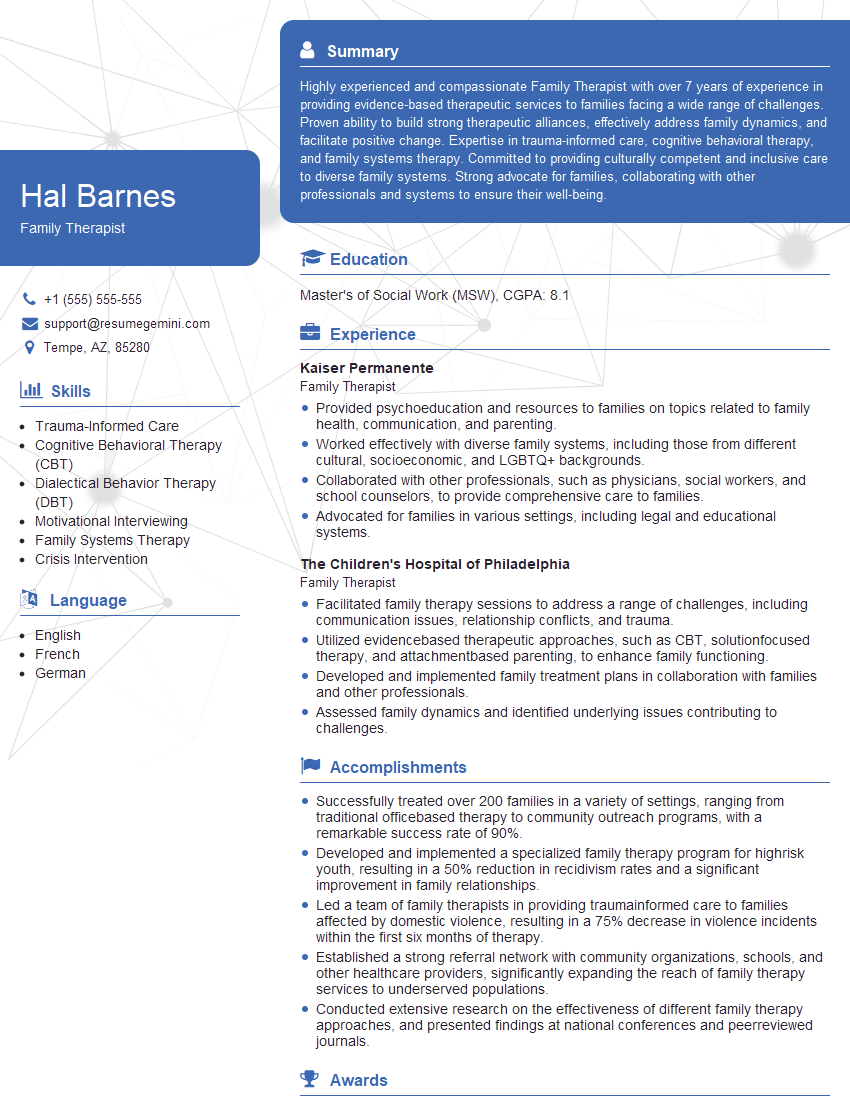
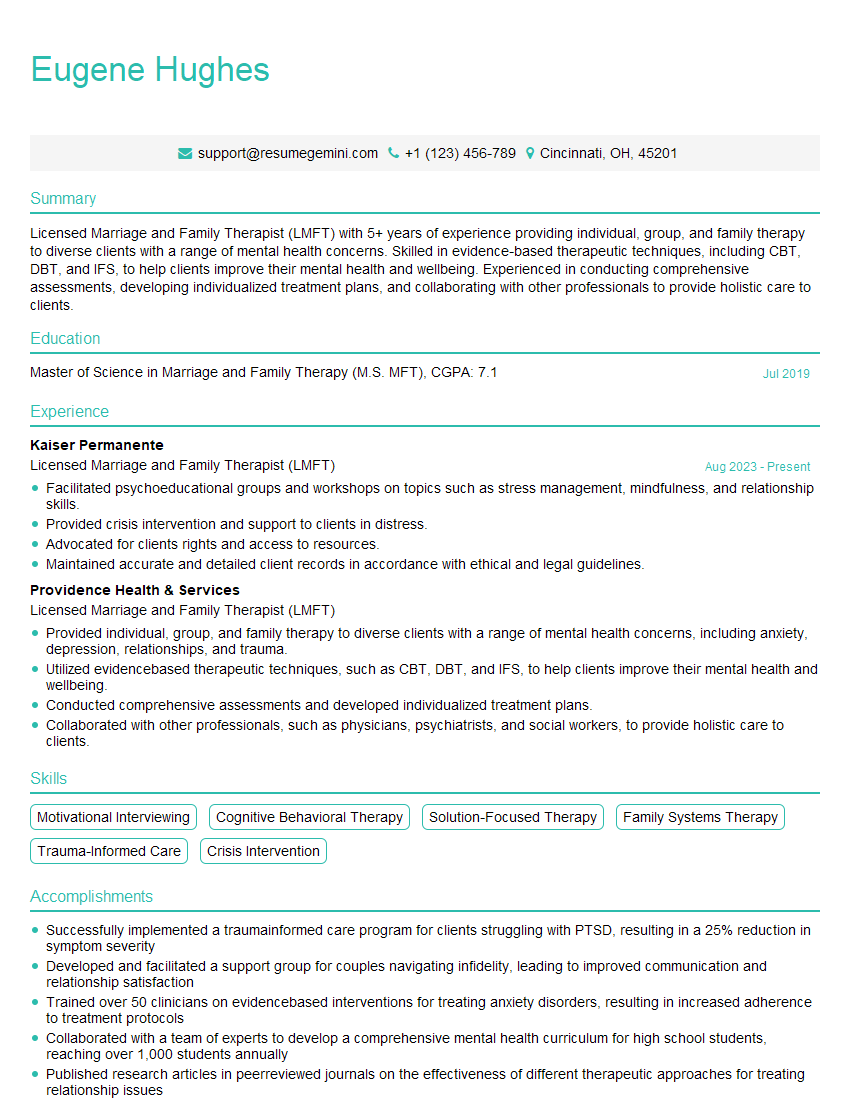
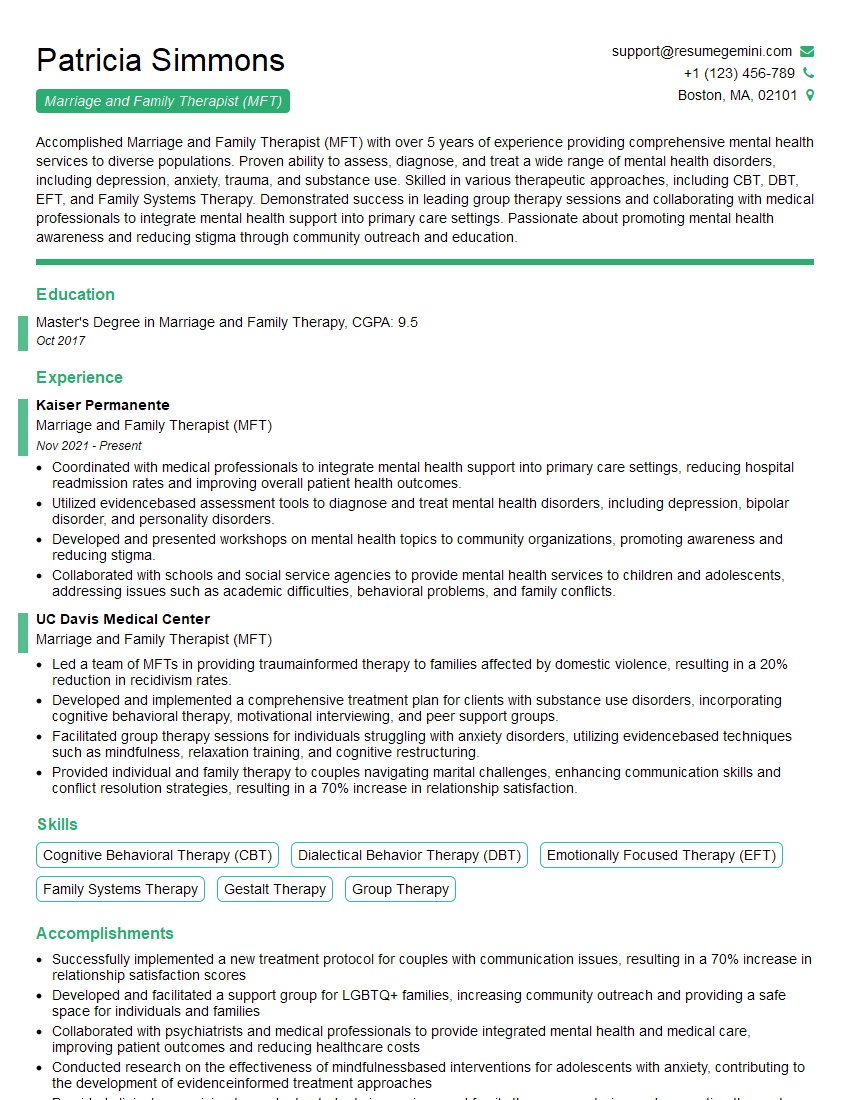
Mastering Family and Group Therapy techniques significantly enhances your career prospects, opening doors to diverse and rewarding opportunities in mental health. To maximize your chances of securing your dream role, a well-crafted, ATS-friendly resume is crucial. ResumeGemini is a trusted resource that can help you build a professional resume that highlights your skills and experience effectively. Examples of resumes tailored to Family and Group Therapy are available to guide you through the process, ensuring your application stands out.
Explore more articles
Users Rating of Our Blogs
Share Your Experience
We value your feedback! Please rate our content and share your thoughts (optional).
What Readers Say About Our Blog
To the interviewgemini.com Webmaster.
Very helpful and content specific questions to help prepare me for my interview!
Thank you
To the interviewgemini.com Webmaster.
This was kind of a unique content I found around the specialized skills. Very helpful questions and good detailed answers.
Very Helpful blog, thank you Interviewgemini team.