The right preparation can turn an interview into an opportunity to showcase your expertise. This guide to Experience with Steel Stud Framing interview questions is your ultimate resource, providing key insights and tips to help you ace your responses and stand out as a top candidate.
Questions Asked in Experience with Steel Stud Framing Interview
Q 1. Explain the different gauges of steel studs and their applications.
Steel stud gauge refers to the thickness of the steel used in its construction. Lower gauge numbers indicate thicker, stronger steel. Common gauges range from 25 to 16, with 25 being the thinnest and 16 the thickest readily available. The choice of gauge depends heavily on the intended load-bearing capacity and the height of the wall.
- Gauge 25: Often used for non-load-bearing interior partitions in low-traffic areas. Think of a simple partition in a home office.
- Gauge 20: A more robust option suitable for taller walls or areas requiring slightly greater strength. Common in commercial settings for interior walls.
- Gauge 16: The thickest commonly used gauge, ideal for load-bearing walls or applications needing maximum strength, such as exterior walls supporting cladding or significant wind loads.
Selecting the correct gauge is crucial for structural integrity and compliance with building codes. Using too thin a gauge can lead to instability and potential failure, while using an unnecessarily thick gauge increases costs without adding significant benefit.
Q 2. Describe the process of installing steel studs for a typical partition wall.
Installing steel studs for a typical partition wall is a straightforward process, but precision is key for a structurally sound and aesthetically pleasing result. Here’s a typical workflow:
- Layout and Marking: Begin by establishing the wall location and marking the floor and ceiling for stud placement. Accurate measurements are crucial.
- Track Installation: Install the top and bottom tracks, ensuring they are level and plumb using a laser level and plumb bob. Secure tracks to the floor and ceiling with appropriate fasteners.
- Stud Placement: Position steel studs within the tracks according to the required spacing (typically 16 or 24 inches on-center). Ensure studs are plumb and straight. Using a speed square is very helpful for this process.
- Fastening Studs: Secure the studs to the tracks using self-drilling screws, ensuring proper penetration into both the stud and the track.
- Wall Bracing: Add additional bracing, such as diagonal bracing or intermediate studs, for walls exceeding certain heights to enhance stability, particularly in high-wind areas.
- Finishing: Once the framework is complete, proceed with the installation of insulation, vapor barrier, drywall, and any necessary finishes.
Throughout the process, regular checks using a level and plumb bob are essential to maintain accuracy and prevent any future issues.
Q 3. How do you ensure proper alignment and plumbness of steel stud walls?
Maintaining proper alignment and plumbness is critical for a stable and straight wall. This is achieved through a combination of careful measurements, the right tools, and diligent techniques.
- Laser Level: A laser level provides a highly accurate reference line for establishing level and plumb on both the top and bottom tracks.
- Plumb Bob: A plumb bob is indispensable for verifying vertical alignment of the studs. It allows you to precisely check each stud’s verticality.
- Magnetic Stud Finder: A magnetic stud finder helps ensure your screws are correctly positioned within the studs themselves.
- Shims: Shims are used to adjust the position of tracks and studs to achieve perfect alignment.
- Checking and Rechecking: Throughout the installation process, repeatedly check for level and plumb to make minor adjustments before proceeding.
Investing in quality tools and taking the time to perform these checks diligently will pay off in a structurally sound and visually appealing final product.
Q 4. What are the common fastening methods used for steel studs?
Several fastening methods are commonly used for steel stud framing, each with its own advantages:
- Self-drilling screws: These are the most common choice. They are easy to use, require no pre-drilling, and provide a secure connection. Different lengths are available for various applications.
- Self-tapping screws: Similar to self-drilling screws, but with a slightly different thread profile, these screws offer a strong hold. Best for thicker materials.
- Tek screws: These provide high tensile strength and are suitable for heavy-duty applications or load-bearing situations.
The appropriate screw type and length should be selected based on the gauge of the steel, the material being fastened, and the intended load.
Q 5. Explain the importance of fire-rated assemblies in steel stud framing.
Fire-rated assemblies are crucial for building safety, and steel stud framing plays a significant role in creating them. Fire-rated assemblies use specific materials and construction techniques to limit the spread of fire and smoke for a specified period (e.g., 1-hour, 2-hour rating). In steel stud framing, this is often achieved using:
- Fire-rated drywall: Special drywall with higher density and gypsum core designed to resist fire.
- Intumescent coatings/sealants: Applied to the steel to expand upon exposure to fire and increase insulation.
- Fire-rated insulation: Specifically designed insulation materials with fire-resistant properties.
- Proper sealing of penetrations: All openings in the fire-rated assembly must be carefully sealed to prevent fire and smoke passage.
Compliance with relevant fire codes is critical. This ensures building occupants have sufficient time to escape in the event of a fire.
Q 6. How do you account for expansion and contraction of steel studs?
Steel expands and contracts with changes in temperature. To accommodate this, several strategies are employed:
- Expansion Joints: These gaps are incorporated into the wall framing to allow for thermal movement. They are typically concealed later with trim.
- Flexible Connections: Using flexible connectors in place of rigid ones helps reduce stress in the wall framework as steel expands and contracts.
- Proper Design Considerations: During the design phase, engineers take thermal expansion into account, ensuring that the expansion and contraction do not compromise the structural integrity of the building.
Ignoring thermal expansion can lead to buckling, cracking, and other structural issues over time.
Q 7. Describe different types of steel stud track and their uses.
Steel stud tracks provide the foundation for the wall framing system. Several types are available, each suited to different purposes:
- Standard Tracks: These are the most common tracks used at the top and bottom of walls. They are designed for general-purpose framing.
- Hat Tracks: These tracks are deeper than standard tracks, offering greater rigidity and load-bearing capacity, often used for taller walls.
- Corner Tracks: These are specifically designed to form corners and provide support at wall junctions. They are pre-formed for easy installation.
- Resilient Channels: These specialized tracks are designed to provide sound insulation and minimize sound transmission through the wall. They decouple the drywall from the studs.
The selection of the appropriate track is critical for achieving the desired structural and functional characteristics of the wall.
Q 8. What are the safety precautions you take while working with steel studs?
Safety is paramount when working with steel studs. Think of it like working with any sharp metal – precautions are essential to avoid injury. My safety protocols begin with proper Personal Protective Equipment (PPE). This includes safety glasses to protect my eyes from flying debris during cutting, sturdy work gloves to prevent cuts and abrasions from sharp edges, and steel-toed boots to protect my feet from dropped materials. Furthermore, I always ensure the work area is clear of obstructions, preventing trips and falls. Before starting any cutting, I carefully examine the studs to identify any existing damage or weak points. Using appropriate tools and techniques minimizes risks. For example, I use a controlled cutting method for power tools, avoiding sudden movements, and I always double-check measurements before cutting to avoid waste and potential injury.
- Eye protection: Safety glasses are mandatory to prevent eye injuries from flying sparks and debris.
- Hand protection: Gloves prevent cuts and abrasions from sharp edges.
- Foot protection: Steel-toed boots protect against dropped objects.
- Clean workspace: A clear workspace prevents slips and falls.
Q 9. How do you manage cutting and fitting steel studs on site?
Cutting and fitting steel studs on-site requires precision and the right tools. Imagine it like a tailor working with fabric – each piece needs to be measured and cut accurately to create a perfect fit. We typically use a combination of power tools, such as a chop saw with a metal-cutting blade, and hand tools, such as a hacksaw, depending on the cut required and access. For intricate cuts, I prefer a hand-held rotary tool for fine detail work. Accurate measurement is critical. Before any cutting, I carefully measure the required stud length, marking it clearly on the stud with a metal marker. Then I ensure that the cut is square, using a miter saw, for optimal joining. Fitting involves ensuring all studs are plumb and level, which is usually checked with a level and adjusted using shims if necessary. Finally, all connections are secured using self-drilling screws appropriate for the gauge of steel and load requirements.
Example: Measuring a stud for a door opening: Measure the width of the opening plus the required framing, add a few millimeters for fitting, and then transfer the measurement to the stud.Q 10. Explain the importance of proper bracing and support in steel stud framing.
Proper bracing and support in steel stud framing is absolutely crucial; it’s the skeleton of the building, giving it stability and preventing collapse. Think of it like building a bridge – without proper supports, it would fall down. Bracing prevents racking (side-to-side movement) and ensures the wall remains plumb and square. It’s usually achieved using diagonal bracing members or cross-bracing. The frequency of bracing depends on several factors like height, load, and local building codes. Insufficient bracing can lead to wall instability and even structural failure. We frequently use temporary bracing during construction until permanent structures like walls or roof systems are complete. These supports are crucial for maintaining the stability of the frame during the construction process.
- Preventing Racking: Bracing prevents walls from collapsing under lateral loads (like wind).
- Maintaining Plumbness: Bracing ensures walls remain straight and vertical.
- Structural Integrity: Proper bracing ensures the overall strength and stability of the structure.
Q 11. How do you handle intersecting walls and openings in steel stud framing?
Intersecting walls and openings (like doorways and windows) in steel stud framing require careful planning and precise execution. It’s similar to solving a complex jigsaw puzzle, where each piece needs to fit seamlessly with the others. For intersecting walls, we typically use specialized techniques like using connecting studs or backing plates to ensure a strong and stable connection between the walls. The openings, such as windows and doors, require the installation of headers and cripples to support the load above the opening and maintain the structural integrity of the wall. These headers are carefully calculated based on the span and load to ensure sufficient strength. The exact method of intersection depends on wall designs and structural requirements, but the key is to ensure continuity and structural soundness.
Q 12. What are the common problems encountered during steel stud framing and how do you solve them?
Several common problems can arise during steel stud framing. One common issue is improper alignment or plumbness, which can be solved by using levels and shims to adjust the studs. Another common problem is incorrect bracing, leading to unstable walls. This is addressed through the proper installation of bracing members, following relevant building codes and engineering designs. Sometimes we encounter damaged studs, often due to improper handling or transportation. Damaged studs must be replaced immediately to maintain structural integrity. Lastly, using the incorrect fasteners can create weak points. Addressing this involves using the appropriate screws, ensuring correct length and size for the gauge of the stud and the load requirements. Early detection of these issues and quick, decisive action prevent larger problems later.
Q 13. Describe your experience with different types of steel stud wall systems (e.g., single-stud, double-stud).
I have extensive experience with various steel stud wall systems. Single-stud walls are used for partitions where sound insulation isn’t a primary concern. They are cost-effective and easy to install. Double-stud walls, on the other hand, are used when higher sound insulation or fire resistance is needed. They consist of two layers of studs, with insulation and sometimes fire-resistant material between them. I’ve also worked with resilient channel systems, which are designed to reduce sound transmission and add another layer of sound insulation. The choice of system depends greatly on project requirements like thermal and acoustic performance, budget constraints, and structural design parameters. Each system offers a unique balance of performance and cost.
Q 14. How do you ensure the proper installation of insulation within steel stud walls?
Proper insulation installation within steel stud walls is crucial for energy efficiency and thermal comfort. Imagine it as wrapping a building in a cozy blanket—it keeps the cold out in winter and the heat out in summer. The process begins with ensuring that there are no gaps or voids within the stud cavity. The insulation material, usually fiberglass batts or mineral wool, is carefully fitted snugly between the studs to avoid thermal bridging. This is best achieved by using insulation that’s slightly oversized to fill the cavity completely. We often check the insulation by visually inspecting if it’s properly filled within the wall cavities. For air sealing, we use caulk or spray foam to seal any gaps between the insulation and the studs or other wall components, optimizing the thermal performance of the walls. A properly insulated wall reduces energy consumption, leading to lower utility bills and a more sustainable design.
Q 15. What are the building codes and regulations relevant to steel stud framing in your region?
Building codes and regulations for steel stud framing vary by region and are primarily concerned with fire safety, structural integrity, and accessibility. In my region, we primarily adhere to the International Building Code (IBC) and local amendments. These codes dictate requirements for stud spacing, gauge of steel, fire-resistant materials, and connection methods. For instance, the IBC specifies minimum stud spacing for various load conditions and wall types. Specific requirements often depend on the occupancy classification of the building (residential, commercial, etc.) and the height and area of the structure. We also must comply with local codes regarding permits, inspections, and energy efficiency requirements, which often influence the selection of insulation and airtightness measures within the steel stud framing.
For example, in high-rise buildings, stricter fire-rated assemblies are mandated, often requiring the use of fire-rated gypsum board and specific sealant types at penetrations. We always consult the most current version of the relevant codes and any local amendments before beginning a project to ensure compliance.
Career Expert Tips:
- Ace those interviews! Prepare effectively by reviewing the Top 50 Most Common Interview Questions on ResumeGemini.
- Navigate your job search with confidence! Explore a wide range of Career Tips on ResumeGemini. Learn about common challenges and recommendations to overcome them.
- Craft the perfect resume! Master the Art of Resume Writing with ResumeGemini’s guide. Showcase your unique qualifications and achievements effectively.
- Don’t miss out on holiday savings! Build your dream resume with ResumeGemini’s ATS optimized templates.
Q 16. Explain your experience with using different types of fasteners for steel stud framing.
My experience encompasses a wide range of fasteners used in steel stud framing, each suited to specific applications. Self-drilling screws are a staple, offering quick and efficient fastening of drywall to studs. They come in various lengths and thicknesses, and choosing the right one is crucial for proper drywall attachment and load-bearing capacity. We also extensively use self-tapping screws for connecting studs to tracks and other framing members. These screws are designed to create their own threads as they are driven into the steel, ensuring secure connections. For heavier-duty applications or situations requiring greater resistance to vibration, we’ll opt for high-strength bolts and rivets, particularly when dealing with larger structural elements or seismic zones.
In addition, we use different types of clips and anchors for attaching mechanical, electrical, and plumbing components to the steel studs without compromising the structural integrity. The selection of fasteners is always dictated by the project’s requirements, including load bearing, fire rating needs, and the overall design.
Q 17. How do you read and interpret steel stud framing plans and drawings?
Reading and interpreting steel stud framing plans involves a systematic approach. I begin by understanding the overall project scope and building design. The plans typically include detailed drawings showing the layout of walls, partitions, and other framing elements, including dimensions, stud spacing, and the type of steel used. I look for key information such as wall types (e.g., fire-rated, sound-rated), stud spacing, and the location of openings (doors, windows). Elevation drawings show the height and placement of framing members, while section drawings offer cross-sectional views illustrating the construction details. I carefully analyze these drawings to ensure I understand the sequence of construction and the locations of all penetrations and attachments for other trades.
For example, a detail showing a fire-rated assembly will specify the type and thickness of drywall, the use of fire-stop sealant, and potentially the use of special fire-rated clips. I always cross-reference different drawings to avoid errors and ensure consistency. Missing information or ambiguities are clarified with the project architect or engineer before starting the work.
Q 18. How do you manage material waste and minimize costs in steel stud framing projects?
Minimizing material waste and costs in steel stud framing requires meticulous planning and execution. Accurate measurements and precise cutting are paramount. We use advanced laser measuring tools and cutting equipment to minimize errors and ensure efficient material use. Furthermore, we optimize the layout of the framing to minimize waste during the cutting process. We carefully plan the lengths of studs and tracks, and organize materials effectively at the job site to avoid unnecessary handling and damage.
We use software programs and tools to estimate material requirements precisely, based on the plans. We also carefully track material usage throughout the project to monitor our efficiency and identify areas for improvement. Scrap materials are sorted and repurposed wherever possible. Finally, developing strong relationships with suppliers can help ensure we receive accurate quotes and avoid unnecessary over-ordering. Careful planning and precision are key to managing both material waste and project costs.
Q 19. What is your experience with different types of drywall and its application to steel stud framing?
My experience with drywall types and their application to steel stud framing is extensive. We commonly use standard 1/2-inch and 5/8-inch gypsum board for general-purpose walls and ceilings. For increased fire resistance, we use fire-rated gypsum board, which is designed to withstand higher temperatures and limit the spread of fire. Moisture-resistant gypsum board is used in areas prone to moisture, such as bathrooms and kitchens, preventing damage from water exposure. In certain situations, such as high-impact areas, we may use impact-resistant gypsum board to resist damage from impacts.
The application method involves proper fastening with self-drilling screws, ensuring consistent spacing to avoid damage to the board and achieving a strong connection. Special attention is paid to the edges and corners, to ensure smooth, even surfaces and prevent cracking. Different types of tape and joint compound are used for finishing, depending on the type of drywall and the desired finish. The selection of drywall depends entirely on the requirements of the project, considering the specific conditions and the intended use of the space.
Q 20. Describe your experience with installing sound-rated walls using steel studs.
Installing sound-rated walls using steel studs requires a multifaceted approach focusing on several key aspects. First, we use resilient channels, which are Z-shaped metal channels installed between the studs and the drywall. These channels decouple the drywall from the studs, reducing sound transmission. Second, we use dense, sound-dampening insulation materials within the wall cavity. Third, we may use specialized sound-rated drywall, which is denser and better at absorbing sound vibrations. Finally, proper sealing of all gaps and penetrations is crucial to prevent sound leakage. We pay close attention to details such as sealing around electrical outlets, pipes, and other openings.
The success of a sound-rated wall depends on the careful integration of all these elements. Often, we refer to manufacturer’s specifications and sound transmission class (STC) ratings to select the appropriate materials and construction techniques. On some projects, we’ve achieved STC ratings above 50, providing significant sound attenuation, and allowing for quieter spaces within the building.
Q 21. How do you manage the coordination with other trades (e.g., electricians, plumbers) on a steel stud framing project?
Coordination with other trades is essential for successful steel stud framing projects. We begin with proactive communication before the project starts, scheduling meetings with the electricians, plumbers, and other tradespeople involved. This is to identify the locations of electrical boxes, plumbing pipes, HVAC ducts, and other components. We mark these locations accurately on the framing plans and communicate the information clearly to the relevant trades. During construction, we maintain constant communication to address any unforeseen issues or modifications.
For example, if a plumber needs to adjust the position of a pipe, we collaborate to find a solution that does not compromise the structural integrity of the walls. We often use prefabrication techniques, creating sections of the framing off-site with the necessary penetrations already built-in, which allows for a more streamlined process and minimizes the risk of delays. Clear communication, planning, and a collaborative spirit are paramount for minimizing conflicts and ensuring a successful project outcome.
Q 22. What is your experience with using specialized tools and equipment for steel stud framing?
My experience with specialized tools and equipment for steel stud framing is extensive. I’m proficient in using a variety of tools, from simple hand tools like drills and shears to more sophisticated power tools such as automatic stud setters and power notchers. Understanding the nuances of each tool is critical for efficiency and safety. For example, using an automatic stud setter significantly speeds up the framing process compared to manual fastening, especially on large projects. I also have experience operating specialized equipment like laser levels and measuring wheels to ensure accuracy and precision during layout. Furthermore, I’m familiar with using various types of fastening systems, including self-drilling screws and rivets, selecting the most appropriate option depending on the project requirements and the type of steel being used. Proper tool maintenance is a priority to avoid delays and ensure consistent, high-quality work.
Q 23. Explain the process of quality control inspection for steel stud framing.
Quality control in steel stud framing is a multi-step process that begins with verifying the accuracy of the plans and continues throughout the construction phase. It involves several key steps:
- Initial Plan Review: Checking for completeness, accuracy of dimensions, and compliance with building codes and specifications.
- Material Inspection: Verifying that the steel studs, tracks, and other materials meet the required specifications in terms of gauge, length, and finish (galvanized, painted, etc.).
- Layout Verification: Ensuring the layout of studs and tracks accurately reflects the approved plans, using laser levels and measuring tools for precise measurements.
- Framing Inspection: Regular checks during the framing process to ensure proper stud spacing, alignment, and fastening techniques are followed. This includes verifying wall plumbness and squareness.
- Final Inspection: A thorough inspection upon completion of the framing, verifying compliance with all aspects of the plans and building codes. This may include checking for any damage to materials and ensuring proper firestopping measures are in place.
Any discrepancies found during these inspections are documented and immediately addressed to maintain quality and prevent costly rework. I’ve been involved in several projects where proactive quality control prevented significant issues later in the construction process – saving both time and money.
Q 24. How do you handle changes and revisions to steel stud framing plans during construction?
Handling changes and revisions to steel stud framing plans during construction requires a systematic approach. The first step is to carefully review the change request, understanding its impact on the overall project and any potential implications for cost and schedule. Then, I collaborate with the design team and project manager to evaluate the feasibility of the proposed changes. We discuss any necessary adjustments to materials, labor, and the overall project timeline. The revised plans are then carefully reviewed and approved before any modifications are implemented on-site. I utilize updated drawings and specifications to guide the construction process, ensuring that all modifications are done accurately and meet the required standards. Transparency and clear communication with the project team are vital throughout this process to prevent errors and delays. A well-documented change order process ensures the modifications are officially recorded, and their impact on project costs is properly accounted for.
Q 25. Describe your experience with estimating material quantities for steel stud framing projects.
Accurately estimating material quantities for steel stud framing is crucial for successful project management. My approach involves a thorough review of the plans, identifying the specific requirements for each area, including walls, partitions, and ceilings. I then use detailed takeoff sheets to calculate the precise quantities of studs, tracks, connectors, fasteners, and other related materials. I leverage my experience to account for waste factors, considering factors like cutting losses and potential on-site adjustments. Software tools, like dedicated estimating programs, enhance this process. I cross-reference the quantities with manufacturer’s information and historical data from similar projects, thereby refining my estimate and minimizing any potential over- or under-ordering. This proactive approach prevents delays due to material shortages and minimizes the unnecessary cost of excess inventory.
Q 26. What is your experience working with different types of steel (e.g., galvanized, painted)?
I have extensive experience working with different types of steel used in stud framing, including galvanized and painted steel. Galvanized steel offers superior corrosion resistance, making it ideal for exterior applications or environments with high humidity. Painted steel, on the other hand, provides a more aesthetically pleasing finish, often specified for interior walls. The choice of steel depends on the project’s specific needs and budget. My understanding extends to recognizing the different gauges and their respective strengths and applications. I also know how to handle each type of steel safely, taking necessary precautions to avoid scratching the paint or damaging the galvanizing.
Q 27. How do you ensure the structural integrity of steel stud framing?
Ensuring the structural integrity of steel stud framing requires careful attention to detail at every stage of the construction process. This includes:
- Proper Stud Spacing and Alignment: Adhering to the specified spacing and ensuring studs are perfectly aligned and plumb to prevent instability.
- Adequate Fastening: Using the correct type and number of fasteners to ensure secure connections between studs and tracks.
- Compliance with Building Codes and Specifications: Following all applicable building codes and specifications related to load-bearing capacity, fire resistance, and seismic design.
- Use of Approved Connectors: Employing appropriate connectors and bracing to strengthen the frame and ensure stability, especially in high-wind or seismic zones.
- Regular Inspections: Conducting thorough inspections throughout the construction process to identify and rectify any potential issues early on.
I emphasize meticulous attention to detail and adherence to best practices. For example, I’ve personally overseen projects involving complex framing configurations, where understanding of bracing techniques was critical to ensuring structural integrity. By utilizing proper connections and bracing methods, we mitigated risk and delivered a structurally sound and stable building frame. I regularly consult industry standards and best practices to stay updated on the latest techniques and ensure the safety and longevity of every project.
Key Topics to Learn for Your Steel Stud Framing Interview
- Understanding Steel Stud Framing Systems: Explore different types of steel framing systems, their components (studs, tracks, bracing), and their applications in various building types.
- Design and Planning: Learn about reading and interpreting blueprints and specifications related to steel stud framing. Understand load calculations and structural considerations.
- Installation Techniques: Master the practical aspects of installing steel studs, including proper fastening methods, alignment, and ensuring structural integrity. Familiarize yourself with common tools and equipment.
- Code Compliance and Safety Regulations: Understand relevant building codes and safety regulations pertaining to steel stud framing installation and construction. This includes fire safety and structural stability.
- Material Selection and Properties: Become familiar with different grades of steel and their properties. Understand the impact of material choices on the overall project.
- Troubleshooting and Problem Solving: Prepare to discuss common challenges encountered during steel stud framing installation and your approaches to resolving them. Examples could include misaligned studs, wall bowing, or fastening issues.
- Estimating and Cost Control: Understand the cost factors associated with steel stud framing, including material costs, labor, and potential waste reduction strategies.
- Sustainability and Green Building Practices: Familiarize yourself with sustainable practices related to steel stud framing, including material recycling and energy efficiency.
Next Steps
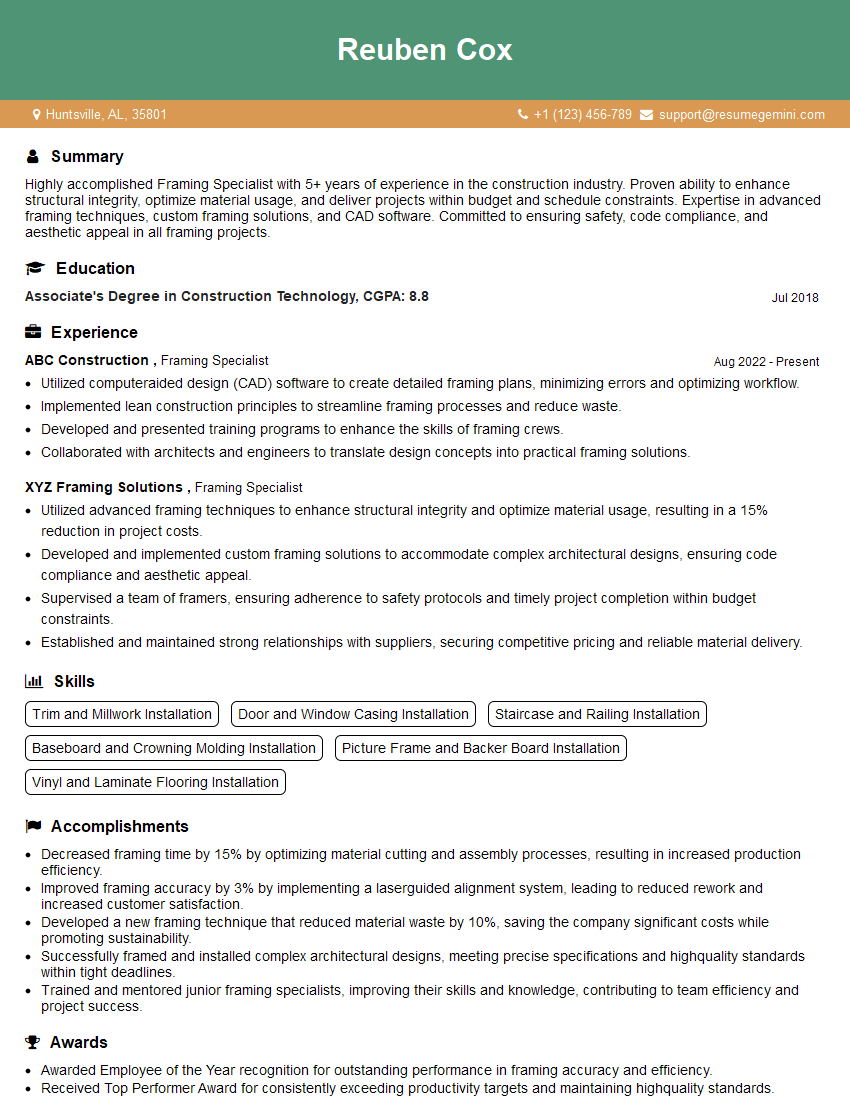
Mastering steel stud framing expertise significantly enhances your career prospects in the construction industry, opening doors to advanced roles and higher earning potential. A well-crafted, ATS-friendly resume is crucial for getting your application noticed by recruiters. ResumeGemini can help you create a professional and impactful resume that highlights your skills and experience effectively. We provide examples of resumes tailored to steel stud framing experience to guide you in showcasing your qualifications. Take the next step towards your dream job – build a winning resume with ResumeGemini today!
Explore more articles
Users Rating of Our Blogs
Share Your Experience
We value your feedback! Please rate our content and share your thoughts (optional).
What Readers Say About Our Blog
To the interviewgemini.com Webmaster.
Very helpful and content specific questions to help prepare me for my interview!
Thank you
To the interviewgemini.com Webmaster.
This was kind of a unique content I found around the specialized skills. Very helpful questions and good detailed answers.
Very Helpful blog, thank you Interviewgemini team.