The right preparation can turn an interview into an opportunity to showcase your expertise. This guide to Knowledge of LEED Certification Standards interview questions is your ultimate resource, providing key insights and tips to help you ace your responses and stand out as a top candidate.
Questions Asked in Knowledge of LEED Certification Standards Interview
Q 1. Explain the different LEED rating systems (e.g., Building Design & Construction, Interior Design & Construction, Operations & Maintenance).
LEED, or Leadership in Energy and Environmental Design, offers several rating systems catering to different project types and phases. These systems share a common goal: to promote sustainable building practices. The most prominent include:
- Building Design and Construction (BD+C): This is the most common system, used for new construction and major renovations of buildings. It covers the entire design and construction process, from initial planning to occupancy.
- Interior Design and Construction (ID+C): This system focuses on the sustainable design and construction of interior spaces within an existing building. It considers elements like materials, lighting, and air quality specific to the interior environment. Think of renovating an office suite within a larger building.
- Operations & Maintenance (O+M): This system addresses the ongoing environmental performance of existing buildings. It incentivizes efficient operation, waste reduction, and ongoing sustainability improvements after the building is occupied. It’s about keeping a green building green!
- Building Operations & Maintenance (O+M): Existing Buildings: This is very similar to O+M, but specifically for existing buildings.
- Neighborhood Development (ND): This system rates the sustainability of entire neighborhoods, considering aspects like transportation, density, and green infrastructure. It’s about the big picture of sustainable community development.
Each system has its own set of prerequisites and credits, reflecting the unique challenges and opportunities of each project type. For example, BD+C will have credits related to site selection and building commissioning, while O+M will focus on water and energy efficiency in operation.
Q 2. Describe the LEED certification process from project registration to final certification.
The LEED certification process is a multi-step journey. Think of it like climbing a mountain – each step brings you closer to the summit (certification). Here’s a breakdown:
- Registration: Begin by registering your project with the Green Building Certification Institute (GBCI). This officially starts the certification process.
- LEED Online Submission: Gather all necessary documentation (plans, specifications, etc.) and prepare your LEED submission online using the GBCI’s LEED Online platform. This detailed submission shows how your project satisfies LEED requirements.
- Review: GBCI reviews your submission. They may request clarifications or additional information during this process.
- Certification: Upon successful review, you receive your LEED certification level (Certified, Silver, Gold, or Platinum). The level reflects the project’s achievement of LEED points.
Throughout the process, it’s crucial to maintain meticulous documentation. Think of this documentation as your climbing gear – essential to safely reach the summit. Proper documentation provides evidence to support your claim for each credit.
Q 3. What are the key strategies for achieving points in the LEED Energy and Atmosphere credit category?
The Energy and Atmosphere category is a cornerstone of LEED certification. Key strategies for maximizing points in this category include:
- Energy Modeling: Using energy modeling software (like EnergyPlus or eQuest) to optimize building design for energy efficiency before construction. This allows for proactive adjustments and prevents costly retrofits later.
- High-Performance Building Envelope: Incorporating high-performance materials and construction techniques to minimize heat transfer through walls, roofs, and windows. This includes features like increased insulation, airtight construction, and high-performance glazing.
- Renewable Energy: Integrating renewable energy sources like solar photovoltaic (PV) systems or wind turbines to reduce reliance on the grid. This can significantly lower the building’s carbon footprint.
- Energy-Efficient HVAC Systems: Utilizing energy-efficient heating, ventilation, and air conditioning (HVAC) systems with variable refrigerant flow (VRF) technology or other advanced controls. Optimizing system design minimizes energy consumption.
- Lighting Efficiency: Implementing energy-efficient lighting technologies such as LEDs, daylight harvesting, and occupancy sensors. This combination of technology and intelligent controls is key.
- Commissioning (Cx): This is crucial to ensure that systems are installed and operate as intended. This independent verification helps optimize performance and prevent energy waste.
A well-designed energy strategy involves a holistic approach – considering each aspect mentioned above in a coordinated manner. It’s like a well-oiled machine; each part plays a vital role in overall performance.
Q 4. How do you incorporate sustainable materials selection into a LEED project?
Sustainable materials selection is paramount for achieving LEED points. It goes beyond just choosing “green” products. Here’s a structured approach:
- Material Inventory: Create a comprehensive inventory of all building materials, specifying their quantity and source. This provides a baseline for assessing sustainability.
- Material Selection Criteria: Develop selection criteria that align with LEED requirements and your project’s goals. These could encompass recycled content, local sourcing, embodied carbon, and responsible forestry practices (FSC certification).
- Material Health: Prioritize materials with low volatile organic compound (VOC) emissions to improve indoor air quality. This is important for the health and well-being of occupants.
- Recycled Content: Opt for materials with high recycled content, which diverts waste from landfills. Specify minimum recycled content percentages in your specifications.
- Regional Materials: Favor locally sourced materials to reduce transportation costs and carbon emissions. This also supports local economies.
- Embodied Carbon: Consider the carbon footprint of materials throughout their entire life cycle. Tools and databases are available to assess embodied carbon.
- Product Declarations: Require manufacturers to provide Environmental Product Declarations (EPDs) and Health Product Declarations (HPDs) to verify environmental and health claims.
Remember, the goal is not just to choose ‘green’ materials but to make informed choices based on comprehensive data and a holistic understanding of material life cycles. It’s about transparency and making the right choices for the planet and its people.
Q 5. Explain the importance of a life-cycle assessment (LCA) in green building design.
A Life-Cycle Assessment (LCA) is a crucial tool for evaluating the environmental impacts of a building material or product throughout its entire life cycle – from raw material extraction to manufacturing, transportation, use, and disposal or recycling. Think of it as a cradle-to-grave analysis.
In green building design, an LCA helps:
- Identify Hotspots: Pinpointing stages in the life cycle with the highest environmental impact (e.g., manufacturing, transportation).
- Informed Material Selection: Making informed decisions about material choices by comparing the environmental profiles of different options. This enables selecting more environmentally friendly alternatives.
- Reduce Environmental Impact: Helping designers and builders minimize the overall environmental burden of the building.
- Transparency and Communication: Providing transparency about the environmental performance of the building to stakeholders.
By using LCA, you’re not just building a structure; you’re creating a building with a minimized environmental footprint across its entire lifespan. This holistic approach is essential for true sustainability.
Q 6. How can you reduce water consumption in a building design to meet LEED requirements?
Reducing water consumption is vital for LEED compliance and environmental stewardship. Strategies include:
- Low-Flow Fixtures: Installing low-flow faucets, showerheads, toilets, and urinals that meet or exceed WaterSense criteria. These fixtures reduce water usage without sacrificing performance.
- Water-Efficient Appliances: Specifying water-efficient appliances like clothes washers and dishwashers with high Energy Star ratings. These contribute to both water and energy savings.
- Water Harvesting and Reuse: Implementing systems for rainwater harvesting and greywater recycling. Rainwater can be used for irrigation, toilet flushing, or other non-potable uses, reducing reliance on municipal water supplies. Greywater (from sinks and showers) can be treated and reused for irrigation.
- Landscape Design: Using drought-tolerant landscaping and xeriscaping techniques to minimize irrigation needs. Choosing native plants that thrive in the local climate greatly reduces water demand.
- Leak Detection and Repair: Implementing a robust leak detection and repair program to identify and fix leaks promptly. Even small leaks can significantly increase water waste over time.
- Metering: Installing water meters to monitor water consumption accurately. This data can be used to identify areas for improvement and track progress toward water conservation goals.
A comprehensive approach combining these strategies is crucial for significant water reduction. It’s not just about individual fixtures; it’s a holistic system focused on efficiency and conservation.
Q 7. What are the benefits of using daylight harvesting techniques and how can these be incorporated into a LEED project?
Daylight harvesting leverages natural daylight to reduce reliance on electric lighting, resulting in energy savings and improved occupant well-being. Think of it as harnessing the sun’s power to illuminate your space.
Benefits include:
- Energy Savings: Reduced reliance on artificial lighting translates directly to lower energy consumption and reduced operating costs. This is a significant factor in LEED points.
- Improved Occupant Well-being: Studies show that natural light improves mood, productivity, and overall occupant satisfaction. It’s a simple but powerful way to enhance the workplace environment.
- Reduced Carbon Footprint: By reducing energy consumption, daylight harvesting contributes to a smaller carbon footprint for the building.
Incorporation into a LEED project involves:
- Strategic Building Design: Optimizing building orientation, window placement, and fenestration (window design) to maximize daylight penetration. This requires careful consideration of sun angles and shading.
- Light Shelves and Reflectors: Utilizing light shelves and reflective surfaces to distribute daylight deeper into the interior spaces. These passively guide light into otherwise dimly lit areas.
- Automated Lighting Controls: Implementing automated lighting controls that dim or switch off electric lights based on the availability of daylight. This prevents unnecessary energy waste.
- Daylighting Simulation: Using daylight simulation software to predict daylight availability and design effective daylighting strategies before construction. This is a crucial step to ensure accurate planning.
A well-designed daylighting strategy is a win-win – saving energy and enhancing the occupants’ experience. It’s an environmentally friendly and human-centered approach to building design.
Q 8. Explain your understanding of the LEED prerequisite credits versus optional credits.
LEED, or Leadership in Energy and Environmental Design, uses a points-based system to rate building sustainability. Credits are awarded for achieving specific performance goals. These credits are categorized into prerequisites and optional credits. Prerequisites are mandatory; you must earn them to achieve any LEED certification level. They represent fundamental requirements for environmentally responsible building practices. Think of them as the bare minimum you need to even be considered for certification. Optional credits, on the other hand, offer a wider range of choices, allowing you to tailor your project to maximize points and potentially achieve a higher certification level, such as LEED Gold or Platinum. They represent opportunities to go above and beyond the basic requirements.
For example, in the LEED BD+C (Building Design and Construction) rating system, a prerequisite might be meeting minimum standards for water efficiency, while an optional credit could involve implementing innovative water management strategies like rainwater harvesting. Earning these optional credits boosts your overall score and leads to a higher certification level. You’re not penalized for not getting all optional credits; you’re simply rewarded for achieving more of them.
Q 9. What are some common challenges encountered during LEED certification and how would you address them?
Common challenges in LEED certification often revolve around documentation, coordination, and unforeseen circumstances. One major hurdle is the sheer volume of documentation needed. Every claim for a credit needs rigorous supporting evidence. Missing even a single piece of documentation can delay or even prevent certification. Another challenge is effective coordination among design teams, contractors, and the LEED consultant. Everyone needs to be on the same page from the beginning to ensure that the project meets the necessary criteria. Finally, unexpected site conditions, changes in building codes, or material availability issues can derail even the best-laid plans.
To address these, proactive strategies are key. Establishing a dedicated LEED team early in the project lifecycle is crucial, along with clear communication protocols. Detailed documentation procedures should be implemented from the start, with regular check-ins to monitor progress and address potential issues promptly. Contingency planning for unforeseen events and flexible design choices help mitigate risks. For example, if a planned sustainable material becomes unavailable, having an alternative readily identified saves valuable time and avoids points penalties.
Q 10. How do you manage the documentation requirements for LEED certification?
Managing LEED documentation is a meticulous process requiring a highly organized approach. I use a combination of digital and physical systems. A dedicated cloud-based platform provides centralized storage and easy access to all project documentation. This includes architectural drawings, engineering specifications, material certifications, energy modeling results, and commissioning reports. We utilize a robust filing system with clear naming conventions to ensure efficient retrieval. Each credit is given its own folder, and within that, we organize documentation by type and date. This ensures quick access during audits. Regular internal reviews are also essential to keep the documentation up-to-date and accurate. Finally, I often create a comprehensive documentation checklist tailored to the specific project and its targeted credits, using this to systematically track progress and identify gaps.
For example, if aiming for credits related to energy performance, we’d meticulously document energy modeling results, equipment specifications, and post-occupancy energy data. This organized system facilitates smoother audits and reduces the risk of delays caused by missing or disorganized paperwork.
Q 11. Explain the role of building commissioning in achieving LEED certification.
Building commissioning plays a pivotal role in achieving LEED certification, especially in the areas of energy and water efficiency. Commissioning is a quality-assurance process that verifies that building systems are designed, installed, tested, and operated to perform according to the owner’s project requirements and the design specifications. Essentially, it ensures that everything works as intended. This is crucial because LEED emphasizes high-performance buildings, and commissioning helps ensure that these performance targets are met.
In LEED, commissioning is often a prerequisite or a credit-generating opportunity, depending on the chosen rating system and level of commissioning implemented. By demonstrating proper commissioning, building owners provide evidence that their building’s systems operate as designed, maximizing energy efficiency and minimizing environmental impact. A thorough commissioning process also reduces operational problems, leading to lower energy bills and improved occupant comfort, indirectly contributing to higher LEED scores.
Q 12. What are the key aspects of sustainable site development according to LEED?
Sustainable site development is a cornerstone of LEED, focusing on minimizing the environmental impact of building projects on their surroundings. Key aspects include:
- Reducing the project’s footprint: This involves minimizing land disturbance and maximizing the use of existing infrastructure.
- Protecting and restoring habitat: Preserving natural habitats on-site, minimizing the impact on biodiversity, and implementing strategies for habitat restoration are essential.
- Improving stormwater management: Techniques like rainwater harvesting, permeable pavements, and bioswales reduce runoff and prevent pollution.
- Reducing light pollution: Minimizing light trespass into adjacent areas and selecting appropriate lighting fixtures helps protect nocturnal wildlife and reduce energy consumption.
- Prioritizing open space: Providing green spaces, landscaping with native vegetation, and creating places for outdoor recreation contributes to the wellbeing of occupants and the surrounding environment.
- Improving site access and reduce transportation impact: Encouraging alternative transportation methods like cycling, walking, and public transport.
For example, a project might achieve credits by incorporating green roofs to manage stormwater, using recycled materials for site improvements, and providing bicycle parking facilities to promote sustainable transportation.
Q 13. How do you incorporate renewable energy sources into a building design to meet LEED standards?
Incorporating renewable energy sources is a crucial step towards meeting LEED standards and achieving high performance. This can be accomplished through various strategies:
- Photovoltaic (PV) systems: Installing solar panels on the roof or facade generates clean electricity, reducing reliance on the grid.
- Solar thermal systems: These systems utilize solar energy to heat water for domestic use or space heating, thereby cutting down on energy consumption from conventional sources.
- Wind turbines: For projects in areas with suitable wind resources, wind turbines can provide a significant amount of renewable energy.
- Geothermal energy: This involves using the earth’s relatively constant temperature to heat or cool the building, leading to significant energy savings.
The feasibility of each source depends on site-specific factors such as climate, available space, and regulatory constraints. Often, a combination of renewable energy sources is used to optimize energy production and meet LEED credit requirements. For instance, a project might incorporate rooftop solar PV panels for electricity generation and geothermal heat pumps for heating and cooling to maximize points. Detailed energy modeling is used to demonstrate the expected renewable energy contribution and quantify the reduction in greenhouse gas emissions.
Q 14. Explain your experience with LEED v4 or LEED v4.1.
I have extensive experience with LEED v4 and LEED v4.1. LEED v4 introduced significant changes compared to previous versions, focusing on a more holistic approach to sustainability and incorporating a higher level of performance-based metrics. It emphasizes whole-building integration and encourages a more iterative design process. I’ve worked on numerous projects utilizing LEED v4 and v4.1, guiding teams through the more stringent requirements and utilizing the updated credit categories. Key differences between v4 and v4.1 largely involve minor clarifications and updates to improve the usability and accuracy of the rating system; they don’t represent a radical overhaul.
My experience includes leading documentation preparation, navigating the complex credit requirements, and collaborating with design and construction teams to integrate sustainable strategies throughout the design and construction phases. I’ve successfully guided projects to achieve various LEED certification levels under v4 and v4.1, consistently demonstrating my ability to manage the challenges and opportunities presented by these versions. For example, in one recent project, successfully navigating the updated energy modeling requirements in LEED v4.1 resulted in significantly higher energy efficiency than initially projected.
Q 15. What is your understanding of embodied carbon and how is it addressed in LEED?
Embodied carbon refers to the greenhouse gas emissions associated with the extraction, manufacturing, transportation, and installation of building materials. It’s a significant contributor to a building’s overall carbon footprint, often overlooked in favor of operational carbon (energy use during building operation). LEED addresses embodied carbon through several strategies, primarily focused on material selection and construction practices.
- Material Selection: LEED encourages the use of materials with low embodied carbon, such as recycled content materials, locally sourced materials (reducing transportation emissions), and rapidly renewable materials. Points are awarded for using materials with Environmental Product Declarations (EPDs) which quantify embodied carbon.
- Construction Waste Management: Reducing construction waste minimizes the embodied carbon associated with the production and disposal of materials. LEED incentivizes diverting construction waste from landfills through recycling and reuse.
- Structural Design Optimization: Efficient structural design can reduce the overall quantity of materials needed, directly impacting embodied carbon. This includes strategies like optimizing building geometry and selecting efficient structural systems.
For example, choosing reclaimed wood over newly harvested wood significantly reduces embodied carbon. Specifying steel with a high recycled content also contributes to a lower carbon footprint. LEED’s focus on embodied carbon is evolving, with increasing emphasis on transparent material accounting and the use of life-cycle assessment (LCA) tools to evaluate the full environmental impact of materials.
Career Expert Tips:
- Ace those interviews! Prepare effectively by reviewing the Top 50 Most Common Interview Questions on ResumeGemini.
- Navigate your job search with confidence! Explore a wide range of Career Tips on ResumeGemini. Learn about common challenges and recommendations to overcome them.
- Craft the perfect resume! Master the Art of Resume Writing with ResumeGemini’s guide. Showcase your unique qualifications and achievements effectively.
- Don’t miss out on holiday savings! Build your dream resume with ResumeGemini’s ATS optimized templates.
Q 16. Describe your experience with LEED point optimization strategies.
My experience with LEED point optimization involves a strategic approach to maximizing points while aligning with project goals and budget. This includes careful analysis of the project’s unique characteristics and potential challenges.
- Prioritization: We start by identifying the easiest and most cost-effective LEED points to achieve first. This provides a solid foundation and builds momentum. Then we focus on higher-value points which may require more investment or complex design solutions.
- Integrated Design Approach: Point optimization is not a standalone process; it requires integration across all disciplines from the beginning of the design phase. This collaboration ensures that decisions made in one area don’t negatively impact the potential for points in another area.
- Innovation: We explore opportunities for innovative strategies to achieve points beyond the standard requirements. This might include pursuing innovative building technologies or implementing unique strategies related to water conservation, energy efficiency, or waste management.
- Data-Driven Decision Making: We use data from energy modeling, life-cycle assessments, and material EPDs to justify our design choices and demonstrate compliance with LEED requirements. This helps to avoid costly design changes later in the process.
For instance, in one project, optimizing the building envelope design to maximize daylighting not only reduced energy consumption (earning points in the Energy and Atmosphere category) but also improved indoor environmental quality (earning points in the Indoor Environmental Quality category). This demonstrates a synergistic approach to point optimization.
Q 17. How would you ensure occupant comfort and indoor environmental quality within a LEED project?
Ensuring occupant comfort and indoor environmental quality (IEQ) is crucial for a successful LEED project. It goes beyond just meeting minimum regulatory requirements; it’s about creating a healthy and productive environment.
- Thermal Comfort: This involves strategies like optimizing building orientation, using high-performance insulation and glazing, and implementing effective HVAC systems with precise temperature control and ventilation.
- Indoor Air Quality (IAQ): This requires careful material selection to minimize volatile organic compounds (VOCs) emissions, using high-efficiency filtration systems, and providing adequate ventilation to dilute pollutants.
- Daylighting and Views: Natural light and access to outdoor views positively impact occupant well-being and reduce the need for artificial lighting. Designing for optimal daylighting and views helps achieve LEED points.
- Acoustic Comfort: Proper sound insulation and design elements to minimize noise pollution contribute to a more comfortable and productive environment.
- Monitoring and Verification: Implementing systems to monitor indoor environmental parameters ensures that design choices are effective and that the space continues to meet IEQ standards over time.
For example, using low-VOC paints and adhesives, selecting furniture with certifications, and installing systems to monitor CO2 levels contribute to superior indoor air quality and earn LEED points. A well-designed HVAC system with demand-controlled ventilation optimizes energy efficiency while also enhancing IAQ.
Q 18. Explain your understanding of the concept of building resilience within the context of LEED.
Building resilience within the context of LEED refers to a building’s ability to withstand and recover from various disruptions, such as natural disasters, climate change impacts, and other unforeseen events. It’s about designing buildings that are not only environmentally friendly but also adaptable and robust.
- Adaptability: Designing spaces that can be easily reconfigured to accommodate changing needs and functions increases resilience.
- Disaster Preparedness: Incorporating features to protect against natural hazards, such as flood-proofing, seismic bracing, or wind-resistant design enhances resilience.
- Water Management: Implementing strategies for rainwater harvesting, greywater reuse, and water-efficient fixtures reduces vulnerability to water scarcity and drought.
- Energy Security: Using renewable energy sources and incorporating energy storage systems reduces reliance on the grid and enhances resilience during power outages.
- Material Durability and Longevity: Selecting durable, long-lasting materials reduces the need for frequent repairs and replacements, extending the building’s lifespan.
For example, a building designed to withstand high winds using robust structural elements and strategically placed landscaping demonstrates resilience. Similarly, incorporating solar panels and a battery storage system helps maintain building operation during power outages.
Q 19. How do you engage stakeholders in a LEED project to ensure collaboration and successful certification?
Engaging stakeholders is paramount for a successful LEED certification process. It fosters collaboration, ensures buy-in from all parties, and streamlines the certification journey.
- Early Engagement: Involving stakeholders (owners, designers, contractors, and occupants) from the initial stages of design ensures that LEED goals are integrated into the project from the outset.
- Open Communication: Maintaining regular and transparent communication channels keeps everyone informed about the progress, challenges, and decisions related to LEED certification.
- Education and Training: Providing education and training on LEED principles and requirements helps stakeholders understand their roles and responsibilities in achieving certification.
- Collaboration Tools: Utilizing collaborative platforms (such as project management software) streamlines information sharing and facilitates effective communication.
- Incentives and Recognition: Rewarding and recognizing stakeholders for their contributions to the LEED project fosters a culture of collaboration and motivates them to remain engaged.
For example, conducting regular meetings with the design team, contractors, and the owner helps to identify and address any potential conflicts early on. Using a shared project management tool allows everyone to access the latest design documents and LEED submittal information. Celebrating milestones achieved along the way helps maintain motivation.
Q 20. What are some strategies for reducing the heat island effect in a building design?
The heat island effect is the phenomenon where urban areas experience higher temperatures than surrounding rural areas. Reducing this effect in building design is crucial for sustainability and occupant comfort.
- Cool Roofs: Using highly reflective roofing materials (high albedo) helps reduce heat absorption and lowers the overall temperature of the building and its surroundings.
- Green Roofs: Planting vegetation on rooftops provides insulation, reduces runoff, and helps lower the ambient temperature.
- Shading Devices: Using overhangs, awnings, trees, and other shading devices reduces solar heat gain on building facades.
- Pervious Paving: Replacing traditional impervious pavements (like asphalt) with pervious materials allows rainwater to seep into the ground, reducing runoff and the associated heat absorption.
- Building Orientation and Design: Optimizing building orientation to minimize solar heat gain and maximize natural ventilation can significantly reduce the heat island effect.
For example, using a cool roof coating can significantly reduce a building’s rooftop temperature, decreasing the amount of heat radiating into the surrounding environment. Planting trees around the building provides shade and helps reduce the temperature of the air.
Q 21. Explain the role of building materials and construction practices in achieving LEED points.
Building materials and construction practices play a vital role in achieving LEED points. Sustainable material selection and efficient construction methods contribute significantly to environmental performance.
- Material Selection: LEED encourages the use of recycled content materials, rapidly renewable materials, locally sourced materials, and materials with low embodied carbon. Points are awarded based on the percentage of recycled content, the distance of material transportation and the environmental impact of materials as shown in EPDs.
- Construction Waste Management: Diverting construction waste from landfills through recycling and reuse is crucial for earning LEED points. Careful planning and implementation of waste management strategies during the construction phase are essential.
- Sustainable Sourcing: Using materials from certified sustainable sources demonstrates commitment to responsible forestry, mining, and agricultural practices.
- Indoor Environmental Quality (IEQ): Selecting materials with low VOC emissions contributes to improved IAQ and earns LEED points. This includes paints, adhesives, carpets, and other interior finishes.
- Demolition and Reuse: LEED incentivizes the reuse of existing building materials and the responsible demolition of structures. This minimizes waste and reduces the environmental impact of construction.
For instance, using reclaimed wood for interior finishes reduces the environmental impact of the project and contributes to LEED points. Implementing a rigorous waste management plan during construction reduces waste sent to landfills, also increasing the project’s LEED score.
Q 22. How do you measure and verify the performance of green building features in a LEED project?
Measuring and verifying the performance of green building features in a LEED project is a crucial aspect of achieving certification. It involves a multi-step process combining documentation, on-site testing, and third-party verification. We begin by establishing baseline performance metrics for relevant features at the design stage. For example, for energy efficiency, we’d model the building’s energy consumption using software like EnergyPlus. Then, during construction, we meticulously track material usage, ensuring adherence to specified sustainable materials. Post-construction, we conduct commissioning and testing to validate the performance of systems like HVAC and lighting, often engaging commissioning agents to verify that they meet the predicted energy and water use benchmarks. This data is then compiled into a comprehensive report, supporting the claim of compliance for specific LEED credits. Finally, a LEED accredited professional reviews the documentation and potentially conducts on-site inspections to verify the accuracy and completeness of the submitted information.
For instance, if a project aims for a specific percentage reduction in water consumption, we’d install sub-meters to track water usage post-occupancy, comparing this data to the projected baseline. Any discrepancies would necessitate investigating potential issues and corrective measures. The rigorous verification process ensures the claimed environmental performance is accurately reflected in the final LEED certification. This commitment to data-driven verification builds credibility and ensures the true sustainability of the project.
Q 23. What are the different types of LEED credits, and what is their relative importance?
LEED credits are categorized into several areas, each contributing to the overall sustainability of a building. These categories include Location and Transportation, Sustainable Sites, Water Efficiency, Energy and Atmosphere, Materials and Resources, Indoor Environmental Quality, and Innovation in Design. Each category contains various credits that address specific aspects within that category; achieving these credits earns points toward LEED certification levels such as Certified, Silver, Gold, or Platinum. Relative importance is subjective and depends on project goals. For example, a project in a dense urban area might prioritize Location and Transportation credits, while a project in a water-scarce region might focus on Water Efficiency. However, some categories generally hold greater weight in achieving higher certifications. Energy and Atmosphere credits often impact the overall point total significantly due to their direct influence on resource consumption. The selection and pursuit of specific credits are strategically determined during the design phase, informed by the project’s unique context and priorities.
- Location and Transportation: Encourages sustainable transportation options and reduces reliance on cars.
- Sustainable Sites: Promotes development that minimizes environmental impact.
- Water Efficiency: Aims for reduced water consumption.
- Energy and Atmosphere: Focuses on energy efficiency and renewable energy use.
- Materials and Resources: Emphasizes sustainable material selection and waste reduction.
- Indoor Environmental Quality: Prioritizes occupant health and well-being.
- Innovation: Rewards innovative strategies beyond standard LEED requirements.
Q 24. Describe your experience working with LEED consultants or rating providers.
Throughout my career, I’ve collaborated extensively with LEED consultants and rating providers. In one project, a large-scale commercial development, we worked closely with a specialized LEED consultant who provided invaluable guidance during the design and construction phases. They helped us navigate the complex LEED requirements, suggesting innovative solutions for achieving credits, and ensuring accurate documentation. They also played a vital role in the submission process to GBCI, responding to any queries and facilitating a smooth certification process. In another instance, we engaged with a LEED rating provider directly for review and feedback on our documentation, receiving proactive recommendations that improved the project’s overall performance. These collaborations have strengthened my understanding of the LEED process and fostered a better appreciation for the value of experienced expertise. Effective communication and a collaborative approach are vital in these partnerships; regular meetings and transparent sharing of information are essential to maintaining efficiency and achieving project goals.
Q 25. What strategies would you use to manage a LEED project’s budget and schedule effectively?
Managing a LEED project’s budget and schedule effectively requires a proactive and integrated approach. First, we incorporate LEED requirements into the project budget from the outset, rather than treating them as an afterthought. This involves a thorough cost analysis of various LEED strategies, incorporating potential premiums for sustainable materials or specialized systems. We prioritize credits that offer the best return on investment, carefully assessing the cost versus benefits of each credit. Simultaneously, we develop a detailed project schedule that accounts for the extra time often needed for LEED documentation, material procurement, and commissioning activities. Regular project meetings, involving all stakeholders, allow for early identification of potential conflicts and prompt mitigation strategies. We utilize project management software to track progress and monitor compliance, creating transparency and accountability. Effective communication with all parties and contingency planning for unforeseen delays or cost overruns are critical to successfully balancing LEED objectives with budget and schedule constraints.
Q 26. What are the key differences between LEED v4 and previous versions?
LEED v4 introduced significant changes compared to previous versions. It emphasizes a performance-based approach, shifting focus from prescriptive requirements to measurable outcomes. For instance, instead of simply specifying the use of certain materials, v4 often requires demonstrating energy performance improvements based on modeling and post-occupancy data. Another key difference lies in the increased emphasis on integrative design, encouraging collaboration among stakeholders from the earliest stages of the project. v4 also includes a greater focus on building life-cycle assessment, considering the environmental impact of a building throughout its entire lifespan. Compared to previous versions, v4 offers a more comprehensive and rigorous assessment of a building’s sustainability performance. Some specific credit categories have also been modified or reorganized, aligning with the broader focus on performance and holistic sustainability. The increased complexity requires a more in-depth understanding of performance modeling and comprehensive documentation.
Q 27. How do you address potential conflicts between LEED requirements and other project goals?
Conflicts between LEED requirements and other project goals are common. We address them through a process of negotiation and prioritization. This involves clearly defining the project’s objectives, including both LEED certification targets and other project constraints, like budget or schedule. We then evaluate the potential trade-offs involved in pursuing different LEED credits, considering their relative importance to the overall project goals. Often, creative solutions can be found by exploring alternative strategies. For instance, if the cost of a specific material required for a LEED credit is prohibitive, we might explore alternative, equally effective sustainable options that meet the credit’s intent while remaining within budget. Open communication with all stakeholders is crucial to finding mutually acceptable solutions. Transparency and proactive problem-solving allow for informed decisions that balance competing priorities, leading to a project that achieves both sustainability objectives and other essential project goals.
Q 28. Describe your approach to integrating sustainable design principles into the overall project design process.
Integrating sustainable design principles begins with a holistic approach, starting in the very early stages of a project. We utilize an integrative process involving all stakeholders from architects and engineers to contractors and owners. We conduct a comprehensive site assessment, focusing on factors like climate, topography, and existing resources. This informs decisions related to building orientation, material selection, and energy systems. We establish clear sustainability goals early in the process, setting targets for energy efficiency, water conservation, and waste reduction. Life-cycle assessments of materials are conducted to identify environmentally preferable options. We utilize building information modeling (BIM) to facilitate the design process, allowing for better visualization and coordination of sustainable design elements. Throughout the design and construction, we maintain open communication and collaboration among stakeholders, ensuring that sustainable design considerations are integrated throughout the project. This integrative approach creates a synergy between design, construction, and operation, resulting in a more sustainable and efficient building.
Key Topics to Learn for Knowledge of LEED Certification Standards Interview
- LEED Rating Systems: Understand the different LEED rating systems (e.g., Building Design + Construction, Interior Design + Construction, Operations + Maintenance) and their respective credit categories. Be prepared to discuss the differences and similarities.
- Sustainable Sites: Master the principles of sustainable site development, including topics like site selection, stormwater management, light pollution reduction, and heat island effect mitigation. Be ready to explain how these principles translate into practical applications on a project.
- Water Efficiency: Develop a strong understanding of water conservation strategies, including low-flow fixtures, water reuse systems, and water-efficient landscaping. Be prepared to discuss the calculations and estimations involved in assessing water usage.
- Energy and Atmosphere: Familiarize yourself with energy modeling, renewable energy sources, and energy-efficient building design principles. Be able to explain how to optimize energy performance and reduce carbon emissions.
- Materials and Resources: Grasp the concepts of embodied carbon, recycled content, and sustainable material sourcing. Understand the process of material selection and its impact on the overall LEED score.
- Indoor Environmental Quality: Learn about strategies for improving indoor air quality, thermal comfort, and daylighting. Be able to discuss the importance of occupant health and well-being in the design process.
- Innovation in Design: Understand the opportunities for achieving points through innovative strategies and technologies that go beyond standard LEED requirements. Be ready to discuss examples of such innovations.
- LEED Documentation and Process: Be familiar with the LEED certification process, including documentation requirements, submittal procedures, and the role of various stakeholders (e.g., owner, architect, engineer).
- Problem-Solving Scenarios: Practice applying your knowledge to solve hypothetical challenges related to LEED certification. Consider scenarios involving budget constraints, site limitations, or conflicting requirements.
Next Steps
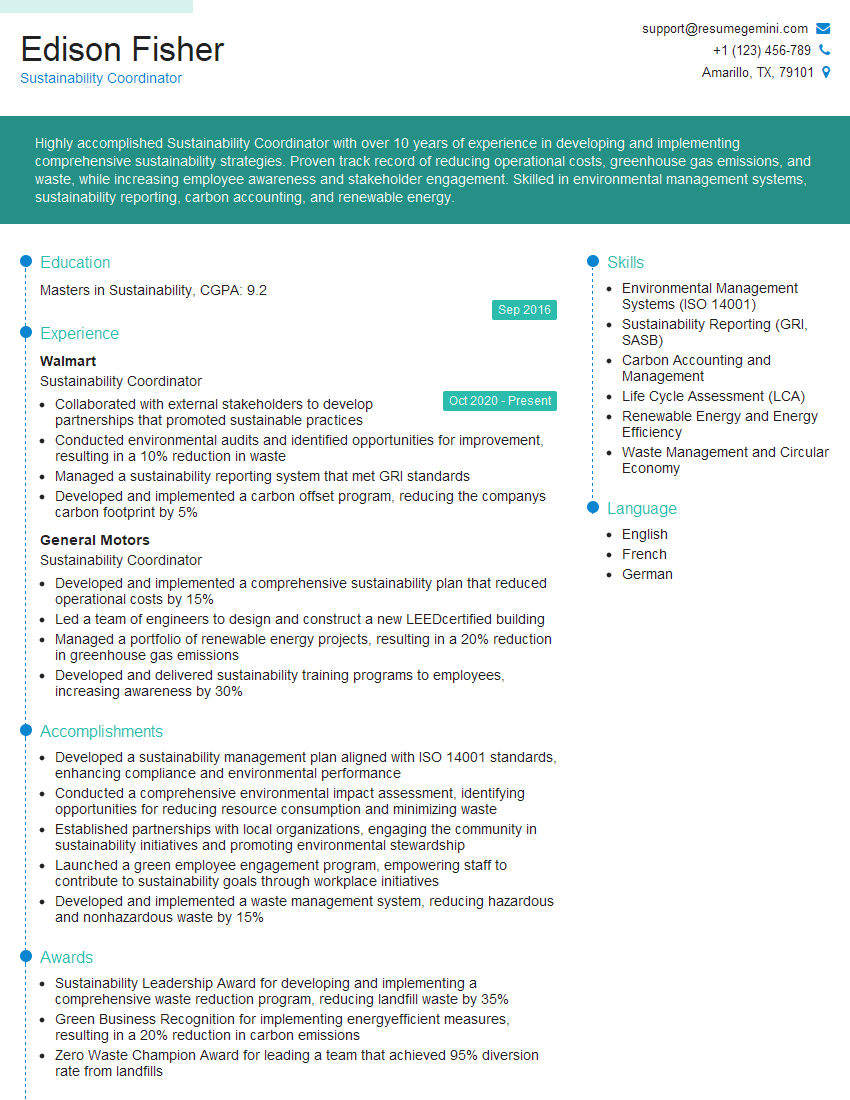
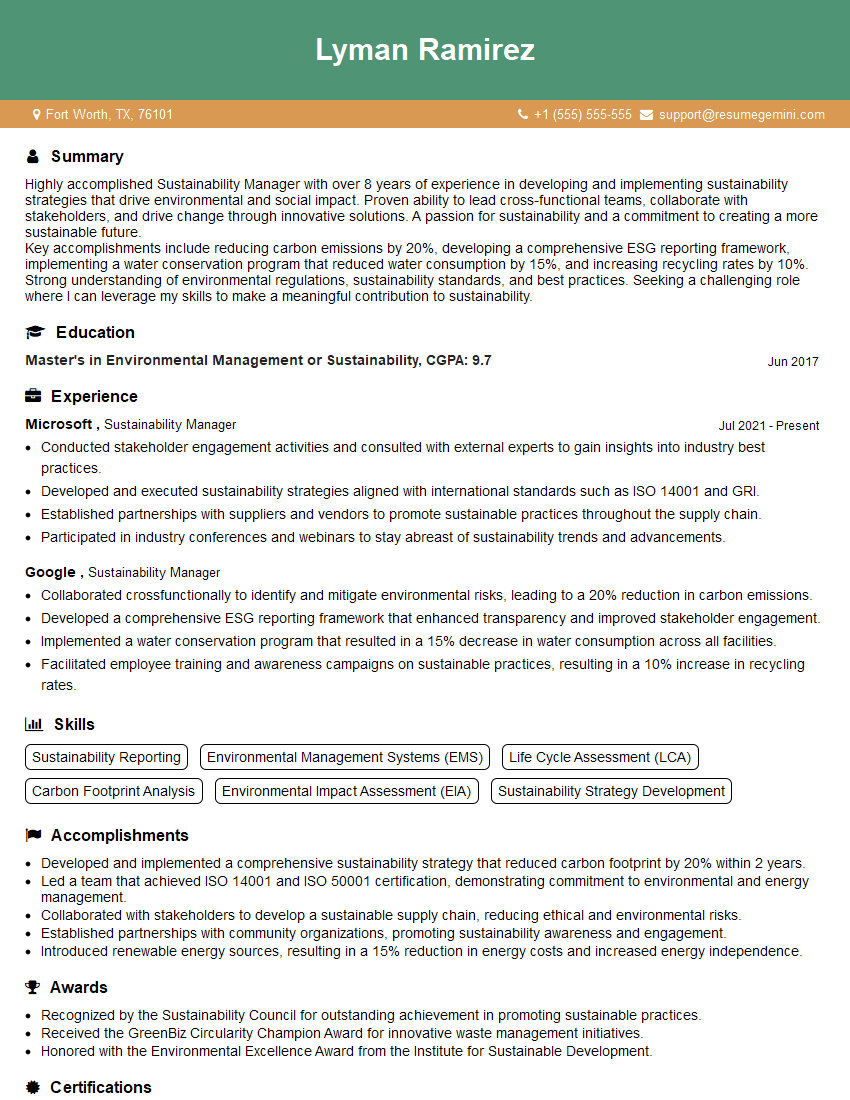
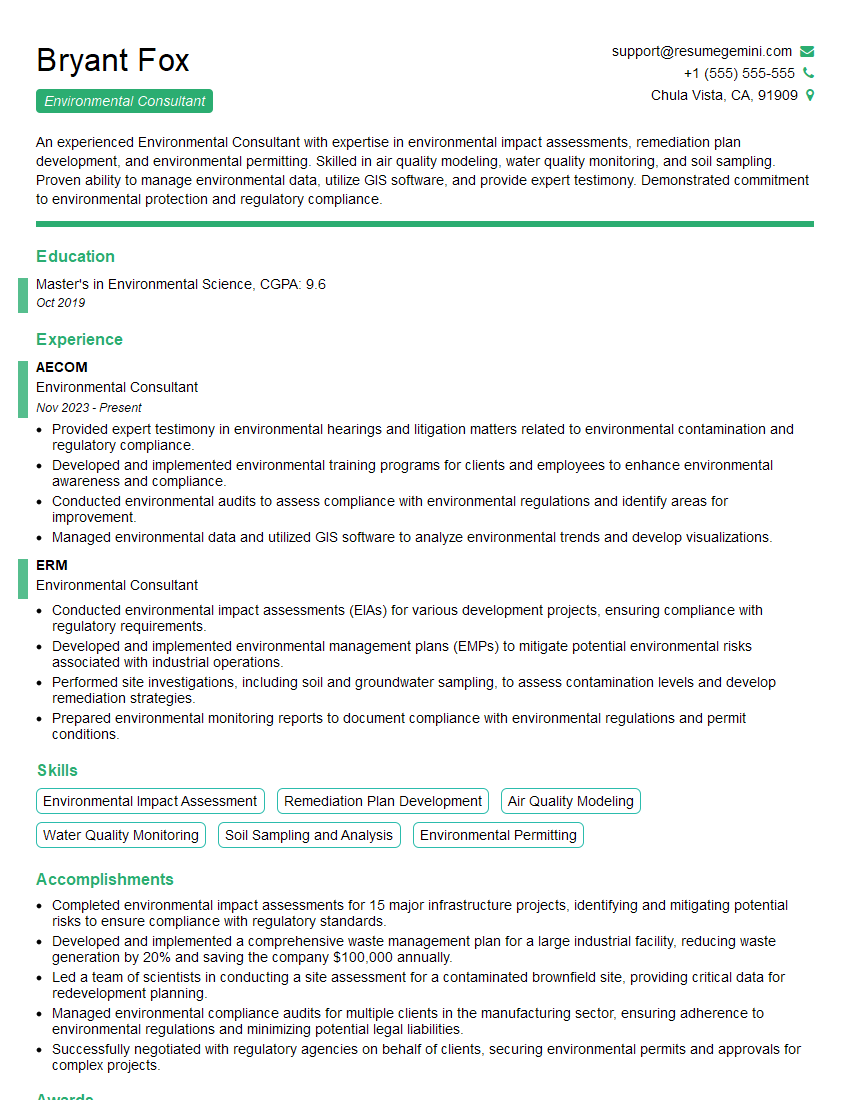
Mastering LEED Certification Standards significantly enhances your marketability and opens doors to exciting career opportunities in sustainable building design and construction. A strong understanding of these standards demonstrates your commitment to environmental responsibility and your ability to contribute to a greener future. To maximize your job prospects, create an ATS-friendly resume that effectively highlights your skills and experience. ResumeGemini is a trusted resource that can help you build a professional and impactful resume. Examples of resumes tailored to showcasing expertise in LEED Certification Standards are available to help guide you. Take the next step towards your dream career today!

Explore more articles
Users Rating of Our Blogs
Share Your Experience
We value your feedback! Please rate our content and share your thoughts (optional).
What Readers Say About Our Blog
To the interviewgemini.com Webmaster.
Very helpful and content specific questions to help prepare me for my interview!
Thank you
To the interviewgemini.com Webmaster.
This was kind of a unique content I found around the specialized skills. Very helpful questions and good detailed answers.
Very Helpful blog, thank you Interviewgemini team.