Preparation is the key to success in any interview. In this post, we’ll explore crucial Experience with forklift operation interview questions and equip you with strategies to craft impactful answers. Whether you’re a beginner or a pro, these tips will elevate your preparation.
Questions Asked in Experience with forklift operation Interview
Q 1. What types of forklifts have you operated?
Throughout my career, I’ve operated a variety of forklift types, each suited for different tasks and environments. This includes:
- Sit-down counterbalanced forklifts: These are the most common type, ideal for general warehouse operations and moving pallets over relatively level surfaces. I’m proficient in both electric and propane models.
- Stand-up reach trucks: These are excellent for narrow aisle operations, allowing for efficient storage and retrieval in high-density warehouses. My experience includes operating both electric and LPG versions.
- Order pickers: I’ve extensively used order pickers for retrieving items from racking systems at various heights. These machines prioritize safety and accuracy in picking individual items or smaller quantities.
- Sit-down reach trucks: Similar to stand-up reach trucks but offering a more comfortable seated position, which is beneficial for longer shifts. I am experienced in using these for high-bay warehouse operations.
My experience spans various capacities and makes of these machines, ensuring I can adapt to different workplace requirements.
Q 2. Describe your experience with pre-operation safety checks.
Pre-operation safety checks are paramount and a non-negotiable part of my routine. I meticulously follow a checklist, ensuring every aspect of the forklift is in optimal working condition before operation. This includes:
- Visual inspection: Checking for any visible damage to the forks, tires, mast, and body. This includes looking for cracks, leaks, or loose parts.
- Fluid levels: Verifying the levels of engine oil, hydraulic fluid, and coolant (where applicable). Low levels can indicate leaks or other issues needing attention.
- Tire pressure: Ensuring proper tire inflation for stability and maneuverability. Incorrect pressure can affect handling and safety.
- Lights and horn: Testing all lights (headlights, brake lights, warning lights) and the horn to ensure they function correctly.
- Brakes and steering: Testing the responsiveness of the brakes and steering mechanism to ensure they are functioning smoothly and safely. This includes both forward and reverse movement.
- Operational safety features: Checking the functionality of seatbelts, horn, lights, and any other operational safety features.
If any issues are found, I immediately report them to my supervisor before operating the equipment, avoiding potentially dangerous situations.
Q 3. Explain the proper procedure for loading and unloading pallets.
Loading and unloading pallets requires precision and adherence to safety protocols. My procedure involves:
- Assessing the load: Carefully examining the pallet to ensure it’s stable and evenly distributed. I check for any overhanging items or damage that could compromise stability.
- Approaching the pallet: Positioning the forklift strategically to ensure safe access. I avoid abrupt movements and maintain a slow and controlled approach.
- Engaging the forks: Carefully inserting the forks under the pallet, ensuring they are fully engaged and centered. I avoid tilting the forks excessively.
- Lifting the load: Slowly lifting the load, ensuring it remains stable throughout the process. I check for any tilting or instability before proceeding.
- Transporting the load: Moving the load smoothly and at a safe speed, considering the weight and size of the load and any potential obstacles.
- Unloading the load: Lowering the load slowly and carefully, ensuring it is placed securely in its designated location. I avoid abrupt movements that could damage the load or the surrounding environment.
Throughout the entire process, I maintain awareness of my surroundings and follow all safety guidelines, always prioritizing safety over speed.
Q 4. How do you maintain a safe distance from other equipment and personnel?
Maintaining a safe distance from other equipment and personnel is critical for preventing accidents. I always:
- Maintain a wide berth: Give ample space to other forklifts, pedestrians, and equipment, especially when navigating tight spaces or corners.
- Use signals and warnings: Employ horn, lights, and hand signals to communicate my movements and intentions to others. I never assume others see me.
- Observe speed limits: Adhere to speed limits and adjust speed according to conditions, always prioritizing safety.
- Be aware of blind spots: Regularly check blind spots and surroundings before maneuvering, especially when reversing or turning.
- Yield to pedestrians: Always yield the right-of-way to pedestrians and ensure they are safely clear before proceeding.
Essentially, I practice defensive driving principles, anticipating the movements of others and reacting accordingly to prevent collisions or near misses. It’s about being proactive, not reactive.
Q 5. What are the different types of forklift attachments and their uses?
Forklift attachments significantly expand the capabilities of the machine. Some common attachments I’ve worked with include:
- Side-shifters: These allow for precise lateral movement of the forks, enabling accurate placement of pallets in tight spaces.
- Paper roll clamps: Designed for handling rolls of paper or other cylindrical materials. They securely grip the load to prevent slippage.
- Rotating clamps: These enable 90-degree rotation of the load, simplifying tasks like palletizing and transferring materials.
- Fork extensions: These increase the length of the forks, allowing for handling longer loads or those requiring wider spacing.
- Carpet rolls clamps: Similar to paper roll clamps, but designed for thicker and potentially heavier loads.
The choice of attachment depends on the specific task and the nature of the material being handled. Understanding the capabilities and limitations of each attachment is key to safe and efficient operation.
Q 6. Describe your experience with inventory management systems within a warehouse.
My experience encompasses working with various inventory management systems within warehouse environments. I’m familiar with using handheld scanners to verify locations, update inventory counts, and track the movement of goods. I’m also proficient in using warehouse management systems (WMS) for locating items, ensuring accuracy in picking and placing, and maintaining real-time inventory tracking.
For instance, I’ve worked with systems where barcodes or RFID tags are used to identify each pallet. The scanner transmits the information to the WMS, updating inventory levels and providing precise instructions for location and placement within the warehouse. This contributes to efficiency and accuracy in managing the stock within the warehouse.
Q 7. How do you handle damaged goods or equipment malfunctions?
Handling damaged goods and equipment malfunctions requires a systematic approach. For damaged goods, I immediately report the damage to my supervisor, providing details and photographic evidence. The damaged goods are then segregated from the undamaged stock to prevent further issues. Appropriate procedures, such as damage reporting and investigation, will be followed as per company policy.
In case of equipment malfunction, I immediately stop operation and report the issue to the supervisor. I never attempt to repair the forklift myself. Depending on the severity, the forklift may be taken out of service until it can be inspected and repaired by a qualified technician. Safety is always the top priority; I would never operate a forklift with a known malfunction.
Q 8. What is your experience with load capacity and weight distribution?
Understanding load capacity and weight distribution is paramount in forklift operation. It’s not just about the total weight; it’s about how that weight is balanced on the forks. Every forklift has a maximum load capacity, clearly stated on its data plate. Exceeding this limit is incredibly dangerous. Weight distribution affects stability; a load centered on the forks is far safer than one heavily skewed to one side. For example, imagine carrying a pallet of bricks. If the bricks are unevenly stacked, the pallet might tilt, causing the forklift to become unstable and potentially overturn. I always check the weight of a load before lifting and ensure it’s evenly distributed to maintain balance. If a load is particularly heavy or uneven, I’ll use additional securing measures like straps or chains to prevent shifting.
In my previous role, I routinely handled pallets of varying weights, from lightweight boxes to heavy machinery components. I consistently verified the load weight against the forklift’s capacity, adjusting my driving style as needed for different weight distributions. For example, when handling a heavily loaded pallet, I would drive slower and more carefully, making wider turns to maintain stability.
Q 9. Describe your experience with different types of warehouse layouts.
My experience encompasses various warehouse layouts, from narrow-aisle facilities demanding precise maneuvering to large open spaces requiring efficient route planning. Narrow-aisle warehouses typically utilize very narrow aisle forklifts and demand precise control and awareness of surroundings. Conversely, larger warehouses often involve longer distances and may incorporate various storage methods like racking systems, bulk storage areas, and designated loading docks. I’ve worked in warehouses with both traditional and automated storage and retrieval systems, adapting my driving techniques accordingly. I’m adept at navigating complex layouts, avoiding collisions, and optimizing routes for efficiency. For example, in a narrow-aisle warehouse, I’d prioritize smooth, controlled movements, avoiding jerky starts and stops, while in a larger warehouse, I’d focus on efficient route planning to minimize travel time.
Understanding the layout is crucial. Before beginning work in a new facility, I thoroughly familiarize myself with the designated pathways, storage locations, and any potential obstacles, ensuring I am aware of all blind spots.
Q 10. How do you ensure the stability of loads during transportation?
Ensuring load stability is a top priority, and I employ several techniques. First, I always carefully assess the load’s condition before lifting. This includes checking for any loose items that could shift during transit, ensuring the load is properly secured onto the pallet, and verifying the pallet’s structural integrity. I then position the forks evenly under the load’s center of gravity, using my eyes and understanding of weight distribution. Once lifted, I drive smoothly, avoiding sudden braking, acceleration, or sharp turns which could cause the load to shift or fall. For unstable loads or those with a high center of gravity, I may utilize additional safety measures such as securing straps or nets to prevent movement.
I remember one instance where I was transporting a stack of unusually tall boxes. To prevent them from toppling over, I used securing straps diagonally across the load, ensuring their stability during transit. This extra precaution demonstrated my dedication to safety and my experience in handling diverse cargo.
Q 11. What safety measures do you take when operating a forklift in tight spaces?
Operating a forklift in tight spaces demands heightened awareness and precision. I always maintain a slow speed, making smooth and controlled movements. Before making a turn, I fully assess the space available, ensuring there’s sufficient clearance to avoid collisions with racks, walls, or other obstacles. I use my mirrors frequently, checking my blind spots, and I rely heavily on my situational awareness. I also make sure my horn is functional and use it to signal my movements. I never underestimate how much space I need for a maneuver. It’s better to take your time and move deliberately than risk a collision. Additionally, I always maintain a safe distance from pedestrians and other equipment. The safety of all workers is the highest priority.
For example, in a particularly congested area, I’d carefully plan my route in advance, perhaps even walking through it first to identify potential challenges and to get a better understanding of the surroundings. I would always take a slower approach and check around the area before proceeding in the tight area.
Q 12. Explain your understanding of load stability and its importance.
Load stability refers to the condition of a load being secure and unlikely to shift or fall during transportation. It’s fundamentally important for safety and efficiency. An unstable load poses significant risks, including the potential for the load to fall, causing damage to property or injury to personnel. It can also lead to forklift accidents, damage to the forklift itself, and workflow disruptions. To maintain load stability, I carefully assess the load, ensure proper weight distribution, use appropriate securing methods (straps, nets, etc.), and operate the forklift smoothly and safely. Think of it like balancing a stack of books – if not properly stacked, they’ll topple. Similarly, a poorly secured or improperly balanced load on a forklift is a recipe for disaster.
In my career, maintaining load stability has always been a critical part of my work, because it directly impacts the safety of myself, my co-workers, and the goods we were transporting. Prioritizing this has always been my foremost concern.
Q 13. How do you navigate ramps and inclines safely with a forklift?
Navigating ramps and inclines safely requires extra caution. I always approach ramps slowly and steadily, avoiding sudden stops or accelerations. I ensure the load is properly secured and centered on the forks to prevent shifting. I also maintain a slow speed, keeping a firm grip on the steering wheel, and adjust my speed according to the incline’s steepness. Before attempting to navigate a ramp, I always assess its condition, looking for any loose gravel, uneven surfaces, or other hazards that might affect stability. If possible, I always choose ramps that are well-maintained and have appropriate safety measures in place. Going up a ramp should be handled at a slower pace compared to going down. When going down an incline, I keep the forks slightly tilted forward to minimize the risk of the load tipping back. It’s akin to carefully driving up or down a steep hill in a car – steady speed and careful control are vital.
I remember one time where I was carefully going down a ramp when there was some water. I took even more caution and went at a much lower speed than normal, and had a colleague assist in directing the traffic and the process.
Q 14. What are your experience with different types of forklift fuel sources?
My experience includes operating forklifts with various fuel sources, including propane, electric, and diesel. Propane forklifts are common for their relatively low operating costs and clean emissions, but they require regular refuelling and can be less environmentally friendly. Electric forklifts are becoming increasingly popular, offering zero tailpipe emissions and quiet operation, which is especially beneficial in indoor environments. However, they require regular charging, and their battery life may limit their range. Diesel forklifts are often used in outdoor applications and heavy-duty situations, known for their power and endurance, but they produce more emissions. Each fuel source presents unique advantages and disadvantages impacting maintenance, operational costs, and environmental considerations. Choosing the right fuel type will depend on the specific environment, tasks, and operational needs of the facility. I’m comfortable and proficient in handling all of these types of forklifts.
In my past experiences, I’ve operated each of these types of forklifts. Understanding the nuances of each type of forklift is a critical component of maintaining safe operational procedures.
Q 15. Describe a time you had to solve a problem related to forklift operation.
During my time at Acme Distribution, we experienced a significant power outage during a peak shipping period. This meant all our forklifts, which were electric, were suddenly inoperable. We had hundreds of orders to fulfill. The initial reaction was panic, but I quickly assessed the situation.
My solution involved a three-pronged approach. First, I coordinated with the warehouse manager to prioritize orders based on delivery deadlines and product sensitivity. We focused on fulfilling time-sensitive orders using our manual pallet jacks. Second, I organized the warehouse team into smaller groups, assigning each group specific tasks like moving pallets to designated staging areas. Third, I contacted our emergency power generator provider to expedite their arrival and setup. This collaborative effort minimized downtime and ensured we met the majority of our deadlines, with minimal impact on our customers. This experience highlighted the importance of quick thinking, resourcefulness, and effective team communication during unexpected disruptions.
Career Expert Tips:
- Ace those interviews! Prepare effectively by reviewing the Top 50 Most Common Interview Questions on ResumeGemini.
- Navigate your job search with confidence! Explore a wide range of Career Tips on ResumeGemini. Learn about common challenges and recommendations to overcome them.
- Craft the perfect resume! Master the Art of Resume Writing with ResumeGemini’s guide. Showcase your unique qualifications and achievements effectively.
- Don’t miss out on holiday savings! Build your dream resume with ResumeGemini’s ATS optimized templates.
Q 16. What is your experience working with warehouse management systems (WMS)?
I have extensive experience utilizing various Warehouse Management Systems (WMS), including Blue Yonder and Manhattan Associates. My experience extends beyond simply operating the system; I understand how to optimize its functionalities to streamline operations. For instance, I utilize WMS features like directed putaway and order picking to minimize travel time and improve picking accuracy. I’m proficient in using the system to generate reports for inventory management and to track key performance indicators (KPIs) such as order fulfillment rates and forklift utilization. I am also comfortable troubleshooting common system errors and reporting issues to the IT department.
Q 17. How do you prioritize tasks when multiple orders need to be fulfilled?
Prioritizing tasks when multiple orders need to be fulfilled requires a strategic approach. I typically follow a system that combines urgency, order size, and product location. I use a combination of the WMS and visual cues within the warehouse. Orders with the earliest deadlines or those containing perishable goods get top priority. Larger orders might be broken down into smaller, more manageable tasks to optimize workflow. By understanding the location of products within the warehouse, I can group orders that require retrieval from similar areas, reducing overall travel time. This method ensures efficient and timely order fulfillment while minimizing wasted movement.
Q 18. What is your experience with maintaining accurate inventory records?
Maintaining accurate inventory records is crucial for efficient warehouse operations. My experience involves regularly reconciling physical inventory counts with the WMS data. I identify discrepancies and investigate their causes, whether it’s a data entry error, misplaced items, or stock damage. I’m adept at using cycle counting methods, which involve counting smaller portions of inventory regularly rather than one large annual count. This minimizes disruption and allows for more frequent identification and correction of errors. This proactive approach prevents larger, more costly discrepancies from accumulating. I always ensure that any adjustments to the inventory are accurately recorded and documented, maintaining data integrity.
Q 19. How do you communicate effectively with other warehouse personnel?
Effective communication is paramount in a warehouse environment. I strive to communicate clearly and concisely, using both verbal and non-verbal cues. Before initiating a task, I confirm the order details and any special instructions with the order picker or warehouse manager. When I encounter a problem, I immediately inform the relevant personnel, such as a supervisor or maintenance team, to ensure timely resolution. I also actively listen to my colleagues and collaborate effectively to address any issues or concerns that may arise. For instance, during peak season, I’ll proactively communicate with the shipping team to coordinate efficient pallet loading to avoid delays.
Q 20. Describe your understanding of OSHA regulations regarding forklift operation.
I have a comprehensive understanding of OSHA regulations concerning forklift operation, including but not limited to: pre-shift inspections, load capacity limits, safe operating procedures, and the importance of proper training and certification. I’m familiar with the requirements for maintaining a safe working environment, such as proper lighting and clear pathways. I know the importance of using appropriate personal protective equipment (PPE) like safety glasses, gloves, and steel-toed boots. I’m also aware of the regulations regarding the handling of hazardous materials and the proper use of warning devices. My experience emphasizes adherence to these regulations to ensure both my safety and the safety of others in the warehouse.
Q 21. What is your experience with preventative maintenance of forklifts?
Preventative maintenance is critical for ensuring forklift reliability and preventing costly repairs. My experience involves performing daily pre-operational checks, including checking fluid levels (hydraulic fluid, engine oil), tire pressure, and overall structural integrity. I’m also familiar with more in-depth maintenance tasks such as battery checks (for electric forklifts) and reporting any issues to the maintenance personnel. I understand the importance of following the manufacturer’s recommended maintenance schedule to prevent unexpected breakdowns. Regular maintenance not only extends the lifespan of the equipment but also contributes to a safer and more efficient working environment. I meticulously document all maintenance activities.
Q 22. How do you handle unexpected situations or emergencies while operating a forklift?
Handling unexpected situations while operating a forklift hinges on preparedness and quick, safe reactions. My approach involves prioritizing safety above all else. For example, if I encounter a malfunction, like a sudden loss of hydraulic pressure, I immediately cease operation, engage the parking brake, and assess the situation. I would then follow established company protocol – typically, this would involve contacting my supervisor and maintenance personnel to report the problem and await repair before resuming operation. Similarly, if I encounter an obstacle unexpectedly, such as a pedestrian or another piece of equipment, I will smoothly decelerate and stop the forklift, ensuring ample space and a safe distance is maintained before proceeding cautiously. I always remain vigilant and alert to my surroundings to anticipate potential issues. Regular training reinforces these protocols, emphasizing risk assessment and safe operating procedures. In short, proactive safety checks, adherence to procedures, and swift, considered responses are key to managing unexpected situations safely and efficiently.
Q 23. What are the different types of forklift tires and their applications?
Forklift tires are crucial for stability, traction, and operational efficiency, and different types are suited for varying applications. Cushion tires, made of solid rubber, offer excellent traction on uneven surfaces and are commonly found in indoor settings where there’s a need for quiet operation. They’re ideal for warehouses and smaller spaces due to their reduced risk of puncturing. Pneumatic tires, filled with air, are more common for outdoor use and offer better shock absorption, ideal for rough terrains or handling heavy loads over longer distances. They’re smoother-riding, leading to better operator comfort over longer shifts. Solid tires are also a variant that offers longer lifespan, durability and are used in heavy-duty applications or industries with frequent punctures.
The choice of tire significantly impacts operational efficiency. For instance, using pneumatic tires indoors increases the risk of puncture, impacting downtime and maintenance. Similarly, using cushion tires in rough outdoor applications would result in decreased tire lifespan and reduced handling ability. Choosing the correct tire type is crucial for optimizing safety and operational efficiency.
Q 24. What is your understanding of load centers and their importance?
The load center is the horizontal distance from the face of the forks to the center of gravity of the load. Understanding the load center is critical for safe and stable forklift operation. Improper load distribution shifts the center of gravity, increasing the risk of tipping. Imagine trying to balance a long plank on your hand – the closer the weight is to your hand (the load center is closer to the forks), the easier it is to balance. Conversely, if most of the weight is on one end, it’s much harder. Similarly, an improperly positioned load on a forklift leads to instability and significantly increases the chance of an accident.
Manufacturers specify load capacities based on a specific load center. Exceeding this or improperly positioning the load can lead to overloading and tipping. I consistently check the load center by making sure loads are balanced and secured, and I never exceed the forklift’s rated capacity. Maintaining a correct load center is non-negotiable for safe forklift operation.
Q 25. Describe your experience with using a forklift in a fast-paced environment.
My experience operating forklifts in fast-paced environments centers around efficiency, precision, and constant situational awareness. In my previous role at [Previous Company Name], we operated in a high-volume distribution center, handling hundreds of pallets daily. The key to success was efficient planning, quick but controlled maneuvers, and impeccable communication with warehouse personnel. Knowing where my colleagues were, what paths were clear, and proactively anticipating potential bottlenecks were critical. I consistently maintained a smooth operating style— avoiding abrupt stops and starts that could lead to accidents. We used a system of visual cues and designated traffic lanes to improve coordination and flow, and I actively participated in safety meetings to ensure everyone was aware of the fast-paced dynamics.
Q 26. How do you adapt your operating techniques to different types of loads?
Adapting to different loads requires understanding the unique handling characteristics of each type. For example, handling fragile goods requires gentler movements and slower speeds. I would use appropriate attachments, such as load stabilizers or special forks. Conversely, handling heavy pallets necessitates a more robust approach, but equally precise movements to avoid damage. In either case, securing the load properly is paramount. For instance, using appropriate straps or nets will prevent shifting and subsequent tipping. The size and weight also dictate the speed and route – a very large and heavy load would require a slower speed and wider turns than a smaller, lighter one. Essentially, my technique is always adjusted to the specific characteristics of the load to maximize both efficiency and safety.
Q 27. What are your experience with reporting and documenting forklift incidents?
Accurate and timely reporting of forklift incidents is critical. In my previous roles, we used a standardized incident reporting form that documented the time, location, type of incident, any injuries, the equipment involved, and the contributing factors. I’ve been involved in reporting incidents ranging from minor scrapes to more serious near-misses, always following the established procedure. The detail provided includes witness statements, pictures, and any other relevant data to support the event’s description. These reports then go to the safety manager and are used to identify trends, address systemic issues, and improve safety protocols. The documentation process is a fundamental part of maintaining a safe working environment and ensuring continuous improvement within safety procedures.
Key Topics to Learn for Forklift Operation Interviews
- Forklift Types and Capabilities: Understanding the different types of forklifts (e.g., sit-down, stand-up, reach trucks) and their specific applications. Knowing their limitations and safe operating capacities is crucial.
- Safety Procedures and Regulations: Mastering pre-operational checks, safe operating procedures, load stability principles, and adherence to OSHA regulations. Be prepared to discuss near-miss incidents and how you prevented accidents.
- Operational Techniques: Demonstrate proficiency in maneuvering forklifts in various environments (e.g., tight spaces, loading docks, uneven terrain). Discuss your experience with different loading and unloading techniques and strategies for efficient material handling.
- Maintenance and Troubleshooting: Explain your understanding of basic forklift maintenance, including pre-shift inspections and recognizing potential mechanical issues. Describe your experience identifying and reporting malfunctions.
- Inventory Management and Warehouse Operations: Showcase your experience integrating forklift operation into broader warehouse processes, such as inventory control, order fulfillment, and efficient stock management. Highlight your contributions to streamlining workflows.
- Communication and Teamwork: Interviewers value effective communication and teamwork. Be ready to discuss how you coordinate with colleagues and supervisors to ensure smooth operations and a safe work environment.
Next Steps
Mastering forklift operation opens doors to numerous rewarding career opportunities in logistics, warehousing, and manufacturing. A strong command of these skills, coupled with a well-crafted resume, significantly increases your chances of landing your dream job. Creating an ATS-friendly resume is essential for getting your application noticed. To help you build a professional and impactful resume, we recommend using ResumeGemini. ResumeGemini provides a user-friendly platform and offers examples of resumes tailored to forklift operation experience, ensuring your qualifications are effectively showcased to potential employers.
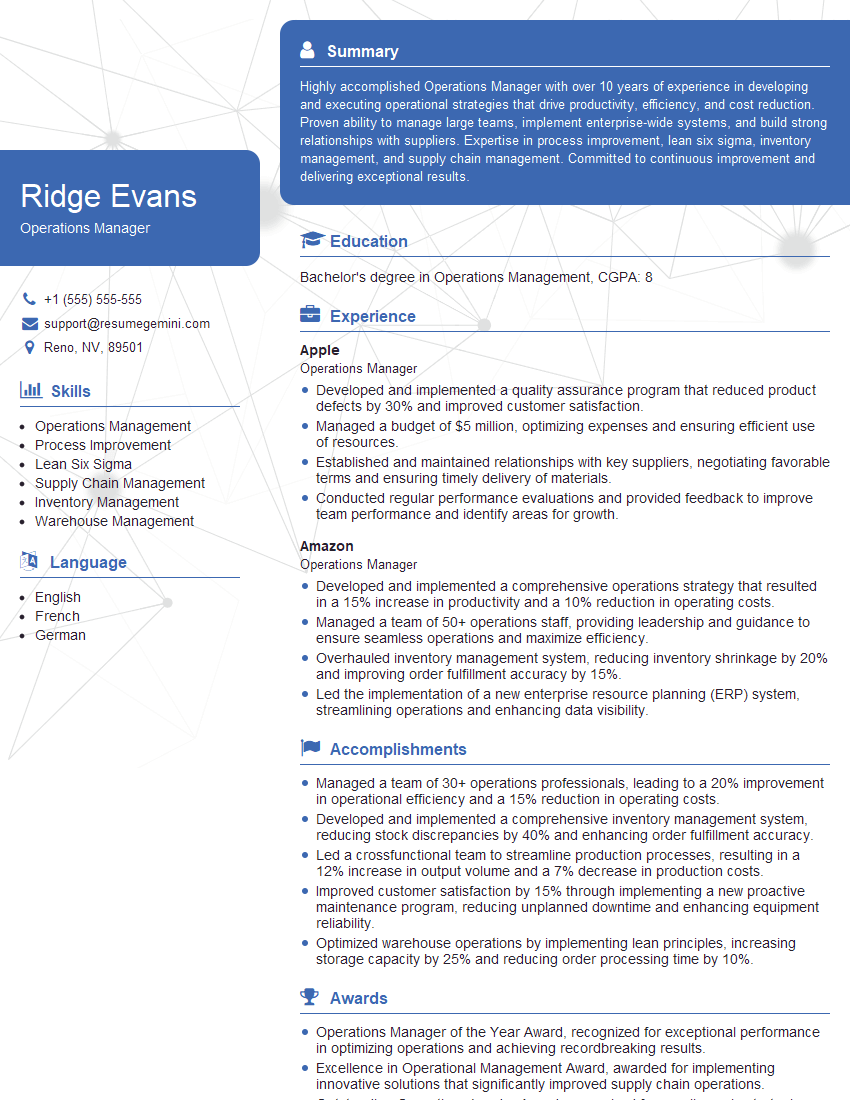
Operations Manager Resume Sample
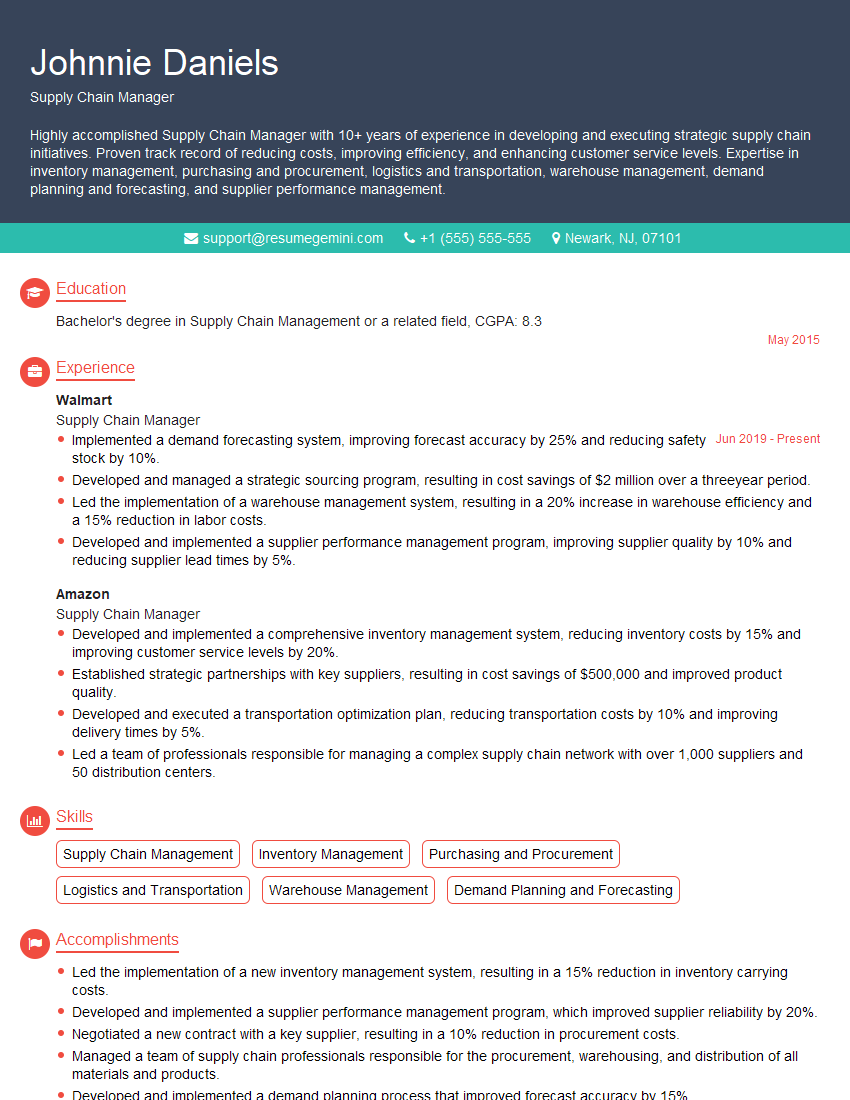
Supply Chain Manager Resume Sample
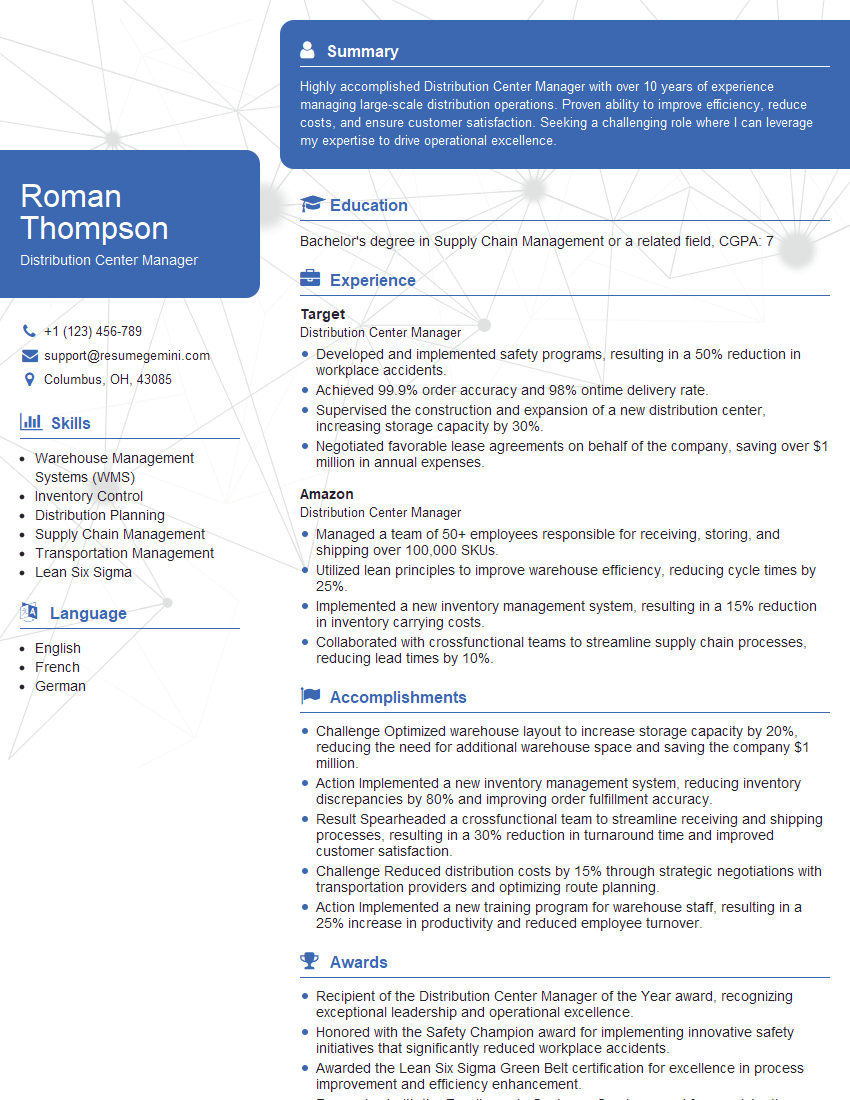
Distribution Center Manager Resume Sample
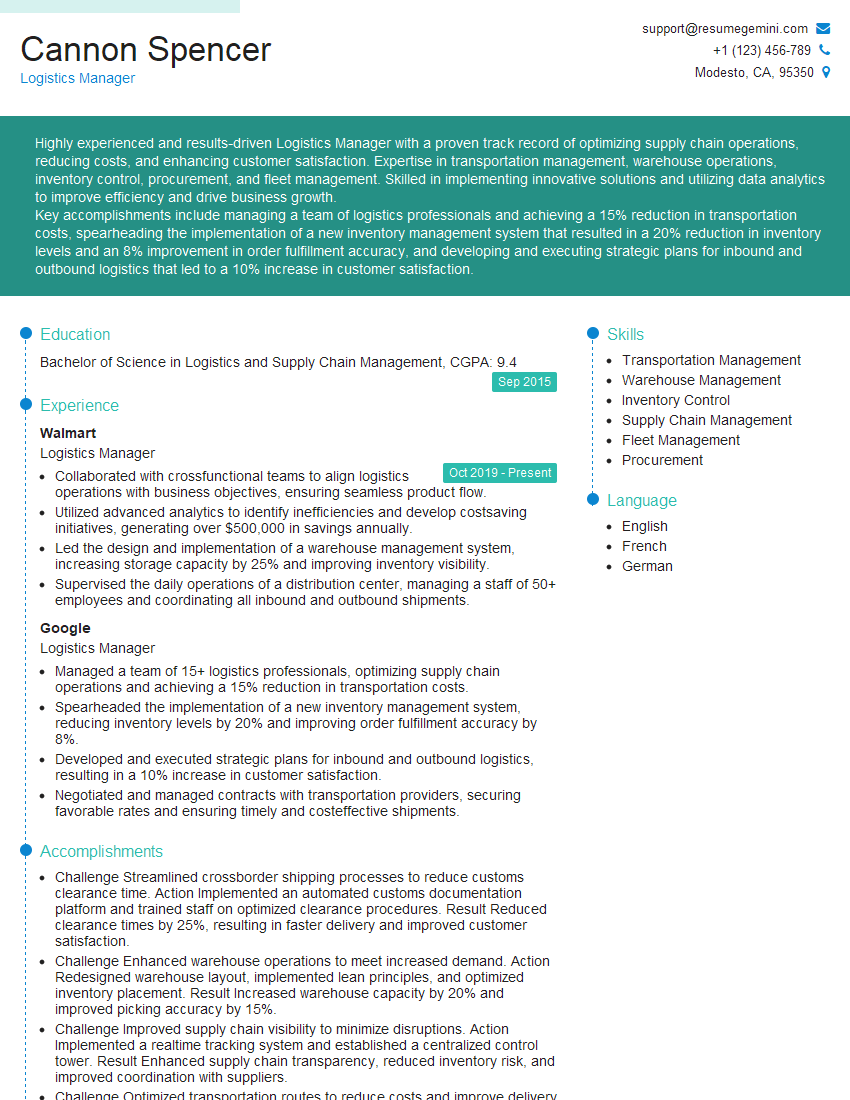
Logistics Manager Resume Sample
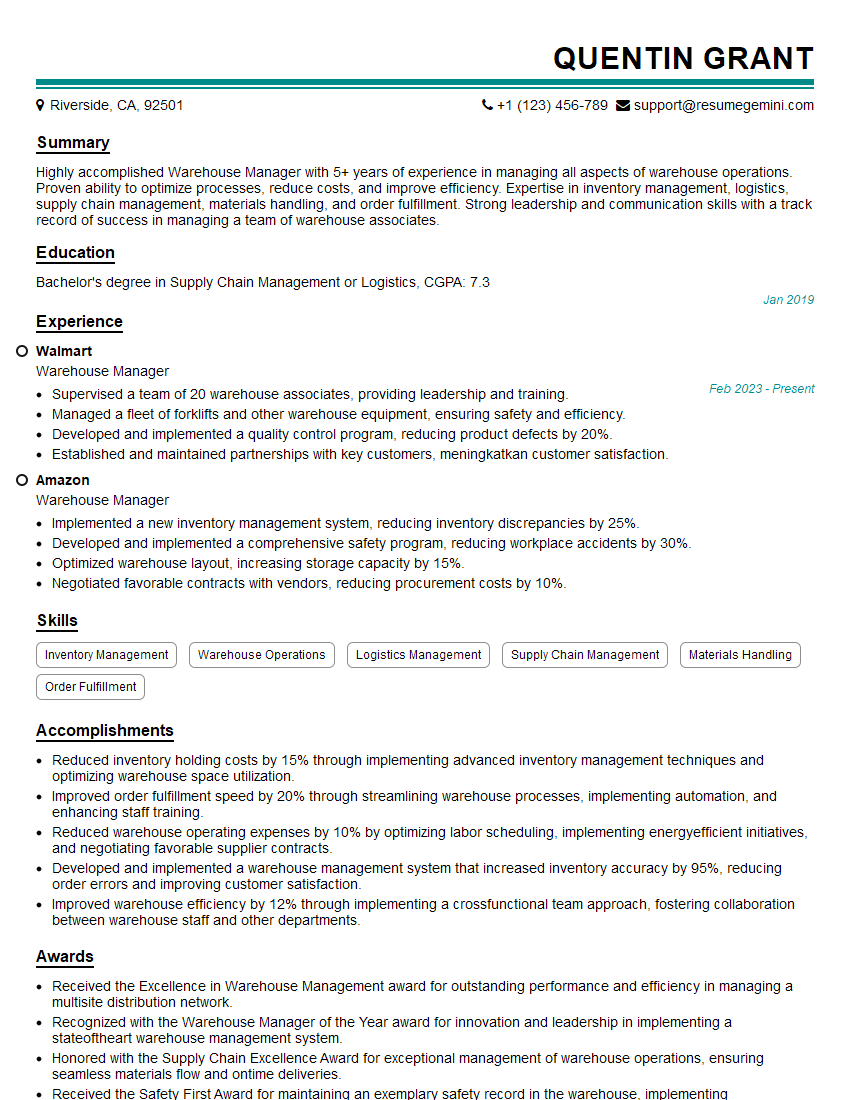
Warehouse Manager Resume Sample
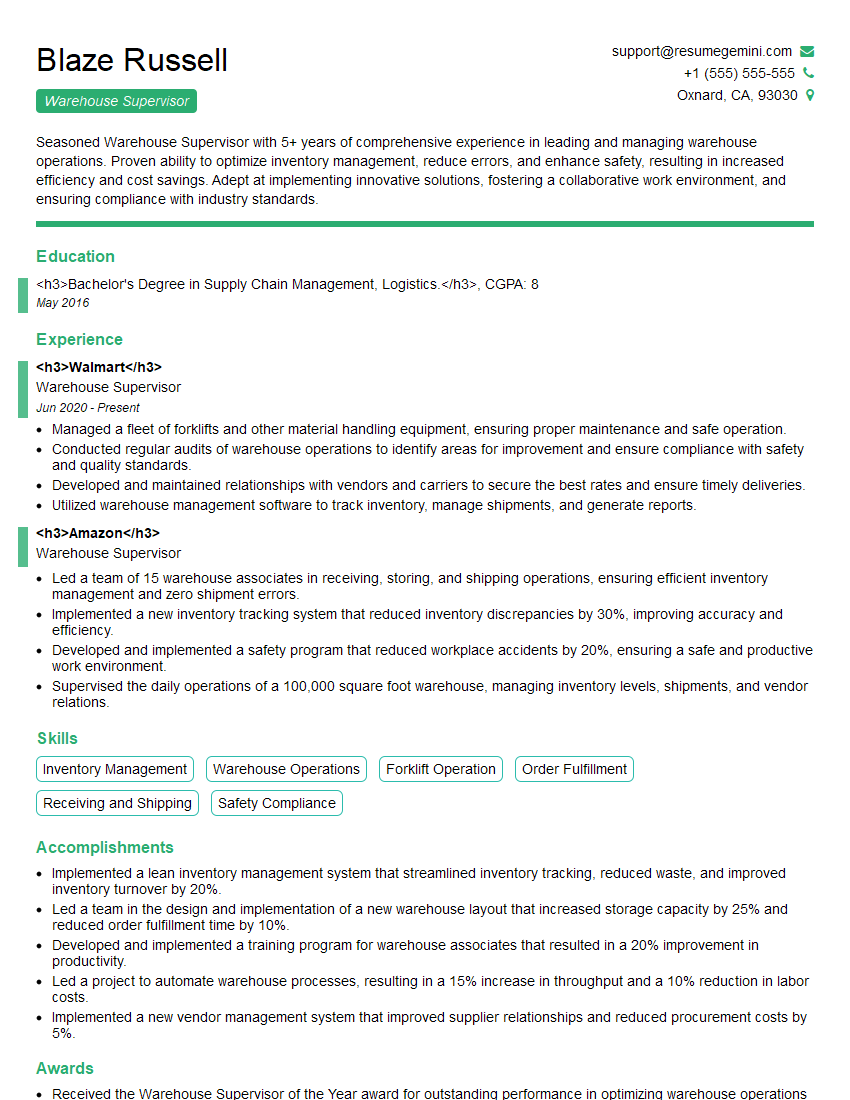
Warehouse Supervisor Resume Sample
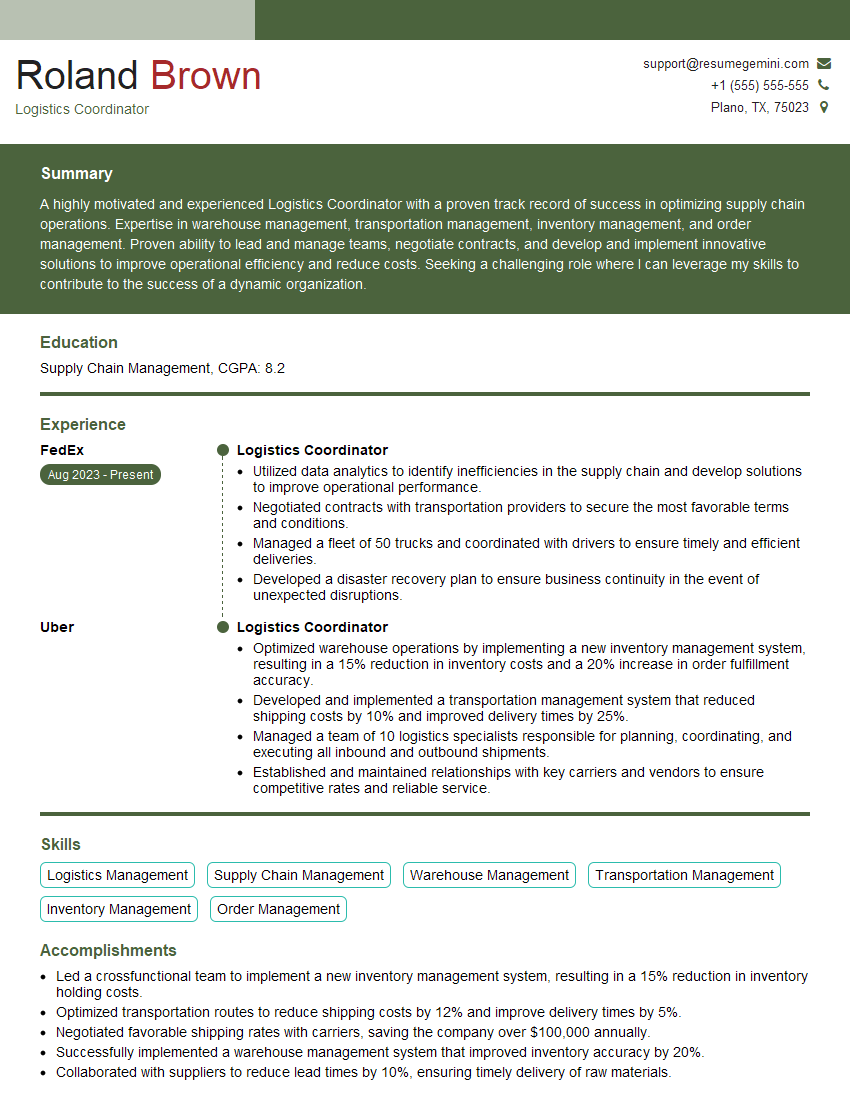
Logistics Coordinator Resume Sample
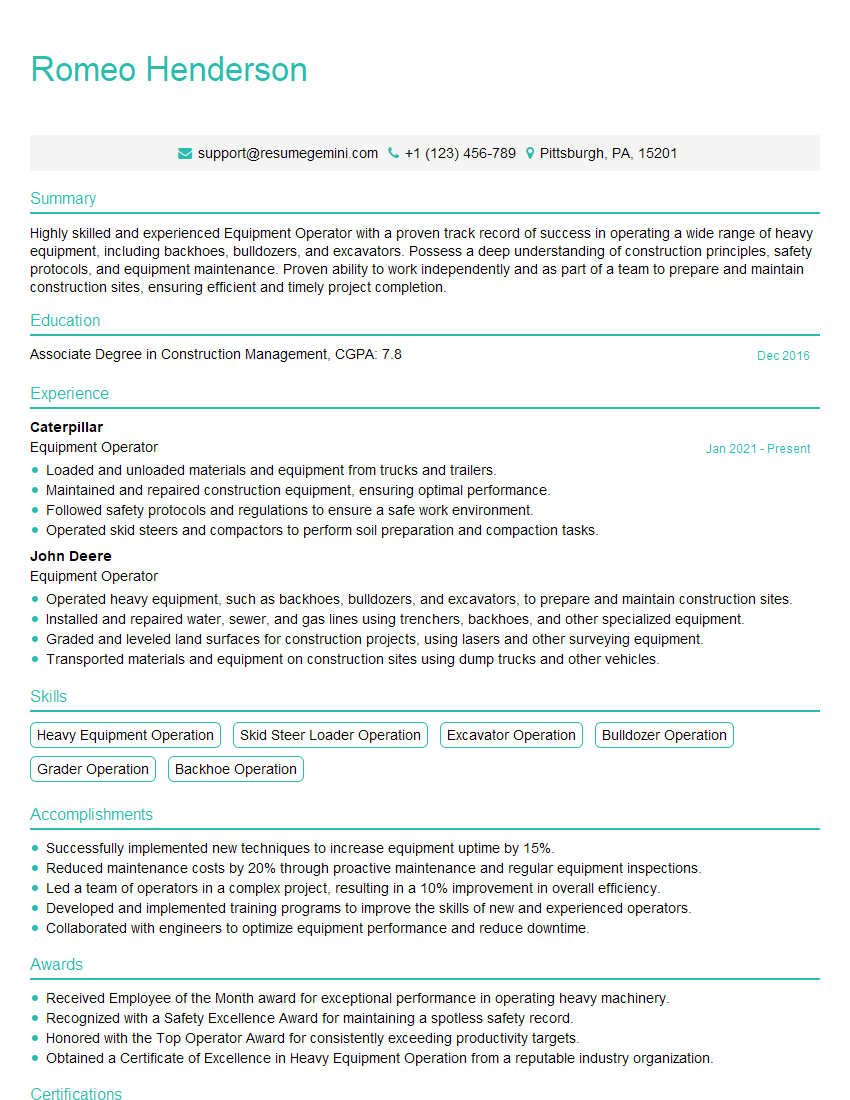
Equipment Operator Resume Sample
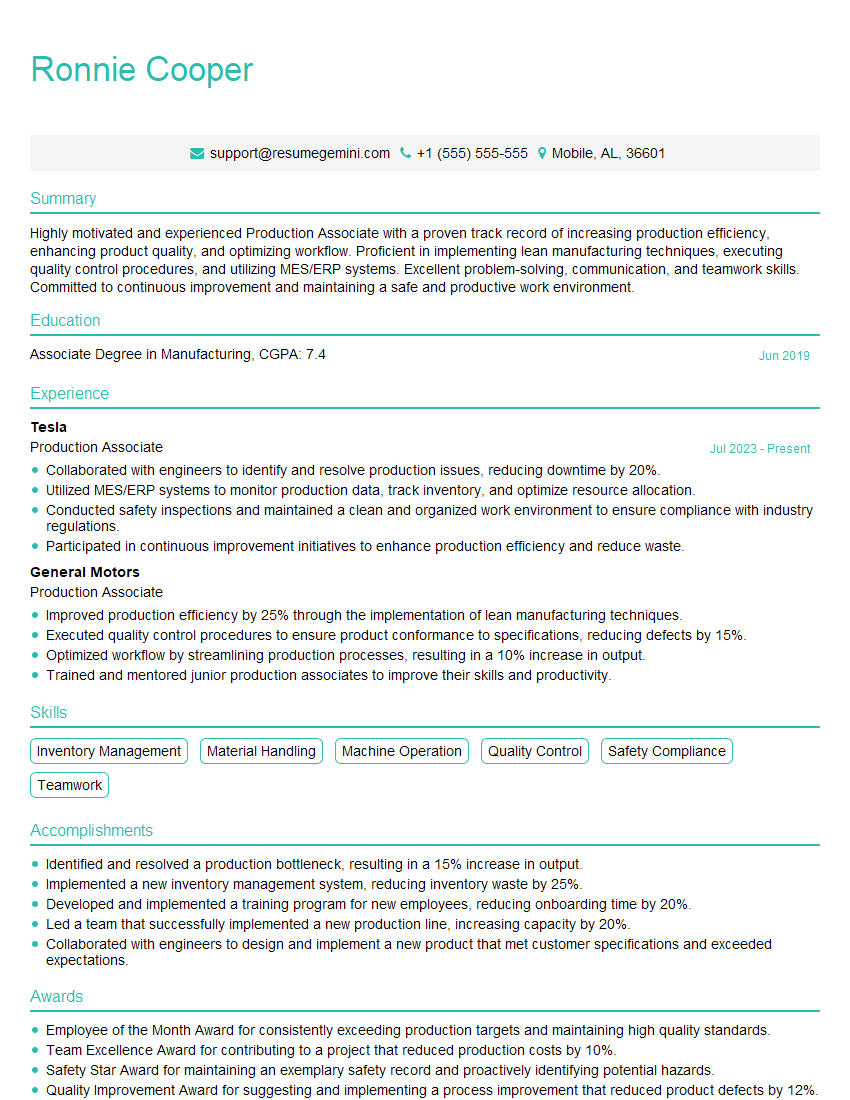
Production Associate Resume Sample

Shipping and Receiving Clerk Resume Sample
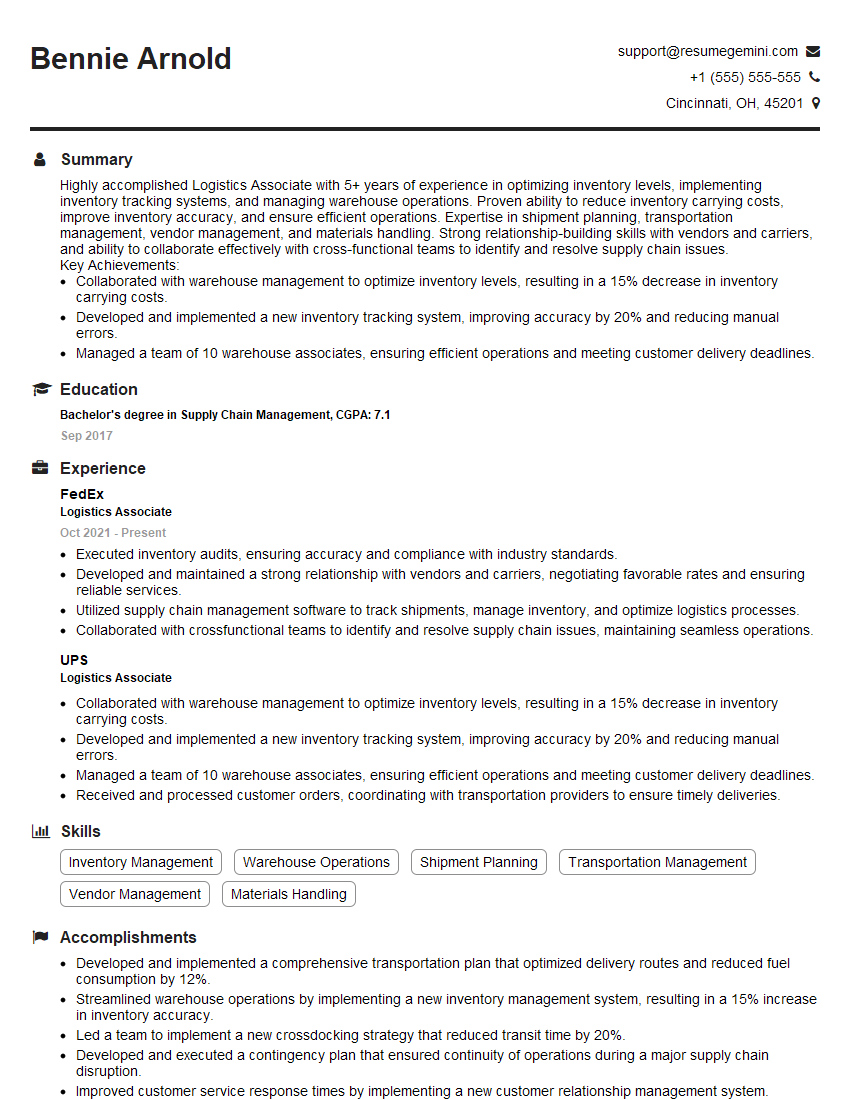
Logistics Associate Resume Sample
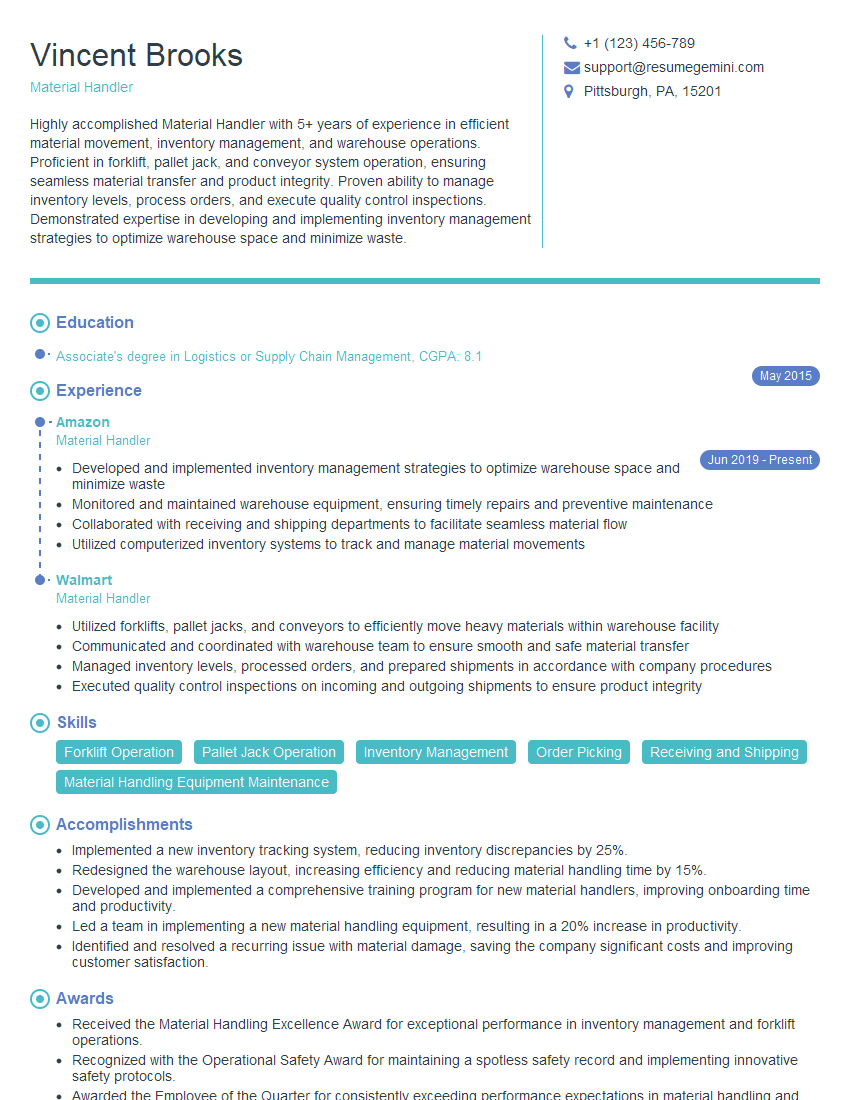
Material Handler Resume Sample
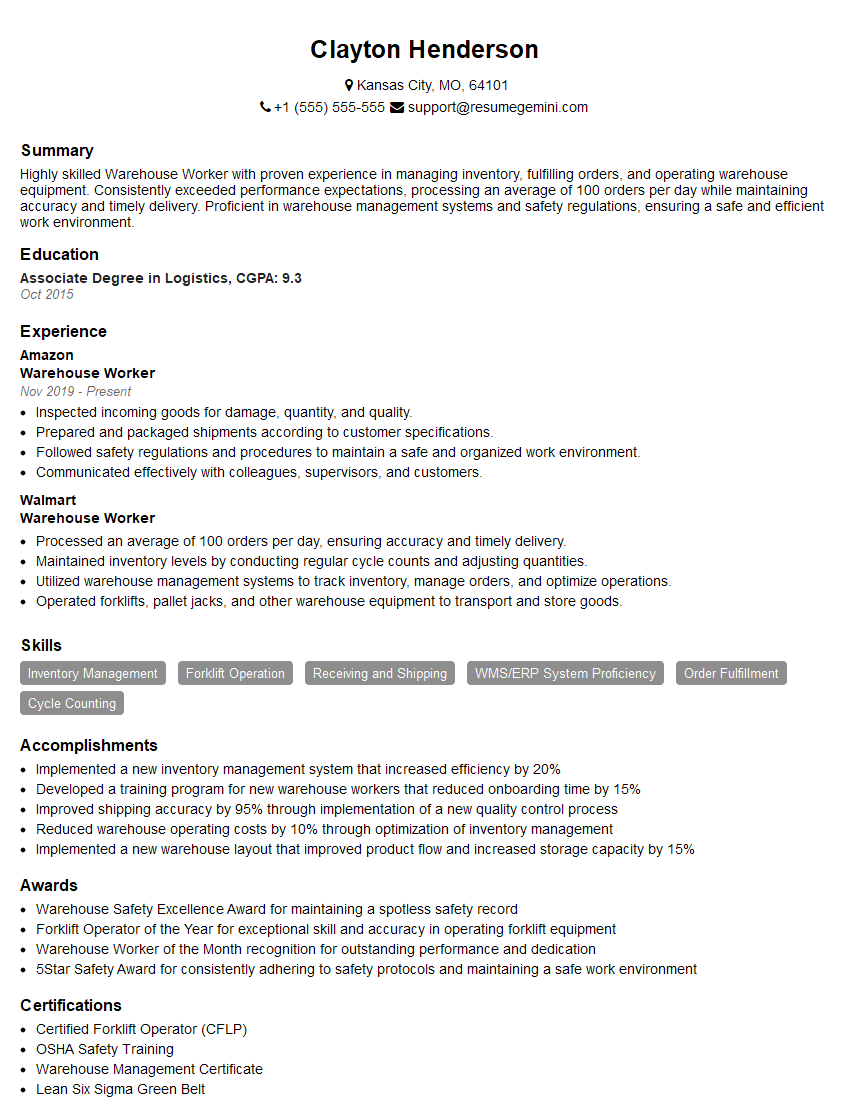
Warehouse Worker Resume Sample
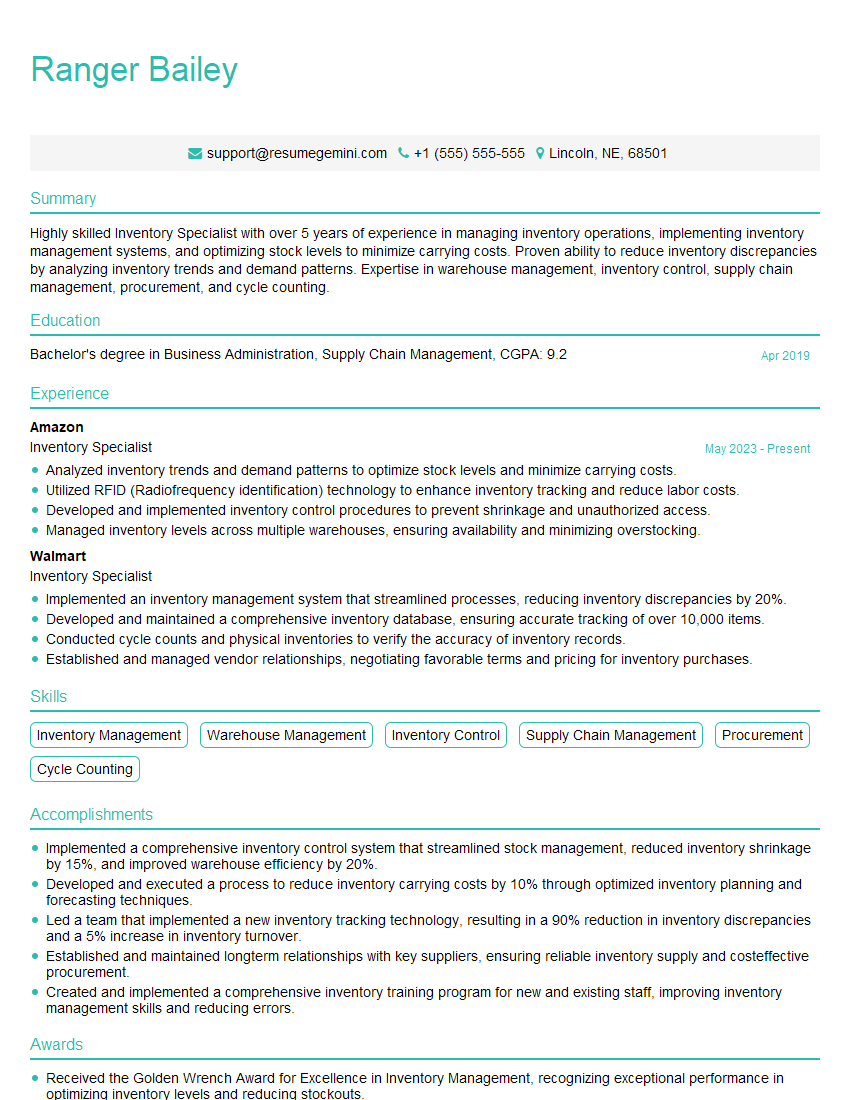
Inventory Specialist Resume Sample
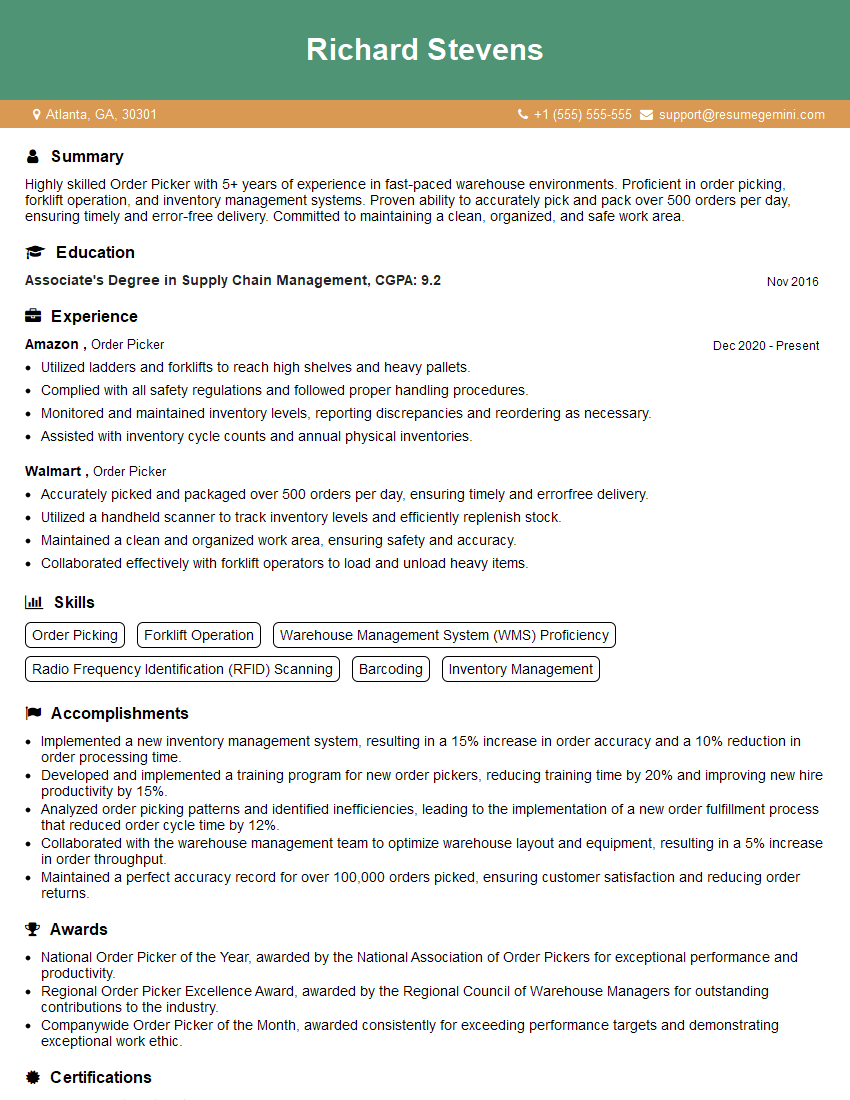
Order Picker Resume Sample

Heavy Equipment Operator Resume Sample
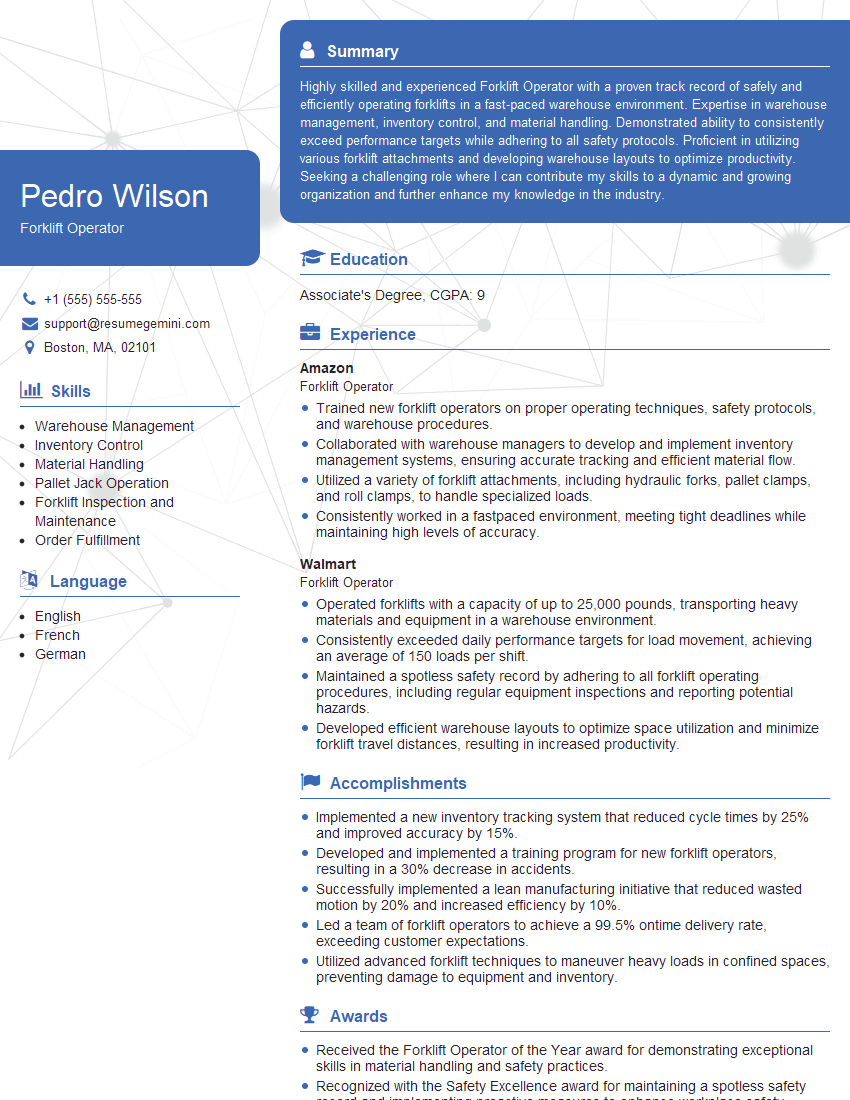
Forklift Operator Resume Sample
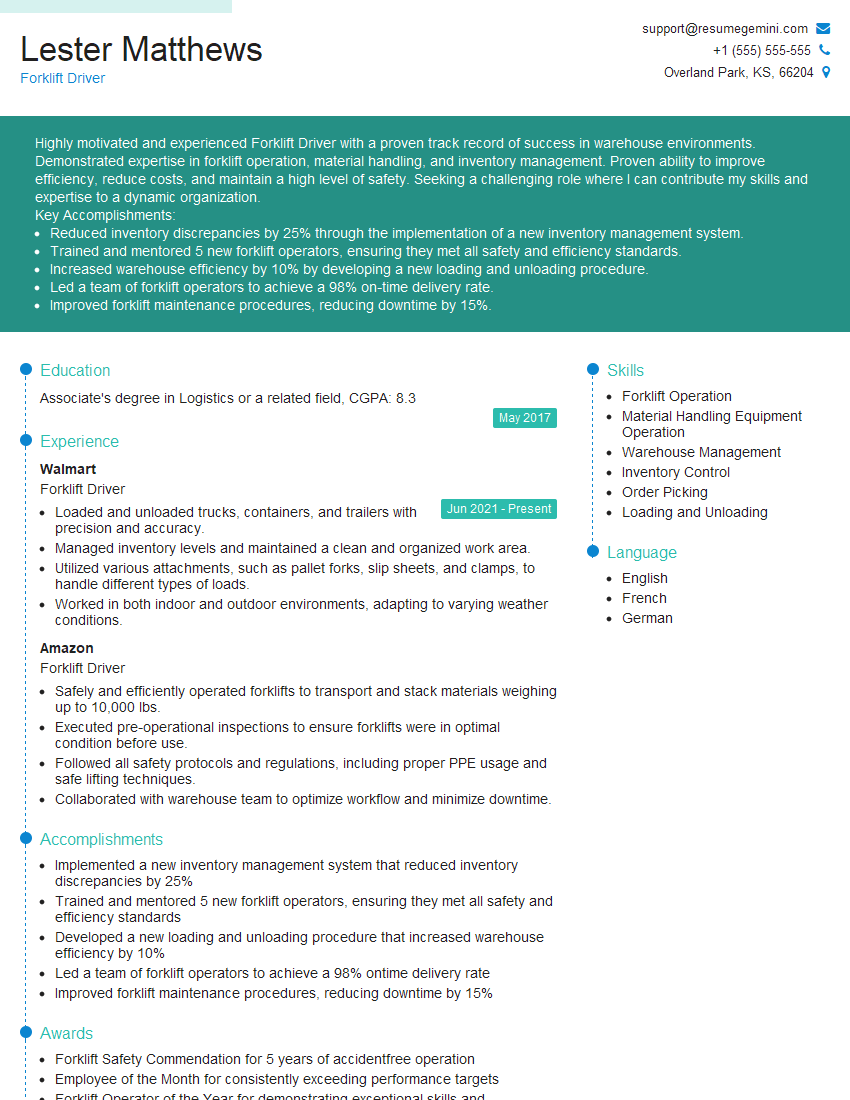
Forklift Driver Resume Sample
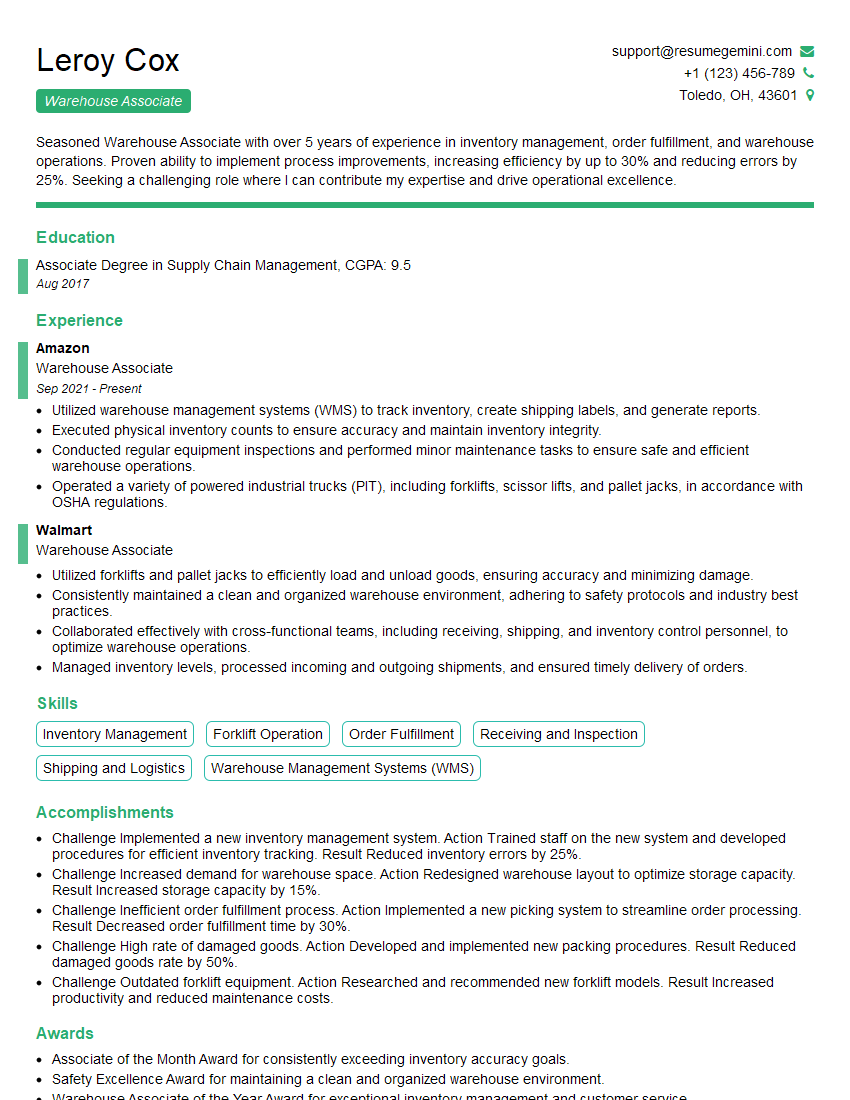
Warehouse Associate Resume Sample
- Operations Manager
- Supply Chain Manager
- Distribution Center Manager
- Logistics Manager
- Warehouse Manager
- Warehouse Supervisor
- Logistics Coordinator
- Equipment Operator
- Production Associate
- Shipping and Receiving Clerk
- Logistics Associate
- Material Handler
- Warehouse Worker
- Inventory Specialist
- Order Picker
- Heavy Equipment Operator
- Forklift Operator
- Forklift Driver
- Warehouse Associate
Explore more articles
Users Rating of Our Blogs
Share Your Experience
We value your feedback! Please rate our content and share your thoughts (optional).
What Readers Say About Our Blog
To the interviewgemini.com Webmaster.
Very helpful and content specific questions to help prepare me for my interview!
Thank you
To the interviewgemini.com Webmaster.
This was kind of a unique content I found around the specialized skills. Very helpful questions and good detailed answers.
Very Helpful blog, thank you Interviewgemini team.