Feeling uncertain about what to expect in your upcoming interview? We’ve got you covered! This blog highlights the most important Experience with kaizen interview questions and provides actionable advice to help you stand out as the ideal candidate. Let’s pave the way for your success.
Questions Asked in Experience with kaizen Interview
Q 1. Define Kaizen and its core principles.
Kaizen, a Japanese term meaning “change for the better” or “continuous improvement,” is a philosophy focused on making small, incremental improvements to processes over time. It’s not about revolutionary changes, but rather a commitment to ongoing refinement. Its core principles include:
- Continuous Improvement: The belief that improvement is an ongoing process, never truly finished.
- Respect for People: Valuing the contributions and ideas of every individual involved.
- Teamwork: Encouraging collaboration and shared responsibility for improvements.
- Customer Focus: Prioritizing the needs and satisfaction of the customer.
- Process Improvement: Focusing on systematically improving processes rather than just addressing symptoms.
- Data-Driven Decision Making: Utilizing data to identify areas for improvement and track progress.
Think of it like polishing a gemstone – each small step makes a noticeable difference in the overall brilliance.
Q 2. Explain the difference between Kaizen and Six Sigma.
While both Kaizen and Six Sigma aim for process improvement, they differ significantly in their approach. Kaizen is incremental and focuses on continuous improvement driven by all employees. It emphasizes small, frequent changes and often uses simple tools. Six Sigma, on the other hand, is a more structured, data-driven methodology aiming for dramatic reductions in defects and variations. It typically involves a dedicated team, utilizes advanced statistical tools, and focuses on larger-scale projects. Imagine Kaizen as consistently sharpening a pencil, while Six Sigma is like completely redesigning the pencil to improve its function.
Q 3. Describe your experience implementing Kaizen in a previous role.
In my previous role at a manufacturing plant, we implemented Kaizen to reduce production line downtime. We started by identifying bottlenecks using a value stream map. The team, comprising line workers, supervisors, and engineers, identified a recurring issue with machine jams. We then implemented a series of small changes – adjusting the feed mechanism, improving operator training, and standardizing preventative maintenance procedures. We tracked the results meticulously, and within three months, we saw a 20% reduction in downtime, directly impacting productivity and costs. This was a testament to the power of engaging everyone in the improvement process.
Q 4. What are some common Kaizen tools and techniques?
Many tools and techniques support Kaizen implementation. Some of the most common include:
- Value Stream Mapping: Visualizes the entire process to identify waste and bottlenecks.
- 5S: A workplace organization methodology focusing on Sort, Set in Order, Shine, Standardize, and Sustain.
- Kanban: A visual signaling system for managing workflow and limiting work in progress.
- Poka-Yoke: Error-proofing techniques to prevent mistakes from happening.
- Andon: A visual signaling system to alert workers to problems.
- Check Sheets: Simple forms used to collect data and identify trends.
The selection of tools depends on the specific situation and the nature of the improvement sought.
Q 5. How would you identify areas for improvement using Kaizen methodologies?
Identifying areas for improvement using Kaizen starts with actively seeking feedback from everyone involved. We use tools like:
- Gemba Walks: Direct observation of the work process in its actual setting.
- Customer Surveys: Gathering feedback directly from those who experience the product or service.
- Process Mapping: Visualizing the steps of the process to highlight potential areas for improvement.
- Data Analysis: Using metrics to identify areas with high defect rates, long cycle times, or significant waste.
By combining these approaches, we can gain a comprehensive understanding of the process and identify areas where even small improvements can yield substantial results.
Q 6. Explain the PDCA cycle in the context of Kaizen.
The PDCA cycle (Plan-Do-Check-Act) is a cornerstone of Kaizen. It’s a cyclical approach to continuous improvement:
- Plan: Define the problem, set objectives, and develop a plan to address the problem.
- Do: Implement the plan on a small scale, collecting data and observing the results.
- Check: Analyze the data collected and evaluate the effectiveness of the plan.
- Act: Standardize the changes if successful, or adjust the plan and repeat the cycle if necessary.
This iterative process allows for continuous learning and refinement, ensuring that improvements are sustainable and effective.
Q 7. Describe a time you used a Kaizen event to solve a problem.
During a Kaizen event focused on reducing order fulfillment time in our e-commerce department, we noticed a significant bottleneck in the packaging process. Through brainstorming and process mapping during the event, we identified that the layout of the packaging station was inefficient. We implemented a new layout, rearranged the supplies, and provided better visual cues. After implementing the changes, we saw a 15% reduction in packaging time. This highlighted the power of a focused, collaborative effort in solving problems quickly and effectively.
Q 8. What are the key metrics you would use to measure the success of a Kaizen project?
Measuring the success of a Kaizen project requires a multi-faceted approach, focusing on both quantitative and qualitative improvements. We shouldn’t just look at the bottom line, but also the process changes that led to those improvements. Key metrics I would use include:
- Cycle Time Reduction: How much faster is the process now? For example, if we were reducing the time it takes to manufacture a product, I’d track the reduction in manufacturing lead time.
- Defect Rate Reduction: How many fewer defects are being produced? This could involve tracking the number of defective units produced, customer returns, or errors in a service process.
- Cost Reduction: Did the project lead to lower material costs, labor costs, or waste reduction? Quantify this savings in both monetary terms and as a percentage.
- Throughput Improvement: How many more units are produced or services delivered in a given time frame? This metric helps to demonstrate the increased efficiency of the improved process.
- Employee Engagement and Morale: Kaizen is about team empowerment. Employee feedback surveys and observation of team participation are crucial in assessing the project’s impact on morale and engagement.
- Waste Reduction (muda): Quantify the reduction in waste, including defects, overproduction, waiting, non-utilized talent, transportation, inventory, and motion.
By tracking these metrics before, during, and after implementation, we can accurately assess the project’s ROI and identify areas for further improvement.
Q 9. How do you overcome resistance to change during Kaizen implementation?
Resistance to change is a common hurdle in Kaizen implementations. Overcoming it requires a combination of effective communication, active participation, and addressing concerns directly. I’d employ the following strategies:
- Transparency and Communication: Clearly communicate the project’s goals, benefits, and potential challenges to all stakeholders. Explain *why* the change is necessary, highlighting the positive impacts on efficiency, quality, and employee well-being.
- Active Participation: Involve employees in every stage of the project, from problem identification to solution implementation. This fosters a sense of ownership and makes them more receptive to change. Teams should be empowered to generate and implement ideas.
- Address Concerns: Actively listen to and address any concerns or anxieties employees may have about the changes. Acknowledge their apprehension and offer solutions to mitigate any negative impacts, such as retraining or support.
- Pilot Programs: Implementing a small-scale pilot program before full-scale deployment can help address concerns and demonstrate success on a smaller scale.
- Celebrate Successes: Regularly recognize and celebrate early wins to boost morale and demonstrate the positive impact of the changes.
- Leadership Support: Visible support from management is crucial. Leaders must champion the Kaizen initiative, and demonstrate their commitment by actively participating and resolving any roadblocks.
For example, in one project, we addressed resistance by involving employees in a brainstorming session to identify areas for improvement. This participation generated buy-in and led to more creative solutions.
Q 10. How do you ensure sustainability of Kaizen improvements after a project concludes?
Sustainability of Kaizen improvements is crucial for long-term success. Simply implementing a project isn’t enough; we need to ensure that the changes become ingrained in the organizational culture. I’d focus on:
- Standard Operating Procedures (SOPs): Document all improved processes and incorporate them into formal SOPs. This ensures consistency and prevents reversion to old practices.
- Training and Knowledge Transfer: Provide comprehensive training to all relevant personnel, ensuring they understand the new processes and their importance. This knowledge transfer is essential for long-term adoption.
- Monitoring and Measurement: Continue monitoring the key metrics that were used to measure the project’s success. This allows us to identify any potential problems and address them promptly.
- Embedding Kaizen into the Culture: Foster a culture of continuous improvement where Kaizen becomes an integral part of daily operations. Regularly conduct Kaizen events and encourage employees to identify and address areas for improvement.
- Management Support: Continued leadership support is critical. Management must demonstrate their commitment to the sustainability of the implemented improvements.
- Feedback Mechanisms: Establish a mechanism for employees to provide feedback and report any issues with the new processes. This ensures ongoing improvement and refinement.
For instance, after a successful Kaizen event reducing inventory holding costs, we created a standard checklist for stock management and implemented a weekly review to ensure compliance and continued efficiency.
Q 11. Explain the concept of Value Stream Mapping (VSM).
Value Stream Mapping (VSM) is a lean manufacturing technique used to visually represent the flow of materials and information in a process. It identifies areas of waste and inefficiency, enabling process improvement. A VSM typically includes:
- Process Steps: Each step in the process is clearly represented, along with the time it takes to complete.
- Data Flow: The flow of information and documents is depicted, highlighting any delays or bottlenecks.
- Inventory Levels: The amount of inventory at each stage of the process is shown, indicating potential overstocking or shortages.
- Waste Identification: Areas of waste (muda) such as transportation, inventory, motion, waiting, overproduction, over-processing, and defects are highlighted.
Imagine a VSM for order fulfillment: it would show the steps from receiving an order, through processing, picking, packing, and shipping. Bottlenecks, like a slow picking process or long shipping times, would be visually clear. This allows for targeted improvements, potentially involving automation or process streamlining.
By visualizing the entire process, VSM helps to identify areas for improvement and prioritize actions. It’s a powerful tool for collaboration and communication, making it easier for teams to understand the flow of work and identify opportunities for optimization.
Q 12. How would you use 5S methodology within a Kaizen initiative?
The 5S methodology (Sort, Set in Order, Shine, Standardize, Sustain) is a foundational lean technique that significantly supports Kaizen initiatives. Here’s how it integrates:
- Sort (Seiri): Eliminate unnecessary items from the workspace. Before a Kaizen project, we might sort through tools, supplies, and documentation, discarding anything redundant or unused. This reduces clutter and improves efficiency.
- Set in Order (Seiton): Organize remaining items for easy access and efficient workflow. Properly organizing tools and materials reduces search time and prevents errors. A well-organized workspace is critical for smoother processes.
- Shine (Seiso): Clean the workspace thoroughly. This helps identify potential maintenance issues, reduces hazards and maintains a safer and more organized environment, leading to fewer disruptions during the Kaizen project.
- Standardize (Seiketsu): Establish procedures to maintain the improved orderliness and cleanliness. Document the 5S procedures and make them part of regular operations to ensure that the improvements are sustainable.
- Sustain (Shitsuke): Maintain the established standards through regular reviews and employee involvement. Regular audits and team meetings are critical for long-term success. The focus is on embedding the practices in the daily work culture.
For example, in a Kaizen project aiming to reduce production time, we started by implementing 5S in the production area. Sorting through unnecessary tools, organizing workstations, and establishing cleaning routines contributed significantly to the reduction in waste and improved efficiency.
Q 13. Describe your experience with Kanban or other visual management tools.
I have extensive experience using Kanban boards for visual management in Kaizen projects. Kanban provides a clear, visual representation of the workflow, allowing for better tracking of tasks, bottlenecks, and progress. Key aspects of my experience include:
- Task Visualization: Kanban boards show the flow of work through various stages (e.g., To Do, In Progress, Done). This provides a clear picture of the process’s status and helps identify bottlenecks.
- Work-in-Progress (WIP) Limits: Limiting WIP helps focus on completing tasks more efficiently. This prevents multitasking and allows for faster throughput.
- Continuous Improvement: Kanban boards facilitate continuous improvement by highlighting areas where the process could be improved. Regular reviews of the board allow for quick identification and resolution of bottlenecks.
- Collaboration and Communication: Kanban boards serve as a central point for collaboration and communication, making it easier for teams to work together effectively.
In a recent project involving software development, we used a Kanban board to visualize the progress of tasks. This allowed us to quickly identify and address bottlenecks, improving the team’s productivity and reducing lead time. The visual nature of the board made it easy for team members to understand the workflow and collaborate effectively.
Q 14. How do you handle conflicting priorities during a Kaizen project?
Conflicting priorities are inevitable in any project, and Kaizen initiatives are no exception. I handle this through careful prioritization using a structured approach:
- Prioritization Matrix: I often use a prioritization matrix (e.g., MoSCoW method – Must have, Should have, Could have, Won’t have) to rank improvement initiatives based on their impact and urgency. This helps make objective decisions about which initiatives to tackle first.
- Data-Driven Decisions: Instead of relying on assumptions, I use data to prioritize tasks. For instance, we may analyze process data to identify the biggest sources of waste or inefficiencies, focusing our efforts there.
- Stakeholder Alignment: I involve key stakeholders in the prioritization process to ensure alignment on goals and priorities. This helps build consensus and reduces conflicts later.
- Timeboxing: I allocate specific time blocks to each task to prevent scope creep and ensure we don’t spend too much time on lower-priority initiatives.
- Flexibility and Adaptation: Recognize that priorities can change. Maintaining flexibility allows for adapting to new information or unforeseen circumstances.
In one instance, we were facing conflicting priorities between improving customer satisfaction and reducing costs. We used a prioritization matrix that weighed both factors, enabling us to address the most impactful improvements in a balanced manner, leading to enhanced customer satisfaction *and* cost savings.
Q 15. Explain your approach to data collection and analysis in Kaizen.
Data collection and analysis are crucial in Kaizen. My approach begins with defining the problem clearly. We then use a multi-faceted approach, incorporating various methods depending on the specific issue. This often includes:
Visual Management Tools: We leverage tools like process maps, value stream maps, and check sheets to visually represent the current state and identify areas for improvement. For example, a value stream map helps pinpoint bottlenecks in a manufacturing process.
Data Gathering Techniques: This might involve direct observation (Gemba walks), interviews with employees directly involved in the process, surveys to gather broader perspectives, and data analysis from existing systems (e.g., production logs, defect rates). We aim for a balance of quantitative and qualitative data.
Statistical Analysis: Once data is gathered, we use basic statistical tools like histograms, Pareto charts, and control charts to identify trends and root causes. A Pareto chart, for instance, highlights the ‘vital few’ problems responsible for the majority of issues.
The analysis phase is iterative. We don’t just collect data once; we continuously monitor the impact of implemented changes to ensure effectiveness. This continuous feedback loop is vital to the Kaizen process.
Career Expert Tips:
- Ace those interviews! Prepare effectively by reviewing the Top 50 Most Common Interview Questions on ResumeGemini.
- Navigate your job search with confidence! Explore a wide range of Career Tips on ResumeGemini. Learn about common challenges and recommendations to overcome them.
- Craft the perfect resume! Master the Art of Resume Writing with ResumeGemini’s guide. Showcase your unique qualifications and achievements effectively.
- Don’t miss out on holiday savings! Build your dream resume with ResumeGemini’s ATS optimized templates.
Q 16. What are some common challenges in implementing Kaizen, and how do you overcome them?
Implementing Kaizen presents several challenges. Resistance to change is a common one; people are often comfortable with the status quo, even if it’s inefficient. Lack of management support, insufficient training for team members, and inadequate resources (time, budget) can also hinder progress. Furthermore, poorly defined goals and lack of clear metrics can lead to confusion and demotivation.
To overcome these, I focus on building a strong foundation. This involves:
Securing Buy-in from Leadership: Clear communication and demonstrating the potential benefits of Kaizen to senior management is critical. They need to champion the initiative and allocate resources.
Team Training and Empowerment: Providing thorough Kaizen training, including problem-solving techniques and data analysis methods, is essential. Empowering team members to identify and solve problems boosts ownership and engagement.
Addressing Resistance through Participation: Involving team members early in the process and encouraging their input helps to foster buy-in and minimize resistance to change. It’s about demonstrating the value of their ideas and making them active participants, not passive recipients.
Focusing on Small, Achievable Wins: Starting with small, manageable projects builds momentum and demonstrates early success. Quick wins can encourage participation and demonstrate the effectiveness of the approach.
Q 17. How do you involve team members in Kaizen initiatives?
Team member involvement is paramount to Kaizen’s success. I believe in a participatory approach, involving team members at every stage. This includes:
Establishing Cross-Functional Teams: Forming teams representing diverse perspectives ensures a comprehensive understanding of the problem. This also promotes shared ownership and accountability.
Utilizing Brainstorming and Idea Generation Techniques: Encouraging open communication and creative problem-solving through brainstorming sessions allows team members to contribute their expertise and insights.
Implementing Suggestion Systems: Formalizing a system for submitting improvement suggestions provides a channel for ongoing feedback and recognition of employee contributions. It shows that their ideas are valued.
Providing Regular Feedback and Recognition: Acknowledging and rewarding team members for their contributions is vital to maintain motivation and engagement. Celebrating successes, both big and small, is crucial.
I’ve found that when team members feel heard and valued, they are much more invested in the success of Kaizen initiatives.
Q 18. Describe your experience with root cause analysis.
Root cause analysis (RCA) is essential in Kaizen to identify the underlying reasons for problems, rather than just addressing symptoms. I frequently use the ‘5 Whys’ technique, a simple yet effective method to drill down to the root cause. For example, if the problem is ‘high defect rate,’ asking ‘Why?’ repeatedly reveals the true source.
Why are defect rates high? Because of improper training. Why is training improper? Because the training materials are outdated. Why are the materials outdated? Because there's no process for updating them. Why is there no process? Because no one has taken responsibility.
Beyond the 5 Whys, I also use techniques like fishbone diagrams (Ishikawa diagrams) to visually map out potential causes and their relationships. This helps us understand the interconnectedness of various factors contributing to a problem. A combination of these qualitative and quantitative approaches gives a thorough understanding of the root cause.
Q 19. How do you prioritize improvement projects using Kaizen?
Prioritizing improvement projects involves a multi-step process. I often use a prioritization matrix that considers both the impact (potential benefits) and the effort (resources required) of each project. This helps to focus on projects that deliver maximum value with manageable effort.
We might use a simple scoring system, assigning scores to impact and effort. High-impact, low-effort projects are top priority. We also consider factors like urgency, strategic alignment with company goals, and feasibility.
For instance, a project to streamline a bottleneck process with high impact and low effort would rank higher than a complex, long-term project with a potentially large impact but requiring significant resources. This structured approach ensures that we focus on projects that provide the biggest return on investment.
Q 20. What is your understanding of Gemba walks and their role in Kaizen?
Gemba walks are a cornerstone of Kaizen. ‘Gemba’ means ‘the real place’ – the place where work is actually done. A Gemba walk involves observing processes firsthand, talking to those involved, and gathering direct data. It’s about seeing the process in action, rather than relying on reports or secondhand information.
During a Gemba walk, I pay attention to:
- Process flow: Identifying bottlenecks and inefficiencies.
- Waste: Recognizing sources of muda (waste) such as excess inventory, waiting time, and unnecessary movement.
- Safety: Assessing workplace safety conditions and identifying potential hazards.
- Employee morale: Observing employee engagement and identifying potential issues.
The information gathered during Gemba walks provides invaluable insight for identifying improvement opportunities. It allows for a more accurate and comprehensive understanding of the process than relying solely on data reports. It also allows me to build rapport with the team and understand the practical challenges they face.
Q 21. How do you measure the ROI of a Kaizen project?
Measuring the ROI of a Kaizen project is crucial to demonstrate its value. The approach depends on the nature of the project, but often involves comparing the costs of implementing the improvements against the benefits achieved. This can include:
Reduced costs: Quantifying savings in materials, labor, or energy consumption.
Increased efficiency: Measuring improvements in cycle times, throughput, or defect rates.
Improved quality: Tracking reductions in errors, defects, or customer complaints.
Increased productivity: Measuring improvements in output per unit of input.
Improved employee satisfaction: While harder to quantify, this can be measured through surveys or other feedback mechanisms; increased morale often translates into increased productivity.
For example, if a Kaizen project reduced waste by 10% and the cost of that waste was $100,000 annually, the annual ROI would be $10,000. It’s important to be specific and measure the impact of the changes to accurately reflect the return on investment. This data can then be used to justify further Kaizen projects and secure continued investment in the process.
Q 22. Describe your experience with different Kaizen implementation methodologies.
My experience with Kaizen methodologies spans various implementations, from lean manufacturing principles to office process improvements. I’ve worked with several frameworks, including:
- 5S Methodology: This focuses on workplace organization – Sort, Set in Order, Shine, Standardize, and Sustain. I’ve used 5S to dramatically improve efficiency in a warehouse setting, reducing search times by 40% by optimizing storage and labeling.
- Value Stream Mapping (VSM): This visual tool helps identify and eliminate waste in a process. In a previous role, VSM helped us streamline a customer onboarding process, reducing the time to activation by 25%.
- Kaizen Blitz: This is a short, focused event designed to rapidly improve a specific process. I led a Kaizen Blitz to optimize our project proposal process, leading to a 15% reduction in proposal preparation time.
- PDCA (Plan-Do-Check-Act): This cyclical approach is fundamental to continuous improvement. I’ve integrated PDCA into daily operations, enabling iterative improvements in various projects.
I’m proficient in adapting these methodologies to different contexts and tailoring them to the specific needs of the organization and team.
Q 23. How do you ensure that Kaizen initiatives align with overall business objectives?
Aligning Kaizen initiatives with overall business objectives is crucial for success. I achieve this through a structured approach:
- Strategic Alignment: I start by understanding the company’s strategic goals and key performance indicators (KPIs). This ensures that Kaizen projects directly contribute to achieving those goals.
- Prioritization: Not all improvement opportunities are created equal. I use data-driven methods to prioritize projects based on their potential impact on KPIs and resource availability. A cost-benefit analysis often plays a vital role here.
- Measurable Outcomes: Each Kaizen project needs clearly defined, measurable goals. This allows for accurate tracking of progress and demonstrable results, directly linking the initiative to the overall business objectives.
- Stakeholder Involvement: I involve stakeholders from different departments early on to ensure buy-in and alignment. This collaborative approach also helps uncover valuable insights and potential challenges.
For instance, in one project, we identified a bottleneck in our order fulfillment process that was impacting customer satisfaction and revenue. By focusing Kaizen efforts on streamlining this process, we directly addressed a key business objective: improved customer satisfaction and increased sales.
Q 24. How do you communicate Kaizen progress and results to stakeholders?
Communicating Kaizen progress and results effectively is essential for sustaining momentum and gaining further support. My approach involves:
- Regular Reporting: I provide regular updates using dashboards and visual aids to showcase key metrics and progress towards project goals. This includes both quantitative data (e.g., reduced cycle times, cost savings) and qualitative feedback.
- Visual Management: Visual tools like Kanban boards and charts are extremely useful in displaying progress visually, making it easy for stakeholders to understand the impact of Kaizen initiatives.
- Presentations & Meetings: I conduct regular presentations and meetings to discuss progress, challenges, and successes. These sessions provide opportunities for feedback and adjustments.
- Storytelling: I use storytelling to connect the data with the human side of the improvements. Sharing success stories of how Kaizen initiatives improved the work experience and boosted morale helps build buy-in and enthusiasm.
For example, I’ve created a monthly newsletter highlighting successful Kaizen projects and their impact on efficiency and employee satisfaction. This approach ensured transparency and fostered a culture of continuous improvement.
Q 25. What are your strengths and weaknesses when it comes to implementing Kaizen?
My strengths lie in my ability to:
- Facilitate Team Collaboration: I excel at bringing diverse teams together, fostering a collaborative environment where everyone feels empowered to contribute ideas.
- Data-Driven Decision Making: I use data analysis to identify areas for improvement, prioritize projects, and measure results. This ensures that our efforts are focused on the most impactful changes.
- Problem-Solving: I have a strong aptitude for identifying root causes of problems and developing creative solutions.
- Adaptability: I’m comfortable adapting Kaizen methodologies to different contexts and organizational structures.
One area where I strive to continuously improve is my delegation skills. While I can effectively guide and support teams, I’m working on delegating more effectively to empower team members and build their leadership capabilities.
Q 26. Describe a time you failed at implementing a Kaizen initiative, and what you learned.
In one instance, we attempted to implement a new workflow automation tool without sufficient user training. While the tool itself was excellent, the lack of training resulted in user resistance and low adoption rates. The initiative ultimately failed to deliver the expected efficiency gains.
The key lesson learned was the critical importance of user buy-in and adequate training. Successful Kaizen implementation requires not just process improvements but also addressing the human element. In subsequent projects, I prioritized user training, communication, and feedback mechanisms to ensure smoother transitions and successful implementation.
Q 27. How do you stay updated on the latest trends and best practices in Kaizen?
Staying updated on Kaizen trends and best practices is vital. I utilize several methods:
- Professional Development: I actively participate in workshops, conferences, and training programs focused on lean management and continuous improvement.
- Industry Publications & Journals: I regularly read industry publications and journals specializing in lean manufacturing and operational excellence.
- Networking: I engage with professionals in my field through online forums, professional organizations, and networking events to exchange ideas and best practices.
- Case Studies: Studying successful and unsuccessful Kaizen implementations provides invaluable insights and helps refine my approach.
Continuously learning and adapting is crucial for staying ahead in this ever-evolving field.
Key Topics to Learn for Kaizen Experience Interview
- Understanding Kaizen Principles: Grasp the core philosophy of continuous improvement, focusing on eliminating waste and maximizing efficiency. Explore the underlying concepts of “muda” (waste) and its various forms.
- Kaizen Tools and Techniques: Familiarize yourself with practical tools like 5S, Value Stream Mapping, Kanban, and PDCA (Plan-Do-Check-Act) cycles. Be prepared to discuss your experience applying these methods.
- Practical Application & Case Studies: Prepare examples from your past experiences where you implemented Kaizen principles or used Kaizen tools to improve processes, solve problems, or enhance efficiency. Quantify your achievements whenever possible.
- Problem-Solving & Root Cause Analysis: Demonstrate your ability to identify problems, analyze root causes using tools like fishbone diagrams, and propose effective solutions within a Kaizen framework.
- Teamwork & Collaboration: Kaizen is a team effort. Highlight your ability to collaborate effectively, solicit feedback, and foster a culture of continuous improvement within a team environment.
- Change Management & Implementation: Discuss your experience with implementing Kaizen initiatives, overcoming resistance to change, and ensuring sustained improvement over time.
- Data Analysis & Measurement: Explain how you tracked progress, measured results, and used data to demonstrate the success of your Kaizen efforts.
Next Steps
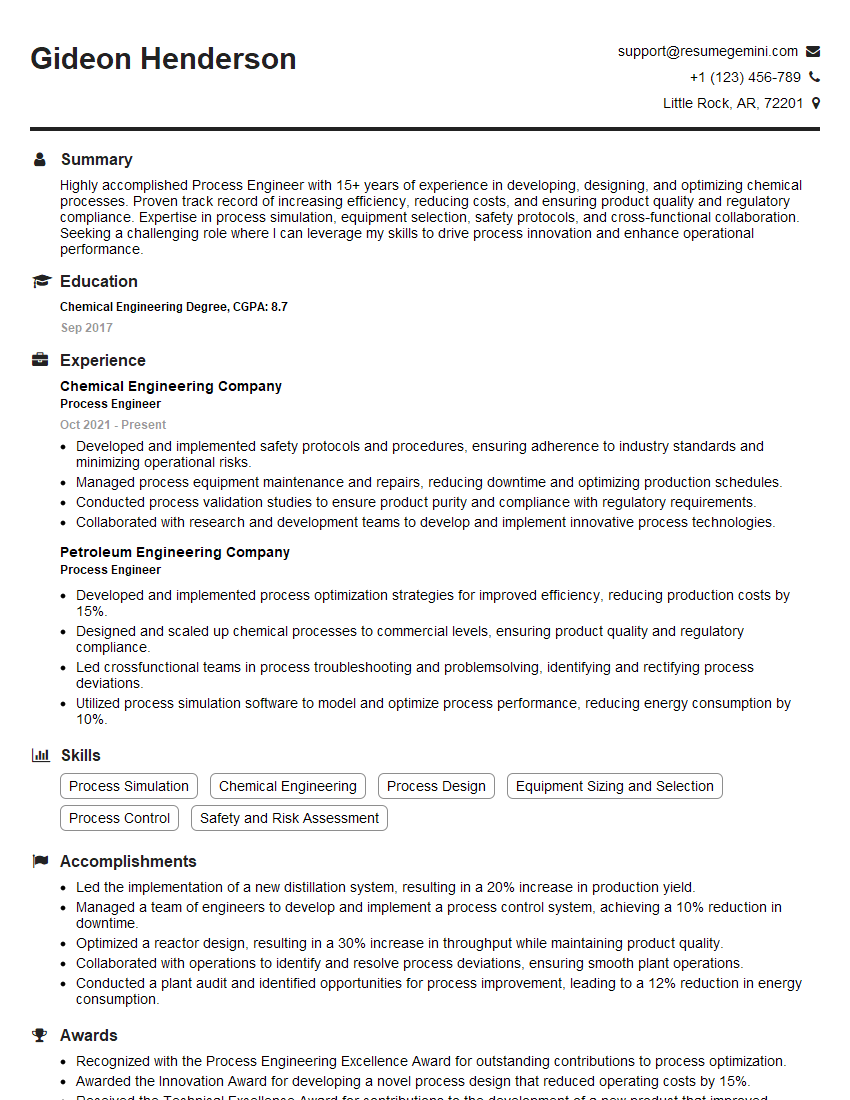
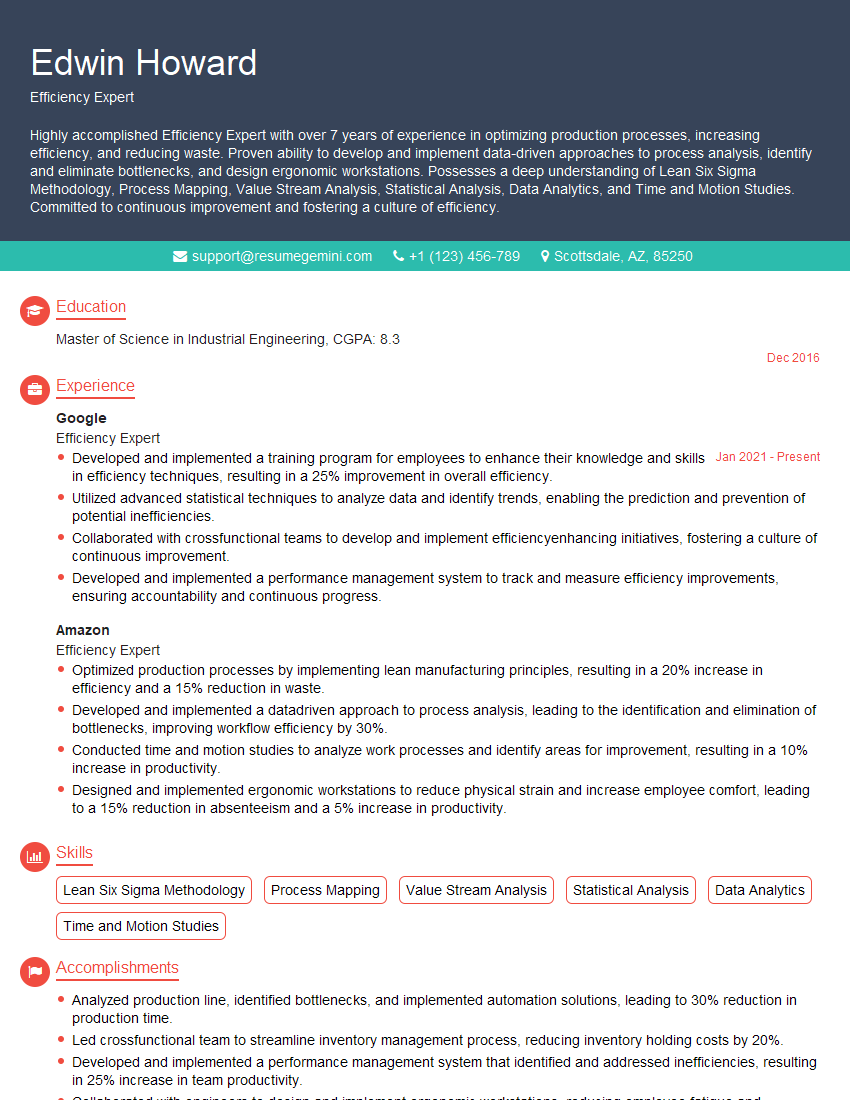
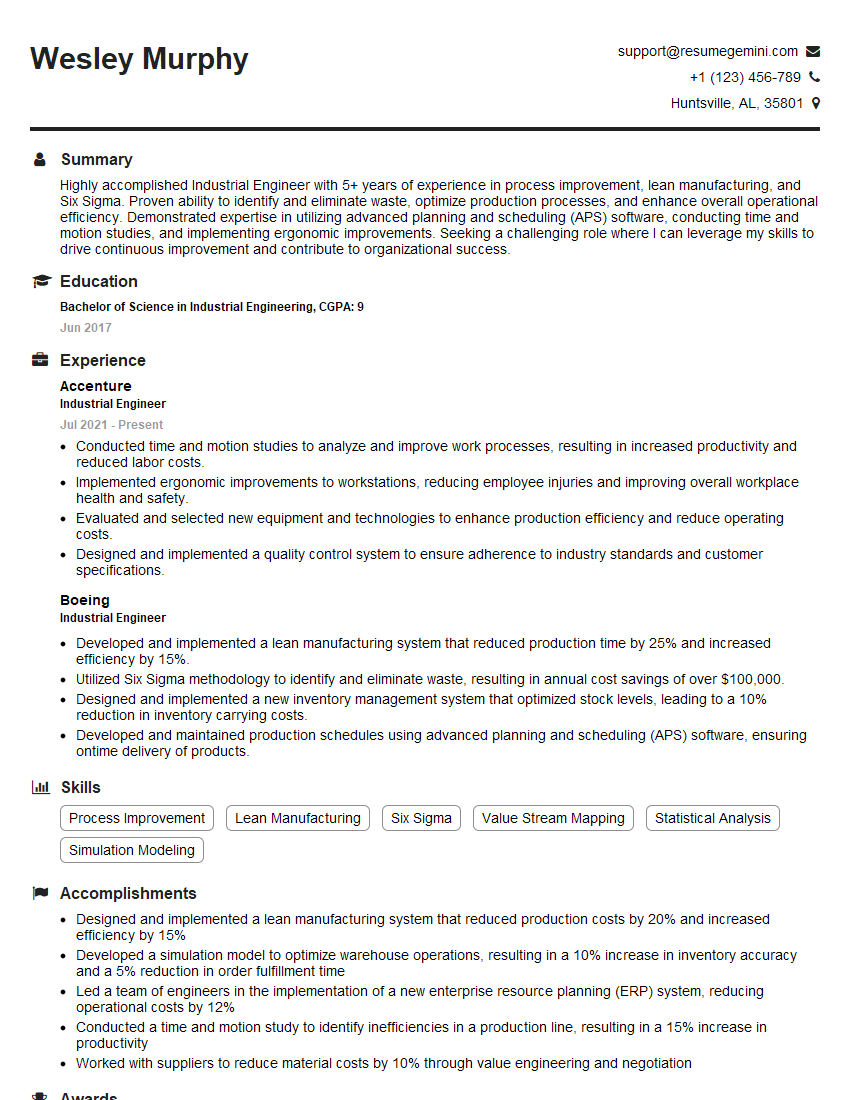
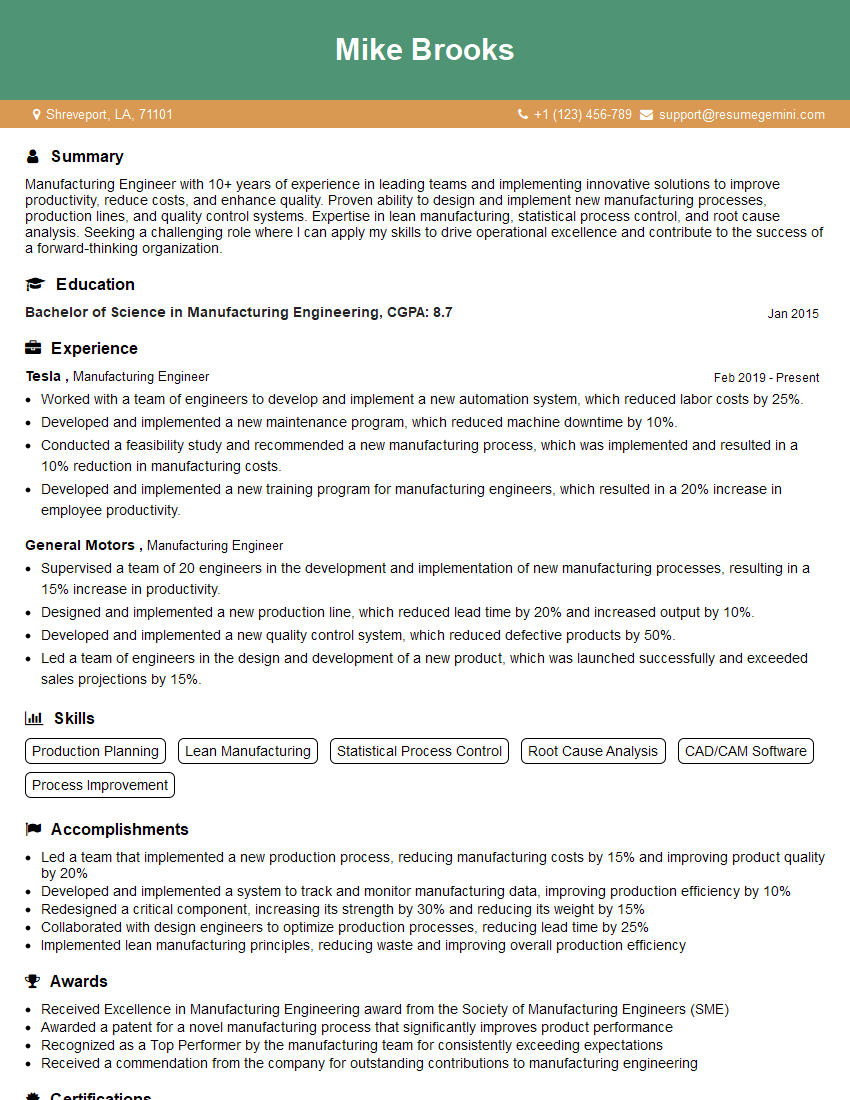
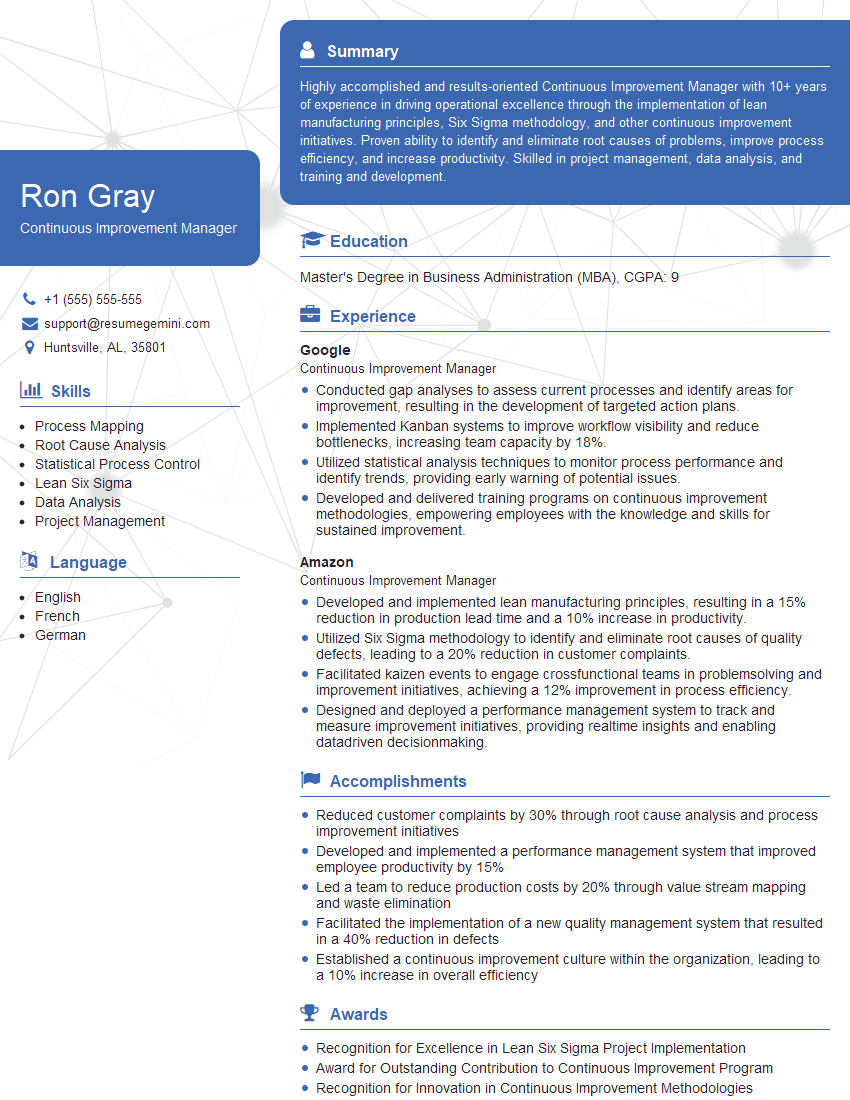
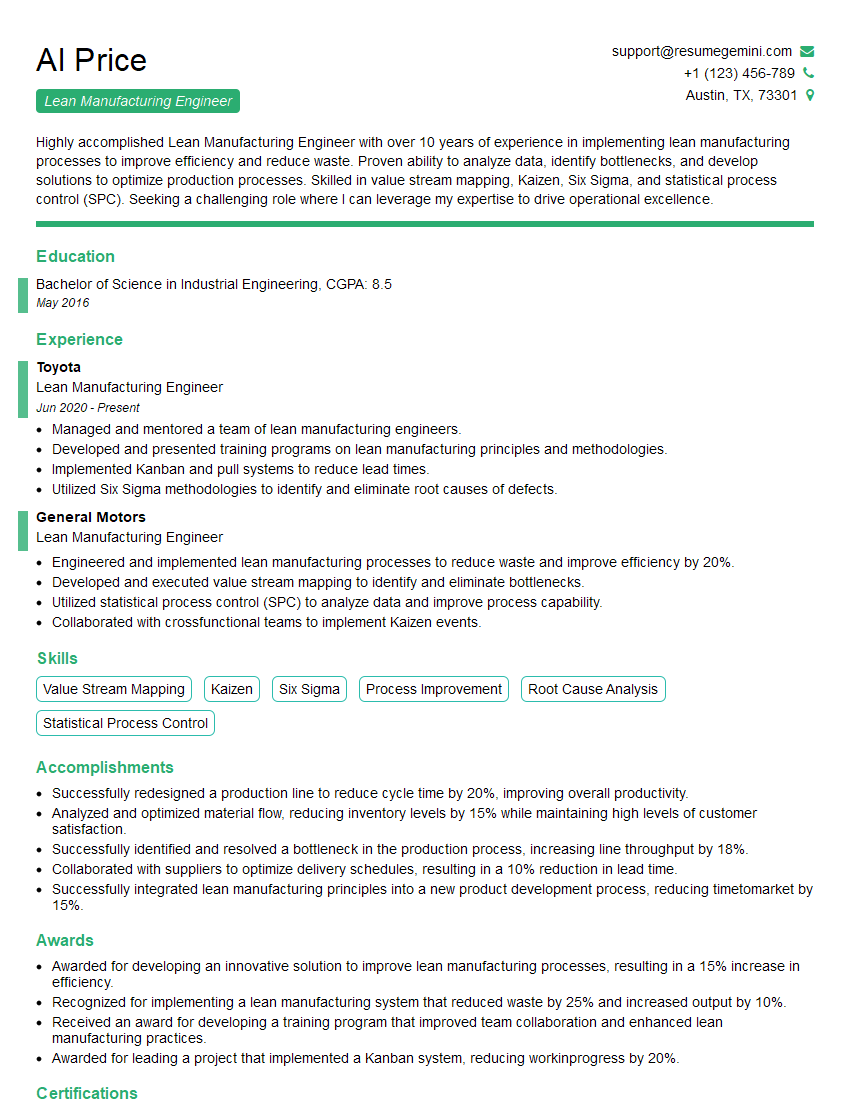
Mastering Kaizen principles and demonstrating practical application significantly enhances your career prospects in many industries. A strong understanding of continuous improvement showcases your commitment to efficiency, problem-solving, and teamwork – highly valued attributes by employers. To increase your chances of landing your dream job, focus on creating an ATS-friendly resume that effectively highlights your Kaizen experience. Use ResumeGemini, a trusted resource, to build a professional resume that showcases your skills and achievements. ResumeGemini provides examples of resumes tailored to highlight Kaizen experience, helping you present yourself in the best possible light.
Explore more articles
Users Rating of Our Blogs
Share Your Experience
We value your feedback! Please rate our content and share your thoughts (optional).
What Readers Say About Our Blog
To the interviewgemini.com Webmaster.
Very helpful and content specific questions to help prepare me for my interview!
Thank you
To the interviewgemini.com Webmaster.
This was kind of a unique content I found around the specialized skills. Very helpful questions and good detailed answers.
Very Helpful blog, thank you Interviewgemini team.