Interviews are opportunities to demonstrate your expertise, and this guide is here to help you shine. Explore the essential Skilled in Various Drywall Hanging Techniques interview questions that employers frequently ask, paired with strategies for crafting responses that set you apart from the competition.
Questions Asked in Skilled in Various Drywall Hanging Techniques Interview
Q 1. Describe your experience with various drywall types (e.g., gypsum, fire-resistant).
My experience encompasses a wide range of drywall types, each with its unique properties and applications. Standard gypsum board is the most common; it’s cost-effective and suitable for most residential projects. I’m also highly proficient with fire-resistant drywall (often called Type X), which contains added gypsum to increase its fire-resistance rating. This is crucial in commercial buildings and areas requiring enhanced fire safety. I’ve worked with moisture-resistant drywall (green board) in bathrooms and other damp environments, where it helps prevent mold and mildew growth. Finally, I have experience with specialty boards like sound-dampening drywall, used to minimize noise transmission between rooms. Understanding the different types is key to selecting the right material for each job and ensuring the project meets code and client expectations.
For example, on a recent commercial project, we used Type X drywall in stairwells and corridors for enhanced fire safety, while standard gypsum was used in the office spaces. In a recent bathroom renovation, green board was essential to prevent moisture damage. Each project necessitates a careful consideration of material selection to ensure longevity and performance.
Q 2. Explain the process of measuring and cutting drywall sheets for accurate installation.
Precise measuring and cutting are fundamental to a clean, professional drywall installation. I always start by carefully reviewing the blueprints or diagrams to understand the wall layout and dimensions. Using a measuring tape, I accurately determine the required length and width of each drywall sheet. I then transfer these measurements to the drywall sheet itself using a pencil and a straight edge – ensuring accuracy is paramount. For cutting, I primarily use a utility knife with a sharp blade, scoring the face of the drywall sheet and then snapping it along the score line. For more complex cuts (around windows or doorways, for example), I utilize a drywall saw. Regularly checking my measurements throughout the process prevents costly mistakes and ensures a perfect fit.
Imagine trying to fit a puzzle piece that’s slightly off – it won’t work. The same applies to drywall. Precise cuts ensure a seamless fit, minimizing gaps and creating a professional finish.
Q 3. How do you ensure proper alignment and spacing of drywall sheets during installation?
Maintaining proper alignment and spacing is critical for a structurally sound and aesthetically pleasing wall. I begin by establishing a consistent vertical plumb line at the beginning of each wall section using a level and a chalk line. I then use this line as a reference point when installing the first sheet, ensuring it is perfectly vertical and aligned. Subsequent sheets are installed using the first sheet as a guide, maintaining consistent spacing between them usually around 1/8th of an inch. I frequently use a level and straight edge to check alignment throughout the process. Proper spacing allows for expansion and contraction of the material and prevents buckling or cracking.
Think of it like building a brick wall – each brick needs to be correctly placed for stability. Incorrect alignment or spacing in drywall could lead to structural weakness or unsightly gaps.
Q 4. What techniques do you use to secure drywall sheets to the framing?
Securing drywall sheets to the framing involves a combination of skill and precision. I primarily use drywall screws, which offer superior holding power and prevent damage to the drywall compared to nails. The screws are driven using a power drill equipped with a bit specifically designed for drywall, ensuring a consistent and even depth of penetration without tearing or damaging the paper facing. It’s crucial to avoid over-tightening, which can dimple the surface and create stress points. I strategically place screws every 6-8 inches along the edges and every 12-16 inches in the field, following manufacturer recommendations. Screws should be countersunk slightly, but not flush, to allow for proper finishing.
The spacing and depth are vital; too close and you risk cracking, too far and the sheet isn’t secure.
Q 5. Describe your experience with different drywall fastening methods (e.g., screws, nails).
While I predominantly use drywall screws, I have experience with nails, particularly on older construction sites or specific framing types. Drywall screws are generally preferred due to their superior holding power, reduced likelihood of splitting the drywall, and ease of removal if necessary. Nails can be used effectively, especially with thicker gauge drywall but require more finesse and are more prone to splitting the sheet. The choice of fastener depends on factors like the type of framing, the thickness of the drywall, and project specifications. Each has a unique application, and understanding the differences ensures I’m using the right tool for the job.
Think of it like choosing between a screwdriver and a hammer; both can work, but one is better suited for the task at hand.
Q 6. How do you handle irregularities in wall framing during drywall installation?
Irregularities in wall framing are common challenges. Before hanging drywall, I carefully assess the framing for any deviations from plumb or level. Minor inconsistencies can be compensated for by shimming the drywall with small pieces of wood behind the sheet. For more significant irregularities, I may need to use additional furring strips to create a more even surface for the drywall to adhere to. This proactive approach ensures that the finished wall is smooth and level, preventing gaps and creating a professional finish. Careful planning and thoughtful adjustments prevent costly rework later.
Imagine trying to hang a picture on a crooked wall – it’s impossible without addressing the underlying issue first. Addressing framing irregularities similarly prevents further problems.
Q 7. What safety precautions do you take when working with drywall?
Safety is my top priority. When working with drywall, I always wear safety glasses to protect my eyes from dust and debris. A dust mask is essential to minimize inhalation of drywall dust, which can be irritating and harmful to the lungs. Hearing protection is also crucial when using power tools, reducing exposure to potentially damaging noise levels. I always ensure the work area is well-lit and free from obstacles. Finally, I employ proper lifting techniques to avoid injuries. Working at heights requires appropriate fall protection. Adhering to these safety measures is not only crucial for my own well-being but also contributes to a safe and productive work environment.
Safety isn’t just a precaution; it’s an investment in my health and the success of the project.
Q 8. Explain your experience with drywall finishing techniques (taping, mudding, sanding).
Drywall finishing, encompassing taping, mudding, and sanding, is the art of creating smooth, seamless walls. It’s a multi-step process demanding precision and patience. Taping involves applying mesh tape over the joints between drywall sheets to reinforce them and prevent cracking. Mudding, or coating the tape with joint compound, creates a smooth surface. Sanding, finally, refines the surface to a flawless finish. My experience includes working on projects ranging from small residential repairs to large-scale commercial builds, consistently achieving high-quality, professional results. For example, on a recent project, I used a specialized taping tool to ensure consistent and efficient tape application, resulting in minimal cleanup and a smooth, even surface.
- Taping: I’m proficient in using both hand tools and automated taping knives for various joint types, including butt joints and inside/outside corners.
- Mudding: My experience includes applying multiple coats of joint compound, allowing for proper drying time between each coat to avoid cracking or inconsistencies. I’m adept at feathering the edges of the mud to achieve a seamless blend with the surrounding drywall.
- Sanding: I use various grits of sandpaper, starting with coarser grits to remove larger imperfections and progressing to finer grits for a smooth finish. I pay close attention to avoiding sanding through the compound, always maintaining a consistent and even pressure.
Q 9. Describe your experience with different drywall joint compounds and their applications.
Different joint compounds serve specific purposes. All-purpose compounds are suitable for most applications, offering a good balance of working time and drying speed. Lightweight compounds are great for ceilings or large areas where reducing weight is crucial. Fast-setting compounds are perfect for speeding up the process, especially in high-volume projects. My experience allows me to select the right compound for each job, considering factors like the project’s size, the environment, and desired finish. For instance, on a recent project with high humidity, I opted for a fast-setting compound to minimize the risk of issues caused by prolonged drying time. Understanding the properties of each type is critical for achieving the best results and avoiding common problems such as cracking or shrinking.
- All-Purpose: Versatile and suitable for most applications.
- Lightweight: Ideal for ceilings and large areas.
- Fast-Setting: Speeds up the process, but requires more careful application.
- Specialty Compounds (e.g., for textured finishes): I’m familiar with specialized compounds designed for specific textural effects, such as knockdown or orange peel.
Q 10. How do you achieve smooth, seamless transitions between drywall sheets?
Achieving seamless transitions between drywall sheets is paramount for a professional finish. Careful planning and precise execution are key. It starts with proper installation, ensuring the sheets are butted tightly together with minimal gaps. Then, thorough taping and mudding are crucial, paying close attention to feathering the edges. Multiple coats of mud, allowed to dry completely between coats, are applied, gradually building up the surface to match the surrounding wall. Consistent sanding is crucial to remove any imperfections and achieve a truly seamless transition. Imagine trying to seamlessly join two pieces of wood – the same level of care and attention to detail applies to drywall. I’ve consistently achieved this seamless finish by meticulous preparation, using the right tools, and paying attention to every step of the process. On a recent project involving complex angles, I meticulously measured and cut the drywall to ensure perfect alignment, minimizing the need for extensive mudding and sanding.
Q 11. What are your methods for repairing damaged or flawed drywall sections?
Repairing damaged drywall involves carefully assessing the extent of the damage. Small holes or dents can be filled with spackle or joint compound, sanding smooth after drying. Larger holes or cracks might require patching with a piece of drywall, ensuring a secure fit and using adhesive and screws for reinforcement. Careful mudding and sanding are then necessary to blend the patch seamlessly with the surrounding wall. My experience allows me to effectively tackle various repair types, ensuring a lasting and visually appealing solution. For example, I once repaired a significant hole caused by a plumbing leak, carefully creating a patch, applying multiple coats of mud and feathering out the edges to ensure that the repair blended seamlessly with the original wall.
Q 12. Explain your experience with different drywall textures (e.g., orange peel, knockdown).
Creating various drywall textures adds character and visual interest to a space. Orange peel, a common texture, is achieved by spraying a thin layer of joint compound and then using a special spray nozzle to create a fine textured effect. Knockdown texture involves spraying a thicker coat of joint compound and then using a knockdown knife to create a rough, textured look. Other textures, such as skip trowel or sand, are created by using different application techniques. My experience includes creating a wide variety of textures to meet client specifications and design requirements. I’ve found that understanding the consistency of the mud and the technique used is crucial for achieving a uniform and consistent finish.
Q 13. How do you ensure the proper drying time for drywall mud?
Ensuring proper drying time for drywall mud is essential to prevent cracking, shrinkage, and other issues. This depends on several factors, including the type of compound used, the thickness of the application, humidity, and temperature. Generally, each coat needs sufficient drying time before applying the next. I typically allow 24-48 hours between coats for most applications, but always check the manufacturer’s instructions for specific drying times. In high humidity situations, proper ventilation is key to prevent excessive drying time. For thicker coats, I might allow for an even longer period. By ensuring proper drying times, I avoid common issues encountered when the mud dries too quickly or too slowly.
Q 14. Describe your experience working with specialized tools for drywall installation and finishing.
Drywall installation and finishing rely on specialized tools for efficiency and quality. These include taping knives (various sizes), mud pans, putty knives, sanding blocks and poles, corner tools, spray equipment for texture, and various types of trowels. My experience encompasses the use of all these tools, and I’m also proficient with specialized tools for specific tasks, such as automated taping tools for faster and more consistent tape application, and texture spray guns for achieving specific finishes. Proficiency with these tools significantly impacts the quality and speed of my work. Choosing the right tool for the job is crucial, like choosing the right brush for painting; it makes a noticeable difference in the quality of the end result.
Q 15. What is your experience with using hand tools vs. power tools for drywall work?
My experience with both hand and power tools in drywall installation is extensive. Hand tools, like utility knives, taping knives, and putties, offer precision for intricate work and are essential for finishing. Think of them as the surgeon’s scalpel—perfect for detailed tasks like feathering edges or repairing small cracks. I use them daily for tasks where finesse is crucial. Power tools, on the other hand, like screw guns and lift-assist systems, significantly increase efficiency, especially on larger projects. For instance, a screw gun dramatically speeds up the process of attaching drywall sheets, reducing fatigue and improving speed. The choice depends heavily on the specific task. For large-scale hanging, power tools are a must, but finishing almost always relies on the precision and control of hand tools.
For example, on a recent project involving intricate crown molding, hand tools were my primary choice to ensure clean lines and prevent damage. On the same project, the power screw gun was vital for quickly securing the standard drywall sheets to the framing.
Career Expert Tips:
- Ace those interviews! Prepare effectively by reviewing the Top 50 Most Common Interview Questions on ResumeGemini.
- Navigate your job search with confidence! Explore a wide range of Career Tips on ResumeGemini. Learn about common challenges and recommendations to overcome them.
- Craft the perfect resume! Master the Art of Resume Writing with ResumeGemini’s guide. Showcase your unique qualifications and achievements effectively.
- Don’t miss out on holiday savings! Build your dream resume with ResumeGemini’s ATS optimized templates.
Q 16. How do you manage your time and work effectively within a team environment?
Effective time management and teamwork are critical in drywall installation. I believe in clear communication, collaborative planning, and efficient task delegation. Before starting any project, we have a thorough walkthrough to understand the scope of work, identify potential challenges, and assign roles. I’m adept at working independently yet actively contribute to the team’s overall progress. This includes assisting colleagues when needed and proactively anticipating potential bottlenecks.
For instance, on a recent project, I noticed one team member was falling behind with the cutting. I offered assistance, and by sharing the load and utilizing my experience with precise cuts, we were able to maintain the project schedule without compromise.
Q 17. What are your strategies for troubleshooting common drywall problems (e.g., cracks, nail pops)?
Troubleshooting drywall problems requires a systematic approach. For cracks, I first assess the cause—settlement, movement in the structure, or inadequate support. Small cracks can be repaired with joint compound and sanding, while larger cracks might need additional support, perhaps with mesh tape for reinforcement. Nail pops are usually caused by improper fastening or movement in the framing. My approach involves removing the popped nail, adding additional screws around the area, and filling the hole with joint compound for a smooth finish.
- Cracks: Assess the size and cause. Small cracks: joint compound and sanding. Larger cracks: mesh tape reinforcement, joint compound, and sanding.
- Nail pops: Remove the popped nail, add supporting screws, and fill with joint compound.
- Holes: Size matters. Small holes can be patched, larger ones may require cutting and replacing sections.
I always prioritize understanding the root cause, not just treating the symptom. A seemingly simple nail pop could indicate a structural issue that needs addressing to prevent further problems.
Q 18. How do you adhere to building codes and safety regulations during drywall installation?
Adherence to building codes and safety regulations is paramount. I’m very familiar with local codes and the requirements for fire resistance, sound insulation, and accessibility. I ensure all materials meet the specified standards. Safety is my top priority. This includes using appropriate personal protective equipment (PPE) such as safety glasses, dust masks, and hearing protection at all times. I also use caution when operating power tools and always make sure the workspace is clear and free from obstructions.
For example, I always double-check the spacing and type of screws used to meet fire-rating requirements, and I always use proper fall protection equipment when working at heights.
Q 19. What is your experience with different types of drywall finishing tools?
My experience with drywall finishing tools is comprehensive. I’m proficient with various taping knives (6”, 8”, 10”, 12”), used for applying joint compound smoothly and evenly. I’m skilled in using different types of putties and compound for varied finishing requirements, and I know when to use a wide knife for large areas and a smaller one for corners and detail work. I use sanding tools effectively, from hand sanding blocks for fine details to power sanders for efficiency, but always aware of dust mitigation strategies. I am equally comfortable with both traditional and modern tools, and I constantly seek to refine my techniques and learn about new innovations in the field.
Knowing the different grades and types of joint compound is crucial for achieving various levels of smoothness and final finish for the entire wall.
Q 20. Describe your experience with installing drywall in different environments (e.g., high humidity, cold temperatures).
Installing drywall in various environments requires adjustments to techniques and materials. In high-humidity areas, using moisture-resistant drywall is crucial to prevent mold and mildew growth. We also need to pay close attention to drying times to prevent problems with the compound. In cold temperatures, keeping materials at the right temperature is important as freezing can damage the drywall. We need to choose appropriate adhesives and adjust our working methods to account for the slower drying times.
For instance, on a recent project in a cold, damp basement, I used mold-resistant drywall and adjusted my technique to account for the slower drying time of the compound in the cold environment. This ensured a superior, long-lasting finish.
Q 21. How do you ensure quality control throughout the drywall installation process?
Quality control is an ongoing process, not a one-time check. I start by inspecting the framing for accuracy and ensuring it’s properly prepared for drywall installation. During the installation, I frequently check the alignment of the sheets, ensuring they are properly fastened and avoiding gaps. I meticulously inspect the finish, looking for any imperfections like missed areas or sanding inconsistencies. I also frequently review the work to make sure everything complies with plans and regulations.
I find that regular quality checks throughout the process—from the initial framing inspection to final sanding—prevent significant rework later. A stitch in time saves nine, and as a skilled installer, I take pride in consistent attention to detail and quality.
Q 22. Explain your understanding of various drywall installation methods (e.g., single layer, double layer).
Drywall installation methods vary depending on the project’s requirements and the desired level of soundproofing and fire resistance. The most common are single-layer and double-layer installations.
- Single-Layer Installation: This is typically used in residential settings where cost-effectiveness is prioritized and the wall isn’t subject to extreme impact or noise. A single layer of drywall is affixed directly to the framing, providing a smooth, finished surface. It’s quicker and less material-intensive than double-layer.
- Double-Layer Installation: Often found in commercial settings or areas needing enhanced soundproofing or fire resistance (like hallways or apartments), this method involves installing two layers of drywall. Staggering the seams between layers improves strength and reduces the risk of cracking. Adding sound-deadening material between the layers further enhances noise reduction. The additional layer adds significantly to the overall cost but offers a substantial upgrade in performance.
For instance, I recently worked on a home renovation where a single layer of 1/2-inch drywall was sufficient. However, in a recent commercial project, we used a double-layer 5/8-inch drywall system with sound insulation in the walls bordering a recording studio.
Q 23. How do you handle difficult or complex drywall installation projects?
Difficult drywall installations often involve complex angles, curves, or unusual building structures. My approach involves a meticulous planning and problem-solving strategy:
- Thorough Assessment: I carefully examine the project site, taking precise measurements and noting any unusual features. This includes assessing the framing, existing structure, and any potential obstacles.
- Detailed Planning: This includes creating detailed drawings or templates for curved or angled sections. I also anticipate potential challenges and plan accordingly, perhaps by pre-cutting pieces or using specialized tools.
- Appropriate Techniques and Materials: I select appropriate drywall types and finishing techniques to ensure a professional result. This might involve using specialty drywall for curves or using specific compounds for patching and finishing.
- Strategic Cutting and Fitting: Precise cutting is paramount. I use a combination of tools, including utility knives, drywall saws, and specialized scoring tools to ensure accurate cuts and a seamless finish. I often create templates to guide me.
- Experienced Finishing: Proper finishing techniques are critical to resolving challenges smoothly. Taping and mudding techniques are especially crucial when handling complex areas or irregularities.
For example, I once worked on a project with a severely sloped ceiling. I created templates from cardboard to accurately cut and fit the drywall, ensuring a smooth and seamless finish.
Q 24. What is your experience working with blueprints and architectural drawings?
I have extensive experience interpreting blueprints and architectural drawings. My proficiency ensures accurate drywall installation, avoiding costly mistakes and rework. I routinely use blueprints to identify wall locations, dimensions, and any special features, such as niches, built-in units, or unusual angles. I also use them to determine the type and thickness of drywall required for each area, ensuring compliance with building codes and project specifications. I’m accustomed to working with both hand-drawn and digital plans.
A recent project involved a complex set of architectural drawings for a multi-level home with numerous curves and architectural features. I used the drawings to carefully plan the drywall installation, ensuring everything lined up perfectly and that the finished product matched the architect’s vision.
Q 25. What is your experience in estimating materials and labor costs for drywall projects?
Accurate cost estimation is critical for successful project management. My experience allows me to accurately assess material and labor costs based on project plans. I consider several factors:
- Square Footage: The primary driver of material costs is the overall area requiring drywall.
- Drywall Type: Different types (e.g., moisture-resistant, fire-rated) have varying costs.
- Labor Rates: These fluctuate based on location, project complexity, and market conditions.
- Waste Factor: I always include a contingency for material waste, which depends on the project’s complexity and the potential for cuts and scraps.
- Additional Materials: This includes joint compound, tape, screws, and primer.
I typically use software programs to assist with calculations and produce detailed estimates that I’ll review with my client.
Q 26. Describe your experience working on large-scale drywall projects.
I’ve worked on numerous large-scale projects, including multi-unit residential buildings and large commercial spaces. These projects demanded meticulous planning, efficient teamwork, and adherence to strict timelines. My experience involves coordinating large teams, managing material deliveries, and ensuring quality control across a large area. This includes establishing clear communication channels and procedures to maintain productivity and consistency.
One memorable project involved installing drywall in a new high-rise apartment building. The careful coordination of materials, teams, and work schedules was crucial to meeting the aggressive deadlines.
Q 27. How do you prioritize tasks and manage your workload when working on multiple drywall projects simultaneously?
Managing multiple projects concurrently requires effective prioritization and time management skills. I employ a combination of techniques:
- Prioritization Matrix: I use a matrix to rank projects based on urgency and importance. This helps me focus on the most critical tasks first.
- Detailed Scheduling: I create detailed schedules for each project, outlining specific tasks and deadlines. This involves allocating resources appropriately and ensuring the efficient use of time.
- Regular Progress Monitoring: I track progress consistently and make adjustments as needed. This includes communication with clients and contractors.
- Teamwork and Delegation: On large projects, I delegate tasks efficiently and clearly, ensuring everyone understands their responsibilities.
For example, I recently managed three concurrent projects. By employing these techniques, I ensured that all deadlines were met and that quality was consistent across all projects.
Q 28. What are your strategies for maintaining productivity and minimizing waste during drywall installation?
Maintaining productivity and minimizing waste are crucial for efficient drywall installation. My strategies include:
- Accurate Measurement and Cutting: Precise measurements and cutting techniques significantly reduce material waste. I use templates and pre-cut sections to minimize errors.
- Efficient Material Handling: Proper storage and handling of materials prevent damage and loss. I ensure materials are easily accessible to my team.
- Organized Workspace: A clean and organized workspace improves efficiency and prevents accidents that could lead to material damage or delays.
- Recycling and Repurposing: I encourage the recycling of usable scraps and repurposing of leftover materials whenever possible.
- Teamwork and Communication: Effective communication minimizes mistakes, which in turn reduces waste and improves efficiency.
On a recent project, by implementing these strategies, I was able to minimize material waste by over 15%, leading to significant cost savings for my clients.
Key Topics to Learn for Skilled in Various Drywall Hanging Techniques Interview
- Understanding Drywall Types and Properties: Learn the differences between various drywall types (e.g., standard, fire-resistant, moisture-resistant) and their applications. This includes knowing their thicknesses, strengths, and limitations.
- Measuring and Layout Techniques: Master accurate measuring and layout techniques for efficient and precise drywall installation. Practice using measuring tools and transferring measurements onto the wall surface.
- Cutting and Fitting Drywall: Develop proficiency in various cutting methods (e.g., using a utility knife, drywall saw) and techniques for fitting drywall around corners, windows, and doors. Understand how to minimize waste.
- Hanging and Securing Drywall: Become familiar with different hanging methods, including using proper spacing and fastening techniques for various wall types and constructions. Understand the importance of using the correct screws and fasteners.
- Taping and Finishing Techniques: Master the application of drywall tape and joint compound for a smooth, even surface. Learn different taping methods and finishing techniques for achieving professional results.
- Troubleshooting Common Issues: Gain experience in identifying and resolving common drywall hanging problems, such as uneven seams, nail pops, and surface imperfections. Develop effective problem-solving strategies.
- Safety Procedures and Regulations: Understand and adhere to all relevant safety regulations and procedures related to drywall handling, installation, and the use of power tools. This includes proper personal protective equipment (PPE).
- Tools and Equipment Knowledge: Demonstrate familiarity with various tools and equipment used in drywall hanging, including their proper use and maintenance. Be able to discuss their advantages and disadvantages.
Next Steps
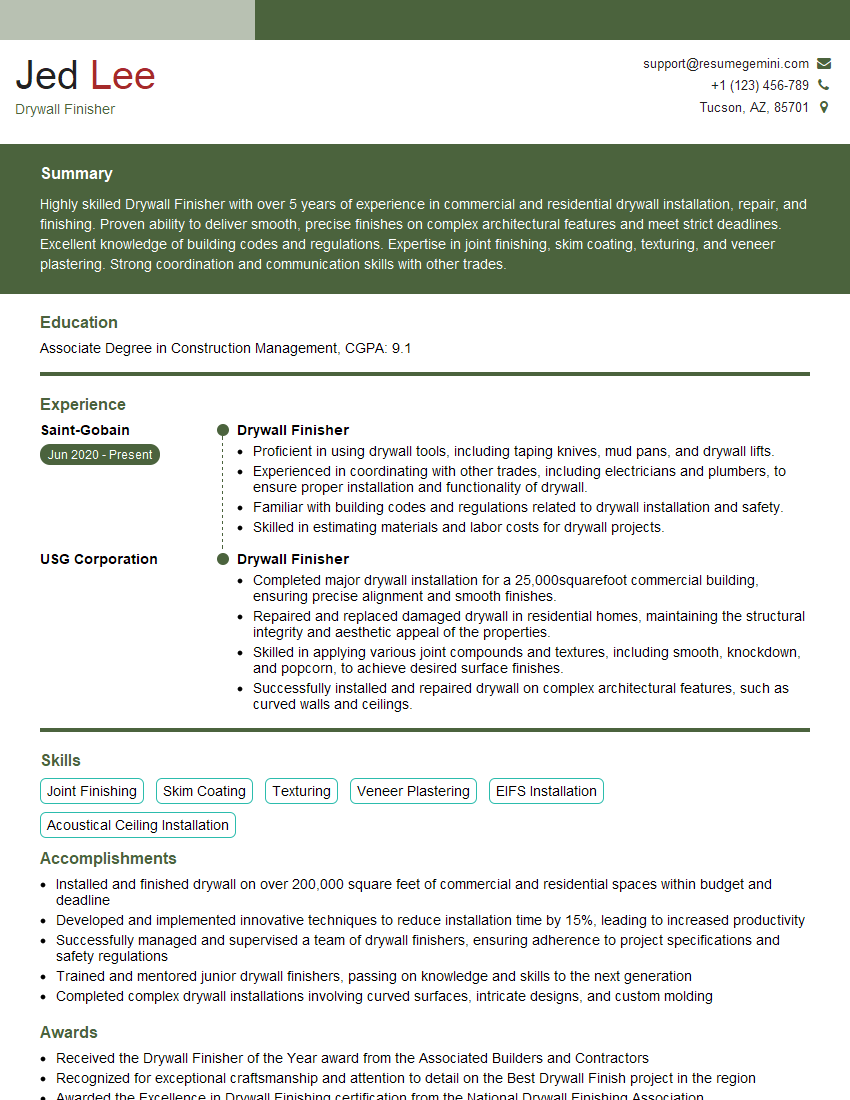
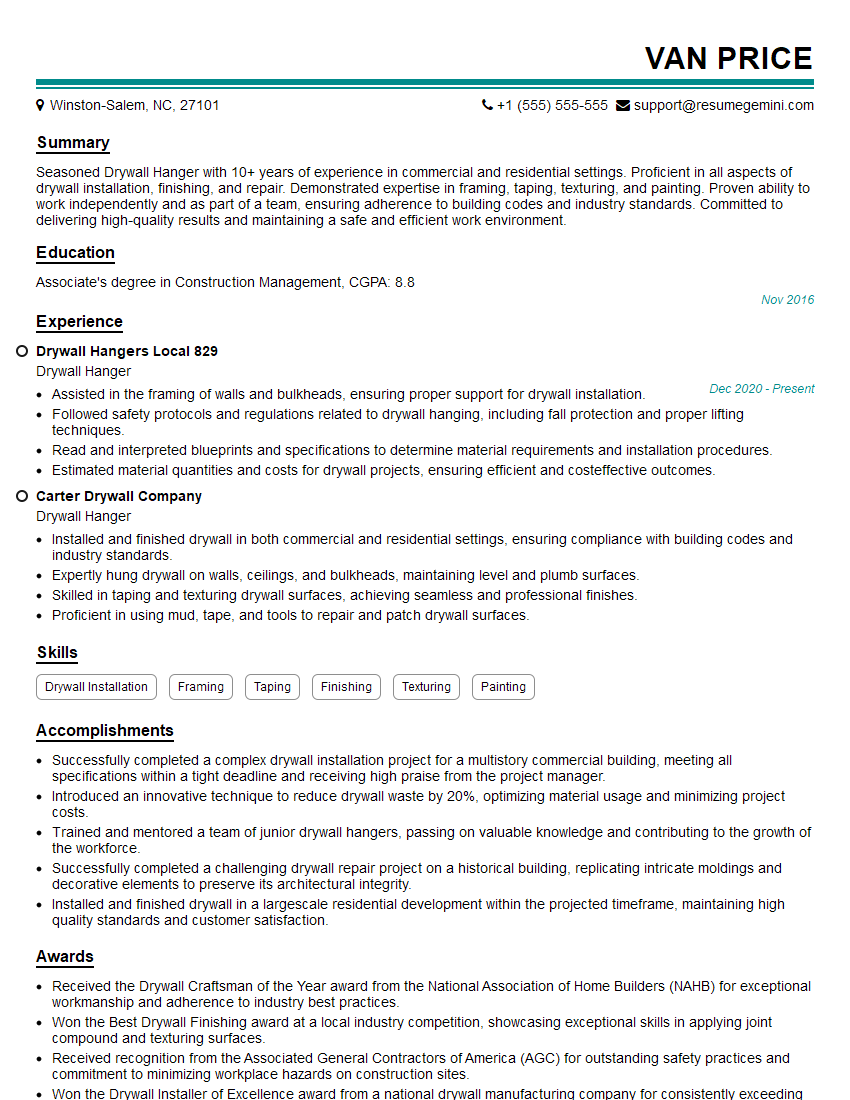
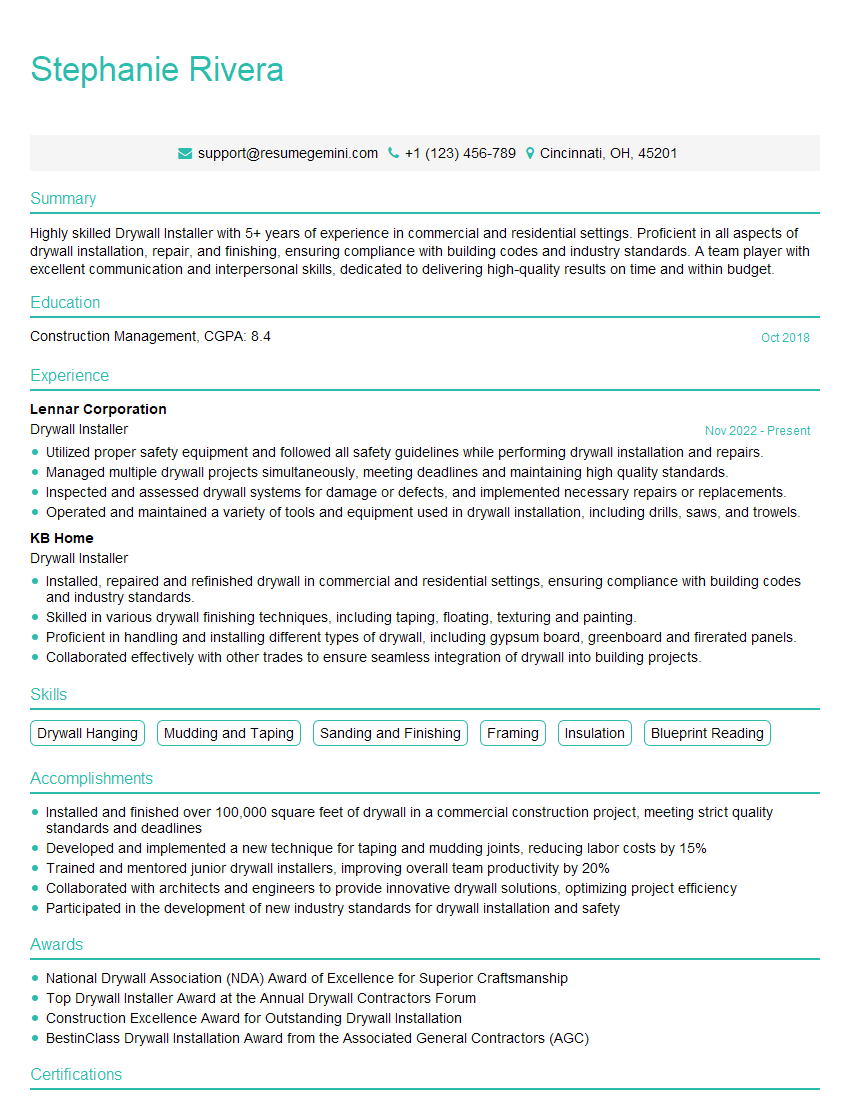
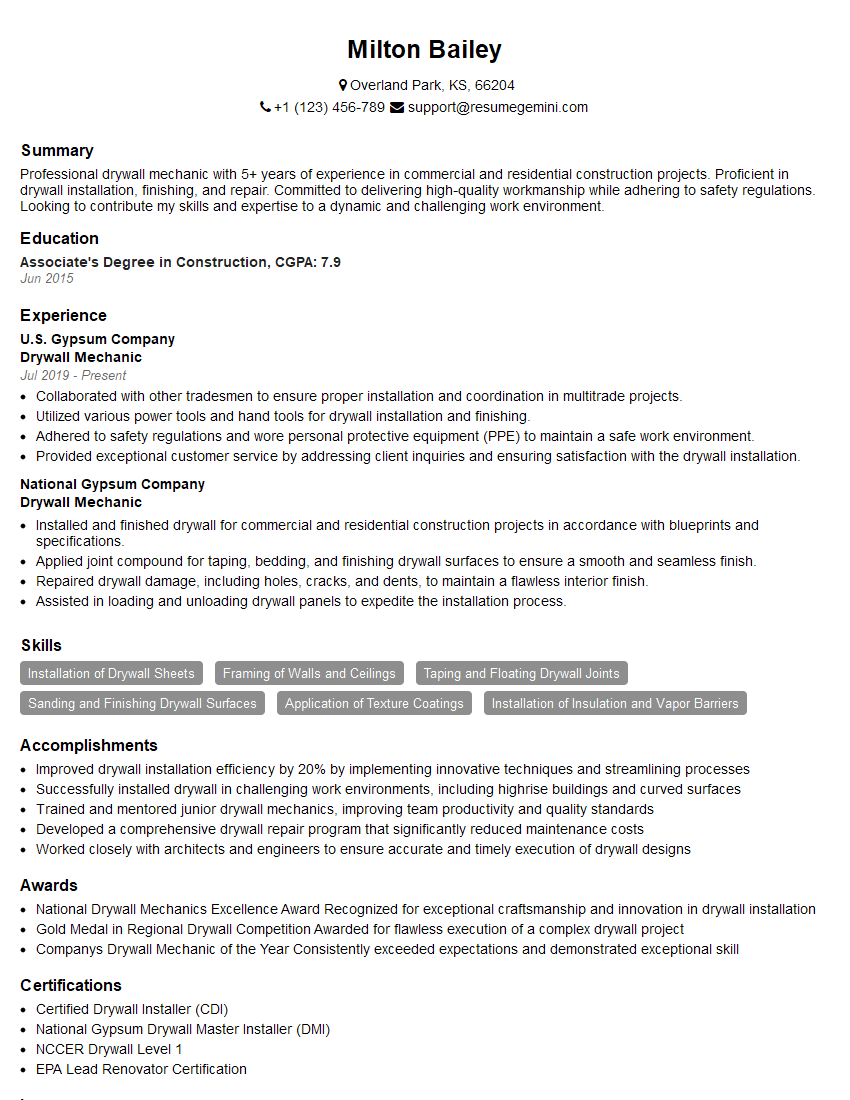
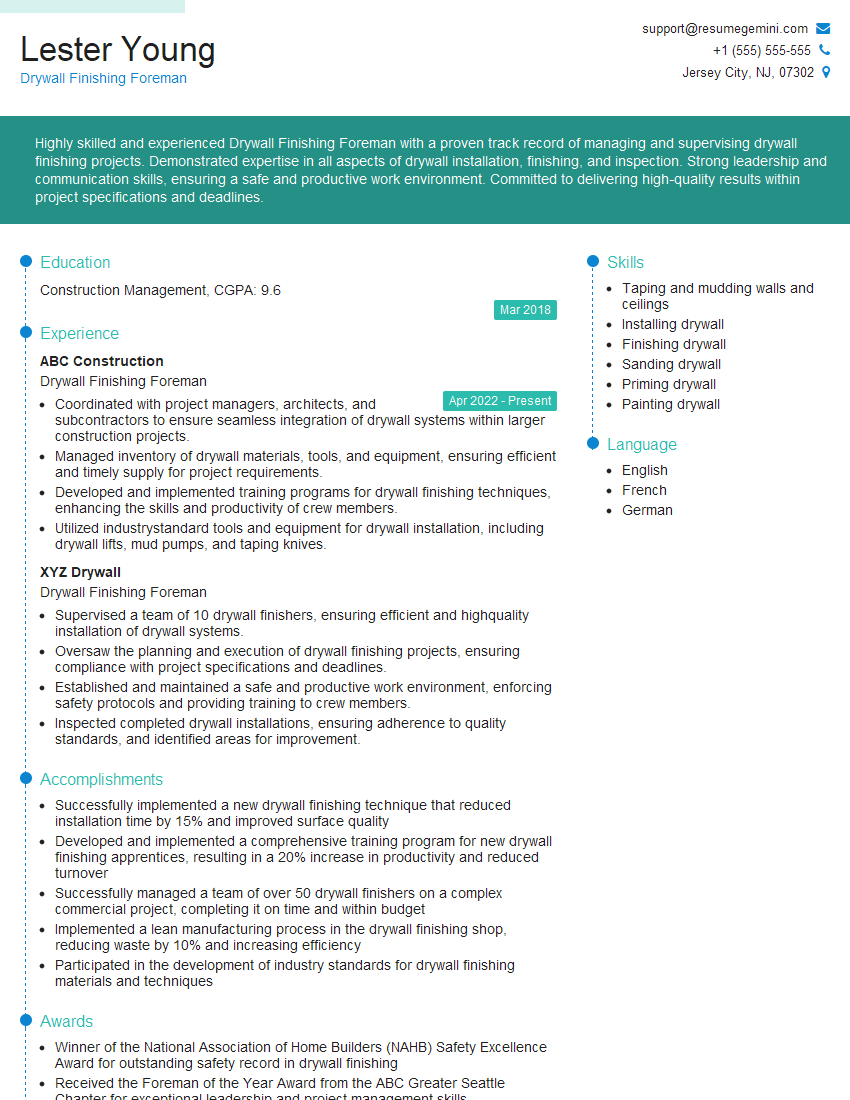
Mastering various drywall hanging techniques is crucial for career advancement in the construction industry, opening doors to higher-paying positions and greater responsibility. A strong resume is essential for showcasing your skills and experience to potential employers. Creating an ATS-friendly resume is key to getting your application noticed. ResumeGemini is a trusted resource to help you build a professional and effective resume that highlights your abilities. Examples of resumes tailored to showcasing expertise in Skilled in Various Drywall Hanging Techniques are available to guide you.
Explore more articles
Users Rating of Our Blogs
Share Your Experience
We value your feedback! Please rate our content and share your thoughts (optional).
What Readers Say About Our Blog
To the interviewgemini.com Webmaster.
Very helpful and content specific questions to help prepare me for my interview!
Thank you
To the interviewgemini.com Webmaster.
This was kind of a unique content I found around the specialized skills. Very helpful questions and good detailed answers.
Very Helpful blog, thank you Interviewgemini team.