Unlock your full potential by mastering the most common Core Laboratories Reservoir Characterization Suite interview questions. This blog offers a deep dive into the critical topics, ensuring you’re not only prepared to answer but to excel. With these insights, you’ll approach your interview with clarity and confidence.
Questions Asked in Core Laboratories Reservoir Characterization Suite Interview
Q 1. Explain the workflow for integrating core data with well log data using Core Laboratories’ software.
Integrating core data with well log data is crucial for building a comprehensive reservoir model. Core Laboratories’ software facilitates this integration through various methods, primarily by using a common depth reference. The workflow typically involves these steps:
Data Import: Import both core data (e.g., porosity, permeability, saturation) and well log data (e.g., gamma ray, neutron porosity, density) into the software. Ensure that both datasets are accurately depth-matched. Differences in depth referencing can be handled through specific alignment tools within the software.
Data Validation and Cleaning: Check for outliers, inconsistencies, and errors in both datasets. Tools within the software can help identify these issues. Data cleaning might involve smoothing, filtering, or removal of spurious data points.
Data Transformation: Often, core data is available at discrete intervals, while well logs are continuous. The software utilizes interpolation and extrapolation techniques to ensure both datasets are compatible for integration and subsequent analysis.
Cross-Plotting and Analysis: Cross-plots of core data against well log data (e.g., core porosity versus neutron porosity) are crucial for establishing correlations and calibrating well log interpretations using the more reliable, but less spatially extensive, core data. This step involves regression analysis to develop empirical relationships.
Upscaling: Core measurements represent a small volume of rock, while reservoir models represent larger volumes. Upscaling techniques within the software are essential to transfer core-derived properties to the larger scales required for reservoir simulation. This typically involves applying geostatistical methods, such as kriging.
Reservoir Modeling: The integrated data is then incorporated into a reservoir model to generate a 3D representation of the reservoir properties. This allows for a more accurate prediction of reservoir behavior and performance.
For instance, in a recent project involving a sandstone reservoir, we used core porosity and permeability measurements to calibrate the neutron porosity and density logs. This calibration improved the accuracy of predicting reservoir properties across the entire field, leading to a more effective reservoir management plan.
Q 2. How do you use Core Laboratories’ software to perform capillary pressure analysis?
Capillary pressure analysis is vital for understanding fluid distribution within a reservoir. Core Laboratories’ software provides tools for performing this analysis using both steady-state and unsteady-state methods. The typical workflow includes:
Data Acquisition: Obtain capillary pressure data from core samples using mercury injection capillary pressure (MICP) or other techniques. The software can directly import data from various laboratory instruments.
Data Processing: The software helps to clean the data, correct for potential instrument errors, and process the data to generate relevant parameters such as entry pressure, irreducible water saturation, and relative permeability. Advanced data analysis techniques can handle complex pore structure effects.
Curve Fitting: Several empirical models (e.g., Brooks-Corey, van Genuchten) can be fitted to the capillary pressure data to derive parameters for use in reservoir simulation. The software offers automated fitting procedures and visual tools to assess the quality of the fit.
Analysis and Interpretation: The software allows for plotting and analyzing capillary pressure curves, assessing wettability effects, and deriving key parameters necessary for reservoir modeling and simulation.
For example, we used the software to analyze MICP data from a carbonate reservoir. The analysis identified a significant amount of capillary-bound water that was not accounted for in initial reservoir simulation studies, impacting reservoir management strategies. The software also allowed for the determination of wettability, a key input to relative permeability modeling.
Q 3. Describe your experience with Core Laboratories’ software for permeability determination.
Core Laboratories’ software offers a range of methods for permeability determination, from basic calculations based on Darcy’s law to more complex analyses considering pore network characteristics. My experience includes:
Steady-State Permeability: I’ve extensively used the software to calculate permeability from steady-state flow experiments. This involves inputting data such as flow rate, pressure drop, and core dimensions. The software automatically performs the calculations and provides quality checks to ensure data validity.
Unsteady-State Permeability: The software can also analyze unsteady-state flow data, often more relevant for low permeability samples where steady-state conditions are difficult to achieve. This involves interpreting pressure transient data using various analytical or numerical techniques available within the software.
Pore Network Modeling: For advanced permeability analysis, the software facilitates pore network modeling which allows to estimate permeability from detailed image analysis of core samples. This approach provides insights into the pore structure and its influence on fluid flow.
In one project involving a tight gas reservoir, the steady-state permeability measurements were unreliable due to very low flow rates. By employing unsteady-state analysis within the software, we obtained more reliable estimates of permeability, crucial for predicting gas production.
Q 4. What are the limitations of using only core data for reservoir characterization?
While core data provides valuable high-resolution information about reservoir properties, relying solely on core data for reservoir characterization presents several limitations:
Limited Spatial Coverage: Core samples represent only a small fraction of the entire reservoir volume, making it challenging to extrapolate core properties to the whole reservoir.
Sampling Bias: Core selection might be biased, potentially leading to inaccurate representation of the entire reservoir heterogeneity.
Cost and Time Constraints: Obtaining and analyzing core samples is expensive and time-consuming, limiting the number of samples that can be analyzed.
Damage During Core Recovery: The process of retrieving core samples can alter or damage the sample, affecting the accuracy of measured properties.
Scale Limitations: Core measurements are made at a small scale and may not accurately reflect larger-scale reservoir properties.
Therefore, integrating core data with well log data and other geophysical data is necessary to overcome these limitations and build a robust reservoir model.
Q 5. How do you handle data uncertainty and error in Core Laboratories’ software?
Data uncertainty and error are inherent in all reservoir characterization studies. Core Laboratories’ software addresses this issue through various methods:
Error Propagation: The software allows for the propagation of measurement errors through calculations, providing uncertainty estimates for derived parameters.
Statistical Analysis: Statistical methods, including regression analysis and geostatistical modeling, help quantify uncertainty and provide confidence intervals for reservoir property estimates.
Data Validation Tools: The software provides tools for identifying outliers and inconsistencies in the data, allowing for data cleaning and quality control.
Sensitivity Analysis: Sensitivity analysis helps assess the impact of data uncertainty on reservoir simulation results, allowing for more robust decision-making.
Geostatistical Modeling: Geostatistical techniques such as kriging help incorporate spatial correlation and uncertainty into the reservoir model.
For example, when analyzing core data, we use the software’s error propagation features to calculate uncertainty bounds for permeability and porosity. These bounds are then incorporated into the reservoir model to provide a realistic representation of the uncertainty in our predictions.
Q 6. Explain the process of generating a reservoir model using Core Laboratories’ software.
Generating a reservoir model using Core Laboratories’ software is an iterative process that involves several steps:
Data Integration: As discussed previously, this involves integrating core data, well log data, seismic data, and other relevant information.
Property Modeling: Using the integrated data, we develop a 3D representation of reservoir properties such as porosity, permeability, saturation, and facies. This typically involves geostatistical techniques such as kriging or sequential Gaussian simulation, depending on data characteristics and the level of heterogeneity.
Facies Modeling: If facies data is available, we use the software to model the spatial distribution of different rock types within the reservoir.
Uncertainty Quantification: As previously mentioned, uncertainty analysis and geostatistical techniques are vital for quantifying the reliability of the model.
Model Validation: The model must be validated against available data to ensure its accuracy and reliability.
A recent project involved building a reservoir model for a complex fluvial reservoir. We used the software to integrate well log data, core data, and seismic data to create a realistic 3D model of the reservoir’s architecture and property distribution. The resulting model accurately captured the reservoir heterogeneity and was essential for optimizing well placement and production strategies.
Q 7. How do you validate a reservoir model created using Core Laboratories’ software?
Validating a reservoir model is crucial to ensure its accuracy and reliability. The validation process involves comparing the model predictions with independent data not used in the model’s construction. Methods include:
History Matching: Comparing model predictions of past production data (e.g., pressure, water cut) with actual production history. This helps calibrate the model parameters and assess its ability to replicate observed behavior.
Comparison with Independent Data: Comparing model predictions with independent data, such as pressure data from observation wells not used for model calibration, or production data from nearby wells.
Sensitivity Analysis: Performing sensitivity analysis to assess the impact of parameter uncertainty on model predictions. This helps identify the key parameters that most influence the model output, and which might require further refinement.
Predictive Capabilities: Assessing the model’s ability to predict future reservoir performance. This is often done by comparing the model’s prediction of future production with actual production data, once the data becomes available.
In a recent project, our history-matched model accurately predicted future production rates for a specific well, giving the client high confidence in our predictions and allowing them to make informed decisions about future investment strategies. Discrepancies between predicted and actual values are carefully investigated to identify potential model improvements or limitations.
Q 8. What are the different types of core analysis performed using Core Laboratories’ software?
Core Laboratories’ reservoir characterization suite offers a comprehensive range of core analysis capabilities. These analyses are crucial for understanding reservoir properties and predicting hydrocarbon production. The types of analysis performed often depend on the specific needs of the project and the data available. However, common types include:
- Routine Core Analysis (RCA): This involves basic measurements like porosity, permeability, and grain density to establish fundamental reservoir characteristics. Think of it as the foundational layer of understanding your reservoir.
- Special Core Analysis (SCAL): This goes beyond RCA, including analyses like capillary pressure, relative permeability, and wettability studies. SCAL provides more detailed information about fluid flow within the reservoir, allowing for more accurate predictions of production.
- Fluid Analysis: This focuses on the characteristics of the fluids present in the reservoir, such as oil, gas, and water. It helps determine the composition and properties of these fluids, which are critical for reservoir simulation and production optimization. Think of this as understanding the ‘ingredients’ of your reservoir.
- Geomechanical Analysis: This examines the mechanical properties of the rock, such as strength and stress sensitivity. This is particularly vital in understanding reservoir compaction, wellbore stability, and hydraulic fracturing.
- Image Analysis: Utilizing techniques like X-ray computed tomography (CT) scanning and thin-section microscopy, this allows for detailed visualization of pore structure and rock fabric. This can greatly aid in interpreting reservoir heterogeneity and understanding fluid flow pathways.
The software integrates these different analyses, allowing for a holistic view of the reservoir properties.
Q 9. Describe your experience with facies analysis using Core Laboratories’ software.
Facies analysis, using Core Laboratories’ software, is a key step in understanding the geological heterogeneity of a reservoir. I’ve extensively used the software’s capabilities to integrate core descriptions, well logs, and other geological data to identify and map different sedimentary facies. This involves analyzing various parameters including grain size distribution, sedimentary structures, and fossil content (if present). For example, in one project involving a clastic reservoir, I used the software to correlate core descriptions with well log data, which allowed me to identify distinct channel and floodplain facies. The software’s visualization tools were incredibly helpful in creating 3D models of the reservoir’s facies distribution, allowing us to better understand the reservoir’s architecture and predict areas of higher permeability and hydrocarbon saturation. This significantly improved our reservoir simulation models and ultimately optimized well placement strategies.
Q 10. How do you use Core Laboratories’ software to interpret porosity and permeability data?
Interpreting porosity and permeability data using Core Laboratories’ software involves several steps. First, I would input the measured data from the core analysis. The software then allows for quality control checks to identify any outliers or inconsistencies. Next, I’d analyze the data to identify relationships between porosity and permeability, often using cross-plots. This helps identify different reservoir rock types and their associated flow properties. The software facilitates the creation of histograms and statistical summaries, giving a clear picture of the data distribution. For instance, I might identify a positive correlation between porosity and permeability, indicating better flow in higher porosity zones. This information is then used to build petrophysical models, which are calibrated against the core data. The software helps to perform uncertainty analysis on these models which gives confidence in our interpretations. This ultimately allows for a better prediction of reservoir performance in simulations.
Q 11. Explain the process of identifying and interpreting fractures using Core Laboratories’ software.
Identifying and interpreting fractures using Core Laboratories’ software involves integrating data from various sources. This includes core photographs, image logs (e.g., FMI, UBI), and sometimes even micro-resistivity images from cores. The software often has tools for automated fracture detection, which greatly improves efficiency. After the fractures are identified, I assess parameters such as fracture aperture, density, orientation, and infill material. The software enables me to analyze the spatial distribution of fractures in 3D, providing valuable insights into their influence on fluid flow. In one instance, I used the software to map the dominant fracture sets in a shale gas reservoir, revealing preferential flow pathways. This information played a crucial role in optimizing the hydraulic fracturing design, leading to improved gas production.
Q 12. How do you use Core Laboratories’ software to estimate hydrocarbon saturation?
Estimating hydrocarbon saturation using Core Laboratories’ software typically relies on the application of petrophysical equations, most commonly the Archie equation or variations thereof. The software usually allows for easy input of necessary parameters such as porosity, water saturation, and resistivity from various sources (core analysis, well logs). Before using these equations, I verify data quality and ensure proper calibration of the logs. The software allows for the visualization of saturation profiles, helping to assess the distribution of hydrocarbons within the reservoir. It’s important to note that uncertainty analysis is vital in this process, which the software helps with to obtain a reliable estimate. For instance, I might use the software to compare saturation results obtained from different methods (e.g., core analysis vs. log derived) to check for consistency. This helps to minimize uncertainties and improves overall confidence in our hydrocarbon saturation estimates.
Q 13. Describe your experience with relative permeability determination using Core Laboratories’ software.
Relative permeability determination using Core Laboratories’ software usually involves analyzing data from special core analysis (SCAL) experiments. These experiments measure the relative permeability of oil and water (or gas and water) at various saturations. The software then utilizes this data to generate relative permeability curves, which are crucial for reservoir simulation. In my experience, I’ve used the software to fit various relative permeability models to the experimental data and compare model performance. I’ve also used the software’s visualization tools to explore the relationship between relative permeability and saturation, helping me to understand fluid flow behavior within the reservoir. For example, I’ve found that the software’s ability to fit different relative permeability models to experimental data provided valuable insights into the reservoir’s wettability, leading to more accurate reservoir simulation results.
Q 14. How do you calibrate and validate petrophysical models using Core Laboratories’ software?
Calibrating and validating petrophysical models using Core Laboratories’ software is a crucial step in ensuring the accuracy of reservoir characterization. This involves comparing model predictions against measured core data. For example, I might compare the model’s predicted porosity and permeability values with those obtained from core analysis. The software provides tools for statistical analysis to assess the quality of the calibration and determine if adjustments are necessary. In addition to core data, I might compare model predictions with well log data and production data. A well-calibrated model will closely match the actual reservoir behavior. If discrepancies are found, I would iterate on the model parameters until satisfactory agreement is reached. The software allows for sensitivity analysis, enabling identification of parameters that have the greatest influence on model output. This helps to improve the accuracy and reliability of the petrophysical models, which are then used for reservoir simulation and ultimately for decision making in reservoir management.
Q 15. What are the advantages and disadvantages of using Core Laboratories’ software compared to other software packages?
Core Laboratories’ reservoir characterization suite offers several advantages over other software packages, primarily stemming from its integration of data from various sources and its focus on workflows specifically tailored to reservoir characterization. Its strengths lie in its comprehensive data handling capabilities, robust analytical tools, and seamless integration with other Core Labs services like core analysis and fluid characterization. This integrated approach streamlines the entire workflow, reducing errors and increasing efficiency. However, it also presents some disadvantages. The software can have a steeper learning curve compared to more general-purpose geological modeling packages. Furthermore, its cost can be a significant factor, particularly for smaller companies. Finally, while highly specialized, it may lack some of the broader functionalities present in more general-purpose packages like advanced geostatistical modeling or specific niche functionalities.
- Advantages: Integrated workflow, comprehensive data handling, robust analytical tools, specialized reservoir characterization focus.
- Disadvantages: Steeper learning curve, high cost, potentially limited functionalities outside of reservoir characterization.
Career Expert Tips:
- Ace those interviews! Prepare effectively by reviewing the Top 50 Most Common Interview Questions on ResumeGemini.
- Navigate your job search with confidence! Explore a wide range of Career Tips on ResumeGemini. Learn about common challenges and recommendations to overcome them.
- Craft the perfect resume! Master the Art of Resume Writing with ResumeGemini’s guide. Showcase your unique qualifications and achievements effectively.
- Don’t miss out on holiday savings! Build your dream resume with ResumeGemini’s ATS optimized templates.
Q 16. Describe your experience with using Core Laboratories’ software for different reservoir types (e.g., sandstone, carbonate).
My experience with Core Labs’ software spans diverse reservoir types, including both sandstone and carbonate reservoirs. For sandstone reservoirs, I’ve extensively used the software for analyzing porosity and permeability data, generating facies models based on core descriptions and well logs, and ultimately building reservoir simulation models. The software’s tools for handling heterogeneity and creating statistically robust models were particularly useful in characterizing complex fluvial systems. In carbonate reservoirs, the software’s capabilities in handling complex pore networks and diagenetic alterations were crucial. I leveraged its capabilities in analyzing special core analysis (SCAL) data to understand the impact of pressure and saturation on fluid flow, ultimately aiding in predicting reservoir performance. For instance, in one project involving a fractured carbonate reservoir, the software’s ability to incorporate fracture network data into the geological model was instrumental in improving the accuracy of our predictions.
Q 17. How do you address data gaps in your reservoir characterization workflow using Core Laboratories’ software?
Data gaps are an inevitable challenge in reservoir characterization. Core Laboratories’ software provides various tools to address these. One common approach involves using geostatistical methods to interpolate missing data based on available information. The software allows for the implementation of various interpolation techniques, such as kriging and inverse distance weighting, enabling us to generate plausible estimates of missing data points while considering the spatial correlation of the data. Another strategy is to use data from analogous reservoirs or geological models to fill the gaps. For example, if well data is sparse in a particular area, information from nearby wells with similar geological characteristics can be used to infer the properties in the data-scarce zone. The software helps in analyzing the geological similarity and transfering information accordingly. Finally, the software supports incorporating expert knowledge and geological constraints to guide the interpolation process and ensure geologically realistic results.
Q 18. Explain the concept of uncertainty quantification in reservoir characterization and how it’s addressed in Core Laboratories’ software.
Uncertainty quantification is critical in reservoir characterization as it acknowledges the inherent uncertainties associated with subsurface data and models. It quantifies the range of possible outcomes, rather than relying on single, deterministic predictions. Core Laboratories’ software facilitates uncertainty quantification through various methods. Monte Carlo simulation, for instance, is often employed to generate multiple realizations of the reservoir model based on probabilistic distributions of input parameters (like porosity and permeability). This allows us to assess the range of possible outcomes and quantify the associated uncertainty. The software also supports sensitivity analysis, identifying which input parameters have the largest impact on the model’s output and hence contribute most to the overall uncertainty. This helps us focus efforts on improving data quality for the most influential parameters. Visualizing uncertainty in the form of probability maps or histograms provides a clearer picture of the risks and uncertainties associated with reservoir development decisions.
Q 19. Describe your experience with geological modeling software in conjunction with Core Laboratories’ software.
I have extensive experience integrating geological modeling software (e.g., Petrel, RMS) with Core Laboratories’ reservoir characterization suite. The process typically involves exporting data from one software to the other, creating a seamless workflow. For example, I’ve used geological modeling software to create a static geological model, including facies distribution and fault systems. This model, including its property distributions, is then imported into the Core Labs software for further analysis and integration of the core and log data, enhancing the model’s accuracy and geological realism. This integrated approach improves the accuracy and reliability of the reservoir simulation models and subsequently, informs better decision-making.
Q 20. How do you interpret and utilize results from special core analysis (SCAL) using Core Laboratories’ software?
Special Core Analysis (SCAL) data provides crucial insights into reservoir rock properties and their impact on fluid flow. Core Laboratories’ software facilitates the interpretation and utilization of SCAL data in several ways. The software allows for the direct input and analysis of SCAL data, including capillary pressure curves, relative permeability curves, and other measurements. It then helps to integrate this data with other available data, such as well logs and seismic data, providing a comprehensive understanding of reservoir behavior. For instance, I’ve used the software to analyze capillary pressure data to determine the distribution of fluids within the reservoir and use this information to improve the accuracy of reservoir simulations. The software also facilitates the creation of petrophysical models that incorporate the results of SCAL experiments, providing a more accurate representation of reservoir properties.
Q 21. What are some common challenges faced during reservoir characterization and how did you overcome them using Core Laboratories’ software?
One common challenge is dealing with noisy or inconsistent data. Core Laboratories’ software provides tools to address data quality issues. For instance, I’ve used its data cleaning and validation tools to identify and correct inconsistencies in well logs or core data before using them in reservoir modeling. The software also helps in identifying outliers and assessing their impact. Another challenge is interpreting complex geological features, like fractures or faults. The software facilitates the incorporation of this complex geological data into the models through advanced techniques like discrete fracture modeling or stochastic fault modeling. This ensures our reservoir characterizations are more geologically realistic and can represent reservoir properties accurately. For example, in one project where dealing with highly fractured reservoirs, the software’s ability to integrate seismic data, core data, and well log data enabled us to develop a more robust and accurate characterization of the fracture network.
Q 22. Explain your understanding of the different types of porosity and their influence on reservoir properties as analyzed with Core Laboratories’ software.
Understanding porosity is crucial in reservoir characterization. Core Laboratories’ software helps analyze various porosity types, impacting reservoir properties significantly. We distinguish primarily between total porosity, effective porosity, and interconnected porosity.
- Total Porosity: This represents the total void space in a rock sample, regardless of whether the pores are interconnected. It’s calculated as the ratio of pore volume to the bulk volume. In Core Labs’ software, this is often derived from image analysis or helium porosimetry data. A high total porosity suggests potentially more hydrocarbon storage capacity.
- Effective Porosity: This is the fraction of the total pore space that is interconnected and available for fluid flow. This is the more important measure for reservoir engineers. Core Laboratories’ software uses techniques like mercury injection capillary pressure (MICP) to determine effective porosity, distinguishing between connected and isolated pore spaces. A high effective porosity is essential for good reservoir productivity.
- Interconnected Porosity: This refers specifically to the pore network that allows fluids to move through the rock. Core Labs’ software may utilize techniques like nuclear magnetic resonance (NMR) to assess this parameter. High interconnected porosity is vital for efficient fluid flow towards the wellbore.
Influence on Reservoir Properties: The different porosity types directly impact permeability (ability of the reservoir to allow fluid flow), fluid saturation (amount of oil, gas, and water in the pores), and ultimately hydrocarbon recovery. For instance, a high total porosity with low effective porosity indicates a reservoir with significant storage capacity but poor flow characteristics, leading to lower production rates. Core Labs’ software allows us to integrate these parameters to build a comprehensive reservoir model, optimizing production strategies.
Q 23. How do you incorporate geological information and well test data into your reservoir characterization workflow?
Integrating geological information and well test data is paramount in building a realistic reservoir model. Within Core Laboratories’ workflow, this integration happens in several stages.
- Geological Data Integration: We start by incorporating geological data like core descriptions, well logs (gamma ray, resistivity, neutron porosity), seismic data, and facies maps. Core Labs’ software has tools to visualize and correlate this data, enabling us to build a 3D geological model of the reservoir. For example, we might use seismic data to identify potential reservoir zones, which are then refined by integrating well log and core data to determine reservoir properties within those zones.
- Well Test Data Integration: Pressure buildup and drawdown tests provide crucial information on reservoir permeability and fluid properties. This data is integrated using Core Laboratories’ specialized software modules to calibrate and validate the reservoir model. For instance, if our initial reservoir model predicts lower permeability than observed during well testing, we can adjust the model parameters to match the real-world data.
Workflow Example: We might use the core data to define petrophysical properties (porosity, permeability, water saturation) at specific locations. Then, well log data is used to extrapolate these properties across the entire reservoir. Finally, well test data is used to validate the model and ensure it accurately reflects the reservoir’s dynamic behavior. This iterative process ensures a robust and reliable reservoir model.
Q 24. Describe your experience with using Core Laboratories’ software for reservoir simulation input.
My experience with Core Laboratories’ software for reservoir simulation input involves several key steps. The software streamlines the process of preparing high-quality input data for reservoir simulation.
- Petrophysical Property Determination: Core Labs’ software helps determine key petrophysical properties like porosity, permeability, and water saturation from core analysis and well log data. These are crucial parameters for reservoir simulation. I often use their advanced algorithms for handling complex pore structures.
- Relative Permeability Curves: Core Laboratories’ software facilitates the generation of relative permeability curves, vital for simulating fluid flow in the reservoir. We often utilize experimental data from core flooding experiments, which are then analyzed and interpreted within the software.
- Facies Modeling: We use Core Labs’ tools to create detailed facies models, incorporating geological information from core descriptions and well logs to represent the spatial distribution of different rock types within the reservoir. This spatial heterogeneity is crucial for accurate simulation.
- Data Export: Finally, the software provides efficient data export capabilities, allowing us to transfer the processed petrophysical data and facies models into various reservoir simulation packages (e.g., Eclipse, CMG). This ensures seamless data transfer and maintains data integrity.
Example: In a recent project, I used Core Labs’ software to generate a high-resolution petrophysical model, including detailed facies and relative permeability information, for a complex carbonate reservoir. This data was successfully imported into a reservoir simulator and used for predicting production performance.
Q 25. How do you ensure the quality control and quality assurance of core data and its integration with other data types in Core Laboratories’ software?
Quality control (QC) and quality assurance (QA) are critical for accurate reservoir characterization. Core Laboratories’ software incorporates several features to support these processes.
- Data Validation: We implement rigorous checks at each stage of the workflow, validating data against established standards and comparing different data types for consistency. For example, we’d compare porosity values obtained from core analysis with those derived from well logs.
- Automated QC Checks: The software incorporates automated QC checks to flag potential errors or inconsistencies in the data. This includes checks for outliers, data ranges, and inconsistencies between different data sets.
- Data Auditing: A comprehensive audit trail is maintained, documenting all data modifications and analysis steps, allowing traceability and accountability throughout the entire workflow. This is particularly crucial when integrating data from various sources and technologies.
- Standard Operating Procedures (SOPs): We follow detailed SOPs for data acquisition, analysis, and interpretation, ensuring consistency and adherence to best practices across all projects.
Example: If a significant discrepancy is detected between core data and well log data, we investigate the potential causes and initiate corrective actions. This may involve re-analyzing core samples, reviewing the well log acquisition process, or reassessing the calibration procedures. The audit trail ensures transparency and allows us to track down the source of any errors.
Q 26. Discuss the importance of data visualization in reservoir characterization and how you leverage it within Core Laboratories’ suite.
Data visualization is indispensable for effective reservoir characterization. Core Laboratories’ software provides a range of visualization tools that are critical for understanding complex reservoir datasets.
- Cross-Plots: We use cross-plots (e.g., porosity vs. permeability) to identify relationships between different petrophysical properties and to identify potential trends or anomalies in the data.
- 3D Visualization: Core Labs’ software facilitates the creation of 3D visualizations of reservoir properties, allowing us to visualize the spatial distribution of porosity, permeability, and other key parameters. This provides a much clearer understanding of reservoir heterogeneity.
- Interactive Maps: We create interactive maps to visualize geological features and well locations, integrating well logs, seismic data, and core data into a comprehensive view.
- Histograms and Statistical Analysis: The software includes tools for generating histograms and performing statistical analysis, helping to understand the distribution of reservoir properties and to assess data quality.
Example: Visualizing the 3D distribution of permeability helps identify high-permeability zones, which are crucial for optimizing well placement and production strategies. Similarly, visualizing facies distributions allows us to understand the geological controls on reservoir quality and to make more informed decisions regarding reservoir management.
Q 27. Explain your experience with reporting and presenting results generated from Core Laboratories’ software to both technical and non-technical audiences.
Reporting and presenting results is a crucial aspect of my role. I tailor my presentations to the audience, using clear and concise language, avoiding unnecessary technical jargon.
- Technical Audiences: For technical audiences (e.g., reservoir engineers, geologists), I present detailed analyses, including data tables, cross-plots, and advanced visualization techniques to communicate complex technical information effectively.
- Non-Technical Audiences: For non-technical audiences (e.g., management, investors), I focus on key findings, using simplified language and visual aids (e.g., charts, maps) to communicate the results in a clear and accessible manner.
- Interactive Presentations: I utilize Core Laboratories’ reporting tools to create interactive presentations, allowing for dynamic exploration of the data and enabling more effective communication of complex results.
- Customizable Reports: The software offers customizable report templates, allowing me to create tailored reports that address the specific needs and objectives of each project.
Example: For a management presentation, I might focus on key performance indicators (KPIs) like estimated ultimate recovery (EUR) and production forecasts, using clear visuals to illustrate the potential impact of different development scenarios. For a technical audience, I might present a detailed analysis of reservoir heterogeneity, including high-resolution 3D visualizations and quantitative assessments of uncertainty.
Q 28. How do you stay up-to-date with the latest advancements and best practices in reservoir characterization using Core Laboratories’ software?
Staying current with advancements in reservoir characterization is essential. I utilize various methods to maintain my expertise within Core Laboratories’ software and broader industry practices.
- Core Laboratories’ Training Programs: I regularly participate in Core Laboratories’ training programs and workshops to learn about new software features, analysis techniques, and best practices. This often involves hands-on training with real-world datasets.
- Industry Conferences and Publications: I actively attend industry conferences and read relevant publications to stay abreast of the latest advancements in reservoir characterization technologies and techniques. This helps me identify new opportunities for innovation and improvement.
- Collaboration with Colleagues: I actively collaborate with colleagues and experts within Core Laboratories, sharing knowledge and best practices to foster continuous learning and professional development. This collaborative environment promotes innovation and facilitates problem-solving.
- Online Resources and Webinars: I utilize various online resources, including webinars and online tutorials, to supplement my learning and to keep up-to-date with the evolving landscape of reservoir characterization.
Example: Recently, I participated in a Core Labs training session on advanced image analysis techniques, which significantly improved my ability to characterize complex pore structures and improve the accuracy of my petrophysical interpretations.
Key Topics to Learn for Core Laboratories Reservoir Characterization Suite Interview
- Data Import and Preprocessing: Understanding various data formats (LAS, CSV, etc.), techniques for data cleaning, and quality control procedures within the suite.
- Petrophysical Interpretation: Mastering log analysis techniques, including porosity, permeability, water saturation calculations, and their applications in reservoir characterization. Practical application: Interpreting well logs to identify potential hydrocarbon zones.
- Reservoir Modeling: Building static and dynamic reservoir models using the suite’s functionalities. Understanding the importance of geological input and its impact on model predictions.
- Fluid Flow Simulation: Familiarize yourself with the simulation workflows, including setting up boundary conditions, defining fluid properties, and interpreting simulation results. Practical application: Predicting reservoir performance under different production scenarios.
- Geostatistics and Uncertainty Quantification: Grasp the concepts of geostatistical methods used for reservoir property estimation and understand how to quantify uncertainty in reservoir models.
- Report Generation and Visualization: Learn to effectively present your analysis and findings through comprehensive reports and visualizations generated within the suite.
- Integration with other software: Understanding how the Core Laboratories Reservoir Characterization Suite integrates with other geological and reservoir engineering software.
Next Steps
Mastering the Core Laboratories Reservoir Characterization Suite significantly enhances your value to potential employers in the energy sector, opening doors to exciting career opportunities and higher earning potential. A strong command of this software demonstrates practical skills highly sought after in the industry. To maximize your job prospects, create an ATS-friendly resume that effectively showcases your expertise. ResumeGemini is a trusted resource that can help you build a professional and impactful resume tailored to the specific requirements of your target roles. Examples of resumes tailored to Core Laboratories Reservoir Characterization Suite expertise are available to guide you.

Project Engineer Resume Sample

Data Analyst Resume Sample

Data Scientist Resume Sample

Research Scientist Resume Sample

Geologist Resume Sample

Reservoir Engineer Resume Sample

Field Engineer Resume Sample
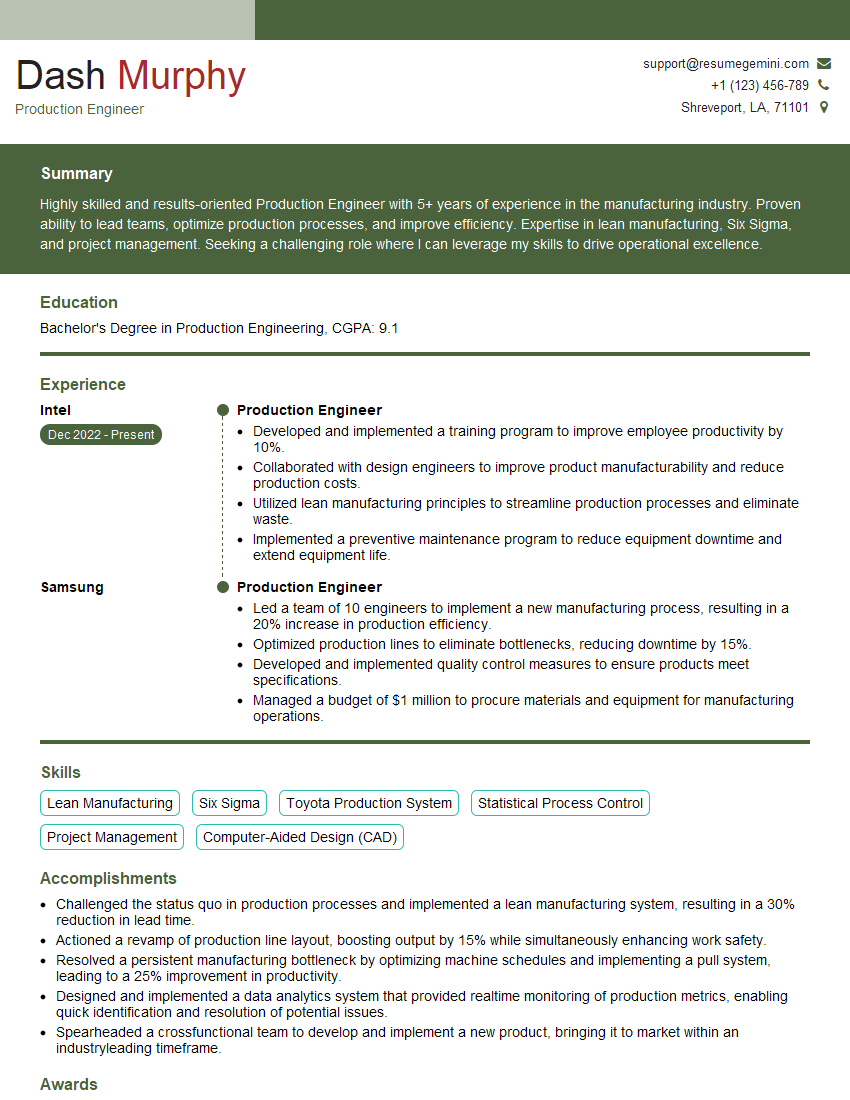
Production Engineer Resume Sample

Completion Engineer Resume Sample

Drilling Engineer Resume Sample

Petroleum Engineer Resume Sample
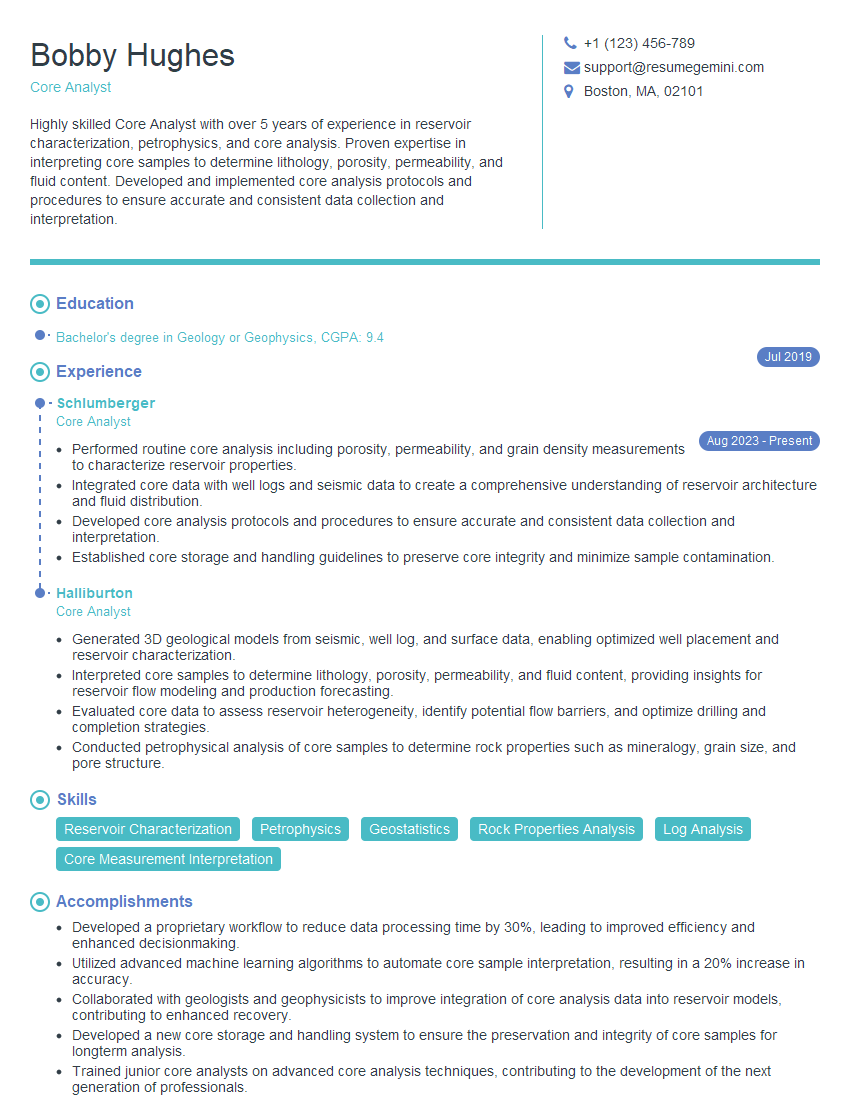
Core Analyst Resume Sample
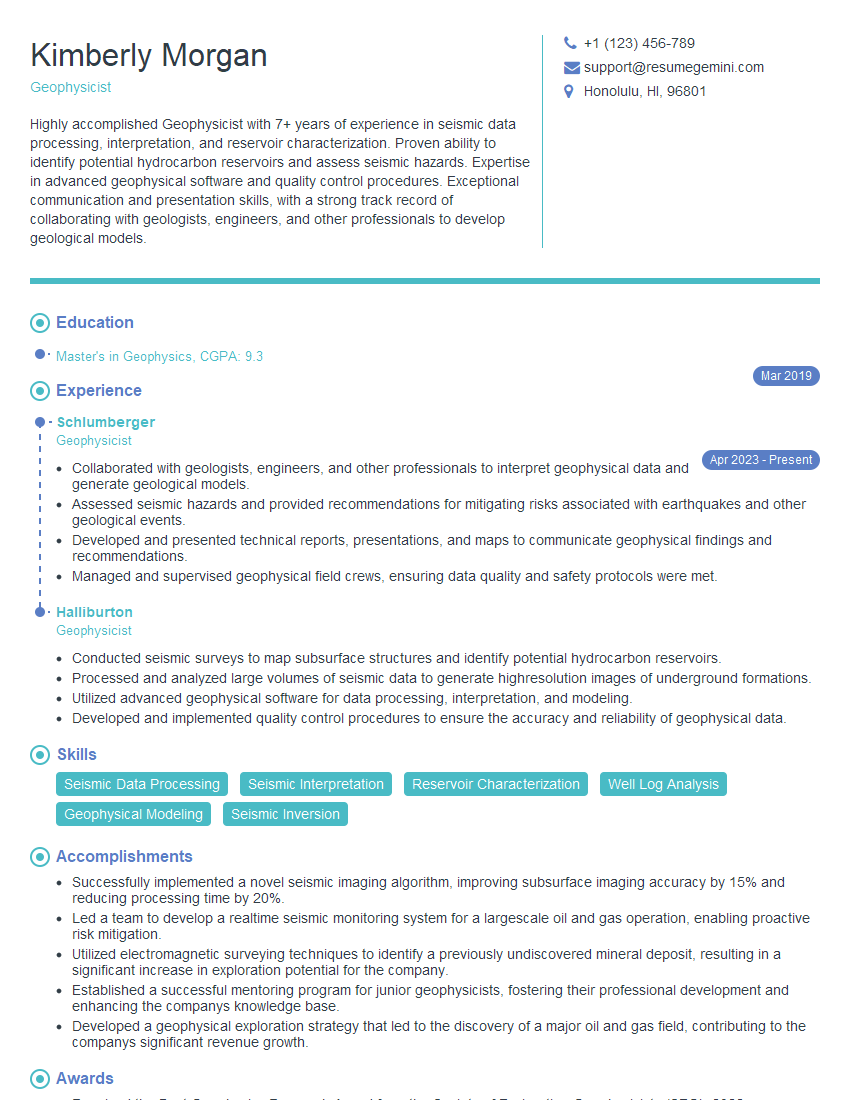
Geophysicist Resume Sample
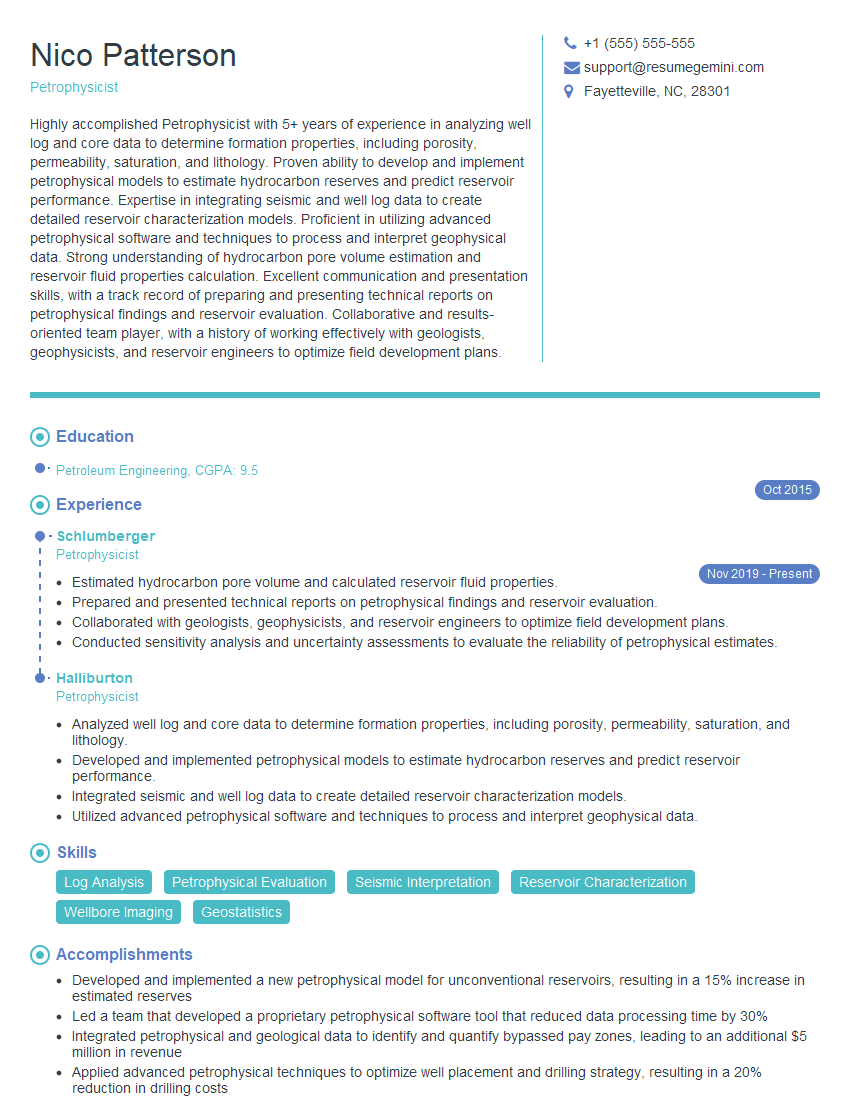
Petrophysicist Resume Sample
Explore more articles
Users Rating of Our Blogs
Share Your Experience
We value your feedback! Please rate our content and share your thoughts (optional).
What Readers Say About Our Blog
To the interviewgemini.com Webmaster.
Very helpful and content specific questions to help prepare me for my interview!
Thank you
To the interviewgemini.com Webmaster.
This was kind of a unique content I found around the specialized skills. Very helpful questions and good detailed answers.
Very Helpful blog, thank you Interviewgemini team.