Cracking a skill-specific interview, like one for Ocular Laser Treatment, requires understanding the nuances of the role. In this blog, we present the questions you’re most likely to encounter, along with insights into how to answer them effectively. Let’s ensure you’re ready to make a strong impression.
Questions Asked in Ocular Laser Treatment Interview
Q 1. Explain the different types of ocular laser treatments.
Ocular laser treatments primarily aim to correct refractive errors – conditions where the eye doesn’t focus light correctly onto the retina, leading to blurry vision. Several types exist, each employing different techniques:
- LASIK (Laser-Assisted in situ Keratomileusis): This is the most common procedure. A thin flap of corneal tissue is created, then an excimer laser reshapes the underlying cornea to correct the refractive error. The flap is then repositioned.
- PRK (Photorefractive Keratectomy): The outermost layer of the cornea (epithelium) is removed, and then the excimer laser reshapes the underlying stroma. The epithelium regenerates naturally over several days.
- SMILE (Small Incision Lenticule Extraction): A femtosecond laser creates a lenticule (a small disc) within the cornea. This lenticule is then removed through a small incision, correcting the refractive error. This is a minimally invasive approach.
- Epi-LASIK: Similar to LASIK, but instead of a flap, a thin layer of epithelium is removed and replaced after laser treatment. It’s less common now due to LASIK’s popularity.
The choice of procedure depends on various factors, including the patient’s corneal thickness, refractive error, and lifestyle.
Q 2. Describe the pre-operative and post-operative care for LASIK surgery.
Pre-operative and post-operative care for LASIK is crucial for optimal outcomes and minimizing complications.
Pre-operative care involves a comprehensive eye examination to assess suitability, including corneal topography, refractive error measurement, and checking for any underlying eye conditions. Patients are instructed to discontinue contact lenses for a specified period before the assessment. They’ll receive detailed instructions on preparing for the procedure, including medication use and avoiding certain activities.
Post-operative care is equally vital. Patients need to use prescribed eye drops (antibiotics, steroids) to prevent infection and reduce inflammation. They’ll experience some discomfort, which is managed with pain relievers. Follow-up appointments are scheduled to monitor healing and vision correction. Activities like rubbing the eyes, swimming, and wearing makeup are restricted initially. Patients should also protect their eyes from dust and debris and avoid strenuous activities for a specified period.
A common analogy is treating the eye like a delicate wound requiring careful protection and nurturing during recovery.
Q 3. What are the potential complications associated with photorefractive keratectomy (PRK)?
While PRK is generally safe and effective, potential complications exist:
- Pain and discomfort: The removal of the epithelium can cause significant discomfort in the first few days post-surgery.
- Delayed visual recovery: Vision may take longer to stabilize compared to LASIK.
- Corneal haze: Scarring can occur, leading to blurry vision, usually resolving over time.
- Infection: Although rare, infection remains a possibility.
- Dry eyes: This is a common side effect, often managed with artificial tears.
- Undercorrection or overcorrection: This is a possibility, and may require enhancement procedures.
The risk of complications is generally low, but it’s vital that patients are fully informed and understand the potential risks before proceeding.
Q 4. How do you select the appropriate laser treatment for a patient?
Selecting the appropriate laser treatment is a personalized process based on several factors:
- Refractive error: The degree of nearsightedness, farsightedness, or astigmatism dictates the type of correction needed.
- Corneal thickness and shape: This is crucial for determining whether LASIK is suitable. Thinner corneas may be better suited to PRK or SMILE.
- Patient’s lifestyle and occupation: Individuals with physically demanding jobs might find PRK’s longer recovery time challenging.
- Patient preferences and expectations: A detailed discussion about the pros and cons of each procedure is essential.
- Presence of any underlying eye conditions: Conditions like dry eye disease, corneal scarring, or certain systemic diseases can influence the choice of treatment or render surgery unsuitable.
A comprehensive evaluation ensures the patient receives the most suitable and safest treatment option.
Q 5. What are the contraindications for laser eye surgery?
Several contraindications exist for laser eye surgery:
- Thin corneas: Insufficient corneal thickness makes LASIK risky.
- Progressive refractive error: If the refractive error is still changing (e.g., rapidly increasing myopia in a young person), surgery might not be advisable.
- Certain eye diseases: Keratoconus (thinning of the cornea), glaucoma, cataracts, or active eye infections preclude surgery.
- Pregnancy or breastfeeding: Hormonal changes during pregnancy can affect refractive error and healing.
- Autoimmune diseases: These can compromise healing.
- Uncontrolled medical conditions: Diabetes, autoimmune disease, or other serious health issues can increase risks.
A thorough pre-operative evaluation is essential to identify any contraindications and ensure patient safety.
Q 6. Explain the mechanism of action of excimer lasers in refractive surgery.
Excimer lasers are the workhorses of refractive surgery. They emit ultraviolet light pulses that precisely ablate (remove) corneal tissue. The mechanism involves photoablation:
The laser’s UV light breaks the bonds between the molecules in the corneal tissue, causing a precise removal of microscopic amounts of tissue. The surgeon meticulously controls the laser’s parameters (energy, pulse duration, spot size) to create a specific corneal shape that corrects the refractive error. Think of it like sculpting the cornea with microscopic precision to bend light properly.
The computer-controlled nature of the excimer laser ensures highly accurate and repeatable results, minimizing the risk of overcorrection or undercorrection. The process is precise and relatively painless during the surgery itself.
Q 7. How do you manage dry eye syndrome following laser refractive surgery?
Dry eye syndrome is a common complication following laser refractive surgery, as the procedure can disrupt the tear film. Management involves a multi-faceted approach:
- Artificial tears: Frequent use of lubricating eye drops is the cornerstone of treatment.
- Punctal plugs: These small devices placed in the tear ducts reduce tear drainage, improving tear film stability.
- Warm compresses: Applying warm compresses can improve tear production and reduce inflammation.
- Lid hygiene: Gentle lid scrubs can help remove debris and improve gland function.
- Omega-3 fatty acid supplements: Some evidence suggests that these can improve tear production.
- Cyclosporine eye drops: In more severe cases, anti-inflammatory eye drops like cyclosporine may be prescribed to reduce inflammation and promote tear production.
The goal is to relieve the symptoms of dry eye and improve the patient’s comfort and visual function. Regular follow-up appointments are critical to monitor the condition and adjust treatment as needed.
Q 8. Describe the difference between LASIK and PRK.
LASIK (Laser-Assisted In Situ Keratomileusis) and PRK (Photorefractive Keratectomy) are both laser vision correction procedures aiming to correct refractive errors like nearsightedness, farsightedness, and astigmatism. However, they differ significantly in their approach.
In LASIK, a thin flap of corneal tissue is created using either a blade (microkeratome) or a femtosecond laser. This flap is lifted, and an excimer laser is used to reshape the underlying corneal tissue. The flap is then repositioned, acting like a natural bandage. Think of it like creating a thin lid to access the corneal surface for reshaping.
PRK, on the other hand, involves removing the outermost layer of the cornea (the epithelium) before using the excimer laser to reshape the underlying stroma. The epithelium then regenerates naturally over several days. This is similar to sanding a surface smooth, rather than making a flap.
The key difference lies in the creation of a corneal flap. LASIK is generally faster in terms of visual recovery, while PRK has a longer healing period but may be preferred in certain cases (e.g., thinner corneas).
Q 9. What are the advantages and disadvantages of femtosecond laser-assisted LASIK?
Femtosecond laser-assisted LASIK offers several advantages over traditional blade-created LASIK. The femtosecond laser provides more precise and predictable flap creation, leading to improved patient outcomes and fewer complications. It creates a smoother, more accurate flap, reducing the risk of flap complications like irregular astigmatism or flap displacement.
- Advantages: More precise flap creation, reduced risk of complications, improved visual outcomes, potentially better flap thickness control.
- Disadvantages: Higher cost compared to blade LASIK, slightly longer procedure time, potential for small amounts of residual haze which usually resolves quickly.
For example, a patient with a thin cornea might be a better candidate for femtosecond LASIK because of the laser’s greater precision in creating a thin, safe flap. The improved precision translates to a lower risk of complications such as dry eye or ectasia (thinning of the cornea).
Q 10. Explain the role of topography in pre-operative assessment for refractive surgery.
Corneal topography plays a vital role in pre-operative assessment for refractive surgery. It’s a sophisticated mapping technique that creates a detailed three-dimensional image of the cornea’s surface. Think of it as a detailed topographical map of your eye’s surface. This detailed map reveals irregularities in the cornea’s curvature, including astigmatism and other subtle imperfections that might not be detected by traditional methods.
Before surgery, corneal topography helps identify:
- Irregular astigmatism: This can’t always be detected with standard measurements and can significantly impact the surgical planning and outcome.
- Corneal ectasia risk: This is the thinning of the cornea and topography helps assess if a patient’s cornea is strong enough to withstand the procedure.
- Optimal treatment plan: The topography guides the surgeon in selecting the appropriate surgical technique and parameters to correct the refractive error accurately.
Without accurate topography, the surgeon may not be able to plan a surgery that precisely corrects the patient’s vision or may even miss potential risks.
Q 11. How do you assess a patient’s suitability for laser vision correction?
Assessing a patient’s suitability for laser vision correction involves a thorough evaluation encompassing several factors:
- Comprehensive eye exam: This includes visual acuity assessment, refraction, slit-lamp examination to evaluate corneal health, and assessment of other ocular structures.
- Corneal topography: As mentioned earlier, this is crucial for assessing corneal health and irregularities.
- Pachymetry: This measures the thickness of the cornea; a minimum thickness is necessary for safe surgery.
- Dilated fundus exam: This examines the retina and optic nerve to rule out any underlying conditions.
- Medical history review: This screens for conditions that might increase the risks of surgery, such as autoimmune diseases, certain medications, or previous eye surgeries.
- Stable refractive error: The patient’s refractive error should have been stable for at least one year.
- Patient expectations: Realistic expectations are essential for a positive outcome; it’s important to address concerns and discuss potential limitations.
The overall assessment determines if the patient meets the criteria for safe and effective laser vision correction. It’s not just about visual correction but also ensuring the long-term health and safety of the eyes.
Q 12. How do you counsel patients about the risks and benefits of laser eye surgery?
Counseling patients about laser eye surgery requires a balanced approach, emphasizing both the benefits and the potential risks. It’s crucial to foster informed consent and manage expectations.
Benefits should include improved vision, enhanced quality of life, and independence from glasses or contact lenses. However, it’s equally important to detail the risks. These could include:
- Dry eye: This is a relatively common temporary side effect; sometimes it’s persistent.
- Halos and glare: These can occur, particularly at night, especially with certain types of refractive errors.
- Undercorrection or overcorrection: These might necessitate further treatment.
- Infections: Although rare, they are a possibility.
- Loss of vision: This is a rare but serious complication.
I always use relatable analogies – for instance, explaining dry eye as similar to having slightly sandy eyes, and halos as seeing a slight blur around lights at night. I aim for the patient to be completely informed before making a decision. I also show them videos to demonstrate the procedure to enhance their understanding.
Q 13. What are the common causes of refractive errors?
Refractive errors, which affect how clearly we see, are primarily caused by imperfections in the shape of the eye or the focusing power of the eye’s lens. The most common types are:
- Myopia (nearsightedness): The eyeball is too long, or the cornea is too curved, causing light to focus in front of the retina, resulting in blurry distance vision.
- Hyperopia (farsightedness): The eyeball is too short, or the cornea is too flat, causing light to focus behind the retina, leading to blurry near vision.
- Astigmatism: The cornea is irregularly shaped, resulting in blurred vision at all distances.
These errors can be inherited or develop due to environmental factors. For example, extended near-work activities are often associated with the development of myopia.
Q 14. What are the different types of laser used in ophthalmology?
Several types of lasers are used in ophthalmology, each with specific applications:
- Excimer laser: This is the workhorse of refractive surgery. It uses ultraviolet light to precisely ablate (remove) corneal tissue, reshaping it to correct refractive errors. Think of it as a highly precise sculpting tool for the cornea.
- Femtosecond laser: This is used for creating flaps in LASIK surgery and for other precise corneal procedures. It creates very precise cuts with minimal collateral damage, significantly improving safety and predictability.
- Argon laser: This is used in the treatment of retinal conditions, such as diabetic retinopathy and retinal tears. The laser energy seals the blood vessels or retinal tissue, stopping bleeding and preventing further damage. It’s used to seal off leaky or damaged blood vessels.
- YAG laser: This is used in procedures like posterior capsulotomy, where it creates a small opening in the clouded posterior lens capsule after cataract surgery. It’s frequently used to correct clouding of the lens after cataract surgery.
The choice of laser depends heavily on the specific procedure and the patient’s individual needs. Safety and precision are paramount factors in selecting the appropriate laser.
Q 15. How do you diagnose and manage corneal ectasia after refractive surgery?
Corneal ectasia, a thinning and bulging of the cornea, can be a serious complication following refractive surgery like LASIK. Diagnosis involves a thorough eye examination, including corneal topography (mapping the cornea’s curvature), pachymetry (measuring corneal thickness), and sometimes Scheimpflug imaging for detailed analysis of corneal layers. Early detection is key. We look for subtle changes in corneal shape and thickness compared to pre-operative measurements. Management depends on the severity. Mild cases might be monitored closely with repeat topography. More significant ectasia may require corneal collagen crosslinking (CXL), a procedure that strengthens the cornea, or even corneal transplantation in severe cases. For example, a patient presenting with increased astigmatism and reduced visual acuity post-LASIK, along with topographic changes showing progressive corneal thinning, would be a strong indicator of ectasia requiring intervention.
Think of it like this: imagine the cornea as a balloon. Refractive surgery slightly alters its shape. Ectasia is like the balloon slowly stretching and becoming weaker, potentially leading to a distorted shape and blurry vision. CXL is like adding a strengthening layer to the balloon, preventing further stretching.
Career Expert Tips:
- Ace those interviews! Prepare effectively by reviewing the Top 50 Most Common Interview Questions on ResumeGemini.
- Navigate your job search with confidence! Explore a wide range of Career Tips on ResumeGemini. Learn about common challenges and recommendations to overcome them.
- Craft the perfect resume! Master the Art of Resume Writing with ResumeGemini’s guide. Showcase your unique qualifications and achievements effectively.
- Don’t miss out on holiday savings! Build your dream resume with ResumeGemini’s ATS optimized templates.
Q 16. Explain the principles of wavefront-guided LASIK.
Wavefront-guided LASIK takes LASIK to a higher level of precision. Traditional LASIK corrects vision based on average measurements of the eye’s refractive error. Wavefront technology uses a wavefront sensor to create a highly detailed map of the individual’s unique optical imperfections, including higher-order aberrations (irregularities in the light wave). This map guides the laser to correct these aberrations, resulting in a more precise and personalized correction. Think of it like this: traditional LASIK smooths out the bumps in a road, but wavefront-guided LASIK creates a perfectly smooth, customized highway.
The principle relies on the principle of wavefront aberration analysis. It measures how light waves are distorted as they pass through the eye’s optical system. The customized ablation pattern created by the laser is then used to precisely reshape the cornea to counteract those distortions. This leads to improved visual acuity, particularly nighttime vision and contrast sensitivity, often exceeding the results of traditional LASIK.
Q 17. How do you handle emergency situations during or after laser eye surgery?
Emergency situations during or after laser eye surgery are rare but require immediate action. Intraoperative emergencies, such as a flap complication during LASIK, necessitate immediate surgical intervention to repair the flap and mitigate damage. Post-operative emergencies could include severe pain, significant inflammation, or a sudden drop in vision. Our response involves a rapid assessment of the situation, potentially including additional imaging such as OCT (Optical Coherence Tomography) to evaluate the cornea, followed by appropriate treatment—this could range from topical medications like corticosteroids to address inflammation to more advanced interventions like emergency surgical repair.
For example, if a patient experiences severe pain and reduced vision immediately post-LASIK, we would suspect a possible infection or flap displacement. We would immediately examine the eye, administer pain relief, and potentially perform a diagnostic procedure such as OCT to confirm the diagnosis and guide subsequent treatment decisions.
Q 18. What are the legal and ethical considerations of ocular laser treatment?
Legal and ethical considerations in ocular laser treatment are paramount. Informed consent is crucial; patients must fully understand the procedure, risks, benefits, and alternatives. Maintaining accurate medical records and following established protocols is essential for legal compliance. We need to ensure patients are suitable candidates by carefully evaluating their medical history, age, and refractive error. Advertising needs to be truthful and avoid making unsubstantiated claims. Data privacy and patient confidentiality are paramount, adhering to HIPAA and other relevant regulations. Ethical dilemmas can arise if patients demand procedures unsuitable for their condition. It’s our responsibility to educate patients and make evidence-based recommendations.
For instance, a patient with a history of autoimmune disease may not be an ideal candidate for LASIK, and it’s our ethical and legal obligation to explain the increased risks and explore alternative options.
Q 19. Describe your experience with different laser platforms and technologies.
My experience encompasses various laser platforms, including excimer lasers (e.g., Schwind Amaris, WaveLight EX500), and femtosecond lasers (e.g., Ziemer LDV, Alcon LenSx) used in LASIK procedures. Each platform has its strengths and weaknesses regarding speed, precision, and ablation profiles. I’ve found that newer platforms with advanced features like eye-tracking and wavefront-guided technology offer significantly improved precision and safety. For example, the use of femtosecond lasers for creating the corneal flap in LASIK has resulted in reduced risks of complications like irregular flap creation compared to older microkeratome techniques.
The differences in laser platforms boil down to subtle differences in precision and speed, but this can lead to substantial differences in patient outcomes. Constant evaluation and familiarization with new technology is necessary to provide optimal patient care.
Q 20. What is your experience with intraoperative complications in laser refractive surgery?
Intraoperative complications, while infrequent, can significantly impact patient outcomes. These can range from flap-related issues (incomplete creation, buttonholes, or free caps) during LASIK to issues with laser ablation (under- or over-correction, irregular ablation). My experience has taught me the importance of meticulous surgical technique, careful patient selection, and the use of advanced technologies like femtosecond lasers to minimize these risks. Immediate management depends on the specific complication. For example, a poorly created flap might require a repair or even abandonment of the procedure. Undercorrection often requires a follow-up enhancement procedure.
A thorough pre-operative evaluation, including detailed assessment of corneal thickness and morphology, significantly reduces the likelihood of complications. Furthermore, vigilant intraoperative monitoring and a robust understanding of different strategies to manage intraoperative issues are absolutely essential.
Q 21. How do you manage patient expectations regarding outcomes of laser eye surgery?
Managing patient expectations is a crucial aspect of ethical and successful refractive surgery. It’s vital to engage in a thorough discussion of potential outcomes, risks, and limitations before surgery. Realistic expectations can minimize post-operative dissatisfaction. While many patients achieve excellent visual acuity, it’s crucial to emphasize that perfect 20/20 vision is not guaranteed for every individual. Factors like patient-specific corneal characteristics, presence of higher-order aberrations, and post-operative healing variability can all influence final results. I use visual aids like corneal topography maps to help patients understand their unique corneal characteristics and to explain how the procedure will address them.
For instance, I explain that even with perfect surgery, some individuals might require glasses or contact lenses for specific tasks or in certain lighting conditions. Open and honest communication significantly improves patient satisfaction and reduces post-operative complications related to unrealistic expectations.
Q 22. What are the latest advancements in ocular laser technology?
Recent advancements in ocular laser technology are revolutionizing eye surgery. We’re seeing a significant shift towards femtosecond lasers, which offer unparalleled precision in refractive surgery and cataract procedures. These lasers create incredibly accurate incisions, reducing complications and improving visual outcomes. Another exciting development is the integration of advanced imaging techniques, like optical coherence tomography (OCT), directly into laser platforms. This allows for real-time visualization of the eye’s structures during the procedure, enabling surgeons to make adjustments as needed and further enhancing accuracy. For example, femtosecond laser-assisted cataract surgery (FLACS) allows for more predictable and precise capsulotomy (creation of the opening in the eye’s lens capsule), phacoemulsification (breaking up the cataract), and even the creation of incisions, minimizing the need for manual manipulation and leading to faster healing and better visual results. We are also witnessing the rise of laser-assisted refractive surgeries like SMILE (Small Incision Lenticule Extraction), which offers a minimally invasive alternative to LASIK, resulting in less dry eye and faster recovery time.
Q 23. How do you ensure patient safety during laser procedures?
Patient safety is paramount. Our approach is multifaceted and begins with a thorough pre-operative assessment. This includes a detailed review of the patient’s medical history, visual acuity tests, and advanced imaging (OCT, corneal topography) to identify any potential risks or contraindications. During the procedure itself, we utilize multiple safety mechanisms built into the laser system, such as energy monitoring and safety interlocks that prevent accidental activation or energy misdirection. The operating room environment is meticulously maintained according to strict sterilization protocols (detailed further in answer 6). Furthermore, we continuously monitor the patient’s vital signs (heart rate, blood pressure, oxygen saturation) throughout the procedure. Post-operatively, patients receive detailed instructions on medication, follow-up appointments, and signs to watch out for. We also have a readily available emergency contact line for any post-operative concerns.
Q 24. Describe your proficiency in using laser equipment and operating microscopes.
My proficiency in using laser equipment and operating microscopes stems from years of dedicated training and extensive experience. I am highly skilled in operating various laser platforms used in refractive and cataract surgery, including femtosecond lasers, excimer lasers, and Nd:YAG lasers. My expertise extends to all aspects of laser surgery, from pre-operative planning and precise laser parameters setting to intra-operative adjustments based on real-time observations. I am equally proficient in using various types of operating microscopes, adapting my technique to the specific needs of each patient and procedure. For instance, I can seamlessly transition between using a slit-lamp biomicroscope for detailed examination and an operating microscope with integrated laser delivery systems for precise surgical interventions. My skills encompass a detailed understanding of laser-tissue interaction, allowing me to select the optimal laser settings to achieve the desired surgical outcome while minimizing potential complications.
Q 25. What is your approach to post-operative follow-up and patient monitoring?
Post-operative care is just as crucial as the surgery itself. Our approach emphasizes individualized monitoring and support. Immediately post-op, patients are assessed for complications like inflammation or infection. They receive detailed instructions regarding eye drops, activity restrictions, and potential side effects. Follow-up appointments are scheduled at regular intervals to monitor visual recovery, assess healing, and address any concerns. This schedule is tailored to the type of surgery and the individual patient’s needs. For instance, after LASIK, we might see patients the day after surgery and then at one week, one month, and three months. However, after cataract surgery, the follow-up schedule is different. We use a combination of clinical examination, visual acuity testing, and imaging (OCT) to track progress and identify any potential issues early on. This proactive approach allows us to address any problems quickly and efficiently, maximizing the likelihood of a successful outcome.
Q 26. How do you stay current with the latest research and advancements in ocular laser treatment?
Staying current in this rapidly evolving field requires a commitment to continuous learning. I actively participate in professional organizations like the American Academy of Ophthalmology and regularly attend national and international conferences and workshops to learn about the latest research and technological advancements. I also subscribe to leading ophthalmology journals and actively seek out peer-reviewed publications and clinical trials. Additionally, I actively engage with colleagues through presentations, case discussions, and participation in continuing medical education courses to share knowledge and stay abreast of the latest best practices. This multi-pronged approach keeps me at the forefront of ocular laser treatment and allows me to offer my patients the most advanced and effective care available.
Q 27. How do you maintain a sterile environment during laser procedures?
Maintaining a sterile environment during laser procedures is crucial to prevent infections and complications. Our operating room adheres strictly to universal precautions and employs a meticulous sterilization process. All surfaces are thoroughly cleaned and disinfected before each procedure using high-level disinfectants. Surgical instruments are sterilized using autoclaves, and disposable items are used whenever possible. The surgical team wears sterile gowns, gloves, masks, and eye protection. The air in the operating room is filtered using HEPA filtration systems to maintain a low bacterial count. We regularly monitor the sterility of the room and equipment using environmental cultures and microbiological testing. A strict protocol is followed to prepare the patient’s eye, including the use of sterile drapes and antiseptic solutions. This rigorous approach ensures a safe and infection-free environment for all laser procedures.
Q 28. What is your experience with different types of laser-assisted cataract surgery?
I have extensive experience with various types of laser-assisted cataract surgery, including femtosecond laser-assisted cataract surgery (FLACS) and traditional phacoemulsification techniques. FLACS allows for greater precision in creating the capsulotomy, corneal incisions, and lens fragmentation, leading to improved surgical outcomes and reduced complications. I am comfortable performing both phacoemulsification with and without femtosecond laser assistance, tailoring the technique to the individual patient’s needs and the specific characteristics of their cataract. My experience encompasses a wide range of cataract types and complexities, and I’m skilled in managing potential intraoperative challenges. For example, I can adapt my approach based on the density of the cataract, the presence of posterior capsular opacification, and any pre-existing ocular conditions. This versatility enables me to provide the most effective and safe surgical care for all my patients.
Key Topics to Learn for Ocular Laser Treatment Interview
- Laser Physics Fundamentals: Understanding laser types (e.g., excimer, femtosecond), beam characteristics, and tissue interaction mechanisms.
- Ocular Anatomy and Physiology: In-depth knowledge of the cornea, lens, retina, and their relevant pathologies.
- Refractive Error Correction Techniques: LASIK, PRK, SMILE – understanding their procedures, indications, contraindications, and potential complications.
- Pre-operative Assessment and Patient Selection: Evaluating patient suitability, managing risk factors, and performing thorough diagnostic testing.
- Intraoperative Procedures and Techniques: Mastering the practical aspects of laser application, including safety protocols and equipment operation.
- Post-operative Care and Management: Understanding potential complications, managing patient expectations, and providing appropriate post-operative instructions.
- Advanced Techniques and Technologies: Familiarity with emerging technologies and their applications in ocular laser treatment.
- Complications and Management: Identifying, diagnosing, and managing potential complications, such as dry eye, infection, and refractive surprises.
- Regulatory Compliance and Safety Standards: Understanding relevant regulations and adherence to safety protocols.
- Data Analysis and Interpretation: Analyzing patient data to optimize treatment outcomes and identify trends.
Next Steps
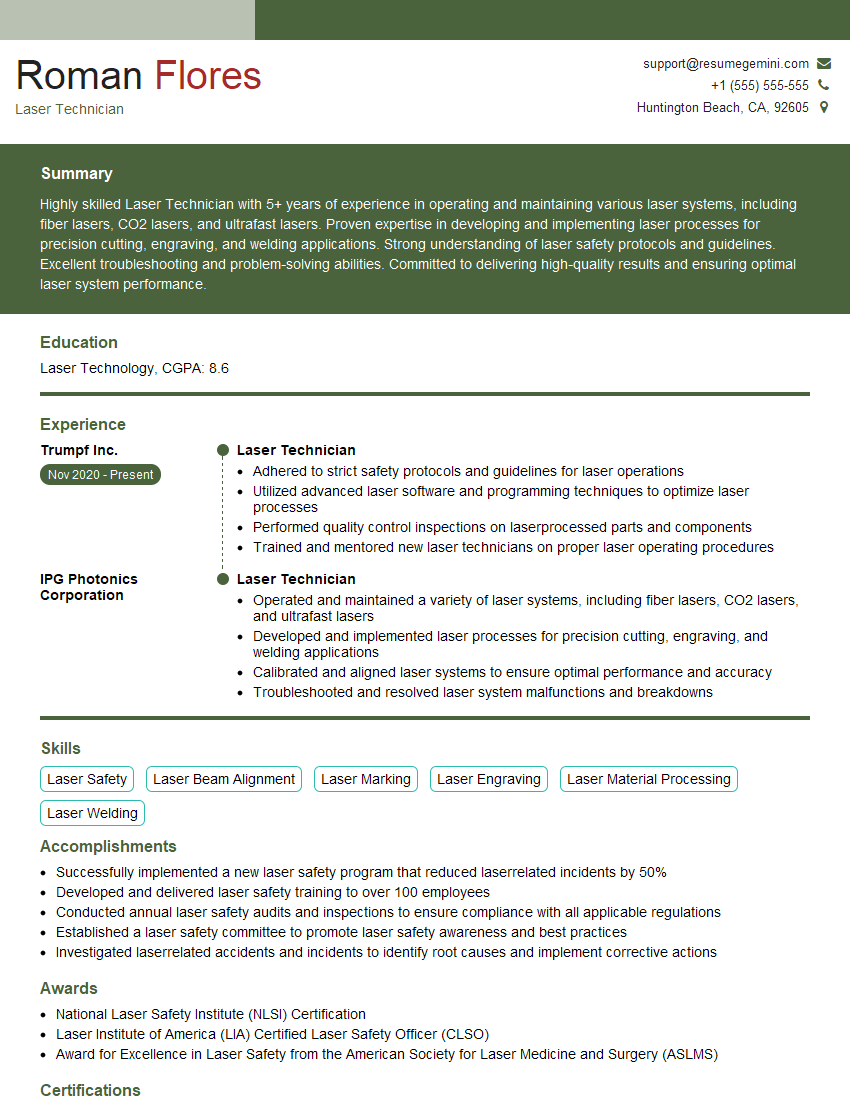
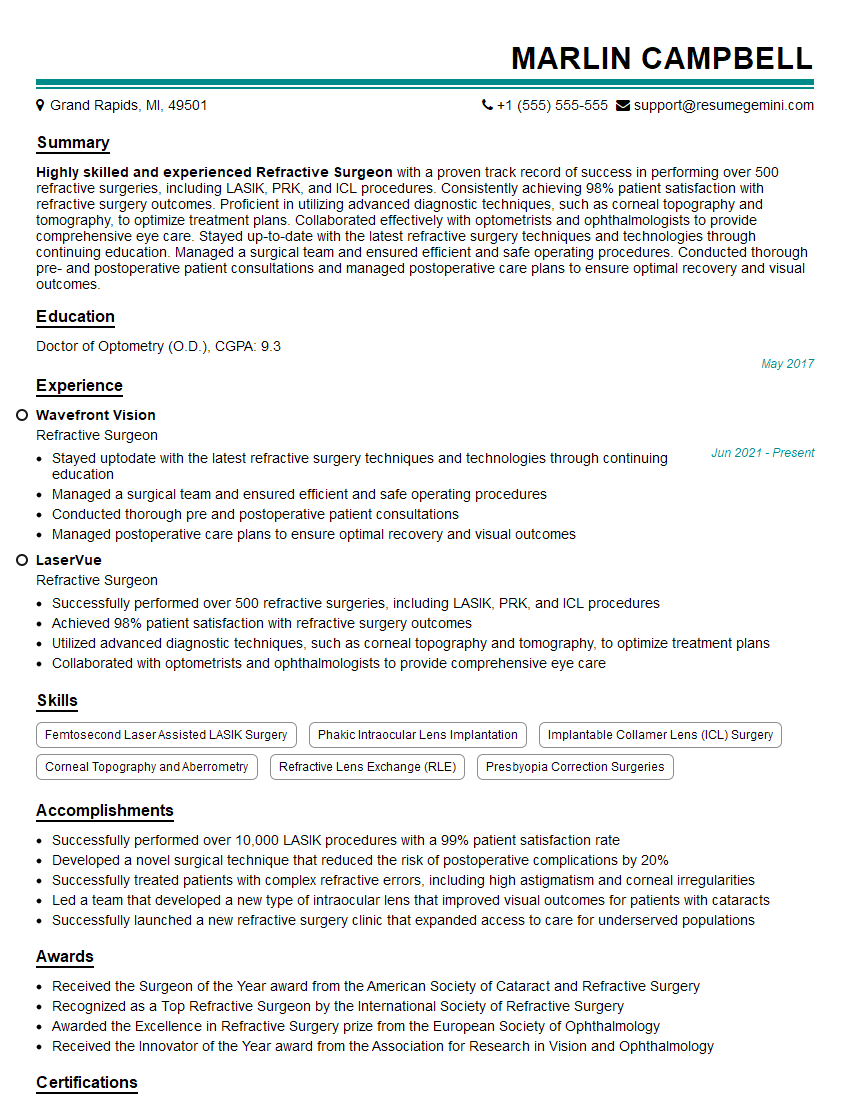
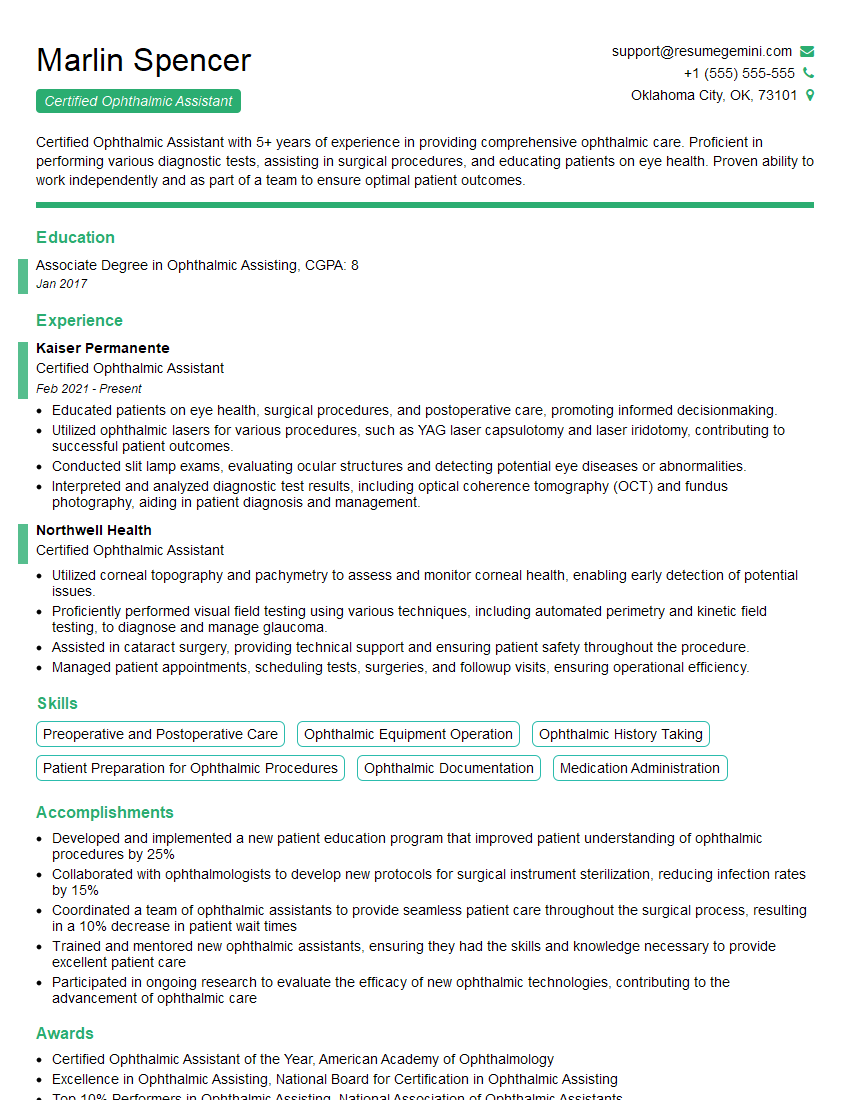
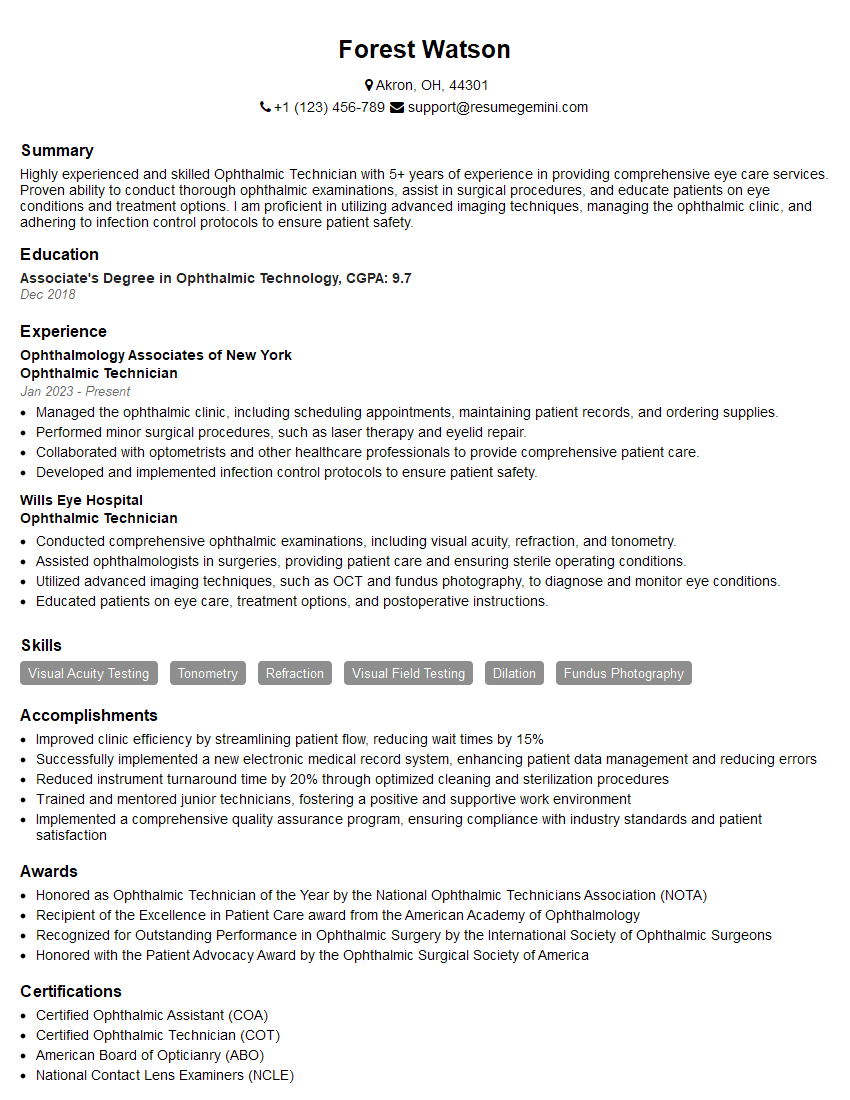
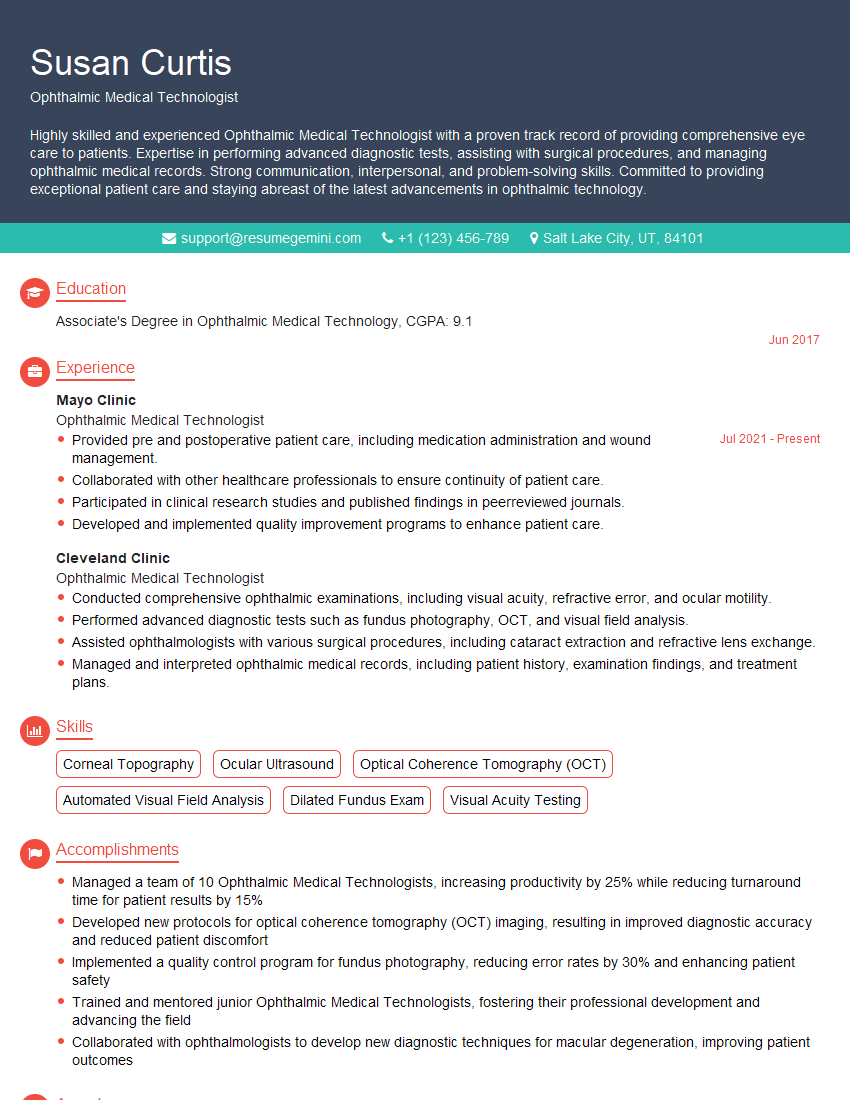
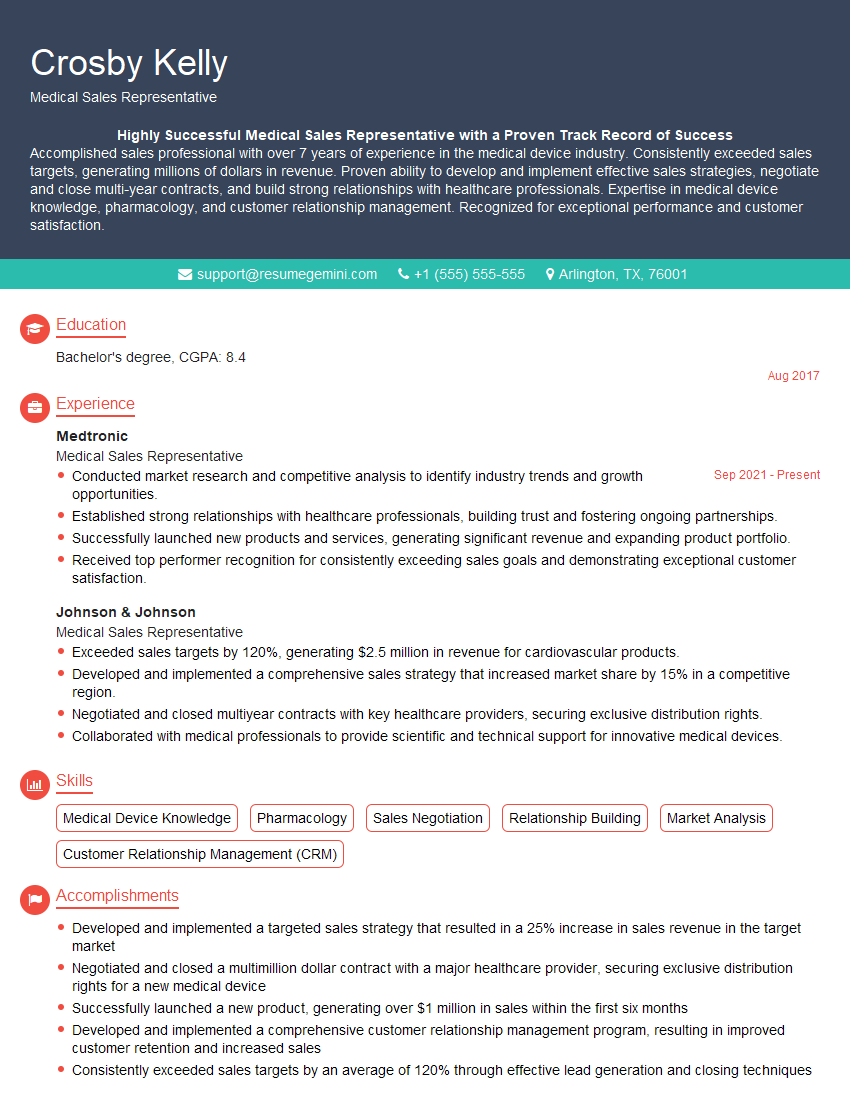
Mastering Ocular Laser Treatment opens doors to rewarding careers in ophthalmology and related fields, offering opportunities for specialization and professional growth. A strong resume is crucial for showcasing your expertise and securing your dream role. Creating an ATS-friendly resume is essential to ensure your application gets noticed by recruiters. We highly recommend using ResumeGemini to build a professional and impactful resume that highlights your skills and experience effectively. ResumeGemini provides examples of resumes tailored to Ocular Laser Treatment to help guide you in crafting a compelling application.
Explore more articles
Users Rating of Our Blogs
Share Your Experience
We value your feedback! Please rate our content and share your thoughts (optional).
What Readers Say About Our Blog
To the interviewgemini.com Webmaster.
Very helpful and content specific questions to help prepare me for my interview!
Thank you
To the interviewgemini.com Webmaster.
This was kind of a unique content I found around the specialized skills. Very helpful questions and good detailed answers.
Very Helpful blog, thank you Interviewgemini team.