Preparation is the key to success in any interview. In this post, we’ll explore crucial Developing and implementing erosion control plans interview questions and equip you with strategies to craft impactful answers. Whether you’re a beginner or a pro, these tips will elevate your preparation.
Questions Asked in Developing and implementing erosion control plans Interview
Q 1. Explain the difference between sheet, rill, and gully erosion.
Erosion is the detachment and movement of soil particles by water or wind. Sheet, rill, and gully erosion represent different stages of this process, increasing in severity.
- Sheet erosion: This is the most widespread type, involving a uniform removal of a thin layer of soil across a relatively large area. Imagine a sheet of paper being slowly peeled away; that’s analogous to how sheet erosion works. It’s often subtle and difficult to detect initially but can significantly reduce soil fertility over time.
- Rill erosion: As sheet erosion continues, small, concentrated channels (rills) start to form on the surface. These channels are shallow and can be easily smoothed out with tillage. Think of them as tiny, temporary streams carving paths through the soil.
- Gully erosion: This is the most severe form. Rills deepen and widen over time, forming larger, well-defined channels called gullies. These are deep, permanent features that can be difficult and expensive to repair, sometimes requiring major engineering solutions. Imagine a large ditch or ravine – that’s a gully.
The progression is typically sheet erosion leading to rill erosion and potentially culminating in gully erosion if left unchecked.
Q 2. Describe various erosion control methods and when each is most appropriate.
Numerous erosion control methods exist, each suited to specific situations. The choice depends on factors such as soil type, slope, rainfall intensity, and the project’s goals.
- Vegetative measures: Planting grasses, shrubs, and trees stabilizes the soil, intercepts rainfall, and binds the soil particles together. This is cost-effective and environmentally friendly, ideal for long-term erosion control on slopes and disturbed areas. Examples include seeding with erosion-resistant species and using vegetative blankets.
- Structural measures: These involve physical structures to intercept and divert water flow. Examples include terraces (level platforms built into slopes), check dams (small barriers in channels to slow water flow), and retaining walls (to prevent slope failures). These are best for steeper slopes and areas with high water flow.
- Sediment control measures: These methods focus on trapping sediment that is already eroded. Examples include sediment basins (detention ponds that capture sediment), silt fences (porous fabric barriers that filter sediment from runoff), and straw bales (used as temporary barriers to trap sediment).
- Mulching: Applying a layer of organic material like straw or wood chips helps protect the soil surface from raindrop impact and reduces runoff velocity.
- Contour farming: Plowing and planting along the contours of a slope reduces water velocity and minimizes erosion.
For example, on a steep construction site, a combination of retaining walls, terraces, and vegetative stabilization would likely be the most effective approach. For a gentler slope, mulching and seeding might suffice.
Q 3. How do you determine the appropriate slope stability measures for a construction site?
Determining appropriate slope stability measures for a construction site requires a thorough geotechnical investigation. This involves:
- Site assessment: Examining the soil type, slope angle, existing vegetation, and hydrological conditions. We need to know how much water the soil can handle before it fails.
- Slope stability analysis: Using engineering calculations and software to assess the stability of the slope under various conditions, considering factors like soil shear strength, pore water pressure, and seismic activity. This analysis helps determine the factor of safety – essentially how much stronger the slope is compared to the forces acting on it.
- Selection of appropriate measures: Based on the analysis, we choose suitable measures. These might include:
- Grading and terracing: Reducing the slope angle and creating level platforms.
- Retaining walls: Constructing walls to support the soil.
- Drainage systems: Installing systems to divert water away from the slope and reduce pore water pressure.
- Soil stabilization: Improving soil strength through techniques like soil compaction or the use of geosynthetics (special fabrics).
The goal is to achieve a factor of safety that meets or exceeds regulatory requirements and ensures long-term slope stability.
Q 4. What are the key components of an effective erosion and sediment control plan (ESCP)?
A comprehensive Erosion and Sediment Control Plan (ESCP) includes these key components:
- Site description: Detailed information about the project location, area, soil type, slopes, and existing vegetation.
- Erosion potential assessment: An evaluation of the risk of erosion based on the site characteristics and rainfall data.
- Control measures: A detailed description of the erosion and sediment control measures to be implemented, including specifications, locations, and installation procedures. This section must justify the selection of specific measures, based on site conditions.
- Maintenance plan: A schedule for regular inspection and maintenance of the control measures. This is crucial, as many controls (e.g., vegetation) require ongoing care.
- Emergency procedures: Protocols to address unexpected erosion events, like heavy rainfall.
- Monitoring and reporting: A plan for monitoring the effectiveness of the control measures and submitting regular reports. This involves regular site visits to check for issues.
- Drawings and maps: Detailed drawings and maps showing the location of control measures.
- Permitting: Information about obtaining necessary permits from relevant authorities.
A well-designed ESCP is crucial for preventing environmental damage and ensuring regulatory compliance.
Q 5. Explain the role of vegetation in erosion control.
Vegetation plays a vital role in erosion control, acting as a natural barrier against erosion forces. It achieves this through various mechanisms:
- Root binding: Plant roots bind soil particles together, increasing soil strength and resistance to erosion.
- Interception of rainfall: Plant canopies intercept rainfall, reducing the impact energy and slowing down runoff.
- Reduction of runoff velocity: Vegetation slows down runoff, reducing its erosive power.
- Improved soil structure: Plant roots improve soil structure, making it more resistant to erosion.
- Increased infiltration: Vegetation increases the infiltration of water into the soil, reducing surface runoff.
The choice of vegetation is crucial; native, deep-rooted species are generally preferred for their resilience and effectiveness. Poorly chosen vegetation can be ineffective or even detrimental in some cases.
Q 6. How do you assess the effectiveness of implemented erosion control measures?
Assessing the effectiveness of implemented erosion control measures involves a combination of methods:
- Regular inspections: Frequent visual inspections to identify any damage, erosion, or sediment accumulation. These inspections should follow a pre-determined schedule.
- Sediment monitoring: Measuring the amount of sediment in runoff at various points. This can involve using sediment basins or sampling runoff to determine sediment load. Water clarity is another useful indicator.
- Vegetation monitoring: Assessing the growth and health of planted vegetation to check if it’s effectively stabilizing the soil.
- Data analysis: Analyzing collected data to identify trends and determine the effectiveness of the control measures.
- Comparison with baseline data: Comparing post-implementation data with baseline data (collected before the measures were put in place) to quantify improvements.
Documentation is crucial; photographic records, measurements, and other relevant data must be systematically collected and stored for future reference and reporting.
Q 7. What regulations and permits are typically required for erosion control projects?
Regulations and permits for erosion control projects vary depending on the location and the project’s scope. However, common requirements include:
- Stormwater permits: Many jurisdictions require stormwater permits for construction projects to control the discharge of sediment-laden runoff into waterways.
- Erosion and sediment control plans: Most jurisdictions require the submission and approval of an ESCP before construction begins. The plan must detail the measures to be implemented and comply with relevant regulations.
- Inspections: Regular inspections by regulatory agencies to ensure compliance with the approved ESCP.
- Bonding or financial assurance: Often, a bond or other financial assurance is required to guarantee the successful implementation and maintenance of erosion control measures.
- Environmental impact assessments: For larger projects, a comprehensive environmental impact assessment might be needed to evaluate potential environmental effects and mitigate risks.
Failing to obtain necessary permits or comply with regulations can result in significant penalties, delays, and legal issues. It’s vital to consult with local regulatory agencies early in the project planning phase.
Q 8. Describe your experience with different types of erosion control structures (e.g., silt fences, check dams).
My experience encompasses a wide range of erosion control structures, each suited to different site conditions and erosion risks. Silt fences, for example, are temporary barriers used primarily to intercept sediment-laden runoff from construction sites. I’ve designed and implemented numerous silt fence systems, carefully considering factors like fence spacing, fabric permeability, and proper installation to ensure effectiveness. Check dams, on the other hand, are more permanent structures built within channels to reduce flow velocity and trap sediment. I’ve been involved in projects requiring the construction of various check dam types, from simple rock-filled gabions to more complex concrete structures, always prioritizing structural integrity and long-term performance. Beyond these, my experience includes working with vegetated buffers, terraces, bioretention cells, and even more advanced solutions like engineered sediment basins for larger-scale projects. The selection process always involves a thorough site assessment, considering factors like soil type, slope, rainfall intensity, and the project’s specific needs.
For instance, on a recent highway construction project, we utilized a combination of silt fences to control sediment from disturbed areas and a series of check dams in the drainage channels to manage larger volumes of runoff and prevent downstream sedimentation. The careful placement and design of these structures minimized erosion and protected the surrounding environment.
Q 9. How do you address unexpected erosion events during a project?
Unexpected erosion events demand immediate and decisive action. My approach involves a rapid assessment of the situation to identify the cause and extent of the damage. This often involves a visual inspection, coupled with data from any existing monitoring systems. Once the source is identified (e.g., a breach in a sediment control structure, unusually heavy rainfall), I immediately implement temporary emergency measures to stabilize the situation and prevent further erosion. This might include deploying additional silt fences, diverting flow using temporary berms, or deploying temporary riprap. Following the immediate response, a detailed analysis is undertaken to determine the root cause of the failure and implement corrective measures. This may involve repairing or replacing damaged structures, adjusting the erosion control plan, or incorporating additional BMPs. Finally, thorough documentation of the event, including photos, data, and corrective actions, is crucial for future planning and risk mitigation.
For example, during a particularly heavy rainfall event on a housing development project, a portion of a temporary sediment basin’s embankment eroded. My team immediately diverted runoff using sandbags and deployed additional silt fences downstream. A subsequent investigation revealed insufficient compaction of the embankment during construction. This led to revised construction specifications for all remaining basins, ensuring adequate compaction and preventing further erosion.
Q 10. Explain your understanding of the Universal Soil Loss Equation (USLE) or Revised Universal Soil Loss Equation (RUSLE).
The Universal Soil Loss Equation (USLE) and its revised version, RUSLE, are powerful tools for predicting soil erosion. The USLE, represented as A = RKLSCP, estimates average annual soil loss (A) based on six factors: R (rainfall erosivity), K (soil erodibility), LS (slope length and steepness), C (cover management), and P (support practices). RUSLE refines this by incorporating a more sophisticated approach to rainfall erosivity and improved algorithms for other factors. Understanding these factors is vital for developing effective erosion control plans. For example, a high R value (high rainfall erosivity) in an area might necessitate the use of more aggressive erosion control measures like terraces or check dams, while a high K value (easily erodible soil) could dictate the selection of specific vegetation or soil stabilization techniques. I use these equations regularly to estimate potential soil loss on project sites, informing the design and placement of appropriate erosion control measures. Software packages readily incorporate these equations, providing detailed erosion predictions and enabling sensitivity analysis to assess the impact of different control measures.
Q 11. How do you incorporate Best Management Practices (BMPs) into erosion control plans?
Best Management Practices (BMPs) are the cornerstone of effective erosion control. I integrate BMPs into every plan, starting with a thorough site assessment to identify potential erosion hotspots. This assessment informs the selection and placement of appropriate BMPs. These might include contour farming to reduce slope gradient, vegetated filter strips to trap sediment, the use of mulch to protect exposed soil, and the implementation of temporary seeding to rapidly establish vegetation cover. The choice of BMPs depends heavily on the specific project, local regulations, soil type, and environmental sensitivities. Properly designed BMPs minimize erosion, protect water quality, and enhance the overall project’s sustainability. Furthermore, I prioritize the selection of BMPs that minimize environmental impact, using locally sourced materials and employing environmentally friendly construction techniques. Detailed specifications and schedules are included within the erosion control plan to ensure proper implementation and maintenance of these practices.
For example, on a large-scale construction project near a sensitive wetland, we implemented a multi-tiered approach using vegetated buffer strips to filter runoff before it reached the wetland, constructed a series of bioretention cells to manage stormwater, and employed temporary seeding and mulching to stabilize disturbed areas rapidly.
Q 12. What are your experience with different soil types and their erosion susceptibility?
My experience encompasses a broad range of soil types, each with unique erosion susceptibility. Sandy soils, for example, are highly prone to erosion due to their low cohesion and permeability. Clay soils, while more cohesive, can experience erosion when saturated. Silty soils fall somewhere in between. Understanding the specific characteristics of each soil type (texture, structure, organic matter content) is crucial for selecting the right erosion control techniques. For example, I might use different stabilization techniques for sandy versus clay soils; geotextiles may be necessary for sandy soils, while improved drainage techniques might be employed for clay soils. I utilize soil surveys and laboratory testing to characterize the soil on each project site. This data provides crucial input into the USLE/RUSLE calculations and helps in selecting appropriate BMPs. For instance, on a project with highly erodible sandy soil, I specified the use of a high-strength geotextile fabric under the silt fences, supplemented with aggressive vegetation establishment using hydroseeding techniques.
Q 13. Describe your experience using erosion modeling software.
I have extensive experience using various erosion modeling software packages, including WEPP (Water Erosion Prediction Project) and HEC-HMS (Hydrologic Modeling System). These tools enable me to simulate the hydrological processes and erosion potential on a project site, creating scenarios for different rainfall events and comparing the effectiveness of various erosion control measures. The software helps to quantify the potential soil loss, optimize BMP design and placement, and demonstrate compliance with regulatory requirements. Moreover, these programs produce visual outputs, like contour maps and flow paths, allowing for improved communication and stakeholder understanding of the erosion control strategy. The software’s ability to run multiple simulations with different parameters helps to identify potential weaknesses and optimize the overall plan. Using WEPP, for instance, I was able to compare the efficacy of different vegetation types in reducing soil erosion on a particular slope, helping to optimize the vegetation plan.
Q 14. How do you monitor and maintain erosion control measures throughout a project’s lifecycle?
Monitoring and maintenance are crucial for the long-term success of any erosion control plan. My approach includes regular site inspections to assess the condition of the erosion control measures. This involves checking for signs of damage or deterioration, such as breaches in silt fences, sediment buildup in check dams, or vegetation loss. The frequency of inspections depends on several factors including the intensity of rainfall, the type of erosion control measures in place, and the overall risk. Inspection reports are generated and shared with the project team and relevant stakeholders. Regular maintenance activities are carried out as needed, including repairing damaged structures, removing sediment, and replanting vegetation. This proactive maintenance approach ensures the continued effectiveness of the erosion control measures and prevents costly repairs or environmental damage down the line. For example, on a long-term construction site, a weekly inspection schedule was maintained. This allowed for prompt repair of damaged silt fences following heavy rainfall events, and the timely removal of sediment accumulation, significantly reducing the risk of erosion and ensuring the plan’s success.
Q 15. How do you integrate erosion control measures with other aspects of construction projects?
Integrating erosion control measures effectively requires proactive planning from the project’s inception. It’s not an afterthought, but rather a crucial element woven into every stage, from site design to final landscaping. We achieve this through close collaboration with other disciplines – engineers, architects, and contractors – to ensure that erosion control isn’t just considered but actively optimized.
- Early Design Phase: Erosion control measures are incorporated into the initial site grading plans, considering drainage patterns and soil types. This often involves designing swales, terraces, or other features to manage water flow.
- Construction Sequencing: The construction sequence itself should minimize the amount of exposed soil at any given time. This might involve phasing the work, completing one area before exposing another, and promptly implementing erosion control measures like temporary seeding or silt fences.
- Material Selection: Using erosion-resistant materials for roads, structures, and other features reduces the potential for erosion. For example, using geotextiles under roads prevents soil erosion from beneath the pavement.
- Inspection and Maintenance: Regular inspections are vital to identify and address any erosion control failures promptly. This ensures ongoing effectiveness and prevents costly remediation later in the project.
For example, on a recent highway project, we collaborated with the geotechnical engineers to design a series of stabilized construction entrances and strategically placed silt fences to prevent sediment from entering nearby waterways. This coordinated approach ensured the erosion control measures were both effective and cost-efficient.
Career Expert Tips:
- Ace those interviews! Prepare effectively by reviewing the Top 50 Most Common Interview Questions on ResumeGemini.
- Navigate your job search with confidence! Explore a wide range of Career Tips on ResumeGemini. Learn about common challenges and recommendations to overcome them.
- Craft the perfect resume! Master the Art of Resume Writing with ResumeGemini’s guide. Showcase your unique qualifications and achievements effectively.
- Don’t miss out on holiday savings! Build your dream resume with ResumeGemini’s ATS optimized templates.
Q 16. Explain the importance of proper site preparation in preventing erosion.
Proper site preparation is the cornerstone of effective erosion control. Think of it as building a strong foundation for a house – if the foundation is weak, the entire structure is at risk. Similarly, neglecting proper site preparation dramatically increases the likelihood of erosion.
- Clearing and Grubbing: Careful removal of vegetation and topsoil minimizes soil disturbance. This should be done in stages, with erosion control measures applied immediately after clearing each area. The method of clearing is crucial, limiting the amount of soil exposed to wind and rain.
- Grading and Shaping: Proper grading ensures appropriate slopes that minimize runoff velocity. Steep slopes are far more susceptible to erosion. Terraces, swales, and other grading techniques can be employed to reduce this risk.
- Soil Stabilization: Modifying the soil’s properties, through techniques like adding lime or other amendments, can improve its resistance to erosion. This is especially important in areas with highly erodible soils.
- Pre-construction Surveys: Thorough surveys identify areas prone to erosion, enabling us to implement targeted measures before construction begins.
Imagine a site with exposed topsoil during heavy rainfall. Without proper site preparation, the rainfall could easily wash away the topsoil, leading to significant sediment runoff and potential downstream water pollution. Careful preparation helps prevent this scenario.
Q 17. What are some common challenges encountered in implementing erosion control plans, and how do you overcome them?
Implementing erosion control plans isn’t always straightforward. We face various challenges, but experience allows us to effectively overcome them.
- Unexpected Rainfall: Intense or prolonged rainfall can overwhelm even the best-designed systems. To mitigate this, we utilize redundant measures and employ temporary measures such as diverting runoff with pumps during particularly heavy events.
- Inadequate Site Access: Difficult terrain can make it challenging to install and maintain erosion control measures. We use specialized equipment, such as helicopters, for inaccessible locations and prioritize the installation of measures where access is most straightforward.
- Construction Delays: Delays often lead to prolonged exposure of bare soil. We work closely with contractors to ensure timely implementation of erosion control measures and adapt plans as needed.
- Contractor Non-Compliance: Sometimes, contractors might not fully understand or implement the erosion control plan correctly. To overcome this, we conduct regular site inspections, provide clear training, and collaborate closely with the construction team.
- Budget Constraints: Cost is a significant consideration. We balance cost-effectiveness with the effectiveness of control measures, using innovative and cost-effective techniques where possible.
For instance, on one project, an unexpected flash flood threatened to damage our silt fences. We quickly responded by deploying temporary earth berms and deploying additional hay bales to divert the flow and prevent soil erosion.
Q 18. How do you ensure compliance with environmental regulations related to erosion and sediment control?
Compliance with environmental regulations is paramount. We achieve this through meticulous planning, documentation, and ongoing monitoring.
- Permitting and Approvals: We obtain all necessary permits from regulatory agencies before commencing any work. This includes submitting detailed erosion control plans that meet all the specified requirements.
- SWPPP (Storm Water Pollution Prevention Plan) Development: Developing and implementing a SWPPP is often a legal requirement. This document outlines the measures to prevent erosion and sediment pollution.
- Regular Inspections and Monitoring: We conduct regular inspections to monitor the effectiveness of the erosion control measures and document any issues or changes. This data is crucial for demonstrating compliance.
- Reporting and Documentation: Meticulous record-keeping of all activities, inspections, and any corrective actions is essential. This documentation forms the basis for demonstrating compliance during audits.
- Staying Updated: Environmental regulations frequently change. We constantly update our knowledge and procedures to stay compliant with the latest rules and guidelines.
We recently completed a project with stringent environmental oversight. Through careful planning and adherence to regulatory procedures, we successfully completed the project without any non-compliance issues, receiving positive feedback from the regulatory agencies.
Q 19. Describe your experience with designing and implementing stormwater management systems.
Designing and implementing stormwater management systems is intrinsically linked to erosion control. Effective stormwater management reduces runoff velocity and prevents erosion by controlling the volume and rate of water flow.
- Bioretention Cells: These landscaped areas filter and absorb stormwater, reducing runoff and enhancing infiltration. They’re highly effective in minimizing erosion from sheet flow.
- Wet Ponds: These ponds temporarily store stormwater, reducing peak flows and allowing sediment to settle out. They provide a significant buffer against erosion during high-intensity rainfall.
- Underground Detention Systems: These systems store stormwater underground, releasing it slowly to minimize runoff impact. This is particularly useful in urban areas with limited space.
- Permeable Pavements: These pavements allow water to infiltrate into the ground, reducing runoff and mitigating erosion.
- Swales and Ditches: Properly designed swales and ditches guide stormwater flow, reducing its erosive power. These are often used to channel flow away from sensitive areas.
In one project, we designed a bioretention system to manage stormwater runoff from a large parking lot. This system not only reduced erosion on the parking lot itself but also improved water quality by filtering pollutants before they reached a nearby stream.
Q 20. How do you communicate erosion control plans to stakeholders with varying levels of technical expertise?
Effective communication is critical. We use a variety of methods tailored to the audience’s level of technical understanding.
- Visual Aids: Using maps, diagrams, and photos makes complex information easier to grasp for everyone.
- Simplified Language: Avoiding technical jargon and using clear, concise language ensures everyone understands the plan.
- Targeted Presentations: We adapt our presentation style to the audience. A detailed technical presentation for engineers might be different from a concise overview for community members.
- Interactive Workshops: These sessions allow stakeholders to ask questions and receive clarifications directly from our team.
- Fact Sheets and Brochures: These provide easily accessible summaries of the plan’s key aspects.
For example, when presenting to a community group, we used a map showing the location of erosion control measures and photos of similar projects successfully implemented, visually demonstrating the positive impacts on the environment. For engineers, we presented detailed hydrological models and engineering specifications. This approach ensured everyone understood the plan’s key aspects.
Q 21. How do you incorporate sustainability principles into erosion control projects?
Sustainability is a key driver in our approach to erosion control. We aim to minimize environmental impact and conserve resources.
- Natural Erosion Control Methods: We prioritize natural or nature-based solutions, like using vegetation, rather than relying solely on synthetic materials.
- Reduced Material Use: We optimize designs to minimize the amount of materials needed, lowering transportation costs and carbon footprint.
- Re-use and Recycling: We encourage the re-use of existing materials whenever possible and seek opportunities to recycle materials at the end of a project’s life.
- Water Conservation: Designing systems that minimize water use for construction and maintenance is essential. We use water-efficient methods and equipment.
- Long-Term Maintenance: Implementing low-maintenance systems reduces the need for repeated interventions and minimizes ongoing environmental impact.
In one project, we incorporated native vegetation into the erosion control plan. This approach not only controlled erosion but also enhanced biodiversity and improved the site’s overall aesthetic appeal, providing a more sustainable and environmentally friendly solution.
Q 22. Describe your experience with different types of erosion control materials (e.g., geotextiles, mulch).
My experience with erosion control materials is extensive, encompassing a wide range of products tailored to specific site conditions. Geotextiles, for instance, are woven or non-woven fabrics used to separate soil layers, filter sediments, and reinforce the soil structure. I’ve worked with various types, including geomembranes for complete barrier applications, and woven geotextiles for applications requiring high tensile strength to stabilize slopes. The choice depends on factors like slope steepness, soil type, and the level of protection needed.
Mulch, another essential material, provides temporary surface protection by reducing rainfall impact and promoting seed germination. I’ve used wood chips, straw, and even recycled materials like paper mulch. The effectiveness of mulch relies heavily on proper application and depth; a thin layer won’t offer sufficient protection against erosion. For example, on a construction site with significant topsoil disturbance, I’d likely specify a combination of geotextile fabric for long-term stabilization beneath a layer of wood chip mulch for immediate erosion protection. This approach combines the best attributes of both materials.
Beyond these common materials, I’m also experienced with coir logs, jute netting, and various erosion control blankets, each offering unique advantages in different situations. The selection process always involves careful consideration of cost-effectiveness, environmental impact, and the specific needs of the project.
Q 23. How do you evaluate the environmental impact of erosion and sediment control measures?
Evaluating the environmental impact of erosion and sediment control measures is crucial. It requires a holistic approach considering both on-site and off-site consequences. On-site impacts may include habitat disruption, changes in soil composition and fertility, and impacts on local hydrology. Off-site effects are often more significant, encompassing water quality degradation, sedimentation of waterways (harmful to aquatic life), and damage to downstream infrastructure.
My assessment process starts with a thorough baseline study to identify existing environmental conditions. Then, we carefully evaluate the potential environmental consequences of different erosion control strategies through methods such as life cycle assessments (LCAs) which consider the entire material’s life, from production to disposal, and environmental modeling to predict the impact of sediment runoff. For example, we might compare the environmental footprint of using a synthetic geotextile versus a biodegradable alternative like coconut fiber, weighing the trade-offs between effectiveness and long-term environmental impact. The goal is to choose the option that minimizes overall harm while ensuring effective erosion control. We also consider the potential for any mitigation measures to positively impact biodiversity.
Q 24. What are the key performance indicators (KPIs) used to assess the success of an erosion control plan?
Key Performance Indicators (KPIs) for assessing the success of an erosion control plan are multifaceted and depend on the specific goals and challenges of the project. However, some common KPIs include:
- Sediment Delivery Ratio (SDR): This measures the amount of sediment leaving the site versus the amount generated. A lower SDR indicates better erosion control.
- Water Quality Monitoring: Regular testing of water parameters (turbidity, total suspended solids, pollutants) in nearby water bodies helps gauge the plan’s effectiveness in protecting water quality.
- Vegetation Cover: Monitoring vegetation establishment and growth helps assess the long-term stability of the site and the success of revegetation efforts. Percentage cover and species diversity are key metrics.
- Soil Loss: Measuring the amount of soil lost from the site using various techniques such as erosion pins or sediment traps.
- Compliance with Permits and Regulations: Ensuring adherence to all applicable environmental regulations and permits related to erosion control. This includes regular inspections and reporting.
Using these KPIs, we can track progress, identify any shortcomings in the plan’s implementation, and make necessary adjustments. Data visualization, such as graphs and maps, is vital for interpreting the results and communicating findings effectively.
Q 25. Explain your understanding of water quality impacts related to erosion.
Erosion significantly impacts water quality by increasing the amount of sediment, nutrients, and pollutants entering waterways. Sediment itself clouds the water, reducing sunlight penetration and harming aquatic plants. It also fills in riverbeds, reducing habitat and flow capacity.
Furthermore, eroded soil often contains pollutants such as pesticides, fertilizers, and heavy metals, which can be transported into water bodies, harming aquatic life and potentially contaminating drinking water sources. For instance, agricultural runoff carrying fertilizers can cause eutrophication, leading to algal blooms and oxygen depletion, killing fish and other aquatic organisms. My work frequently involves designing erosion control measures to minimize these negative effects, using strategies like sediment basins, filter fences, and vegetated buffers to trap pollutants before they reach water bodies.
Q 26. How do you manage erosion control on steep slopes or in sensitive environmental areas?
Managing erosion control on steep slopes and in sensitive environmental areas requires specialized techniques that minimize disturbance and enhance natural processes. On steep slopes, engineered solutions such as retaining walls, terraces, and rockfall protection structures are often necessary in addition to vegetative methods.
In sensitive areas, such as wetlands or areas with endangered species, the focus shifts to minimizing footprint and using bioengineering techniques. These might include using live staking, coir rolls, or other biodegradable materials to stabilize slopes and promote natural vegetation growth. Careful planning, including detailed site assessments and permitting processes, is essential to avoid damaging sensitive ecosystems. For example, on a steep slope near a stream, we might use a combination of terraces, bioengineered solutions like live staking, and hydroseeding with native plants to stabilize the slope and protect the stream from sediment runoff.
Q 27. How do you deal with erosion issues on disturbed land after construction is complete?
Post-construction erosion control is vital to ensure long-term site stability and prevent damage to surrounding areas. The approach involves a combination of temporary and permanent measures. Temporary measures, such as mulch and temporary seeding, protect the disturbed soil until permanent vegetation is established. Permanent measures focus on establishing a robust vegetative cover using native plants adapted to the climate and soil conditions. This often involves soil amendments, proper seeding techniques, and ongoing monitoring.
Proper grading and drainage design are also crucial to redirect water flow away from vulnerable areas, preventing erosion. We often employ techniques like contour swales and filter strips to further control water flow and trap sediments. Regular inspections and maintenance are essential during this phase, addressing any erosion issues promptly before they escalate. Failure to properly manage post-construction erosion can lead to significant environmental damage and costly remediation efforts.
Q 28. What are some innovative erosion control technologies that you’re familiar with?
The field of erosion control is constantly evolving. I’m familiar with several innovative technologies, including:
- Biodegradable Erosion Control Products: These are gaining popularity as more sustainable alternatives to traditional synthetic materials. Examples include coconut fiber products, and various biopolymers.
- Advanced HydroSeeding Techniques: These incorporate techniques such as using specialized seed mixes with enhanced germination rates and utilizing polymer-based soil binders for better seed adhesion and soil stabilization.
- Drone Technology for Monitoring and Assessment: Drones equipped with high-resolution cameras can provide detailed site assessments, making it easier to monitor erosion progress and adjust mitigation strategies as needed.
- Smart Irrigation Systems: Precision irrigation systems, some of which employ remote sensors and data analytics, can optimize water use and reduce soil erosion through more controlled watering.
Staying updated on these innovative technologies is critical for implementing cost-effective and environmentally responsible erosion control solutions. Their adoption depends on factors such as budget, site-specific conditions, and the availability of appropriate technologies.
Key Topics to Learn for Developing and Implementing Erosion Control Plans Interview
- Site Assessment and Analysis: Understanding topography, soil types, hydrology, and vegetation to identify erosion risks.
- Erosion Control Principles: Applying principles of water management, sediment control, and vegetation establishment to mitigate erosion.
- Regulatory Compliance: Familiarity with relevant environmental regulations and permitting processes for erosion control projects.
- Best Management Practices (BMPs): Knowledge of various BMPs such as silt fences, check dams, sediment basins, and vegetative measures, including their selection and implementation.
- Design and Planning: Developing comprehensive erosion control plans including detailed drawings, specifications, and schedules.
- Implementation and Monitoring: Overseeing the construction and installation of erosion control measures and conducting regular monitoring for effectiveness.
- Problem-Solving and Troubleshooting: Identifying and addressing challenges during implementation, such as unexpected rainfall or construction delays.
- Cost Estimation and Budgeting: Developing accurate cost estimates for materials, labor, and equipment for erosion control projects.
- Sustainability and Long-Term Management: Designing erosion control plans that consider long-term sustainability and environmental impact.
- Communication and Teamwork: Effectively communicating project plans and progress to clients, contractors, and regulatory agencies.
Next Steps
Mastering the development and implementation of erosion control plans is crucial for career advancement in environmental engineering and related fields. It demonstrates your commitment to environmental responsibility and your ability to manage complex projects effectively. To increase your job prospects, focus on building an ATS-friendly resume that highlights your skills and experience. ResumeGemini is a trusted resource to help you craft a professional and impactful resume. Examples of resumes tailored to showcasing experience in developing and implementing erosion control plans are available through ResumeGemini, giving you a head start in presenting your qualifications effectively.

Sustainability Manager Resume Sample
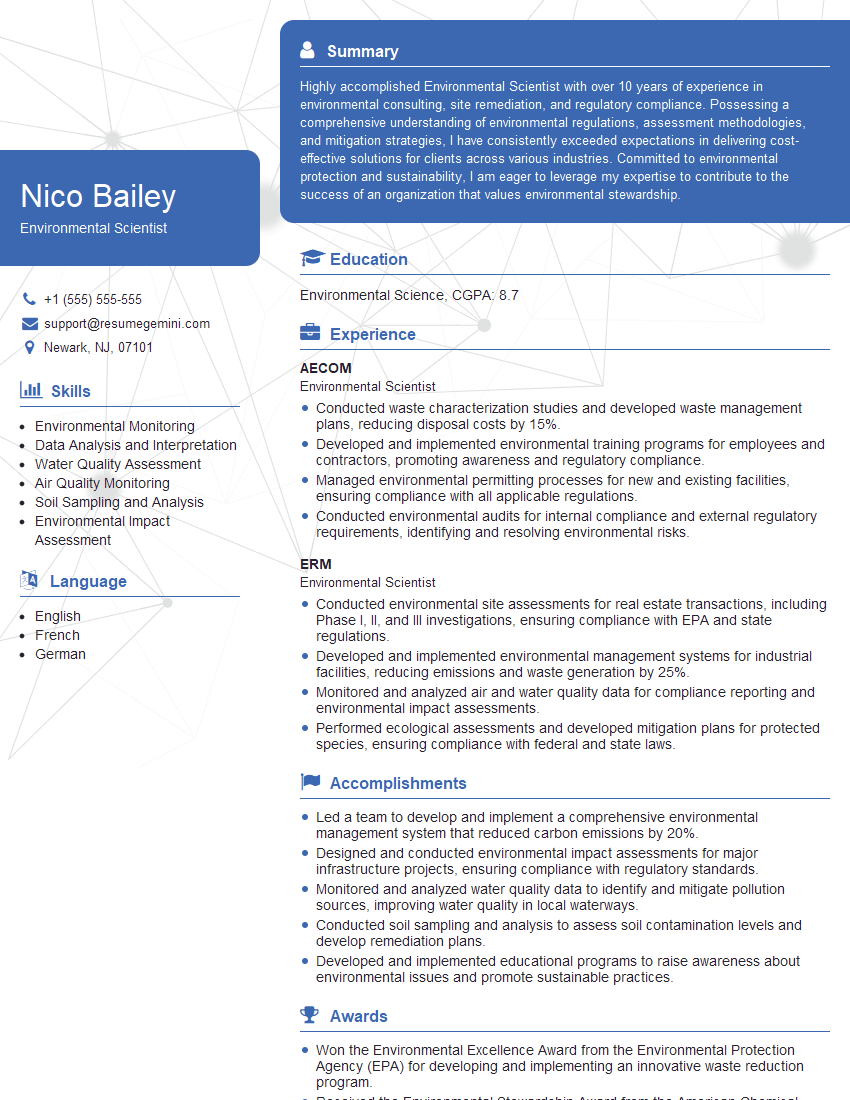
Environmental Scientist Resume Sample
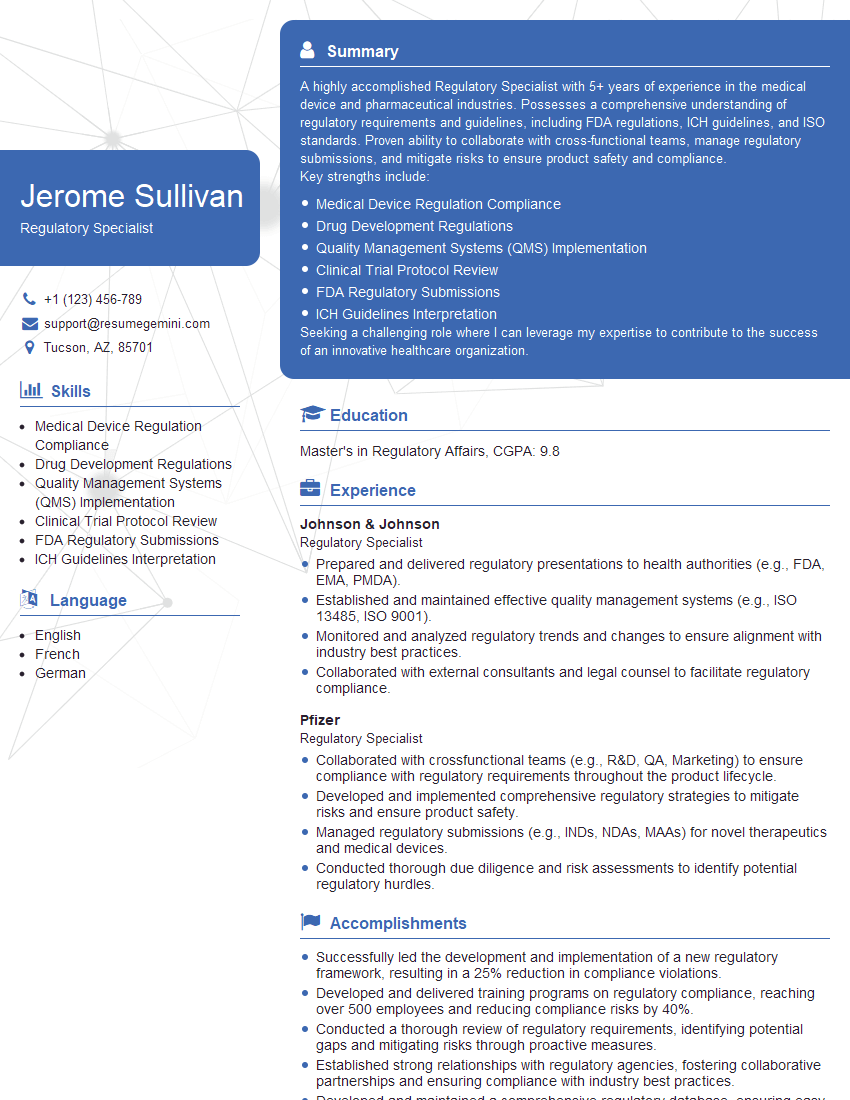
Regulatory Specialist Resume Sample

Environmental Planner Resume Sample

Landscape Architect Resume Sample

Civil Engineer Resume Sample

Geotechnical Engineer Resume Sample
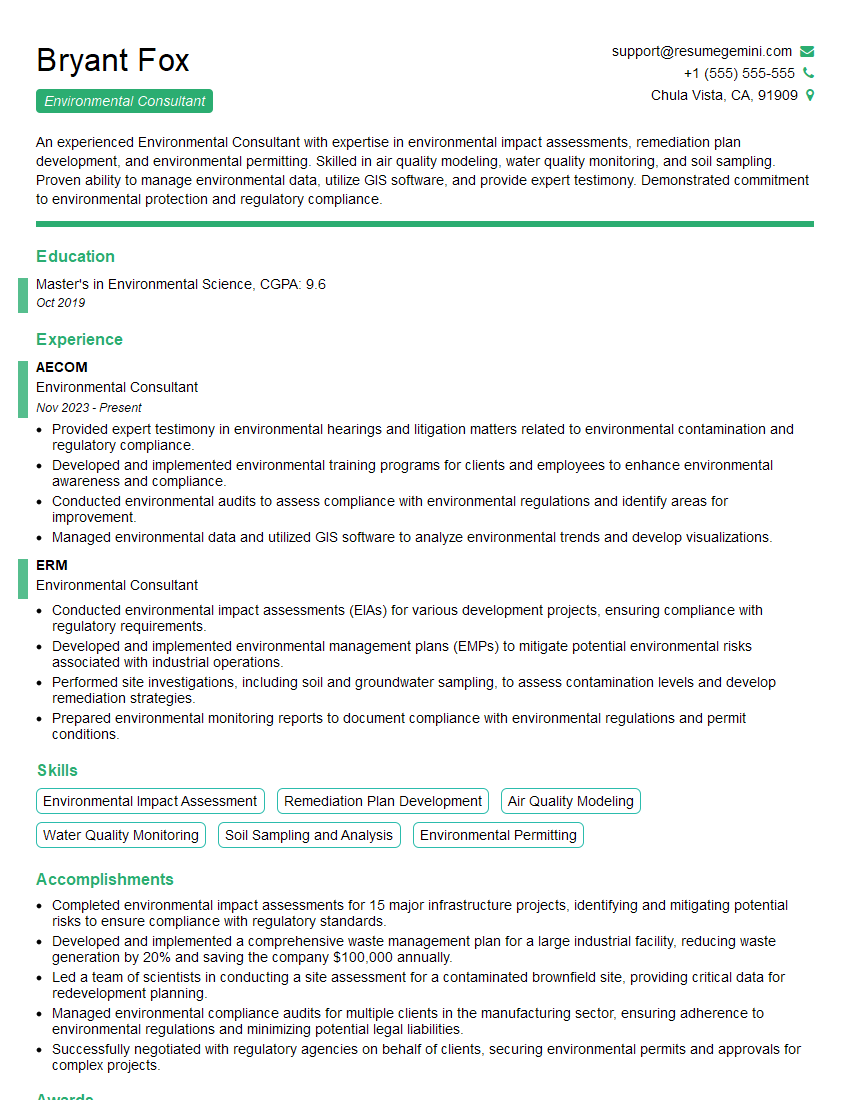
Environmental Consultant Resume Sample

Environmental Engineer Resume Sample
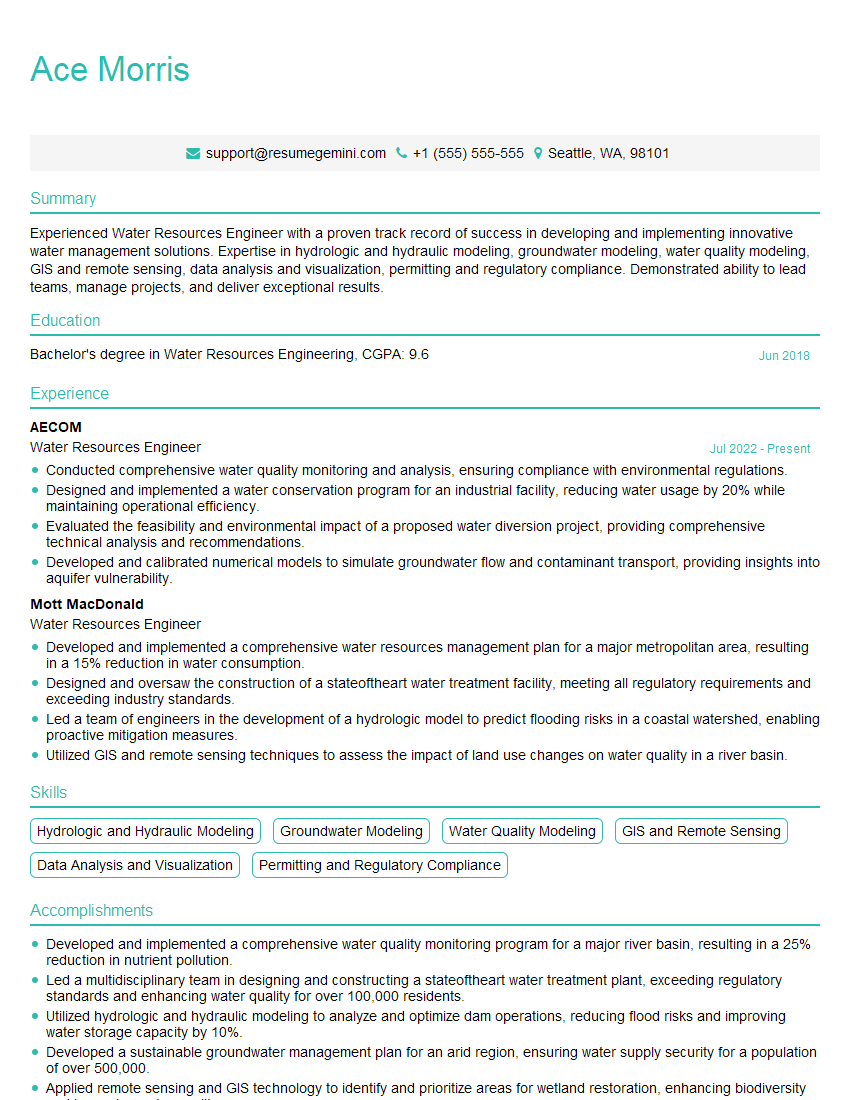
Water Resources Engineer Resume Sample

Construction Inspector Resume Sample

Soil Scientist Resume Sample

Erosion Control Specialist Resume Sample

Restoration Ecologist Resume Sample

Hydrologist Resume Sample
- Sustainability Manager
- Environmental Scientist
- Regulatory Specialist
- Environmental Planner
- Landscape Architect
- Civil Engineer
- Geotechnical Engineer
- Environmental Consultant
- Environmental Engineer
- Water Resources Engineer
- Construction Inspector
- Soil Scientist
- Erosion Control Specialist
- Restoration Ecologist
- Hydrologist
Explore more articles
Users Rating of Our Blogs
Share Your Experience
We value your feedback! Please rate our content and share your thoughts (optional).
What Readers Say About Our Blog
To the interviewgemini.com Webmaster.
Very helpful and content specific questions to help prepare me for my interview!
Thank you
To the interviewgemini.com Webmaster.
This was kind of a unique content I found around the specialized skills. Very helpful questions and good detailed answers.
Very Helpful blog, thank you Interviewgemini team.