Unlock your full potential by mastering the most common Storm Restoration and Emergency Response interview questions. This blog offers a deep dive into the critical topics, ensuring you’re not only prepared to answer but to excel. With these insights, you’ll approach your interview with clarity and confidence.
Questions Asked in Storm Restoration and Emergency Response Interview
Q 1. Describe your experience with water damage mitigation techniques.
Water damage mitigation is crucial in preventing further damage and costly repairs after a storm. It involves a systematic approach to remove water, dry affected materials, and prevent mold growth. My experience encompasses a wide range of techniques, from simple extraction using pumps and wet-vacs to more advanced methods like thermal drying and dehumidification.
For example, in a recent residential flood, we first assessed the extent of the damage, categorizing the water as clean, grey, or black based on contamination levels. Then, we immediately began extracting water using submersible pumps and wet-vacuum systems. This was followed by removing saturated materials like drywall and carpeting to prevent mold proliferation. We then set up powerful dehumidifiers and air movers to expedite the drying process, constantly monitoring moisture levels with specialized meters. The final stage involved thorough cleaning and disinfection to ensure a safe and healthy living environment.
Another example involves a commercial property with significant water intrusion. We used thermal imaging cameras to pinpoint hidden moisture and employed specialized drying techniques to tackle the problem in hard to reach areas. We worked closely with the building engineers and restoration specialists to ensure we met all regulatory requirements and followed best practices. In this case, careful documentation of moisture levels, drying times, and remediation measures were essential to manage insurance claims effectively.
Q 2. Explain the process of mold remediation in a post-storm environment.
Mold remediation after a storm is a critical health and safety issue. It requires a multi-step process focusing on containment, removal, and prevention. It starts with a thorough visual inspection and, often, environmental testing to determine the extent and types of mold present. Severe mold infestations often require specialized air filtration equipment to control the spread of mold spores during remediation.
The process typically begins by containing the affected area using plastic sheeting and negative air pressure to prevent spore dispersal. All visible mold is then carefully removed using appropriate personal protective equipment (PPE), such as respirators, gloves, and protective suits. Affected materials, even those that appear only slightly affected, often need complete removal and disposal, usually in accordance with local regulations. After the removal and disposal of the contaminated materials, thorough cleaning and disinfection of the affected area is necessary, including the cleaning of all surfaces, followed by the application of antimicrobial treatments to prevent future mold growth. Regular monitoring of the area using moisture meters is key for early mold detection and successful preventative measures.
For example, in one case, we discovered significant mold growth behind a water-damaged wall in a residential property. After containment, the wall had to be completely removed, along with sections of the underlying framing. We performed detailed air quality testing before, during, and after the remediation process, ensuring the air was clean and safe for the occupants. The case highlighted the need for thorough inspections and the importance of proactive mold prevention, which includes improving ventilation and moisture control.
Q 3. How do you prioritize tasks during a large-scale emergency response?
Prioritizing tasks during a large-scale emergency response requires a strategic approach. We use a tiered system, starting with immediate life safety concerns, then moving to critical infrastructure protection, and finally addressing secondary issues.
- Tier 1: Life Safety – This involves rescuing trapped individuals, providing first aid and medical assistance, and securing hazardous materials. Think searching for survivors in damaged buildings or stabilizing dangerous structures.
- Tier 2: Critical Infrastructure – Protecting essential services like power grids, water supplies, and communication networks falls under this tier. Imagine securing a damaged dam to prevent further flooding or restoring power to a hospital.
- Tier 3: Secondary Issues – This covers damage assessment, debris removal, and temporary housing for displaced people. For example, this would include clearing debris to open roads and providing temporary shelter for families who lost their homes.
Effective communication and collaboration among different teams (emergency medical services, power companies, structural engineers) are key to successful prioritization. We use incident command systems (ICS) to coordinate efforts and allocate resources efficiently.
Q 4. What safety protocols do you adhere to during storm restoration?
Safety is paramount in storm restoration. Our protocols are built around minimizing risks to both our personnel and the public. This includes comprehensive safety training for all our team members, adherence to OSHA regulations, and consistent use of appropriate PPE.
- Personal Protective Equipment (PPE): This includes hard hats, safety glasses, gloves, respirators (depending on the task), and high-visibility clothing. For mold remediation, specialized respirators and protective suits are crucial.
- Hazard Awareness and Control: We carefully assess potential hazards before starting any work, including downed power lines, structural instability, and the presence of hazardous materials like asbestos or lead paint. Appropriate safety measures are put in place, and work is halted if necessary.
- Emergency Communication: We maintain constant communication with our team members, using radios or other communication devices. Emergency procedures are in place for rapid response to accidents or emergencies.
- Site Security: We secure the work site to prevent unauthorized access and to protect both our personnel and the property from further damage or theft.
Regular safety checks and toolbox talks reinforce these protocols, ensuring everyone is aware of potential dangers and how to mitigate them.
Q 5. Describe your experience with Xactimate or similar estimating software.
I have extensive experience using Xactimate, a leading estimating software for property damage. It allows for detailed documentation of damage, precise cost estimation, and efficient communication with insurance adjusters. I’m proficient in using its various features, including creating scopes of work, taking and uploading photos, and generating detailed reports.
Xactimate’s features for damage categorization and cost calculation are invaluable. For example, using the software to estimate the cost of replacing water-damaged drywall or flooring, it automatically calculates material costs, labor costs, and disposal fees based on the selected parameters and local market data. This ensures that our estimates are accurate, transparent, and supported by detailed documentation which facilitates timely insurance claim settlements.
Beyond cost estimation, Xactimate helps to improve efficiency in project management. The software’s features to track progress on jobs and manage the different stages of restoration are integral to our project management and streamlined workflows. I regularly use Xactimate to create detailed reports, including before and after photos, which provide clear evidence of the damage and the restoration work performed.
Q 6. How do you handle difficult clients or stressful situations during a disaster?
Handling difficult clients or stressful situations requires empathy, patience, and strong communication skills. I understand that disasters are emotionally challenging, and clients may be frustrated, anxious, or even angry.
My approach focuses on active listening, understanding their concerns, and clearly explaining the process and our actions. I strive to be transparent and keep them informed every step of the way. For example, in a recent case involving a homeowner who was overwhelmed by the damage to their property, I took the time to listen to their concerns, offering reassurance and outlining a clear plan of action. This helped alleviate their anxiety, and we were able to establish a productive working relationship.
In stressful situations, I maintain a calm and professional demeanor, focusing on problem-solving and finding practical solutions. When disagreements arise, I prioritize finding mutually acceptable solutions, always remembering that our goal is to help them rebuild their lives. If necessary, I escalate the issue to a project manager or supervisor to ensure effective communication and conflict resolution.
Q 7. Explain your understanding of building codes and regulations related to storm damage repair.
Understanding building codes and regulations is critical for ensuring the safety and structural integrity of storm-damaged buildings. My knowledge extends to local, state, and national codes governing construction, repairs, and safety. I’m familiar with requirements relating to structural integrity, electrical systems, plumbing, and fire safety. These often vary depending on the location and type of damage.
For instance, I’m aware of specific requirements for water-damaged structures, including mold remediation protocols, requirements for drying methods, and the use of approved materials. We ensure all our repairs meet these codes to prevent future problems, and to protect both our client and the integrity of the building. During post-storm assessments, it is critical to identify any violations of building codes to guide repair decisions.
Compliance with building codes isn’t just a legal requirement; it’s essential for protecting occupants from future risks. We often work with engineers and building inspectors to ensure our work meets all necessary standards. Proper documentation of compliance, along with photographic and digital records, provides a clear record for insurance claims and long-term building maintenance.
Q 8. What is your experience with structural damage assessment?
Structural damage assessment after a storm involves a systematic evaluation of a building’s integrity to identify compromised areas and determine the extent of repairs needed. It’s crucial for safety and insurance purposes. My approach begins with a thorough visual inspection, noting any visible cracks, leaning walls, foundation issues, or roof damage. I then utilize specialized tools such as moisture meters to detect hidden damage like water intrusion in walls or ceilings. For more significant damage, I might employ non-destructive testing methods like ground-penetrating radar to assess foundation stability. I meticulously document all findings with photographic evidence, detailed sketches, and written reports, providing a comprehensive assessment for insurance claims or repair planning. For example, during a recent tornado event, I assessed a home with significant roof damage. Initial visual inspection revealed missing shingles, broken rafters, and compromised structural sheathing. Further investigation using thermal imaging revealed water intrusion in the attic, requiring significant remediation beyond the initial roof repair. My detailed report included specifics on damaged areas, estimated repair costs, and recommendations to prevent future damage. This ensured the homeowners and their insurance company had a clear understanding of the extent of the damage.
Q 9. How do you manage a team during a time-sensitive restoration project?
Managing a team during a time-sensitive restoration project requires strong leadership and clear communication. It’s like conducting an orchestra – each member has a vital role, and coordination is key. Before deployment, I conduct thorough briefings, assigning specific roles and responsibilities based on team members’ expertise. I utilize project management software to track progress, assign tasks, and ensure everyone is on the same page. Open communication channels are crucial; regular check-ins, both in person and via communication platforms, are vital to address challenges and adapt to changing circumstances. I emphasize the importance of safety protocols throughout the project, ensuring all team members understand and adhere to established guidelines. For instance, during a massive hurricane cleanup, we divided our team into smaller, specialized units: roofing, structural repair, debris removal, and mitigation. Clear communication, facilitated by daily morning briefings and regular progress updates, enabled us to meet the tight deadlines imposed by the situation and ensure a coordinated and efficient restoration effort. Motivating the team through regular praise and recognition of their efforts also plays a significant role in maintaining morale and productivity under pressure.
Q 10. What is your experience with insurance claims processes for storm damage?
My experience with insurance claims processes for storm damage is extensive. I understand the complexities of navigating these processes, from initial documentation to final settlement. I know that accurate and thorough documentation is crucial. I start by preparing comprehensive reports, which include detailed descriptions of the damage, photographic evidence, and cost estimates for repairs. These reports need to align with the specific requirements of the insurance company. I work closely with adjusters, providing them with all necessary information to facilitate a smooth and efficient claims process. I’m familiar with different policy types and coverage limits and can advocate for my clients to ensure they receive fair compensation for their losses. During a recent hailstorm, I assisted several homeowners with their insurance claims. By providing detailed reports, including high-resolution photos and videos of the damage and meticulously itemized repair estimates, I ensured that their claims were processed quickly and fairly, and the homeowners received the necessary funds for comprehensive repairs.
Q 11. Describe your knowledge of different types of roofing systems and their vulnerability to storm damage.
Understanding various roofing systems and their vulnerabilities to storm damage is fundamental. Common roofing types include asphalt shingles, tile, metal, and flat roofing systems. Asphalt shingles, while cost-effective, are susceptible to wind damage, particularly in high-velocity storms. Tile roofs, though durable, can be prone to cracking or displacement during severe hailstorms. Metal roofs are highly resistant to wind and hail but can suffer from damage during extreme events, and improper installation can lead to leaks. Flat roofs, often seen on commercial buildings, require regular maintenance and are vulnerable to ponding water, which can cause significant damage in heavy rain events. My experience encompasses assessing damage to all these systems, understanding the specific vulnerabilities, and recommending appropriate repair or replacement strategies. For example, understanding that certain shingle types have higher wind ratings allows me to offer informed recommendations for homeowners in areas prone to high winds, helping prevent future damage.
Q 12. How do you ensure the quality of work during a rapid restoration project?
Ensuring quality during rapid restoration projects requires a multi-pronged approach. Firstly, I emphasize using high-quality materials from reputable suppliers. Secondly, meticulous workmanship is paramount; I implement rigorous quality control checks at each stage of the project, including regular inspections by experienced supervisors. This includes adhering to building codes and industry best practices. Documentation of every step is key; photographic records, material tracking, and detailed progress reports allow us to track performance and identify any deviations from standards. Finally, a robust communication system enables immediate feedback and corrective actions if necessary. Think of it as building a skyscraper – every floor needs to be inspected before the next one goes up; a problem ignored early could become a catastrophic issue later. By establishing these checkpoints, I mitigate risks, maintain standards, and deliver a high-quality restoration, even under immense time pressure.
Q 13. What is your approach to dealing with unexpected complications during a restoration project?
Unexpected complications are inevitable in restoration projects. My approach involves a proactive, problem-solving mindset. When a complication arises, I initiate a structured response: first, I identify and assess the problem, then I gather the necessary information to understand its scope and impact. Next, I consult with relevant experts – engineers, contractors, or insurance adjusters – to get different perspectives. This collaborative approach ensures a comprehensive solution. Once a plan is developed, I clearly communicate it to my team and relevant stakeholders. I also ensure contingency plans are in place to deal with unforeseen issues. For example, during a recent flood restoration, we discovered unexpected mold growth. Our immediate response involved calling in a mold remediation specialist, incorporating their recommendations into the overall plan, and adjusting the project timeline accordingly. Transparent communication with the client ensured their understanding of the situation and that we remained on track to deliver a satisfactory result despite the complication.
Q 14. Describe your experience with temporary power restoration.
Temporary power restoration is a critical aspect of emergency response, particularly following widespread outages. My experience encompasses assessing the safety of electrical systems, identifying damaged infrastructure, and implementing safe temporary power solutions. This often involves working with power companies and utility crews. I understand the importance of using appropriate safety measures and adhering to safety regulations. Temporary power solutions might include the use of generators, providing power to essential facilities like hospitals or shelters. In situations where the power grid is extensively damaged, careful planning is needed to ensure that temporary power is provided safely and efficiently while avoiding further damage or causing safety hazards. The primary goal is to restore power to critical infrastructure and essential services as quickly as possible, to minimize the impact on the community. For example, after a significant winter storm, I worked with a team to set up temporary generators for a local hospital, ensuring that essential medical equipment remained operational until permanent power was restored. Prioritizing safety and efficiency were paramount in this instance.
Q 15. How do you manage waste disposal during a storm restoration project?
Waste disposal during storm restoration is crucial for both environmental protection and worker safety. We follow strict protocols compliant with all local, state, and federal regulations. This begins with meticulous segregation of waste streams. For instance, hazardous materials like asbestos, lead paint, or damaged appliances are handled completely separately from regular demolition debris. We utilize clearly marked containers and employ specialized waste disposal companies experienced in handling post-storm waste. Detailed manifests are maintained for each load, documenting the type and quantity of waste disposed. For example, a recent project involving a significant amount of contaminated drywall required multiple specialized disposal trucks to avoid exceeding weight limits and maintain safety. We strive to recycle and reuse as much material as possible to minimize landfill impact.
Career Expert Tips:
- Ace those interviews! Prepare effectively by reviewing the Top 50 Most Common Interview Questions on ResumeGemini.
- Navigate your job search with confidence! Explore a wide range of Career Tips on ResumeGemini. Learn about common challenges and recommendations to overcome them.
- Craft the perfect resume! Master the Art of Resume Writing with ResumeGemini’s guide. Showcase your unique qualifications and achievements effectively.
- Don’t miss out on holiday savings! Build your dream resume with ResumeGemini’s ATS optimized templates.
Q 16. What is your experience with asbestos abatement in post-storm environments?
Asbestos abatement in post-storm environments demands a high level of expertise and stringent safety measures. My team and I are fully licensed and certified to perform asbestos abatement following all EPA guidelines. We employ a multi-stage process starting with a thorough visual inspection and air sampling to determine the extent of asbestos contamination. This is followed by the careful removal and containment of the asbestos-containing materials (ACM), utilizing specialized equipment like HEPA-filtered vacuums and containment enclosures. Proper disposal of ACM is paramount, and we meticulously document each stage of the process, including chain of custody for disposal. I remember one project where a significant amount of asbestos-containing shingles had been damaged by a hurricane. We successfully abated the ACM while ensuring the safety of our workers and the surrounding community.
Q 17. Explain your understanding of different types of building materials and their reaction to storm damage.
Understanding building materials’ reaction to storm damage is critical for effective restoration. Different materials have varying degrees of resilience to water, wind, and impact. For example, wood is susceptible to rot and mold growth after prolonged water exposure, while concrete can crack under significant stress. Metal framing can rust, causing structural compromise. Different types of roofing materials, like asphalt shingles, metal roofing, or tile, have different lifespans and varying responses to high winds. Modern composite materials offer improved durability and strength, but even they can be damaged by severe storms. Assessing the extent of damage to each material during our initial assessments allows us to develop tailored restoration strategies, selecting appropriate repair or replacement methods based on material properties and damage severity. This avoids costly mistakes and ensures long-term durability.
Q 18. How do you ensure proper ventilation during the drying process in water damage restoration?
Proper ventilation is essential during the drying process to prevent mold growth and other microbial contamination in water-damaged structures. This involves using high-velocity air movers strategically placed to circulate air and remove moisture. Dehumidifiers work in tandem, actively extracting moisture from the air. We utilize specialized equipment that measures moisture content in building materials, allowing us to monitor progress and adjust ventilation strategies accordingly. This may involve opening windows and doors in conjunction with mechanical ventilation when appropriate. The goal is to achieve a uniform and controlled drying process, ensuring the materials dry at a safe and consistent rate to prevent further damage. Imagine a sponge—if you let it air dry slowly and evenly, it’s much less likely to retain mildew; the same logic applies to building materials.
Q 19. Describe your experience with working with subcontractors in a storm restoration project.
Working with subcontractors is commonplace in large-scale storm restoration projects. We select subcontractors based on their experience, licensing, insurance, and reputation. Clear contracts are essential, outlining scopes of work, payment schedules, and safety protocols. Regular communication and on-site meetings help maintain project coordination and resolve any issues promptly. A robust quality control process ensures that the subcontractor’s work meets our standards. We’ve built strong relationships with several trusted subcontractors specializing in specific areas, such as electrical work, roofing, and HVAC. This collaboration ensures a smooth workflow and high-quality results. One specific instance involved a subcontractor specializing in mold remediation – clear communication prevented any delays in the project.
Q 20. How do you create and maintain detailed documentation of a restoration project?
Detailed documentation is critical for project management and insurance claims. We maintain a comprehensive project file, including initial damage assessments, photographs, material lists, work orders, and payment records. Daily logs track progress and note any changes to the scope of work. Software platforms help manage this efficiently. We utilize digital tools to track and manage all aspects of documentation. For example, using cloud-based storage allows for secure and readily accessible information sharing amongst our team members and clients. Clear and consistent documentation ensures transparency and smooth communication throughout the restoration process. This meticulous record-keeping also strengthens our position when dealing with insurance companies.
Q 21. What software or technologies are you familiar with using for project management in storm restoration?
Several software and technologies are integrated into our storm restoration project management. We utilize cloud-based project management platforms like Asana or Monday.com to track tasks, deadlines, and communication. Xactimate is frequently used for estimating and documenting damages, which is crucial for insurance claims. Drone technology is increasingly employed for rapid aerial assessments of damage, providing comprehensive visual documentation that may not be accessible from the ground. We also leverage Microsoft Office 365 and other similar applications for document management, communication, and data analysis. These technologies streamline workflows, improve collaboration, and ultimately allow for more efficient and effective project execution.
Q 22. How do you effectively communicate with clients and insurance adjusters during a storm restoration project?
Effective communication is the cornerstone of any successful storm restoration project. I prioritize clear, concise, and frequent communication with both clients and insurance adjusters. With clients, I focus on empathy and understanding their anxieties. I provide regular updates, explaining the process in plain language, avoiding technical jargon unless absolutely necessary. I use photos and videos to visually demonstrate progress and challenges. For example, after a recent hail storm, I sent daily photos to a homeowner showing the removal of damaged roofing material and the installation of the new roof. With insurance adjusters, my communication is professional and factual, providing detailed documentation – including detailed reports, photos, and invoices – to support claims efficiently. I aim for transparency in all interactions, proactively addressing potential issues before they escalate. This proactive approach builds trust and ensures everyone is on the same page.
Q 23. Explain your understanding of various drying techniques used in water damage restoration.
Water damage restoration utilizes various drying techniques, each suited to specific situations. These techniques aim to remove moisture as quickly and effectively as possible to prevent mold growth and further damage. Common methods include:
- Air Movement: This involves using powerful fans to circulate air, accelerating evaporation. We strategically place fans to maximize airflow across affected areas.
- Dehumidification: Powerful dehumidifiers extract moisture from the air, speeding up the drying process. The type of dehumidifier (desiccant or refrigerant) is chosen based on the ambient temperature and humidity.
- Heating: In some cases, carefully controlled heating can assist evaporation. This is crucial for drying materials like wood flooring that are sensitive to rapid temperature changes.
- Extraction: Before drying, we use powerful pumps and vacuums to remove standing water and surface moisture. This crucial initial step dramatically reduces drying time.
- Thermal Imaging: Advanced techniques like thermal imaging cameras help us pinpoint hidden moisture, ensuring complete drying. This prevents potential issues down the line.
The selection of drying techniques is determined by the extent of the water damage, the type of materials involved (e.g., wood, drywall, carpet), and the ambient environmental conditions.
Q 24. How do you prevent mold growth after water damage mitigation?
Preventing mold growth after water damage is paramount. Our approach is multi-pronged and begins with rapid and thorough drying, as described above. We aim for drying times well within industry standards (typically within 24-48 hours for most surfaces). Beyond drying, we take these steps:
- Cleaning and Sanitizing: All affected surfaces are thoroughly cleaned and sanitized with antimicrobial agents to eliminate mold spores and bacteria. This is especially important for porous materials like drywall.
- Moisture Control: We ensure proper ventilation and humidity control to prevent future moisture accumulation. This might involve installing dehumidifiers or improving building ventilation.
- Material Removal and Replacement: In cases of severe water damage, materials that cannot be effectively dried or cleaned, such as heavily soaked drywall or carpeting, are removed and replaced.
- Professional Monitoring: We often provide follow-up inspections to verify the absence of mold growth. This proactive approach ensures long-term protection for the property.
Remember, mold prevention is significantly more cost-effective than mold remediation. Early intervention is crucial.
Q 25. What is your approach to identifying and addressing potential hazards on a storm-damaged property?
Safety is our top priority. Assessing and mitigating hazards on a storm-damaged property involves a systematic approach. We begin with a thorough visual inspection, identifying potential dangers such as:
- Structural Instability: Checking for weakened walls, roofs, or foundations. We may need to consult structural engineers for severely damaged buildings.
- Electrical Hazards: Inspecting for downed power lines, exposed wiring, and damaged electrical panels. We never work on a property with live electrical hazards unless qualified electricians have ensured safety.
- Hazardous Materials: Identifying potential asbestos, lead paint, or other hazardous materials that might be released during the restoration process. Specialized contractors are called in if needed.
- Falling Debris: Securing loose debris and unstable elements to prevent further damage or injury. We use appropriate safety equipment like hard hats and harnesses.
- Biological Hazards: Being aware of potential contamination from sewage, mold, or other biological hazards and taking appropriate precautions.
After this initial assessment, we develop a safety plan specific to the property, outlining procedures for hazard mitigation and personal protective equipment (PPE) requirements for the team.
Q 26. Describe your experience with working in challenging weather conditions.
I have extensive experience working in challenging weather conditions, from torrential rain and high winds to extreme heat and cold. During Hurricane Irma, for example, our team worked tirelessly for weeks in heavy rain and wind to tarp damaged roofs and protect properties from further water damage. Safety protocols are paramount in these situations. We use specialized equipment designed for adverse weather, and our team receives regular safety training on working at heights and in hazardous environments. We always prioritize the safety of our crew and continuously monitor weather forecasts to adjust our work schedule as needed to avoid dangerous situations. We’ve also developed contingency plans to address equipment malfunctions or unexpected weather changes.
Q 27. How do you maintain compliance with relevant regulations and standards during a storm restoration project?
Maintaining compliance is crucial. We adhere strictly to all relevant building codes, insurance regulations, and industry standards like IICRC (Institute of Inspection, Cleaning and Restoration Certification) guidelines. This includes proper documentation of all work performed, including detailed reports, photos, and invoices. Our team undergoes regular training to stay updated on the latest regulations and best practices. We ensure all our subcontractors also adhere to the same standards and have the necessary licenses and insurance. We maintain a comprehensive record-keeping system to ensure traceability of all materials used and processes followed, facilitating smooth audits and ensuring accountability.
Q 28. Describe a time you had to adapt your approach due to unforeseen circumstances during a storm restoration project.
During a large-scale restoration project after a major flood, we encountered unexpectedly high water tables that hampered our initial drying plan. Our initial strategy focused on air movement and dehumidification. However, the saturated ground continued to wick moisture back into the structures. We had to adapt quickly. We implemented a more aggressive approach, incorporating specialized sub-slab depressurization systems to draw moisture out from beneath the foundation. We also utilized more powerful dehumidifiers and brought in additional drying equipment. Open communication with the client was vital throughout this process. This experience highlighted the importance of adaptability and the value of having contingency plans for unforeseen challenges. While the project took longer than initially anticipated, our quick adaptation prevented further damage and ensured a successful restoration.
Key Topics to Learn for Storm Restoration and Emergency Response Interview
- Safety Procedures and Regulations: Understanding OSHA regulations, emergency response protocols, and safe work practices in disaster zones. Practical application: Explain how you would ensure team safety during a hurricane cleanup.
- Damage Assessment and Mitigation: Identifying structural damage, assessing safety hazards, and prioritizing restoration efforts. Practical application: Describe your approach to evaluating damage to a residential property after a severe storm.
- Restoration Techniques: Knowledge of various restoration methods for different types of damage (e.g., water damage, wind damage, mold remediation). Practical application: Explain your experience with specific restoration techniques and the tools used.
- Equipment Operation and Maintenance: Familiarity with various equipment used in storm restoration (e.g., generators, pumps, specialized cleaning equipment). Practical application: Detail your experience operating and maintaining specific pieces of equipment and troubleshooting malfunctions.
- Project Management and Coordination: Ability to manage multiple tasks, coordinate teams, and meet deadlines under pressure. Practical application: Describe a challenging project you managed and how you overcame obstacles.
- Customer Interaction and Communication: Effective communication with clients, insurance adjusters, and other stakeholders. Practical application: Explain how you would handle a difficult client during a stressful restoration project.
- Emergency Response Planning and Logistics: Understanding the logistical challenges of large-scale emergency response efforts, including resource allocation and deployment. Practical application: Describe your experience with emergency response planning or deployment.
Next Steps
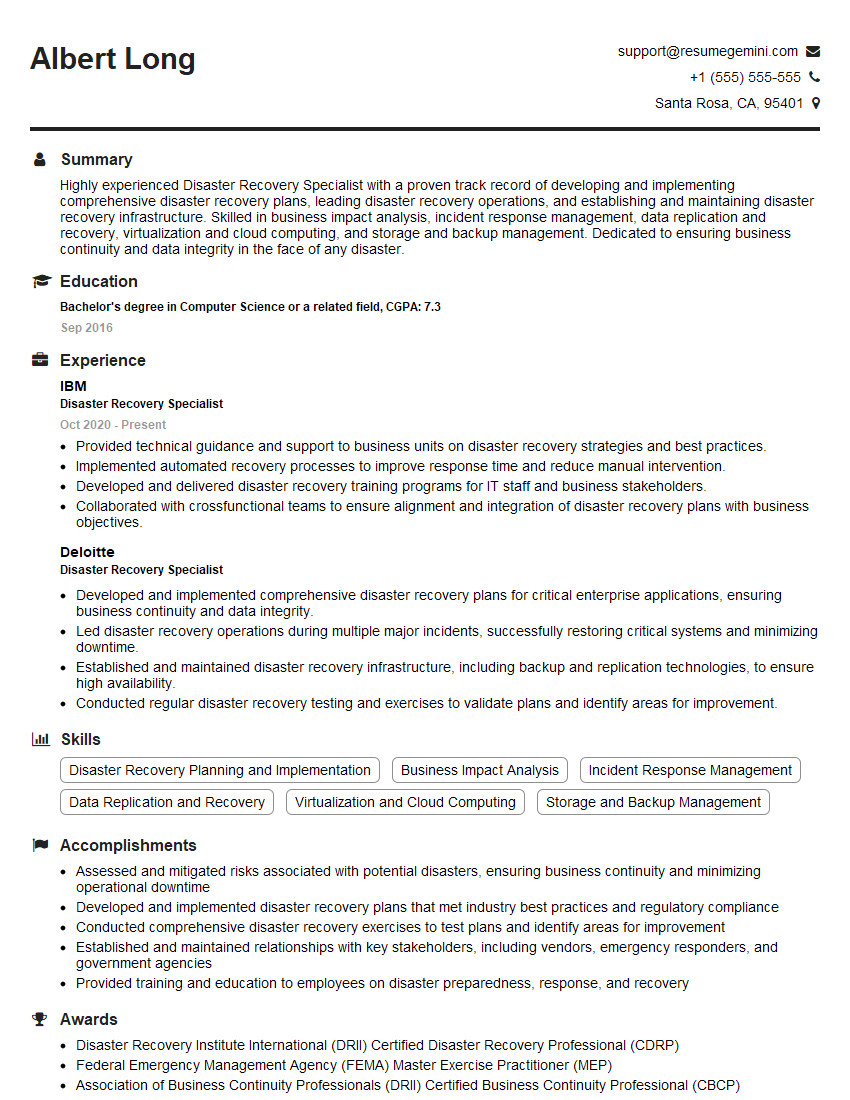
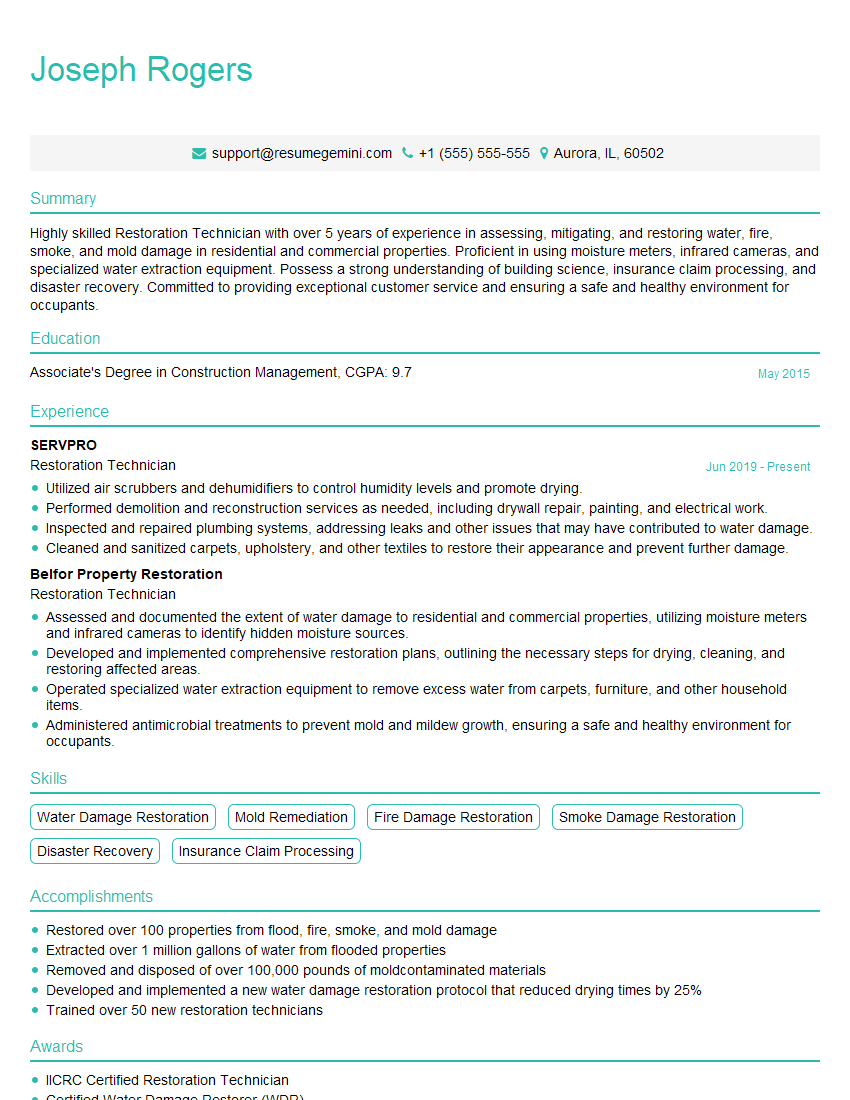
Mastering Storm Restoration and Emergency Response opens doors to a rewarding career with opportunities for growth and specialization. This field demands skilled professionals who are adaptable, resilient, and committed to helping others during times of crisis. To significantly increase your job prospects, it’s crucial to create a resume that effectively highlights your skills and experience to Applicant Tracking Systems (ATS). ResumeGemini is a trusted resource for building professional, ATS-friendly resumes that stand out. Utilize ResumeGemini to craft a compelling narrative that showcases your expertise and experience. Examples of resumes tailored to the Storm Restoration and Emergency Response field are provided to help guide you.
Explore more articles
Users Rating of Our Blogs
Share Your Experience
We value your feedback! Please rate our content and share your thoughts (optional).
What Readers Say About Our Blog
To the interviewgemini.com Webmaster.
Very helpful and content specific questions to help prepare me for my interview!
Thank you
To the interviewgemini.com Webmaster.
This was kind of a unique content I found around the specialized skills. Very helpful questions and good detailed answers.
Very Helpful blog, thank you Interviewgemini team.