Unlock your full potential by mastering the most common Troubleshooting of Satellite Antennas interview questions. This blog offers a deep dive into the critical topics, ensuring you’re not only prepared to answer but to excel. With these insights, you’ll approach your interview with clarity and confidence.
Questions Asked in Troubleshooting of Satellite Antennas Interview
Q 1. Explain the process of aligning a satellite dish.
Aligning a satellite dish involves precisely pointing it towards the satellite it’s designed to receive signals from. Think of it like aiming a telescope at a distant star. The process is crucial for a strong signal. It typically involves several steps:
- Find Satellite Coordinates: Use a satellite finder tool (website or app) or your satellite receiver’s manual to determine the azimuth (horizontal angle), elevation (vertical angle), and sometimes skew (for offset dishes) for your location and desired satellite. These are crucial for accurate pointing.
- Initial Positioning: Roughly position the dish using the coordinates. This might involve using a compass for azimuth and a protractor or inclinometer for elevation.
- Fine-Tuning: Use a satellite meter (a device that measures signal strength) connected to your receiver. Slowly adjust the dish’s azimuth and elevation, watching the meter. The goal is to find the peak signal strength. This usually requires very small adjustments.
- Skew Adjustment (Offset Dishes): If you have an offset dish, you’ll also need to adjust the skew. This involves rotating the LNB (Low Noise Block) slightly, aiming for the strongest signal. It’s less critical than azimuth and elevation but significant for optimal reception.
- Securing the Dish: Once you find the strongest signal, securely tighten all bolts and mounting hardware to prevent movement from wind or other factors.
Remember, patience and precision are key. Small adjustments make a big difference.
Q 2. What tools are essential for troubleshooting satellite antenna issues?
Troubleshooting satellite antenna issues requires a combination of tools. These tools vary in complexity depending on the issue, but here’s a list of essential ones:
- Satellite Meter: This is arguably the most important tool. It measures the signal strength and quality, guiding you to optimize the dish’s alignment.
- Multimeter: Useful for checking the continuity and voltage of cables and the LNB itself. This helps identify faulty wiring or a malfunctioning LNB.
- Cable Tester: A cable tester can help you pinpoint breaks or shorts within the coaxial cable run from the dish to the receiver.
- Compass: For initial azimuth alignment, especially helpful in the absence of more sophisticated tools.
- Inclinometer/Protractor: To measure the elevation angle accurately.
- Screwdrivers and Wrenches: For adjusting the dish’s position and tightening bolts.
- Ladder (if necessary): Safe access to the dish is essential.
For more advanced troubleshooting, you might also need specialized tools like a spectrum analyzer.
Q 3. How do you diagnose a weak signal from a satellite dish?
A weak signal from a satellite dish typically points to problems with alignment, cable quality, or the LNB. Here’s how to diagnose it:
- Check Signal Strength Meter Readings: Your satellite receiver provides a signal strength indicator. Low readings indicate a problem.
- Inspect Cables: Look for any damage, kinks, or loose connections in the coaxial cable running from the dish to the receiver. A bad connection or damaged cable causes significant signal degradation.
- Verify LNB Connection: Ensure the LNB is securely connected to the cable and that the cable is securely attached to the receiver. A loose connection is a frequent culprit.
- Re-align the Dish: Even a slight misalignment can significantly reduce signal strength. Use the satellite meter to fine-tune the dish’s position, as described in the dish alignment process.
- Check for Obstructions: Ensure there are no trees, buildings, or other obstructions blocking the line of sight between the dish and the satellite.
- Test the LNB: If all else fails, test the LNB using a multimeter to check for proper voltage and continuity. If it’s faulty, it needs replacement.
Remember to always prioritize safety when working with satellite dishes and electricity.
Q 4. Describe different types of satellite antenna configurations.
Satellite antenna configurations vary depending on factors like frequency, satellite location, and signal strength requirements. Common types include:
- C-Band Dishes: Typically larger dishes (often 10 feet or more in diameter) used for receiving signals from geostationary satellites in the C-band frequency range. They provide high signal gain but require a clear line of sight and are susceptible to weather conditions.
- Ku-Band Dishes: More compact than C-band dishes (generally 18-36 inches) and used for Ku-band frequencies. They’re more common for residential satellite TV. The smaller size is more convenient but comes with slightly lower signal gain.
- Offset Dishes: These have an LNB mounted on the side of the dish, offering advantages like improved low-angle reception and reduced blockage. Offset designs are very popular in residential installations because they are easy to point.
- Prime Focus Dishes: These have a centrally mounted LNB and offer a relatively simpler design, though less efficient for low-angle satellites.
- Multi-Satellite Dishes: These dishes can simultaneously receive signals from multiple satellites, usually by using multiple LNBs. Each LNB is positioned and aimed at a different satellite. These are especially useful for receiving multiple channels or services.
The choice of configuration depends on specific needs and environmental considerations.
Q 5. How would you troubleshoot a complete loss of satellite signal?
A complete loss of satellite signal is a serious issue, often resulting from several possible causes:
- Check all Connections: Start with the basics – make sure all cables are securely connected at both ends (dish, receiver, and any splitters). Loose or corroded connectors are common culprits.
- Examine the Cables: Inspect the coaxial cables for any visible damage, cuts, or water ingress. A damaged cable needs replacement.
- Verify LNB Operation: Check the LNB for any physical damage. Use a multimeter to ensure it’s receiving the correct voltage. A faulty LNB will prevent signal reception.
- Assess Dish Alignment: A severe misalignment or blockage from weather events, newly grown trees, or construction can easily cause signal loss. Re-align your dish with a satellite meter.
- Investigate Obstructions: Check for obstructions in the satellite’s path. Even temporary blockages from leaves can disrupt the signal significantly.
- Check the Receiver: While less common, issues with the receiver itself can cause signal loss. Try connecting the receiver to another known working antenna as a test.
- Weather Conditions: Severe weather like heavy rain or snow can severely weaken or even block satellite signals.
A systematic approach, going from simple checks to more complex ones, is vital for effective troubleshooting.
Q 6. What are common causes of signal interference?
Signal interference in satellite reception can stem from various sources:
- Atmospheric Conditions: Heavy rain, snow, or even fog can attenuate the satellite signal. This is especially true for higher frequencies like Ku-band.
- Other Electronic Devices: Nearby electronic devices, especially those operating at similar frequencies, can interfere with the satellite signal. This includes microwave ovens, Wi-Fi routers, and other wireless devices.
- Multipath Interference: Reflections of the satellite signal from objects like buildings or other metallic surfaces can create multipath interference, which degrades signal quality.
- Tree Branches or Foliage: Trees and foliage can block or absorb the signal, especially when branches are in the direct path between the dish and the satellite. Seasonal changes in foliage often impact signal reception.
- Radio Frequency Interference (RFI): Sources of RFI, such as poorly shielded electrical equipment, can inject unwanted signals into the satellite receiver, reducing quality.
Identifying the source of interference requires careful observation and systematic troubleshooting. Relocating the antenna or implementing shielding measures can help mitigate these problems.
Q 7. How do you identify and resolve issues with LNBs (Low Noise Blocks)?
Troubleshooting LNBs (Low Noise Blocks) involves checking for both physical damage and electrical faults. The LNB is a crucial component, amplifying the weak satellite signals, so proper function is essential:
- Visual Inspection: Start by visually inspecting the LNB for any physical damage, such as cracks, corrosion, or loose connections. Any sign of damage usually indicates the need for replacement.
- Check for Correct Voltage: Use a multimeter to measure the DC voltage supplied to the LNB. The voltage should match the specifications provided in the LNB’s documentation. Incorrect voltage usually suggests a wiring problem.
- Check for Continuity: Use the multimeter to check for continuity between the output terminals of the LNB. An open circuit indicates a faulty LNB.
- Check the Signal at the LNB Output: Connect a satellite meter to the output of the LNB to verify the presence of the satellite signal. A weak or absent signal points to a faulty LNB or poor alignment.
- Test with a Known Good LNB: If possible, replace the suspected faulty LNB with a known good one to confirm the fault. This is a definitive way to isolate the problem.
Replacing a faulty LNB is often a straightforward process, but always ensure the power is switched off before working on any satellite equipment.
Q 8. Explain the role of a satellite receiver in signal reception.
The satellite receiver is the crucial link between your antenna and your television or other viewing device. Think of it as a translator. The antenna collects the weak radio waves from the satellite, but these signals are not in a format your TV can understand. The receiver takes these weak, scrambled signals, decodes them, and converts them into a clear picture and sound. It’s like taking a coded message and turning it into a readable letter. It also handles aspects like channel selection and signal amplification to provide a quality viewing experience. It’s a sophisticated piece of electronics that incorporates a tuner, a demodulator, and often a digital signal processor to achieve this.
Q 9. How do you interpret a satellite signal meter reading?
A satellite signal meter, usually found on the receiver or a separate meter, displays the strength and quality of the signal received by the antenna. Strength refers to the power of the signal, indicated by a numerical value or a bar graph. A higher value indicates a stronger signal. Quality, often expressed as a percentage or another numerical scale, represents the clarity and error-free transmission of the signal. A high-quality signal ensures a stable picture and sound. Ideally, you’re looking for both strong signal strength and high quality. For example, a reading of 75% signal strength and 90% signal quality indicates a good connection, while a reading of 30% strength and 50% quality points to signal issues. If either is too low, you need to adjust the antenna’s aim or check for obstructions.
Q 10. What are the safety precautions when working with satellite antennas?
Safety is paramount when working with satellite antennas. These are often mounted high on buildings or poles, involving potential falls. Always use appropriate safety gear such as a harness, rope, and helmet when working at heights. Antennas are made of metal, so be aware of potential electrical hazards, especially during stormy weather. Never work on the antenna during a thunderstorm. Furthermore, be cautious of sharp edges and potential cuts. Before touching any part of the satellite system, ground yourself to prevent static discharge that could damage equipment. If you’re unsure about any aspect of the installation or maintenance, consult a qualified professional.
Q 11. What is the difference between Ku-band and C-band satellites?
Ku-band and C-band are two frequency ranges used for satellite communication. They differ mainly in frequency and consequently, in antenna size and signal characteristics. C-band satellites operate at lower frequencies (around 4 GHz), which means they have longer wavelengths. This results in larger antenna dishes being required for effective reception, but these larger dishes are less affected by atmospheric conditions. Ku-band operates at higher frequencies (around 12 GHz), which means smaller, more compact antennas can be used. However, Ku-band signals are more susceptible to interference from rain, snow, and atmospheric disturbances. In simpler terms, C-band is like using a big net to catch fish (reliable but bulky), while Ku-band is like using a smaller net (efficient but more prone to missing the fish during rough seas).
Q 12. Describe the concept of satellite polarization and its importance.
Satellite polarization refers to the orientation of the electromagnetic waves transmitted by the satellite. Imagine the wave as an arrow; it can be either vertical or horizontal. This is crucial because your antenna’s receiver must be aligned with the satellite’s polarization to receive the signal effectively. If the polarization is mismatched, you’ll lose the signal, or get a severely degraded one. Satellites often transmit signals using both vertical and horizontal polarization, allowing for more channels on a single satellite. Misaligned polarization is a common cause of signal loss, so ensuring your LNB (Low Noise Block) is correctly set for both vertical and horizontal is essential for optimal reception.
Q 13. How do you troubleshoot a problem with multiple satellite receivers?
Troubleshooting multiple satellite receivers starts with isolating the problem. If only one receiver is affected, the issue is likely with that specific receiver, a faulty cable connection to it, or a problem with the receiver itself. Check all connections carefully and try a different cable. If multiple receivers are affected, the problem could lie with the satellite dish’s alignment, a central LNB problem, or an issue with the main cable leading from the dish. Check the signal strength on each receiver using the signal meter. If the strength is weak on all receivers, re-aim the dish. If the strength is good on some but weak on others, check the cabling connecting the LNB to the receivers and look for damaged or loose connections. In the case of a faulty LNB, replacement will be necessary.
Q 14. Explain the impact of weather conditions on satellite signal strength.
Weather significantly impacts satellite signal strength. Heavy rain, snow, or fog can attenuate (weaken) the signal as the radio waves are absorbed or scattered by water droplets or ice crystals in the atmosphere. The higher the frequency (Ku-band), the more susceptible the signal is to these effects. Strong winds can also affect the signal by causing the antenna to move slightly out of alignment, thereby weakening the signal. Clear, dry weather usually provides the best signal quality. You might experience signal degradation even on slightly cloudy days, though usually not as severe as in heavy rain or snow. This is why you often need a strong signal in good weather to cope with temporary signal reduction caused by adverse weather.
Q 15. How do you test the cable connections for a satellite dish?
Testing satellite dish cable connections is crucial for ensuring a strong signal. I typically start with a visual inspection, checking for any obvious damage like cuts, kinks, or loose connections. Then, I use a signal meter, often a satellite finder, to measure the signal strength at various points along the cable: at the dish, at the receiver, and at any connectors in between. A significant drop in signal strength between points indicates a problem with the cable segment. For example, if the signal is strong at the dish but weak at the receiver, the problem lies within the cable run itself. I might also use a continuity tester to check for breaks in the cable’s inner conductor, confirming a physical fault.
For coax cables, I would examine the F-type connectors meticulously; a poorly crimped connection is a common culprit. A loose or corroded connection results in signal loss. Often, simply tightening a connection or replacing a faulty connector resolves the issue. I always ensure proper grounding of the cable to minimize interference.
Career Expert Tips:
- Ace those interviews! Prepare effectively by reviewing the Top 50 Most Common Interview Questions on ResumeGemini.
- Navigate your job search with confidence! Explore a wide range of Career Tips on ResumeGemini. Learn about common challenges and recommendations to overcome them.
- Craft the perfect resume! Master the Art of Resume Writing with ResumeGemini’s guide. Showcase your unique qualifications and achievements effectively.
- Don’t miss out on holiday savings! Build your dream resume with ResumeGemini’s ATS optimized templates.
Q 16. What are common causes of signal degradation?
Signal degradation in satellite systems stems from various sources. Atmospheric conditions play a significant role; heavy rain, snow, or fog can significantly attenuate the signal. Leaves, branches, or other obstructions blocking the dish’s line of sight to the satellite are another common cause. Poor cable quality, as mentioned earlier, is a frequent offender. Interference from other electronic devices or nearby sources of electromagnetic radiation can also degrade the signal. Furthermore, the dish itself may be misaligned, leading to reduced signal strength.
Finally, age and wear-and-tear on the satellite receiver or LNB (Low-Noise Block) can contribute to signal degradation. A faulty LNB, the device at the dish that receives the satellite signal, is a common and often overlooked cause of signal problems. I frequently encounter cases where replacing a damaged LNB restores the signal immediately.
Q 17. Describe your experience with different types of satellite equipment.
Throughout my career, I’ve worked extensively with a wide range of satellite equipment. This includes various sizes of satellite dishes, from small, portable dishes used for recreational vehicles to large, fixed dishes used for professional applications. I’m proficient in handling different LNB types, including single, dual, and quad LNBs, and understand their specific applications and installation requirements. I have experience with both analog and digital satellite receivers, as well as the various protocols used for signal transmission, including DVB-S, DVB-S2, and DVB-S2X.
I’m familiar with various types of satellite signal meters and analyzers, allowing for precise signal level and quality assessment. I have experience troubleshooting various brands and models of satellite receivers, LNBs and dishes, and I understand the nuances of different satellite constellations and their orbital positions. Recently, I’ve worked on systems incorporating advanced features like motorized dish positioning and network-based remote monitoring systems.
Q 18. How do you handle difficult or complex troubleshooting situations?
Complex troubleshooting requires a systematic approach. My process begins with gathering all possible information: signal strength readings, weather conditions, recent equipment changes, and the user’s reported symptoms. I then proceed using a process of elimination. I start with the simplest possible explanations, such as a loose cable, before moving towards more complex issues like LNB failure or orbital drift. I rely on my understanding of the satellite system’s architecture, from the dish to the receiver. For instance, if intermittent signal loss occurs during rain, I would suspect signal attenuation due to rain fade, which often requires a stronger dish or different LNB.
If I am stumped, I consult technical manuals, online forums, or reach out to colleagues for advice. I use diagrams or flowcharts to visually represent the system and pinpoint potential trouble spots. Documenting each step, including the tests performed and their outcomes, is crucial. In particularly challenging cases, I might temporarily replace components to isolate the fault, confirming suspicions or pinpointing the issue to a specific component.
Q 19. How do you document your troubleshooting process?
Thorough documentation is essential for efficient troubleshooting and future reference. I usually use a combination of written notes and digital records. My written notes include the date, time, location, client’s description of the problem, and a detailed step-by-step account of the troubleshooting procedure. I record the results of each test performed, including signal strength readings, measurements taken, and observations made. This allows me to retrace my steps if necessary and share information with colleagues.
For digital records, I use a spreadsheet or a dedicated software to log the problem, the solution, and any relevant information like equipment models and serial numbers. This digital archive is searchable and readily accessible, which is especially helpful when dealing with numerous cases. Pictures or videos of the setup, particularly those showing cable connections, can also prove invaluable in diagnosing the problem.
Q 20. What are the signs of a faulty satellite receiver?
A faulty satellite receiver can manifest in several ways. One common sign is the complete absence of any signal, resulting in a blank screen or an error message. Intermittent signal loss, where the picture cuts out periodically, could indicate a problem with the receiver’s internal components or connections. Poor picture quality, such as pixelation, freezing, or excessive noise, often points towards signal degradation caused by a failing receiver or a connection issue. The receiver might also exhibit unusual behavior, such as rebooting frequently or failing to respond to commands from the remote control.
Sometimes, there could be a failure in specific receiver functions, such as the inability to receive certain channels or difficulties accessing the electronic program guide. In such cases, a more thorough analysis is needed to diagnose the specific failure within the receiver. I’d start with checking for software updates and then, if the problem persists, consider the possibility of a hardware fault requiring repair or replacement.
Q 21. How do you determine the appropriate satellite dish size for a specific location?
Determining the appropriate satellite dish size involves several factors. The most critical is the signal strength received at your location. This is influenced by the distance to the satellite, atmospheric conditions, and any obstacles obstructing the signal path. A weaker signal necessitates a larger dish to collect more of it. Larger dishes generally have higher gain, meaning they can collect weaker signals effectively. The frequency of the satellite signal also matters; higher frequencies require larger dishes to maintain the same efficiency.
Location-specific factors, like latitude and longitude, play a role in determining the optimal dish size. Moreover, the desired quality of the received signal, in terms of bit rate and error correction, will also affect the dish size requirements. Online satellite dish size calculators can help estimate the ideal size based on your location and the target satellite. These calculators typically consider the satellite’s parameters, including frequency, orbital position, and signal strength, to provide recommendations. However, practical experience and adjustments might be needed to fine-tune the setup for optimal performance.
Q 22. Explain the concept of satellite elevation and azimuth.
Satellite elevation and azimuth are crucial angles for pointing your satellite dish correctly to receive a signal. Think of it like aiming a cannon – you need the right elevation (angle above the horizon) and azimuth (compass direction) to hit your target (the satellite).
Elevation is the vertical angle between the horizon and the satellite. A satellite positioned directly overhead would have an elevation of 90 degrees, while one closer to the horizon would have a lower elevation angle. This angle changes depending on your geographical location and the satellite’s orbital position.
Azimuth is the horizontal angle, measured clockwise from north, indicating the direction you need to point your dish. For example, an azimuth of 180 degrees means the dish should point due south.
Finding the correct elevation and azimuth for your location and desired satellite is typically done using satellite pointing calculators available online or through satellite finder apps. These tools require your geographical coordinates (latitude and longitude) and the satellite’s orbital position (specified by its orbital slot).
Q 23. How do you troubleshoot problems with a satellite motor?
Troubleshooting a satellite motor involves a systematic approach. First, ensure power is reaching the motor. Check the power supply, cables, and any fuses. A multimeter can be invaluable here. Then, inspect the motor itself for any visible damage or obstructions.
Next, check the motor’s control system. If it’s controlled by a receiver, verify the receiver is correctly configured and sending the appropriate commands. Sometimes a simple reboot of the receiver solves the issue. If the motor is directly connected to a positioner control unit, inspect its connections and settings. Many motors have limit switches; make sure they’re not obstructed, preventing the motor from moving.
If the motor still doesn’t work, consider these possibilities: faulty motor wiring, a failed motor gearbox, or even a problem with the positioner’s internal electronics. A skilled technician might need to test the motor’s internal components and potentially replace the motor or controller.
Remember safety first! Always disconnect power before performing any physical inspection or repair work on the motor or its associated electronics.
Q 24. Describe your experience with various signal measuring instruments.
My experience encompasses a range of signal measuring instruments crucial for satellite antenna troubleshooting. This includes:
- Satellite meters: These specialized meters measure signal strength (usually in dBm or dBµV) and signal quality (often expressed as a percentage or a quality indicator). They are essential for aligning the dish and diagnosing signal reception problems. Different models offer various features, such as spectrum analysis capabilities.
- Multimeters: Used for basic electrical checks, verifying power supply voltages, checking for continuity in cables, and identifying shorts or breaks.
- Spectrum analyzers: These advanced instruments provide a detailed view of the frequency spectrum, allowing for precise identification of signal frequencies and detection of interference. They are incredibly useful for complex troubleshooting scenarios.
- Signal level indicators (SLIs): These simpler devices, often built into receivers, provide a basic indication of signal strength, helpful for quick checks during initial setup or minor adjustments.
I’m proficient in using these instruments to accurately measure signal levels, identify interference sources, and diagnose various issues within the satellite system. Understanding the strengths and limitations of each instrument is critical for effective troubleshooting.
Q 25. How do you ensure the proper grounding of a satellite system?
Proper grounding is essential for lightning protection and to prevent signal interference and equipment damage. A satellite system should be grounded to a dedicated earth ground, ideally a separate ground rod driven deep into the earth, distinct from the building’s electrical ground. This prevents a potential lightning strike from damaging the equipment and potentially causing electrical shock.
Grounding involves connecting a heavy-gauge copper wire from the satellite dish’s grounding point (usually a designated terminal on the dish itself or LNB) to the ground rod. All metallic parts of the system, such as the mounting bracket and cabling, should also be bonded to this ground wire to create a complete path for electrical current. All connections should be clean and tight, using appropriate connectors and clamps to ensure a reliable ground path.
Inspecting the grounding periodically is crucial. Corrosion can increase resistance, weakening the ground connection. Regular maintenance, including checking the connections and cleaning the ground rod, is essential for maintaining optimal lightning protection and system integrity.
Q 26. What are the common types of connectors used in satellite systems?
Satellite systems use several connector types, each with its specific application and characteristics:
- F-type connectors: These are the most common, used for coaxial cables carrying RF signals. They offer a reliable and waterproof connection.
- BNC connectors: Sometimes used, especially in professional setups, known for their quick-connect/disconnect mechanism and relatively good shielding.
- IEC connectors: Found on some receivers and other equipment, these are typically used for power connections.
Proper connector selection is important for maintaining signal integrity. Damaged or improperly installed connectors can lead to signal loss, noise, or even equipment failure. Using the correct tools and ensuring tight connections is paramount.
Q 27. How would you troubleshoot a problem with a DiSEqC switch?
Troubleshooting a DiSEqC switch involves checking several aspects. DiSEqC (Digital Satellite Equipment Control) switches allow a single receiver to control multiple satellite dishes or LNBs. First, verify power is supplied to the switch and the cables are securely connected. Use a multimeter to check the power supply and the continuity of the cables.
Next, confirm the correct DiSEqC settings are configured on the receiver. The receiver needs to be programmed with the correct switch configuration and the position of each LNB. Incorrect settings are a very common cause of problems. Consult the receiver’s manual for instructions on configuring DiSEqC.
If problems persist, systematically check each LNB connection to the switch and then the switch’s connection to the receiver. A faulty switch or a damaged cable can cause signal issues. Testing each part individually can help pinpoint the fault. You might use a satellite meter at each point to verify signal strength. If you have a spare DiSEqC switch, substituting it can quickly confirm whether the switch is faulty.
Q 28. What are your strategies for staying up-to-date with advancements in satellite technology?
Staying current in satellite technology is crucial. I employ several strategies:
- Industry publications and websites: I regularly read trade publications and websites focusing on satellite technology, news, and advancements. These provide insights into new standards, equipment, and best practices.
- Professional organizations: Membership in relevant professional organizations allows access to conferences, webinars, and networking opportunities, fostering knowledge sharing and exposure to emerging technologies.
- Manufacturer websites and documentation: Staying informed on equipment updates and releases from major satellite equipment manufacturers is vital for understanding the latest capabilities and troubleshooting techniques.
- Online courses and training: I regularly explore online courses and training programs to deepen my understanding of specific technologies and upgrade my skills.
Continuous learning is essential for remaining a competent satellite antenna specialist in this rapidly evolving field.
Key Topics to Learn for Troubleshooting of Satellite Antennas Interview
- Signal Strength and Quality Measurement: Understanding signal parameters like dBm, C/N ratio, and BER, and how to interpret them using signal meters. Practical application: Diagnosing weak signals by analyzing meter readings and identifying potential causes like cable issues or atmospheric interference.
- Antenna Alignment and Positioning: Mastering techniques for precise azimuth, elevation, and polarization adjustments. Practical application: Troubleshooting alignment problems using tools like a compass, inclinometer, and satellite finder.
- Cable and Connector Troubleshooting: Identifying faulty cables, connectors (F-connectors, etc.), and splitters. Practical application: Using continuity testers and signal level measurements to locate breaks or impedance mismatches in the signal path.
- Receiver and LNB Issues: Understanding the function of Low-Noise Blocks (LNBs) and their potential failure modes. Practical application: Diagnosing LNB problems through signal strength checks and swapping out components for testing.
- Atmospheric Interference and Weather Effects: How weather conditions like rain, snow, and atmospheric disturbances affect signal reception. Practical application: Explaining signal degradation during adverse weather and potential solutions like using larger dishes or specialized equipment.
- Troubleshooting Multi-Satellite Systems: Understanding the complexities of switching between multiple satellites and troubleshooting signal issues in such configurations. Practical application: Using a multi-switch and understanding its role in signal distribution.
- Understanding Satellite Transponders and Frequency Bands: Knowledge of different frequency bands (Ku-band, C-band, Ka-band) and how they affect signal reception. Practical application: Identifying transponder issues and relating them to specific frequency ranges.
- Safety Procedures and Best Practices: Understanding safety regulations when working at heights and with electrical equipment. Practical application: Demonstrating awareness of potential hazards and safe working methods.
Next Steps
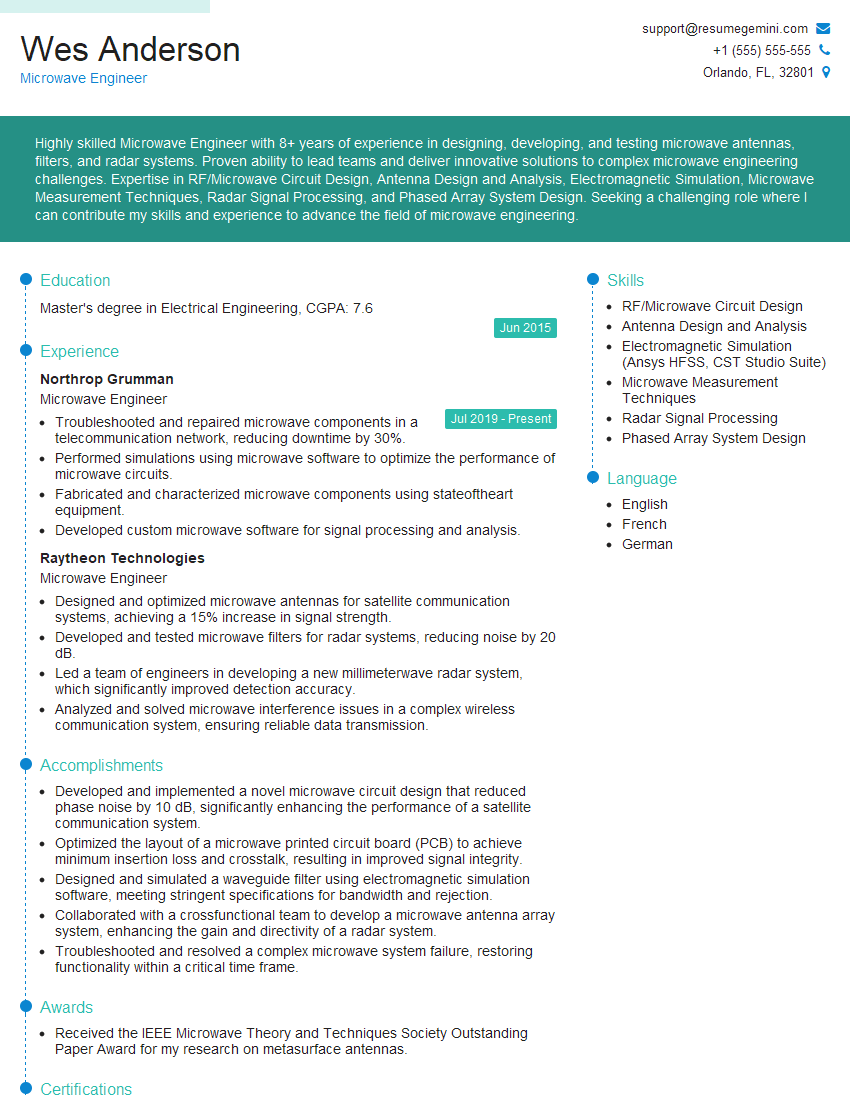
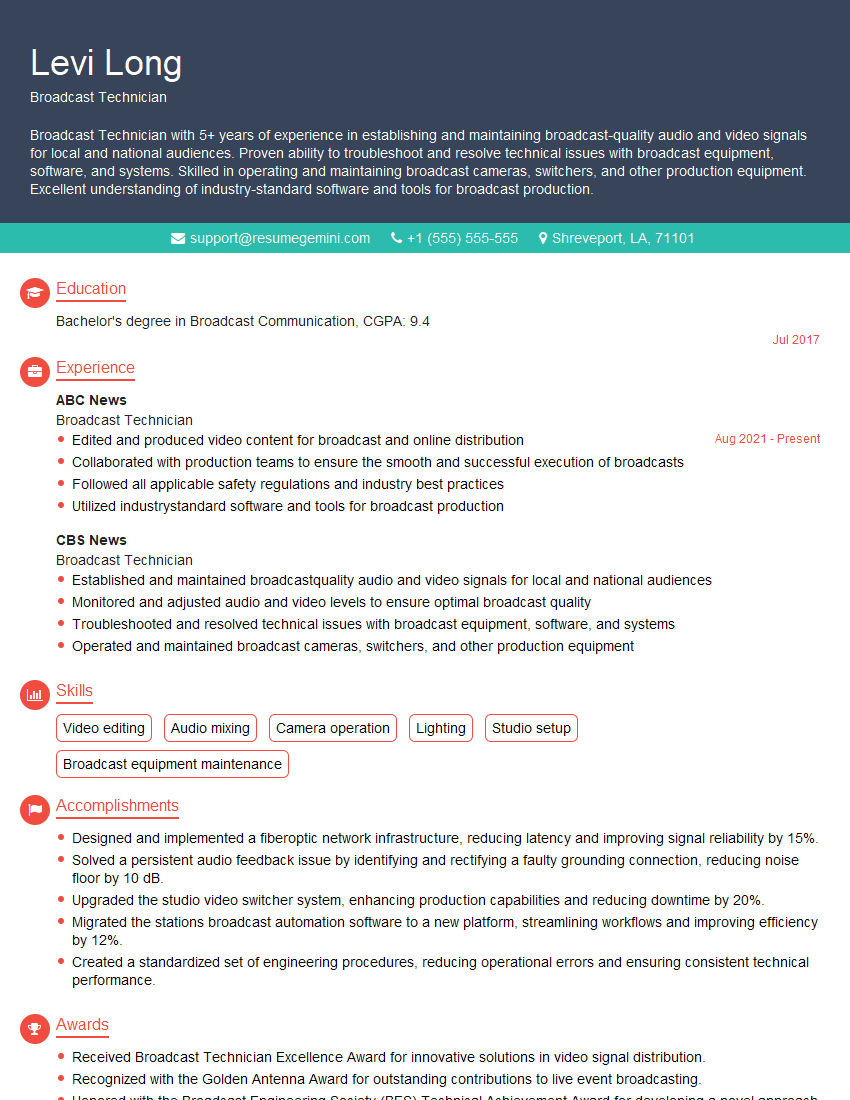
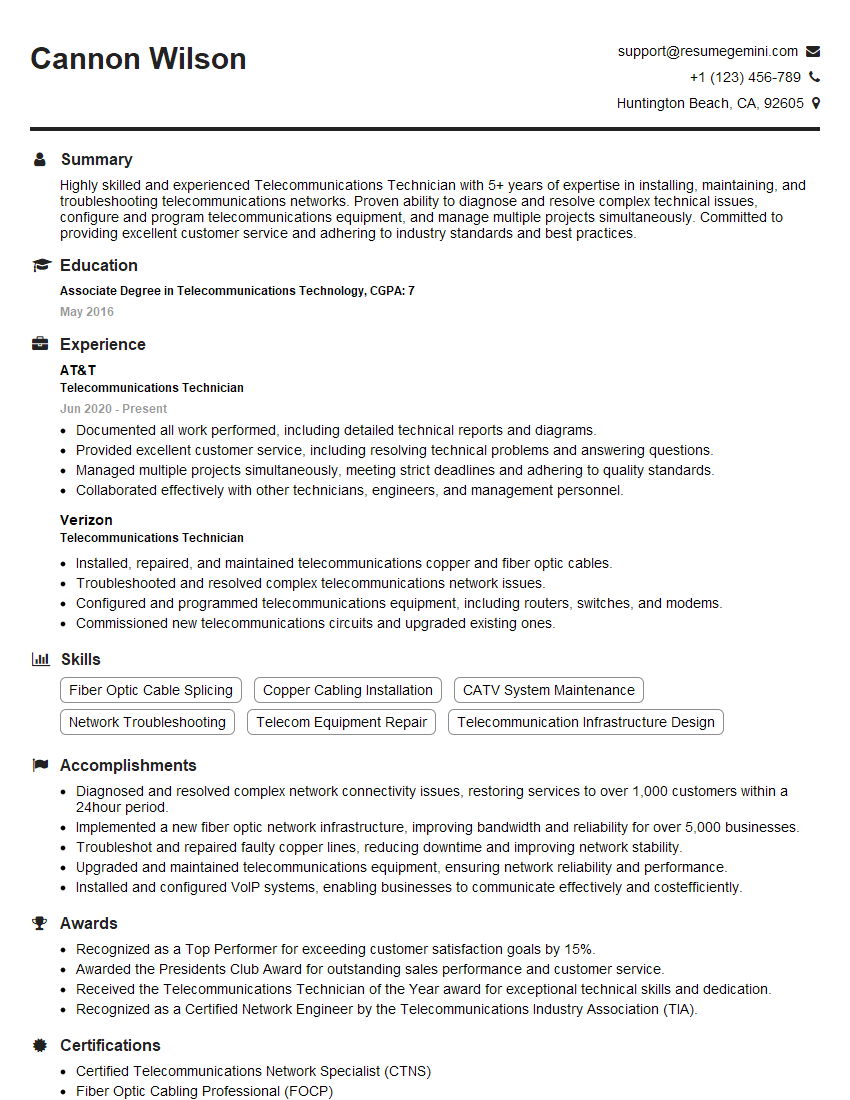
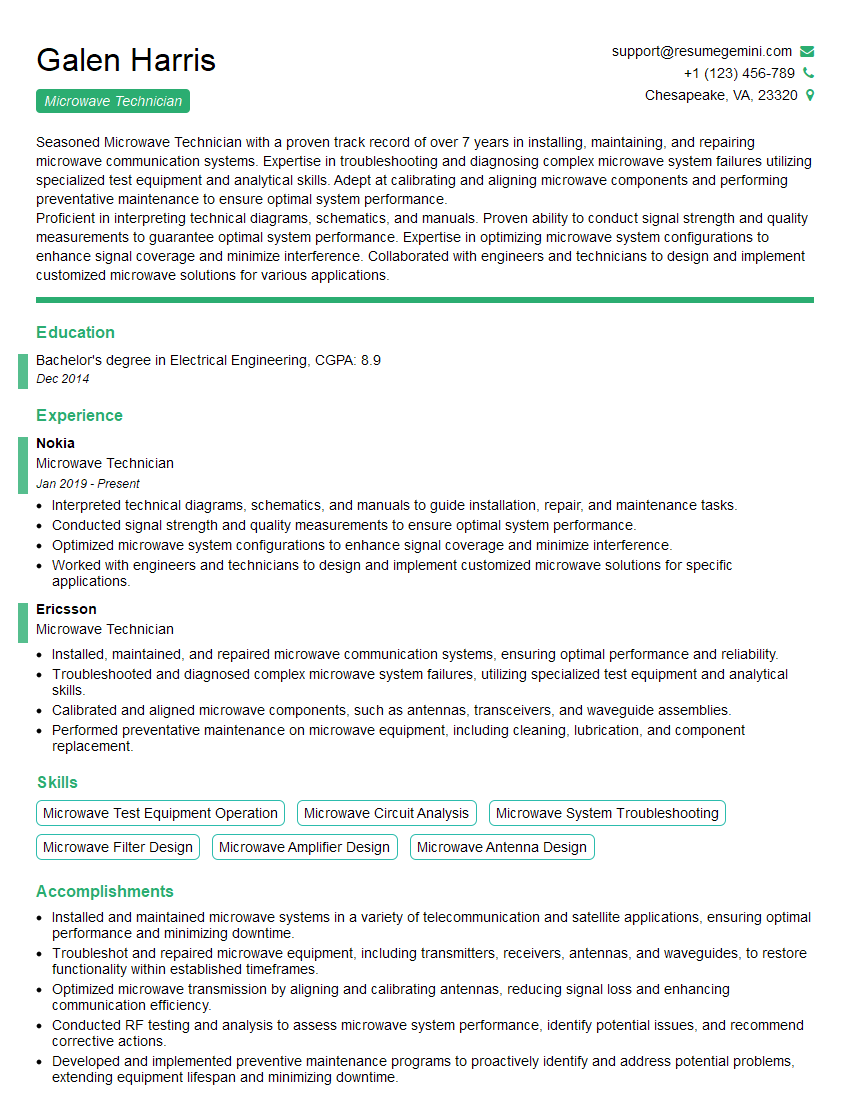
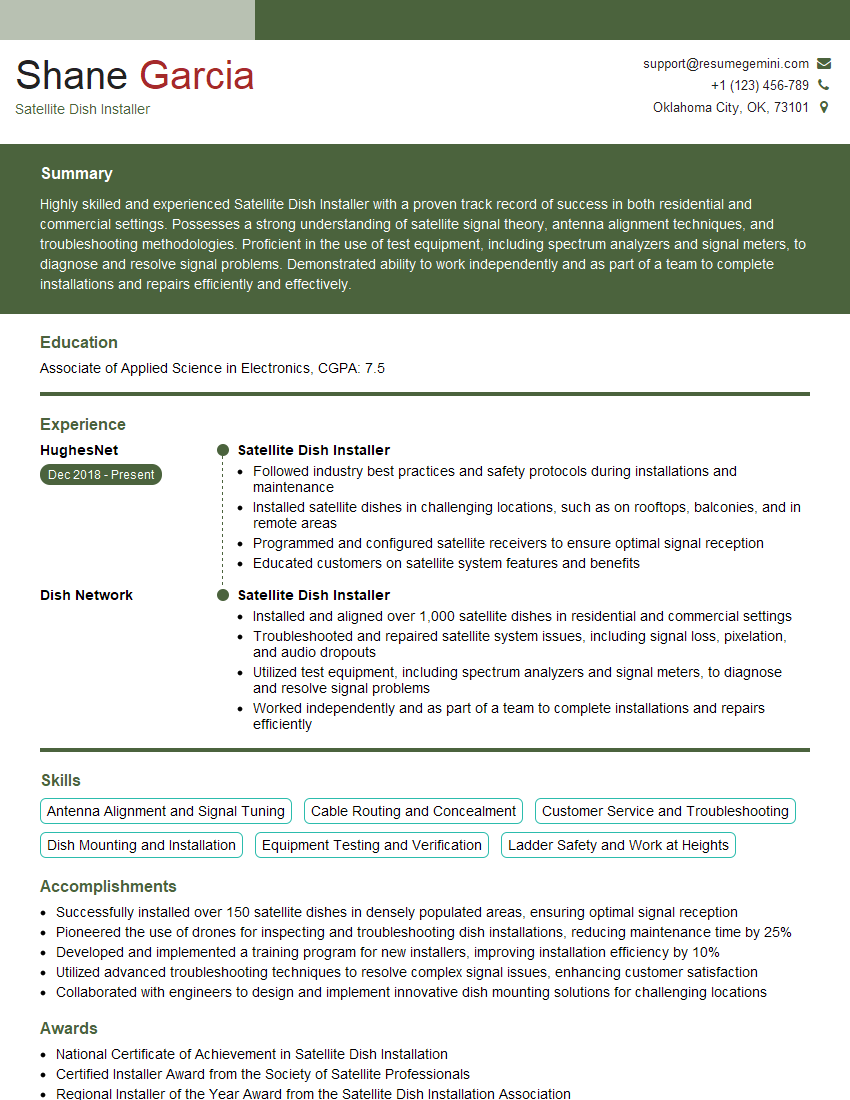
Mastering satellite antenna troubleshooting is crucial for career advancement in the telecommunications and broadcast industries, opening doors to specialized roles and higher earning potential. To maximize your job prospects, invest time in creating a strong, ATS-friendly resume that highlights your skills and experience. ResumeGemini is a trusted resource that can help you build a professional and effective resume tailored to the specific requirements of your target roles. Examples of resumes tailored to Troubleshooting of Satellite Antennas are available to help guide your process.
Explore more articles
Users Rating of Our Blogs
Share Your Experience
We value your feedback! Please rate our content and share your thoughts (optional).
What Readers Say About Our Blog
To the interviewgemini.com Webmaster.
Very helpful and content specific questions to help prepare me for my interview!
Thank you
To the interviewgemini.com Webmaster.
This was kind of a unique content I found around the specialized skills. Very helpful questions and good detailed answers.
Very Helpful blog, thank you Interviewgemini team.