Interviews are opportunities to demonstrate your expertise, and this guide is here to help you shine. Explore the essential Water Use Modeling interview questions that employers frequently ask, paired with strategies for crafting responses that set you apart from the competition.
Questions Asked in Water Use Modeling Interview
Q 1. Explain the difference between lumped and distributed hydrological models.
The key difference between lumped and distributed hydrological models lies in how they represent the spatial variability of hydrological processes. Imagine trying to understand the water flow in a river basin: a lumped model treats the entire basin as a single unit, summarizing its characteristics with average values for things like rainfall, soil type, and evapotranspiration. Think of it like summarizing your monthly expenses with a single number – you lose detail, but you get a quick overview.
In contrast, a distributed model divides the basin into many smaller, more homogeneous units (sub-basins, grids, etc.), allowing for a more spatially explicit representation of hydrological processes. It’s like breaking down your monthly expenses into categories (rent, groceries, entertainment) – you gain much more insight into where your money is going.
Consequently, distributed models are more computationally intensive but offer significantly greater accuracy, especially in complex basins with significant spatial heterogeneity in soil properties, land use, or topography. For instance, a lumped model might fail to capture the impact of a localized intense rainfall event on a specific sub-basin, whereas a distributed model could accurately simulate the resulting runoff and flood risk.
Q 2. Describe your experience with various water use modeling software (e.g., MIKE SHE, HEC-HMS, SWAT).
Throughout my career, I’ve extensively used several water use modeling software packages, each with its strengths and limitations. My experience with MIKE SHE includes using its advanced capabilities for simulating groundwater flow and interaction with surface water, particularly in complex aquifer systems. I’ve used it in projects focusing on the impact of agricultural practices on groundwater resources in arid regions. This involved setting up complex grid-based models, calibrating parameters using observed groundwater levels, and simulating various management scenarios.
With HEC-HMS, I’ve focused primarily on flood forecasting and watershed management. Its user-friendly interface and efficient algorithms for rainfall-runoff simulation are particularly well-suited for quick assessments and emergency response situations. I remember a project where we used HEC-HMS to predict flood inundation in a rapidly urbanizing area, guiding the development of flood mitigation strategies.
Finally, my work with SWAT has concentrated on long-term water resource management, focusing on the impact of climate change and land use changes. SWAT’s strengths lie in its ability to simulate various hydrological processes at a daily timestep over extended periods, accounting for factors like agricultural practices, reservoir management, and climate variability. I used SWAT to assess the effects of changing irrigation practices on water availability in a large river basin, considering future climate scenarios.
Q 3. How do you calibrate and validate a water use model?
Calibration and validation are crucial steps in any water use modeling project, ensuring the model accurately represents the real-world system. Calibration involves adjusting model parameters to minimize the difference between simulated and observed hydrological data (e.g., streamflow, groundwater levels). This is an iterative process, often employing optimization algorithms to find the ‘best-fit’ parameter set. Think of it as fine-tuning a musical instrument until it plays the desired tune.
Validation, on the other hand, involves testing the calibrated model’s ability to predict hydrological responses under different conditions, using independent datasets not used during calibration. It’s like testing the instrument’s ability to play a different song – if it performs well, we are confident in its ability to represent the system reliably.
Various statistical measures, such as the Nash-Sutcliffe efficiency coefficient and the root mean square error, are used to assess the goodness of fit during calibration and validation. A well-calibrated and validated model demonstrates a high level of accuracy and reliability for the intended application.
Q 4. What are the common sources of uncertainty in water use modeling?
Water use modeling is inherently uncertain; several factors contribute to this uncertainty. Data uncertainty is a major source, stemming from limited data availability, measurement errors, and spatial variability. For instance, rainfall data might be sparse in some regions, leading to uncertainty in the model’s input. Similarly, variations in soil properties across a watershed can cause significant uncertainty.
Model structural uncertainty arises from simplifications and assumptions made in the model structure. No model perfectly replicates the real-world complexity of hydrological systems. This includes simplifications made to represent processes such as infiltration, evapotranspiration, and groundwater flow. Parameter uncertainty is also important. Even with good data, estimating the ‘true’ values of parameters governing hydrological processes is challenging.
Finally, external factors, such as climate variability and future land-use changes, add to uncertainty. For example, the impact of climate change on rainfall patterns can significantly affect the accuracy of long-term water resource predictions.
Q 5. Explain the concept of water balance.
The water balance is a fundamental concept in hydrology, stating that the change in water storage within a defined system (e.g., a watershed, reservoir, or soil profile) is equal to the difference between inflows and outflows over a specific time period. It can be expressed as a simple equation:
Change in Storage = Inflow - Outflow
Inflows include precipitation, surface runoff from upstream areas, and groundwater inflow. Outflows include evapotranspiration (water loss to the atmosphere), surface runoff, and groundwater outflow. Understanding the water balance is crucial for managing water resources effectively. For instance, by carefully measuring or estimating these components, we can assess the availability of water for different uses, identify areas experiencing water stress, and plan for water infrastructure development.
Q 6. How do you account for climate change impacts in your water use models?
Accounting for climate change impacts is essential for sustainable water resource management. I typically incorporate climate change projections into water use models by using downscaled climate data (e.g., changes in temperature, precipitation, and evapotranspiration) from Global Climate Models (GCMs) as input. These datasets are typically provided as time series data representing future scenarios (e.g., RCP 4.5 or RCP 8.5).
The projected changes in climatic variables are used to drive the model’s hydrological processes. For instance, changes in precipitation patterns can directly affect surface runoff and groundwater recharge. Increases in temperature can lead to higher evapotranspiration rates, reducing water availability. By running the model under various climate change scenarios, I can assess the potential impacts on water availability, flood risk, and drought frequency, informing effective adaptation and mitigation strategies.
Q 7. Describe your experience with data assimilation techniques in hydrological modeling.
Data assimilation techniques play a vital role in improving the accuracy and reliability of hydrological models by integrating observational data into the model’s predictions. These techniques combine model simulations with real-world measurements (e.g., streamflow, groundwater levels, soil moisture) to obtain a more accurate representation of the system’s state.
I have experience with various data assimilation methods, including the Kalman filter and ensemble Kalman filter. These methods use statistical techniques to update model states and parameters, reducing uncertainties and improving forecasting capabilities. For example, in a groundwater modeling project, we used an ensemble Kalman filter to integrate groundwater level measurements from observation wells, leading to more accurate estimations of groundwater recharge and discharge, and significantly improving predictions of groundwater levels in the future.
The benefits of data assimilation include improved model predictions, better parameter estimation, and a more comprehensive understanding of the hydrological system. It allows for a more effective integration of sparse and unevenly distributed observational data, often significantly improving the quality of results.
Q 8. What are the limitations of using a specific water use model (e.g., WEAP, MODFLOW)?
Every water use model, like WEAP or MODFLOW, has strengths and weaknesses. Let’s take WEAP, a widely used water resources planning model. A key limitation is its relatively simplistic representation of groundwater flow. While it can model groundwater withdrawals, it doesn’t provide the detailed, spatially explicit simulation of groundwater dynamics that MODFLOW offers. This means WEAP might be less suitable for projects focused on assessing the impacts of groundwater overdraft or the effectiveness of aquifer recharge schemes. Conversely, MODFLOW, a powerful groundwater flow model, excels in simulating complex subsurface processes but often requires significant computational resources and specialized expertise. Furthermore, it typically doesn’t include comprehensive modules for surface water management or water demand forecasting, aspects which WEAP handles more effectively. The choice of model always depends on the specific research question and the availability of data.
For example, if you’re planning a large-scale irrigation project, WEAP might suffice for initially assessing water availability and allocation. However, if you need to precisely model the impact of the irrigation on groundwater levels and salinity, MODFLOW becomes necessary. Similarly, the model’s spatial and temporal resolution can be a limitation; higher resolution requires more data and computational power. Finally, the model’s assumptions, often simplified representations of complex hydrological processes, can introduce uncertainties into the results.
Q 9. How do you handle missing data in a water use modeling project?
Missing data is a common challenge in water use modeling. The best approach involves a multi-pronged strategy. First, we thoroughly investigate the reasons for the missing data. Is it random or systematic? Understanding this helps determine the best imputation method. For instance, if missing data are clustered geographically, it might indicate issues with data collection in a specific region.
Next, we employ a combination of techniques. Simple methods like using the mean or median of available data can be applied if the missing data are few and randomly distributed. More sophisticated techniques include using spatial interpolation (e.g., kriging) to estimate missing values based on nearby observations or time series analysis (e.g., ARIMA models) if data are missing over time.
For example, if we have missing rainfall data for a specific month, we might use data from nearby weather stations to interpolate the missing value. We also investigate the use of regional climate models or historical rainfall records to help fill the gaps. Sensitivity analysis is crucial – we run the model with different data imputation methods to assess how sensitive the results are to the chosen technique and the extent of uncertainty introduced by missing data.
It’s essential to document all data imputation procedures transparently, highlighting the limitations of the method used and potential impacts on the model results.
Q 10. Explain the difference between deterministic and stochastic hydrological models.
Deterministic and stochastic models differ fundamentally in how they treat uncertainty. A deterministic model assumes that for a given set of inputs, there is only one possible output. Think of a simple formula: if you know the rainfall and the area, you can calculate the volume of water. It’s predictable. In contrast, a stochastic model explicitly accounts for randomness and uncertainty. It incorporates probability distributions for inputs and parameters, leading to a range of possible outputs instead of a single value. Imagine predicting flood risk: a stochastic model acknowledges that rainfall, infiltration rates, and other factors are not fixed numbers but vary according to probability distributions. This leads to a range of possible flood levels with associated probabilities.
In water use modeling, deterministic models are useful for understanding the general behavior of a system under specific conditions. However, they might fail to capture the full range of variability in natural processes. Stochastic models, while more complex, are crucial for assessing risk and uncertainty, providing more realistic estimations of, for example, the reliability of a water supply system under changing climate conditions. For instance, a deterministic model might predict a future water deficit, but a stochastic model could further quantify the probability of that deficit occurring at various severities, giving water managers more complete information for planning.
Q 11. Describe your experience with different types of water demand forecasting methods.
My experience encompasses a variety of water demand forecasting methods. These range from simple time series analyses like linear regression or exponential smoothing, suitable for short-term forecasts with relatively stable demand patterns, to more complex methods like ARIMA (Autoregressive Integrated Moving Average) models that capture the temporal dependencies in water use data.
For long-term forecasts, incorporating socioeconomic factors, such as population growth, economic development, and changes in water-use efficiency, becomes critical. I have worked extensively with econometric models that link water demand to these drivers. Agent-based models (ABMs) offer another powerful approach, particularly for exploring the impacts of policy changes. ABMs simulate the behavior of individual water users (households, industries, farmers), allowing for a more detailed representation of decision-making processes. Finally, I have employed machine learning techniques, such as support vector machines or neural networks, to explore non-linear relationships between demand and predictor variables. The choice of the best method is determined by the data availability, the forecasting horizon, and the specific objectives of the study. Each approach has its limitations; for instance, simple time series models might not capture structural changes in water demand effectively, while complex models could suffer from data requirements and parameter uncertainty.
Q 12. How do you assess the impact of different water management strategies using modeling?
Water management strategies’ impacts are evaluated using water use models by simulating the effects of these strategies on the system. For example, to assess the impact of a new reservoir on water supply reliability, we would modify the model’s parameters to reflect the reservoir’s storage capacity and operational rules. We would then run the model under different scenarios (e.g., varying rainfall conditions) and compare the results with those from a baseline scenario without the reservoir. Key metrics such as the probability of water shortages, the extent of groundwater depletion, and the amount of unmet demand could be compared across the scenarios.
Similarly, the impact of water conservation policies on water consumption can be modeled by adjusting water demand parameters based on the policy’s projected impact. The effectiveness of water pricing strategies can be explored by altering the model’s economic assumptions. We could compare the results from these simulations to those from a business-as-usual scenario to quantify the benefits and trade-offs of each strategy. This process involves multiple model runs, sensitivity analysis, and careful interpretation of results to provide evidence-based recommendations for effective water management.
Q 13. What are the key factors affecting evapotranspiration?
Evapotranspiration (ET), the combined process of evaporation from the land surface and transpiration from plants, is a critical component of the water balance. Several key factors influence ET.
- Climate: Temperature, solar radiation, humidity, and wind speed are major drivers. Higher temperatures and solar radiation increase ET, while higher humidity reduces it. Wind increases ET by removing moisture from the air near the surface.
- Vegetation: Plant type and density significantly affect ET. Dense vegetation with large leaf areas transpires more water than sparse vegetation. The type of plants also influences the rate at which water is lost.
- Soil moisture: The availability of water in the soil is a crucial limiting factor. If the soil is dry, ET will be reduced.
- Soil type: Different soil types have different water holding capacities, influencing the amount of water available for ET.
To illustrate, a hot, sunny day with low humidity and strong winds will lead to high ET rates, while a cloudy, cool day with high humidity will have low ET. Similarly, a field of lush corn will transpire significantly more water than a sparsely vegetated desert landscape. Accurate estimation of ET is crucial for water resources planning and management, particularly in irrigation scheduling and drought prediction.
Q 14. Explain the concept of groundwater recharge and its significance in water use modeling.
Groundwater recharge is the process by which water infiltrates the ground surface and replenishes groundwater aquifers. It’s a vital component of the hydrologic cycle and is crucial for sustainable water use modeling. Without considering recharge, models would overestimate depletion of aquifers and underestimate the sustainability of groundwater use.
Recharge can occur through various pathways, including direct infiltration of rainfall, seepage from surface water bodies (lakes, rivers), and irrigation return flows. The rate of recharge is influenced by factors such as soil type, geology, topography, and land use. For example, highly permeable soils and steep slopes promote rapid infiltration and recharge, whereas compacted soils or impermeable layers restrict recharge.
In water use modeling, accurately representing groundwater recharge is vital for assessing the sustainability of groundwater extraction. Ignoring recharge could lead to overly pessimistic predictions of aquifer depletion and misinformed water management decisions. Models incorporate recharge using various techniques, ranging from simple empirical relationships to physically-based models that simulate infiltration, groundwater flow, and evapotranspiration. The appropriate approach depends on the available data, the desired level of detail, and the modeling objectives. For instance, in regions where significant groundwater pumping occurs, inaccurate representation of recharge can lead to serious overestimations of aquifer drawdown and could trigger unsustainable water use and potential land subsidence.
Q 15. How do you incorporate water quality parameters into your models?
Incorporating water quality parameters into water use models is crucial for a holistic understanding of water resource management. It’s not enough to just know how much water is being used; we need to know its quality. This involves adding parameters that describe the chemical, biological, and physical characteristics of the water.
For example, we might include parameters like dissolved oxygen (DO), total suspended solids (TSS), nutrient levels (nitrogen and phosphorus), and the presence of specific pollutants. These parameters are integrated into the model using different techniques depending on the model type and the available data.
- Empirical relationships: We can use statistically derived relationships between water use patterns and water quality indicators. For instance, we might find a correlation between irrigation intensity and nitrate concentrations in groundwater.
- Process-based models: More sophisticated models simulate the physical and chemical processes affecting water quality. For example, a model might simulate the transport and transformation of nutrients within a river system, considering factors like rainfall, runoff, and biological activity. These models often require detailed input data and are more computationally intensive.
- Data assimilation: Techniques like data assimilation integrate observed water quality data into the model to improve its accuracy and predictability. This helps to account for uncertainties and variability in the system.
A real-world example would be a model predicting the impact of agricultural runoff on a lake’s water quality. By incorporating nutrient loads from fertilizer application and rainfall patterns, we can forecast changes in DO and algal blooms, informing management decisions on fertilizer use and watershed restoration.
Career Expert Tips:
- Ace those interviews! Prepare effectively by reviewing the Top 50 Most Common Interview Questions on ResumeGemini.
- Navigate your job search with confidence! Explore a wide range of Career Tips on ResumeGemini. Learn about common challenges and recommendations to overcome them.
- Craft the perfect resume! Master the Art of Resume Writing with ResumeGemini’s guide. Showcase your unique qualifications and achievements effectively.
- Don’t miss out on holiday savings! Build your dream resume with ResumeGemini’s ATS optimized templates.
Q 16. Describe your experience with sensitivity analysis in water use modeling.
Sensitivity analysis is an essential part of water use modeling. It helps us understand which input parameters have the most significant impact on the model’s output. Think of it like this: if we’re building a house, we need to know which parts are critical for structural integrity. Similarly, in water modeling, we need to know which parameters are most influential in shaping our predictions.
I’ve extensively used both local and global sensitivity analysis techniques. Local methods, like one-at-a-time analysis, vary one parameter at a time to see its effect. Global methods, like Sobol indices or Morris screening, explore the parameter space more comprehensively, considering interactions between parameters. This is crucial as sometimes the impact of one parameter changes drastically depending on the value of another.
For example, in a model predicting groundwater recharge, we might find through sensitivity analysis that rainfall and soil permeability are the most sensitive parameters. This guides our data collection efforts, focusing on accurate measurements of these parameters. Similarly, it helps us identify areas where uncertainty is highest and informs potential mitigation strategies. I use software like R or Python with dedicated packages (e.g., `sensitivity`) to conduct these analyses, often visualizing results with plots showing parameter rankings and uncertainty ranges.
Q 17. What are the common applications of water use modeling in urban areas?
Water use modeling in urban areas has a wide range of applications, directly impacting urban planning and resource management.
- Water demand forecasting: Predicting future water needs considering population growth, economic development, and climate change. This is crucial for infrastructure planning, ensuring sufficient water supply for the future.
- Leak detection and management: Models can simulate water flow in distribution networks, helping to identify leaks and optimize repair strategies, reducing water loss and saving costs.
- Drought management: Simulating the impact of drought on water supplies and developing strategies for water rationing and conservation.
- Stormwater management: Modeling stormwater runoff and its impact on drainage systems and water quality, aiding in urban design and flood mitigation.
- Water pricing and allocation: Analyzing the economic efficiency of different water pricing schemes and allocation strategies, ensuring equitable and sustainable water distribution.
For instance, I worked on a project modeling water demand in a rapidly growing city. The model helped the city council make informed decisions about investing in new water treatment facilities and implementing water conservation programs, preventing future water shortages.
Q 18. How do you present your modeling results to both technical and non-technical audiences?
Presenting modeling results effectively to both technical and non-technical audiences requires a tailored approach. For technical audiences, I use detailed reports with graphs, statistical analyses, and model code. I focus on the model’s assumptions, limitations, and uncertainties.
For non-technical audiences, I use simpler visuals like maps, charts, and infographics, avoiding jargon. I focus on the key findings and their implications for decision-making, using relatable analogies to explain complex concepts. For example, instead of talking about ‘hydrological modeling,’ I might say ‘predicting how much water will be available in the future.’
I often use presentations, workshops, and interactive tools to engage the audience and answer questions clearly. The goal is always to ensure the audience understands the key takeaways and can use the information to make informed decisions, regardless of their technical background.
Q 19. Explain your experience with model optimization techniques.
Model optimization is crucial to ensure the model accurately represents the system and makes reliable predictions. It involves adjusting model parameters to minimize discrepancies between simulated and observed data.
I use various techniques, including:
- Calibration: Adjusting model parameters to match historical data. This often involves using optimization algorithms, such as least-squares methods or more advanced techniques like Markov Chain Monte Carlo (MCMC) for handling uncertainty.
- Validation: Testing the calibrated model against independent data to assess its predictive capability. This step is crucial to ensure the model isn’t overfitting the data.
- Parameter estimation: Employing statistical methods to estimate optimal parameter values given observed data. This can include maximum likelihood estimation or Bayesian approaches.
In one project, I used a genetic algorithm to optimize the parameters of a groundwater flow model. The algorithm efficiently explored the parameter space, finding the best combination of parameters that minimized the difference between simulated and measured groundwater levels. This improved the accuracy of our groundwater predictions and aided in informed water resource management decisions.
Q 20. Describe your approach to managing large datasets in water use modeling.
Managing large datasets in water use modeling requires efficient data handling strategies. This typically involves using databases (e.g., SQL or NoSQL), data manipulation tools (like Pandas in Python), and cloud computing platforms. Data pre-processing is crucial. This includes cleaning, formatting, and potentially aggregating data to make it suitable for the model. Data visualization tools help identify patterns and potential errors in the data.
For example, in a project involving hydrological data from multiple sensors across a large watershed, I used a cloud-based database to store and manage the large volume of data. I then used Python with Pandas to pre-process and analyze the data, ensuring data quality before incorporating it into my model. Using cloud computing allowed for parallel processing, significantly reducing the computational time for model simulations.
Q 21. What are the ethical considerations when using water use models for decision-making?
Ethical considerations in using water use models for decision-making are paramount. Transparency and accuracy are crucial. The model’s limitations and uncertainties should be clearly communicated, avoiding overconfidence in predictions. The model’s assumptions and data sources should be documented and made available for scrutiny. Bias in data or model structure should be carefully considered and addressed. It is vital that those impacted by decisions are involved in the modeling process and understand the results.
For example, using a model to justify water allocation decisions that disproportionately affect vulnerable populations would be unethical. Similarly, using data from a limited timeframe to make predictions about long-term water availability without addressing climate change would be misleading. It’s our responsibility as modelers to ensure fairness, equity, and transparency in the use of these powerful tools.
Q 22. How do you deal with conflicting objectives in water resources management?
Conflicting objectives in water resources management are common. Imagine a scenario where a city needs more water for its growing population, but irrigators downstream rely on the same water source for their crops. This creates a conflict: increased urban water supply reduces water available for agriculture. We address this through multi-criteria decision analysis (MCDA). This involves:
- Identifying objectives and stakeholders: Clearly defining the objectives of all stakeholders (e.g., maximizing urban water supply, maximizing agricultural yields, minimizing environmental impact).
- Weighting objectives: Assigning weights to each objective based on their relative importance. This often requires stakeholder engagement and prioritization exercises.
- Developing alternative management scenarios: Creating different management strategies that balance the competing objectives (e.g., implementing water-efficient irrigation techniques, constructing new reservoirs, implementing water pricing policies).
- Evaluating scenarios: Assessing each scenario’s performance against each objective using appropriate metrics (e.g., economic benefits, environmental impacts, social equity).
- Selecting the optimal scenario: Using MCDA techniques (e.g., weighted linear combination, ELECTRE) to rank the scenarios and choose the one that best satisfies the overall objectives considering the assigned weights.
For example, in a project involving a river basin, we used MCDA to balance the needs of hydropower generation, irrigation, and maintaining ecological flow requirements. The outcome was a management plan that allocated water more efficiently and fairly to all stakeholders, reducing conflict.
Q 23. How do you assess the economic implications of different water management scenarios?
Assessing the economic implications of different water management scenarios is crucial. We use cost-benefit analysis (CBA). This involves:
- Quantifying costs: Estimating the costs associated with each scenario (e.g., construction costs, operation and maintenance costs, environmental remediation costs).
- Quantifying benefits: Estimating the benefits of each scenario (e.g., increased agricultural production, improved water supply reliability, reduced flood damage).
- Discounting future costs and benefits: Converting future costs and benefits to their present values using a discount rate to account for the time value of money.
- Calculating net present value (NPV): Calculating the difference between the present value of benefits and the present value of costs.
- Conducting sensitivity analysis: Assessing the impact of uncertainties on the NPV, like variations in water demand or construction costs.
For instance, in a recent project evaluating desalination versus water reuse for a coastal city, the CBA revealed that while desalination had higher initial costs, the long-term benefits of water security outweighed the costs, making it a financially viable option. We presented these results visually and clearly to stakeholders for better comprehension.
Q 24. What are the key challenges in applying water use models in data-scarce regions?
Applying water use models in data-scarce regions presents significant challenges. The scarcity of hydrological data makes model calibration and validation difficult, leading to uncertainties in model outputs. We overcome this using:
- Hydrological data synthesis techniques: Using regionalization methods to transfer data from gauged catchments to ungauged catchments. This involves statistical relationships between catchment characteristics and hydrological variables.
- Remote sensing data: Utilizing satellite-based data (e.g., rainfall, evapotranspiration, snow cover) to supplement scarce ground-based measurements.
- Simplified hydrological models: Employing models with fewer parameters and less data requirements, like lumped conceptual models, rather than complex distributed models.
- Uncertainty analysis: Explicitly addressing the uncertainties inherent in the model inputs and outputs through sensitivity analysis and Monte Carlo simulations.
- Model calibration and validation using limited data: Carefully calibrating the model parameters using available data and focusing on key hydrological processes.
In a project in a semi-arid region, we successfully applied a simplified rainfall-runoff model, using remote sensing data to estimate rainfall and evapotranspiration, and achieved reasonably accurate predictions of streamflow despite limited gauge data. Transparency about uncertainties was paramount in communicating our findings.
Q 25. Explain your experience with using remote sensing data in water resources modeling.
Remote sensing data is invaluable in water resources modeling, especially in data-scarce regions or for large-scale applications. My experience includes utilizing:
- Satellite rainfall data: Integrating rainfall data from satellites like TRMM and GPM to estimate rainfall patterns over large areas, improving the accuracy of hydrological models. This is particularly useful in regions with sparse rain gauge networks.
- Satellite evapotranspiration data: Using products like MODIS and Landsat to estimate evapotranspiration rates, improving the water balance calculations in hydrological models and providing crucial insights into irrigation efficiencies.
- Satellite-derived land cover data: Incorporating land cover information from Landsat and Sentinel to characterize the spatial variability of hydrological parameters, improving model representation of landscape heterogeneity.
- Satellite imagery for water surface area estimation: Using satellite imagery to measure water surface areas of reservoirs and lakes, providing information on water storage capacity and changes over time. This helps in calibrating and validating hydrological models.
In a recent project, I used Landsat imagery to map irrigated areas and quantify irrigation water use. This information was crucial in assessing the effectiveness of water conservation strategies in an agricultural region. The integration of remote sensing data significantly enhanced the accuracy and spatial resolution of our water use model.
Q 26. Describe your understanding of the hydrological cycle.
The hydrological cycle is the continuous movement of water on, above, and below the surface of the Earth. It’s like a giant, global water recycling system. It involves several key processes:
- Evaporation: Water turning into vapor from bodies of water (oceans, lakes, rivers) and land surfaces.
- Transpiration: Water vapor released from plants.
- Evapotranspiration: The combined process of evaporation and transpiration.
- Condensation: Water vapor in the atmosphere turning into liquid water to form clouds.
- Precipitation: Water falling from the atmosphere as rain, snow, hail, or sleet.
- Infiltration: Water soaking into the ground.
- Runoff: Water flowing over the land surface into rivers, streams, and eventually oceans.
- Groundwater flow: Water moving slowly through underground aquifers.
Understanding the hydrological cycle is fundamental for water resources management, as it governs the availability of water resources. Changes in any part of the cycle (e.g., increased evaporation due to climate change) can have cascading effects on water availability and quality.
Q 27. How do you ensure the sustainability of water resources management strategies?
Ensuring the sustainability of water resources management strategies requires a holistic approach that considers environmental, social, and economic aspects. This involves:
- Protecting water quality: Implementing measures to prevent pollution from industrial, agricultural, and urban sources. This might involve stricter regulations, wastewater treatment upgrades, and best management practices in agriculture.
- Improving water use efficiency: Promoting water-efficient technologies in agriculture, industry, and households. This includes drip irrigation, water recycling, and leak detection programs.
- Managing groundwater sustainably: Implementing policies to prevent over-extraction of groundwater, including groundwater monitoring and well management plans. This also involves strategies for artificial recharge.
- Considering climate change impacts: Incorporating climate change projections into water resources management planning to anticipate future changes in water availability and demand. This requires scenario planning and adaptive management strategies.
- Promoting stakeholder engagement: Actively involving local communities, farmers, industries, and other stakeholders in decision-making processes to ensure that the strategies are socially acceptable and equitable.
For example, promoting water-wise landscaping and providing rebates for water-efficient appliances in urban areas contributes significantly to sustainable water use, while working with farmers to implement efficient irrigation methods ensures that both environmental and economic aspects are balanced. This holistic, participatory approach is critical for lasting success.
Q 28. Explain your experience in working with stakeholders and integrating their input into the modeling process.
Stakeholder engagement is crucial for the success of any water resources modeling project. I’ve consistently employed a participatory approach involving:
- Initial consultations: Early meetings with stakeholders to identify their needs, concerns, and objectives. This helps set the scope of the project and tailor the modeling approach accordingly.
- Data collection and sharing: Working with stakeholders to collect data, ensuring transparency and building trust. This might involve joint field surveys or access to private data.
- Model development and calibration: Regular communication with stakeholders throughout the model development process, soliciting feedback on model assumptions, inputs, and outputs. This ensures the model reflects the real-world context accurately.
- Presentation of results: Presenting the model results in a clear and accessible way, using visuals and avoiding technical jargon. This involves tailoring the communication to specific stakeholder groups.
- Decision-making support: Facilitating workshops and discussions with stakeholders to assist in the interpretation of the model results and support informed decision-making.
In one project, involving a water allocation dispute between farmers and an industrial plant, I facilitated a series of workshops which helped build consensus and ultimately led to a fair and sustainable water allocation plan accepted by all stakeholders. This participatory process ensured the model’s findings were effectively translated into actionable management strategies.
Key Topics to Learn for Your Water Use Modeling Interview
- Hydrological Processes: Understanding evapotranspiration, infiltration, runoff, and groundwater recharge is fundamental. Consider exploring different hydrological models and their applications.
- Water Balance Modeling: Mastering the principles of water balance and applying them to various scales (e.g., watershed, irrigation district) is crucial. Practice developing and interpreting water balance diagrams.
- Data Analysis and Management: Develop strong skills in handling and analyzing hydrological data, including time series analysis, statistical methods, and data visualization techniques. Familiarity with relevant software (e.g., R, Python) is beneficial.
- Model Calibration and Validation: Understand the process of calibrating and validating water use models using observed data. Learn about different calibration techniques and their limitations.
- Water Demand Forecasting: Explore techniques for predicting future water demands based on population growth, economic development, and climate change scenarios.
- Water Allocation and Management: Gain insights into water allocation strategies, including conjunctive use of surface and groundwater resources, and the role of water use modeling in optimizing water resource management.
- Specific Modeling Software: Demonstrate proficiency in at least one commonly used water use modeling software package (mention specific software you’re familiar with during the interview).
- Uncertainty Analysis: Understand how to quantify and address uncertainties associated with model inputs and parameters. Explore sensitivity analysis and its role in improving model reliability.
- Case Studies and Applications: Be prepared to discuss real-world applications of water use modeling, such as irrigation scheduling, drought management, or water resources planning. Review case studies to illustrate your understanding.
Next Steps: Launch Your Water Use Modeling Career
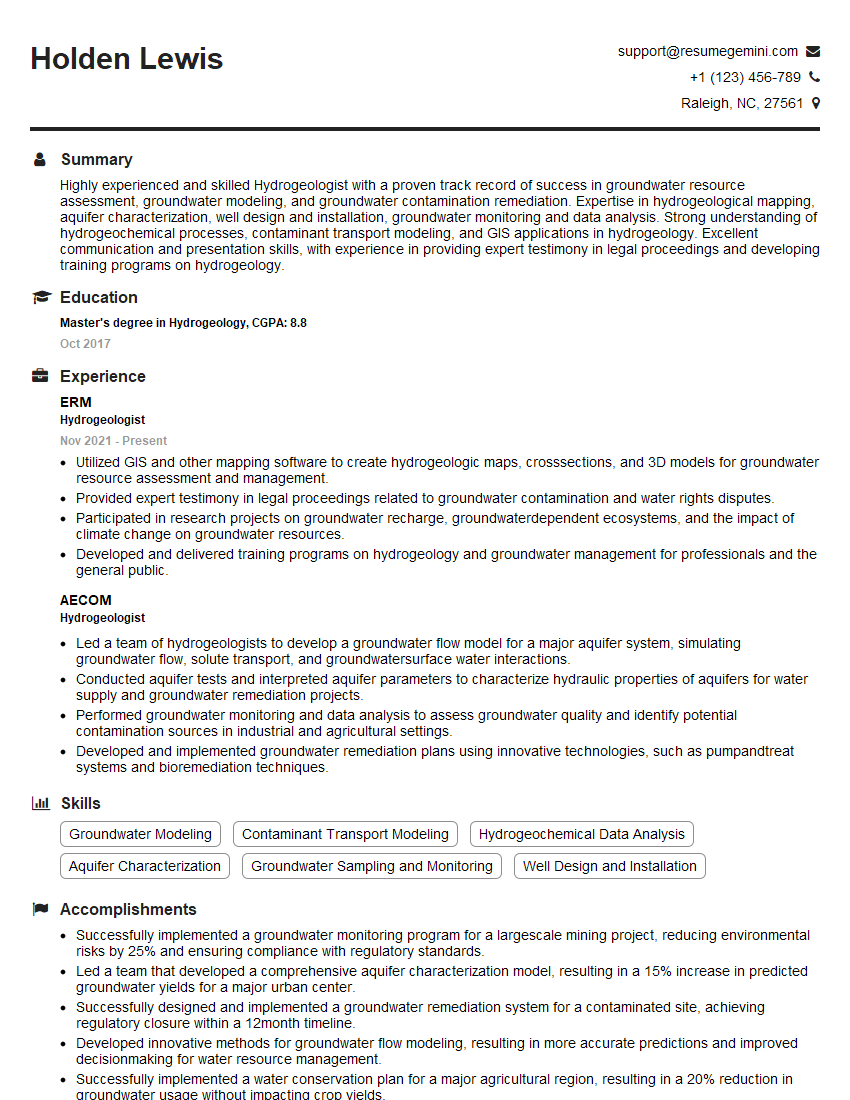
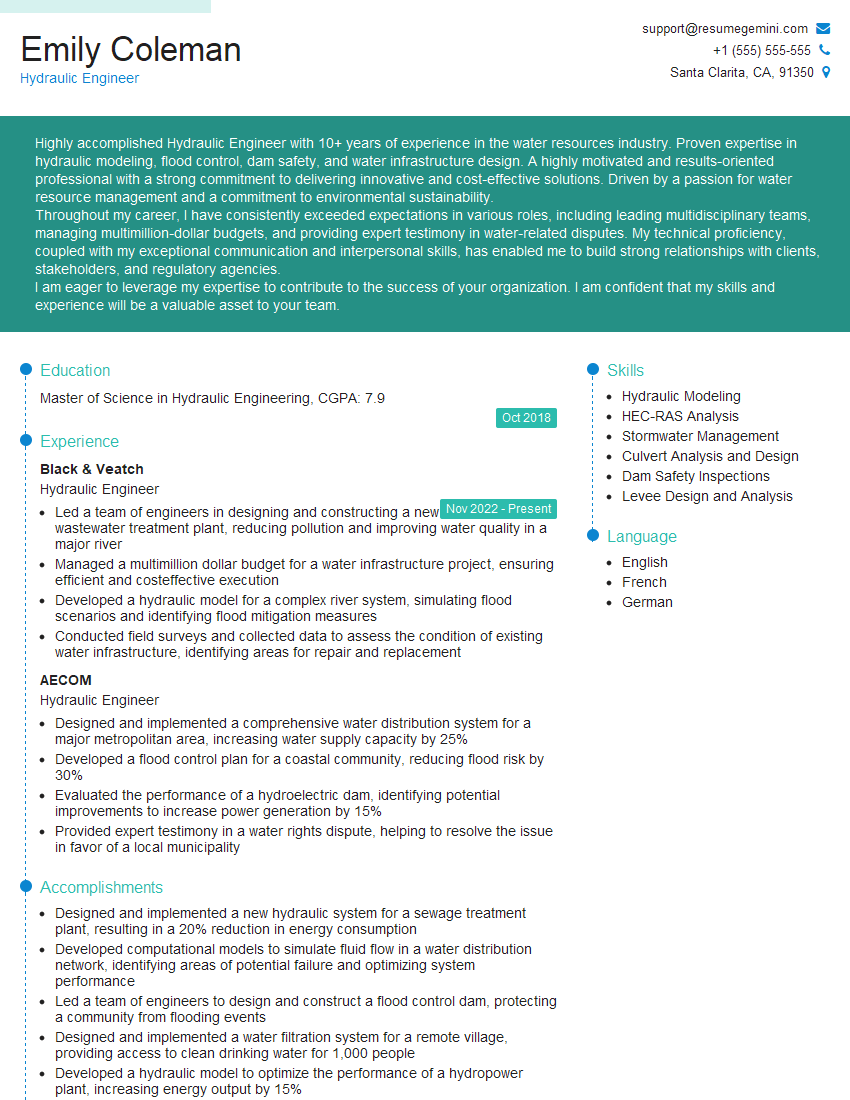
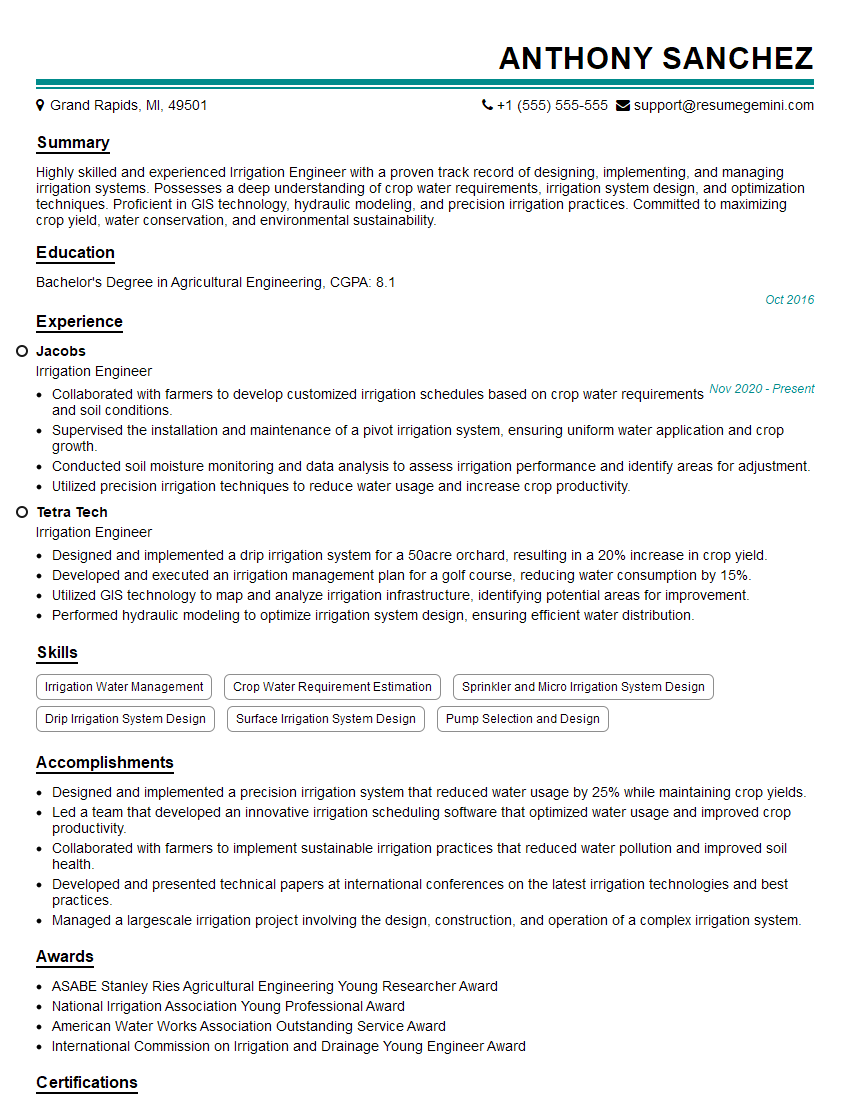
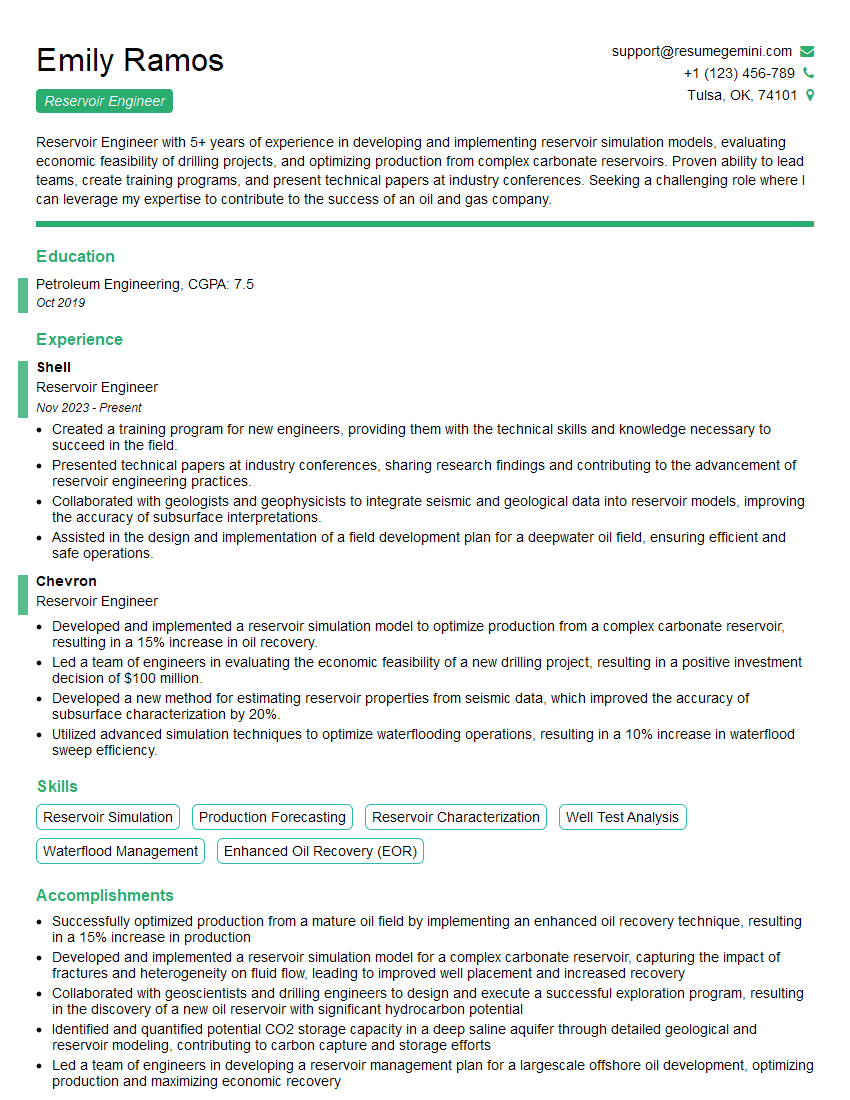
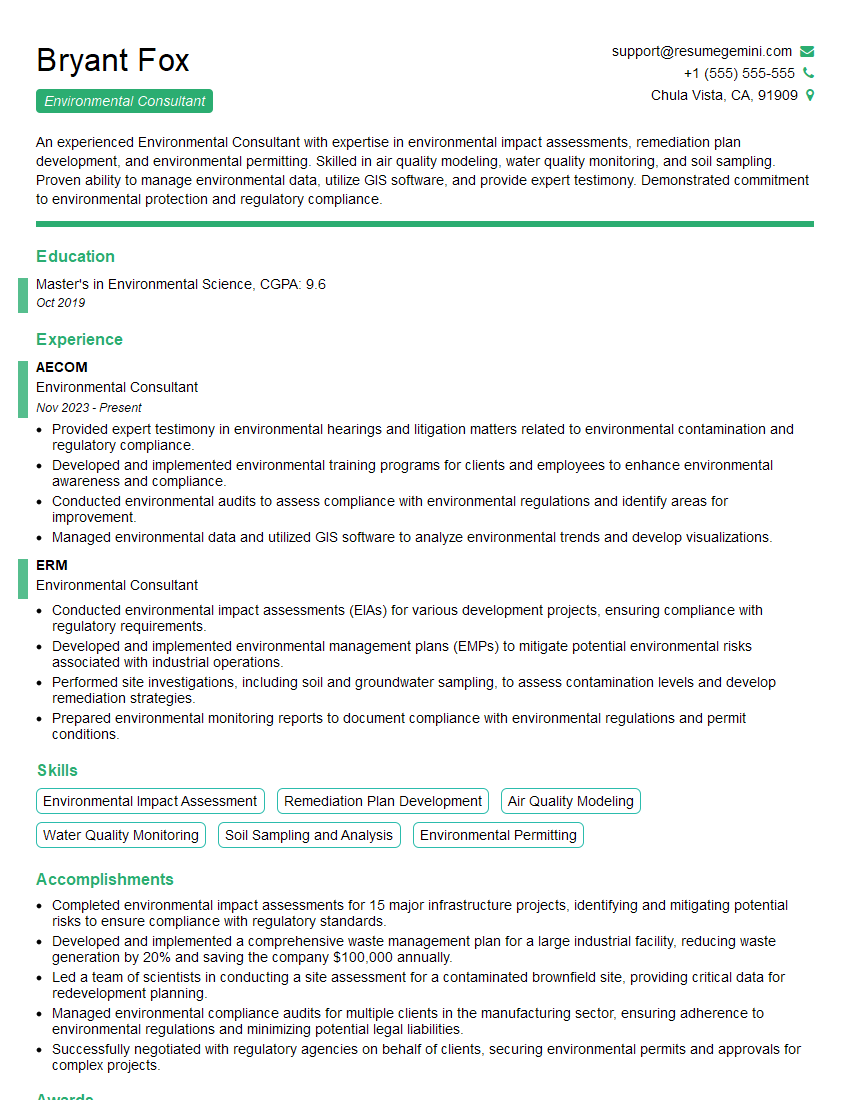
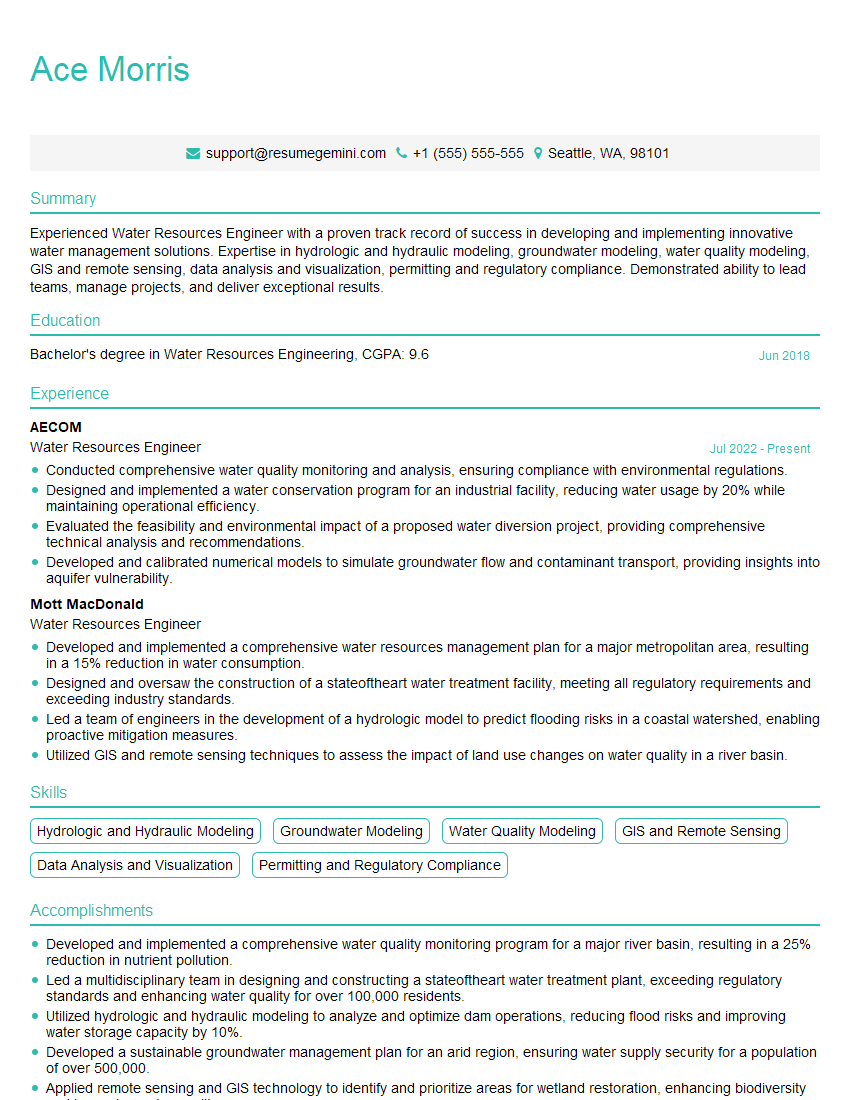
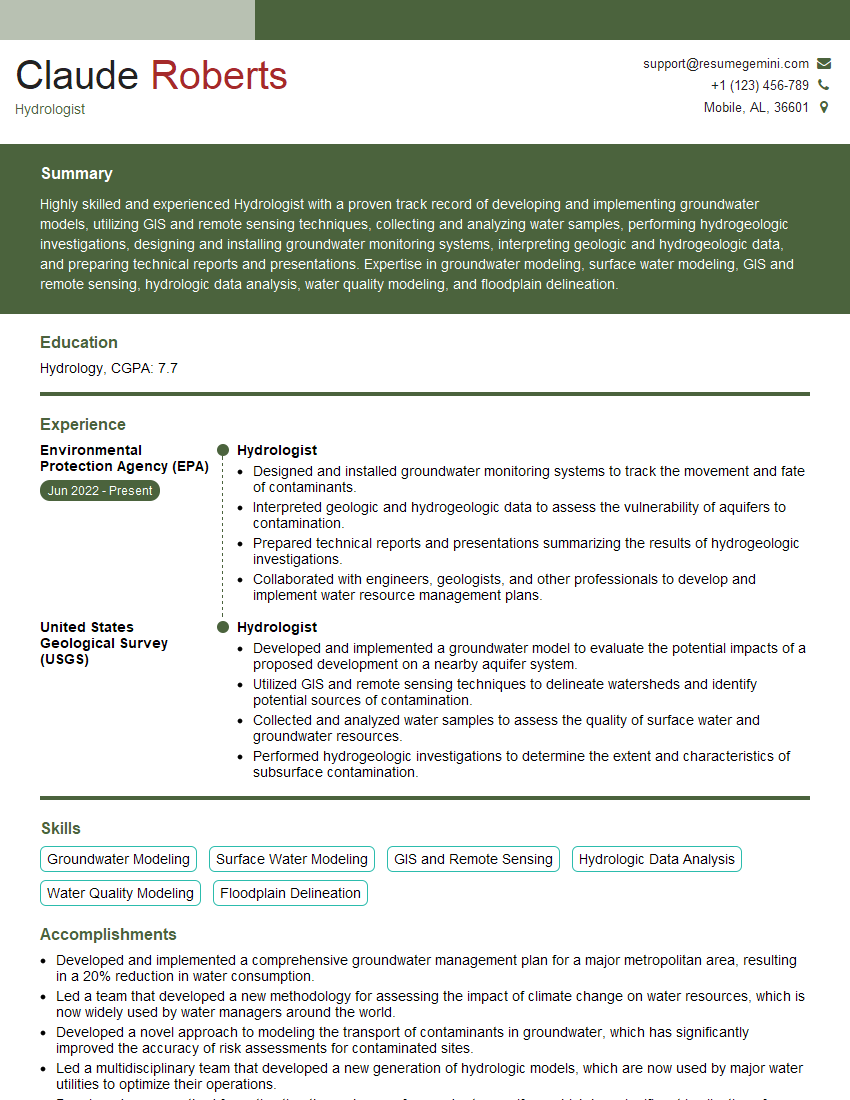
Mastering water use modeling opens doors to exciting and impactful careers in environmental consulting, government agencies, and research institutions. To maximize your job prospects, it’s essential to present your skills effectively. Crafting an ATS-friendly resume is key to getting your application noticed by recruiters. ResumeGemini is a trusted resource to help you build a powerful, professional resume that highlights your expertise in water use modeling. We provide examples of resumes tailored to this field to give you a head start. Take the next step toward your dream career!
Explore more articles
Users Rating of Our Blogs
Share Your Experience
We value your feedback! Please rate our content and share your thoughts (optional).
What Readers Say About Our Blog
To the interviewgemini.com Webmaster.
Very helpful and content specific questions to help prepare me for my interview!
Thank you
To the interviewgemini.com Webmaster.
This was kind of a unique content I found around the specialized skills. Very helpful questions and good detailed answers.
Very Helpful blog, thank you Interviewgemini team.