Interviews are more than just a Q&A session—they’re a chance to prove your worth. This blog dives into essential Internal Fixation interview questions and expert tips to help you align your answers with what hiring managers are looking for. Start preparing to shine!
Questions Asked in Internal Fixation Interview
Q 1. Describe the different types of fracture fixation devices.
Fracture fixation devices aim to stabilize broken bones, promoting healing. They can be broadly categorized into intramedullary devices and external fixation devices. Intramedullary devices, such as nails and rods, are inserted into the medullary canal (the hollow center) of the bone. External fixation devices, on the other hand, use pins or screws inserted into the bone and connected to an external frame for stabilization. Let’s delve into the specifics:
- Intramedullary Nails: These are long rods inserted into the bone marrow cavity. They’re commonly used for long bone fractures (femur, tibia). Different types exist, including interlocking nails (allowing for additional screw fixation for fragment control) and unreamed nails (minimally invasive).
- Plates and Screws: Plates are metal plates affixed to the bone surface, with screws securing both the plate and the bone fragments. They provide excellent stability and are versatile for various fracture patterns. Different plate designs cater to specific bone geometries and fracture types (e.g., dynamic compression plates).
- Screws: Screws are used independently or in conjunction with plates to fixate bone fragments. Different types include cancellous screws (for softer bone), cortical screws (for denser bone), and lag screws (for compression).
- External Fixators: These are composed of pins inserted through the skin and bone, connected by an external frame. They provide significant stability but are associated with higher infection risk due to the external pins penetrating the skin. They are often used for complex fractures, limb lengthening, and situations where soft tissue damage precludes internal fixation.
Q 2. Explain the principles of bone healing and their relevance to internal fixation.
Bone healing is a complex process involving several stages: inflammation, soft callus formation, hard callus formation, and bone remodeling. Internal fixation plays a crucial role by providing stability, allowing for proper alignment of the fracture fragments and facilitating the healing process.
Inflammation: The initial response to fracture involves bleeding and inflammation. Internal fixation helps minimize movement at the fracture site, reducing further damage and promoting healing.
Soft Callus Formation: Fibrous tissue and cartilage form a soft callus, bridging the fracture gap. Stability provided by the fixation device prevents disruption of this early callus formation.
Hard Callus Formation: The soft callus is gradually replaced by woven bone. The fixation device maintains alignment and stability, allowing for this process to occur efficiently.
Bone Remodeling: The woven bone is gradually remodeled into lamellar bone, resembling the original bone structure. This stage is aided by the device maintaining stability and promoting appropriate stress across the healing bone.
Essentially, internal fixation creates a stable environment, allowing the natural bone healing process to proceed undisturbed. Without adequate stabilization, the fracture fragments may move, hindering the formation of a strong and well-aligned callus, potentially leading to delayed union or non-union (failure to heal).
Q 3. What are the indications and contraindications for using intramedullary nails?
Intramedullary nails are excellent for long bone fractures, offering several advantages. However, they also have limitations.
- Indications: Intramedullary nails are commonly used for diaphyseal fractures (fractures in the shaft of long bones) of the femur, tibia, and humerus. They are particularly useful in fractures with minimal comminution (fragmentation) and adequate bone quality. They are less invasive than plates and screws, leading to quicker recovery times and reduced soft tissue trauma.
- Contraindications: Intramedullary nailing is not suitable for all fractures. Severe comminution, open fractures (with significant soft tissue damage), severe bone loss, and fractures involving the articular surface (joint surface) are generally contraindications. Inadequate bone quality (osteoporosis) also makes intramedullary nailing challenging because the nail might not have sufficient purchase within the bone canal.
For instance, a simple, transverse fracture of the femoral shaft is an ideal indication for intramedullary nailing. Conversely, a severely comminuted fracture of the distal femur (near the knee) involving the articular surface would typically not be treated with an intramedullary nail.
Q 4. Compare and contrast the use of plates and screws versus intramedullary nails.
Plates and screws and intramedullary nails both serve the purpose of fracture fixation, but they differ significantly in their application and biomechanical properties:
| Feature | Plates & Screws | Intramedullary Nails |
|---|---|---|
| Bone Contact | External; provides stability through direct compression of fragments | Internal; stabilizes from within the medullary canal |
| Fracture Pattern | Versatile; suitable for various fracture types, including comminuted fractures | Best for diaphyseal fractures with minimal comminution |
| Bone Stock Required | Requires sufficient bone stock for screw purchase and plate application | Requires intact medullary canal |
| Surgical Approach | Often more extensive surgical exposure | Less invasive, smaller incisions |
| Stiffness | Relatively stiff construct | Relatively flexible construct; can allow for some micromotion |
| Stress Shielding | Plates can shield the bone from stress, potentially hindering bone healing | Less stress shielding compared to plates |
The choice between the two depends on factors such as fracture type, location, bone quality, and surgeon preference. Often, a combined approach, using both plates and screws and intramedullary nails (such as an interlocking nail), might be optimal.
Q 5. Describe the surgical technique for applying a plate and screws to a femoral fracture.
The surgical technique for applying a plate and screws to a femoral fracture is complex and varies depending on the fracture pattern and surgeon preference. However, the general steps are as follows:
- Exposure: A longitudinal incision is made over the fracture site to expose the femur and surrounding soft tissues. Careful dissection is required to minimize soft tissue damage.
- Reduction: The fractured bone fragments are manipulated into anatomical alignment. This might involve the use of reduction forceps or other instruments. Fluoroscopic imaging (X-ray) is crucial to verify the accuracy of reduction.
- Plate Placement: The appropriately sized plate is positioned against the lateral or medial aspect of the femur, depending on fracture location and surgical preference. Temporary screws are often used to hold the plate in place during the following steps.
- Screw Placement: Screws are inserted into the bone fragments to secure both the plate and the bone. The screw placement is guided by fluoroscopy to ensure correct positioning and depth. Lag screws are often used to provide compression at the fracture site.
- Irrigate and Close: The wound is thoroughly irrigated to remove any debris. Layers of soft tissue are closed in a layered fashion, and the skin is closed using sutures or staples.
- Postoperative Imaging: Post-operative radiographs confirm the alignment and stability of the fixation construct.
Remember, this is a simplified overview. The specific details of the surgery depend on the individual case and the surgeon’s expertise.
Q 6. What are the potential complications associated with internal fixation?
Internal fixation, while highly effective, carries potential complications, including:
- Infection: A significant risk, particularly with open fractures. Prophylactic antibiotics are typically administered.
- Malunion: Healing of the fracture in a non-anatomical position. This can lead to functional limitations.
- Nonunion: Failure of the fracture to heal. This can require further surgery.
- Delayed Union: Slower than expected bone healing.
- Implant Failure: Fracture of the plate or screws, loosening of screws, or breakage of the intramedullary nail.
- Nerve or Vessel Injury: Possible during the surgical approach.
- Deep Vein Thrombosis (DVT) or Pulmonary Embolism (PE): Risk of blood clot formation, necessitating prophylactic measures (anticoagulation).
- Complex Regional Pain Syndrome (CRPS): Chronic pain condition that can develop after surgery.
Minimizing these risks involves meticulous surgical technique, appropriate patient selection, proper postoperative care, and diligent monitoring for signs of complications.
Q 7. How do you assess the stability of a fracture fixation construct?
Assessing the stability of a fracture fixation construct is crucial for ensuring successful healing. This is done through a combination of clinical evaluation and imaging:
- Clinical Examination: Assessing for tenderness, swelling, and range of motion. Checking for any signs of instability, such as crepitus (grating sound). Observing the patient’s ability to bear weight (for lower extremity fractures).
- Radiographic Evaluation: Post-operative radiographs are essential for assessing fracture reduction, screw placement, and overall construct stability. Follow-up radiographs at regular intervals help monitor healing progress.
- Mechanical Testing (Biomechanical Analysis): This involves more sophisticated testing methods, primarily used in research settings, to assess the stability of a construct under load.
During clinical examination, subtle signs of instability, such as increased pain or abnormal movement at the fracture site, might indicate a problem. Radiographic assessment provides objective evidence of alignment, fracture healing, and implant position. For example, widening of the fracture gap on follow-up X-rays can indicate an unstable construct. In some cases, computed tomography (CT) scans may be used to visualize the fracture and implant in more detail.
Q 8. Explain the importance of proper implant selection in internal fixation.
Proper implant selection is paramount in internal fixation because it directly impacts the success of the procedure and the patient’s recovery. The wrong implant can lead to complications like implant failure, non-union (failure of the fracture to heal), malunion (healing in a deformed position), or infection. Selection depends on several factors including fracture type, bone quality, patient age and overall health, and the location of the fracture.
For instance, a young, healthy patient with a simple, transverse fracture of the tibia might be well-suited for a dynamic compression plate, which uses compression to encourage bone healing. However, an elderly patient with osteoporotic bone and a comminuted (shattered) fracture in the same location might require a locking compression plate which provides more stability and distributes forces more effectively across the weakened bone. Careful consideration of these factors ensures optimal implant selection for a successful outcome.
Q 9. Discuss the role of imaging (X-ray, CT) in planning and assessing internal fixation.
Imaging plays a crucial role in both the planning and assessment stages of internal fixation. Pre-operative imaging, typically X-rays and CT scans, allows for detailed visualization of the fracture, assessing its type, location, displacement, and comminution. This information is essential for surgical planning, allowing the surgeon to select appropriate implants, plan incision sites, and anticipate potential challenges. For example, a CT scan can precisely reveal the three-dimensional relationship of fracture fragments, critical for complex fractures.
Post-operative imaging confirms the accurate reduction (alignment) of the fracture fragments and the placement of the implants. It helps detect any complications such as implant malpositioning, screw breakage, or early signs of infection. Regular post-operative imaging allows for monitoring of fracture healing and identifying any potential problems early, enabling timely intervention.
Q 10. Describe your experience with different types of bone plates (e.g., dynamic compression plates, locking plates).
I have extensive experience with various bone plates, including dynamic compression plates (DCPs) and locking compression plates (LCPs). DCPs rely on compression across the fracture site to promote healing. They work best for stable fractures in good quality bone. I’ve used them successfully in treating transverse fractures of the tibia and femur in younger patients with good bone stock. The compression is achieved through the design of the plate and the tightening of the screws.
LCPs, however, offer more versatility. They use screws that lock directly into the plate, providing greater stability even in osteoporotic bone or with complex fractures. I often utilize LCPs in treating comminuted fractures, or in patients with compromised bone quality where compression alone might not be sufficient. I’ve found LCPs particularly beneficial in cases of challenging articular fractures where precise reduction and stability are paramount. The choice between DCP and LCP depends heavily on the specifics of the fracture and the patient’s condition.
Q 11. How do you manage infection after internal fixation surgery?
Infection after internal fixation is a serious complication that can lead to implant failure, non-union, and even life-threatening sepsis. Management involves a multi-pronged approach beginning with aggressive surgical debridement (removal of infected tissue). This may involve removing infected bone, soft tissue, and even the implant itself depending on the severity of the infection. Prophylactic antibiotics are administered before, during, and after surgery. Intravenous antibiotics are continued post-operatively based on culture results.
Post-operative management includes regular wound care, careful monitoring for signs of infection (fever, swelling, erythema, purulence), and close follow-up with the patient. In some cases, prolonged antibiotic therapy, wound vacuum-assisted closure, or even further surgical procedures may be necessary. The key is early identification and aggressive management to prevent the spread of infection and maximize the chances of a positive outcome.
Q 12. What are the different types of screws used in internal fixation?
A variety of screws are employed in internal fixation, each with specific properties and applications. Common types include cortical screws (stronger, used in dense cortical bone), cancellous screws (less strong, used in less dense cancellous bone), and locking screws (have a mechanism that directly engages with the plate, providing more stability). The choice of screw depends on the bone density and the type of fixation required. For example, cortical screws are ideal for strong, dense bone like in the femur shaft, while cancellous screws are used in the vertebral bodies or the metaphysis (the wider end of a long bone).
Furthermore, there are different screw head designs (e.g., low-profile, round, etc.) and thread types to optimize fixation and reduce stress shielding. The selection of screw size and length is crucial to ensure adequate fixation while avoiding complications like screw penetration into adjacent structures.
Q 13. Describe the biomechanical principles behind different fixation methods.
Biomechanical principles underpin the effectiveness of various fixation methods. The goal is to provide enough stability to allow for fracture healing while minimizing stress shielding (reduction in bone density due to reduced stress on the bone from the implant). Compression techniques, like those used in DCPs, aim to improve bone contact and stimulate healing by bringing fracture fragments together.
Locking plates distribute forces more effectively, particularly in osteoporotic bone or complex fractures, reducing the stress concentration on the bone-implant interface. The principles of load sharing (discussed below) are crucial. In some cases, external fixation (pins and rods outside the skin) is preferred to allow for better initial stabilization, especially in severely comminuted fractures or open fractures where infection risk is high. Each method has its strengths and weaknesses and is tailored to the specifics of the fracture and the patient’s characteristics.
Q 14. Explain the concept of load sharing in fracture fixation.
Load sharing describes the distribution of forces between the bone and the implant. Ideally, the implant provides enough stability to prevent further displacement of the fracture fragments while allowing the bone to bear a significant portion of the load, thereby promoting healing. Excessive load bearing by the implant, leading to stress shielding, can hinder bone healing and weaken the bone over time. Conversely, insufficient load sharing, leading to implant failure, also impedes the healing process. The optimal balance is crucial for successful fracture healing.
For example, an ideal scenario with a plate would be to have the plate provide initial stability, preventing movement, and then slowly allowing the bone to gradually take on more of the load as it heals. This approach minimizes stress shielding while providing necessary support. Proper implant selection and surgical technique are critical for achieving this optimal balance and ensuring successful load sharing.
Q 15. What are your preferred techniques for fracture reduction?
Fracture reduction aims to restore the bone fragments to their anatomically correct position before fixation. My preferred techniques depend heavily on the fracture type, location, and patient factors. I generally favor closed reduction whenever possible, using fluoroscopy for guidance. This involves manipulating the bone fragments externally to realign them. For complex or severely displaced fractures, I may opt for open reduction, where a surgical incision is made to directly visualize and manipulate the bone fragments.
- Closed Reduction: This is less invasive and involves manipulating the bone fragments externally to align them. It’s often used for simpler fractures and is usually followed by casting or splinting.
- Open Reduction: This involves surgical incision to expose the fracture site, allowing for precise anatomical reduction. It is necessary for complex fractures where closed reduction is unsuccessful or impossible. I use various instruments like bone clamps and reduction forceps to achieve optimal alignment.
- Image Intensifier (Fluoroscopy): Real-time imaging is crucial during both closed and open reduction to assess alignment accuracy. It enables precise adjustments during the reduction process.
For example, a simple, minimally displaced distal radius fracture might be successfully treated with closed reduction and casting, whereas a comminuted (shattered) femur fracture would almost certainly require open reduction and internal fixation.
Career Expert Tips:
- Ace those interviews! Prepare effectively by reviewing the Top 50 Most Common Interview Questions on ResumeGemini.
- Navigate your job search with confidence! Explore a wide range of Career Tips on ResumeGemini. Learn about common challenges and recommendations to overcome them.
- Craft the perfect resume! Master the Art of Resume Writing with ResumeGemini’s guide. Showcase your unique qualifications and achievements effectively.
- Don’t miss out on holiday savings! Build your dream resume with ResumeGemini’s ATS optimized templates.
Q 16. How do you address malunion or nonunion after internal fixation?
Malunion, where the fracture heals in a non-anatomical position, and nonunion, where the fracture fails to heal, are significant complications following internal fixation. Treatment strategies vary considerably depending on the specific situation.
- Malunion: Mild malunions may only require observation. More significant deformities may necessitate corrective osteotomy, where a bone segment is surgically cut and repositioned, followed by internal fixation to maintain correction. I assess range of motion, pain, and functional limitations to determine if corrective surgery is necessary.
- Nonunion: Treatment is focused on stimulating bone healing. This often involves bone grafting, using autograft (patient’s own bone) or allograft (donor bone) to fill the nonunion gap. Electrical stimulation or bone morphogenetic proteins (BMPs) may also be used to enhance healing. If bone grafting is insufficient, I might consider using an external fixator to stabilize the fracture and allow healing to occur.
For instance, a patient presenting with a malunion of the tibia with significant angular deformity might require a corrective osteotomy and plate fixation. A nonunion of the humerus might be successfully treated with bone grafting and intramedullary nailing.
Q 17. What are the advantages and disadvantages of minimally invasive techniques in internal fixation?
Minimally invasive techniques (MIT) in internal fixation involve smaller incisions, reduced soft tissue trauma, and less blood loss compared to traditional open surgery.
- Advantages: Reduced pain, shorter hospital stays, faster recovery, less scarring, and decreased risk of infection.
- Disadvantages: Limited visualization, increased technical difficulty, potential for incomplete fracture reduction, and the need for specialized instruments and expertise.
The decision to use MIT depends on the fracture pattern and the surgeon’s experience. For example, a simple fracture of the distal femur might be suitable for MIT using smaller plates and screws inserted through small incisions, minimizing damage to muscles and surrounding tissues. However, a complex fracture requiring extensive bone manipulation may necessitate a more traditional open approach.
Q 18. Describe your experience with using navigation systems in internal fixation.
Navigation systems are invaluable tools in internal fixation, providing real-time 3D visualization of the bone anatomy and fracture fragments. This enhances accuracy in implant placement, reducing the risk of complications such as nerve or vessel injury.
My experience with navigation systems is extensive. I find that they are particularly beneficial in complex fractures, such as those involving the pelvis or spine, where precise implant placement is critical. The system uses pre-operative CT or MRI scans to create a 3D model of the bone, which is then registered to the patient’s anatomy during surgery. This allows me to plan implant placement virtually and then guide the instruments in real time to achieve the desired position. While it adds some time to the procedure, the enhanced precision and reduced complication risk often outweigh the additional time.
For example, in a complex acetabular fracture, navigation allows precise placement of screws, reducing the risk of injuring the sciatic nerve or perforating the articular cartilage.
Q 19. How do you manage a patient with a displaced fracture requiring internal fixation?
Managing a patient with a displaced fracture requiring internal fixation involves a systematic approach.
- Initial Assessment and Stabilization: This includes a thorough history and physical exam, assessing neurovascular status, and performing imaging (X-rays, CT scans) to evaluate the fracture. The limb is then stabilized to prevent further displacement using splints or traction.
- Pre-operative Planning: This involves selecting the appropriate type of fixation (plates, screws, intramedullary nails, etc.) based on the fracture characteristics. I may use computer-aided design (CAD) or 3D printing for complex fractures to plan the surgery precisely.
- Surgical Procedure: The surgical technique is tailored to the specific fracture and chosen method of fixation. During the surgery, I meticulously reduce the fracture (restore alignment), secure it with implants, and carefully assess the integrity of surrounding soft tissues.
- Post-operative Care: This includes pain management, physical therapy to restore function, and monitoring for complications (infection, nonunion, malunion).
For example, a patient with a displaced femoral neck fracture might require a hemiarthroplasty or total hip replacement, while a displaced tibial plateau fracture could be treated with plate and screw fixation.
Q 20. What are the specific considerations for internal fixation in the elderly?
Internal fixation in the elderly presents unique challenges. Their bones are often osteoporotic (brittle), increasing the risk of implant failure and complications. Their overall health status, including comorbidities like heart disease and diabetes, must also be considered.
- Osteoporosis: Bone quality is a significant concern. I often choose implants that minimize stress on the bone and avoid techniques that could exacerbate osteoporosis. Bioabsorbable implants may be considered in some cases.
- Comorbidities: Pre-operative assessment is crucial to assess cardiovascular and pulmonary function, as well as blood glucose levels. This helps to minimize risks during and after surgery.
- Reduced Healing Capacity: The healing process is often slower in older adults. This necessitates careful post-operative monitoring and rehabilitation.
For instance, a patient with severe osteoporosis sustaining a hip fracture might be a candidate for a less invasive surgical approach, such as percutaneous screw fixation, to reduce the risk of complications associated with a larger incision and more extensive surgery.
Q 21. How do you counsel patients about the risks and benefits of internal fixation?
Counseling patients about the risks and benefits of internal fixation is a crucial aspect of my practice. I always explain the procedure in clear, understandable terms, ensuring the patient is well-informed before making any decision.
I discuss the advantages, such as improved fracture healing, faster return to function, and reduced pain, alongside potential risks, which include infection, nonunion, malunion, nerve or vessel injury, implant failure, and the need for revision surgery. I provide realistic expectations about recovery time and potential limitations. I also answer any questions the patient has, ensuring they understand the process fully. The discussion is tailored to the individual patient’s understanding and concerns, making sure they are comfortable and informed to make an appropriate decision.
For instance, I would explain to a patient with a tibial fracture that while internal fixation offers a quicker recovery than external fixation, there is a risk of infection at the surgical site that requires prompt and diligent management. I would also explain the importance of post-operative rehabilitation for optimal recovery.
Q 22. Explain the role of postoperative rehabilitation in internal fixation.
Postoperative rehabilitation after internal fixation is crucial for successful fracture healing and functional recovery. It’s not just about physical therapy; it’s a coordinated effort involving the patient, surgeon, physical therapist, and occupational therapist. The goal is to restore range of motion, strength, and function to the affected limb while protecting the internal fixation device.
The rehabilitation process is tailored to the specific fracture, the type of fixation used, and the patient’s overall health and functional status. It typically involves a phased approach:
- Early Phase (immediately post-op): Focuses on pain management, edema control (swelling reduction), and gentle range-of-motion exercises to prevent stiffness. This phase often involves using assistive devices like crutches or a walker.
- Intermediate Phase: Gradual progression of exercises to increase strength, improve range of motion, and enhance functional activities such as walking, stair climbing, and daily tasks. Weight-bearing restrictions are gradually reduced as healing progresses, guided by radiographic imaging.
- Late Phase: Focuses on returning to pre-injury activity levels. This may involve specialized exercises, functional training, and ergonomic modifications to ensure a safe return to work or recreational activities. The goal is to achieve optimal functional outcomes and minimize the risk of re-injury.
For example, a patient with a tibial fracture fixed with an intramedullary nail might begin with simple ankle pumps and knee flexion exercises in the early phase, progressing to weight-bearing exercises with crutches and ultimately returning to running and other high-impact activities. The duration of rehabilitation can vary significantly, depending on factors such as age, overall health, and the complexity of the fracture.
Q 23. What are your experience with different types of bone grafts and their application in internal fixation?
Bone grafting is often used in conjunction with internal fixation to enhance fracture healing, particularly in cases of complex fractures, significant bone loss, or compromised bone quality. I have extensive experience with various graft types, each with its own advantages and disadvantages:
- Autografts: These are grafts harvested from the patient’s own body (e.g., iliac crest). They have the advantage of excellent osteoinductive and osteoconductive properties (meaning they stimulate bone growth and provide a scaffold for bone formation), but they carry the risk of donor site morbidity and increased surgical time.
- Allografts: These are grafts from a deceased donor. They are readily available, but the risk of disease transmission and immunologic rejection needs careful consideration. The processing techniques used to minimize these risks have improved significantly over the years.
- Xenografts: Grafts derived from other species (e.g., bovine bone). These are readily available and less costly but typically have lower osteoinductive potential than autografts.
- Synthetic Bone Grafts: These are made from various materials, such as calcium phosphate ceramics or hydroxyapatite. They are readily available and biocompatible, but their osteoinductive properties are often less than autografts. They often serve as scaffolds for bone ingrowth.
The choice of graft depends on numerous factors, including the size and location of the bone defect, the patient’s overall health, and the availability of resources. In my practice, I carefully assess each patient’s individual circumstances to determine the most appropriate grafting strategy to complement the internal fixation.
Q 24. Describe your approach to managing perioperative complications like bleeding or nerve injury.
Perioperative complications, such as bleeding and nerve injury, are potential risks associated with internal fixation. A proactive approach is essential for minimizing these complications and effectively managing them when they occur.
Bleeding: Careful surgical technique, meticulous hemostasis (control of bleeding) during surgery, and appropriate pressure dressings post-operatively are crucial for minimizing blood loss. In cases of significant bleeding, I may use intraoperative cell salvage techniques to recover and reinfuse the patient’s own blood. Post-operatively, close monitoring of vital signs, hemoglobin levels, and the surgical site are necessary. If significant bleeding occurs post-operatively, surgical exploration may be necessary to control the source of bleeding.
Nerve Injury: Preoperative imaging and meticulous surgical technique are paramount in avoiding nerve injury. Intraoperative nerve monitoring can be used to detect potential injury during surgery. If nerve injury is suspected or confirmed, prompt consultation with a neurosurgeon or neurologist is necessary. Treatment may involve surgical repair or conservative management, depending on the severity and type of injury. Post-operatively, careful monitoring of sensory and motor function is crucial, and physical therapy may be required to address any functional deficits.
The key is prevention through meticulous surgical technique and planning, coupled with proactive monitoring and timely intervention should complications arise.
Q 25. What are the long-term implications of internal fixation?
The long-term implications of internal fixation are multifaceted and can include both positive and negative aspects. The positive implications include restoring stability to the fractured bone, allowing for earlier weight-bearing and functional recovery, and preventing deformity. However, there are potential negative implications that must be considered.
- Hardware Failure: Although rare with modern implants, the fixation hardware can break or loosen over time, requiring revision surgery. This is more common in high-demand situations or in patients with osteoporosis.
- Infection: Infection around the implant is a serious complication that can lead to implant failure and bone loss. Prophylactic antibiotics and meticulous sterile technique during surgery are crucial for preventing infection.
- Pain and Stiffness: Some patients may experience persistent pain or stiffness around the implant site, even after the fracture has healed. This can require ongoing physical therapy and pain management.
- Implant Removal: In some cases, the implant may need to be surgically removed once the fracture has fully healed, particularly if it’s causing pain or interfering with daily activities. The decision to remove the implant is made on a case-by-case basis, considering factors like the patient’s age, activity level, and the type of implant.
Careful patient selection, appropriate implant choice, and meticulous surgical technique are critical for minimizing these potential long-term complications. Regular follow-up appointments allow for early detection and management of any issues.
Q 26. How do you stay up-to-date on the latest advancements in internal fixation?
Staying current in the field of internal fixation requires a multi-pronged approach:
- Participation in Professional Organizations: Active membership in organizations like the American Academy of Orthopaedic Surgeons (AAOS) provides access to educational resources, conferences, and publications.
- Continuing Medical Education (CME): I regularly attend CME courses, workshops, and webinars focused on the latest advancements in fracture care and internal fixation techniques. This allows me to learn about new implants, surgical techniques, and treatment protocols.
- Reading Peer-Reviewed Journals: Keeping abreast of the latest research findings published in reputable orthopedic journals is essential for evidence-based practice. I regularly review articles on new materials, implant designs, and surgical approaches.
- Collaboration with Colleagues: Discussions and collaborations with other orthopedic surgeons, particularly those with expertise in internal fixation, are invaluable for sharing knowledge and learning from diverse perspectives.
- Staying updated on regulatory updates and new technologies: This includes being informed about new product approvals, clinical trials and new developments in biomaterials used in bone fracture fixation
This commitment to continuous learning ensures that I am providing my patients with the most up-to-date and effective care.
Q 27. Discuss a challenging case involving internal fixation and how you managed it.
One particularly challenging case involved a 72-year-old woman with a complex comminuted (shattered) fracture of the distal humerus, complicated by significant bone loss due to osteoporosis. Standard plate fixation was deemed insufficient due to the extensive comminution and poor bone quality. This presented a significant challenge because a simple solution wasn’t possible.
My approach involved a multi-faceted strategy:
- Careful preoperative planning: Detailed 3D CT scans were used to precisely plan the surgical approach and the placement of the implant. This allowed me to develop a customized surgical plan to address the complexity of the fracture.
- Combination of internal fixation and bone grafting: I used a combination of a custom-designed plate and a bone graft (in this case, an allograft) to fill the bone defect and provide structural support. The allograft provided a scaffold for bone regeneration and contributed to fracture healing.
- Post-operative rehabilitation tailored to her condition: Given her age and pre-existing conditions, the post-operative rehabilitation plan was carefully tailored, focusing on pain management, gradual range-of-motion exercises, and occupational therapy to aid in daily tasks.
Through careful planning, meticulous surgical technique, and a comprehensive rehabilitation program, the patient achieved excellent clinical results. Her fracture healed well, and she regained a significant amount of her pre-injury functionality. This case highlights the importance of tailoring treatment plans to individual patient needs and utilizing advanced surgical and rehabilitative techniques for the management of complex fractures.
Q 28. What is your experience with different types of intramedullary nails (e.g., interlocking, unreamed)?
Intramedullary nails are a common method of internal fixation for long bone fractures. My experience encompasses a wide range of these implants:
- Interlocking Intramedullary Nails: These nails have screws that are inserted through the nail and into the bone, providing additional stability and rotational control. They are particularly useful for complex fractures or fractures with significant comminution. The interlocking screws allow for more precise fracture reduction and fixation, compared to unreamed nails.
- Unreamed Intramedullary Nails: These nails are inserted into the medullary canal (the hollow center of the bone) without reaming (widening) the canal. This preserves the blood supply to the bone, which is vital for healing. Unreamed nails are often used for less complex fractures or in situations where preserving the blood supply is paramount.
The choice between interlocking and unreamed nails depends on factors such as the fracture pattern, bone quality, and the surgeon’s experience. In some instances, a combination of techniques might be used. For instance, an unreamed nail could be used in conjunction with supplemental fixation such as plates and screws to address more complex fracture patterns. The selection process involves detailed assessment of the patient’s anatomy and the specifics of the fracture to ensure the best possible outcome.
Key Topics to Learn for Internal Fixation Interview
- Biomechanics of Fracture Fixation: Understanding principles of bone healing, stress shielding, and load transfer mechanisms in different fixation techniques.
- Implant Selection and Placement: Factors influencing implant choice (e.g., fracture type, bone quality, patient factors), surgical techniques, and considerations for optimal implant placement.
- Surgical Planning and Techniques: Pre-operative assessment, intraoperative decision-making, and various surgical approaches for different fracture patterns (e.g., open reduction and internal fixation, minimally invasive techniques).
- Complications and Management: Recognizing and managing potential complications such as infection, malunion, nonunion, implant failure, and nerve or vessel injury. Strategies for prevention and treatment.
- Post-operative Care and Rehabilitation: Importance of post-operative immobilization, pain management, early mobilization protocols, and physical therapy for optimal patient outcomes.
- Imaging Interpretation: Analyzing radiographs, CT scans, and other imaging modalities to assess fracture healing, implant position, and identify potential complications.
- Material Science in Internal Fixation: Understanding the properties of different implant materials (e.g., stainless steel, titanium, bioabsorbable materials) and their impact on biocompatibility and long-term performance.
- Current Trends and Advancements: Staying updated on the latest research and technological advancements in internal fixation techniques, including minimally invasive surgery and novel implant designs.
Next Steps
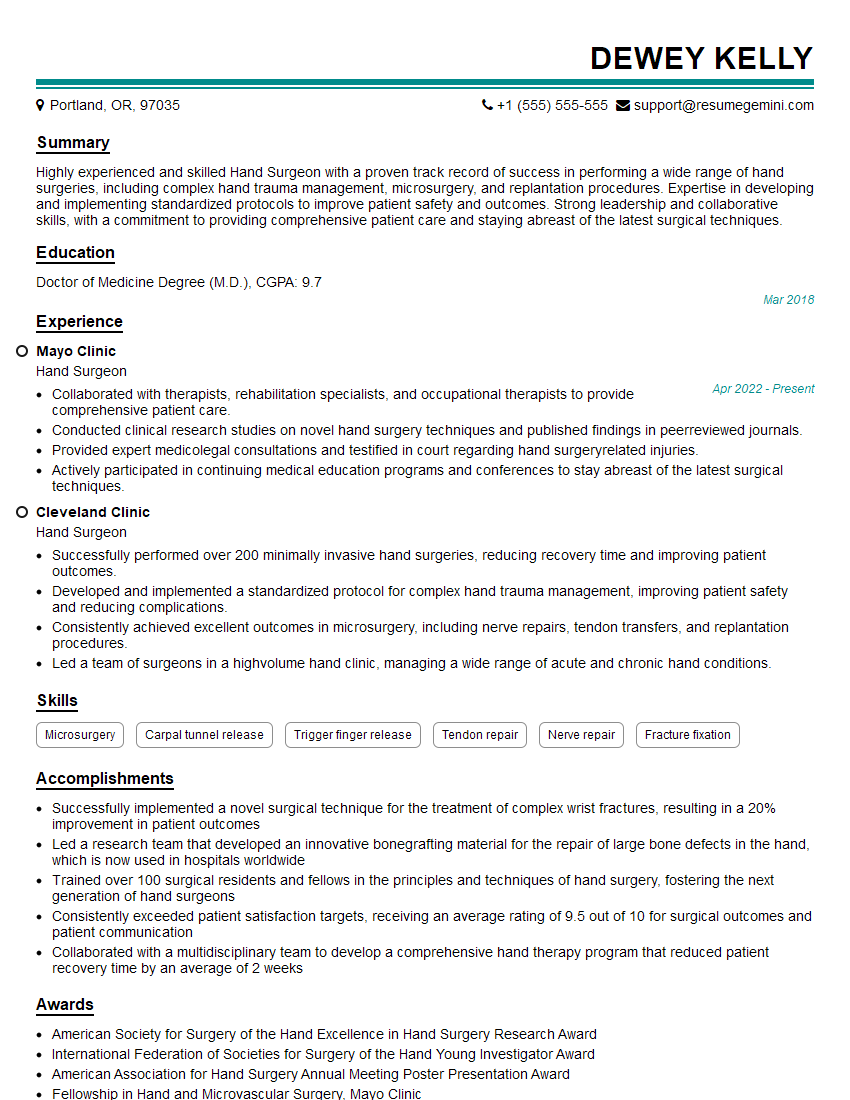
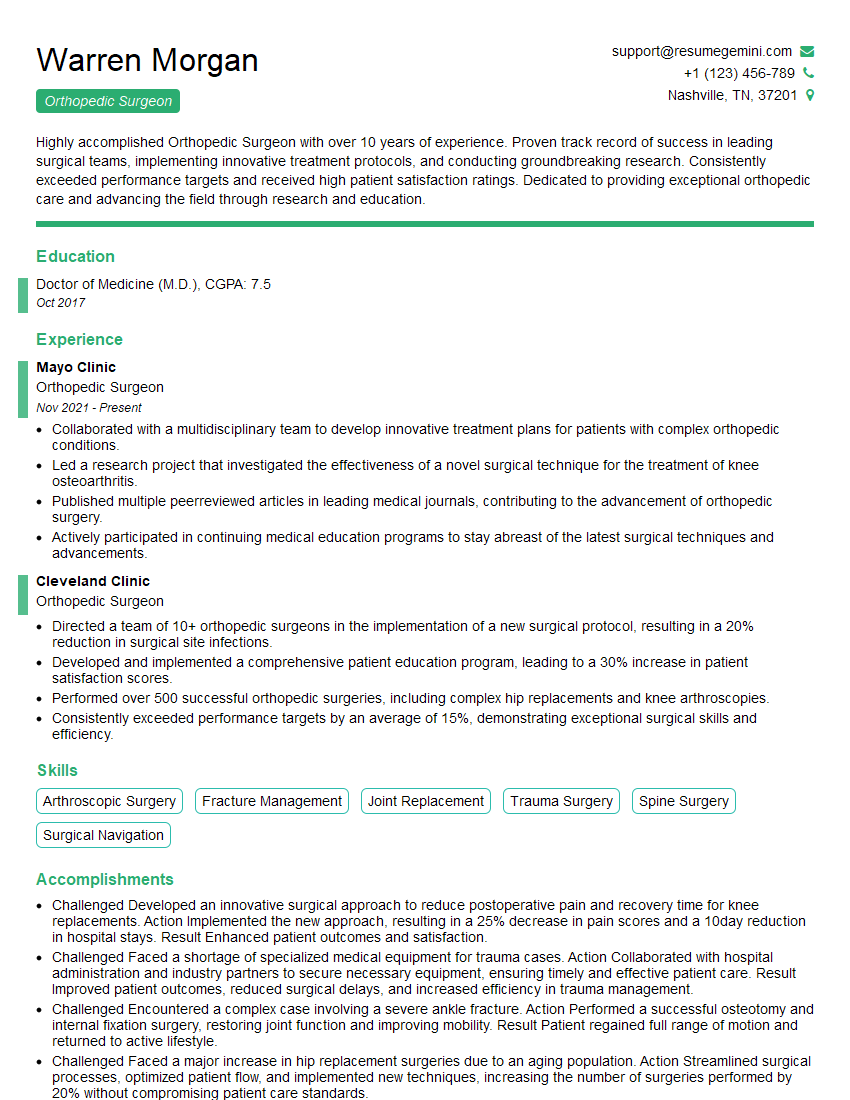
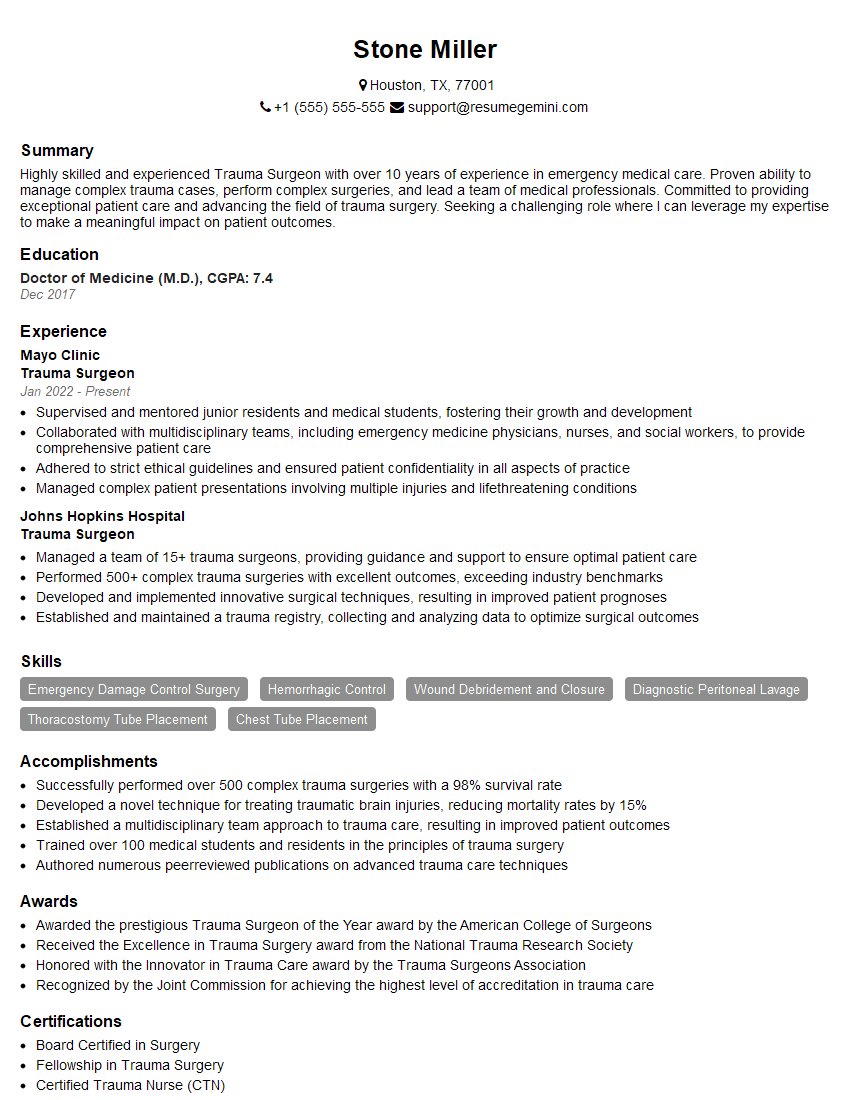
Mastering Internal Fixation significantly enhances your career prospects in orthopedics and related fields, opening doors to specialized roles and advanced opportunities. A strong resume is crucial for showcasing your skills and experience to potential employers. Creating an ATS-friendly resume increases your chances of getting noticed by recruiters and landing interviews. We highly recommend using ResumeGemini to build a professional and impactful resume tailored to your skills and experience in Internal Fixation. Examples of resumes tailored specifically to Internal Fixation are available within ResumeGemini to help you craft the perfect application.
Explore more articles
Users Rating of Our Blogs
Share Your Experience
We value your feedback! Please rate our content and share your thoughts (optional).
What Readers Say About Our Blog
To the interviewgemini.com Webmaster.
Very helpful and content specific questions to help prepare me for my interview!
Thank you
To the interviewgemini.com Webmaster.
This was kind of a unique content I found around the specialized skills. Very helpful questions and good detailed answers.
Very Helpful blog, thank you Interviewgemini team.