Unlock your full potential by mastering the most common Electrical system installation and maintenance interview questions. This blog offers a deep dive into the critical topics, ensuring you’re not only prepared to answer but to excel. With these insights, you’ll approach your interview with clarity and confidence.
Questions Asked in Electrical system installation and maintenance Interview
Q 1. Explain the NEC (National Electrical Code) and its importance.
The National Electrical Code (NEC) is a widely adopted set of standards for the safe installation and maintenance of electrical systems in the United States. It’s essentially a rulebook ensuring electrical safety in buildings and structures of all types. Think of it as the bible for electricians. Its importance stems from its role in preventing electrical hazards like fires, shocks, and electrocution. The NEC isn’t a law itself, but it’s often adopted by local and state authorities, making adherence mandatory. It covers a vast array of topics, from wiring methods and overcurrent protection to grounding and bonding, encompassing residential, commercial, and industrial settings.
For example, the NEC dictates the proper sizing of conductors for specific loads, preventing overheating and potential fires. It also specifies the requirements for grounding systems to ensure electrical safety in case of a fault. Ignoring the NEC can lead to serious consequences, including building code violations, insurance claims denials, and, most importantly, injury or death. Regular updates to the NEC reflect advancements in technology and safety practices, keeping pace with the evolving needs of the electrical industry.
Q 2. Describe your experience with different types of wiring (e.g., conduit, EMT, BX).
Throughout my career, I’ve worked extensively with various wiring methods, each offering unique advantages and applications. Conduit, for instance, provides robust mechanical protection and allows for easy pulling and replacement of wires. I’ve used rigid conduit (RMC) for demanding industrial settings requiring maximum protection and EMT (electrical metallic tubing) for its lighter weight and easier installation in less severe environments. I’ve also had considerable experience with BX cable (armored cable), a flexible option suited for applications where conduit might be impractical, though it has limitations concerning the number of wires it can house.
For example, in a renovation project, EMT was ideal for rerouting wiring within walls and ceilings due to its flexibility and ease of bending. Conversely, in a commercial kitchen with heavy equipment and potential for physical damage, RMC provided the necessary robust protection against impacts. The choice of wiring method always depends on factors such as environmental conditions, the type of installation (new construction or renovation), the load requirements, and the applicable building codes.
Q 3. How do you troubleshoot a faulty circuit breaker?
Troubleshooting a faulty circuit breaker involves a systematic approach. First, I’d ensure the breaker is actually tripped, indicated by a switch in the ‘off’ position. Then, I’d check for obvious signs of damage, like burn marks or loose connections. I would never attempt troubleshooting with the power on. Next, I’d identify the circuit controlled by the breaker and check for overloaded outlets or faulty appliances. A simple way to do this is by unplugging items one by one and seeing if the breaker resets.
If the breaker trips immediately upon resetting, it suggests a continuous fault within the circuit, necessitating a detailed inspection of all wiring, outlets, and connected appliances. A multimeter is invaluable here for checking for shorts, open circuits, and correct voltage. If the fault can’t be readily identified, I would advise calling a qualified electrician or specialist for further investigation, prioritizing safety.
Q 4. What are the safety precautions you take when working with high-voltage systems?
Safety is paramount when working with high-voltage systems. My approach is always based on a strict adherence to established safety protocols and the use of appropriate personal protective equipment (PPE). This includes wearing insulated gloves, safety glasses, and arc flash suits depending on the voltage level. Before starting any work, I would lock out and tag out the power source to ensure it’s completely de-energized. This is crucial to prevent accidental energization. Furthermore, I always work with a qualified colleague or partner for additional safety and assistance.
I use voltage testers to double-check that the system is indeed de-energized before commencing any work, and I always follow the manufacturer’s instructions for any specific equipment involved. The use of insulated tools is mandatory, and I’m meticulously cautious about avoiding any potential contact with energized conductors or equipment. Regular training and competency assessments are vital for maintaining the necessary expertise and awareness of risks related to high-voltage work.
Q 5. Explain the difference between AC and DC power.
The fundamental difference between AC (alternating current) and DC (direct current) lies in the direction of electron flow. In DC, electrons flow continuously in one direction, like a river flowing downstream. This is the type of power produced by batteries. AC, on the other hand, involves electrons oscillating back and forth, changing direction periodically. This is the type of power delivered to our homes and businesses.
AC power is more efficient for long-distance transmission due to the ease of voltage transformation using transformers. Imagine trying to pump water long distances – it’s easier to use high-pressure pumps (high voltage) and then reduce pressure (voltage) at the destination. DC power is typically more stable and suitable for sensitive electronics. The choice between AC and DC depends on the application; for example, computers use DC power from an AC-to-DC adapter, while household appliances generally operate on AC power.
Q 6. Describe your experience with different types of electrical motors.
My experience encompasses a range of electric motors, including induction motors, synchronous motors, and DC motors. Induction motors are very common in industrial applications due to their robustness and simplicity – think of the motors in most fans and pumps. Synchronous motors, known for their precise speed control, are often found in applications needing strict timing, like clocks and some industrial machinery. I’ve worked extensively with DC motors, especially in robotics and automation, appreciating their ability to start and stop precisely. The choice of motor depends greatly on the specific application requirements, such as the load, speed control needs, and efficiency considerations.
For example, in a manufacturing plant, induction motors might power conveyor belts due to their ruggedness and reliability. Meanwhile, a robot arm might utilize precise control offered by a DC servo motor. The selection process carefully considers factors like torque, speed, power requirements, and environmental conditions.
Q 7. How do you test for continuity and insulation resistance?
Testing for continuity and insulation resistance is crucial for ensuring the safety and proper functioning of electrical circuits. Continuity testing verifies the existence of a complete, unbroken path for current flow. I typically use a multimeter set to the continuity function to check for this; a beep indicates a continuous path. This is essential to confirm the integrity of wires and connections, ensuring they are not broken or corroded.
Insulation resistance testing assesses the quality of insulation around conductors. Using a megohmmeter (or insulation tester), I measure the resistance between the conductor and ground or other conductors. High resistance indicates good insulation, preventing current leakage or shocks. Low resistance points to potential insulation damage, necessitating repair or replacement of the damaged component. Both tests are critical parts of any preventative maintenance schedule and are particularly important before energizing any circuit.
Q 8. What are the different types of grounding systems?
Grounding systems are crucial for safety and proper operation of electrical systems. They provide a path for fault currents to flow to the earth, preventing dangerous voltage buildup and protecting equipment and personnel. There are several types:
- Grounding Electrode System: This involves driving a grounding rod (typically copper-clad steel) into the earth to create a low-impedance path to ground. This is often supplemented with other grounding electrodes like buried conductors or metallic water pipes (if non-insulated and suitable).
- Plate Grounding: A large conductive plate is buried in the earth, offering a larger surface area for current dissipation compared to a rod. This is often used in areas with high soil resistivity.
- Ground Ring: A continuous loop of conductor buried around a structure provides excellent grounding, particularly effective in mitigating lightning strikes.
- System Grounding: This involves connecting the neutral point of a transformer or generator to the grounding electrode system. This is critical for protecting against ground faults in power distribution systems. There are variations like solid grounding, resistance grounding, and reactance grounding, each chosen based on the specific application and safety requirements.
The choice of grounding system depends on factors like soil resistivity, fault current levels, and the specific electrical code requirements in the region. For example, a large industrial facility might employ a combination of ground rods, plates, and a ground ring for comprehensive protection, while a residential installation might use a single grounding rod.
Q 9. Explain your experience with electrical drawings and schematics.
I have extensive experience interpreting and working with electrical drawings and schematics. From single-line diagrams to detailed wiring diagrams, I’m comfortable navigating a wide range of representations. My experience includes:
- Reading and understanding various symbols and notations: This includes understanding the representation of different components like motors, breakers, relays, and control devices.
- Tracing circuits and identifying component interconnections: I can effectively trace the flow of electricity through complex circuits to diagnose problems or plan installations.
- Creating and modifying drawings: I’ve used various CAD software to create and modify electrical drawings, ensuring accuracy and adherence to industry standards.
- Using schematics for troubleshooting and maintenance: I routinely refer to schematics to diagnose faults, locate components, and understand the system’s overall operation. For instance, recently, I used a schematic to quickly identify a faulty sensor in a complex HVAC system, saving significant downtime.
Accurate and up-to-date schematics are crucial for effective maintenance and troubleshooting. A well-documented drawing can significantly reduce repair time and prevent errors during modifications.
Q 10. How do you identify and resolve electrical shorts?
Identifying and resolving electrical shorts is a critical skill. A short circuit occurs when an unintended path for current bypasses the load. This can lead to overheating, fires, and equipment damage. Here’s how I approach it:
- Safety First: Always de-energize the circuit before attempting any troubleshooting.
- Visual Inspection: Carefully inspect wiring, connections, and equipment for signs of damage, such as burnt insulation, loose connections, or melted components. This is often the quickest way to find the source.
- Testing with a Multimeter: Use a multimeter to check for continuity (a low resistance indicating a short) between different points in the circuit. Start by checking the most likely points of failure indicated by a visual inspection.
- Specialized Equipment: For complex systems, a clamp meter can measure current draw, potentially helping to isolate the faulty branch. Thermal imaging can detect hot spots indicating excessive current flow.
- Systematic Isolation: Gradually isolate sections of the circuit to pinpoint the location of the short. This might involve disconnecting portions of the wiring or switching off breakers to isolate specific circuits.
- Repair or Replacement: Once the short is located, repair the damaged wiring, replace faulty components, and restore power, ensuring all connections are secure.
For instance, in a recent situation, a short was causing a tripped breaker. Through systematic isolation using a multimeter, I identified a short in the wiring to an outlet caused by a nail piercing through the insulation. Replacing the damaged wire resolved the issue.
Q 11. Describe your experience with PLC (Programmable Logic Controller) programming.
I have considerable experience programming PLCs using various platforms like Allen-Bradley (RSLogix 5000), Siemens TIA Portal, and others. My experience encompasses:
- Ladder Logic Programming: This is the most common method I use, creating programs using a graphical interface based on relay logic. I’m proficient in building complex logic sequences, including timers, counters, and arithmetic functions.
- Structured Text Programming: I’ve also utilized structured text for more complex control algorithms, offering greater flexibility and modularity. This is particularly helpful for advanced applications such as PID control loops.
- Troubleshooting and Debugging: I’m skilled in using PLC diagnostic tools to identify and resolve programming errors or hardware issues. I’m comfortable utilizing online monitoring tools to track program execution and variable values.
- HMI (Human Machine Interface) Integration: I have designed and implemented HMIs using various software packages to create intuitive interfaces for operators to monitor and interact with PLC controlled systems. This includes designing screens, creating alarms, and implementing data logging.
For example, I recently programmed a PLC to control a complex automated packaging system. This involved creating multiple ladder logic routines to manage conveyor belts, sensors, and actuators in a synchronized manner. I used structured text for specific control functions requiring more precise calculation and programming.
Q 12. Explain your experience with different types of electrical panels.
I’m familiar with a range of electrical panels, each designed for specific applications and voltage levels. These include:
- Switchboards: Large, high-voltage panels typically found in industrial settings or power substations. They distribute power to multiple feeders and often include sophisticated protection equipment.
- Motor Control Centers (MCCs): These panels house the starters and controls for multiple electric motors. They are designed for ease of maintenance and typically include interlocks and safety features.
- Load Centers: These are common in residential and small commercial buildings. They distribute power to various circuits through circuit breakers.
- Panelboards: Smaller versions of load centers, often found in specific areas of a building to reduce wiring distances.
Each panel type has unique design considerations, including busbar sizing, short-circuit protection, and grounding. For instance, MCCs use specific types of busbars that can withstand high fault currents, and the design often incorporates arc flash mitigation techniques for safety. Experience with different panel types is essential for ensuring safe and reliable electrical distribution in various applications.
Q 13. How do you troubleshoot a three-phase motor?
Troubleshooting a three-phase motor involves a systematic approach. Here’s how I’d tackle it:
- Safety First: Lockout/Tagout procedures are crucial before working on any motor. Verify the motor is de-energized.
- Visual Inspection: Check for any obvious damage, such as burnt insulation, loose connections, or physical obstructions. Look for any signs of overheating.
- Voltage Measurement: Using a multimeter, measure the voltage between each phase. The voltages should be balanced and within the expected range specified on the motor nameplate. Significant imbalance indicates a problem with the power supply.
- Current Measurement: Use a clamp meter to measure the current in each phase. The currents should also be balanced. High current indicates an overload or a mechanical problem within the motor. Low current might signify an open circuit.
- Resistance Measurement: Measure the resistance between each winding and ground. A low resistance indicates a ground fault. Measure the resistance between each winding pair. High resistance indicates a possible open circuit in one of the windings.
- Motor Rotation Test: Observe the motor’s rotation. Reverse rotation suggests a wiring problem.
- Vibration and Noise Check: Excessive vibration or unusual noise can indicate bearing wear or other mechanical problems.
- Load Test: If possible, a load test under controlled conditions can help confirm the motor’s performance under load.
Often, a simple loose connection or a faulty component is the root cause. By systematically checking voltage, current, and resistance, I can often pinpoint the problem efficiently. For more complex issues, specialized motor testing equipment might be necessary.
Q 14. What are the common causes of electrical fires?
Electrical fires are a serious hazard. Common causes include:
- Overloaded Circuits: When too many appliances or devices draw current from a single circuit, it can overheat wires and cause a fire. Think of it like overloading a fuse – it will blow if the current is too high.
- Faulty Wiring: Damaged or improperly installed wiring, including loose connections or worn insulation, is a major fire risk. Worn insulation allows conductors to come into contact and can generate sparks and heat.
- Short Circuits: These can generate significant heat, potentially igniting nearby materials.
- Overheating Appliances and Equipment: Malfunctioning appliances, like space heaters or ovens, can overheat and start a fire.
- Arcing: When an electrical current jumps across a gap, this generates significant heat and can ignite flammable materials. Loose connections are a common cause of arcing.
- Improper Grounding: Poor grounding can lead to dangerous voltage buildup and increase the risk of electrical shock and fire. Remember that a grounding system is your safety net in these cases.
Regular maintenance, proper installation, and adhering to electrical codes are crucial in minimizing these risks. It is essential to regularly inspect wiring, appliances, and electrical equipment for signs of damage. Overloaded circuits are especially prevalent and should be addressed promptly.
Q 15. Describe your experience with preventative maintenance on electrical systems.
Preventative maintenance is crucial for ensuring the longevity and safety of electrical systems. It involves regularly inspecting, cleaning, and testing components to identify and address potential issues before they cause failures or hazards. My experience encompasses a wide range of tasks, from visually inspecting wiring and connections for signs of damage or overheating to performing infrared thermography scans to detect hot spots indicative of impending problems.
- Visual Inspections: I meticulously check for loose connections, frayed wires, corroded terminals, and signs of overheating (discoloration, melting). For example, during a recent inspection of a large industrial facility, I discovered a loose connection in a main power distribution panel that, if left unchecked, could have caused a significant fire hazard.
- Testing and Measurement: I utilize multimeters to measure voltage, current, and resistance across various components, ensuring they operate within their specified parameters. For instance, I regularly test the insulation resistance of motors and cables to prevent short circuits and electrical shocks.
- Cleaning and Lubrication: Cleaning electrical components, such as switchgear and circuit breakers, removes dust and debris, which can impede performance and lead to overheating. Lubricating moving parts, where applicable, ensures smooth operation and extends component lifespan.
- Documentation: Comprehensive documentation of all inspections, tests, and maintenance activities is vital. This documentation serves as a record of the system’s health and aids in identifying trends and potential problem areas.
Through consistent preventative maintenance, I’ve significantly reduced the frequency of unexpected electrical failures, minimizing downtime and improving operational efficiency in various settings – from commercial buildings to industrial plants.
Career Expert Tips:
- Ace those interviews! Prepare effectively by reviewing the Top 50 Most Common Interview Questions on ResumeGemini.
- Navigate your job search with confidence! Explore a wide range of Career Tips on ResumeGemini. Learn about common challenges and recommendations to overcome them.
- Craft the perfect resume! Master the Art of Resume Writing with ResumeGemini’s guide. Showcase your unique qualifications and achievements effectively.
- Don’t miss out on holiday savings! Build your dream resume with ResumeGemini’s ATS optimized templates.
Q 16. How do you use multimeters and other electrical testing equipment?
Multimeters are indispensable tools for diagnosing electrical problems. I’m proficient in using both analog and digital multimeters to measure voltage, current, resistance, and continuity. Other testing equipment I regularly utilize includes:
- Clamp Meters: These are invaluable for measuring current without breaking the circuit, crucial for safety and efficiency. For instance, I used a clamp meter to accurately measure the current draw of a large motor to determine if it was operating within its rated capacity.
- Meggers (Insulation Resistance Testers): These test the insulation resistance of cables and equipment, identifying potential leakage and preventing short circuits. A low insulation resistance reading can signal damage or degradation that needs immediate attention.
- Infrared Thermometers: These are incredibly useful for detecting overheating components, often a precursor to a more serious failure. I’ve used this equipment to identify an overheating motor bearing before it catastrophically failed.
- Loop Testers: Essential for testing and verifying the integrity of earth grounding systems, ensuring safety and compliance with electrical codes.
My approach to using this equipment is methodical and safety-conscious. I always follow proper lockout/tagout procedures before commencing any testing, ensuring the circuit is de-energized before making any connections. I carefully select the appropriate range and function for each measurement to avoid damaging the equipment or myself.
Q 17. Explain your experience with electrical power distribution systems.
Electrical power distribution systems are the backbone of any facility, delivering power safely and efficiently to all loads. My experience includes working with various systems, from low-voltage residential setups to high-voltage industrial installations. This experience encompasses:
- System Design Review: I’m adept at reviewing design plans, identifying potential issues, and proposing solutions to improve efficiency, reliability, and safety.
- Installation and Commissioning: I have extensive experience in the safe and compliant installation of electrical power distribution equipment, including switchgear, transformers, circuit breakers, and cabling. Proper commissioning ensures the system functions as designed.
- Troubleshooting and Repair: I can quickly identify and resolve issues within the power distribution system, minimizing downtime and ensuring continuity of power supply. I once successfully diagnosed and resolved a fault in a complex industrial power distribution system, preventing a costly production shutdown.
- Load Balancing: Optimizing load distribution across the system is crucial for efficiency and preventing overloading. I have successfully implemented load balancing strategies to improve energy efficiency in several commercial buildings.
Understanding the intricacies of power distribution systems, including protection schemes (such as overcurrent and ground fault protection), ensures that I can maintain the safe and efficient operation of these critical infrastructure components. I am familiar with various system architectures, including radial, ring, and parallel systems.
Q 18. Describe your experience with working in confined spaces.
Working in confined spaces requires specialized training and adherence to strict safety protocols. My experience includes working in various confined spaces, such as electrical vaults, manholes, and cable trenches. I am familiar with the inherent risks associated with these environments, including oxygen deficiency, hazardous gases, and potential for electrical shock.
- Permit-Required Confined Space Entry: I’m always mindful of the need for proper permits and ensuring all necessary safety measures are in place before entering a confined space. This includes atmospheric monitoring for oxygen levels and potentially hazardous gases.
- Personal Protective Equipment (PPE): I use appropriate PPE, including respirators, harnesses, and fall protection equipment, whenever necessary.
- Rescue Plans: I understand the importance of having a comprehensive rescue plan in place before entering confined spaces, and I am familiar with the appropriate rescue techniques.
- Communication: Clear and consistent communication with colleagues working outside the confined space is essential to ensure safety and effective coordination.
Safety is paramount when working in confined spaces. I have successfully completed numerous confined space entries without incident, always prioritizing safety above all else. My training and experience allow me to navigate these challenging environments while mitigating risks.
Q 19. How do you ensure compliance with OSHA regulations?
OSHA regulations are paramount in ensuring worker safety in the electrical field. My commitment to compliance is unwavering. I’m thoroughly familiar with OSHA standards related to electrical safety, including lockout/tagout procedures, arc flash hazard analysis, and personal protective equipment (PPE) requirements.
- Lockout/Tagout (LOTO): I rigorously follow LOTO procedures to de-energize equipment before working on it, preventing accidental energization and electrical shock. This involves verifying the absence of voltage before proceeding.
- Arc Flash Hazard Analysis: I am proficient in conducting arc flash hazard analysis to determine the potential risks associated with working on energized equipment and selecting appropriate PPE to mitigate these risks.
- Personal Protective Equipment (PPE): I consistently use appropriate PPE, including insulated gloves, arc flash suits, safety glasses, and hearing protection, as required by OSHA standards.
- Training and Documentation: I maintain up-to-date training records and ensure that all relevant safety information is readily available. Regular safety meetings and toolbox talks are essential to reinforcement of these protocols.
Compliance with OSHA regulations isn’t just about following rules; it’s about fostering a culture of safety. I actively contribute to a safe work environment by promoting awareness and adherence to these standards among my colleagues.
Q 20. Explain your experience with different types of transformers.
Transformers are essential components in electrical systems, stepping voltage up or down. My experience encompasses various types:
- Power Transformers: These are used in power distribution systems to step voltage up for transmission and down for distribution. I’ve worked with large power transformers in substations and industrial settings.
- Distribution Transformers: These smaller transformers are used to step voltage down for residential and commercial applications. I’m familiar with pole-mounted and pad-mounted distribution transformers.
- Instrument Transformers: These transformers are used to measure voltage and current in high-voltage systems without direct connection. This ensures safe and accurate measurements.
- Isolation Transformers: These provide electrical isolation between circuits, enhancing safety by preventing ground faults from affecting other equipment. They are particularly useful in sensitive electronic systems.
My understanding extends beyond just the types of transformers. I’m also familiar with transformer maintenance, including oil sampling and testing, winding resistance testing, and insulation testing. I can diagnose transformer problems, from simple winding faults to more complex issues such as core saturation.
Q 21. How do you troubleshoot a faulty lighting system?
Troubleshooting a faulty lighting system involves a systematic approach to identify the root cause. It’s essential to prioritize safety; always de-energize the circuit before working on the system.
- Visual Inspection: Begin with a thorough visual inspection of all components, including bulbs, ballasts, fixtures, wiring, and switches. Look for obvious signs of damage, loose connections, or burned-out components. A loose bulb or a broken fixture can be simple to resolve.
- Check the Circuit Breaker: Ensure the circuit breaker supplying power to the lighting system is not tripped. If tripped, reset it (after identifying the reason for tripping). A tripped breaker could indicate an overload or short circuit.
- Test Voltage: Using a non-contact voltage tester, check for voltage at the fixture and the switch. This will help determine if there’s a problem with the wiring, switch, or the fixture itself. The absence of voltage suggests a problem in the wiring or the breaker.
- Test Continuity: With the circuit de-energized, use a multimeter to test the continuity of the wiring from the power source to the fixture. This will help identify any breaks or short circuits in the wiring.
- Ballasts: If the lighting system uses ballasts, test them with a multimeter. A faulty ballast will prevent the bulbs from lighting.
- Bulbs: Check the bulbs to ensure they aren’t burned out. Replacing faulty bulbs is a straightforward fix.
Troubleshooting lighting problems can involve a combination of these steps. For example, I once resolved a seemingly complex lighting issue in a large office by simply tightening a loose connection at a junction box. In other instances, more involved diagnostics were required, including the use of specialized testing equipment to isolate a faulty ballast or wiring.
Q 22. Describe your experience with different types of sensors and actuators.
My experience with sensors and actuators spans a wide range of technologies used in various electrical systems. Sensors are devices that detect physical phenomena – like temperature, pressure, light, or motion – and convert them into electrical signals. Actuators, conversely, receive electrical signals and convert them into physical actions, such as opening a valve, turning a motor, or activating a relay.
- Temperature Sensors: I’ve extensively worked with thermocouples (measuring temperature differences), RTDs (Resistance Temperature Detectors, offering precise measurements), and thermistors (cost-effective solutions for temperature sensing). For instance, I’ve used thermocouples in a high-temperature industrial oven to monitor baking processes and ensure product quality.
- Pressure Sensors: I’ve utilized pressure transducers and pressure switches in hydraulic systems to monitor fluid pressure and control system operation. A notable project involved a water treatment plant where I implemented pressure sensors to optimize water flow and prevent pressure surges.
- Proximity Sensors: These are invaluable for automation. I’ve used inductive, capacitive, and photoelectric proximity sensors in robotic systems and conveyor belts to detect the presence of objects and trigger automated actions. A recent project involved integrating proximity sensors into a packaging machine to ensure accurate product placement.
- Actuators: My experience encompasses various actuator types, including solenoids (for quick, on/off actions like opening valves), servo motors (for precise control in robotic arms and automated machinery), and stepper motors (ideal for applications requiring precise rotational control, like 3D printers). In a recent factory modernization project, I integrated servo motors for precise control of material handling systems.
Understanding the characteristics of different sensor and actuator types is crucial for selecting the right components based on application requirements, such as accuracy, response time, operating environment, and cost-effectiveness.
Q 23. How do you handle emergency situations related to electrical hazards?
Electrical hazards demand immediate and decisive action. My approach to emergency situations follows a prioritized safety protocol:
- Safety First: The paramount concern is personal safety and the safety of others. I immediately isolate the hazard by de-energizing the affected circuit, if possible and safe to do so. If this is not immediately possible, I’ll establish a safe perimeter, warning others of the danger.
- Assessment: Once the immediate danger is mitigated (or, if immediate de-energizing is impossible, after establishing a safe perimeter), I thoroughly assess the situation to determine the extent of the hazard, the potential causes, and the level of risk. This includes checking for fire, smoke, or any signs of injury.
- Emergency Response: If necessary, I immediately contact emergency services (fire department, paramedics) and report the incident. I provide precise location details and a clear description of the situation.
- Investigation and Repair: After the emergency is over, a thorough investigation is conducted to pinpoint the root cause. This may involve checking equipment, wiring, and documentation. Repairs are carried out only after a complete safety assessment, ensuring the problem is resolved and further risks are eliminated.
- Documentation: Detailed documentation of the incident, including the cause, actions taken, and lessons learned, is crucial for future preventative measures and compliance with safety regulations.
Through years of experience, I’ve developed a keen understanding of various electrical hazards and learned to respond effectively in stressful situations. Safety is always my top priority.
Q 24. Explain your experience with electrical load calculations.
Electrical load calculations are fundamental to designing and maintaining safe and efficient electrical systems. The process involves determining the total power demand of all electrical devices connected to a circuit or system. This ensures that the wiring, circuit breakers, and other components are adequately sized to handle the load without overheating or causing damage.
My experience includes performing load calculations for various projects, ranging from small residential installations to large industrial facilities. I utilize established industry standards and codes, such as the NEC (National Electrical Code), to ensure accuracy and compliance. The process typically involves:
- Identifying all loads: This includes lighting, motors, heating/cooling equipment, appliances, and other electrical devices. I gather data on their voltage, current, and power ratings.
- Calculating individual loads: For each load, I determine the power consumption using the formula: Power (Watts) = Voltage (Volts) x Current (Amps).
- Determining total load: I sum up all individual load calculations to determine the total demand on a specific circuit or panel.
- Applying demand factors: In larger installations, demand factors are applied to account for the fact that not all loads will operate simultaneously. This reduces the overall calculated load, leading to cost savings without compromising safety.
- Selecting appropriate circuit breakers and wiring: Based on the total calculated load, I select circuit breakers and wiring that can safely handle the anticipated current flow.
An example from my work involved designing the electrical system for a new factory building. I meticulously calculated the load for various production lines, office areas, and lighting to ensure that the system could handle peak demand without overloading, leading to a reliable and safe electrical infrastructure.
Q 25. Describe your experience with cable sizing and selection.
Cable sizing and selection are critical for ensuring the safety and efficiency of an electrical system. Improperly sized cables can lead to overheating, voltage drops, and potential fire hazards. My approach to cable selection is based on several key factors:
- Current Carrying Capacity: This is the primary factor, determined by the anticipated current flow through the cable. I consult cable manufacturer data and relevant standards (like the NEC) to select cables with sufficient current carrying capacity for the specific application and environmental conditions (ambient temperature, installation method, etc.).
- Voltage Rating: The cable must have a voltage rating that exceeds the system voltage to prevent insulation breakdown and electrical shock hazards.
- Installation Method: The method of cable installation (e.g., conduit, raceway, buried) affects the cable’s derating factor. The derating factor adjusts the current carrying capacity based on environmental factors and installation conditions.
- Cable Type: Different cable types are suited to different applications. For instance, THHN (Thermoplastic High Heat Resistant Nylon) is often used in dry locations, while XHHW (Cross-Linked High Heat Resistant) is suitable for high-temperature environments.
- Length: Cable length significantly affects voltage drop. Longer cables result in greater voltage drop, which reduces the efficiency of the system. I carefully calculate voltage drop to ensure it remains within acceptable limits.
In a recent project involving the upgrade of an industrial power distribution system, I carefully selected cables with appropriate current carrying capacity, voltage rating, and fire resistance to ensure the safe and reliable operation of the upgraded system.
Q 26. How do you interpret electrical blueprints?
Interpreting electrical blueprints is a fundamental skill for any electrical professional. These blueprints provide a detailed visual representation of the electrical system, showing the layout of wiring, equipment, and components.
My proficiency in interpreting electrical blueprints involves understanding various symbols, notations, and conventions. I can effectively read and understand:
- Single-line diagrams: These simplified diagrams show the main power flow paths and equipment connections. They are useful for understanding the overall system architecture.
- Wiring diagrams: These detailed diagrams show the exact wiring connections between individual components. They are essential for installation and troubleshooting.
- Panel schedules: These tables list the contents of electrical panels, including circuit breakers, their ratings, and the circuits they protect.
- Legends: These sections define the meaning of various symbols and abbreviations used on the blueprints.
- Component specifications: These sections provide details about the specific components used in the system, including their technical specifications and ratings.
I can use blueprints to plan installation, troubleshoot problems, and ensure proper system integration. For example, I recently used blueprints to identify a faulty connection in a complex industrial control system, resolving a significant production delay.
Q 27. What are your skills in using diagnostic software for electrical systems?
My skills in using diagnostic software for electrical systems are extensive. I’m proficient with various software packages used for troubleshooting, monitoring, and analyzing electrical systems. These tools greatly enhance efficiency and accuracy in identifying and resolving problems.
My experience includes using software for:
- Data Acquisition: I use software to collect data from various sensors and devices in the electrical system, providing real-time insights into system performance.
- Trend Analysis: The collected data helps identify patterns and trends that can indicate potential problems, allowing for predictive maintenance.
- Fault Detection: Specialized software can analyze data to identify specific faults within the system, pinpointing the source of the problem much faster than manual inspection.
- System Simulation: I utilize software to simulate the behavior of electrical systems under different operating conditions, helping to predict potential issues and optimize system design.
- Reporting and Documentation: The software generates reports and documentation which are essential for documenting maintenance activities and compliance with industry regulations.
A recent project involved using a sophisticated diagnostic software package to troubleshoot a power fluctuation issue in a large data center. The software enabled me to quickly isolate the problem to a failing power supply unit, minimizing downtime and avoiding potential data loss.
Q 28. Explain your experience with industrial control systems.
My experience with industrial control systems (ICS) is substantial, encompassing various aspects of design, installation, maintenance, and troubleshooting. ICS are complex systems that manage and control industrial processes, often involving programmable logic controllers (PLCs), human-machine interfaces (HMIs), and various field devices (sensors and actuators).
My experience includes working with various PLC platforms (Siemens, Allen-Bradley, etc.) and programming languages (Ladder Logic, Structured Text, etc.). I can design and implement control logic for various industrial processes, including:
- Process Automation: I have experience automating processes in manufacturing plants, water treatment facilities, and other industrial settings. This includes designing control systems to optimize production efficiency, ensure product quality, and improve overall system reliability.
- SCADA Systems: I have worked with Supervisory Control and Data Acquisition (SCADA) systems to monitor and control large-scale industrial processes. This often involves integrating data from multiple sources and providing a centralized interface for operators to monitor and control the process.
- Networking and Communication: I understand the importance of networking in ICS, including industrial Ethernet, fieldbuses (Profibus, Modbus), and other communication protocols. I can design and implement robust communication networks for reliable data transmission.
- Safety Systems: I am familiar with safety-related aspects of ICS, including safety instrumented systems (SIS) and emergency shutdown systems (ESD). I can design and implement systems that meet stringent safety requirements.
A particularly challenging project involved upgrading the ICS of an aging chemical plant. I successfully migrated the system to a modern platform, improving its reliability, security, and overall efficiency while ensuring compliance with stringent safety regulations.
Key Topics to Learn for Electrical System Installation and Maintenance Interviews
- Electrical Codes and Regulations: Understanding and applying relevant national and local electrical codes (e.g., NEC) to ensure safe and compliant installations.
- Wiring Methods and Techniques: Practical experience with various wiring methods (e.g., conduit bending, cable termination, splicing) and their applications in different environments.
- Electrical Drawings and Schematics: Interpreting blueprints, schematics, and wiring diagrams to accurately plan and execute installations and troubleshooting.
- Troubleshooting and Diagnostics: Utilizing testing equipment (multimeters, clamp meters, etc.) to identify and resolve electrical faults and malfunctions in a systematic manner.
- Safety Procedures and Practices: Demonstrating a thorough understanding and consistent application of safety regulations, lockout/tagout procedures, and personal protective equipment (PPE) usage.
- Power Distribution Systems: Knowledge of different power distribution systems (e.g., single-phase, three-phase) and their components (transformers, circuit breakers, etc.).
- Motor Controls and Applications: Understanding the principles of motor control circuits, including starters, relays, and programmable logic controllers (PLCs).
- Preventive Maintenance and Inspection: Performing routine inspections and maintenance tasks to prevent equipment failure and ensure system longevity.
- Common Electrical Components and Their Function: In-depth knowledge of various components such as switches, receptacles, circuit breakers, fuses, and their application.
- Problem-Solving and Analytical Skills: Ability to approach complex electrical issues methodically, analyze the problem, and develop effective solutions.
Next Steps
Mastering electrical system installation and maintenance opens doors to a rewarding and diverse career path, offering excellent growth potential and opportunities for specialization. To maximize your job prospects, it’s crucial to present your skills and experience effectively. Crafting an ATS-friendly resume is key to getting your application noticed by recruiters and hiring managers. ResumeGemini is a trusted resource to help you build a professional and impactful resume that highlights your qualifications. Examples of resumes tailored to electrical system installation and maintenance professionals are available to guide you through the process.
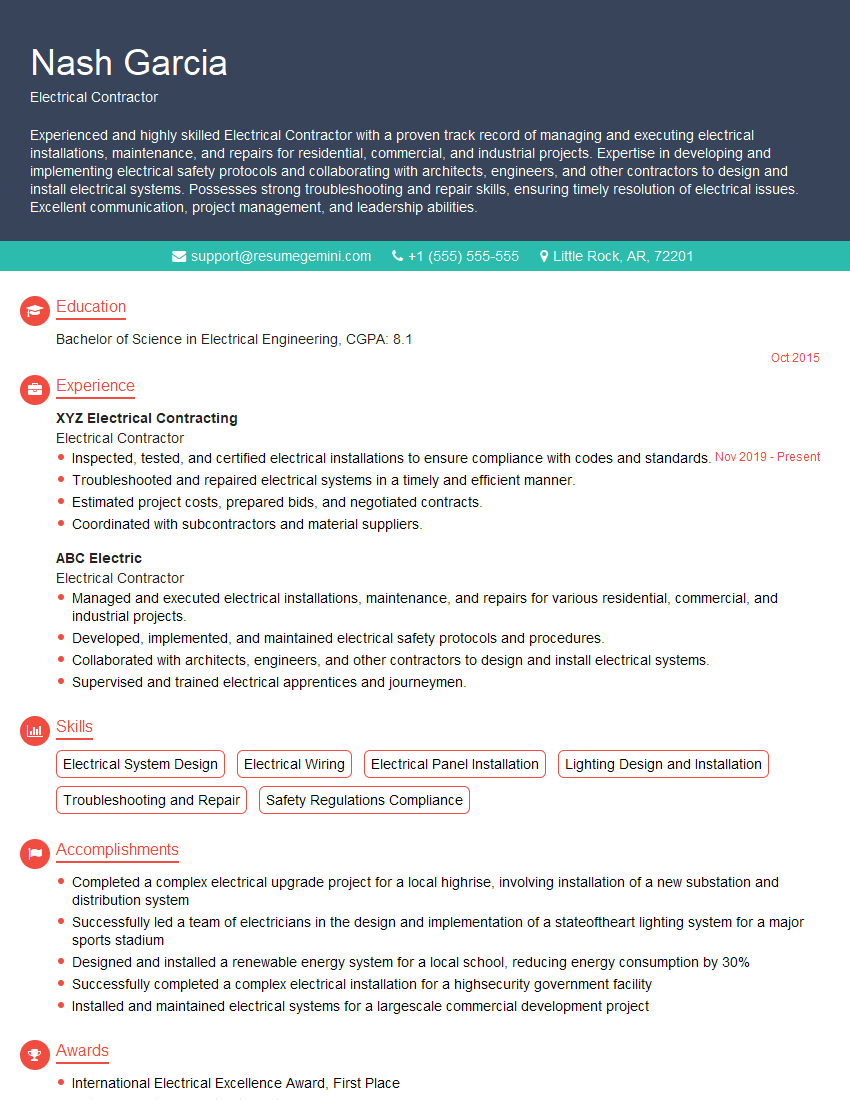
Electrical Contractor Resume Sample
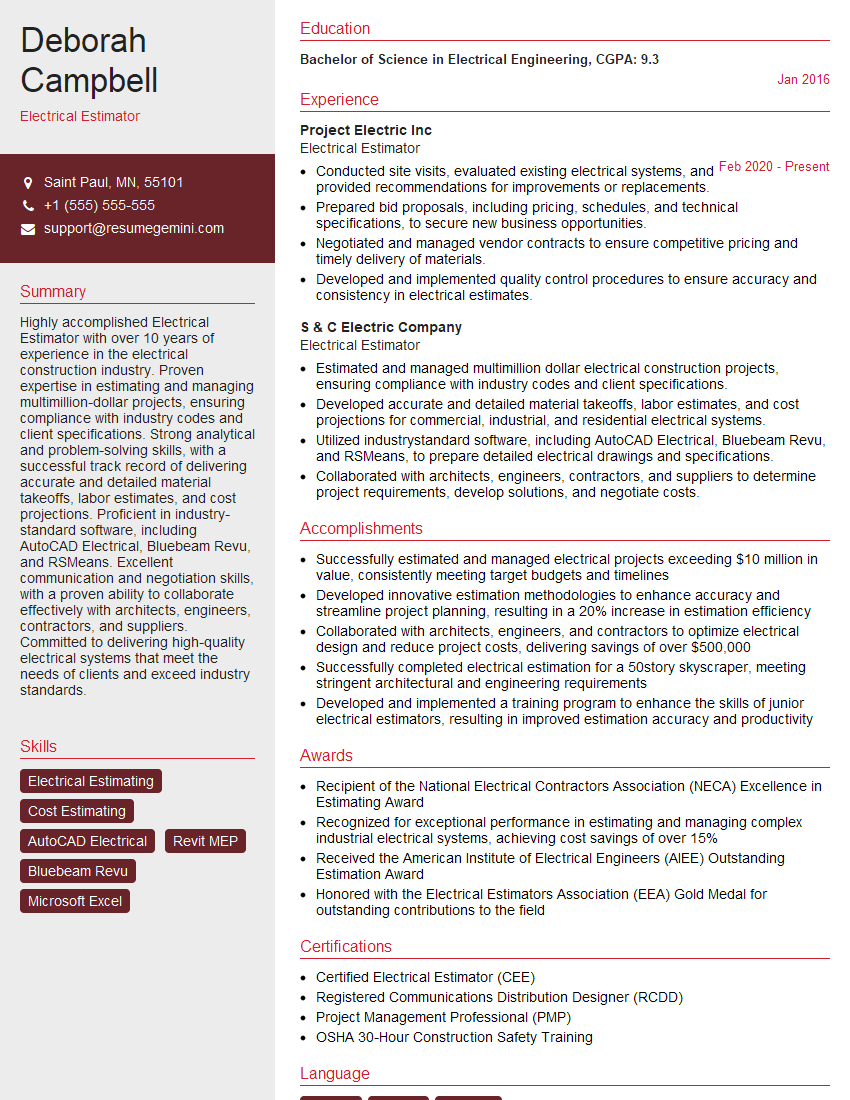
Electrical Estimator Resume Sample
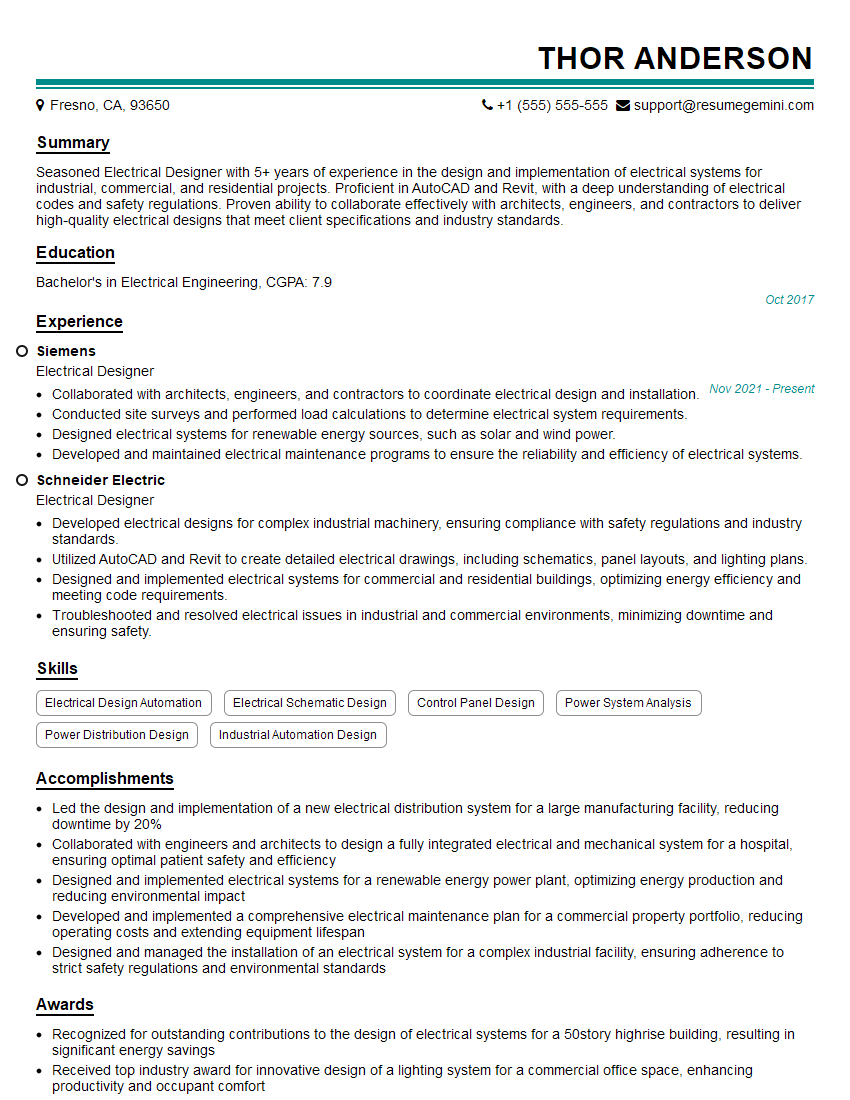
Electrical Designer Resume Sample
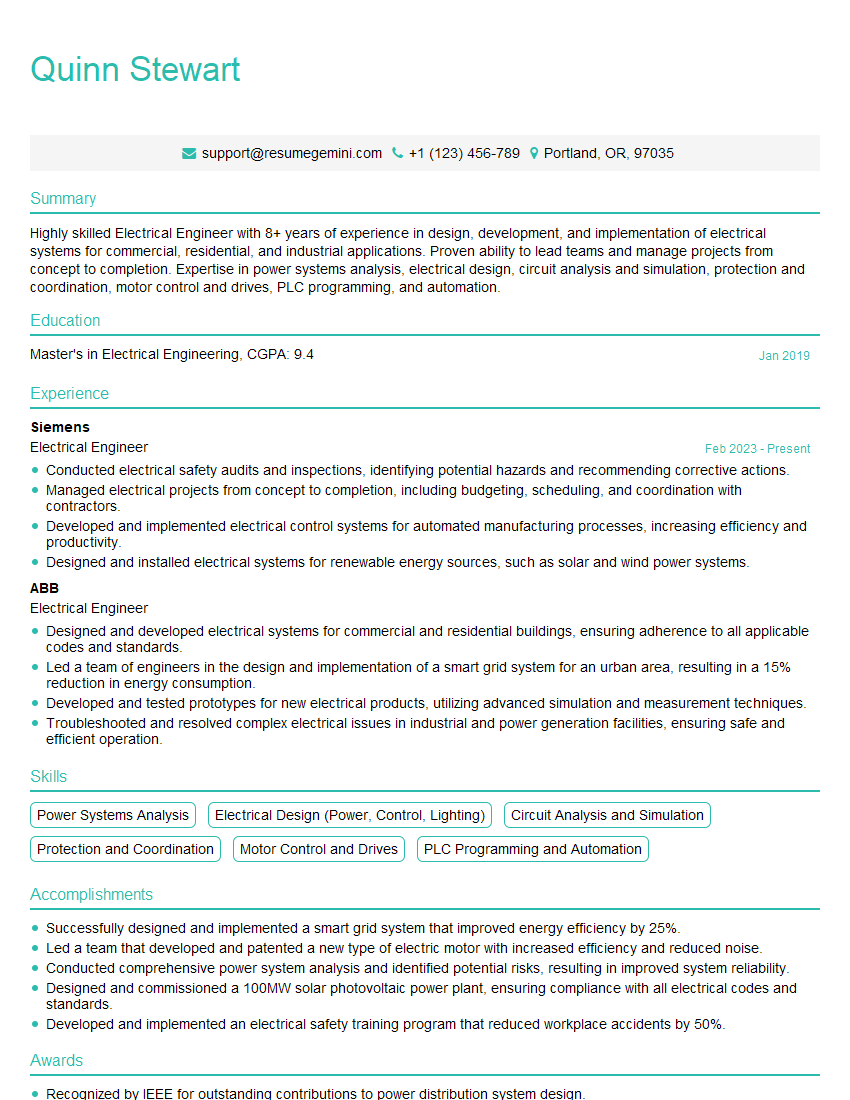
Electrical Engineer Resume Sample
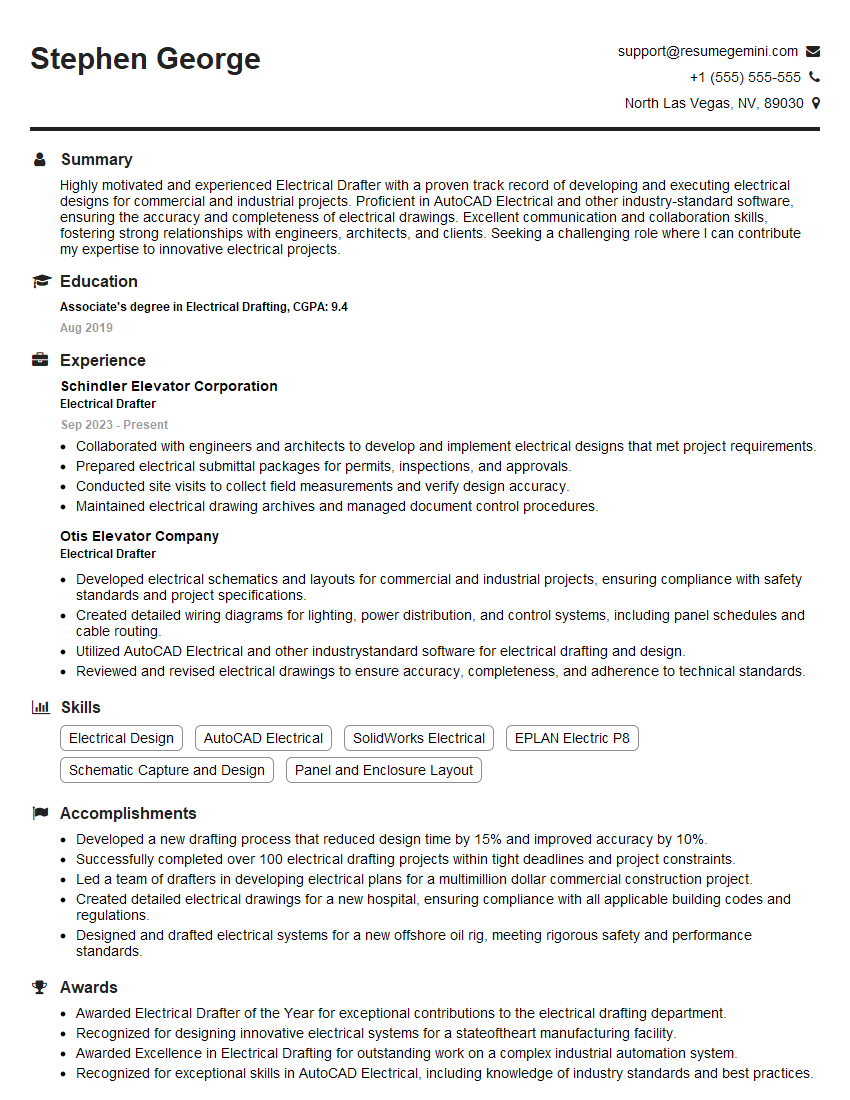
Electrical Drafter Resume Sample
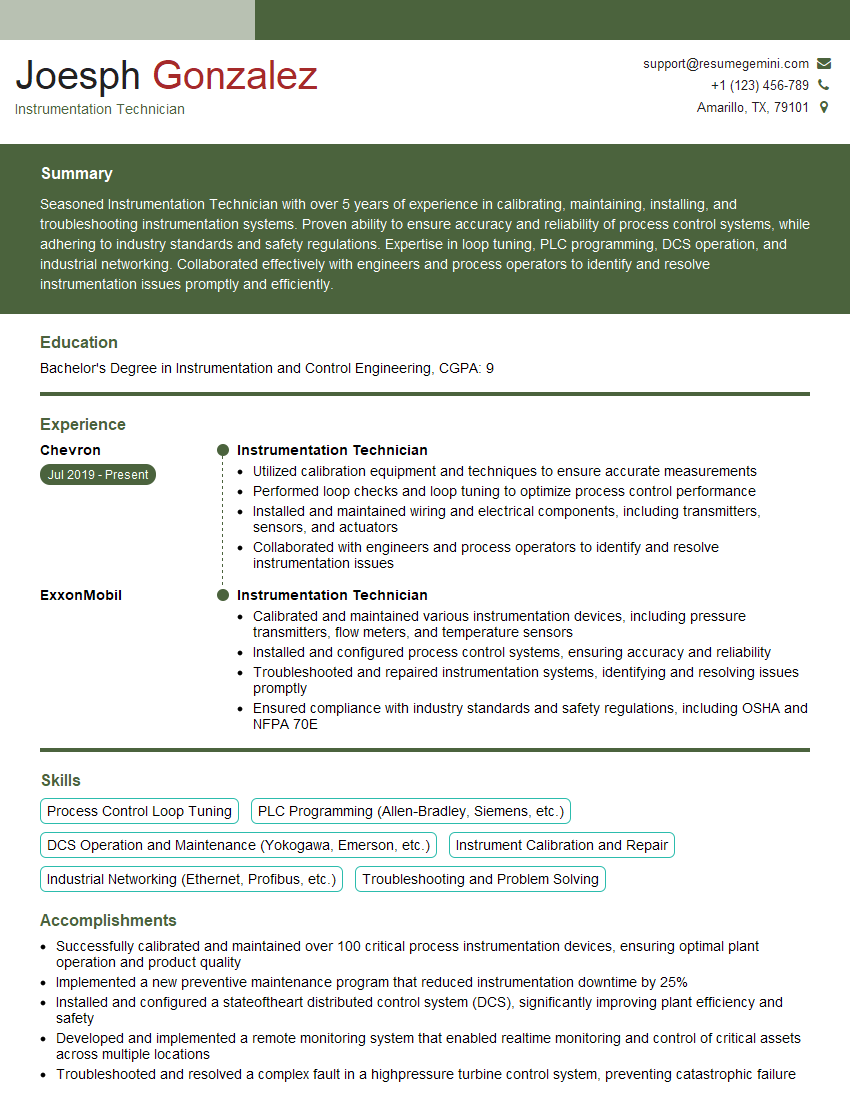
Instrumentation Technician Resume Sample
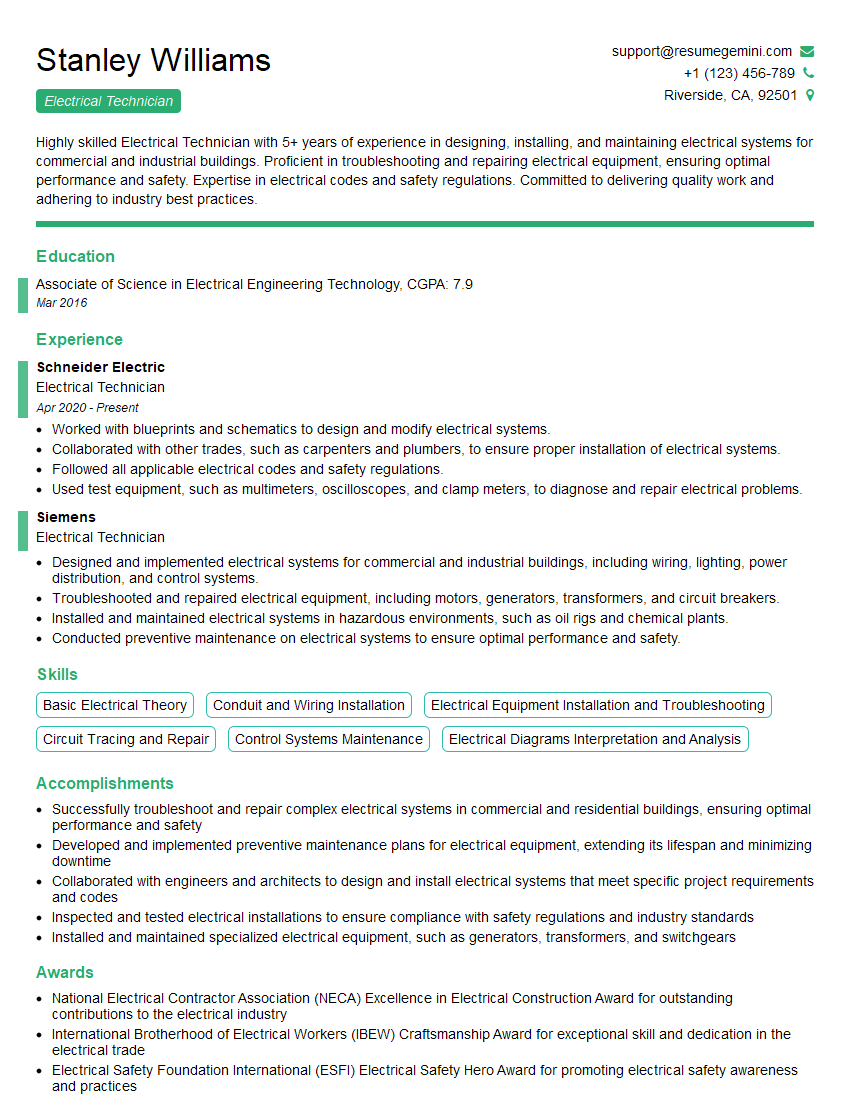
Electrical Technician Resume Sample
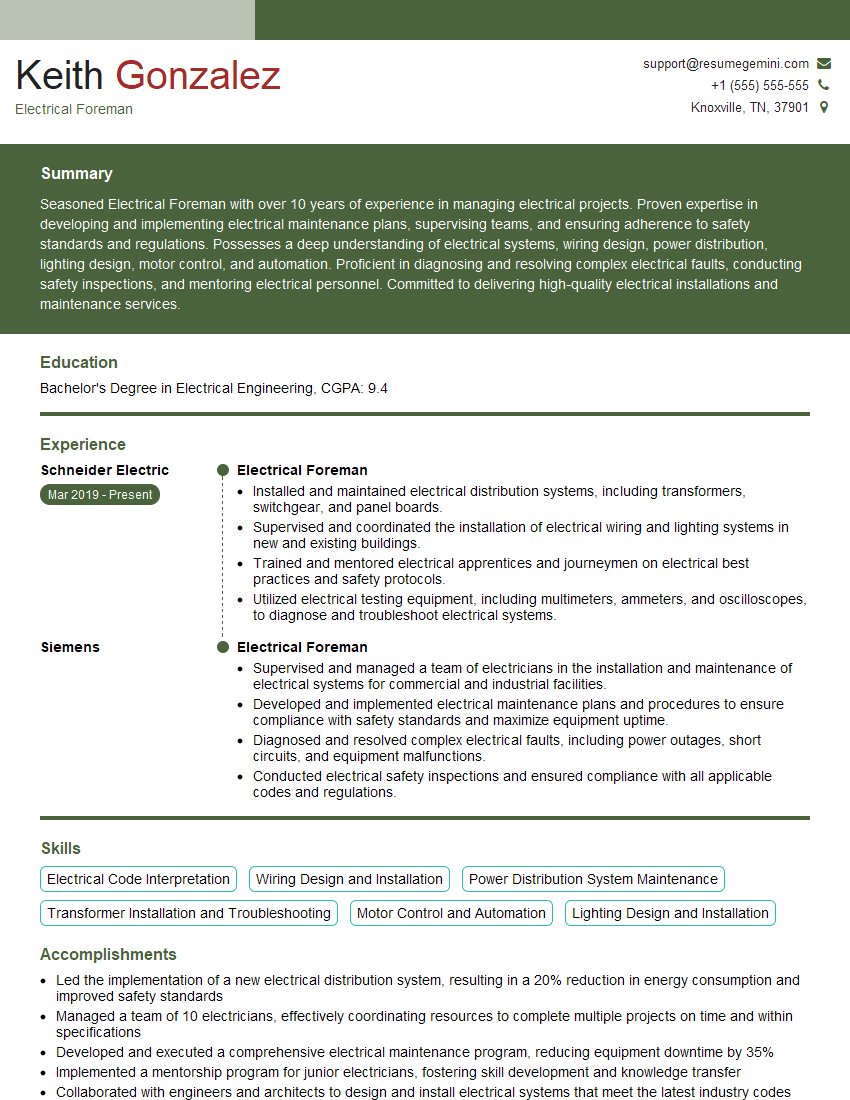
Electrical Foreman Resume Sample
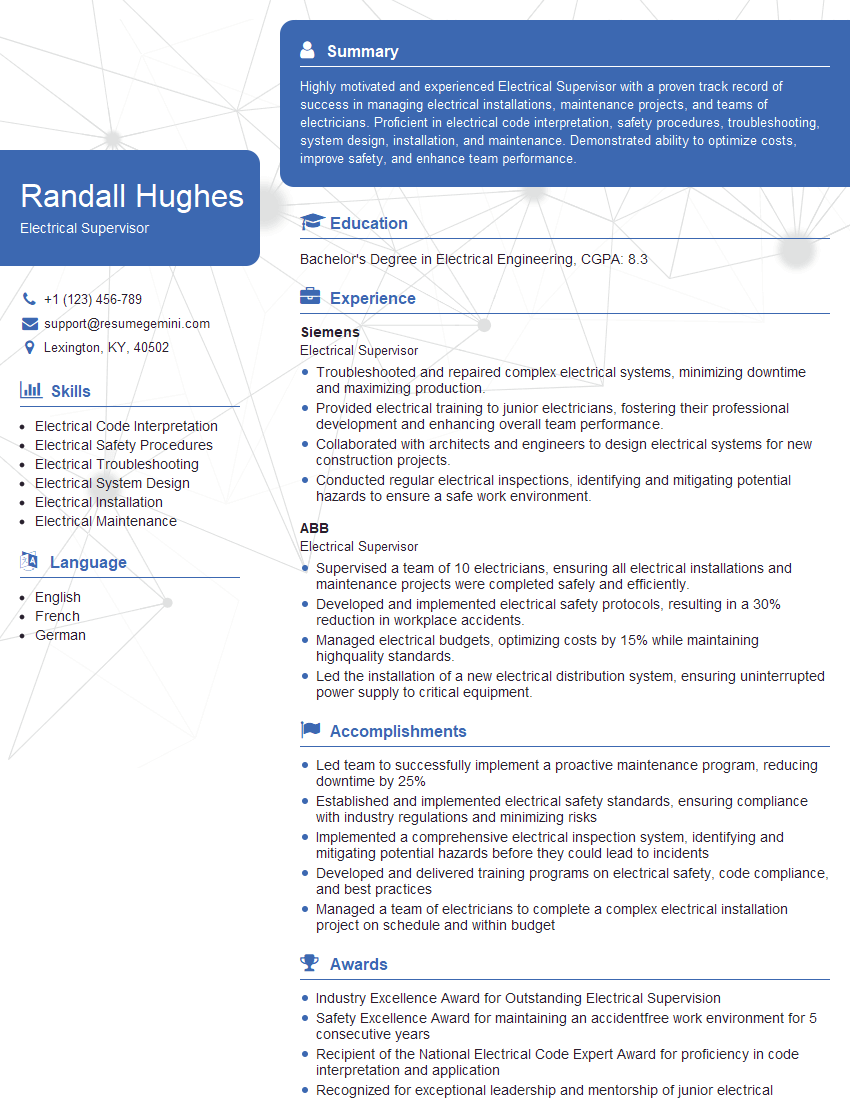
Electrical Supervisor Resume Sample
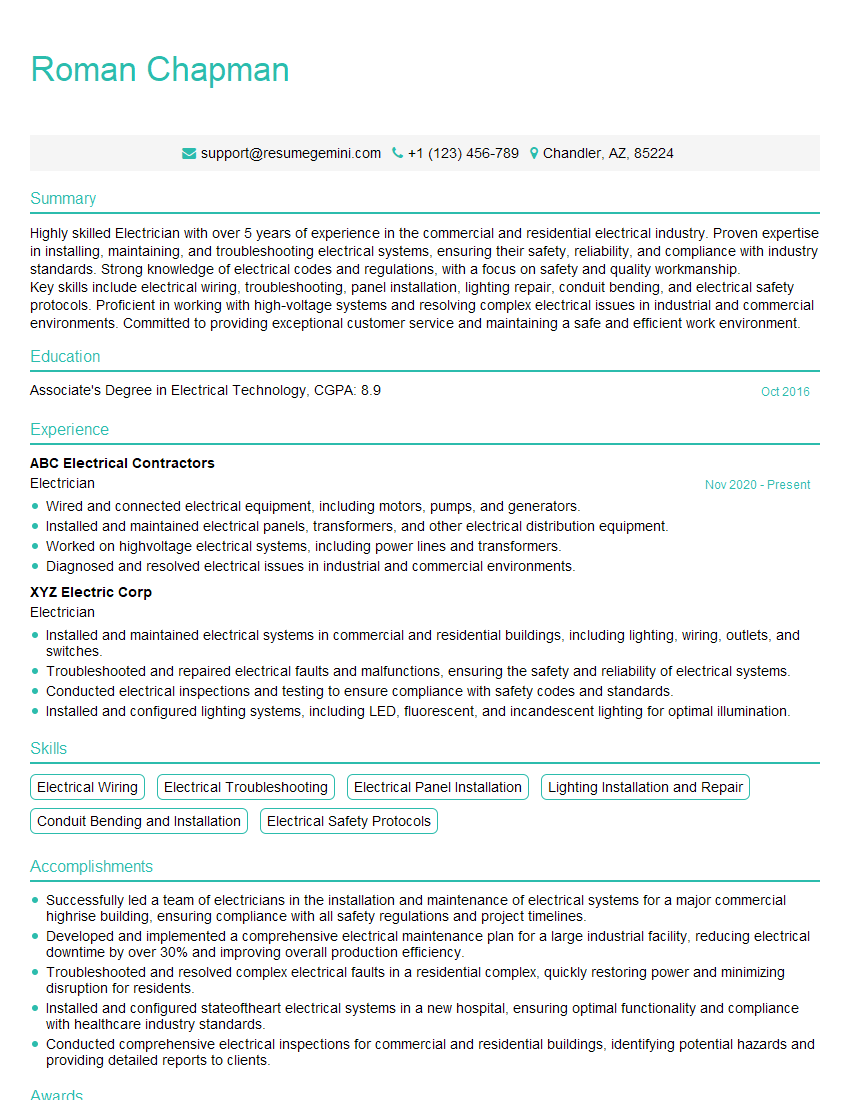
Electrician Resume Sample

Maintenance Electrician Resume Sample
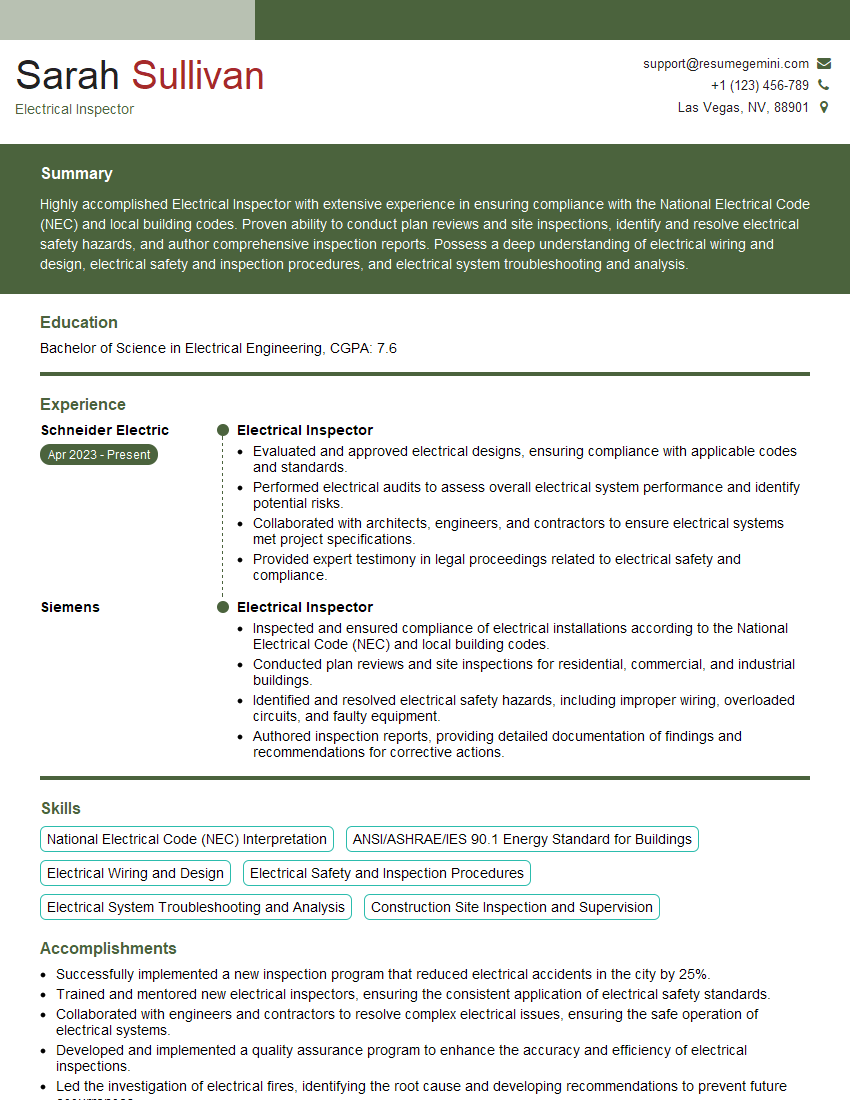
Electrical Inspector Resume Sample
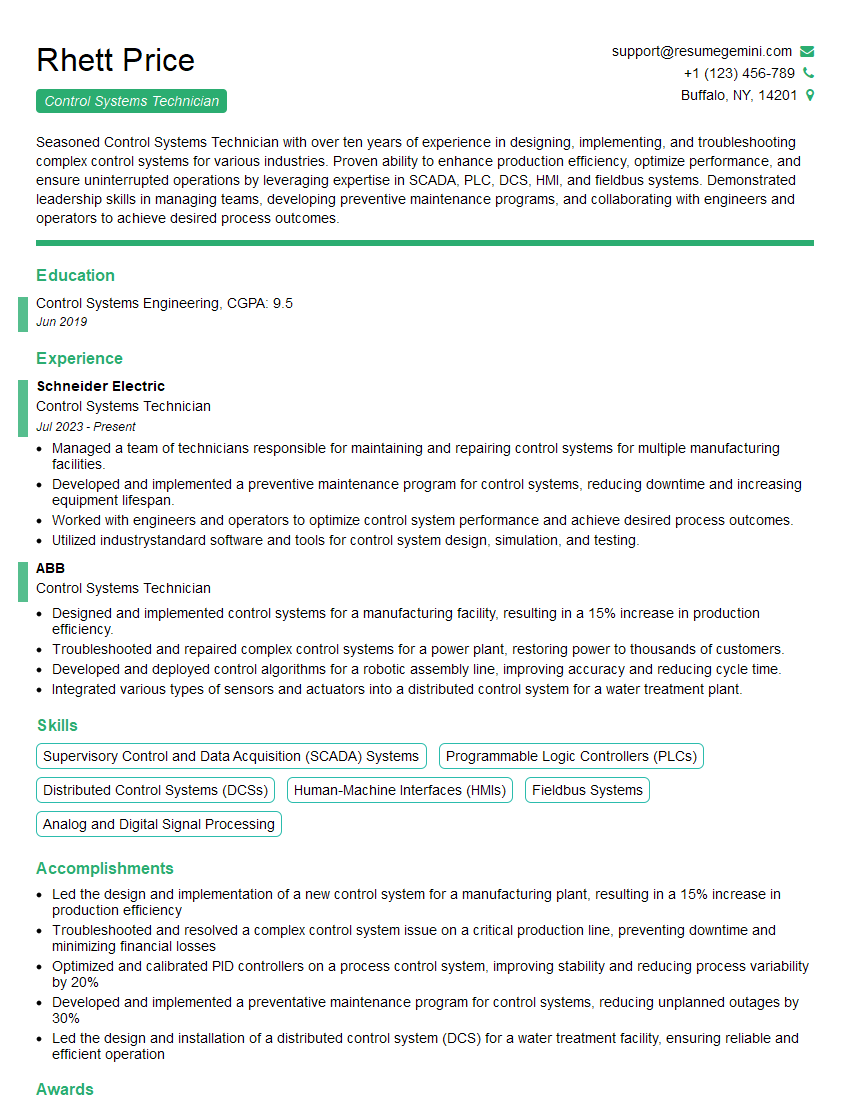
Control Systems Technician Resume Sample
Explore more articles
Users Rating of Our Blogs
Share Your Experience
We value your feedback! Please rate our content and share your thoughts (optional).
What Readers Say About Our Blog
To the interviewgemini.com Webmaster.
Very helpful and content specific questions to help prepare me for my interview!
Thank you
To the interviewgemini.com Webmaster.
This was kind of a unique content I found around the specialized skills. Very helpful questions and good detailed answers.
Very Helpful blog, thank you Interviewgemini team.