The right preparation can turn an interview into an opportunity to showcase your expertise. This guide to All Source Intelligence Analysis interview questions is your ultimate resource, providing key insights and tips to help you ace your responses and stand out as a top candidate.
Questions Asked in All Source Intelligence Analysis Interview
Q 1. Explain the process of all-source intelligence analysis.
All-source intelligence analysis is the process of integrating information from diverse sources to create a comprehensive understanding of a subject. Think of it like assembling a puzzle – each piece (source) contributes to the bigger picture (intelligence assessment). It’s not just about collecting data; it’s about analyzing, interpreting, and synthesizing information from various disciplines to develop actionable intelligence.
The process typically involves these key steps:
- Planning and Direction: Defining the intelligence requirement, specifying the scope, and identifying the relevant sources.
- Collection: Gathering data from human intelligence (HUMINT), signals intelligence (SIGINT), open-source intelligence (OSINT), geospatial intelligence (GEOINT), measurement and signature intelligence (MASINT), and other sources.
- Processing: Cleaning, organizing, and converting raw data into a usable format.
- Analysis & Production: Evaluating the reliability and credibility of sources, identifying patterns and trends, drawing inferences, and developing conclusions. This often involves using analytical tools and techniques to identify correlations and potential indicators.
- Dissemination: Communicating the finished intelligence product to the appropriate consumers in a clear and concise manner.
For example, analyzing the potential for a terrorist attack might involve analyzing HUMINT from informants, SIGINT intercepts, OSINT from social media, and GEOINT from satellite imagery, all brought together to create a comprehensive threat assessment.
Q 2. Describe the different intelligence disciplines and their contribution to all-source analysis.
Different intelligence disciplines provide unique perspectives and data sets crucial for comprehensive all-source analysis. They act as puzzle pieces, each revealing a different aspect of the whole.
- Human Intelligence (HUMINT): Information gathered from human sources, such as informants or spies. It provides insights into intentions, plans, and capabilities that are difficult to obtain through other means. Think of a double agent providing critical details about an enemy’s operation.
- Signals Intelligence (SIGINT): Intercepted communications, such as phone calls, emails, and radio transmissions. Provides real-time insights into ongoing activities and communications patterns. For example, detecting coded communications suggesting an impending cyberattack.
- Open-Source Intelligence (OSINT): Publicly available information from news articles, social media, and government documents. Provides context, background information, and helps corroborate intelligence from other sources. Example: using news reports and social media posts to verify reports of civil unrest.
- Geospatial Intelligence (GEOINT): Information derived from imagery, maps, and geographic data. Provides visual context and location data for analysis. Example: using satellite imagery to track troop movements.
- Measurement and Signature Intelligence (MASINT): Scientific and technical intelligence from various sources, such as acoustic, seismic, or electromagnetic data. This offers a unique perspective often unnoticed by other methods. Example: using seismic sensors to detect underground nuclear testing.
All-source analysis necessitates the integration of these varied perspectives to create a more holistic picture. For instance, combining HUMINT about a planned attack with SIGINT data on communication patterns and GEOINT imagery showing troop movement significantly improves the accuracy and timeliness of the intelligence product.
Q 3. How do you assess the credibility and reliability of various intelligence sources?
Assessing source credibility and reliability is paramount in all-source analysis. We use a multi-faceted approach, considering factors like:
- Source Track Record: Has the source provided accurate information in the past? How often are claims verifiable?
- Source Motivation: What are the source’s biases, agendas, or incentives for providing information? Is it self-serving or altruistic?
- Method of Collection: How was the information gathered? Was it direct observation, second-hand account, or hearsay? Direct observations generally carry more weight.
- Corroboration: Can the information be confirmed by other independent sources? Multiple independent sources supporting the same claim strengthens its credibility.
- Plausibility: Does the information make sense in the context of available intelligence and known facts?
Imagine receiving intelligence from a known unreliable source claiming a major political upheaval. We’d need to corroborate this with multiple independent sources, assess the source’s motivation, and check for supporting evidence before reaching any conclusions. A single unreliable source is rarely enough; corroboration is essential.
Q 4. Explain the concept of intelligence fusion and its importance in all-source analysis.
Intelligence fusion is the process of combining information from multiple intelligence sources and disciplines to develop a more complete and accurate understanding. It’s not merely combining data; it’s creating something greater than the sum of its parts. Think of it as a powerful synergy where individual insights converge into a clearer picture.
Its importance in all-source analysis is undeniable. Fusion helps:
- Reduce Uncertainty: By comparing and contrasting information from different sources, we can identify inconsistencies, assess reliability, and minimize uncertainty.
- Enhance Accuracy: Multiple sources can improve the accuracy of the intelligence product by corroborating facts and filling knowledge gaps.
- Improve Timeliness: Rapid fusion of real-time data from various sources can provide timely insights and facilitate quicker decision-making.
- Identify Patterns and Trends: Combining diverse data can reveal patterns and trends that would be invisible if the data were examined in isolation. It allows us to see the bigger picture.
For example, fusing HUMINT on a potential terrorist’s plans with SIGINT showing his communications, and GEOINT on his location can provide a comprehensive picture of the threat, allowing for more effective countermeasures.
Q 5. What are some common analytical biases and how can they be mitigated?
Analytical biases can significantly distort our judgment and lead to inaccurate conclusions. They are systematic errors in thinking that affect how we interpret and process information. Recognizing these biases is critical to objective analysis.
- Confirmation Bias: The tendency to favor information that confirms pre-existing beliefs while ignoring contradictory evidence.
- Mirror Imaging: Assuming that other actors think and act like we do.
- Availability Bias: Overestimating the likelihood of events that are easily recalled or readily available.
- Anchoring Bias: Over-relying on the first piece of information received, even if it’s inaccurate or irrelevant.
Mitigation strategies include:
- Structured Analytic Techniques: Employing methods like analysis of competing hypotheses (ACH) to systematically evaluate multiple explanations.
- Devil’s Advocacy: Purposefully challenging our own assessments and considering alternative explanations.
- Teamwork and Peer Review: Collaborating with colleagues with diverse perspectives to identify potential biases and blind spots.
- Seeking Disconfirming Evidence: Actively looking for evidence that contradicts our initial assessments.
For instance, if we believe a country is preparing for war based on military buildup, we should actively seek evidence that contradicts this— perhaps diplomatic initiatives or economic constraints that would hinder military action.
Q 6. How do you handle conflicting information from different sources?
Conflicting information is common in intelligence analysis. Instead of dismissing conflicting data, we view it as an opportunity to refine our understanding. The key is not to choose a side, but to understand the reasons behind the discrepancies.
Here’s how we handle it:
- Source Evaluation: Critically assess the credibility and reliability of each source involved. A more reliable source might hold more weight.
- Contextual Analysis: Consider the context in which the information was gathered. Different sources might be referring to different timeframes or aspects of the issue.
- Data Triangulation: Look for corroborating evidence from other sources to support one side or identify possible errors in either account.
- Analysis of Competing Hypotheses (ACH): A structured approach to systematically evaluate different interpretations of the conflicting data.
- Qualitative Assessment: Consider the overall weight of evidence, considering the reliability of individual pieces of information.
Example: One source reports a planned attack on a specific date, while another source indicates a delay. We’d examine the sources’ credibility, look for evidence supporting either claim, and consider alternative scenarios to create a balanced and nuanced assessment.
Q 7. Describe your experience using intelligence analytic tools and technologies.
Throughout my career, I’ve extensively utilized various intelligence analytic tools and technologies to enhance the efficiency and accuracy of my analysis. These tools aren’t just about speed; they allow for deeper analysis and the identification of patterns that would be impossible to spot manually.
My experience includes:
- Link Analysis Software: Tools like Analyst’s Notebook and i2 Analyst’s Notebook allow me to visualize relationships between entities, events, and locations, revealing hidden connections within complex datasets.
- Geospatial Intelligence (GEOINT) Software: ArcGIS and other geographic information systems (GIS) allow for the analysis and integration of various forms of geospatial data, like satellite imagery, maps, and GPS coordinates.
- Data Mining and Machine Learning Tools: Techniques like natural language processing (NLP) and machine learning algorithms help sift through large datasets, identify patterns, and predict future events.
- Database Management Systems: I am proficient in managing and querying relational databases to efficiently retrieve and analyze intelligence data.
- Collaboration Platforms: Secure communication and collaboration platforms allow effective teamwork and sharing of information among analysts.
For example, using link analysis software, I identified a previously unknown connection between several seemingly unrelated individuals, leading to a breakthrough in an ongoing investigation. The use of advanced tools isn’t about replacing human intelligence but augmenting its capacity to make sense of increasingly complex data sets.
Q 8. How do you prioritize and manage competing intelligence requirements?
Prioritizing competing intelligence requirements is a crucial skill in all-source intelligence analysis. It’s like juggling multiple balls – each representing a critical need for information. We use a structured approach that involves several key steps:
- Prioritization Matrix: We use a matrix that considers factors like urgency, impact, feasibility, and available resources. Urgency reflects how quickly the information is needed; impact assesses the potential consequences of not having the information; feasibility examines the likelihood of successfully obtaining the intelligence; and resources encompass manpower, budget, and time constraints. Each factor is rated (e.g., high, medium, low), and a weighted score determines the priority.
- Stakeholder Consultation: We engage with various stakeholders – policymakers, commanders, analysts – to understand their specific information needs and align them with our capabilities. This collaborative process clarifies which intelligence requirements are most critical.
- Time Management and Resource Allocation: Once priorities are established, we meticulously allocate time and resources accordingly. This might involve creating dedicated teams for specific high-priority requirements or employing advanced analytic techniques to maximize efficiency. For example, we might use automated tools to process vast amounts of open-source data to quickly identify key trends.
- Continuous Re-evaluation: The intelligence landscape is dynamic. We continuously monitor the situation, reassess priorities, and adjust resource allocation as needed. New information or shifts in the operational environment can necessitate a change in focus.
For example, imagine a scenario where we have competing requirements: one for immediate threat assessment concerning a potential terrorist attack (high urgency, high impact), and another concerning long-term economic trends in a specific region (low urgency, medium impact). Our prioritization matrix would clearly favor the immediate threat assessment, dedicating resources to quickly gather and analyze relevant information.
Q 9. How do you develop and present intelligence products to different audiences?
Tailoring intelligence products to different audiences is paramount. A highly technical report for senior analysts won’t be effective for a military commander needing a concise action plan. We employ various techniques to ensure clear and effective communication:
- Audience Analysis: Before creating any product, we carefully consider our audience’s knowledge level, interests, and needs. What specific information are they seeking? What is their level of technical expertise?
- Product Format: We use different formats, including briefings, reports, maps, and visualizations, depending on the audience and the nature of the intelligence. For example, a senior policymaker might prefer a concise summary with key recommendations, while a tactical unit might need a detailed map highlighting potential enemy positions.
- Clarity and Conciseness: We prioritize clear and concise language, avoiding jargon and technical terms whenever possible. We use visuals such as charts and graphs to enhance understanding and highlight key findings.
- Feedback Mechanism: We incorporate a feedback mechanism to receive input from our audience, enabling us to refine our products and improve communication effectiveness in future iterations.
For instance, a report on a specific cyber threat might include a technical appendix with detailed analysis for specialists while the main body provides a summary of the threat and recommended mitigation strategies for executives.
Q 10. Explain the importance of chain of custody in handling intelligence information.
Chain of custody in intelligence handling is critical for ensuring the integrity and admissibility of information. It’s a meticulous documentation trail that proves the authenticity and reliability of intelligence, preventing tampering or alteration. Imagine a crucial piece of evidence – a photograph, an intercepted communication, or a physical artifact. Maintaining its chain of custody is vital.
- Documentation: Every transfer of intelligence material must be meticulously documented, including the date, time, individuals involved, and the reason for transfer. Digital records often have timestamps and metadata that help track modifications.
- Secure Handling: The intelligence must be handled securely to prevent unauthorized access, modification, or destruction. This might involve secure storage facilities, encryption techniques, and controlled access protocols.
- Verification and Authentication: Procedures for verifying the authenticity and integrity of the intelligence are vital. This could involve digital signatures, cryptographic hashing, or witness testimonies.
- Auditing: Regular audits of the chain of custody procedures help ensure their effectiveness and adherence to best practices.
Breaches in chain of custody can significantly compromise the credibility of intelligence and even render it inadmissible in legal proceedings. A missing link or unexplained transfer can cast doubt on the integrity of the entire intelligence product.
Q 11. What is the difference between strategic, operational, and tactical intelligence?
Strategic, operational, and tactical intelligence differ primarily in their scope, time horizon, and intended use. Think of it like a military operation: strategic intelligence informs the overall campaign, operational intelligence guides the major battles, and tactical intelligence directs individual engagements.
- Strategic Intelligence: This focuses on long-term issues and broad trends. It informs high-level decision-making, setting the overall direction and strategy. For example, analyzing the long-term economic and political stability of a specific nation.
- Operational Intelligence: This bridges the gap between strategic goals and tactical execution. It supports planning and conducting specific operations or campaigns. For instance, assessing the capabilities and intentions of an opposing force prior to a military operation.
- Tactical Intelligence: This is immediate and focused on specific, short-term actions. It directly supports the execution of specific tasks or missions. This might include real-time surveillance data used to guide a counter-terrorism raid.
These levels are interconnected. Tactical success directly contributes to operational achievements, which in turn support the overarching strategic objectives.
Q 12. How do you evaluate the validity of open-source intelligence (OSINT)?
Evaluating OSINT requires a critical and methodical approach. It’s not just about finding information; it’s about assessing its reliability and relevance. We apply a multi-faceted approach:
- Source Assessment: We assess the credibility and bias of the source. Is it a reputable news organization, a government agency, a personal blog, or social media post? Each source has its own level of reliability. We look for evidence of editorial oversight, fact-checking, and transparency.
- Triangulation: We corroborate information from multiple independent sources. If several sources report the same information, it increases the likelihood of its accuracy. However, finding consistent information across diverse sources does not guarantee accuracy.
- Contextual Analysis: We analyze the information within its broader context. What is the surrounding narrative? Are there any potential biases or agendas? We use background knowledge and other intelligence sources to validate information.
- Data Verification: When possible, we verify the information through other means. This might involve cross-referencing data with official records, conducting interviews, or using geospatial tools to validate locations.
For example, if we find information about a specific event on social media, we wouldn’t solely rely on that source. We’d cross-reference it with mainstream news articles, official government statements, and potentially even satellite imagery to confirm its accuracy and get a clearer picture of what really happened.
Q 13. Describe your experience with geospatial intelligence (GEOINT) analysis.
GEOINT analysis is a cornerstone of my work. I have extensive experience using geospatial data (satellite imagery, aerial photography, maps, etc.) to understand the physical world and its relation to intelligence issues. My experience includes:
- Image Interpretation: I can analyze satellite imagery and aerial photos to identify buildings, infrastructure, vehicles, and other features. I am proficient in using various software tools to enhance image quality, measure distances, and identify patterns.
- Geospatial Data Integration: I can integrate GEOINT with other intelligence sources, such as HUMINT and SIGINT, to create a more comprehensive understanding of the situation. For example, using satellite imagery to corroborate information from a human source about the location of a specific facility.
- Change Detection Analysis: I can track changes over time using a series of images to identify new construction, movement of troops, or other significant events. This allows for early warning of potential threats or changes in the operational environment.
- 3D Modeling and Visualization: I’m skilled in using software to create 3D models of areas of interest, enhancing the understanding of terrain, infrastructure, and potential vulnerabilities.
In one particular project, I used high-resolution satellite imagery to identify and track the construction of a new military facility in a region of geopolitical significance. By analyzing the images over several months, we were able to estimate the completion date of the facility and assess its potential capabilities.
Q 14. How do you incorporate human intelligence (HUMINT) into your analysis?
HUMINT is often the most valuable, but also the most challenging, type of intelligence to collect and analyze. Incorporating HUMINT requires careful consideration of source reliability and validation techniques:
- Source Evaluation: We assess the reliability and motivations of human sources. This involves considering their background, access to information, potential biases, and overall credibility. We use various techniques, like interviewing multiple sources, corroborating information from different channels, and analyzing their past performance.
- Information Corroboration: We corroborate HUMINT with other intelligence sources, such as OSINT, SIGINT, or GEOINT, to verify the accuracy of the information received. Multiple sources providing similar information increase confidence in the assessment.
- Handling Sensitive Information: We follow strict protocols for handling sensitive HUMINT, prioritizing security and confidentiality. This involves using secure communication channels, adhering to strict access control measures, and protecting the identities of sources.
- Bias Mitigation: We recognize and account for potential biases in the information received from human sources. Understanding the motivations and personal interests of the source is essential to interpreting the information accurately.
In a particular case, a human source provided information about an upcoming terrorist attack. We validated this information through other sources, including SIGINT intercepts and analysis of social media activity. The convergence of information from multiple sources led to the successful prevention of the attack.
Q 15. What is your understanding of signals intelligence (SIGINT) and its applications?
Signals Intelligence (SIGINT) is the intelligence-gathering discipline that focuses on collecting information from electronic signals. This encompasses a broad range of activities, from intercepting and analyzing communications (like phone calls, emails, and radio transmissions) to exploiting electronic emissions from radar systems or other electronic devices. Think of it as listening in on conversations and interpreting the signals themselves to gain insight.
SIGINT applications are incredibly diverse. In a military context, it can be crucial for identifying enemy troop movements, anticipating attacks, and disrupting communications. In the cybersecurity world, SIGINT techniques are used to detect and respond to cyber threats. Law enforcement agencies employ SIGINT to investigate crimes, and intelligence agencies use it to track terrorist activity and gather foreign intelligence. For example, during wartime, intercepting enemy radio transmissions could provide real-time information on their battle plans, allowing for a strategic advantage.
- Communications Intelligence (COMINT): Intercepting and analyzing communications, such as phone calls and emails.
- Electronic Intelligence (ELINT): Intercepting and analyzing non-communications electronic signals, such as radar.
- Foreign Instrumentation Signals Intelligence (FISINT): Intercepting and analyzing signals from foreign systems, like satellites.
Career Expert Tips:
- Ace those interviews! Prepare effectively by reviewing the Top 50 Most Common Interview Questions on ResumeGemini.
- Navigate your job search with confidence! Explore a wide range of Career Tips on ResumeGemini. Learn about common challenges and recommendations to overcome them.
- Craft the perfect resume! Master the Art of Resume Writing with ResumeGemini’s guide. Showcase your unique qualifications and achievements effectively.
- Don’t miss out on holiday savings! Build your dream resume with ResumeGemini’s ATS optimized templates.
Q 16. How do you conduct competitive analysis within the intelligence field?
Competitive analysis in intelligence is about understanding the capabilities, intentions, and methods of other intelligence agencies or organizations, whether they’re adversaries, competitors, or even allies. It’s a crucial aspect of maintaining a strategic edge. The process typically involves multiple steps:
- Identifying Competitors/Adversaries: Determining who the key players are in a specific intelligence domain.
- Information Gathering: Collecting data about their activities, capabilities, and techniques – through open sources, HUMINT (Human Intelligence), SIGINT, OSINT (Open Source Intelligence), and other methods.
- Capability Assessment: Evaluating their strengths, weaknesses, resources, and technical expertise.
- Intention Analysis: Determining their goals and objectives, and the likely methods they will employ to achieve them.
- Vulnerability Assessment: Identifying potential weaknesses in their operations and security posture.
- Comparative Analysis: Comparing their capabilities and approaches to your own, identifying gaps and opportunities.
- Report Generation: Summarizing findings and generating actionable intelligence to inform decision-making.
Imagine a scenario where two intelligence agencies are trying to gather information about a particular terrorist group. Competitive analysis would allow Agency A to understand Agency B’s methods, allowing them to either collaborate, adapt their own strategies, or even identify vulnerabilities in Agency B’s approach.
Q 17. Explain your approach to threat assessment and risk analysis.
Threat assessment and risk analysis are intertwined processes crucial for informing decision-making. My approach follows a structured methodology:
- Identify Threats: This includes identifying potential adversaries, their capabilities, and their motivations. For example, identifying a specific terrorist group as a potential threat to a nation’s infrastructure.
- Analyze Vulnerabilities: Evaluating weaknesses in systems, processes, or infrastructure that could be exploited by threats. For example, determining if the nation’s power grid is vulnerable to cyberattacks.
- Assess Risk: Combining threat and vulnerability information to determine the likelihood and potential impact of various scenarios. This would involve determining the probability of a successful terrorist attack on the power grid and the resulting damage.
- Develop Mitigation Strategies: Proposing measures to reduce or eliminate vulnerabilities and lessen the potential impact of threats. This could include implementing enhanced cybersecurity measures for the power grid.
- Monitor and Evaluate: Regularly monitoring the threat landscape and evaluating the effectiveness of mitigation strategies. This is ongoing, adapting responses as necessary.
The goal is not just to identify threats, but to understand the likelihood of those threats materializing and the potential consequences, thereby allowing for proactive and informed decision-making.
Q 18. How do you ensure the security and confidentiality of sensitive intelligence information?
Ensuring the security and confidentiality of sensitive intelligence information is paramount. It requires a multi-layered approach:
- Classification and Handling Procedures: Strict adherence to classification guidelines (e.g., Top Secret, Secret, Confidential) and the implementation of detailed handling procedures to control access to classified information.
- Secure Communication Channels: Utilizing encrypted channels for the transmission of sensitive data, both electronically and physically.
- Access Control: Implementing robust access control systems – only authorized individuals with a need-to-know should have access.
- Data Encryption: Encrypting data both at rest and in transit to protect it from unauthorized access, even if systems are compromised.
- Physical Security: Implementing physical security measures, such as secured facilities, access control systems, and surveillance.
- Personnel Security: Conducting thorough background checks and security clearances for all personnel who handle sensitive information, as well as regular security awareness training.
- Data Loss Prevention (DLP) Measures: Utilizing DLP tools to prevent sensitive information from leaving controlled environments.
Think of it as building a fortress around the information – multiple layers of protection working together to prevent unauthorized access or disclosure. Failure to protect this information could have severe national security implications.
Q 19. Describe a time you had to make a critical decision based on incomplete intelligence.
During an investigation into a potential terrorist plot, we were faced with incomplete intelligence on the specific target and the timing of the attack. We had intercepted fragmented communications indicating a potential attack in a major city but lacked crucial details. The decision to alert the city authorities and increase security measures – even with the risk of causing public panic based on partial information – was critical. We weighed the potential consequences of inaction (a successful attack) against the potential downsides of premature action (causing undue alarm). It was a difficult call, but we determined that the potential for a successful attack, based on what we did know, outweighed the risks associated with limited information. The outcome justified the decision, as the heightened security measures ultimately helped thwart the planned attack.
This experience highlighted the necessity of making timely decisions even with imperfect information. It also underscored the importance of clearly communicating the uncertainty and limitations of the intelligence to stakeholders.
Q 20. How do you deal with pressure and tight deadlines in an intelligence environment?
The intelligence environment often involves high-pressure situations and tight deadlines. My approach involves:
- Prioritization: Focusing on the most critical tasks and delegating where appropriate.
- Time Management: Using efficient time management techniques, such as breaking down large tasks into smaller, manageable components.
- Effective Teamwork: Collaborating with colleagues to share the workload and leverage individual strengths.
- Stress Management: Employing stress-reducing techniques, such as mindfulness and regular exercise, to maintain focus and clarity.
- Clear Communication: Maintaining open and transparent communication with stakeholders to manage expectations.
Think of it like a fire drill – you need to act quickly, efficiently, and coordinate with your team to ensure the best possible outcome. Practice and a calm, controlled approach are vital.
Q 21. How do you collaborate effectively with analysts from different disciplines?
Effective collaboration with analysts from different disciplines is essential in All-Source Intelligence. My approach centers on:
- Open Communication: Fostering open communication and a shared understanding of the overall objective.
- Respect for Expertise: Valuing the unique perspectives and expertise of analysts from different backgrounds.
- Data Sharing: Establishing clear protocols for the sharing and management of data across different disciplines.
- Joint Analysis: Regularly engaging in joint analysis sessions to integrate findings from various intelligence sources.
- Conflict Resolution: Developing strategies for resolving conflicts and disagreements effectively.
- Shared Tools and Technologies: Utilizing shared platforms and tools to facilitate collaboration and data exchange.
Imagine a jigsaw puzzle – each analyst brings a piece to the table, but it takes all the pieces and collaborative effort to get the full picture. Clear communication, mutual respect, and shared tools are fundamental to putting that puzzle together.
Q 22. What are some ethical considerations in intelligence analysis?
Ethical considerations in intelligence analysis are paramount. They guide our actions to ensure we uphold the highest standards of integrity and legality. These considerations revolve around several key areas:
- Privacy: We must meticulously protect the privacy of individuals whose information we collect and analyze. This includes adhering to laws like the Privacy Act and ensuring data is handled responsibly and securely.
- Targeting: We need to ensure that our intelligence efforts are focused on legitimate targets and avoid disproportionate impacts on innocent civilians. Any targeting must align with international law and human rights standards.
- Accuracy and Objectivity: We are obligated to conduct thorough and unbiased analysis. This includes avoiding confirmation bias and actively seeking out diverse perspectives to challenge our assumptions. Presenting only selected facts or manipulating data to support a predetermined conclusion is unethical.
- Transparency and Accountability: Transparency, where possible, and accountability for our actions are critical. This means being open about the methods used and ensuring there’s a mechanism for oversight and redress of grievances.
- Dissemination: The way we disseminate intelligence must also be considered. We need to be careful not to create panic or misinform the public, and our findings should be shared appropriately, keeping in mind the potential for misuse.
For example, during a counterterrorism investigation, we may uncover information about an individual’s associates. Ethically, we must only use that information for the investigation’s purpose, and we must carefully consider the potential impact on their privacy and rights. We cannot simply release information publicly without adhering to proper legal processes and ethical considerations.
Q 23. How do you stay current with the latest developments in the intelligence field?
Staying current in the intelligence field is a continuous process. It’s crucial for maintaining expertise and relevance. I employ several strategies:
- Professional Journals and Publications: I regularly read publications like Studies in Intelligence, Foreign Affairs, and other specialized journals to remain abreast of the latest research and analysis.
- Conferences and Workshops: Attending industry conferences and workshops provides invaluable opportunities for networking and learning from experts in the field. These events often feature cutting-edge research presentations and panel discussions.
- Online Resources and Databases: I leverage online resources, including government websites, think tanks, and academic databases, to access the latest reports, data, and analysis.
- Open-Source Intelligence (OSINT) Monitoring: I actively monitor social media, news sources, and other open sources to track emerging trends and events. This includes advanced search techniques to quickly identify relevant information.
- Professional Development: I continuously invest in my professional development through online courses, workshops, and attending specialized training sessions focused on emerging intelligence technologies and analytical techniques.
For instance, advancements in machine learning and artificial intelligence are constantly reshaping intelligence analysis, and I make sure to dedicate time to understanding and applying these innovations responsibly.
Q 24. Describe your experience with data analysis and visualization techniques.
My experience in data analysis and visualization is extensive. I’m proficient in using a variety of software and techniques to process, analyze, and present intelligence data effectively. This includes:
- Statistical Software: I am highly skilled in using statistical software packages such as R and SPSS to perform complex statistical analyses, identify patterns and trends within large datasets, and create visualizations to illustrate these findings.
- Data Visualization Tools: I utilize tools like Tableau and Power BI to create interactive dashboards and reports that make complex data more accessible and understandable for a variety of audiences. This includes creating maps, charts, and graphs to illustrate key findings.
- Data Mining and Machine Learning Techniques: I leverage machine learning algorithms to identify anomalies, predict future events, and uncover hidden patterns in large datasets. I apply appropriate techniques like clustering, classification, and regression analysis where needed.
- Programming Languages: My proficiency in Python and SQL allows me to perform data manipulation, cleaning, and analysis directly on large datasets. I’m comfortable writing scripts to automate tasks and create custom data processing pipelines.
For example, in a recent project, I used network analysis techniques to visualize the relationships within a terrorist organization, uncovering key figures and communication patterns that were previously unknown.
Q 25. How familiar are you with different intelligence reporting formats?
I am very familiar with a range of intelligence reporting formats. The choice of format depends heavily on the audience and the purpose of the report. Here are a few examples:
- Executive Summaries: Concise reports focusing on the key findings and recommendations for senior leadership. These require brevity and clarity.
- Detailed Analytical Reports: These provide a comprehensive analysis, including supporting evidence, methodology, and detailed conclusions. They are often used for internal audiences or for sharing detailed findings.
- Situation Reports (SITREPS): These time-sensitive reports provide up-to-the-minute updates on a specific situation, usually focusing on developing events. They are concise and focused on immediately relevant facts.
- Intelligence Assessments: These reports evaluate the likelihood of future events based on available evidence and provide insights into potential risks and opportunities. They emphasize probability assessments.
- Briefings: These can be oral or written and are tailored to a specific audience and their needs. They often employ various visual aids to enhance understanding.
I adapt my reporting style to best meet the requirements of the specific audience and the intended use of the information. A report for a military commander will differ significantly from one for a diplomatic audience.
Q 26. Explain your understanding of intelligence cycle and its key phases.
The intelligence cycle is a continuous process used to collect, analyze, and disseminate intelligence information. It consists of several key phases:
- Planning and Direction: This initial phase involves identifying intelligence requirements, prioritizing objectives, and allocating resources. It’s about understanding what intelligence is needed and why.
- Collection: This involves gathering raw intelligence data from various sources, both human and technical, such as HUMINT (Human Intelligence), SIGINT (Signals Intelligence), IMINT (Imagery Intelligence), and OSINT (Open Source Intelligence). This phase is about acquiring the raw materials for analysis.
- Processing: This step involves converting raw data into usable intelligence. This includes translating languages, deciphering codes, and cleaning or organizing large datasets.
- Analysis and Production: This phase is where the raw data is analyzed, interpreted, and turned into useful intelligence products, such as reports and briefings. This step involves critical thinking and the application of analytical techniques.
- Dissemination: This critical phase involves distributing the finished intelligence products to the appropriate consumers, such as policymakers, military commanders, or other intelligence agencies. This ensures that the intelligence reaches those who need it when they need it.
- Feedback: The cycle is completed with feedback from the consumers of the intelligence. This feedback is then used to refine the intelligence process and improve future collection and analysis efforts.
Think of it like a manufacturing process: you start with raw materials (collection), process them (processing), transform them into a finished product (analysis), and distribute them to consumers (dissemination). Feedback helps improve the entire process.
Q 27. How do you ensure the accuracy and objectivity of your analysis?
Ensuring the accuracy and objectivity of my analysis is crucial and a constant focus. I employ several strategies to mitigate bias and enhance the reliability of my conclusions:
- Multiple Source Corroboration: I rely on multiple sources of information to verify the accuracy of findings. Information from a single source should always be treated with caution.
- Bias Awareness and Mitigation: I am acutely aware of my own biases and actively work to mitigate their influence on my analysis. This includes seeking out diverse perspectives and challenging my own assumptions.
- Structured Analytical Techniques: Employing structured analytical techniques such as analysis of competing hypotheses (ACH) and red teaming helps challenge assumptions and ensure a more objective perspective.
- Peer Review: I regularly submit my work for peer review by other analysts to get feedback and identify potential flaws in my reasoning or methodology. This ensures objectivity and identifies blind spots.
- Data Validation and Quality Control: I rigorously check the quality and accuracy of my data sources to avoid misleading conclusions. This includes thoroughly examining the provenance and reliability of data before using it in my analysis.
For example, when analyzing reports from different sources about an upcoming political event, I wouldn’t simply accept all information at face value. Instead, I would compare claims, identify contradictions, and cross-reference information to confirm the accuracy and develop a complete, objective picture.
Q 28. Describe your experience with intelligence community directives and regulations.
I possess a thorough understanding of and extensive experience working within the constraints and guidelines of intelligence community directives and regulations. This includes:
- National Security Directives: I am familiar with Presidential directives and national security policies that guide intelligence operations. This includes understanding the legal and ethical parameters of intelligence gathering and analysis.
- Intelligence Community Directives (ICDs): I have practical experience working within the framework of various ICDs that outline procedures, regulations, and standards related to intelligence gathering, analysis, and dissemination. These directives cover everything from data handling to reporting standards.
- Classification and Handling of Sensitive Information: I am highly trained in handling classified information appropriately, adhering to strict security protocols, and maintaining the confidentiality of sensitive data. My experience encompasses working with various classification levels and secure systems.
- Privacy Laws and Regulations: My work consistently considers and adheres to relevant privacy laws and regulations (e.g., the Privacy Act) to ensure the ethical and legal handling of personal information.
- Legal and Ethical Constraints: I am intimately aware of the legal and ethical boundaries surrounding intelligence collection and analysis. This knowledge informs my analytical work and decision-making processes to prevent any transgression.
My practical experience in navigating these guidelines ensures my work meets the highest standards of legality, ethics, and security. This includes a thorough understanding of the penalties associated with violating these rules.
Key Topics to Learn for All Source Intelligence Analysis Interview
- Data Collection & Integration: Understanding diverse data sources (open source, HUMINT, SIGINT, etc.), methods for data acquisition, and techniques for integrating disparate information types.
- Data Analysis & Interpretation: Applying analytical frameworks (e.g., OSINT framework, competitive intelligence framework) to interpret data, identify patterns, and draw meaningful conclusions. Practical application: Analyzing social media trends to predict potential threats.
- Intelligence Lifecycle: A solid understanding of the entire intelligence cycle, from planning and collection to analysis, dissemination, and evaluation. Focus on your role within each stage.
- Critical Thinking & Problem Solving: Demonstrating skills in evaluating information credibility, identifying biases, and forming well-supported conclusions under pressure. Example: Assessing the validity of conflicting reports from multiple sources.
- Geopolitical Awareness: Displaying knowledge of current events, regional conflicts, and global power dynamics to contextualize intelligence findings. Practice analyzing international news to understand potential implications.
- Technology & Tools: Familiarity with relevant software and technologies used in intelligence analysis (e.g., data visualization tools, analytic platforms). Highlight any experience with such tools.
- Communication & Reporting: Mastering clear and concise communication of complex information to diverse audiences through written and verbal reports and briefings.
- Ethical Considerations: Understanding and adhering to ethical guidelines and legal frameworks in intelligence gathering and analysis.
Next Steps
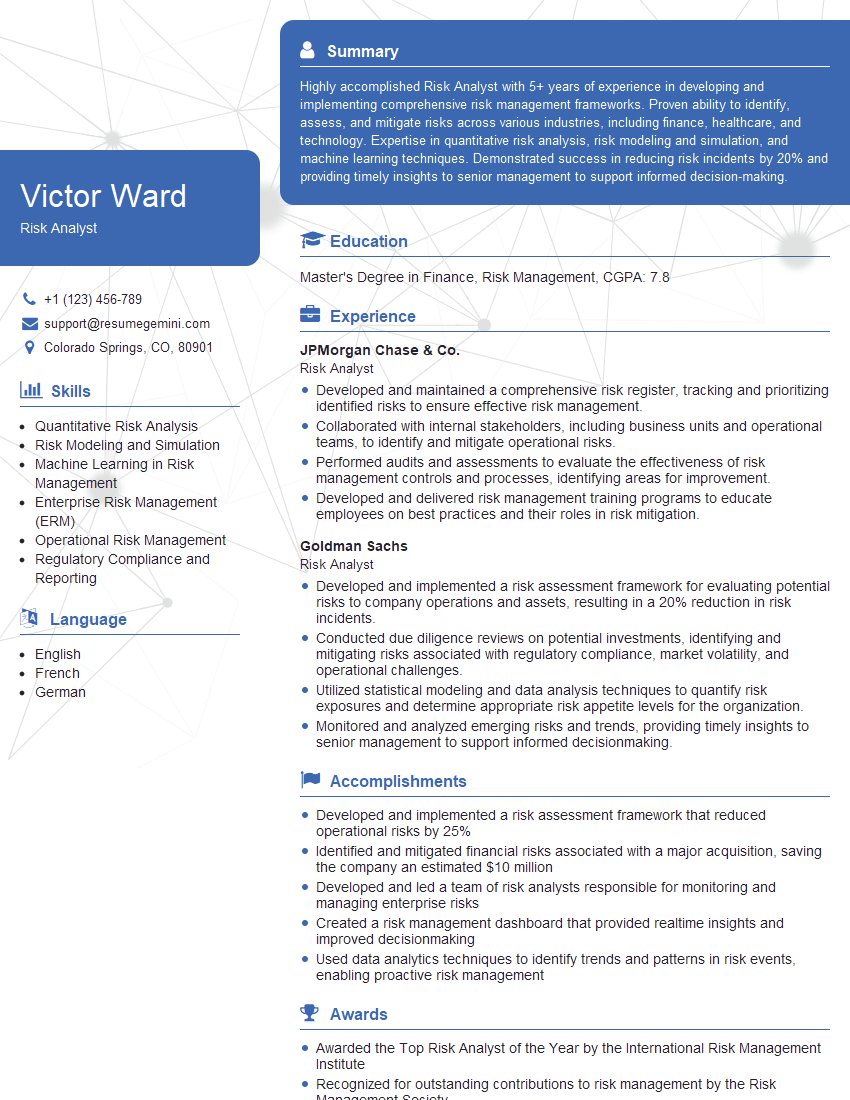
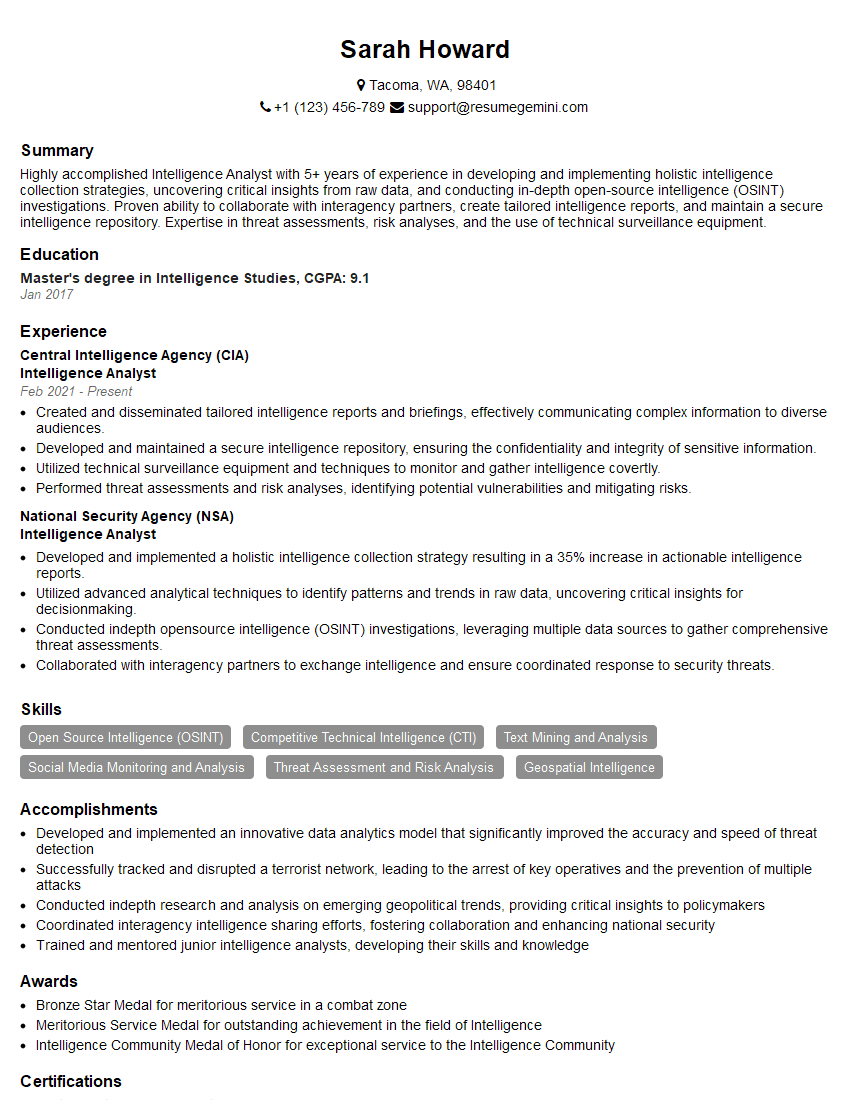
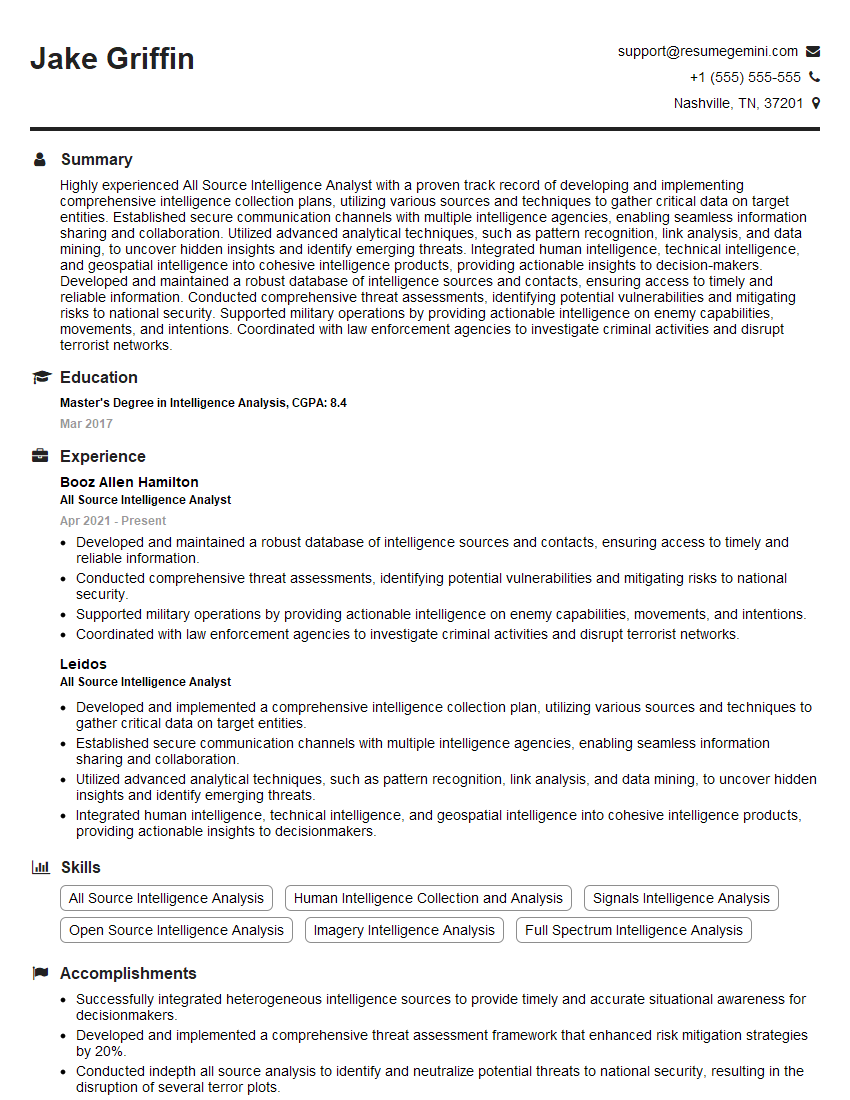
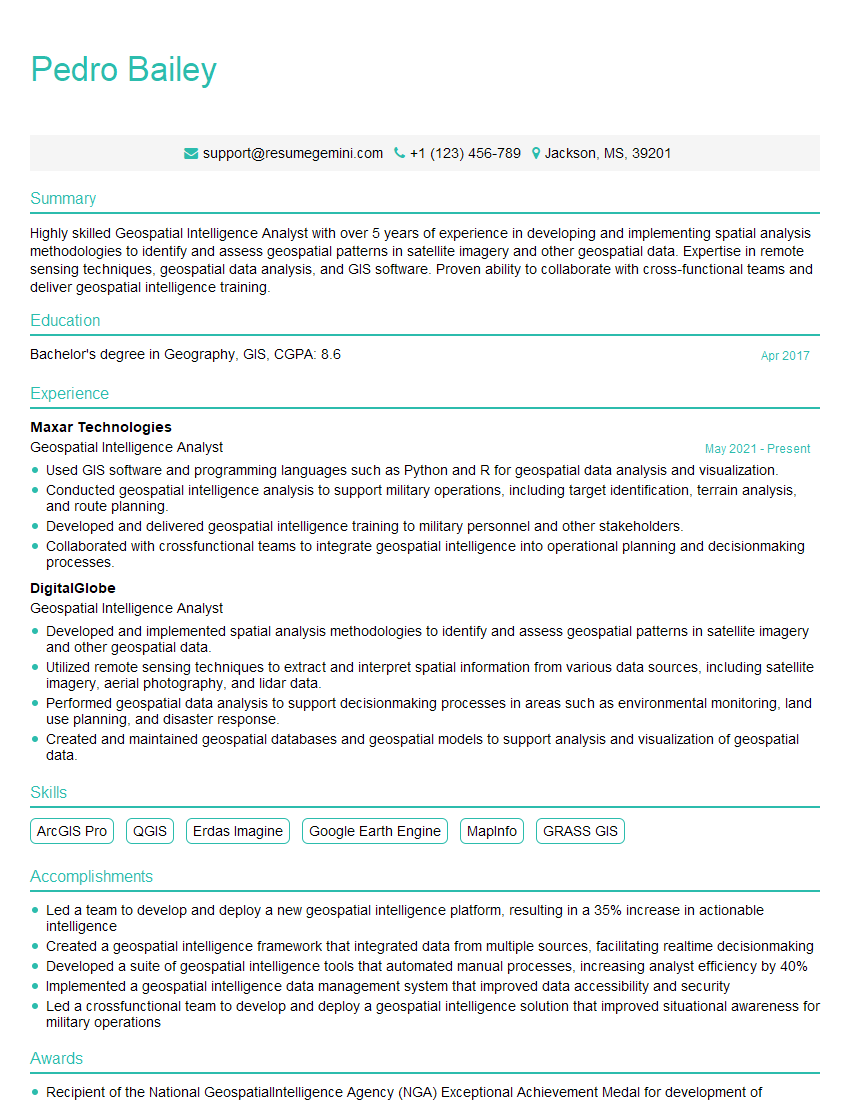
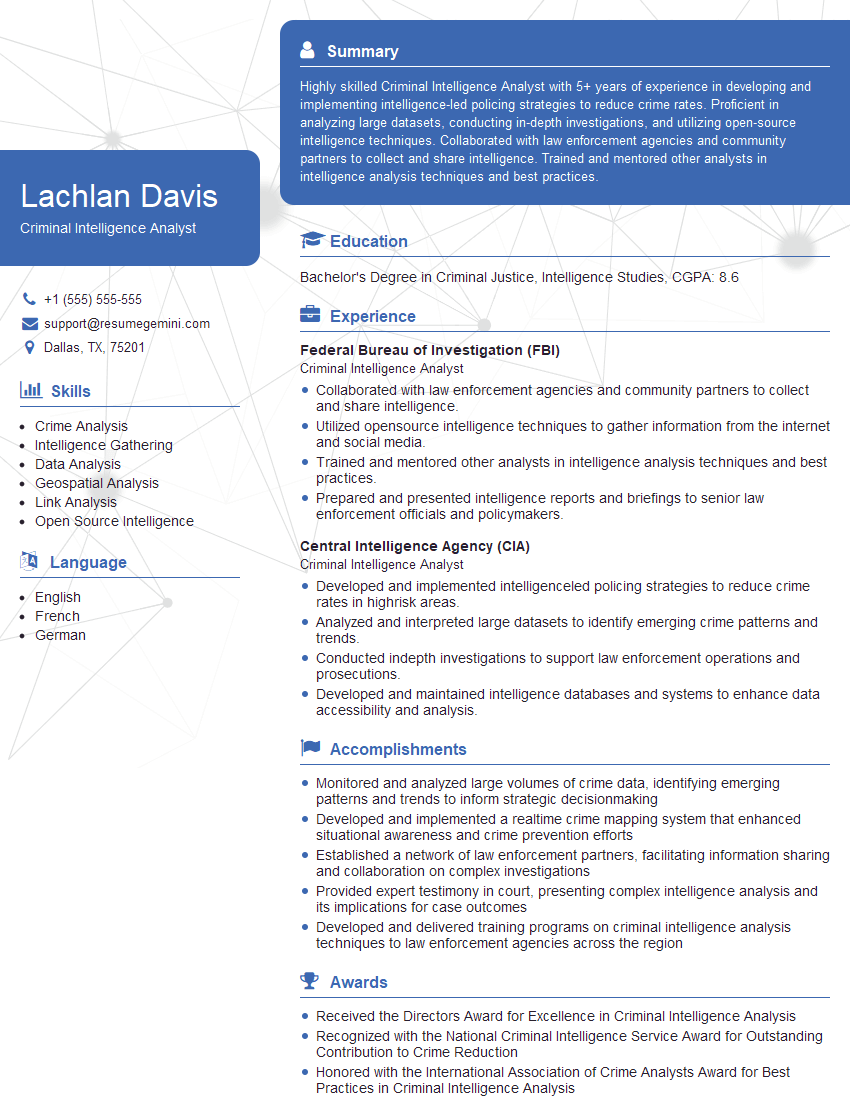
Mastering All Source Intelligence Analysis opens doors to exciting and impactful careers, offering opportunities for continuous learning and professional growth within the intelligence community and related fields. To significantly boost your job prospects, create an ATS-friendly resume that highlights your skills and experience effectively. ResumeGemini is a trusted resource to help you build a professional resume that catches the eye of recruiters. We provide examples of resumes tailored to All Source Intelligence Analysis to guide you in showcasing your unique qualifications.
Explore more articles
Users Rating of Our Blogs
Share Your Experience
We value your feedback! Please rate our content and share your thoughts (optional).
What Readers Say About Our Blog
To the interviewgemini.com Webmaster.
Very helpful and content specific questions to help prepare me for my interview!
Thank you
To the interviewgemini.com Webmaster.
This was kind of a unique content I found around the specialized skills. Very helpful questions and good detailed answers.
Very Helpful blog, thank you Interviewgemini team.