The right preparation can turn an interview into an opportunity to showcase your expertise. This guide to Health Analytics interview questions is your ultimate resource, providing key insights and tips to help you ace your responses and stand out as a top candidate.
Questions Asked in Health Analytics Interview
Q 1. Explain the difference between descriptive, predictive, and prescriptive analytics in healthcare.
In healthcare analytics, we use three main types of analytics: descriptive, predictive, and prescriptive. Think of them as a progression – starting with understanding the past, then predicting the future, and finally, recommending actions.
- Descriptive Analytics: This is all about summarizing what has already happened. We use historical data to understand patterns and trends. For example, we might analyze hospital readmission rates to see which patient demographics are most at risk. This involves calculating statistics like averages, percentages, and creating visualizations like bar charts and pie charts to easily communicate these findings.
- Predictive Analytics: This moves beyond summarizing the past to forecasting the future. We use statistical models and machine learning algorithms to predict the likelihood of future events. A common application is predicting the probability of a patient developing a specific condition based on their medical history and lifestyle factors. Techniques like logistic regression, decision trees, and neural networks are often employed here. For example, we might use a model to predict which patients are likely to experience a heart attack within the next year.
- Prescriptive Analytics: This is the most advanced type, focusing on optimizing decisions and recommending actions. It takes the insights from descriptive and predictive analytics and suggests the best course of action. Imagine a system that recommends personalized treatment plans for patients based on their predicted risk profiles or suggests optimal staffing levels for a hospital based on predicted patient volume. Optimization techniques and simulation modeling are crucial here.
Q 2. Describe your experience with various statistical methods used in health analytics.
My experience encompasses a wide range of statistical methods. I’ve extensively used regression analysis (linear, logistic, and Poisson) for modeling relationships between variables. For example, I used logistic regression to model the probability of hospital-acquired infections based on several patient and hospital factors. I’m also proficient in survival analysis techniques like Kaplan-Meier estimation and Cox proportional hazards models to analyze time-to-event data, such as time until patient recovery or death. In addition, I’ve employed clustering techniques such as K-means and hierarchical clustering for patient segmentation based on clinical characteristics to tailor interventions or treatment plans. Finally, I’ve utilized time series analysis for forecasting trends in hospital admissions or disease outbreaks.
Q 3. How familiar are you with different data visualization techniques for healthcare data?
I’m very familiar with various data visualization techniques crucial for communicating complex healthcare data effectively. I routinely use standard charts like bar charts, pie charts, and line graphs to show simple trends and distributions. For more nuanced insights, I utilize histograms to show data distributions, scatter plots to identify correlations, and box plots to compare groups. For complex relationships, I employ interactive dashboards and heatmaps. For geographical data, I use maps to visualize disease prevalence or resource allocation. The choice of visualization always depends on the specific data and the message I need to communicate.
For example, when presenting readmission rates, a bar chart comparing rates across different patient demographics is clear and easy to understand. If showing the correlation between blood pressure and heart disease risk, a scatter plot is ideal. In another project, an interactive dashboard allowed clinicians to explore trends in various clinical parameters over time.
Q 4. What are some common challenges in healthcare data analysis, and how have you overcome them?
Healthcare data analysis faces unique challenges. One major hurdle is data quality – missing values, inconsistencies, and errors are common. I address this through rigorous data cleaning and validation processes, often involving imputation techniques for missing values and regular checks for data integrity. Another challenge is data security and privacy, dictated by HIPAA regulations. I meticulously follow protocols for anonymization and de-identification of patient data to protect sensitive information. Data heterogeneity is also a challenge – data may come from various sources with different formats and structures. I tackle this through data standardization and integration techniques.
Finally, interpreting results in a meaningful clinical context is critical. I overcome this through close collaboration with clinicians and subject matter experts to ensure that my analysis directly informs clinical decisions.
Q 5. Describe your experience working with large healthcare datasets.
I have extensive experience working with large healthcare datasets, often exceeding terabytes in size. I’m proficient in using distributed computing frameworks like Hadoop and Spark to process and analyze such datasets efficiently. These frameworks enable parallel processing, significantly reducing computation time. For example, I recently used Spark to analyze a dataset containing millions of patient records to identify risk factors for a particular disease. This allowed for quicker processing than traditional methods could have provided, leading to timely insights.
Furthermore, I’m adept at using database management systems (DBMS) like SQL Server and MySQL to manage and query large datasets. This allows me to efficiently extract specific data subsets needed for analysis. For instance, I wrote SQL queries to extract specific patient subsets (e.g., diabetics) from a much larger clinical database.
Q 6. What programming languages and statistical software are you proficient in?
I’m proficient in several programming languages and statistical software packages. My primary programming languages include Python (with libraries like Pandas, NumPy, Scikit-learn, and TensorFlow) and R. I also have experience with SQL for database management. For statistical software, I’m proficient in SAS and SPSS. My skills in these tools allow me to perform a wide array of analyses, from basic descriptive statistics to advanced machine learning models. For instance, I’ve used Python’s Scikit-learn library to build predictive models for patient outcomes and R’s ggplot2 for creating publication-quality visualizations.
Q 7. How do you ensure data quality and integrity in your analyses?
Ensuring data quality and integrity is paramount. My approach is multi-faceted. First, I perform data validation at every stage – from data acquisition to final analysis. This includes checks for data types, range checks, and consistency checks. Second, I utilize data cleaning techniques to handle missing data (imputation) and outliers. I carefully document all data cleaning steps to ensure reproducibility. Third, I employ data governance principles to establish clear procedures for data collection, storage, and access, complying with all relevant regulations (like HIPAA). Fourth, I conduct regular audits of the data to identify and address any inconsistencies or errors. Finally, I leverage version control to track changes and ensure the data integrity over time.
Q 8. How familiar are you with HIPAA regulations and data privacy in healthcare?
HIPAA (Health Insurance Portability and Accountability Act) is the cornerstone of healthcare data privacy in the US. It dictates strict rules around the use, disclosure, and safeguarding of Protected Health Information (PHI). My familiarity encompasses a deep understanding of its various components, including the Privacy Rule, Security Rule, and Breach Notification Rule. I know how to apply these rules in practice, ensuring compliance in every stage of a health analytics project, from data acquisition to analysis and reporting. This includes implementing appropriate security measures like data encryption, access controls, and audit trails. I’m also well-versed in the nuances of HIPAA’s stipulations regarding de-identification and anonymization techniques, ensuring patient data is handled responsibly and ethically.
For instance, I’ve personally overseen projects where we used differential privacy methods to aggregate data for research purposes while still protecting individual patient identities. This involved carefully balancing the need for meaningful insights with the absolute necessity of maintaining patient confidentiality as mandated by HIPAA. A thorough understanding of HIPAA is not just a compliance matter; it’s fundamental to building trust and ensuring the ethical conduct of any health analytics initiative.
Q 9. Explain your experience with data mining and machine learning techniques in a healthcare context.
Data mining and machine learning are invaluable tools in healthcare analytics. My experience involves applying various techniques to extract meaningful patterns and insights from complex healthcare datasets. For example, I’ve used supervised learning algorithms like logistic regression and support vector machines to predict patient readmission rates, helping hospitals improve resource allocation and patient care. Unsupervised learning techniques like clustering have helped me identify patient subgroups with similar characteristics, facilitating the development of more targeted interventions.
In one project, we used a recurrent neural network (RNN) to analyze electronic health record (EHR) data to predict the onset of sepsis. The RNN successfully identified subtle patterns in patient vital signs and lab results that were previously missed, leading to earlier diagnosis and improved patient outcomes. I’m proficient in various model evaluation metrics such as AUC (Area Under the Curve), precision, recall, and F1-score, ensuring the accuracy and reliability of my models. The selection of the appropriate machine learning algorithm depends critically on the specific research question and the characteristics of the data. A crucial part of my workflow includes careful model selection and rigorous validation to avoid biases and ensure robust and generalizable results.
Q 10. Describe your experience with different database systems used in healthcare (e.g., SQL, NoSQL).
Healthcare data comes in many forms and sizes, requiring familiarity with diverse database systems. I’m proficient with both SQL and NoSQL databases. SQL databases, like PostgreSQL and MySQL, are excellent for structured data, often found in EHR systems, where data is organized in tables with well-defined schemas. I frequently use SQL for querying and manipulating structured data, efficiently retrieving specific patient information or generating reports based on predefined criteria. SELECT * FROM patients WHERE age > 65; is a simple example of an SQL query I might use.
However, healthcare also involves unstructured or semi-structured data, such as free-text clinical notes or imaging data. For such data, NoSQL databases like MongoDB or Cassandra are better suited. I’ve used NoSQL databases to store and manage large volumes of unstructured clinical notes, enabling efficient text mining and natural language processing tasks. Choosing the right database system depends heavily on the specific data characteristics and the analytical tasks at hand. A strong understanding of both SQL and NoSQL is critical for efficient data management in healthcare.
Q 11. How do you handle missing data in a healthcare dataset?
Missing data is a common challenge in healthcare datasets. The way we handle it significantly impacts the validity and reliability of our analysis. The approach I take depends on the nature of the missing data – is it missing completely at random (MCAR), missing at random (MAR), or missing not at random (MNAR)?
For MCAR, simple techniques like listwise deletion might be acceptable if the amount of missing data is small. However, for MAR or MNAR data, more sophisticated techniques are needed. I frequently employ imputation methods, such as multiple imputation, where missing values are replaced with plausible values based on the observed data and statistical models. Other techniques include k-nearest neighbors imputation or predictive mean matching. The choice of imputation method is carefully considered based on the nature of the missing data and the potential impact on the results. It’s crucial to document the imputation methods used and to assess the sensitivity of the results to the imputation strategy.
Q 12. Explain your understanding of different healthcare data sources (e.g., EHRs, claims data).
Healthcare data comes from a variety of sources, each offering unique insights. Electronic Health Records (EHRs) are a primary source, containing detailed information about a patient’s medical history, diagnoses, medications, and treatments. Claims data, from insurance companies, provides information on healthcare services rendered, diagnoses, and costs. These two are often used in conjunction to create a comprehensive view of patient care.
Beyond these, there are other valuable sources like registries (e.g., cancer registries), administrative data (e.g., hospital discharge summaries), and wearable sensor data. Understanding the strengths and limitations of each data source is essential. For example, EHRs might lack completeness or contain inconsistencies, while claims data may not contain detailed clinical information. Integrating these diverse data sources, while addressing data privacy and standardization issues, is crucial for developing comprehensive and accurate analyses.
Q 13. How do you interpret and present your findings from health analytics projects to a non-technical audience?
Communicating complex analytical findings to non-technical audiences requires a clear and concise approach. I avoid technical jargon and instead use simple language, visualizations (charts, graphs), and real-world examples to explain the results. The key is to focus on the story the data tells, highlighting the implications and actionable insights. For example, instead of saying “the AUC of the predictive model was 0.85,” I might say “This model correctly identifies 85% of patients at risk of readmission.”
I often use analogies to make complex concepts more accessible. I might compare a statistical model to a weather forecast – it’s not perfect, but it can provide valuable insights to help us make informed decisions. I also tailor my presentation to the audience’s specific needs and interests. A presentation to hospital administrators would focus on operational efficiency and cost savings, whereas a presentation to clinicians would highlight improvements in patient care and diagnostic accuracy.
Q 14. Describe a time you had to explain a complex statistical concept to a non-statistical audience.
I once had to explain the concept of statistical significance (p-value) to a group of hospital administrators who were not statistically trained. Instead of diving into the mathematical formula, I used a simple analogy: Imagine flipping a coin 10 times and getting 7 heads. Is that unusual? Probably not. But if you flip the coin 1000 times and get 700 heads, that’s highly unusual, suggesting the coin might be biased.
Similarly, a p-value helps us determine if an observed result in our study is likely due to chance or if there’s a real effect. A small p-value (e.g., less than 0.05) suggests the result is unlikely to be due to chance, making it statistically significant. I reinforced this explanation with visual aids, showing the difference between a small and large p-value on a graph. This approach enabled the administrators to grasp the core concept and understand the implications of statistical significance for their decision-making processes.
Q 15. How do you identify and address biases in healthcare data?
Identifying and addressing biases in healthcare data is crucial for ensuring fairness and accuracy in analyses and predictions. Bias can creep in from various sources, leading to inaccurate conclusions and potentially harmful decisions. For example, a model trained on data primarily from one demographic might perform poorly for others, leading to disparities in care.
My approach involves a multi-step process:
- Data Collection Audit: I meticulously examine the data collection process, looking for potential sources of bias. This includes assessing the representativeness of the sample, the methods used for data acquisition, and the potential for sampling bias. For instance, if a study relies solely on patients who seek care at a specific hospital, it might not reflect the broader population.
- Data Exploration and Visualization: I employ various exploratory data analysis (EDA) techniques, including histograms, box plots, and scatter plots, to visually identify potential biases. This helps in spotting disparities across different demographics or subgroups within the data. For example, a significant difference in the average age or socioeconomic status of patients receiving a specific treatment might point to a bias.
- Statistical Testing: Formal statistical tests, such as chi-square tests or t-tests, are used to quantify the significance of observed differences and assess whether they are statistically significant. This rigorous approach provides objective evidence of bias.
- Bias Mitigation Techniques: Once biases are identified, I implement appropriate mitigation strategies. This could involve techniques like re-sampling (oversampling underrepresented groups, undersampling overrepresented groups), weighting data points to adjust for imbalances, or using algorithms specifically designed to handle imbalanced datasets. For example, SMOTE (Synthetic Minority Over-sampling Technique) is a popular technique for generating synthetic data points for underrepresented classes.
- Model Evaluation and Monitoring: Finally, I rigorously evaluate the model’s performance on various subgroups to ensure fairness and identify any residual bias. Ongoing monitoring of the model’s performance after deployment is vital to detect and address any emerging biases.
Career Expert Tips:
- Ace those interviews! Prepare effectively by reviewing the Top 50 Most Common Interview Questions on ResumeGemini.
- Navigate your job search with confidence! Explore a wide range of Career Tips on ResumeGemini. Learn about common challenges and recommendations to overcome them.
- Craft the perfect resume! Master the Art of Resume Writing with ResumeGemini’s guide. Showcase your unique qualifications and achievements effectively.
- Don’t miss out on holiday savings! Build your dream resume with ResumeGemini’s ATS optimized templates.
Q 16. What are some ethical considerations in health analytics?
Ethical considerations in health analytics are paramount. The potential for misuse of sensitive patient data necessitates a strong ethical framework. Key considerations include:
- Patient Privacy and Confidentiality: Adhering to regulations like HIPAA (in the US) and GDPR (in Europe) is crucial. Data anonymization and de-identification techniques are essential to protect patient privacy while still allowing for valuable analysis.
- Data Security: Robust security measures are necessary to prevent unauthorized access and data breaches. This involves implementing encryption, access controls, and regular security audits.
- Algorithmic Bias and Fairness: As mentioned earlier, addressing biases in algorithms is essential to prevent discriminatory outcomes. Models should be evaluated for fairness across different demographics to ensure equitable access to healthcare.
- Transparency and Explainability: The decision-making process of analytical models should be transparent and understandable. Explainable AI (XAI) techniques are gaining importance to ensure that decisions made based on models are justifiable and interpretable.
- Informed Consent: Patients should be informed about how their data will be used and have the opportunity to provide informed consent. Transparency and clear communication are key here.
- Beneficence and Non-maleficence: Health analytics should always aim to benefit patients and avoid causing harm. This requires careful consideration of the potential consequences of analyses and predictions.
Q 17. How familiar are you with predictive modeling techniques in healthcare (e.g., regression, classification)?
I have extensive experience with predictive modeling techniques in healthcare, particularly regression and classification methods. These are essential tools for forecasting outcomes, identifying high-risk patients, and personalizing treatments.
- Regression Models: I frequently use linear regression, logistic regression, and survival analysis to predict continuous outcomes (e.g., length of hospital stay) and time-to-event outcomes (e.g., time until readmission). For example, I might use logistic regression to predict the probability of a patient developing a specific complication after surgery, based on factors like age, medical history, and surgical procedure.
- Classification Models: Classification models, such as support vector machines (SVMs), decision trees, random forests, and gradient boosting machines, are invaluable for predicting categorical outcomes (e.g., diagnosis, disease progression). A random forest model could be used to predict the likelihood of a patient responding positively to a particular medication.
- Model Selection and Evaluation: The choice of model depends on the specific problem and data characteristics. I use rigorous evaluation metrics such as accuracy, precision, recall, F1-score, AUC-ROC, and others, to select the best-performing model and assess its generalizability.
Q 18. Describe your experience with cohort studies and case-control studies in healthcare.
Cohort studies and case-control studies are fundamental observational study designs frequently used in healthcare research. I have significant experience designing, conducting, and analyzing both types.
- Cohort Studies: In a cohort study, a group of individuals (the cohort) is followed over time to observe the incidence of a particular outcome. For example, I might follow a cohort of smokers and non-smokers to study the incidence of lung cancer. This design allows for the calculation of relative risks and the study of causal relationships, although it can be time-consuming and expensive.
- Case-Control Studies: Case-control studies compare individuals with a disease or outcome (cases) to individuals without the disease (controls). This design is particularly useful for studying rare diseases or outcomes. For example, to investigate the association between a specific genetic variant and a rare type of cancer, I would compare the frequency of that variant in cancer patients (cases) with a control group of individuals without cancer. This design is efficient but may be prone to selection bias if the cases and controls are not selected appropriately.
My experience includes selecting appropriate study designs based on research questions, managing data collection, performing statistical analysis, and interpreting results while accounting for potential confounding factors in both study types.
Q 19. How do you evaluate the performance of a predictive model?
Evaluating the performance of a predictive model is crucial to ensure its reliability and validity. My approach involves a multifaceted strategy:
- Metrics: I use a range of metrics depending on the type of model and the research question. These include accuracy, precision, recall, F1-score, AUC-ROC (for classification models), and R-squared, RMSE (for regression models). The choice of metrics depends on the relative importance of true positives, true negatives, false positives, and false negatives in the context of the problem.
- Cross-validation: To avoid overfitting and obtain a reliable estimate of model performance, I employ cross-validation techniques such as k-fold cross-validation. This involves splitting the data into multiple subsets, training the model on some subsets, and evaluating its performance on the held-out subsets. This gives a more robust performance estimate than using a single train-test split.
- Calibration Curves: For probability prediction models, I use calibration curves to assess whether the predicted probabilities align with observed outcomes. A well-calibrated model’s predicted probabilities accurately reflect the true probabilities.
- Bias Analysis: I rigorously analyze the model’s performance across different subgroups to identify and address potential bias. This is crucial for ensuring fairness and avoiding discriminatory outcomes.
- Clinical Validation: Ideally, model performance should be validated in an independent clinical setting to confirm its generalizability and usefulness in real-world applications.
Q 20. How do you handle outliers in healthcare data?
Handling outliers in healthcare data requires careful consideration. Outliers can be genuine observations or errors. It’s crucial to investigate the cause before making any decisions.
- Identification: I use visual techniques like box plots, scatter plots, and histograms to identify potential outliers. Statistical methods like the Z-score or Interquartile Range (IQR) can also be used to flag data points significantly deviating from the norm.
- Investigation: Simply removing outliers isn’t always the best approach. I investigate the reason for the outlier. Is it a data entry error? A genuine extreme value reflecting a rare but valid condition? For example, a patient with an exceptionally high blood pressure reading might be experiencing a hypertensive crisis. Discarding this data would be a mistake.
- Transformation: If the outliers are due to skewed distributions, data transformations like logarithmic or Box-Cox transformations can mitigate their impact. This stabilizes the variance and can improve model performance.
- Robust Methods: Some statistical methods, such as robust regression, are less sensitive to outliers. Using such methods can reduce the undue influence of outliers on the results.
- Winsorizing or Trimming: As a last resort, I might consider winsorizing (capping outliers at a certain percentile) or trimming (removing a small percentage of the most extreme values). However, this should be done cautiously and justified.
Q 21. What is your experience with natural language processing (NLP) in healthcare?
I have substantial experience using natural language processing (NLP) in healthcare. NLP allows us to extract valuable information from unstructured clinical text data, such as electronic health records (EHRs) and clinical notes.
- Information Extraction: I use NLP techniques to extract key information from EHRs, such as diagnoses, medications, allergies, and procedures. This information can be used to improve the accuracy and completeness of structured datasets for analysis.
- Sentiment Analysis: NLP can be used to analyze the sentiment expressed in clinical notes, which may provide insights into patient experiences and treatment outcomes. For example, identifying negative sentiment in post-operative notes might indicate a need for improved patient care.
- Named Entity Recognition (NER): NER identifies and classifies named entities in text, such as medical conditions, medications, and genes. This is critical for data standardization and improving the efficiency of data analysis.
- Relationship Extraction: NLP can identify relationships between entities, such as the relationship between a medication and a side effect or a symptom and a disease. This can enrich the information extracted from clinical notes.
- Tools and Techniques: I am proficient in using various NLP tools and libraries such as spaCy, NLTK, and Stanford CoreNLP, and have experience in developing customized NLP pipelines tailored to specific healthcare applications.
Q 22. Describe your experience with time series analysis in healthcare.
Time series analysis is crucial in healthcare for understanding trends and patterns in patient data over time. This allows us to predict future events, identify anomalies, and optimize resource allocation. My experience involves using time series models to forecast hospital bed occupancy, predict patient readmission rates, and analyze the impact of interventions on disease progression. For example, I used ARIMA (Autoregressive Integrated Moving Average) models to predict flu season peaks, enabling proactive resource management like staffing adjustments and inventory control. I’ve also worked with more complex models like Prophet (developed by Facebook) for their robustness in handling seasonality and trend changes, often observed in patient visit patterns or medication adherence data. In one project, I used Prophet to model the daily number of emergency room visits, revealing previously unseen weekly patterns which improved triage and staffing schedules.
Beyond forecasting, I’ve leveraged time series analysis for anomaly detection. Imagine identifying a sudden spike in heart failure admissions – a potential indicator of a systemic issue requiring investigation. Using techniques like change point detection, we can pinpoint the exact moment the anomaly occurred, allowing for a faster and more targeted response. My expertise also includes handling missing data – a common challenge in healthcare – using imputation techniques to ensure model accuracy.
Q 23. How would you design a study to evaluate the effectiveness of a new treatment?
Designing a study to evaluate a new treatment requires a rigorous approach. It starts with clearly defining the research question and selecting appropriate outcome measures. For instance, if the treatment is for hypertension, we might measure blood pressure reduction, medication adherence, and quality of life. We would need a robust sample size calculation to ensure statistical power, accounting for factors like expected treatment effect, variability in outcomes, and desired significance level.
Next, we’d determine the study design. A randomized controlled trial (RCT) is considered the gold standard, randomly assigning participants to either the new treatment or a control group (standard treatment or placebo). This helps minimize bias. We might also consider a prospective cohort study if randomization isn’t feasible. Blinding is crucial, meaning both the participants and the researchers assessing outcomes are unaware of the treatment assignment. This prevents bias in assessment.
Data collection and analysis are equally vital. We’d employ standardized procedures to collect data, ensuring consistency and accuracy. Statistical analysis would focus on comparing the outcomes between the treatment and control groups, using appropriate statistical tests like t-tests or ANOVA. We’d also need to account for confounding factors using techniques like regression analysis or propensity score matching. Finally, a comprehensive report detailing the study design, methodology, findings, limitations, and conclusions would be prepared.
Q 24. Describe your experience with data warehousing and business intelligence in healthcare.
Data warehousing and business intelligence are fundamental to extracting value from healthcare data. My experience encompasses designing, implementing, and maintaining data warehouses to consolidate data from diverse sources, such as electronic health records (EHRs), claims databases, and patient portals. I’m proficient in ETL (Extract, Transform, Load) processes, ensuring data integrity and consistency. We use dimensional modeling to organize data in a way that’s easily accessible for analysis.
My work with business intelligence (BI) tools involves creating dashboards and reports that provide actionable insights to healthcare stakeholders. For example, I’ve developed dashboards that track key performance indicators (KPIs) like hospital readmission rates, average length of stay, and patient satisfaction scores. These dashboards empower clinicians and administrators to identify areas for improvement and optimize processes. I’m familiar with various BI tools, including Tableau and Power BI, and I use them to visualize data effectively, making complex information easily digestible for a non-technical audience. A key success story involves developing a BI solution that reduced hospital readmission rates by 15% by identifying high-risk patients and proactively intervening.
Q 25. How do you stay up-to-date with the latest trends and technologies in health analytics?
Staying current in health analytics requires a multi-faceted approach. I regularly attend conferences like HIMSS and AMIA, which offer valuable insights into the latest trends and technologies. I actively participate in online communities and forums, engaging with peers and experts. Reading peer-reviewed journals and industry publications keeps me abreast of research and advancements. I also actively participate in online courses and workshops offered by platforms such as Coursera and edX to deepen my knowledge in specific areas like machine learning in healthcare and advanced analytics techniques.
Furthermore, I actively pursue continuing education opportunities to enhance my skills in emerging technologies like artificial intelligence (AI) and deep learning. I’m particularly interested in exploring how these technologies can be applied to improve diagnostic accuracy, personalize treatment plans, and enhance patient care. By combining these strategies, I ensure that my knowledge base remains robust and relevant in the constantly evolving field of health analytics.
Q 26. What are your salary expectations?
My salary expectations are in line with the market rate for a health analytics professional with my experience and skill set. I’m open to discussing this further based on the specifics of the position and the overall compensation package.
Q 27. Why are you interested in this position?
I’m deeply interested in this position because it offers an exciting opportunity to leverage my expertise in health analytics to contribute meaningfully to [Company Name]’s mission of [mention company mission, if known]. I’m particularly drawn to [mention specific aspects of the job description or company that appeal to you]. The chance to work with a team of talented professionals and on challenging projects that have a direct positive impact on patient care is very appealing.
Q 28. What are your strengths and weaknesses?
My strengths lie in my analytical skills, problem-solving abilities, and my ability to communicate complex information clearly and concisely to both technical and non-technical audiences. I’m a highly motivated self-starter, and I excel in collaborative environments. I’m adept at quickly learning new technologies and applying them to practical problems.
One area I’m actively working on is expanding my expertise in cloud-based data analytics platforms. While I have experience with several platforms, I am aiming to gain deeper proficiency in [Specific platform, e.g., Google Cloud Platform] to enhance my capabilities and contribute even more effectively to future projects. This is an ongoing effort that I see as a continuous opportunity for professional growth.
Key Topics to Learn for Health Analytics Interview
- Data Wrangling & Preprocessing: Understanding data cleaning techniques, handling missing values, and transforming data for analysis. Practical application: Preparing claims data for predictive modeling.
- Statistical Modeling & Analysis: Regression analysis (linear, logistic), hypothesis testing, and statistical significance. Practical application: Identifying risk factors for hospital readmission using patient data.
- Machine Learning in Healthcare: Familiarize yourself with algorithms like decision trees, support vector machines, and neural networks, and their applications in healthcare. Practical application: Developing a model to predict patient outcomes.
- Data Visualization & Communication: Creating clear and insightful visualizations (e.g., dashboards, charts) to communicate findings effectively. Practical application: Presenting key performance indicators (KPIs) to stakeholders.
- Healthcare Data Sources & Regulations: Understanding different data sources (e.g., EMRs, claims data, public health databases) and relevant regulations (e.g., HIPAA). Practical application: Evaluating the reliability and limitations of various data sources for a specific research question.
- Big Data Technologies (Optional): Exposure to tools like Hadoop, Spark, or cloud-based platforms for handling large healthcare datasets. Practical application: Processing and analyzing large-scale genomic data.
- Ethical Considerations in Health Analytics: Understanding the ethical implications of using patient data and ensuring data privacy and security. Practical application: Developing responsible AI solutions in healthcare.
Next Steps
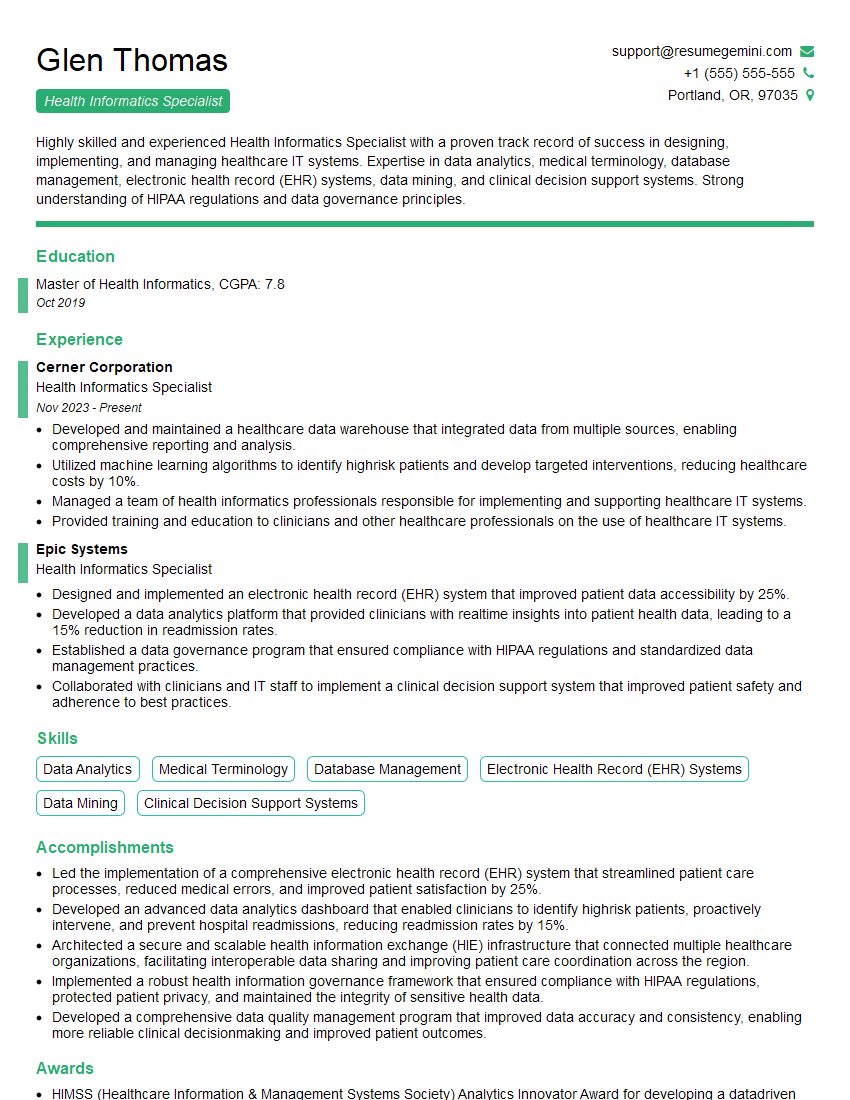
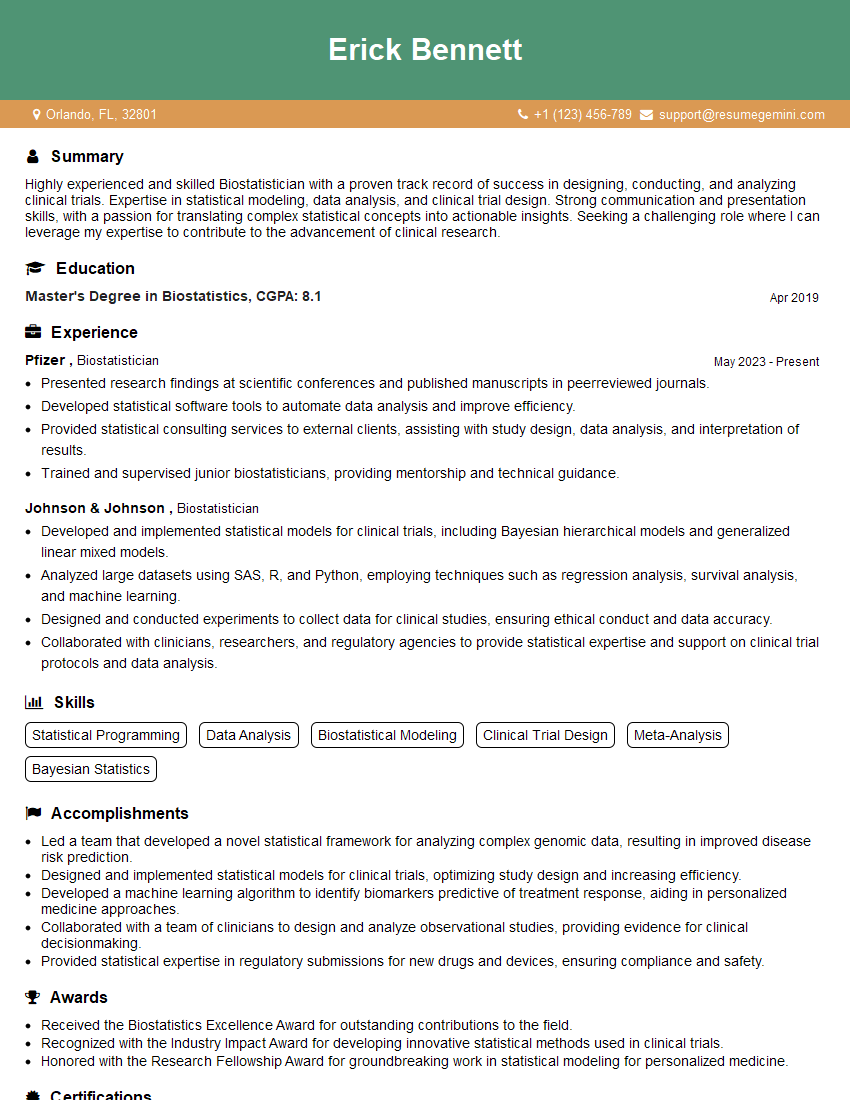
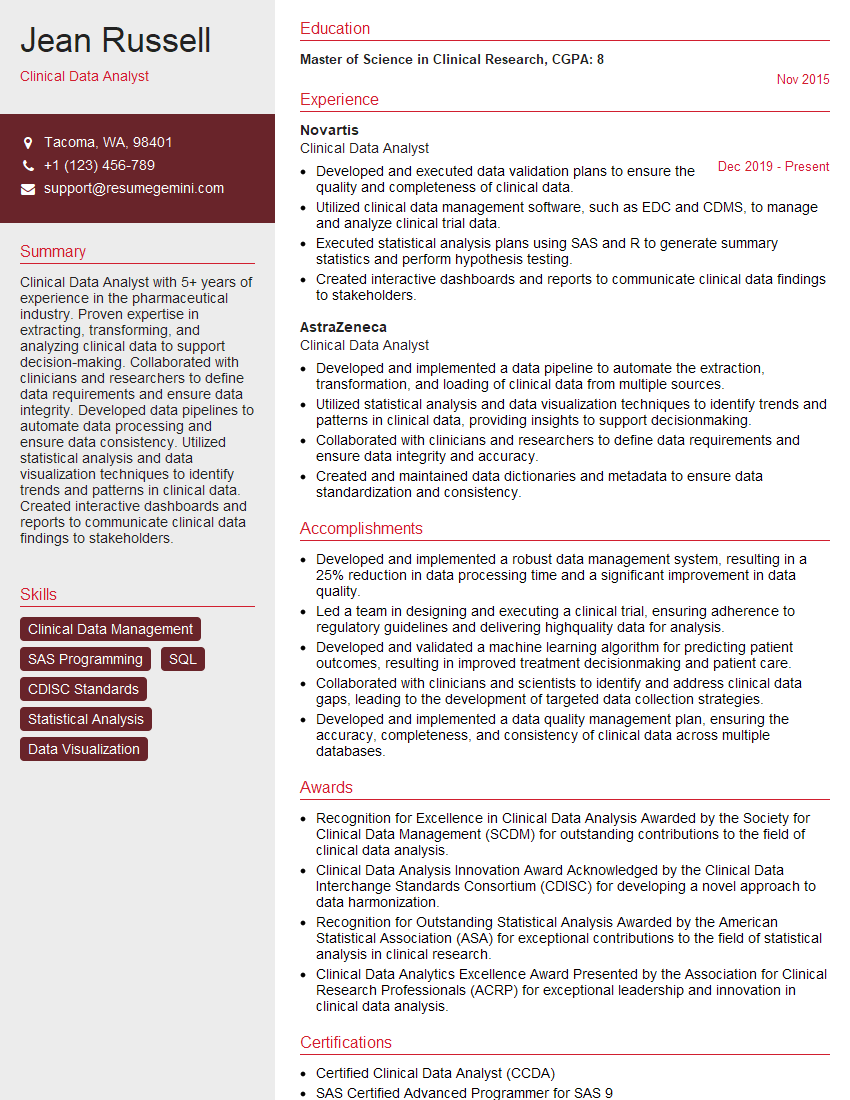
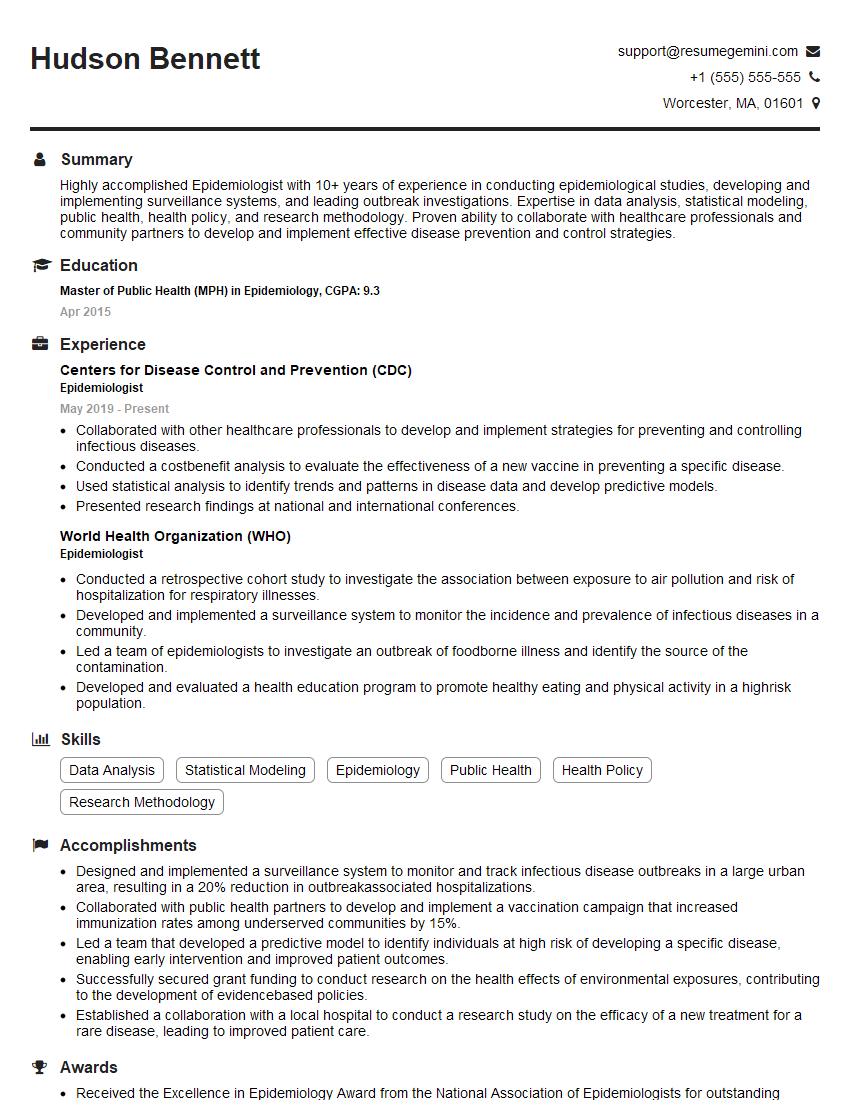
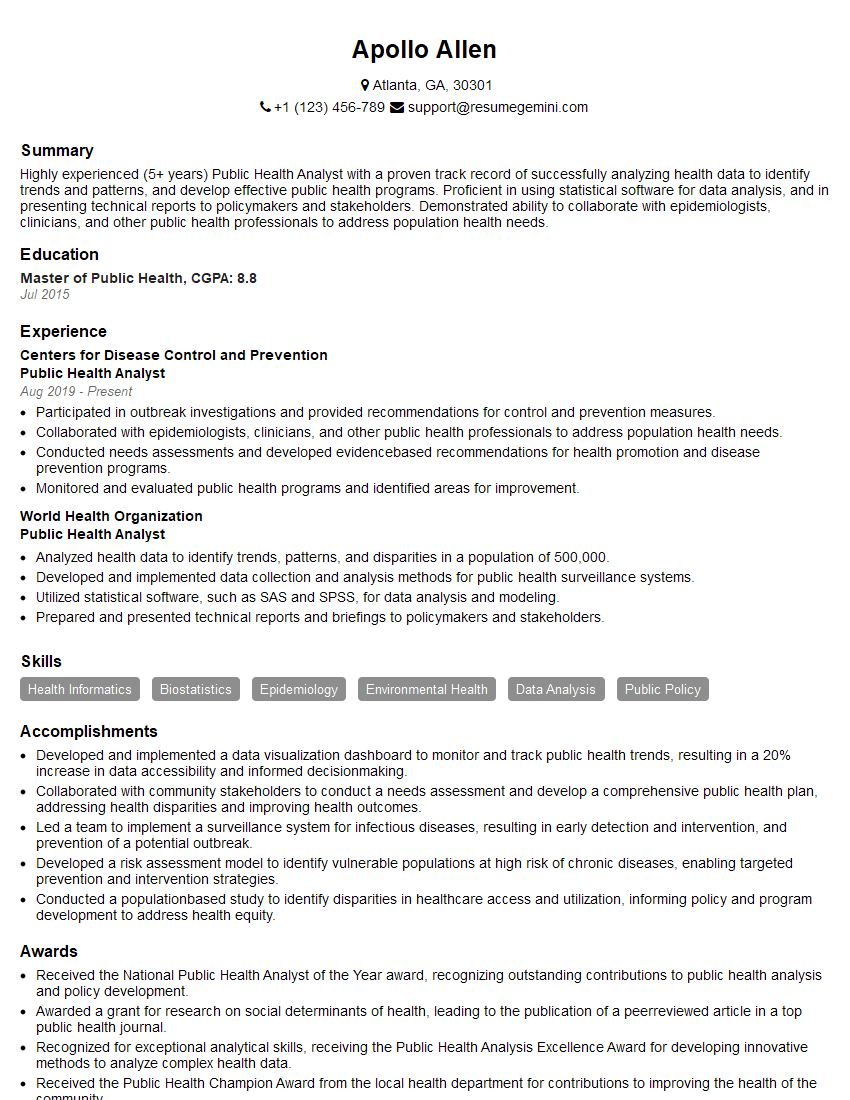
Mastering Health Analytics opens doors to a rewarding career with significant impact on healthcare systems and patient lives. Demand for skilled professionals is high, creating exciting opportunities for growth and advancement. To maximize your job prospects, crafting a compelling and ATS-friendly resume is crucial. ResumeGemini can help you build a professional resume that effectively showcases your skills and experience. They provide examples of resumes tailored to Health Analytics, ensuring your application stands out from the competition. Invest the time to create a strong resume – it’s your first impression!
Explore more articles
Users Rating of Our Blogs
Share Your Experience
We value your feedback! Please rate our content and share your thoughts (optional).
What Readers Say About Our Blog
To the interviewgemini.com Webmaster.
Very helpful and content specific questions to help prepare me for my interview!
Thank you
To the interviewgemini.com Webmaster.
This was kind of a unique content I found around the specialized skills. Very helpful questions and good detailed answers.
Very Helpful blog, thank you Interviewgemini team.