Unlock your full potential by mastering the most common Transformer Troubleshooting interview questions. This blog offers a deep dive into the critical topics, ensuring you’re not only prepared to answer but to excel. With these insights, you’ll approach your interview with clarity and confidence.
Questions Asked in Transformer Troubleshooting Interview
Q 1. Explain the different types of transformer failures.
Transformer failures can be broadly categorized into several types, each with its own set of causes and symptoms. Understanding these categories is crucial for effective troubleshooting and preventative maintenance.
- Insulation Failure: This is perhaps the most common type of failure, often stemming from aging, overheating, or contamination. It can manifest as short circuits between windings or between windings and the core, leading to significant power loss or even catastrophic failure.
- Overheating: Excessive heat generation can degrade the insulation and oil, leading to insulation failure or even fire. Causes can range from overloading, poor cooling, or internal faults.
- Oil Failures: Transformer oil plays a vital role in insulation and cooling. Contamination (moisture, particulate matter), oxidation, or breakdown can severely impair its performance, leading to various failures.
- Mechanical Failures: These can include winding displacement or damage, core failures, and problems with the tank or bushings. These failures often result from manufacturing defects, transportation damage, or external forces.
- Tap Changer Failures: The tap changer allows for voltage regulation. Failure can result in inability to adjust the voltage or even short circuits.
Identifying the specific type of failure is the first step towards effective repair or replacement. A systematic diagnostic approach, incorporating various testing methods, is essential.
Q 2. Describe the process of diagnosing a transformer fault using Dissolved Gas Analysis (DGA).
Dissolved Gas Analysis (DGA) is a powerful diagnostic tool for assessing the condition of transformer oil. It involves analyzing the gases dissolved in the oil to identify potential faults. The process typically involves:
- Sampling: A sample of transformer oil is carefully extracted, ensuring minimal contamination.
- Gas Extraction: The dissolved gases are extracted from the oil sample using a specialized apparatus.
- Gas Chromatography: The extracted gases (hydrogen, methane, ethane, ethylene, acetylene, carbon monoxide, carbon dioxide) are analyzed using gas chromatography to determine their concentrations.
- Interpretation: The gas ratios and concentrations are then interpreted using various methods (e.g., Duval Triangle, IEC 60599) to identify the type and severity of the fault.
Imagine it like a medical blood test—the gas composition reveals clues about the transformer’s internal health. For example, high levels of acetylene often suggest severe arcing.
Q 3. How do you interpret DGA results to identify potential transformer problems?
Interpreting DGA results requires expertise and a thorough understanding of various analysis techniques. The most common methods involve using the gas ratios to pinpoint the fault. For example:
- High Acetylene: Indicates high-energy arcing or severe partial discharges.
- High Methane and Ethylene: Suggests overheating, potentially due to overloading or cooling system problems.
- High Carbon Monoxide and Carbon Dioxide: Could indicate slow heating or oxidation of the oil.
- High Hydrogen: Can be an indicator of several fault types, including overheating or arcing.
Different diagnostic techniques, such as the Duval Triangle, use these gas ratios to plot a point on a diagram, which then helps classify the fault type. It’s vital to combine DGA results with other diagnostic tests (insulation resistance, power factor tests) for a comprehensive assessment.
For instance, high levels of methane and ethylene alongside elevated oil temperature would strongly indicate overheating.
Q 4. What are the common causes of transformer overheating?
Transformer overheating is a serious concern that can lead to catastrophic failure. Several factors contribute to this:
- Overloading: Exceeding the transformer’s rated capacity forces it to operate beyond its design limits, generating excessive heat.
- Poor Cooling: Inadequate cooling systems (fans, radiators, oil pumps) prevent efficient heat dissipation.
- Internal Faults: Short circuits or partial discharges within the transformer generate significant heat.
- Ambient Temperature: High ambient temperatures can increase the transformer’s operating temperature, exacerbating the effects of other factors.
- Blocked Ventilation: Obstructions around the transformer can impede airflow and reduce cooling efficiency.
A classic example is a power transformer operating continuously at or near its full capacity in a hot climate with a failing cooling fan. This combination would significantly raise the risk of overheating.
Q 5. Explain the importance of oil quality in transformer operation and maintenance.
Transformer oil is critical for insulation and cooling. Maintaining its quality is paramount for reliable operation. Poor oil quality can lead to various problems, including:
- Reduced Insulation Strength: Contaminated or degraded oil loses its dielectric strength, increasing the risk of insulation breakdown.
- Poor Cooling: Degraded oil can impair heat transfer, leading to overheating.
- Increased Risk of Oxidation: Oxidized oil can form sludge and deposits that can clog cooling systems or damage transformer components.
- Corrosion: Contaminated oil can accelerate corrosion of internal components.
Regular oil testing (dielectric strength, acidity, moisture content) and filtration are crucial for maintaining optimal oil quality. Think of it like regular oil changes in a car—it prevents premature wear and tear.
Q 6. How do you test the insulation resistance of a transformer?
Insulation resistance testing measures the resistance of the transformer’s insulation to the flow of current. This test helps assess the condition of the insulation and identify potential weaknesses. The process typically involves:
- Preparation: Ensure the transformer is de-energized and properly grounded. All connections to the winding should be disconnected.
- Testing: A high-voltage DC source is applied between the winding and ground (or between windings). A megohmmeter is used to measure the insulation resistance.
- Interpretation: The measured resistance value is compared to the manufacturer’s specifications or acceptable ranges. Low resistance indicates potential insulation degradation or contamination.
Imagine it like checking the strength of a rope—a low resistance value suggests that the insulation is weakening and might fail under stress.
Q 7. What are the safety precautions you take when working on high-voltage transformers?
Working on high-voltage transformers presents significant safety risks. Strict adherence to safety procedures is paramount. Essential precautions include:
- Lockout/Tagout Procedures: Ensure the transformer is completely de-energized and locked out before any work begins.
- Personal Protective Equipment (PPE): Wear appropriate PPE, including insulating gloves, safety glasses, and arc flash protective clothing.
- Grounding: Thoroughly ground the transformer to prevent unexpected energization.
- Permit-to-Work System: Follow a formal permit-to-work system to ensure all necessary safety checks are completed.
- Proper Training and Supervision: Only trained and qualified personnel should work on high-voltage transformers, with appropriate supervision.
- Emergency Response Plan: Have a clear emergency response plan in place in case of accidents or incidents.
Working on high-voltage equipment demands a culture of utmost caution and a disciplined adherence to safety rules. A single lapse in safety can have devastating consequences.
Q 8. Describe the procedure for testing transformer windings.
Testing transformer windings involves verifying their insulation resistance, measuring winding resistance, and checking for shorted turns. It’s crucial for ensuring the transformer’s safe and reliable operation. We use several methods:
Insulation Resistance Test: This test uses a megohmmeter (or insulation resistance tester) to measure the resistance between the windings and the core/ground. Low resistance indicates insulation breakdown and potential faults. A typical test involves applying a high DC voltage and measuring the resulting current. The higher the resistance, the better the insulation. We compare the measured value against manufacturer’s specifications and historical data to assess the insulation health.
Winding Resistance Test: This measures the DC resistance of each winding using a low-resistance ohmmeter. This helps detect shorted turns or broken conductors. A significantly lower resistance than expected suggests a short circuit somewhere in the winding. It is important to note that this test only detects gross defects; small shorts might not be easily noticeable.
Turns Ratio Test: This verifies the correct turns ratio between primary and secondary windings. By applying a known voltage to one winding and measuring the induced voltage on the other, we can determine the ratio and confirm correct winding configurations. Discrepancies can indicate winding faults.
High-Potential (HIPOT) Test: This is a more rigorous test applying a high AC or DC voltage to check for insulation weaknesses. This test can reveal smaller insulation defects that might be missed by the insulation resistance test. However, it is vital to ensure the correct voltage level is used to avoid damaging the transformer.
These tests, often performed as part of a routine maintenance schedule, are crucial for preventative maintenance and ensuring safe operation. Ignoring these tests could lead to catastrophic failures, causing downtime and potentially significant damage.
Q 9. Explain the function of a Buchholz relay.
A Buchholz relay is a protective device installed in oil-filled transformers. Its primary function is to detect and respond to faults within the transformer, preventing catastrophic failures. Imagine it as a sophisticated alarm system for your transformer. It works by sensing the movement of oil within the transformer’s conservator tank.
Specifically, it monitors two key conditions:
Gas Accumulation: Faults like overheating, arcing, or insulation breakdown produce gases. The Buchholz relay detects the accumulation of these gases in a chamber. If gas accumulation exceeds a predefined level, it triggers an alarm and potentially trips the transformer, preventing further damage.
Rapid Oil Flow: A sudden surge in oil flow, often indicating a major internal fault like a large short circuit or rupture, is also detected. This rapid flow triggers the relay, instantly shutting down the transformer to contain the situation.
Essentially, the Buchholz relay provides early warning of internal problems, preventing more extensive damage and potential fire hazards. It’s a critical component in ensuring the safety and reliability of oil-filled power transformers.
Q 10. How do you identify and troubleshoot a shorted winding in a transformer?
Identifying and troubleshooting a shorted winding requires a methodical approach. We utilize several methods:
Winding Resistance Test (as described above): A significantly lower resistance than the expected value indicates a short circuit. However, this only indicates the presence of a fault, not its precise location.
Turns Ratio Test (as described above): An incorrect turns ratio is a strong indicator of shorted turns in a winding.
Induced Voltage Test: This involves energizing one winding and observing the induced voltage on the other. Abnormal voltage patterns suggest a short within the winding. This is typically performed by experienced technicians and requires specialized testing equipment.
Frequency Response Analysis: Specialized instruments can measure the frequency response of the winding, identifying irregularities that indicate shorted turns or other winding faults. This provides a more precise location of the defect compared to DC resistance tests alone.
Once a shorted winding is identified, repair is often complex and expensive, frequently involving rewinding the affected portion or even the entire winding. Prevention is far better than cure, and routine maintenance and testing are critical for avoiding this costly repair.
Q 11. Describe the different types of transformer protection schemes.
Transformer protection schemes aim to prevent damage and ensure safe operation. They’re multifaceted and include:
Overcurrent Protection: This protects against excessive current flow due to short circuits or overloads. Fuses, circuit breakers, and relays are commonly used.
Differential Protection: This compares the current entering and leaving the transformer. Any significant difference indicates an internal fault, prompting immediate shutdown.
Buchholz Relay Protection (as described above): Detects gas accumulation and rapid oil flow.
Overvoltage Protection: Protects against excessive voltage surges that could damage the insulation.
Temperature Protection: Monitors winding and oil temperatures. High temperatures trigger alarms or shutdown to prevent overheating and insulation degradation.
Gas-in-Oil Analysis: Periodically analyzing dissolved gases in the transformer oil can provide insights into potential faults before they become critical.
The specific protection scheme implemented depends on the transformer’s size, application, and criticality. A combination of these methods often provides comprehensive protection.
Q 12. What are the common causes of transformer bushing failures?
Transformer bushing failures are a significant concern. Common causes include:
Moisture Ingress: Moisture can degrade the insulation within the bushing, leading to flashover and failure. This is often exacerbated by environmental factors or inadequate sealing.
Overheating: Excessive current or poor heat dissipation can overheat the bushing, degrading its insulation properties.
Mechanical Damage: Physical damage from handling, vibration, or external impacts can compromise the bushing’s integrity.
Aging: Over time, the insulation materials within the bushing naturally degrade, increasing the risk of failure. This is especially true in older transformers.
Partial Discharges: Internal discharges within the bushing can erode the insulation, eventually leading to failure. This is often associated with aging and moisture ingress.
Regular inspection and maintenance, including visual inspections, insulation resistance tests, and partial discharge detection, are crucial to prevent bushing failures. Early detection and replacement are key to maintaining transformer reliability and safety.
Q 13. How do you perform a transformer tap change?
Transformer tap changing allows adjusting the voltage ratio to compensate for variations in the grid voltage or load requirements. This is typically done under load using a tap changer mechanism. The procedure is as follows:
Identify the Required Tap: Based on the desired voltage adjustment, determine the appropriate tap position.
Isolate the Tap Changer: Ensure the tap changer mechanism is properly isolated to prevent accidental operation.
Initiate the Tap Change Sequence: This involves carefully moving the tap selector switch or control mechanism to the target tap position. This process is typically automated and controlled using a specialized tap changer system.
Verify the Tap Position: Once the tap change is complete, verify that the transformer is operating at the correct voltage and current levels.
Monitor for Abnormal Conditions: After the tap change, closely monitor the transformer for any signs of abnormal operation, such as overheating or unusual sounds.
Tap changing procedures must be carried out strictly according to the manufacturer’s instructions. Improper tap changing can lead to damage to the tap changer itself or even the transformer.
Q 14. Explain the difference between a single-phase and a three-phase transformer.
The key difference between single-phase and three-phase transformers lies in the number of phases they handle. Think of it like this: single-phase is a single lane road, while three-phase is a three-lane highway. They are fundamentally different in their construction and applications.
Single-Phase Transformer: This has one primary and one secondary winding, handling a single alternating current (AC) phase. They’re commonly used in residential applications and smaller industrial settings where the power demand is lower.
Three-Phase Transformer: This has three primary and three secondary windings, capable of handling three AC phases simultaneously. They are significantly more efficient and compact than using three single-phase transformers for the same power capacity. They are essential for high-power industrial applications, transmission systems, and larger power distribution networks.
Three-phase transformers offer higher power capacity, better efficiency, and reduced size and weight compared to equivalent single-phase systems. The choice between them depends entirely on the application’s power needs and requirements.
Q 15. Describe the process of transformer oil filtration and purification.
Transformer oil filtration and purification is crucial for maintaining the transformer’s efficiency and lifespan. The process removes contaminants like moisture, dissolved gases, and solid particles that degrade the oil’s insulating properties and can lead to equipment failure. Think of it like changing the oil in your car – it keeps everything running smoothly.
The process typically involves several steps:
- Filtration: This removes solid particles using filter media with varying pore sizes. A common method is using cellulose or membrane filters. The degree of filtration depends on the level of contamination.
- Dehydration: This removes dissolved moisture, which reduces the oil’s dielectric strength (its ability to withstand electrical breakdown). Methods include vacuum dehydration, which boils off the water under low pressure, or using adsorption techniques with materials like silica gel.
- Degassing: This removes dissolved gases like hydrogen, methane, and carbon monoxide that are byproducts of arcing or overheating within the transformer. Vacuum degassing is commonly employed here as well.
After filtration and purification, the oil’s quality is assessed by testing its dielectric strength, acidity, moisture content, and dissolved gas analysis. Regular oil testing and filtration are essential preventative maintenance practices.
Career Expert Tips:
- Ace those interviews! Prepare effectively by reviewing the Top 50 Most Common Interview Questions on ResumeGemini.
- Navigate your job search with confidence! Explore a wide range of Career Tips on ResumeGemini. Learn about common challenges and recommendations to overcome them.
- Craft the perfect resume! Master the Art of Resume Writing with ResumeGemini’s guide. Showcase your unique qualifications and achievements effectively.
- Don’t miss out on holiday savings! Build your dream resume with ResumeGemini’s ATS optimized templates.
Q 16. How do you interpret transformer nameplate data?
A transformer’s nameplate is like its identity card, providing vital information about its specifications and operating parameters. Understanding this data is essential for proper installation, operation, and maintenance.
Key information includes:
- Rated Power (kVA): The apparent power the transformer can handle.
- Primary and Secondary Voltages: The voltage levels on the input and output sides.
- Frequency (Hz): The operating frequency of the power system.
- Connection Group (e.g., Dyn11): Describes the winding connections and phase shifts.
- Impedance (%): Indicates the voltage drop across the transformer under load.
- Cooling Type (e.g., ONAN, ONAF): Specifies the cooling method, like oil-natural air or oil-forced air.
- Insulation Class: Specifies the temperature limits for safe operation.
For example, a nameplate might read: 2000 kVA, 11 kV/400 V, 50 Hz, Dyn11, 6% Impedance, ONAN, Class B. This tells us we have a 2000 kVA transformer operating at 50 Hz, stepping down voltage from 11 kV to 400 V, with specific winding connections and cooling method. Misinterpreting this information can lead to serious issues, like overheating or incorrect voltage levels.
Q 17. What are the common causes of transformer humming?
Transformer humming is a common phenomenon, usually caused by the magnetostriction effect. This is the slight expansion and contraction of the transformer core due to the alternating magnetic field. Imagine the core vibrating slightly at 120 times per second (twice the line frequency for a 60Hz system) – this vibration generates the audible hum.
Other contributing factors include:
- Loose core laminations: Poorly assembled core laminations can increase vibration and noise.
- Tank resonance: The transformer tank itself can resonate at certain frequencies, amplifying the hum.
- High flux density: Operating the transformer at a high flux density can intensify magnetostriction.
- Loose components: Any loose internal parts can contribute to the noise.
While a low hum is usually normal, a loud or unusual humming sound often indicates a problem and should be investigated. It could signal loose parts, core damage, or other issues requiring attention.
Q 18. How do you troubleshoot a transformer that is not operating at the correct voltage?
Troubleshooting a transformer with incorrect voltage output requires a systematic approach. First, you must accurately measure the input and output voltages using a calibrated voltmeter.
Possible causes and troubleshooting steps:
- Incorrect Tap Setting: Check the tap changer settings on the transformer to ensure they are correct for the desired voltage. Tap changers allow adjustment of the transformer’s turns ratio, thus adjusting output voltage.
- Voltage Regulator Issues: If a voltage regulator is used, check its operation and calibration. Malfunctioning regulators can significantly alter the output voltage.
- Load Conditions: A heavy load might cause a significant voltage drop across the transformer’s impedance. Measure the load current and compare it to the transformer’s rated capacity.
- Internal Faults: Winding shorts or insulation breakdown can cause voltage irregularities. Testing with an insulation resistance tester (megger) can help identify such faults.
- Primary Side Voltage Issues: Verify that the primary voltage is within the transformer’s rated range. Problems on the primary side of the transformer will influence its secondary voltage.
Thorough inspection and testing are vital to pinpoint the problem accurately. Remember safety precautions; always de-energize the transformer before performing any inspections or tests.
Q 19. Explain the importance of routine transformer maintenance.
Routine transformer maintenance is paramount for ensuring reliable operation, extending lifespan, and preventing costly failures. It’s akin to regular checkups for your health; preventative care is far better than emergency treatment.
Importance includes:
- Early Detection of Faults: Regular inspections can identify potential problems like overheating, loose connections, or oil leaks before they escalate into major failures.
- Maintaining Oil Quality: Regular oil testing and filtration remove contaminants, preserving the oil’s insulating properties and extending its service life.
- Preventing Catastrophic Failures: Proactive maintenance significantly reduces the risk of catastrophic transformer failures, which can cause widespread power outages and significant financial losses.
- Extended Lifespan: Proper maintenance increases the transformer’s lifespan, reducing the frequency of expensive replacements.
- Improved Efficiency: A well-maintained transformer operates at peak efficiency, minimizing energy losses.
A typical maintenance schedule involves visual inspections, oil testing, and potentially more invasive tests depending on the age and condition of the transformer.
Q 20. Describe the process of replacing a transformer.
Replacing a transformer is a complex and potentially hazardous undertaking, requiring specialized knowledge, equipment, and safety precautions. It involves a detailed procedure, with safety always being the utmost priority.
Steps involved:
- Planning and Preparation: This includes obtaining permits, scheduling downtime, securing replacement equipment, and devising a safe work plan.
- De-energizing the Transformer: The transformer must be safely de-energized and locked out/tagged out to prevent accidental energization. This is critical for worker safety.
- Disconnecting Connections: All electrical connections to the transformer must be carefully disconnected.
- Lifting and Removal: The transformer needs to be carefully lifted and transported using appropriate lifting equipment. This often requires heavy-duty cranes and specialized rigging.
- Installation of the New Transformer: The new transformer is carefully placed and connected.
- Testing and Commissioning: After installation, thorough testing is conducted to ensure proper operation before re-energizing.
- Disposal of the Old Transformer: Proper disposal of the old transformer is essential, following environmental regulations for handling transformer oil and other materials.
This process requires skilled technicians and adherence to stringent safety protocols. Improper handling can lead to serious injury or damage.
Q 21. What are the different methods for drying a transformer?
Drying a transformer is necessary when moisture has contaminated the oil or insulation system, reducing its dielectric strength and increasing the risk of failure. Several methods are employed, depending on the degree of moisture and the size of the transformer.
Methods include:
- Vacuum Drying: This involves placing the transformer under a vacuum to lower the boiling point of water, allowing it to evaporate. It’s often combined with heating to accelerate the process.
- Hot Air Circulation: This method circulates hot, dry air through the transformer windings and core to evaporate moisture. Temperature control is essential to avoid damaging the insulation.
- Combination Methods: Often a combination of vacuum drying and hot air circulation is used for optimal results.
- Bakers: For smaller components, dedicated ovens, or ‘bakers,’ are used to remove moisture at controlled temperatures.
The choice of method depends on the size of the transformer and the extent of the moisture contamination. Proper drying is essential to restore the transformer’s insulation and prevent future problems.
Q 22. How do you perform a transformer impedance test?
Transformer impedance testing is crucial for verifying its operational integrity and determining its suitability for a specific application. We typically use a low-voltage, high-current test to measure the impedance. This is done by injecting a known current into the transformer windings and measuring the resulting voltage drop. The impedance is then calculated using Ohm’s law (Z = V/I). Think of it like checking the resistance of a wire, but for a much more complex device.
The process involves connecting a suitable impedance test set to the transformer terminals. It’s critical to ensure the transformer is de-energized and properly grounded before initiating the test to maintain safety. The test set then injects a low-frequency AC current, usually at a specific frequency based on the transformer’s rating. The resulting voltage drop is measured, and the impedance is calculated. This value is then compared against the transformer’s nameplate data or manufacturer’s specifications. A significant deviation can indicate a problem, such as a shorted winding or a loose connection within the transformer.
For example, during a recent project involving a large power transformer, we discovered a slightly higher-than-expected impedance. This led us to a more thorough inspection, which revealed a minor fault in one of the winding connections. Early detection, thanks to the impedance test, prevented a potential major failure.
Q 23. Explain the concept of transformer inrush current.
Transformer inrush current is a large, temporary surge of current that occurs when a transformer is first energized. Imagine filling a water tank – initially, the water rushes in quickly before settling into a steady flow. Similarly, when the transformer’s core is initially magnetized, it draws a much larger current than its normal operating current. This inrush can be several times the transformer’s rated current and can last for several cycles before gradually diminishing.
This high current is caused by the core’s magnetization process. The peak value and duration of the inrush current depend on several factors, including the point in the AC waveform at which the transformer is switched on, the transformer’s design, and the saturation characteristics of its core. High inrush current can stress the transformer and protective devices, potentially leading to nuisance tripping of circuit breakers or even damage to the transformer itself.
To mitigate the effects of inrush current, we utilize various techniques, such as using inrush current limiters or employing special switching strategies to minimize the impact on the system. Proper design considerations, including the selection of appropriately sized circuit breakers and protective relays, are also crucial.
Q 24. What are the safety risks associated with working on a transformer?
Working on a transformer presents several significant safety hazards. The primary concern is the high voltage present within the transformer, which can easily cause fatal electric shock. In addition to high voltage, large transformers can store significant energy even when de-energized, posing a risk of unexpected discharge. Furthermore, transformers generate considerable heat during operation, and working on a hot transformer can result in burns.
Other potential risks include: arc flash hazards (sudden high-energy electrical arcs that can cause severe burns and injuries), fire hazards from insulation failure or overheating, and the presence of hazardous materials like insulating oils, which can be flammable and toxic.
To mitigate these risks, strict adherence to safety protocols is essential. This includes employing lockout/tagout procedures to ensure the transformer is completely de-energized before any work commences, utilizing appropriate personal protective equipment (PPE) including insulated gloves, safety glasses, and arc flash suits, and conducting thorough risk assessments before starting any task. Regular maintenance and inspections are crucial to identify potential hazards early on.
Q 25. Describe your experience with transformer commissioning and testing.
I have extensive experience in transformer commissioning and testing, having been involved in numerous projects across various voltage levels. My responsibilities have included overseeing all aspects of the process, from initial inspection and preparation to final acceptance testing.
This involves a series of tests to ensure the transformer meets its specifications and is safe for operation. These typically include:
- Insulation Resistance Tests: Checking the insulation integrity of windings.
- Turn Ratio Tests: Verifying the correct voltage transformation ratio.
- Impedance Tests: Measuring the transformer impedance.
- Excitation Current Tests: Checking the magnetizing current of the transformer.
- Short-Circuit Tests: Determining the short-circuit impedance.
- No-Load Tests: Measuring core losses and magnetizing current.
- Temperature Rise Tests: Verifying that temperature limits are not exceeded during operation.
I’m proficient in using various testing equipment and interpreting the results to identify any potential issues. I’ve successfully commissioned transformers ranging from small distribution transformers to large power transformers in substations. A recent project involved a large power transformer for a new industrial plant; the meticulous testing ensured a seamless and safe integration into the power grid, avoiding costly delays or potential hazards.
Q 26. Explain how you would troubleshoot a transformer experiencing excessive noise.
Excessive noise from a transformer is often an indicator of a problem that needs attention. The troubleshooting process begins with identifying the type of noise: is it a humming sound, a buzzing, or a more mechanical clicking? Each sound suggests a different potential cause.
Humming: Often indicates magnetostriction, a phenomenon where the core material vibrates due to changes in magnetic flux. This can be exacerbated by loose core laminations or core clamping problems. It may also be caused by normal transformer operation, but excessive humming requires investigation.
Buzzing or Whistling: Could signify a problem with the windings, such as a loose connection or partial short circuit within a coil. This warrants careful inspection.
Mechanical Clicking or Knocking: Suggests a potential problem with the core clamping structure or a loose internal component, such as a broken or loose bracing component.
Troubleshooting Steps:
- Visual Inspection: Examine the transformer for any visible signs of damage, loose connections, or overheating.
- Listen Carefully: Try to pinpoint the location of the noise to narrow down the possible causes.
- Check for Loose Connections: Inspect all terminals and connections for any signs of looseness or corrosion.
- Measure Winding Temperatures: Use a thermal imaging camera to check the temperatures of the windings. Excessive heat could indicate a fault.
- Perform Vibration Analysis: Use vibration sensors to identify the source and severity of any vibrations.
- Consult Manufacturer Specifications: Compare the noise levels with the manufacturer’s specifications to determine if the noise level is outside the acceptable range.
In one instance, a transformer was producing a loud buzzing sound. Upon closer inspection, we discovered a loose connection on one of the windings. Tightening the connection resolved the issue. This highlights the importance of systematic troubleshooting and thorough investigation.
Q 27. What are the different types of transformer cores?
Transformer cores are typically constructed from laminated ferromagnetic materials designed to minimize energy losses due to eddy currents. Several types of cores exist, each with its advantages and disadvantages.
- Core-Type: This is a common design where the windings are wound around two limbs of a core that are usually ‘E’ and ‘I’ shaped laminations. Simple to manufacture and relatively inexpensive. It’s good for smaller transformers.
- Shell-Type: In this configuration, the windings surround the core, which is essentially a closed magnetic path. It offers better magnetic flux containment and often results in lower leakage flux and reduced noise compared to the core type, especially beneficial in larger transformers.
- Toroidal Cores: These have a ring shape and provide excellent magnetic flux containment, leading to low leakage flux and higher efficiency. However, they can be more challenging to wind.
The choice of core type depends on several factors such as the transformer’s size, power rating, frequency, and required efficiency. For instance, larger power transformers often utilize shell-type cores for their superior performance, while smaller distribution transformers might use the simpler and more economical core type.
Q 28. How would you determine the appropriate size of a replacement transformer?
Determining the appropriate size of a replacement transformer requires careful consideration of several factors. It’s not simply about matching the old transformer’s rating.
First, you need to determine the current load requirements. This involves assessing the power consumption of all connected equipment. Consider any future expansion plans that could increase load demand. Always factor in a safety margin to accommodate unexpected increases in power demand.
Next, consider the transformer’s voltage rating. This must match the voltage of the power supply and the connected load. The transformer’s kVA (kilovolt-ampere) rating, which represents its apparent power capacity, is crucial. It needs to be at least equal to, and preferably slightly larger than, the total kVA demand. It’s crucial to consult the electrical drawings and specifications of the system to understand the precise power requirements of the load.
Other factors to consider include the type of transformer (single-phase, three-phase), the cooling method, and the mounting requirements. Always consult the manufacturer’s specifications to ensure the chosen replacement transformer is compatible with the system and meets all applicable safety standards. In a recent project, we carefully analyzed the load profile of the affected circuit to ensure that the replacement transformer had a sufficiently large kVA rating, preventing potential overloading and failures.
Key Topics to Learn for Transformer Troubleshooting Interview
- Transformer Basics: Understanding transformer principles, types (power, distribution, instrument), and operating characteristics. This includes core construction, winding configurations, and vector group identification.
- Testing and Measurement Techniques: Practical application of various testing methods like winding resistance tests, turns ratio tests, insulation resistance tests (Megger), and short circuit impedance tests. Understanding the significance of test results and their implications for diagnosing faults.
- Fault Diagnosis and Isolation: Identifying common transformer faults (e.g., shorted turns, open circuits, insulation breakdown, tap changer issues). Developing systematic approaches for troubleshooting, including the use of diagnostic tools and interpreting test data to pinpoint the problem’s location.
- Safety Procedures and Regulations: Understanding and adhering to safety protocols when working with high-voltage equipment. Familiarity with relevant industry standards and regulations related to transformer maintenance and repair.
- Maintenance and Preventative Measures: Discussing routine maintenance practices to minimize the risk of failures, including oil analysis, temperature monitoring, and condition-based maintenance strategies.
- Transformer Protection Systems: Understanding the role of various protection relays and schemes used to safeguard transformers from overcurrent, overvoltage, and other potential hazards. This includes differential protection and Buchholz relay operation.
- Advanced Troubleshooting Techniques: Exploring advanced diagnostic tools and techniques, such as frequency response analysis and dissolved gas analysis (DGA), for in-depth fault identification.
Next Steps
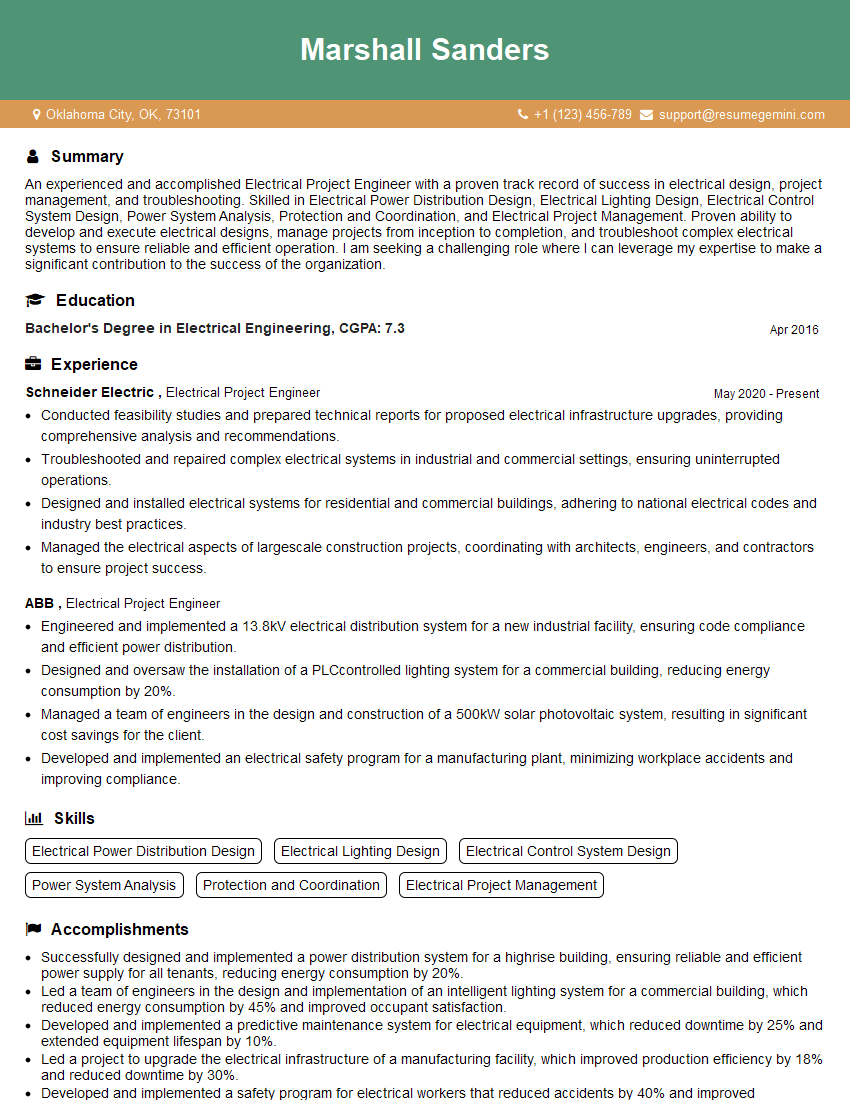
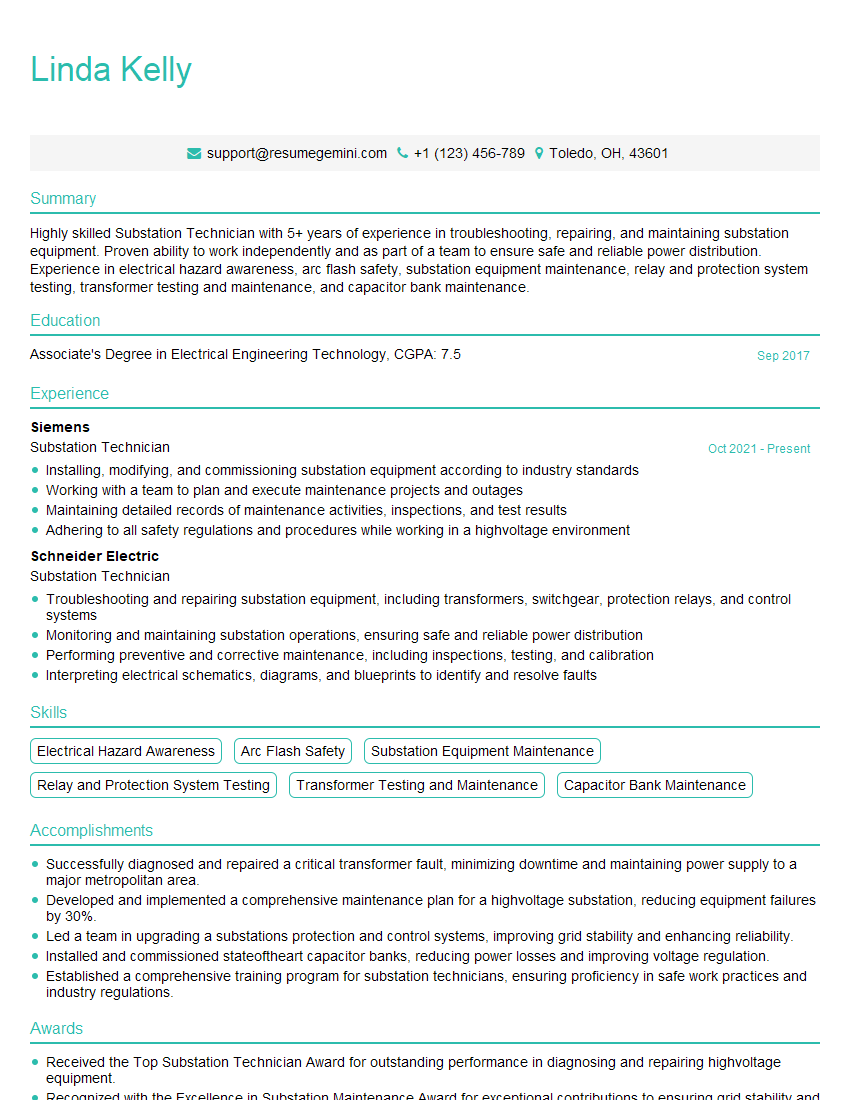
Mastering transformer troubleshooting is crucial for career advancement in the power systems and electrical engineering fields. It demonstrates a high level of technical expertise and problem-solving ability, opening doors to specialized roles and increased earning potential. To maximize your job prospects, it’s essential to present your skills effectively. Creating an ATS-friendly resume is key to getting noticed by recruiters. We strongly recommend using ResumeGemini to build a professional and impactful resume that highlights your transformer troubleshooting capabilities. ResumeGemini provides examples of resumes tailored to this specific field, helping you showcase your qualifications effectively.
Explore more articles
Users Rating of Our Blogs
Share Your Experience
We value your feedback! Please rate our content and share your thoughts (optional).
What Readers Say About Our Blog
To the interviewgemini.com Webmaster.
Very helpful and content specific questions to help prepare me for my interview!
Thank you
To the interviewgemini.com Webmaster.
This was kind of a unique content I found around the specialized skills. Very helpful questions and good detailed answers.
Very Helpful blog, thank you Interviewgemini team.