Feeling uncertain about what to expect in your upcoming interview? We’ve got you covered! This blog highlights the most important Power Electronics and Control Systems interview questions and provides actionable advice to help you stand out as the ideal candidate. Let’s pave the way for your success.
Questions Asked in Power Electronics and Control Systems Interview
Q 1. Explain the difference between a buck and a boost converter.
Buck and boost converters are both DC-DC converters, meaning they change a DC voltage level to another DC voltage level. The key difference lies in their output voltage relative to their input voltage.
A buck converter, or step-down converter, outputs a voltage lower than its input voltage. Think of it like a water faucet – you control the flow to get a lower pressure. It achieves this by using a switch to control the duty cycle of the input voltage, effectively averaging the voltage down. The inductor stores energy during the ‘on’ time of the switch and releases it during the ‘off’ time, smoothing the output voltage.
A boost converter, or step-up converter, outputs a voltage higher than its input voltage. This is analogous to a bicycle pump – you exert a small force repeatedly to build up a much higher pressure. Here, the inductor stores energy during the ‘on’ time, and when the switch turns off, this stored energy is released in series with the input voltage, resulting in a higher output voltage.
In short: Buck – steps down, Boost – steps up. Both utilize inductors and capacitors for energy storage and smoothing, but their circuit topologies differ significantly.
Q 2. Describe the operation of a three-phase inverter.
A three-phase inverter converts DC power to three-phase AC power. It’s crucial in applications like motor drives, renewable energy systems (solar inverters), and uninterruptible power supplies (UPS). The core components are six switches (typically IGBTs or MOSFETs), arranged in a bridge configuration, and controlled by Pulse Width Modulation (PWM).
The operation involves switching these six transistors in a specific sequence to generate three-phase AC waveforms. Each phase leg consists of two switches – one high-side and one low-side. By controlling the switching patterns of these legs, we create the desired AC voltage waveforms. Popular PWM techniques include Sinusoidal PWM (SPWM) and Space Vector PWM (SVPWM), which aim to minimize harmonics and maximize efficiency.
Imagine a three-bladed fan. Each blade represents a phase, and the inverter controls the rotation speed and direction by adjusting the voltage and frequency of each phase. The switching patterns ensure that the AC voltages are balanced and have a sinusoidal waveform as closely as possible. Accurate control is essential to prevent motor damage and ensure efficient operation.
Q 3. What are the advantages and disadvantages of different PWM techniques?
Several PWM techniques exist, each with its own advantages and disadvantages. The most common are Sinusoidal PWM (SPWM) and Space Vector PWM (SVPWM).
- SPWM: Simple to implement, generates relatively low harmonic distortion, but might have some low-frequency harmonics that can be problematic.
- SVPWM: Offers higher efficiency and lower harmonic distortion compared to SPWM, particularly at lower switching frequencies. It’s more computationally intensive.
- Other techniques: There are also variations like Modified SPWM, which focus on further reduction of specific harmonics. The choice depends on specific application needs and constraints.
Advantages and Disadvantages Summary:
- High Switching Frequency PWM: Reduces filter size, but increases switching losses.
- Low Switching Frequency PWM: Reduces switching losses, but increases filter size and harmonic content.
The selection of a PWM technique involves a trade-off between the computational complexity, harmonic distortion, switching losses, and the overall cost and size of the converter.
Q 4. How do you design a controller for a DC-DC converter?
Designing a controller for a DC-DC converter typically involves a feedback control system. The goal is to maintain a stable and accurate output voltage despite variations in load current and input voltage. A common approach is using a voltage-mode control or a current-mode control.
Voltage-mode control: A voltage sensor measures the output voltage, and the error between the desired output voltage and the measured voltage is fed to a compensator (usually a PI controller). The compensator’s output then determines the duty cycle of the switching element. This approach is simpler but can be prone to instability under certain conditions.
Current-mode control: This involves an additional current sensor that monitors the inductor current. The controller adjusts the duty cycle based on both the voltage error and the inductor current. This can improve transient response and stability.
Design steps generally include:
- System Modeling: Developing a small-signal model of the converter.
- Controller Design: Selecting the type of controller (PI, PID, etc.) and tuning its parameters (gain, integral time).
- Stability Analysis: Checking the stability margins of the closed-loop system using Bode plots or other analysis methods.
- Simulation and Testing: Simulating the controller’s performance using software like MATLAB/Simulink and then testing it on a physical prototype.
The choice between voltage-mode and current-mode depends on specific application requirements, such as transient response, noise immunity, and cost.
Q 5. Explain the concept of closed-loop control and its importance in power electronics.
Closed-loop control is essential in power electronics to ensure stable and accurate operation. It involves using feedback to compare the actual output with the desired setpoint and adjusting the control signal accordingly. This helps to compensate for disturbances and maintain a consistent output despite variations in load, input voltage, or component tolerances. Think of a thermostat – it measures the room temperature (feedback), compares it to the desired temperature (setpoint), and adjusts the heating/cooling accordingly.
In power electronics, this translates to using sensors to measure the output voltage or current, comparing it to the desired value, and using a controller to adjust the duty cycle of the switching elements. Without closed-loop control, small variations can lead to significant instability, potentially damaging components or causing system failure. Closed-loop control improves efficiency, reduces output voltage ripple, and enhances transient response.
Q 6. Describe different types of motor drives and their applications.
Various motor drives exist, each suited for different applications:
- DC Motor Drives: Use a DC-DC converter or a chopper circuit to control the speed and torque of DC motors. Simple to control, commonly used in low-power applications.
- AC Motor Drives (Induction Motor Drives): Use inverters to control the speed and torque of AC induction motors. Highly efficient, widely used in industrial applications due to their robustness and reliability. Examples include Variable Frequency Drives (VFDs).
- AC Motor Drives (Synchronous Motor Drives): Employ sophisticated control techniques to achieve precise control over speed and torque of synchronous motors, which are known for their high efficiency and precise control at high speeds. Used in high-performance applications like robotics and precision machinery.
- BLDC Motor Drives (Brushless DC Motor Drives): Control brushless DC motors, combining the advantages of DC and AC motors. Common in applications requiring high efficiency and precise control, such as electric vehicles and drones.
The choice of motor drive depends heavily on factors such as the type of motor, required performance characteristics (speed range, torque requirements, accuracy), cost constraints, and environmental considerations.
Q 7. What are the challenges in designing high-frequency converters?
Designing high-frequency converters presents several challenges:
- Switching Losses: Higher switching frequencies lead to increased switching losses, reducing efficiency and potentially requiring more sophisticated cooling solutions.
- EMI/EMC: High-frequency switching generates significant electromagnetic interference (EMI), requiring careful design to meet electromagnetic compatibility (EMC) standards and prevent interference with other devices.
- Component Parasitics: At high frequencies, parasitic inductances and capacitances in components become more significant, affecting converter performance and stability. Careful component selection and PCB layout are crucial.
- Gate Drive Circuitry: Driving the switching devices at high frequencies necessitates fast and efficient gate drive circuits, often requiring specialized components.
- Thermal Management: Increased switching losses require efficient heat dissipation mechanisms, which can add complexity and cost.
Overcoming these challenges often involves using advanced switching techniques, optimizing the converter’s design and layout, employing specialized components, and incorporating appropriate EMI/EMC filters.
Q 8. Explain the concept of power factor correction and its significance.
Power factor correction (PFC) addresses the inefficiency caused by reactive power in AC circuits. Imagine you’re filling a water tank (representing real power) using a leaky bucket (representing reactive power). Some water goes into the tank, but much is lost through the leaks. This ‘lost’ power doesn’t contribute to useful work but still stresses the system. A low power factor means a significant portion of the current drawn is reactive, not contributing to real work. This leads to higher electricity bills, oversized equipment, and voltage dips.
PFC aims to improve the power factor closer to 1 (unity) by reducing or eliminating reactive power. This is typically achieved using power factor correction capacitors or more sophisticated active PFC techniques. For example, in industrial settings with large inductive loads like motors, adding capacitor banks significantly reduces reactive power, leading to substantial cost savings and improved system efficiency.
In essence, PFC makes the power delivery more efficient, minimizing wasted energy and improving system performance. It is critical in many applications from small electronics to large industrial plants.
Q 9. How do you select appropriate components for a power electronic circuit?
Selecting components for a power electronic circuit is a crucial step that demands careful consideration of several factors. It’s like choosing the right ingredients for a recipe – using the wrong ones can lead to disaster.
- Voltage and Current Ratings: Components must withstand the expected voltage and current levels with a safety margin. We always select components with ratings exceeding the expected maximums.
- Switching Speed and Frequency: For high-frequency applications, components with appropriate switching speeds are essential. Slower components can lead to increased switching losses and inefficiencies.
- Temperature Ratings: Power semiconductors generate heat; therefore, components with sufficient thermal ratings and appropriate heat sinks are crucial for reliable operation. This prevents thermal runaway and failure.
- Power Dissipation: Components should be able to handle the power dissipation without exceeding their thermal limits. This includes considering factors like ambient temperature and heat sinking.
- Cost and Availability: Balancing performance with cost and availability is also vital. Sometimes, a slightly less performant but readily available and cost-effective option is a better choice than a superior but unavailable or expensive component.
The selection process often involves simulations and testing to verify the chosen components’ performance under different operating conditions. For instance, a simulation might reveal that a particular diode is prone to excessive junction temperature rise under heavy load, prompting a redesign or component substitution. Careful component selection prevents costly failures and enhances the circuit’s reliability and efficiency.
Q 10. Discuss different types of power semiconductor devices and their characteristics.
Power semiconductor devices are the workhorses of power electronics, acting as electronic switches controlling power flow. Several types exist, each with unique characteristics:
- Thyristors (SCRs, TRIACs): These are older devices known for their high current and voltage handling capabilities. However, they lack precise control and are typically used in applications like motor control and AC power switching.
- MOSFETs (Metal-Oxide-Semiconductor Field-Effect Transistors): These are voltage-controlled devices offering fast switching speeds and easy control. They are widely used in various applications, including switching power supplies and motor drives, particularly where high switching frequencies are needed.
- IGBTs (Insulated Gate Bipolar Transistors): IGBTs combine the advantages of MOSFETs (easy control) and Bipolar Junction Transistors (BJTs) (high current capability). They excel in high-power applications like industrial motor drives and high-voltage DC transmission. They are favoured for their high power-handling capability.
- SiC MOSFETs and SiC JFETs (Silicon Carbide): These are wide-bandgap semiconductors that offer significant advantages in terms of higher efficiency, faster switching speeds, and higher operating temperatures compared to traditional silicon-based devices. They’re becoming increasingly prevalent in high-performance applications like electric vehicle chargers and renewable energy systems.
The choice depends on the specific application requirements. For example, a high-speed motor drive might necessitate MOSFETs for their fast switching, while a high-power industrial application might benefit from the robust current handling of IGBTs. Recently, SiC devices are gaining traction due to their superior performance and higher efficiency.
Q 11. Explain the concept of harmonic analysis in power systems.
Harmonic analysis in power systems examines the non-sinusoidal waveforms present in the current and voltage. Unlike ideal sinusoidal waveforms, real-world power systems often have distortions introduced by non-linear loads like rectifiers and switching power supplies. These distortions manifest as harmonics, which are integer multiples of the fundamental frequency (typically 50Hz or 60Hz).
These harmonics can cause various problems: increased losses, equipment overheating, resonance issues, and interference with communication systems. Think of it like adding extra notes to a musical chord – some additions enhance the sound, but others create dissonance and distortion. Similarly, harmonics in power systems create undesirable effects.
Analysis involves using techniques like Fast Fourier Transform (FFT) to decompose the non-sinusoidal waveform into its constituent sinusoidal components (harmonics). By identifying the magnitude and phase of each harmonic, engineers can assess their impact and implement solutions. These solutions might include using filters to mitigate specific harmonic frequencies or employing active power factor correction techniques. Effective harmonic analysis is vital for designing reliable and efficient power systems.
Q 12. How do you analyze the stability of a control system?
Analyzing the stability of a control system is crucial to ensure its reliable operation. An unstable system will oscillate uncontrollably or even fail catastrophically. There are several methods to assess stability, each with strengths and weaknesses:
- Routh-Hurwitz Criterion: A mathematical approach that determines stability by examining the coefficients of the system’s characteristic polynomial. It’s straightforward for linear time-invariant systems.
- Bode Plots: Graphical representations of the system’s frequency response, which can reveal stability margins (gain margin and phase margin). These provide insights into how much the system can be perturbed before becoming unstable.
- Root Locus: A graphical technique that plots the roots of the characteristic polynomial as a system parameter (e.g., gain) varies. This visualization helps determine the impact of parameter changes on stability.
- Nyquist Criterion: Another frequency-domain method that uses the Nyquist plot to assess stability by examining the encirclements of critical points in the complex plane.
Choosing the right method depends on the complexity of the system. For simple systems, the Routh-Hurwitz criterion might suffice. However, for more complex systems with non-linearities, numerical simulations or advanced techniques like Lyapunov stability analysis may be necessary. The goal is always to guarantee a stable operating point for the system, ensuring robustness and reliable performance.
Q 13. Describe different methods for reducing EMI in power electronic systems.
Electromagnetic interference (EMI) is unwanted electromagnetic radiation that can disrupt the operation of electronic circuits. Power electronic systems, with their fast switching and high currents, are notorious EMI sources. Reducing EMI is essential for reliable system operation and compliance with regulations.
Several methods are employed to mitigate EMI:
- Shielding: Enclosing sensitive components or the entire system in a conductive enclosure effectively blocks EMI radiation.
- Filtering: Using LC filters (inductors and capacitors) at the input and output of the system attenuates unwanted frequency components.
- Grounding: Proper grounding of the system minimizes ground loops and reduces common-mode noise.
- Layout Optimization: Careful PCB design, including proper component placement and trace routing, can significantly reduce EMI. This includes keeping high-current loops small and using ground planes effectively.
- Component Selection: Using components with low EMI emission characteristics, like shielded inductors and capacitors, can help reduce noise generation.
The most effective approach often involves a combination of these techniques. For instance, a system might use shielding to contain EMI, filtering to attenuate specific frequencies, and careful PCB design to further minimize noise generation. EMI mitigation is an iterative process involving measurements, analysis, and redesign until regulatory compliance and satisfactory system performance are achieved.
Q 14. What are the different types of control strategies used in motor drives?
Motor drives control the speed and torque of electric motors. Various control strategies are employed, each with its strengths and weaknesses:
- Scalar Control (V/f control): A simple and cost-effective technique suitable for less demanding applications. It maintains a constant voltage-to-frequency ratio to control the motor speed. It’s easy to implement but offers limited performance compared to vector control.
- Vector Control (Field-Oriented Control): A more advanced technique that provides precise control over both the torque and flux of the motor. It involves decoupling the motor’s torque and flux components and controlling them independently, resulting in superior dynamic performance and efficiency. This method is prevalent in high-performance applications.
- Direct Torque Control (DTC): A technique that directly controls the motor’s torque and flux using hysteresis comparators. It offers fast dynamic response but can lead to increased torque and flux ripples.
The selection of a control strategy depends on factors like the motor type, the required performance, and cost constraints. For simple applications requiring basic speed control, scalar control is sufficient. However, high-performance applications like robotics or industrial automation demand the superior performance and precision of vector control or advanced techniques like DTC.
Q 15. Explain the working principle of a PID controller.
A PID controller is a widely used feedback control mechanism that adjusts a control variable to maintain a desired setpoint. It uses three terms: Proportional, Integral, and Derivative, to achieve precise control.
Proportional (P): This term is proportional to the error (difference between the setpoint and the actual value). A larger error results in a larger corrective action. Think of it like steering a car – the further you are from your lane, the harder you turn the wheel.
Integral (I): This term accounts for accumulated error over time. It helps eliminate steady-state errors, meaning it ensures the system eventually reaches the setpoint, even if there are small persistent disturbances. Imagine you’re trying to fill a glass to the brim; the I term ensures you don’t slightly overshoot or undershoot.
Derivative (D): This term anticipates future error based on the rate of change of the error. It dampens oscillations and improves the system’s response speed. Think of it as predicting where you’ll be in a few seconds, allowing you to smoothly navigate a curve.
The overall control output is the sum of these three terms: Output = Kp * error + Ki * integral(error) + Kd * derivative(error), where Kp, Ki, and Kd are the tuning gains.
In power electronics, PID controllers are ubiquitous. For example, they are used in regulating voltage or current in DC-DC converters or controlling the speed of a motor drive. Careful tuning of the gains is critical to achieving optimal performance and stability.
Career Expert Tips:
- Ace those interviews! Prepare effectively by reviewing the Top 50 Most Common Interview Questions on ResumeGemini.
- Navigate your job search with confidence! Explore a wide range of Career Tips on ResumeGemini. Learn about common challenges and recommendations to overcome them.
- Craft the perfect resume! Master the Art of Resume Writing with ResumeGemini’s guide. Showcase your unique qualifications and achievements effectively.
- Don’t miss out on holiday savings! Build your dream resume with ResumeGemini’s ATS optimized templates.
Q 16. How do you model and simulate power electronic circuits?
Modeling and simulating power electronic circuits requires specialized software capable of handling the switching behavior and non-linear characteristics of these circuits. I typically use MATLAB/Simulink and PSIM.
MATLAB/Simulink: Offers a powerful environment for modeling using block diagrams. For power electronics, Simulink’s Simscape Power Systems toolbox is invaluable. It allows for detailed component modeling (MOSFETs, IGBTs, diodes, inductors, capacitors) and facilitates the analysis of complex control schemes. I often use it for system-level simulations, control design and verification.
PSIM: A dedicated power electronics simulation software providing intuitive interfaces for circuit design and analysis. Its strength lies in its ability to accurately model the switching dynamics and parasitic effects often critical in power electronic designs. I typically use it for detailed circuit-level simulations including electromagnetic interference (EMI) analysis.
The modeling process involves defining circuit components with their parameters (e.g., resistance, inductance, capacitance, switching times), defining the control algorithm, and then simulating the circuit’s behavior under various operating conditions. This often includes analyzing waveforms (voltage, current, power), efficiency, and harmonic content. Averaging techniques can simplify the simulation for steady-state analysis, whilst time-domain simulations are needed to capture transient behavior. For example, I recently used Simulink to design and verify the control of a three-phase inverter for a motor drive application.
Q 17. What are the key considerations in designing a robust and efficient power supply?
Designing a robust and efficient power supply involves several key considerations:
Efficiency: Minimizing power losses is crucial, as it directly impacts cost, heat dissipation, and overall system performance. Choices like selecting high-efficiency components (e.g., MOSFETs with low on-resistance), using appropriate switching frequencies, and employing advanced topologies (e.g., resonant converters) all play a role.
Regulation: Maintaining a stable output voltage or current despite variations in input voltage or load is vital. This is usually achieved with feedback control mechanisms (like PID controllers) and careful design of the power stage.
EMI/EMC Compliance: Power supplies generate electromagnetic interference (EMI) that can disrupt other electronic devices. Effective filtering and shielding are crucial to ensure compliance with electromagnetic compatibility (EMC) standards.
Thermal Management: Power losses generate heat, and excessive heat can damage components. Adequate heat sinking, fans, or other cooling mechanisms are crucial, and this must be considered early in the design stage.
Protection Mechanisms: Protection circuits such as over-current, over-voltage, and short-circuit protection are crucial for reliability and safety. These protect against faults and potential damage.
Cost: Balancing performance, efficiency, and component costs is a vital aspect of design. This involves careful selection of components, optimization of the design, and consideration of manufacturing costs.
For instance, in designing a power supply for a sensitive medical device, I prioritized high efficiency, precise regulation, and stringent EMC compliance, even at a slightly higher initial cost.
Q 18. Explain the concept of thermal management in power electronics.
Thermal management in power electronics is crucial as power losses in components (like MOSFETs, IGBTs, and inductors) generate significant heat. Failure to manage this heat can lead to component failure, reduced efficiency, and even safety hazards.
Effective thermal management strategies include:
Heat Sinking: Using heat sinks with high thermal conductivity to dissipate heat away from components. The size and material of the heat sink are critical for effective heat transfer.
Forced Air Cooling: Employing fans to increase airflow and enhance heat dissipation. This is especially useful for higher power systems.
Liquid Cooling: For very high-power applications, liquid cooling provides superior heat transfer capabilities. This involves circulating a coolant (e.g., water or oil) through a cooling system.
Thermal Interface Materials (TIMs): Using materials like thermal grease or pads to improve thermal contact between components and heat sinks. This minimizes thermal resistance.
Thermal Simulation: Using thermal simulation software to predict temperature distributions and optimize cooling solutions. This avoids costly redesigns later in the process.
A real-world example is the thermal design of a solar inverter. The high power levels involved require a combination of heat sinks, forced air cooling, and careful selection of components with appropriate thermal ratings to maintain reliable operation in various ambient temperatures.
Q 19. Describe your experience with different simulation tools like PSIM or MATLAB/Simulink.
I have extensive experience with both PSIM and MATLAB/Simulink for power electronics simulation. My experience spans a range of applications, from simple DC-DC converters to complex motor drives and grid-tied inverters.
MATLAB/Simulink: I’m proficient in using Simulink’s Simscape Power Systems toolbox for detailed modeling of power electronic components and control systems. I’ve used it extensively for control algorithm design, system-level simulations, and parameter optimization. For example, I recently used it to simulate and optimize a MPPT algorithm for a solar photovoltaic system.
PSIM: I use PSIM for detailed circuit-level simulations, particularly when accurate modeling of switching behavior and parasitic components is crucial. I find its graphical interface intuitive for building and analyzing complex circuits, and have used it for harmonic analysis and EMI/EMC simulations of various power converters. For instance, I used PSIM to analyze the EMI characteristics of a high-frequency switching power supply before hardware prototyping.
My choice of tool often depends on the specific project requirements. For system-level analysis and control design, Simulink is typically preferred; for detailed circuit-level simulations, PSIM is often more suitable.
Q 20. How do you troubleshoot a faulty power electronic circuit?
Troubleshooting a faulty power electronic circuit requires a systematic approach.
Visual Inspection: Start by visually inspecting the circuit board for obvious problems like burnt components, loose connections, or damaged traces.
Component Testing: Use a multimeter to check individual components (MOSFETs, diodes, capacitors, inductors) for shorts, opens, or other anomalies. Specialized tools may be needed for testing certain components.
Waveform Analysis: Use an oscilloscope to observe voltage and current waveforms at various points in the circuit. This helps to identify problems like switching issues, excessive ripple, or unexpected voltage spikes.
Control System Verification: Check the functionality of the control system by examining control signals and feedback loops. This may involve checking the microcontroller’s operation and the accuracy of sensors.
Thermal Assessment: Check the operating temperature of components. Excessive heat can indicate faults or poor thermal management.
Simulation Verification: If possible, use simulation tools to replicate the observed behavior and isolate the problem source.
A systematic approach, coupled with a good understanding of the circuit’s operation, typically leads to efficient fault identification. For example, when I encountered an unexpected shutdown in a solar inverter, waveform analysis showed an overcurrent issue leading to the identification of a faulty IGBT module.
Q 21. What are the safety considerations in designing high-power systems?
Safety is paramount when designing high-power systems. Key considerations include:
High Voltage Protection: Implementing appropriate safety mechanisms to prevent accidental contact with high voltages. This might involve using isolation barriers, interlocks, and warning signs.
Overcurrent Protection: Incorporating overcurrent protection circuits to prevent damage to components and potentially dangerous situations due to short circuits or overloads.
Overvoltage Protection: Designing protection circuits to limit voltage surges that can damage components or create safety hazards.
Grounding and Shielding: Proper grounding and shielding are crucial to minimize electrical noise and prevent potential shocks or equipment malfunction.
Arc Flash Protection: For very high-power systems, arc flash hazards must be addressed through proper enclosure design, personal protective equipment (PPE), and safety procedures.
Safety Standards Compliance: Adhering to relevant safety standards (e.g., IEC, UL) is crucial. These standards specify requirements for design, testing, and documentation of high-power systems.
In a recent project involving a high-power industrial motor drive, we rigorously implemented all these safety measures, including thorough risk assessment and the development of detailed safety procedures to minimize hazards and ensure operator safety.
Q 22. Explain the concept of ZVS and ZCS in power converters.
Zero-Voltage Switching (ZVS) and Zero-Current Switching (ZCS) are crucial techniques in power electronics aimed at minimizing switching losses in power converters. These losses, primarily due to the rapid switching of power transistors, can significantly reduce efficiency and generate heat. ZVS and ZCS aim to switch the transistor when the voltage (ZVS) or current (ZCS) across it is zero, thereby eliminating or significantly reducing the energy dissipated during the switching transition.
ZVS: In ZVS, the transistor is turned on when the voltage across it is zero. This is typically achieved by using resonant techniques or auxiliary circuits that shape the voltage waveform. Imagine a light switch: if you flip it when the light is already off (voltage is zero), there’s no spark or energy loss. Similarly, ZVS minimizes switching losses.
ZCS: In ZCS, the transistor is turned off when the current through it is zero. Again, resonant techniques or auxiliary circuits are often employed. Think of disconnecting a wire from a circuit; if there’s no current flowing, there’s no arc or energy loss. This is analogous to ZCS.
Practical Application: ZVS and ZCS are widely used in high-frequency, high-power converters, such as those found in electric vehicle chargers, solar inverters, and uninterruptible power supplies (UPS). They are critical for improving efficiency and reducing the size and cost of these systems.
Q 23. How do you design a current-mode control for a buck converter?
Designing a current-mode control for a buck converter involves creating a feedback loop that regulates the output current instead of the output voltage. This offers several advantages, including faster transient response and improved stability. Here’s a step-by-step approach:
- Sense the inductor current: Use a current sensing resistor or a current transformer to accurately measure the inductor current (iL).
- Comparator: Compare the sensed current with a reference current (iref). This reference current is derived from the output voltage error via a voltage-to-current converter.
- PWM Generation: The output of the comparator generates a Pulse Width Modulation (PWM) signal that controls the switching frequency of the power transistor. A higher inductor current results in a shorter on-time, and vice-versa, maintaining the average inductor current near the reference.
- Compensation Network: To achieve stable operation, a compensation network is added to shape the frequency response of the control loop. This is crucial for stability and to meet performance specifications.
- Output Voltage Feedback: An external feedback loop monitors the output voltage and adjusts the reference current (iref) to maintain the desired voltage. This is typically a PI (Proportional-Integral) controller.
Example: A typical compensation network might consist of a combination of resistors and capacitors to provide appropriate gain and phase compensation at different frequencies. This allows for stability even in the presence of load variations and parameter changes.
// Simplified Current Mode Control Algorithm (pseudocode) if (i_L > i_ref) { turn_off_switch(); } else { turn_on_switch(); }Practical Application: Current-mode control is particularly useful in applications requiring fast transient response and tight current regulation, such as motor drives and power factor correction circuits.
Q 24. Discuss different types of sensors used in control systems.
Sensors are the eyes and ears of a control system, providing essential feedback information about the system’s state. Various types exist, each suited for different applications:
- Temperature Sensors: Thermocouples, thermistors, and RTDs (Resistance Temperature Detectors) measure temperature variations. Thermocouples are commonly used in high-temperature environments.
- Position Sensors: Potentiometers, encoders (rotary and linear), and LVDTs (Linear Variable Differential Transformers) measure position or displacement. Encoders are frequently used in robotics and motor control.
- Pressure Sensors: Piezoresistive, capacitive, and strain-gauge-based sensors measure pressure variations. These find applications in automotive and industrial process control.
- Flow Sensors: Ultrasonic, vortex shedding, and turbine flow meters measure flow rate. Used in applications such as fluid management and HVAC systems.
- Current Sensors: Current transformers (CTs) and shunt resistors measure current in electrical circuits. Crucial for motor control and power electronics.
- Optical Sensors: Photodiodes, phototransistors, and image sensors detect light intensity and patterns. Used in robotics, automation, and imaging systems.
Choosing the right sensor depends heavily on the application’s specific requirements—accuracy, range, cost, robustness, size, and environmental conditions.
Q 25. Explain the concept of state-space representation of a system.
State-space representation provides a mathematical model of a dynamic system using state variables, input variables, and output variables. It’s particularly useful for systems with multiple inputs and outputs. The model is represented by a set of first-order differential equations.
The general form is:
ẋ = Ax + Bu
y = Cx + Du
where:
xis the state vector (a column vector of state variables).ẋis the derivative of the state vector.uis the input vector.yis the output vector.Ais the state matrix.Bis the input matrix.Cis the output matrix.Dis the feedforward matrix (often zero).
Example: Consider a simple RLC circuit. The state variables could be the inductor current and the capacitor voltage. The input could be the applied voltage. The state-space representation would then define how these variables interact and evolve over time.
Advantages: State-space representation allows for systematic analysis and design of control systems using techniques like pole placement, observer design, and optimal control. It’s also well-suited for computer-based simulations.
Q 26. Describe your experience with embedded systems programming.
My experience with embedded systems programming spans several projects. I’ve worked extensively with microcontrollers like the STM32F4 and MSP430, employing languages such as C and assembly language. I’m proficient in developing firmware for various applications, including:
- Real-time control: Implementing control algorithms for motor drives and power converters, requiring precise timing and interrupt handling.
- Data acquisition and processing: Designing systems to acquire sensor data, process it, and send it to a host computer for analysis or display.
- Communication protocols: Implementing communication protocols like SPI, I2C, UART, and CAN for communication between different components within an embedded system or with external devices.
- Debugging and testing: Utilizing debugging tools and techniques to identify and resolve issues in embedded systems. This includes using oscilloscopes, logic analyzers and debuggers.
For example, in one project, I developed firmware for a battery management system (BMS) using an STM32F4 microcontroller. This involved implementing algorithms for cell balancing, state-of-charge estimation, and over-current protection, all while adhering to strict real-time constraints.
Q 27. How do you handle system nonlinearities in control design?
System nonlinearities are unavoidable in most real-world control systems. They can significantly impact performance and stability if not properly addressed. My approach involves a combination of techniques:
- Linearization: Approximating the nonlinear system with a linear model around an operating point. This allows the use of linear control design techniques. However, this approach is only valid within a limited operating range.
- Nonlinear Control Techniques: Employing nonlinear control strategies such as feedback linearization, sliding mode control, or model predictive control (MPC). These techniques directly address nonlinearities, often leading to better performance.
- Gain Scheduling: Designing multiple linear controllers for different operating points and switching between them based on the system’s operating condition. This approach combines the simplicity of linear control with the ability to handle nonlinearities across a wider range.
- Robust Control Design: Designing controllers that are insensitive to uncertainties, including nonlinearities. Techniques like H-infinity control and LQR (Linear Quadratic Regulator) with robust weighting are commonly used.
The choice of technique depends heavily on the specific nonlinearities, system complexity, and performance requirements. Often, a combination of these methods is the most effective.
For instance, in a motor control application, I might use feedback linearization to compensate for friction and other nonlinearities, while employing a robust controller to ensure stability in the presence of parameter variations.
Key Topics to Learn for Power Electronics and Control Systems Interview
- Power Semiconductor Devices: Understanding the characteristics, operation, and limitations of MOSFETs, IGBTs, thyristors, and diodes is crucial. Consider their switching behavior and losses in different applications.
- DC-DC Converters: Master the principles of buck, boost, buck-boost, and Cuk converters. Be prepared to discuss their design, control strategies (e.g., PWM), and analysis of efficiency and stability.
- AC-DC Converters (Rectifiers): Explore different rectifier topologies (e.g., single-phase, three-phase, controlled rectifiers) and their applications in power supplies and motor drives.
- DC-AC Converters (Inverters): Understand the operation of various inverter types (e.g., voltage source inverters, current source inverters) and their role in renewable energy systems and motor control.
- Motor Drives: Familiarize yourself with the control strategies for different motor types (e.g., induction motors, permanent magnet synchronous motors) including vector control and field-oriented control.
- Control System Design: Review fundamental control techniques like PID control, state-space modeling, and frequency response analysis. Be ready to discuss stability, transient response, and robustness.
- Power System Analysis: Understand basic power system concepts, including power flow, fault analysis, and protection schemes. This is particularly relevant for applications involving grid integration.
- Digital Control Techniques: Explore the implementation of control algorithms using microcontrollers or DSPs, including considerations for sampling rates and quantization effects.
- Practical Applications: Prepare examples from your projects or coursework demonstrating your understanding of these concepts in real-world scenarios (e.g., renewable energy integration, electric vehicle powertrains, industrial motor control).
- Problem-Solving Approach: Practice approaching problems systematically, starting with clearly defining the problem, identifying relevant equations and principles, and presenting a logical solution.
Next Steps
Mastering Power Electronics and Control Systems opens doors to exciting careers in diverse fields, from renewable energy and electric vehicles to industrial automation and aerospace. A strong foundation in these areas significantly enhances your job prospects. To maximize your chances, crafting an ATS-friendly resume is essential. ResumeGemini is a trusted resource that can help you build a professional and impactful resume, showcasing your skills and experience effectively. Examples of resumes tailored to Power Electronics and Control Systems are available to guide you.

Project Engineer Resume Sample
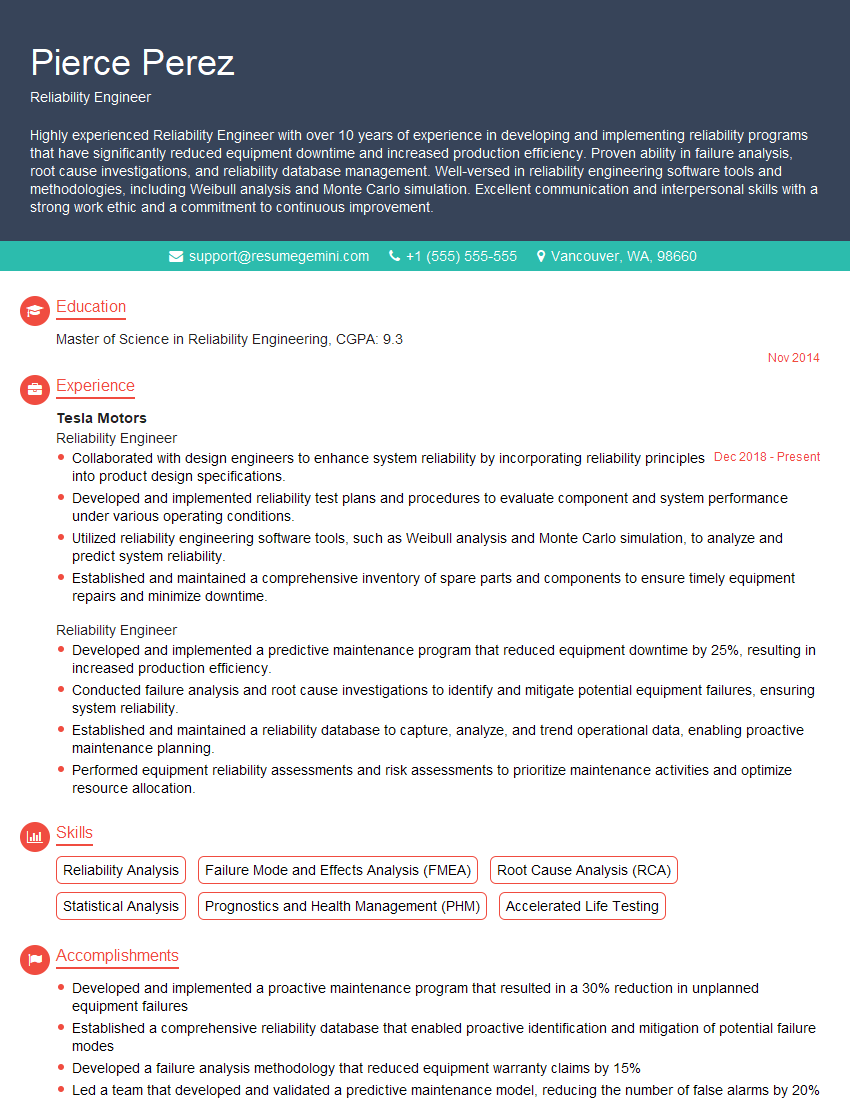
Reliability Engineer Resume Sample

Systems Engineer Resume Sample

Applications Engineer Resume Sample

Research Scientist Resume Sample

Automation Engineer Resume Sample

Firmware Engineer Resume Sample

Test Engineer Resume Sample
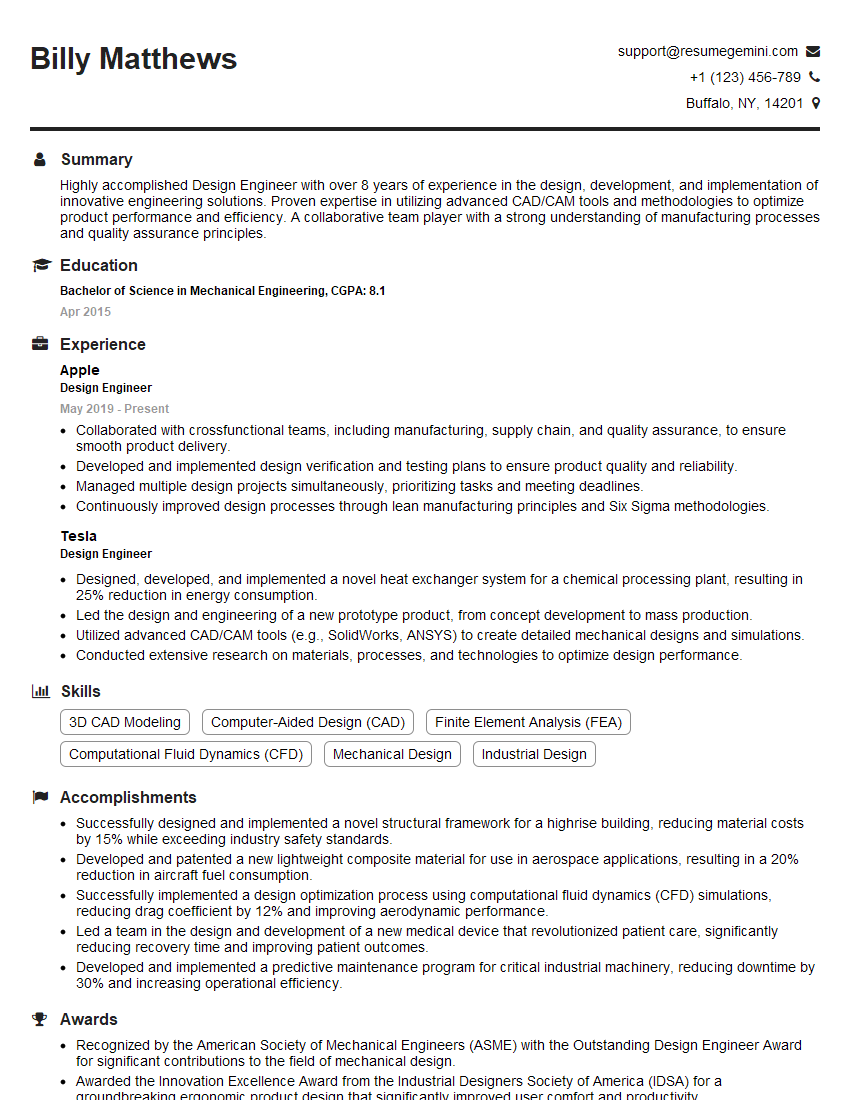
Design Engineer Resume Sample

Integration Engineer Resume Sample

Hardware Engineer Resume Sample
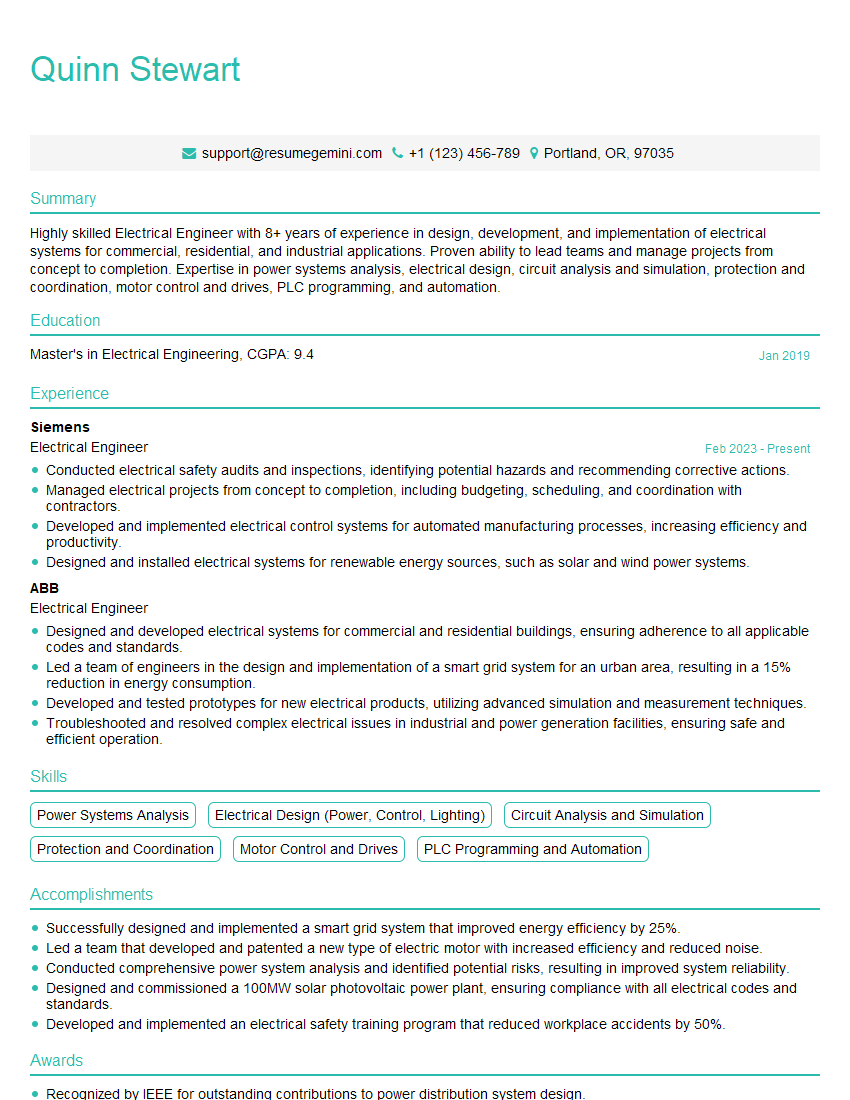
Electrical Engineer Resume Sample
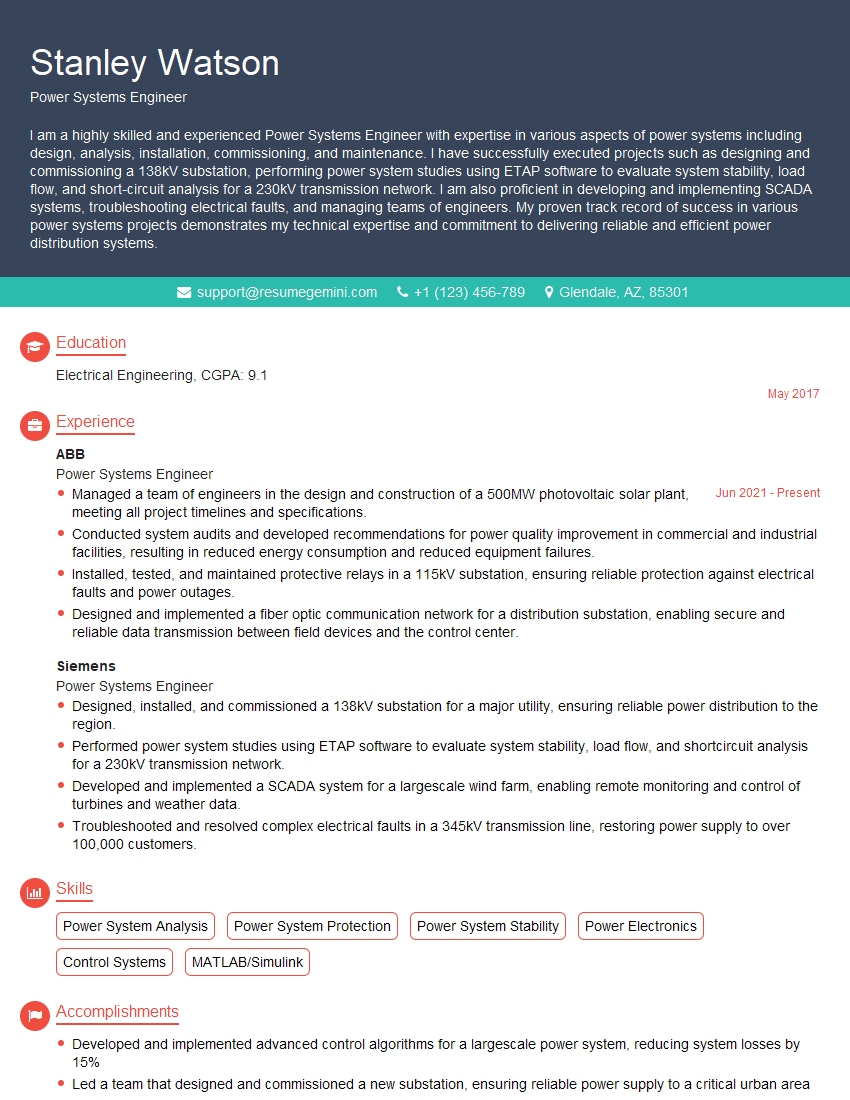
Power Systems Engineer Resume Sample
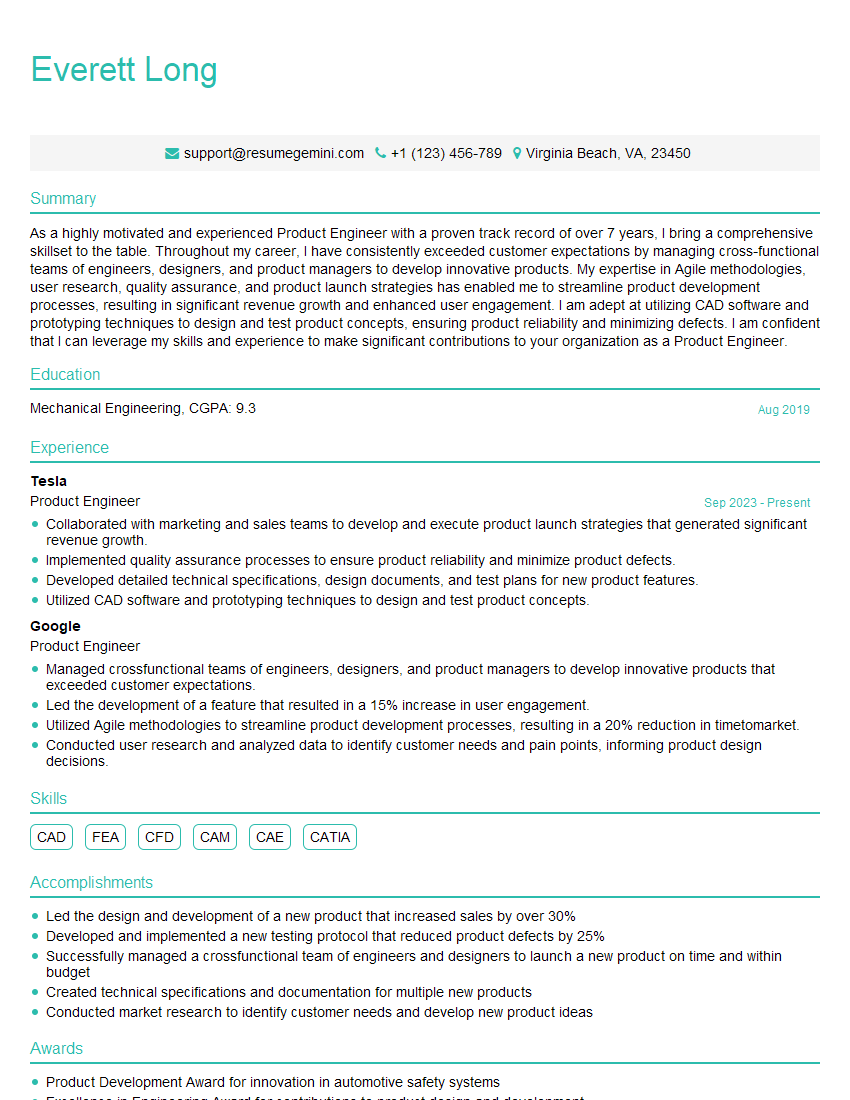
Product Engineer Resume Sample
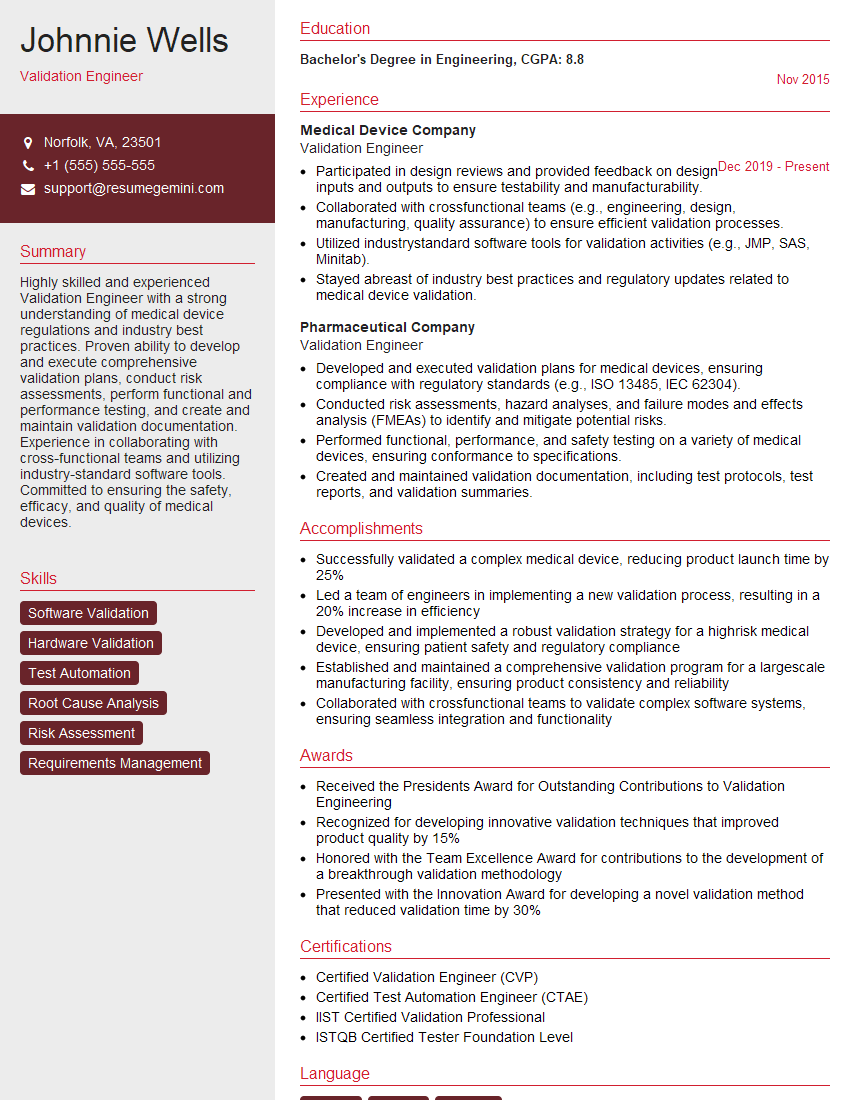
Validation Engineer Resume Sample
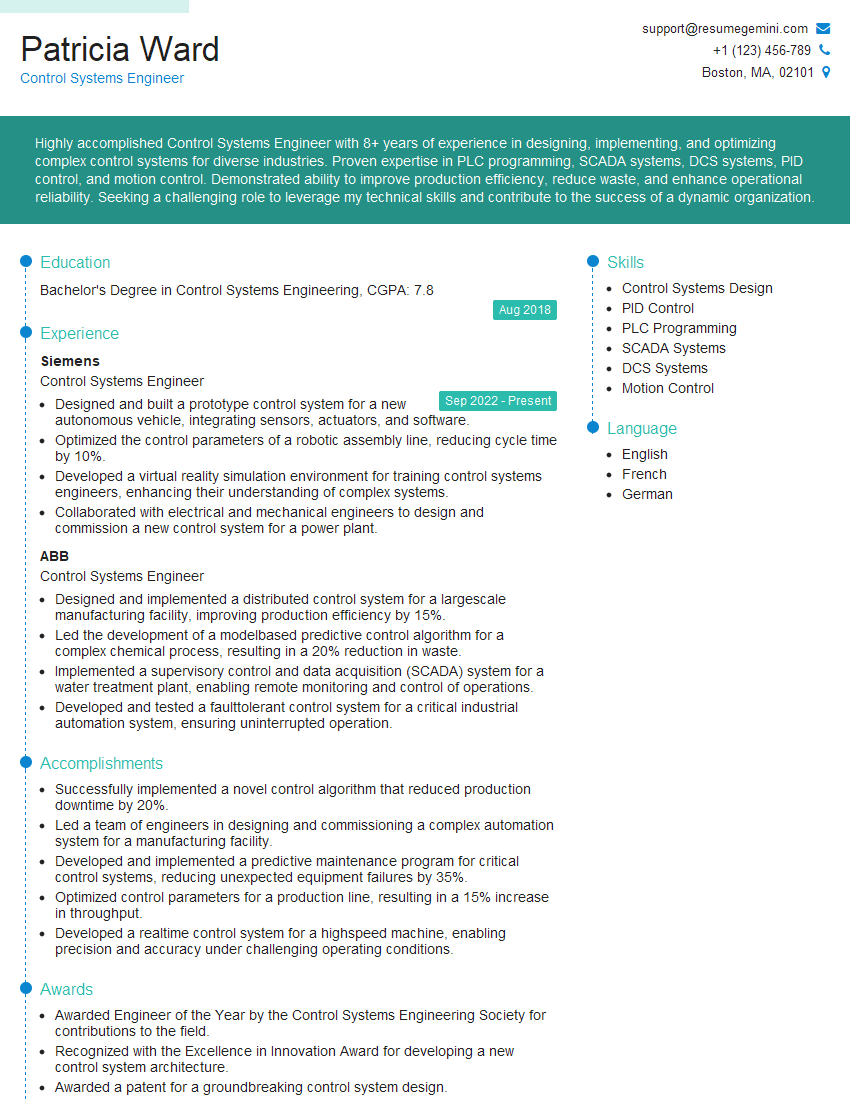
Control Systems Engineer Resume Sample

Robotics Engineer Resume Sample
- Project Engineer
- Reliability Engineer
- Systems Engineer
- Applications Engineer
- Research Scientist
- Automation Engineer
- Firmware Engineer
- Test Engineer
- Design Engineer
- Integration Engineer
- Hardware Engineer
- Electrical Engineer
- Power Systems Engineer
- Product Engineer
- Validation Engineer
- Control Systems Engineer
- Robotics Engineer
Explore more articles
Users Rating of Our Blogs
Share Your Experience
We value your feedback! Please rate our content and share your thoughts (optional).
What Readers Say About Our Blog
To the interviewgemini.com Webmaster.
Very helpful and content specific questions to help prepare me for my interview!
Thank you
To the interviewgemini.com Webmaster.
This was kind of a unique content I found around the specialized skills. Very helpful questions and good detailed answers.
Very Helpful blog, thank you Interviewgemini team.