Unlock your full potential by mastering the most common Experience with commercial and residential electrical installations interview questions. This blog offers a deep dive into the critical topics, ensuring you’re not only prepared to answer but to excel. With these insights, you’ll approach your interview with clarity and confidence.
Questions Asked in Experience with commercial and residential electrical installations Interview
Q 1. Explain the National Electrical Code (NEC) and its importance.
The National Electrical Code (NEC) is a widely adopted standard for the safe installation and design of electrical systems in the United States. It’s essentially a rulebook that ensures consistency and safety in electrical work, preventing fires, shocks, and other hazards. Think of it as the bible for electricians. It covers everything from wiring methods and circuit protection to grounding and special equipment installations. Compliance with the NEC is crucial for protecting lives and property, and it’s often mandated by local building codes and insurance companies. Failure to adhere to the NEC can lead to legal repercussions and costly repairs or replacements.
For example, the NEC specifies the minimum wire gauge to use based on the amperage of a circuit, preventing overheating and potential fires. It also dictates the proper installation of ground fault circuit interrupters (GFCIs) in wet locations, like bathrooms and kitchens, significantly reducing the risk of electrical shock.
Q 2. Describe your experience with different types of wiring (e.g., Romex, BX, conduit).
My experience encompasses a broad range of wiring methods. Romex, also known as NM cable, is a common type of non-metallic sheathed cable used in residential settings. It’s relatively easy to install and cost-effective, but it’s less durable than other options and requires proper protection in areas prone to damage. BX cable, or armored cable, offers better protection against physical damage as it’s encased in a metal sheath. It’s often used in areas where there’s a higher risk of damage, such as basements or garages. Conduit wiring involves running wires through metal or plastic pipes, offering the highest level of protection and flexibility for future modifications. It’s more labor-intensive but ideal for commercial settings and areas requiring significant durability.
I’ve worked extensively with all three, often choosing the most appropriate type based on the specific project requirements, budget, and safety considerations. For instance, in a remodel of an older home, I might opt for BX cable to replace outdated knob-and-tube wiring, providing better protection while minimizing disruption to existing walls. In a new commercial build, conduit is the preferred choice to ensure long-term protection and ease of future maintenance.
Q 3. How do you troubleshoot a faulty circuit breaker?
Troubleshooting a faulty circuit breaker involves a systematic approach. First, I’d visually inspect the breaker to see if it’s tripped (the switch is in the off position). If tripped, I’d carefully reset it by switching it off and then on again. If it immediately trips again, there’s a problem in the circuit it protects. I’d then turn off the main breaker to completely isolate the circuit. I’d then start by checking for overloaded circuits by carefully examining all outlets and appliances on that specific circuit. An overheated outlet, a constantly running appliance, or too many devices plugged in could be the cause. If this isn’t the problem, then I’d inspect the wiring for any signs of damage (bare wires, fraying insulation) using a voltage tester. Finally, if there are still no obvious causes, a further investigation might be necessary, and in some cases, it may require an additional professional examination.
For example, I once encountered a breaker that repeatedly tripped. After thorough inspection, I found a short circuit caused by damaged wiring behind a wall. Repairing the wiring and replacing the affected section solved the problem. Safety is paramount; always de-energize the circuit before working with it.
Q 4. Explain the process of installing a new electrical outlet.
Installing a new electrical outlet involves several steps. First, I’d turn off the power to the circuit at the breaker box to prevent electrical shock. Then, I’d locate the existing wiring in the wall, typically using a stud finder and potentially a wire detector. Next, I’d carefully cut a hole in the wall using a drywall saw, ensuring enough space for the outlet box. After that, I’d securely mount the outlet box, ensuring it’s level and properly fastened. I’d then connect the new outlet’s wires to the existing wiring according to the NEC (following the color code, black to hot, white to neutral, and bare copper to ground) and carefully secure the wires inside the outlet box, making sure they won’t touch or short circuit. Finally, I’d mount the outlet into the box, replace the wall plate, and switch the power back on. Before restoring power, I would visually inspect all connections to verify they are secure and well-insulated. Once power is restored, I would test the outlet using a tester to make sure it’s functioning correctly.
Q 5. What are the safety precautions you take when working with electricity?
Safety is my utmost priority. When working with electricity, I always start by turning off the power at the breaker box. This is the most crucial step to prevent electrocution. I never assume power is off; I always use a non-contact voltage tester to double-check before touching any wires. I wear appropriate safety gear, including insulated gloves and safety glasses, to protect myself from potential hazards. I also work with a helper or inform someone of my work, especially in confined spaces. Additionally, I ensure good housekeeping and maintain a clean and well-organized workspace to avoid tripping or accidental contact. I regularly inspect my tools to ensure they are in good working condition and appropriate for the task. In summary, consistent diligence and adhering to established safety protocols are not optional, they are essential when working with electricity. A moment’s lapse can have significant consequences.
Q 6. How do you calculate voltage drop in a circuit?
Voltage drop is the reduction in voltage that occurs as current flows through a conductor. It’s calculated using the following formula: Voltage Drop = (2 × Current × Length × Resistance) / 1000. Where the current is measured in amps, length in feet, and resistance in ohms per 1000 feet. This calculation is crucial to ensure that sufficient voltage reaches the end of the circuit. Insufficient voltage can lead to malfunctioning appliances or equipment. For example, a long run of small gauge wire to a distant motor could result in insufficient voltage to start the motor reliably. When doing calculations, remember to account for the number of conductors in conduit, as it can slightly increase the resistance.
In practice, I’ll often use online calculators or lookup tables to determine appropriate wire gauge based on voltage drop. The NEC provides guidance on acceptable voltage drop limits to ensure proper operation of electrical equipment. The length and the material of the conductors are also important factors in the calculation.
Q 7. What is grounding and why is it important?
Grounding is the connection of a circuit’s metal parts to the earth. It provides a low-resistance path for fault currents to flow to the ground, preventing dangerous voltages from appearing on exposed metal surfaces. Think of it as a safety valve. If a short circuit occurs, the fault current will flow through the ground wire, tripping the breaker and preventing electric shock or fire. Without grounding, the metal parts of an appliance could become energized, creating a serious shock hazard. Grounding is a critical safety feature that protects people and equipment from electric shock.
For instance, if a malfunction in a washing machine causes the metal casing to become live, a properly grounded system will direct the fault current to ground, preventing electric shock. In residential settings, the grounding system is usually connected to a ground rod driven into the earth and linked to the home’s electrical panel. In commercial settings, grounding is typically more complex and involves extensive systems to safeguard high current equipment.
Q 8. Describe your experience with different types of electrical panels.
My experience encompasses a wide range of electrical panels, from small residential load centers to large commercial switchboards. I’m proficient with various manufacturers and panel types, including those with different busbar configurations and breaker styles. For instance, I’ve worked extensively with Square D QO and Homeline panels in residential settings, and Siemens and Eaton panels in commercial applications. I understand the importance of proper panel sizing to ensure adequate capacity for present and future loads, adhering strictly to NEC codes. I’ve also worked with panels incorporating arc fault circuit interrupters (AFCIs) and ground fault circuit interrupters (GFCIs) for enhanced safety.
Beyond standard panels, I have experience with sub-panels, which are smaller panels fed from a main panel and allow for efficient load distribution in larger buildings. My understanding extends to the proper grounding and bonding techniques required for safe panel operation. In larger commercial settings I’ve worked with switchboards incorporating multiple feeders and metering equipment, requiring a deeper understanding of power distribution and system protection.
Q 9. How do you identify and handle different types of electrical hazards?
Identifying and handling electrical hazards is paramount to my work. I follow a systematic approach, beginning with a thorough visual inspection to identify potential problems such as exposed wiring, damaged insulation, overloaded circuits, and improperly grounded equipment. I then utilize appropriate testing equipment, including multimeters and voltage testers, to verify the safety of circuits and equipment before working on them. Lockout/Tagout procedures are always followed religiously to prevent accidental energization.
Specific hazards I routinely address include: arc flash hazards (mitigated through proper PPE and safe work practices), shock hazards (addressed through insulation checks, grounding verification, and the use of insulated tools), and fire hazards (prevented through proper wiring, load calculations, and regular inspections). For example, I once discovered a loose connection in a junction box that was creating excessive heat. Identifying this before it caused a fire prevented a potentially disastrous situation.
Q 10. What are your experiences with different types of lighting systems?
My experience with lighting systems includes a vast array of technologies, from traditional incandescent and fluorescent systems to modern LED and smart lighting solutions. I’m adept at designing and installing lighting systems that meet both functional and aesthetic requirements. This includes understanding the nuances of different lighting types, such as the color temperature (measured in Kelvin) and color rendering index (CRI) of light sources.
In residential projects, I’ve installed everything from basic recessed lighting to more complex systems involving dimmer switches and occupancy sensors. Commercially, I’ve worked with larger-scale lighting projects including high-bay lighting in warehouses, emergency lighting systems compliant with fire codes, and sophisticated lighting control systems utilizing DMX or other protocols.
I also have experience with troubleshooting lighting issues, identifying the source of problems quickly and efficiently, such as faulty ballasts, wiring errors or even issues with the power supply.
Q 11. Explain your experience with installing and troubleshooting three-phase power.
Three-phase power installations require a high level of expertise due to the complexity of the system. I have extensive experience installing and troubleshooting three-phase power systems in commercial settings. This includes understanding the different configurations of three-phase power (wye and delta), and how to properly connect motors, transformers, and other three-phase equipment. I’m also familiar with the safety precautions necessary when working with high-voltage three-phase systems.
Troubleshooting three-phase systems often involves using specialized testing equipment to identify faults in the wiring or equipment. For example, I once had to diagnose a problem with a three-phase motor that was causing an imbalance in the current draw. By carefully checking voltage, current, and phase rotation, I identified a faulty winding within the motor itself.
My experience encompasses working with various types of three-phase protection devices including circuit breakers, fuses, and motor starters. Safety is my utmost concern and proper lock out/tag out procedures are always followed.
Q 12. Describe your experience with working on commercial projects.
My commercial project experience involves a broad spectrum of projects, from small retail spaces to large industrial facilities. I’ve worked on projects involving extensive lighting systems, complex power distribution, and specialized equipment installations. This includes experience with working to meet stringent building codes and local regulations. For example, I worked on a recent project involving the installation of a new power distribution system for a large office building, requiring meticulous planning and coordination with other trades.
Collaboration is key in commercial work. I am experienced in working closely with architects, engineers, and other contractors to ensure that the electrical work meets the project requirements and is completed on time and within budget. I’m comfortable navigating complex blueprints and specifications and ensuring all work is completed according to plan.
Q 13. Describe your experience with working on residential projects.
Residential projects offer a different set of challenges. While the scale is often smaller than commercial work, the focus on detail and homeowner satisfaction is paramount. I have experience with new construction as well as renovations, from simple wiring upgrades to complete electrical system overhauls. This includes installing lighting fixtures, outlets, switches, and other related components. I often work with clients directly, explaining technical details in a clear and understandable way.
One memorable residential project involved upgrading an older home’s electrical system, improving its safety and capacity for modern appliances. This required careful planning to minimize disruption to the homeowners and ensure the work was completed to their satisfaction. I prioritize maintaining a clean and organized work environment, minimizing disruption to the homeowners throughout the process.
Q 14. How do you handle unexpected issues on a job site?
Handling unexpected issues is a regular part of the job. My approach is methodical and prioritizes safety. First, I assess the situation to understand the nature of the problem and its potential impact on safety and project timelines. I then document the issue thoroughly, including photos and notes, before implementing a solution.
For example, I once discovered a hidden water leak while working on a renovation project that damaged some wiring. Instead of rushing to repair the wiring immediately, I paused to address the water leak and let the affected area dry thoroughly to prevent further damage and ensure the safety of my work. I’m comfortable making sound, informed decisions under pressure, and contacting relevant parties such as inspectors or suppliers as needed to resolve the issue effectively and safely.
Q 15. How do you manage your time effectively on a project?
Effective time management is crucial in electrical installations. I utilize a project management approach that combines detailed planning with flexible adaptation. This starts with a thorough review of blueprints and specifications to accurately estimate the time required for each task. I then break down the project into smaller, manageable phases, creating a detailed schedule using tools like Gantt charts. This allows for better tracking of progress and identification of potential delays early on. For example, on a recent residential renovation, I meticulously scheduled tasks like rough-in, trim-out, and fixture installation, allocating specific time slots for each, allowing for potential unforeseen issues.
Regular monitoring and adjustments are key. Daily or weekly progress meetings with the team and clients keep everyone informed and allow for quick problem-solving. If unforeseen complications arise (e.g., discovering faulty wiring during demolition), I immediately reassess the schedule and communicate any necessary adjustments to stakeholders. This proactive approach minimizes project delays and maintains client satisfaction.
Career Expert Tips:
- Ace those interviews! Prepare effectively by reviewing the Top 50 Most Common Interview Questions on ResumeGemini.
- Navigate your job search with confidence! Explore a wide range of Career Tips on ResumeGemini. Learn about common challenges and recommendations to overcome them.
- Craft the perfect resume! Master the Art of Resume Writing with ResumeGemini’s guide. Showcase your unique qualifications and achievements effectively.
- Don’t miss out on holiday savings! Build your dream resume with ResumeGemini’s ATS optimized templates.
Q 16. What software or tools do you use for electrical design or calculations?
I use a range of software and tools for electrical design and calculations, ensuring accuracy and efficiency. For design, I’m proficient in AutoCAD, which allows me to create detailed drawings and schematics. This includes creating floor plans, wiring diagrams, and panel layouts. For calculations, I utilize software such as EasyPower, which helps with load calculations, short circuit studies, and arc flash analysis. This ensures the electrical system is safe and meets the required standards. Additionally, I frequently use specialized software for lighting design to optimize energy efficiency and create the desired ambiance. For simpler calculations, I utilize spreadsheets to track material quantities and costs.
Example: In AutoCAD, I would use the electrical symbols library to create detailed wiring diagrams showing the path of conductors, location of outlets, and connection to the panel.Q 17. Explain your experience with electrical blueprints and schematics.
Interpreting electrical blueprints and schematics is fundamental to my work. I have extensive experience reading and understanding various types of drawings, from single-line diagrams to detailed panel schedules. I can identify different symbols, understand their meanings, and extract necessary information such as circuit details, wire sizes, and equipment specifications. This includes deciphering symbols for different types of switches, outlets, lighting fixtures, and other electrical components. For instance, understanding the difference between a single-pole and a three-way switch is critical for proper circuit design.
I’ve worked on projects ranging from small residential renovations to large commercial installations, requiring proficiency in interpreting diverse blueprints. My ability to quickly and accurately understand these documents ensures projects are executed correctly and efficiently. If ambiguities exist, I always seek clarification from the architect or engineer before proceeding.
Q 18. How do you ensure compliance with building codes and regulations?
Compliance with building codes and regulations is paramount. I ensure compliance by thoroughly familiarizing myself with the relevant codes—NEC (National Electrical Code) in the US, or equivalent local regulations—before starting any project. This includes staying updated on code changes and amendments. I conduct regular self-inspections during different project phases (rough-in, trim-out, final inspection) to verify adherence to these codes. I also maintain detailed records of all inspections and test results.
For example, when installing ground fault circuit interrupters (GFCIs) in bathrooms and kitchens, I meticulously verify proper installation and testing according to NEC requirements. I also ensure all wiring methods and installations adhere to the specified code for the type of construction and occupancy. Collaboration with inspectors and other trades is also important for resolving any potential conflicts and achieving seamless code compliance.
Q 19. Describe your experience with different types of motors and motor controls.
I have extensive experience with various types of motors and motor controls. This ranges from small AC induction motors used in residential applications (e.g., HVAC fans) to larger three-phase motors commonly found in commercial settings (e.g., pumps and conveyors). I understand the different motor types—AC induction, DC motors, servo motors—their characteristics, and their respective control systems.
I am familiar with various motor control techniques, including variable frequency drives (VFDs), soft starters, and motor starters. For instance, I’ve used VFDs to control the speed of large pumps in industrial settings, optimizing energy efficiency and minimizing wear and tear. Selecting the appropriate motor and control system depends on the application’s specific needs, considering factors like load characteristics, required torque, and energy efficiency. Proper sizing and control are critical to ensure both functionality and safety.
Q 20. What are your experiences with low-voltage systems (e.g., security, data)?
My experience with low-voltage systems, such as security and data networks, includes both installation and troubleshooting. I’m proficient in installing structured cabling for network infrastructure, including running CAT5e or CAT6 cabling for data and network connections. I also have experience with security system installations, which often involves working with CCTV cameras, access control systems, and alarm systems.
Understanding the specific protocols and requirements for these systems is crucial for proper installation. For instance, ensuring proper grounding and shielding for data cables is essential for preventing interference and data loss. Troubleshooting low-voltage issues often requires systematic analysis, using multimeters and other diagnostic tools to identify and resolve connectivity problems or faulty components. This involves using appropriate testing equipment and following established protocols for different systems.
Q 21. How do you maintain accurate records and documentation of your work?
Maintaining accurate records and documentation is essential for both quality control and legal compliance. I meticulously document all aspects of a project, from initial design to final inspection. This involves creating detailed reports, using digital and physical documentation. I utilize software to create organized files, including electrical schematics, wiring diagrams, material lists, test results, and inspection reports. This ensures easy retrieval of information and supports future maintenance or troubleshooting.
For example, I maintain a detailed log of all installed equipment, including manufacturer’s specifications, serial numbers, and installation dates. This is invaluable for warranty claims or future upgrades. All inspections are documented with photographs and written reports that are shared with clients and regulatory authorities. This organized approach ensures accountability and minimizes the risk of errors or misunderstandings.
Q 22. Explain your experience with working with different types of conduit.
My experience encompasses a wide range of conduit types, each chosen based on the specific project requirements and applicable codes. I’ve extensively worked with rigid metal conduit (RMC), intermediate metal conduit (IMC), electrical metallic tubing (EMT), flexible metal conduit (FMC), and high-density polyethylene (HDPE) conduit.
- RMC: Provides superior strength and protection, ideal for industrial settings or areas with high potential for physical damage. I’ve used it extensively in commercial projects, particularly where impact resistance is crucial.
- IMC: Lighter than RMC, making it easier to handle and install. It’s a cost-effective option often used in residential and smaller commercial projects, especially where weight is a concern.
- EMT: Lightweight and flexible, perfect for residential applications and where bending is required. I find its ease of installation particularly helpful in retrofit situations or tight spaces.
- FMC: Used for connecting equipment or flexible connections. I often employ FMC in situations needing some degree of movement, like connecting appliances or machinery.
- HDPE: A non-metallic option, chosen for its corrosion resistance and use in corrosive environments like chemical plants or underground installations. I have experience installing HDPE conduit for underground services, ensuring proper depth and protection from damage.
Selecting the right conduit is crucial for ensuring the safety and longevity of the electrical installation. Factors like cost, durability, ease of installation, and environmental conditions are all considered before making a selection.
Q 23. How do you test for proper grounding?
Proper grounding is paramount for safety, preventing electrical shocks and equipment damage. Testing involves several steps, typically using a multimeter:
- Visual Inspection: First, I visually inspect the grounding system for any visible damage, loose connections, or corrosion. This is a crucial first step and often reveals problems before further testing.
- Ground Resistance Measurement: Using a ground resistance tester (often called a Megger), I measure the resistance between the grounding electrode and the earth. A low resistance value (ideally under 5 ohms) indicates a good ground connection. Higher resistance suggests problems needing attention. This ensures the system can effectively carry fault currents away from the equipment and wiring.
- Continuity Testing: I use a multimeter to check for continuity between the grounding electrode and all grounded metal components in the system (like metal boxes, conduit, and equipment enclosures). Continuity confirms a complete circuit path, allowing for proper fault current flow.
- Voltage Testing: While not a direct ground test, checking for voltage on the grounding conductor ensures it’s not inadvertently carrying voltage. A voltage reading indicates a serious fault and requires immediate investigation and repair.
The exact acceptable resistance values depend on local codes and the specific application, but maintaining a low resistance is always the objective. Any issues identified during testing are addressed immediately, ensuring the installation remains safe and compliant.
Q 24. Describe your experience with electrical testing equipment (e.g., multimeters, meggers).
My experience with electrical testing equipment is extensive, encompassing various tools such as multimeters, meggers, clamp meters, and insulation testers. These instruments are essential for ensuring the safety and functionality of electrical systems.
- Multimeters: I use multimeters daily for basic voltage, current, and resistance measurements. They’re invaluable for troubleshooting circuits, verifying wiring connections, and ensuring proper component operation. For instance, checking voltage at outlets or testing for continuity in a circuit.
- Meggers (Insulation Resistance Testers): These are critical for testing insulation integrity in cables and equipment. I use meggers to ensure proper insulation resistance to prevent short circuits and electrical shock hazards. This is especially important for testing motors, transformers, and high-voltage equipment.
- Clamp Meters: I utilize clamp meters to measure current without interrupting the circuit, providing a quick and efficient way to assess the load on circuits and troubleshoot current imbalances.
- Insulation Testers: Specialized for measuring the insulation resistance of cables and equipment.
Proficiency with these instruments ensures thorough testing and prevents potential safety issues. Regular calibration and maintenance of all testing equipment is crucial to maintaining accuracy and reliable results.
Q 25. How do you plan and organize your work for large projects?
Planning and organizing large projects require a structured approach to ensure efficient execution and meet deadlines. I typically follow these steps:
- Detailed Blueprint Review: I begin with a thorough review of the blueprints and specifications, understanding the scope of work, identifying potential challenges, and confirming material requirements.
- Material Procurement: Based on the blueprint review, I develop a detailed materials list, ensuring timely procurement to avoid delays. This includes verifying compatibility and ordering well in advance.
- Team Coordination: For larger projects, a team is essential. I’ll coordinate with electricians, apprentices, and other tradespeople, establishing roles, responsibilities, and timelines. Clear communication is key to a successful execution.
- Scheduling & Sequencing: I create a detailed schedule outlining tasks and their dependencies, optimizing the workflow to minimize downtime and maximize efficiency. This includes task prioritization and resource allocation.
- Regular Progress Reviews: Regular progress meetings are crucial to monitor progress, address challenges proactively, and make any necessary adjustments to the schedule or resource allocation.
- Quality Control: In-process quality checks are implemented at each stage, ensuring compliance with codes and specifications. This prevents minor issues from escalating into larger problems.
This systematic approach ensures projects are completed safely, efficiently, and to the client’s satisfaction, avoiding costly mistakes and delays.
Q 26. Describe a time you had to solve a complex electrical problem.
During a commercial renovation, we encountered an intermittent short circuit in a main power distribution panel. Initial troubleshooting proved fruitless, as the problem was inconsistent and didn’t appear readily.
Using a combination of techniques, including infrared thermal imaging, current clamp measurements, and thorough visual inspections, we pinpointed the fault to a loose connection within a high-current circuit breaker. The heat generated from the loose connection wasn’t immediately apparent due to the intermittent nature of the fault. Thermal imaging revealed a subtle temperature increase that wasn’t detectable through other methods. After tightening the connection, the issue was resolved.
This experience highlights the importance of systematic troubleshooting and employing a variety of tools and techniques to isolate complex problems. Jumping to conclusions without thorough investigation can lead to unnecessary work and potentially safety hazards.
Q 27. How do you prioritize tasks when working on multiple projects?
When juggling multiple projects, prioritization is essential to ensure timely completion and avoid conflicts. I use a combination of strategies:
- Urgency & Importance Matrix: I categorize projects based on their urgency and importance, focusing on high-urgency, high-importance tasks first. This ensures critical deadlines are met.
- Deadline-Based Scheduling: I create a detailed schedule for each project with clear deadlines, assigning resources effectively to ensure timely completion. I often use project management software to track progress and prioritize.
- Resource Allocation: I carefully allocate resources—personnel, materials, and tools—to the projects that require them most, optimizing efficiency and preventing bottlenecks. This may involve re-prioritizing tasks based on resource availability.
- Regular Communication: Maintaining open communication with clients and project stakeholders is crucial. This allows for adjustments based on changing priorities or unforeseen circumstances.
Effective prioritization enhances productivity and ensures all projects are completed successfully, maintaining client satisfaction.
Q 28. What are your strategies for staying up-to-date with industry changes and best practices?
Staying current in the electrical industry is crucial for maintaining competency and safety. My strategies include:
- Continuing Education: I actively pursue continuing education courses and workshops offered by professional organizations like the IEEE (Institute of Electrical and Electronics Engineers) and local electrical licensing boards. These courses cover new technologies, code updates, and best practices.
- Industry Publications & Journals: I regularly read industry publications and journals like Electrical Contractor magazine to keep abreast of the latest advancements, code changes, and safety regulations. Staying informed about new technologies is crucial.
- Professional Networks: I participate in professional organizations and networks, attending meetings and conferences to exchange ideas and learn from other professionals. Collaboration helps staying informed about the latest trends.
- Online Resources & Webinars: I utilize online resources and participate in webinars to access up-to-date information, learning about emerging technologies and best practices.
- Manufacturer Training: Many equipment manufacturers offer training programs on their products. I leverage these programs to stay current with the most advanced technologies.
Continuous learning ensures I maintain proficiency, enhance my skills, and remain compliant with the latest industry standards, maximizing project safety and efficiency.
Key Topics to Learn for Experience with Commercial and Residential Electrical Installations Interview
- National Electrical Code (NEC) Compliance: Understanding and applying relevant NEC articles for both commercial and residential settings. This includes safe wiring practices, grounding techniques, and code updates.
- Wiring Systems & Diagrams: Interpreting and creating wiring diagrams for various applications, including single-phase and three-phase systems. Practical application involves troubleshooting issues using these diagrams.
- Residential Installation Procedures: Familiarity with common residential installations such as service upgrades, branch circuits, receptacle installation, lighting fixtures, and appliance circuits. This includes understanding load calculations and proper sizing of components.
- Commercial Installation Procedures: Experience with larger-scale commercial projects, including understanding power distribution systems, motor controls, lighting systems (including emergency lighting), and fire alarm systems integration.
- Troubleshooting and Diagnostics: Developing problem-solving skills to identify and resolve electrical faults using multimeters, clamp meters, and other diagnostic tools. This includes understanding the use of schematics and blueprints for fault tracing.
- Safety Procedures and Regulations: Deep understanding of electrical safety regulations, lockout/tagout procedures, and personal protective equipment (PPE) use. This also includes awareness of potential hazards and mitigation strategies.
- Blueprint Reading and Interpretation: Ability to accurately read and interpret electrical blueprints and schematics to understand project requirements and plan installation effectively.
- Electrical Calculations: Understanding and performing calculations related to voltage drop, load calculations, and circuit sizing. This is crucial for ensuring efficient and safe installations.
- Material Selection and Estimation: Experience in selecting appropriate materials for different electrical installations based on project specifications and cost-effectiveness. This includes accurate material estimation for projects.
- Testing and Inspection Procedures: Knowledge of testing equipment and procedures to ensure compliance with safety standards and building codes. Understanding of inspection protocols and procedures.
Next Steps
Mastering experience with commercial and residential electrical installations significantly enhances your career prospects, opening doors to diverse and rewarding roles within the industry. A well-crafted, ATS-friendly resume is key to showcasing your skills and experience effectively to potential employers. ResumeGemini is a trusted resource to help you create a professional and impactful resume that highlights your qualifications. Examples of resumes tailored to highlight experience with commercial and residential electrical installations are available to guide you through the process.
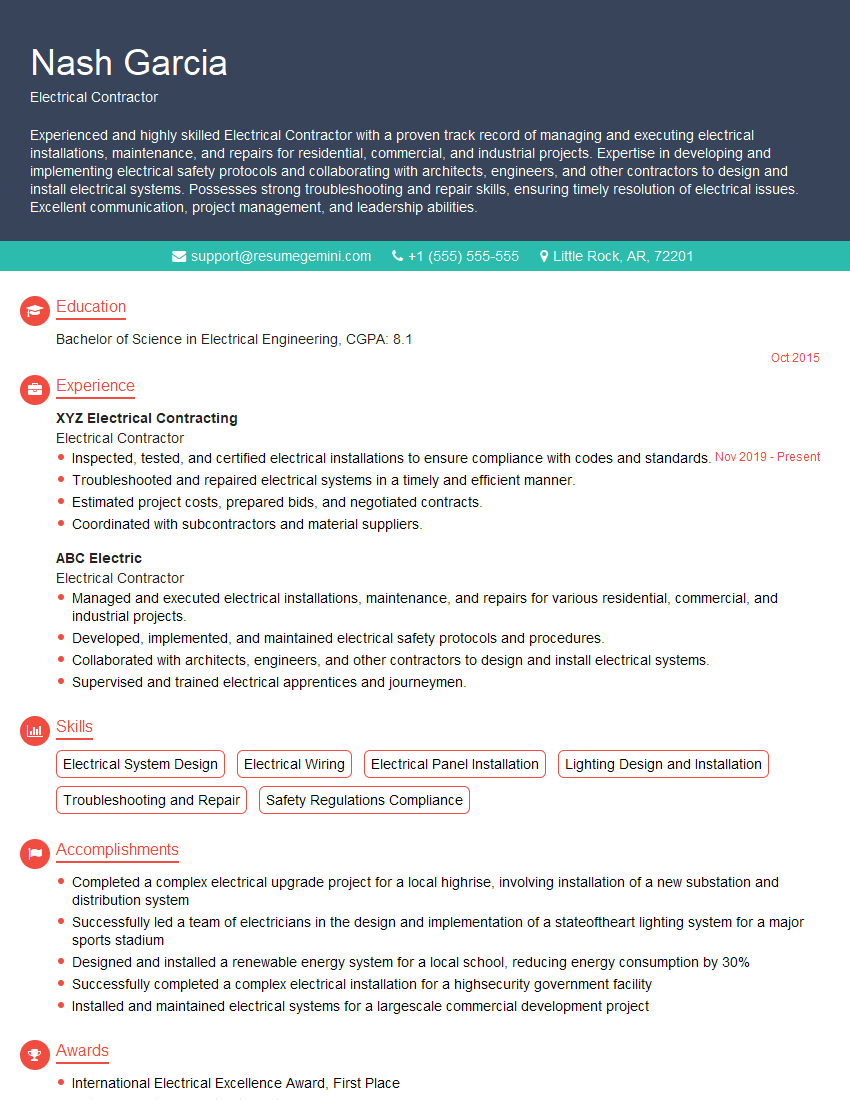
Electrical Contractor Resume Sample
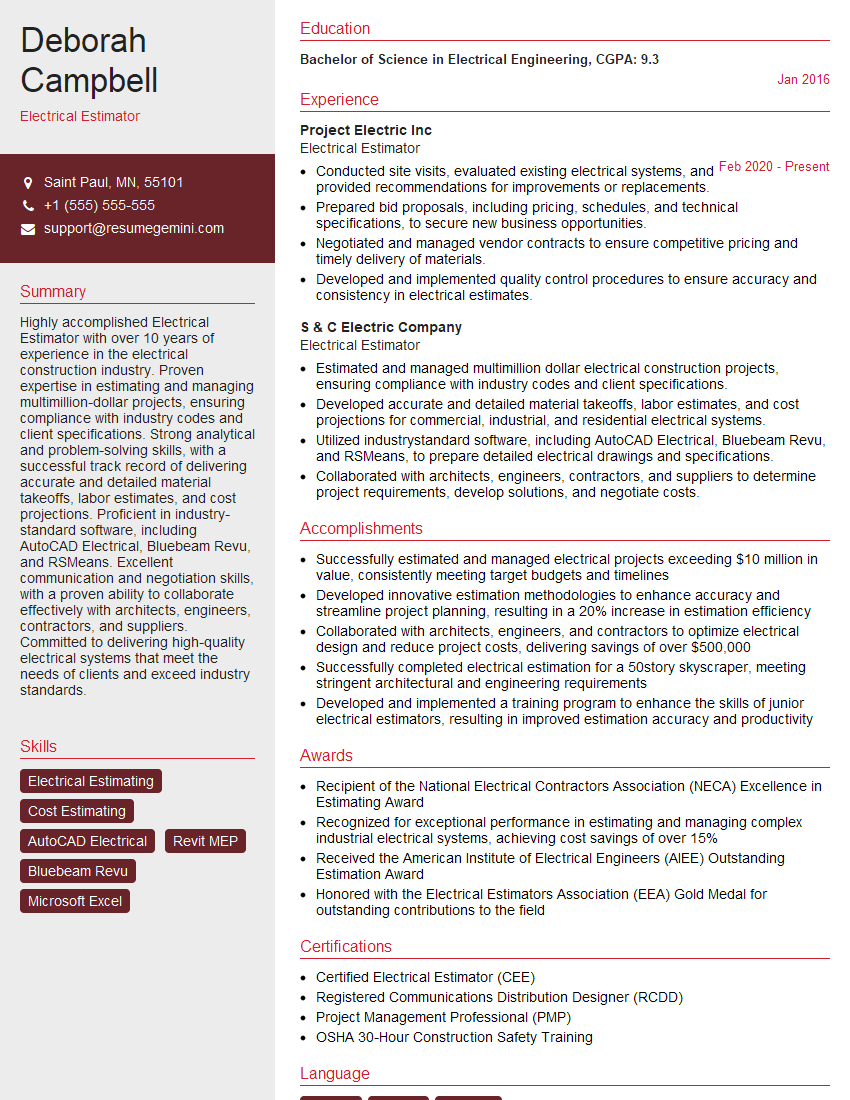
Electrical Estimator Resume Sample
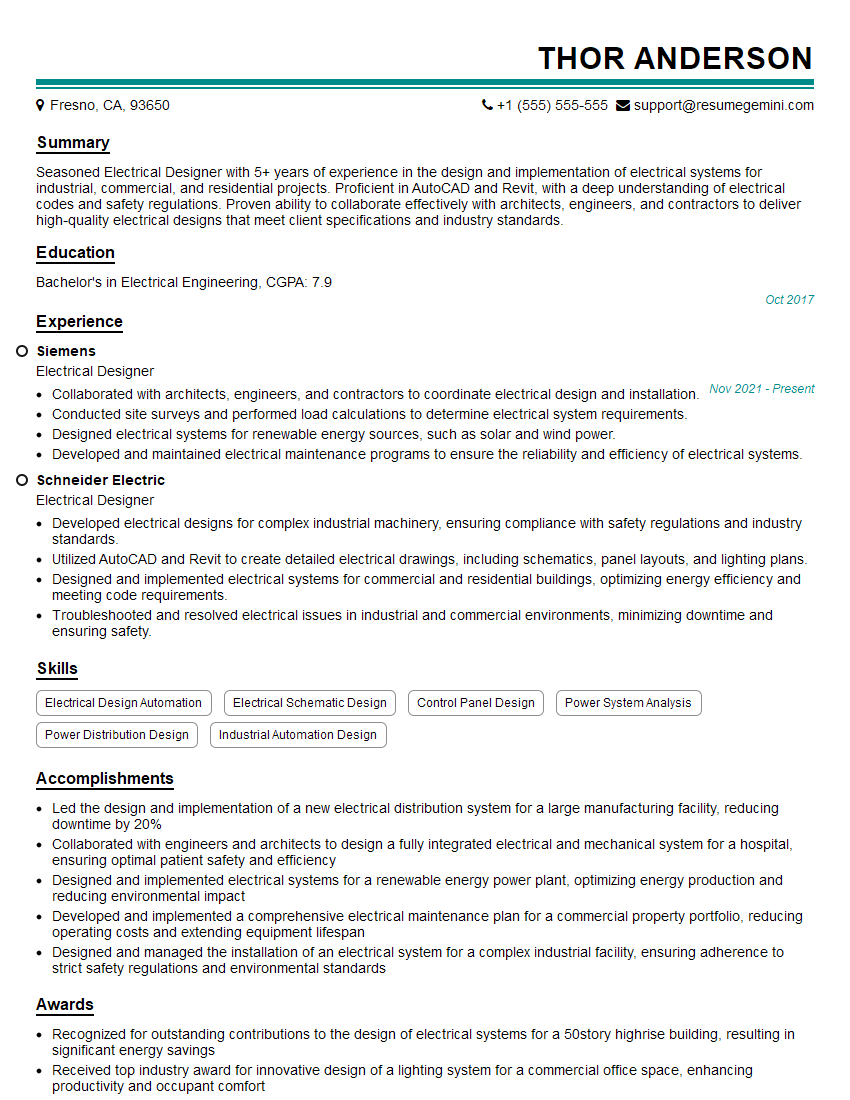
Electrical Designer Resume Sample
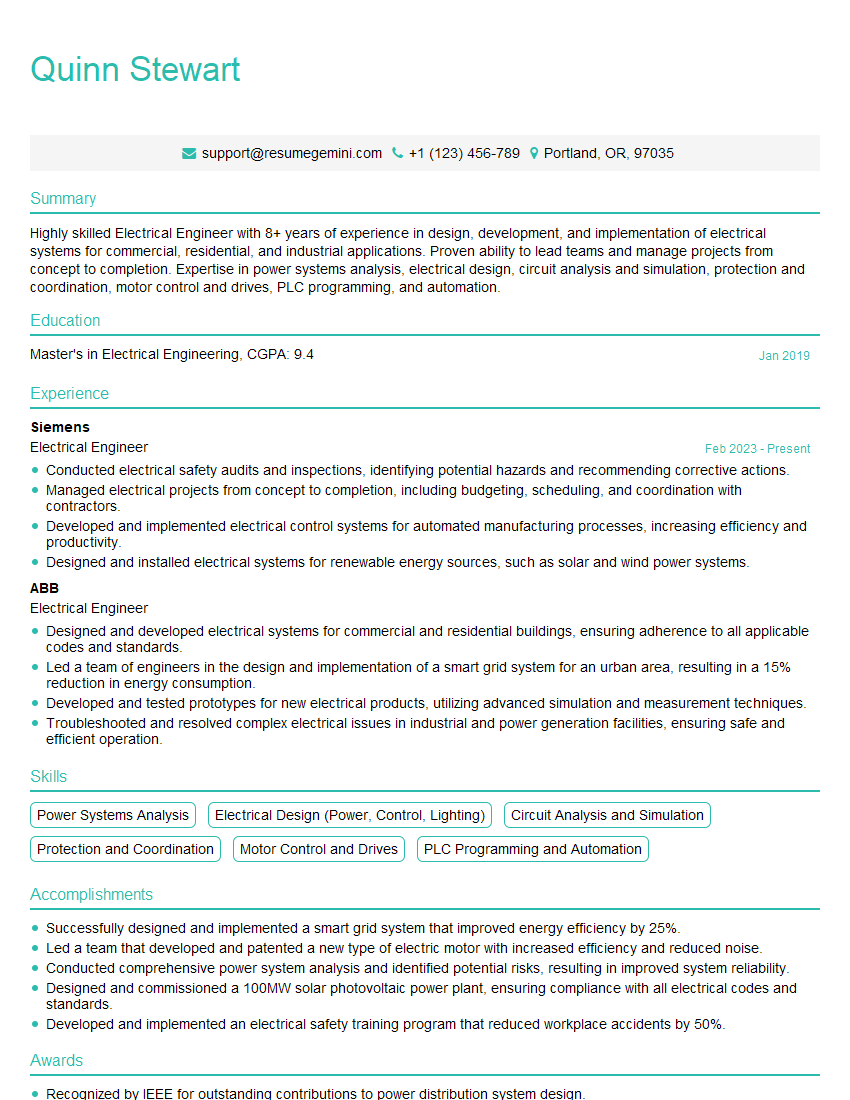
Electrical Engineer Resume Sample
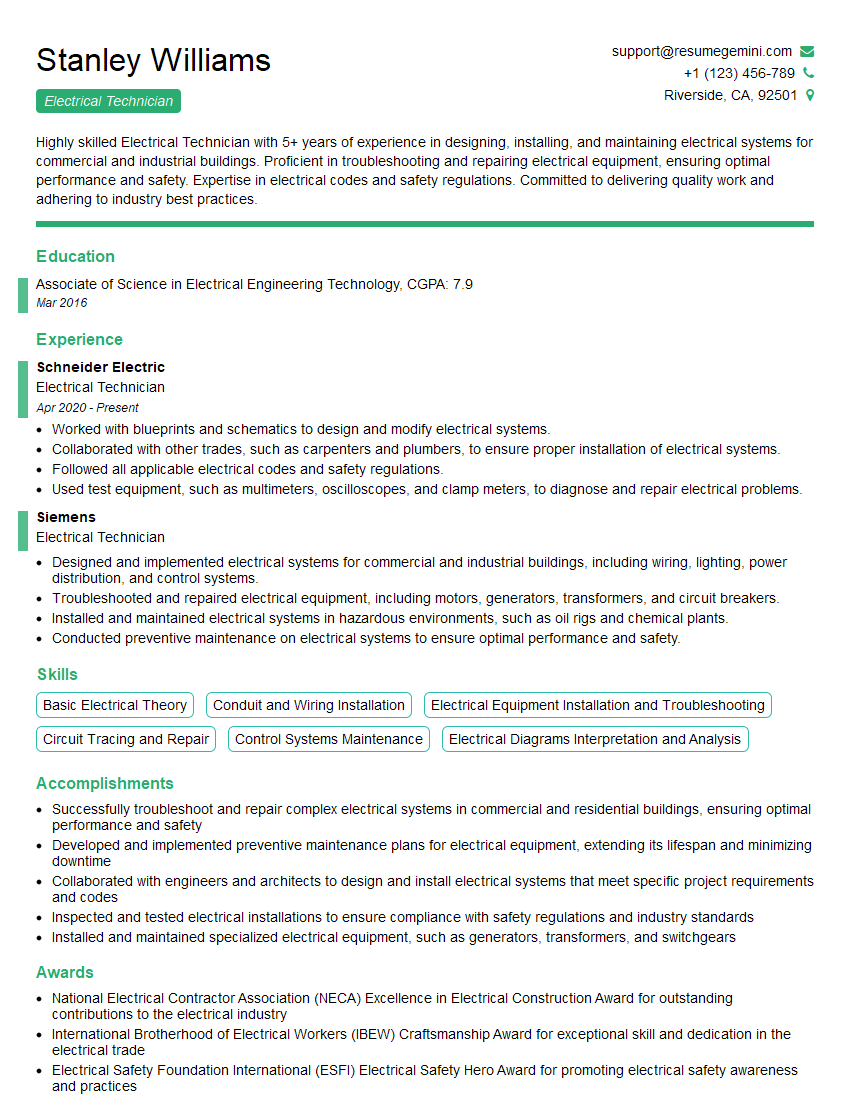
Electrical Technician Resume Sample
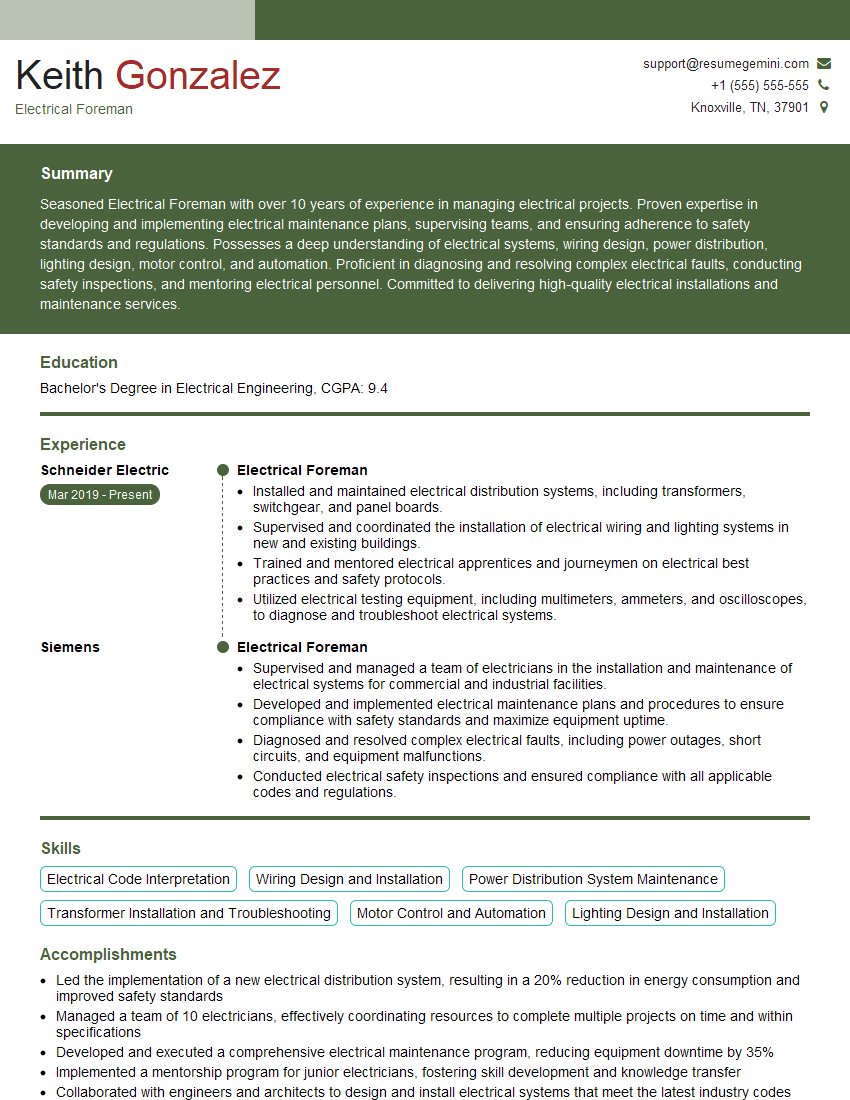
Electrical Foreman Resume Sample
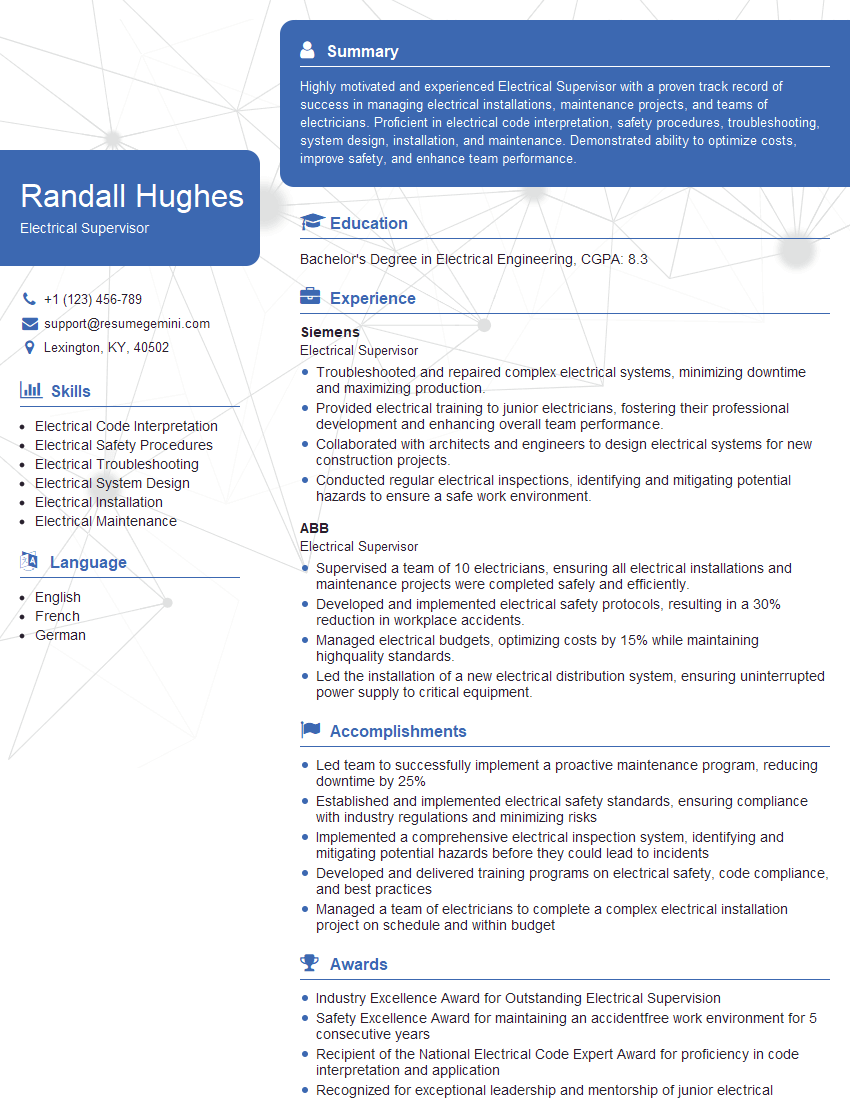
Electrical Supervisor Resume Sample
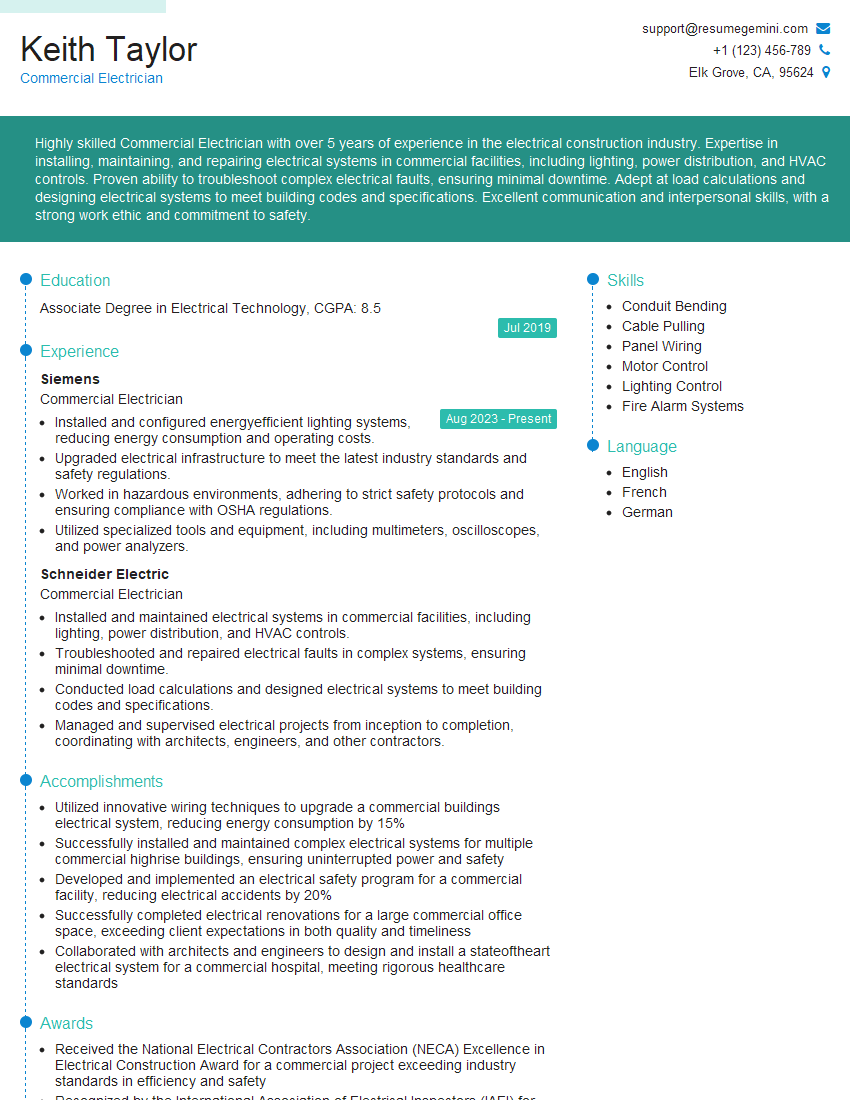
Commercial Electrician Resume Sample
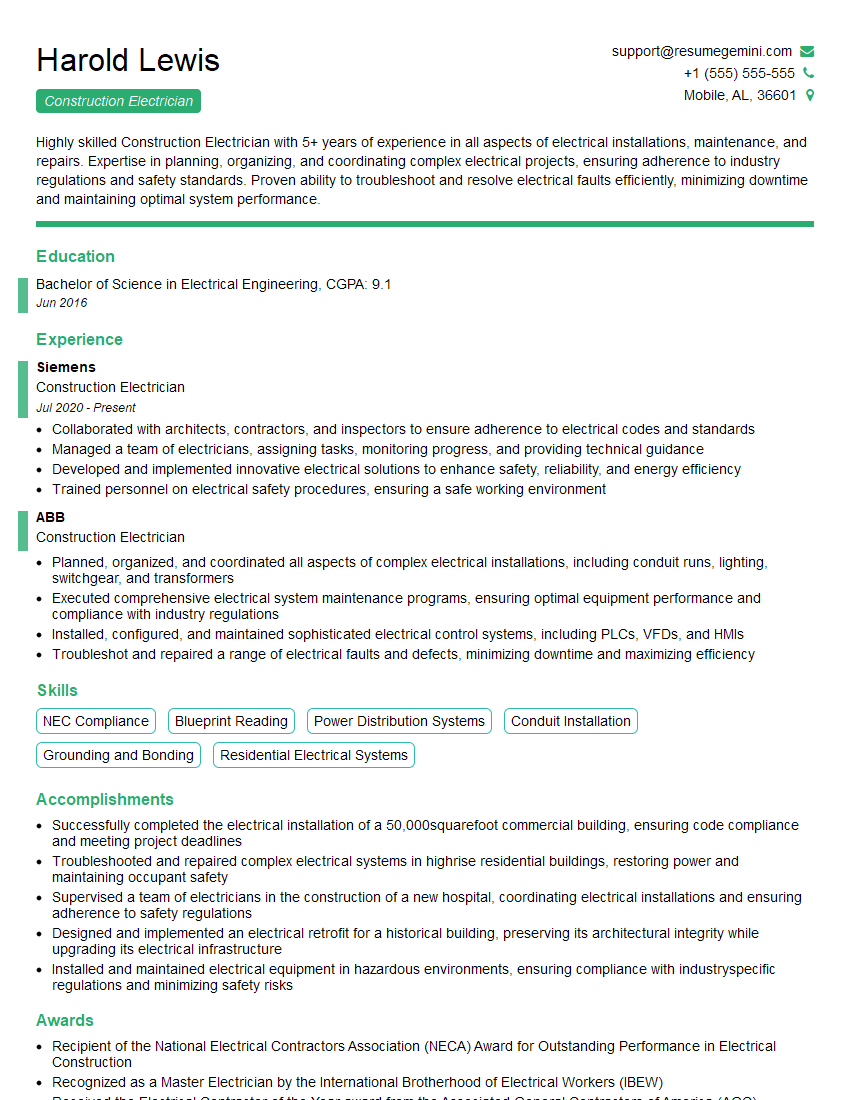
Construction Electrician Resume Sample
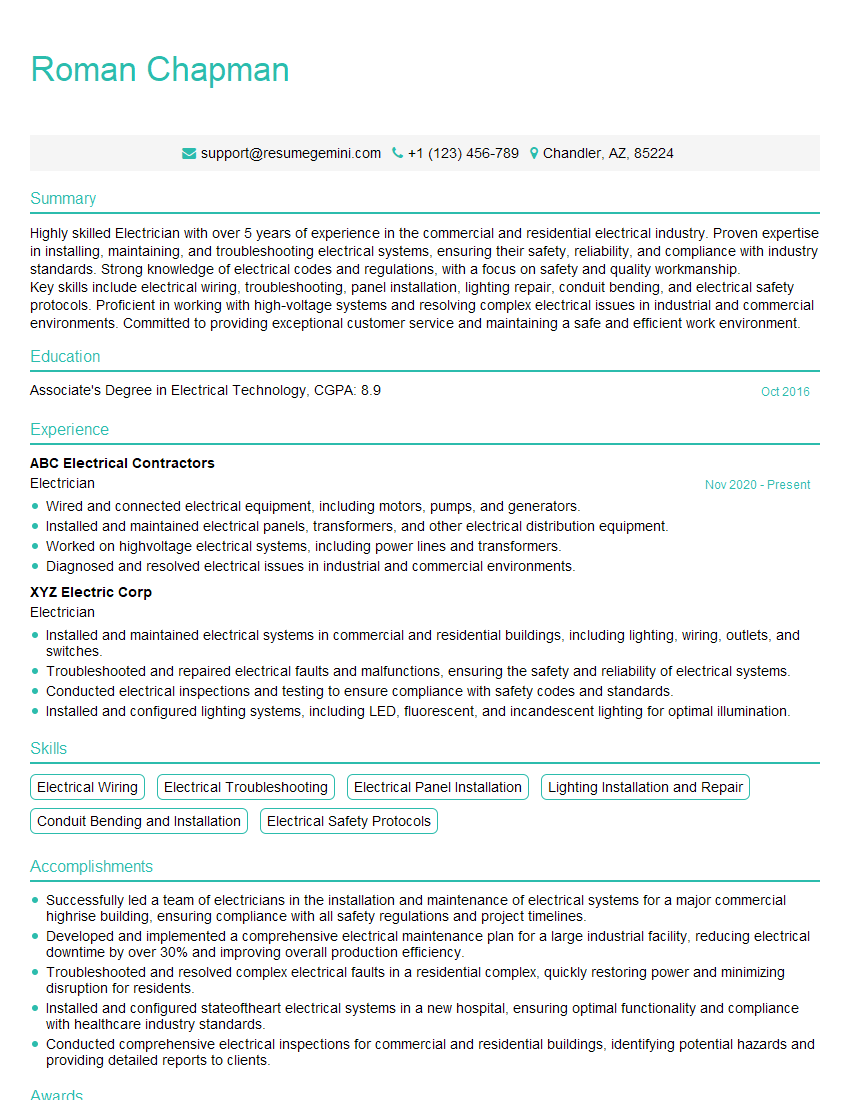
Electrician Resume Sample
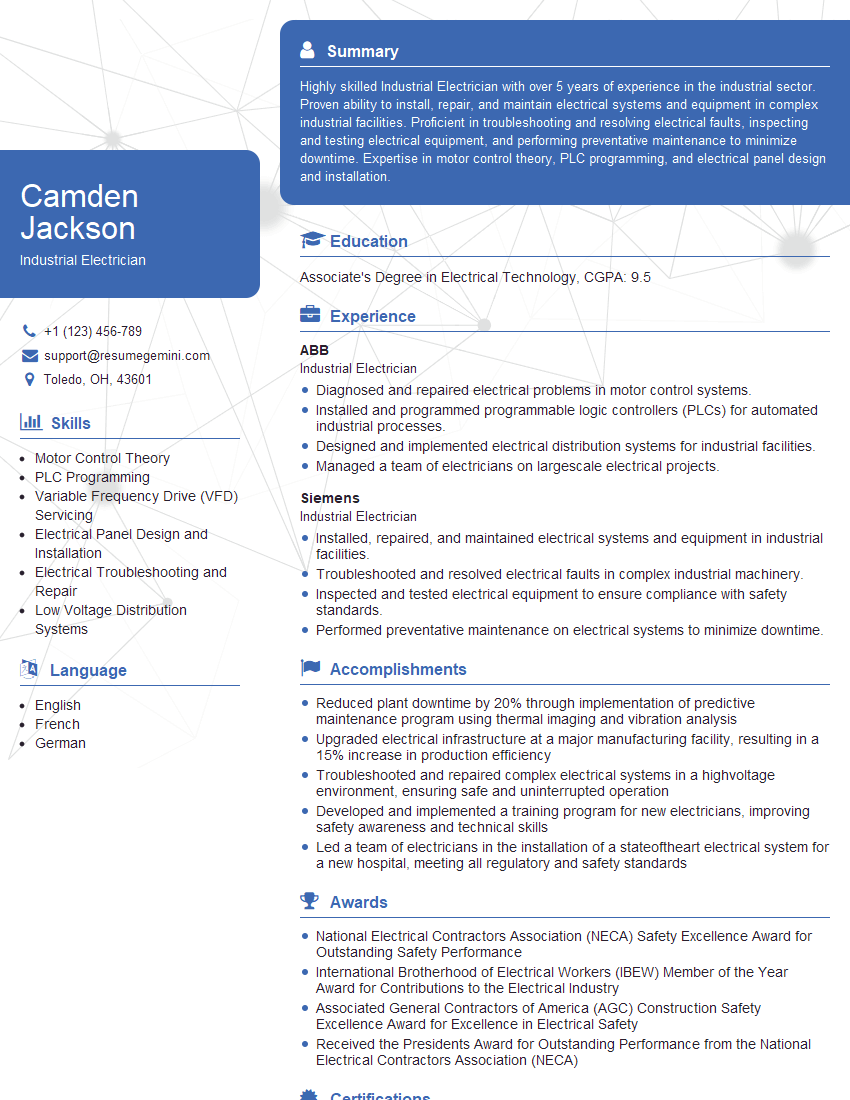
Industrial Electrician Resume Sample
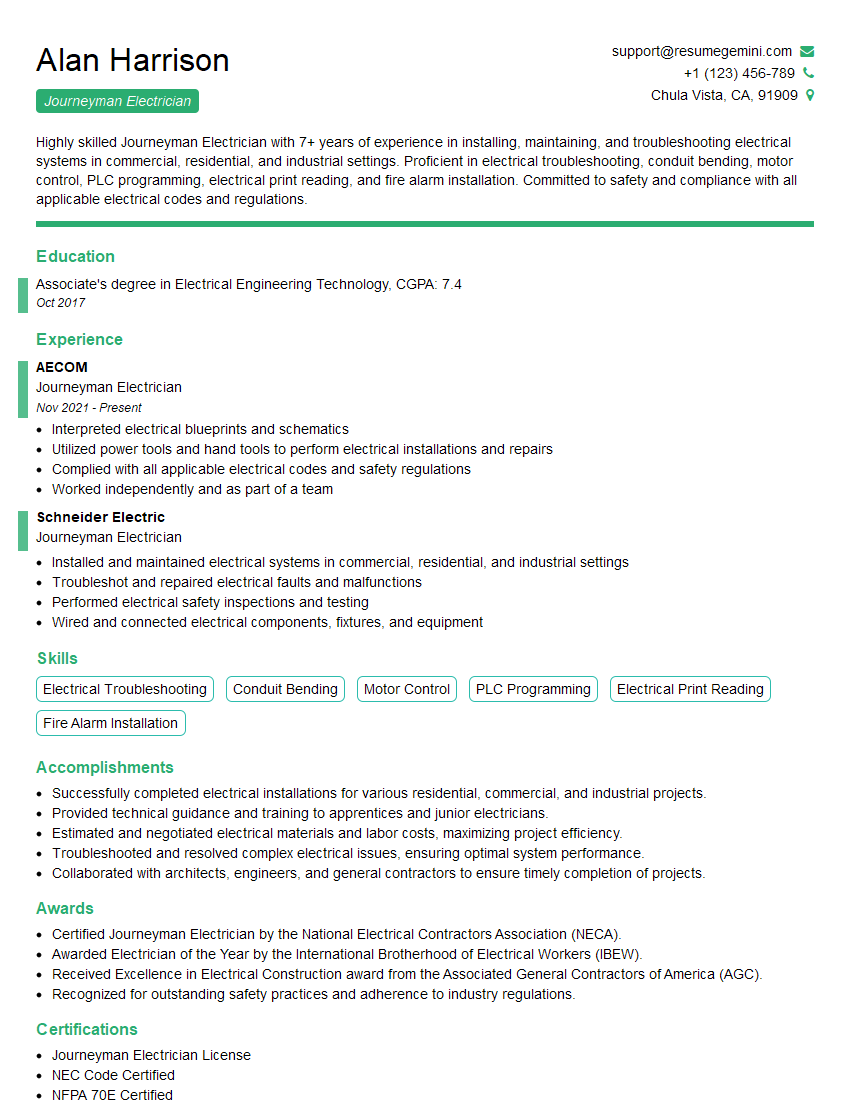
Journeyman Electrician Resume Sample
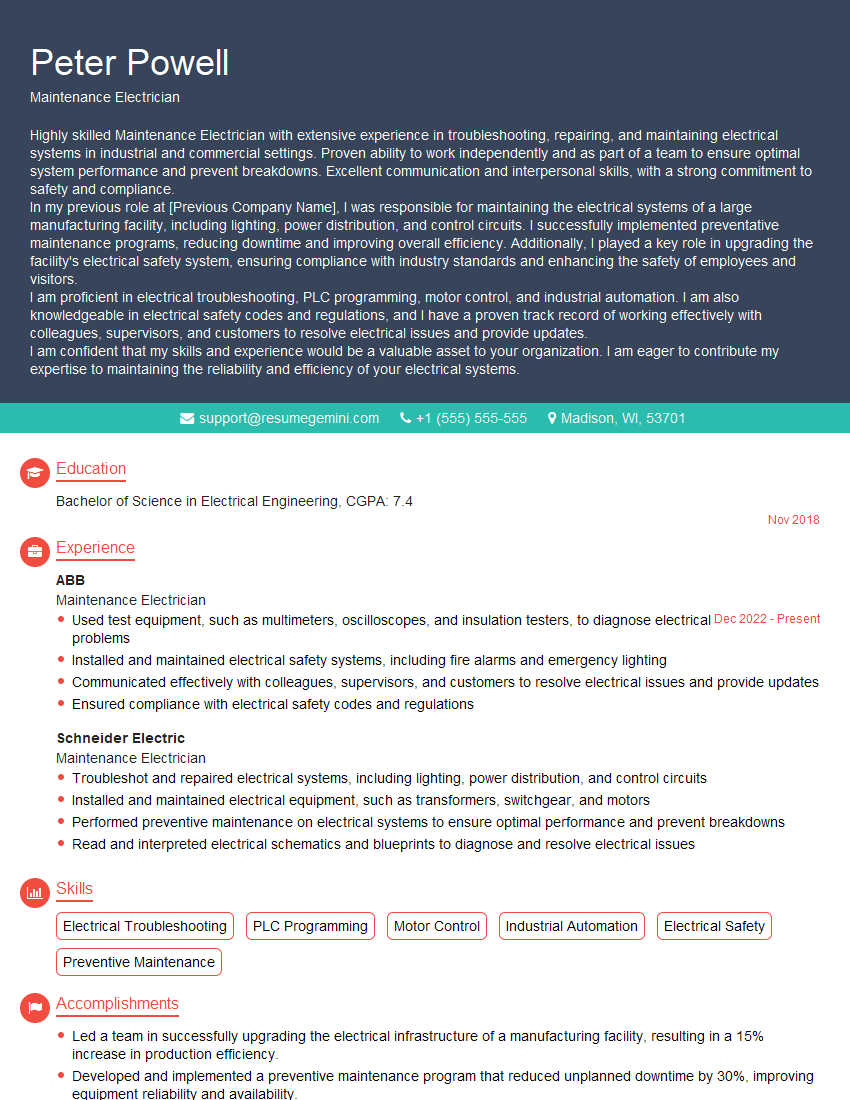
Maintenance Electrician Resume Sample
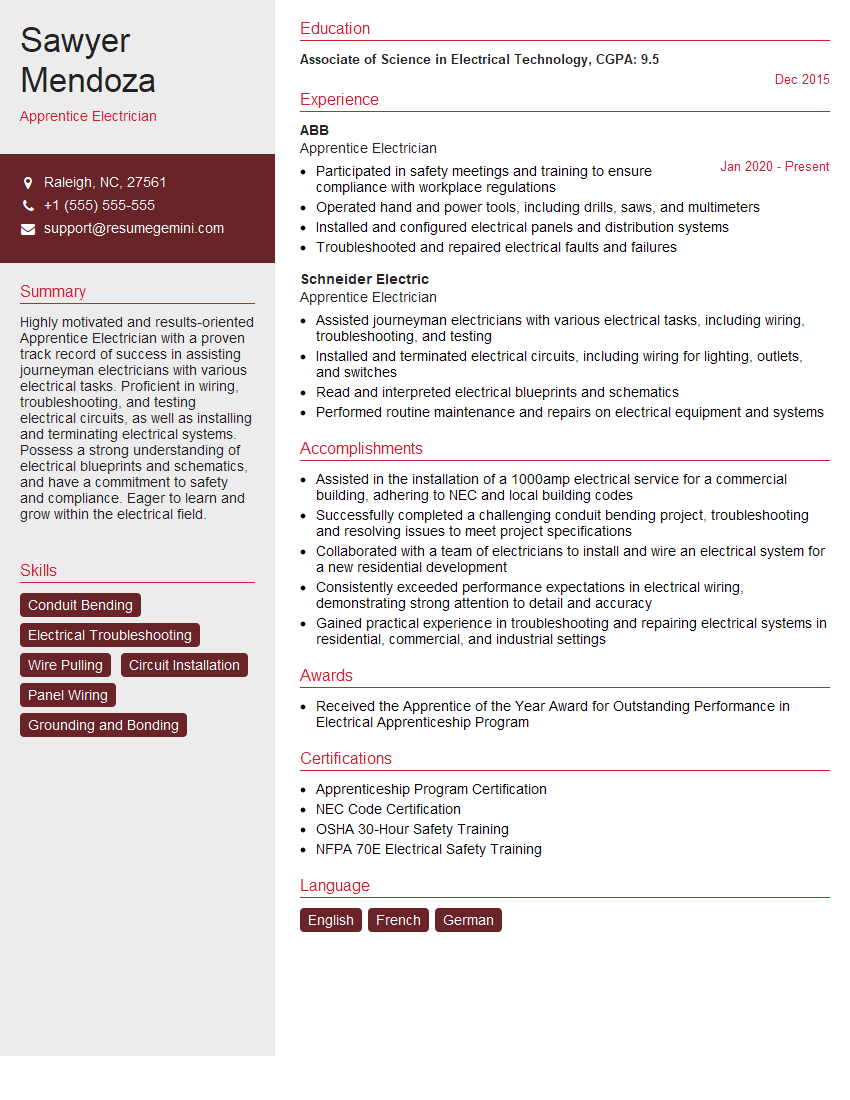
Apprentice Electrician Resume Sample
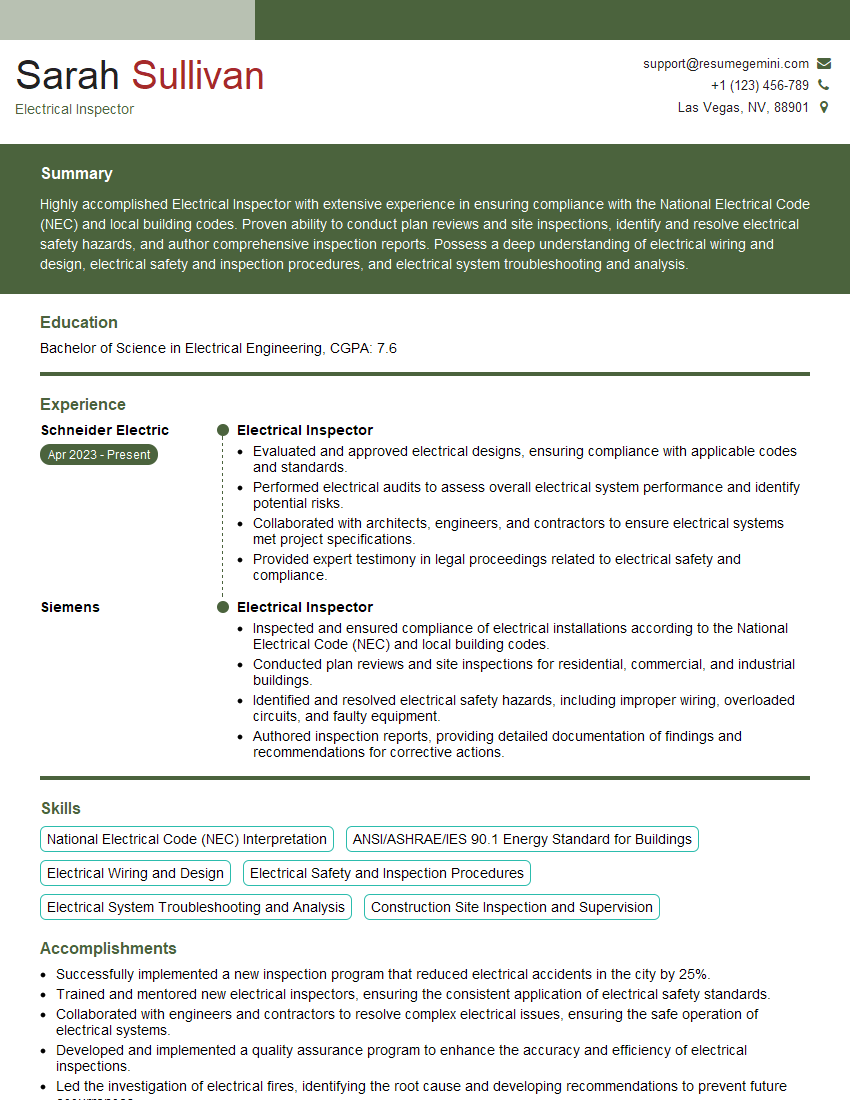
Electrical Inspector Resume Sample
- Electrical Contractor
- Electrical Estimator
- Electrical Designer
- Electrical Engineer
- Electrical Technician
- Electrical Foreman
- Electrical Supervisor
- Commercial Electrician
- Construction Electrician
- Electrician
- Industrial Electrician
- Journeyman Electrician
- Maintenance Electrician
- Apprentice Electrician
- Electrical Inspector
Explore more articles
Users Rating of Our Blogs
Share Your Experience
We value your feedback! Please rate our content and share your thoughts (optional).
What Readers Say About Our Blog
To the interviewgemini.com Webmaster.
Very helpful and content specific questions to help prepare me for my interview!
Thank you
To the interviewgemini.com Webmaster.
This was kind of a unique content I found around the specialized skills. Very helpful questions and good detailed answers.
Very Helpful blog, thank you Interviewgemini team.