Cracking a skill-specific interview, like one for Distribution Grid Modernization, requires understanding the nuances of the role. In this blog, we present the questions you’re most likely to encounter, along with insights into how to answer them effectively. Let’s ensure you’re ready to make a strong impression.
Questions Asked in Distribution Grid Modernization Interview
Q 1. Explain the key drivers behind Distribution Grid Modernization.
Distribution grid modernization is driven by a confluence of factors aiming to create a more resilient, efficient, and sustainable power delivery system. Think of it like upgrading your home’s plumbing – the old system might work, but a modernized one is far more efficient and capable of handling future needs.
- Increasing Renewable Energy Integration: The rise of solar and wind power necessitates a grid capable of handling intermittent energy sources. This requires smarter control and more flexible infrastructure.
- Improved Reliability and Resilience: Aging infrastructure and extreme weather events highlight the need for grids that can withstand disruptions and recover quickly. Imagine a city recovering from a hurricane – a modern grid minimizes outage duration.
- Enhanced Grid Efficiency: Reducing energy losses during transmission and distribution is crucial for both economic and environmental reasons. This involves optimizing power flow and minimizing waste.
- Growing Energy Demand: The increasing demand for electricity from a growing population and electrification of transportation requires a more robust and scalable grid.
- Data-Driven Operations: Utilizing data analytics and smart technologies to optimize grid performance, predict failures, and improve operational efficiency is paramount. This is like using smart home technology to monitor energy consumption.
Q 2. Describe the role of Advanced Metering Infrastructure (AMI) in modernizing the grid.
Advanced Metering Infrastructure (AMI) is the backbone of a modernized grid, acting like the eyes and ears of the system. It replaces traditional electromechanical meters with smart meters that communicate two-way data with the utility. This provides real-time visibility into energy consumption patterns, allowing for improved grid management and customer engagement.
- Real-time Data Acquisition: AMI provides continuous monitoring of energy usage, enabling utilities to identify and address potential issues promptly.
- Improved Outage Detection: Smart meters instantly report outages, allowing for faster restoration times. This is like having instant alerts about any issues in your home’s plumbing.
- Time-of-Use Pricing: AMI supports dynamic pricing strategies that incentivize consumers to shift energy consumption to off-peak hours, improving grid stability.
- Enhanced Customer Engagement: Customers receive detailed energy usage information, empowering them to manage their consumption effectively.
- Distribution System State Estimation: AMI data contributes to a more accurate understanding of the grid’s overall condition, facilitating more informed decision-making.
Q 3. What are the benefits and challenges of integrating renewable energy sources into the distribution grid?
Integrating renewable energy sources like solar and wind power into the distribution grid offers substantial benefits but presents unique challenges. Think of it as adding a new, powerful engine to a car – it enhances capabilities but requires adjustments to the entire system.
- Benefits:
- Reduced Carbon Footprint: Replacing fossil fuel-based generation with renewable sources significantly reduces greenhouse gas emissions.
- Enhanced Energy Security: Decentralized generation reduces reliance on centralized power plants and improves grid resilience.
- Cost Savings: Renewable energy sources can offer long-term cost advantages compared to conventional generation.
- Challenges:
- Intermittency: Solar and wind power are intermittent, requiring robust energy storage solutions or grid management strategies to ensure reliable supply.
- Grid Stability: The variable nature of renewable energy can impact grid stability, necessitating advanced grid control technologies.
- Infrastructure Upgrades: Existing distribution infrastructure may need upgrades to accommodate the influx of renewable energy.
- Grid Integration Costs: Connecting renewable energy sources to the grid can involve significant upfront investment.
Q 4. How does Distribution Automation improve grid reliability and efficiency?
Distribution automation uses intelligent electronic devices and communication networks to remotely monitor and control grid components. It’s like having a sophisticated control system for your home’s appliances, allowing for automated adjustments based on real-time needs.
- Improved Reliability: Automated fault detection and isolation minimize outage duration and impact.
- Enhanced Efficiency: Optimal power flow control reduces energy losses and improves grid efficiency.
- Reduced Operational Costs: Automation minimizes the need for manual intervention, saving time and resources.
- Improved Voltage Regulation: Automated voltage regulation maintains stable voltage levels, ensuring optimal equipment performance.
- Increased Grid Capacity: By optimizing power flow, distribution automation enables better utilization of existing grid infrastructure.
Q 5. Explain the concept of a Microgrid and its advantages.
A microgrid is a localized grid that can operate independently or be interconnected with the main grid. Think of it as a small, self-sufficient power system within a larger network. This is particularly useful in remote areas or for critical facilities.
- Enhanced Resilience: Microgrids can continue operating even during main grid outages, providing uninterrupted power to critical loads.
- Improved Reliability: Localized generation reduces reliance on the main grid, enhancing overall system reliability.
- Increased Renewable Energy Integration: Microgrids are ideal platforms for integrating distributed renewable energy resources.
- Cost Savings: Reduced reliance on the main grid can lead to cost savings in the long run.
- Improved Grid Stability: By isolating sections of the grid, microgrids can enhance the stability of the overall system.
Q 6. What are the cybersecurity threats facing modern distribution grids, and how can they be mitigated?
Modern distribution grids face significant cybersecurity threats, from data breaches to physical attacks. It’s crucial to think of security not just as an afterthought, but as an integral part of the grid’s design and operation – like securing your home with alarms and strong locks.
- Threats:
- Data breaches: Unauthorized access to sensitive grid data can lead to operational disruptions or even physical damage.
- Malicious attacks: Cyberattacks targeting grid control systems can cause widespread outages or manipulate grid operations.
- Phishing attacks: Social engineering attacks can compromise employee credentials, gaining access to grid systems.
- Insider threats: Malicious or negligent employees can pose a significant risk to grid security.
- Mitigation Strategies:
- Robust cybersecurity protocols: Implementing strong authentication, authorization, and encryption measures is crucial.
- Regular security audits: Periodic security assessments identify vulnerabilities and help prevent attacks.
- Intrusion detection systems: Real-time monitoring systems detect and respond to malicious activity.
- Employee training: Educating employees about cybersecurity threats and best practices is essential.
- Network segmentation: Dividing the grid into smaller, isolated networks limits the impact of attacks.
Q 7. Discuss various grid modernization technologies, such as smart inverters and Phasor Measurement Units (PMUs).
Several advanced technologies are driving grid modernization. These act like specialized tools that allow for more precise and efficient grid management.
- Smart Inverters: These intelligent inverters for renewable energy sources not only convert DC power to AC but also actively participate in grid stabilization and voltage control. They provide a more seamless integration of renewables into the grid.
- Phasor Measurement Units (PMUs): PMUs are high-precision devices that measure voltage and current phasors at various points in the grid. This provides real-time data with high accuracy, enabling advanced grid monitoring and control, enabling faster and more efficient response to events.
- Wide-Area Monitoring Systems (WAMS): WAMS combine data from multiple PMUs to provide a comprehensive view of the entire grid’s state, allowing for better prediction of grid events and faster responses.
- Advanced State Estimation: This technology uses data from various sources, including AMI and PMUs, to create a comprehensive and accurate model of the grid’s operating state, leading to better decision-making for operations and planning.
Q 8. How do you address challenges related to grid stability with increased penetration of distributed energy resources (DERs)?
Increased penetration of Distributed Energy Resources (DERs), such as solar panels and wind turbines, presents significant challenges to grid stability. The intermittent nature of these resources can cause fluctuations in voltage and frequency, potentially leading to instability and blackouts. Addressing this requires a multi-pronged approach.
Advanced Grid Modeling and Simulation: We need sophisticated software to accurately predict the behavior of the grid with varying DER penetration levels. This allows us to identify potential instability points before they occur. For example, using tools like PSS/E or PowerWorld Simulator, we can model different DER scenarios and optimize grid operation.
Smart Inverters and Advanced Control Strategies: Modern inverters in DER systems can be programmed to provide grid support services like voltage regulation and frequency control. This improves grid stability by dynamically adjusting DER output in response to changing grid conditions. This is similar to a sophisticated thermostat, constantly adjusting to maintain a stable temperature, except here we’re maintaining stable voltage and frequency.
Distributed Generation Management Systems (DGMS): A DGMS aggregates data from various DERs and utilizes advanced algorithms to optimize their operation and minimize their impact on the grid. This acts as a central nervous system, coordinating the actions of multiple DERs for optimal grid stability.
Grid Modernization Infrastructure: Investing in infrastructure upgrades such as advanced sensors, communication networks, and Flexible AC Transmission Systems (FACTS) enhances the grid’s ability to handle fluctuating DER output. Think of this as strengthening the bones and muscles of the grid to better withstand stresses.
In practice, I’ve worked on projects where we implemented a combination of these strategies to successfully integrate significant amounts of solar PV into a previously unstable distribution network. The key was a careful balance between advanced technology and well-designed operational strategies.
Q 9. Describe your experience with SCADA systems in a distribution grid context.
Supervisory Control and Data Acquisition (SCADA) systems are the backbone of modern distribution grid management. They provide real-time monitoring and control of the entire network. My experience involves working with various SCADA platforms, ranging from traditional systems to more modern, cloud-based solutions. I’ve been involved in:
System Integration: Integrating new substations, feeders, and DERs into existing SCADA systems, ensuring seamless data flow and control.
Data Analysis and Reporting: Using SCADA data for performance monitoring, fault detection, and predictive maintenance. This includes developing customized dashboards and reports to track key performance indicators.
Outage Management: Utilizing SCADA information to quickly identify and isolate faults, minimizing the impact of outages on customers. I have been involved in projects which reduced outage times significantly after optimizing the SCADA system for improved fault detection and isolation.
System Upgrades and Modernization: Migrating legacy SCADA systems to modern platforms with improved functionality, scalability, and cybersecurity features. This is crucial for keeping up with the growing complexities of the distribution grid.
For example, I led a project that upgraded an aging SCADA system, resulting in a 20% reduction in outage duration and a 15% improvement in fault location accuracy. This not only improved service reliability but also reduced operational costs.
Q 10. Explain your understanding of power flow analysis and its application in grid planning.
Power flow analysis is a fundamental technique used to determine the steady-state operating conditions of a power system. It calculates voltage magnitudes and angles, real and reactive power flows, and other key parameters at each bus (node) in the network. This information is crucial for grid planning and operation.
Grid Planning: Power flow analysis helps determine the optimal placement of new generation resources, transmission lines, and transformers. By running simulations under various load scenarios, we can identify potential bottlenecks and ensure the grid can meet future demand reliably.
System Operation: Real-time power flow analysis allows operators to monitor grid conditions and make informed decisions regarding load shedding or generation dispatch in case of emergencies.
Voltage Profile Management: Power flow studies help identify areas with low or high voltages and inform the design of voltage regulation strategies. This ensures a stable and reliable voltage supply for all customers.
Capacity Planning: Power flow analysis is critical for evaluating the impact of new loads and generating units on the existing grid infrastructure.
For instance, during a recent grid expansion project, power flow analysis helped us identify an overloaded transformer that needed to be upgraded, preventing potential grid failures and ensuring reliable service to new customers. We used software tools such as PSS/E to perform these analyses.
Q 11. How do you assess the reliability of a distribution network?
Assessing the reliability of a distribution network involves a comprehensive evaluation of its ability to consistently provide power to customers. It’s not just about preventing outages but also about minimizing their duration and impact when they do occur.
Historical Outage Data Analysis: Analyzing historical outage data, including frequency, duration, and causes, helps identify patterns and weaknesses in the network. This allows for targeted improvements in specific areas.
Load Flow and Fault Studies: These studies evaluate the network’s ability to withstand various fault conditions and maintain stability. This helps identify critical components and areas requiring additional protection or reinforcement.
Component Reliability Assessment: Analyzing the reliability of individual components, such as transformers, switchgear, and lines, using historical data or manufacturer specifications provides a better understanding of the overall network reliability.
Risk Assessment: Identifying potential hazards, such as extreme weather events or cyberattacks, and assessing their impact on the network’s reliability. This can inform mitigation strategies and improve preparedness.
Reliability is often quantified using metrics such as System Average Interruption Duration Index (SAIDI) and System Average Interruption Frequency Index (SAIFI). Lower values indicate higher reliability.
Q 12. What are the key performance indicators (KPIs) used to evaluate the effectiveness of grid modernization projects?
Key Performance Indicators (KPIs) for grid modernization projects are crucial for measuring their effectiveness and ensuring they deliver the expected benefits. These KPIs should align with the project goals and objectives, which might include improved reliability, reduced costs, and enhanced sustainability.
Reliability Metrics (SAIFI, SAIDI, CAIDI): Measuring the frequency, duration, and average duration of customer interruptions.
Customer Satisfaction: Tracking customer satisfaction levels related to service reliability and responsiveness.
Operational Costs: Monitoring changes in operational costs, including maintenance, repairs, and energy losses.
Capital Expenditures: Tracking investments in grid modernization infrastructure.
Renewable Energy Integration: Measuring the amount of renewable energy integrated into the grid.
Carbon Footprint Reduction: Assessing the reduction in greenhouse gas emissions.
By regularly tracking these KPIs, we can monitor progress, identify areas for improvement, and demonstrate the value of grid modernization investments to stakeholders.
Q 13. Describe your experience with GIS software in the context of distribution grid management.
Geographic Information Systems (GIS) software is an indispensable tool in distribution grid management. It provides a visual representation of the network’s physical assets, allowing for efficient planning, operation, and maintenance.
Network Mapping: Creating detailed maps of the distribution network, including substations, feeders, transformers, and other equipment. This provides a centralized and readily accessible database of assets.
Asset Management: Tracking the location, condition, and maintenance history of all grid assets. This helps optimize maintenance schedules and improve the efficiency of resource allocation.
Outage Management: Using GIS to quickly identify the location and extent of outages, facilitating faster restoration times.
Planning and Design: Using GIS to plan and design new infrastructure, ensuring optimal placement of equipment and minimizing environmental impact.
Spatial Analysis: Performing spatial analysis to identify areas of high load density, potential congestion points, or vulnerability to natural disasters.
For example, during a recent project, I used GIS to identify the optimal location for a new substation, taking into account factors such as population density, load demand, and land availability. This saved significant time and cost compared to traditional methods.
Q 14. How do you manage grid congestion in a distribution network?
Grid congestion occurs when the demand for power in a specific area exceeds the capacity of the distribution network to deliver it. This can lead to voltage drops, equipment overheating, and even outages. Managing grid congestion requires a multi-faceted approach.
Load Management: Implementing strategies to reduce peak demand, such as time-of-use pricing or demand-side management programs, can help alleviate congestion during peak hours.
Distributed Generation Management: Optimizing the operation of DERs to provide additional capacity during peak periods or strategically curtail their output when necessary.
Network Upgrades: Investing in infrastructure improvements, such as new transformers, conductors, and substations, can increase the network’s capacity.
Reactive Power Control: Optimizing reactive power compensation to improve voltage regulation and reduce line losses, thereby increasing the network’s capacity.
Advanced Control Systems: Utilizing advanced control systems, such as voltage regulators and capacitor banks, to dynamically manage voltage levels and improve network stability.
In one project, we implemented a smart grid solution that incorporated dynamic load management and DER control strategies, successfully alleviating grid congestion and reducing the need for costly infrastructure upgrades.
Q 15. What is your experience with distribution grid planning software?
My experience with distribution grid planning software spans several years and encompasses various platforms. I’m proficient in using tools like CYME, OpenDSS, and Synergi Electric, each offering unique capabilities for different aspects of grid planning. For instance, CYME excels in detailed load flow and fault studies, while OpenDSS provides a robust open-source platform for custom modelling and analysis. Synergi Electric is particularly useful for integrated grid planning, encompassing aspects from asset management to demand forecasting. In my previous role, I used these tools to design and optimize the expansion of a distribution network serving a rapidly growing suburban area, incorporating renewable energy sources and smart grid technologies. This involved creating detailed models, running simulations under various scenarios (peak demand, contingencies, etc.), and analyzing the results to identify optimal solutions for substation upgrades, feeder reinforcement, and capacitor placement.
Career Expert Tips:
- Ace those interviews! Prepare effectively by reviewing the Top 50 Most Common Interview Questions on ResumeGemini.
- Navigate your job search with confidence! Explore a wide range of Career Tips on ResumeGemini. Learn about common challenges and recommendations to overcome them.
- Craft the perfect resume! Master the Art of Resume Writing with ResumeGemini’s guide. Showcase your unique qualifications and achievements effectively.
- Don’t miss out on holiday savings! Build your dream resume with ResumeGemini’s ATS optimized templates.
Q 16. Discuss different voltage regulation techniques used in distribution grids.
Voltage regulation is crucial for maintaining power quality in distribution grids. Fluctuations in voltage can damage equipment and disrupt services. Several techniques are employed:
- Tap-Changing Transformers: These transformers allow for adjustments to the turns ratio, effectively stepping up or down the voltage. Imagine them as adjustable knobs fine-tuning the voltage level. They’re a common and effective method for voltage regulation at substations.
- Voltage Regulators (e.g., Step-Voltage Regulators (SVRs)): These devices continuously monitor voltage and automatically adjust it within a specific range. They’re often placed along feeders to compensate for voltage drops due to distance and load variations. Think of them as automatic voltage stabilizers for specific sections of the grid.
- Capacitor Banks: These banks provide reactive power compensation, which helps counteract voltage drops caused by inductive loads (like motors). They are similar to adding extra ‘push’ to the voltage, ensuring consistent supply.
- Distributed Generation (DG) Control: Smart inverters in renewable energy sources (solar, wind) can be controlled to maintain voltage stability. They contribute to both generation and voltage regulation, acting as small-scale voltage regulators across the grid.
- Advanced Volt/VAR Optimization (VVO): This sophisticated technique uses real-time data and optimization algorithms to coordinate multiple voltage regulation devices across the entire network for optimal performance. It’s like having a central brain that orchestrates all the voltage-regulating components for maximum efficiency.
The choice of technique depends on factors like load characteristics, grid topology, and cost considerations. Often, a combination of methods is used for comprehensive voltage regulation.
Q 17. How do you handle faults in a distribution network?
Handling faults in a distribution network requires a swift and coordinated response to minimize service interruptions and prevent damage. The process typically involves:
- Fault Detection: This is usually done through protective relays located at substations and along feeders. These relays continuously monitor the grid’s electrical parameters and trigger an alarm when a fault is detected.
- Fault Isolation: Once a fault is detected, circuit breakers are activated to isolate the faulty section of the grid. This prevents the fault from spreading and causing wider outages. Think of it as quickly disconnecting a damaged wire from the rest of the circuit.
- Fault Location: Sophisticated algorithms and tools are used to pinpoint the exact location of the fault, enabling faster repair efforts. This often involves analyzing data from protective relays and other monitoring equipment.
- Fault Repair: Once the faulty section is isolated and the location pinpointed, crews are dispatched for repair. This involves locating and repairing damaged equipment or addressing the underlying cause of the fault.
- Service Restoration: After repairs are complete, the isolated section is carefully re-energized and tested to ensure the system’s safe operation. This may involve specific procedures to ensure stability after the interruption.
Effective fault handling relies on a combination of advanced protection systems, well-trained personnel, and efficient communication channels. A well-maintained network also plays a key role in reducing the frequency and severity of faults.
Q 18. What is your experience with outage management systems?
I have extensive experience with Outage Management Systems (OMS). These are sophisticated software applications designed to manage and reduce the impact of power outages. In a previous role, I worked with a leading OMS platform to optimize outage restoration processes. My responsibilities included configuring the system to integrate with SCADA (Supervisory Control and Data Acquisition) systems and various other data sources. I also worked on developing and implementing improved outage reporting procedures and workflows. This often involved integrating data analytics to predict potential outages and proactively address maintenance needs.
A key aspect of my OMS work involved developing and refining the system’s reporting features. I was instrumental in creating real-time dashboards that visually present outage information to both internal teams and customers, which helped improve communication and responsiveness during outages. I also played a role in enhancing the system’s ability to forecast restoration times by incorporating historical data and advanced algorithms, allowing us to communicate more accurate ETAs to customers.
Q 19. Explain your understanding of power quality issues and their mitigation strategies.
Power quality issues refer to any deviations from the ideal sinusoidal waveform of voltage and current. These deviations can have significant impacts on equipment and processes. Common power quality issues include:
- Voltage Sags and Swells: Temporary reductions or increases in voltage.
- Harmonics: Non-linear loads (like computers and variable speed drives) generate harmonic currents that distort the waveform.
- Transients: Short-duration voltage or current surges (spikes).
- Flicker: Small, rapid variations in voltage causing lights to flicker.
Mitigation strategies involve a combination of preventive and reactive measures:
- Power Quality Monitoring: Continuous monitoring helps identify recurring problems and assess their impact.
- Power Factor Correction: Installing capacitor banks to compensate for reactive power helps improve voltage regulation and reduce harmonic distortion.
- Harmonic Filters: Specialized filters can be used to attenuate specific harmonic frequencies.
- Surge Protection Devices (SPDs): These devices protect equipment from voltage surges and transients.
- Uninterruptible Power Supplies (UPS): UPS systems provide backup power during outages and filter out power quality disturbances.
The choice of mitigation strategy depends on the type and severity of the power quality issue and the sensitivity of the affected equipment. A comprehensive power quality study is often essential to identify the root causes and implement effective solutions.
Q 20. Describe your experience with demand-side management programs.
My experience with Demand-Side Management (DSM) programs focuses on optimizing energy consumption patterns to reduce peak demand and improve grid reliability. This involves working with customers to implement energy efficiency measures and shifting energy use to off-peak hours. In a previous project, I developed and implemented a time-of-use pricing program for residential customers. This program incentivized customers to shift their energy consumption to off-peak hours through tiered pricing. This led to a significant reduction in peak demand, which improved grid stability and decreased the need for expensive peaking power plants.
I also have experience designing and executing energy efficiency programs for industrial and commercial customers. This includes providing technical assistance to customers on energy audits and recommending cost-effective energy efficiency upgrades, such as efficient lighting, HVAC systems, and process improvements. These initiatives improved energy efficiency, resulting in cost savings for customers and reduced strain on the distribution grid.
Q 21. How do you incorporate data analytics into distribution grid management?
Data analytics is transforming distribution grid management by enabling proactive decision-making and improved grid operations. I utilize various data analytics techniques, including:
- Predictive Maintenance: Analyzing data from sensors and smart meters to predict equipment failures, allowing for proactive maintenance to prevent outages.
- Load Forecasting: Utilizing historical data and weather patterns to accurately forecast future loads, enabling better grid planning and resource allocation. For example, during periods of extreme cold weather, this helps us manage grid loads during critical situations.
- Outage Management: Analyzing outage data to identify patterns and root causes, enabling targeted improvements to grid infrastructure and maintenance practices. We analyze the locations and causes of past outages to inform preventative measures.
- Real-time Grid Monitoring: Using real-time data to monitor grid conditions and detect anomalies, enabling quick responses to potential issues and rapid fault isolation. This is akin to having a constant ‘health check’ on the grid.
- Advanced Metering Infrastructure (AMI) Data Analysis: Analyzing data from smart meters to gain insights into customer usage patterns and implement targeted DSM programs.
These data-driven insights provide the foundation for more efficient and reliable grid operations, leading to improved customer service and reduced operational costs.
Q 22. What are the different communication protocols used in smart grids?
Smart grids rely on a variety of communication protocols to ensure seamless data exchange between various grid components. The choice of protocol depends on factors like data rate requirements, range, security needs, and cost.
- IEC 61850: This is a widely adopted standard for communication in substations and power systems. It uses Ethernet and offers robust features for real-time data exchange and automation. Think of it as the ‘high-speed backbone’ for critical control and monitoring data. For example, it enables fast fault detection and isolation.
- DNP3: Distributed Network Protocol 3 is another common protocol, often used for data acquisition and control in distribution automation systems. It’s known for its reliability and is often deployed in less demanding scenarios compared to IEC 61850. Imagine it as a reliable ‘workhorse’ handling a significant volume of data, but not always at the highest speed.
- MQTT (Message Queuing Telemetry Transport): This lightweight protocol is becoming increasingly popular for communication with smart meters and other distributed devices. Its efficiency and low bandwidth requirements make it ideal for large-scale deployments with many devices. Think of it as the ‘efficient messenger’ delivering smaller, frequent updates from numerous sources.
- Wireless Protocols (Zigbee, Wi-SUN, LoRaWAN): These are crucial for connecting devices in areas where wired infrastructure is unavailable or impractical. Zigbee is excellent for local area networks, while LoRaWAN offers long-range communication. They’re like the ‘wireless messengers’, extending the network reach to hard-to-access locations.
In practice, a modern grid often employs a combination of these protocols, creating a layered architecture to optimize performance and cater to diverse needs.
Q 23. What is your experience with grid modeling and simulation software?
My experience with grid modeling and simulation software is extensive. I’ve worked extensively with tools like PSS/E, PowerWorld Simulator, and OpenDSS. These tools are indispensable for analyzing grid performance, predicting future scenarios, and designing optimal grid upgrades.
For example, in a recent project, we used PSS/E to simulate the impact of integrating large-scale renewable energy sources on the grid’s stability. This involved creating detailed models of the existing grid infrastructure, the new renewable generators, and their control systems. The simulations allowed us to identify potential stability issues and design appropriate mitigation strategies, such as the implementation of advanced grid controls.
Beyond these commercial packages, I’m also familiar with open-source tools like OpenDSS, which allows for more flexible customization and cost-effective solutions, especially for smaller-scale projects or specific research needs. My proficiency extends to validating simulation results against real-world grid data, ensuring the accuracy of our modeling efforts.
Q 24. How do you ensure the interoperability of different technologies within a modernized grid?
Ensuring interoperability is paramount in modernized grids. It’s about ensuring seamless communication and data exchange between devices from different manufacturers, using various communication protocols. This requires a multi-pronged approach:
- Standardization: Adhering to industry standards like IEC 61850 and IEEE standards is critical. These standards define the communication protocols, data models, and security measures, promoting compatibility between different equipment.
- Open Communication Protocols: Utilizing open, well-documented protocols (like MQTT) enhances the possibility of integration with various systems. Avoiding proprietary protocols reduces vendor lock-in and improves flexibility.
- Data Modeling: Consistent data models are crucial. This means defining clear structures for data representation, enabling different systems to interpret the data correctly. This is often achieved through the use of ontologies and semantic web technologies.
- Testing and Validation: Rigorous testing and validation procedures are crucial before deploying new technologies. This includes conducting interoperability tests with different vendor equipment to identify and resolve any compatibility issues early on.
- Data Management and Integration Platforms: Utilizing advanced data management and integration platforms that can handle data from various sources and translate between different data formats is essential for a seamless transition to a modernized grid.
Think of it like building with standardized LEGO bricks. Each brick might come from a different set, but as long as they adhere to the same standards, they can be assembled seamlessly to create complex and functional structures.
Q 25. Describe your understanding of the regulatory landscape surrounding grid modernization.
The regulatory landscape surrounding grid modernization is complex and varies significantly by region. However, some common themes emerge:
- Incentives for Grid Modernization: Many regulatory bodies offer financial incentives, such as tax credits or grants, to encourage utilities to invest in grid modernization projects. These are often linked to improvements in grid reliability, efficiency, and integration of renewables.
- Reliability Standards: Regulations often set performance standards for grid reliability and resilience, pushing utilities to adopt new technologies that can improve grid stability and reduce outages.
- Cybersecurity Requirements: With the increasing digitalization of the grid, there’s a growing emphasis on cybersecurity regulations, requiring utilities to implement robust security measures to protect grid infrastructure from cyberattacks.
- Integration of Renewables: Regulations often mandate or incentivize the integration of renewable energy sources into the grid. This necessitates the adoption of smart grid technologies that can handle the intermittent nature of renewable energy.
- Data Privacy and Consumer Protection: Regulations around data privacy and consumer protection are becoming increasingly important, particularly concerning the collection and use of smart meter data. Utilities need to comply with these regulations to ensure responsible data handling.
Keeping abreast of these evolving regulations is crucial for successful grid modernization projects, requiring careful planning and compliance strategies.
Q 26. What are the environmental considerations associated with Distribution Grid Modernization?
Environmental considerations are central to distribution grid modernization. The goal is not just to modernize, but to do so sustainably.
- Reduced Carbon Footprint: Grid modernization can significantly reduce the carbon footprint of the electricity system. This is achieved through the integration of renewable energy sources, improved grid efficiency (reducing transmission losses), and smart grid technologies that optimize energy use.
- Sustainable Materials: Choosing environmentally friendly materials for grid infrastructure upgrades, such as recycled materials or sustainable alternatives, minimizes environmental impact during construction and throughout the asset lifecycle.
- Waste Management: Proper waste management during grid upgrades is essential, minimizing landfill waste and recycling or repurposing materials whenever possible.
- Wildlife Protection: Construction and maintenance of grid infrastructure need to consider wildlife protection, particularly for projects involving underground cabling or overhead lines. Careful planning and environmental impact assessments are crucial.
- Reduced Land Use: Smart grid technologies, such as advanced grid control systems and smart meters, can minimize the need for extensive grid expansion, reducing the overall land use impact.
Ultimately, a holistic approach considering the entire lifecycle of grid infrastructure, from design and construction to operation and decommissioning, is necessary to ensure environmental sustainability.
Q 27. How do you balance the cost and benefits of various grid modernization technologies?
Balancing the cost and benefits of grid modernization technologies requires a thorough cost-benefit analysis (CBA) incorporating various factors.
- Life-Cycle Cost Analysis: Instead of just focusing on initial investment costs, a life-cycle cost analysis (LCCA) considers all costs over the asset’s entire lifespan (including operation, maintenance, and eventual replacement). This gives a more realistic picture of the overall cost.
- Quantifying Benefits: The benefits of grid modernization extend beyond simple cost savings. They include improved reliability, reduced outages, increased grid capacity, better integration of renewables, and enhanced grid security. These benefits need to be carefully quantified (e.g., using avoided outage costs, value of improved grid stability) and converted into monetary values for comparison with costs.
- Prioritization of Projects: Based on the CBA, projects can be prioritized according to their cost-effectiveness. This requires a clear understanding of the grid’s needs and vulnerabilities and a strategic approach to modernization.
- Funding Mechanisms: Exploring various funding mechanisms, such as public-private partnerships, grants, and innovative financing models, can alleviate the financial burden of modernization projects.
- Risk Assessment: Incorporating a robust risk assessment identifies potential challenges and uncertainties, allowing for informed decision-making and mitigation strategies.
A comprehensive CBA, combined with a phased implementation plan, allows utilities to maximize the benefits of grid modernization while minimizing its financial impact. This involves carefully considering the trade-offs between different technologies and selecting solutions that offer the best overall value.
Key Topics to Learn for Distribution Grid Modernization Interview
- Smart Grid Technologies: Understanding the integration of advanced metering infrastructure (AMI), communication networks (e.g., PLC, cellular), and distributed energy resources (DERs) like solar PV and energy storage systems.
- Advanced Distribution Management Systems (ADMS): Learn about the functionalities of ADMS, including state estimation, optimal power flow, fault location, isolation and service restoration (FLISR), and their role in improving grid reliability and efficiency. Practical application: Discuss scenarios where ADMS improves grid resilience during extreme weather events.
- Distribution Automation: Explore the use of automation devices like reclosers, capacitor banks, and voltage regulators to enhance grid performance and minimize outages. Consider discussing specific challenges and solutions in implementing distribution automation.
- Microgrids and Distributed Generation: Understand the concepts, benefits, and challenges associated with integrating microgrids and distributed generation into the distribution grid. Practical application: Analyze the impact of DERs on grid stability and voltage regulation.
- Grid Modernization Planning and Implementation: Familiarize yourself with the process of planning and implementing grid modernization projects, including feasibility studies, cost-benefit analysis, and stakeholder engagement. Consider discussing project management methodologies in this context.
- Cybersecurity in the Modernized Grid: Discuss the vulnerabilities and threats to the modernized grid and the importance of cybersecurity measures to protect grid infrastructure and data. Practical application: Analyze the impact of a cyberattack on grid operations and discuss mitigation strategies.
- Power Quality and Harmonics: Understand the impact of non-linear loads on power quality and the techniques used to mitigate harmonic distortion in the modernized grid.
Next Steps
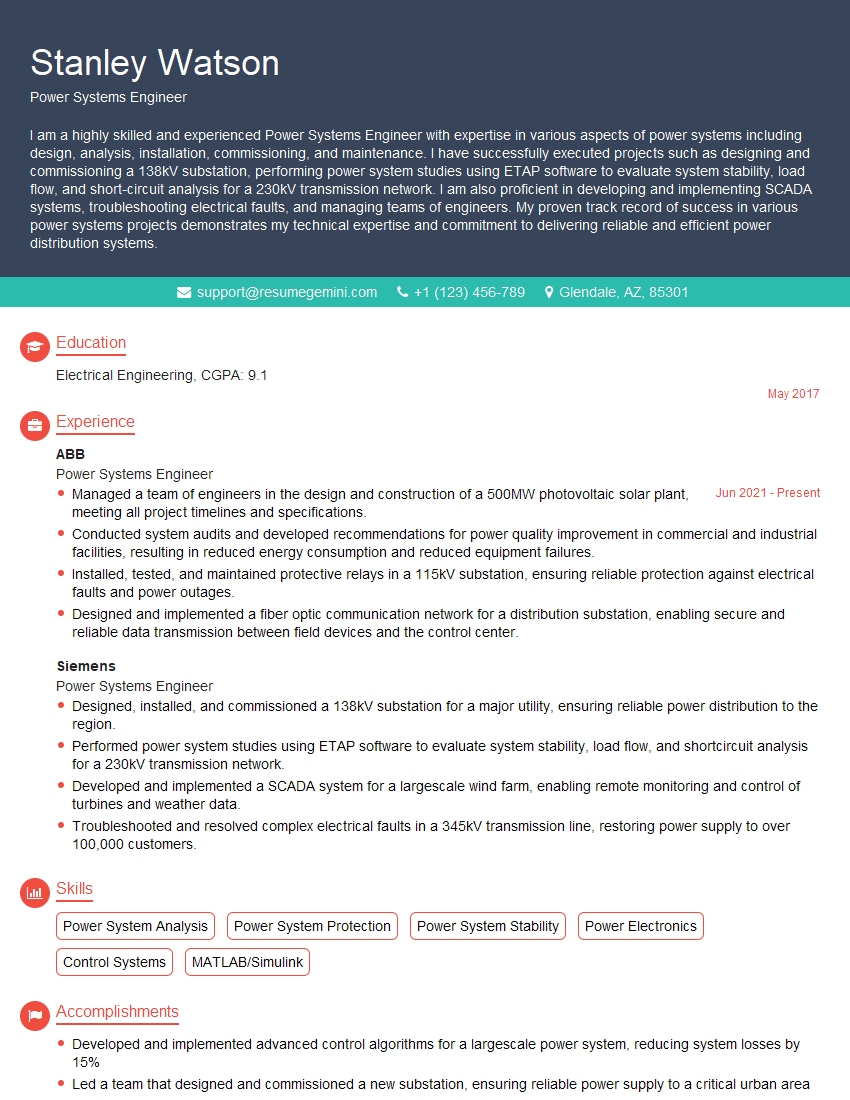
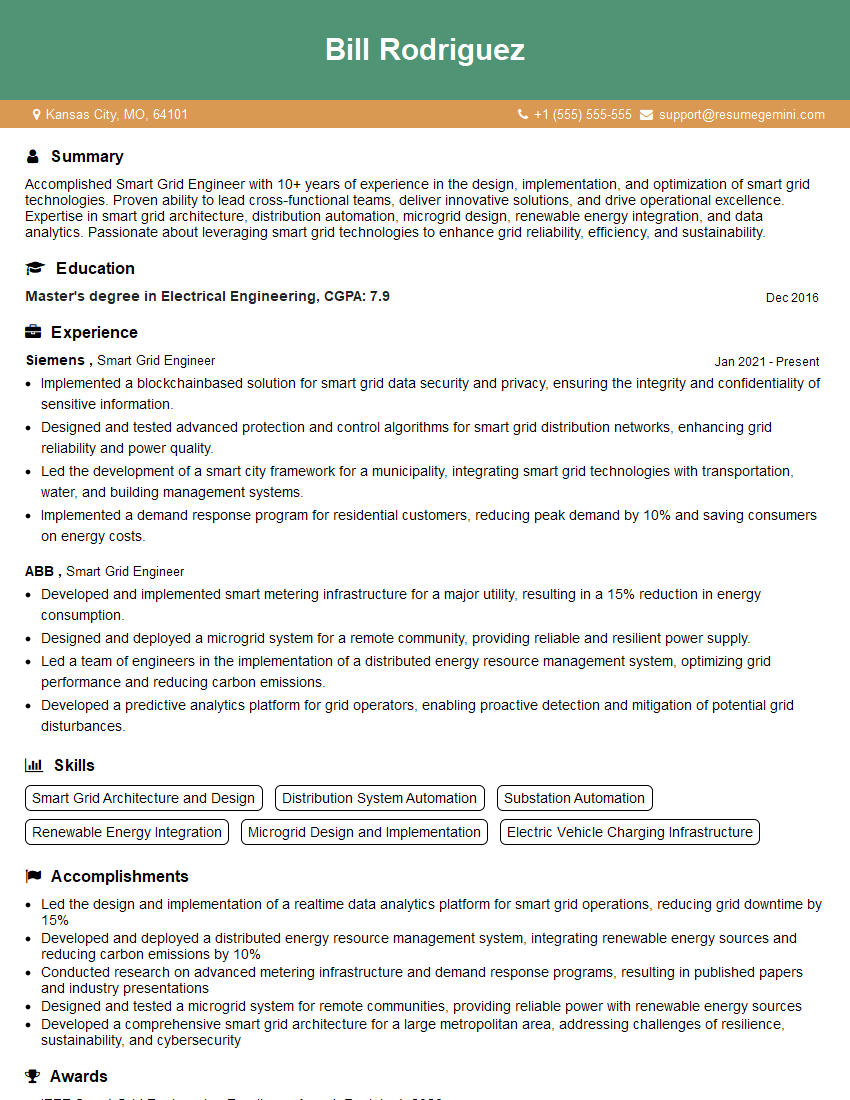
Mastering Distribution Grid Modernization is crucial for career advancement in the rapidly evolving energy sector. This knowledge demonstrates your commitment to innovation and your ability to tackle complex challenges facing the power industry. To stand out from the competition, creating an ATS-friendly resume is essential. A well-crafted resume can significantly increase your chances of landing an interview. We recommend leveraging ResumeGemini, a trusted resource for building professional resumes. ResumeGemini provides examples of resumes tailored to Distribution Grid Modernization to help you showcase your skills and experience effectively. Take the next step towards your dream job – build a winning resume today!
Explore more articles
Users Rating of Our Blogs
Share Your Experience
We value your feedback! Please rate our content and share your thoughts (optional).
What Readers Say About Our Blog
To the interviewgemini.com Webmaster.
Very helpful and content specific questions to help prepare me for my interview!
Thank you
To the interviewgemini.com Webmaster.
This was kind of a unique content I found around the specialized skills. Very helpful questions and good detailed answers.
Very Helpful blog, thank you Interviewgemini team.