Cracking a skill-specific interview, like one for Thoracic Endoscopy, requires understanding the nuances of the role. In this blog, we present the questions you’re most likely to encounter, along with insights into how to answer them effectively. Let’s ensure you’re ready to make a strong impression.
Questions Asked in Thoracic Endoscopy Interview
Q 1. Describe the indications for flexible bronchoscopy.
Flexible bronchoscopy, a minimally invasive procedure, is indicated for a wide range of diagnostic and therapeutic purposes within the bronchial tree. Think of it as a tiny camera exploring the lungs’ airways.
- Diagnostic Indications: Evaluating abnormal chest x-rays or CT scans, investigating hemoptysis (coughing up blood), persistent cough, or recurrent lung infections. We might also use it to diagnose and stage lung cancer or other lung masses.
- Therapeutic Indications: Removing foreign bodies lodged in the airways, retrieving tissue samples for biopsy, clearing airway obstructions (like mucus plugs), treating airway bleeding, and even delivering medication directly to specific lung areas. For example, we can use a bronchoscope to place a stent to relieve a blocked airway.
Essentially, if we need a closer look at the airways or need to perform a procedure within them, flexible bronchoscopy is often the preferred method.
Q 2. Explain the different types of thoracic endoscopy procedures.
Thoracic endoscopy encompasses a variety of procedures, broadly categorized into those involving the airways (bronchoscopy) and those involving the pleural space (thoracoscopy).
- Flexible Bronchoscopy: As discussed previously, this involves inserting a thin, flexible tube with a camera and light source to visualize and treat the airways.
- Rigid Bronchoscopy: This uses a larger, rigid tube, offering better visualization and allowing for more extensive procedures like removing larger foreign bodies or performing more complex airway interventions. It’s less frequently used than flexible bronchoscopy due to being more invasive.
- Video-Assisted Thoracoscopic Surgery (VATS): This involves making small incisions in the chest wall to insert a thoracoscope (a camera attached to a thin tube) and surgical instruments. It allows for minimally invasive surgery within the pleural cavity (the space between the lung and chest wall). Examples include lung biopsy, lobectomy (removal of a lung lobe), and resection of pleural tumors.
- Mediastinoscopy: This procedure utilizes a scope to directly visualize the mediastinum (the central compartment of the chest containing the heart, great vessels, and lymph nodes). It’s mainly performed to obtain tissue samples from lymph nodes for cancer staging.
The choice of procedure depends on the specific clinical scenario and the patient’s overall health.
Q 3. What are the contraindications for video-assisted thoracoscopic surgery (VATS)?
VATS, while minimally invasive, isn’t suitable for every patient. Contraindications can be absolute (meaning the procedure shouldn’t be done) or relative (meaning the risks might outweigh the benefits).
- Absolute Contraindications: Severe uncontrolled bleeding disorders (risk of uncontrollable hemorrhage), severe cardiopulmonary compromise where the patient cannot tolerate even a minimally invasive procedure, and severe adhesions (scar tissue) making surgical access extremely difficult.
- Relative Contraindications: Severe respiratory insufficiency (the patient is already struggling to breathe), significant obesity that hinders visualization or access, prior extensive thoracic surgery causing severe scarring and adhesions. These are often weighed carefully against the potential benefits of VATS.
A thorough pre-operative assessment, including a comprehensive review of the patient’s history and imaging studies, is crucial in identifying contraindications and planning the safest and most effective approach.
Q 4. How do you manage complications during a thoracic endoscopy procedure?
Complications during thoracic endoscopy, while rare, can be serious. Managing them requires a proactive, multidisciplinary approach.
- Pneumothorax (collapsed lung): This is a relatively common complication. We manage it with chest tube insertion to drain air from the pleural space.
- Hemorrhage (bleeding): Depending on the severity, it might require simple pressure, cauterization, or even surgical intervention. We have measures to identify and address bleeding quickly.
- Infection: Prophylactic antibiotics are often given, and any signs of infection are treated aggressively with intravenous antibiotics.
- Hypoxia (low blood oxygen): Continuous monitoring of oxygen saturation is essential, and supplemental oxygen or mechanical ventilation might be necessary.
- Cardiac arrhythmias: Close monitoring of the heart rhythm is needed, and treatment with medications is adjusted as needed.
Our response depends on the specific complication and its severity. We have protocols and readily available resources (e.g., anesthesia team, critical care specialists) to deal with these effectively.
Q 5. Discuss the role of imaging in pre-operative planning for thoracic endoscopy.
Imaging plays a critical role in pre-operative planning for thoracic endoscopy. It helps us define the scope of the procedure, plan the access route, and anticipate potential challenges.
- Chest X-ray: Provides a basic overview of the lungs, heart, and chest wall. It helps assess the overall condition of the lungs before any procedure.
- Computed Tomography (CT) Scan: Provides detailed, three-dimensional images of the chest, ideal for visualizing lesions, masses, and airway abnormalities. It helps define the size, location, and extent of any pathology and assists in surgical planning. It is used extensively for VATS planning.
- Magnetic Resonance Imaging (MRI): Useful for evaluating mediastinal structures and the vascular anatomy. It’s particularly helpful in planning mediastinoscopy.
By carefully reviewing these images, we can create a personalized plan for the procedure, minimizing risks and maximizing the likelihood of a successful outcome. For instance, if a CT scan shows a lung nodule in a specific location, we can plan the exact VATS port placement for optimal access.
Q 6. What are the advantages and disadvantages of VATS compared to open thoracotomy?
VATS and open thoracotomy represent different approaches to thoracic surgery. VATS, being minimally invasive, offers several advantages.
- Advantages of VATS: Smaller incisions leading to less pain, reduced blood loss, shorter hospital stays, faster recovery times, improved cosmetic outcomes, and less risk of infection compared to open thoracotomy. The improved cosmetic outcomes can be a significant factor for patients.
- Disadvantages of VATS: Certain procedures may be more challenging or impossible to perform via VATS. Some complex cases may require conversion to open thoracotomy during surgery. The learning curve for VATS is steeper than for open surgery, requiring specialized training and experience.
- Advantages of Open Thoracotomy: Allows for direct visualization and easier access to the thoracic structures. It is still needed for some very complex cases that are not suitable for VATS.
- Disadvantages of Open Thoracotomy: Longer recovery, greater pain, higher risk of infection, and significant scarring.
The choice between VATS and open thoracotomy depends on the nature of the pathology, the patient’s overall health, and the surgeon’s expertise. In many cases, VATS is now the preferred approach, offering many benefits to patients.
Q 7. Describe your experience with navigation systems during thoracic endoscopy.
Navigation systems have significantly enhanced the precision and safety of thoracic endoscopy procedures. These systems utilize various technologies to guide the surgeon during the procedure, providing real-time information on the location of instruments and anatomical structures. I’ve extensively used these systems.
- 3D-Fluoroscopy: Provides real-time X-ray images, allowing for precise placement of instruments and monitoring the progress of the procedure.
- Endobronchial Ultrasound (EBUS): Combines ultrasound with bronchoscopy to visualize lymph nodes and other structures within the mediastinum. It greatly assists in accurate tissue sampling.
- Electromagnetic Navigation: This system uses sensors placed on the instruments and tracking coils within the body to guide the surgeon. This is especially helpful in complex cases, allowing for safer navigation in anatomically challenging areas.
My experience has demonstrated that navigation systems dramatically improve accuracy, reduce procedure time, and minimize the risk of complications. For example, using electromagnetic navigation during a VATS lobectomy enables precise resection of lung tissue while avoiding damage to vital structures, leading to improved patient outcomes.
Q 8. Explain the steps involved in performing a mediastinoscopy.
Mediastinoscopy is a minimally invasive surgical procedure used to examine the mediastinum, the central compartment of the chest containing the heart, trachea, esophagus, and lymph nodes. It’s crucial for staging lung cancer and diagnosing other mediastinal masses. The procedure involves the following steps:
- Preparation: The patient undergoes a thorough pre-operative assessment, including blood tests and imaging studies like CT scans. General anesthesia is administered.
- Incision: A small incision, typically 2-3 centimeters, is made in the suprasternal notch (the hollow area at the base of the neck).
- Mediastinal Exploration: A mediastinoscope, a thin, flexible tube with a camera and light, is inserted into the mediastinum through the incision. This allows visualization of the mediastinal structures.
- Biopsy/Sampling: Suspicious lymph nodes or masses are biopsied using specialized forceps passed through the mediastinoscope. Samples are collected for pathological examination.
- Closure: Once the procedure is complete, the incision is closed with sutures and a sterile dressing is applied.
- Post-operative Care: The patient is monitored closely for bleeding, pneumothorax (collapsed lung), or other complications. Pain management and respiratory support are provided as needed.
Imagine it like exploring a small, dark cave with a specialized flashlight and tools to collect samples. The precision and skill required ensure minimal damage to surrounding tissues.
Q 9. How do you address bleeding during a thoracic endoscopic procedure?
Bleeding during thoracic endoscopic procedures can be a serious complication. Our approach is multifaceted and prioritizes prevention and immediate control. Firstly, meticulous surgical technique and careful handling of tissues minimize the risk of bleeding. Should bleeding occur, we employ several strategies:
- Direct Pressure: Applying direct pressure to the bleeding site using instruments or a sponge is often the first step.
- Electrocautery: This uses heat to seal blood vessels and stop bleeding. It’s a common and very effective technique.
- Clip Application: Small titanium clips are used to occlude bleeding vessels.
- Suture Ligature: Stitches are used to tie off bleeding vessels in situations where cautery or clips are not suitable.
- Surgical packing: In more severe cases, surgical packing may be necessary to tamponade the bleeding.
The choice of technique depends on the location, severity, and type of bleeding. In some cases, a conversion to open surgery may be necessary.
Q 10. What are the potential risks and complications associated with thoracic endoscopy?
Thoracic endoscopy, while minimally invasive, carries potential risks and complications, such as:
- Bleeding: As discussed previously, this can range from minor oozing to life-threatening hemorrhage.
- Pneumothorax: A collapsed lung due to air leaking into the pleural space. This is a relatively common complication.
- Infection: As with any surgical procedure, infection is a possibility.
- Injury to adjacent structures: Accidental damage to the heart, blood vessels, esophagus, or other structures can occur.
- Recurrence of the underlying condition: The endoscopic procedure may not completely resolve the problem, leading to recurrence.
- Pain: Post-operative pain is common, though usually manageable with medication.
- Nerve damage: Rarely, nerve damage may occur, leading to persistent numbness or weakness.
It’s crucial that informed consent is obtained, outlining these potential complications and the alternative treatment options available. A detailed post-operative monitoring plan is essential to minimize the risk of delayed complications.
Q 11. Describe your experience with various types of endoscopic instruments.
My experience encompasses a wide range of endoscopic instruments, including:
- Rigid and flexible mediastinoscopes: These differ in their rigidity and access to various mediastinal spaces. Flexible scopes offer improved maneuverability.
- Various biopsy forceps: Different designs are employed depending on the target tissue. Some are designed for fragile tissues, others for firmer structures.
- Endoscopic staplers: Used for resecting and simultaneously closing off tissues, reducing bleeding and ensuring a better outcome.
- Electrocautery devices: These are integral to controlling bleeding, and I’m proficient with various types and their settings.
- Thoracoscopes: Used for video-assisted thoracoscopic surgery (VATS), which allows for more extensive procedures within the thoracic cavity.
Selecting the appropriate instrument is crucial to the success of the procedure. My experience allows me to choose the most effective instruments based on the specific clinical situation and patient anatomy.
Q 12. How do you manage pneumothorax during and after thoracic endoscopy?
Pneumothorax, a collapsed lung, is a potential complication of thoracic endoscopy. Management involves:
- Intraoperative monitoring: Close monitoring of lung sounds and oxygen saturation throughout the procedure helps detect pneumothorax early.
- Immediate treatment: If a pneumothorax is detected, it’s often managed with insertion of a chest tube to evacuate the air from the pleural space.
- Post-operative monitoring: Chest X-rays are routinely taken post-operatively to assess for pneumothorax.
- Chest tube management: If a chest tube is placed, it’s carefully monitored for drainage and its removal is carefully planned when deemed safe.
- Observation: In some cases of small pneumothorax, observation alone may be sufficient, especially if the patient is asymptomatic.
Early detection and prompt management are crucial to prevent respiratory distress. Think of a punctured balloon – the chest tube acts like a valve, allowing the air to escape and the lung to re-expand.
Q 13. What is your approach to diagnosing and managing post-operative complications?
Managing post-operative complications starts with meticulous pre-operative planning and meticulous surgical technique during the procedure. Post-operative care focuses on early detection of complications. This includes:
- Regular monitoring: Vital signs, oxygen saturation, and chest auscultation are closely monitored.
- Pain management: Effective pain management improves patient comfort and facilitates recovery.
- Imaging: Chest X-rays are routinely performed to assess for pneumothorax, bleeding, or other complications.
- Blood tests: Blood tests help to monitor for infection or other issues.
- Prompt intervention: Any significant complications, such as bleeding, infection, or worsening respiratory status, require prompt intervention and may involve additional procedures.
We use a proactive approach, anticipating potential complications and having strategies in place to deal with them. For instance, regular monitoring helps catch infection early, when treatment is most effective. A multidisciplinary approach, including collaboration with pulmonologists, intensivists, and infectious disease specialists, ensures the best outcome for the patient.
Q 14. Describe your experience with different types of anesthesia used in thoracic endoscopy.
The choice of anesthesia for thoracic endoscopy depends on the patient’s overall health, the complexity of the procedure, and the surgeon’s preference. We commonly utilize:
- General Anesthesia: This provides complete muscle relaxation and loss of consciousness, essential for most thoracic endoscopic procedures. It allows for optimal surgical access and patient comfort.
- Regional Anesthesia (Intercostal Nerve Block): This can be used in conjunction with general anesthesia to provide additional pain relief and reduce the need for post-operative analgesics. It involves injecting anesthetic near the nerves that supply the chest wall.
In some cases, a combination of general and regional anesthesia may be the most appropriate approach. The choice of anesthetic technique is made in collaboration with the anesthesiologist, carefully considering the patient’s individual needs and the risks associated with each type of anesthesia.
Q 15. How do you ensure patient safety during thoracic endoscopic procedures?
Patient safety is paramount in thoracic endoscopy. It’s a multi-faceted approach starting long before the procedure begins and extending well into post-operative care. Pre-operative planning includes a thorough assessment of the patient’s overall health, including cardiac and pulmonary function, to minimize risks. We carefully review imaging studies (CT scans, etc.) to plan the best surgical approach and anticipate potential challenges.
During the procedure itself, we meticulously monitor vital signs – heart rate, blood pressure, oxygen saturation, and end-tidal CO2 – continuously. This constant monitoring allows us to quickly identify and address any adverse events. We utilize advanced imaging technology like fluoroscopy and intraoperative ultrasound to guide our instruments and minimize collateral damage. The use of minimally invasive techniques inherent to endoscopy already significantly reduces trauma, blood loss, and infection risk compared to open surgery. Finally, we follow strict sterile techniques to prevent infections. Post-operatively, we closely monitor for complications like pneumothorax (collapsed lung) or bleeding, and provide prompt treatment as needed. Think of it like a highly choreographed dance; each step is carefully planned and executed to ensure the patient’s safety throughout the entire process.
Career Expert Tips:
- Ace those interviews! Prepare effectively by reviewing the Top 50 Most Common Interview Questions on ResumeGemini.
- Navigate your job search with confidence! Explore a wide range of Career Tips on ResumeGemini. Learn about common challenges and recommendations to overcome them.
- Craft the perfect resume! Master the Art of Resume Writing with ResumeGemini’s guide. Showcase your unique qualifications and achievements effectively.
- Don’t miss out on holiday savings! Build your dream resume with ResumeGemini’s ATS optimized templates.
Q 16. Describe your experience with minimally invasive techniques in thoracic surgery.
My experience with minimally invasive thoracic surgery techniques spans over [Number] years, encompassing a wide range of procedures. I’ve performed hundreds of video-assisted thoracoscopic surgeries (VATS) for conditions like lung cancer resection (lobectomy, segmentectomy), bullectomy (removal of air blebs in the lungs), and sympathectomy (for hyperhidrosis). Minimally invasive techniques offer significant advantages to patients, including smaller incisions, reduced pain, shorter hospital stays, and faster recovery times. For example, I recently performed a VATS lobectomy on a patient with early-stage lung cancer. Instead of a large incision, we used three small ports, resulting in significantly less post-operative pain and a discharge within three days. The patient made a rapid recovery, far exceeding expectations compared to open surgery. The reduced invasiveness allows for better cosmetic outcomes and enhances the patient’s quality of life.
Q 17. What is your experience with robotic-assisted thoracic surgery (RATS)?
I have extensive experience with robotic-assisted thoracic surgery (RATS), utilizing the da Vinci surgical system. RATS offers several benefits over conventional VATS, primarily enhanced dexterity and precision, particularly in complex procedures. The 3D, high-definition vision and intuitive controls provided by the robotic system enable me to perform intricate maneuvers with greater ease and accuracy. This is particularly helpful in delicate areas like the mediastinum or when dealing with highly vascular structures. For instance, in complex lung resections, the robotic system’s enhanced precision can lead to a reduction in intraoperative bleeding and improved oncologic outcomes by ensuring complete resection with minimal injury to surrounding tissues. I also find that RATS can improve ergonomics for the surgeon, reducing fatigue during long procedures. The learning curve for RATS is steeper than VATS, but the advanced capabilities make it a valuable asset in my practice.
Q 18. Explain your experience with the use of energy sources (e.g., lasers, ultrasonic shears) during thoracic endoscopic procedures.
Proficient use of energy sources is crucial for efficient and safe thoracic endoscopic surgery. I’m experienced with various energy modalities, including lasers (CO2, Nd:YAG), ultrasonic shears, and bipolar electrosurgery. Each has its unique applications and advantages. Lasers provide precise cutting and coagulation, minimizing thermal injury to surrounding tissues. Ultrasonic shears are ideal for dissecting delicate structures, offering excellent hemostasis. Bipolar electrosurgery allows for precise coagulation of smaller blood vessels. The choice of energy source depends heavily on the specific procedure and the anatomical location. For example, I might use a CO2 laser for precise resection of lung tissue during a wedge resection, while ultrasonic shears would be preferred for dissecting around major blood vessels. Safe and effective use requires a deep understanding of the tissue effects of each energy source to minimize complications and maximize surgical precision. Regular training and continuing education in this area is essential.
Q 19. How do you handle unexpected findings during a thoracic endoscopy procedure?
Unexpected findings during thoracic endoscopy are not uncommon. My approach is systematic and prioritizes patient safety. First, I carefully assess the unexpected finding, using available imaging (fluoroscopy, endoscopy camera) to characterize it. This involves determining the nature of the finding (e.g., an unexpected adhesion, an enlarged lymph node, an undiagnosed lesion). Then, I communicate clearly with the anesthesia team and surgical team regarding the new information, adjusting the surgical plan as needed. This might involve requesting additional imaging studies (intraoperative CT or ultrasound), seeking a second opinion from a colleague, or converting to an open thoracotomy if the situation warrants it. The key is clear communication, a systematic assessment of the situation, and a willingness to adapt the surgical plan to ensure the patient’s well-being. Documentation of the unexpected finding and subsequent management is crucial for future reference and quality improvement.
Q 20. Discuss your understanding of the different approaches to thoracic endoscopy (anterior, lateral, posterior).
Thoracic endoscopy can be approached from various directions: anterior, lateral, and posterior. The choice depends on the location and nature of the pathology being addressed. The anterior approach, typically using a unilateral or bilateral approach, is commonly used for procedures involving the anterior mediastinum, thymus gland, or anterior lung segments. The lateral approach, often involving a uniportal or multiportal approach, offers excellent access to the majority of the lung parenchyma and pleural space, and is frequently utilized for lobectomies and wedge resections. A posterior approach may be used for lesions located posteriorly in the chest, like some mediastinal masses or posterior lung lesions. This often requires more specialized techniques and may involve different instrumentations. Choosing the optimal approach requires a thorough understanding of the patient’s anatomy, the location of the pathology, and potential surgical challenges. Pre-operative planning and detailed review of imaging studies are essential for selecting the most appropriate and minimally invasive approach.
Q 21. How do you select the appropriate size and type of endoscope for a particular procedure?
Endoscope selection is critical for successful thoracic endoscopy. The size and type of endoscope depend on several factors, including the nature of the procedure, the patient’s body habitus, and the anticipated surgical field. For example, a smaller-diameter endoscope might be preferred for minimally invasive procedures like a bullectomy, while a larger, rigid endoscope might be necessary for certain mediastinoscopies or more complex lung resections. The stiffness or flexibility of the endoscope also plays a role. Rigid endoscopes provide a stable view and are useful for procedures requiring precision, whereas flexible endoscopes allow navigation through more complex anatomical areas. I consider factors like the field of view, the working channel size (for instruments), and the overall maneuverability of the endoscope. In practice, I often have a range of endoscopes readily available to ensure that I can select the most appropriate instrument for the specific case. A careful selection process minimizes the risk of complications and maximizes the effectiveness of the procedure.
Q 22. What are the key elements of post-operative care after thoracic endoscopy?
Post-operative care after thoracic endoscopy is crucial for patient recovery and minimizing complications. It focuses on managing pain, preventing respiratory complications, and monitoring for any signs of infection or bleeding.
- Pain Management: Patients typically experience some chest discomfort. We use a multimodal approach, including analgesics (such as opioids or NSAIDs), nerve blocks, and patient-controlled analgesia (PCA) pumps to ensure adequate pain control. Regular pain assessments are essential.
- Respiratory Care: Incentive spirometry is routinely encouraged to prevent atelectasis (lung collapse). Deep breathing exercises and early mobilization are vital to promote lung expansion and prevent pneumonia. Oxygen therapy may be necessary, depending on the patient’s oxygen saturation levels.
- Infection Prevention: Prophylactic antibiotics are often administered before and after the procedure to minimize the risk of infection. Close monitoring for signs of infection such as fever, increased white blood cell count, or purulent drainage from the incision site is crucial. Wound care is also essential.
- Hemorrhage Monitoring: Regular monitoring of vital signs, including heart rate, blood pressure, and oxygen saturation, helps detect any signs of bleeding. Chest tube drainage (if placed) is closely monitored for volume and character.
- Diet and Hydration: Patients are encouraged to gradually resume their normal diet as tolerated. Adequate hydration is also important for overall recovery.
- Follow-up: Post-operative follow-up appointments are scheduled to assess the patient’s progress, review pathology results, and address any concerns.
For example, a patient who underwent a lung biopsy might require more aggressive respiratory support than a patient who had a simple pleural effusion drainage.
Q 23. Describe your experience with advanced endoscopic techniques such as EBUS-TBNA and EUS.
I have extensive experience with advanced endoscopic techniques like EBUS-TBNA (endobronchial ultrasound-guided transbronchial needle aspiration) and EUS (endoscopic ultrasound). EBUS-TBNA allows us to obtain tissue samples from mediastinal lymph nodes and other structures in the mediastinum using a bronchoscope equipped with ultrasound. This is invaluable in the diagnosis and staging of lung cancer. EUS, while primarily used in gastroenterology, can sometimes be utilized in thoracic procedures, especially when assessing lesions close to the esophagus.
In my practice, I routinely perform EBUS-TBNA to obtain tissue samples for definitive diagnosis in patients with suspected lung cancer or mediastinal lymphadenopathy. The procedure’s success hinges on precise ultrasound guidance and the operator’s skill in needle manipulation to obtain adequate tissue samples for pathological analysis. Complications are rare but include pneumothorax (collapsed lung), bleeding, and infection, all carefully monitored and managed. I’ve successfully used EBUS-TBNA to diagnose various mediastinal masses, aiding in treatment planning and improving patient outcomes. My experience with these techniques has helped me significantly improve the diagnostic accuracy and reduce the need for more invasive procedures.
Q 24. Explain your understanding of the role of multidisciplinary teams in the management of thoracic diseases.
Multidisciplinary teams are fundamental in managing thoracic diseases. A collaborative approach involving pulmonologists, thoracic surgeons, oncologists, radiologists, pathologists, and other specialists ensures optimal patient care. Each member contributes their expertise, leading to better diagnostic accuracy, more effective treatment planning, and improved patient outcomes.
For example, in the case of lung cancer, a multidisciplinary team meeting would involve the pulmonologist presenting the clinical findings, the radiologist interpreting imaging studies, the pathologist analyzing biopsy samples, and the surgeon discussing surgical options. The oncologist then weighs in on chemotherapy or radiation therapy, creating a comprehensive treatment plan tailored to the individual patient’s needs. This integrated approach allows us to consider all aspects of the patient’s case, resulting in a more holistic and effective treatment strategy.
Q 25. How do you interpret and manage pathology reports related to thoracic endoscopy?
Interpreting pathology reports from thoracic endoscopy is crucial for diagnosis and treatment planning. A thorough understanding of histopathology, cytology, and immunohistochemistry is essential. I carefully review the report, paying close attention to the following:
- Cell type and morphology: Determining the type of cells and their characteristics helps identify the disease process (e.g., adenocarcinoma, squamous cell carcinoma).
- Grading and staging: This information defines the aggressiveness and extent of the disease, guiding treatment decisions.
- Immunohistochemical markers: These markers help further characterize the tumor and predict its behavior.
- Presence of infection or inflammation: Differentiating between cancerous and non-cancerous processes is vital.
Any ambiguities or uncertainties are discussed with the pathologist to ensure accurate interpretation. This information directly impacts the management plan, dictating whether further investigations are required, or if treatment can proceed according to the established protocol. For instance, a finding of malignant cells in a biopsy sample will lead to a referral to oncology for staging and treatment planning, whereas benign findings may require only close monitoring.
Q 26. What are your strategies for effective communication with patients and their families regarding thoracic endoscopy procedures?
Effective communication with patients and their families is paramount. I employ a patient-centered approach, using clear and concise language, avoiding medical jargon. I explain the procedure in detail, including its benefits, risks, and potential complications, ensuring they understand the implications before giving consent. I answer all their questions patiently and address their concerns, providing reassurance and empathy.
I often use visual aids, such as diagrams and models, to enhance understanding. I encourage patients to ask questions and express their concerns freely. Following the procedure, I provide a detailed explanation of the findings and the next steps. For families, I maintain open communication, providing updates on the patient’s progress and answering their questions. Building trust and rapport is essential, allowing patients and their families to feel confident and supported throughout the entire process.
Q 27. Describe a challenging case in thoracic endoscopy and how you managed it.
One challenging case involved a patient with a centrally located lung mass that was difficult to reach with standard bronchoscopy techniques. Initial attempts at biopsy were unsuccessful due to the lesion’s location and surrounding anatomy. The patient’s clinical presentation suggested a malignant lesion, necessitating a definitive diagnosis.
To overcome this challenge, I utilized advanced bronchoscopic techniques, including navigating the airways with a specialized catheter and employing EBUS-TBNA with a curved needle to access the lesion. This required meticulous planning and precision. After several attempts, we successfully obtained sufficient tissue for analysis, which confirmed a diagnosis of small cell lung cancer. The diagnosis allowed us to immediately initiate appropriate systemic chemotherapy, significantly improving the patient’s prognosis.
Q 28. What are your future goals and aspirations in the field of thoracic endoscopy?
My future goals include expanding my expertise in minimally invasive thoracic procedures, incorporating advanced imaging techniques for improved procedural guidance, and contributing to research that advances the field of thoracic endoscopy. I aim to mentor junior colleagues and participate in educational initiatives to share knowledge and foster the next generation of thoracic endoscopists. Ultimately, I strive to improve patient outcomes through the use of cutting-edge technology and a collaborative team approach.
Key Topics to Learn for Thoracic Endoscopy Interview
- Instrumentation and Technology: Understand the various endoscopic instruments, their applications, and limitations. Be prepared to discuss advancements in imaging techniques and robotic-assisted surgery.
- Surgical Techniques: Master the theoretical and practical aspects of common thoracic endoscopic procedures, including video-assisted thoracic surgery (VATS) and uniportal VATS. Consider the nuances of different approaches and their suitability for various pathologies.
- Anatomy and Physiology: Demonstrate a thorough understanding of thoracic anatomy, including the lungs, pleura, mediastinum, and surrounding structures. Be prepared to discuss relevant physiological concepts related to respiratory mechanics and hemodynamics.
- Patient Selection and Pre-operative Assessment: Discuss the criteria for selecting appropriate candidates for thoracic endoscopic procedures. Explain your approach to pre-operative evaluation, including imaging interpretation and risk assessment.
- Intraoperative Management: Describe your understanding of intraoperative challenges and how to manage them, including bleeding control, pneumothorax management, and potential complications.
- Post-operative Care and Complications: Detail the post-operative management of patients undergoing thoracic endoscopy, including pain management, respiratory support, and the recognition and management of potential complications.
- Diagnostic Applications: Discuss the role of thoracic endoscopy in diagnosis, including mediastinoscopy and pleural biopsies. Understand the interpretation of findings and their clinical significance.
- Ethical Considerations and Informed Consent: Be ready to discuss the ethical implications of thoracic endoscopic procedures and the importance of obtaining informed consent from patients.
- Troubleshooting and Problem-Solving: Practice addressing potential complications and challenges during a procedure. Be prepared to discuss your approach to decision-making in complex situations.
Next Steps
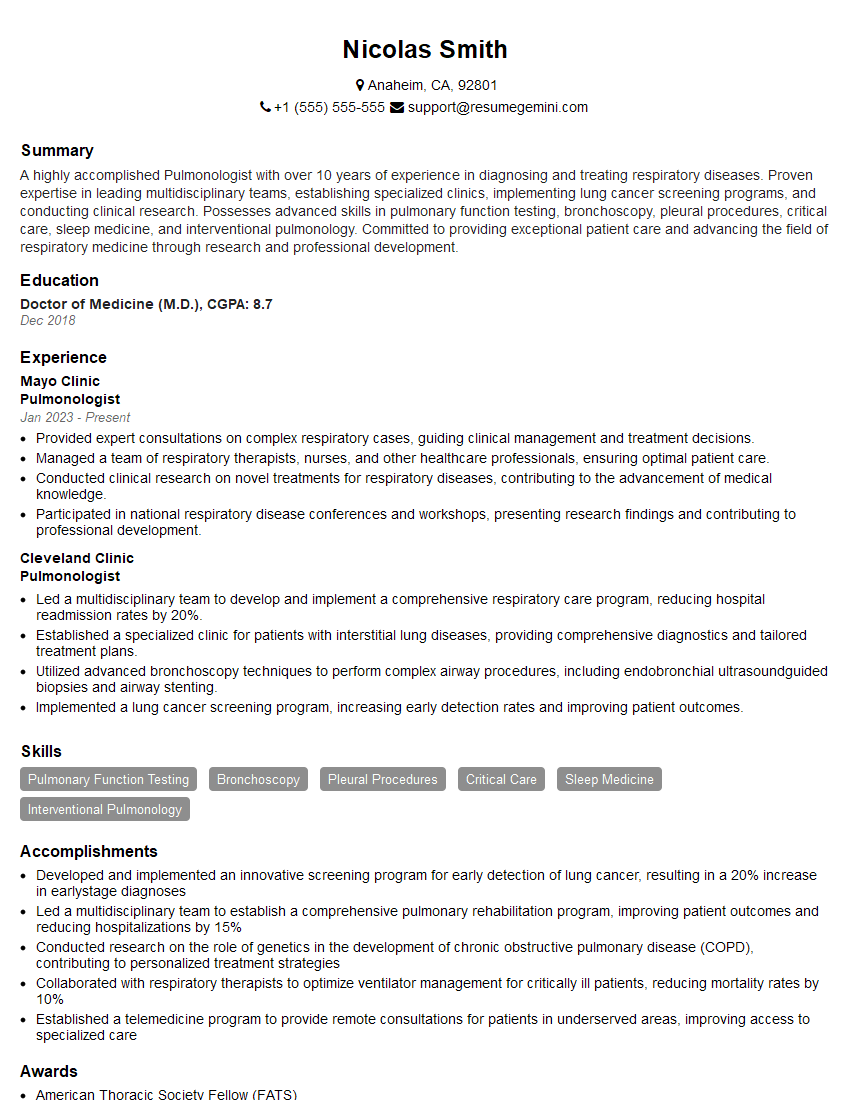
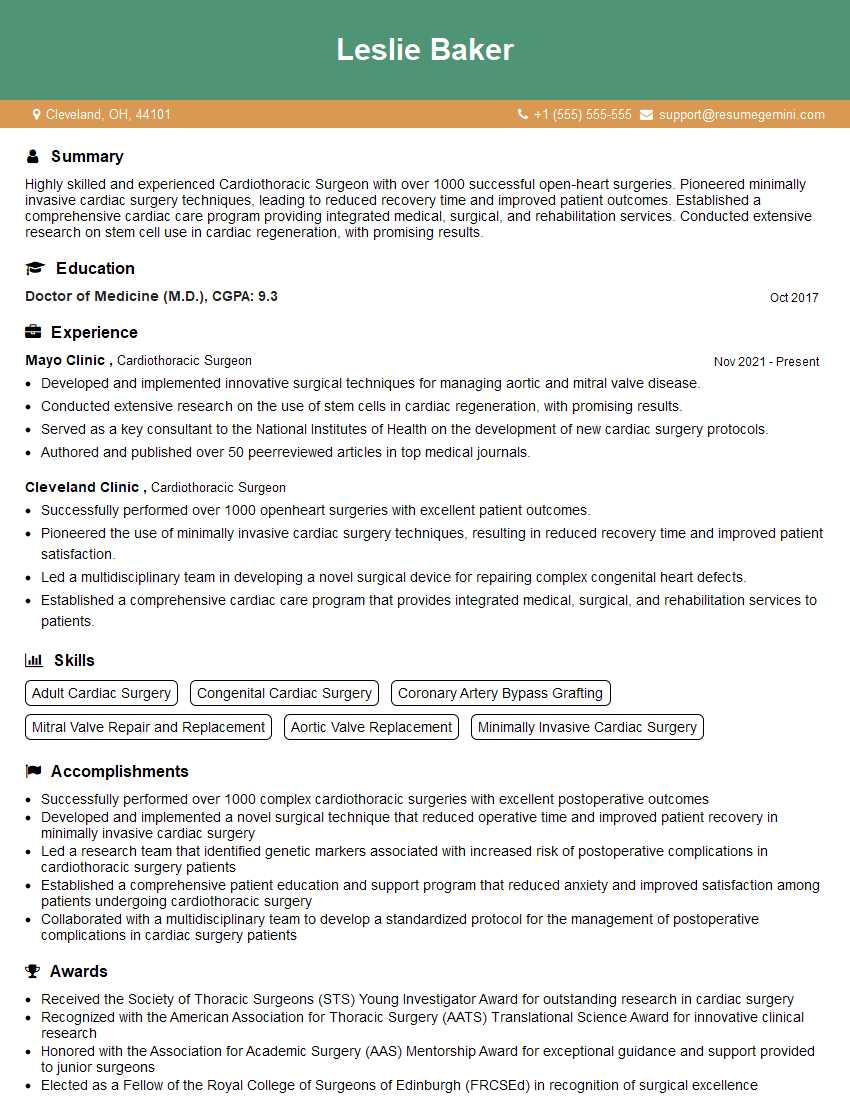
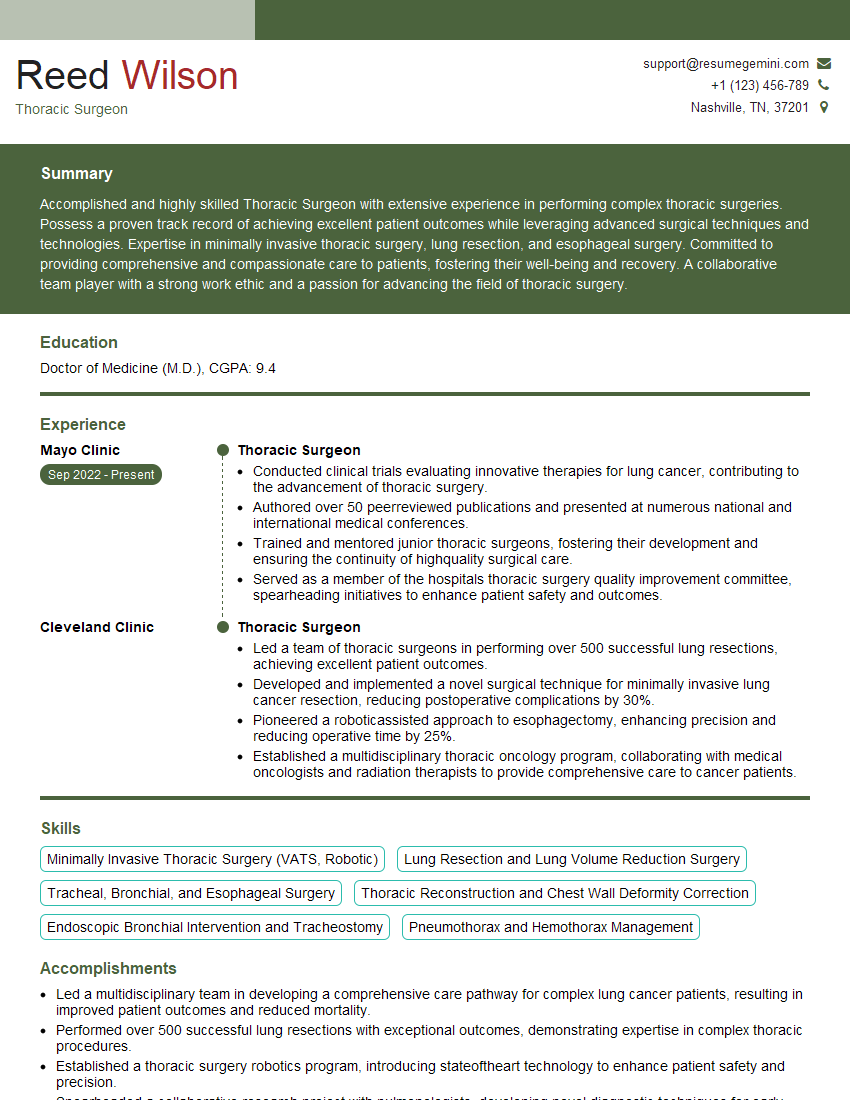
Mastering Thoracic Endoscopy opens doors to exciting career opportunities and positions you as a highly skilled specialist. To maximize your job prospects, creating a strong, ATS-friendly resume is crucial. ResumeGemini is a trusted resource that can help you build a professional and impactful resume tailored to the specific requirements of Thoracic Endoscopy positions. We provide examples of resumes designed to highlight your expertise in this field, giving you a head start in your job search.
Explore more articles
Users Rating of Our Blogs
Share Your Experience
We value your feedback! Please rate our content and share your thoughts (optional).
What Readers Say About Our Blog
To the interviewgemini.com Webmaster.
Very helpful and content specific questions to help prepare me for my interview!
Thank you
To the interviewgemini.com Webmaster.
This was kind of a unique content I found around the specialized skills. Very helpful questions and good detailed answers.
Very Helpful blog, thank you Interviewgemini team.