Preparation is the key to success in any interview. In this post, we’ll explore crucial Substation Equipment Operation interview questions and equip you with strategies to craft impactful answers. Whether you’re a beginner or a pro, these tips will elevate your preparation.
Questions Asked in Substation Equipment Operation Interview
Q 1. Explain the function of a circuit breaker in a substation.
A circuit breaker is essentially the safety switch of a substation, acting as the primary protection device for electrical equipment. Think of it like a really sophisticated and fast-acting fuse in your home. Its main function is to automatically interrupt the flow of current in a circuit when a fault occurs, preventing damage to equipment and ensuring the safety of personnel. This interruption happens much faster than a fuse would.
When a short circuit or overload occurs, the circuit breaker detects the abnormal current and trips open, isolating the faulted section of the circuit. This is crucial because a continuous flow of fault current can cause overheating, fires, and significant damage to expensive substation equipment, like transformers and power lines. Different types of circuit breakers exist, each designed to handle specific voltage levels and fault current magnitudes.
For instance, in a large substation, a bulk power transformer might be protected by a high-voltage, high-capacity circuit breaker capable of interrupting thousands of amperes. Smaller distribution feeders might be protected by lower-capacity breakers. The speed at which the breaker operates is also critical; a faster-acting breaker minimizes the duration of the fault current, reducing the risk of damage.
Q 2. Describe the different types of transformers used in substations.
Substations utilize various types of transformers, each designed for specific purposes within the power system. The most common types include:
- Power Transformers: These are the workhorses of substations, stepping voltage up or down. A step-up transformer increases voltage for efficient long-distance transmission, while a step-down transformer lowers voltage for safer distribution to consumers. Imagine a step-up transformer as a powerful pump increasing water pressure for a long pipeline, and a step-down transformer as a pressure regulator lowering the pressure for household use.
- Instrument Transformers: These transformers accurately measure current and voltage without directly connecting measuring devices to the high-voltage lines, ensuring the safety of personnel and equipment. They provide scaled-down versions of the high-voltage signals for safe metering and protection relay operation.
- Autotransformers: These transformers have a single winding with a common connection point, providing a voltage change with a more compact design compared to two-winding transformers. They are often used for voltage regulation or tap changing in transmission lines.
The choice of transformer depends on factors like voltage level, power rating, and application. For example, a large substation might utilize massive power transformers rated in hundreds of MVA (Megavolt-amperes), while smaller substations may use lower-rated units.
Q 3. What are the safety precautions when working on high-voltage equipment?
Safety is paramount when working on high-voltage equipment. A single mistake can be fatal. Here are some key precautions:
- Lockout/Tagout Procedures: Always follow strict lockout/tagout procedures to ensure the equipment is completely de-energized before any work begins. This involves physically locking out the circuit breaker and tagging it to indicate who is working on the equipment.
- Personal Protective Equipment (PPE): Appropriate PPE is essential, including insulated gloves, safety glasses, arc flash suits, and safety helmets. The level of PPE required depends on the voltage level and the type of work being performed.
- Grounding: Thorough grounding of the equipment is crucial to prevent the buildup of static electricity or residual voltage. Grounding ensures a safe path for any stray current to flow to the earth.
- Training and Competence: Only trained and qualified personnel should work on high-voltage equipment. Regular safety training and competency assessments are necessary.
- Permit-to-Work System: A formal permit-to-work system should be in place, ensuring all risks are assessed and controlled before any work commences.
Ignoring these safety precautions can lead to severe electrical shock, burns, or even fatalities. Always prioritize safety and adhere to established procedures.
Q 4. How does a substation grounding system work?
A substation grounding system is a critical safety feature designed to protect personnel and equipment from electrical hazards. It provides a low-impedance path for fault currents to flow to the earth, preventing voltage buildup and minimizing the risk of electrical shock. Think of it as a controlled path for electricity to safely escape during a fault.
The system usually consists of a network of interconnected conductors, including grounding grids buried in the earth, grounding rods driven deep into the ground, and grounding wires connecting various equipment and structures to the grid. The ground grid provides a large surface area for dissipating fault currents into the earth, minimizing the potential difference between different points in the substation.
During a fault, the ground system ensures that the fault current quickly flows to earth, clearing the fault and reducing the duration of the high voltage. This is critical for preventing damage to equipment and preventing electric shock to personnel. The effectiveness of the grounding system depends on various factors such as soil resistivity, grid design, and the size and quality of the conductors used.
Q 5. Explain the operation of a protective relay.
A protective relay is a crucial device in a substation that continuously monitors the electrical parameters of the power system, like current, voltage, and frequency. It acts as an intelligent guardian, instantly detecting abnormal conditions and initiating corrective actions to protect the equipment. Imagine it as a highly sensitive alarm system that immediately reacts to any issues.
The relay operates by comparing the measured values to pre-set thresholds. If an anomaly is detected (like a short circuit, ground fault, or overload), the relay operates within milliseconds, sending a trip signal to the associated circuit breaker. This causes the circuit breaker to trip open, isolating the faulted section and protecting the rest of the system. The speed and accuracy of the protective relay are essential in preventing widespread damage and outages.
Different types of relays are designed to detect various fault conditions. Some might be sensitive to overcurrent, others to ground faults, or even to specific types of equipment failure. The selection of relays depends on the specific needs of the substation and the type of equipment being protected.
Q 6. What are the different types of protective relays used in substations?
Substations employ a wide array of protective relays, each specialized for different fault conditions. Some common types include:
- Overcurrent Relays: These relays detect excessive current flow, often caused by short circuits. They trip the circuit breaker when the current exceeds a predefined limit.
- Differential Relays: These relays compare the current entering and leaving a protected device (like a transformer). Any significant difference indicates an internal fault, triggering the relay to operate.
- Distance Relays: These relays measure the impedance to the fault location. They are commonly used to protect transmission lines, identifying and isolating faulted sections based on distance.
- Ground Fault Relays: These relays detect faults involving ground. They are crucial for protecting against ground faults, which can be especially dangerous.
- Overvoltage and Undervoltage Relays: These relays detect abnormal voltage levels, protecting against excessive voltage surges or voltage dips that can damage equipment.
The selection of relays depends on the specific application and the equipment being protected. Sophisticated substations often use combinations of different relay types for comprehensive protection.
Q 7. Describe the process of testing a circuit breaker.
Circuit breaker testing is critical for ensuring reliable operation and preventing unexpected outages. Regular testing verifies that the breaker will function correctly when needed. The testing process typically involves several steps:
- Mechanical Testing: This checks the physical operation of the breaker, including the closing and tripping mechanisms. This ensures the breaker moves smoothly and consistently.
- Insulation Resistance Testing: This measures the insulation resistance of the breaker to ensure its integrity and prevent flashovers or short circuits.
- Contact Resistance Testing: This measures the resistance across the breaker contacts. High contact resistance can lead to overheating and malfunction.
- Dielectric Strength Testing: This tests the ability of the breaker’s insulation to withstand high voltage, ensuring it can prevent breakdown under stress.
- High-Current Testing: This involves injecting high currents to simulate fault conditions and verify the breaker’s tripping capability. This is usually performed in specialized testing laboratories due to safety considerations.
The frequency of testing depends on the breaker’s type, voltage rating, and operating conditions. Regular testing significantly reduces the risk of failure and enhances the reliability of the power system.
Q 8. How do you troubleshoot a faulty transformer?
Troubleshooting a faulty transformer involves a systematic approach, prioritizing safety. First, we isolate the transformer completely from the power grid to prevent injury. Then, we begin a series of checks, starting with the simplest and progressing to more complex investigations.
Visual Inspection: Look for any obvious signs of damage, such as burned components, loose connections, leaking oil, or physical damage to the tank. A bulging tank, for instance, could indicate internal pressure issues.
Gas Analysis: Dissolved gas analysis (DGA) of the transformer oil is crucial. Different gases released during faults (e.g., hydrogen, methane, ethane) indicate specific problems like overheating, arcing, or partial discharges. We use specialized equipment to analyze the oil sample.
Insulation Resistance Test: We measure the insulation resistance of the windings using a megger. Low resistance indicates insulation breakdown, potentially caused by moisture ingress or aging.
Turns Ratio Test: This verifies the correct winding ratio. A discrepancy suggests a winding fault.
Winding Resistance Test: This checks for any short circuits or open circuits within the windings.
Oil Quality Test: Beyond DGA, testing the oil for moisture content, dielectric strength, and acidity helps determine its overall health.
Temperature Monitoring: Checking winding and oil temperatures can help identify hot spots indicating potential failure points. We might use infrared cameras for non-invasive temperature detection.
Based on the results of these tests, we can pinpoint the problem – be it a simple loose connection or a major winding fault requiring repairs or replacement. The process is iterative, and sometimes we may need to repeat certain tests for confirmation. Detailed record-keeping throughout the process is essential for future maintenance and analysis.
Q 9. What is the role of SCADA in substation operation?
SCADA, or Supervisory Control and Data Acquisition, plays a vital role in modern substation operation. It acts as the central nervous system, providing real-time monitoring, control, and data management capabilities. Imagine it as a sophisticated dashboard displaying the status of all equipment and allowing remote control of key functions.
Real-time Monitoring: SCADA systems continuously monitor voltage, current, power, temperature, and other crucial parameters of substation equipment. This allows for early detection of anomalies and potential problems.
Remote Control: Operators can remotely control various substation equipment, such as circuit breakers, disconnects, and tap changers, enhancing operational efficiency and safety.
Alarm Management: SCADA systems trigger alarms when predefined thresholds are exceeded, alerting operators to potential issues that require immediate attention.
Data Logging and Reporting: They record historical data, enabling trend analysis to optimize maintenance schedules and predict potential failures. This data is invaluable for long-term planning.
Integration with other systems: Modern SCADA systems integrate seamlessly with other substation systems such as protection relays and energy management systems, providing a holistic view of the grid.
For example, a sudden voltage dip detected by SCADA might trigger an automatic response, preventing a larger outage. Without SCADA, manual monitoring of such a vast and complex system would be extremely challenging and potentially unsafe.
Q 10. Explain the function of a power transformer.
A power transformer’s primary function is to efficiently change the voltage level of alternating current (AC) electricity. Think of it as a voltage converter, essential for transmitting power over long distances and distributing it safely to consumers.
Power transformers operate based on the principle of electromagnetic induction. A high voltage (primary winding) is stepped down to a lower voltage (secondary winding), suitable for local distribution, or vice-versa, depending on the transformer’s application. This voltage transformation is achieved by having different numbers of turns in the primary and secondary windings. A higher number of turns on the secondary side steps up the voltage, while a lower number steps it down.
They are crucial in transmission systems, where high voltages (hundreds of kilovolts) are used to minimize power loss during transmission over long distances. Then, at substations, step-down transformers reduce the voltage to safer levels for distribution to homes and industries.
For example, a 500 kV transmission line might use a step-down transformer at a substation to reduce the voltage to 110 kV for further distribution. Another transformer might then further step down the voltage to 220V for residential use.
Q 11. Describe the different types of insulators used in substations.
Substations employ various types of insulators, each designed to withstand specific voltage levels and environmental conditions. Their purpose is to safely support and isolate conductors, preventing electrical short circuits and protecting personnel.
Post Insulators: These are commonly used for supporting conductors at relatively low voltages. They are simple, robust, and relatively inexpensive.
Strain Insulators: Designed to withstand high tensile forces, they are used at points where conductors change direction or experience significant mechanical stress. They are often seen at the ends of transmission lines entering substations.
Suspension Insulators: Commonly used for high-voltage transmission lines, these are strung together in series to achieve the required insulation level. This arrangement allows for easier maintenance and replacement.
Bushings: Used to insulate conductors passing through walls or barriers, such as transformer tanks or switchgear enclosures. They ensure electrical isolation while providing a physical path for the conductor.
Polymer Insulators: Increasingly popular due to their high strength-to-weight ratio, hydrophobicity, and resistance to pollution, compared to traditional porcelain or glass insulators.
The choice of insulator depends on several factors, including voltage level, environmental conditions (pollution, temperature, humidity), and mechanical loading.
Q 12. What are the common causes of substation equipment failures?
Substation equipment failures can stem from various causes, often linked to aging, environmental factors, or operational stresses. Understanding these causes is crucial for preventive maintenance.
Aging and Degradation: Insulation degradation, winding deterioration, and component wear are common causes of failures, especially in older equipment. This often manifests as increased insulation resistance.
Environmental Factors: Extreme weather conditions (lightning strikes, high winds, extreme temperatures), pollution (salt spray, dust), and moisture ingress can damage equipment and shorten its lifespan.
Operational Stresses: Overloads, frequent switching operations, and electrical faults can cause significant stress on equipment, leading to premature failure.
Manufacturing Defects: Occasionally, equipment may fail due to inherent manufacturing defects or substandard materials.
Human Error: Incorrect operation, maintenance, or installation procedures can contribute to equipment failures. This highlights the importance of thorough training and adherence to safety protocols.
For example, lightning strikes can cause severe damage to insulators and transformers, leading to outages. Similarly, prolonged exposure to harsh environmental conditions can accelerate aging and degradation.
Q 13. How do you maintain substation equipment to prevent failures?
Preventive maintenance is crucial to avoid costly substation equipment failures and ensure reliable grid operation. A robust maintenance program incorporates several key elements:
Regular Inspections: Visual inspections, including checking for loose connections, damaged insulators, and signs of overheating, should be performed regularly according to a predetermined schedule.
Preventive Testing: Periodic testing of transformers, circuit breakers, and other equipment ensures their functionality and helps identify potential issues before they lead to major failures. This includes tests such as insulation resistance tests, DGA, and partial discharge measurements.
Condition Monitoring: Utilizing advanced technologies like online monitoring systems and SCADA can provide real-time data on equipment health, enabling proactive maintenance based on actual conditions rather than fixed schedules.
Cleaning and Servicing: Regular cleaning of insulators and other equipment helps prevent the accumulation of dirt and pollutants, improving their performance and longevity. Servicing includes tasks such as oil changes in transformers.
Record Keeping: Maintaining detailed records of all maintenance activities is essential for trend analysis, predictive maintenance, and future planning.
A well-planned preventive maintenance program is cost-effective in the long run, as it helps to avoid major repairs or replacements and ensures the reliable and safe operation of the substation.
Q 14. Explain the importance of proper grounding in a substation.
Proper grounding in a substation is paramount for safety and reliable operation. It provides a low-impedance path for fault currents to flow to the earth, preventing dangerous voltage buildup and protecting equipment and personnel.
Personnel Safety: Grounding prevents the buildup of dangerous voltages on equipment and structures, protecting personnel from electric shock.
Equipment Protection: It limits the duration and magnitude of fault currents, minimizing damage to equipment during faults. This prevents cascading failures.
Lightning Protection: Grounding provides a path for lightning strikes to dissipate safely into the earth, preventing damage to sensitive equipment.
System Stability: Proper grounding helps maintain system stability by ensuring low impedance paths for fault currents, preventing voltage surges and voltage imbalances.
Imagine a scenario where a high-voltage conductor falls to the ground. Without proper grounding, the ground itself could become energized, posing a serious risk to anyone nearby. However, with a robust grounding system, the fault current will quickly flow to earth through the grounding network, minimizing the risk of harm. Regular inspection and testing of the grounding system are crucial to ensure its effectiveness.
Q 15. Describe the different types of busbars used in substations.
Substations utilize various busbar types, each suited to different voltage levels and power capacities. The choice depends on factors like current carrying capacity, fault current levels, and space constraints.
- Copper Busbars: These are the most common, offering excellent conductivity and relatively low cost. However, they can be bulky and prone to sagging at high temperatures. Think of them as the workhorses—reliable and efficient.
- Aluminum Busbars: Lighter and cheaper than copper, aluminum busbars are often used in lower voltage applications. They have a slightly higher resistance than copper, meaning more energy loss for the same current.
- Tubular Busbars: These hollow conductors offer higher current carrying capacity for their size due to increased surface area and effective cooling. They’re often used in situations where space is premium, like compact substations.
- Insulated Busbars: These are encased in an insulating material, enhancing safety and providing better protection against environmental factors. They’re particularly crucial in higher voltage substations.
For example, a large, high-voltage substation might employ tubular busbars for the main power flow and insulated busbars for smaller feeder circuits. Smaller substations might primarily use copper or aluminum busbars.
Career Expert Tips:
- Ace those interviews! Prepare effectively by reviewing the Top 50 Most Common Interview Questions on ResumeGemini.
- Navigate your job search with confidence! Explore a wide range of Career Tips on ResumeGemini. Learn about common challenges and recommendations to overcome them.
- Craft the perfect resume! Master the Art of Resume Writing with ResumeGemini’s guide. Showcase your unique qualifications and achievements effectively.
- Don’t miss out on holiday savings! Build your dream resume with ResumeGemini’s ATS optimized templates.
Q 16. What is the difference between a gas-insulated substation and an air-insulated substation?
The key difference between gas-insulated substations (GIS) and air-insulated substations (AIS) lies in the insulating medium used. AIS use air as the insulator, while GIS use sulfur hexafluoride (SF6) gas.
- AIS: These are typically larger and require more space due to the greater distances needed for safe air insulation between components. They are generally less expensive initially but require more maintenance and are more susceptible to environmental factors.
- GIS: These are more compact and require less land area, making them ideal for urban environments. SF6 gas has excellent insulating properties and better arc-quenching capabilities, leading to improved reliability and safety. However, SF6 is a potent greenhouse gas, and its environmental impact is a growing concern. Maintenance costs may be higher initially but reduced in the long run due to higher reliability.
Imagine AIS as a traditional outdoor electrical system, while GIS is like a highly efficient, compact, indoor system. The choice depends on factors such as land availability, environmental concerns, and budget.
Q 17. How do you ensure the safety of personnel working in a substation?
Substation safety is paramount. A multi-layered approach ensures personnel protection. It starts with robust safety procedures and extends to advanced equipment and training.
- Lockout/Tagout Procedures: Before any work, all power must be isolated and locked out, preventing accidental energization. This is a fundamental safety procedure. Think of it as the cornerstone of any work involving potentially hazardous electrical equipment.
- Personal Protective Equipment (PPE): Workers must always wear appropriate PPE, including insulated gloves, safety helmets, and arc flash protection suits. The type and level of protection depends on the voltage level.
- Grounding: All equipment undergoing maintenance must be properly grounded to discharge any residual energy. This step is critical to preventing electric shocks.
- Training and Competency: Workers must receive thorough training on substation safety procedures and the proper use of PPE and equipment. Regular refresher courses and assessments ensure ongoing competence.
- Safety Audits and Inspections: Regular safety audits and inspections identify potential hazards and ensure compliance with safety regulations.
A simple analogy: imagine a construction site. We use hard hats, safety harnesses, and follow strict procedures. Substations demand an even higher level of safety awareness due to the lethal nature of high-voltage electricity.
Q 18. Explain the process of commissioning a new substation.
Commissioning a new substation is a complex process involving multiple stages and stringent testing to ensure safe and reliable operation.
- Pre-commissioning: This includes inspection and testing of all equipment individually to verify functionality and compliance with specifications.
- System Integration: All components are interconnected, and the overall system is checked for proper operation and compatibility.
- Protection Relay Testing: Thorough testing of protective relays ensures that they function correctly under fault conditions. This is critical for preventing equipment damage and maintaining grid stability.
- Commissioning Testing: This involves a series of tests to verify the correct functioning of the entire substation, including power transformers, circuit breakers, and protection systems under various operating conditions.
- Hand-over: Once all tests are successfully completed, the substation is handed over to the operation and maintenance team.
Think of it like building a house. You first inspect materials, then assemble the parts, test the plumbing and electricity, before finally moving in. The same rigorous process is applied to substations.
Q 19. What are the different types of communication systems used in substations?
Modern substations rely on various communication systems for monitoring, control, and protection. These systems ensure seamless integration and efficient operation.
- IEC 61850: This is the leading communication standard for substations, facilitating efficient data exchange between intelligent electronic devices (IEDs). Think of it as a standardized language for all devices in the substation.
- Optical Fiber Communication: Optical fibers provide high bandwidth and immunity to electromagnetic interference, making them ideal for transmitting large amounts of data reliably.
- Radio Communication: Radio systems, including microwave links, are used for remote monitoring and control, especially in geographically dispersed areas.
- Ethernet/IP Networks: Ethernet provides a versatile platform for integrating various communication protocols and supporting various types of data exchange within the substation and with the wider power grid.
These different communication systems work together, providing a robust and redundant communication infrastructure for the substation. It’s like having several pathways to reach the same destination; if one fails, others are available.
Q 20. Describe the role of a substation in the power grid.
Substations are critical components of the power grid, acting as the switching and transformation centers. They are vital for managing power flow and ensuring reliable electricity delivery.
- Voltage Transformation: Substations step voltage levels up or down to match transmission and distribution requirements. Think of them as voltage converters, adapting the power for efficient transmission and distribution.
- Switching and Protection: They provide switching capabilities to route power and implement protection schemes that isolate faulty equipment, minimizing the impact of outages.
- Power Flow Control: Substations play a key role in managing power flow across the grid, ensuring that electricity is delivered reliably and efficiently to consumers.
- Grid Stability: The switching and protection functions contribute significantly to the overall stability of the power grid.
In essence, substations are the central nervous system of the power grid. They manage power distribution in a complex network, allowing electricity to flow smoothly to our homes and businesses.
Q 21. Explain the importance of regular maintenance in a substation.
Regular maintenance is crucial for ensuring the safety and reliability of substation equipment. Preventive measures significantly reduce the risk of equipment failure and costly unplanned outages.
- Preventive Maintenance: This involves scheduled inspections, cleaning, and testing of equipment to identify potential problems before they lead to failure. Think of it as regular check-ups for a car.
- Predictive Maintenance: This utilizes advanced monitoring techniques like vibration analysis and infrared thermography to predict potential failures and schedule maintenance proactively. This approach is similar to using advanced diagnostics to predict health issues in humans.
- Corrective Maintenance: This addresses equipment failures that occur during operation. While essential, preventive and predictive maintenance reduce the need for this reactive approach.
- Compliance: Regular maintenance ensures compliance with safety regulations and operational standards. This is essential for safe and reliable operation.
The cost of not performing regular maintenance can be significantly higher than the cost of preventive maintenance, leading to extended outages, equipment damage, and potential safety hazards.
Q 22. How do you handle emergency situations in a substation?
Handling emergency situations in a substation requires a calm, methodical approach prioritizing safety. Our first step is always to assess the situation: What’s the nature of the emergency? Is there a fire, equipment failure, or personnel injury? We immediately activate our emergency response plan, which includes notifying relevant personnel (e.g., fire department, maintenance crew, and supervisors), securing the area to prevent further incidents or injuries, and initiating the appropriate safety procedures based on the situation’s severity.
For instance, if there’s a fire, we’d use CO2 extinguishers or call the fire department, depending on the fire’s size and location. In the case of equipment failure resulting in an arc flash, we’d immediately de-energize the affected circuit using circuit breakers and then call for expert analysis and repairs. Clear communication is key – we use a combination of radio communication and direct contact to ensure everyone is informed and working collaboratively. Post-incident, thorough investigations are conducted to determine the root cause and prevent future occurrences.
Q 23. What are the common types of faults that occur in substations?
Substations experience various faults. Common ones include:
- Busbar faults: These occur when there’s an insulation breakdown on the busbar, leading to short circuits and significant power disruptions. Think of it like a major traffic jam on the main road of the electrical system.
- Transformer faults: These can range from insulation failures leading to partial discharges to catastrophic winding failures causing a complete shutdown. This is similar to a vital engine component failing in a car, requiring immediate attention.
- Circuit breaker failures: These can lead to equipment not switching as expected. A circuit breaker’s failure could cause an inability to isolate faulty components, extending the duration and impact of a fault.
- Insulator failures: These cause flashovers and short circuits. Insulators are essentially the supports that keep high voltage safely away from ground.
- Lightning strikes: Direct lightning strikes can cause significant damage to equipment and lead to widespread outages. This is akin to a natural disaster impacting the infrastructure.
The severity of these faults depends on several factors, including the fault’s type, location, and the protective relaying’s effectiveness. Early detection and response are critical to mitigate the impact of these faults.
Q 24. Describe the process of isolating a faulty piece of equipment.
Isolating a faulty piece of equipment follows a well-defined procedure emphasizing safety. First, we identify the faulty component through monitoring and diagnostics, possibly using protective relay signals or visual inspection. Once identified, the area is locked out and tagged out following appropriate safety procedures (LOTO). This prevents accidental energization during the isolation process. Then, we operate the appropriate circuit breakers, isolators, and disconnect switches to isolate the faulty equipment electrically from the rest of the substation. This might involve multiple switching operations, and we verify the absence of voltage at each stage using appropriate test equipment. After successful isolation, repairs can commence, and following repair, we perform rigorous testing before re-energizing the equipment.
For example, isolating a faulty transformer might involve opening the circuit breakers on both its high-voltage and low-voltage sides, then opening related isolators to completely separate it from the busbars. Throughout this process, strict adherence to safety protocols and procedural steps is paramount. This multi-step process is a standard practice to ensure safety and efficiency in substation maintenance.
Q 25. What are the environmental considerations for substation operation?
Environmental considerations are crucial for substation operation. We need to consider the impact of the substation on the environment and the environment’s impact on the substation. Key aspects include:
- Air quality: SF6 gas, often used in gas-insulated switchgear (GIS), is a potent greenhouse gas, and its leakage must be minimized through proper maintenance and leak detection systems.
- Noise pollution: Substation equipment can generate considerable noise, especially during switching operations. Noise mitigation strategies like sound barriers and proper equipment placement are crucial.
- Land use: Substations require significant land areas. Careful planning minimizes environmental disruption and considers the potential impact on local ecosystems.
- Water management: Some substations utilize water for cooling. Water usage needs to be managed efficiently and sustainably, preventing contamination.
- Waste management: Proper disposal of hazardous materials, such as used oil and insulators, is crucial for environmental protection.
Compliance with relevant environmental regulations and implementing sustainable practices are essential to minimize the substation’s environmental footprint.
Q 26. Explain the concept of substation automation.
Substation automation enhances efficiency, reliability, and safety. It involves using digital technologies like SCADA (Supervisory Control and Data Acquisition) systems, intelligent electronic devices (IEDs), and communication networks to automate various substation functions. These systems remotely monitor and control equipment, allowing operators to manage the substation from a central location, often hundreds of kilometers away. Automation reduces human intervention in hazardous tasks, improves response time during faults, and facilitates faster restoration of service after outages.
For example, a fault detection and isolation system can automatically detect a fault, isolate the faulty equipment, and reroute power around the fault, all within milliseconds. Remote monitoring allows operators to observe the equipment’s performance, anticipate maintenance needs, and diagnose potential problems before they escalate. This proactive approach ensures the continuous and stable delivery of power.
Q 27. How does a substation interact with the transmission system?
Substations act as critical interfaces between the transmission and distribution systems. They receive high-voltage power from the transmission system, stepping it down to lower voltages suitable for distribution to consumers. This involves stepping down the voltage using transformers, as well as switching and protection equipment that ensures the safe and reliable flow of power. The interaction also involves coordinating the power flow between the transmission system and the distribution networks, ensuring system stability and preventing overloads. Substations employ protection schemes to isolate faults and prevent cascading outages that could impact a wide area.
Think of it as a major highway intersection. The transmission system is the large highway bringing power from long distances; the substation reduces the speed and distributes traffic (power) to local streets (distribution systems). Effective coordination between these systems is essential for uninterrupted power supply.
Q 28. Describe your experience with different types of substation protection schemes.
My experience encompasses various substation protection schemes, including:
- Differential protection: This scheme compares currents entering and leaving a piece of equipment (e.g., transformer, busbar). A significant difference indicates a fault within the protected zone.
- Distance protection: This measures the impedance between the relay location and the fault. The relay operates if the impedance falls within a predetermined range.
- Overcurrent protection: This detects faults based on excessive current flow. It’s a simpler and more widely used protection scheme, particularly for feeder protection.
- Busbar protection: This protects the substation’s main busbars from faults using various techniques, including differential and high-impedance schemes.
- Transformer protection: This incorporates multiple protection schemes, including differential, overcurrent, and thermal protection, to safeguard transformers from diverse fault conditions.
I’m also familiar with newer protection schemes that integrate advanced communication technologies, such as numerical relays with adaptive protection algorithms that automatically adjust their settings based on system conditions. Understanding and applying these protection schemes ensures that the substation operates safely and reliably, preventing major disruptions and outages.
Key Topics to Learn for Substation Equipment Operation Interview
- High-Voltage Switchgear: Understanding the operation, maintenance, and safety procedures for various types of circuit breakers, disconnects, and busbars. Consider practical applications like troubleshooting common switchgear malfunctions.
- Transformers: Mastering the principles of transformer operation, including voltage regulation, tap changing, and impedance calculations. Explore practical scenarios involving transformer testing and fault diagnosis.
- Protection Relays: Learn the function and application of various protection relays, including overcurrent, differential, and distance relays. Focus on understanding relay settings and their impact on system protection.
- SCADA Systems: Familiarize yourself with Supervisory Control and Data Acquisition (SCADA) systems used in substation automation. Understand data acquisition, control strategies, and alarm management within SCADA environments.
- Substation Grounding: Grasp the importance of effective grounding systems for safety and equipment protection. Understand grounding design principles and fault current calculations.
- Power System Stability: Develop a foundational understanding of power system stability and how substation equipment contributes to overall grid stability. Explore transient and steady-state stability concepts.
- Safety Procedures and Regulations: Thoroughly understand relevant safety regulations and procedures for working in high-voltage substations. This includes lockout/tagout procedures, personal protective equipment (PPE), and safe work practices.
- Troubleshooting and Problem-Solving: Develop strong analytical and problem-solving skills to effectively diagnose and resolve equipment malfunctions in a substation environment. Practice using diagnostic tools and interpreting operational data.
Next Steps
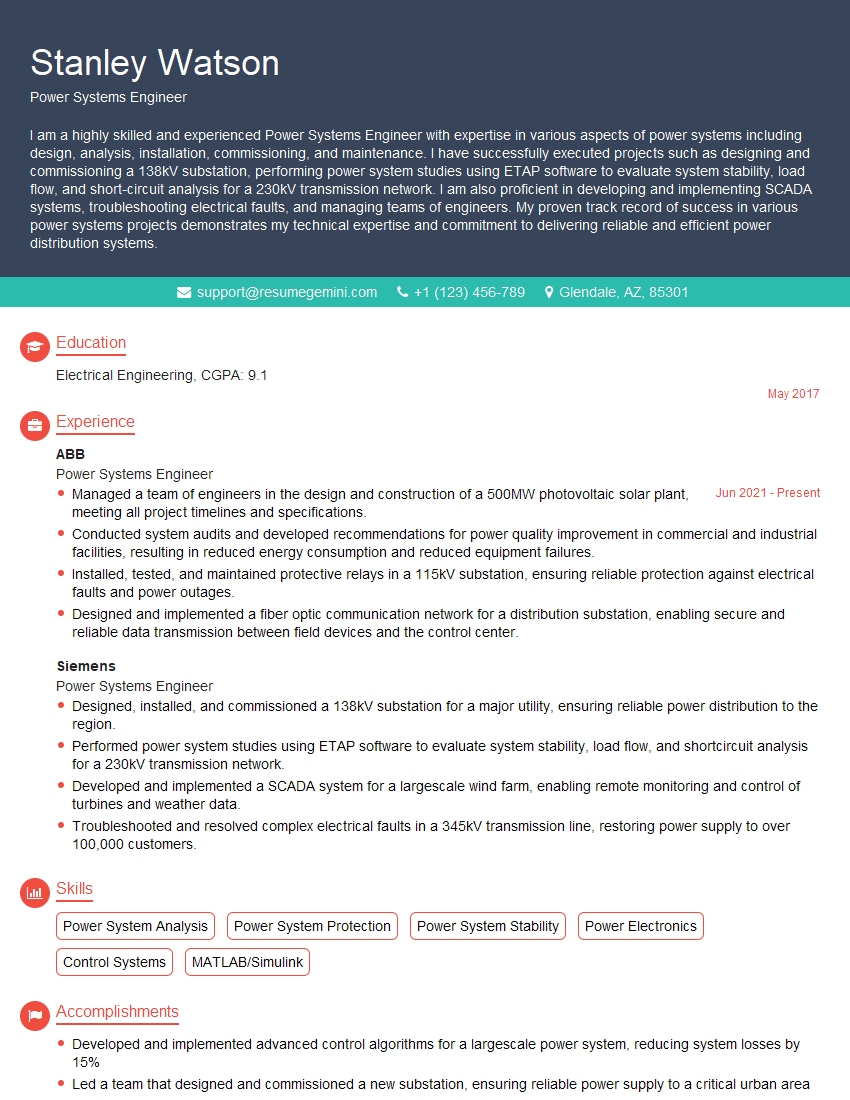
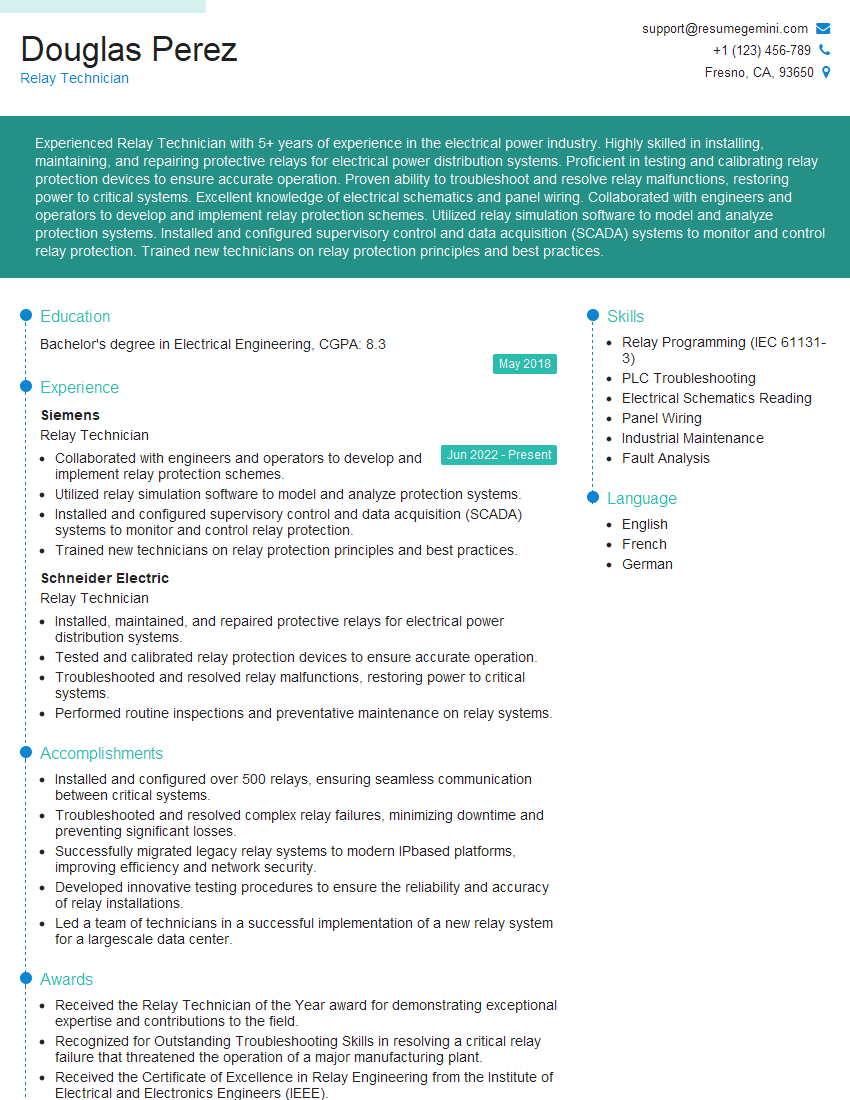
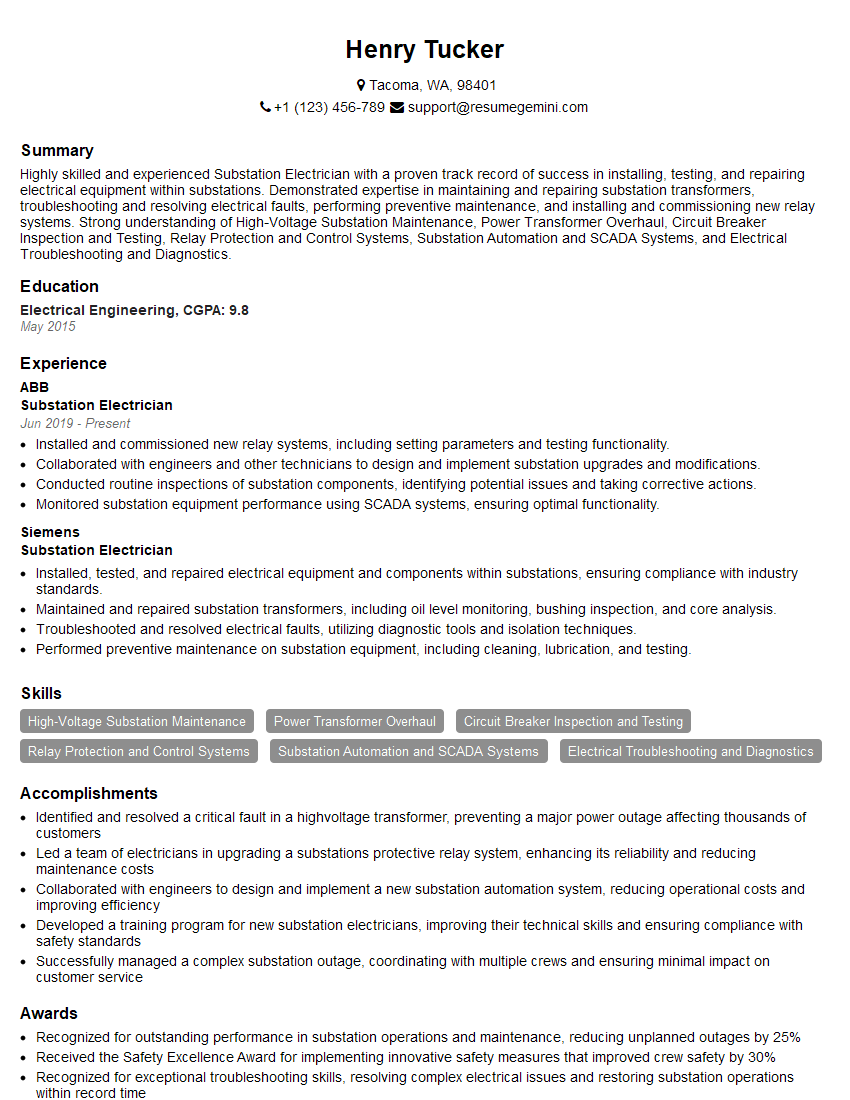
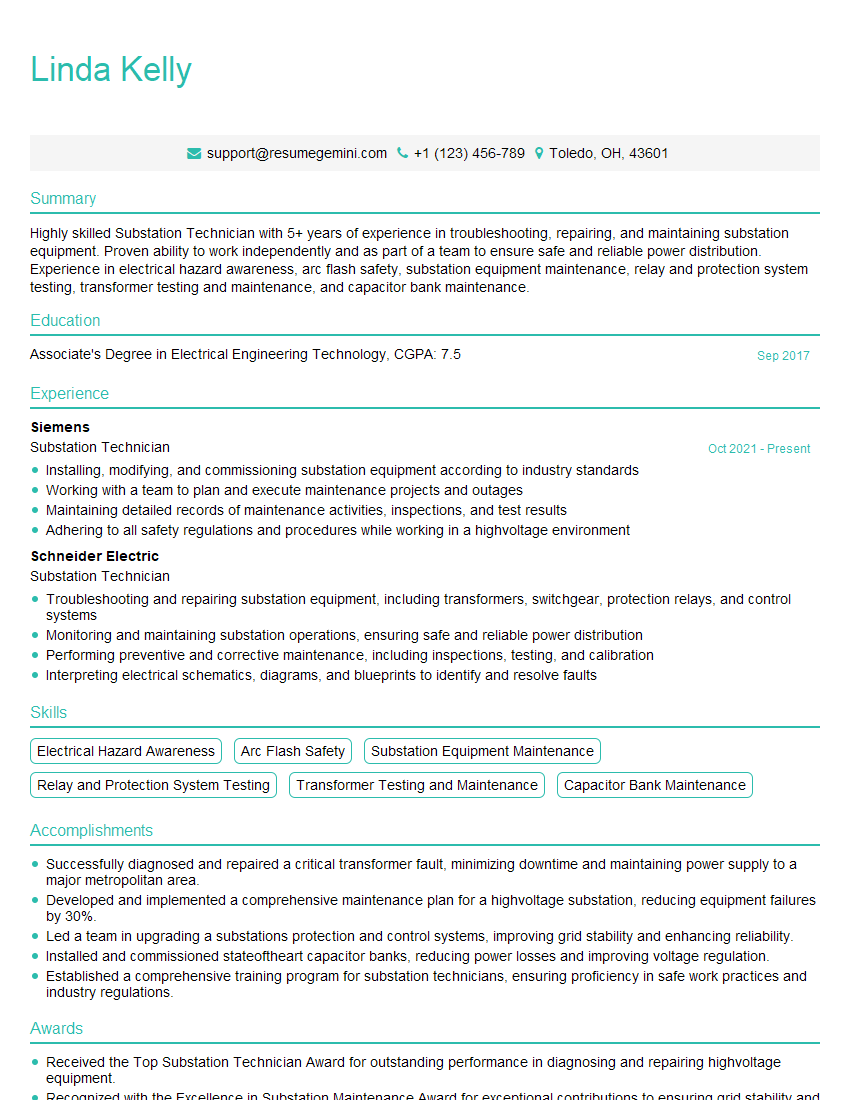
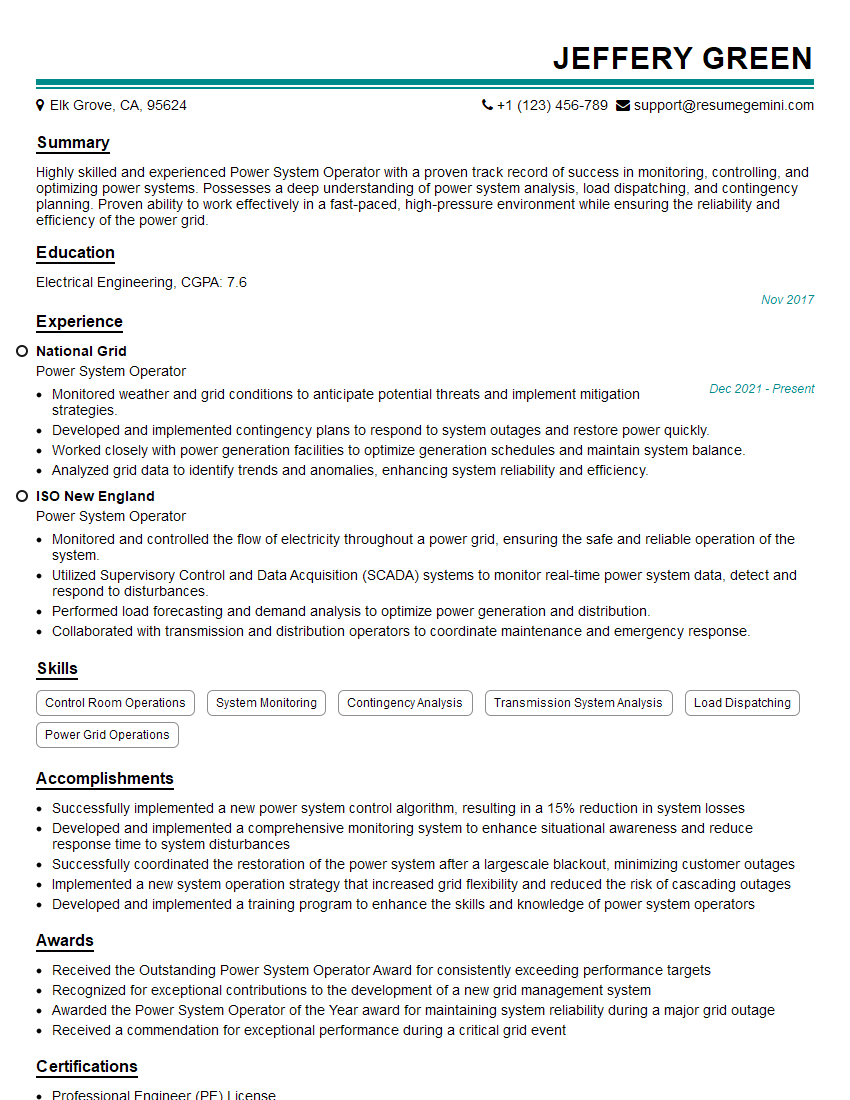
Mastering Substation Equipment Operation opens doors to exciting and rewarding careers in the power industry, offering opportunities for growth and specialization. To maximize your job prospects, it’s crucial to present your skills effectively. Creating an ATS-friendly resume is key to getting your application noticed by potential employers. We strongly recommend using ResumeGemini to build a professional and impactful resume that highlights your qualifications. ResumeGemini offers a streamlined process and provides examples of resumes tailored to Substation Equipment Operation, ensuring your application stands out from the competition.

Explore more articles
Users Rating of Our Blogs
Share Your Experience
We value your feedback! Please rate our content and share your thoughts (optional).
What Readers Say About Our Blog
To the interviewgemini.com Webmaster.
Very helpful and content specific questions to help prepare me for my interview!
Thank you
To the interviewgemini.com Webmaster.
This was kind of a unique content I found around the specialized skills. Very helpful questions and good detailed answers.
Very Helpful blog, thank you Interviewgemini team.