Unlock your full potential by mastering the most common Dispatch Scheduling interview questions. This blog offers a deep dive into the critical topics, ensuring you’re not only prepared to answer but to excel. With these insights, you’ll approach your interview with clarity and confidence.
Questions Asked in Dispatch Scheduling Interview
Q 1. Explain your experience with different dispatch software and systems.
Throughout my career, I’ve worked extensively with various dispatch software and systems, ranging from simple spreadsheet-based solutions to sophisticated, cloud-based platforms. My experience encompasses both proprietary systems and commercially available software like Route4Me, Samsara, and DispatchTrack. Each system presents unique strengths and weaknesses. For example, spreadsheet-based systems are useful for small operations but lack the scalability and advanced features of cloud-based platforms. Cloud-based platforms excel at real-time tracking, automated routing, and communication features, which are vital for larger operations. I’m proficient in using these systems to manage everything from driver assignments and route optimization to real-time tracking and reporting. I’m also adept at configuring and customizing these systems to meet specific operational needs and integrating them with other business systems like CRM and ERP solutions. For instance, in a previous role, I successfully implemented a new dispatch software that reduced delivery times by 15% by optimizing routes and improving driver communication.
Q 2. Describe your process for prioritizing urgent deliveries.
Prioritizing urgent deliveries involves a multi-step process. First, I clearly define urgency criteria, which may include factors like delivery deadlines, product sensitivity (e.g., perishable goods), and customer priority. Then, I utilize the dispatch system’s features to filter and identify urgent deliveries. This often involves setting up customized alerts or filters based on these criteria. Once identified, these deliveries are immediately assigned to the most suitable available driver, considering factors like their proximity to the pick-up location, current workload, and vehicle capacity. I also proactively communicate any potential delays to the customer and provide real-time updates throughout the delivery process. Think of it like triage in a hospital – the most critical cases get immediate attention. For example, if we have a time-sensitive medical supply delivery, that takes precedence over a standard package delivery, even if the standard delivery has been scheduled earlier.
Q 3. How do you handle unexpected delays or emergencies?
Handling unexpected delays or emergencies requires swift and decisive action. My approach involves immediately identifying the nature and extent of the disruption. This could involve contacting the driver directly to understand the situation. Using real-time tracking data from the dispatch system, I can quickly assess the impact on other deliveries. Next, I re-optimize routes and assignments in real-time, potentially rerouting deliveries or reassigning them to other available drivers. Proactive communication with both the drivers and affected customers is crucial, keeping everyone informed of the situation and any anticipated delays. If necessary, I escalate the issue to management and seek additional support. For instance, if a major traffic accident causes a significant road closure, I might need to coordinate with alternative routes or arrange for additional vehicles to ensure timely deliveries.
Q 4. What strategies do you use to optimize routes and minimize travel time?
Optimizing routes and minimizing travel time is a core function of my role. I leverage the advanced routing capabilities of the dispatch software, which typically employs algorithms like Dijkstra’s algorithm or A* search to find the shortest path between multiple locations. However, I don’t solely rely on automated systems. I incorporate my knowledge of local traffic patterns, road closures, and construction zones to further refine the suggested routes. I also consider factors like delivery time windows, driver expertise, and vehicle capacity when assigning deliveries. Furthermore, strategies like grouping deliveries geographically or implementing efficient load planning can significantly reduce travel time. In essence, it’s a combination of algorithmic optimization and practical experience. For example, by batching deliveries in the same neighborhood, we can significantly reduce unnecessary back-and-forth travel, improving efficiency and reducing fuel costs.
Q 5. How do you manage driver communication and ensure real-time updates?
Effective driver communication is essential for efficient dispatch operations. I primarily use the in-built communication features of the dispatch software, which may include in-app messaging, two-way voice communication, or automated updates. This ensures real-time updates are seamlessly integrated into the workflow. Clear and concise communication protocols are vital. I ensure drivers receive clear instructions regarding their assignments, including delivery addresses, time windows, and any special handling instructions. I also regularly check in with drivers to assess their progress and address any challenges they may encounter. In addition to the software, I utilize other tools as needed, such as phone calls for urgent situations or email for less time-sensitive updates. Think of it as building a constant feedback loop to ensure smooth operations and quick response to problems.
Q 6. Explain your approach to driver scheduling and workload balancing.
Driver scheduling and workload balancing are crucial for maintaining efficiency and preventing driver burnout. My approach involves considering factors such as driver availability, skill sets, vehicle capacity, and geographic location. I use the dispatch software to create optimized schedules, aiming for a balanced workload distribution among drivers. This often involves utilizing shift scheduling features and accounting for potential peaks in demand or unforeseen events. I also maintain flexibility in the schedule to accommodate driver requests or unforeseen circumstances. Fairness and efficiency are key. For instance, a driver who consistently exceeds expectations might be assigned slightly more deliveries, but this is balanced by providing them with earlier shift start times or more desirable routes. Regular review and adjustment of schedules are critical to adapt to changing business needs.
Q 7. How do you monitor driver performance and compliance?
Monitoring driver performance and compliance involves a combination of automated tracking and manual oversight. The dispatch software provides data on key metrics such as on-time delivery rates, mileage driven, fuel consumption, and adherence to safety regulations. I use this data to identify trends, assess individual driver performance, and identify areas for improvement. This data is also used for performance reviews and driver incentive programs. Beyond the automated data, I also conduct regular safety checks and reviews with drivers. This ensures compliance with company policies, safety regulations, and industry best practices. In essence, it’s a blend of technology and human oversight to ensure efficiency and safety are prioritized.
Q 8. Describe your experience with GPS tracking and fleet management systems.
My experience with GPS tracking and fleet management systems is extensive. I’ve worked with various systems, from basic GPS trackers providing location data to sophisticated platforms offering real-time vehicle diagnostics, driver behavior monitoring, and automated route optimization. For example, in my previous role, we utilized a system that integrated GPS data with our dispatch software, allowing us to monitor vehicle location, speed, and idle time in real-time. This provided crucial insights for optimizing routes, improving fuel efficiency, and ensuring on-time deliveries. We also used the system’s reporting features to track driver performance, identify areas for improvement, and reward top performers. Another system I’ve used allowed for geofencing, which sent alerts if a vehicle entered or exited a predefined area, improving security and accountability.
These systems are invaluable for improving operational efficiency, enhancing safety, and reducing operational costs. The data they provide allows for data-driven decision-making, leading to better resource allocation and improved customer satisfaction.
Q 9. How do you handle driver absences or vehicle malfunctions?
Handling driver absences or vehicle malfunctions requires a proactive and flexible approach. When a driver calls in sick, I immediately assess the impact on the schedule. If the absence is short-notice, I prioritize the most time-sensitive deliveries and re-allocate them to available drivers based on their location, skills, and current workload. This often involves adjusting routes and delivery times to minimize disruptions. For example, if a driver is unable to complete a delivery due to a scheduled maintenance, I immediately find a suitable replacement.
For vehicle malfunctions, we have a robust maintenance schedule to minimize unexpected breakdowns. However, when they do occur, I coordinate with our maintenance team to assess the situation and arrange for repairs. If the vehicle is unavailable for an extended period, I find a replacement vehicle and re-assign the driver or the affected deliveries to other drivers.
In both cases, transparent communication with the driver, customers, and relevant teams is paramount. I keep everyone informed of the situation and any changes to the schedule to minimize inconvenience and maintain trust.
Q 10. What metrics do you use to evaluate dispatch efficiency?
Evaluating dispatch efficiency relies on a set of key metrics. Some of the most important ones include:
- On-time delivery rate: This measures the percentage of deliveries completed within the scheduled timeframe. A high on-time delivery rate indicates efficient dispatching and effective route planning.
- Fuel efficiency: Tracking fuel consumption per mile allows us to identify areas for improvement in route optimization and driver behavior. Reducing fuel consumption directly impacts operational costs.
- Vehicle utilization: Maximizing the utilization of vehicles minimizes idle time and enhances productivity. We track metrics such as miles driven per day and the number of deliveries completed per vehicle.
- Driver productivity: Assessing the number of deliveries completed per driver per day reveals driver efficiency and potential areas for training or support.
- Cost per delivery: This metric considers all relevant costs, including fuel, labor, and maintenance, to evaluate the overall cost-effectiveness of dispatch operations.
By monitoring these metrics, we can identify bottlenecks, improve processes, and optimize resource allocation for increased efficiency and profitability.
Q 11. Explain your process for assigning loads and tasks to drivers.
Assigning loads and tasks to drivers involves a multi-step process designed for efficiency and fairness. I start by reviewing the incoming orders, considering factors such as delivery location, deadlines, load size, and special requirements. Then, I access driver availability, location, vehicle capacity, and experience. I use a combination of automated dispatching tools and manual judgment. For example, if I have a large, heavy load requiring a specific type of trailer, I will only assign it to a driver with the appropriate vehicle and experience.
The goal is to optimize routes, minimize travel time, and ensure that drivers have manageable workloads. I often utilize route optimization software to generate efficient routes considering traffic patterns and other real-time data. The system considers factors such as driver location, delivery deadlines, and traffic conditions to generate the most effective routes.
Finally, I communicate the assignments clearly to the drivers, providing all necessary information, including pickup and delivery locations, contact information, and any specific instructions. Regular feedback from drivers is essential to fine-tune the assignment process.
Q 12. How do you maintain accurate records and documentation?
Maintaining accurate records and documentation is critical for legal compliance, operational efficiency, and effective decision-making. We employ a comprehensive system incorporating electronic logging devices (ELDs) that automatically track hours of service, location, and other critical data. This data is integrated with our fleet management system, providing a centralized repository of information. We also maintain detailed records of deliveries, including proof of delivery signatures, tracking numbers, and any related documentation.
Furthermore, all maintenance records, driver logs, and other relevant paperwork are meticulously stored both electronically and in physical files. Regular audits ensure data accuracy and compliance with regulations. This system allows for easy access to information when needed, simplifying reporting and analysis and minimizing the risk of errors or disputes.
Q 13. How do you resolve conflicts or disagreements between drivers?
Resolving conflicts or disagreements between drivers requires a fair and impartial approach. I encourage open communication and actively listen to both sides of the story, ensuring that each driver feels heard and respected. I carefully review the situation, considering all relevant factors and evidence, such as driver logs, GPS data, and witness statements (if any).
My goal is to find a mutually agreeable solution that addresses the root cause of the conflict and prevents future occurrences. This might involve adjusting schedules, clarifying roles and responsibilities, or providing additional training. In some cases, disciplinary action may be necessary, but it’s always a last resort after thorough investigation and consideration.
Maintaining a positive and supportive work environment is key to preventing and resolving conflicts effectively. Promoting teamwork and providing opportunities for open communication fosters a respectful and collaborative atmosphere.
Q 14. Describe your experience with load planning and optimization.
Load planning and optimization is a core aspect of my role. It’s all about maximizing efficiency and minimizing costs by strategically planning the transport of goods. This involves carefully considering factors such as shipment size, weight, destination, delivery deadlines, and available resources (trucks, drivers, etc.).
I leverage advanced software tools and techniques, including route optimization algorithms and load consolidation strategies. For example, consolidating smaller shipments into larger loads for multiple destinations can significantly reduce transportation costs. Additionally, route optimization software helps determine the most efficient routes, avoiding traffic congestion and minimizing travel time. This involves taking into account real-time traffic data, road closures, and other potential delays.
Effective load planning reduces fuel consumption, improves delivery times, and enhances overall operational efficiency. Regular review and adjustments based on performance data are essential to continuously optimize the load planning process and maintain a high level of effectiveness.
Q 15. How do you ensure compliance with all relevant regulations?
Ensuring regulatory compliance in dispatch scheduling is paramount. It involves meticulous adherence to a range of laws and regulations, varying by location and the type of goods being transported. This includes, but is not limited to, hours-of-service regulations (like the FMCSA’s regulations in the US), hazardous materials handling rules (like those set by the DOT), and environmental protection laws.
- Hours of Service (HOS): I meticulously track driver hours to ensure they don’t exceed legal limits. We use electronic logging devices (ELDs) and sophisticated scheduling software to monitor and prevent violations. For example, if a driver is nearing their daily limit, the system automatically alerts me, allowing for proactive rescheduling to avoid penalties.
- Hazardous Materials (HazMat): When handling hazardous materials, I follow strict protocols, including proper documentation, driver training verification, and adherence to specific routing restrictions. This might involve choosing routes that avoid sensitive areas or have lower traffic congestion to minimize risk.
- Environmental Regulations: We comply with emission standards and waste disposal regulations. This could involve selecting fuel-efficient vehicles, optimizing routes to reduce mileage, and ensuring proper disposal of any waste generated during transportation.
- Regular Audits and Training: We conduct regular internal audits and provide ongoing training to drivers and dispatchers to keep everyone up-to-date on evolving regulations and best practices.
Non-compliance can lead to significant fines, operational disruptions, and reputational damage. My proactive approach minimizes these risks, ensuring safe and legal operations.
Career Expert Tips:
- Ace those interviews! Prepare effectively by reviewing the Top 50 Most Common Interview Questions on ResumeGemini.
- Navigate your job search with confidence! Explore a wide range of Career Tips on ResumeGemini. Learn about common challenges and recommendations to overcome them.
- Craft the perfect resume! Master the Art of Resume Writing with ResumeGemini’s guide. Showcase your unique qualifications and achievements effectively.
- Don’t miss out on holiday savings! Build your dream resume with ResumeGemini’s ATS optimized templates.
Q 16. How familiar are you with ELD (Electronic Logging Devices)?
I’m very familiar with Electronic Logging Devices (ELDs). They are indispensable tools for ensuring compliance with hours-of-service regulations and improving overall operational efficiency. My experience encompasses integrating ELD data with our dispatching software for real-time driver monitoring, automated reporting, and improved route optimization.
- Real-time Tracking: ELDs provide real-time location data, allowing me to monitor driver progress, identify potential delays, and proactively address any issues. For instance, if a driver experiences an unexpected delay, I can reroute them or adjust the schedule to minimize disruptions.
- Automated Reporting: ELDs automate the process of generating reports for hours-of-service compliance. This eliminates manual paperwork, reduces errors, and ensures accurate record-keeping for audits.
- Integration with Dispatch Software: Our dispatch system seamlessly integrates with ELD data, providing a comprehensive view of driver status, location, and remaining hours. This enables efficient scheduling and prevents violations.
- Data Analysis: The data collected by ELDs can be analyzed to identify trends, improve driver efficiency, and optimize routes. For example, analyzing data might reveal patterns in traffic congestion that allow us to adjust routes for improved on-time delivery.
My expertise in using ELD data extends beyond simple compliance. I leverage this information strategically to enhance operational efficiency and improve overall fleet performance.
Q 17. How do you handle customer inquiries and complaints?
Handling customer inquiries and complaints effectively is crucial for maintaining positive relationships. I approach this with a customer-centric approach, focusing on prompt, professional, and empathetic responses.
- Prompt Acknowledgement: I ensure all inquiries and complaints are acknowledged promptly. This sets the tone for a positive interaction and assures the customer that their issue is being addressed.
- Active Listening and Understanding: I carefully listen to the customer’s concerns to fully understand their perspective before offering solutions. This often involves asking clarifying questions to ensure I have all the necessary information.
- Problem Solving and Solution Implementation: I work diligently to find practical solutions, keeping the customer informed throughout the process. This might involve rescheduling deliveries, arranging for alternative transportation, or issuing refunds as appropriate.
- Follow-up and Feedback: I follow up with the customer to ensure their satisfaction and gather feedback to identify areas for improvement in our service.
For example, if a customer complains about a late delivery, I would first apologize for the inconvenience, then investigate the cause of the delay (e.g., traffic congestion, unforeseen circumstances). I would then communicate the findings to the customer, explain the steps taken to address the situation, and offer a solution, like a partial refund or a discount on their next shipment.
Q 18. How do you integrate dispatching with other logistics functions?
Dispatching is intrinsically linked to other logistics functions, creating a cohesive and efficient supply chain. Effective integration is key to optimizing overall performance.
- Warehouse Management: Close collaboration with warehouse staff ensures timely loading and unloading of shipments. Real-time updates on inventory levels and order status are vital for accurate scheduling and efficient resource allocation. For example, if a warehouse is experiencing delays in order fulfillment, I would adjust the dispatch schedule accordingly.
- Transportation Management: This involves selecting the appropriate mode of transportation based on factors like cost, delivery time, and the nature of the goods being shipped. This could involve negotiating rates with carriers, monitoring shipments in transit, and tracking delivery performance.
- Customer Service: Effective communication with customers is paramount, keeping them informed about the status of their shipments and addressing any concerns proactively. This integration prevents misinformation and keeps customer satisfaction high.
- Data Analytics: Integrating data from various sources provides a holistic view of the logistics process, enabling data-driven decision-making for improved efficiency and cost optimization. For instance, analyzing data from warehouse operations and transportation might reveal bottlenecks, informing improvements to the overall system.
In essence, dispatching acts as the central nervous system of logistics, coordinating various functions to ensure smooth and efficient operations.
Q 19. Describe your experience with various transportation modes (truck, rail, air).
My experience spans various transportation modes, each requiring a different approach to dispatching and route optimization.
- Truck Transportation: This is my primary area of expertise. I have extensive experience managing trucking fleets, optimizing routes based on factors such as driver availability, fuel costs, traffic conditions, and delivery deadlines. I understand the intricacies of HOS regulations and how to effectively manage driver schedules and maintain compliance.
- Rail Transportation: I possess knowledge of rail scheduling, including coordinating with rail carriers, tracking shipments, and managing intermodal transfers between truck and rail. This requires understanding rail schedules, capacity constraints, and the specific requirements for handling rail freight.
- Air Transportation: While less frequent in my past roles, I understand the principles of air freight dispatching, including booking flights, coordinating with airlines, handling customs documentation, and managing time-sensitive shipments. This mode requires an even greater emphasis on precise scheduling and rapid response to potential delays.
My experience across different modes allows me to leverage the strengths of each to optimize logistics solutions and meet diverse customer requirements.
Q 20. How do you utilize real-time traffic data to improve efficiency?
Real-time traffic data is invaluable for improving dispatch efficiency and reducing delays. I utilize various sources of traffic information to dynamically adjust routes and schedules.
- GPS Tracking and Mapping Software: I use GPS tracking to monitor vehicle locations and integrate that data with real-time traffic updates from services like Google Maps or specialized traffic management systems. This helps identify potential congestion points and reroute vehicles accordingly.
- Traffic Incident Reporting: Staying informed about traffic incidents (accidents, road closures) allows me to proactively avoid affected areas and reroute vehicles to minimize delays. This often requires monitoring multiple traffic sources and reacting quickly to changing conditions.
- Predictive Modeling: Some software platforms use historical traffic data and real-time feeds to predict congestion patterns. This allows for proactive route planning, anticipating potential slowdowns and optimizing delivery schedules.
- Dynamic Route Optimization: The ability to dynamically adjust routes based on real-time traffic data minimizes delays and fuel consumption, contributing to cost savings and improved on-time performance.
For example, if a major accident causes a significant traffic jam on a planned route, I immediately reroute vehicles using alternative routes indicated by real-time traffic data, preventing significant delays and ensuring timely deliveries.
Q 21. What is your experience with predictive analytics in dispatching?
Predictive analytics is transforming dispatching, moving beyond reactive problem-solving to proactive optimization. My experience includes utilizing predictive models to forecast demand, anticipate potential delays, and improve resource allocation.
- Demand Forecasting: Predictive models can analyze historical data (order volumes, delivery times, seasonal patterns) to forecast future demand. This allows for more accurate scheduling and better resource allocation, preventing shortages and bottlenecks.
- Delay Prediction: By analyzing historical traffic patterns, weather data, and other relevant factors, predictive models can identify potential delays, enabling proactive measures like rerouting or adjusting schedules to mitigate their impact.
- Maintenance Scheduling: Predictive analytics can help anticipate equipment failures by analyzing vehicle maintenance history and usage patterns. This allows for proactive maintenance scheduling, reducing downtime and ensuring vehicle availability.
- Driver Performance Analysis: Analyzing driver performance data can identify trends and areas for improvement, leading to more effective training programs and optimized driver assignments.
For instance, using historical data and weather forecasts, a predictive model might anticipate increased delivery times during a predicted snowstorm, allowing us to adjust schedules and inform customers of potential delays in advance. This proactive approach enhances customer satisfaction and minimizes disruptions.
Q 22. How do you ensure timely and accurate delivery updates to customers?
Ensuring timely and accurate delivery updates hinges on a robust real-time tracking system and clear communication protocols. Think of it like a live GPS map for your deliveries. We use GPS tracking integrated with our dispatch software to monitor vehicle location and progress. This data is then fed into a customer portal or app, providing them with estimated time of arrival (ETA) updates that automatically adjust based on real-time traffic and other unforeseen delays.
For example, if a driver encounters unexpected road closures, the system automatically recalculates the ETA and sends an immediate notification to the customer. Beyond the technology, proactive communication is key. Our drivers are trained to communicate any significant delays directly to customers. Automated email and SMS alerts are also triggered for major deviations from the schedule. This multi-layered approach—combining technology, process, and direct communication—ensures accuracy and timely information flow to the customer.
Q 23. Describe your experience in managing a large fleet of vehicles.
In my previous role, I managed a fleet of over 150 vehicles, encompassing various vehicle types from small vans to large trucks. Effective fleet management involves several key strategies. First, vehicle maintenance is crucial. We implemented a preventative maintenance schedule using telematics data to anticipate potential breakdowns and avoid costly downtime. This proactive approach minimizes service interruptions and maintains operational efficiency.
Driver management is equally important. We used a driver performance monitoring system to track metrics such as fuel efficiency, adherence to routes, and safety records. This allowed us to identify top performers, provide targeted training to those needing improvement, and foster a culture of safety and efficiency within the team. Finally, route optimization software played a critical role in maximizing delivery efficiency and reducing overall mileage. By integrating real-time traffic data and delivery priorities, the software dynamically assigns routes and schedules, ensuring efficient resource utilization.
Q 24. How do you handle peak demand periods and ensure timely delivery?
Peak demand periods require a multi-pronged approach. We utilize sophisticated forecasting models to predict demand spikes based on historical data, seasonality, and external factors such as holidays or promotional events. This forecasting allows us to proactively adjust staffing levels, secure additional vehicles, and optimize routes to accommodate the increased volume.
During peak periods, we employ dynamic routing and scheduling algorithms. This allows the system to adapt in real-time to unexpected delays or surge demands. For instance, if a delivery area experiences unexpected congestion, the software intelligently reroutes deliveries to minimize delays and ensure timely delivery across the board. Finally, clear communication and collaboration are critical. We use team communication tools to keep drivers and dispatchers informed of any challenges or changes in real-time, ensuring seamless coordination during periods of high pressure.
Q 25. What is your experience with different types of delivery routes and schedules?
My experience spans various delivery route types and schedules, including same-day delivery, next-day delivery, and scheduled deliveries with recurring routes. I’ve worked with everything from simple point-to-point deliveries to complex multi-stop routes requiring optimized sequencing for efficiency.
For example, I’ve managed operations involving time-windowed deliveries, where deliveries must be made within specific timeframes. This requires careful route planning and real-time monitoring to ensure timely arrival and to satisfy customer constraints. I’ve also worked with last-mile delivery optimization, which focuses on streamlining the final leg of the journey to the customer, often involving complex urban environments. My experience includes using various routing algorithms, from simple shortest distance calculations to more advanced algorithms considering factors like traffic, delivery windows, and driver availability.
Q 26. Describe your experience with reporting and analysis in a dispatch environment.
Reporting and analysis are integral to effective dispatch management. We use a data-driven approach to monitor key performance indicators (KPIs), such as on-time delivery rates, fuel consumption, driver productivity, and overall operational costs. Our reporting system provides daily, weekly, and monthly summaries of these KPIs, highlighting areas of strength and weakness.
For instance, we use data visualization tools to identify trends and patterns. This could involve creating charts showing on-time delivery rates over time or visualizing fuel consumption by driver or vehicle. This data then informs strategic decision-making, allowing us to identify areas for improvement, such as optimizing routes, improving driver training, or investing in new technologies.
Q 27. How do you identify and address operational bottlenecks in the dispatch process?
Identifying and addressing operational bottlenecks requires a systematic approach. We start by carefully analyzing our KPIs and identifying areas with consistently poor performance. For example, a consistently low on-time delivery rate in a specific area might point to a route optimization issue or traffic congestion problems.
Once we’ve identified a bottleneck, we investigate the root cause. This might involve interviewing drivers, reviewing dispatch records, and analyzing traffic patterns. After determining the root cause, we develop solutions. This could involve rerouting deliveries, adjusting delivery windows, investing in new technologies, or improving driver training. The process is iterative; we continuously monitor and measure the impact of any changes implemented, using data to refine our approach and ensure continuous improvement.
Q 28. What strategies do you use to reduce fuel consumption and operational costs?
Reducing fuel consumption and operational costs is a top priority. We employ several strategies, starting with driver training programs focused on fuel-efficient driving techniques. This includes training on smooth acceleration and braking, maintaining appropriate speeds, and minimizing idling time.
We also leverage route optimization software, which minimizes mileage by selecting the most efficient routes based on real-time traffic conditions. Furthermore, preventative vehicle maintenance helps to ensure optimal fuel efficiency. Regular maintenance keeps vehicles running smoothly, preventing breakdowns and fuel wastage. Finally, we explore alternative fuels and vehicle technologies where appropriate, considering the overall cost and environmental impact. Regular monitoring of fuel consumption data allows us to track the success of these initiatives and make data-driven adjustments to our strategies.
Key Topics to Learn for Dispatch Scheduling Interview
- Route Optimization & Planning: Understanding algorithms and software used to create efficient delivery routes, considering factors like distance, time windows, and traffic conditions. Practical application: Explain how you would handle a sudden road closure affecting multiple deliveries.
- Real-time Tracking & Monitoring: Familiarity with GPS tracking systems and their use in monitoring driver location, delivery status, and potential delays. Practical application: Describe a scenario where real-time data helped you prevent a significant service disruption.
- Communication & Coordination: Effective communication with drivers, clients, and other team members to ensure smooth operations and resolve unexpected issues. Practical application: Explain your approach to managing conflicting delivery priorities or driver availability challenges.
- Resource Allocation & Management: Efficiently assigning drivers and vehicles to meet demand while optimizing resource utilization and minimizing costs. Practical application: How would you allocate resources during peak demand periods or when facing driver shortages?
- Emergency Response & Problem Solving: Handling unexpected events like accidents, breakdowns, or severe weather conditions. Practical application: Describe how you’ve proactively mitigated risks and responded to critical incidents in a dispatch environment.
- Dispatching Software & Technology: Proficiency with various dispatch software packages and related technologies. Practical application: Discuss your experience with different dispatching platforms and their functionalities.
- Data Analysis & Reporting: Utilizing data to identify trends, improve efficiency, and inform strategic decision-making. Practical application: Explain how you would use data to assess driver performance or optimize delivery routes.
Next Steps
Mastering dispatch scheduling opens doors to rewarding careers with excellent growth potential in logistics, transportation, and related fields. To maximize your job prospects, it’s crucial to create a compelling, ATS-friendly resume that showcases your skills and experience effectively. ResumeGemini is a trusted resource that can help you build a professional resume tailored to the demands of the Dispatch Scheduling industry. We provide examples of resumes specifically designed for this field to give you a head start. Invest time in crafting a strong resume; it’s your first impression on potential employers.
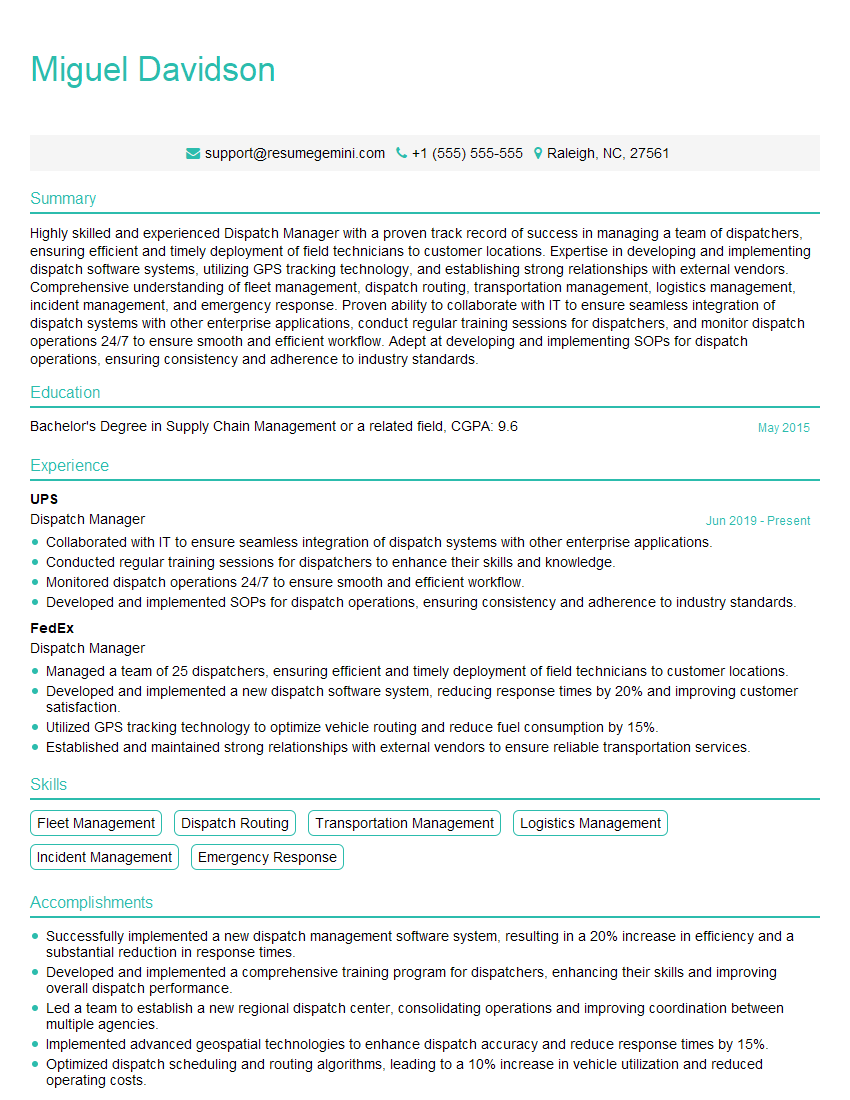
Dispatch Manager Resume Sample
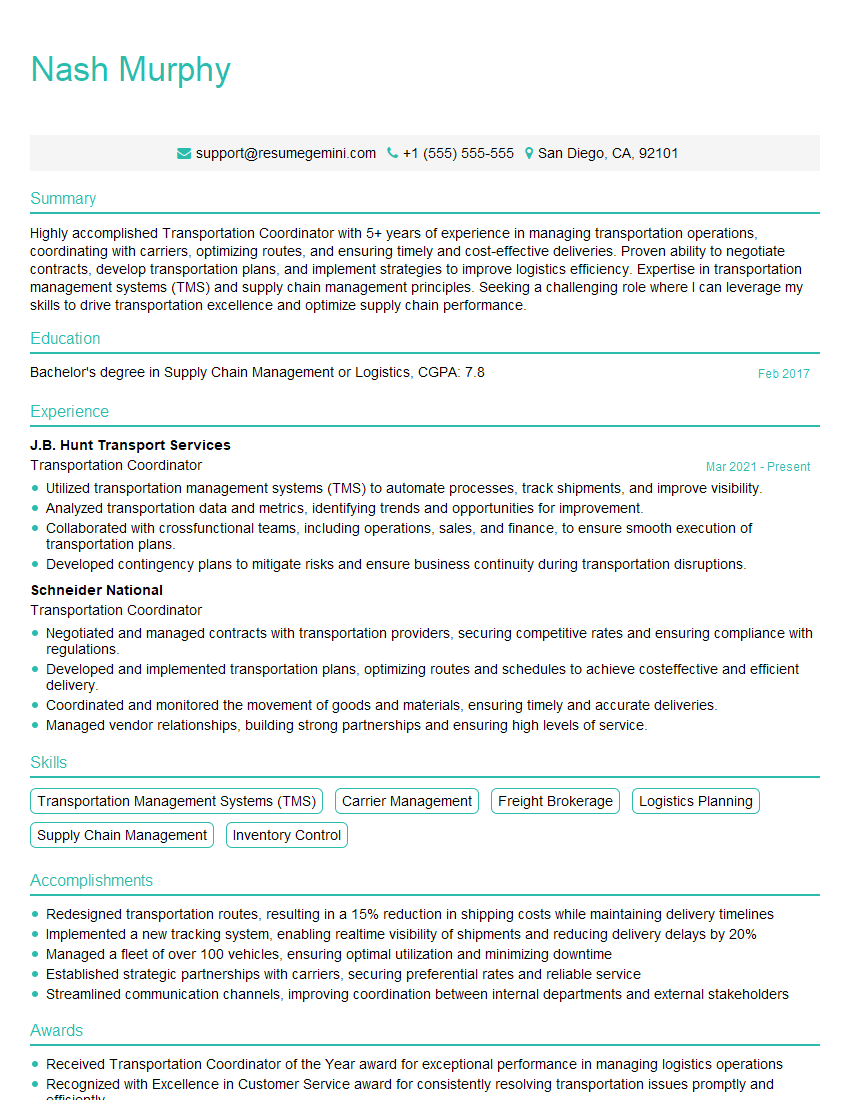
Transportation Coordinator Resume Sample
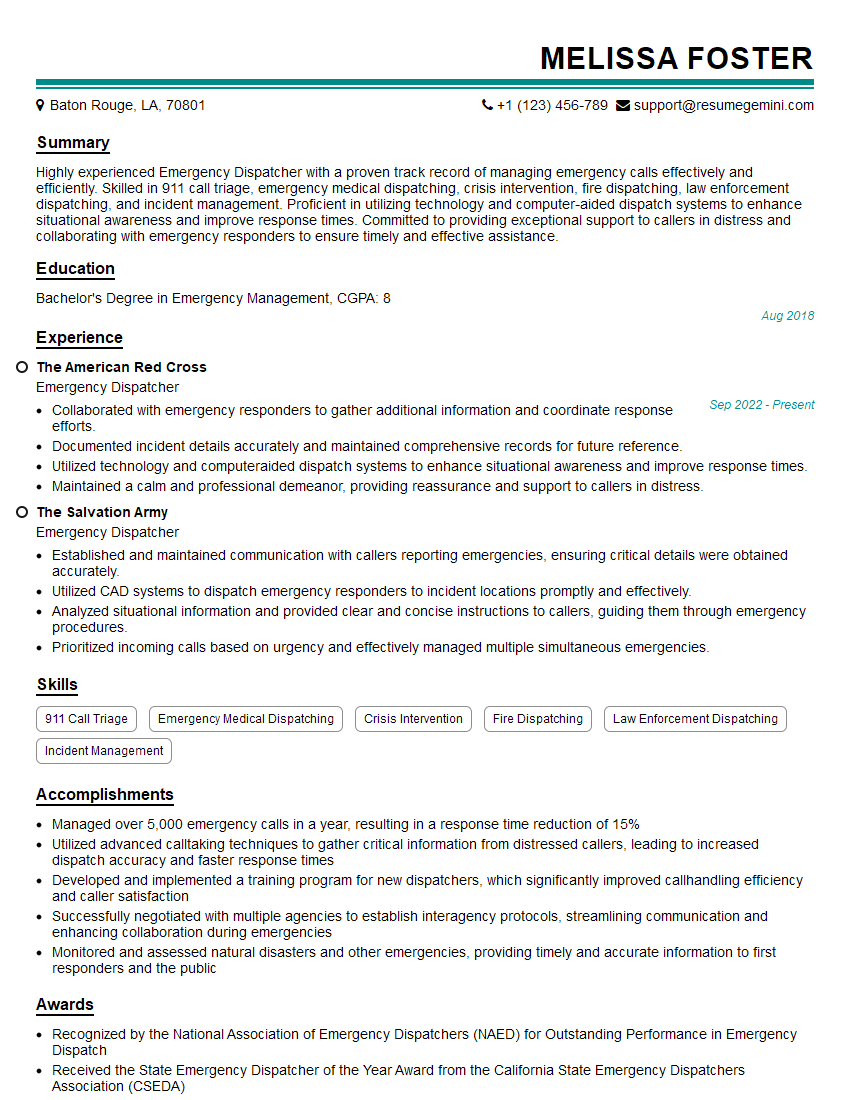
Emergency Dispatcher Resume Sample
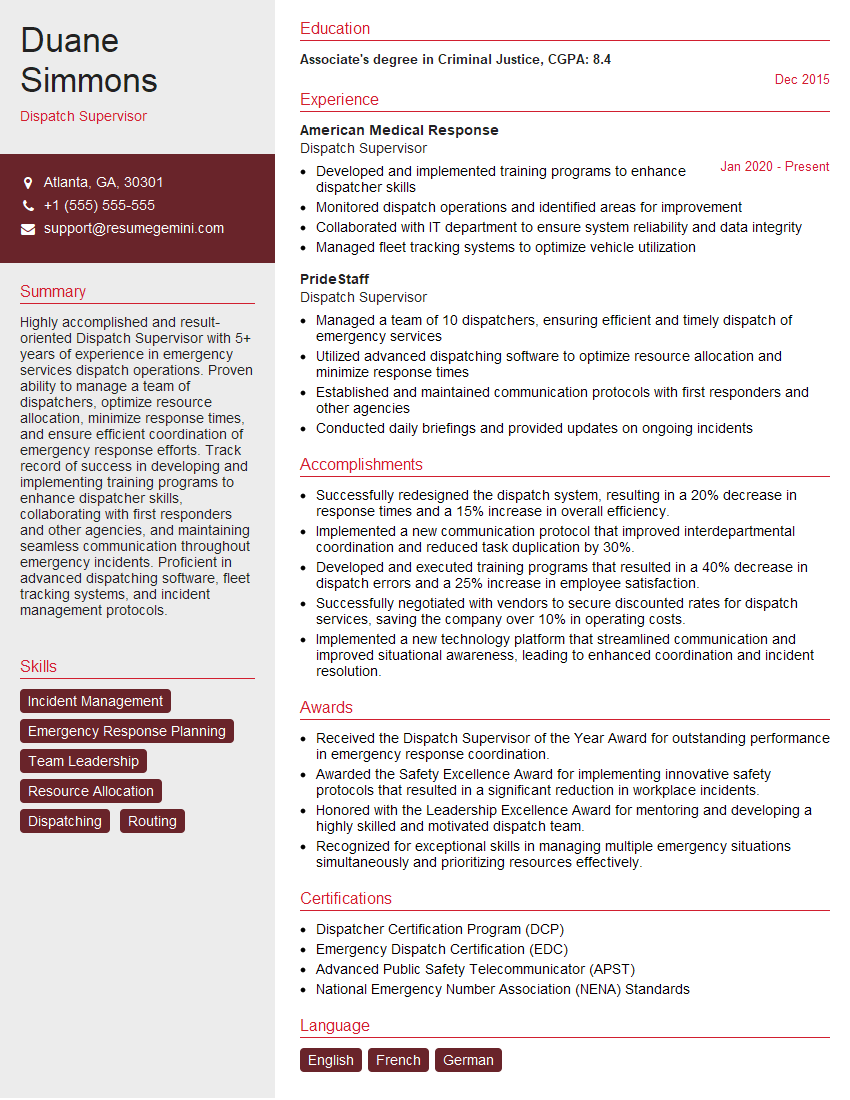
Dispatch Supervisor Resume Sample
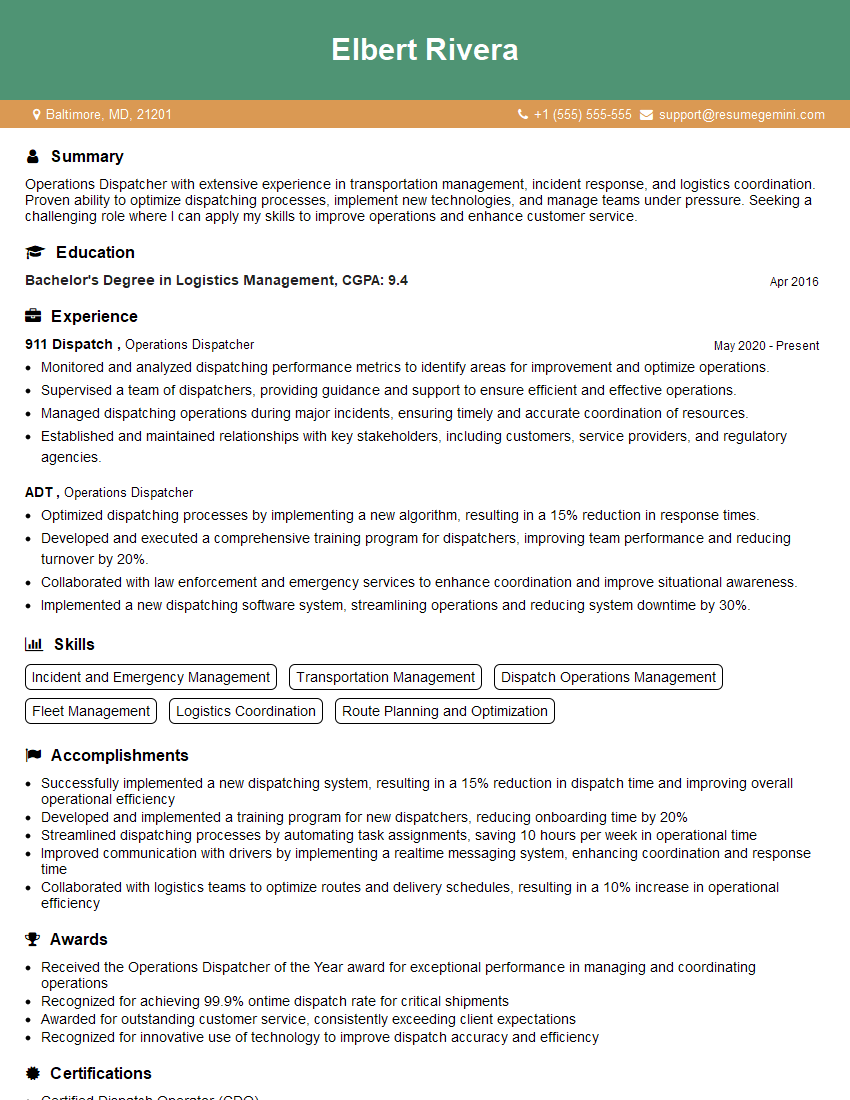
Operations Dispatcher Resume Sample
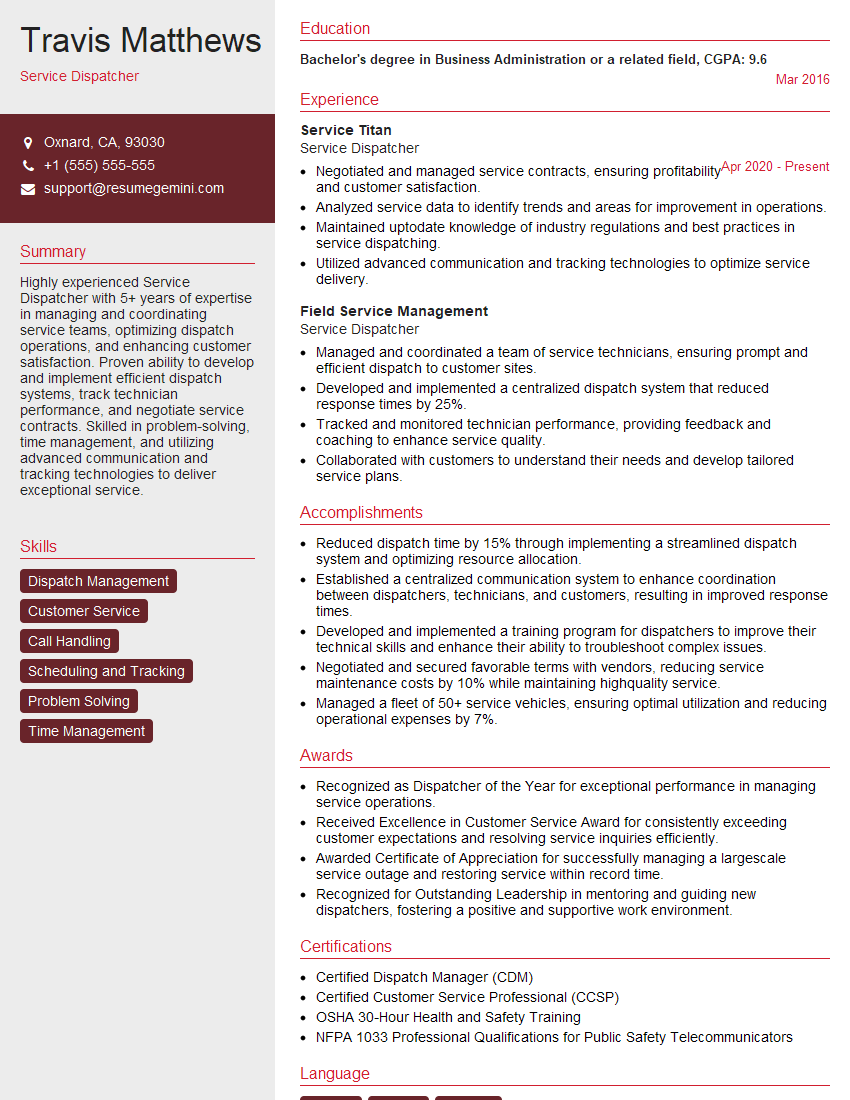
Service Dispatcher Resume Sample
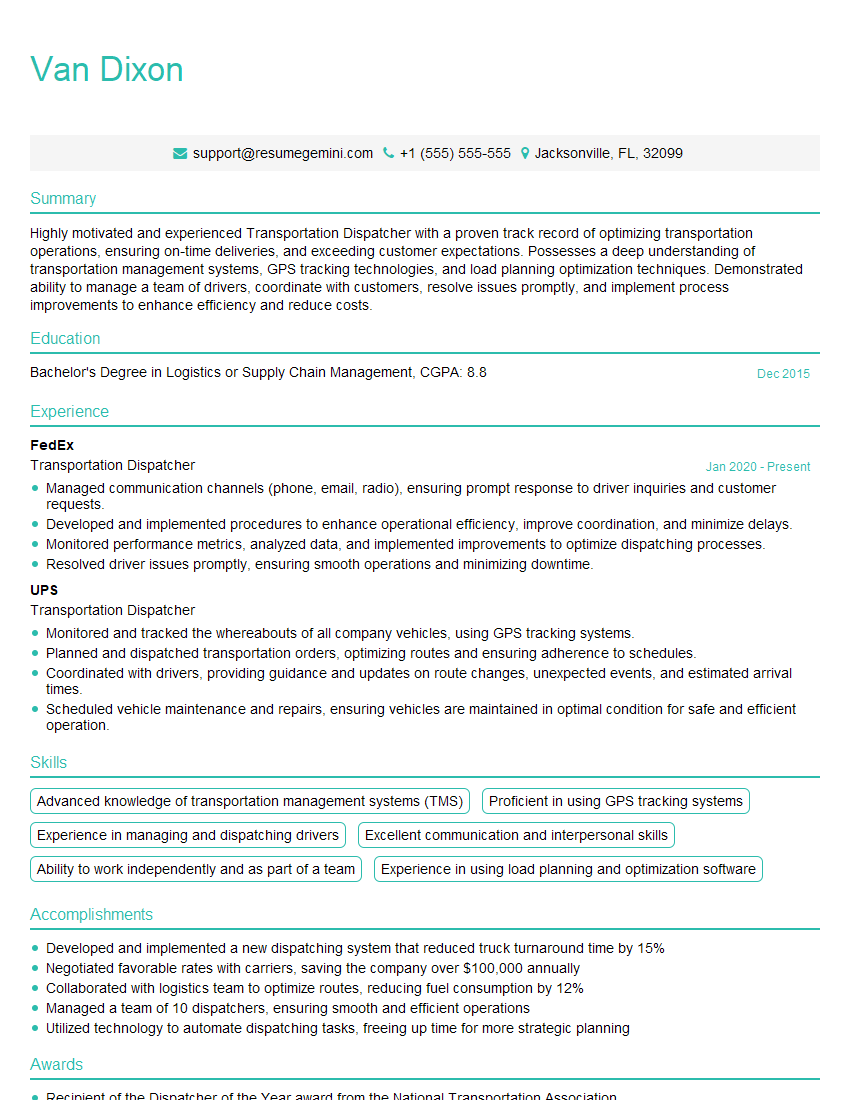
Transportation Dispatcher Resume Sample
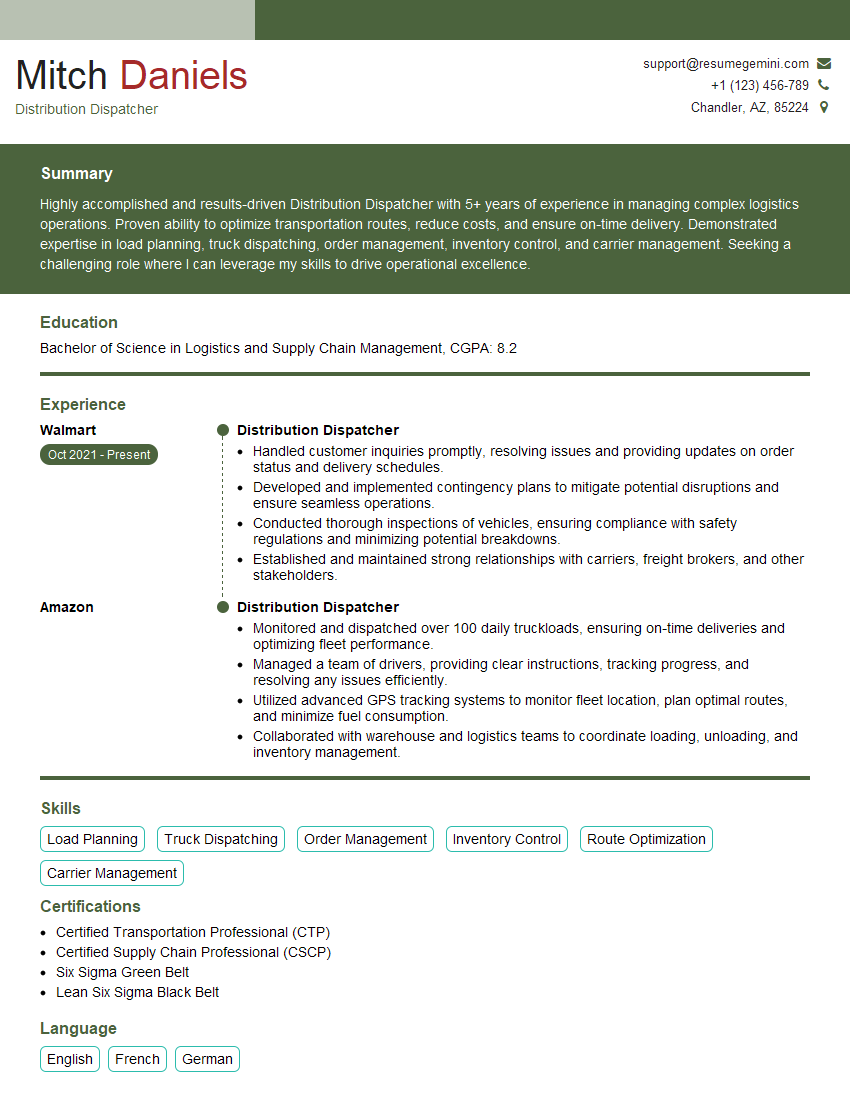
Distribution Dispatcher Resume Sample
Explore more articles
Users Rating of Our Blogs
Share Your Experience
We value your feedback! Please rate our content and share your thoughts (optional).
What Readers Say About Our Blog
To the interviewgemini.com Webmaster.
Very helpful and content specific questions to help prepare me for my interview!
Thank you
To the interviewgemini.com Webmaster.
This was kind of a unique content I found around the specialized skills. Very helpful questions and good detailed answers.
Very Helpful blog, thank you Interviewgemini team.