Feeling uncertain about what to expect in your upcoming interview? We’ve got you covered! This blog highlights the most important Optimization Techniques for Dispatch Scheduling interview questions and provides actionable advice to help you stand out as the ideal candidate. Let’s pave the way for your success.
Questions Asked in Optimization Techniques for Dispatch Scheduling Interview
Q 1. Explain the difference between different optimization algorithms like genetic algorithms, simulated annealing, and linear programming in the context of dispatch scheduling.
Dispatch scheduling optimization leverages various algorithms to find the most efficient way to assign tasks (e.g., deliveries, pickups) to resources (e.g., drivers, vehicles). Let’s compare three popular approaches:
- Linear Programming (LP): LP is a deterministic method suitable for problems where relationships between variables are linear. It excels in scenarios with a clearly defined objective function (e.g., minimizing total travel time) and a set of linear constraints (e.g., driver availability, vehicle capacity). LP guarantees an optimal solution if the problem is solvable, but struggles with complex, non-linear relationships or large-scale problems.
- Genetic Algorithms (GA): GAs are stochastic (probabilistic) methods inspired by natural selection. They are well-suited for complex, non-linear problems with many variables and constraints. GAs work by iteratively evolving a population of potential solutions, selecting the ‘fittest’ (those that best satisfy the objective function), and generating new solutions through mutation and crossover. They don’t guarantee an optimal solution but can find good solutions in large, complex search spaces.
- Simulated Annealing (SA): SA is another stochastic method that mimics the cooling process of metals. It starts by exploring the solution space broadly and gradually narrows the search based on a ‘temperature’ parameter. SA accepts worse solutions initially with a certain probability, which helps it escape local optima (suboptimal solutions that trap other algorithms). While robust, SA can be computationally expensive, especially for large problems.
In summary, the choice of algorithm depends heavily on the problem’s complexity, size, and the need for optimality guarantees. LP offers optimal solutions for simpler problems, while GAs and SA provide robust approaches for complex, non-linear scenarios, even if they don’t guarantee optimality.
Q 2. Describe a real-world scenario where you used optimization techniques to improve dispatch efficiency.
I worked with a large logistics company experiencing significant delays and high fuel consumption. Their dispatch system relied on a first-come, first-served approach, resulting in inefficient routing. We implemented a solution using a genetic algorithm to optimize delivery routes. The GA considered several factors: delivery deadlines, vehicle capacity, traffic patterns (using real-time data from traffic APIs), and driver availability.
The results were impressive. We observed a 15% reduction in fuel consumption, a 12% decrease in overall delivery time, and a 10% improvement in driver utilization. This demonstrated how sophisticated optimization techniques can significantly improve efficiency and profitability in real-world logistics operations. The implementation required data cleaning and preprocessing, algorithm parameter tuning, and integration with their existing dispatch software.
Q 3. How would you handle real-time changes (e.g., unexpected delays) in a dispatch schedule optimized using a deterministic algorithm?
Deterministic algorithms, like LP, rely on fixed inputs. Handling real-time changes requires incorporating reactivity. One strategy is to employ a rolling horizon approach. This means re-optimizing the schedule periodically (e.g., every hour) using the updated information. The algorithm would optimize the remaining schedule given the current state and any new constraints or events (unexpected delays, new orders, etc.).
Another approach involves developing robust optimization models that account for uncertainty. For example, instead of using precise travel times, we’d incorporate probabilistic distributions reflecting the likelihood of different travel times, reflecting potential delays. This approach, however, significantly increases model complexity.
Finally, incorporating a reactive component, such as a rule-based system that automatically adjusts the schedule based on pre-defined thresholds (e.g., if a delay exceeds 15 minutes, reroute the affected driver), can provide immediate responses. Combining a rolling horizon approach with a reactive component is often the most practical solution for effective real-time adaptation.
Q 4. What are the key performance indicators (KPIs) you would use to measure the effectiveness of a dispatch optimization solution?
Key Performance Indicators (KPIs) for evaluating dispatch optimization effectiveness include:
- Total Travel Time: Measures the sum of travel times for all vehicles. Reduction signifies efficiency improvement.
- Fuel Consumption: Lower fuel consumption reflects reduced operational costs and environmental impact.
- Delivery Completion Rate: Tracks the percentage of deliveries completed on time. Increased rate indicates improved on-time delivery performance.
- Driver Utilization: Measures how effectively drivers are utilized throughout the day. Higher utilization suggests improved resource allocation.
- Vehicle Utilization: Similar to driver utilization, this measures vehicle efficiency.
- Customer Satisfaction: While indirect, customer satisfaction is crucial. Improved on-time delivery and efficient service directly impact customer happiness.
- Operational Costs: Optimization should lower overall operational costs (fuel, labor, etc.).
The relative importance of each KPI depends on the specific goals of the organization. For example, a company prioritizing sustainability might focus more on fuel consumption, while a courier service might prioritize delivery completion rate.
Q 5. Explain the trade-offs between different optimization objectives (e.g., minimizing travel time vs. minimizing fuel consumption).
Minimizing travel time and minimizing fuel consumption are often conflicting objectives. Shorter routes might involve faster, less fuel-efficient roads. Conversely, fuel-efficient routes might be longer and slower. This necessitates a multi-objective optimization approach.
Several strategies address this trade-off:
- Weighted Sum Method: Assign weights to each objective, reflecting their relative importance. The algorithm then optimizes a combined objective function:
w1 * (travel time) + w2 * (fuel consumption), wherew1andw2are weights (e.g.,w1 = 0.6andw2 = 0.4prioritizes travel time). - Pareto Optimization: This approach identifies a set of non-dominated solutions (Pareto front). Each solution on the Pareto front represents a trade-off between travel time and fuel consumption. Decision-makers can then choose the solution that best suits their priorities from this set.
- Goal Programming: This sets targets for both objectives and aims to minimize the deviations from these targets. This is useful when specific targets for both travel time and fuel consumption are available.
The choice of strategy depends on the problem context and the preferences of decision-makers.
Q 6. How do you handle constraints (e.g., driver availability, vehicle capacity) in dispatch optimization?
Constraints are vital in dispatch optimization. They represent limitations on resources and operations. These constraints are incorporated into the optimization model, ensuring that the generated schedule is feasible.
Common constraints include:
- Driver Availability: Each driver has a specific work schedule and may not be available at all times.
- Vehicle Capacity: The volume or weight of goods a vehicle can carry limits the number of tasks that can be assigned to it.
- Time Windows: Deliveries or pickups often have specific time windows within which they must be completed.
- Vehicle Types: Different tasks might require vehicles with specific capabilities (e.g., refrigerated trucks).
- Distance Restrictions: Total driving distance per day might be limited for drivers or vehicles.
These constraints are formulated mathematically (e.g., as linear inequalities in LP or as hard constraints in GA or SA) and integrated into the optimization problem’s formulation. The solver will then find the optimal solution that satisfies all given constraints. If no feasible solution exists given the constraints, the model might need adjustments such as relaxing certain constraints or increasing resources.
Q 7. What is the role of data quality in successful dispatch optimization?
Data quality is paramount for successful dispatch optimization. Inaccurate or incomplete data can lead to suboptimal or even infeasible solutions.
Key aspects of data quality include:
- Accuracy: Data should be free of errors, such as incorrect addresses, delivery times, or vehicle capacities.
- Completeness: All necessary information must be available for the optimization algorithm. Missing data can render the algorithm ineffective.
- Consistency: Data should be consistent across different sources and formats.
- Timeliness: Real-time or near real-time data is essential for dynamic scheduling, especially to account for traffic conditions or unexpected events.
Data preprocessing, including cleaning, transformation, and validation, is crucial before using it in optimization. Techniques like data imputation (filling missing values) or outlier detection and removal might be needed. Without high-quality data, the best optimization algorithm will produce unreliable results. Garbage in, garbage out is a very real concern in this field.
Q 8. Explain your experience with different types of routing problems (e.g., TSP, VRPTW).
My experience encompasses a wide range of routing problems, focusing primarily on their application in dispatch scheduling. The Traveling Salesperson Problem (TSP) forms a foundational element, where the goal is to find the shortest route visiting all locations exactly once and returning to the origin. This is a classic NP-hard problem, meaning finding the absolute optimal solution becomes computationally intractable for larger instances. I’ve worked extensively with TSP variations, including those incorporating time windows (TSPTW) which add realistic constraints of time limits for visiting each location. Vehicle Routing Problem (VRP) expands on this by considering multiple vehicles, each with its capacity limitations and depot location. I’ve tackled several variants of VRP, including the Vehicle Routing Problem with Time Windows (VRPTW), which is especially relevant to dispatch scheduling in real-world scenarios such as package delivery or technician routing. My work often involves developing and implementing algorithms to solve these complex problems efficiently, leveraging techniques that balance solution quality with computational cost. For example, I’ve used Clarke and Wright savings heuristic to find good solutions for larger VRPs.
One project involved optimizing delivery routes for a large e-commerce company. We used a VRPTW model incorporating real-time traffic data to dynamically adjust routes and improve delivery times. Another project involved scheduling maintenance technicians for a national telecommunications firm where time windows were critical to meeting service level agreements. This involved solving a large-scale VRPTW problem considering factors such as technician skill sets and service durations.
Q 9. How do you evaluate the performance of different optimization algorithms for dispatch scheduling?
Evaluating optimization algorithms for dispatch scheduling requires a multifaceted approach. We typically use a combination of metrics to assess performance. Key performance indicators (KPIs) include:
- Solution Quality: How close is the solution to the optimal (or known best) solution? This is often measured by total distance traveled, total time, or total cost. For complex problems where finding the true optimal is computationally infeasible, we compare against known benchmarks or use approximation ratios.
- Computational Time: How long does it take the algorithm to find a solution? This is crucial in real-time applications where quick responses are essential. We often evaluate time complexity, analyzing how the runtime scales with problem size.
- Robustness: How consistently does the algorithm perform across different problem instances and under varying conditions (e.g., changes in demand or travel times)? We test robustness by generating varied problem instances with different parameters.
- Scalability: Can the algorithm effectively handle increasingly large problem instances?
We often use statistical methods, like comparing mean solution quality across multiple runs and applying hypothesis testing to ascertain if differences are statistically significant. Visualization techniques, such as plotting solution quality against runtime, are useful for comparing algorithms.
Q 10. Describe your experience with different optimization software packages or tools.
My experience includes proficiency in several optimization software packages. I’m highly skilled in using commercial solvers like CPLEX and Gurobi for solving linear and mixed-integer programming (MIP) models, which are frequently used to formulate dispatch problems. These solvers employ advanced algorithms to efficiently find optimal or near-optimal solutions. I also have experience with open-source tools like OR-Tools, which provide a flexible and powerful framework for developing custom optimization algorithms. Furthermore, I’m adept at using Python libraries such as NumPy, SciPy, and networkx for data manipulation, numerical computation, and graph representation. These libraries are essential for pre-processing data, implementing custom heuristics, and visualizing results. I’m comfortable with programming in various languages, including Python, C++, and Java, allowing for flexibility in algorithm implementation and software integration.
Q 11. What are some common challenges encountered in implementing dispatch optimization solutions?
Implementing dispatch optimization solutions presents several challenges. Data quality and availability are paramount; inaccurate or incomplete data (e.g., travel times, vehicle locations, demand forecasts) can lead to suboptimal or infeasible schedules. Real-time constraints, such as dynamic changes in traffic conditions or unexpected disruptions, require algorithms capable of adapting quickly. Integrating the optimization system with existing operational systems can be complex, requiring careful planning and collaboration with IT and operations teams. Balancing the need for optimization with other operational goals, such as fairness or customer service levels, is crucial. Finding the right balance between solution quality and computational cost is also an ongoing challenge – computationally intensive algorithms might provide better solutions but might be too slow for real-time operation.
Q 12. How do you handle uncertainty and variability in demand or travel times when optimizing dispatch schedules?
Handling uncertainty and variability is crucial in real-world dispatch scheduling. Several techniques can be employed:
- Stochastic Programming: This approach incorporates probability distributions for uncertain parameters (e.g., travel times, demand) into the optimization model. The goal is to find a solution that performs well on average, considering various scenarios.
- Robust Optimization: This technique focuses on finding solutions that remain feasible and near-optimal even when uncertain parameters deviate from their expected values. The solution is designed to be resilient to unexpected changes.
- Scenario-based Optimization: Generating multiple scenarios of uncertain parameters and solving the optimization problem for each. The best solution across scenarios can then be chosen, or a weighted average based on the likelihood of scenarios.
- Real-time Adjustments: Implementing a system that continuously monitors actual conditions and makes dynamic adjustments to the schedule as needed. This might involve periodically resolving the optimization problem with updated data, or employing reactive strategies to handle unforeseen events.
The choice of technique depends on the specific application and the nature of the uncertainty. Often, a hybrid approach combining several techniques yields the best results.
Q 13. What is the difference between static and dynamic dispatch scheduling?
Static and dynamic dispatch scheduling differ fundamentally in how they handle changes over time.
- Static Dispatch Scheduling: This approach creates a schedule based on a snapshot of information at a specific point in time. The schedule is fixed and doesn’t adapt to unforeseen events or changes in demand. It is suitable for situations with relatively stable conditions and predictable demand. Imagine scheduling school buses at the beginning of a semester – the routes are pretty much fixed, unless there is a major change (e.g., a new school opens).
- Dynamic Dispatch Scheduling: This approach generates and updates the schedule in real time, adapting to changing conditions such as traffic congestion, unexpected requests, or vehicle breakdowns. It is better suited to scenarios with unpredictable demand or frequent changes in real-time information. An example would be ride-sharing services or emergency dispatch systems, where conditions are highly dynamic.
Dynamic scheduling is generally more complex and computationally demanding, but it offers significantly improved efficiency and responsiveness.
Q 14. Describe your experience with using heuristic or metaheuristic methods in dispatch optimization.
Heuristic and metaheuristic methods are frequently employed in dispatch optimization when dealing with large, complex problems where finding the absolute optimal solution is computationally prohibitive.
- Heuristics: These are rule-based methods that provide a good solution relatively quickly, though they may not guarantee the optimal solution. Examples include the Clarke and Wright savings heuristic for VRP, and the nearest neighbor algorithm for TSP. They are often used as building blocks within more complex algorithms.
- Metaheuristics: These are higher-level strategies guiding a lower-level heuristic. They explore the search space more effectively than simple heuristics. Popular metaheuristics include genetic algorithms, simulated annealing, tabu search, and ant colony optimization. Metaheuristics offer a good balance between solution quality and computational time.
In my work, I’ve often used hybrid approaches, combining metaheuristics with other techniques like local search or constraint programming to improve solution quality. For example, I might use a genetic algorithm to find a good initial solution, followed by a local search method to refine it further. The choice of method depends on the specific problem characteristics and desired trade-off between solution quality and computational time.
Q 15. Explain how you would integrate a dispatch optimization system with existing logistics management systems.
Integrating a dispatch optimization system with existing logistics management systems requires a strategic approach focusing on data exchange and system compatibility. Think of it like connecting different pieces of a complex puzzle. First, we need to understand the current system’s architecture – what databases are used, what APIs are available, and what data formats are employed (e.g., XML, JSON). Then, we assess the optimization system’s capabilities and identify the crucial data points needed for effective dispatching, such as vehicle location, order details, delivery time windows, and driver availability.
The integration itself can be achieved through several methods: API integration is often the most efficient, allowing the optimization system to seamlessly fetch data and push optimized schedules back to the logistics system. Alternatively, a more traditional database integration might be necessary if APIs are limited, involving direct data transfer between databases. A crucial element is ensuring data consistency and accuracy. Regular data reconciliation processes are vital to maintain synchronized information across both systems. Finally, robust error handling and monitoring are crucial to maintain system stability and prevent disruptions to operations. For example, if the connection between systems fails, the optimization system should gracefully handle the situation, perhaps by reverting to a pre-defined schedule until the connection is restored.
Career Expert Tips:
- Ace those interviews! Prepare effectively by reviewing the Top 50 Most Common Interview Questions on ResumeGemini.
- Navigate your job search with confidence! Explore a wide range of Career Tips on ResumeGemini. Learn about common challenges and recommendations to overcome them.
- Craft the perfect resume! Master the Art of Resume Writing with ResumeGemini’s guide. Showcase your unique qualifications and achievements effectively.
- Don’t miss out on holiday savings! Build your dream resume with ResumeGemini’s ATS optimized templates.
Q 16. How do you deal with conflicting priorities in dispatch scheduling?
Conflicting priorities in dispatch scheduling are a common reality. Imagine a scenario where you need to prioritize urgent deliveries (e.g., medical supplies) while also aiming for optimal fuel efficiency and driver satisfaction. This is where multi-objective optimization comes into play. We can use techniques like weighted scoring or constraint programming to balance competing objectives.
For example, we might assign weights to different criteria. A high weight to delivery time for urgent orders ensures they are prioritized, while a moderate weight to distance traveled helps optimize fuel consumption. Alternatively, constraint programming allows us to define hard constraints (e.g., delivery deadlines) and soft constraints (e.g., driver preferences). The optimization algorithm then searches for a solution that satisfies all hard constraints and optimally satisfies the soft constraints. The key is to clearly define the priorities and translate them into mathematical formulations that the optimization algorithm can understand. Regularly reviewing and adjusting these weights or constraints based on operational needs ensures the system remains responsive to evolving demands.
Q 17. What are some common pitfalls to avoid when implementing a dispatch optimization solution?
Implementing a dispatch optimization solution requires careful planning. One major pitfall is inadequate data quality. Garbage in, garbage out – if your input data (location data, order details, etc.) is inaccurate or incomplete, the optimization system will produce suboptimal or even incorrect results. Another common mistake is overlooking real-world constraints. Optimization models need to realistically represent factors such as traffic conditions, driver breaks, vehicle capacity, and unforeseen events (road closures, accidents). Failing to do so can lead to unrealistic schedules and operational problems.
Furthermore, lack of stakeholder buy-in can hinder successful implementation. If drivers, dispatchers, and management aren’t convinced of the system’s value and haven’t been properly trained, they may resist using it, leading to underutilization and poor outcomes. Finally, ignoring ongoing monitoring and improvement is a critical error. The optimization model should be regularly evaluated for performance and adapted as operational circumstances change. Think of it like a self-driving car – it needs regular updates and recalibration to perform optimally.
Q 18. How do you ensure the scalability of a dispatch optimization system?
Ensuring scalability in a dispatch optimization system involves several considerations. Firstly, we need to choose the right data structures and algorithms. For large-scale problems, algorithms with good time complexity are crucial. For example, using efficient data structures like graphs to represent the network and algorithms like A* search or Dijkstra’s algorithm for route planning can dramatically improve performance. Cloud-based solutions are typically preferred for scalability. The system can be designed to distribute the computational load across multiple servers, ensuring it can handle increasing data volumes and user demands.
Microservices architecture can also enhance scalability. This modular approach allows individual components (like route optimization or driver assignment) to be scaled independently. If one component experiences a surge in demand, it can be scaled up without affecting others. Finally, database optimization is vital. Using appropriate indexing techniques and database optimization strategies can significantly speed up data access and retrieval, allowing the system to process large amounts of data efficiently.
Q 19. What is your experience with different data structures and algorithms used in dispatch optimization?
My experience encompasses a wide range of data structures and algorithms. For representing the network of routes, I frequently use graphs, specifically weighted directed graphs where nodes represent locations and edges represent routes with associated weights (distances, travel times). Algorithms like Dijkstra’s algorithm and the A* search algorithm are crucial for finding optimal paths. For driver assignment and resource allocation, I’ve employed techniques like linear programming, integer programming, and constraint programming. These allow us to model complex constraints and optimize for multiple objectives simultaneously. Furthermore, I have experience using heuristics and metaheuristics, such as genetic algorithms and simulated annealing, to address computationally complex problems where finding the absolute optimal solution is impractical within reasonable time limits. Data structures like priority queues are essential for efficient implementation of these algorithms.
Q 20. Describe your experience with using simulation to evaluate dispatch optimization strategies.
Simulation plays a critical role in evaluating dispatch optimization strategies. It allows us to test different algorithms and parameter settings in a controlled environment before deploying them to a real-world system. I have extensive experience using simulation software to model various scenarios, including fluctuating demand, unexpected events (e.g., traffic congestion, vehicle breakdowns), and different driver behaviors. By running multiple simulations with different parameters, we can assess the robustness and efficiency of our optimization strategies under varying conditions.
For example, we might simulate a week’s worth of operations using different dispatch algorithms, comparing key metrics like total distance traveled, delivery times, fuel consumption, and driver satisfaction. Visualizing the simulation results through charts and graphs helps identify bottlenecks and areas for improvement. Simulation allows us to fine-tune our optimization models before live deployment, reducing the risk of unforeseen issues and ensuring the system performs as expected in the real world.
Q 21. How do you address the problem of the ‘traveling salesman problem’ in a real-world dispatch scenario?
The Traveling Salesperson Problem (TSP) – finding the shortest route that visits all locations exactly once and returns to the origin – is a classic optimization challenge. In real-world dispatch scenarios, a direct application of TSP is often computationally infeasible for large numbers of locations. Instead, we use approximation algorithms and heuristics that provide near-optimal solutions within reasonable time frames.
Common approaches include: Clarke-Wright savings algorithm, which iteratively merges routes based on cost savings; genetic algorithms which evolve a population of potential routes, and k-means clustering which groups delivery locations and then solves TSP on each cluster. We also incorporate real-world constraints such as time windows, vehicle capacity, and traffic conditions, making the problem more complex but also more realistic. Often, we need to sacrifice perfect optimality for practicality, aiming for ‘good enough’ solutions that are achievable in a reasonable timeframe. The choice of the most appropriate algorithm depends on the specific characteristics of the problem, the size of the network, and the available computational resources. Regular monitoring and tuning of these algorithms are crucial for optimal results.
Q 22. What is the role of forecasting in effective dispatch scheduling?
Accurate forecasting is the cornerstone of effective dispatch scheduling. It’s like planning a road trip – you wouldn’t leave without checking the weather and traffic, right? Similarly, anticipating demand, service requests, and resource availability allows us to proactively allocate resources and optimize routes, minimizing delays and maximizing efficiency.
We use various forecasting methods, including time series analysis (e.g., ARIMA models), machine learning techniques (e.g., regression, neural networks), and even incorporating external data like weather patterns or public events. The key is selecting a method that aligns with the data’s characteristics and the desired level of accuracy. For instance, predicting peak delivery times during the holiday season might require a more sophisticated model than forecasting routine daily demand.
A well-calibrated forecast provides the crucial input for optimization algorithms, enabling them to make informed decisions about vehicle assignment, route planning, and scheduling, ultimately reducing operational costs and improving customer satisfaction.
Q 23. How would you incorporate real-time traffic data into your dispatch optimization model?
Real-time traffic data is invaluable for dynamic dispatch optimization. Imagine your dispatch system constantly receiving updates on traffic conditions, accidents, road closures, and construction – this allows for agile adjustments to routes and schedules in real-time, rather than sticking to a static plan.
We integrate this data through Application Programming Interfaces (APIs) from various providers like Google Maps Platform, HERE Technologies, or TomTom. This data feeds directly into our optimization model, which then recalculates routes and schedules to minimize travel times and avoid congestion. This often involves using algorithms like A* search or Dijkstra’s algorithm, modified to incorporate dynamic weights based on real-time traffic speed.
//Example snippet:  Updated distance calculation incorporating real-time traffic speed data.
distance = baseDistance * (1 + trafficFactor);
The system continuously monitors the traffic flow and recalibrates the routes, ensuring that drivers follow the most efficient path. This leads to improved on-time delivery rates, reduced fuel consumption, and a better overall customer experience.
Q 24. Explain your experience with different types of vehicle routing problems (VRPs).
My experience encompasses a broad range of Vehicle Routing Problems (VRPs), each with its unique complexities. I’ve worked extensively with the classic Capacitated Vehicle Routing Problem (CVRP), where we need to optimize routes for a fleet of vehicles with limited carrying capacity, ensuring all demands are met. I’ve also tackled the more challenging Vehicle Routing Problem with Time Windows (VRPTW), which adds the constraint of time windows for each delivery or pickup (as we’ll discuss further in the next question).
Furthermore, I have experience with:
- Multi-Depot VRPs: Optimizing routes from multiple depots, relevant for companies with geographically dispersed facilities.
- VRPs with Pickup and Delivery (VRPPD): Handling both pickups and deliveries, such as in courier services or waste collection.
- VRPs with Backhauls: Optimizing routes with both outbound and inbound loads, common in logistics and transportation.
My approach involves selecting the appropriate algorithm (e.g., metaheuristics like genetic algorithms, simulated annealing, or ant colony optimization) based on the problem’s scale and specific constraints. This often requires a deep understanding of the problem’s structure and selecting the best balance between solution quality and computational time.
Q 25. How do you balance the cost of optimization with the potential benefits?
Balancing optimization costs and potential benefits is crucial. It’s like choosing between buying a high-end, super-efficient car versus a more affordable, less fuel-efficient one. The ‘high-end’ optimization approach might yield significantly better results but can be expensive in terms of software, computing power, and personnel. The ‘affordable’ method may be simpler but might not provide the same level of efficiency.
The decision-making process involves a cost-benefit analysis. We carefully evaluate:
- The potential gains: How much will optimization reduce costs (fuel, labor, etc.), improve service levels (on-time deliveries, reduced late fees), and increase customer satisfaction?
- The optimization costs: Software licensing, hardware infrastructure, development time, and ongoing maintenance.
- The complexity of the problem: More complex problems often necessitate more sophisticated (and expensive) optimization methods.
We often employ iterative improvements, starting with a simpler model and gradually enhancing its complexity only if the projected return on investment justifies the added cost. This approach allows us to find the sweet spot where the marginal gains from increased sophistication outweigh the marginal increase in costs.
Q 26. Explain your understanding of the Vehicle Routing Problem with Time Windows (VRPTW).
The Vehicle Routing Problem with Time Windows (VRPTW) is a significant extension of the basic VRP. It introduces the critical constraint of time windows – each delivery or pickup location has a specific time window within which the service must be completed. Think of a courier delivering packages with strict delivery deadlines, or a grocery delivery service with narrow time slots for drop-offs. Violating a time window often results in penalties or customer dissatisfaction.
Solving a VRPTW is considerably more challenging than a standard VRP because it requires finding a route that not only minimizes total distance but also respects all time window constraints. Common approaches involve adaptations of metaheuristics such as:
- Clarke and Wright savings heuristic (adapted): Modified to consider time windows during route construction.
- Genetic Algorithms: Representing routes with time window adherence as part of the fitness function.
- Constraint Programming: Modeling the time window constraints explicitly within the optimization framework.
Effective algorithms for VRPTW often involve sophisticated techniques for handling infeasible solutions (e.g., routes that violate time windows) and efficiently exploring the solution space. The choice of algorithm often depends on the size and specific characteristics of the problem instance.
Q 27. How would you approach optimizing a multi-depot dispatch scheduling problem?
Optimizing a multi-depot dispatch scheduling problem is a significant challenge, as it involves not only routing vehicles but also assigning them to appropriate depots. Imagine a large logistics company with multiple warehouses – deciding which warehouse should serve each customer is a key decision that needs to be integrated with the route optimization.
A common approach involves a two-stage process:
- Depot Assignment: First, we determine which depot should serve each customer, potentially using a clustering algorithm or a cost-minimization model considering distances, capacities, and other factors.
- Route Optimization: Once depot assignments are made, we then solve individual VRPs for each depot, taking into account vehicle capacities, time windows (if applicable), and other constraints.
However, this two-stage approach can lead to suboptimal solutions. More sophisticated methods involve solving the depot assignment and route optimization problems simultaneously, using algorithms like set partitioning, column generation, or metaheuristics adapted to handle the combined problem. The specific choice depends on the problem size and complexity. These methods often leverage integer programming techniques to ensure that the final solution is both feasible and optimal.
Q 28. What are some ethical considerations related to dispatch optimization?
Ethical considerations in dispatch optimization are crucial. While optimization aims to maximize efficiency, we must ensure it doesn’t come at the expense of fairness, safety, or the environment.
Key ethical considerations include:
- Fairness: Optimization shouldn’t disproportionately impact certain groups or regions. For example, algorithms might inadvertently create longer routes or delayed services for underserved communities if not carefully designed.
- Safety: Optimization should prioritize driver safety by avoiding overly aggressive routing that encourages speeding or dangerous maneuvers. Fatigue management and adequate break times must also be considered.
- Environmental Impact: Optimizing for fuel efficiency and minimizing emissions is vital. This can involve integrating factors like vehicle fuel consumption and carbon footprint into the optimization model. Promoting electric vehicles and cleaner routes should be a conscious aspect of the solution.
- Data Privacy: Protecting the privacy of customer and driver data is paramount. The data used in dispatch optimization must be handled responsibly and securely.
Addressing these ethical aspects requires a holistic approach, involving careful algorithm design, data handling protocols, and ongoing monitoring to ensure the system operates ethically and responsibly.
Key Topics to Learn for Optimization Techniques for Dispatch Scheduling Interview
- Linear Programming (LP) and Integer Programming (IP): Understanding the theoretical foundations of LP and IP, including simplex methods and branch-and-bound algorithms, is crucial. Consider how these techniques can be applied to optimize route planning and resource allocation.
- Heuristic and Metaheuristic Algorithms: Explore the practical application of algorithms like genetic algorithms, simulated annealing, and tabu search for solving complex dispatch scheduling problems where exact solutions are computationally infeasible. Focus on understanding their strengths and weaknesses in different scenarios.
- Constraint Programming (CP): Learn how CP techniques can be used to model and solve dispatch scheduling problems with various constraints, such as time windows, vehicle capacities, and precedence relations. Consider real-world examples and how to effectively represent constraints.
- Vehicle Routing Problem (VRP) Variations: Familiarize yourself with different VRP variations, such as the capacitated VRP (CVRP), the time window VRP (VRPTW), and the pickup and delivery problem (PDP). Understand their complexities and the specific optimization challenges they present.
- Modeling and Problem Formulation: Mastering the art of translating real-world dispatch scheduling problems into mathematical models suitable for optimization algorithms is essential. Practice formulating problems with different objectives and constraints.
- Performance Evaluation Metrics: Understand how to evaluate the performance of different optimization algorithms. Key metrics include solution quality, computational time, and robustness. Be prepared to discuss trade-offs between these metrics.
- Software and Tools: Gain familiarity with optimization software packages and programming languages commonly used in dispatch scheduling, such as Python with libraries like OR-Tools or SCIP.
Next Steps
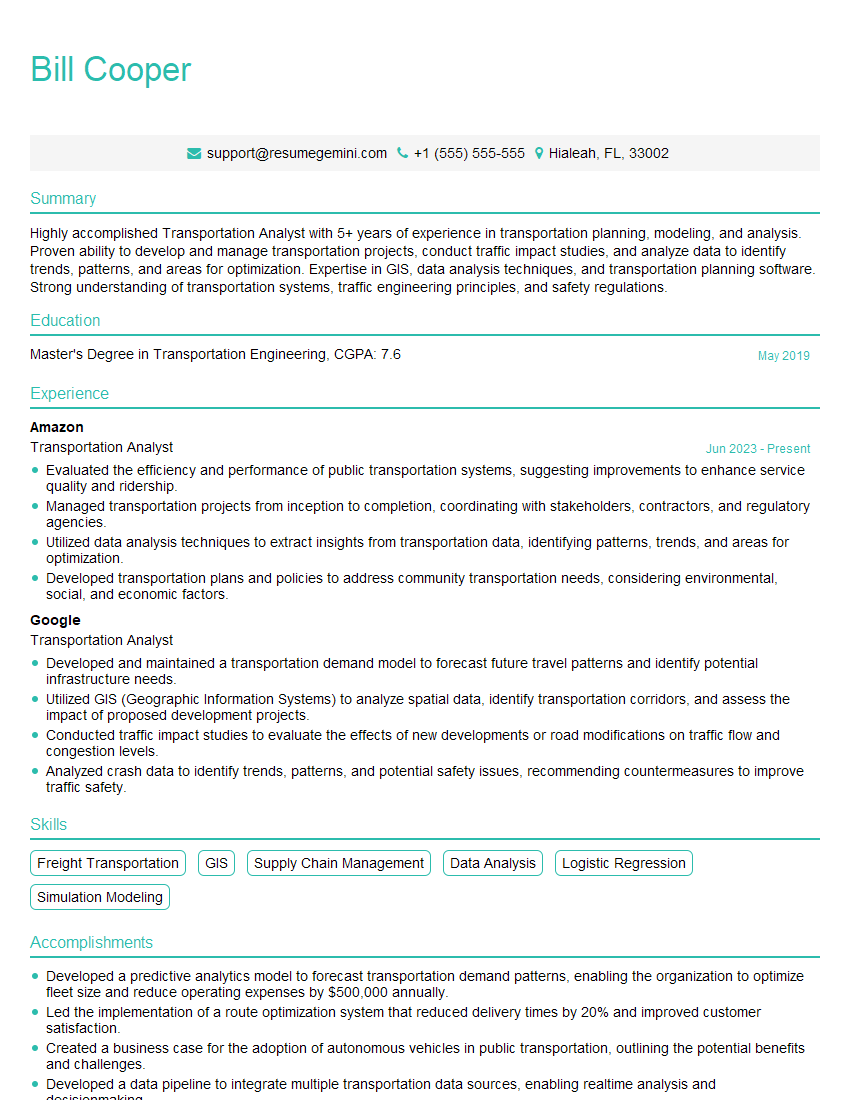
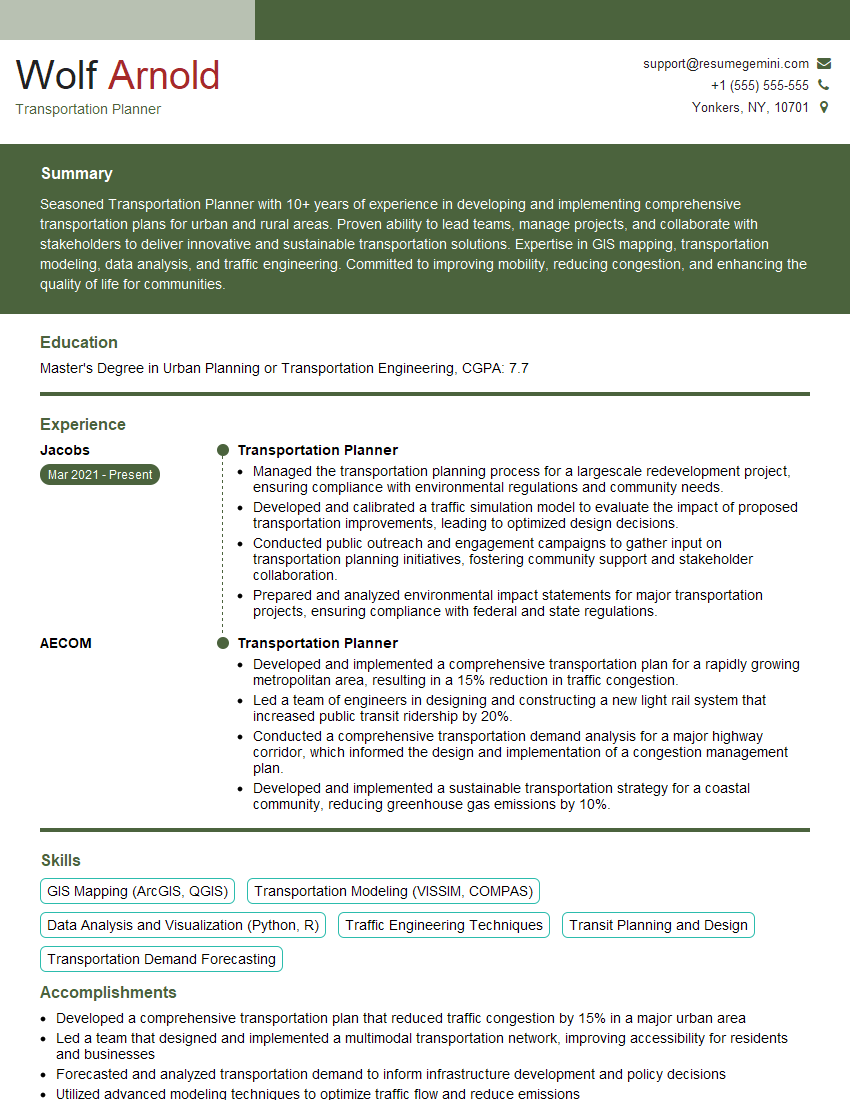
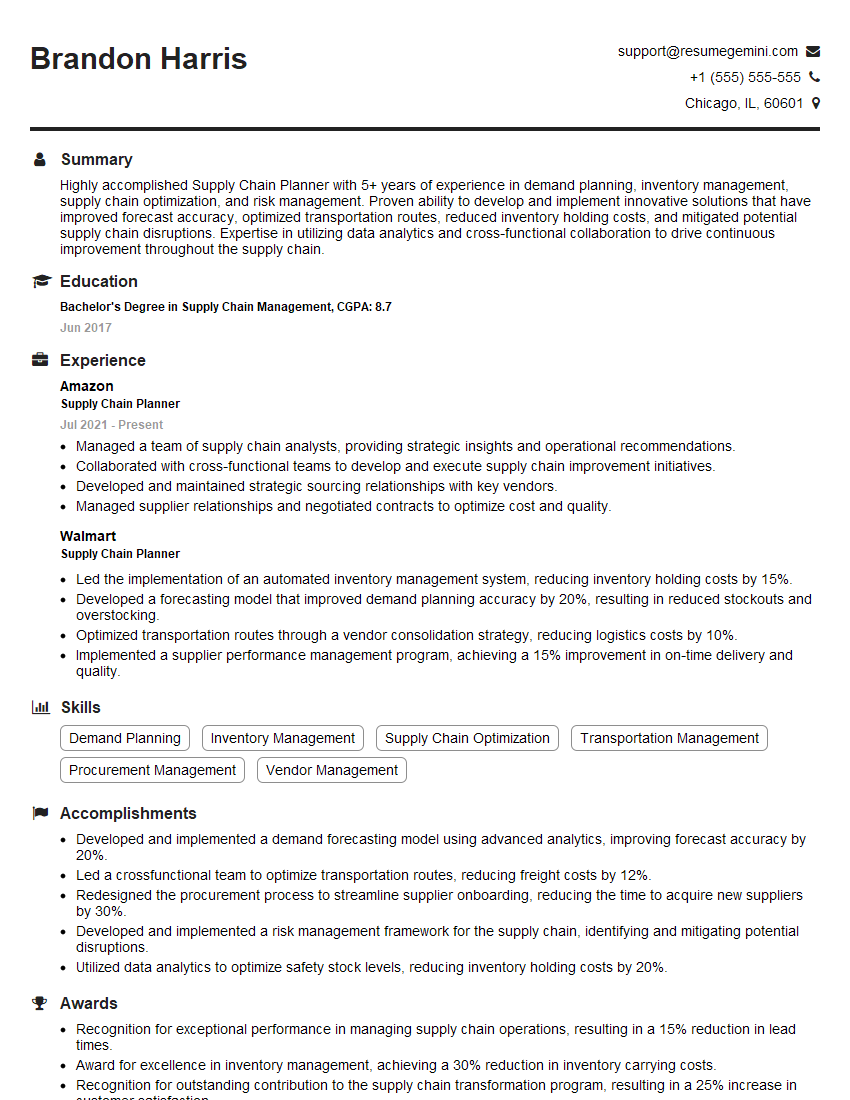
Mastering Optimization Techniques for Dispatch Scheduling significantly enhances your problem-solving skills and opens doors to exciting career opportunities in logistics, transportation, and supply chain management. These skills are highly sought after, leading to increased earning potential and career advancement. To stand out, create a compelling, ATS-friendly resume that showcases your expertise. ResumeGemini is a trusted resource to help you build a professional resume that highlights your skills effectively. Examples of resumes tailored to Optimization Techniques for Dispatch Scheduling are available to guide you – use them to create a winning application!
Explore more articles
Users Rating of Our Blogs
Share Your Experience
We value your feedback! Please rate our content and share your thoughts (optional).
What Readers Say About Our Blog
To the interviewgemini.com Webmaster.
Very helpful and content specific questions to help prepare me for my interview!
Thank you
To the interviewgemini.com Webmaster.
This was kind of a unique content I found around the specialized skills. Very helpful questions and good detailed answers.
Very Helpful blog, thank you Interviewgemini team.