Interviews are opportunities to demonstrate your expertise, and this guide is here to help you shine. Explore the essential Power Grid Operations interview questions that employers frequently ask, paired with strategies for crafting responses that set you apart from the competition.
Questions Asked in Power Grid Operations Interview
Q 1. Explain the difference between transmission and distribution systems.
The transmission and distribution systems are two crucial parts of the power grid, but they differ significantly in their voltage levels, distances covered, and the types of equipment used. Think of it like a highway system: the transmission system is the interstate, carrying high-voltage power over long distances from power plants to substations, while the distribution system is the network of local roads, delivering power at lower voltages to individual homes and businesses.
- Transmission System: Operates at high voltages (typically 115 kV to 765 kV), covering vast distances. Its primary function is bulk power transfer from generating stations to load centers. Key components include high-voltage transformers, long transmission lines, and circuit breakers.
- Distribution System: Operates at lower voltages (typically 12 kV to 34.5 kV and then stepped down to 120/240 V for homes), covering shorter distances. Its primary function is the local delivery of electricity to consumers. Key components include distribution transformers, lower-voltage lines, and protective devices.
For example, a large power plant might generate electricity at 16 kV, step it up to 500 kV for transmission across states, then step it down through several stages in substations until it reaches your home at 120/240V. This multi-stage voltage transformation ensures efficient and safe power delivery.
Q 2. Describe the role of SCADA in power grid operations.
Supervisory Control and Data Acquisition (SCADA) systems are the nervous system of the power grid. They provide real-time monitoring and control of the entire system, enabling operators to see the status of every component, from generators and transformers to transmission lines and substations. Imagine a massive dashboard showing the entire power grid’s health and status.
SCADA systems use sensors and communication networks to collect data about voltage, current, frequency, and other critical parameters. This data is then transmitted to a central control center where operators can monitor the system and make adjustments as needed. For example, if a line experiences an overload, the SCADA system can automatically shed load or reroute power to prevent a blackout. They are crucial for preventing outages, optimizing power flow, and ensuring grid stability.
SCADA systems incorporate sophisticated algorithms and predictive modeling to anticipate potential problems and proactively take corrective actions, preventing many outages before they even happen.
Q 3. What are the key challenges in integrating renewable energy sources into the power grid?
Integrating renewable energy sources like solar and wind power into the grid presents several key challenges. The primary challenge stems from their intermittent nature: solar power is only available during daylight hours and wind power depends on the weather. This intermittency makes it difficult to predict and manage power generation, leading to potential imbalances and instability.
- Intermittency and Variability: Renewable energy sources are not always available when needed, causing unpredictable fluctuations in power supply. Advanced forecasting tools and energy storage technologies are needed to mitigate this.
- Grid Infrastructure Limitations: Existing grids were designed for centralized, predictable power generation. Integrating dispersed renewable sources requires upgrading infrastructure and developing smart grid technologies.
- Transmission and Distribution Constraints: Renewable energy sources are often located in remote areas, requiring upgrades to transmission and distribution networks to handle the increased power flows.
- Voltage and Frequency Stability: The fluctuating nature of renewable generation can impact voltage and frequency stability, necessitating sophisticated control strategies and grid modernization.
For example, a sudden drop in solar power due to cloud cover can destabilize the grid if not addressed quickly. Addressing these challenges requires a multi-pronged approach involving improved forecasting, smart grid technologies, energy storage solutions, and grid modernization.
Q 4. Explain the concept of power system stability and its importance.
Power system stability refers to the ability of the grid to maintain its equilibrium and continue operating normally following disturbances. It’s essentially the grid’s resilience. Imagine a balancing act: the grid needs to constantly balance power generation with power consumption. If this balance is disrupted, for example by a fault on a transmission line, the system could become unstable, leading to frequency deviations, voltage collapse, and ultimately, widespread blackouts.
Maintaining power system stability is crucial for reliable power supply. Loss of stability can lead to cascading outages, economic losses, and significant disruptions to society. A stable grid ensures consistent voltage and frequency, preventing damage to equipment and ensuring safe and reliable power delivery to consumers.
Several types of stability are considered including: angle stability (related to rotor angles of generators), frequency stability (related to system frequency), and voltage stability (related to voltage magnitudes).
Q 5. How do you address voltage instability in a power grid?
Voltage instability occurs when the grid’s ability to maintain acceptable voltage levels is compromised. This can lead to voltage collapse, where the voltage drops to unacceptably low levels, causing widespread outages. Think of it like a water pipe system – if the pressure drops too low (voltage), the water (electricity) stops flowing.
Addressing voltage instability requires a multi-faceted approach:
- Reactive Power Control: Using devices like capacitor banks and reactive power compensators to regulate voltage levels and improve power factor.
- Voltage Regulation at Substations: Using transformers and voltage regulators to maintain stable voltage levels within acceptable limits.
- Load Shedding: Temporarily disconnecting loads to reduce demand and relieve stress on the system during periods of low voltage.
- Advanced Control Systems: Employing sophisticated control systems with advanced algorithms to predict and prevent voltage instability.
- FACTS Devices: Flexible AC Transmission Systems (FACTS) devices, such as Static Synchronous Compensators (STATCOMs) and Static Synchronous Series Compensators (SSSC), provide dynamic control of voltage and power flow.
For example, during peak demand periods, deploying capacitor banks can help maintain voltage levels, preventing a voltage collapse.
Q 6. Describe different types of power system protection relays and their functions.
Power system protection relays are the first line of defense against faults and disturbances on the power grid. They are essentially sophisticated electronic devices that constantly monitor voltage, current, and other parameters. If a fault is detected, they instantly trip circuit breakers to isolate the faulty section, preventing damage and maintaining grid stability. These relays are like the safety mechanisms in a car – designed to prevent accidents.
- Overcurrent Relays: These are the most common type, detecting excessive current flow, indicating a short circuit or overload.
- Differential Relays: Compare currents entering and leaving a protected zone (e.g., a transformer). Any difference indicates an internal fault.
- Distance Relays: Measure the impedance to a fault along a transmission line, allowing for rapid fault location and isolation.
- Overvoltage and Undervoltage Relays: Detect abnormal voltage levels that can damage equipment or compromise system stability.
- Frequency Relays: Monitor system frequency and initiate protective actions if frequency deviates excessively from nominal value.
The specific types and settings of relays used vary depending on the equipment being protected and the characteristics of the power system.
Q 7. What are the methods for improving power grid reliability?
Improving power grid reliability is paramount for maintaining a stable and efficient power supply. Several strategies contribute to this goal:
- Preventive Maintenance: Regularly inspecting and maintaining power grid equipment, like transformers and transmission lines, is crucial to prevent failures.
- Redundancy and Parallel Paths: Designing the grid with backup systems and multiple paths for power flow enables the system to continue operating even if one component fails.
- Advanced Protection Systems: Implementing sophisticated protection relays and control systems to detect and quickly isolate faults minimizes the impact of disturbances.
- Improved Grid Monitoring and Control: Utilizing advanced SCADA systems and data analytics tools provides better situational awareness and enables proactive corrective actions.
- Smart Grid Technologies: Implementing smart grid technologies like advanced metering infrastructure (AMI) and distributed generation control enhances grid efficiency and resilience.
- Investing in Grid Modernization: Replacing outdated infrastructure and upgrading existing equipment with more reliable and efficient components is critical.
For example, installing additional transmission lines creates redundancy and improves the reliability of the grid. This ensures that if one line fails, power can still flow through alternate paths.
Q 8. Explain the concept of power system frequency regulation.
Power system frequency regulation maintains the grid’s frequency at its nominal value (typically 50Hz or 60Hz). Think of it like a finely tuned clock; slight variations in frequency can cause cascading failures. The regulation process involves constantly balancing the power generated and the power consumed. If generation dips, the frequency drops, and vice-versa. Automatic Generation Control (AGC) systems are crucial here. These systems monitor the frequency and automatically adjust the power output of generating units to maintain it within acceptable limits. For example, if demand suddenly increases, AGC systems will automatically signal generators to increase their output, preventing a frequency drop. Similarly, if demand decreases, generation is reduced to avoid over-frequency conditions. This is a continuous, dynamic process that ensures the stability of the entire power system.
This process relies on a combination of primary, secondary, and tertiary frequency control. Primary control is immediate, fast-acting, and local; secondary control corrects the frequency deviations over a longer timescale; tertiary control manages the economic dispatch among generators.
Q 9. How does a power grid respond to a sudden loss of generation?
A sudden loss of generation, such as a generator tripping offline, causes an immediate frequency drop. The power grid responds in a multi-layered approach. First, the remaining generators attempt to compensate by increasing their output, a rapid response controlled by primary frequency control. If this isn’t enough, secondary frequency control kicks in, adjusting the output of generators across a wider area. This is slower but more coordinated. Finally, tertiary control manages the overall system balance and might involve load shedding (intentionally cutting off power to some areas) as a last resort to prevent widespread collapse. Think of it as a chain reaction—the immediate reaction is to make up for the loss, followed by a more systematic correction, and potentially a drastic measure if the problem is significant.
The speed and effectiveness of this response depend on the size of the generation loss and the grid’s design, including its robustness and the effectiveness of its protection and control systems. Well-maintained grids and advanced control systems are essential to minimize the impact of such events.
Q 10. What are the different types of power system studies?
Power system studies are crucial for planning, operation, and maintenance of power grids. Different studies analyze various aspects of grid behavior:
- Load Flow Analysis: Determines the voltage and power flow throughout the grid under steady-state conditions.
- Fault Analysis: Simulates fault conditions (short circuits) to assess their impact and design protection schemes.
- Transient Stability Analysis: Analyzes the grid’s behavior following large disturbances, such as fault clearing or sudden loss of generation.
- Small-Signal Stability Analysis: Examines the grid’s behavior in response to small disturbances and oscillations.
- State Estimation: Uses measurements from across the grid to estimate the system’s state (voltages, power flows) in real-time.
- Optimal Power Flow (OPF): Determines the optimal generation dispatch to minimize costs or losses while meeting demand.
These studies are typically performed using specialized power system simulation software, employing sophisticated mathematical models. The results are critical for ensuring grid reliability, security, and economic operation.
Q 11. Explain the concept of load flow analysis.
Load flow analysis is a fundamental power system study that determines the voltage magnitude and phase angle at each bus (node) in the power system network, along with the real and reactive power flow in each transmission line. Imagine the grid as a network of pipes carrying water (power). Load flow analysis calculates the pressure (voltage) and flow rate (power) in each pipe. This is done under steady-state conditions, assuming the system is operating continuously without major disturbances. The analysis uses complex power calculations based on network topology, generator output, and load demands. It employs iterative numerical methods, like Newton-Raphson, to solve a set of non-linear equations.
The results provide valuable insights into power system operations: identifying potential overloading of lines, voltage violations, and areas requiring reinforcement or expansion.
Example (simplified): A simplified load flow equation for a bus 'i' can be represented as: Pi + jQi = Σk (ViVkYik*cos(θik - δi + δk) + jViVkYik*sin(θik - δi + δk)) where Pi and Qi are real and reactive power at bus i, Vi and δi are voltage magnitude and angle, Yik and θik are the admittance magnitude and angle between buses i and k.
Q 12. How do you manage power grid congestion?
Power grid congestion occurs when the demand for power in a specific area exceeds the transmission capacity of the lines connecting that area to the rest of the grid. This leads to voltage drops, increased losses, and potential instability. Managing congestion involves a multi-pronged approach:
- Real-time operational control: This includes adjusting generator outputs, utilizing FACTS devices (discussed in the next question), and employing load shedding as a last resort.
- Long-term planning and investment: Upgrading transmission infrastructure, adding new lines, and building new substations are crucial for alleviating congestion in the long term.
- Market-based mechanisms: Congestion pricing and transmission rights markets can incentivize efficient power flow and help coordinate congestion management among different stakeholders.
Advanced algorithms and control systems play a vital role in real-time congestion management. They help operators to make informed decisions regarding power flow and resource allocation, minimizing the impact of congestion and maintaining system stability.
Q 13. What are the impacts of cybersecurity threats on power grids?
Cybersecurity threats pose a significant risk to power grids. Compromised systems can lead to various critical consequences:
- Data breaches: Sensitive operational data, including grid topology and real-time measurements, can be stolen, leading to potential disruptions and physical attacks.
- Disruptions to operations: Malicious actors can manipulate control systems, causing generation trips, load shedding, and widespread blackouts. Imagine a scenario where hackers remotely shut down a major power plant or manipulate switchgear.
- Physical attacks: Cyberattacks can provide intelligence for physical attacks on power grid infrastructure, such as substations or transmission lines.
- Economic losses: Disruptions caused by cyberattacks can lead to significant financial losses for utilities, industries, and the economy as a whole.
Robust cybersecurity measures are essential, including network segmentation, intrusion detection systems, and regular security audits. Furthermore, implementing strong access controls and conducting employee training are vital components of a comprehensive cybersecurity strategy for power grids. The industry is increasingly using advanced methods like blockchain technology to enhance the security of data and control systems.
Q 14. Describe the role of FACTS devices in power system control.
Flexible AC Transmission Systems (FACTS) devices are power electronic-based devices that enhance the controllability and stability of power transmission systems. They provide real-time control over various parameters, including voltage, power flow, and reactive power. Think of them as smart valves in the power grid, allowing for finer control of power flow.
- Thyristor-Controlled Series Capacitor (TCSC): Controls the impedance of a transmission line, thereby regulating power flow and enhancing transient stability.
- Static Synchronous Compensator (STATCOM): Provides fast-acting voltage support and reactive power compensation, improving voltage stability and power quality.
- Unified Power Flow Controller (UPFC): A more sophisticated device that offers simultaneous control of voltage, phase angle, and power flow, significantly enhancing system controllability.
FACTS devices are crucial for managing congestion, enhancing stability, and improving the overall efficiency of power transmission. They enable more efficient use of existing transmission infrastructure, reducing the need for expensive upgrades, and enhancing grid resilience.
Q 15. Explain the concept of smart grids and their benefits.
Smart grids are modernized power grids that utilize advanced technologies like sensors, communication networks, and data analytics to improve efficiency, reliability, and sustainability. Think of it as upgrading your home’s electrical system to a sophisticated, automated version.
- Increased Efficiency: Smart grids optimize energy flow, reducing transmission losses and improving overall system efficiency. For example, they can dynamically adjust power generation based on real-time demand, preventing excess generation and waste.
- Enhanced Reliability: Advanced sensors and monitoring systems allow for quicker detection and isolation of faults, minimizing outage durations and their impact on consumers. Imagine a smart grid instantly identifying a downed power line and rerouting power automatically.
- Improved Sustainability: Smart grids facilitate the integration of renewable energy sources like solar and wind power, helping reduce reliance on fossil fuels. This integration is managed intelligently to balance intermittent renewable generation with stable baseload power.
- Better Grid Management: Smart grids provide operators with real-time data and predictive analytics, enabling better decision-making and proactive grid management. This includes forecasting energy demand and optimizing maintenance schedules.
In essence, smart grids transform the power system from a largely reactive to a proactive and intelligent network, significantly benefiting both utilities and consumers.
Career Expert Tips:
- Ace those interviews! Prepare effectively by reviewing the Top 50 Most Common Interview Questions on ResumeGemini.
- Navigate your job search with confidence! Explore a wide range of Career Tips on ResumeGemini. Learn about common challenges and recommendations to overcome them.
- Craft the perfect resume! Master the Art of Resume Writing with ResumeGemini’s guide. Showcase your unique qualifications and achievements effectively.
- Don’t miss out on holiday savings! Build your dream resume with ResumeGemini’s ATS optimized templates.
Q 16. What are the key performance indicators (KPIs) for power grid operations?
Key Performance Indicators (KPIs) for power grid operations are crucial for monitoring performance and identifying areas for improvement. They are generally categorized into reliability, efficiency, and security indicators.
- Reliability: This includes metrics like System Average Interruption Duration Index (SAIDI), System Average Interruption Frequency Index (SAIFI), and Customer Average Interruption Duration Index (CAIDI). These measure the frequency and duration of power outages experienced by customers.
- Efficiency: KPIs in this category include transmission and distribution losses, energy efficiency improvements, and the cost of electricity generation. Minimizing these losses directly impacts profitability and environmental impact.
- Security: This focuses on the grid’s ability to withstand cyberattacks and physical threats. Metrics like the number of successful cyberattacks mitigated and the response time to physical threats are crucial here.
- Renewable Energy Integration: With the increasing adoption of renewables, KPIs related to the successful integration of renewable energy sources (e.g., percentage of renewable energy in the grid, curtailment rates) are becoming increasingly important.
The specific KPIs used can vary depending on the grid’s size, complexity, and operational goals. Regular monitoring and analysis of these KPIs are essential for effective grid management.
Q 17. Describe your experience with power system simulation software.
I have extensive experience with several power system simulation software packages, including PSS/E, PowerWorld Simulator, and DIgSILENT PowerFactory. My expertise spans from building detailed models of power systems to performing various simulations, including steady-state, dynamic, and transient stability analyses.
For example, during my work on a large-scale transmission expansion project, I used PSS/E to model the existing grid and simulate the impact of different expansion scenarios. This involved creating detailed models of generators, transmission lines, transformers, and loads. The simulation results helped to identify potential bottlenecks and optimize the expansion plan, ensuring system stability and reliability.
Furthermore, I’ve utilized PowerWorld Simulator for various tasks like fault analysis, contingency analysis, and state estimation. I’m proficient in using the software’s built-in tools and scripting capabilities to automate tasks and enhance the efficiency of my analyses. My experience includes working with both simplified and detailed models, adapting my approach to the specific requirements of each project.
Q 18. How do you handle emergencies and outages in a power grid?
Handling emergencies and outages requires a systematic and coordinated approach. It’s a team effort involving multiple departments and personnel.
- Rapid Assessment: The first step is to quickly assess the extent and cause of the outage using SCADA (Supervisory Control and Data Acquisition) systems and other monitoring tools. This helps determine the affected areas and the number of customers impacted.
- Isolation and Restoration: The next step is to isolate the fault to prevent its propagation and initiate restoration efforts. This may involve switching off affected lines or substations to protect the remaining grid. Restoration strategies prioritize critical loads like hospitals and emergency services.
- Communication and Coordination: Clear and timely communication with customers, emergency responders, and other stakeholders is crucial. This includes providing updates on the outage, estimated restoration times, and safety precautions.
- Root Cause Analysis: After restoration, a thorough root cause analysis is performed to identify the underlying causes of the outage and to implement preventive measures to reduce the likelihood of similar incidents in the future.
- Post-Outage Review: Following the incident, a formal review is conducted to evaluate the effectiveness of the response, identify areas for improvement in procedures and training, and implement corrective actions.
Efficient emergency response relies on well-defined procedures, adequately trained personnel, robust communication systems, and regular drills and simulations.
Q 19. What are the principles of power system protection schemes?
Power system protection schemes are designed to safeguard the electrical equipment and maintain the stability of the power grid by quickly detecting and isolating faults. The fundamental principles are:
- Selectivity: The protection system should isolate only the faulty component, minimizing the impact on the rest of the system. This prevents cascading outages.
- Speed: The protection system must operate quickly to limit damage and maintain system stability. The faster the response, the less damage is likely to occur.
- Sensitivity: The system should be sensitive enough to detect even small faults that could potentially escalate into larger problems.
- Reliability: The protection system itself should be highly reliable and resistant to malfunctions, ensuring it functions correctly when needed.
- Coordination: Protection devices must be coordinated to ensure that the correct devices operate in the right sequence. This is especially important in complex systems.
Common protection schemes include overcurrent relays, distance relays, differential relays, and pilot relays. Each scheme uses specific algorithms and settings to detect various types of faults.
Q 20. Explain the concept of power system fault analysis.
Power system fault analysis involves determining the effects of faults (short circuits, ground faults, etc.) on the power system. This analysis is crucial for designing protective schemes and ensuring system reliability. The process typically involves:
- Fault Type Identification: Determining the type of fault (e.g., three-phase, single-line-to-ground). This informs the selection of appropriate fault calculation methods.
- Network Modeling: Creating a detailed model of the power system, including generators, transformers, transmission lines, and loads, using simulation software.
- Fault Location and Calculation: Using the network model and fault type, calculating the fault currents and voltages at various points in the system. This determines the stress on equipment and helps in selecting appropriate protective devices.
- Protection Coordination: Ensuring that the protective relays operate selectively and quickly to isolate the fault without affecting other parts of the system. This involves studying relay operating times and coordination schemes.
- Stability Analysis: Assessing the system’s ability to maintain stability after the fault is cleared. This analysis helps in identifying potential stability issues and taking corrective measures.
This analysis is critical for safe and reliable operation of power systems, preventing widespread blackouts and equipment damage. Software tools are heavily used for these computations.
Q 21. What are the different types of transformers used in power grids?
Power grids utilize various types of transformers, each designed for specific applications and voltage levels.
- Power Transformers: These are large, high-voltage transformers used to step up voltage for long-distance transmission and step down voltage for distribution to consumers. They are typically rated in MVA (megavolt-amperes).
- Distribution Transformers: Smaller transformers used at the distribution level to step down voltage to the levels used by residential and commercial customers (e.g., 240V/120V).
- Instrument Transformers: Used for measuring voltage and current in high-voltage systems. These include potential transformers (PTs) for voltage measurement and current transformers (CTs) for current measurement. Their outputs are scaled down for safe measurement by instrumentation.
- Autotransformers: Transformers with only one winding, used for voltage regulation and tapping. They are more efficient than two-winding transformers but offer less isolation.
- Special Transformers: This category includes various specialized transformers with unique characteristics such as rectifier transformers, furnace transformers, and arc furnace transformers, each designed for specific applications.
The selection of a transformer type depends on its intended application, voltage levels, power rating, and other specific requirements. Proper transformer selection is crucial for efficient and reliable power system operation.
Q 22. How do you ensure the safety of personnel working on power grids?
Ensuring personnel safety on power grids is paramount and involves a multi-layered approach. It’s not just about following rules, but fostering a safety-first culture.
- Lockout/Tagout Procedures: Before any work begins on energized equipment, a strict lockout/tagout procedure must be followed. This ensures the equipment is completely de-energized and cannot be accidentally re-energized.
- Personal Protective Equipment (PPE): Appropriate PPE, including insulated gloves, safety glasses, arc flash suits (depending on voltage), and safety footwear, is mandatory. Regular PPE inspections and training are crucial.
- Safety Training and Awareness Programs: Comprehensive training programs cover safe working practices, hazard identification, emergency response procedures, and the use of specialized tools. Regular refresher courses are essential.
- Permit-to-Work Systems: These systems formally authorize work on specific equipment, after rigorous risk assessments and safety checks are completed. They document the work, assign responsibilities, and ensure proper communication.
- Grounding and Bonding: Proper grounding and bonding techniques eliminate the risk of stray voltage and electrical shocks. This is especially critical during maintenance and repair work.
- Regular Inspections and Audits: Regular inspections of equipment and working conditions help identify potential hazards early on. Audits ensure compliance with safety regulations and best practices.
For example, during a substation upgrade, I oversaw a team that meticulously followed a permit-to-work system, ensuring each step was documented and approved before the crew started work on a high-voltage transformer. This proactive approach prevented any accidents and ensured the safety of our personnel.
Q 23. What are the environmental considerations in power grid operations?
Environmental considerations are increasingly important in power grid operations. We must minimize the impact on ecosystems and human health.
- Greenhouse Gas Emissions: Power generation, especially from fossil fuels, significantly contributes to greenhouse gas emissions. Grid operators are actively pursuing renewable energy integration to reduce this impact. This involves strategic placement of wind and solar farms and effective grid management to accommodate their intermittent nature.
- Land Use and Habitat Disturbance: Power lines, substations, and generating plants require land, potentially disrupting habitats and ecosystems. Careful planning and environmental impact assessments are crucial to minimize this disturbance. Minimizing deforestation during construction is a key aspect.
- Water Usage: Some power generation technologies, like conventional thermal power plants, consume significant amounts of water for cooling. Minimizing water consumption through efficient cooling technologies and water recycling is vital.
- Waste Management: Power plants generate waste products that need responsible management. Proper disposal and recycling of these materials are critical to avoid pollution.
- Electromagnetic Fields (EMF): Power lines generate EMF, and long-term exposure to high levels of EMF may potentially have health implications. EMF levels are monitored, and regulations ensure they remain within safe limits.
For instance, in one project, we incorporated environmental impact assessments into the planning phase of a new transmission line, selecting a route that minimized forest clearing and preserved wildlife corridors. This demonstrated our commitment to responsible development.
Q 24. Explain the role of reactive power compensation in power system operation.
Reactive power compensation is crucial for maintaining voltage stability and efficient power transfer in a power system. Reactive power, unlike real power (which does useful work), oscillates between the source and load, contributing to voltage fluctuations.
Imagine a water pump (real power) needing pressure (voltage) to function efficiently. Reactive power is like the water pressure itself. Too little pressure, and the pump struggles. Too much, and you have inefficiencies and potential damage.
- Voltage Regulation: Reactive power compensation helps regulate voltage levels across the grid. Without it, voltage drops can occur, leading to equipment malfunction and power outages.
- Power Factor Improvement: Many industrial loads consume significant reactive power, leading to a low power factor. This reduces the efficiency of power transmission and distribution. Capacitors and other reactive power compensation devices improve the power factor, increasing efficiency.
- Stability Enhancement: Reactive power compensation enhances the stability of the power system by improving voltage profiles and damping oscillations, particularly during disturbances.
We use devices like Static VAR Compensators (SVCs) and Synchronous Condensers to provide reactive power compensation. These devices automatically adjust the reactive power injection to maintain optimal voltage levels and power factor. For example, in a large industrial complex, we installed SVCs to mitigate voltage dips caused by high reactive power demand from large induction motors, significantly improving efficiency and stability.
Q 25. How do you monitor and control power quality in a power grid?
Monitoring and controlling power quality is critical for reliable and efficient grid operation. Power quality refers to the consistency and stability of the voltage, current, and frequency supplied to consumers.
- Monitoring Systems: A sophisticated network of sensors and monitoring devices continuously measures voltage, current, frequency, and harmonics at various points throughout the grid. Data is collected and analyzed using SCADA (Supervisory Control and Data Acquisition) systems.
- Fault Detection and Isolation: Real-time monitoring systems rapidly detect voltage sags, swells, harmonics, and other power quality disturbances. Protective relays automatically isolate faulty equipment, limiting the impact on the grid.
- Power Quality Disturbance Analysis: Specialized software analyzes power quality data to identify the causes of disturbances and their impact on equipment. This analysis helps in planning mitigation strategies.
- Power Quality Improvement Measures: Techniques such as harmonic filters, voltage regulators, and power factor correction devices improve power quality. These measures can be implemented at both the generation and distribution levels.
During a recent incident, our monitoring system detected a significant harmonic distortion caused by a malfunctioning industrial load. By analyzing the data, we pinpointed the source, allowing us to coordinate with the customer to resolve the issue and avoid widespread power quality problems.
Q 26. Describe your experience with different communication protocols used in power grids.
Power grids rely on various communication protocols to enable efficient data exchange and control. The choice of protocol depends on factors like data rate, reliability, and security requirements.
- SCADA (Supervisory Control and Data Acquisition): SCADA systems use various communication protocols, including IEC 60870-5-104, DNP3, and Modbus, to collect data from remote devices and control grid operations. These protocols are crucial for real-time monitoring and control of the grid.
- IP-based Networks: Ethernet and other IP-based networks are increasingly used for communication within substations and between control centers. These networks support high-bandwidth data transmission and advanced applications such as wide-area monitoring systems (WAMS).
- Wireless Communication: Wireless technologies, including cellular networks and wireless mesh networks, are used for remote monitoring and control of geographically dispersed assets, particularly in difficult-to-access locations.
- Fiber Optic Communication: Fiber optic cables provide high bandwidth, security, and immunity to electromagnetic interference, making them ideal for critical grid communication infrastructure.
In my experience, I’ve worked extensively with IEC 60870-5-104 and DNP3 protocols in SCADA systems, ensuring reliable communication between remote substations and the control center. I also played a role in migrating communication systems from legacy protocols to IP-based networks to enhance data transfer speed and network capabilities.
Q 27. What are the challenges in maintaining power grid infrastructure?
Maintaining power grid infrastructure presents significant challenges. These include aging equipment, increasing demand, extreme weather events, and cybersecurity threats.
- Aging Infrastructure: Many parts of the grid are aging, requiring significant upgrades and replacements. This involves substantial investment and careful planning to minimize disruption.
- Increasing Demand: Growing populations and electrification of transportation and heating are putting increasing strain on the grid. Expanding capacity and upgrading infrastructure are crucial to meet this demand.
- Extreme Weather Events: Extreme weather, such as hurricanes, wildfires, and ice storms, can cause widespread damage to power lines and substations, leading to prolonged outages. Improving grid resilience is essential to withstand these events.
- Cybersecurity Threats: Power grids are becoming increasingly vulnerable to cyberattacks, which can disrupt operations and compromise safety. Robust cybersecurity measures are essential to protect critical infrastructure.
- Limited Skilled Workforce: A shortage of qualified personnel to maintain and operate the complex power grid presents a challenge for grid operators.
We implemented a proactive maintenance program to address aging infrastructure, replacing critical components before failure. We also invested in advanced weather forecasting and emergency response plans to mitigate the impacts of extreme weather events. This proactive approach ensures the long-term reliability of the power grid.
Q 28. How do you balance energy supply and demand in a power grid?
Balancing energy supply and demand is a constant challenge in power grid operations. It requires real-time monitoring, forecasting, and control to ensure reliable power delivery.
- Real-time Monitoring: SCADA systems monitor power generation, transmission, and consumption in real-time. This data is crucial for understanding the current balance between supply and demand.
- Demand Forecasting: Sophisticated forecasting models predict future energy demand based on historical data, weather patterns, and other factors. This allows grid operators to anticipate potential imbalances.
- Generation Scheduling: Grid operators schedule power generation from various sources to meet predicted demand. This involves coordinating with generators to adjust output levels.
- Load Management: During periods of high demand, load management strategies, such as demand-side response programs, can reduce consumption and prevent outages. This might involve incentives for consumers to reduce energy use during peak hours.
- Grid Automation and Control: Advanced control systems automatically adjust generation and transmission to maintain the balance between supply and demand. This includes automatic generation control (AGC) and voltage control systems.
During peak demand periods, we utilize a combination of demand forecasting and load management strategies. For example, we might incentivize large industrial customers to temporarily reduce their electricity usage, preventing strain on the system and avoiding potential blackouts. This collaborative approach ensures a reliable and efficient power supply.
Key Topics to Learn for Power Grid Operations Interview
- Power System Analysis: Understanding steady-state and dynamic system behavior, including load flow studies, fault analysis, and stability assessments. Practical application: Analyzing the impact of a new generation source on the grid’s stability.
- Protection and Control Systems: Knowledge of protective relays, circuit breakers, and SCADA systems. Practical application: Troubleshooting a protection system malfunction and restoring grid stability.
- Power System Operation and Control: Understanding economic dispatch, voltage regulation, and frequency control. Practical application: Optimizing power generation to meet fluctuating demand while minimizing costs.
- Renewable Energy Integration: Understanding the challenges and solutions associated with integrating renewable energy sources (solar, wind) into the power grid. Practical application: Developing strategies to manage the intermittency of renewable energy sources.
- Power System Planning and Expansion: Understanding long-term planning for grid infrastructure upgrades and expansion. Practical application: Assessing the need for new transmission lines to accommodate future load growth.
- Power Quality and Reliability: Understanding the causes and mitigation strategies for power quality issues such as voltage sags, harmonics, and transients. Practical application: Implementing measures to improve grid reliability and reduce power outages.
- Smart Grid Technologies: Familiarity with advanced metering infrastructure (AMI), demand-side management (DSM), and other smart grid technologies. Practical application: Designing and implementing a smart grid solution to improve energy efficiency.
Next Steps
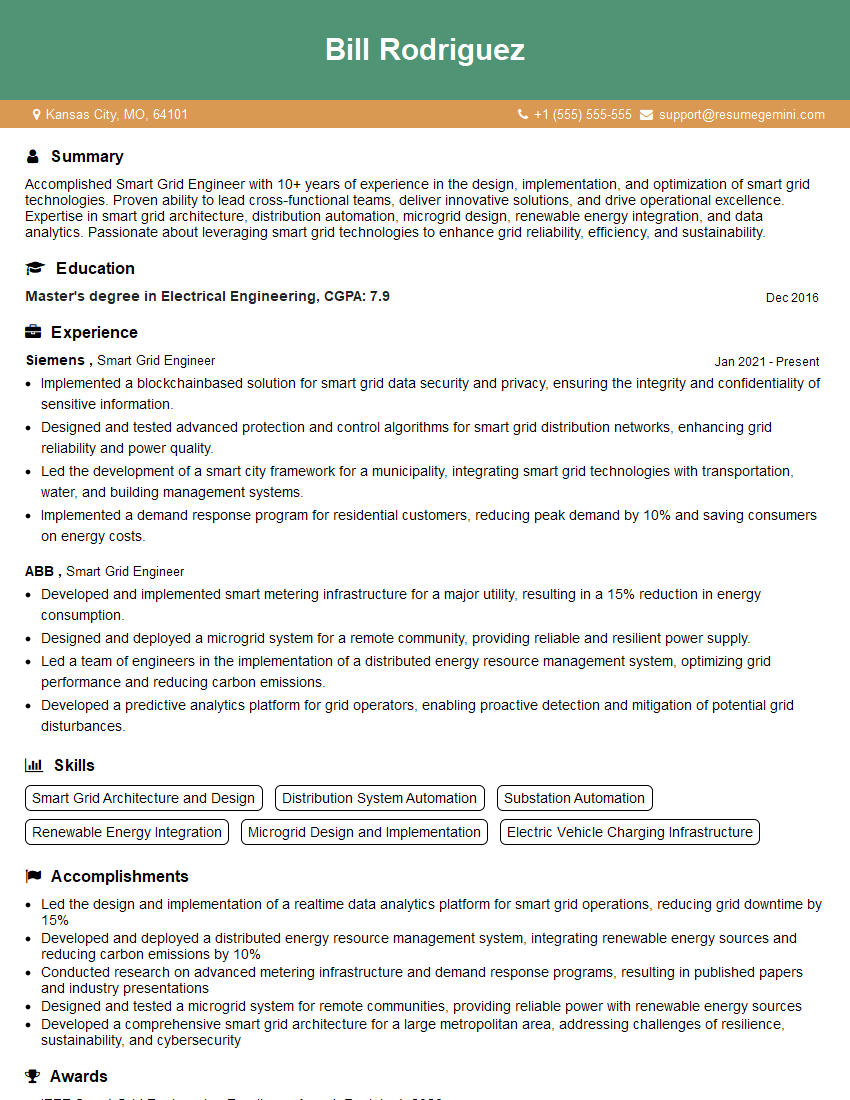
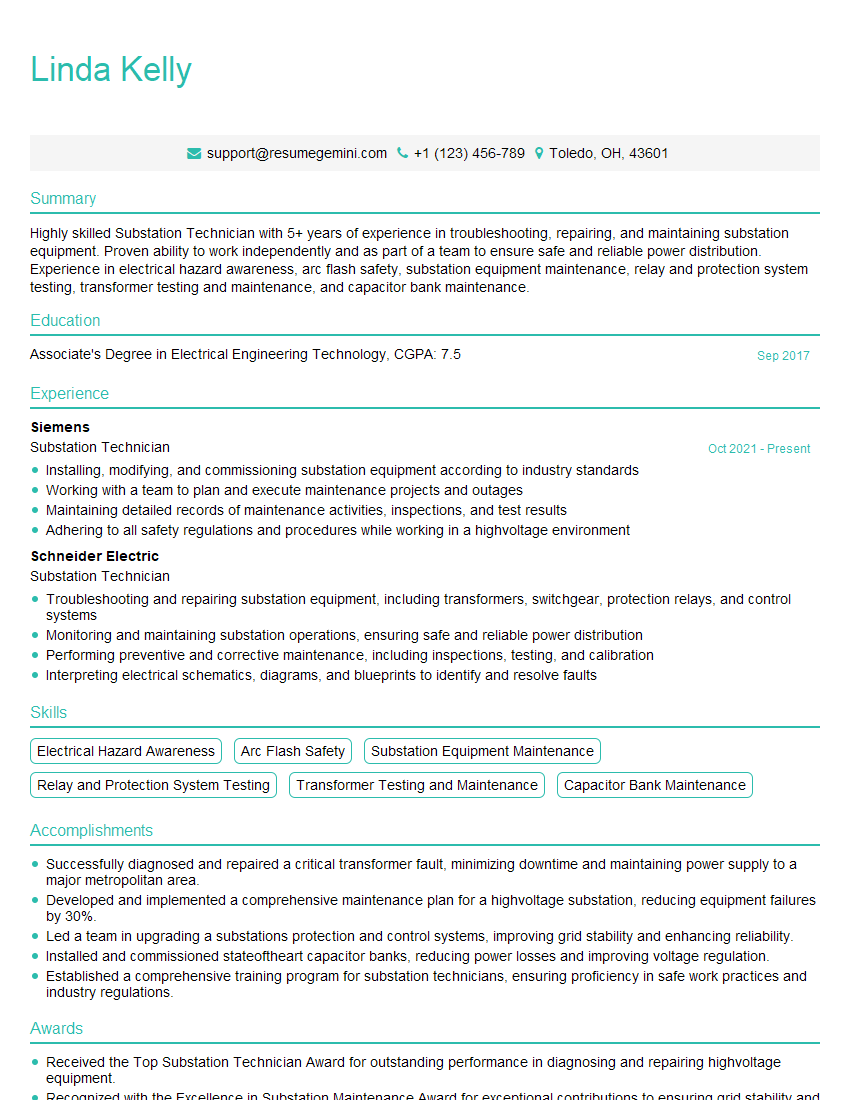
Mastering Power Grid Operations opens doors to a rewarding career with significant impact on energy infrastructure and sustainability. Your expertise in this field is highly sought after, offering excellent growth potential and diverse opportunities. To maximize your chances of landing your dream role, creating a strong, ATS-friendly resume is crucial. ResumeGemini can help you build a compelling and effective resume that showcases your skills and experience effectively. We provide examples of resumes tailored to Power Grid Operations to give you a head start. Invest in your future – build a resume that gets noticed.

Explore more articles
Users Rating of Our Blogs
Share Your Experience
We value your feedback! Please rate our content and share your thoughts (optional).
What Readers Say About Our Blog
To the interviewgemini.com Webmaster.
Very helpful and content specific questions to help prepare me for my interview!
Thank you
To the interviewgemini.com Webmaster.
This was kind of a unique content I found around the specialized skills. Very helpful questions and good detailed answers.
Very Helpful blog, thank you Interviewgemini team.