Unlock your full potential by mastering the most common Instrumentation and Control System Management interview questions. This blog offers a deep dive into the critical topics, ensuring you’re not only prepared to answer but to excel. With these insights, you’ll approach your interview with clarity and confidence.
Questions Asked in Instrumentation and Control System Management Interview
Q 1. Explain the difference between open-loop and closed-loop control systems.
The core difference between open-loop and closed-loop control systems lies in their feedback mechanisms. An open-loop system operates without feedback; it simply executes a pre-programmed sequence of actions regardless of the actual outcome. Think of a toaster: you set the time, and it runs for that duration, regardless of whether the bread is perfectly toasted. The output is not monitored and corrected.
In contrast, a closed-loop system, also known as a feedback control system, uses feedback to continuously monitor the output and adjust the input accordingly to maintain the desired setpoint. A thermostat is a great example. It measures the room temperature (feedback) and adjusts the heating or cooling (input) to maintain the desired temperature (setpoint). This constant correction ensures the system stays at the target value.
In summary:
- Open-loop: No feedback, pre-programmed actions, susceptible to disturbances.
- Closed-loop: Feedback mechanism, continuous correction, more accurate and robust.
Q 2. Describe your experience with Programmable Logic Controllers (PLCs).
I have extensive experience with Programmable Logic Controllers (PLCs), spanning over [Number] years. My experience encompasses the entire lifecycle, from initial design and programming to troubleshooting and maintenance. I’ve worked with various PLC brands, including Allen-Bradley, Siemens, and Schneider Electric, utilizing programming languages such as Ladder Logic, Structured Text, and Function Block Diagram.
In my previous role at [Previous Company Name], I was responsible for designing and implementing PLC programs for [Specific Application, e.g., a high-speed packaging line]. This involved integrating various sensors and actuators, developing robust control algorithms for precise timing and sequencing, and implementing safety interlocks to ensure operator and equipment safety. I also have experience with HMI (Human Machine Interface) development, creating user-friendly interfaces for operators to monitor and control the process. One challenging project involved troubleshooting a recurring PLC communication issue on a critical production line. Through systematic diagnostics involving loopback testing and communication protocol analysis, I identified a faulty network cable causing intermittent data loss. Replacing the cable resolved the problem and minimized production downtime.
Q 3. What is SCADA and how does it integrate with industrial control systems?
SCADA (Supervisory Control and Data Acquisition) is a system used to monitor and control industrial processes. It integrates data from various sources across geographically dispersed locations, providing a centralized view of the entire operation. Think of it as a central nervous system for large-scale industrial plants.
SCADA systems typically integrate with industrial control systems like PLCs and DCSs via communication networks such as Ethernet, Modbus, or Profibus. PLCs and other controllers handle the low-level control of individual devices and processes, while the SCADA system provides a high-level overview, allowing operators to supervise and manage the entire operation. The SCADA system receives real-time data from the PLCs, displays it on HMIs, allows operators to make adjustments, and logs historical data for analysis and reporting. For example, a SCADA system in a water treatment plant might monitor water levels, chemical dosages, and pump status from multiple remote locations, providing a centralized control and monitoring platform for the entire plant.
Q 4. Explain the function of a Distributed Control System (DCS).
A Distributed Control System (DCS) is a sophisticated control system designed for large-scale, complex processes like chemical plants, refineries, and power generation facilities. Unlike PLCs that typically control individual machines or parts of a process, a DCS distributes the control functions across multiple controllers, each responsible for a specific part of the overall process. This distributed architecture enhances reliability and scalability.
A DCS typically includes redundant controllers and communication networks to ensure continuous operation even in case of failures. Each controller manages a portion of the process, communicating with other controllers and a central operator station via a high-speed communication network. This allows for complex control algorithms and coordinated control of multiple processes simultaneously. For instance, in a refinery, a DCS would coordinate the operation of multiple distillation columns, reactors, and other units to optimize the overall production process. The distributed nature also allows for easier expansion and modification of the system as needed.
Q 5. What are the different types of industrial sensors and their applications?
Industrial sensors are the eyes and ears of a control system, providing real-time information about various process parameters. There’s a wide variety, each with specific applications:
- Temperature Sensors (Thermocouples, RTDs, Thermistors): Measure temperature in various processes, crucial for safety and process optimization.
- Pressure Sensors: Monitor pressure in pipelines, vessels, and other equipment, essential for safety and process control.
- Flow Sensors (Flow meters, Ultrasonic flow meters): Measure the flow rate of liquids or gases in pipelines, vital for process control and material balancing.
- Level Sensors: Measure the level of liquids or solids in tanks and vessels, critical for inventory management and preventing overflows.
- Proximity Sensors (Inductive, Capacitive, Photoelectric): Detect the presence or absence of objects without physical contact, widely used in automation and robotics.
- Analytical Sensors (pH sensors, Gas sensors): Measure the chemical composition of substances, used for quality control and process optimization.
The choice of sensor depends entirely on the specific application and the required accuracy, response time, and environmental conditions. For example, a high-accuracy thermocouple might be used in a critical furnace control application, whereas a simpler proximity sensor might be used to detect the presence of a part on a conveyor belt.
Q 6. How do you troubleshoot a malfunctioning control system?
Troubleshooting a malfunctioning control system requires a systematic approach. My typical process involves:
- Safety First: Isolate the problem area to prevent further damage or safety hazards.
- Gather Information: Collect data from alarms, logs, and operator reports to understand the nature of the malfunction.
- Visual Inspection: Check for obvious problems like loose connections, damaged wiring, or leaking fluids.
- Signal Tracing: Trace the signals from sensors and actuators to identify where the problem occurs. This often involves using multimeters, oscilloscopes, and other diagnostic tools.
- PLC/DCS Diagnostics: Utilize the built-in diagnostic capabilities of the PLC or DCS, such as fault codes and historical data, to pinpoint the issue.
- Simulation and Testing: If possible, create a simulated environment to reproduce the problem and test potential solutions.
- Calibration and Adjustment: Once the problem is identified, recalibrate sensors or adjust control parameters if necessary.
- Documentation: Thoroughly document the troubleshooting process, including the problem, the solution, and any preventive measures implemented.
I always follow a structured approach, ensuring to prioritize safety and thoroughly document every step of the process to prevent recurring issues.
Q 7. Describe your experience with control system commissioning and validation.
I have extensive experience in control system commissioning and validation, adhering to industry standards like ISA-84 and GAMP guidelines. Commissioning involves verifying that the control system is installed correctly and performs as intended. Validation ensures that the system consistently produces expected results within defined quality standards.
In my experience at [Previous Company Name], I led the commissioning and validation of a new process control system for [Specific Application, e.g., a pharmaceutical manufacturing plant]. This included developing detailed test plans, executing tests, documenting results, and preparing validation reports. We conducted factory acceptance testing (FAT) at the vendor’s facility before shipping and site acceptance testing (SAT) once the system was installed. We also performed various functional tests, performance tests, and user acceptance testing (UAT) to ensure the system met the project requirements and user expectations. One key aspect was managing deviations and generating change control requests. A meticulous approach throughout this process is crucial to ensure compliance and avoid any production or quality issues later on.
Q 8. Explain the concept of PID control and its tuning methods.
PID control, or Proportional-Integral-Derivative control, is a widely used feedback control loop mechanism. It’s like a self-correcting thermostat for industrial processes. It continuously adjusts a control element (like a valve or motor) to maintain a desired process variable (like temperature or pressure) at a setpoint.
The PID controller uses three terms:
- Proportional (P): This term reacts to the current error (difference between the setpoint and the actual value). A larger error leads to a stronger corrective action. Think of it like instantly adjusting the gas on a stove when you notice the water isn’t boiling fast enough.
- Integral (I): This term accounts for accumulated error over time. It addresses persistent offsets or slow responses. Imagine your stove consistently runs slightly cool; the integral term compensates by gradually increasing the gas.
- Derivative (D): This term predicts future error based on the rate of change of the current error. It dampens oscillations and speeds up response times. This is like anticipating the water nearing a boil and slightly reducing the gas to prevent overshooting.
Tuning Methods: Getting the right balance of P, I, and D values is crucial. Common methods include:
- Zeigler-Nichols method: A simple, empirical method that involves pushing the system to its limits to determine optimal settings. It’s a good starting point.
- Trial and error: A hands-on approach, where you systematically adjust P, I, and D values, observing the system’s response. This requires understanding the process dynamics.
- Advanced tuning techniques: These leverage process models and optimization algorithms for more precise tuning, often used in sophisticated systems.
For example, in a temperature control system for a chemical reactor, PID control ensures the reaction proceeds at the desired temperature, preventing overheating or underheating, which could lead to safety hazards or reduced yield.
Q 9. What are the safety considerations in instrumentation and control systems?
Safety is paramount in instrumentation and control systems. A failure can lead to significant consequences, including equipment damage, environmental pollution, and even loss of life. Key safety considerations include:
- Emergency Shutdown Systems (ESD): These systems are designed to automatically shut down processes in hazardous situations, such as high pressure or temperature excursions. Regular testing and maintenance are crucial.
- Redundancy and Fail-safes: Multiple sensors, actuators, and control loops can be implemented to ensure continuous operation even if one component fails. Fail-safe mechanisms automatically switch to a safe state in case of failures.
- Safety Instrumented Systems (SIS): These systems are independent of the basic process control system and are specifically designed to address safety-critical functions. They require rigorous safety standards and certification.
- Alarms and Notifications: Clear and timely alarms are essential to alert operators to abnormal conditions. These should be well-designed to avoid alarm fatigue, ensuring critical alarms are noticed.
- Operator Training: Operators must be adequately trained to handle normal and emergency situations. This includes understanding the system’s behavior, alarm responses, and emergency procedures.
- Safety Integrity Levels (SIL): These quantify the risk reduction provided by safety functions. Higher SIL levels correspond to more stringent safety requirements and verification techniques. For example, a high SIL might require triple modular redundancy in critical control elements.
In a refinery, for instance, a high-pressure relief valve, integrated with an ESD system, is critical to preventing catastrophic failures. The system’s integrity is regularly verified through functional safety assessments and testing to meet regulatory requirements.
Q 10. How do you handle control system upgrades and migrations?
Control system upgrades and migrations require a systematic approach to minimize disruption and ensure the new system’s functionality. The process typically involves:
- Needs Assessment: Clearly define the objectives and scope of the upgrade. What are the shortcomings of the existing system? What improvements are desired? This might involve better performance, increased capacity, enhanced safety features, or improved integration with other systems.
- System Analysis: Thoroughly analyze the existing system’s architecture, hardware, software, and communication protocols. This step is crucial to identify compatibility issues and potential challenges.
- Migration Planning: Develop a comprehensive plan that outlines the migration steps, timelines, and resources required. Consider a phased approach, migrating parts of the system gradually to minimize downtime and risk.
- Testing and Validation: Rigorous testing is critical to ensure the upgraded system functions correctly. This includes unit testing, integration testing, and system testing. Validation ensures the system meets the defined requirements.
- Training and Documentation: Provide adequate training for operators and maintenance personnel. Update all relevant documentation to reflect the changes made during the upgrade.
- Rollback Plan: Having a plan to revert to the old system in case of problems is essential. This minimizes the impact of potential failures.
For example, migrating from an older PLC platform to a newer one might involve creating a detailed migration plan that outlines hardware replacement, software updates, and data migration strategies, with thorough testing to ensure seamless transition.
Q 11. Describe your experience with industrial communication protocols (e.g., Modbus, Profibus).
I have extensive experience with various industrial communication protocols, including Modbus, Profibus, and others like Ethernet/IP and PROFINET.
Modbus is a widely used serial communication protocol known for its simplicity and robustness. I’ve used it extensively in various applications, from connecting PLCs to remote I/O modules to integrating sensors and actuators in SCADA systems. I am familiar with both Modbus RTU (using RS-485) and Modbus TCP/IP (using Ethernet).
Profibus is a fieldbus protocol used in process automation, offering higher speed and more complex functionalities compared to Modbus. My experience includes configuring Profibus networks, troubleshooting communication issues, and integrating Profibus devices into larger control systems. I understand the nuances of Profibus DP (for distributed peripherals) and Profibus PA (for process automation).
My expertise extends to understanding the advantages and limitations of different protocols, enabling me to choose the optimal protocol based on the application’s requirements. For example, I would choose Modbus for its simplicity in smaller applications where speed is not critical, while Profibus would be a better choice for larger, more complex systems demanding high bandwidth and reliability.
Q 12. Explain the importance of control system documentation.
Comprehensive control system documentation is crucial for various reasons:
- System Understanding: Documentation provides a complete picture of the system’s architecture, functionality, and components, allowing engineers and technicians to understand how it works. It serves as a central repository of knowledge.
- Maintenance and Troubleshooting: Detailed documentation makes maintenance and troubleshooting easier. It enables technicians to quickly identify components, understand their functions, and diagnose issues.
- Upgrades and Modifications: When making upgrades or modifications, proper documentation ensures that changes are made without compromising the system’s integrity or functionality. It acts as a baseline for change management.
- Safety and Compliance: Comprehensive documentation is often a requirement for safety and regulatory compliance. It demonstrates that the system meets relevant safety standards and industry regulations.
- Training: Documentation provides valuable training materials for operators and maintenance personnel, ensuring they understand the system and can effectively operate and maintain it.
For example, well-maintained documentation on a water treatment plant’s control system would help in quickly resolving unexpected problems, performing scheduled maintenance, and training new operators on system functions. The absence of documentation could lead to significant delays and potentially dangerous situations.
Q 13. How do you ensure the cybersecurity of an industrial control system?
Cybersecurity is a critical concern for industrial control systems (ICS). These systems are often vulnerable to cyberattacks that can disrupt operations, cause safety hazards, or compromise sensitive data. Key strategies for ensuring ICS cybersecurity include:
- Network Segmentation: Isolating the ICS network from the corporate network limits the impact of a breach. This involves creating separate networks for different levels of the ICS hierarchy.
- Firewall and Intrusion Detection/Prevention Systems: These security measures monitor and control network traffic, blocking unauthorized access and detecting malicious activity.
- Access Control: Implementing strong password policies, multi-factor authentication, and role-based access control limits who can access the system and what they can do.
- Regular Software Updates and Patching: Keeping the ICS software up-to-date patches known vulnerabilities, reducing the system’s attack surface.
- Security Audits and Penetration Testing: Regular security assessments identify potential weaknesses and vulnerabilities, allowing for proactive mitigation.
- Employee Training: Educating employees about cybersecurity threats and best practices minimizes the risk of human error, a common cause of security breaches.
- Data Backup and Recovery: Regularly backing up critical data ensures business continuity in case of a cyberattack or system failure.
For example, a power grid operator might employ advanced network segmentation, intrusion detection systems, and strong access control measures to protect the grid’s control systems from malicious attacks, thus ensuring reliable power delivery.
Q 14. What is your experience with process control loops and their optimization?
Process control loops are the heart of many industrial processes. Optimizing these loops is critical for maximizing efficiency, minimizing waste, and improving product quality. My experience encompasses various aspects of loop optimization:
- Loop Tuning: Properly tuning PID controllers is essential for achieving stable and responsive control. I’ve used various tuning methods, including the Ziegler-Nichols method and advanced techniques based on process models.
- Loop Performance Analysis: Evaluating loop performance metrics such as settling time, overshoot, and offset helps to identify areas for improvement. Tools like advanced process control (APC) software can aid in this analysis.
- Loop Troubleshooting: Identifying and resolving issues in control loops, such as valve stiction, sensor drift, or process disturbances, is crucial for maintaining efficient operation. I’m adept at using diagnostic tools and techniques to pinpoint these problems.
- Advanced Control Strategies: Implementing advanced control strategies like model predictive control (MPC) or cascade control can significantly improve loop performance, particularly in complex processes with multiple interacting variables. For example, MPC can optimize a refinery process to minimize energy consumption while maintaining product quality.
For instance, in optimizing a distillation column’s temperature control loop, I’d analyze the loop’s performance, identify areas for improvement through advanced control strategies, and adjust the PID controller settings to minimize energy consumption while maintaining product purity.
Q 15. Explain your understanding of control system architectures.
Control system architectures define the structure and interaction of various components within a system. Think of it like the blueprint of a house; it dictates how electricity, plumbing, and other systems work together. Common architectures include:
- Hierarchical: A top-down structure with a master controller overseeing several subordinate controllers. This is prevalent in large-scale processes like oil refineries, where a central system manages numerous individual units. Imagine a CEO overseeing different department heads.
- Distributed Control System (DCS): Multiple controllers communicate and share data across a network, offering redundancy and scalability. Each controller handles a specific part of the process, similar to a team where each member has specific responsibilities but works together towards a common goal.
- Programmable Logic Controller (PLC)-based: Utilizing PLCs as the core control element, often simpler and less complex than DCS for smaller applications. This is like using a simple toolbox to build a small birdhouse instead of a massive workshop for a skyscraper.
- Supervisory Control and Data Acquisition (SCADA): Monitors and controls geographically dispersed equipment, commonly used in power grids and pipelines. Think of a central control room overseeing a vast network like a train station overseeing multiple trains across a large region.
The choice of architecture depends on the complexity, scale, and specific requirements of the process. For example, a small manufacturing line might use a PLC-based system, while a large chemical plant would require a DCS or hierarchical structure.
Career Expert Tips:
- Ace those interviews! Prepare effectively by reviewing the Top 50 Most Common Interview Questions on ResumeGemini.
- Navigate your job search with confidence! Explore a wide range of Career Tips on ResumeGemini. Learn about common challenges and recommendations to overcome them.
- Craft the perfect resume! Master the Art of Resume Writing with ResumeGemini’s guide. Showcase your unique qualifications and achievements effectively.
- Don’t miss out on holiday savings! Build your dream resume with ResumeGemini’s ATS optimized templates.
Q 16. Describe your experience with HMI design and development.
My HMI design and development experience encompasses the entire lifecycle, from initial concept and design to testing and deployment. I’m proficient in various HMI software packages, including Wonderware InTouch, Siemens WinCC, and Rockwell FactoryTalk. I emphasize user-friendliness and intuitive design to ensure operators can easily monitor and control processes.
In one project, we designed an HMI for a food processing plant. We utilized visual cues like color-coding and alarms to immediately alert operators to critical process deviations. We also incorporated interactive elements, such as trend graphs and historical data analysis, to allow for better process optimization. This resulted in a 15% increase in production efficiency and a reduction in downtime. My approach always prioritizes clear, concise information presentation, and ergonomic layout, even using real-world process diagrams to make the information easily digestible for operators.
Q 17. How do you handle control system alarms and events?
Handling control system alarms and events involves a multi-layered approach. First, we need a robust alarm management system that filters out nuisance alarms and prioritizes critical ones. This often involves alarm rationalization techniques, which prioritize alarms based on their severity and impact on the process.
Secondly, we implement clear alarm acknowledgement procedures, ensuring operators properly address the root cause and prevent recurrence. Effective alarm management is critical for safety and efficient operations. We utilize alarm acknowledgement systems linked to operator actions. For instance, an operator must acknowledge and provide a corrective action before the alarm is reset, creating an auditable trail for investigation.
Furthermore, we analyze alarm history to identify trends and patterns that can be used to improve system performance and prevent future incidents. This is done with sophisticated data analysis tools embedded within the system, and allows engineers to proactively address potential problems before they cause significant issues.
Q 18. What is your experience with data acquisition and logging in control systems?
Data acquisition and logging are fundamental to control systems. I have extensive experience using various data historian systems, including OSIsoft PI and Aspen InfoPlus.21. These systems collect, store, and manage large volumes of process data, enabling real-time monitoring and historical analysis.
For example, in a water treatment plant, we used data historians to track water quality parameters, pump performance, and chemical dosages. This data was then used to optimize the treatment process, reduce chemical consumption, and improve water quality. We implemented automated data logging based on time-based sampling and events to maintain data integrity and provide an accurate record for analysis and troubleshooting. This system helped improve the operational efficiency of the plant and ensure regulatory compliance.
Q 19. Explain your experience with different types of actuators.
My experience encompasses a wide range of actuators, including:
- Pneumatic actuators: These use compressed air to generate motion, ideal for hazardous environments due to their intrinsic safety. I’ve worked with diaphragm and piston actuators in various process control applications.
- Hydraulic actuators: Employing hydraulic fluid, they offer high force and precision but require careful maintenance. I’ve used these in heavy-duty applications such as large valve operations.
- Electric actuators: Driven by electric motors, they offer precise control and easy integration with control systems. I’ve worked with stepper motors, servo motors, and linear actuators in numerous projects, offering flexibility in design and precision.
The choice of actuator depends on the specific application requirements. For example, a small valve might use an electric actuator, while a large pipeline valve might need a hydraulic actuator to provide sufficient force. The safety and environmental aspects also play a crucial role in actuator selection.
Q 20. How do you perform routine maintenance on control system equipment?
Routine maintenance on control system equipment is crucial for ensuring reliable operation and preventing failures. This includes preventative maintenance schedules based on manufacturer recommendations and historical data analysis. My approach involves:
- Regular inspections: Visual checks of wiring, connections, and equipment for signs of wear and tear.
- Calibration and testing: Ensuring that sensors, transmitters, and controllers are accurate and functioning correctly using specialized calibration tools and procedures.
- Cleaning and lubrication: Keeping equipment clean and lubricated to prevent premature wear.
- Firmware and software updates: Implementing the latest updates to improve performance and security.
- Backup and restoration procedures: Regular backups of system configuration and data to enable rapid recovery in case of failures.
These routines extend the lifespan of equipment, minimize downtime, and improve overall system reliability. Using a Computerized Maintenance Management System (CMMS) facilitates this process, allowing for effective scheduling, tracking, and reporting of maintenance activities.
Q 21. Describe your experience with industrial network design and implementation.
Industrial network design and implementation require careful consideration of various factors, including communication protocols, network topology, security, and redundancy. My experience includes working with:
- Ethernet/IP: A common industrial Ethernet protocol offering high speed and flexibility. I’ve used it in numerous projects involving PLCs, HMIs, and other devices.
- PROFINET: Another widely adopted industrial Ethernet standard known for its deterministic properties, useful for real-time applications.
- Modbus: A widely used serial communication protocol, particularly for simple applications or integration with legacy equipment.
- Wireless technologies: In certain applications, wireless technologies like WirelessHART are employed for remote monitoring and control, though cybersecurity considerations are paramount.
Security is a critical aspect; I employ strategies such as firewalls, intrusion detection systems, and secure authentication protocols to protect the network from unauthorized access and cyber threats. Redundancy is also implemented to maintain operations during network failures. For example, using ring topologies or redundant network paths ensures continued operation even if part of the network goes down. This is especially important in critical processes where downtime is unacceptable.
Q 22. Explain the concept of redundancy in control systems.
Redundancy in control systems is like having a backup plan – it ensures that if one component fails, another takes over seamlessly, preventing system downtime and maintaining safe operation. This is crucial for safety-critical applications where failure can have significant consequences. It’s achieved through multiple layers, including hardware and software.
- Hardware Redundancy: This involves having duplicate components, such as sensors, actuators, or controllers. For example, a process might have two pressure transmitters monitoring the same variable; if one fails, the other continues to provide data. This is often implemented using a 1-out-of-2 or 2-out-of-3 voting scheme to ensure the correct data is used.
- Software Redundancy: This involves having multiple software routines performing the same function. If one routine fails, another takes over. This often involves different algorithms or independent software platforms working in parallel.
- Functional Redundancy: This strategy implements completely independent control systems. If the primary system fails, a second, independent system takes control. This provides the highest level of reliability.
Consider a nuclear power plant: Redundancy is paramount to ensure safety. Multiple independent safety systems, each with redundant components, monitor critical parameters and take corrective actions in case of failures. This ensures the plant can be safely shut down even if multiple components fail simultaneously.
Q 23. What is your experience with control system simulation and modeling?
I have extensive experience with control system simulation and modeling, using tools like MATLAB/Simulink, Aspen Plus, and Honeywell UniSim Design. My work involves creating dynamic models of process plants to test control strategies, predict system behavior under various conditions, and optimize controller tuning parameters before implementing them in the actual plant. This reduces risks and significantly improves commissioning timelines.
For instance, in a recent project involving a refinery’s crude distillation unit (CDU), I developed a detailed dynamic model in Simulink to simulate the effects of various disturbances, such as feedstock changes or equipment failures. This allowed us to design and fine-tune advanced process controllers (APCs) that maintained optimal operating conditions even during unforeseen events, resulting in increased throughput and improved product quality. I also used these simulations to train operators on how to respond to different process scenarios, enhancing their knowledge and improving plant safety.
Q 24. Describe a challenging control system project you worked on and how you overcame the challenges.
One challenging project involved implementing a new distributed control system (DCS) in a large chemical plant while maintaining continuous operation. The challenge was minimizing downtime and ensuring a smooth transition from the legacy system. The existing system was outdated and lacked the features needed to meet new safety and production requirements.
We overcame this challenge using a phased migration approach. We first simulated the new DCS using a replica of the existing process, allowing us to thoroughly test and validate the control logic before switching over. Then, we migrated sections of the plant to the new DCS incrementally, commissioning and verifying each section before moving to the next. We also established rigorous testing protocols, including both functional and performance tests, throughout the implementation. This minimized disruption to production and allowed for early detection and resolution of any issues. Effective communication with plant personnel was critical for success.
Q 25. Explain your understanding of different control system topologies.
Control system topologies describe the architecture and arrangement of the control elements. Common topologies include:
- Centralized Control: All control actions are performed by a single controller. This is simple for small systems but can be vulnerable to single points of failure. Think of a simple thermostat controlling a furnace.
- Decentralized Control: Multiple controllers manage different parts of the system independently. This enhances reliability and scalability, as failure in one area doesn’t affect the entire system. Imagine separate controllers for temperature, pressure, and flow in a chemical reactor.
- Distributed Control System (DCS): This architecture uses multiple controllers networked together, sharing data and coordinating actions. This is commonly used in large, complex industrial processes, providing flexibility, redundancy, and improved management of distributed I/O.
- Hierarchical Control: Multiple control levels operate in a hierarchical structure, with higher levels supervising lower levels. This is used in complex systems to manage and optimize overall performance. For example, a supervisory control system (SCS) might oversee several DCSs in a large refinery complex.
The choice of topology depends on the complexity and size of the system, required reliability, and maintenance considerations.
Q 26. How do you ensure the reliability and availability of a control system?
Ensuring reliability and availability involves a multi-faceted approach:
- Redundancy (as discussed earlier): Implementing redundant hardware and software components is fundamental.
- Regular Maintenance: A preventative maintenance schedule is essential. This includes periodic calibration of instruments, inspection of equipment, and software updates.
- Robust Design: Systems should be designed to withstand expected disturbances and failures. This involves appropriate selection of components, robust control algorithms, and protective systems.
- Fault Detection and Diagnosis: Implementing advanced diagnostics capabilities allows for early detection of potential problems before they lead to failures. This often involves using data analytics and machine learning techniques.
- Emergency Shutdown Systems: These systems are designed to safely shut down the process in case of emergencies or major failures. Regular testing is critical.
- Operator Training: Well-trained operators are crucial for safe and reliable operation. Regular training programs should cover both normal operation and emergency procedures.
A combination of these strategies significantly enhances the reliability and availability of a control system, minimizing downtime and ensuring safe operation.
Q 27. What are your experiences with different types of valves used in process control?
My experience encompasses a wide range of valves used in process control, including:
- Globe Valves: Commonly used for on/off and throttling applications due to their relatively simple design and ease of maintenance.
- Ball Valves: Known for their quick on/off action and low pressure drop. They are less suitable for precise throttling.
- Butterfly Valves: Suitable for large diameter lines, offering low pressure drop and fast operation, though their throttling capabilities are limited.
- Control Valves: These are specifically designed for precise control of flow rate, often incorporating pneumatic or electromechanical actuators to modulate the valve opening. These are commonly used in process control loops.
- Safety Relief Valves (SRVs): Designed to protect equipment from overpressure, automatically venting excess pressure to prevent catastrophic failure. Regular testing and maintenance are paramount.
Understanding the characteristics and limitations of different valve types is crucial for proper selection and integration into the control system to ensure optimal performance and safety.
Q 28. Describe your experience with calibration and maintenance of instrumentation.
Calibration and maintenance of instrumentation are vital for accurate and reliable control system operation. My experience includes:
- Calibration Procedures: I’m proficient in performing calibrations according to industry standards (e.g., ISO 9001, ISA guidelines) using appropriate calibration equipment and techniques. This ensures instruments are accurate and traceable.
- Maintenance Tasks: This includes routine inspections, cleaning, repairs, and preventative maintenance actions on a wide range of instruments, such as pressure transmitters, temperature sensors, flow meters, and analyzers. I am familiar with working with both pneumatic and electronic instruments.
- Documentation: Maintaining accurate and detailed records of calibration and maintenance activities is crucial for compliance and traceability. I’m experienced in using Computerized Maintenance Management Systems (CMMS) to manage these records.
- Troubleshooting: Diagnosing and resolving instrumentation issues is a key part of my role. This involves using diagnostic tools and techniques to identify the root cause of problems and implement effective solutions.
Through regular calibration and maintenance, we ensure the accuracy and reliability of the measurements used by the control system, which is critical for optimizing processes, maintaining safety, and meeting product quality requirements.
Key Topics to Learn for Instrumentation and Control System Management Interview
- Process Instrumentation: Understanding various sensors (temperature, pressure, flow, level), their principles of operation, selection criteria, and limitations. Practical application: Analyzing sensor data to diagnose process deviations in a chemical plant.
- Control System Hardware: Familiarity with Programmable Logic Controllers (PLCs), Distributed Control Systems (DCS), and their architectures. Practical application: Troubleshooting a malfunctioning PLC in a manufacturing environment.
- Control System Software: Programming logic (Ladder Logic, Function Block Diagrams), configuration, and commissioning of PLCs and DCS. Practical application: Developing a control algorithm for a PID controller to maintain a specific process variable.
- Control Loop Design and Tuning: Understanding PID control, advanced control strategies (e.g., cascade control, feedforward control), and loop tuning techniques. Practical application: Optimizing a control loop to minimize overshoot and settling time.
- Process Safety and Instrumentation: Safety instrumented systems (SIS), emergency shutdown systems (ESD), and their importance in process safety. Practical application: Analyzing a safety instrumented function (SIF) to ensure it meets performance requirements.
- Data Acquisition and Analysis: Methods for collecting, storing, and analyzing process data using SCADA systems and historians. Practical application: Identifying trends and patterns in process data to optimize operations and prevent failures.
- Troubleshooting and Maintenance: Diagnosing and resolving issues in instrumentation and control systems. Practical application: Performing preventative maintenance on process instrumentation to minimize downtime.
- Industrial Communication Protocols: Understanding various communication protocols (e.g., Modbus, Profibus, Ethernet/IP) used in industrial automation. Practical application: Configuring communication networks for seamless data exchange between different devices.
Next Steps
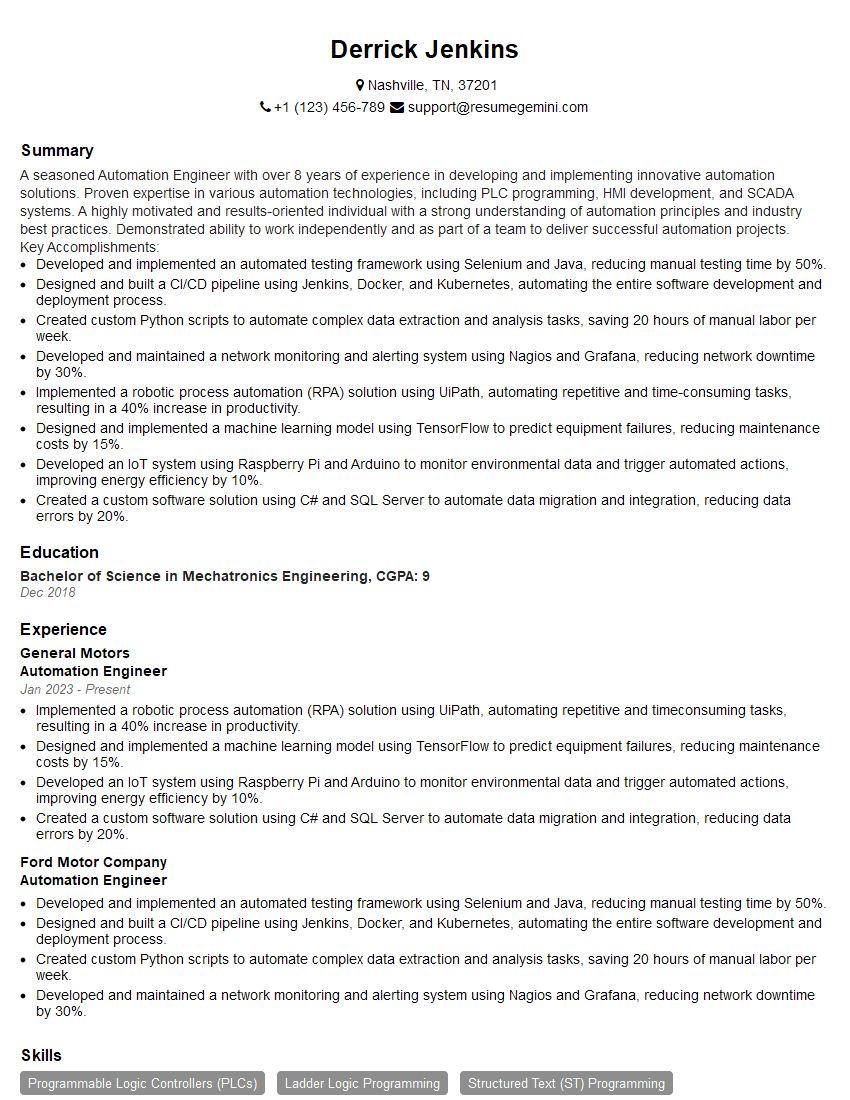
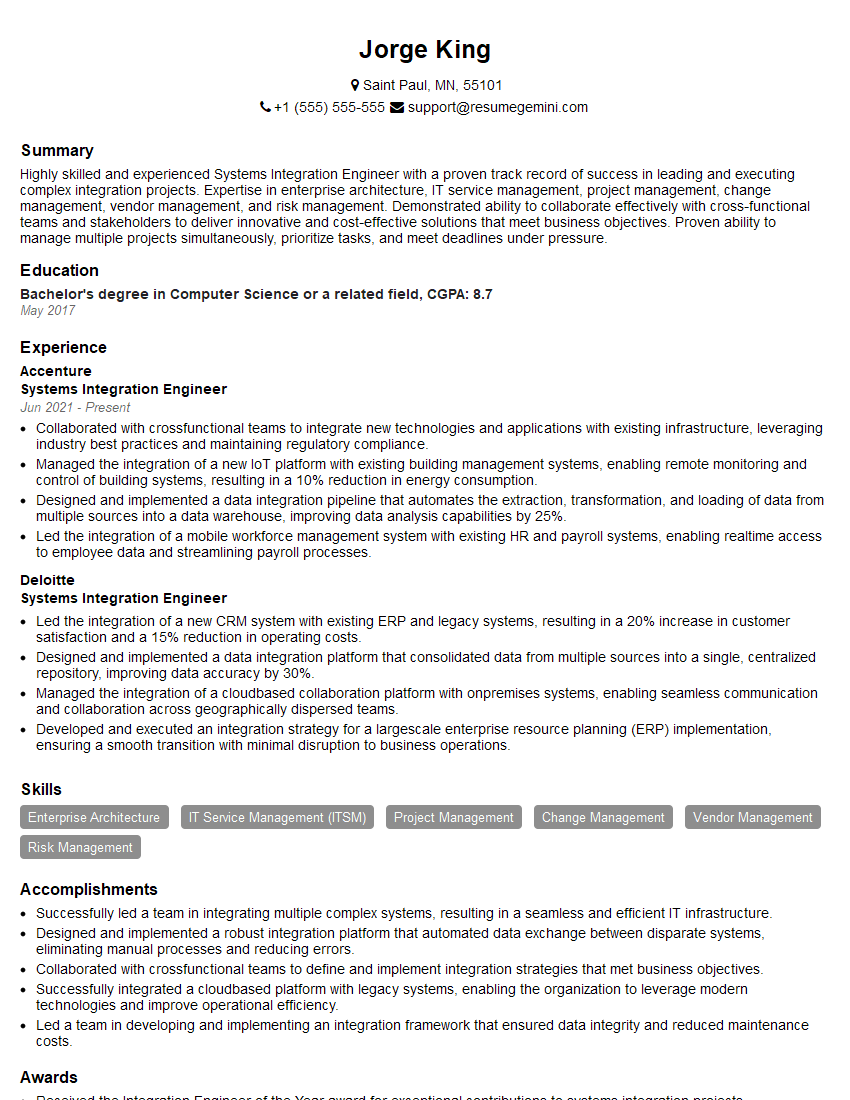
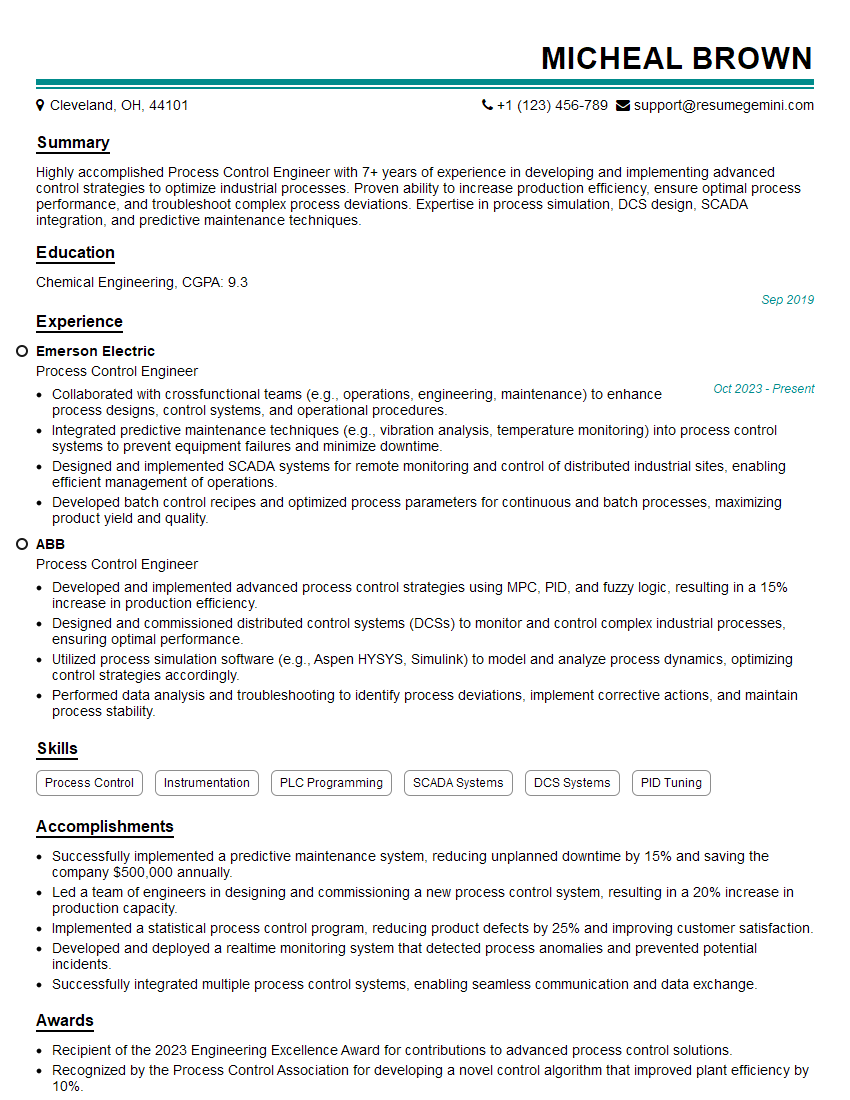
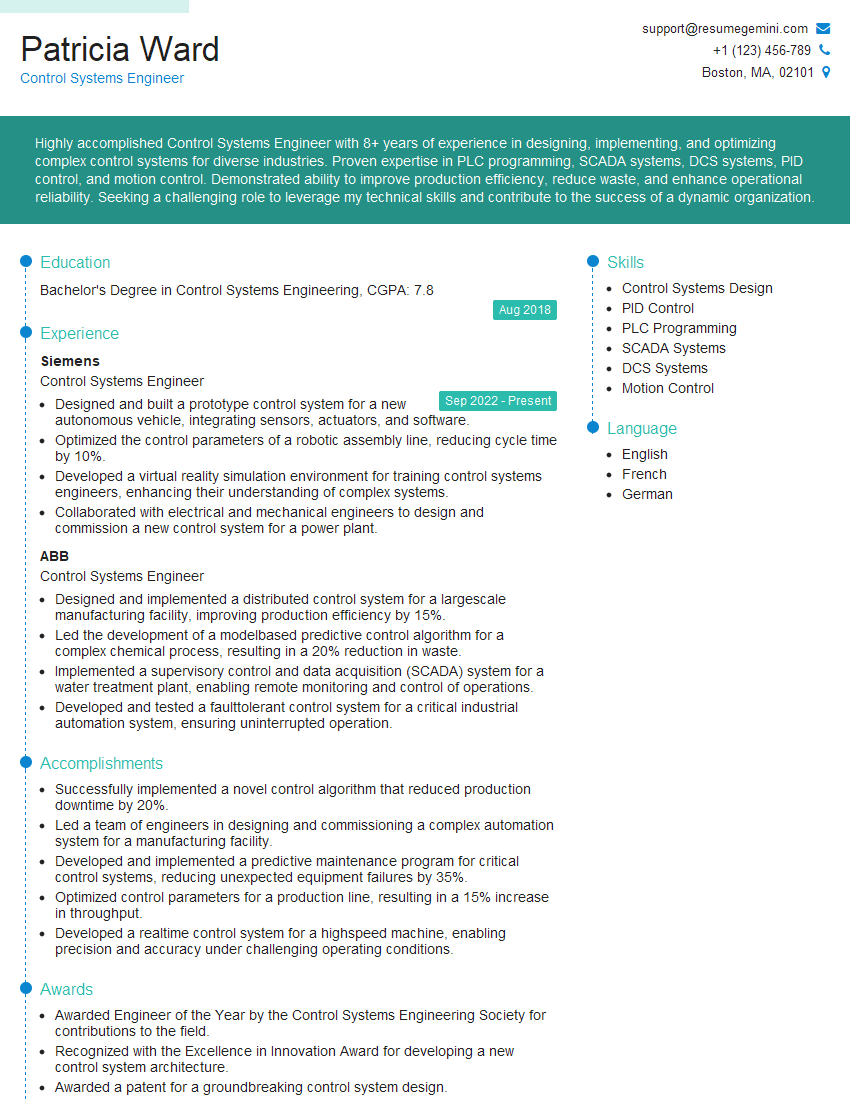
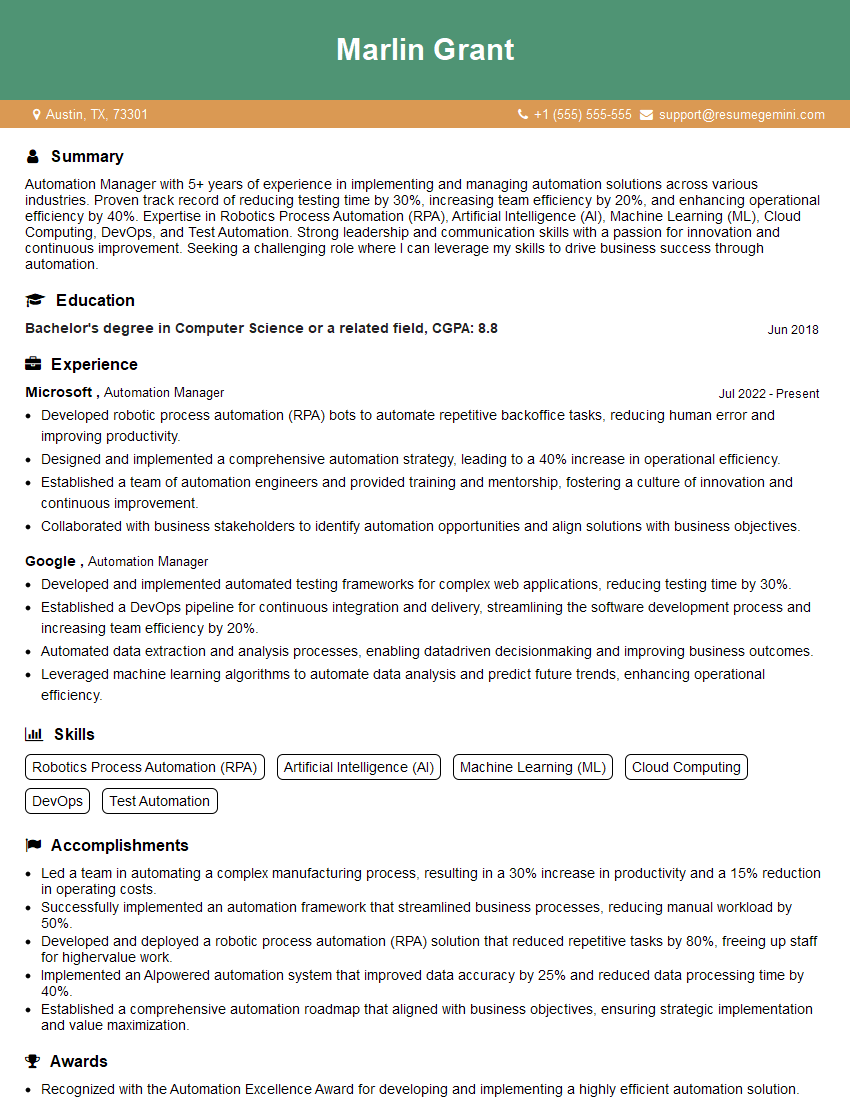
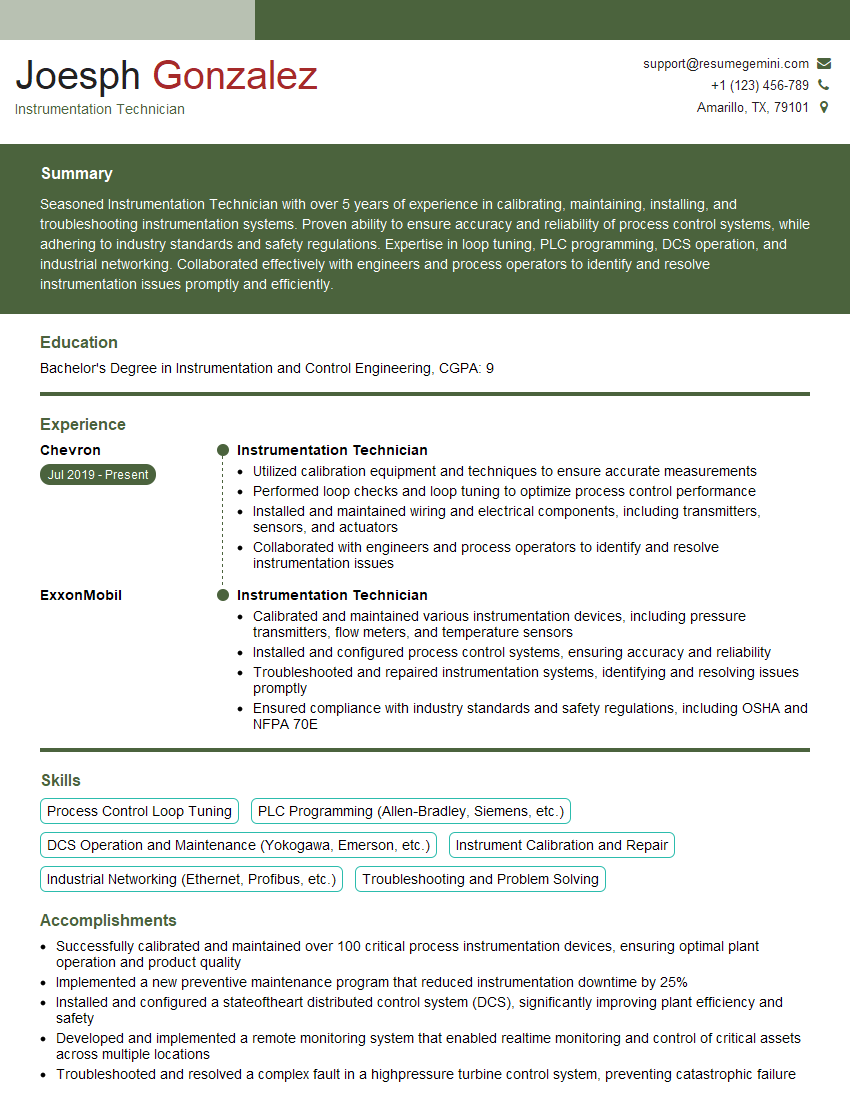
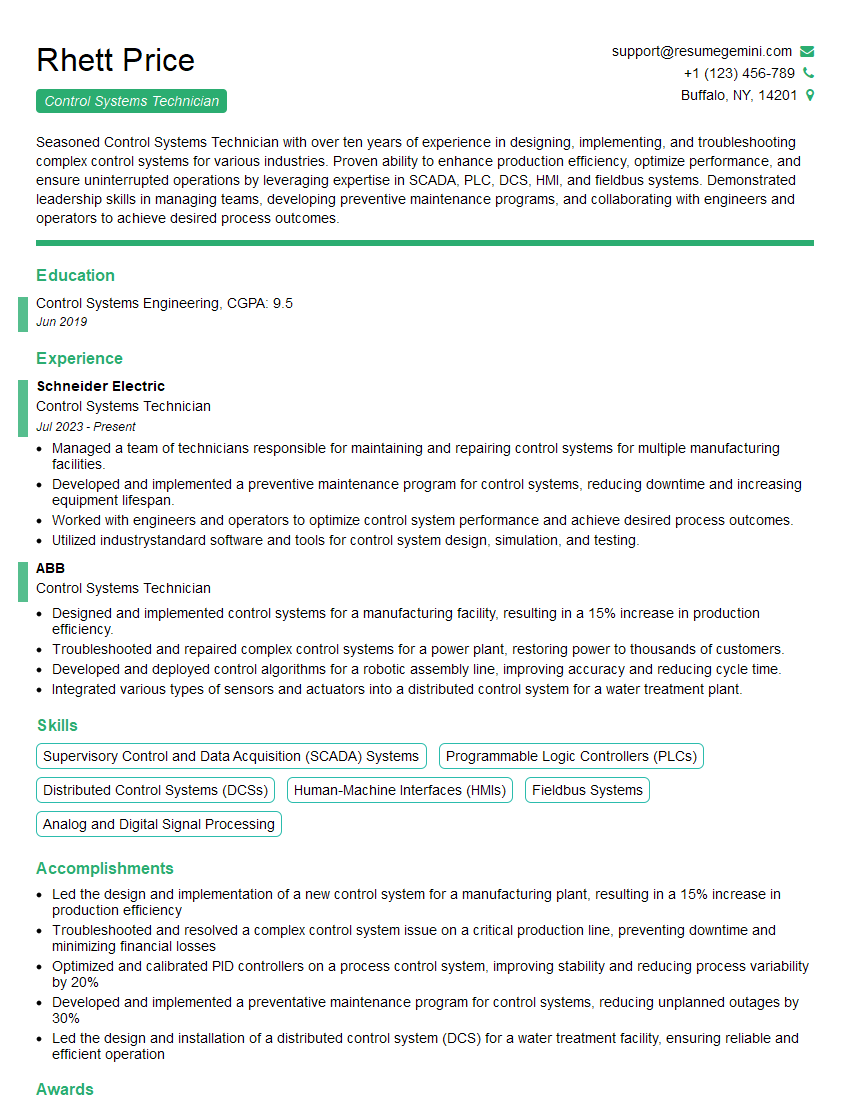
Mastering Instrumentation and Control System Management opens doors to exciting and rewarding careers in diverse industries. Your expertise in this field will be highly valuable, offering opportunities for growth and leadership. To significantly improve your job prospects, create an ATS-friendly resume that highlights your skills and experience effectively. ResumeGemini is a trusted resource that can help you build a professional and impactful resume. They provide examples of resumes tailored to Instrumentation and Control System Management, ensuring your application stands out from the competition. Take the next step in your career journey today!
Explore more articles
Users Rating of Our Blogs
Share Your Experience
We value your feedback! Please rate our content and share your thoughts (optional).
What Readers Say About Our Blog
To the interviewgemini.com Webmaster.
Very helpful and content specific questions to help prepare me for my interview!
Thank you
To the interviewgemini.com Webmaster.
This was kind of a unique content I found around the specialized skills. Very helpful questions and good detailed answers.
Very Helpful blog, thank you Interviewgemini team.