Every successful interview starts with knowing what to expect. In this blog, we’ll take you through the top Image Interpretation and Visual Analysis interview questions, breaking them down with expert tips to help you deliver impactful answers. Step into your next interview fully prepared and ready to succeed.
Questions Asked in Image Interpretation and Visual Analysis Interview
Q 1. Explain the difference between image segmentation and object detection.
Image segmentation and object detection are both crucial tasks in image analysis, but they differ significantly in their goals. Think of it like this: object detection is finding what is in an image, while image segmentation is defining the precise boundaries of those objects.
Object Detection: Locates and classifies objects within an image, typically by drawing bounding boxes around them. For instance, an object detection algorithm might identify a car, a person, and a traffic light in a street scene, each enclosed in a rectangle. It doesn’t care about the exact pixels that constitute the car; it just needs to locate it.
Image Segmentation: Partitions an image into multiple segments, each representing a different object or region. This provides a pixel-level classification. Continuing the street scene example, segmentation would delineate each pixel as belonging to either ‘car,’ ‘person,’ ‘traffic light,’ ‘road,’ ‘sky,’ etc. This gives far more detailed information about the image’s composition.
In short: object detection identifies the presence and location of objects, while image segmentation identifies the precise boundaries and composition of those objects at a pixel level.
Q 2. Describe your experience with various image processing techniques (e.g., filtering, enhancement, restoration).
My experience encompasses a wide range of image processing techniques, crucial for preparing images for analysis and improving the accuracy of downstream tasks like segmentation and object detection. I’ve extensively used:
- Filtering: Techniques like Gaussian blurring (to reduce noise) and median filtering (to remove salt-and-pepper noise) are essential pre-processing steps. I’ve applied these to improve image quality before feature extraction or object recognition. For example, I used a Gaussian filter to smooth a microscopic image before identifying cell nuclei.
- Enhancement: Methods such as histogram equalization (to improve contrast) and sharpening (to increase edge definition) are frequently employed. In one project involving satellite imagery, I used histogram equalization to enhance the visibility of subtle variations in land cover.
- Restoration: Techniques like deconvolution (to remove blur) and inpainting (to fill missing parts of an image) are critical for restoring degraded images. I once worked on a project restoring old, faded photographs using a combination of deconvolution and inpainting, dramatically improving their quality.
My proficiency also extends to more advanced techniques like wavelet transforms for feature extraction and morphological operations for object boundary refinement.
Q 3. How would you handle noisy images in your analysis?
Dealing with noisy images is a common challenge in image interpretation. The approach depends on the type and severity of the noise. My strategy usually involves a combination of techniques:
- Noise identification: First, I identify the type of noise (Gaussian, salt-and-pepper, etc.). This helps select the most appropriate filtering technique.
- Filtering: As mentioned before, Gaussian and median filters are effective for reducing Gaussian and salt-and-pepper noise, respectively. More advanced techniques like wavelet denoising can be used for more complex noise patterns.
- Adaptive filtering: For images with non-uniform noise, adaptive filters are preferable, as they adjust their parameters based on the local image characteristics. This prevents unwanted blurring or loss of detail in uniform areas.
- Noise reduction algorithms: Sophisticated algorithms like Non-Local Means (NLM) filtering provide more robust noise reduction, preserving image details better than basic filters.
The choice of technique always involves a trade-off between noise reduction and preservation of fine details. I carefully evaluate the results using quantitative metrics (like PSNR and SSIM) and qualitative visual assessment to ensure the optimal balance.
Q 4. What are some common challenges in image interpretation, and how have you overcome them?
Image interpretation is fraught with challenges. Some common hurdles include:
- Variations in lighting and viewpoint: Images taken under different lighting conditions or from varying angles can significantly affect the appearance of objects, making consistent identification difficult. To address this, I often employ techniques like histogram equalization and normalization.
- Occlusion: Objects being partially hidden by others is a frequent problem. I handle this using robust object detection algorithms that can still identify partially occluded objects.
- Image resolution and quality: Low resolution or poor image quality can hamper accurate interpretation. I might use super-resolution techniques to improve resolution or employ restoration methods to enhance image quality.
- Data variability: Real-world images are highly variable, and it’s difficult to create a model that performs well across all types of images. Data augmentation techniques help to improve the robustness of image processing models.
I’ve overcome these challenges by employing a combination of pre-processing techniques, robust algorithms, and careful consideration of the specific characteristics of the images being analyzed. For example, in a project involving aerial imagery, I addressed the lighting variations by normalizing the images using a reference image.
Q 5. Describe your experience with different image formats (e.g., JPEG, PNG, TIFF).
I have extensive experience with various image formats, each with its own strengths and weaknesses:
- JPEG: A lossy compression format, ideal for images with a large number of colors and smooth gradients. It’s widely used for web images due to its small file size, but it can introduce artifacts at high compression levels. I use it when file size is a critical consideration.
- PNG: A lossless compression format, best for images with sharp edges, text, or graphics. It preserves image details well but produces larger files than JPEG. I prefer PNG for images where detail preservation is paramount.
- TIFF: A flexible format supporting various compression methods (lossy and lossless) and color spaces. It’s often used for high-quality images and archival purposes, suitable for medical or scientific imaging. I often choose TIFF for situations where high fidelity and metadata preservation are critical.
Understanding the characteristics of each format is crucial for choosing the right one for the task. The choice depends on factors such as the required image quality, file size limitations, and the need for metadata preservation.
Q 6. Explain your understanding of color spaces (e.g., RGB, HSV, CMYK).
Color spaces are fundamental in image processing. They define how colors are represented numerically. Each has its own advantages:
- RGB (Red, Green, Blue): An additive color model, commonly used for displaying images on screens. Each color is represented by its intensity in red, green, and blue components. It’s intuitive but not ideal for certain image processing tasks.
- HSV (Hue, Saturation, Value): A more perceptually uniform color space than RGB. Hue represents the color itself, saturation represents the intensity of the color, and value represents the brightness. This is advantageous for color-based segmentation or object recognition because changes in brightness don’t affect hue and saturation values.
- CMYK (Cyan, Magenta, Yellow, Key/Black): A subtractive color model used primarily for printing. It represents colors as the amounts of cyan, magenta, yellow, and black inks needed to reproduce them. It’s essential when dealing with print-related image processing.
The choice of color space often depends on the application. For example, I would use HSV for color-based object detection, while RGB would be suitable for displaying the processed image on a monitor.
Q 7. How do you assess the quality of an image?
Assessing image quality is subjective and task-dependent, but I rely on a combination of objective and subjective metrics:
- Objective Metrics: These are quantitative measures of image quality. Examples include:
- Peak Signal-to-Noise Ratio (PSNR): Measures the ratio of the maximum possible power of a signal to the power of the corrupting noise.
- Structural Similarity Index (SSIM): Measures the similarity between two images by considering luminance, contrast, and structure.
- Subjective Metrics: These involve visual assessment of the image. I look for artifacts like blurring, noise, compression artifacts, and color distortions. I might use standardized quality scales or solicit feedback from other experts.
The combination of objective and subjective metrics provides a comprehensive evaluation of image quality. The relative importance of each metric depends on the specific application. For example, in medical imaging, the preservation of fine details is critical, thus SSIM might be given higher weight than PSNR.
Q 8. What are your preferred software tools for image interpretation and analysis?
My preferred software tools for image interpretation and analysis depend heavily on the specific task, but I’m proficient in a range of options. For general-purpose image manipulation and basic analysis, I frequently use ImageJ (and its more advanced cousin, Fiji) due to its extensive plugin ecosystem and user-friendly interface. For more advanced tasks involving complex algorithms and large datasets, I rely on powerful programming environments like Python, leveraging libraries such as OpenCV (for computer vision tasks), Scikit-image (for image processing and analysis), and Matplotlib (for visualization). Finally, for deep learning applications, I utilize frameworks like TensorFlow and PyTorch, integrating them with tools like Keras for simplified model building.
The choice often boils down to a balance of ease of use, computational efficiency, and the availability of relevant pre-built functions or libraries. For instance, if I’m quickly analyzing a few images for basic measurements, ImageJ’s speed and simplicity are ideal. However, for a large-scale project requiring advanced algorithms and customizability, Python with its powerful libraries provides the flexibility and scalability I need.
Q 9. Describe your experience with image registration and rectification.
Image registration and rectification are crucial steps in many image analysis workflows. Registration involves aligning two or more images taken from different viewpoints or at different times, while rectification corrects geometric distortions in a single image. My experience encompasses both. I’ve worked extensively with various registration techniques, including feature-based methods (using SIFT or SURF features, for example) which identify corresponding points in multiple images to calculate transformation parameters. I’ve also used intensity-based methods like mutual information, which considers the overall pixel intensity distribution for alignment. Rectification often involves using ground control points (GCPs) – known locations in the image – along with a transformation model (e.g., polynomial or projective) to map distorted pixels to their correct locations.
For instance, in a project involving satellite imagery, I used feature-based registration to align images from different satellite passes over the same area to create a higher-resolution composite. In another project involving aerial photography, I used GCPs and polynomial rectification to correct for lens distortion and create orthorectified images suitable for accurate measurements.
Q 10. Explain your understanding of feature extraction techniques.
Feature extraction is the process of identifying and quantifying informative characteristics from images. These features can be anything from simple pixel values to complex representations capturing texture, shape, or spatial relationships. The choice of features heavily influences the accuracy and efficiency of subsequent analysis steps. My understanding encompasses a wide range of techniques.
- Basic Features: These include simple statistical measures like mean, variance, and histogram features, easily computed and computationally inexpensive.
- Texture Features: Methods like Gray-Level Co-occurrence Matrices (GLCMs) capture the spatial arrangement of pixel intensities, revealing textural properties. Wavelet transforms are another powerful tool to capture multi-resolution texture information.
- Shape Features: These describe the geometry of objects within images. Examples include perimeter, area, circularity, and Fourier descriptors, providing shape information regardless of scale or orientation.
- SIFT/SURF Features: Scale-Invariant Feature Transform (SIFT) and Speeded-Up Robust Features (SURF) are robust techniques for identifying distinctive features in images, invariant to scale, rotation, and illumination changes. These are particularly useful for object recognition and image registration.
The selection of appropriate features depends on the specific application. For instance, for identifying cancerous cells in microscopic images, texture features might be more important than shape features. In contrast, for object detection in satellite imagery, shape and scale-invariant features such as SIFT or SURF are more suitable.
Q 11. How would you approach the problem of image classification?
Image classification aims to assign predefined labels to images. My approach would involve a systematic workflow:
- Data Preparation: This involves collecting a large, representative dataset of labeled images, cleaning the data, and splitting it into training, validation, and testing sets.
- Feature Extraction/Selection: Choosing the most informative features relevant to the classification task. This might involve applying one or more of the methods described in the previous answer.
- Model Selection: Depending on the complexity of the task and dataset size, I would consider different classifiers. For simpler tasks, traditional methods like Support Vector Machines (SVMs) or k-Nearest Neighbors (k-NN) may suffice. For complex datasets, deep learning architectures (CNNs are particularly powerful for image classification) would be a strong choice.
- Model Training and Evaluation: Training the selected model on the training set, evaluating its performance on the validation set to tune hyperparameters, and finally evaluating its performance on the held-out testing set to obtain an unbiased estimate of generalization accuracy.
- Refinement and Optimization: This might involve experimenting with different feature extraction methods, model architectures, or hyperparameters to improve classification accuracy and robustness.
For example, classifying satellite images into land-cover types (e.g., forest, urban, water) would leverage spectral features extracted from the image bands and potentially advanced techniques like CNNs given the complexity of the task. A simpler task like classifying handwritten digits could be effectively handled with a well-chosen feature set and an SVM or even a simpler classifier.
Q 12. Describe your experience with different machine learning algorithms for image analysis.
My experience with machine learning algorithms for image analysis includes a broad spectrum of techniques. I’m proficient in using:
- Support Vector Machines (SVMs): Effective for both linear and non-linear classification, particularly when dealing with high-dimensional data. I’ve used SVMs in applications like object recognition and image segmentation.
- k-Nearest Neighbors (k-NN): A simple yet effective non-parametric method, suitable for situations where the data is not easily linearly separable. Useful for image classification and retrieval tasks.
- Decision Trees and Random Forests: Ensemble methods providing robustness and often high accuracy. Applicable to various image analysis problems, from classification to regression tasks.
- Convolutional Neural Networks (CNNs): The backbone of modern deep learning for image processing. I’ve used CNNs extensively for image classification, object detection, segmentation, and other complex vision tasks. I have hands-on experience with various CNN architectures including AlexNet, VGG, ResNet, and Inception.
- Recurrent Neural Networks (RNNs): Suitable for sequential data, which can be relevant when analyzing image sequences or videos.
The best algorithm selection depends significantly on the specific application, the size and nature of the dataset, and the desired level of accuracy. I often employ experimentation and model comparison to identify the most suitable technique.
Q 13. What are some common metrics used to evaluate the performance of image analysis algorithms?
Evaluating the performance of image analysis algorithms requires appropriate metrics, which depend on the specific task. Common metrics include:
- Accuracy: The ratio of correctly classified samples to the total number of samples (for classification tasks). A simple but often insufficient metric.
- Precision and Recall: Precision measures the proportion of correctly predicted positive cases among all predicted positive cases, while recall measures the proportion of correctly predicted positive cases among all actual positive cases. These are particularly important in situations with class imbalance.
F1-Score: The harmonic mean of precision and recall, providing a balanced measure of performance, especially when dealing with imbalanced datasets.
- Intersection over Union (IoU) or Jaccard Index: Often used in image segmentation, it measures the overlap between the predicted and ground truth segmentation masks. Higher IoU indicates better segmentation accuracy.
- Mean Average Precision (mAP): A commonly used metric in object detection, summarizing the average precision across all classes.
- Root Mean Squared Error (RMSE): For regression tasks (e.g., image denoising), RMSE quantifies the difference between the predicted and actual pixel values. A lower RMSE indicates better performance.
- Peak Signal-to-Noise Ratio (PSNR): Another metric used in image restoration tasks to measure the quality of the reconstructed image compared to the original.
Choosing the appropriate metrics is crucial for a fair and insightful evaluation of the algorithm’s performance. For instance, when detecting rare events in medical images, prioritizing recall might be more important than precision.
Q 14. Explain your understanding of deep learning architectures for image processing (e.g., CNNs).
Convolutional Neural Networks (CNNs) are a cornerstone of deep learning for image processing. Their architecture is specifically designed to handle the spatial structure of images. They employ convolutional layers, which use filters (kernels) to scan the image and extract features, reducing the need for manual feature engineering. Pooling layers reduce the dimensionality of the feature maps, making the network more robust to variations in input.
Key Components of a CNN:
- Convolutional Layers: Apply filters to extract local features from the input image. Different filters can detect various patterns like edges, corners, and textures.
- Pooling Layers: Reduce the spatial dimensions of the feature maps, making the network more efficient and less sensitive to small variations in the input.
- Fully Connected Layers: Connect all neurons from the previous layer to all neurons in the current layer, creating a high-level representation of the image for classification or other tasks.
- Activation Functions: Introduce non-linearity into the network, enabling it to learn complex patterns.
Examples of CNN Architectures: There’s a vast landscape of CNN architectures, each designed for specific tasks. AlexNet, VGGNet, ResNet, Inception, and EfficientNet are prominent examples, demonstrating diverse approaches to feature extraction and network depth. I have extensive experience in implementing and adapting these architectures for various image processing applications such as image classification, object detection, and semantic segmentation. The choice of architecture often depends on the dataset size, computational resources, and the desired level of accuracy. For instance, while ResNet might offer superior accuracy for complex tasks, a simpler architecture like AlexNet could be more efficient for smaller datasets and limited computational resources.
Q 15. How would you handle a large dataset of images for analysis?
Handling a large image dataset for analysis requires a strategic approach combining efficient data management, parallel processing, and smart feature extraction. Imagine trying to find a specific needle in a massive haystack – you wouldn’t search it all at once. Instead, you’d use tools and strategies.
- Data Storage and Organization: Cloud-based storage solutions (like AWS S3 or Google Cloud Storage) are ideal for large datasets. Organizing images with a clear naming convention and metadata is crucial for efficient retrieval and analysis.
- Parallel Processing: Distributing the computational load across multiple cores or machines using tools like Apache Spark or Hadoop allows for significantly faster processing. Think of it as assigning different sections of the haystack to multiple people to search simultaneously.
- Feature Extraction and Dimensionality Reduction: Instead of processing the entire image, we extract relevant features (e.g., edges, textures, color histograms) using techniques like convolutional neural networks (CNNs). These features capture the essence of the image while significantly reducing the data size. This is like summarizing the haystack’s contents to focus on identifying only what you need.
- Data Sampling: If the dataset is truly enormous, a representative subset can be analyzed to draw conclusions, saving substantial computation time. This is like taking a representative sample from the haystack to assess its overall content.
For example, in a project analyzing satellite imagery to detect deforestation, I used a combination of cloud storage, distributed processing with Spark, and pre-trained CNN models to extract features like vegetation indices from millions of images, allowing for efficient deforestation monitoring.
Career Expert Tips:
- Ace those interviews! Prepare effectively by reviewing the Top 50 Most Common Interview Questions on ResumeGemini.
- Navigate your job search with confidence! Explore a wide range of Career Tips on ResumeGemini. Learn about common challenges and recommendations to overcome them.
- Craft the perfect resume! Master the Art of Resume Writing with ResumeGemini’s guide. Showcase your unique qualifications and achievements effectively.
- Don’t miss out on holiday savings! Build your dream resume with ResumeGemini’s ATS optimized templates.
Q 16. Describe your experience with image annotation and labeling.
Image annotation and labeling are fundamental to training machine learning models for image analysis. It’s like teaching a computer to understand what’s in an image by showing it labeled examples. My experience involves annotating images for various tasks, including:
- Object Detection: Drawing bounding boxes around specific objects (e.g., cars, pedestrians) in images and assigning class labels.
- Image Segmentation: Pixel-level annotation where each pixel is assigned a class label, creating a detailed map of the image’s components.
- Landmark Annotation: Marking key points on an object (e.g., the corners of a building in a satellite image).
I’ve used various annotation tools like LabelImg, VGG Image Annotator (VIA), and commercial platforms like Labelbox and Amazon SageMaker Ground Truth. Ensuring annotation quality is critical; I employ strategies like inter-annotator agreement checks to maintain consistency and accuracy. In one project, I managed a team of annotators labeling medical images for disease detection, implementing a rigorous quality control process to minimize errors.
Q 17. How would you handle missing or incomplete data in image analysis?
Missing or incomplete data in image analysis can significantly impact the results. The approach depends on the nature and extent of the missing data. Think of it like having a puzzle with missing pieces; you need to decide how to proceed.
- Data Imputation: For missing pixel values, techniques like interpolation (linear, cubic) or inpainting can fill in the gaps. For missing images, depending on the context, you might use similar images or techniques such as generative adversarial networks (GANs) to create synthetic images.
- Statistical Methods: Techniques like multiple imputation can be used to create several plausible completed datasets, allowing for an assessment of the impact of missing data on the results.
- Robust Algorithms: Employing algorithms less sensitive to outliers or missing values is crucial. For instance, robust regression methods are less affected by missing data points compared to ordinary least squares.
- Data Augmentation: Creating synthetic images from available data can help mitigate the impact of missing data, especially when the dataset is small. This is like creating similar puzzle pieces based on the existing ones to partially fill in the gaps.
In a project involving analyzing historical aerial photographs with significant damage, I used image inpainting techniques combined with robust feature extraction algorithms to effectively analyze the remaining data and minimize the bias introduced by incomplete images.
Q 18. Explain your understanding of various image distortions and how to correct them.
Image distortions, such as noise, blur, geometric distortions, and color imbalances, can significantly affect the accuracy of analysis. It’s like trying to assemble a blurry jigsaw puzzle; you need to correct the image before starting.
- Noise Reduction: Techniques like median filtering, Gaussian filtering, and wavelet denoising remove unwanted noise from images.
- Deblurring: Methods such as Wiener filtering, Richardson-Lucy deconvolution, and blind deconvolution can restore sharpness to blurred images.
- Geometric Correction: Techniques like affine transformation, projective transformation, and orthorectification correct geometric distortions caused by camera angle, lens distortion, or sensor movement.
- Color Correction: Techniques like histogram equalization, color balancing, and white balancing adjust color imbalances and improve image quality.
Choosing the right correction technique depends on the type and severity of distortion. For example, in a medical imaging project where slight geometric distortions could affect diagnosis, I used precise geometric correction algorithms to ensure the accuracy of subsequent analysis. The specific implementation often involves using libraries like OpenCV or scikit-image and often requires careful parameter tuning.
Q 19. How do you ensure the reproducibility of your image analysis results?
Reproducibility is paramount in image analysis. To ensure reproducibility, I follow these key steps:
- Detailed Documentation: Thoroughly document every step of the analysis process, including data preprocessing, feature extraction, model training, and evaluation metrics. This includes documenting the versions of software and libraries used.
- Version Control: Using version control systems like Git to track changes in code and data is essential for reproducibility. This creates an audit trail.
- Data Management: Properly organize and store the data, including metadata, ensuring consistent access to the data used in the analysis.
- Reproducible Environments: Using tools like Docker or Conda to create reproducible environments ensure that the analysis can be repeated with the same software and dependencies.
- Seed Values for Randomness: If random processes are involved, fix seed values to ensure consistent results across different runs.
In a recent research project, I used Docker to create a reproducible environment, allowing collaborators to easily replicate the analysis and ensuring the integrity of the research findings.
Q 20. Describe your experience with working with different types of sensors and imaging systems.
My experience encompasses a wide range of sensors and imaging systems, including:
- Cameras: From standard RGB cameras to specialized cameras like hyperspectral, thermal infrared, and multispectral cameras, each with unique properties and data characteristics.
- Satellites: Analyzing data from various satellite platforms, understanding the spatial and spectral resolutions, and dealing with the specific challenges of satellite imagery (e.g., atmospheric effects, geometric distortions).
- Microscopy: Working with data from different microscopy techniques (e.g., confocal microscopy, electron microscopy), understanding image acquisition parameters and processing requirements.
- Medical Imaging: Experience with modalities like X-ray, CT, MRI, and ultrasound, appreciating the unique characteristics and challenges of each modality and associated image formats.
Understanding the specific characteristics of each sensor and imaging system is critical for effective image analysis. For example, in a project analyzing hyperspectral imagery, I utilized specialized processing techniques to extract relevant information from the high-dimensional data, such as identifying specific plant species based on their spectral signatures.
Q 21. How do you interpret and present your findings from image analysis?
Interpreting and presenting findings from image analysis involves clear communication of technical details in an accessible way. It’s about translating complex data into actionable insights.
- Quantitative Metrics: Utilizing appropriate quantitative metrics (e.g., accuracy, precision, recall, F1-score) to evaluate the performance of image analysis methods.
- Visualizations: Creating clear and informative visualizations such as heatmaps, segmentation maps, graphs, and charts to communicate the key findings. Visualizations help to reveal patterns that might be missed in raw data.
- Contextualization: Presenting results within the context of the application and relating the findings to the original problem or research question.
- Communication: Communicating findings effectively to both technical and non-technical audiences through written reports, presentations, and visualizations. Simplicity and clarity are key to avoiding jargon and ensuring the audience comprehends the analysis.
For instance, in a presentation summarizing a facial recognition project, I used graphs to show the algorithm’s accuracy and precision across different demographics and included sample images to illustrate successes and failures, clearly communicating the strengths and limitations of the system.
Q 22. How do you handle ethical considerations in image interpretation and analysis?
Ethical considerations in image interpretation and analysis are paramount. They center around issues of privacy, bias, and the responsible use of the technology. For instance, ensuring the anonymity of individuals in medical images is crucial, and anonymization techniques must be rigorously applied and verified. Similarly, algorithms trained on biased datasets can perpetuate and amplify existing societal biases, leading to unfair or discriminatory outcomes. To mitigate this, we must carefully curate datasets, ensuring representation across diverse demographics, and constantly monitor algorithms for bias. Transparency is key; the methodology and potential limitations of the analysis should be clearly documented and communicated. Furthermore, it’s essential to consider the broader societal impact of the interpretations, especially in applications with significant consequences, such as criminal justice or healthcare.
In my work, I adhere to strict ethical guidelines, always prioritizing informed consent when handling personal data and actively seeking ways to mitigate bias in algorithms. This includes using techniques like adversarial debiasing and fairness-aware machine learning. Regular audits and ongoing evaluation of our methods are crucial aspects of ensuring responsible image interpretation.
Q 23. What is your experience with image databases and management systems?
My experience with image databases and management systems is extensive. I’ve worked with a variety of systems, from simple local repositories to large-scale cloud-based platforms. I’m proficient in managing metadata, ensuring accurate annotation and labeling of images, which is critical for efficient searching and retrieval. I understand the importance of data organization for effective analysis. For example, I’ve used systems like Open Data Cube for managing and processing large volumes of satellite imagery, and I’m familiar with various database management systems (DBMS) like PostgreSQL and MySQL for relational data associated with images. Furthermore, I have experience with implementing efficient search functionalities, leveraging techniques like content-based image retrieval (CBIR) to quickly locate specific images based on visual features. This ensures rapid access to relevant data during analysis.
In one project, I developed a custom image database using PostgreSQL, integrating it with a user-friendly interface that allows for efficient searching and filtering based on metadata, location, and visual features. This significantly improved the workflow for our team.
Q 24. Explain your experience with image compression techniques.
Image compression techniques are crucial for managing the vast amount of data generated in image analysis. I have experience with both lossy and lossless compression methods. Lossless compression, such as PNG and TIFF, preserves all image information, ideal for applications requiring perfect fidelity, like medical imaging. Lossy compression, like JPEG and JPEG 2000, discards some information to achieve higher compression ratios. The choice depends on the application’s tolerance for information loss. JPEG is widely used for photographs due to its good balance between compression and visual quality, while JPEG 2000 offers better compression for medical images and scientific visualizations.
I understand the trade-offs between compression ratio and image quality. For instance, I’ve optimized JPEG compression parameters to reduce file sizes without significantly impacting the visual quality needed for a specific project. I am also familiar with wavelet-based compression techniques like JPEG 2000, which are particularly effective for images with sharp edges and textures.
Q 25. Describe your experience with image-based pattern recognition.
Image-based pattern recognition is a core component of my expertise. This involves using algorithms to identify patterns, objects, and features within images. My experience encompasses a wide range of techniques, including feature extraction (e.g., SIFT, SURF, HOG), machine learning algorithms (e.g., Support Vector Machines, Neural Networks), and deep learning architectures (e.g., Convolutional Neural Networks). I’ve applied these methods to various tasks, such as object detection, image classification, and segmentation.
For example, I worked on a project involving automated identification of plant diseases from images. We used convolutional neural networks (CNNs) to train a model that could accurately classify different diseases based on visual features like leaf discoloration and lesions. The model was highly accurate and significantly reduced the time needed for disease diagnosis compared to manual methods.
Q 26. How do you evaluate the accuracy and reliability of your image interpretation?
Evaluating the accuracy and reliability of image interpretation is crucial. We use a combination of quantitative and qualitative methods. Quantitative methods involve metrics like precision, recall, F1-score, and accuracy, which measure the model’s performance on a held-out test set. Qualitative methods involve visual inspection of the results by human experts to assess the correctness and reasonableness of the interpretations. Furthermore, we perform error analysis to understand the sources of errors and improve the model’s performance.
In a recent project analyzing satellite imagery for deforestation detection, we used a confusion matrix to evaluate the performance of our classification model. This allowed us to identify areas where the model struggled, helping us refine the features and training data. We also conducted a thorough qualitative review of the results, comparing the model’s classifications with ground truth data from field surveys.
Q 27. Explain your understanding of spatial resolution and its impact on image analysis.
Spatial resolution is the level of detail in an image, determined by the size of the pixels. Higher spatial resolution means smaller pixels and more detail, allowing for finer feature discrimination. Lower spatial resolution leads to coarser images with less detail. The impact on image analysis is significant. High-resolution images are essential for tasks requiring precise measurements or identification of small objects. However, they come with larger file sizes and increased processing demands.
For example, in medical imaging, high-resolution images are crucial for precise diagnosis, while in remote sensing, high spatial resolution allows for accurate mapping of land cover features. Choosing the appropriate spatial resolution is a critical decision in image analysis, balancing the need for detail with processing constraints and project requirements.
Q 28. Describe a situation where you had to solve a complex image analysis problem.
One challenging project involved analyzing low-resolution historical aerial photographs to map the historical changes in a coastal city’s shoreline over several decades. The images were of poor quality, affected by artifacts, and had significant variations in lighting and contrast due to different acquisition times and techniques. The challenge was to accurately delineate the shoreline despite the limitations of the data.
We addressed this by using a multi-step approach: First, we pre-processed the images to enhance contrast and reduce noise using advanced image filtering techniques. Then, we applied a combination of edge detection and active contour algorithms to automatically identify the shoreline in each image. Finally, we manually verified and corrected the automatically generated shoreline maps, using GIS software to integrate the results over time. Through this combination of automated and manual methods, we were able to successfully generate a reliable historical map of the shoreline changes, enabling better understanding of coastal erosion and urban development patterns in the city.
Key Topics to Learn for Image Interpretation and Visual Analysis Interview
- Image Acquisition and Preprocessing: Understanding various imaging modalities (e.g., MRI, CT, satellite imagery), noise reduction techniques, and image enhancement methods.
- Feature Extraction and Selection: Applying techniques like edge detection, texture analysis, and segmentation to identify relevant features for analysis. Practical application: Developing algorithms for automated object recognition in medical images.
- Image Segmentation and Classification: Mastering different segmentation approaches (thresholding, region growing, etc.) and classification algorithms (e.g., Support Vector Machines, Neural Networks) for accurate image interpretation. Practical application: Analyzing satellite images to identify deforestation patterns.
- Pattern Recognition and Object Detection: Developing skills in identifying recurring patterns and objects within images. Practical application: Developing quality control systems using image analysis in manufacturing.
- Image Registration and Fusion: Aligning images from different sources or perspectives and combining them for improved analysis. Practical application: Creating 3D models from multiple 2D images.
- Quantitative Image Analysis: Measuring and analyzing image features using quantitative metrics. Practical application: Assessing the size and density of cancerous tumors in medical images.
- Visual Data Visualization and Presentation: Effectively communicating your findings through clear and concise visualizations and reports. Practical application: Creating compelling presentations for stakeholders.
- Deep Learning for Image Analysis: Understanding the application of convolutional neural networks (CNNs) and other deep learning architectures for advanced image interpretation tasks. This includes understanding concepts like transfer learning and model fine-tuning.
Next Steps
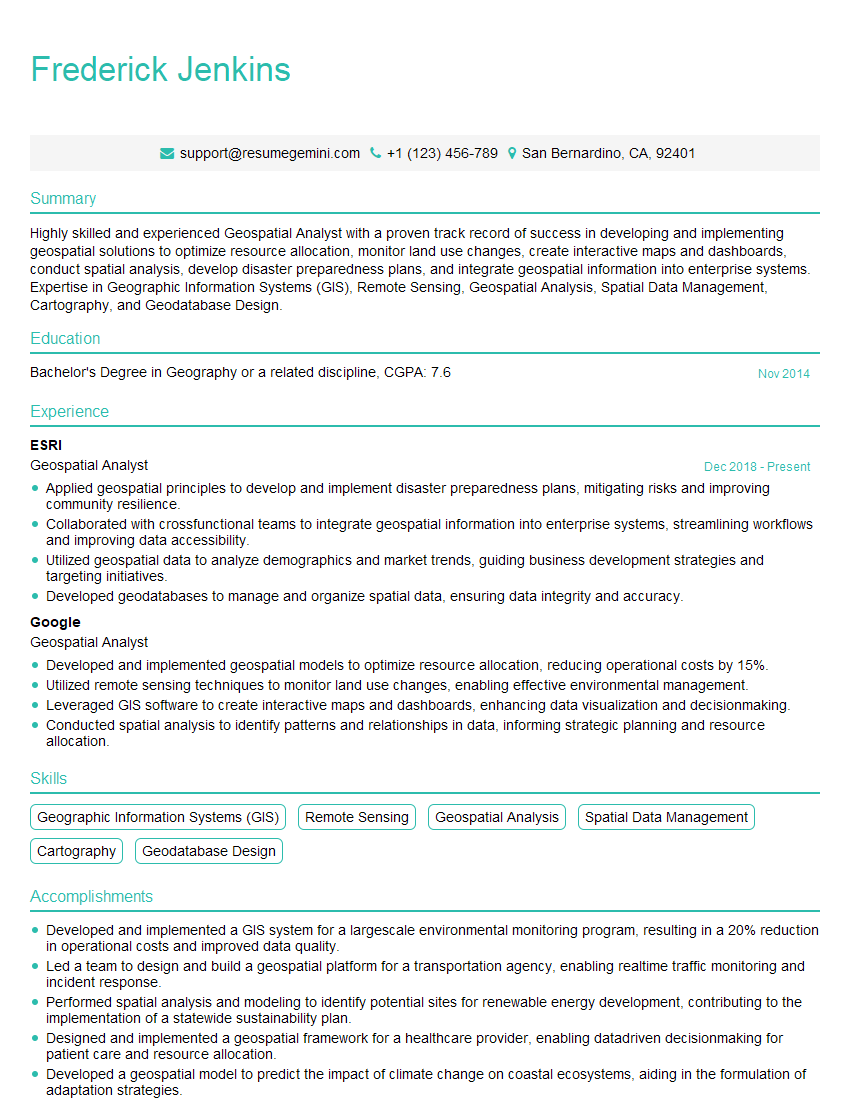
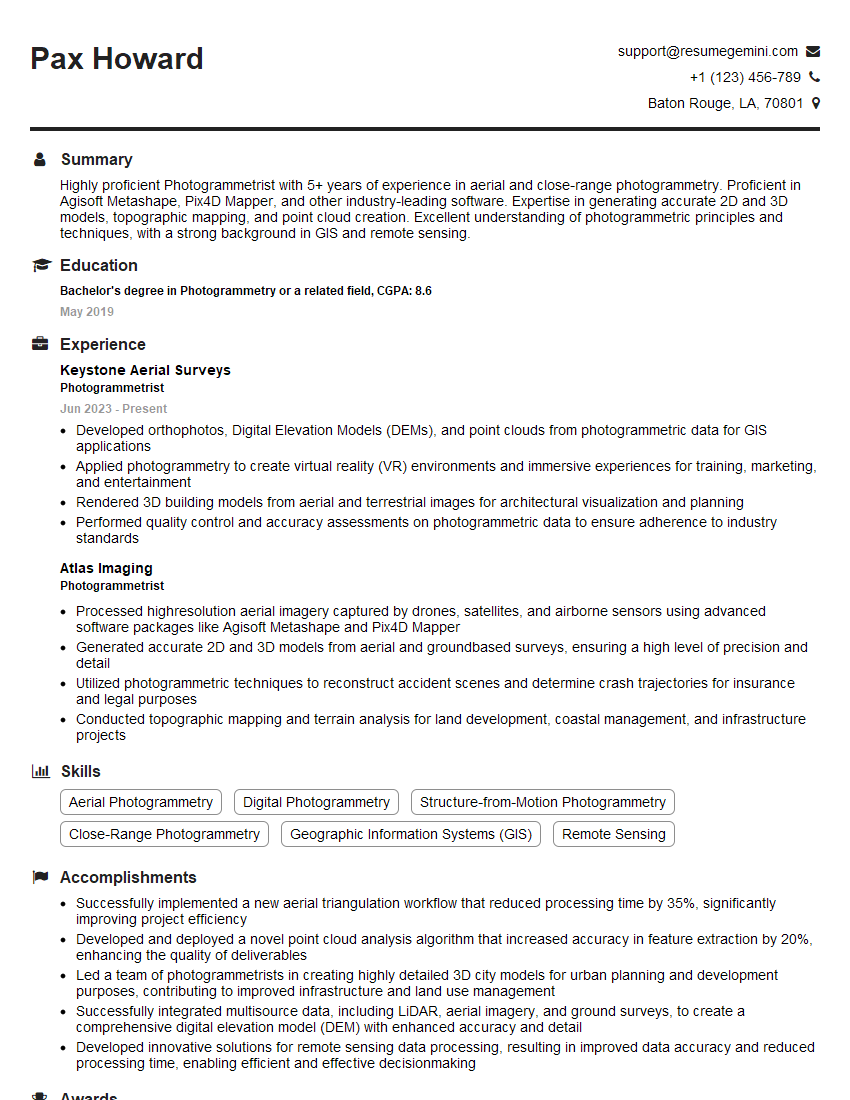
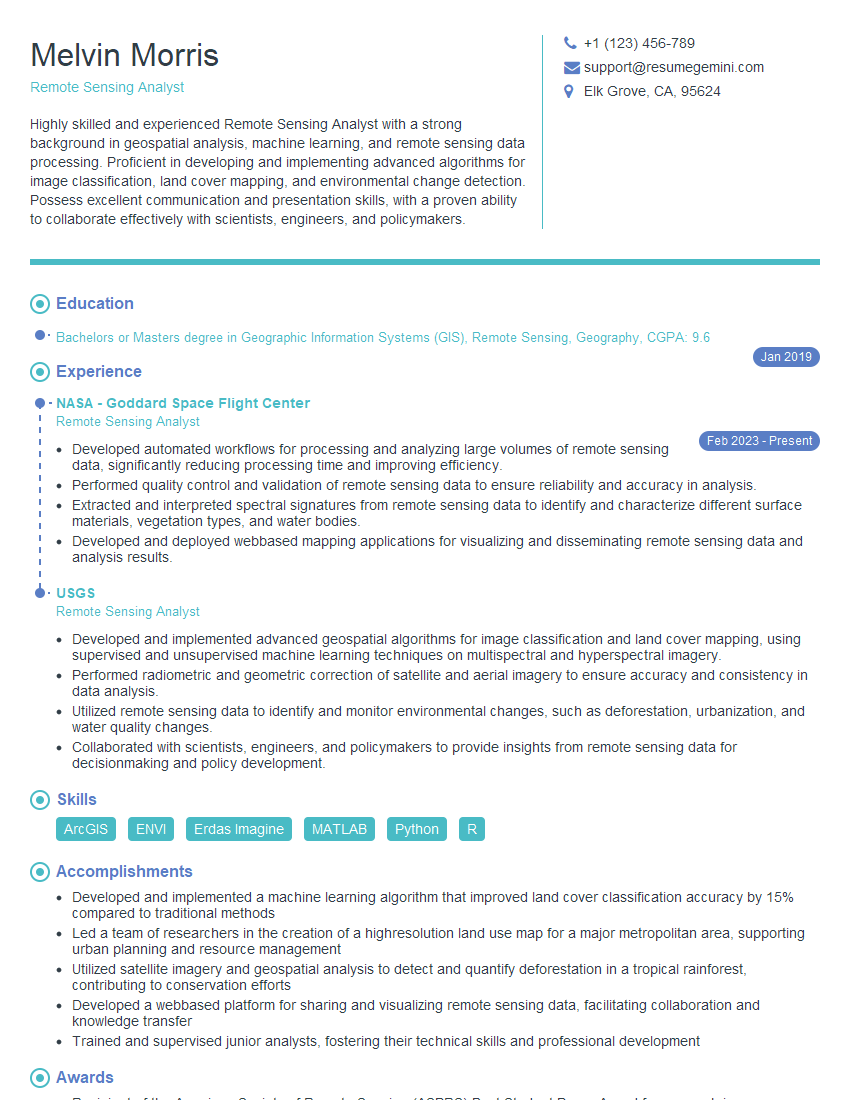
Mastering Image Interpretation and Visual Analysis opens doors to exciting and impactful careers in diverse fields like healthcare, environmental science, and engineering. To maximize your job prospects, a strong and ATS-friendly resume is crucial. ResumeGemini is a trusted resource that can help you build a professional resume that highlights your skills and experience effectively. Examples of resumes tailored to Image Interpretation and Visual Analysis are available to guide you. Invest time in crafting a compelling resume – it’s your first impression on potential employers.
Explore more articles
Users Rating of Our Blogs
Share Your Experience
We value your feedback! Please rate our content and share your thoughts (optional).
What Readers Say About Our Blog
To the interviewgemini.com Webmaster.
Very helpful and content specific questions to help prepare me for my interview!
Thank you
To the interviewgemini.com Webmaster.
This was kind of a unique content I found around the specialized skills. Very helpful questions and good detailed answers.
Very Helpful blog, thank you Interviewgemini team.